

Over the years my yard has shown me that a lawn needs clear boundaries and steady plant choices before it stops demanding attention every weekend.
Low maintenance ideas often come down to reshaping the space so grass does not fight against trees or walkways.
That kind of planning pays off quietly.
I keep coming back to options that layer in ground cover or gravel sections because they reduce mowing while still looking intentional.
Small tests in one corner usually tell me what will work across the rest of the lawn.
Replace A Dying Lawn With Artificial Turf
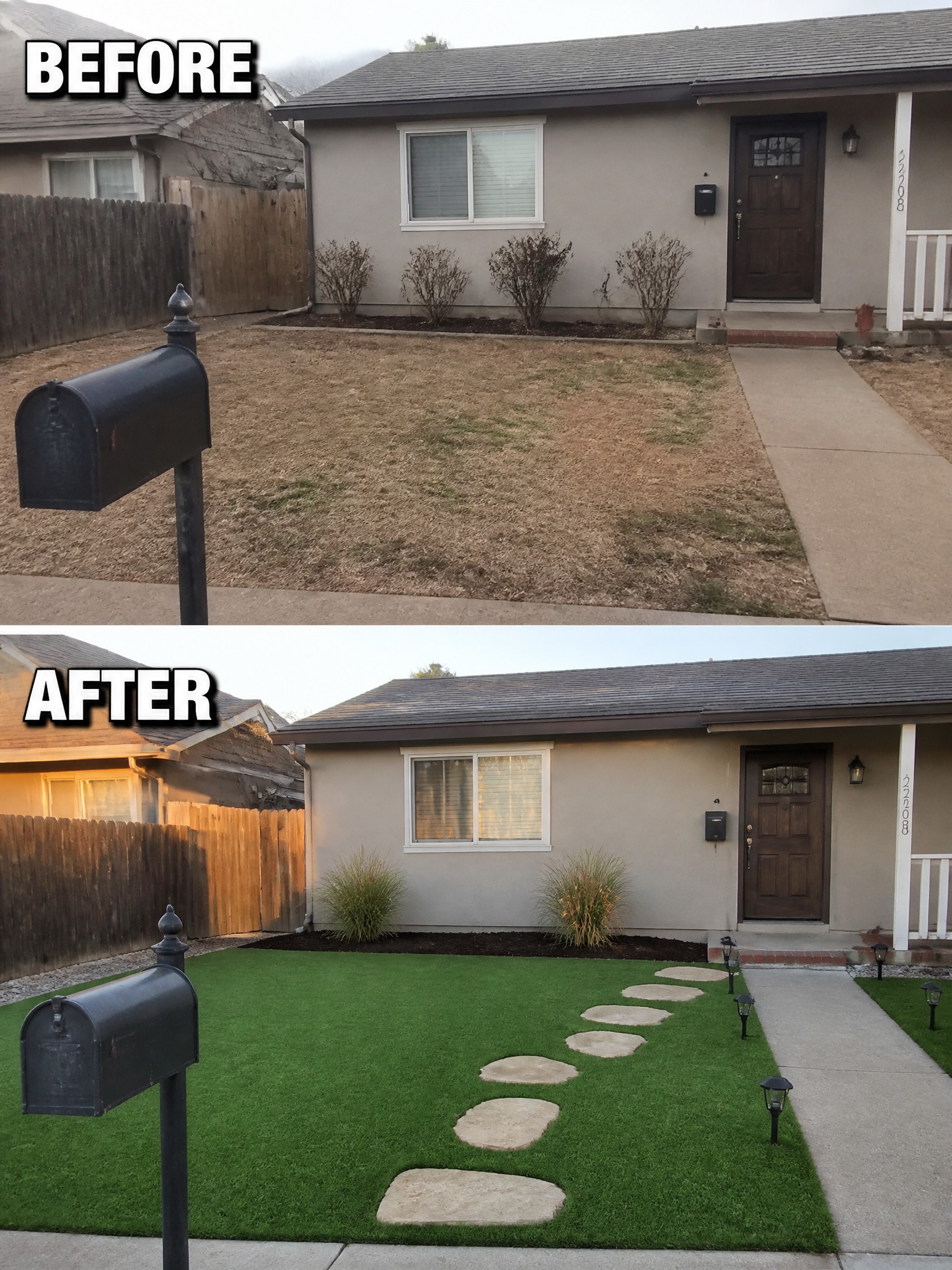
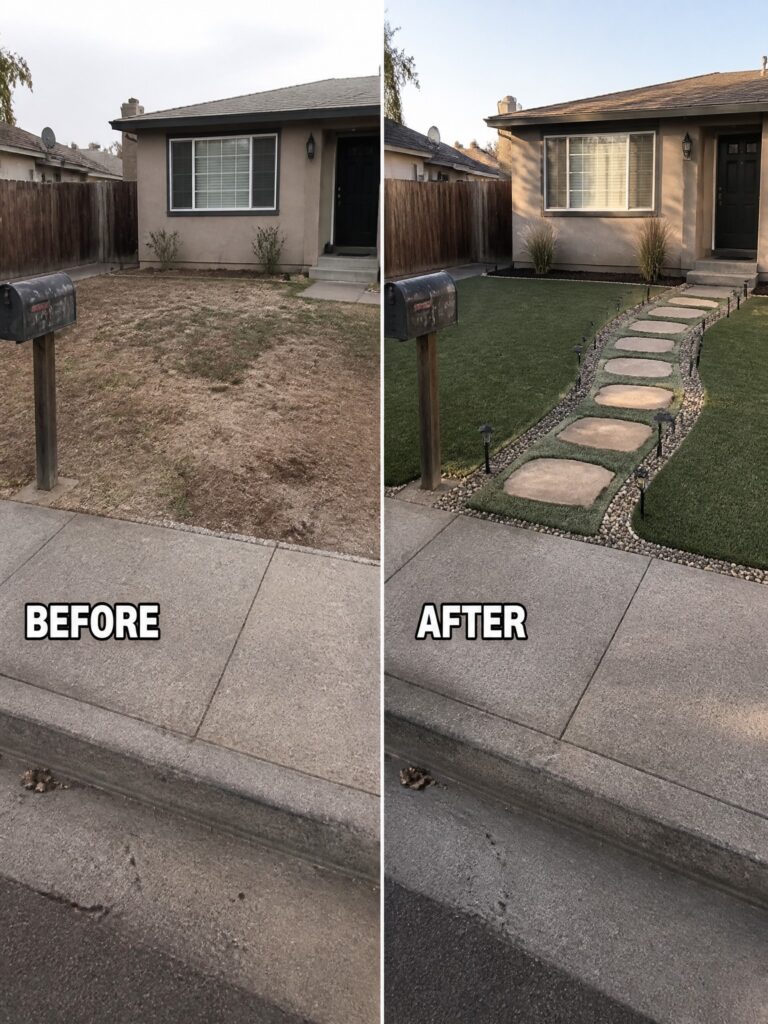
A struggling lawn often looks worse the more you try to fix it. Here the patchy brown grass was replaced with artificial turf that stays green and even without constant watering or mowing.
This works especially well in dry areas or for homes that want less weekend yard work. Lay the turf first to create a clean base, then add a simple stone path so the space feels planned instead of empty.
Add Defined Beds And Paths To A Bare Lawn
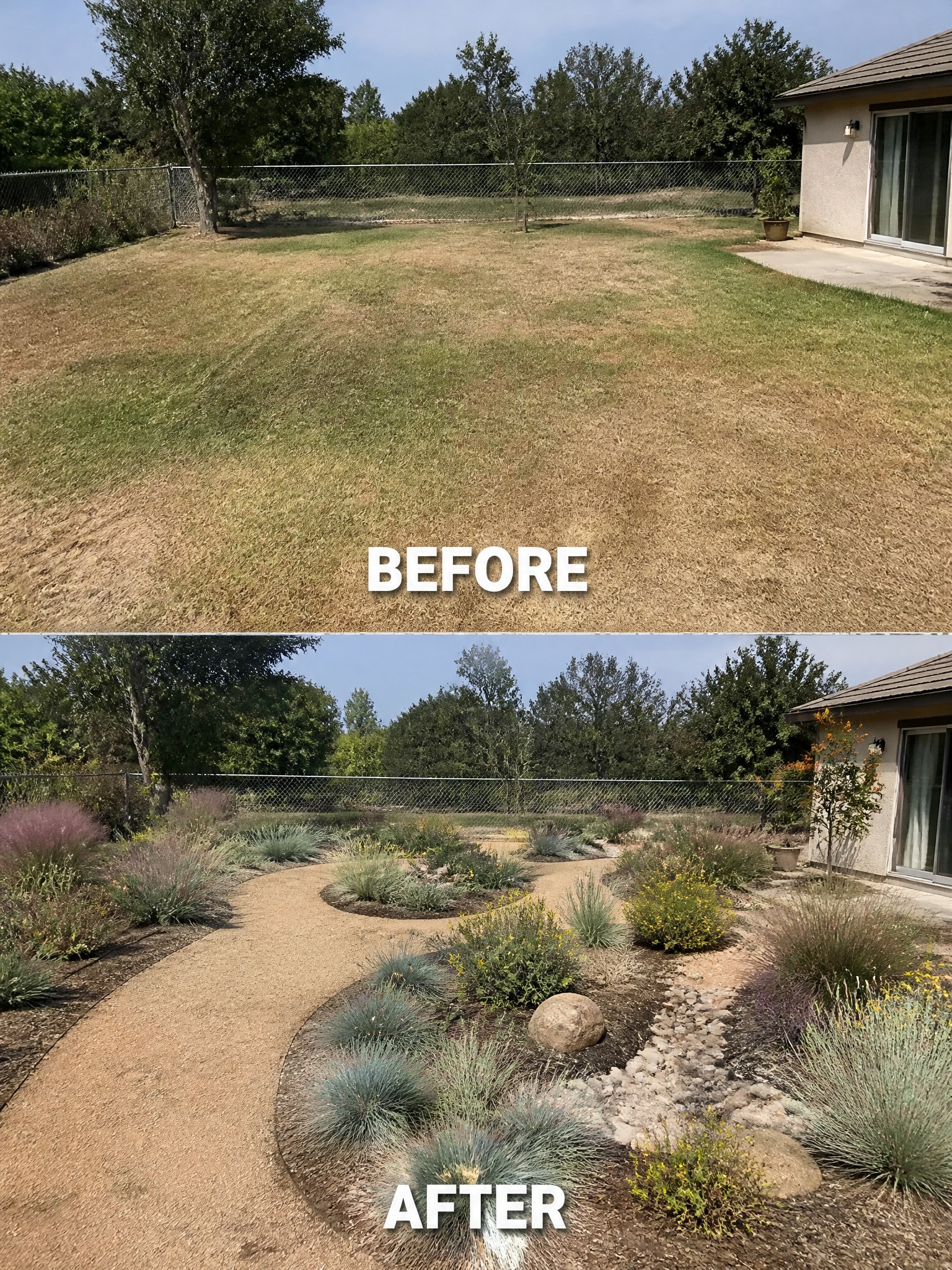
A large open lawn can look unfinished when it has no edges or planting zones. In this case the dry grass was replaced with curved paths and planted beds that break up the space and make the yard feel more planned. The beds keep plants grouped together so watering and weeding stay simple instead of scattered across the whole lawn.
This approach works well on flat backyards where a full lawn takes too much water and mowing. Start by laying out paths that connect the house to the far fence, then fill the spaces between with beds wide enough for shrubs and grasses. Use mulch or gravel to finish the beds so they stay neat with little upkeep.
Add Gravel And Stepping Stones For A Low Maintenance Path
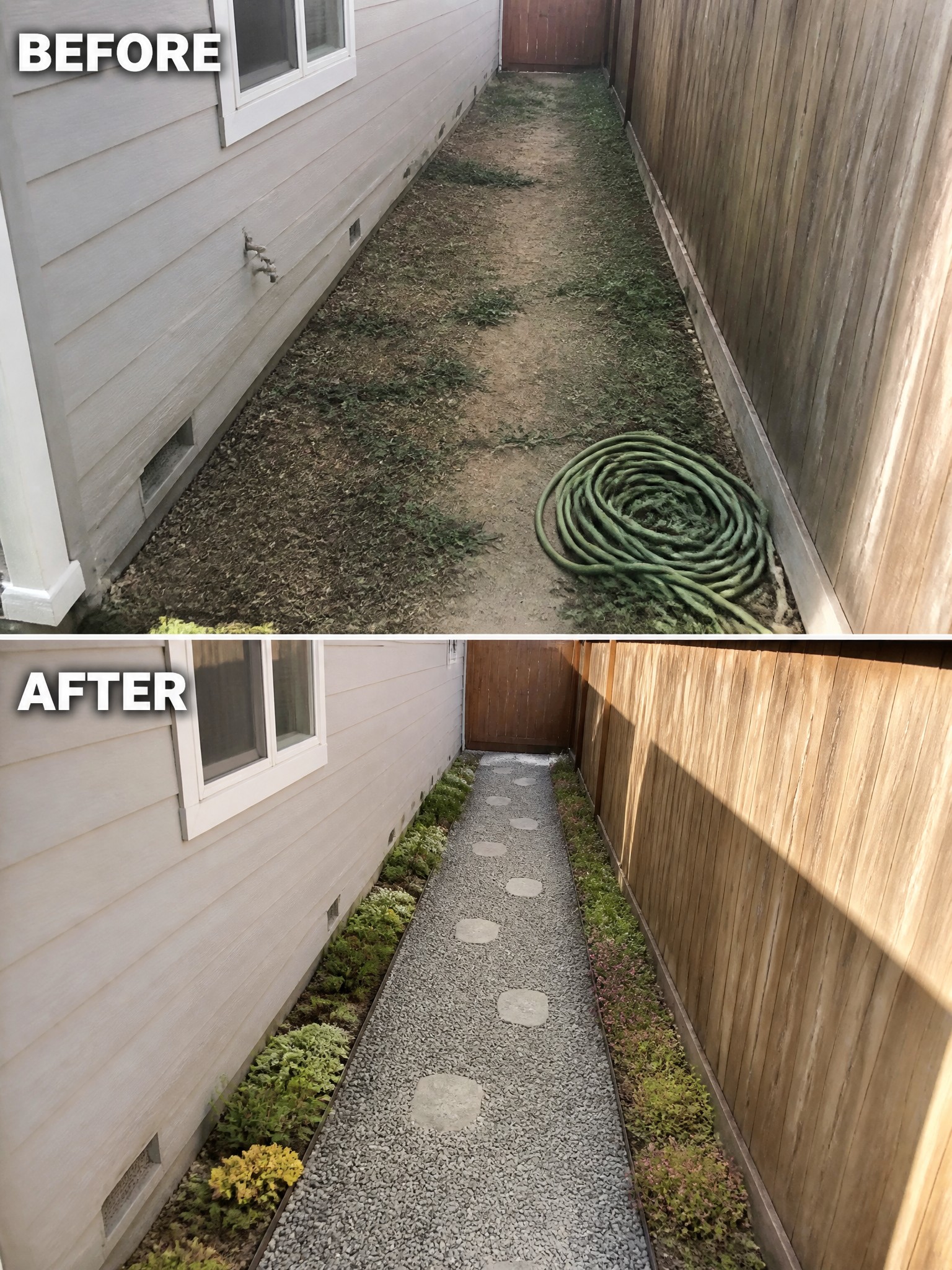
A narrow side yard often turns into a weedy strip that is awkward to mow and looks neglected. Adding a gravel path with simple stepping stones gives the space a clear function while keeping upkeep low.
This idea suits homes with tight areas between the house and fence where you still need occasional access. Use low plants along the edges and keep the gravel layer thick enough to stay in place over time.
Add Terracing To A Sloped Yard

A steep slope often turns into a problem area because grass wears out and water runs off too fast. In this case the fix was to build low stone walls that create flat planting zones instead of fighting the hill. The result is a yard that feels organized and much easier to care for.
This approach works well on any noticeable slope where mowing is awkward or grass keeps failing. Start with the walls to set the levels, then fill the beds with low-water plants and gravel paths. The key is keeping the terraces modest so the yard still feels natural rather than overbuilt.
Replace Lawn Strips With Wildflower Borders
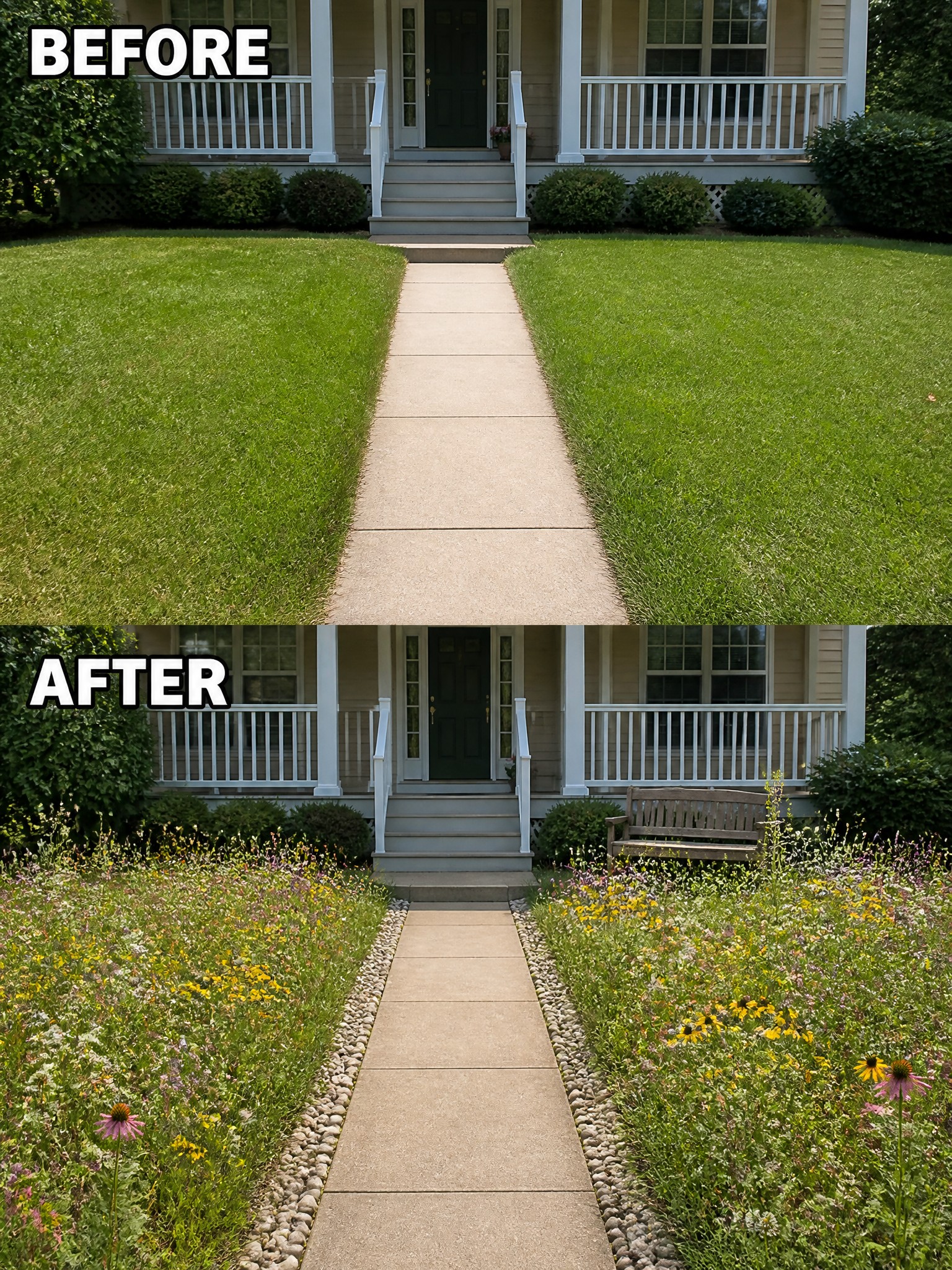
Many front yards have long strips of grass right next to the walkway that need constant mowing and watering. Replacing those strips with wildflowers and adding a simple gravel edge turns the same space into something that looks fuller and needs far less upkeep once the plants settle in.
This approach works well on narrow side areas where grass often struggles anyway. Start by clearing the grass, lay down a gravel border to keep the beds neat, and choose a mix of perennials that bloom at different times. The result gives the path more shape without adding hardscaping or extra features.
Replace Lawn With Pavers For Easier Maintenance
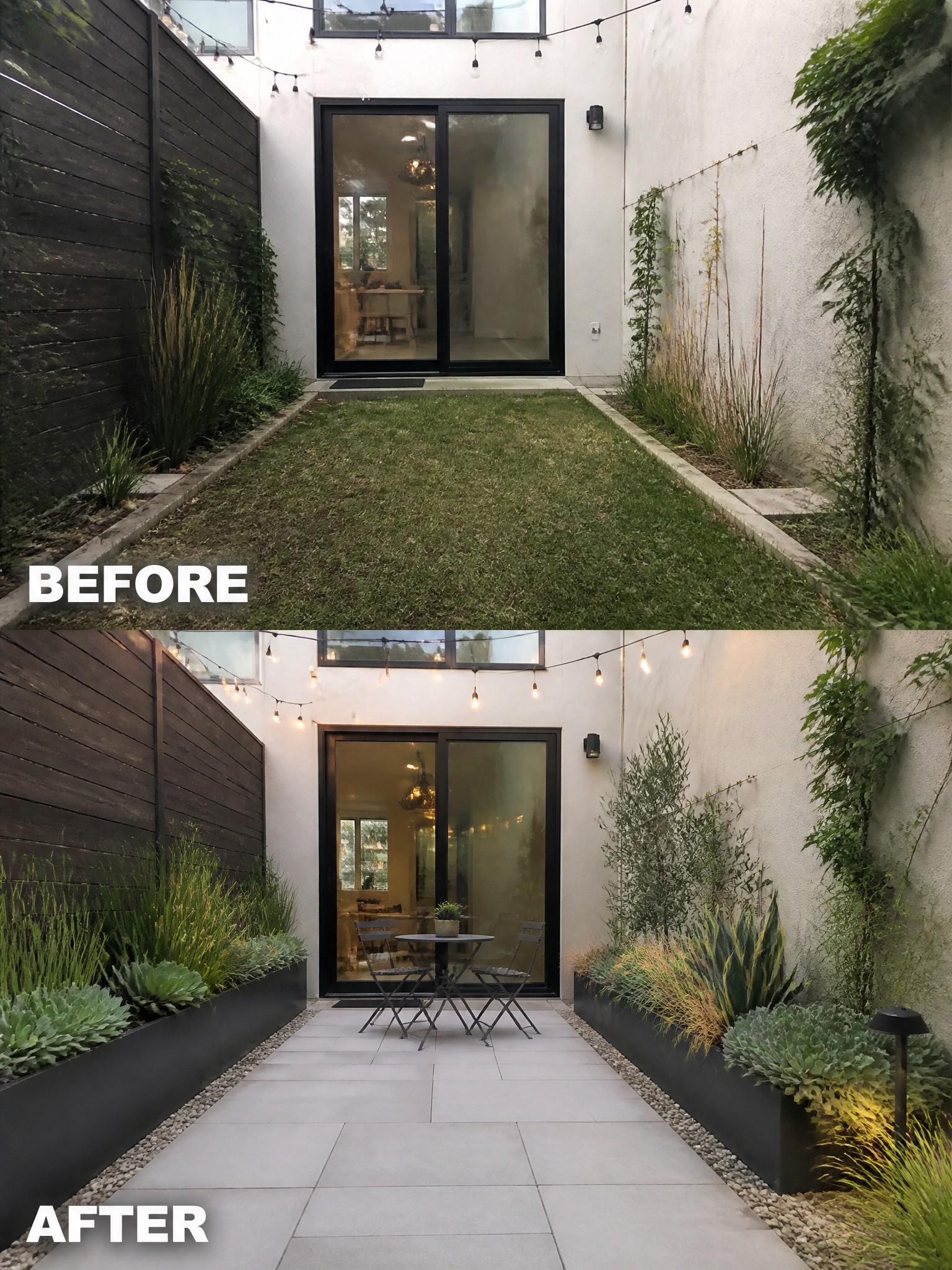
A full lawn can take a lot of work to keep looking good. In this yard the grass was swapped out for a wide paved path with raised beds along both sides. The change cuts down on mowing and watering while still leaving a clean, open feel.
This approach works well in small backyards or side yards where you want a simple walking area instead of constant lawn care. Keep the beds narrow enough to reach across easily and choose plants that stay tidy with little trimming. Gravel along the edges helps with drainage and gives the whole space a finished look without extra fuss.
Swap A Plain Lawn For Gravel Beds
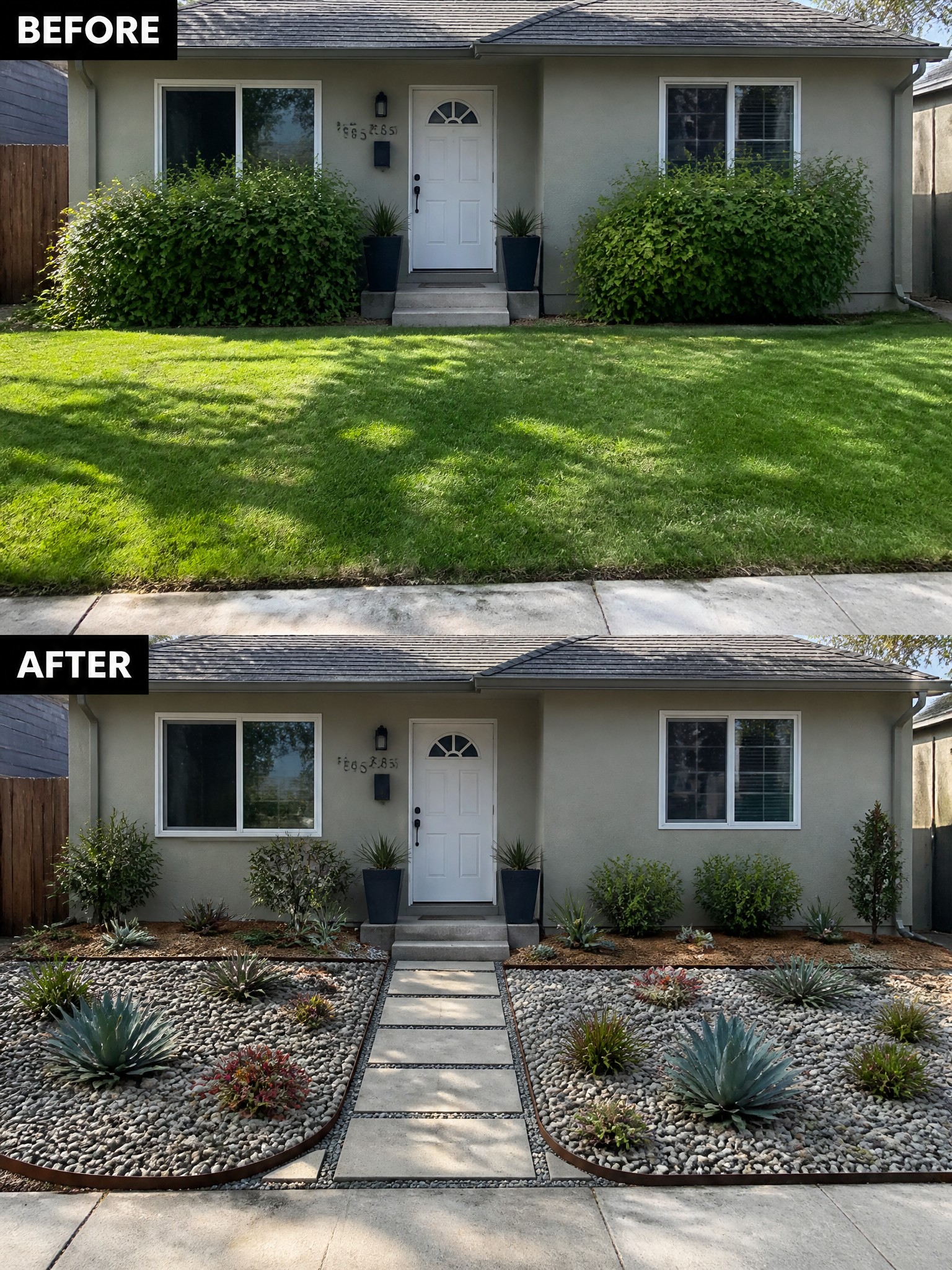
The front yard went from a wide stretch of grass with big shrubs right up against the house to a much cleaner layout. Gravel beds with metal edging now frame the entry, a simple paver path leads straight to the steps, and the plants sit in smaller, spaced groups instead of one big mass. This change cuts down on mowing and makes the whole area look more intentional without adding a lot of work.
This approach works well on small to medium front yards where you want less grass to care for. Start by laying out the beds and path first, then fill with gravel and a few larger plants for impact. It suits homes that get full sun and need something that holds up in dry weather. Keep the beds from getting too busy so the entry still feels open.
Add Structure To An Overgrown Backyard
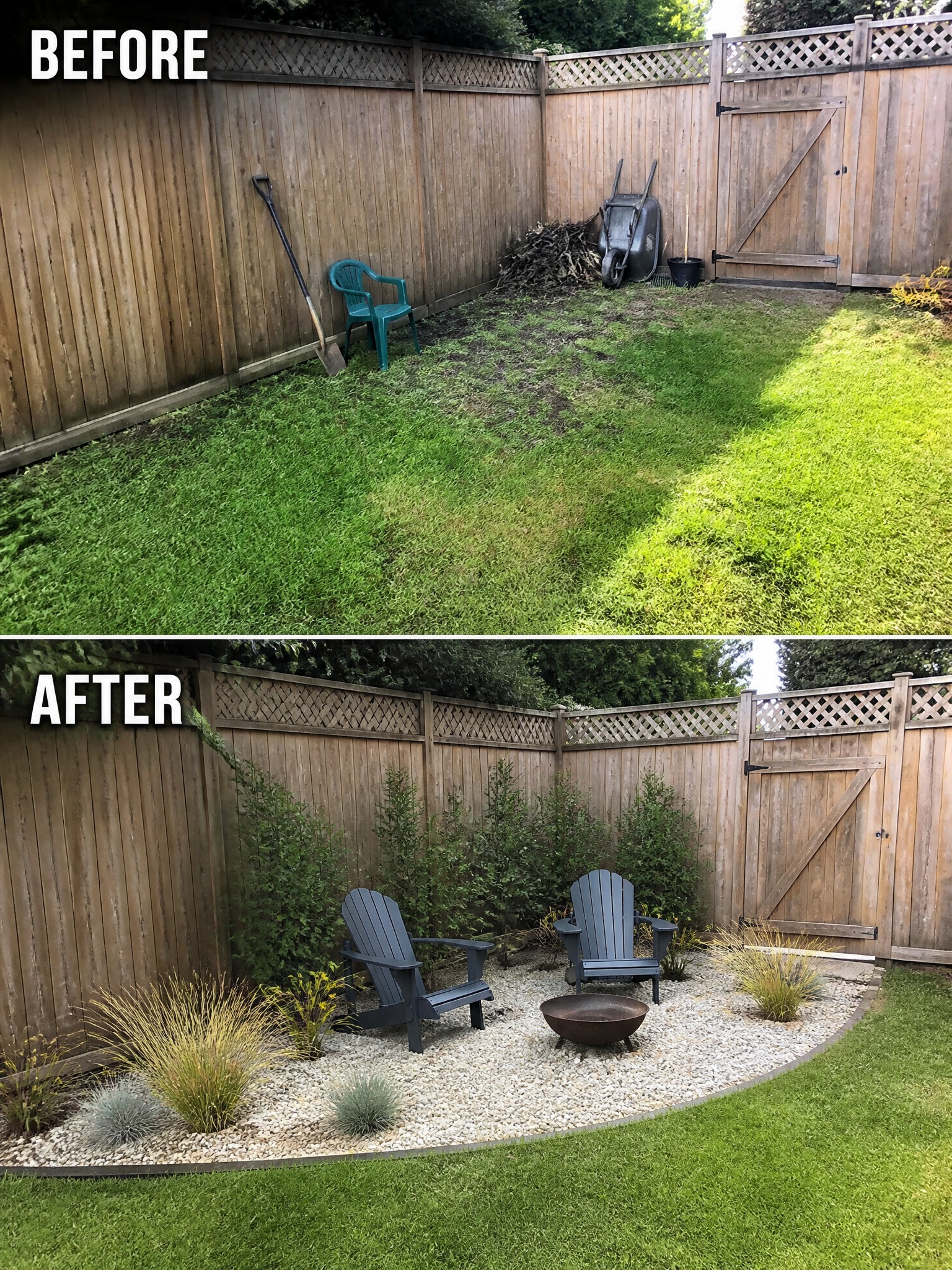
A messy lawn with scattered tools and no clear edges quickly feels neglected. Clearing the grass in one section and laying gravel creates a defined spot for seating while the remaining lawn stays simple to mow.
This idea suits small backyards where you want a low-maintenance seating area without pouring concrete. Focus first on cleanup and edging, then add a few shrubs along the fence line to soften the border and keep the gravel contained.
Define Garden Beds With Simple Edging
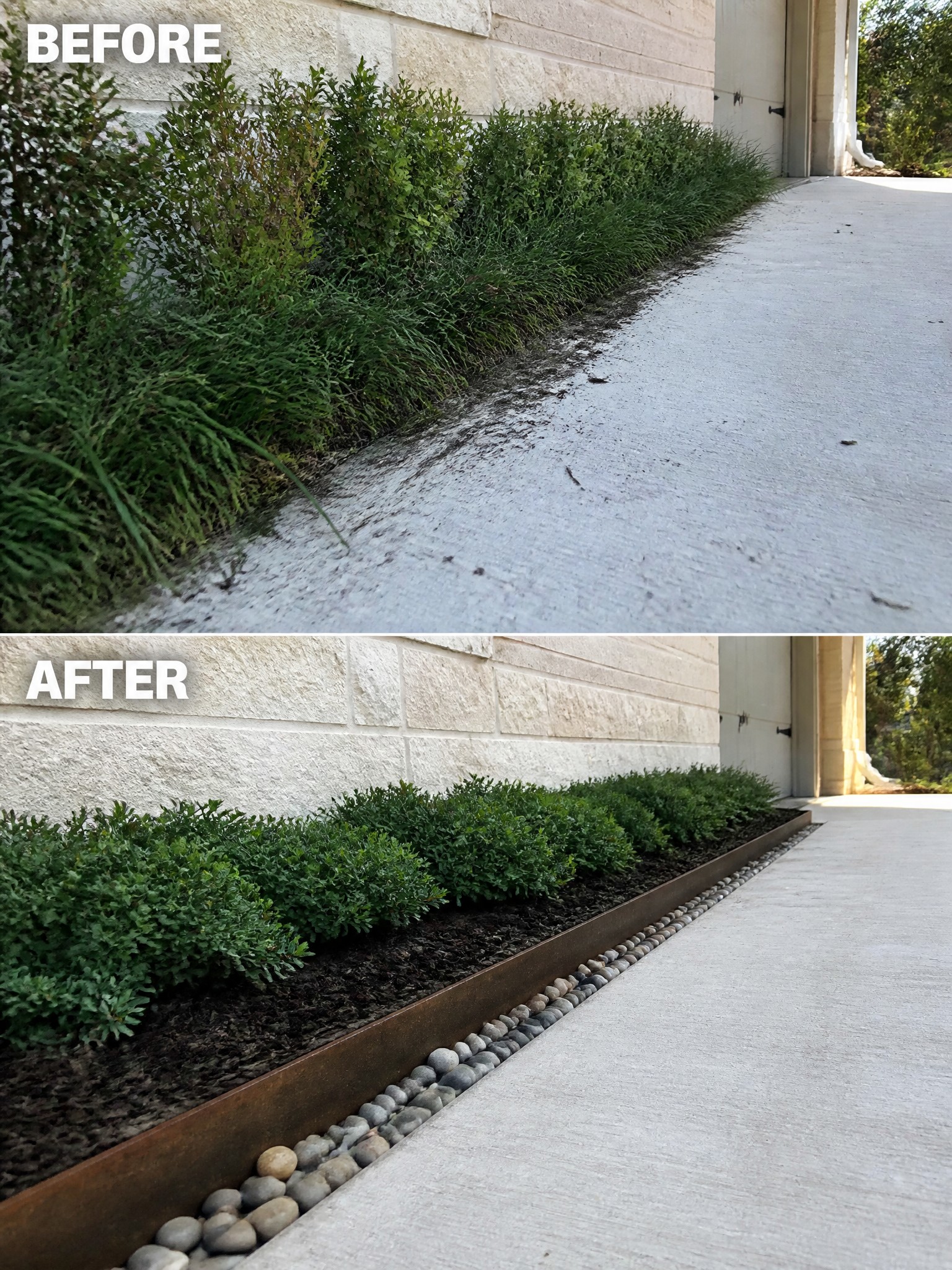
Clear edges make a big difference when you want a yard that stays neat with less work. The before view shows plants spilling onto the concrete with no real boundary, while the after view uses a metal strip and a row of pebbles to keep everything in place and looking organized.
This idea works best along paths or driveways where you need to stop grass and soil from creeping over the hard surface. Clean out the overgrowth first, then add edging that suits your house style. Mulch on top helps control weeds and gives the beds a finished appearance without constant upkeep.
Add Structure To An Overgrown Front Yard
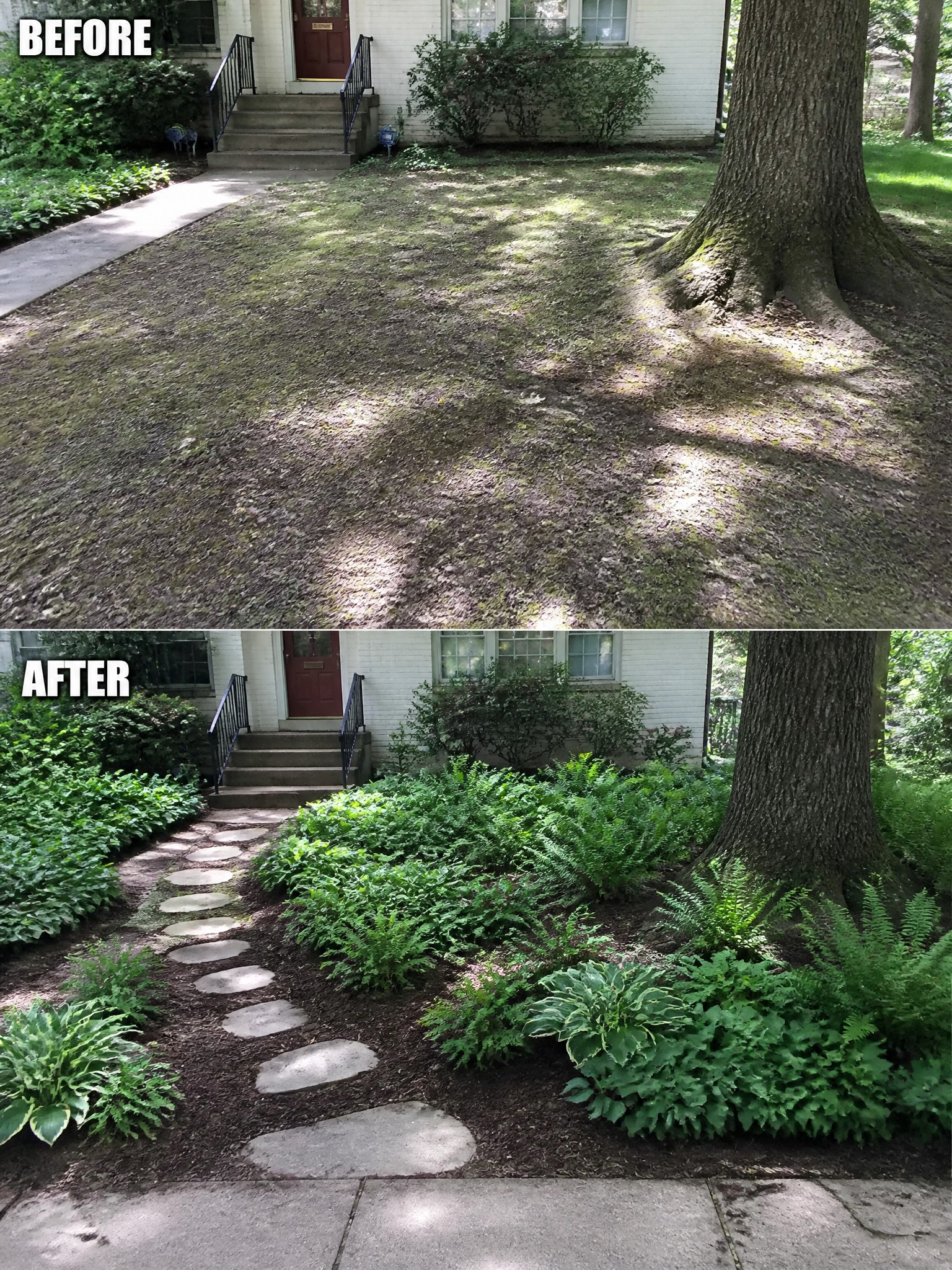
A patchy lawn with no clear route or planting areas can make the whole front of a house feel neglected. Adding a simple stepping stone path through mulched beds gives the space shape and makes it easier to walk and maintain. The beds keep plants contained and reduce the amount of grass that needs mowing or weeding.
This approach works well in shaded front yards where grass struggles. Start by clearing the worst areas, lay down a path that follows natural foot traffic, then fill the beds with tough shade plants and a thick layer of mulch. Keep the beds a reasonable width so they stay easy to reach for watering and weeding.
Replace Grass With Decking Around A Pool
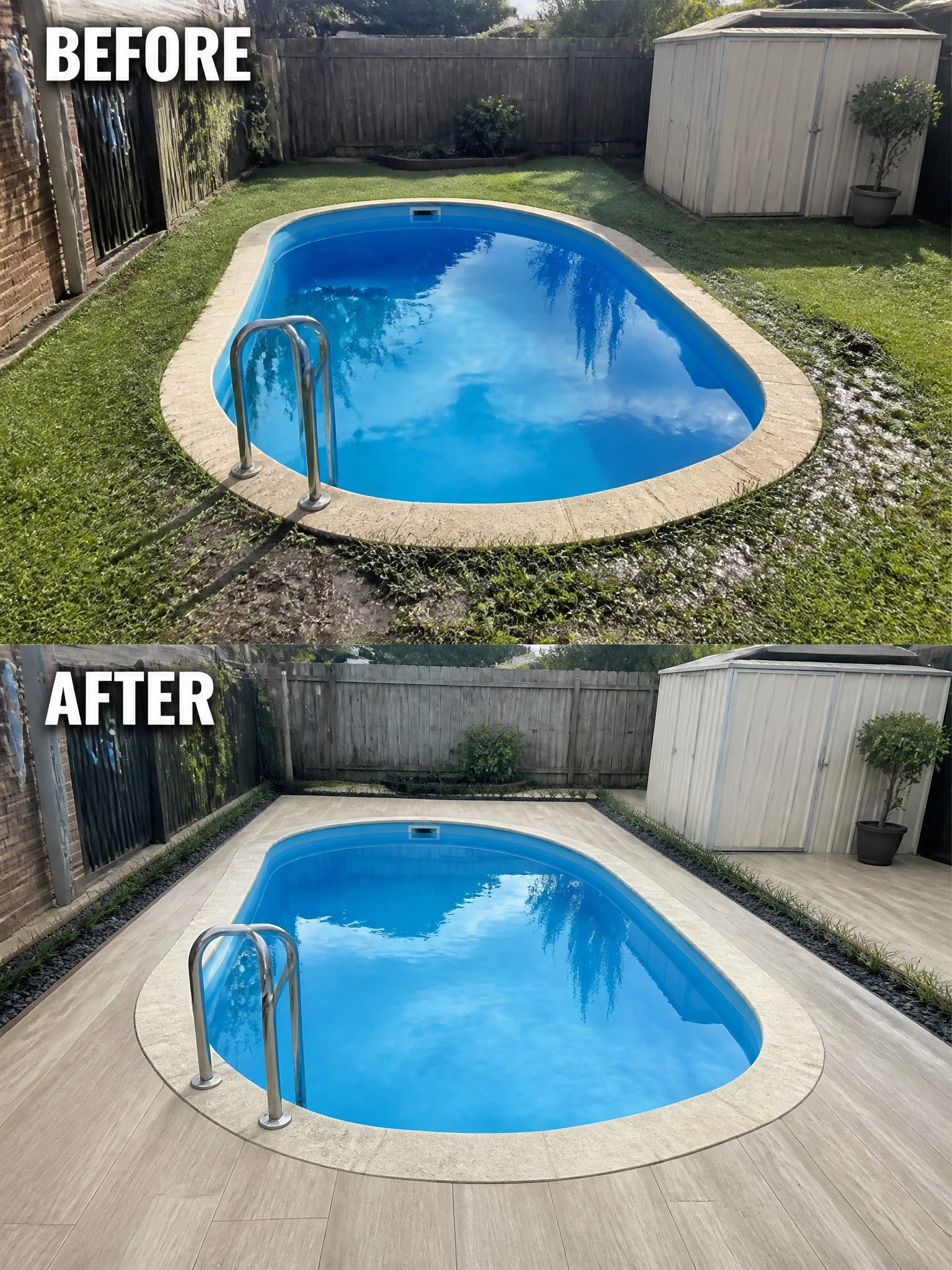
One practical way to cut lawn maintenance near a pool is to replace the grass right up to the edge with decking and gravel. The before photo shows how the lawn grew uneven and muddy from foot traffic and water. The after photo shows a clean paved surround that stops the mess and gives the pool a defined border without daily upkeep.
This idea suits homes where the pool sees regular use and the lawn struggles to stay healthy. Measure the area first and pick materials that handle water and sun well. It keeps some grass elsewhere in the yard while making the pool zone easier to clean and walk around.
Replace A Large Lawn With Defined Garden Beds
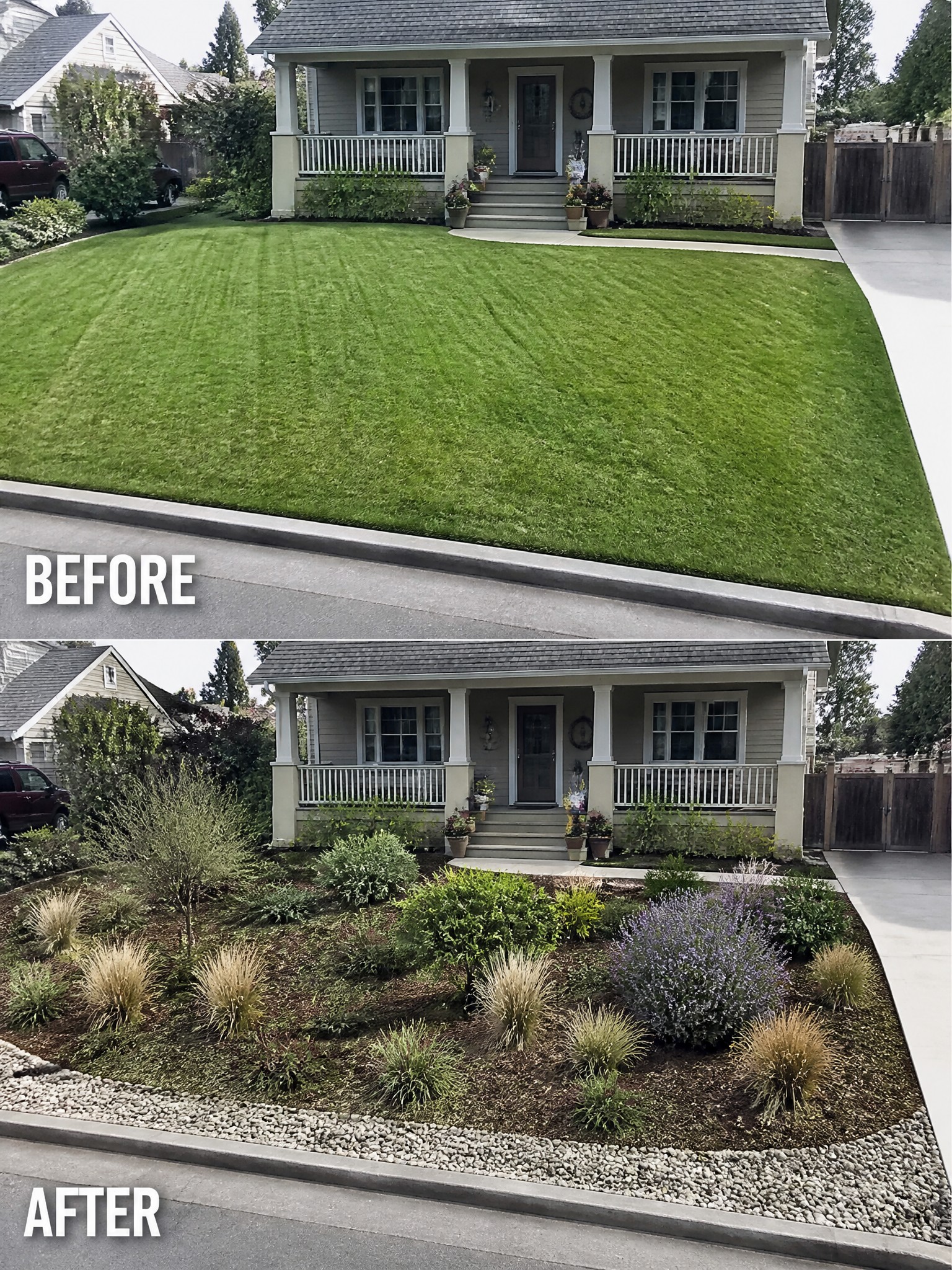
A wide lawn can look clean at first, but it often means weekly mowing and regular watering with little else to show for it. Here the grass was pulled back to make room for several planted beds edged in gravel and filled with a mix of shrubs and grasses that stay low once they settle in.
This change suits front yards that do not need open space for play or pets. Mark the beds first so the remaining lawn stays easy to mow, then choose plants that handle your climate without extra water. The gravel border helps keep mulch in place and gives the beds a finished edge without much extra work.
Add Defined Beds To Clean Up The Lawn Edge
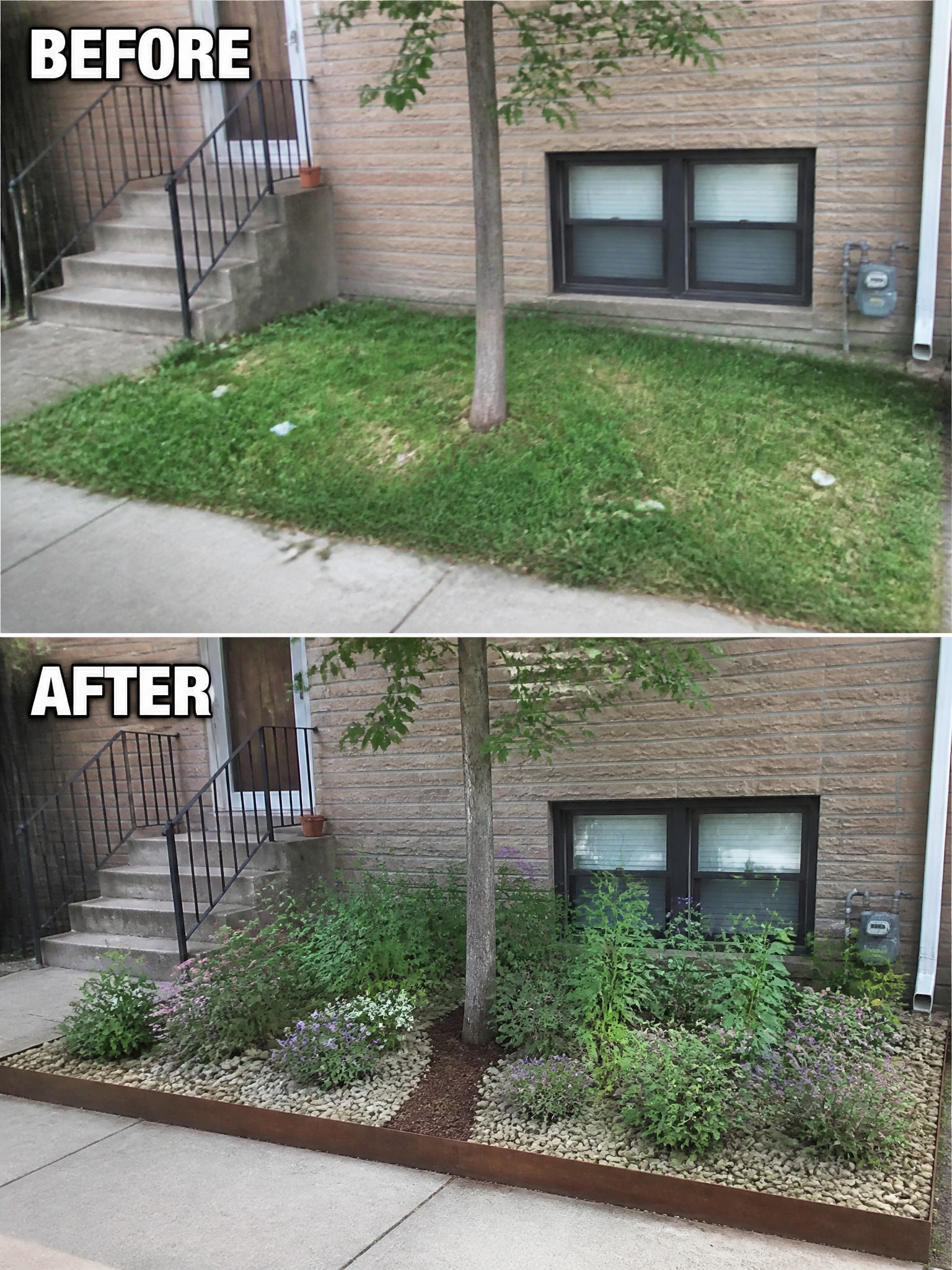
Many homes have a strip of grass that grows right up to the foundation and looks messy after a season or two. Adding a simple bordered bed with gravel and a few plants gives the area a clear shape and stops the grass from creeping where it is not wanted. The change is mostly in the structure. The grass is replaced with a low metal edge, a layer of gravel, and grouped plants that stay in their place.
This approach works well on small front or side yards where you want less mowing and weeding. Keep the bed width modest so it does not block windows or walkways, and choose plants that can handle the local conditions without extra fuss. The edging and gravel do most of the work once they are in.
Define Wet Spots With Simple Edging And Mulch
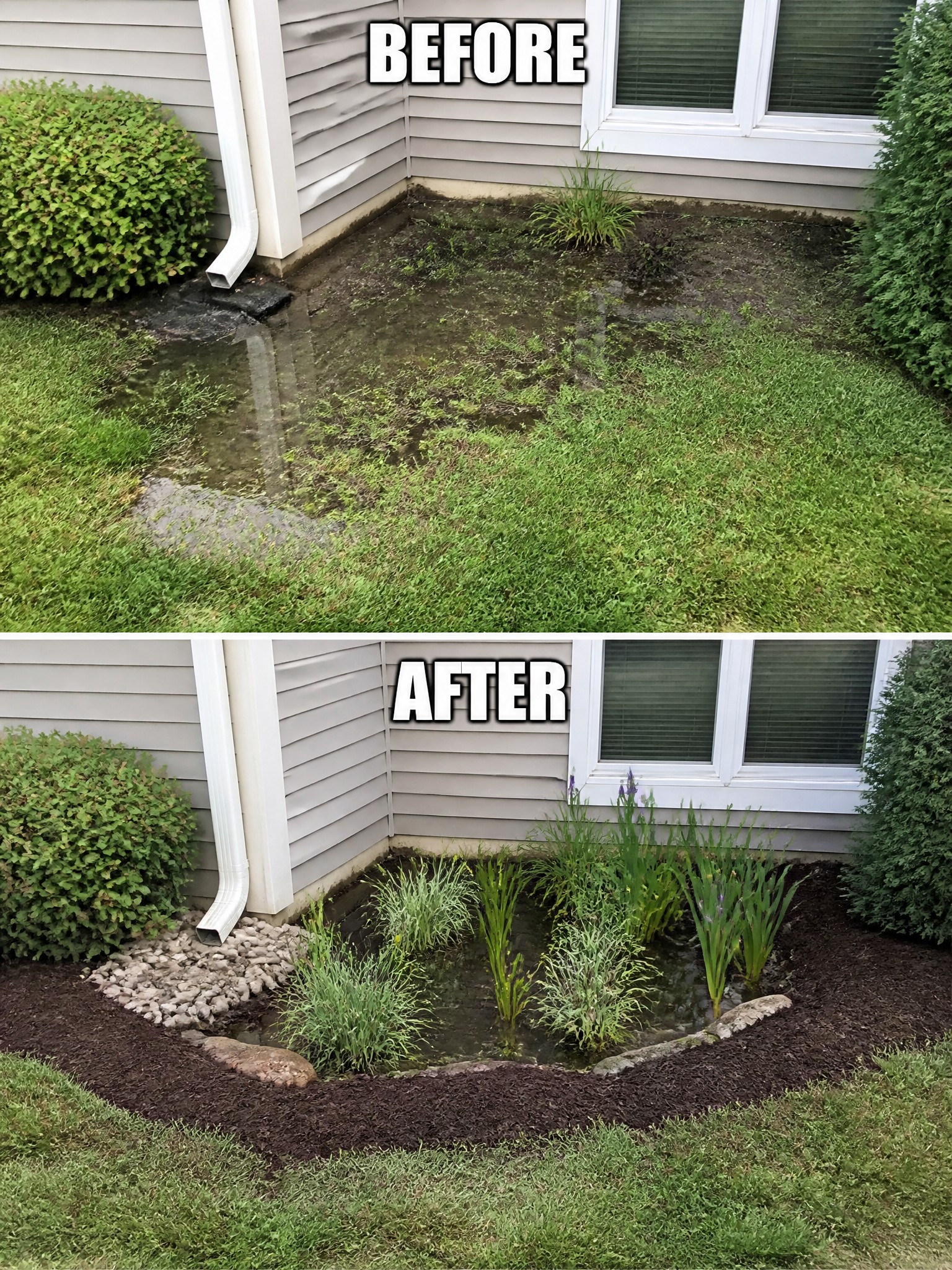
A muddy patch next to the house often comes from a downspout or poor drainage. The fix shown here starts with cleaning up the wet area, then adding a clear border of rocks and dark mulch to contain the soil and keep grass from creeping back in. A few water-tolerant plants finish the job and make the spot look intentional instead of neglected.
This approach works well on any home where runoff collects in one corner. Keep the bed shape simple, choose plants that handle occasional standing water, and make sure the mulch layer stays thick enough to suppress weeds. The result is a low-maintenance spot that no longer looks like a problem area.
Replace Lawn With Pavers To Lower Maintenance
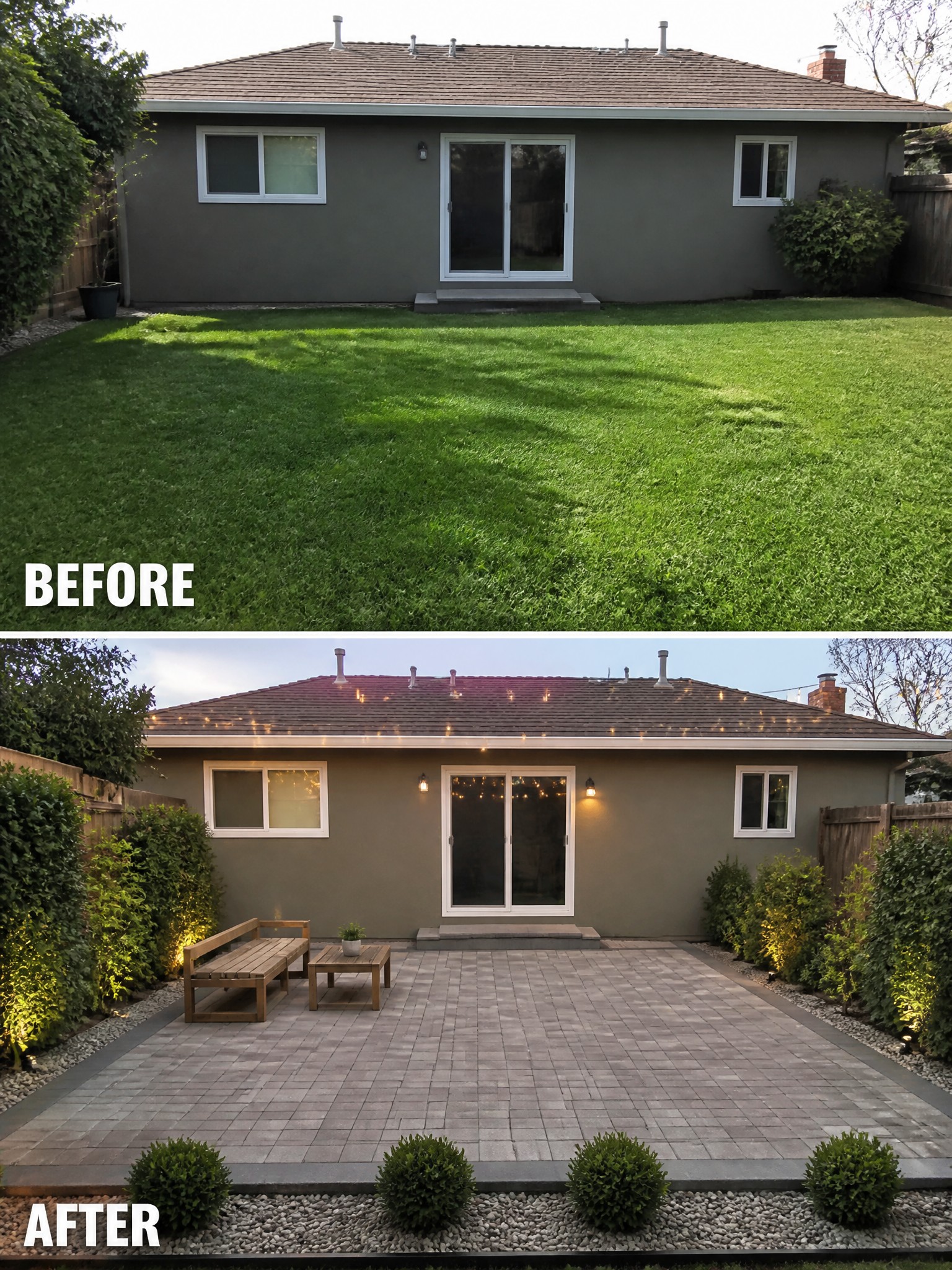
A large stretch of grass takes regular mowing, watering, and edging. In this case the yard went from plain lawn right up to the house to a paved surface that needs almost no work once it is down. The pavers give a solid place to set furniture and walk around while the planted borders handle the edges.
This idea works best in backyards where the lawn sees little use but still demands upkeep. Measure the area you want to keep open for seating, then lay pavers on a proper base so water drains away from the house. Add a few simple shrubs along the sides and the whole space stays neat with far less effort than keeping the grass.
Replace A Patchy Lawn With Gravel And Boulders

A tired front lawn that stays brown most of the year is a common problem in dry areas. Removing the grass and putting down gravel with a few large rocks and succulents gives the yard a neat look that stays green with almost no watering or mowing.
This approach works best on small front yards where you want low upkeep. Clear out the old lawn first, add a weed barrier, then place the rocks and plants before spreading the gravel. It keeps the space looking cared for without the constant work of trying to revive grass that struggles in the heat.
Add Structure To An Overgrown Backyard
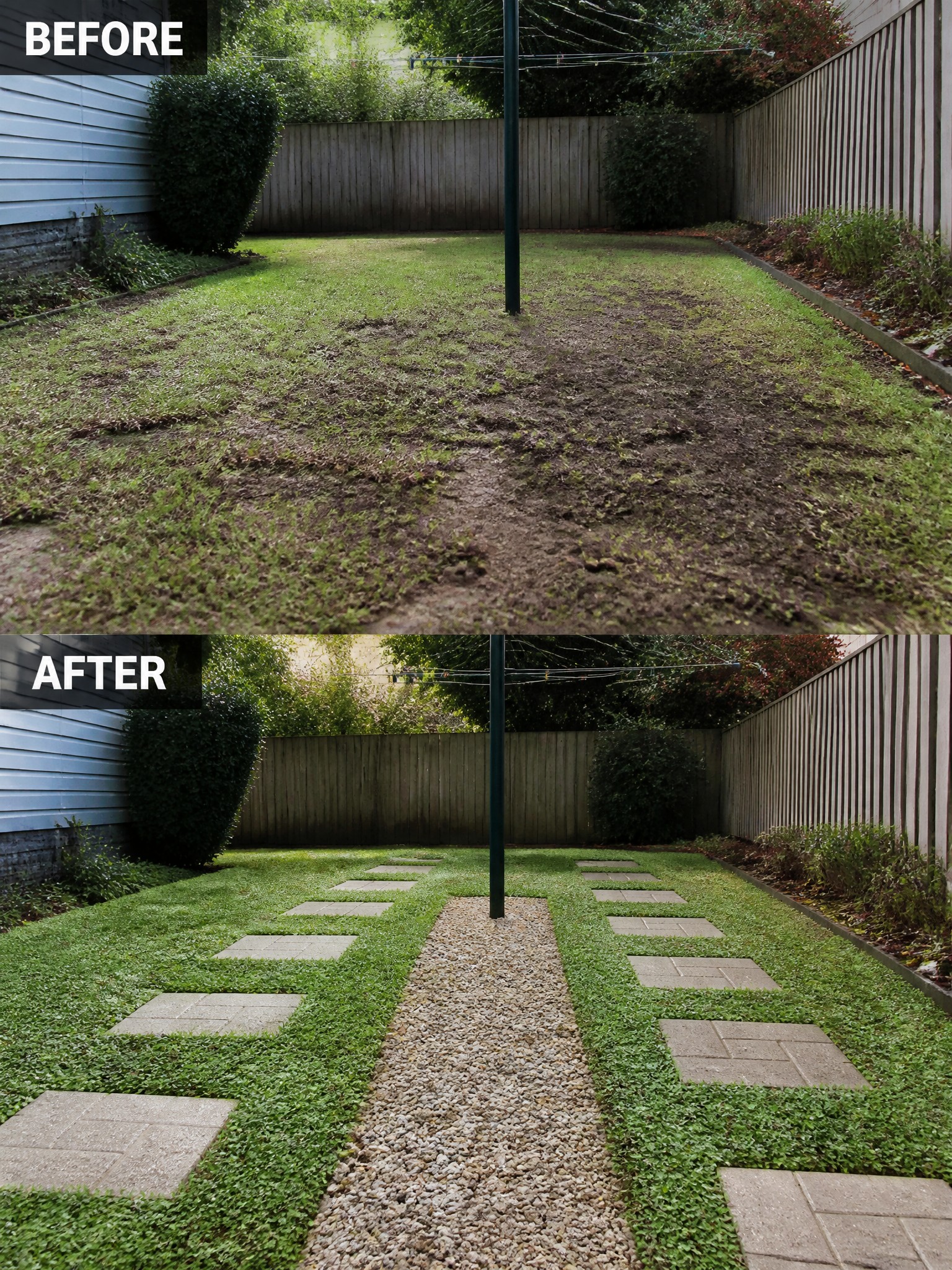
A patchy lawn with worn grass and no clear routes makes a backyard feel smaller and harder to use. Adding stepping stones and a gravel path gives the space order without covering the whole lawn. The stones create walking lines that keep foot traffic off the grass and make the yard feel planned rather than neglected.
This approach works well in small or medium backyards where you want to keep some lawn but still need practical access. Start by clearing the worst patches, then lay paths that connect main points like the back door or clothesline. Gravel is low cost and easy to maintain, while the stones let you mow around them without extra edging work.
Add Defined Mulch Borders Along Fences
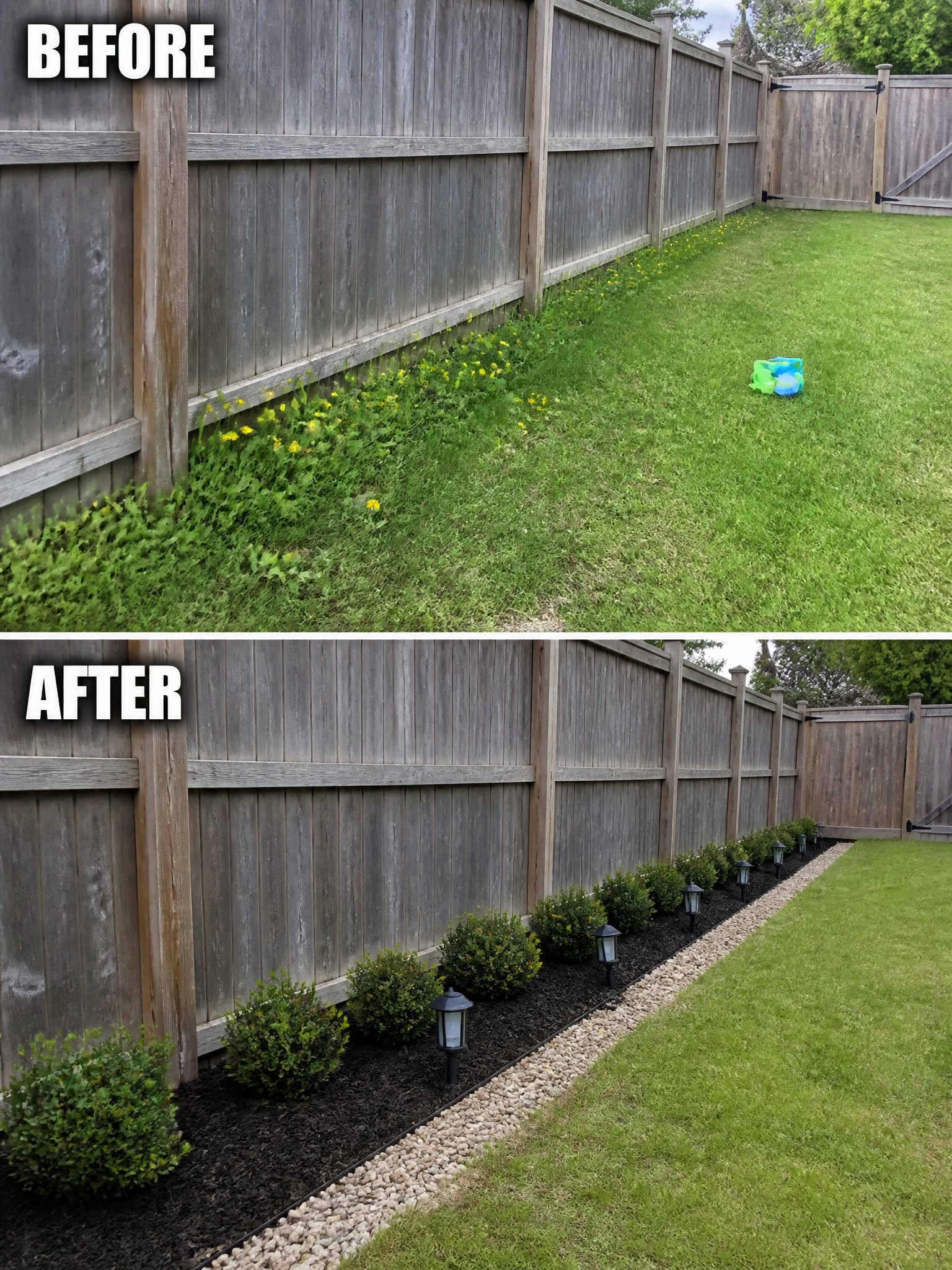
One of the simplest ways to improve a backyard is to replace a weedy strip along the fence with a clean mulched bed. The before image shows how quickly grass and weeds creep up against the fence and make the whole edge look messy. After the change, a straight line of mulch, low shrubs, and a gravel border creates a clear separation that stays neat with little effort.
This idea works best in yards where the fence runs along a long stretch of lawn. Clear the overgrowth first, then add mulch and a few easy shrubs to hold the line. The result cuts down on mowing right next to the fence and keeps the space looking planned without constant upkeep.
Add Stepping Stones To Create A Low Maintenance Path
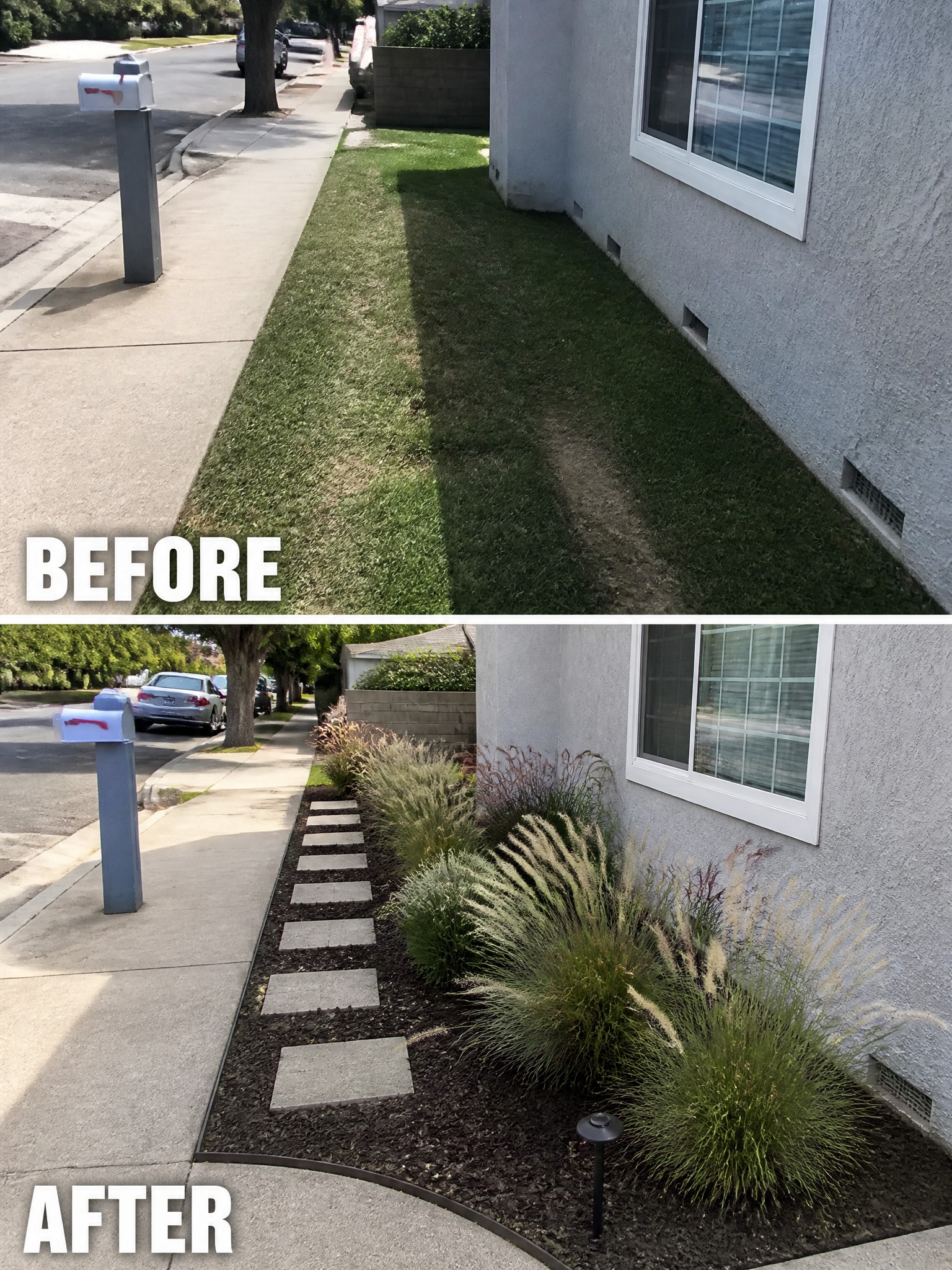
A worn path through the grass often signals the need for a more practical solution. Replacing that section with stepping stones set in mulch gives the yard a clear route while cutting down on the area that needs regular mowing and watering. The simple border planting along the edge keeps things neat without adding much work.
This approach works well in narrow side yards or along the front of a house where lawn edges tend to get messy. Start by laying out the stones to match how people actually walk, then fill around them with mulch to suppress weeds. It suits homes that want less grass overall but still need an easy way to move through the space.
Define Lawn Edges With Mulch Borders
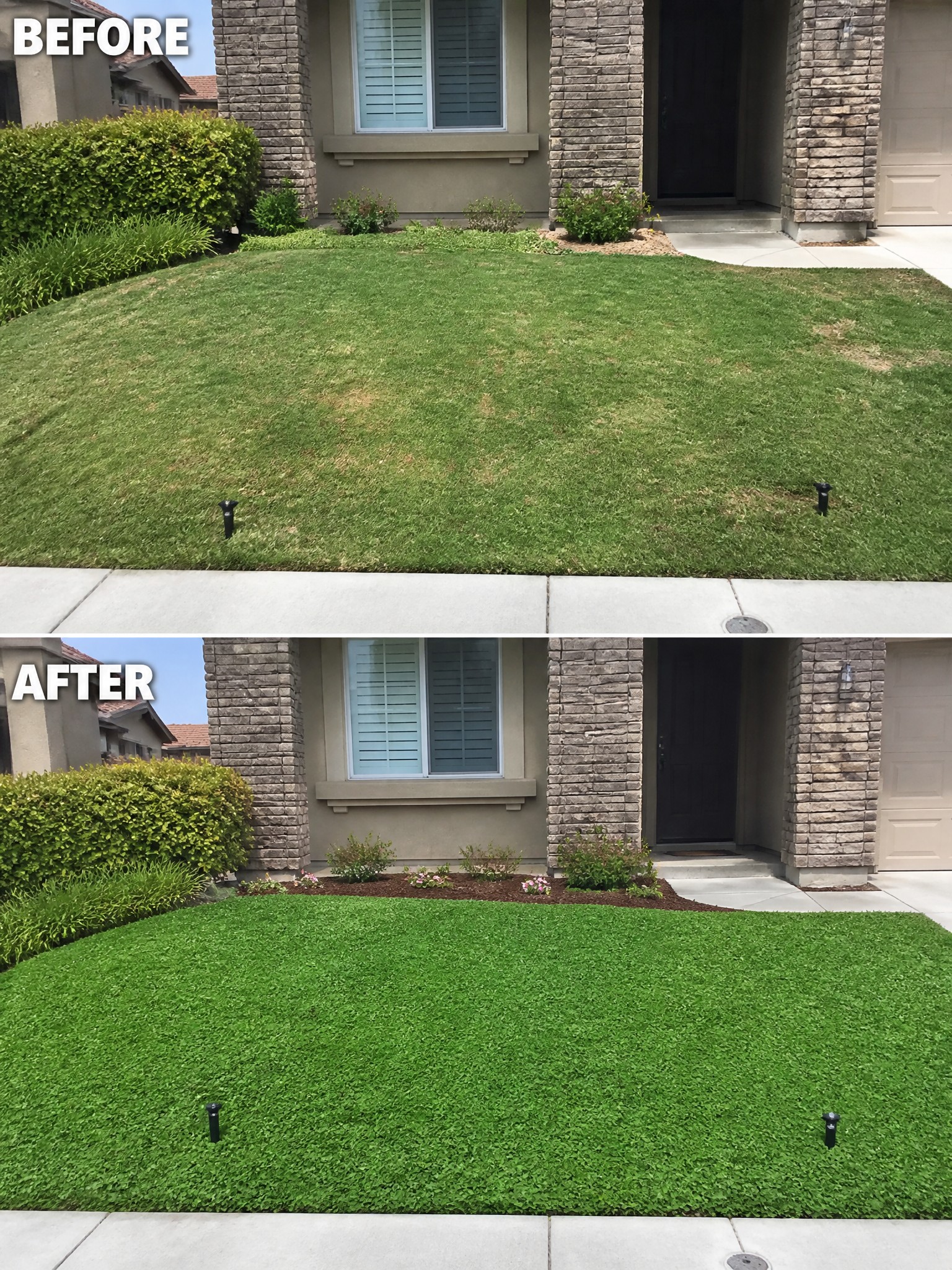
A patchy lawn often looks worse because the edges blend into the surrounding dirt and plants. In this case the before photo shows uneven grass running right up to the house foundation. The after photo shows how adding a clear mulch strip with small plants creates a sharp line that makes the whole yard read as intentional.
This approach works well on any front or side yard where the lawn meets the foundation or walkway. Start by cutting a clean edge, lay down a few inches of mulch, and add low plants spaced evenly. The mulch suppresses weeds and reduces mowing right against the house, which keeps maintenance simple over time.
Frequently Asked Questions
Q: Can I really skip mowing entirely with these ideas?
A: Switch to a mix of ground covers and hardscaping. You might mow once or twice in spring to tidy edges but that is about it.
Q: What happens if some plants die off in the first year?
A: Fill those spots with more mulch for now. Next season you can add tougher varieties that match your conditions.
Q: How do I handle the edges where the lawn meets the new areas?
A: Install simple metal or stone borders. They stop grass from creeping in and keep everything looking neat with little work.
