

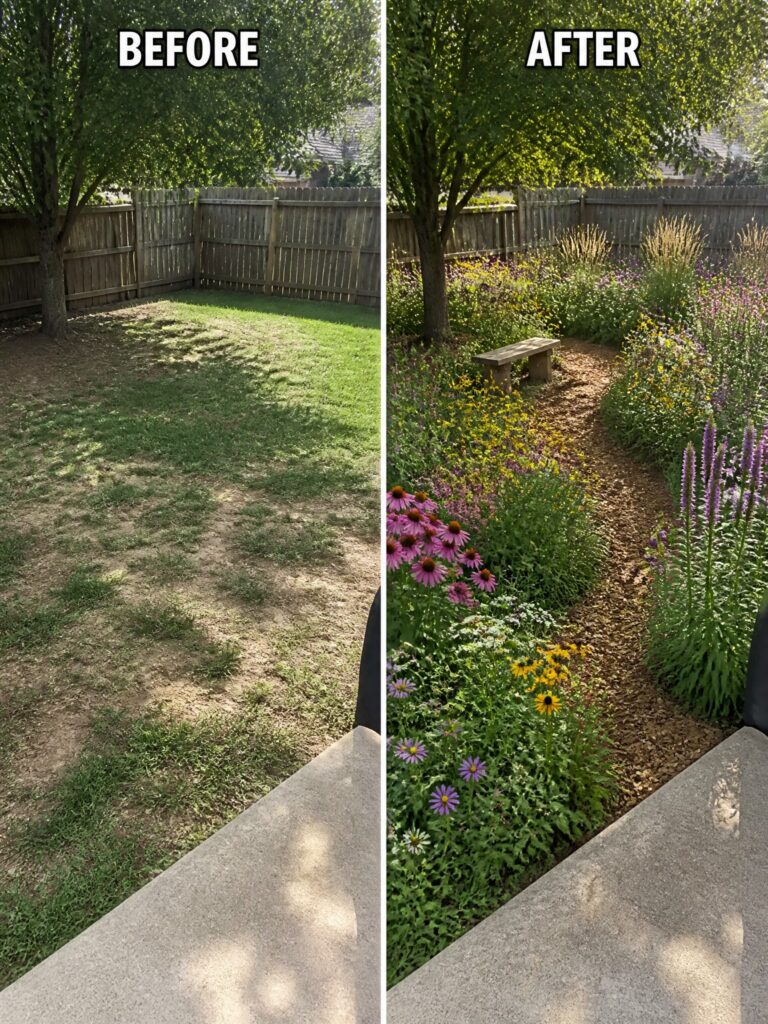
I often notice how a flat empty lawn leaves the backyard feeling like an afterthought even when the rest of the house looks finished.
Defining the edges and adding a few layers of plants or ground cover usually makes the space feel more settled than any single big purchase.
In my own yard I would probably start by reshaping the lawn itself before adding anything else.
Those adjustments tend to build on each other so the area gains purpose without needing a complete overhaul all at once.
A few of these approaches are simple enough to try on one corner first.
Add Structure To A Plain Backyard
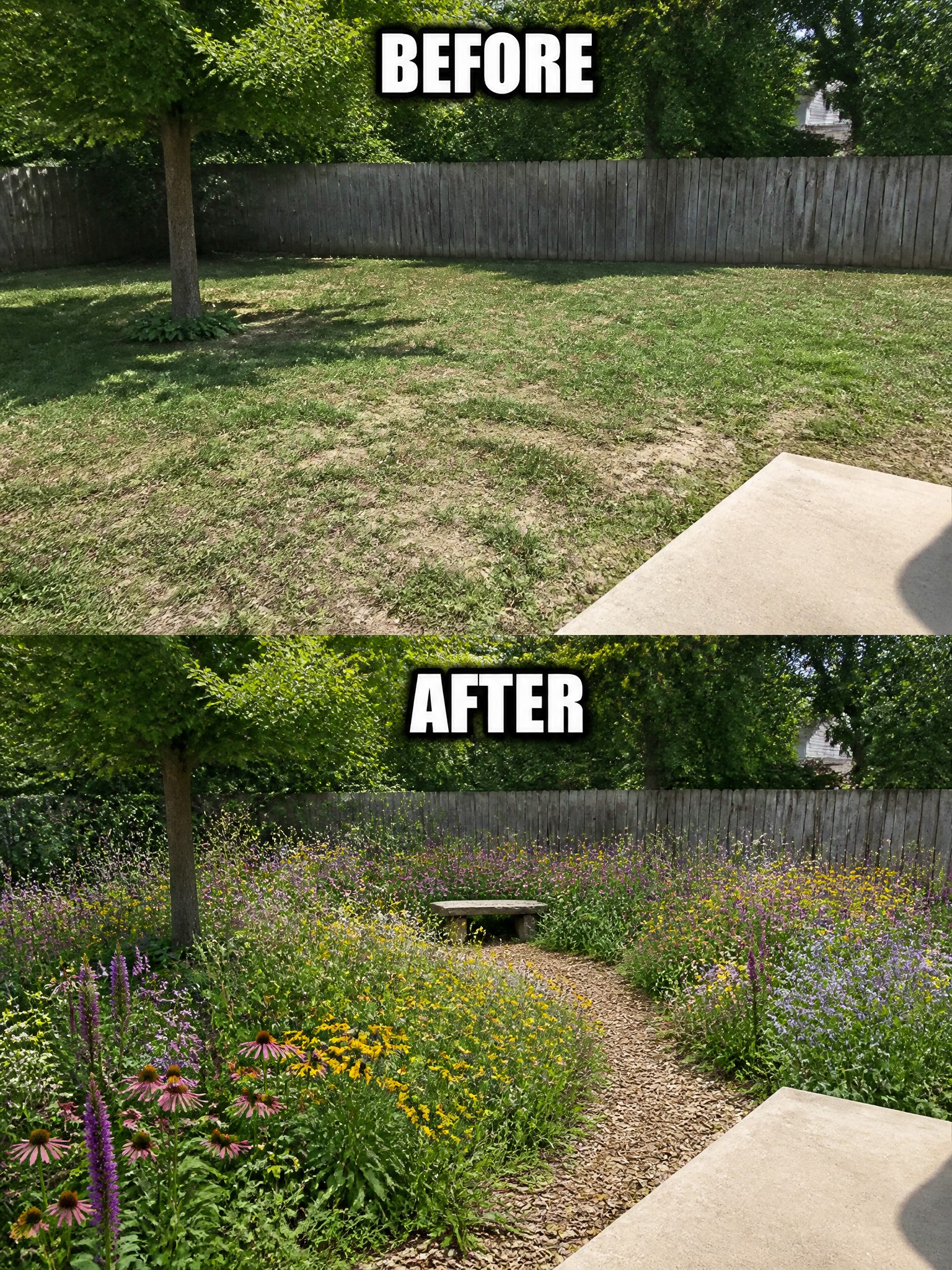
A flat lawn often feels unfinished because there is nothing to guide the eye or create usable space. In this case the simple fix was clearing sections of grass and adding wide flower beds with a gravel path running through the middle. The result turns an empty area into something that feels like a real garden rather than just open ground.
This approach works well in any backyard that has room for planting but lacks shape. Start by deciding where the main path should go, then build the beds around it so the space feels planned instead of scattered. Use plants that fill in quickly and need little extra care once established.
Add Structure With Terraced Beds On A Sloped Lawn
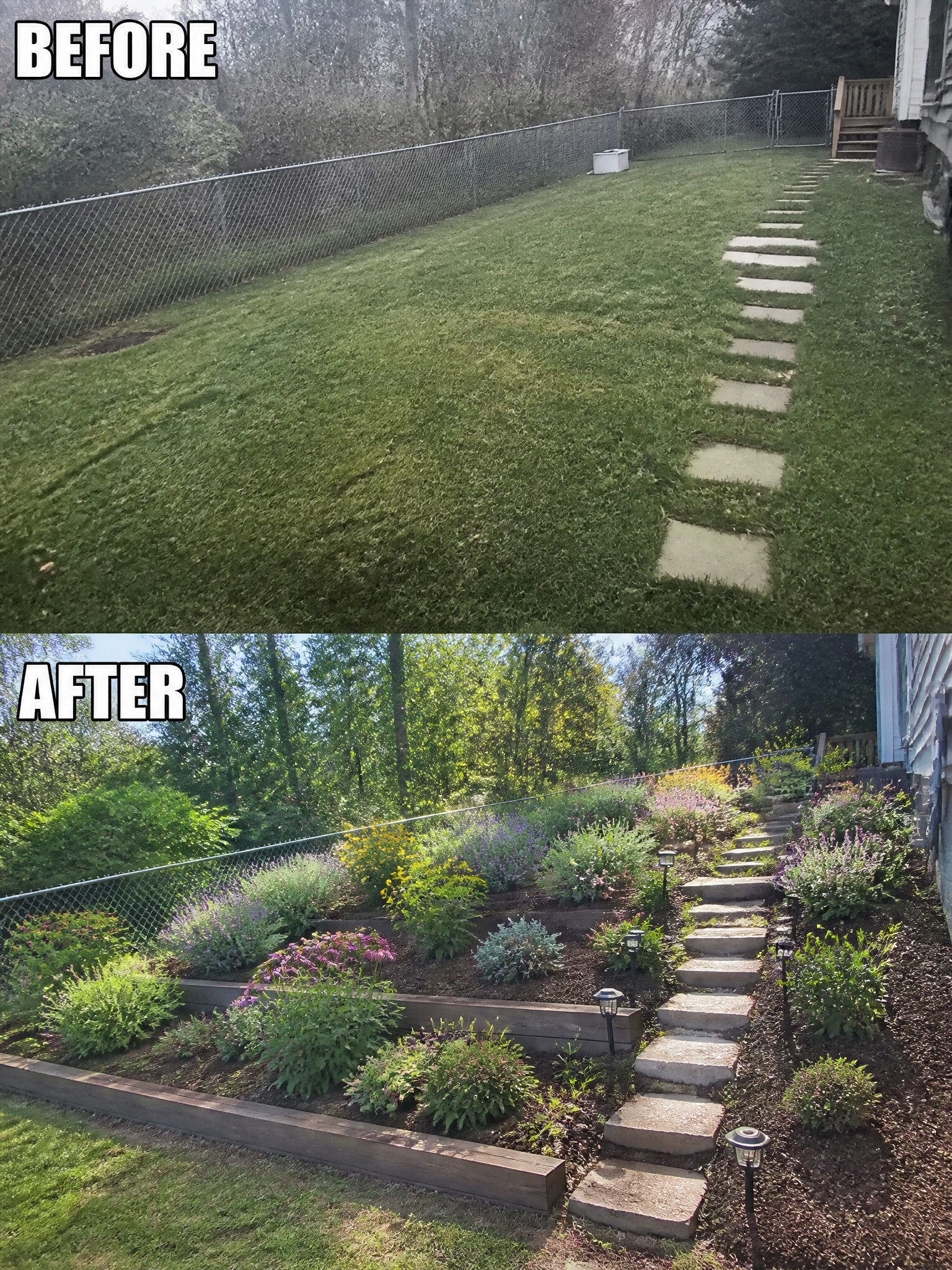
A flat lawn often feels unfinished when it runs straight into a fence or path. The change here came from building low wooden borders that step down the slope and turn the open grass into a series of planted beds. The result gives the yard clear shape without needing a full redesign.
This approach works well on any gentle slope where you want more planting room but still need to keep the space usable. Start with simple timber edging, fill the levels with soil and mulch, and choose plants that can handle the light in your yard. Leave the original path in place so the beds frame it instead of blocking it.
Create A Fire Pit Area In A Plain Backyard
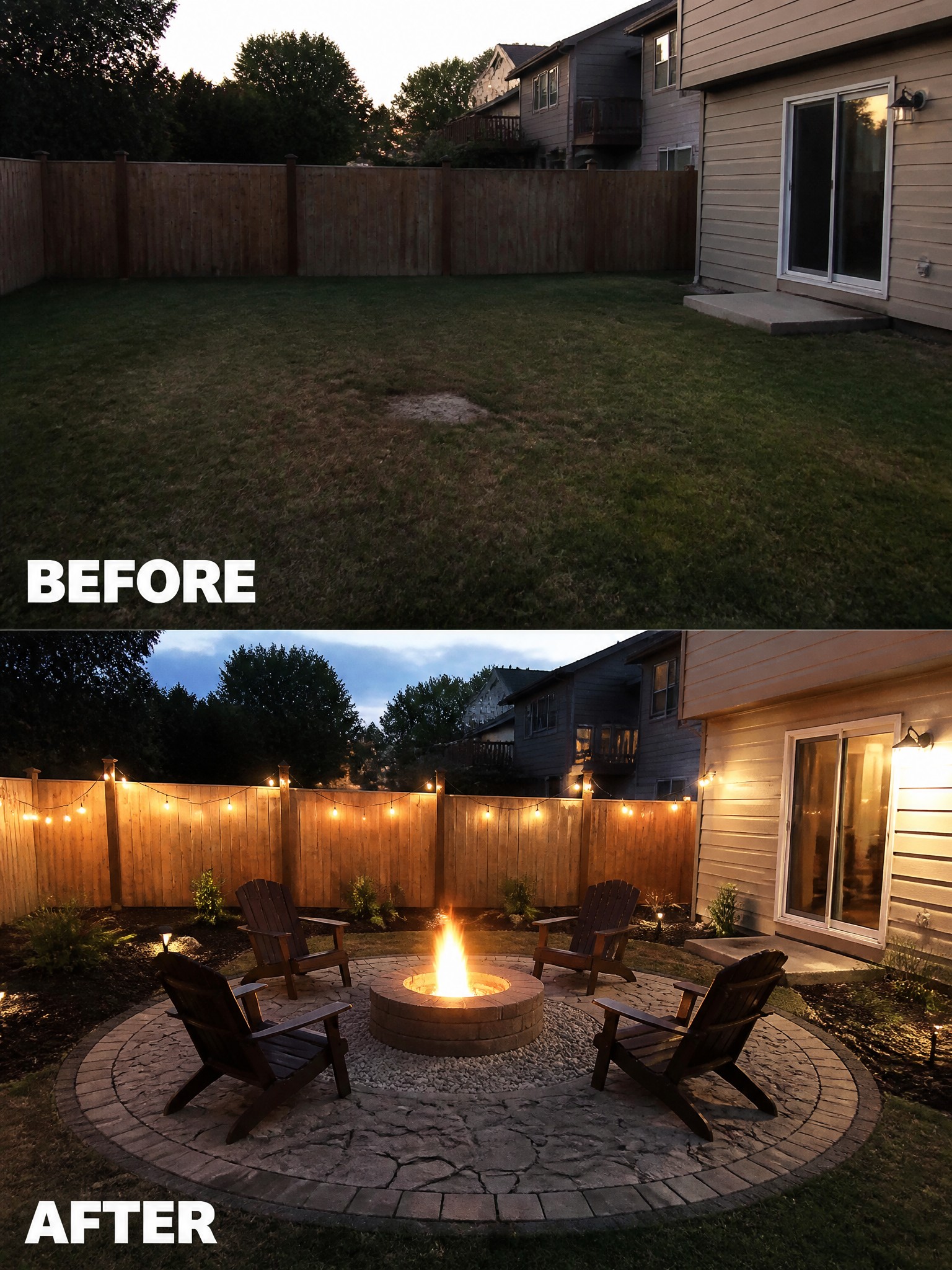
An empty backyard often feels like unused space until you give it a clear purpose. Placing a fire pit in the center with a paver patio and a few chairs turns the lawn into a spot where people can actually sit and gather. String lights overhead add warmth without much extra work.
This approach suits suburban yards that have decent size but lack any existing features. Keep the seating simple and weatherproof, and limit the planting around the edges so the fire pit zone stays easy to maintain and use year after year.
Add A Deck To Turn A Plain Backyard Into Usable Outdoor Space
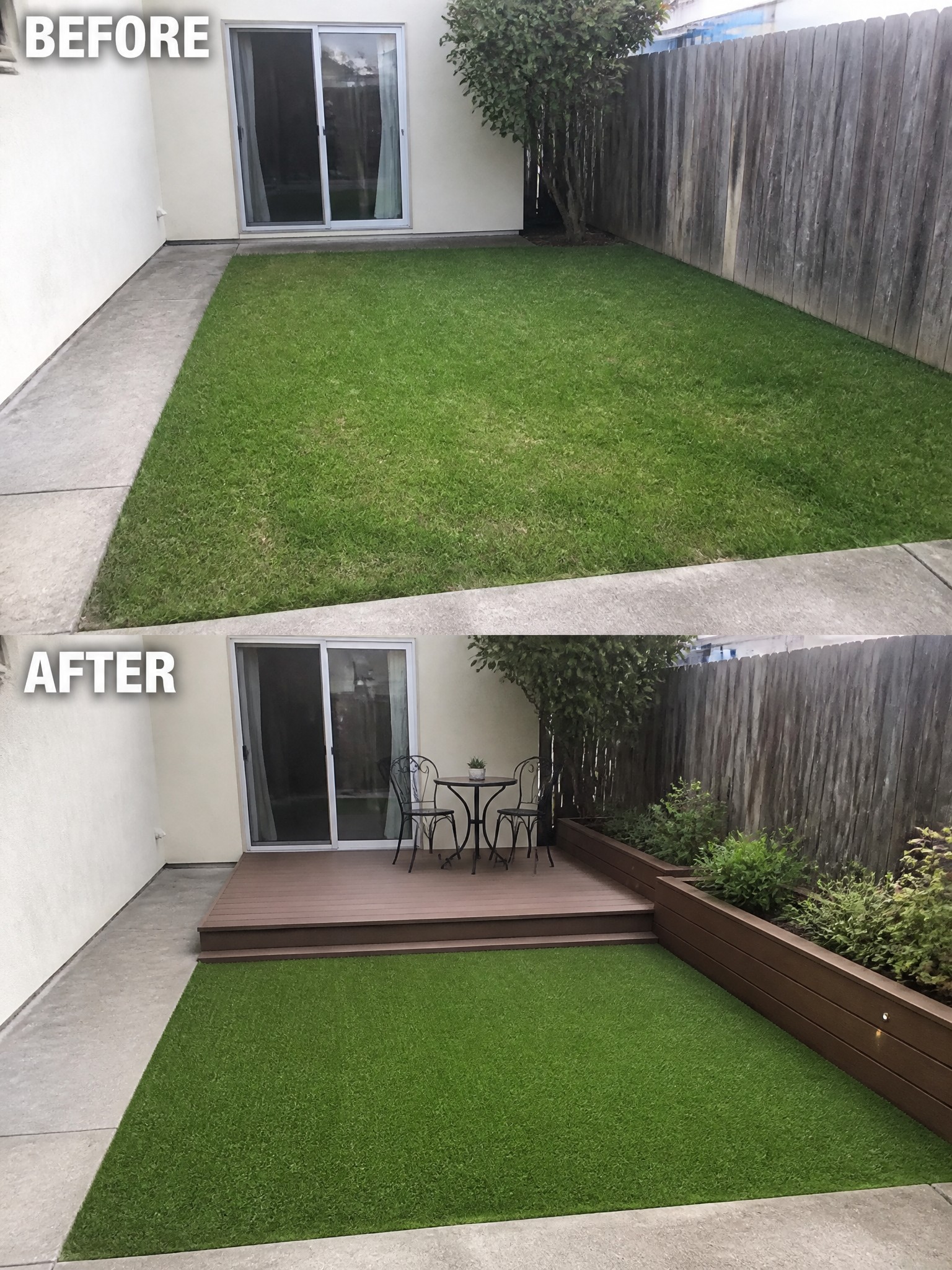
A flat lawn often leaves a backyard feeling unfinished and underused. Adding a simple deck creates a clear spot for seating and makes the whole area feel more intentional. In this case, the open grass was replaced with a low deck, steps, and a small table and chairs that now sit right outside the sliding door.
This approach works well in small or narrow yards where you need one solid place to gather without taking over the whole lawn. Start with the deck size that fits your space and furniture needs, then add raised beds along the edges if you want some planting without extra digging. Keep the rest of the yard open so the deck does not crowd the area.
Add Raised Beds To Structure A Bare Backyard
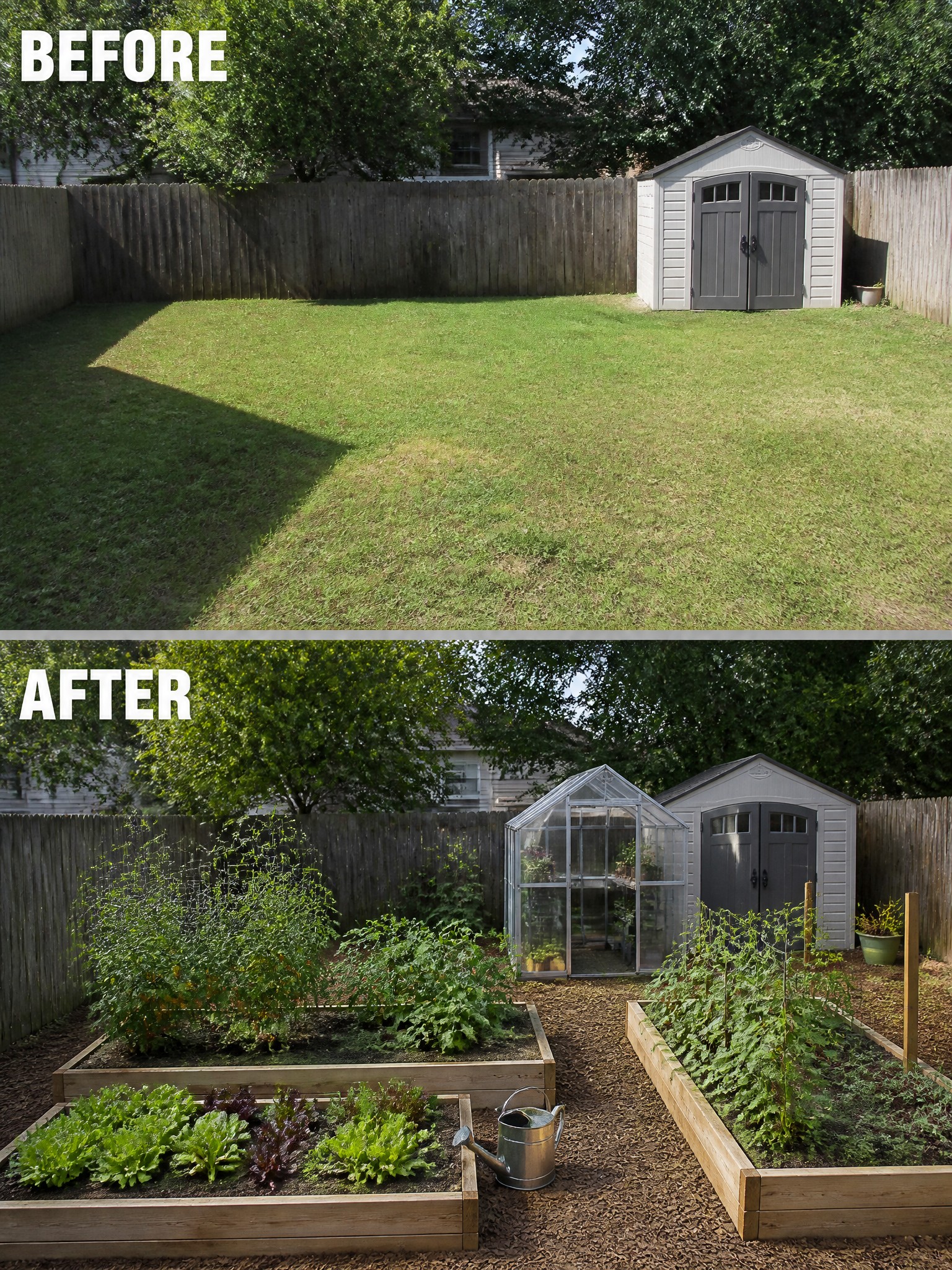
An empty lawn often feels like wasted space once you start thinking about growing anything. Adding raised beds creates clear zones for planting, makes the ground easier to work, and turns the yard into something you can actually use instead of just mow. In this case the shift from flat grass to framed beds filled with vegetables and a small greenhouse shows how simple wood edges and mulch can make the whole area feel planned.
This approach works well in smaller yards where you want to keep things tidy without covering everything in concrete. Start with a few beds placed near the back or side fence so paths remain open, then add soil and basic plants before worrying about extras like a greenhouse. Keep the beds the same height and material so the layout stays simple and easy to maintain over time.
Add Structure To A Plain Backyard With Beds And Paths
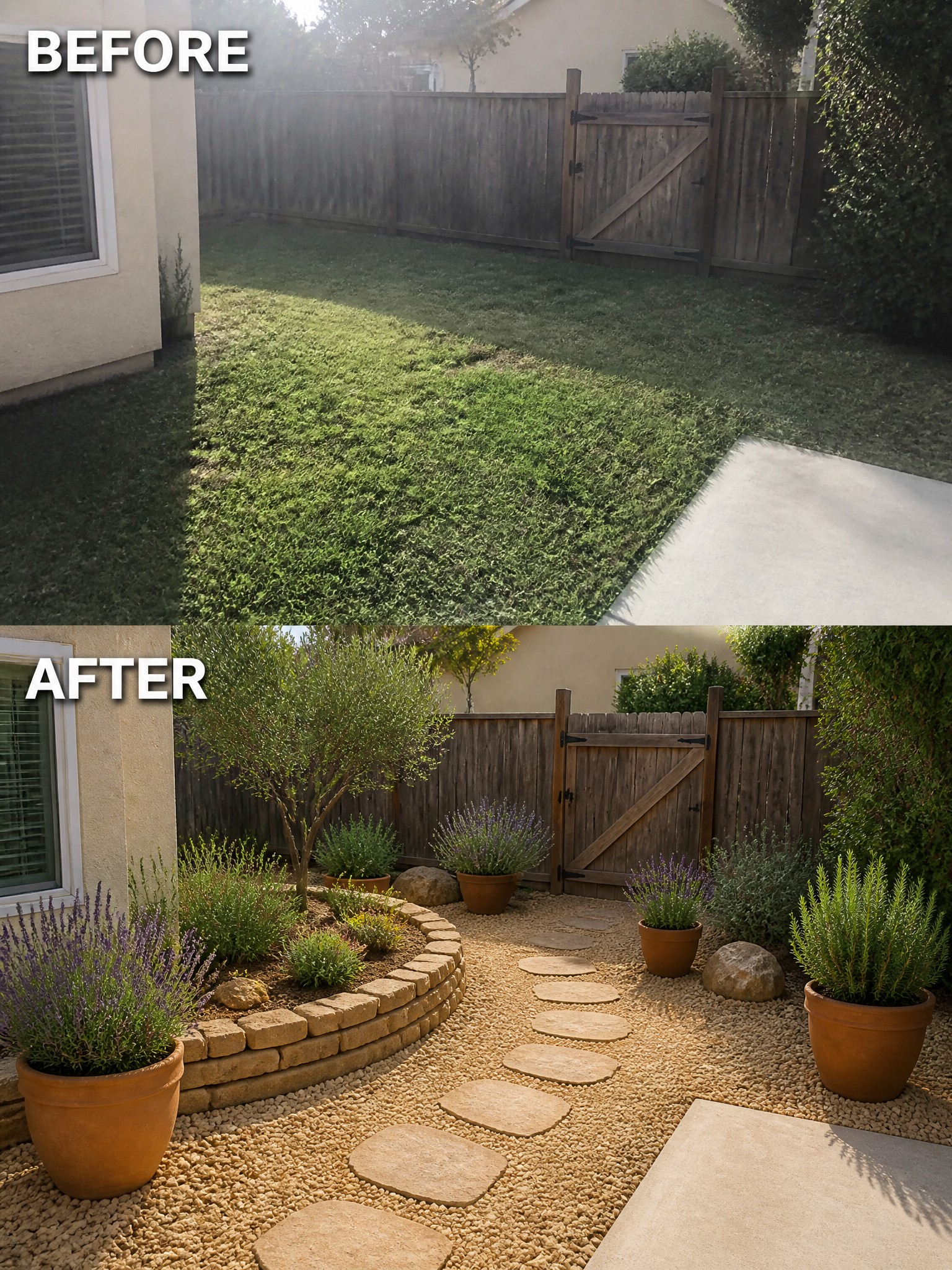
A plain lawn often feels unfinished because nothing guides how the space should be used. Adding edged beds and a gravel path with stepping stones gives the yard clear zones without filling it up. The change from open grass to defined planting areas and a simple walkway makes the backyard feel more purposeful right away.
This idea suits smaller yards that need low-maintenance structure. Mark the beds first, use basic edging, and keep the gravel path wide enough to walk on comfortably. It works best when you repeat the same materials and leave open space between the planted sections.
Add Defined Garden Beds To Structure A Plain Backyard
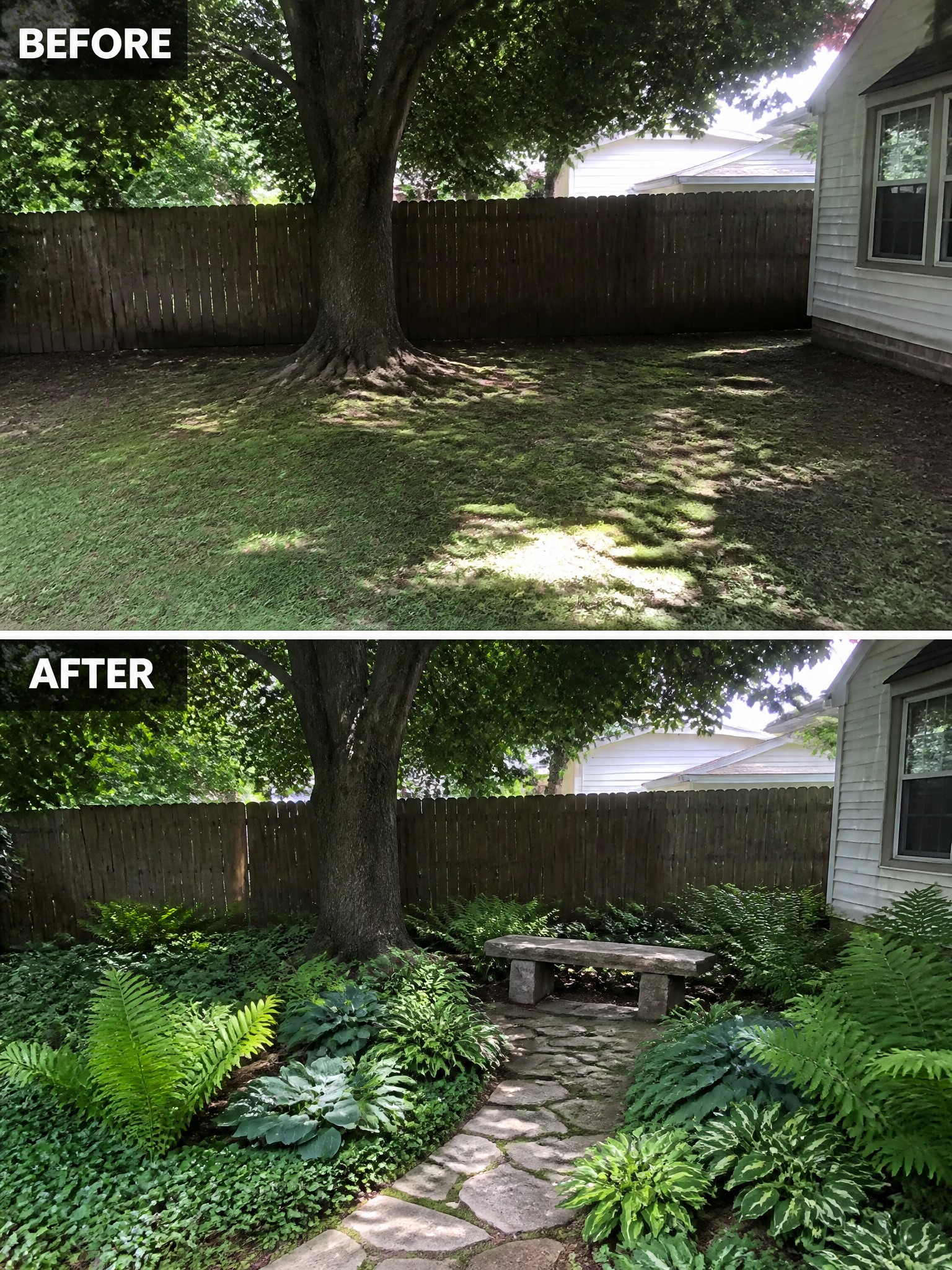
A patchy lawn under a big tree often feels like wasted space because there is no clear edge or purpose. Adding raised beds filled with shade plants and laying a simple stone path gives the area a reason to exist and makes it easy to walk through without trampling anything.
This approach works best in older yards where the lawn struggles in low light. Start by clearing the mossy spots, then plant in layers so nothing looks crowded. A path keeps the center open and leads the eye to a single focal point like a bench, which keeps the whole spot feeling intentional rather than random.
Turn A Bare Patio Into A Defined Seating Area
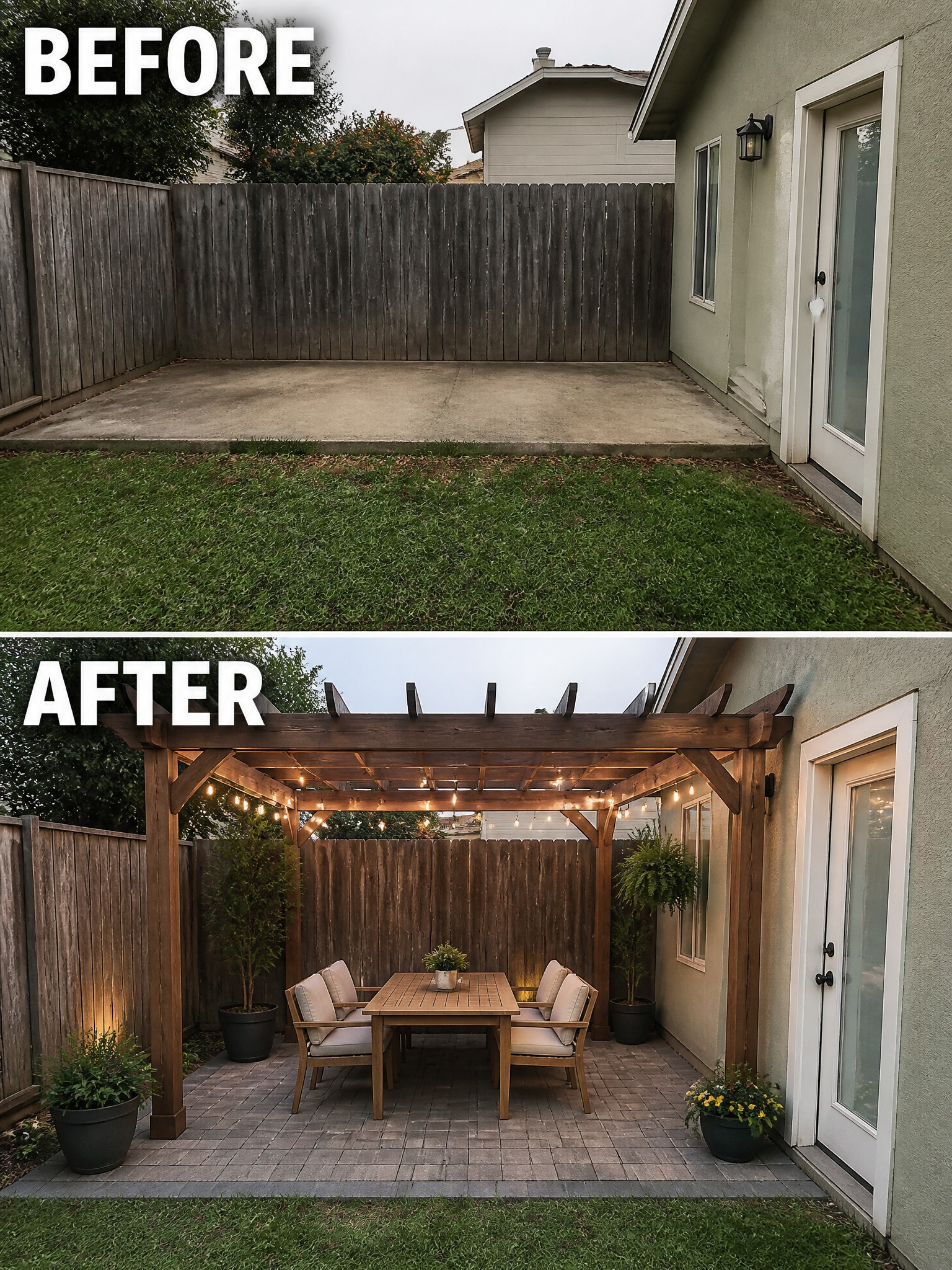
Many backyards have a plain concrete slab that sits unused because there is nothing to make the space feel intentional. Adding a pergola with overhead lighting and a simple dining set gives the area clear purpose and makes it comfortable to sit outside.
This approach works best on homes with basic backyards that already have a solid surface. Start with one main structure like the pergola to create shade and boundaries, then add durable furniture that fits the scale of the space without crowding the walkway.
Add Structure To A Plain Backyard
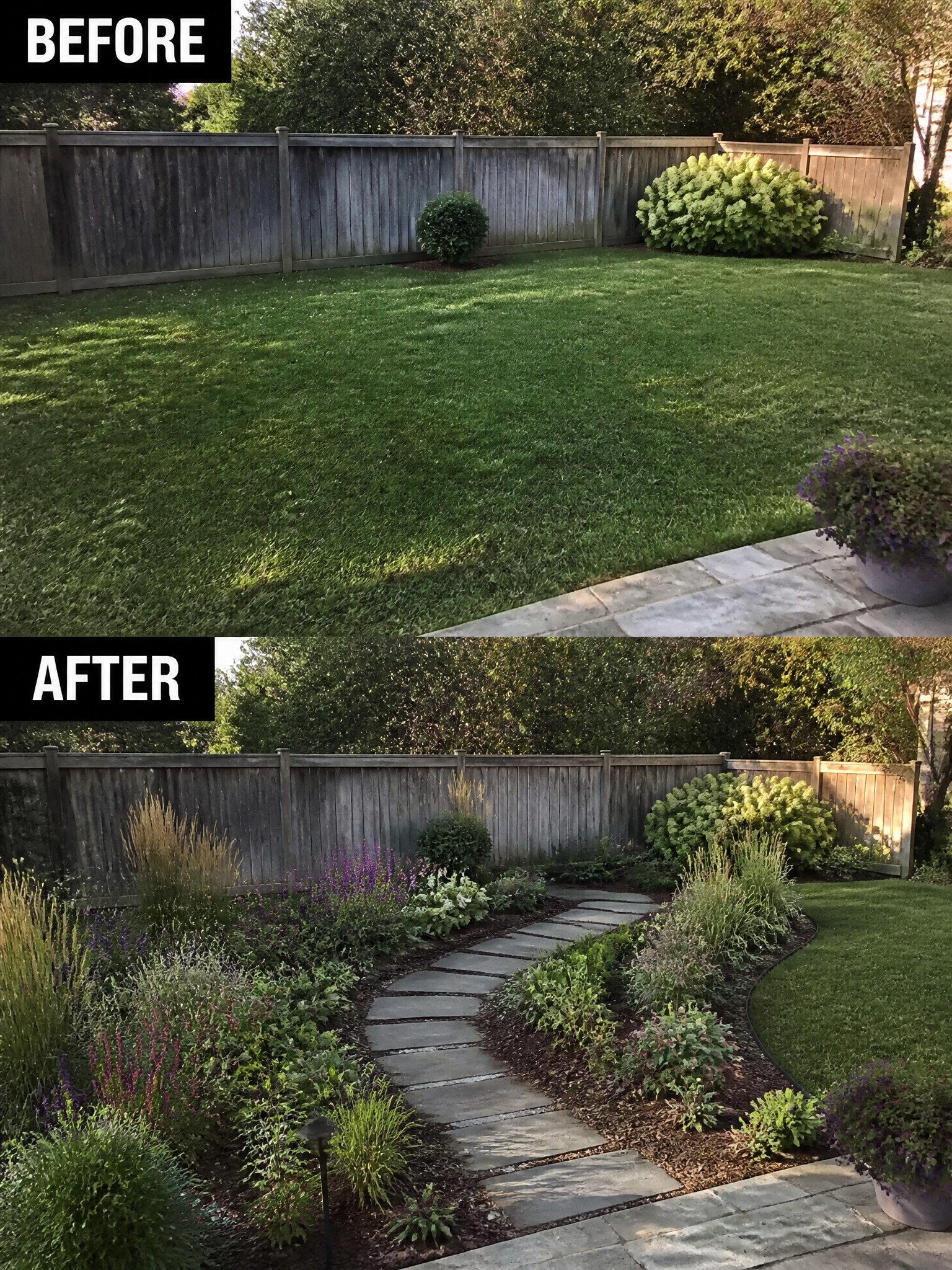
A flat lawn often looks unfinished because it has no clear shape or purpose. Adding a path and planting beds gives the space direction and makes the yard feel more planned without needing a full redesign.
Mark out the path first so it curves naturally toward a focal point, then shape the beds along the fence line. Keep the planting simple with a mix of shrubs and grasses, and use mulch to keep the edges clean so the lawn stays easy to maintain.
Replace Patchy Grass With Turf For A Play Area
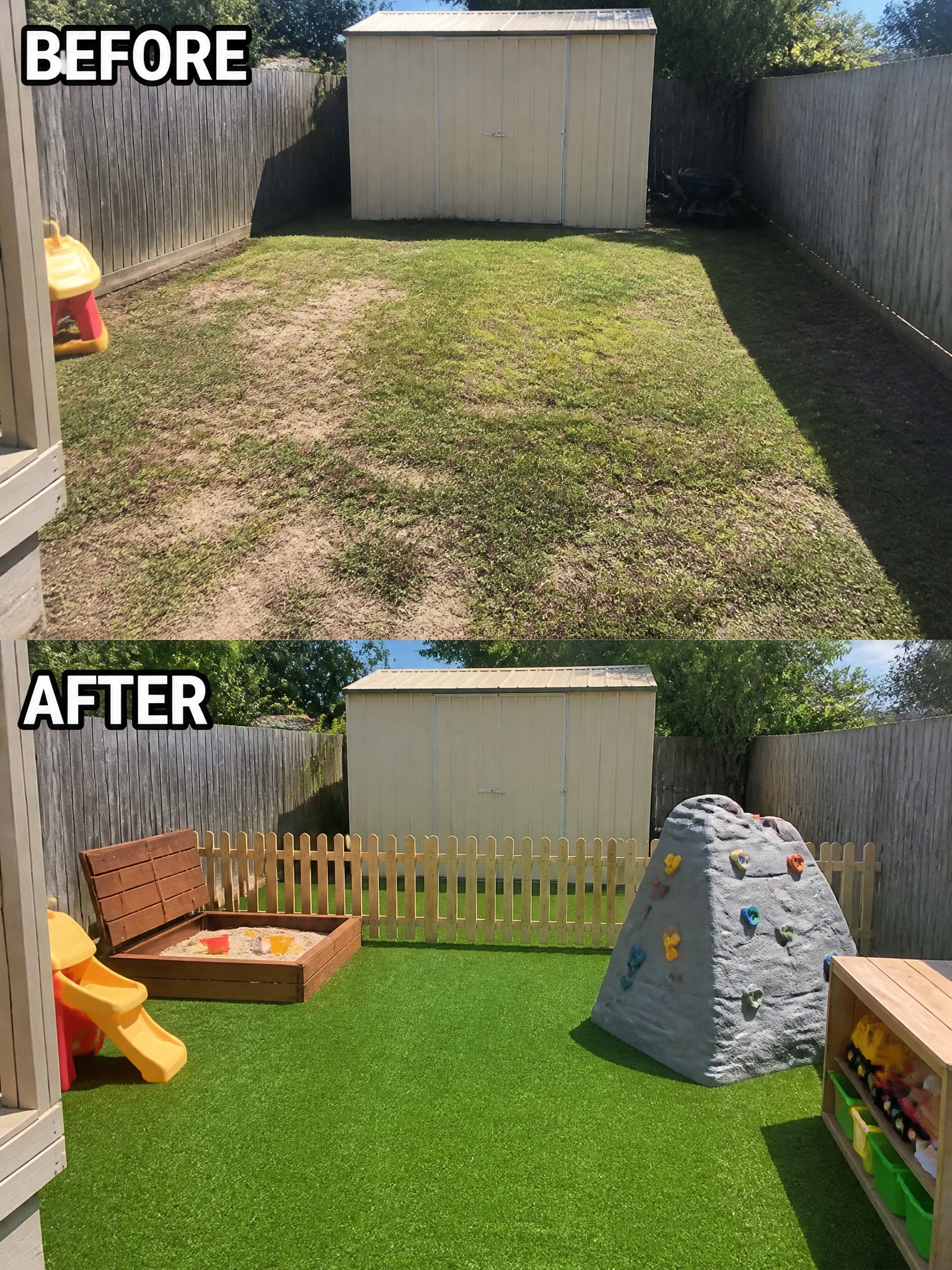
A patchy lawn often leaves a backyard feeling half-finished and difficult to use for anything active. Switching to artificial turf gives the space a consistent surface that stays green and handles daily wear without the need for constant mowing or watering.
This approach suits small yards where children need room to play. Focus first on preparing the ground properly, then keep any added features like a sandbox or climbing structure to one or two spots so the area still feels open and easy to move around in.
Add Defined Garden Beds To A Plain Lawn
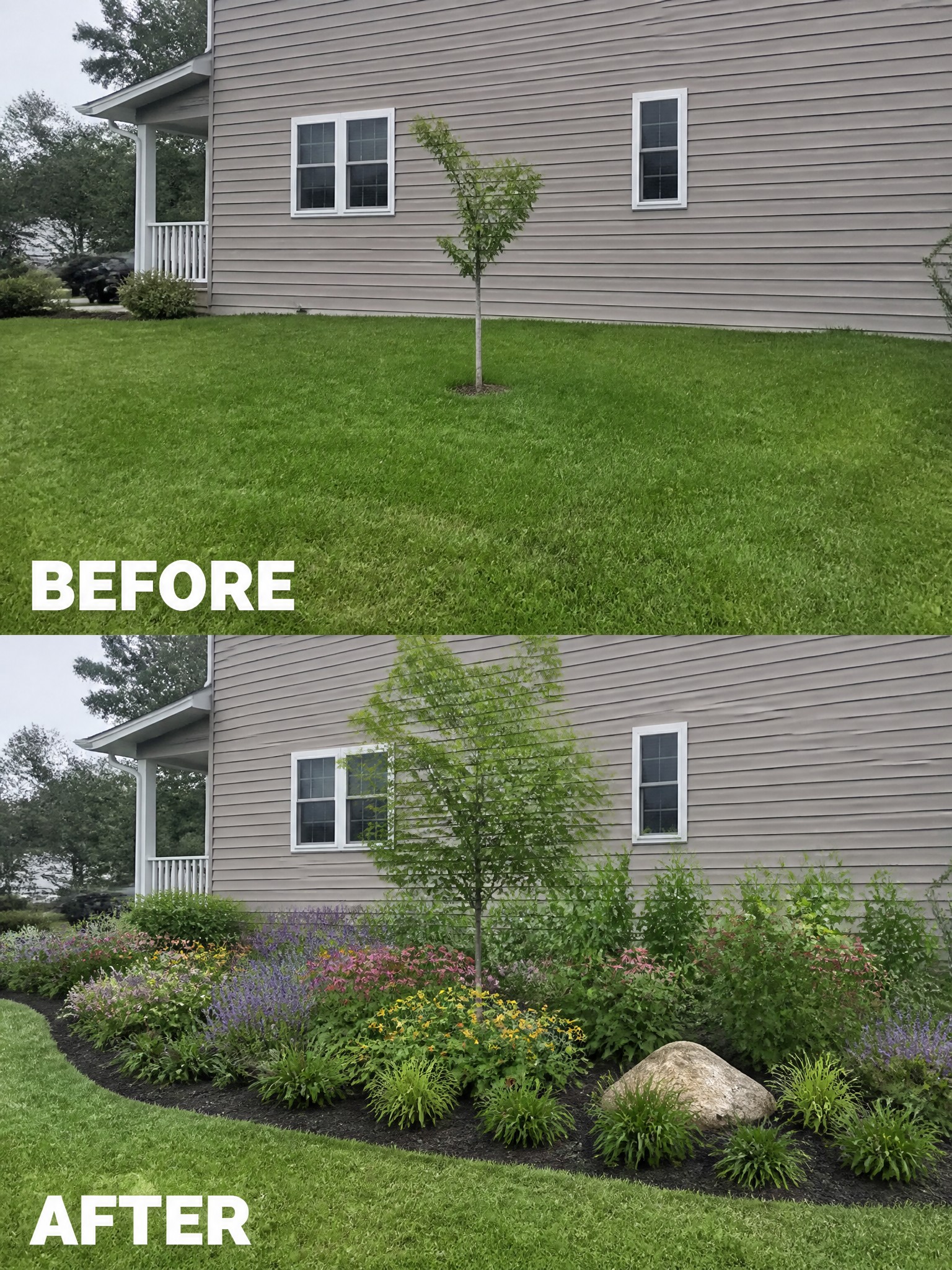
A flat stretch of grass next to the house often looks unfinished even when the lawn is healthy. Adding a planted border along the foundation gives the space clear edges and turns empty ground into a deliberate part of the yard. The simple change from bare turf to mulched beds filled with flowers and shrubs makes the whole area feel more settled and complete.
This approach works best on any side of the house where the lawn runs straight up to the siding. Start with a gentle curve or straight line to mark the bed, lay down mulch, and choose a mix of low shrubs and seasonal color. The beds stay easy to maintain as long as you leave enough room to walk around them and water the new plants regularly during the first season.
Turn A Wet Lawn Spot Into A Garden Pond
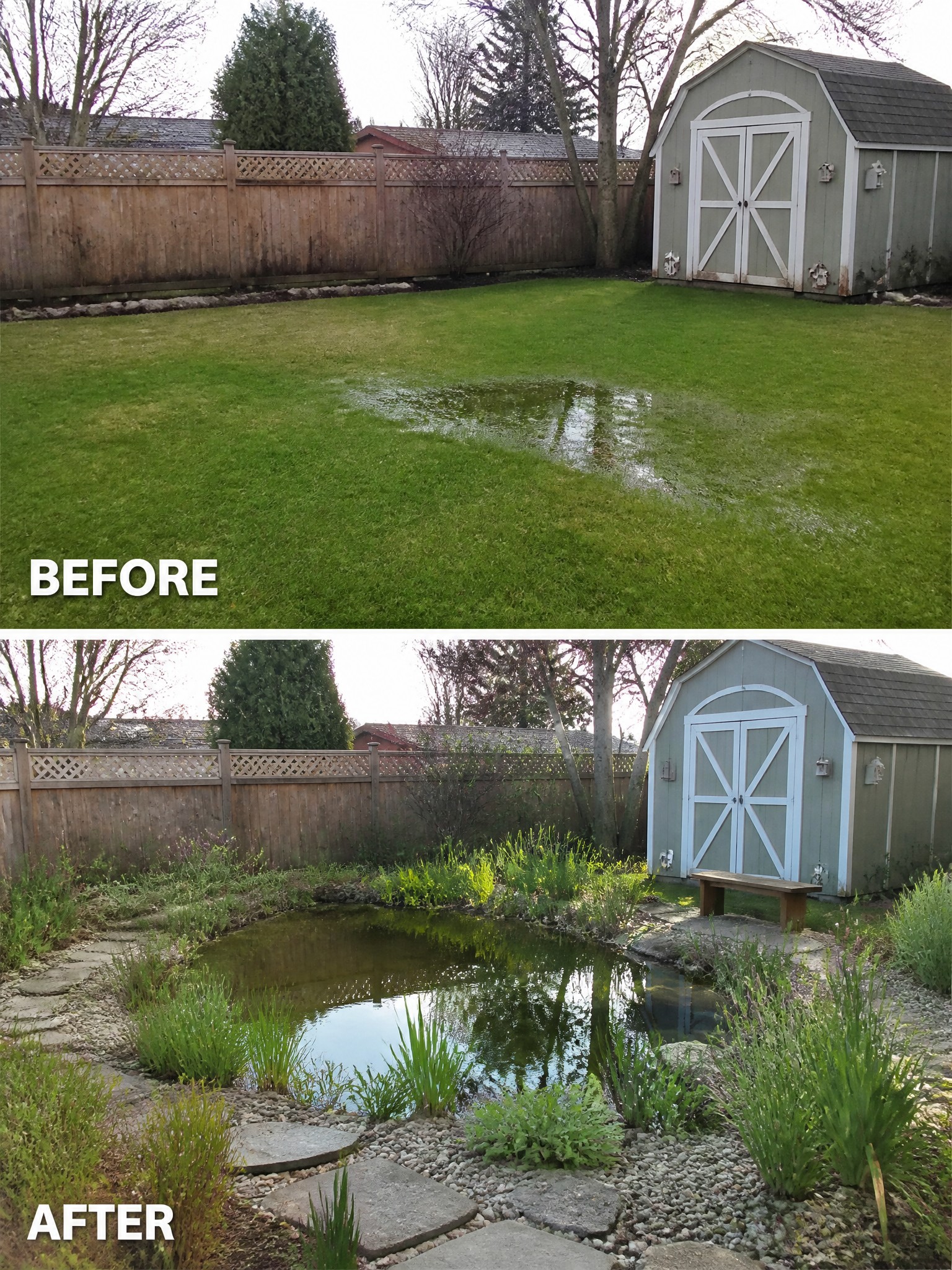
A low area that collected water after rain became the natural spot for a small pond. Adding a liner, edging, and simple planting turned the problem spot into the main feature of the yard while the rest of the lawn stayed open and usable.
This idea works best in yards that already have one soft or damp section. Mark the shape first, keep the planting simple with grasses and a few perennials, and add a path of stepping stones so the area feels intentional rather than crowded.
Create A Gravel Patio In A Plain Backyard
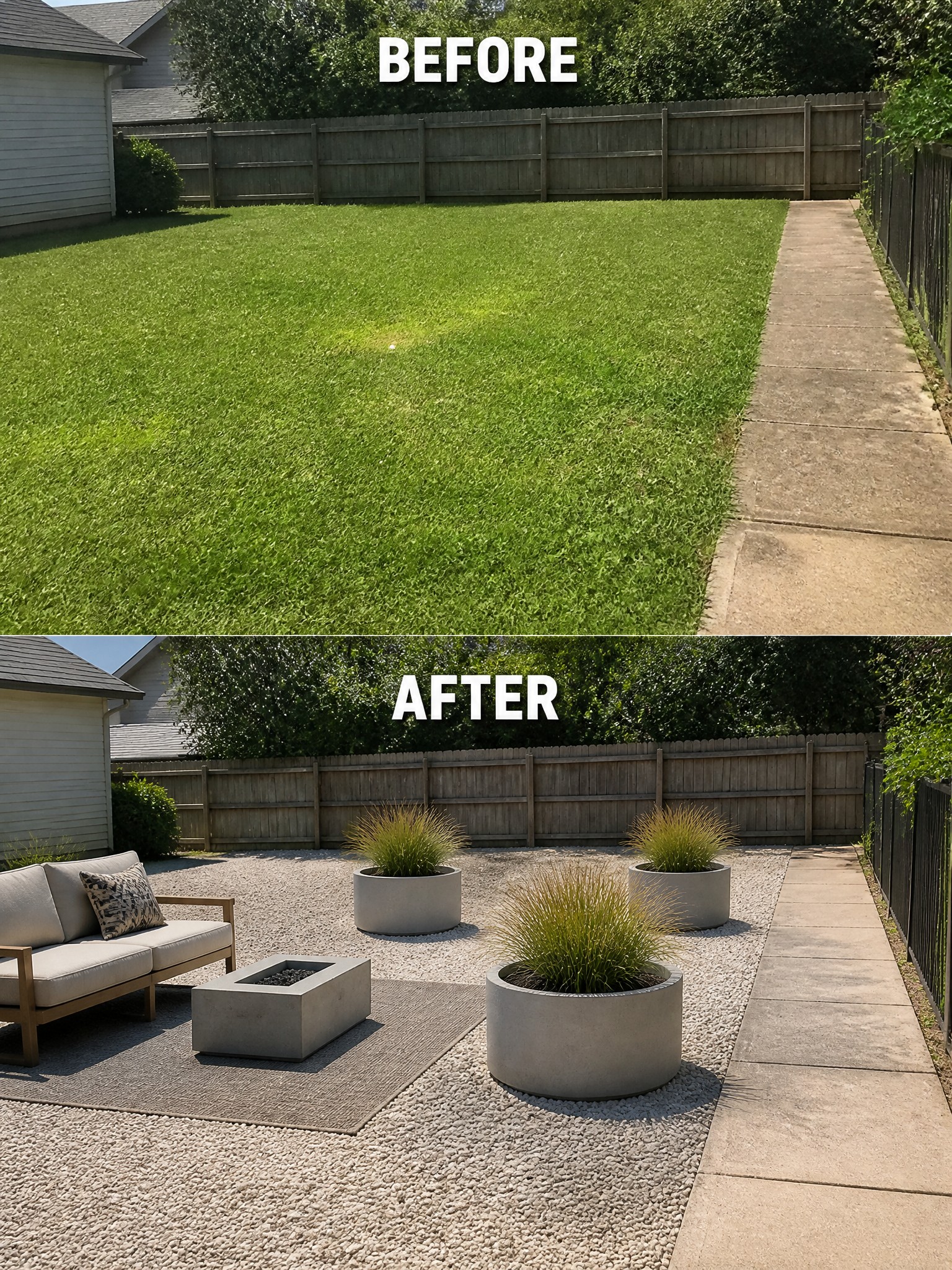
A large empty lawn can feel like wasted space once you see how a simple gravel area changes the feel. Replacing a section of grass with gravel gives the yard clear boundaries and creates room for seating without needing a full deck or concrete pour.
This approach works well in backyards that already have a side path or fence line to work around. Start by marking off the size you need for furniture and walking room, then add a few large planters to soften the edges. The result feels intentional without requiring a big budget or constant upkeep.
Add Structure To A Plain Backyard
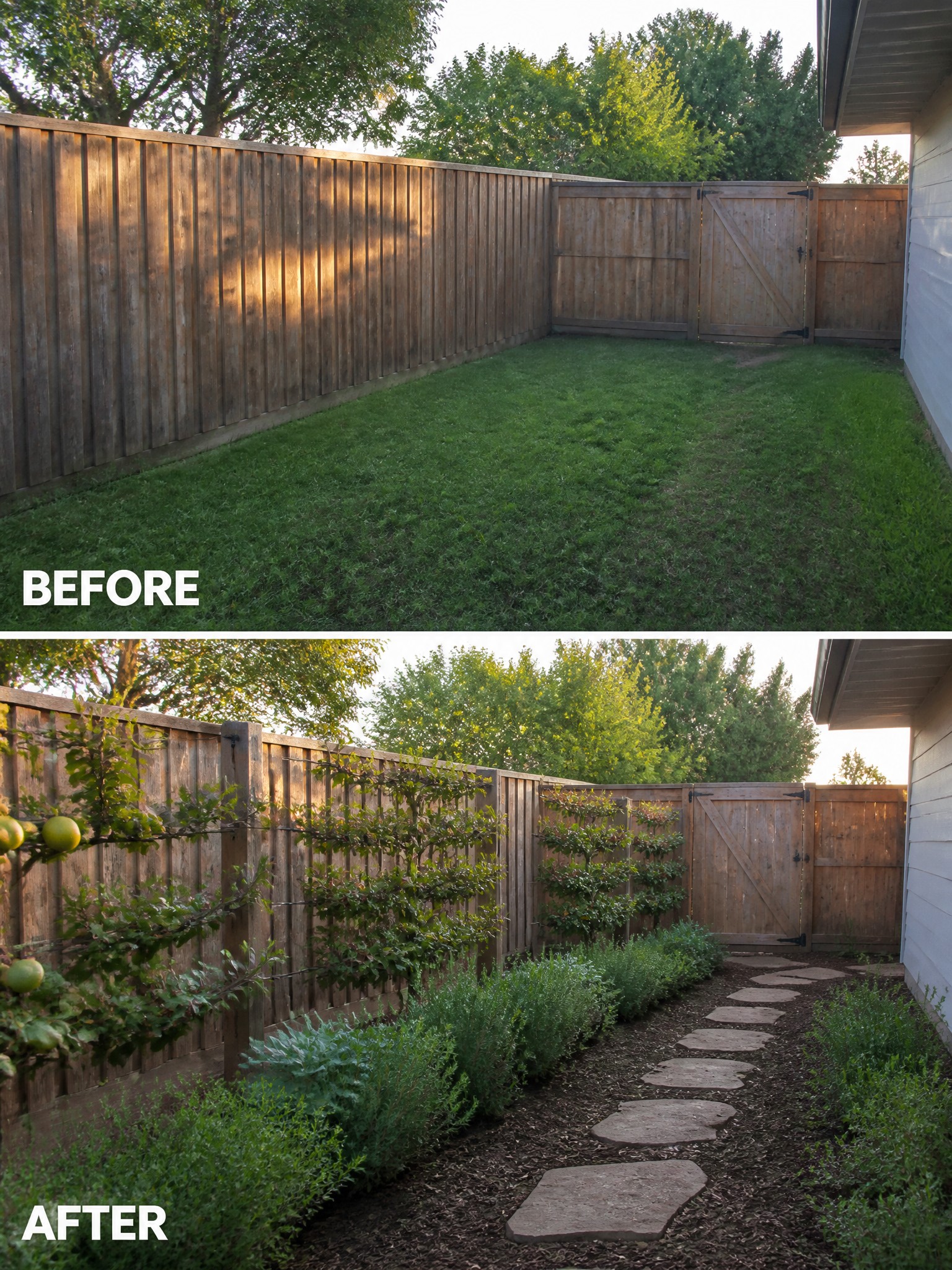
A flat lawn next to a tall fence often feels unfinished because there is nothing to break up the space. Adding a narrow planted border along the fence and laying down a simple stone path through mulch gives the yard clear lines and makes it feel more intentional. The fence now acts as a backdrop instead of just a boundary.
This approach works best in smaller yards where you want usable open space but still need some definition. Start by planting along the longest edges first, then add a path that leads toward the gate or a seating spot. Keep the plantings simple with a mix of shrubs and ground cover so the beds stay low and the center of the yard stays open.
Turn An Empty Backyard Into An Outdoor Seating Area
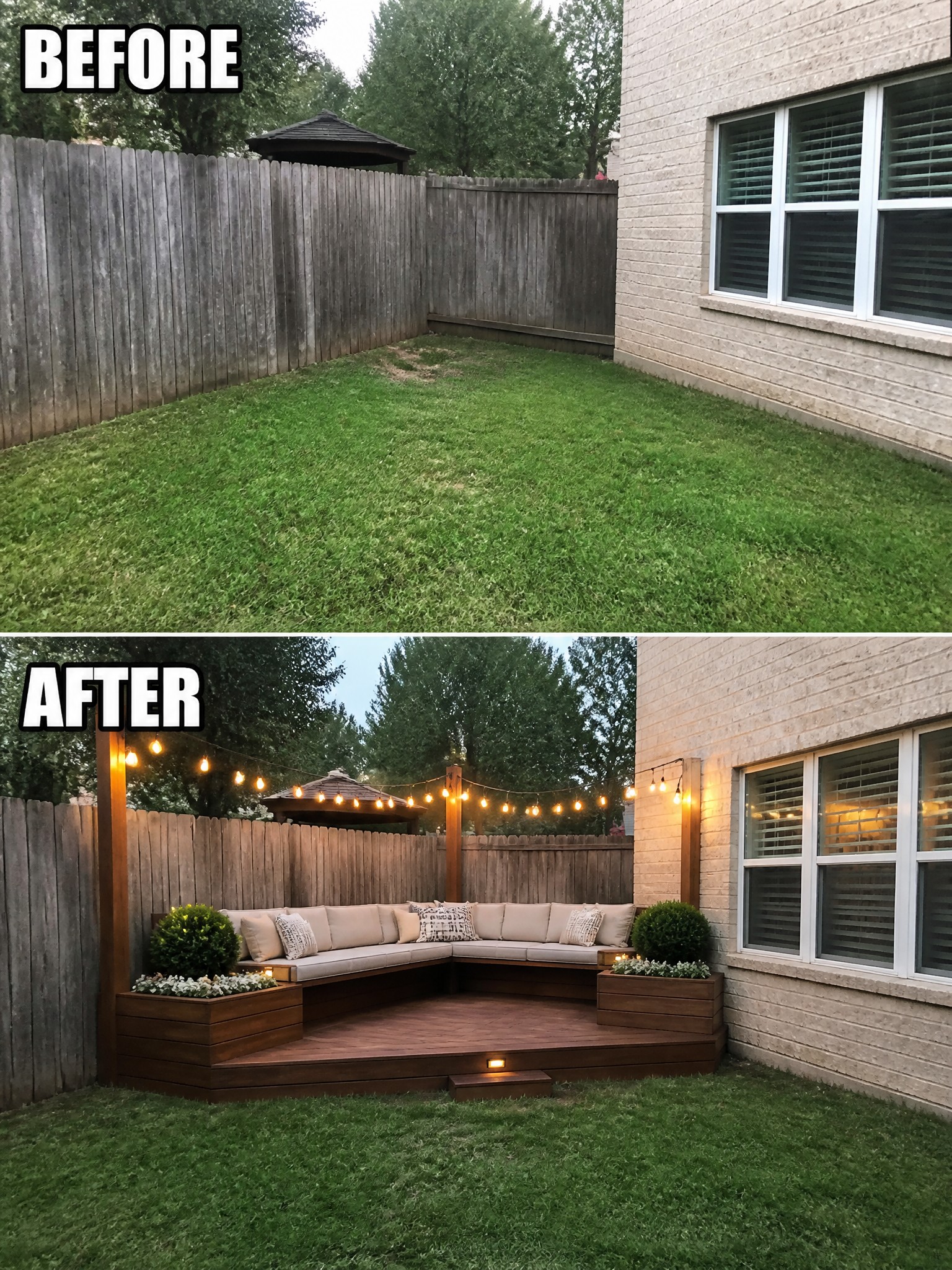
An empty lawn often stays unused because there is no clear place to sit or gather. Adding a raised deck with built-in benches creates a defined spot that feels intentional and ready for use. The simple addition of a corner layout and overhead string lights makes the space feel finished without needing a lot of extra furniture.
This approach works best in smaller or flat yards where you want one main gathering spot. Keep the deck size modest so the rest of the lawn stays open, and use the built-in benches to save room that freestanding chairs would take up. Focus on sturdy outdoor materials and basic lighting first before adding more details.
Replace A Patchy Lawn With Dense Ground Cover
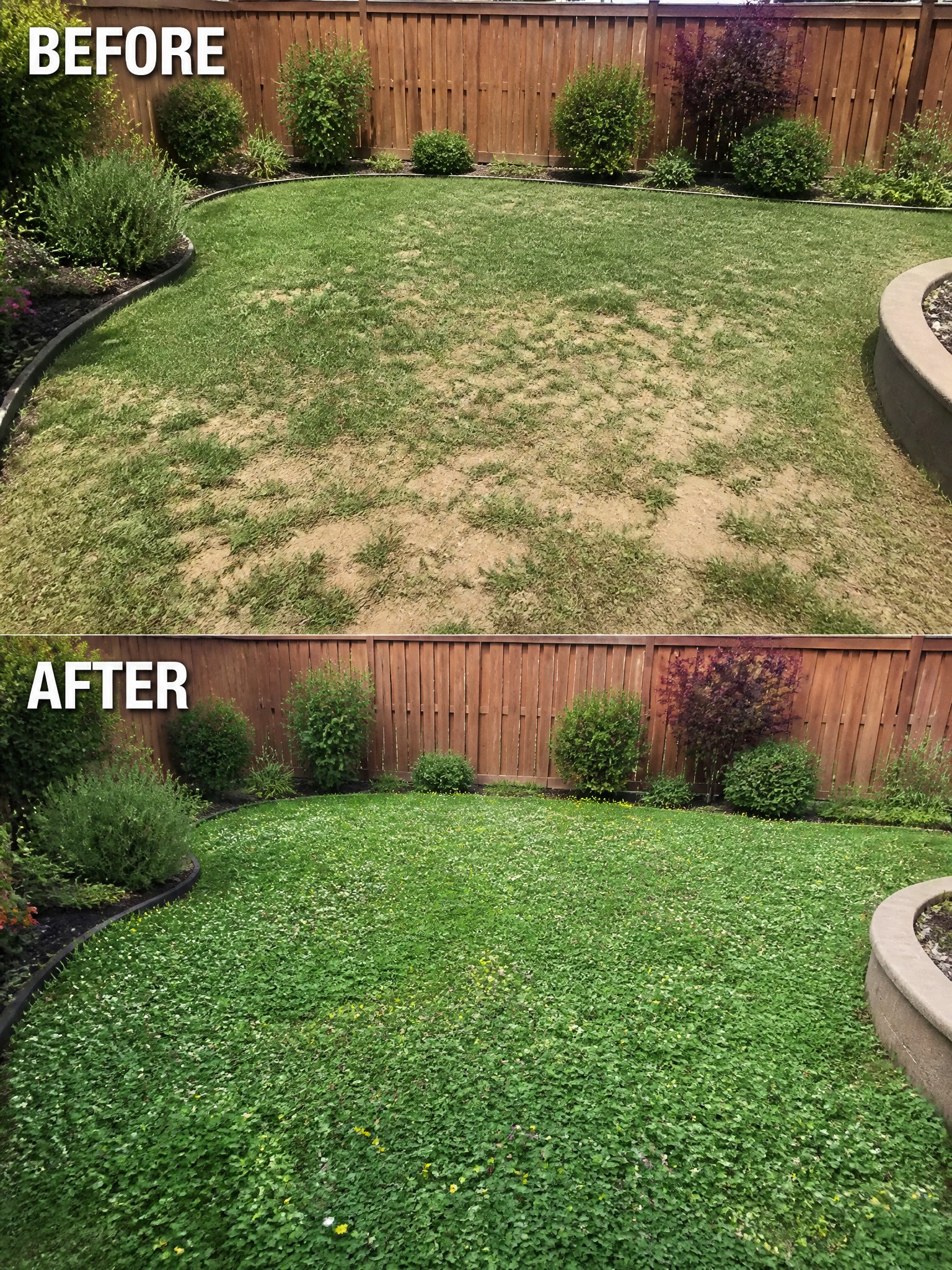
A thin, uneven lawn often makes the whole yard look tired even when the beds are tidy. Replacing the struggling grass with a thick, low-growing ground cover fills the bare patches and gives the space a consistent, healthy look that holds up better through dry spells.
This works especially well in backyards where regular grass struggles to stay full. Clear the weak areas first, then seed a clover mix or similar ground cover that stays short and needs less mowing and water. Keep the existing bed lines clean so the new growth stays neatly contained.
Add Structure To A Plain Backyard With Paths And Gravel
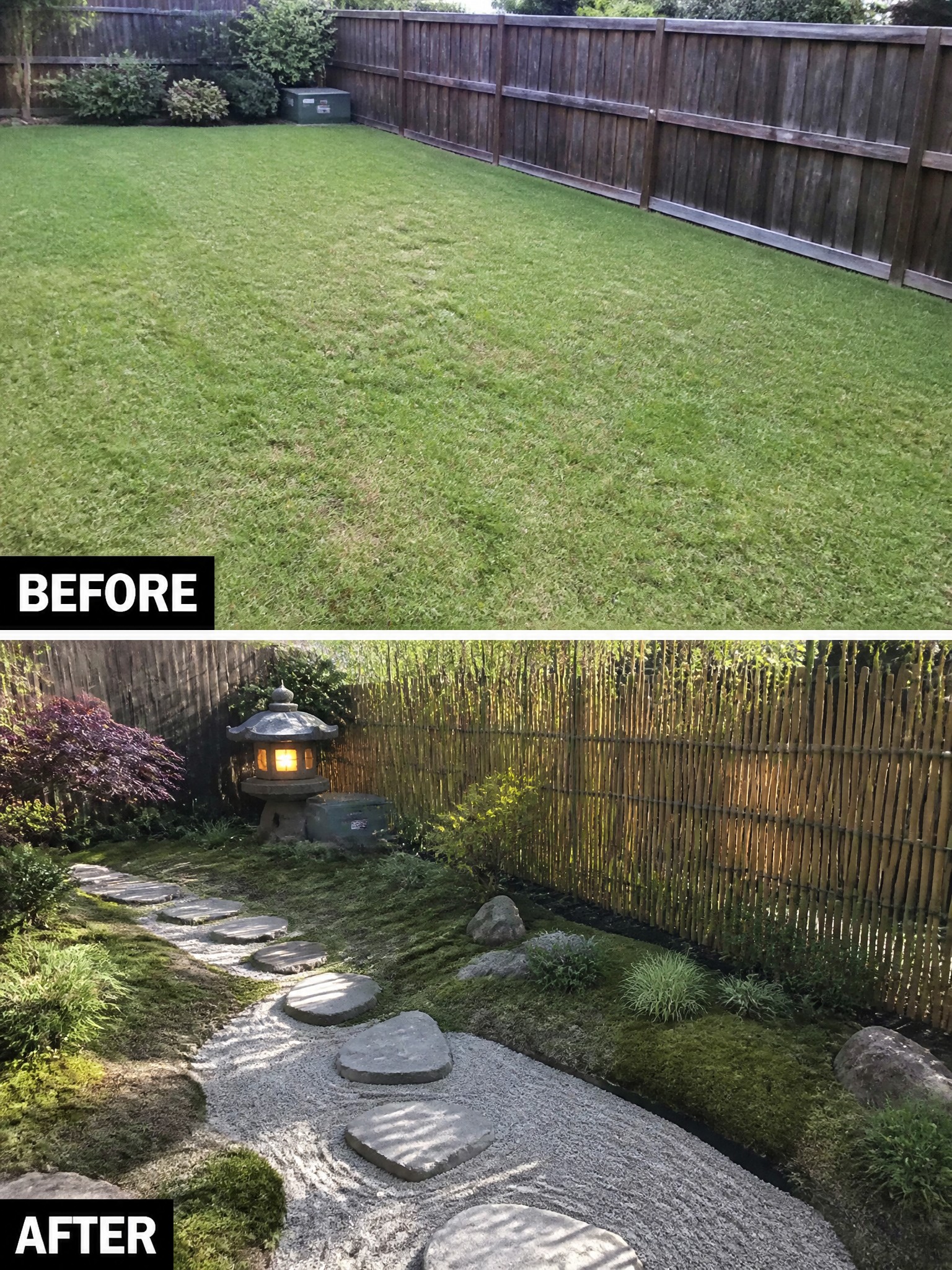
A flat lawn often feels unfinished because nothing breaks up the open space. Adding a simple path of stepping stones and gravel creates clear lines and gives the yard a sense of purpose without needing a full redesign.
This idea works best in smaller yards where you want to add interest while keeping most of the lawn open. Start with one path that leads toward a single focal point, then add low plants and rocks along the edges. Leave enough open grass so the new features do not crowd the space.
Soften A Bare Fence With Vines And Border Plants
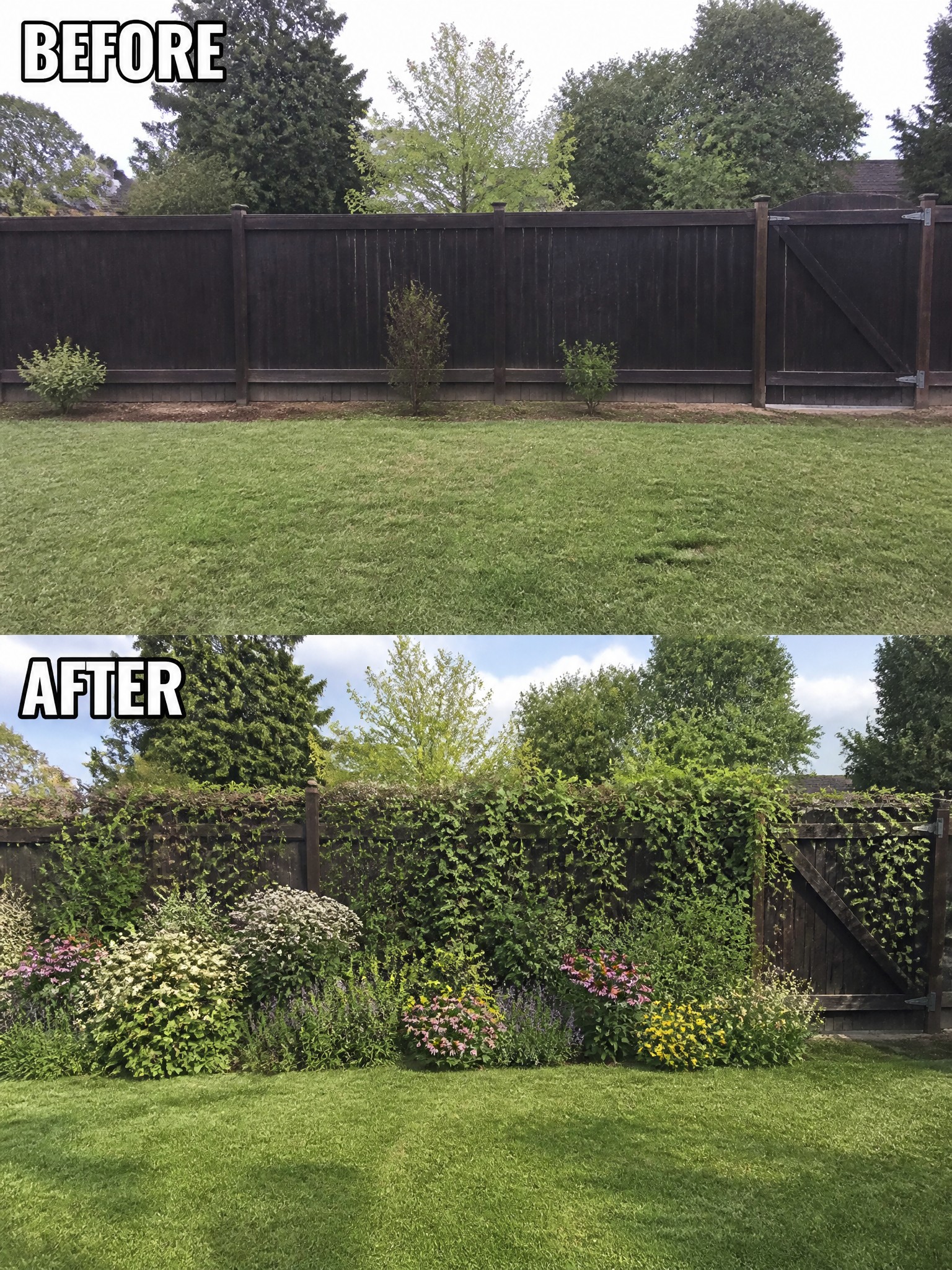
A plain fence next to a wide lawn often leaves the yard looking unfinished. Covering the fence with climbing vines and adding a strip of shrubs and flowers along the base gives the space a softer edge and makes the fence feel like part of the garden instead of a hard wall.
This idea works well on any long fence where you want more privacy and color without major construction. Start with vines that climb easily on wood, then choose a few repeating plants for the border so the bed stays simple and easy to maintain.
Add An Outdoor Kitchen To Give A Plain Backyard A Clear Purpose
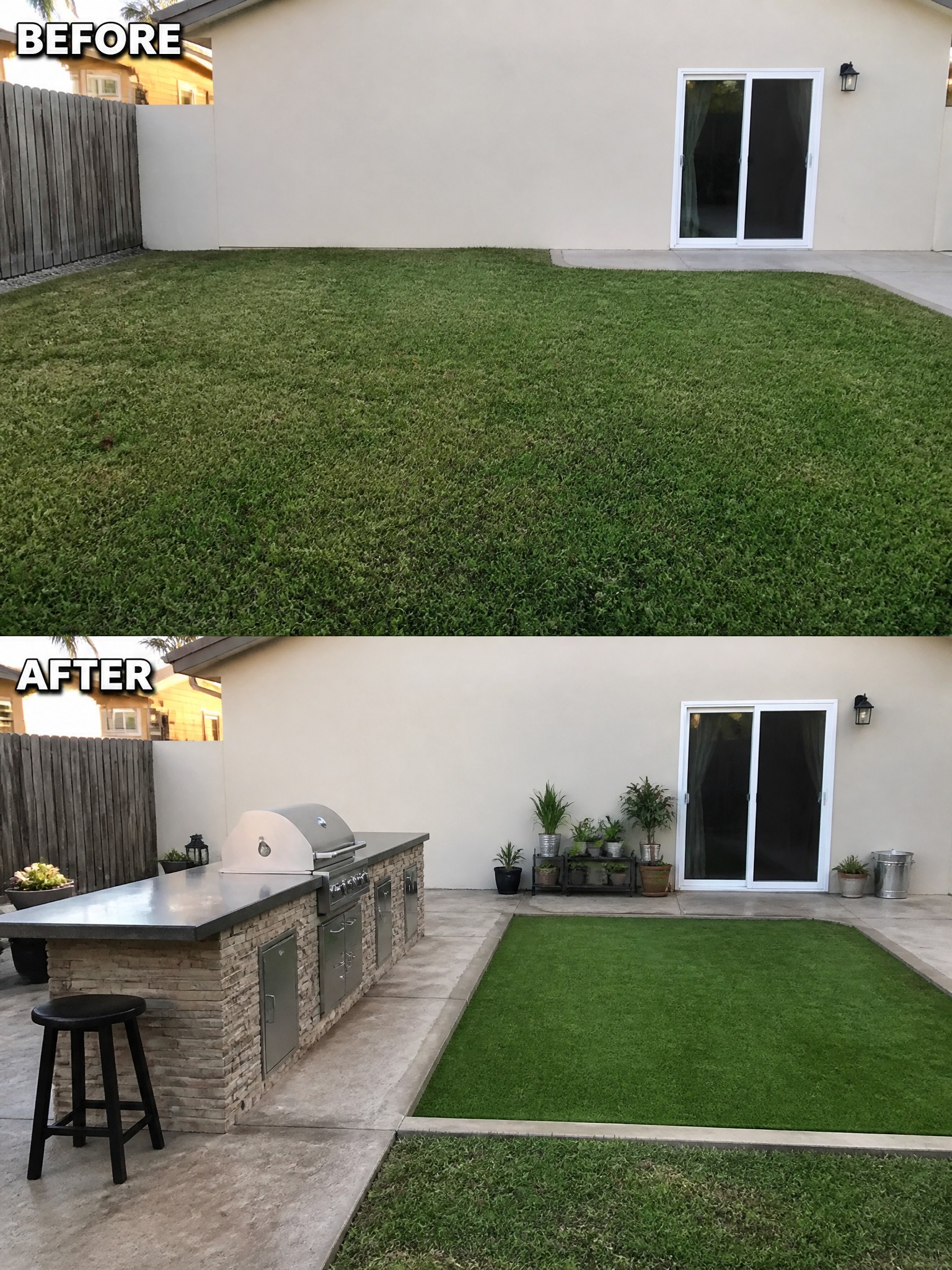
A large empty lawn often feels like wasted space because there is nothing to anchor it. Adding a simple outdoor kitchen along one wall changes that fast. The island gives the yard a reason to be used and creates a natural spot for cooking and gathering without needing a full patio overhaul.
This approach works best in backyards that already have decent lawn space but lack any built features. Keep the kitchen scale modest so it does not crowd the remaining yard, and use matching pavers or turf borders to keep the layout clean. Focus first on the cooking area and seating, then add plants later if needed.
Add Defined Garden Beds Around A Plain Lawn
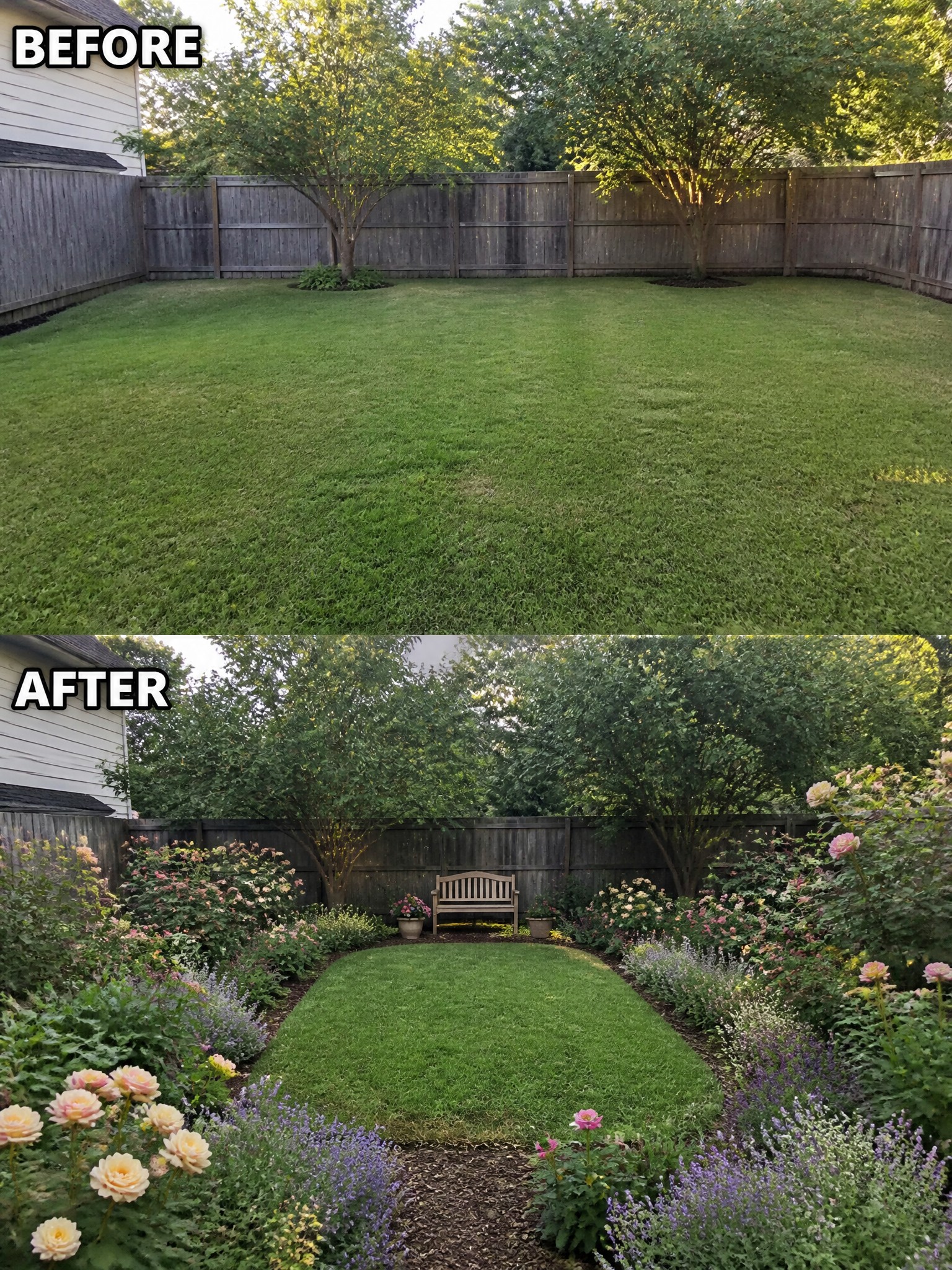
A plain lawn often looks unfinished because it has no edges or planting to give it shape. Adding wide flower beds along the fence lines turns the open grass into a clear, usable area while keeping the center open for play or seating.
This idea works best in smaller backyards where you want color and structure without losing the lawn. Mark out the beds first with a gentle curve, then choose a simple mix of shrubs and perennials that can handle your sun and soil. The bench placed at the back helps anchor the space without crowding it.
Add A Deck To Turn An Empty Backyard Into A Usable Space
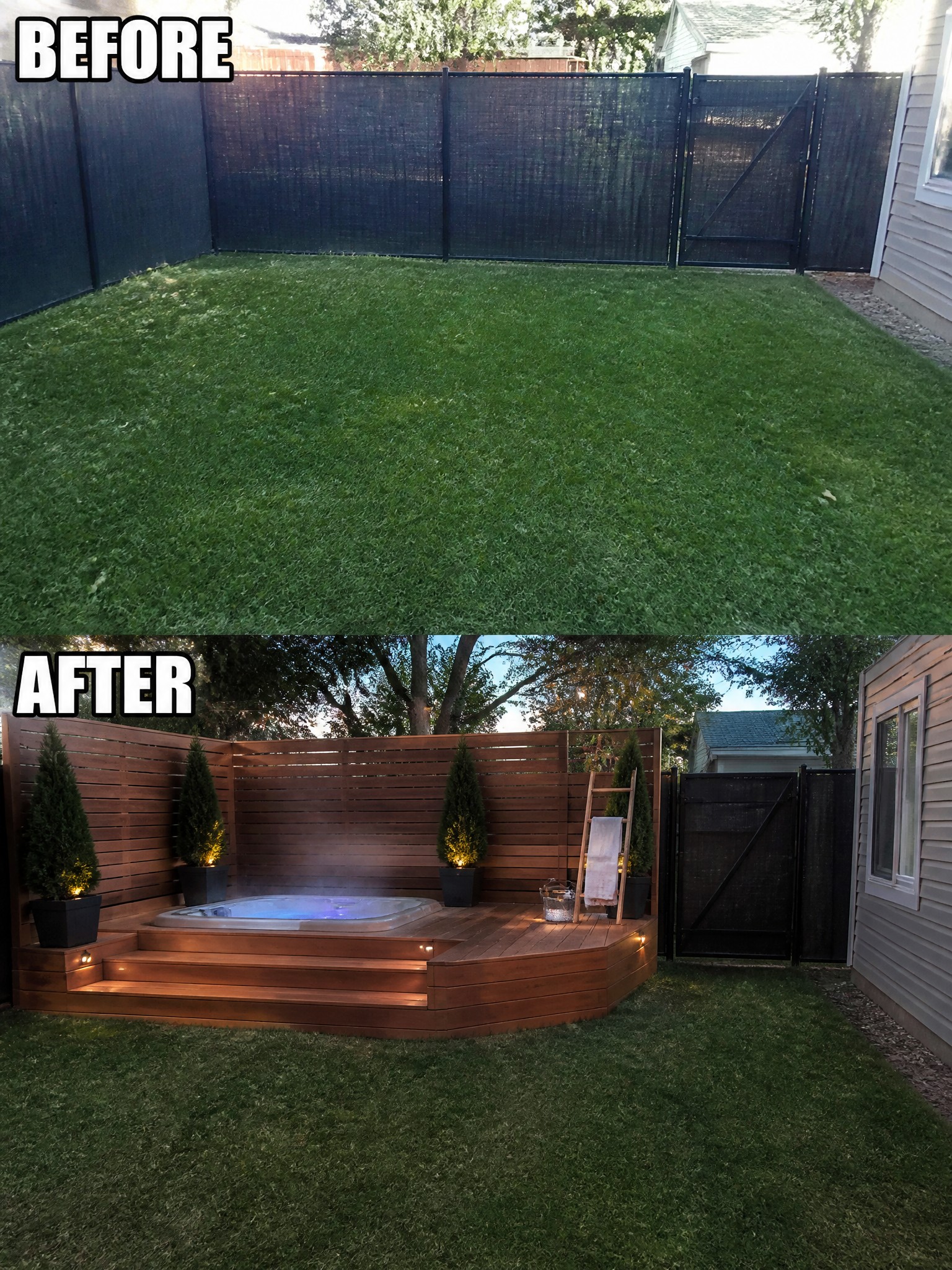
An empty lawn often feels like wasted space once the grass is cut. Adding a raised deck gives the yard a clear purpose and creates a solid spot for seating or a hot tub without fighting the slope or mud.
Start with the size you actually need and keep the rest of the lawn open so the deck does not take over the whole yard. Use simple lighting along the steps and a few potted plants at the edges to soften the wood and make the area feel inviting at night.
Add Structure To A Narrow Side Yard
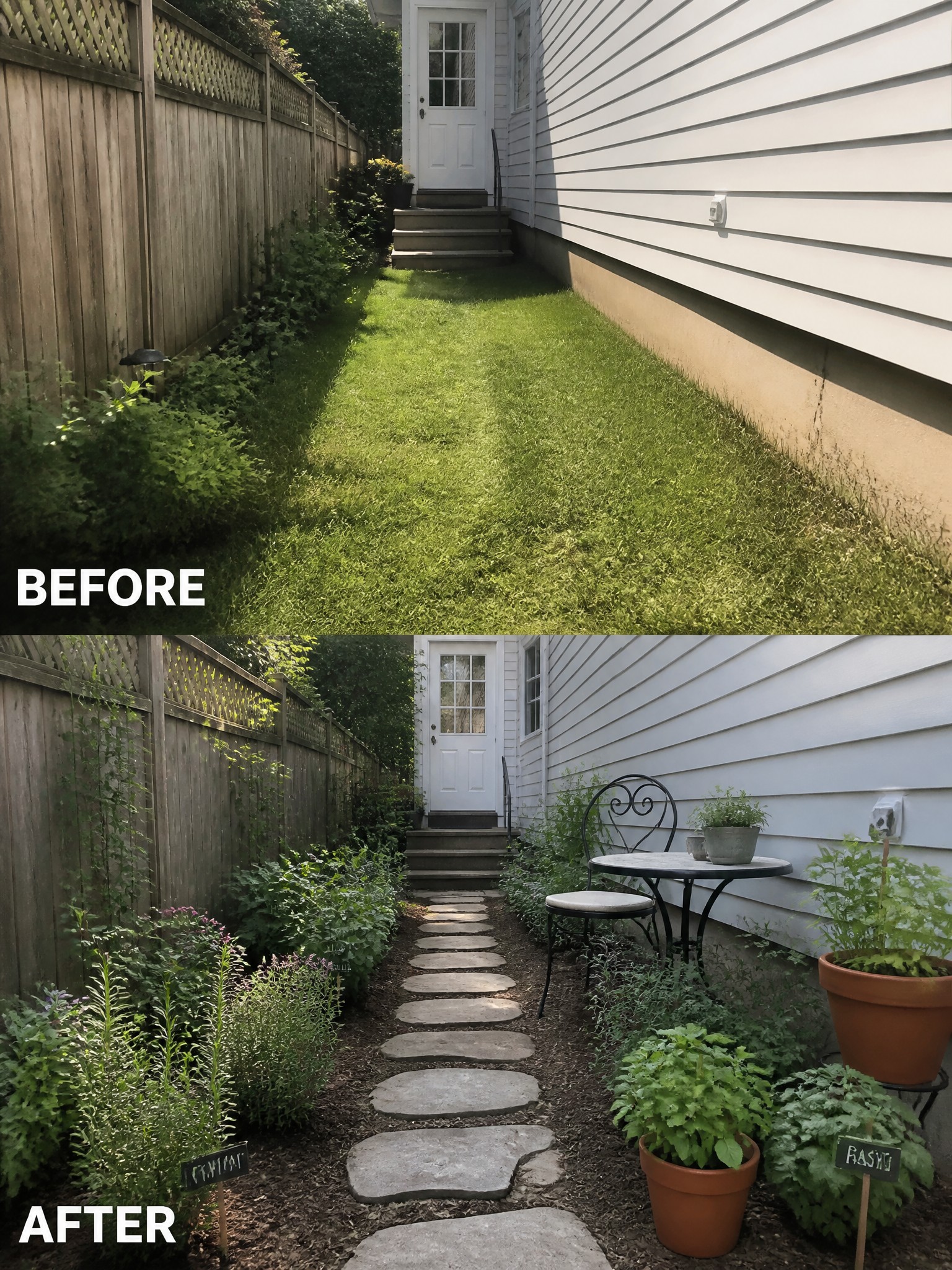
A plain strip of grass between the house and fence often feels like wasted space until you add a clear path and planted borders. Laying down stepping stones through the middle and mulching the edges turns the area into something you can actually walk through and enjoy instead of just mowing.
This approach works best in tight side yards or back corners where you still need access but want more order. Keep the path wide enough for easy movement, then fill the beds with a mix of useful plants like herbs so the space feels purposeful without crowding.
Add Garden Beds To Give A Plain Lawn Clear Shape
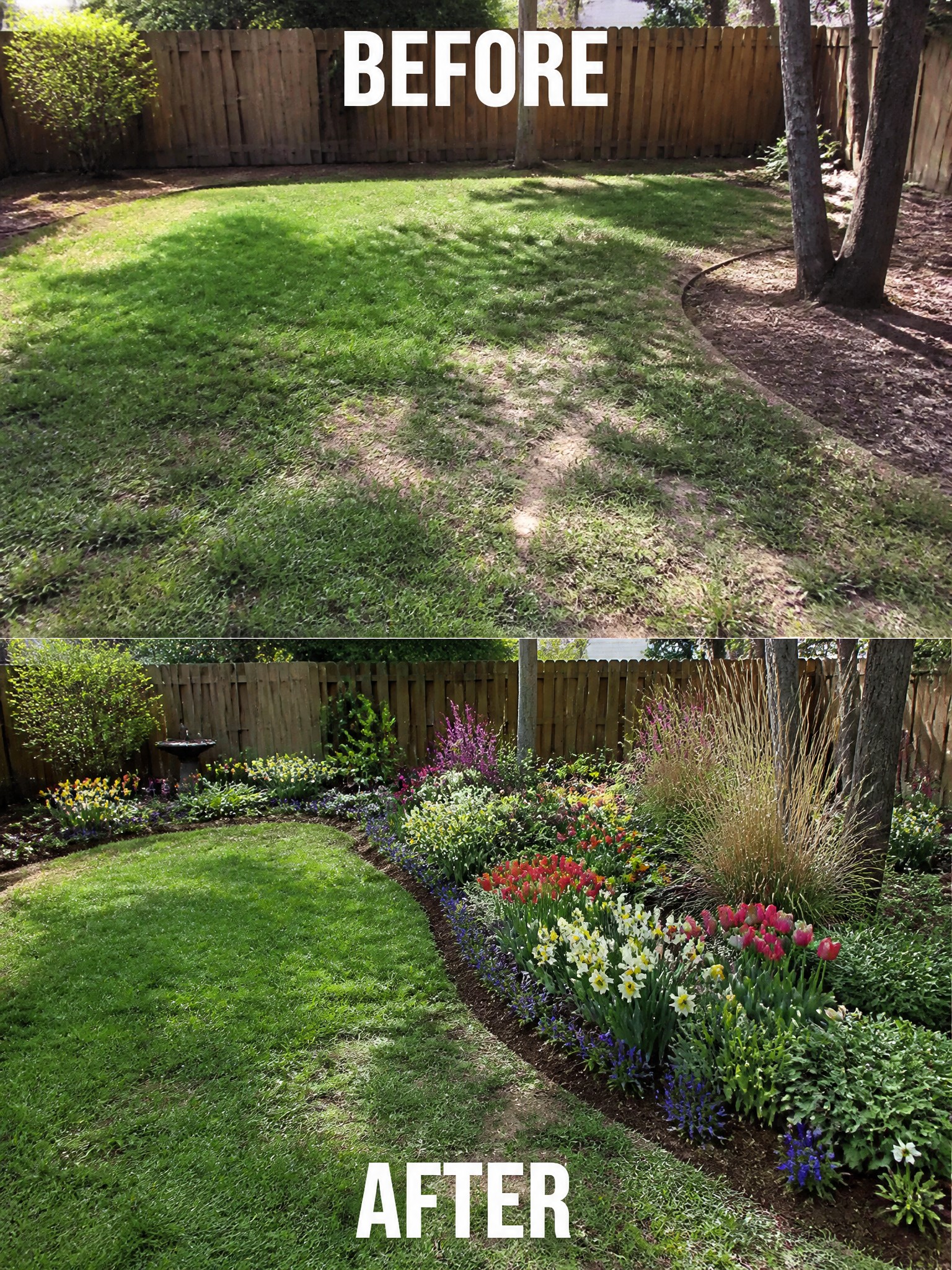
A flat lawn can feel unfinished when it has no edges or planting to break up the space. Adding garden beds along the sides and around the trees turns that open area into something that feels planned and easier to enjoy.
Mark out a gentle curve first, then plant in layers with early bulbs and taller grasses for year-round interest. This works best in smaller yards where you still want room to walk and play but need a bit more definition to keep the space from looking empty.
Frequently Asked Questions
Q: Will these changes hold up if my kids play outside every day? A: Pick sturdy ground covers that bounce back fast. Add a small path so they stick to one route instead of trampling everything.
Q: Do I need to rip out all the grass at once or can I do sections? A: Start with one corner to test how it looks. You can tackle the rest over a few weekends without overwhelming the space.
Q: What if the weather turns dry right after I plant? A: Water deeply a couple times a week at first. Mulch helps lock in moisture so the roots settle in quicker.
