

I often notice gardens where the plants have grown uneven and the borders look scattered because there was never a clear plan for the layout. A few practical steps like defining edges or moving a couple of larger pots can help the space feel more settled and easier to maintain. In my yard I learned that clearing out the obvious clutter first usually shows which spots actually get used for sitting or walking through. Weekend projects work best when they focus on structure rather than adding more items that might not hold up over time. Those adjustments tend to last.
Define A Narrow Side Bed With Mulch
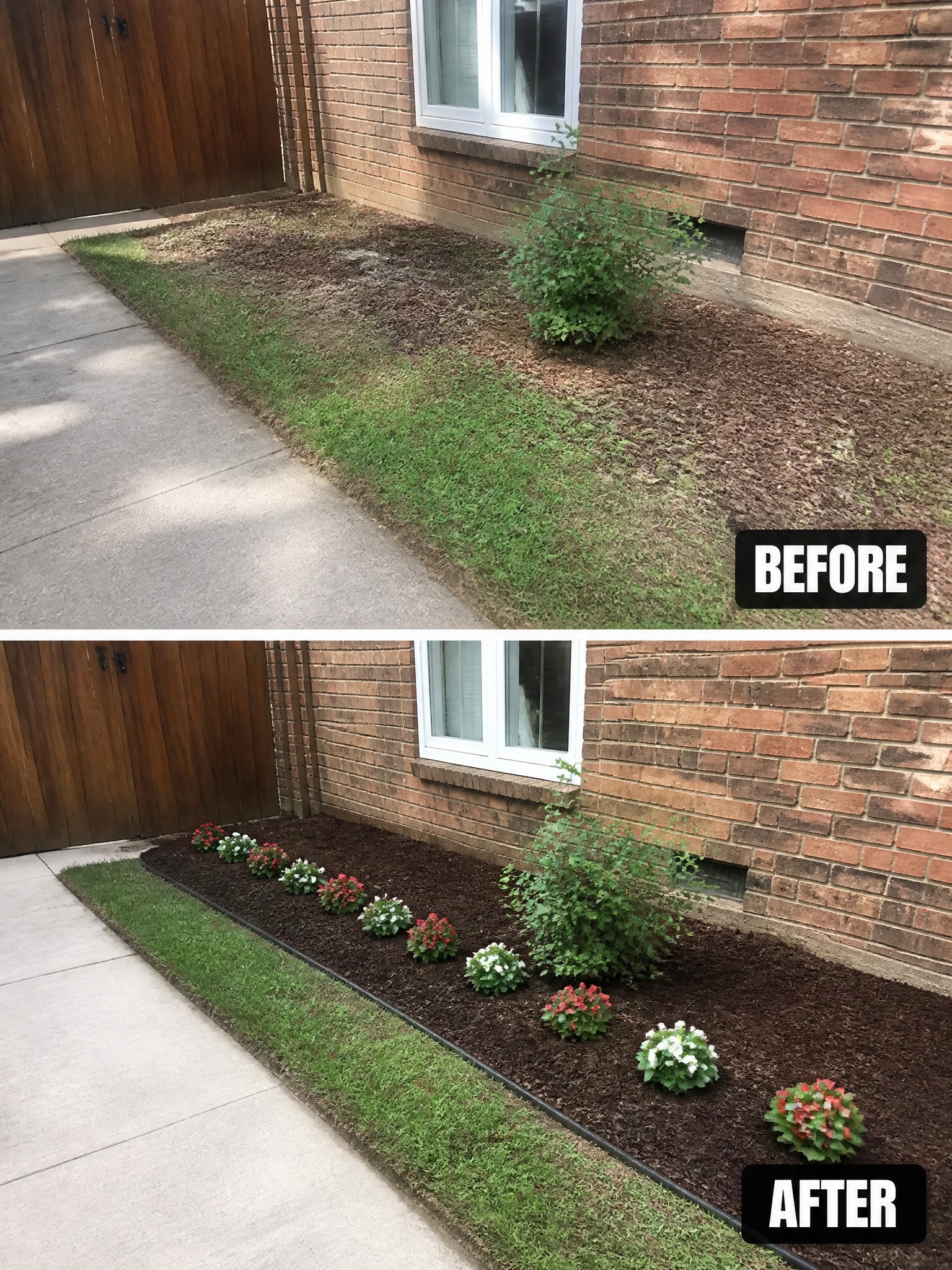
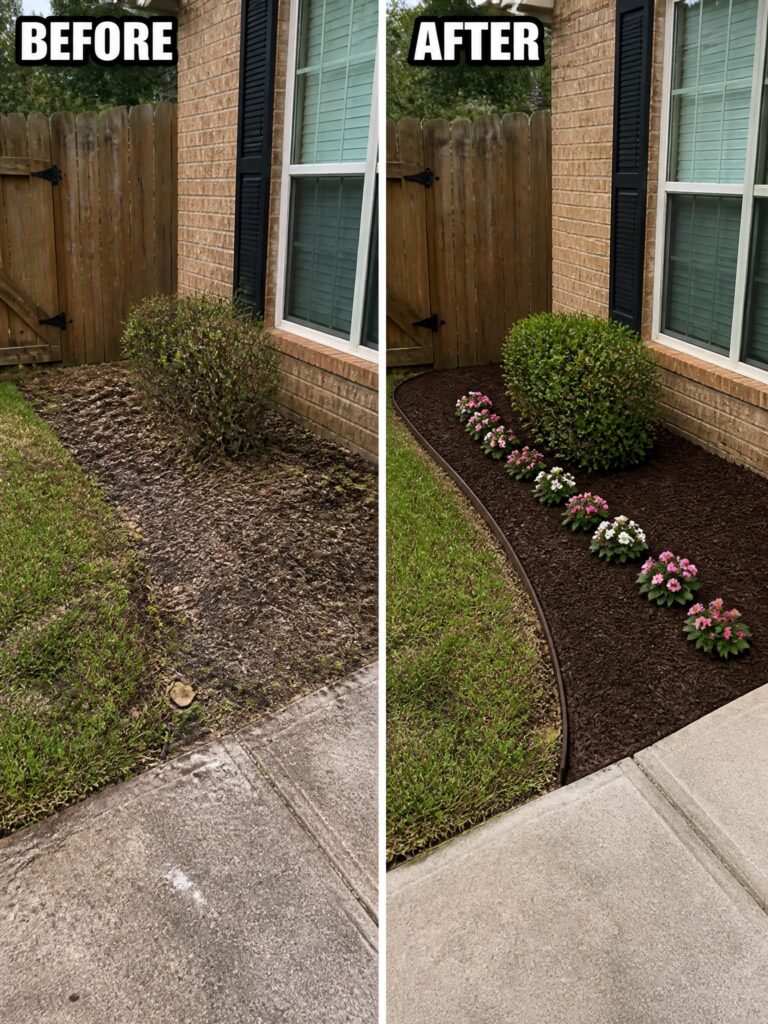
A narrow strip along the house often ends up as the messiest part of the yard. Clearing the weeds and laying down a thick layer of mulch instantly makes the area look intentional instead of forgotten. The simple addition of a few rows of flowers then gives the bed structure without crowding the space.
This approach works especially well on side yards where you still need access for hoses or maintenance. Start by edging the bed so the mulch stays contained, then plant in small groups rather than scattering plants. The result is a tidy look that holds up through the season with very little extra work.
Create A Defined Path With Gravel And Stepping Stones
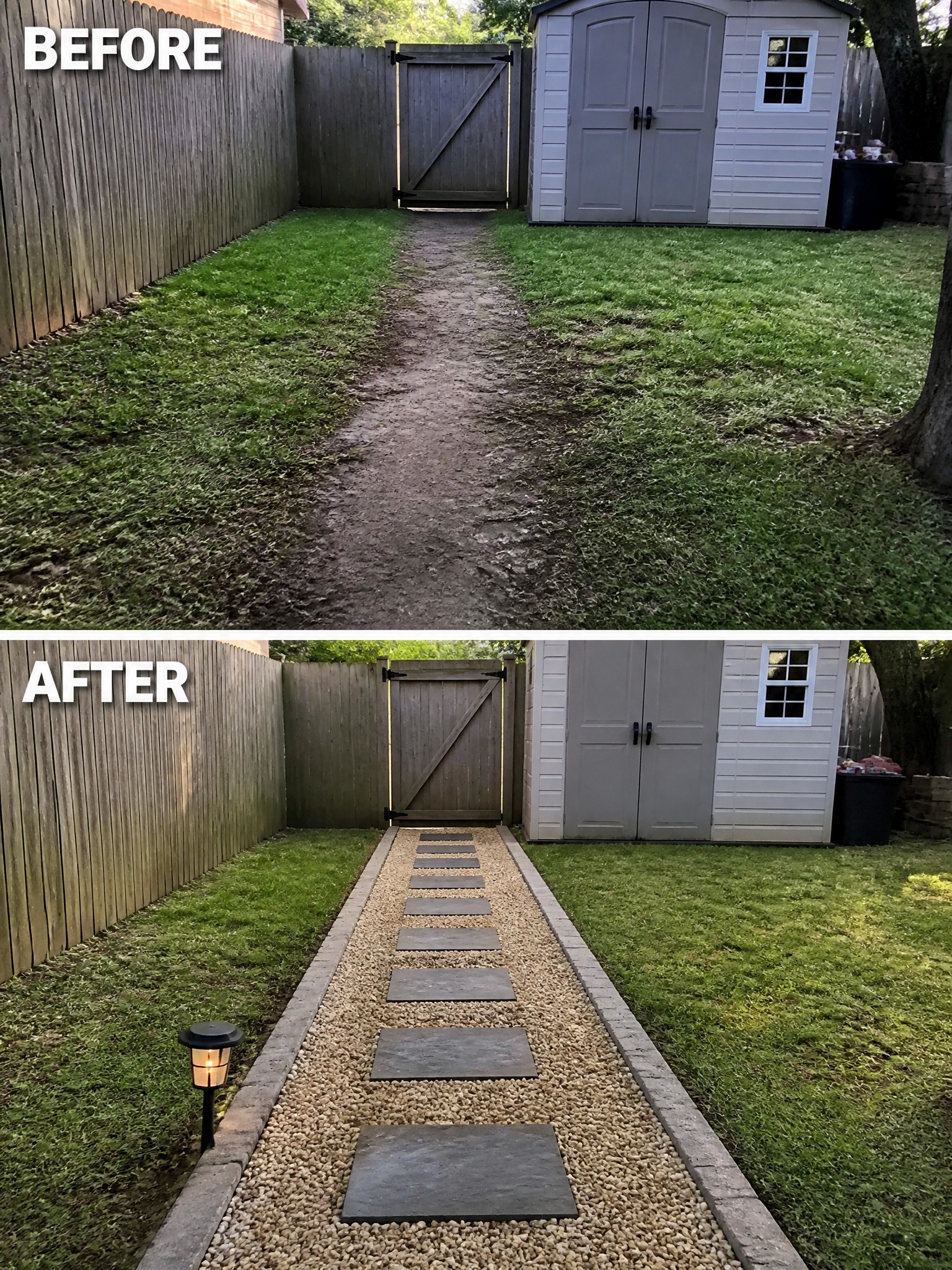
A muddy track through the lawn is one of the easiest things to fix in a backyard. Replacing it with gravel and stepping stones gives the space a clear route and stops the grass from getting worn down further.
This approach suits homes where people already walk the same line between the gate, shed, or back door. Lay down fabric first, add a few inches of gravel, and set the stones at even spacing. Keep the edging low so the mower can still run right up to the path.
Add Raised Beds To Turn Empty Ground Into A Garden
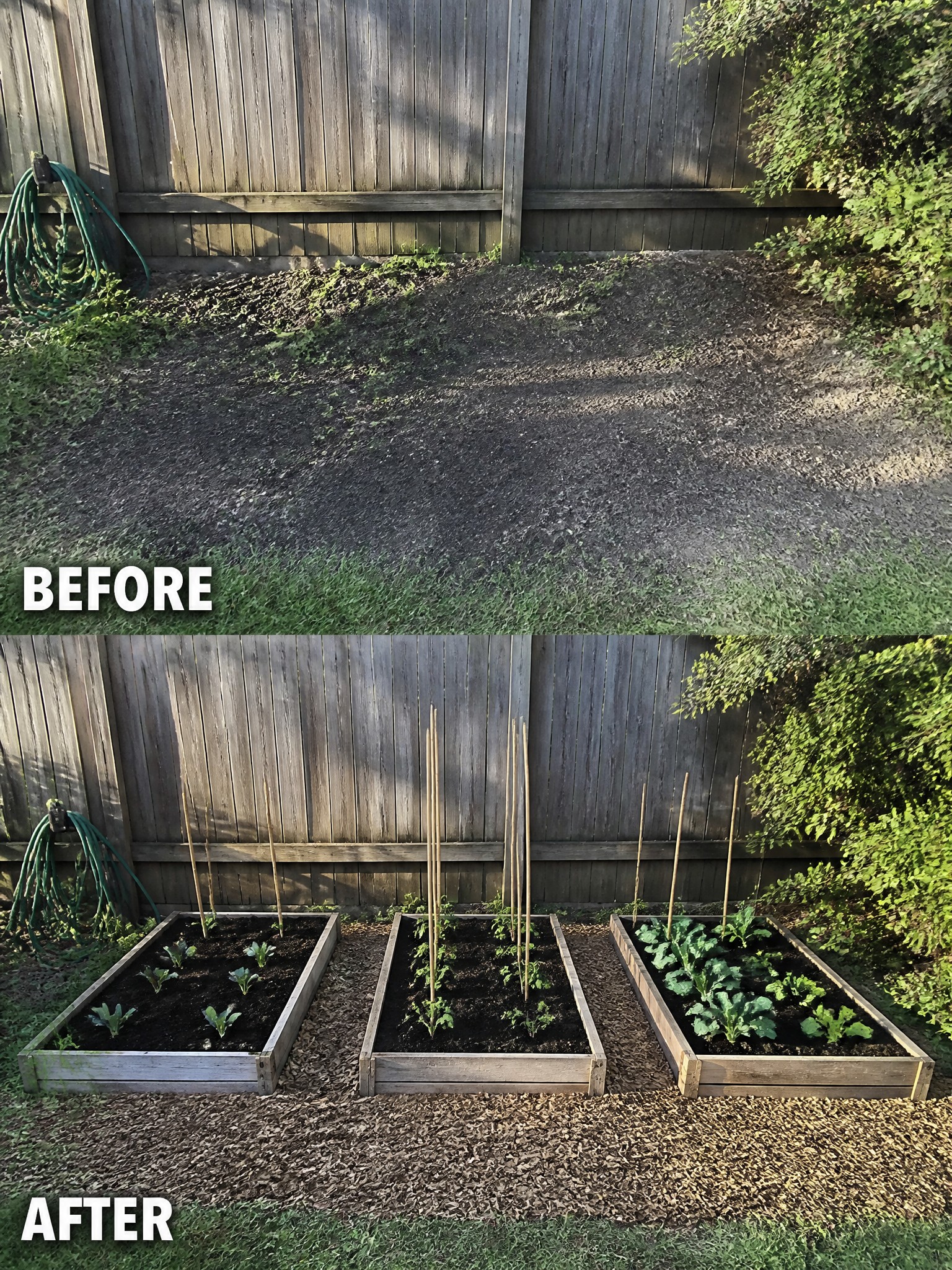
Raised beds give structure to a bare strip of dirt that otherwise has no clear purpose. Here the change is simple. Three wooden boxes sit in a row along the fence, filled with soil and young plants, while mulch covers the ground between them. The result turns wasted space into actual growing room.
This idea works best in narrow side yards or along fences where regular planting feels scattered. Use basic lumber for the boxes, add stakes for taller crops, and keep the surrounding area covered so weeds stay down. It keeps the project small and manageable for a weekend.
Repair The Lawn First To Refresh The Yard
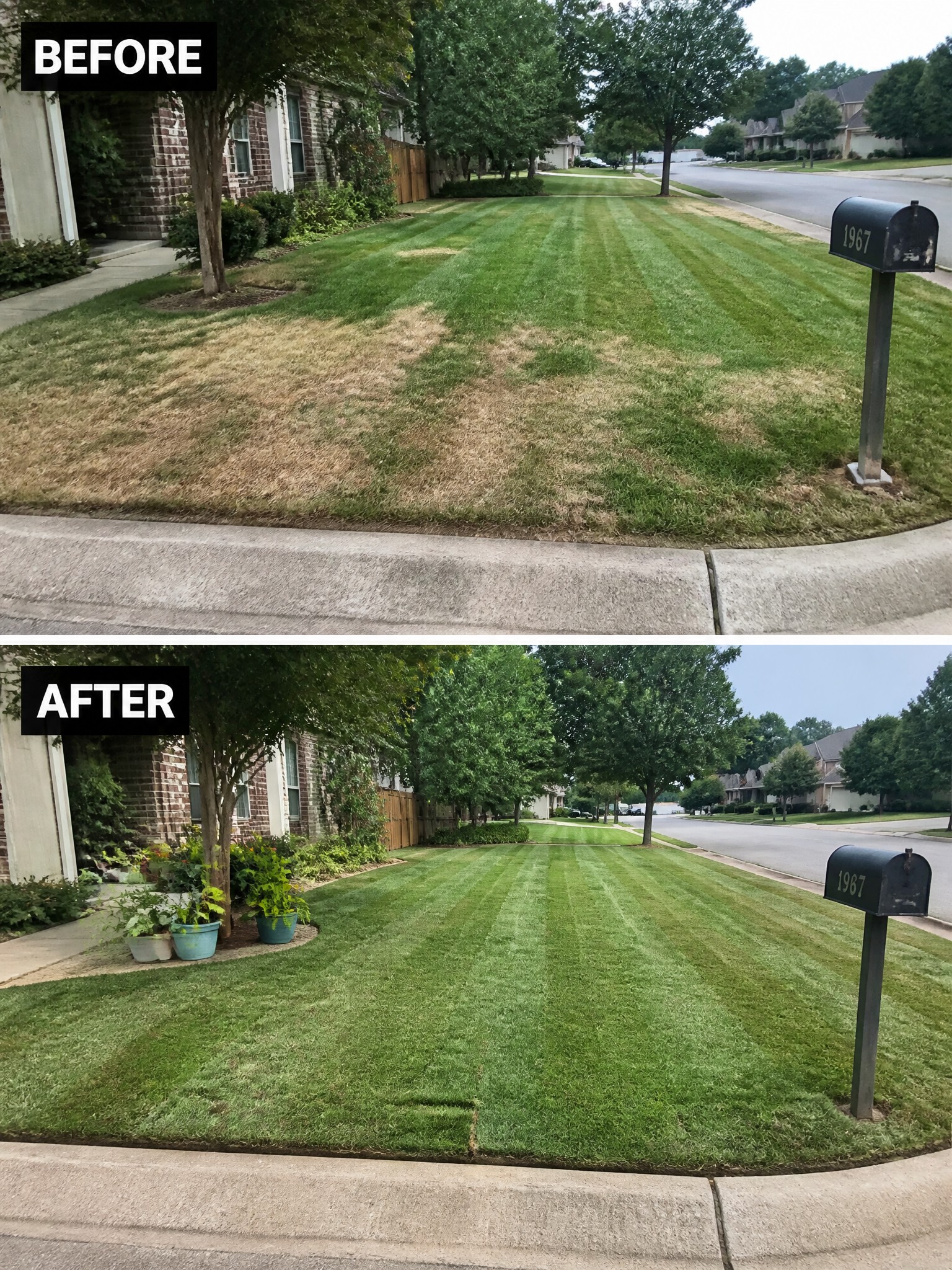
A patchy lawn makes the whole front yard look neglected even when the house itself is fine. In this case the main change was bringing the grass back to an even green before adding anything else. The result feels much cleaner without any big construction or new hardscaping.
This approach works well on any home where the lawn has taken a beating from heat or heavy use. Start by fixing the grass and defining the edges along the sidewalk and driveway. Once that base looks solid you can add a few pots near the foundation if you want a bit more color. Keep the pots simple and repeat the same style so the focus stays on the lawn itself.
Add Structure To Climbing Vines With A Simple Trellis
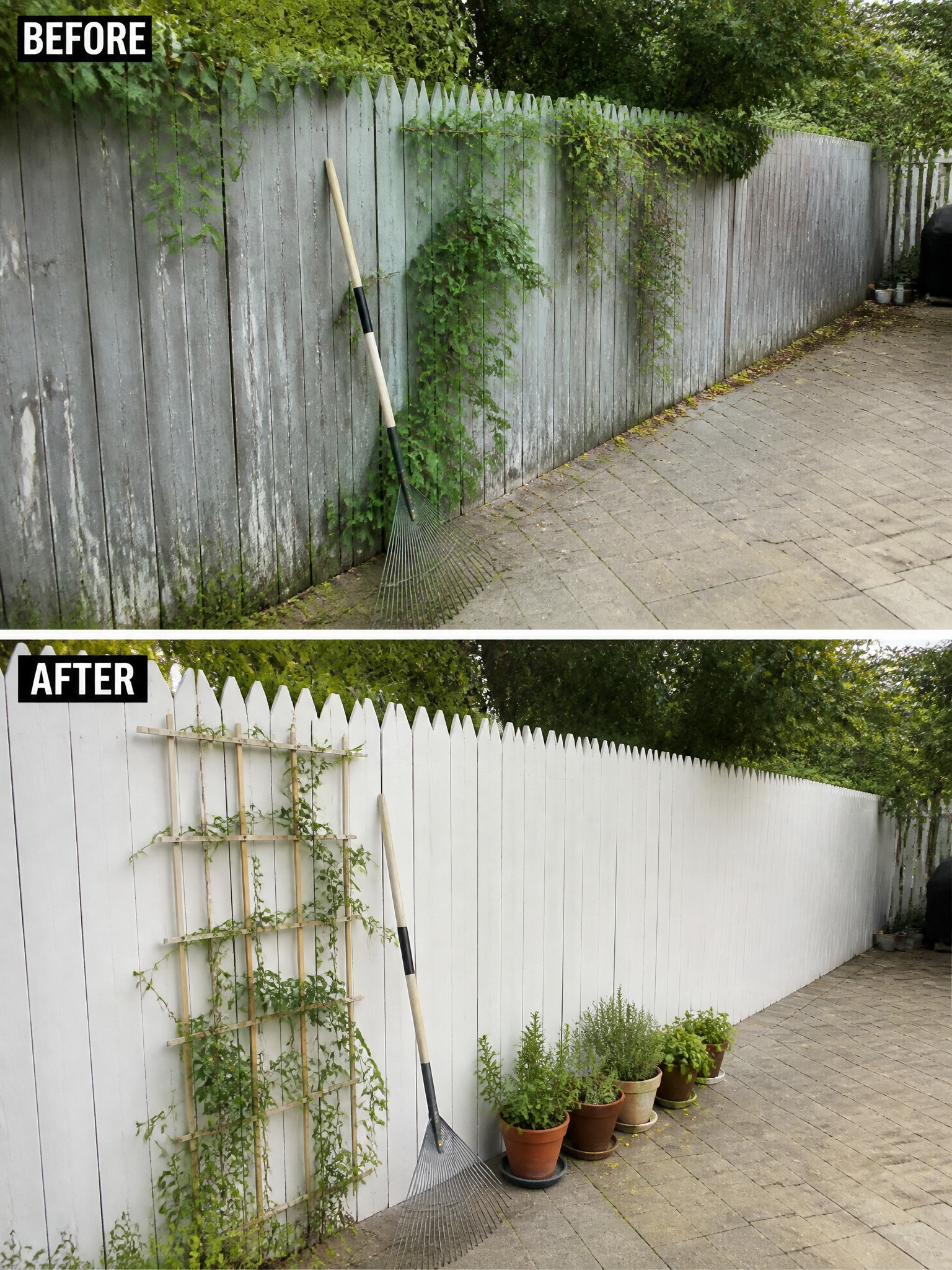
A messy fence covered in wandering vines can make the whole yard feel neglected. Painting the fence and adding a basic wooden trellis gives the plants a place to climb in straight lines instead of spilling out in every direction.
This idea works best along side or back fences where you want greenery but need to keep it contained. Clear the overgrowth first, then set up the trellis in sections so the vines have something to hold onto as they grow back in.
Add A Vertical Planter To A Plain Exterior Wall
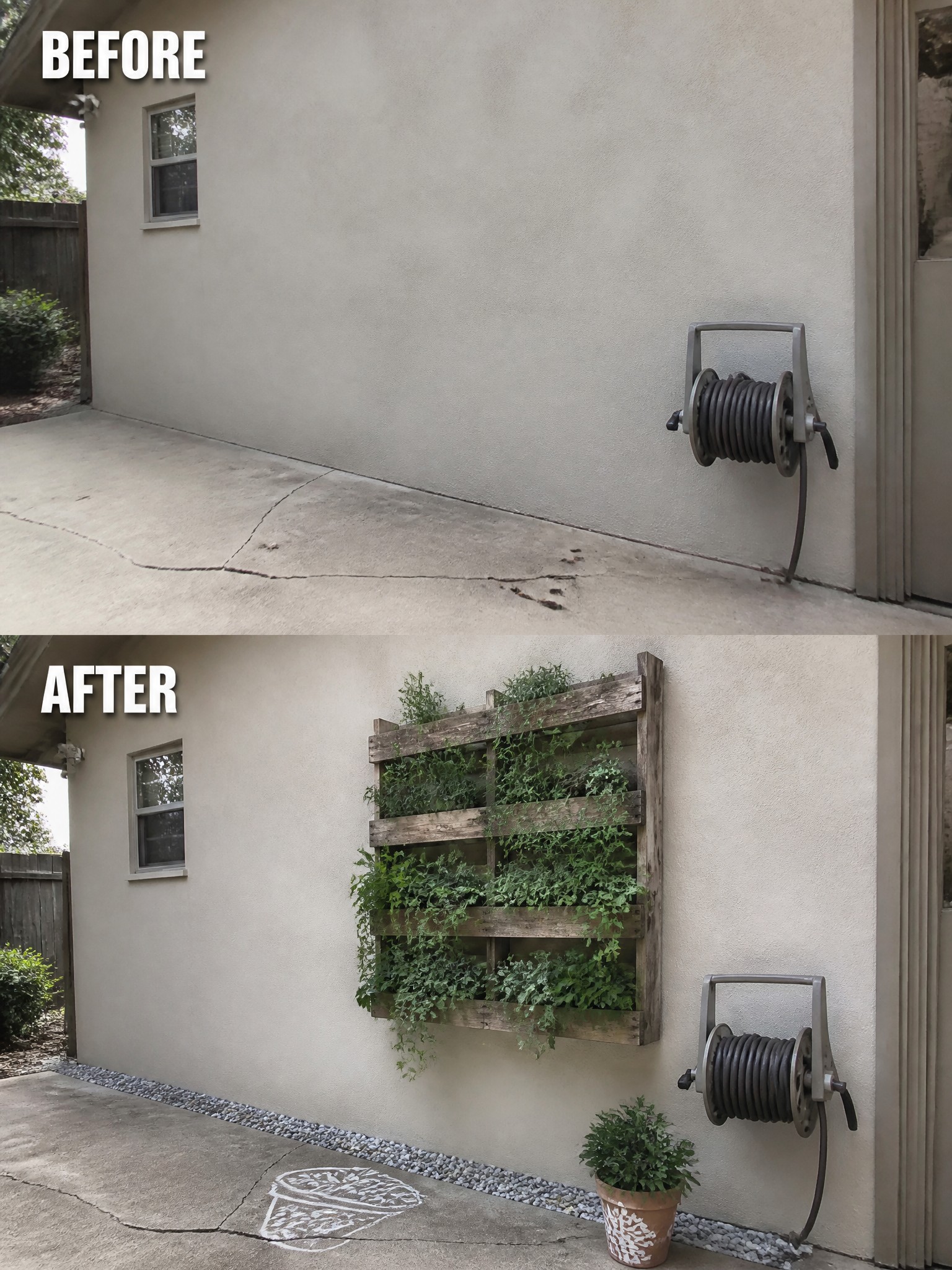
A blank exterior wall can look unfinished, especially when it sits right next to a concrete slab and a hose reel. Mounting a simple vertical planter adds height, texture, and greenery without taking up floor space or requiring major construction. In this case, the wooden frame filled with trailing plants gives the wall purpose and softens the flat surface.
This approach works well on any home with a long, empty side or back wall that faces a patio or walkway. Keep the planter size modest so it does not overwhelm the space, and choose plants that handle your local sun and watering routine. A single focal piece like this often improves the look more than spreading small pots along the ground.
Turn An Empty Patio Into A Seating Area
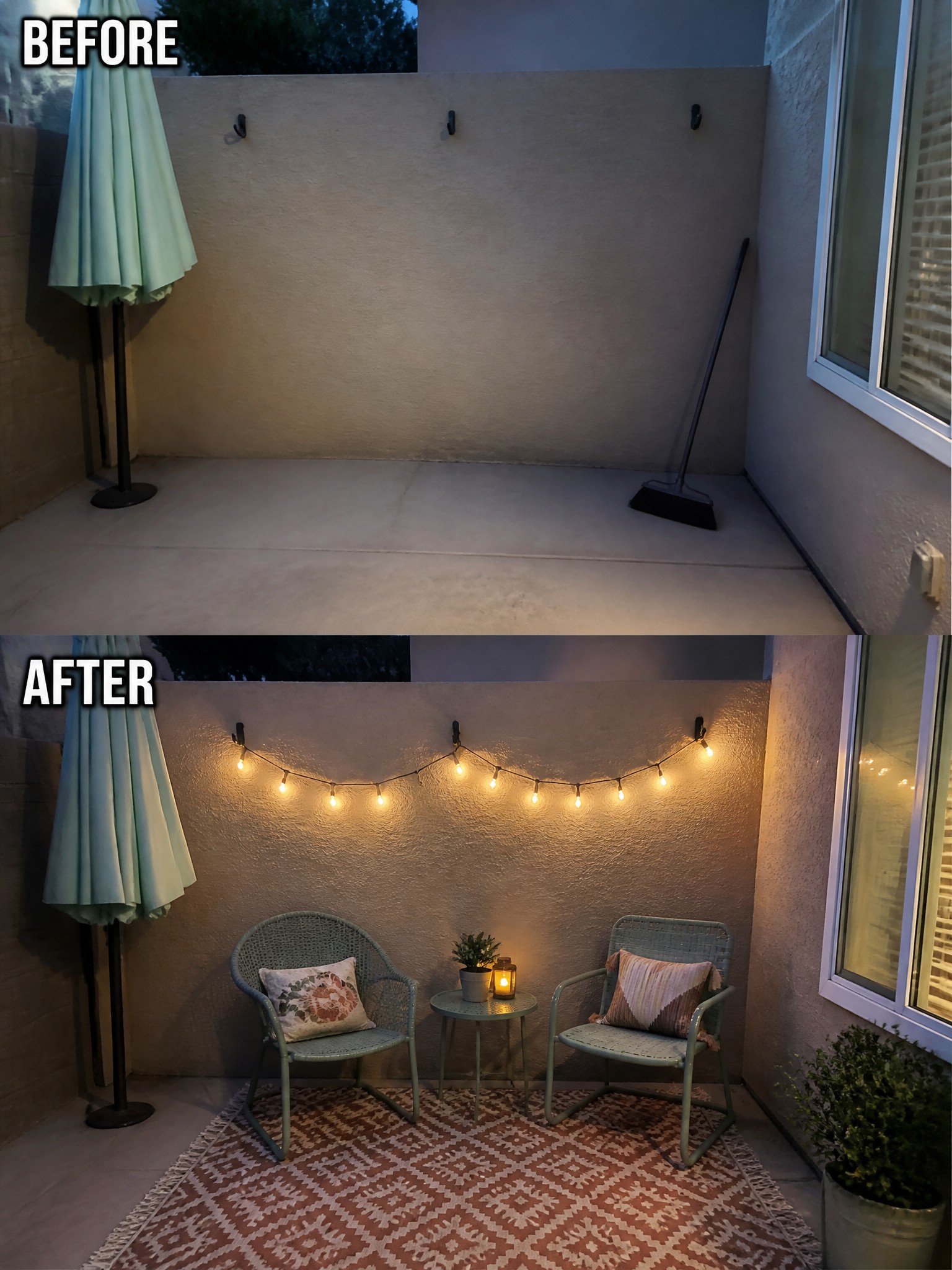
A plain concrete patio often sits unused until you add just enough furniture and lighting to make it feel intentional. Here the string lights along the back wall and the large rug created a clear sitting zone, turning an empty slab into a spot with two chairs and a small table that actually works for relaxing.
This approach suits small side patios or balconies where space is limited. Keep the furniture scale modest, choose weatherproof pieces, and let one rug define the area so the rest of the surface stays open for movement.
Define Garden Beds With Basic Edging
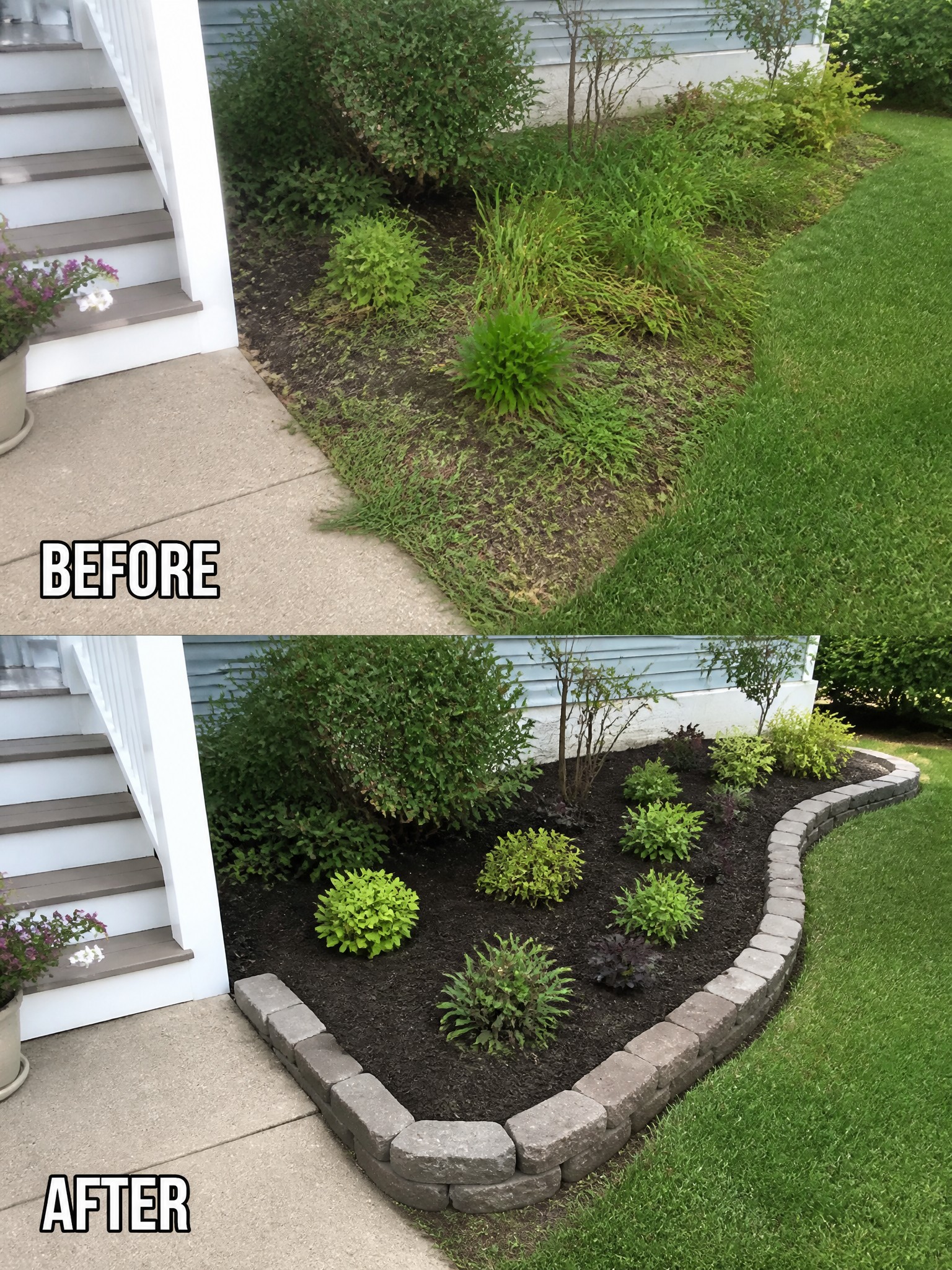
A messy strip of plants next to the house can look neglected fast. Adding a simple stone border and fresh mulch pulls the whole area together and keeps the plants from spilling onto the lawn or walkway.
This approach works best along foundations or beside steps where you need a clear line. Lay the edging first so the bed has a set shape, then fill with mulch to cut down on weeds. It keeps the project small and manageable for a weekend.
Clean Up Overgrowth Before Adding Gravel And Plants
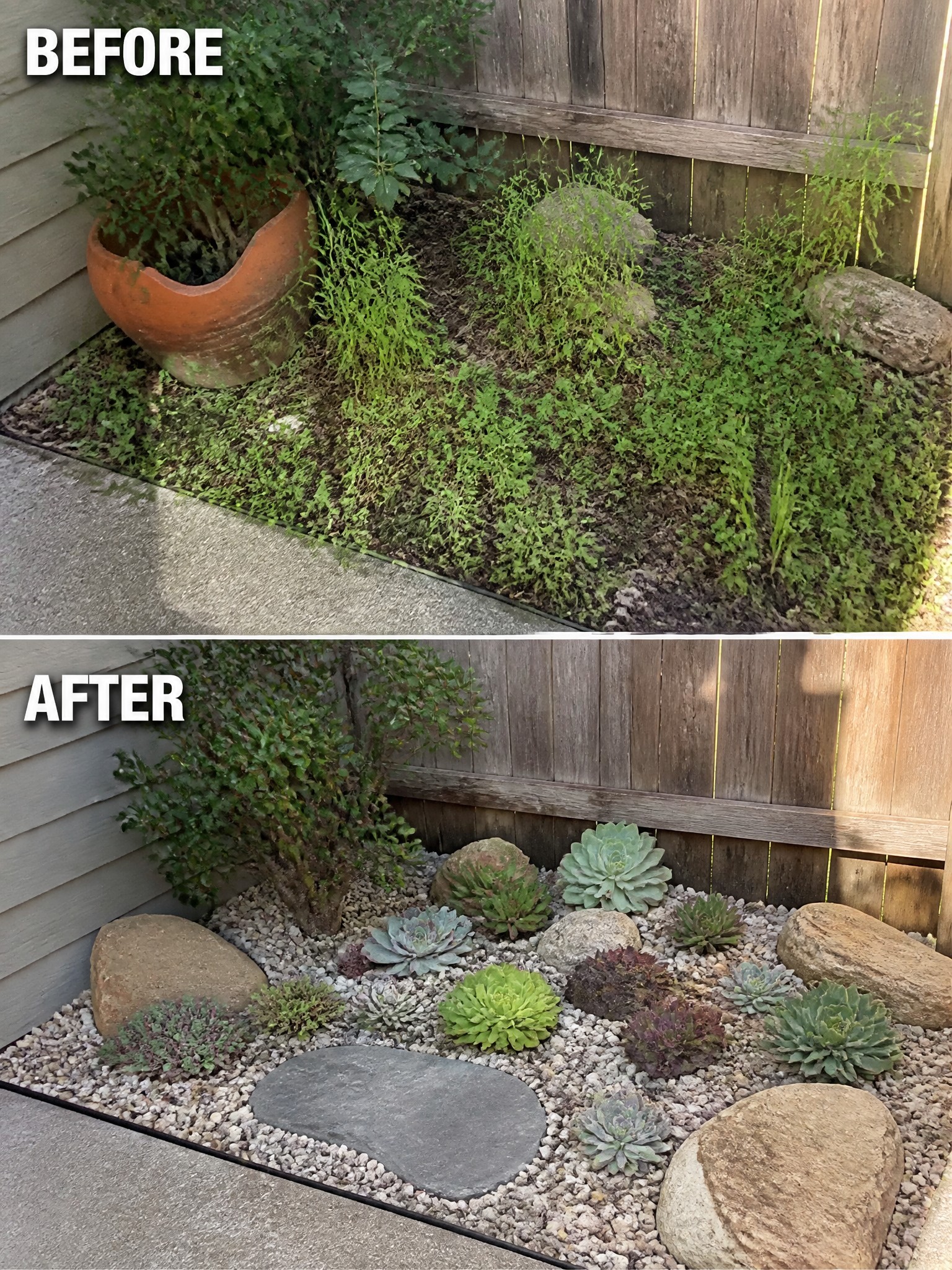
The main change was clearing out the thick weeds and broken pot first. That opened up the space so a layer of gravel could define the bed and let the succulents and rocks sit in a simple, orderly pattern instead of fighting through the mess.
This works best in narrow strips along fences or house walls where you want something neat without constant upkeep. Clear the area completely, add gravel to suppress weeds, then place a few larger rocks and repeat a few plant types. It keeps the bed looking planned even in a small corner.
Line A Walkway With Simple Path Lights
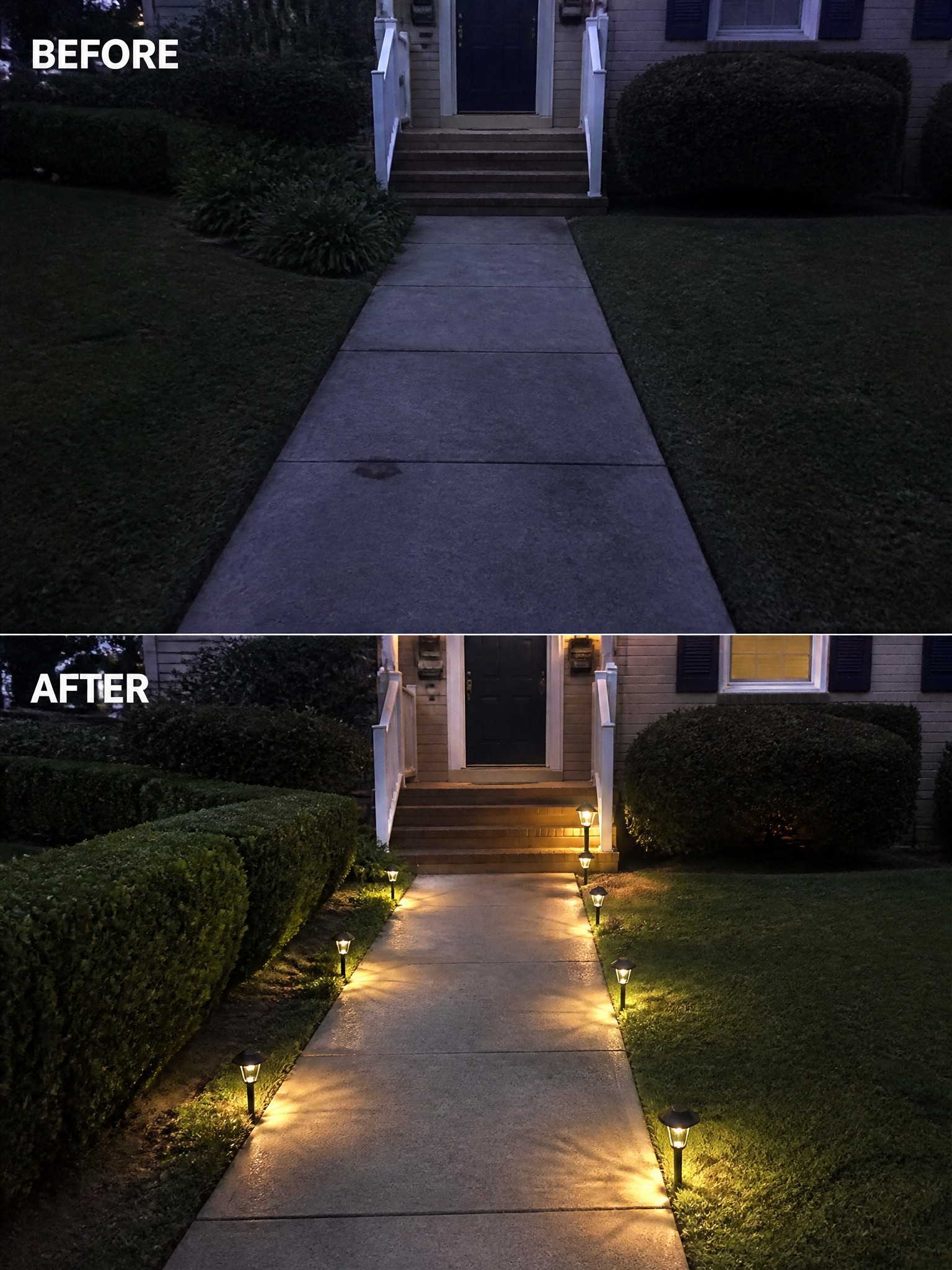
A dark concrete path leading to the front door can feel uninviting at night. Adding a row of small path lights on each side turns the same walkway into a clear, usable route. The lights also highlight the edges of the lawn and beds so the whole front area feels more put together.
This works well on any straight or gently curving front walk. Start with inexpensive solar lights so there is no wiring to run. Space them evenly and keep the path clear in the middle for walking. It is a quick change that improves safety without needing major work on the yard itself.
Paint An Exterior Door For Instant Impact
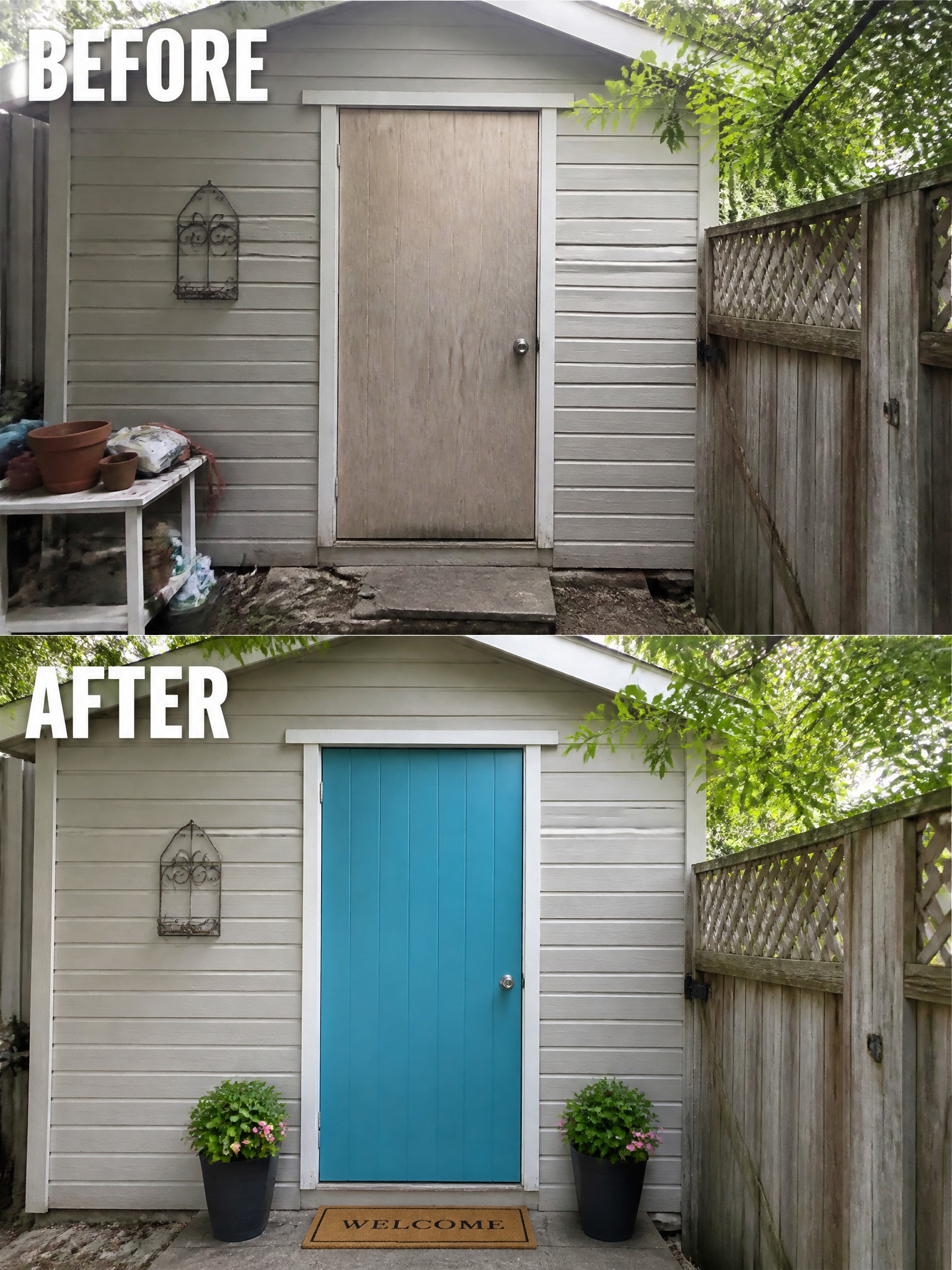
A plain wooden door on a garden shed often blends into the background and makes the whole area feel neglected. Painting it a bright color and adding a pair of matching planters on either side creates a clear focal point that draws the eye and makes the entry feel intentional.
This approach works especially well on sheds, utility buildings, or side doors where a full renovation is not practical. Pick one strong color that contrasts with the siding, keep the planters the same size and style, and place them evenly so the change feels balanced rather than cluttered.
Add A Trellis To A Fence For Easy Vertical Planting
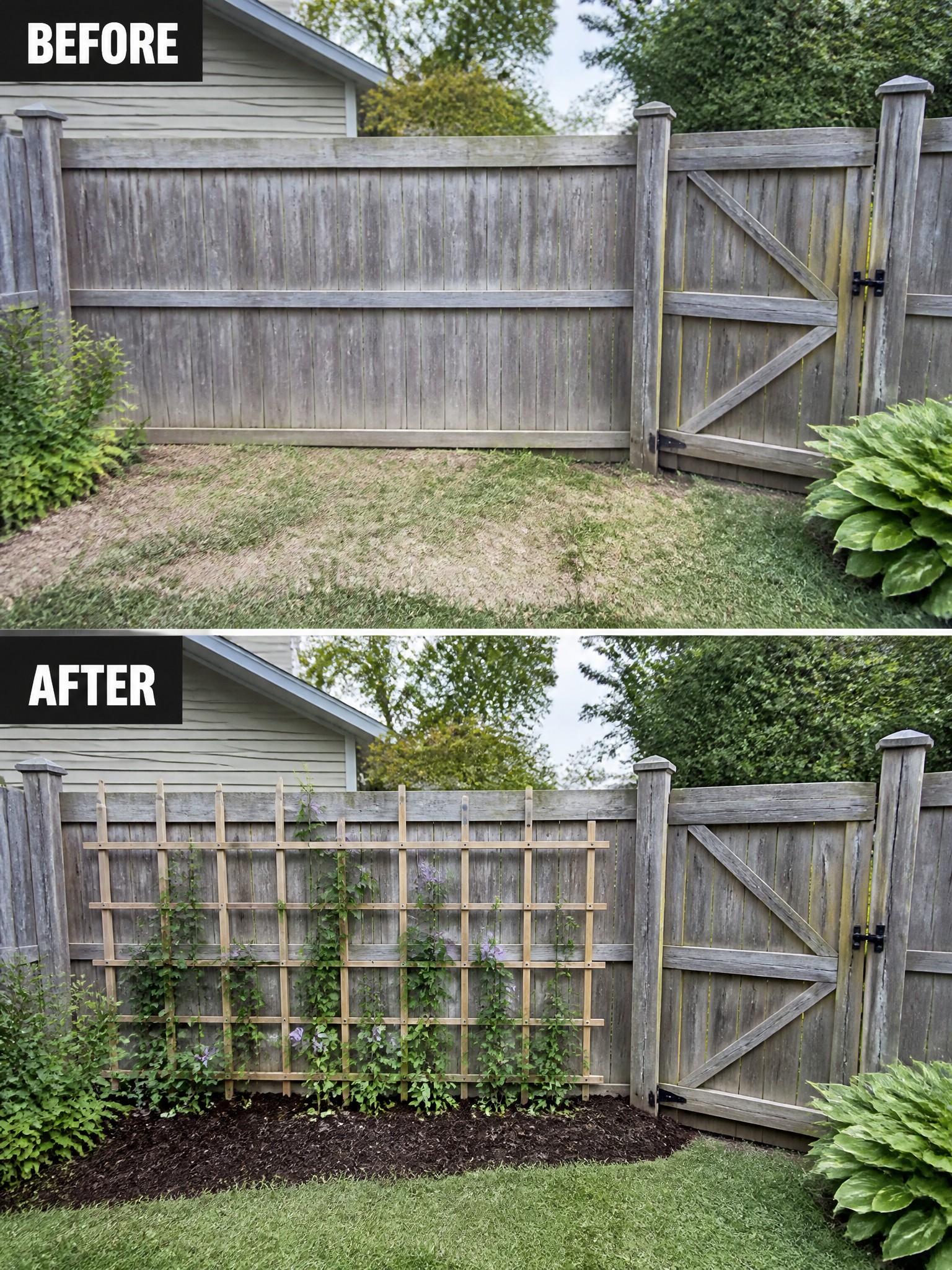
A plain fence often looks flat when the ground below it stays bare or weedy. Adding a trellis panel gives the fence height and structure while letting climbing plants fill in over time. The change here came from installing a simple grid and planting vines along the base so the fence now feels like part of a garden rather than just a barrier.
This idea works best on long fence runs where you want greenery without digging wide beds. Use pressure-treated wood or cedar for the trellis, attach it directly to the fence posts, and plant climbers that handle your climate. Mulch the narrow bed in front to keep weeds down and give the plants a clean start.
Give Bare Porch Steps A Purpose With Pots
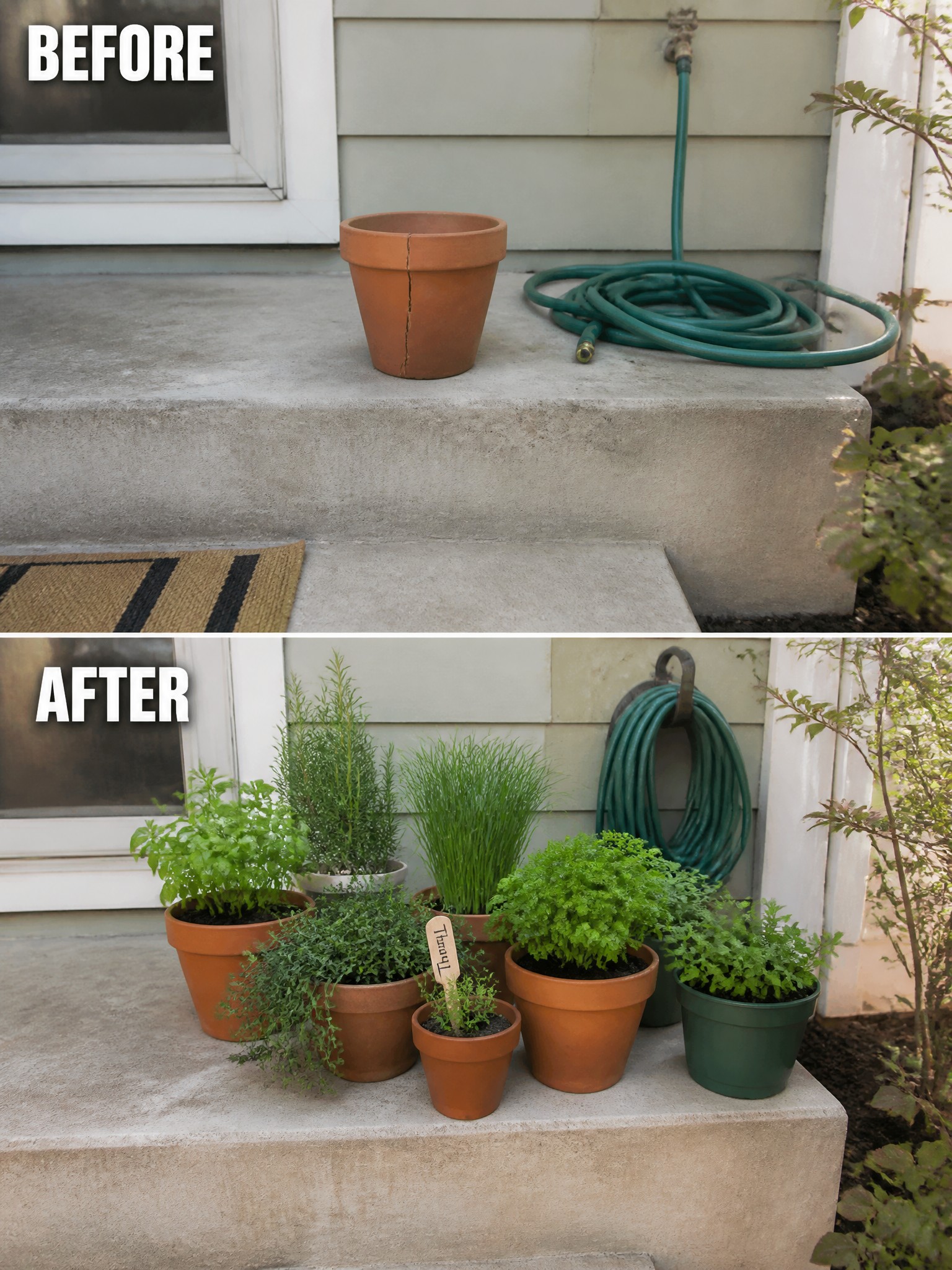
A set of plain concrete steps can look unfinished when they sit empty. The simple fix is to line them with pots instead of leaving the surface bare. In this case, a cracked pot and coiled hose gave way to rows of terracotta and plastic containers holding herbs and greenery, which instantly made the entry feel used and cared for.
This works best on small porches or front steps where there is no room for larger furniture. Start with a few larger pots at the base and add smaller ones higher up so the arrangement stays balanced and easy to walk around. Choose plants that suit the light on your steps and pick pots that can handle weather so the look lasts through the season.
Replace Old Pavers With Gravel And Stepping Stones
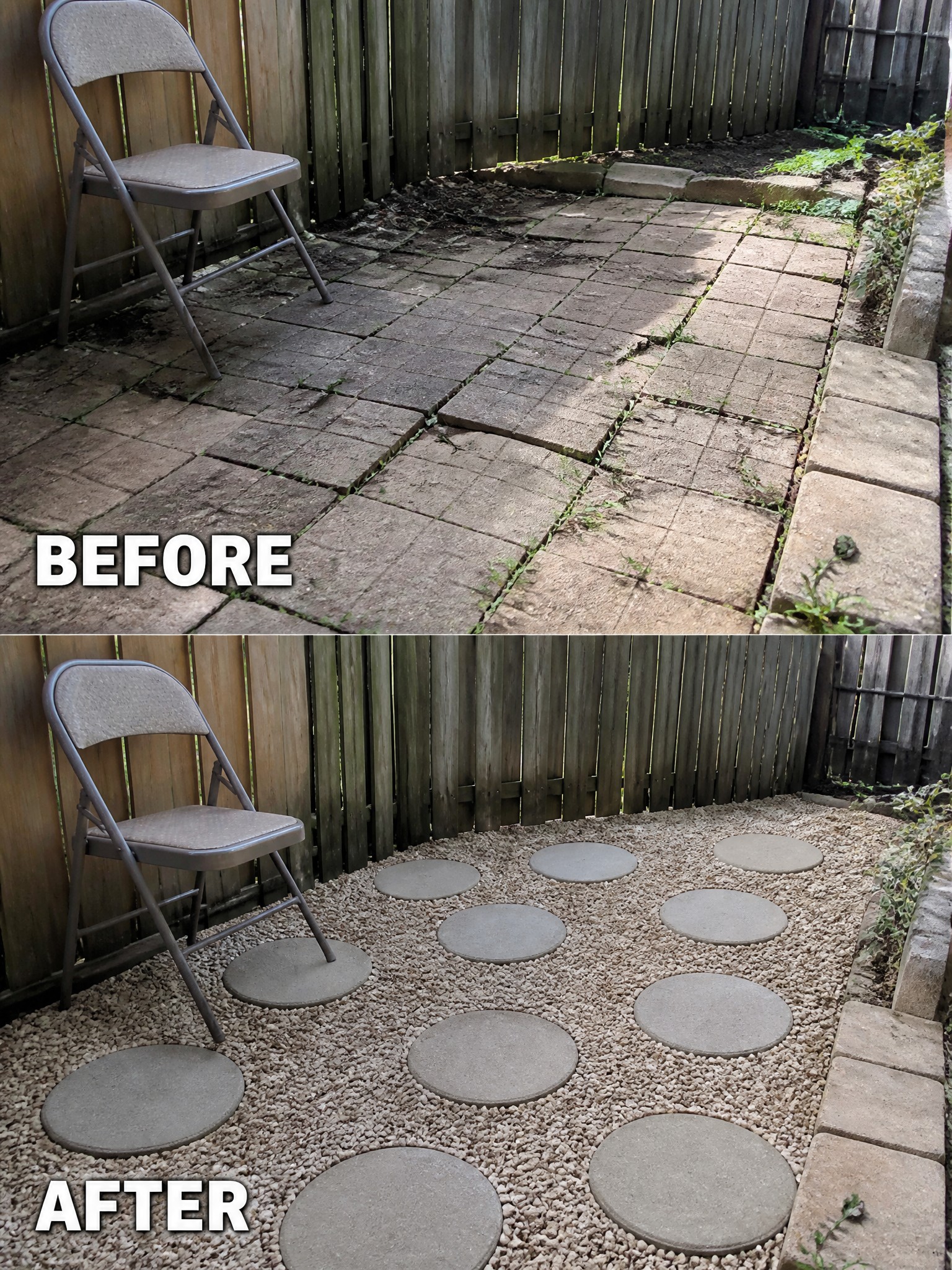
A cracked patio surface often becomes more trouble than it is worth once weeds start pushing through the joints. Switching to a gravel base with round stepping stones removes the uneven slabs and creates a surface that drains better and needs less ongoing repair.
This approach works well in small backyards where you want a simple path or seating area without committing to new concrete. Keep the gravel layer thick enough to stay in place and choose stones that are large enough to walk on comfortably.
Add Edging To Create A Neat Garden Border
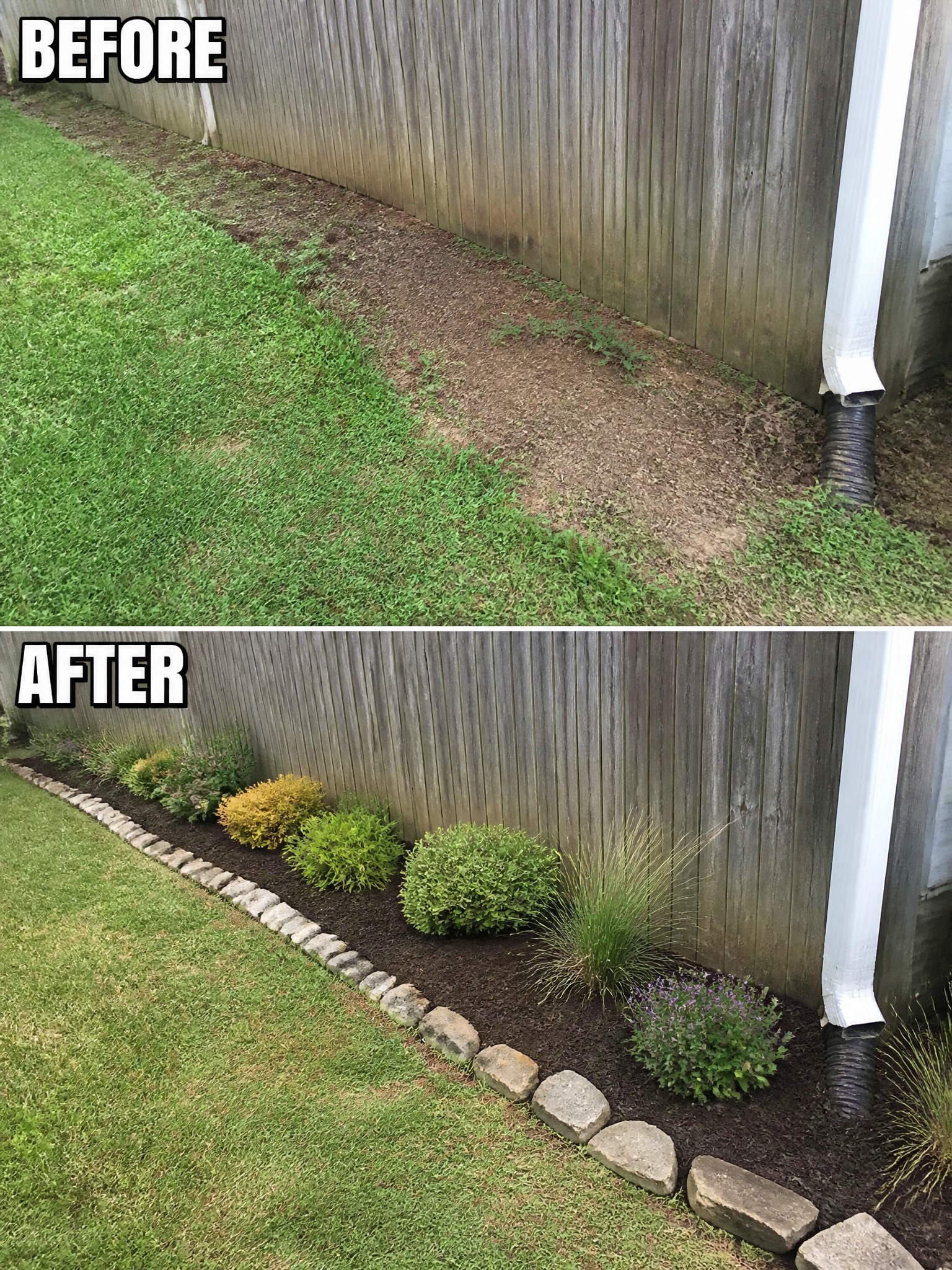
A strip of bare dirt and weeds along a fence usually looks unfinished and hard to maintain. Laying down a simple line of rocks turns that area into a defined bed, which makes it easy to add mulch and a few shrubs without everything spilling into the lawn.
This idea works best on narrow side yards or along back fences where grass thins out. Keep the bed width reasonable so mowing stays simple, and choose plants that can handle the shade or sun in that spot. The edging does most of the work by keeping the space looking intentional.
Create A Defined Fire Pit Area In An Empty Backyard
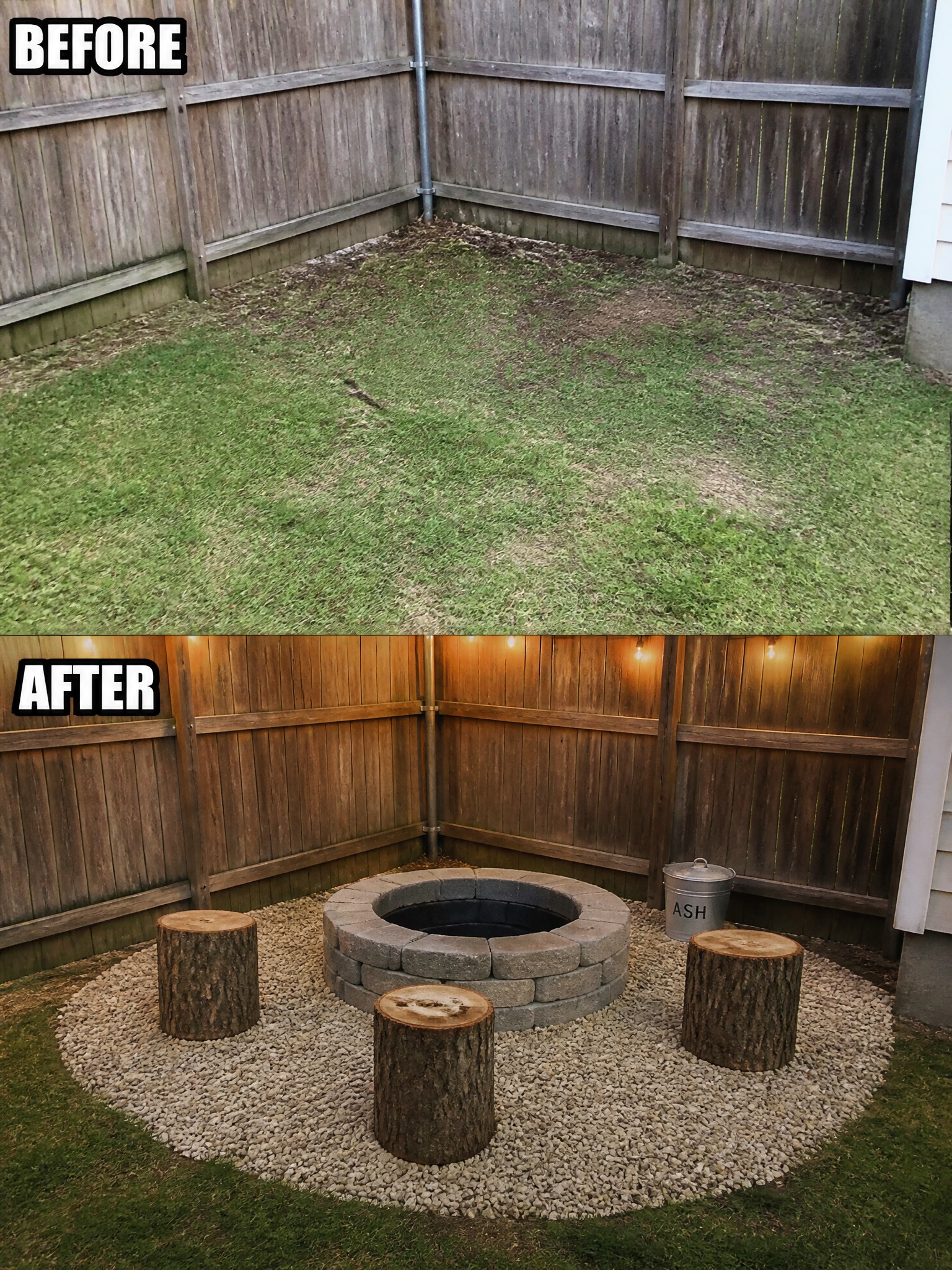
A bare patch of grass can sit unused for years until you give it a clear purpose. Laying down a simple gravel circle and building a low stone fire pit turns the space into a spot people actually want to gather. Adding a few tree stumps for seating keeps the setup cheap and quick while making the area feel intentional instead of leftover.
This idea works best in small or awkward backyard corners where grass never grows well anyway. Start with the gravel base to keep the zone dry and contained, then add the fire pit and basic seats. It suits homes with limited outdoor space because everything stays compact and leaves room to walk around the edges.
Frame Plain Entry Steps With Potted Plants
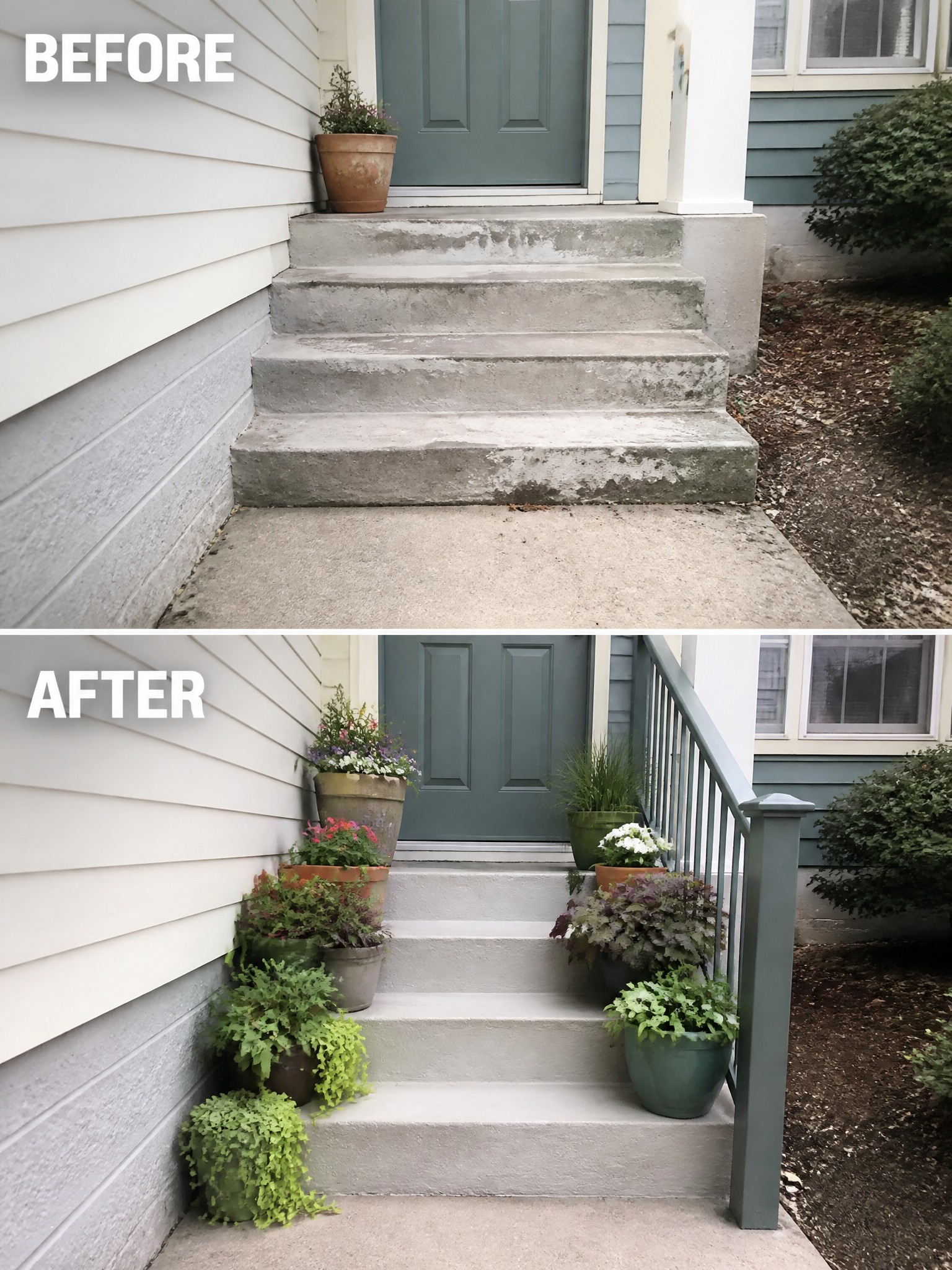
The concrete steps looked plain and a little worn with almost nothing beside them. Adding clusters of potted plants on both sides softens the hard surface and turns the entry into a more welcoming spot.
This idea works on any home with basic front steps. Use a mix of plant sizes and leaf colors, keep the pots in a similar range of tones, and leave enough room to walk. It stays simple to update or move when needed.
Add Defined Beds Along The Curb
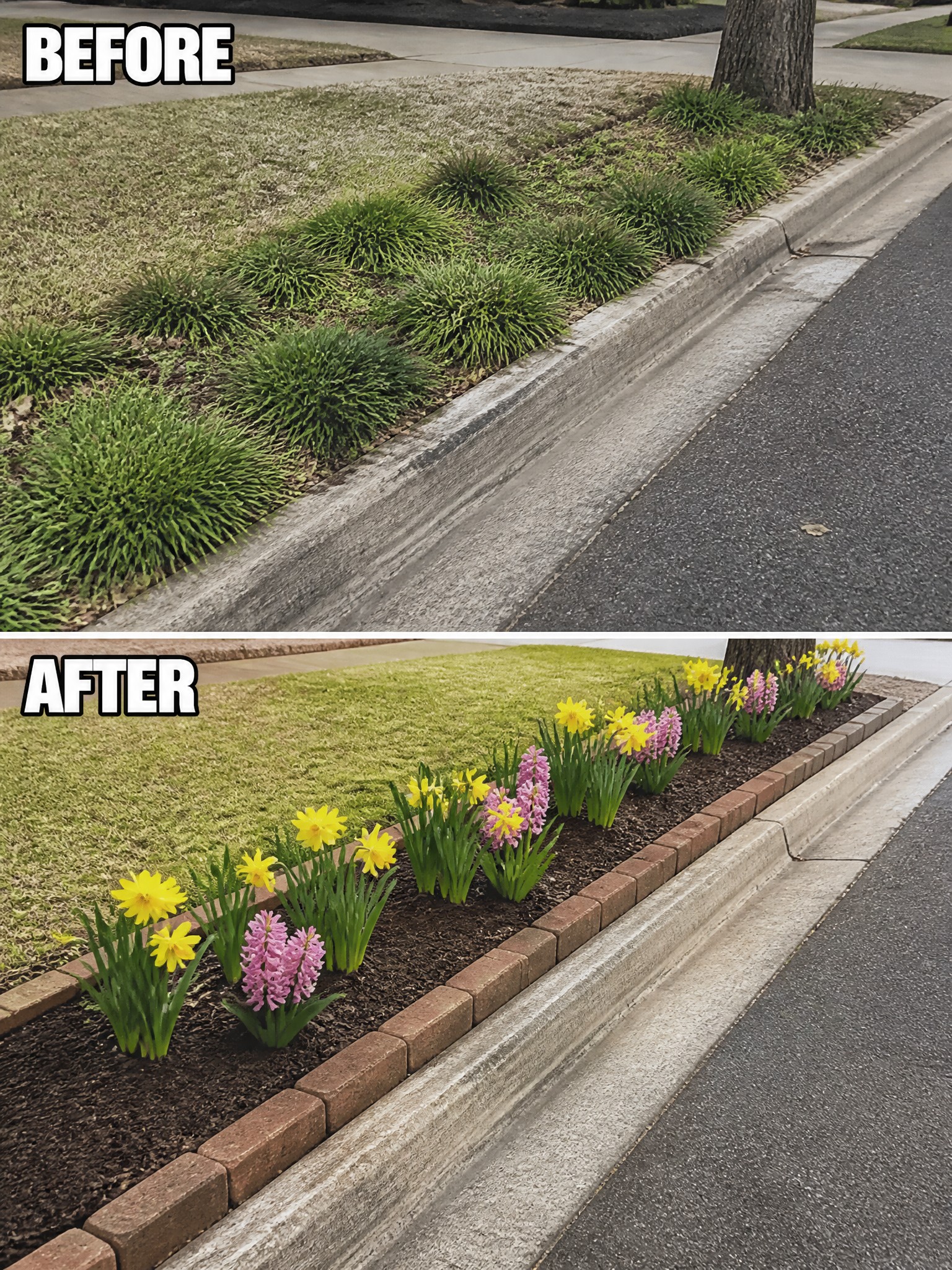
A patchy strip of grass between the sidewalk and street often looks neglected because it has no clear edge. Adding a simple brick border and filling the bed with mulch turns that same space into something neat and intentional. The flowers add color without much extra work once they are in the ground.
This approach works best on suburban streets where the curb strip is narrow and gets little foot traffic. Start by cleaning up the existing grass and weeds, then lay the edging before planting. Choose bulbs or perennials that return each year so the bed stays low maintenance after the first season.
Turn A Narrow Overgrown Passage Into A Simple Seating Area
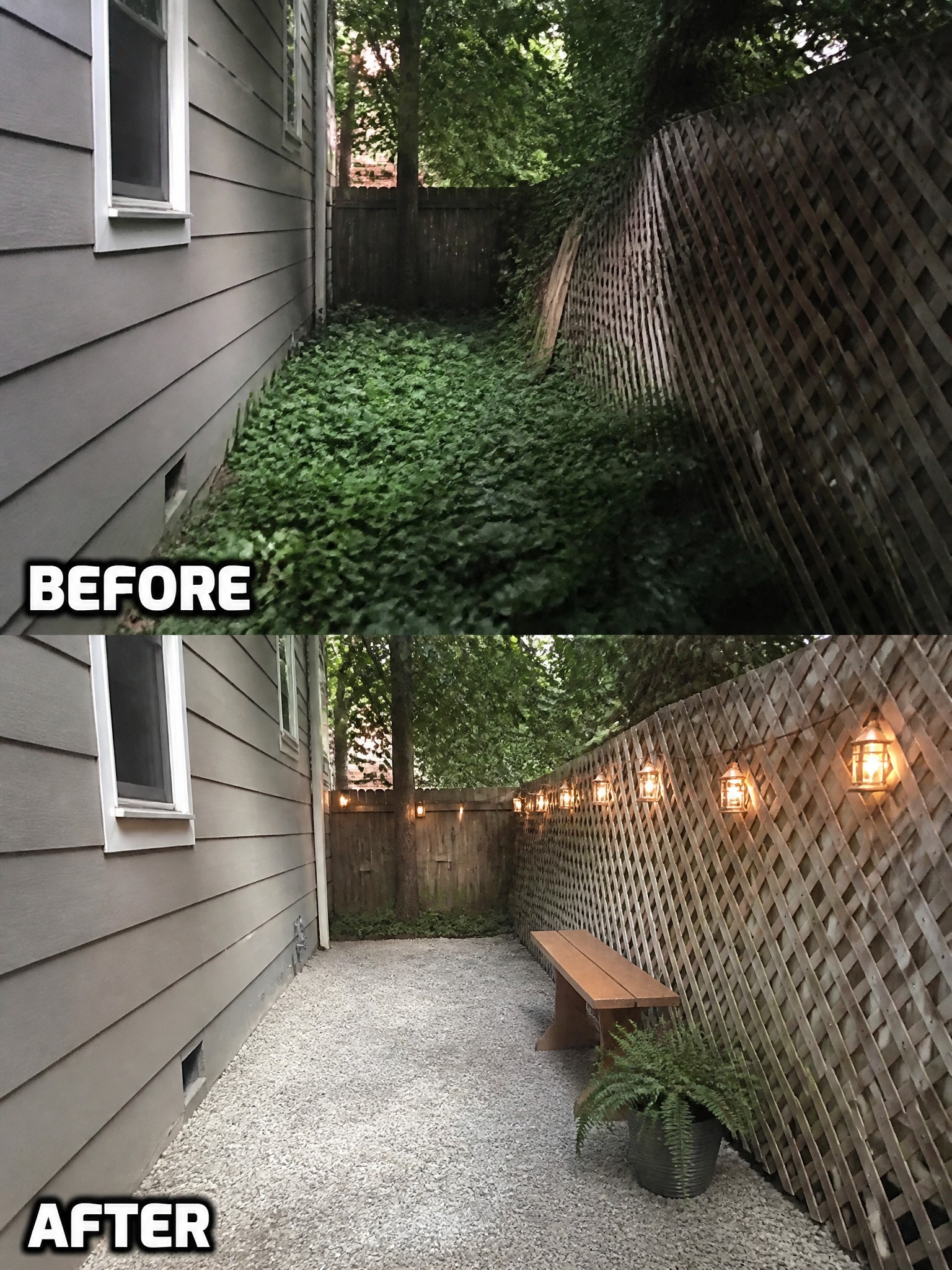
Clearing out thick ivy and laying down gravel gives the space a clean floor and makes it feel much wider. String lights hung along the fence then turn the same narrow strip into a spot where a bench and a couple of plants actually work.
This approach works best in tight side yards or between a house and a fence where grass never grows well. Start with the hard surface and basic lighting so the area stays usable even if you add more plants or seating later.
Shape Overgrown Foundation Shrubs Into Neat Beds
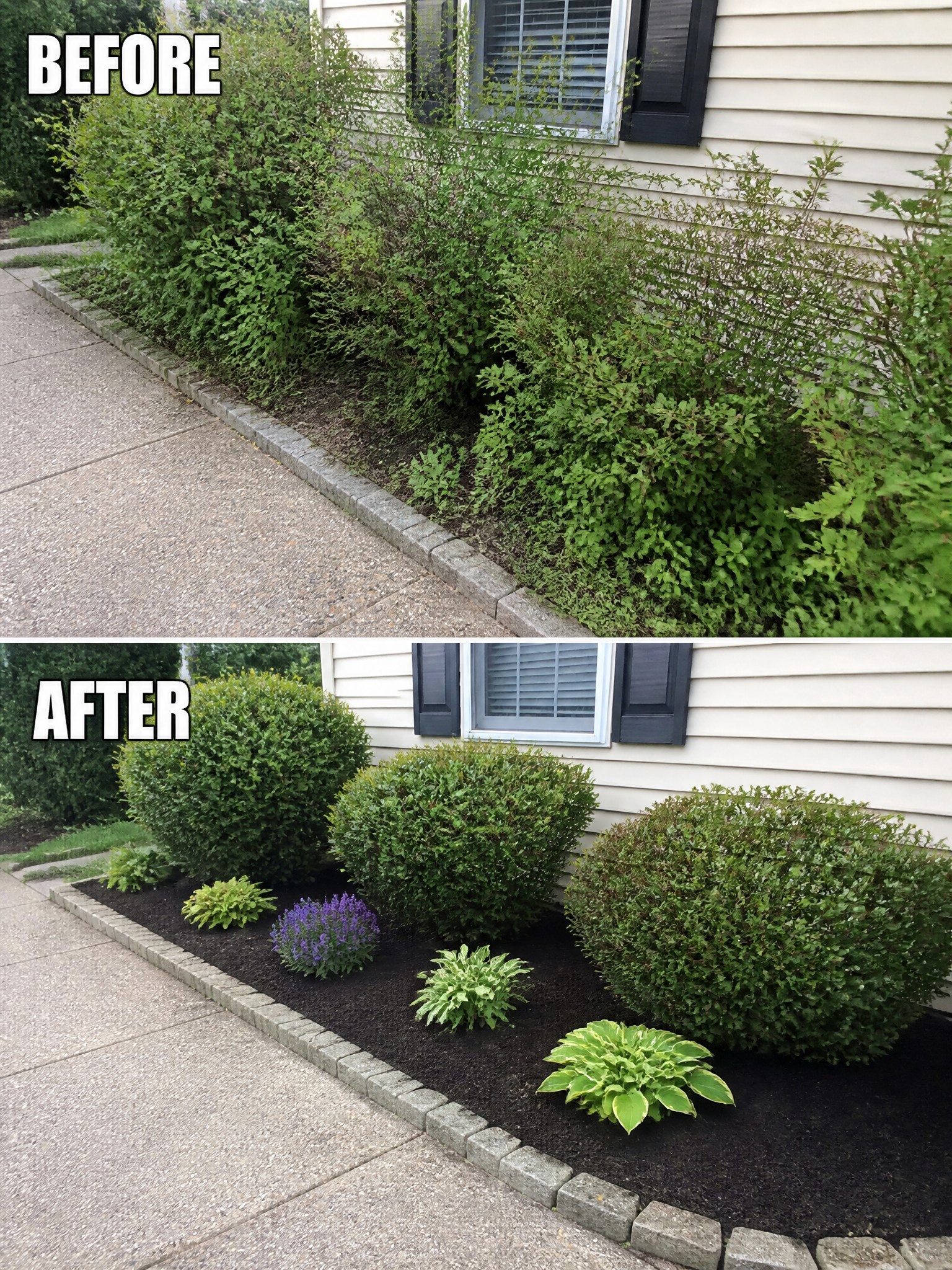
The main change here is taking a row of wild, sprawling shrubs and cutting them back into rounded forms that stay within the bed. Adding a thick layer of dark mulch and a few smaller plants in between gives the whole area a much cleaner outline along the house and sidewalk.
This approach works well on any narrow strip where plants have grown out of control. Start by pruning the largest shrubs hard so they do not crowd the walkway, then edge the bed and spread mulch to hold the new shape in place. The result looks intentional without needing new plants right away.
Add Privacy With A Solid Garden Screen
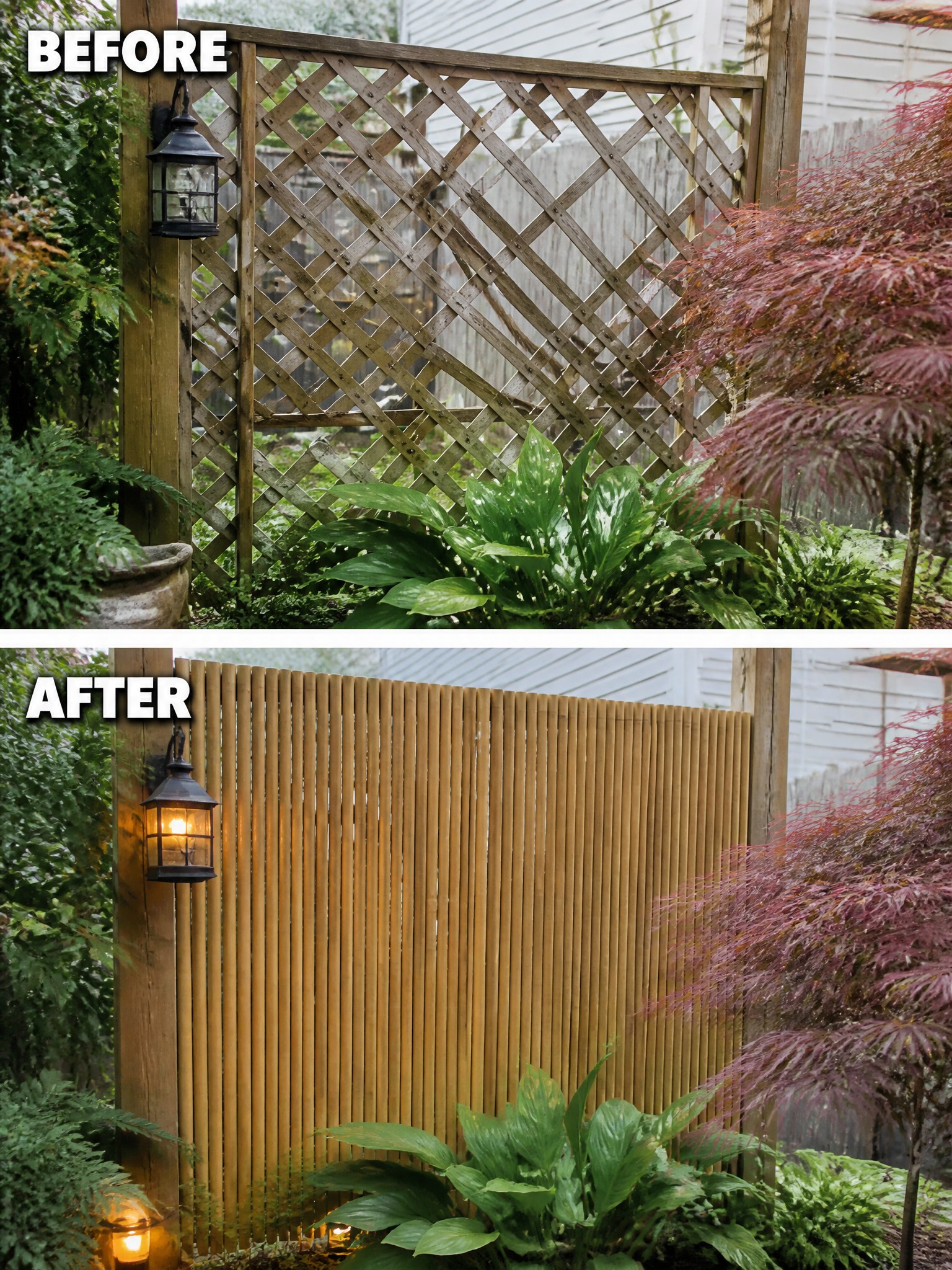
An open lattice lets too much of the surrounding area show through, which can make a small garden spot feel exposed. Replacing it with a solid bamboo panel blocks the view right away and gives the corner a much more finished look without needing a full new fence.
This idea works best in side yards or tight garden corners where you want separation but still need to keep things simple. Match the new screen to the existing posts and trim back any nearby plants so the fence itself becomes the main feature.
Plant Seasonal Flowers In A Bare Front Bed
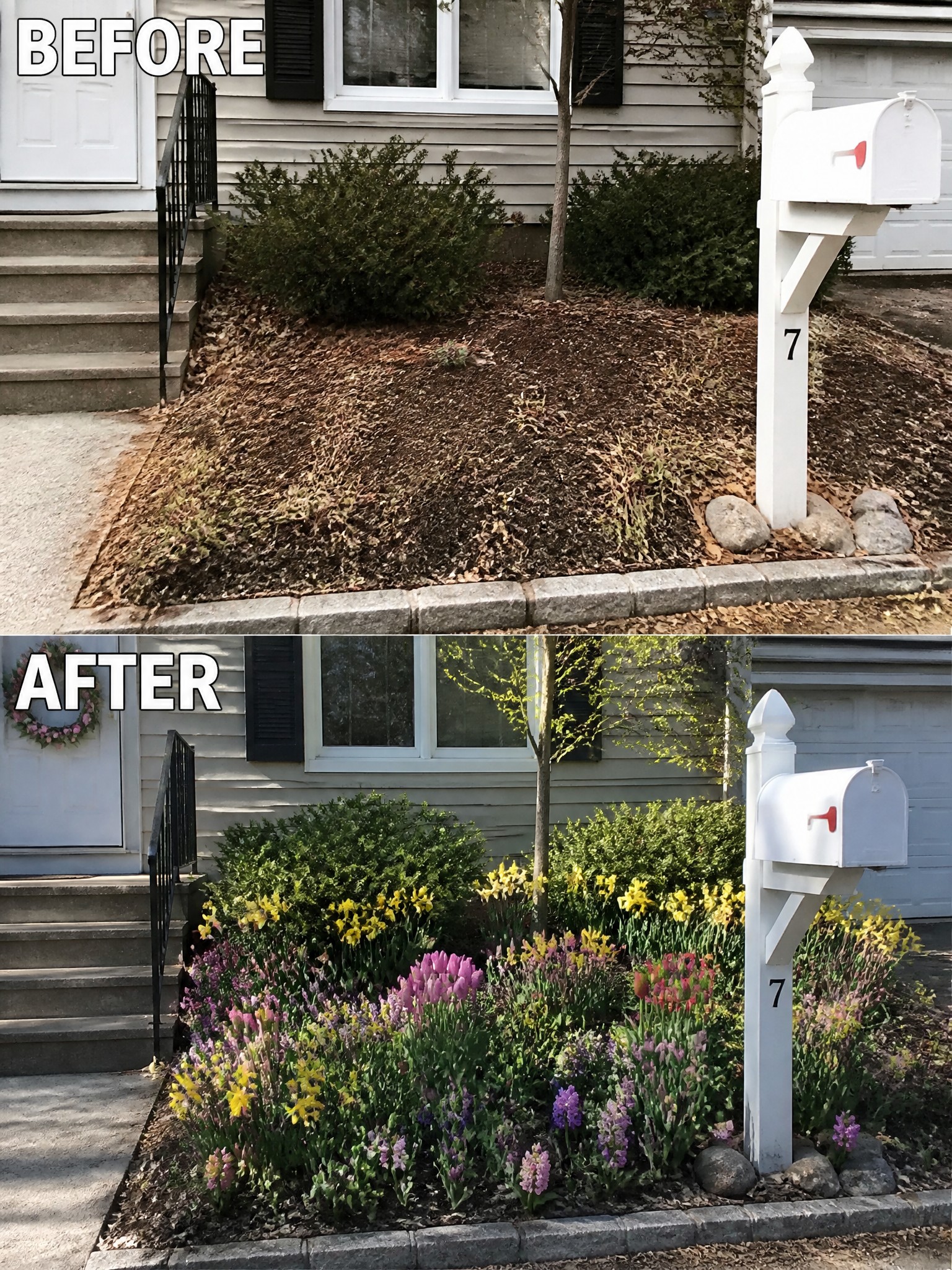
A bare front bed can look flat and neglected even when the rest of the yard is tidy. Clearing the leaves and adding rows of daffodils, tulips, and other spring flowers turns the same space into something much brighter and more welcoming.
This approach works best along the front of the house or near the mailbox where the planting gets seen every day. Start with a simple cleanup, then choose bulbs and perennials that bloom at different times so the bed stays colorful longer. It stays realistic for small yards and does not require big construction.
Frequently Asked Questions
Q: My garden has mostly weeds right now. Where do I even begin with these ideas? A: Clear a small patch first with a quick mow or pull. Then drop in one of the cheap border or container projects from the list to cover the bare spots fast.
Q: Do I need special tools for most of these weekend fixes? A: Basic items like a rake, hammer, and scissors handle almost everything. Borrow what you lack from a neighbor instead of buying extras.
Q: What if rain hits mid project? A: Shift to covered tasks like painting pots or stringing lights under the eaves. Save the digging or planting for the next dry stretch.
