

I often notice that gardens start to feel neglected when the beds lose their edges and the plants crowd together without any real plan.
Over time I have found that clearing out the overgrowth and adding a few simple paths can make the whole space feel more open and easier to enjoy.
One change I would try first in my own yard is reshaping the lawn edges because it seems to pull everything else into place.
Small updates like these tend to build on each other so the area starts to look cared for without needing a big budget.
Some of these ideas are worth testing out to see what fits.
Add Structure To An Overgrown Yard
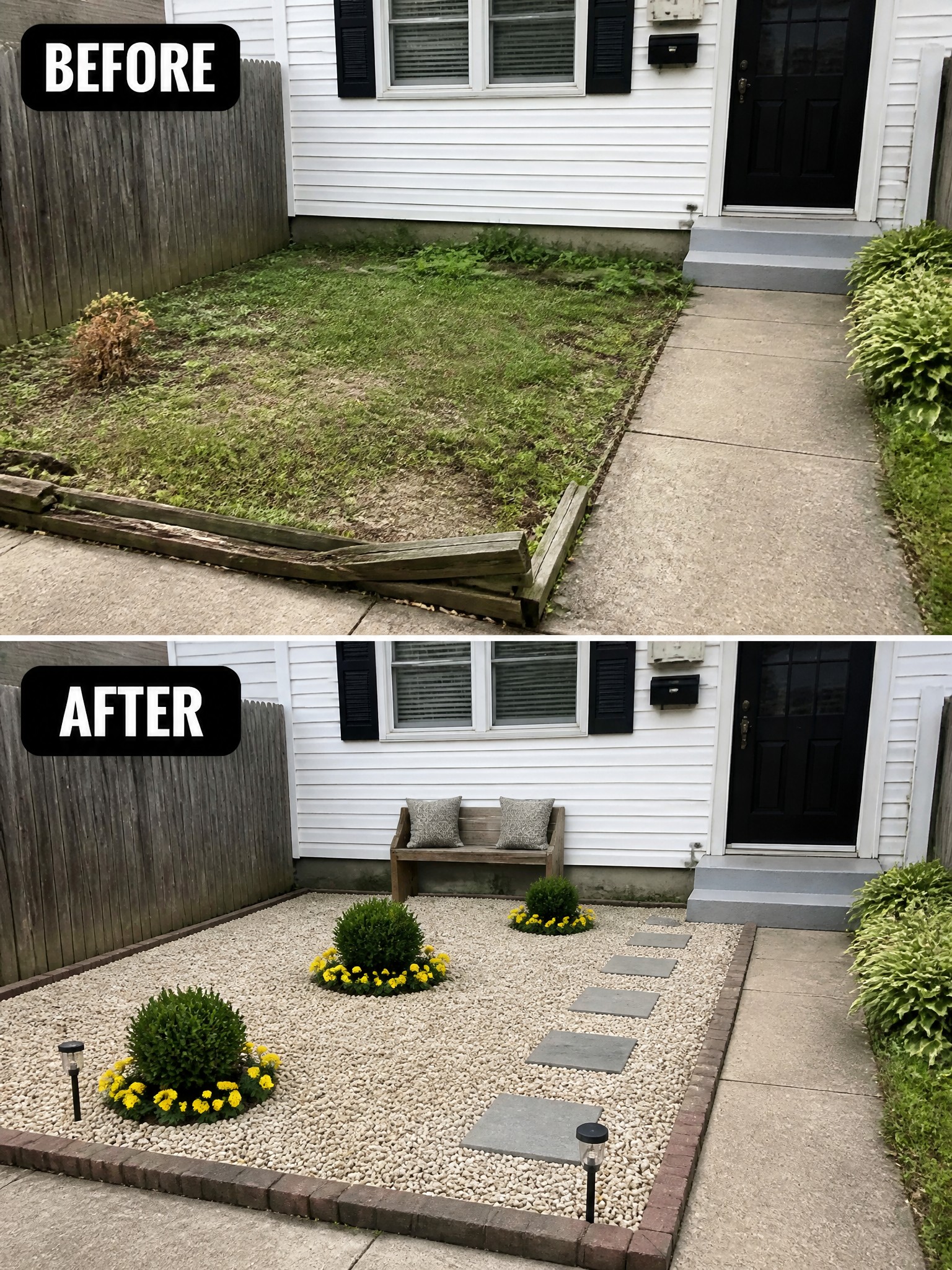
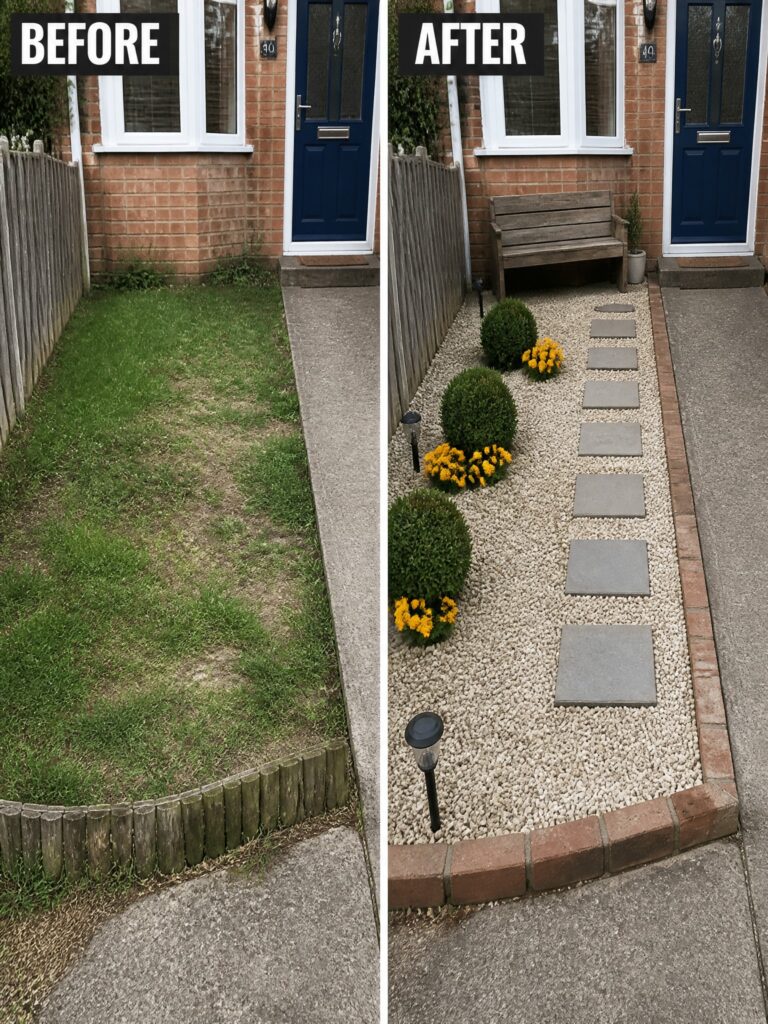
A messy patch of grass and weeds next to the house often looks worse than it needs to. Replacing the uneven lawn with gravel and adding low brick edging gives the space a clear shape right away. The stepping stones then turn the area into something you can actually walk through instead of just looking at.
This approach works well in narrow side yards or corners where grass struggles to grow. Start with the edging and gravel to set the layout, then add a few shrubs and flowers in simple clusters. Keep the path clear so the space stays easy to maintain and does not feel crowded.
Add Raised Beds To Organize A Narrow Yard
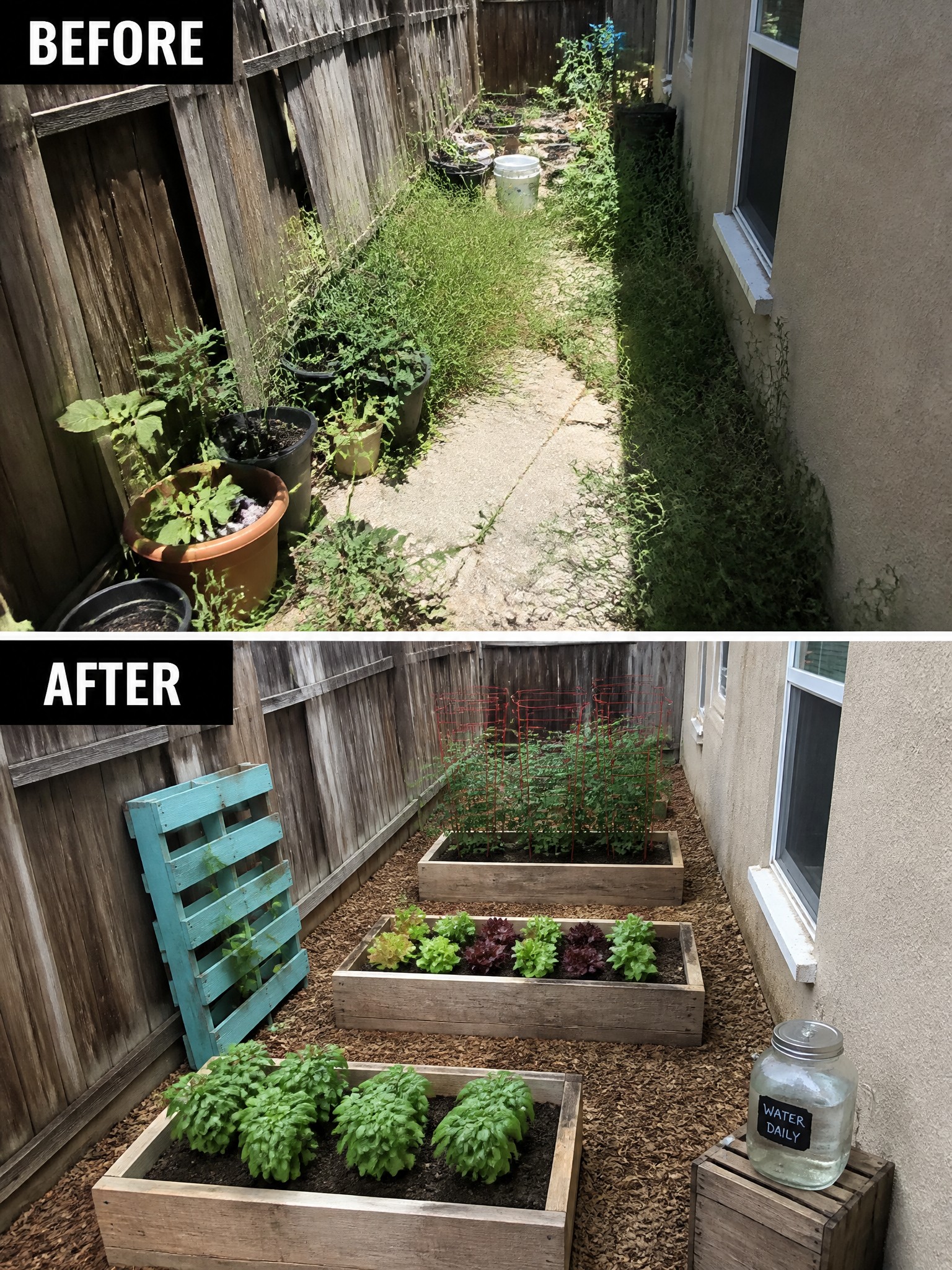
The biggest shift here is moving from scattered pots and overgrown ground to a few simple raised beds set in mulch. This gives the space clear lines and makes it feel like an actual garden instead of a leftover strip of yard.
Raised beds suit narrow side yards especially well because they keep plants contained and stop everything from spilling into the walkway. Build them from basic lumber, keep the layout simple, and use mulch on the ground to cut down on weeds and give the area a finished look.
Turn A Bare Patio Into A Seating Area
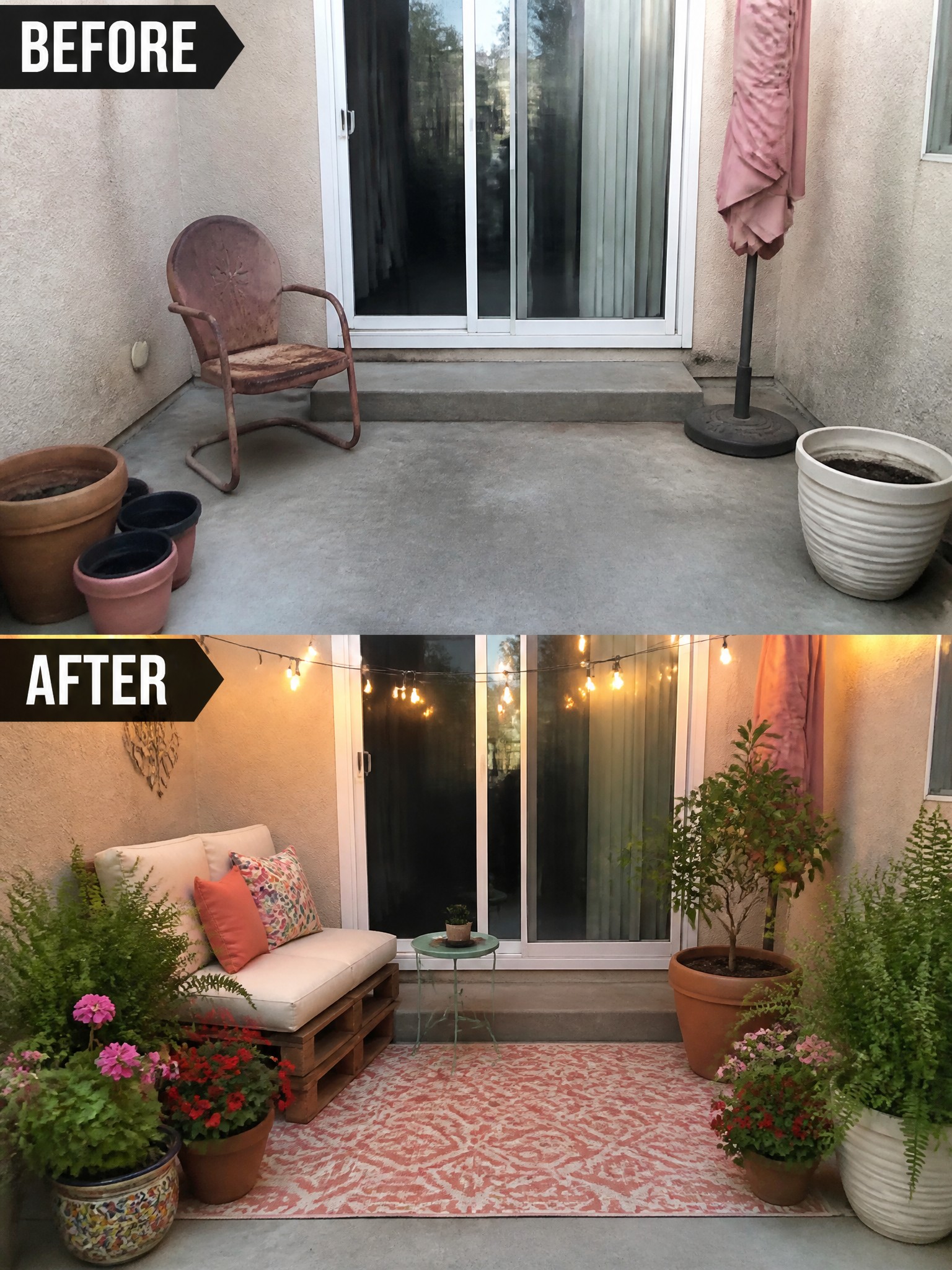
A plain concrete slab often stays empty because it lacks any sense of purpose. Placing a simple pallet sofa, a large rug, and a few string lights gave the space a clear center and made it feel like an extension of the house rather than leftover ground.
This idea works best on small patios where you want to keep movement easy. Start with one seating piece and a rug to mark the zone, then add plants around the edges so the area stays open but still looks finished.
Turn A Bare Backyard Into A Simple Outdoor Room
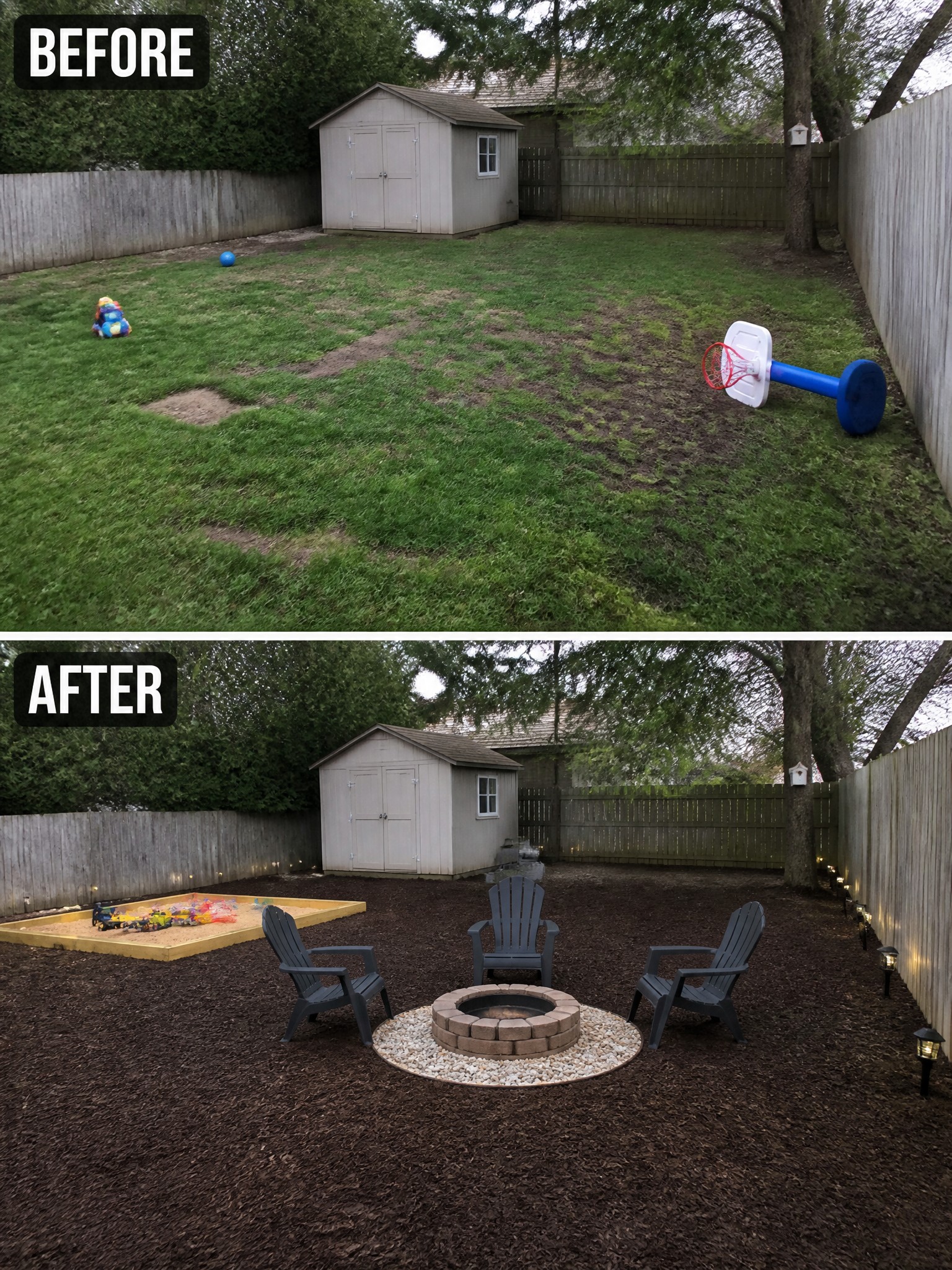
A large open lawn often feels like wasted space until you give it a clear purpose. Adding a central fire pit with a few chairs around it and covering the ground with mulch instantly creates a spot where people want to sit and stay. The before photo shows nothing but grass and scattered toys, while the after shows one defined zone that feels intentional without looking crowded.
This approach works best in average-sized yards where you want one main gathering area rather than trying to fill the whole space. Start by clearing the grass in the spot you use most, lay down a thick layer of mulch for a clean surface, then place the fire pit first so the chairs can sit around it naturally. Keep other features like a sandbox off to the side so the seating area stays focused and easy to maintain.
Add Raised Beds To Structure A Bare Yard
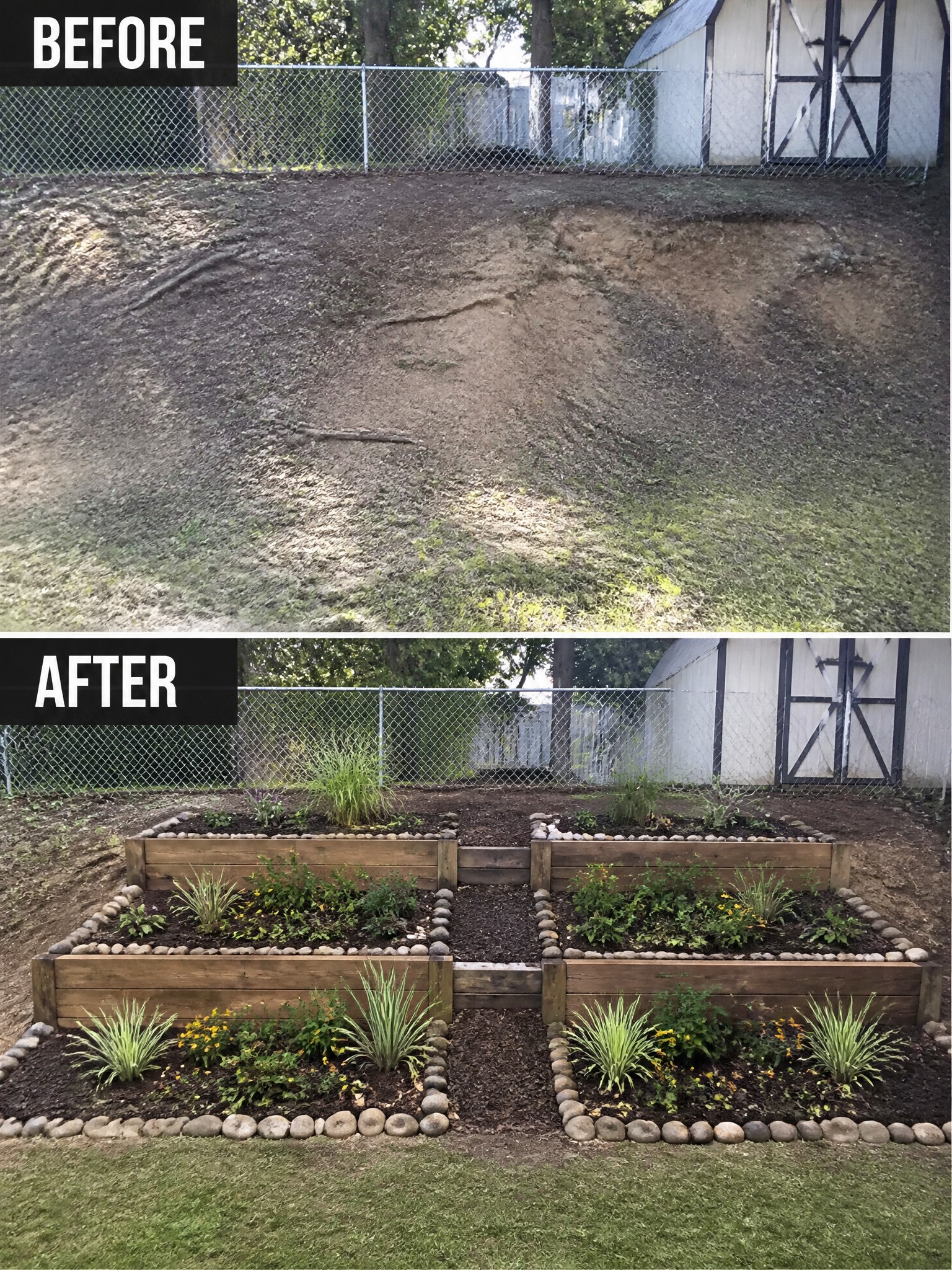
A bare dirt slope like the one in the before photo often feels like wasted space because nothing defines where planting should happen. Adding four raised wooden beds with stone borders turned the area into four clear planting zones that keep soil in place and make the whole spot look intentional.
This approach works well on sloped or uneven ground where regular planting would wash away. Start with basic pressure-treated lumber for the beds, add a simple stone edge for extra definition, and fill with good soil and mulch. It keeps the project affordable while giving you neat rows for vegetables, flowers, or herbs without needing a full landscape redesign.
Frame A Plain Front Door With Matching Planters
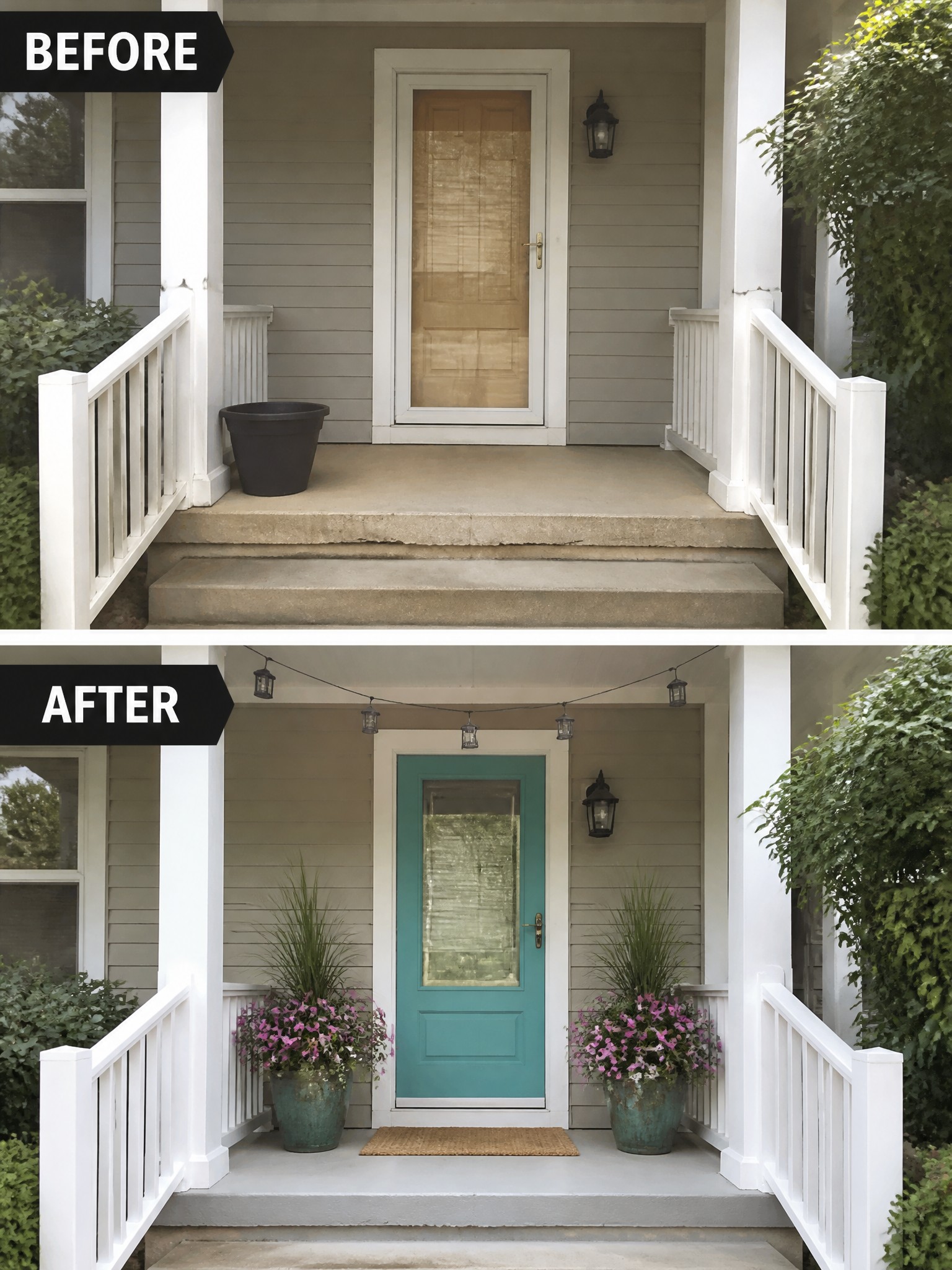
A plain entry often feels unfinished because it lacks any sense of purpose or scale. Painting the door a clear color and placing two matching planters on either side gives the doorway weight and draws attention where it belongs. The change is simple but effective on a modest porch that has little room for other furnishings.
This approach works best on houses with a small stoop or narrow steps where furniture would crowd the walkway. Choose pots that can stay outside year-round and repeat one plant color on both sides so the arrangement feels balanced rather than busy. Keep the rest of the porch clear so the door remains the main focus.
Add Vertical Planters To A Blank Wall
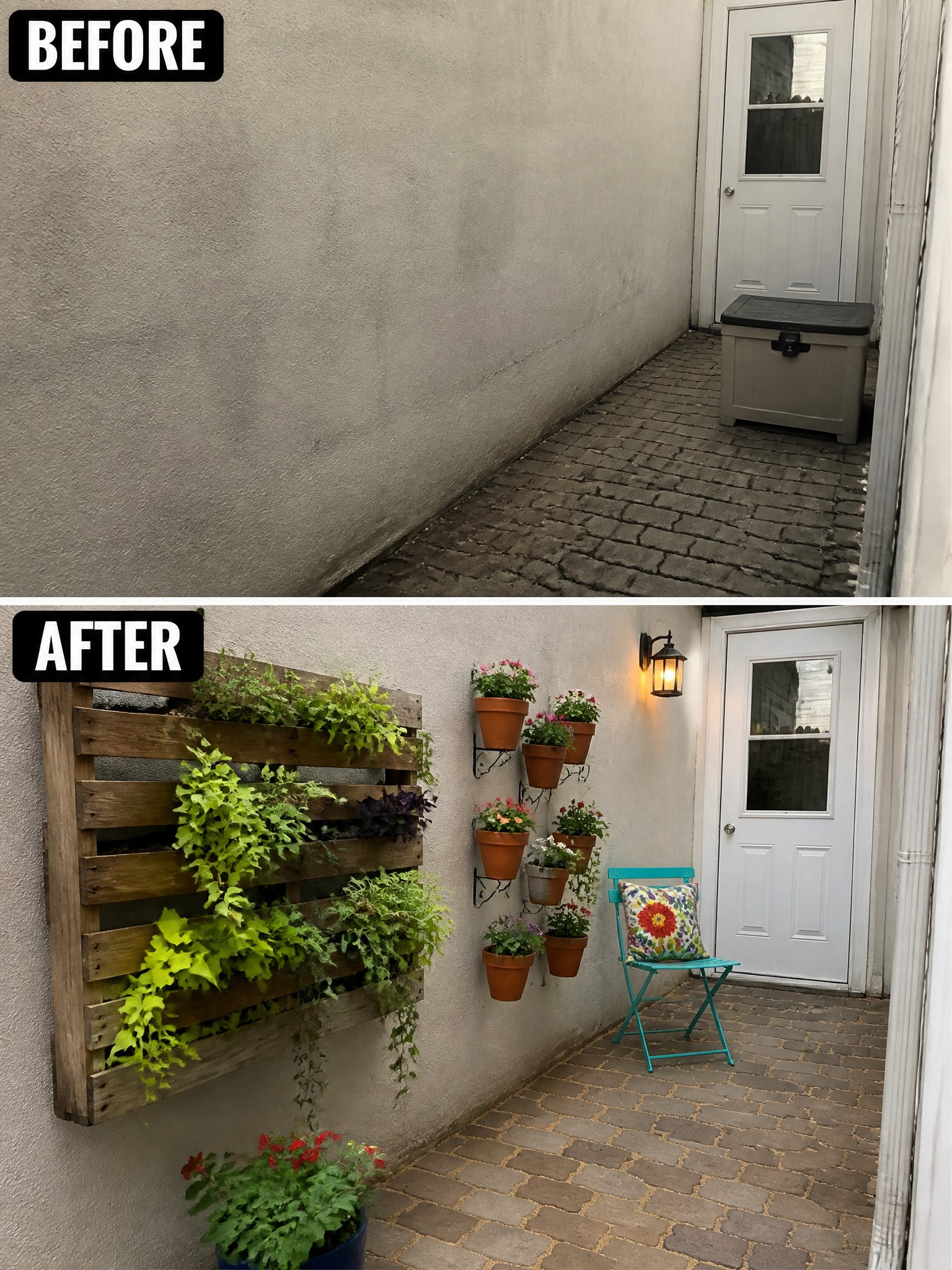
A plain side wall next to a door can feel like wasted space, especially in a narrow paved area. Mounting a wooden pallet as a vertical garden and adding a few wall-mounted pots turns the surface into the main feature while keeping the floor clear for movement. The simple addition of a folding chair then gives the spot a clear purpose as a quiet place to sit.
This approach works well on small patios, side entries, or any tight outdoor spot where floor space is limited. Start with a sturdy pallet or similar frame, use lightweight soil, and pick plants that handle the local light and weather. Keep the rest of the area uncluttered so the planted wall stays the focus without crowding the walkway.
Refresh A Backyard Fence With Paint And Planting
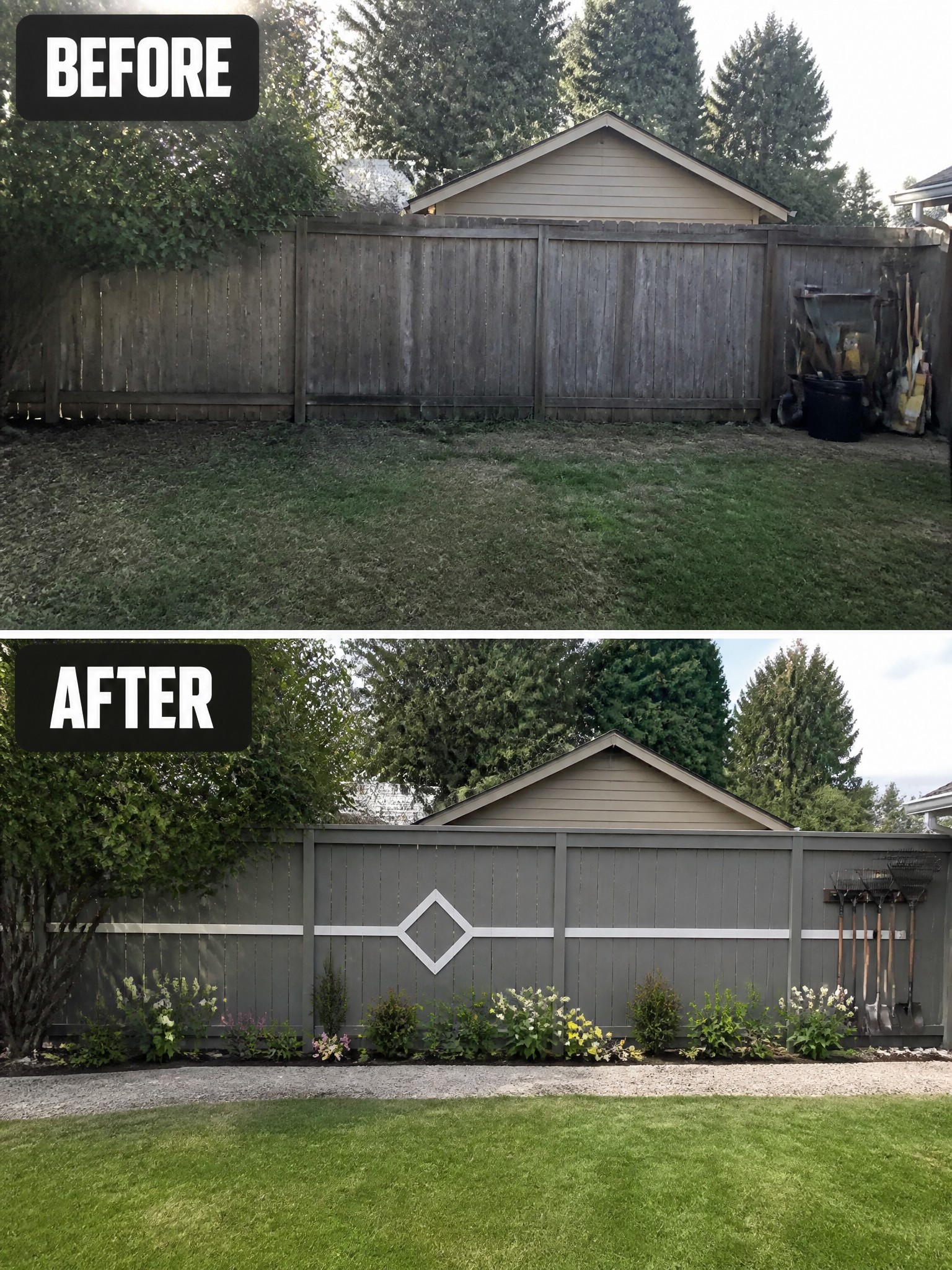
A plain fence often makes the rest of the yard look unfinished. Painting it a solid color and adding a simple planted border along the base gives the space clear structure and turns the fence into a real backdrop instead of just a boundary.
This idea works best in yards where the fence takes up a lot of visual space. Clean the wood first, use exterior paint that can handle weather, and keep the planting low and even so the line stays neat. Avoid overcrowding the bed so the fence still reads as the main feature.
Add Defined Garden Beds To A Bare Yard Corner
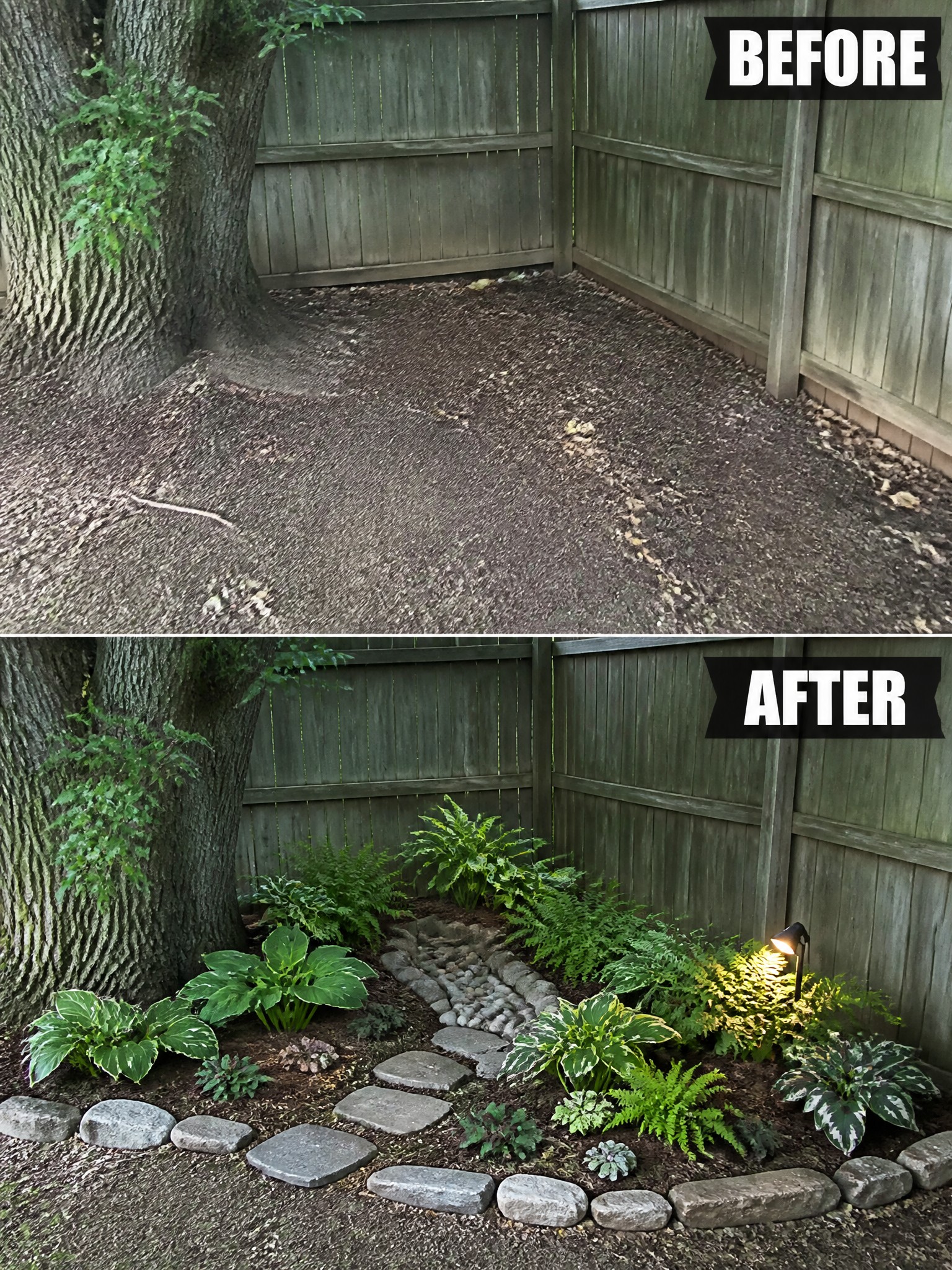
A bare dirt patch next to a tree and fence can feel like wasted space. Adding a simple planting bed with edging and a stone path turns that empty area into something that looks intentional and cared for. The before photo shows nothing but soil and leaves, while the after shows how a few plants, rocks, and a basic walkway give the spot clear shape and purpose.
This approach works best in small side yards or corners where you want some greenery without crowding the space. Start with cleanup and basic edging before planting, then keep the path wide enough to walk comfortably. It suits homes with existing trees or fences that already frame the area, and it keeps the project manageable on a budget.
Define Garden Beds With Simple Edging
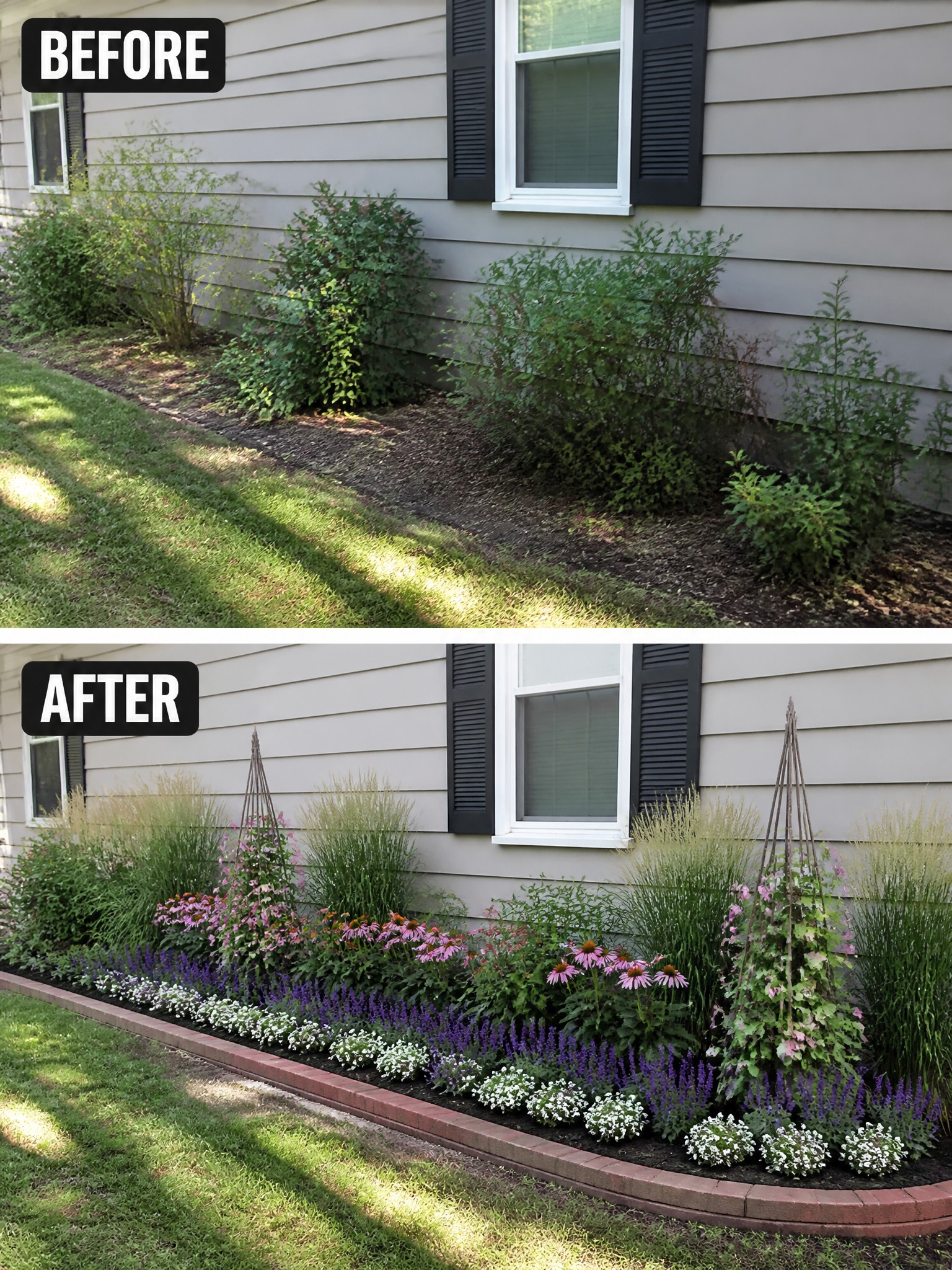
Adding a clear edge is one of the quickest ways to fix an overgrown strip along the house. The before shows plants spilling out with no real shape, while the after uses a brick border to keep everything in line and looking intentional.
This idea works best along foundation beds where the grass meets the house. Lay the edging first to set the shape, then fill in with a few layers of plants so the bed stays neat without constant trimming.
Define A Garden Path With Simple Pavers
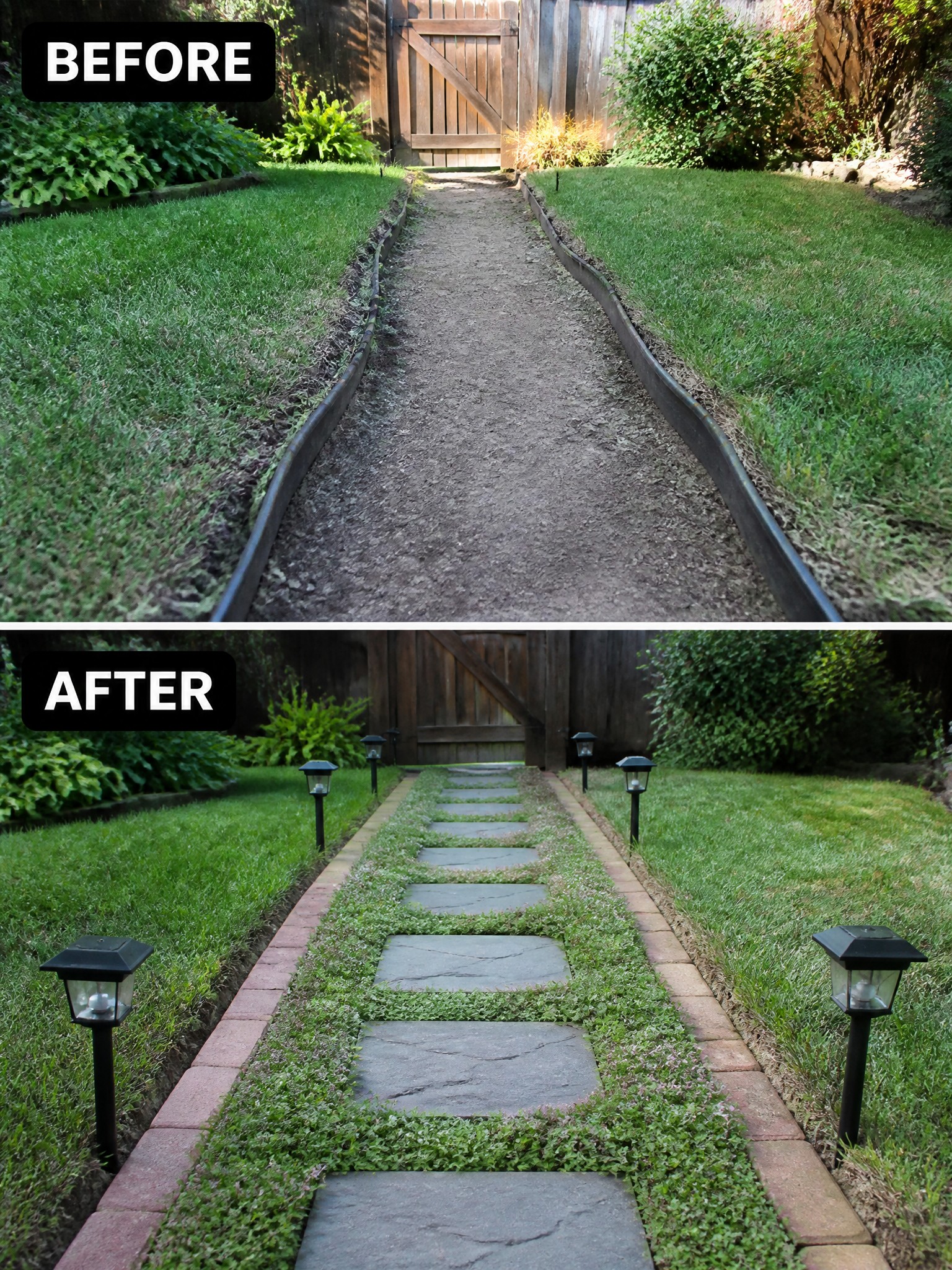
A dirt path often leaves a garden feeling unfinished, especially when it runs straight through the middle of the yard. Switching to flat stepping stones with a brick border on each side gives the space a clear route and keeps the grass from creeping in.
This works best in smaller yards or along side areas where you want to direct traffic without covering everything in hardscape. Lay the pavers first to set the shape, then add the edging and a few solar lights so the path stays usable after dark.
Add A Trellis To Turn A Blank Wall Into A Garden Feature
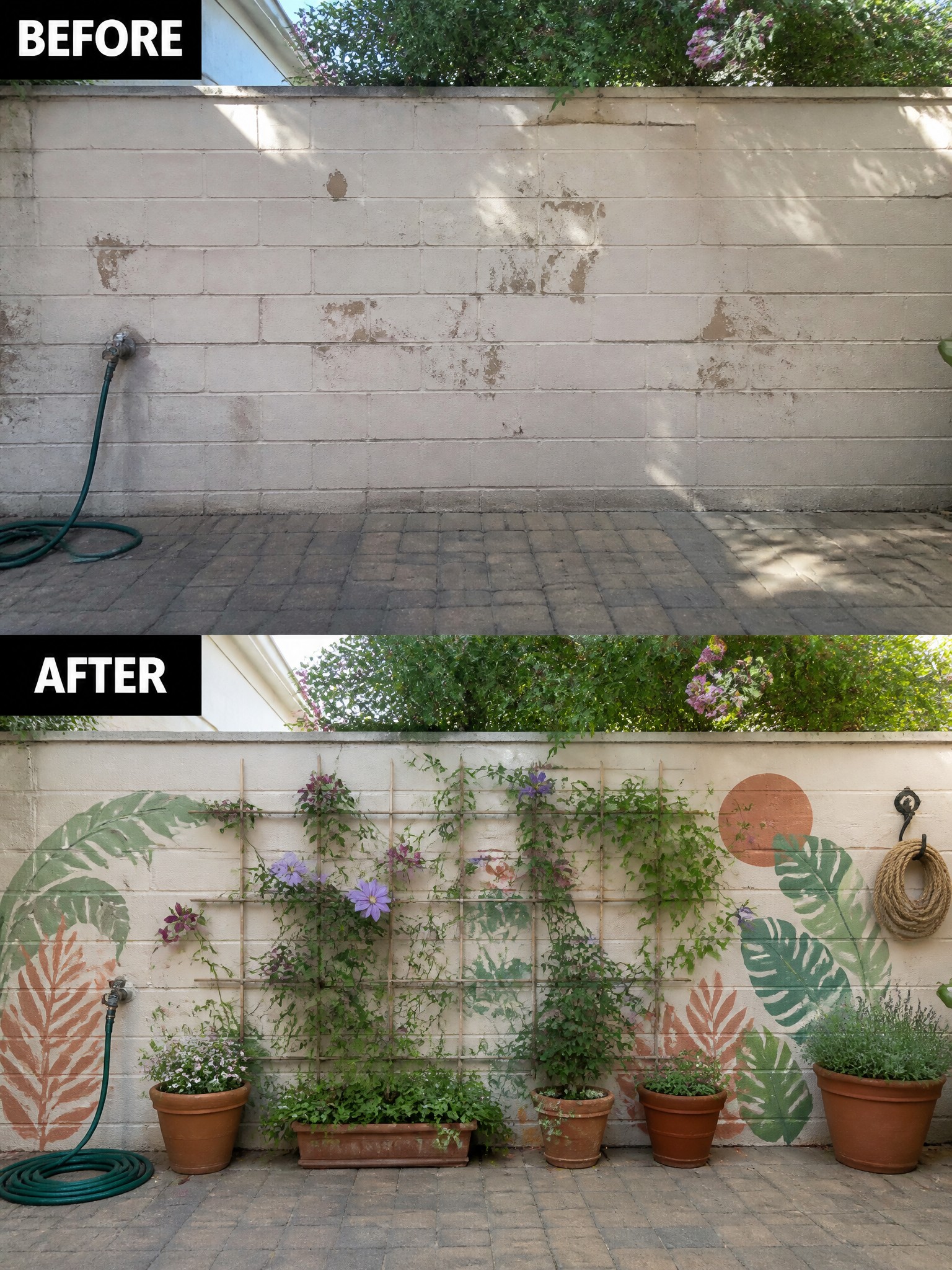
A plain garden wall often looks unfinished on its own. Adding a trellis gives climbing plants a place to grow, which quickly softens the surface and brings height without taking up floor space.
This idea works best on solid walls that get sun for at least part of the day. Mount a simple grid, plant a couple of reliable vines at the base, and add a few pots in front to fill the lower level. Keep the rest of the area open so the plants have room to spread.
Add Lighting And Planters To Make A Deck Feel Usable
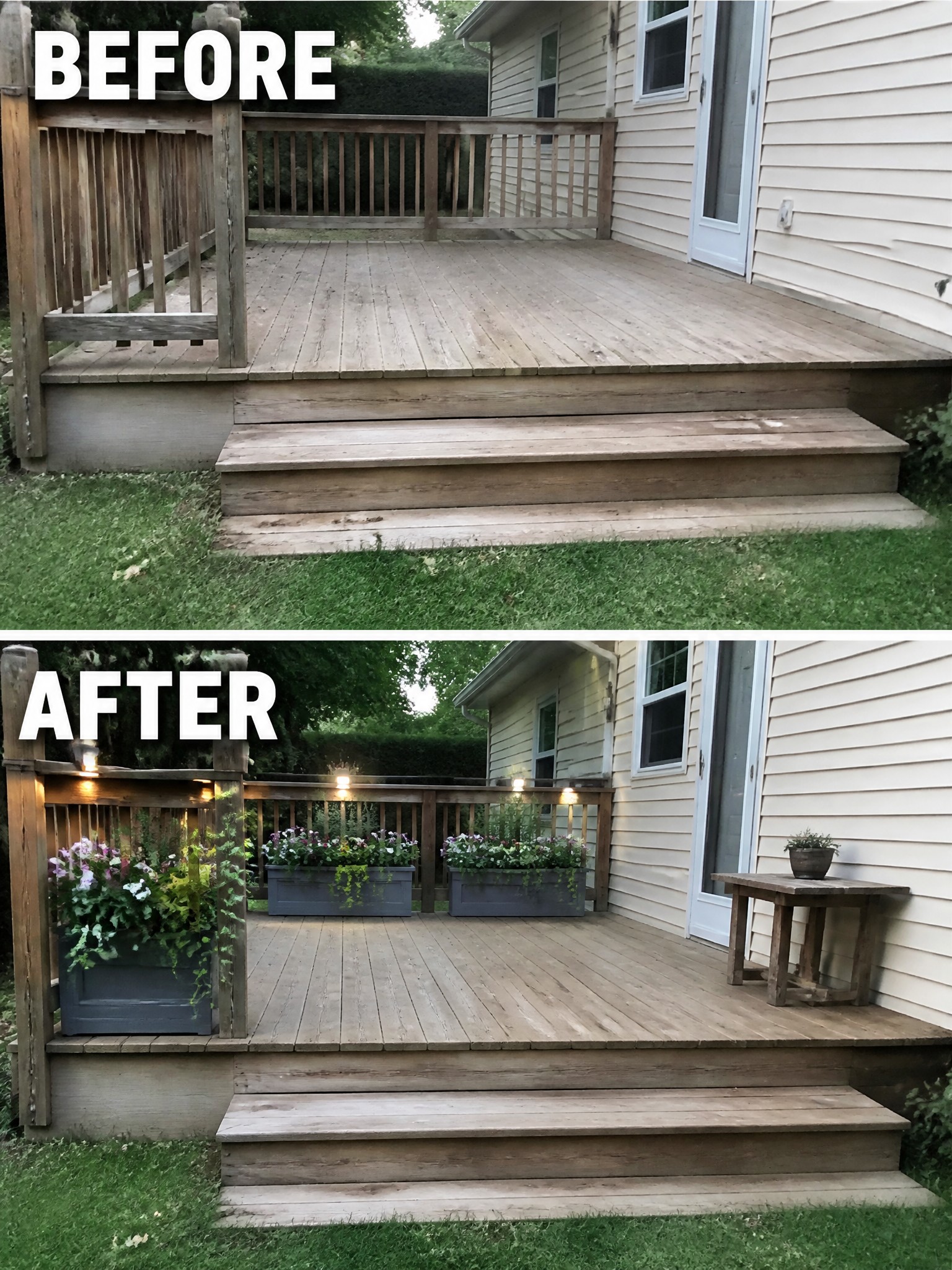
A plain deck often sits empty because it lacks any sense of purpose or comfort once the sun goes down. Adding a few string lights along the railing and setting planters with flowers at the edges gives the space a clear reason to be used. The lights create a soft glow that makes the area feel finished, while the planters bring color and life without needing a full redesign.
This works best on decks that already have a solid structure but feel bare. Start with weatherproof lights and two or three large planters placed near the entry points or corners. Keep the rest of the deck clear so there is still room to move around. The goal is to add just enough to make people want to step outside after dark.
Add A Flower Border Along The Sidewalk
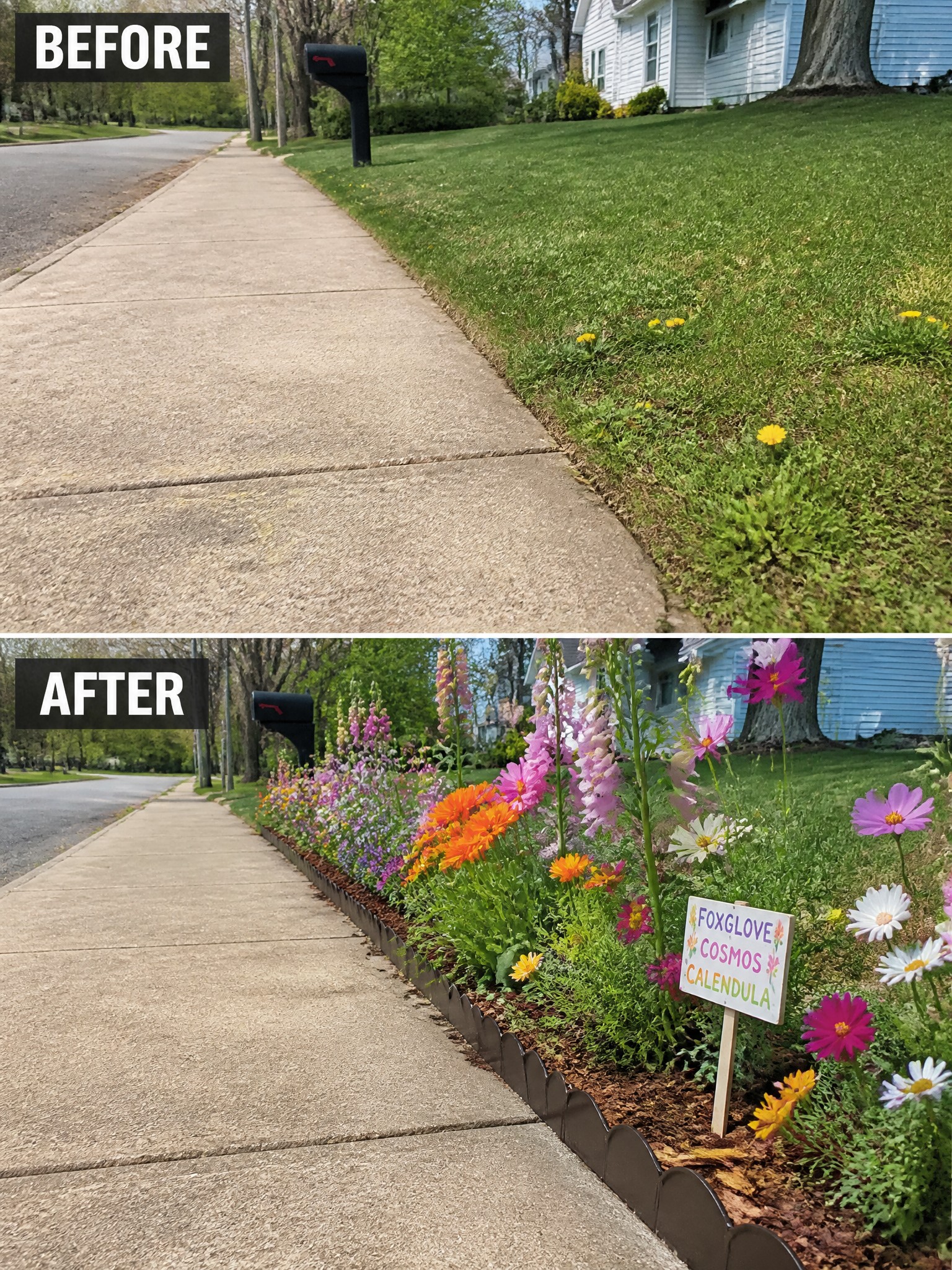
A simple way to bring color and order to the front of a house is to add a planted border right along the sidewalk. The before view shows plain grass meeting the concrete with nothing in between, while the after shows a narrow bed edged neatly and filled with flowers that keep the walk feeling welcoming instead of bare.
This idea works best on narrow strips where grass is hard to mow anyway. Use edging to hold the soil and mulch in place, then choose a mix of taller and shorter blooms that can handle the sun. Keep the bed only a couple of feet wide so it stays easy to maintain and does not crowd the path.
Define A Bare Corner With A Bamboo Screen
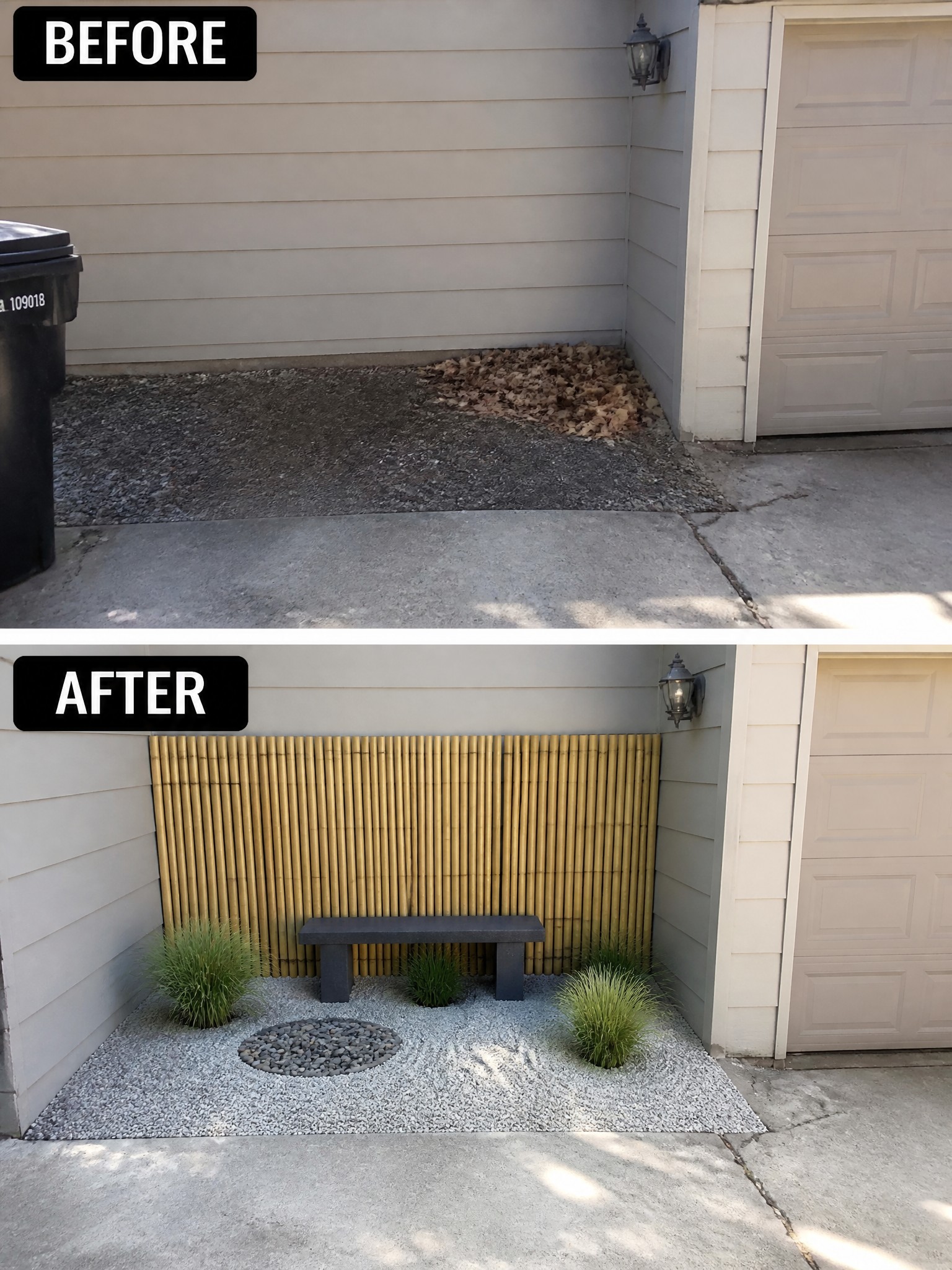
A plain gravel strip next to the garage often gets ignored because it has no clear purpose. Adding a tall bamboo screen along the back wall instantly gives the space structure and turns it into a contained garden area. The bench and a few clumps of grass then make the spot feel intentional instead of leftover.
This approach works well in narrow side yards or garage corners where you want something low maintenance but still pleasant to look at. Start with a simple vertical screen to set the boundaries, keep the planting minimal, and use gravel to keep the ground clean. The result feels finished without requiring a lot of ongoing work.
Turn A Bare Balcony Into A Simple Seating Area
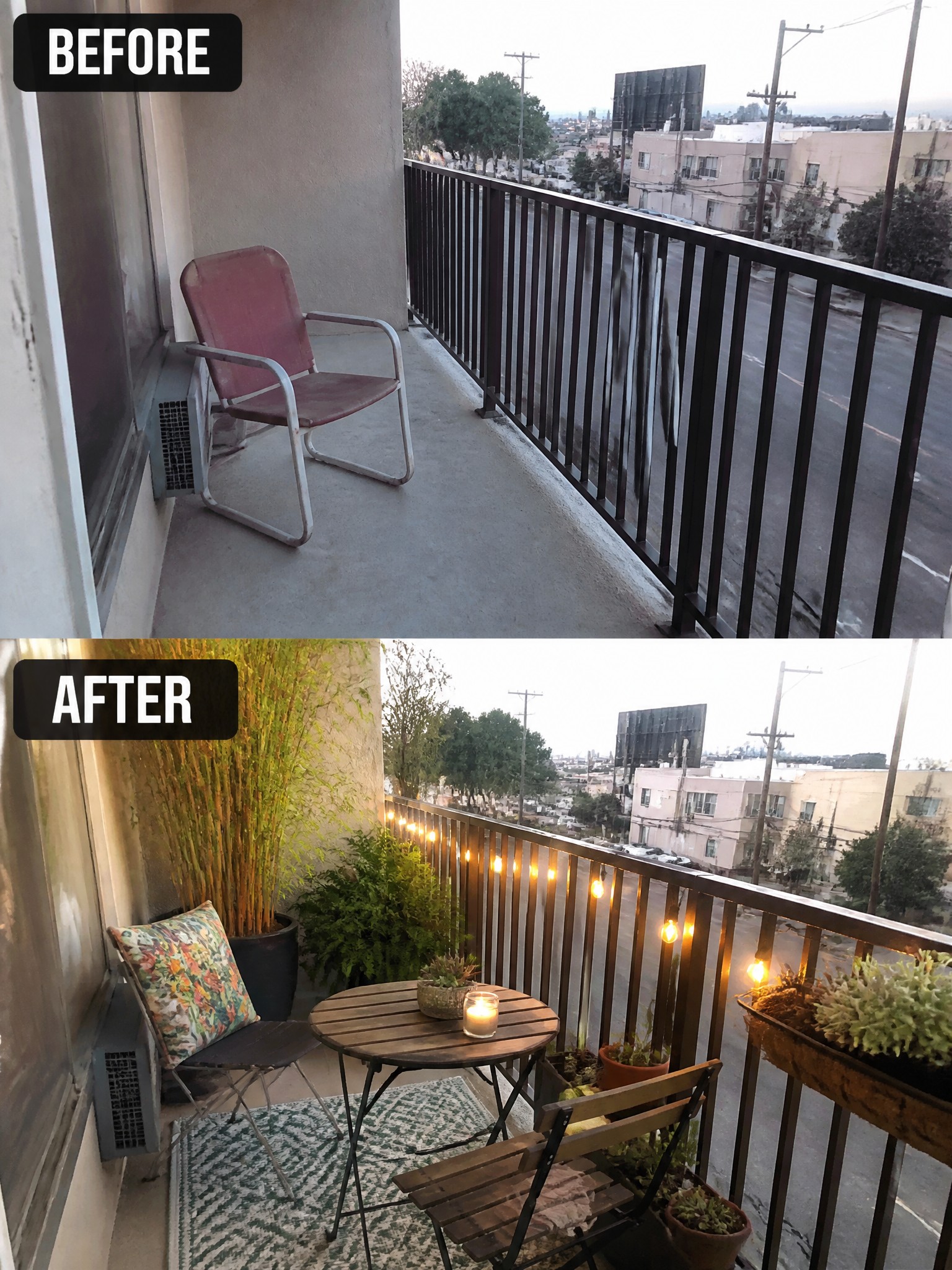
A small balcony often sits empty because people assume it needs a big overhaul to feel useful. Adding a compact table, a couple of chairs, a rug, and a few plants can turn the space into a place where you actually sit. The before photo shows almost nothing but one old chair, while the after shows how basic pieces create a clear spot to eat or relax without crowding the floor.
This idea works best on balconies or patios that get some use but lack definition. Keep the furniture scale modest so there is still room to walk around. A rug helps mark the seating zone, and one or two string lights make the area feel finished once the sun goes down. Start with seating and a surface before adding more plants or decor.
Define An Overgrown Edge With Gravel And Stones
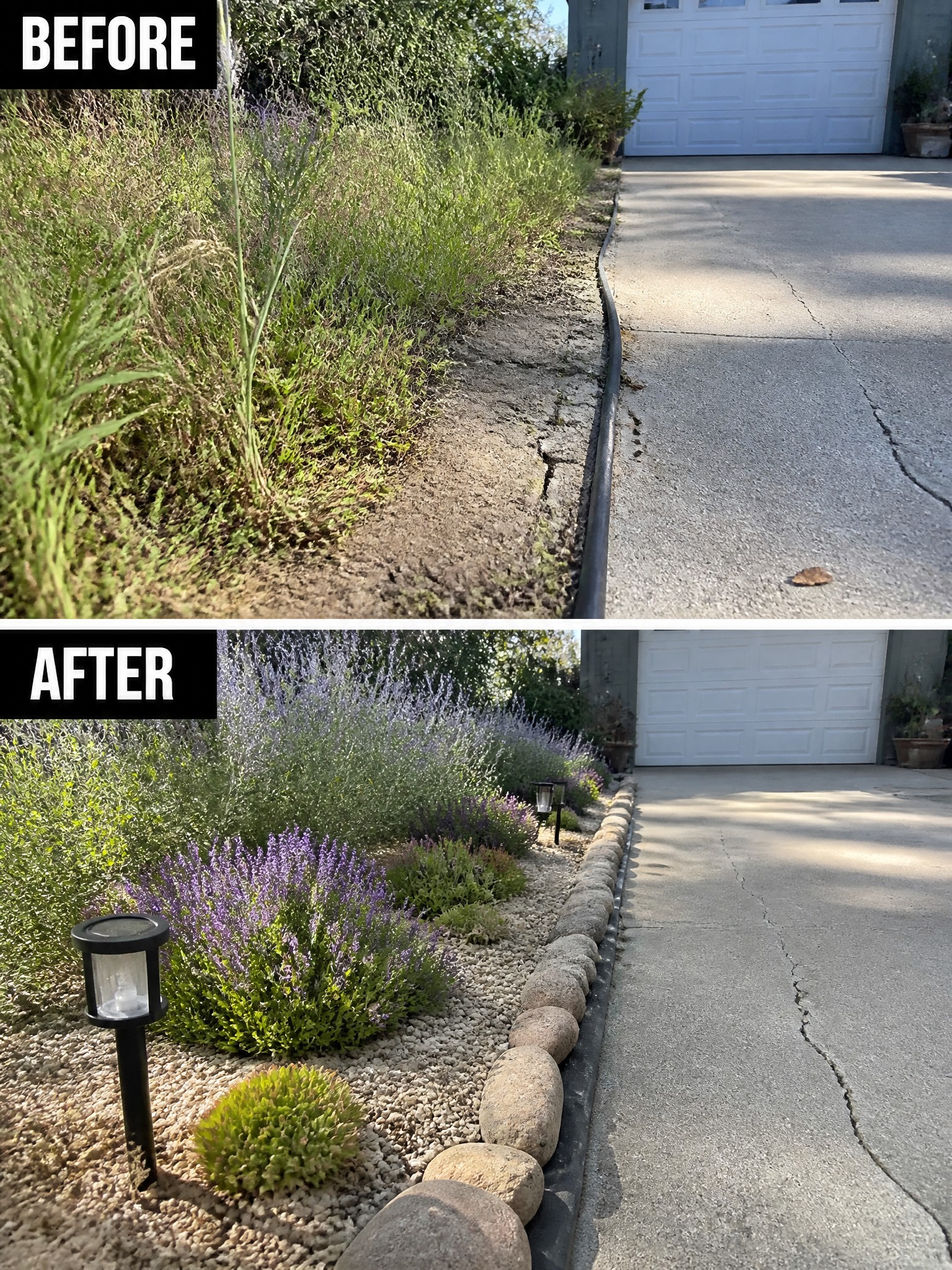
A messy strip of weeds next to the driveway often looks worse than it is. Clearing the growth and adding gravel with a stone border turns the same narrow space into a clean, contained bed that actually looks intentional.
This idea works best along driveways or walkways where you want something simple and low maintenance. Clear the area first, set a firm edge with stones or pavers, then fill with gravel so the plants stay in bounds and the whole line stays tidy.
Clean Up A Greenhouse Bench Before Adding Storage
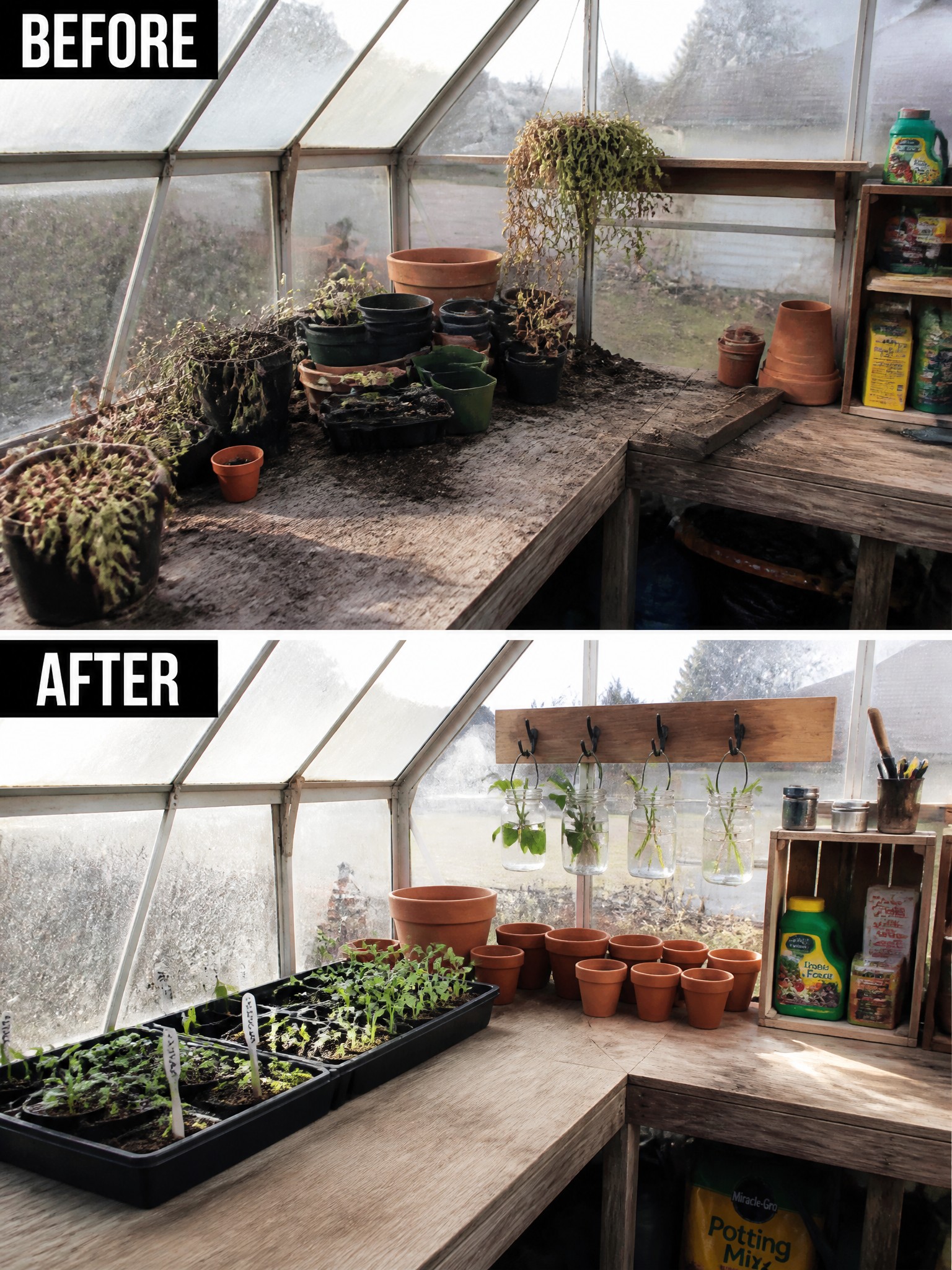
A cluttered greenhouse bench full of dead plants, spilled soil, and random pots makes it hard to get any real work done. Clearing everything off first, then adding a simple board with hooks and a couple of crates, turns the same space into a place where you can actually start seeds and keep tools handy.
This approach works best in small greenhouses or potting sheds where floor space is limited. Start by removing the mess and wiping down the bench, then hang lightweight items like propagation jars instead of letting them crowd the surface. Use crates or boxes for soil bags and supplies so they stay off the floor and out of the way.
Define The Edge Of A Pond Or Stream
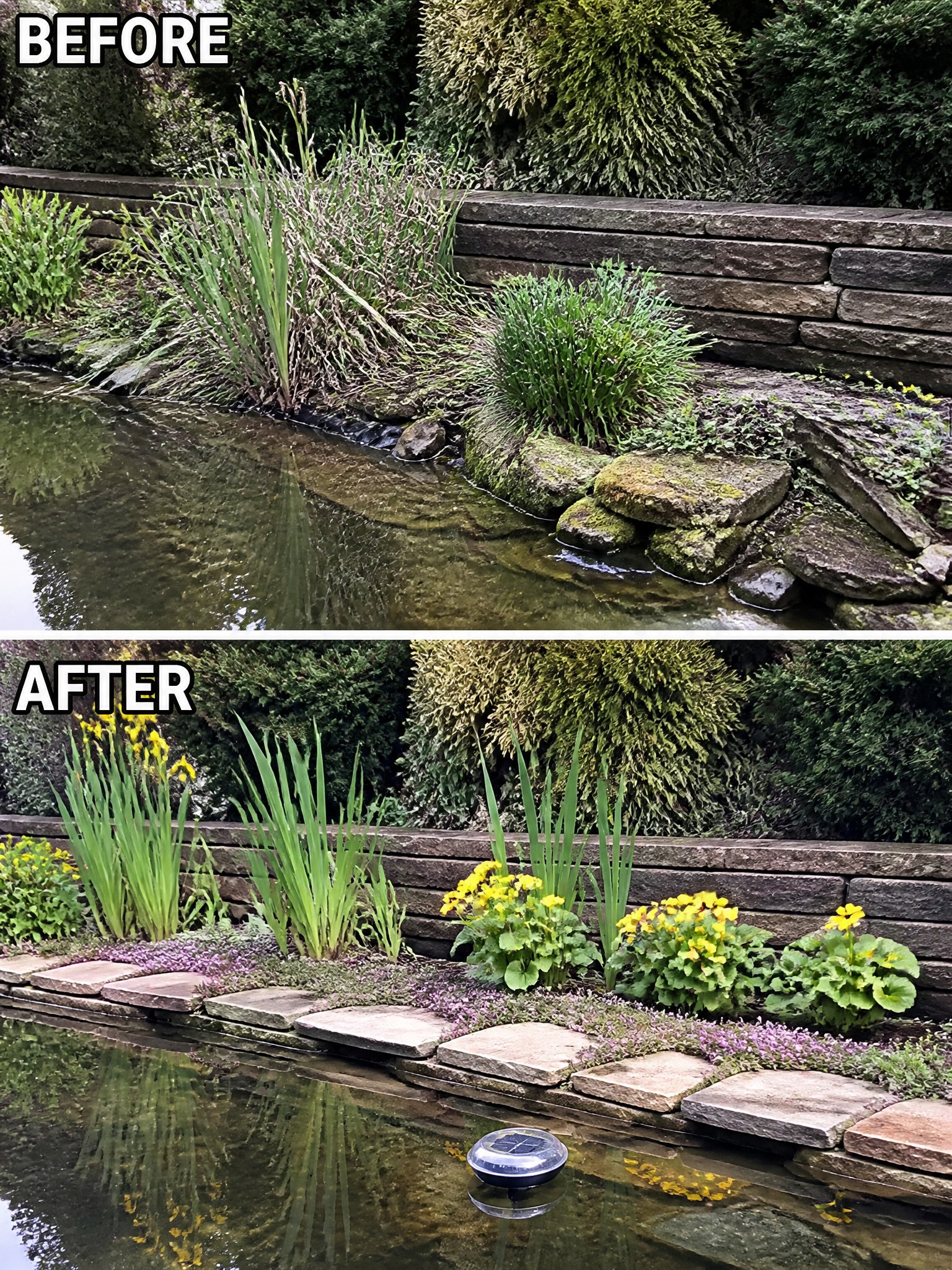
One simple way to improve a water feature is to give it a clear, defined edge. The before photo shows plants spilling over with no real line, while the after photo uses flat stones to create a neat border and fills it with low groundcover and flowers. This small change makes the area look intentional and keeps growth from creeping into the water.
This idea works best on small ponds or backyard streams. Start by clearing the overgrowth, then lay stones or pavers to mark the edge. Fill the strip with mulch and repeat a few easy plants so it stays low and tidy. It keeps maintenance simple and gives the water a finished look without major work.
Define A Mailbox Area With Simple Edging And Plants
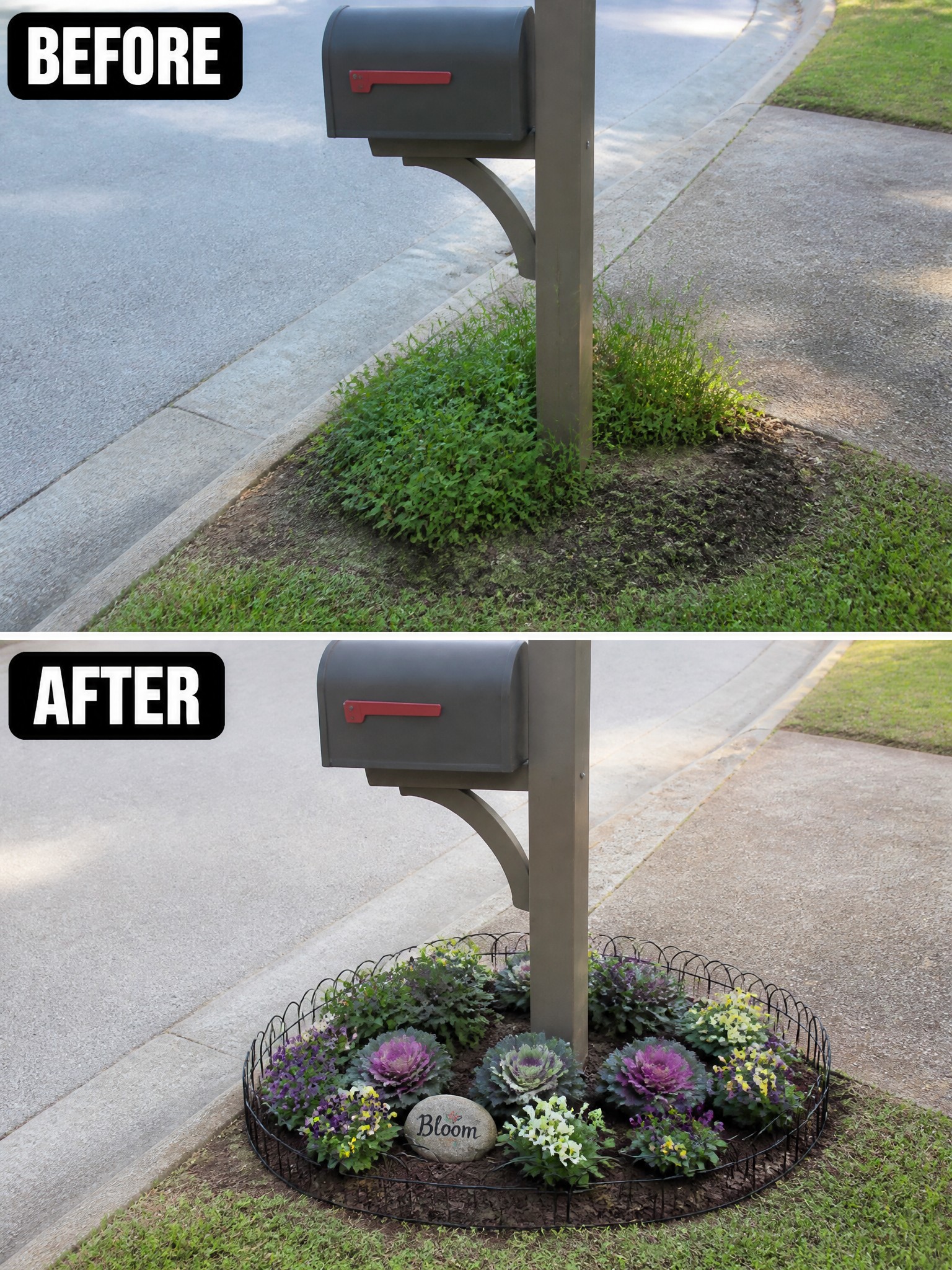
A small patch of weeds around a mailbox post can make the whole front look neglected. Adding a clean border and a few plants turns that spot into something intentional without much work. The after version shows how a simple metal edge and a circle of mulch keep everything looking tidy while the plants add color right by the street.
This idea works best on narrow strips or tight corners near the road where a full garden would feel too big. Start by clearing the weeds and laying down edging to hold the shape, then fill it with tough plants that can handle sun and occasional foot traffic. It keeps the area low maintenance and stops the grass from creeping back in.
Add A Simple Canopy To Make A Pergola Usable
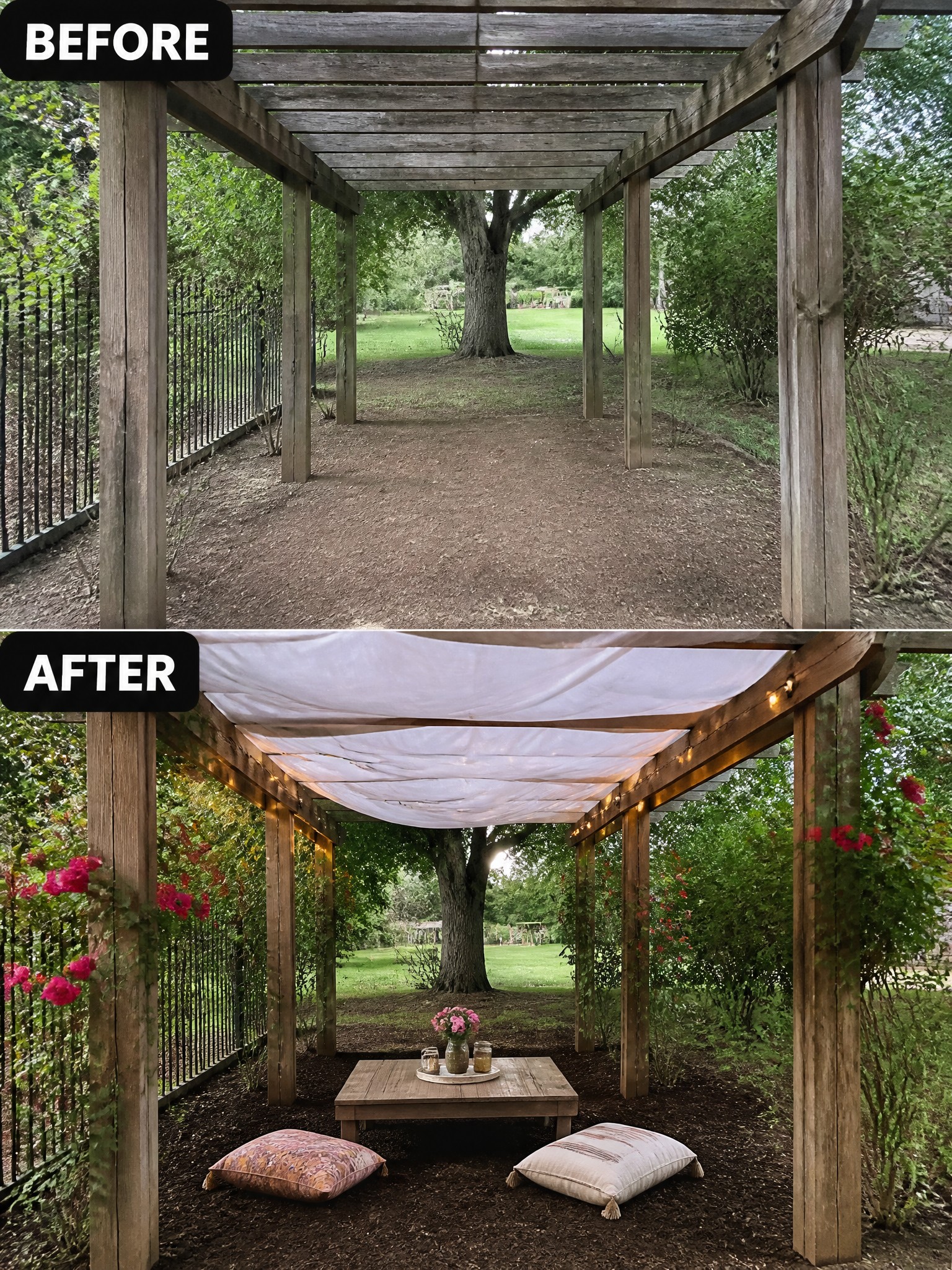
A bare pergola often feels like wasted space because there is no shade or sense of enclosure. Adding a lightweight fabric cover changes that right away. It blocks some sun, softens the look of the wood, and creates a clear spot to sit. String lights tucked under the edges add a little warmth once the sun goes down.
This works best in spots that already have a solid structure but lack comfort. Keep the fabric simple and choose lights that can stay out in the weather. Two or three floor cushions and a low table are usually enough to finish the area without crowding the space.
Frequently Asked Questions
Q: What if I cannot make permanent changes because I rent the place? A: Focus on containers and movable items like potted plants or temporary screens. These give the same before and after look without any digging. You can take them with you when you move.
Q: How do I keep the new garden looking fresh after the first season? A: Add a layer of mulch around new plants to hold moisture and block weeds. Check back every few weeks to pull any stragglers that pop up. This keeps the impact going with little effort.
Q: Which idea gives the quickest visual change on a tight budget? A: Start with a fresh coat of paint on old furniture or fences. It transforms the space fast.
