

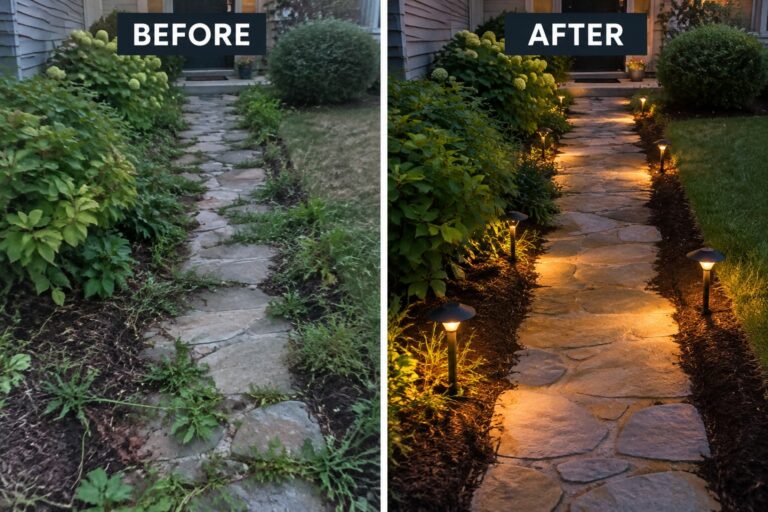
I often notice that the walkways around my house stay dark and a bit hard to navigate once the sun goes down.
Adding simple path lights along those routes gave the whole yard a clearer sense of direction without needing any big construction.
Testing a few lights near the main entries first showed me what actually works.
Over a couple of seasons the lighting started to highlight the edges of the beds and made the lawn feel more defined as well.
It is satisfying to walk outside at night now and have the paths feel like they belong to the rest of the garden.
Add Path Lights Along Your Front Walk
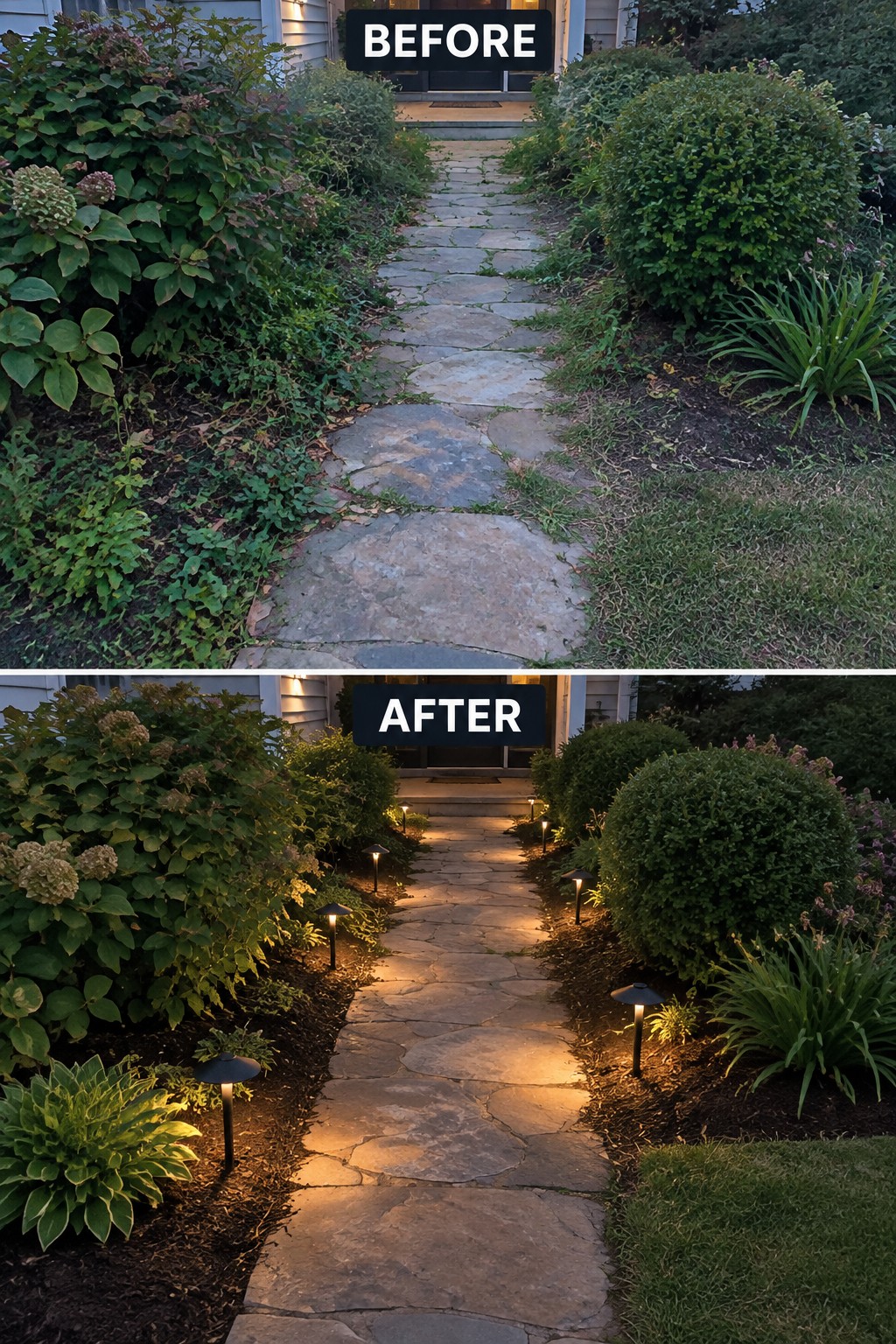
A dark stone path can feel forgotten once the sun goes down. Adding low path lights along both sides gives the walkway clear direction and makes the entrance feel more cared for without needing major planting changes.
This approach works best on straight or gently curving paths that lead to the front door. Space the lights evenly, keep the height low so they do not block the view of the plants, and choose a warm bulb that matches any existing porch lighting.
Add Path Lights Along A Concrete Walkway
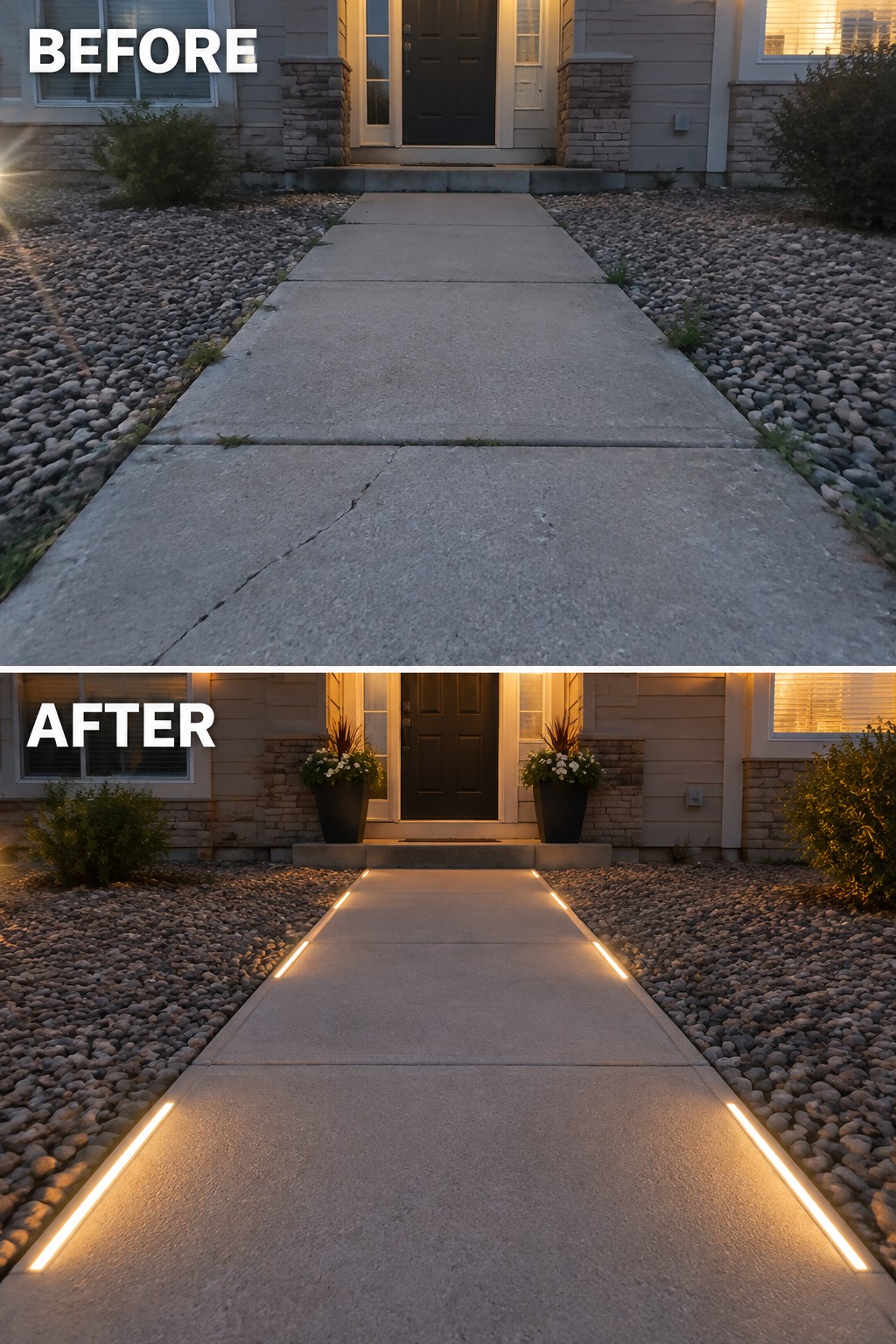
A plain concrete path can feel dark and hard to follow at night. Adding a simple line of path lights along each edge gives the walkway a clear shape and makes it much easier to use after dark. The lights sit low so they mark the edges without shining into the house or creating harsh glare.
This idea works best on straight front walks that sit between gravel or simple planting beds. Keep the lights evenly spaced and close to the concrete so the path stays the main focus. It is a small change that improves safety and makes the entrance feel more finished without needing new plants or hardscaping.
Add Path Lights Along A Gravel Path
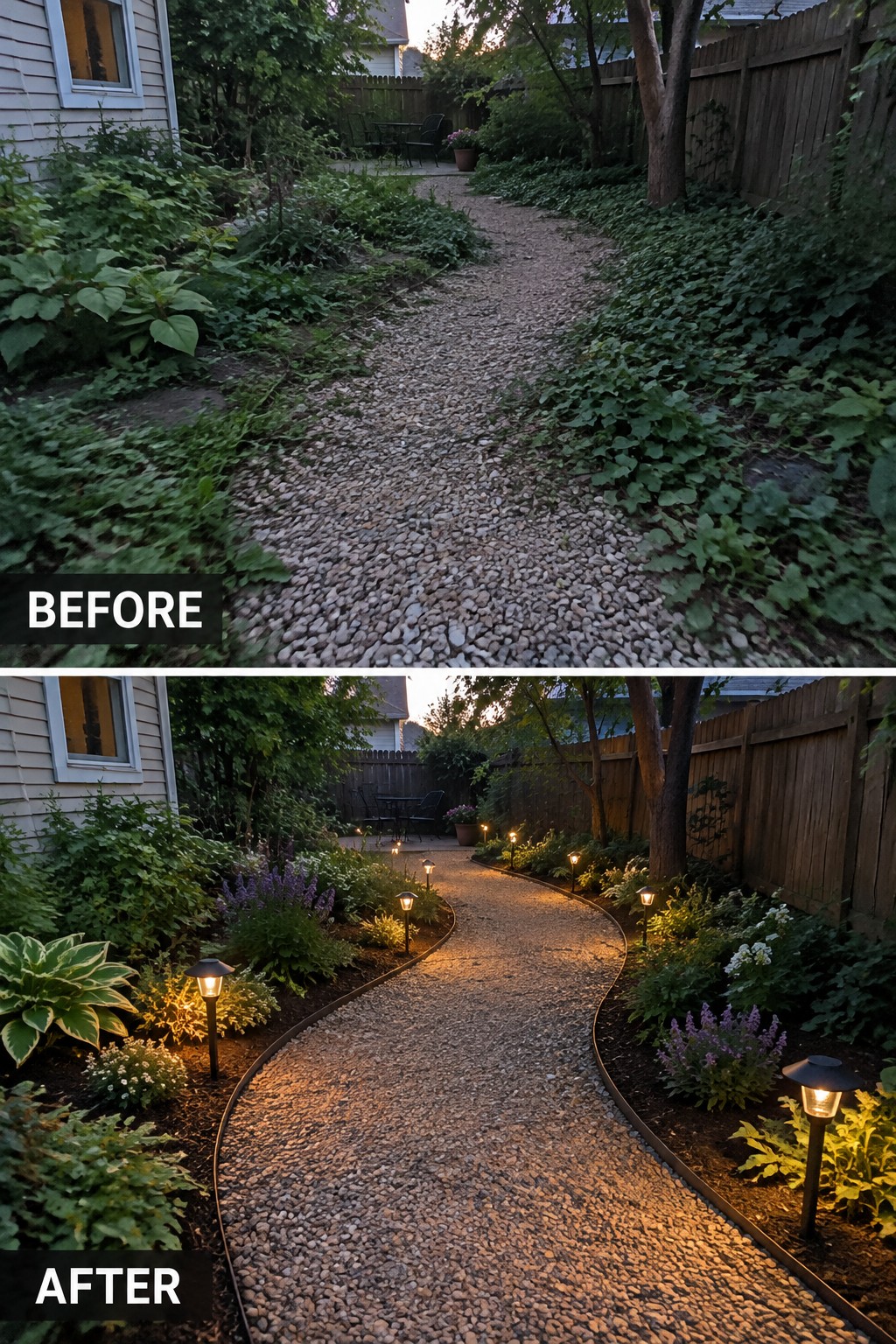
A plain gravel path can feel a bit lost once the sun goes down. Placing low path lights along the edges gives it clear shape, makes it safer to walk, and turns the whole side yard into something that feels more finished.
This idea works best on straight or gently curving paths where you want light to stay low and focused on the ground. Space the lights evenly, keep them simple in style, and make sure the beds beside the path are weeded first so the lights highlight the plants instead of the mess.
Use Path Lights To Brighten Stone Steps
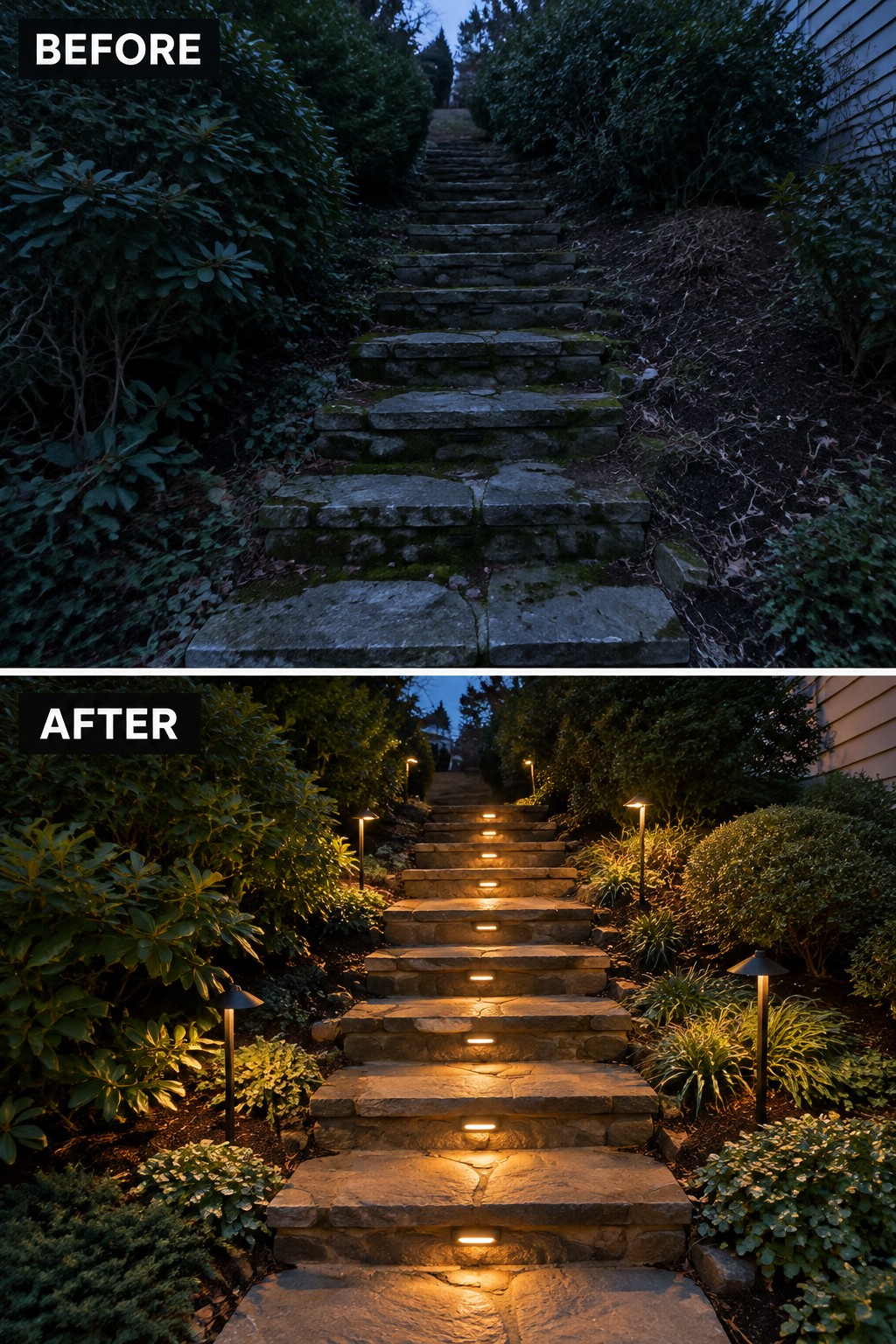
Stone steps often get lost in the dark once the sun goes down. Adding a simple line of path lights along the edges makes the route easy to follow and gives the whole slope a softer, more finished look at night.
This idea works well on any sloped yard where stairs connect garden levels. Keep the lights low and evenly spaced so they guide feet safely without shining into windows or overpowering the plants.
Add Path Lights Along The Front Walkway
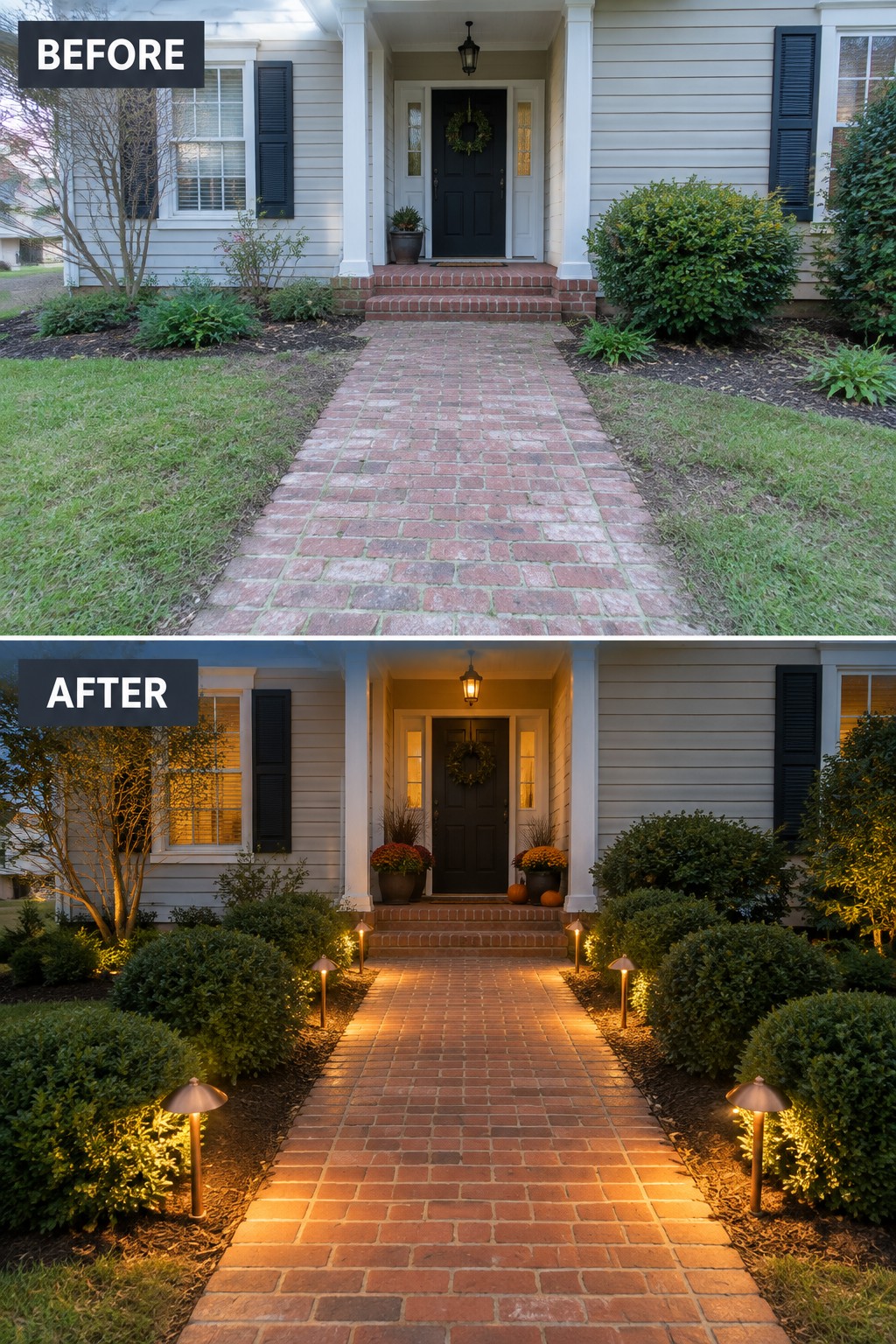
A plain brick path can disappear once the sun goes down. Placing low path lights along both edges gives the walkway a clear line at night and makes the front door feel easier to reach. The lights also pick up the edges of the garden beds without needing tall fixtures or complicated wiring.
This works best on homes where the path is the main route from the street or driveway. Space the lights evenly, keep the height low so they do not block views, and choose a warm bulb that matches any porch lighting already in place. The goal is steady guidance rather than a bright display.
Add Path Lights To Frame A Narrow Side Walkway
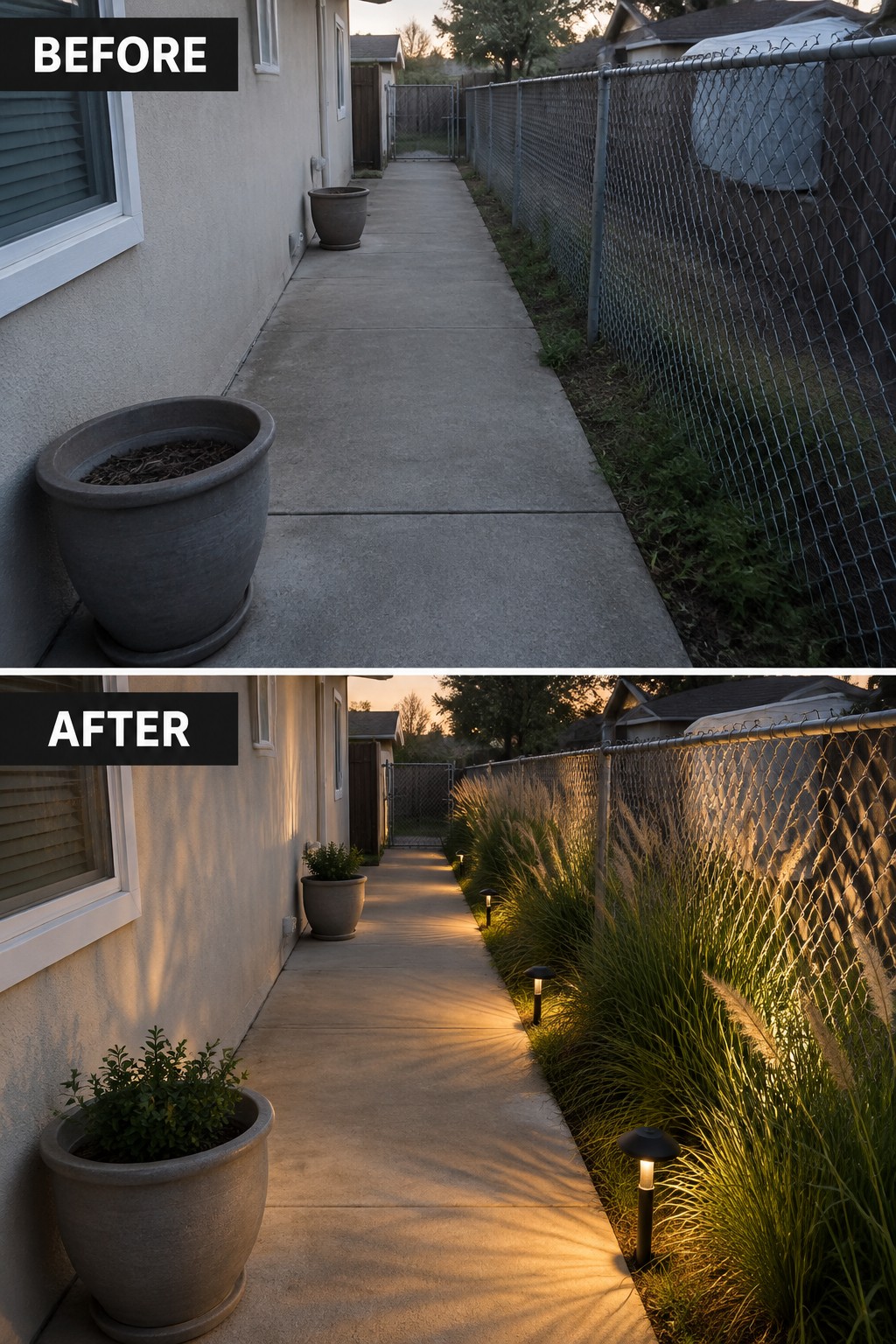
A plain concrete path next to the house often feels like leftover space. Adding a row of low path lights along the edge and planting tall grasses beside the fence gives the walkway a clear purpose. The lights mark the route at night while the grasses soften the hard line of the fence and make the whole area feel more finished.
This works best on long, narrow side yards where you need direction and a bit of safety without crowding the path. Start with just a few solar lights spaced evenly, then add one or two easy grasses that stay upright. Keep the rest of the bed simple so the walkway stays easy to walk and maintain.
Use Path Lights To Define A Side Path
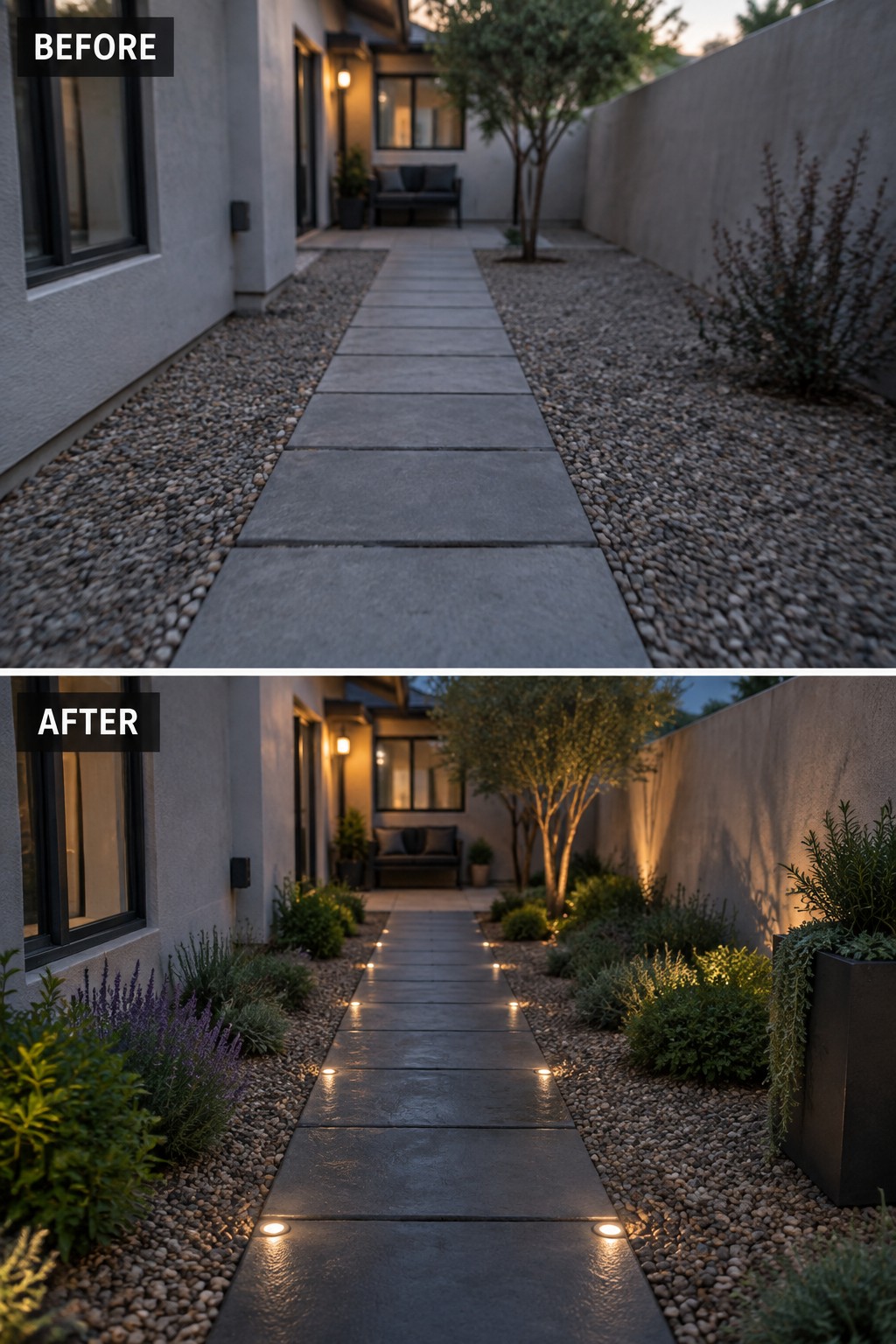
The before photo shows a basic concrete walkway running through gravel with almost no edging or light. Adding small in-ground path lights along the pavers and filling the sides with layered shrubs and flowers turns the same narrow space into a clear, usable route at night.
This approach works best on side yards or tight passages where you want both safety and a finished look without crowding the walkway. Place the lights evenly, keep the planting low near the path, and let taller shrubs sit farther back so the lights stay visible and the route stays easy to walk.
Add Path Lights To A Garden Path
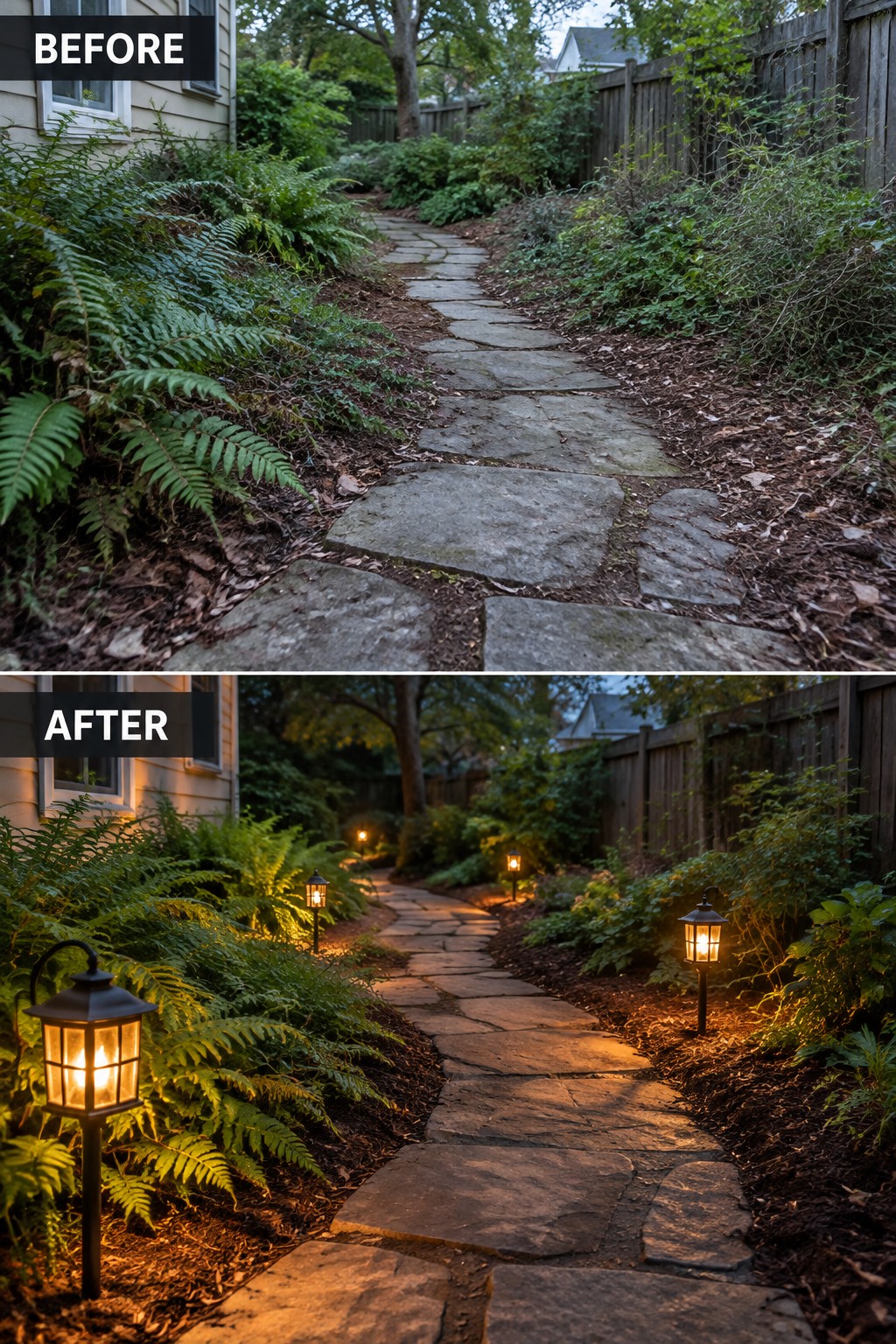
A stone path can disappear into the surrounding plants once the light fades. Placing a row of path lights along the edges makes the route easy to follow and gives the whole garden a gentler nighttime shape.
This approach suits homes with existing walkways that already have decent paving but lack definition after dark. Keep the fixtures low and spaced evenly so the light stays on the stones and does not spill into neighboring yards.
Use Path Lights To Define A Walkway To Your Fire Pit
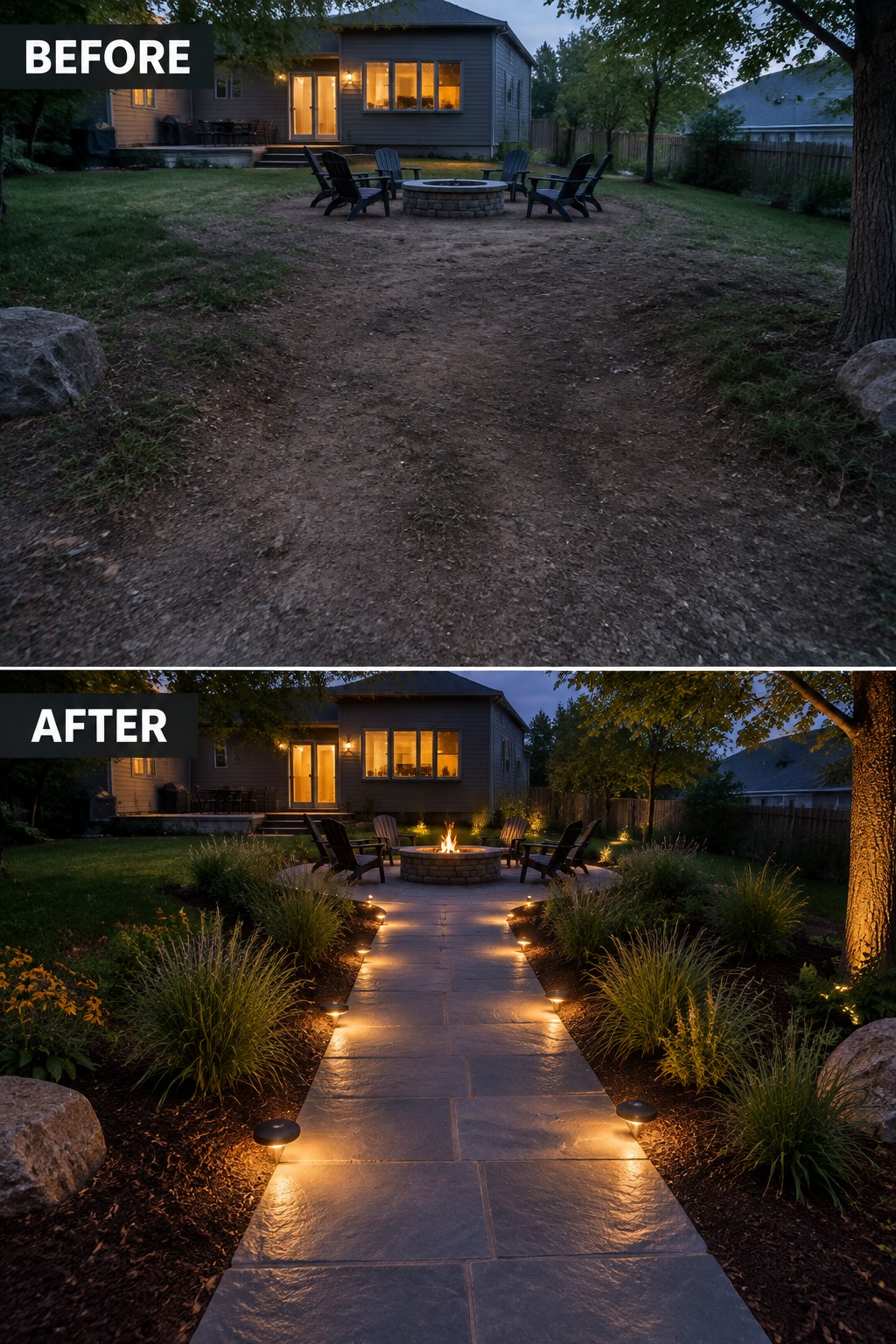
The main change here is simple. A bare dirt stretch became a clear stone path with low path lights running along both sides. That single addition turns an awkward walk into something you can use after dark without guessing where to step.
This idea works well in any backyard that has a fire pit or seating area set away from the house. Lay the path first so people know where to go, then add the lights close to the edges. Keep the spacing even and the fixtures low so the light stays on the ground instead of shining into eyes.
Add Path Lights To Frame A Front Walkway
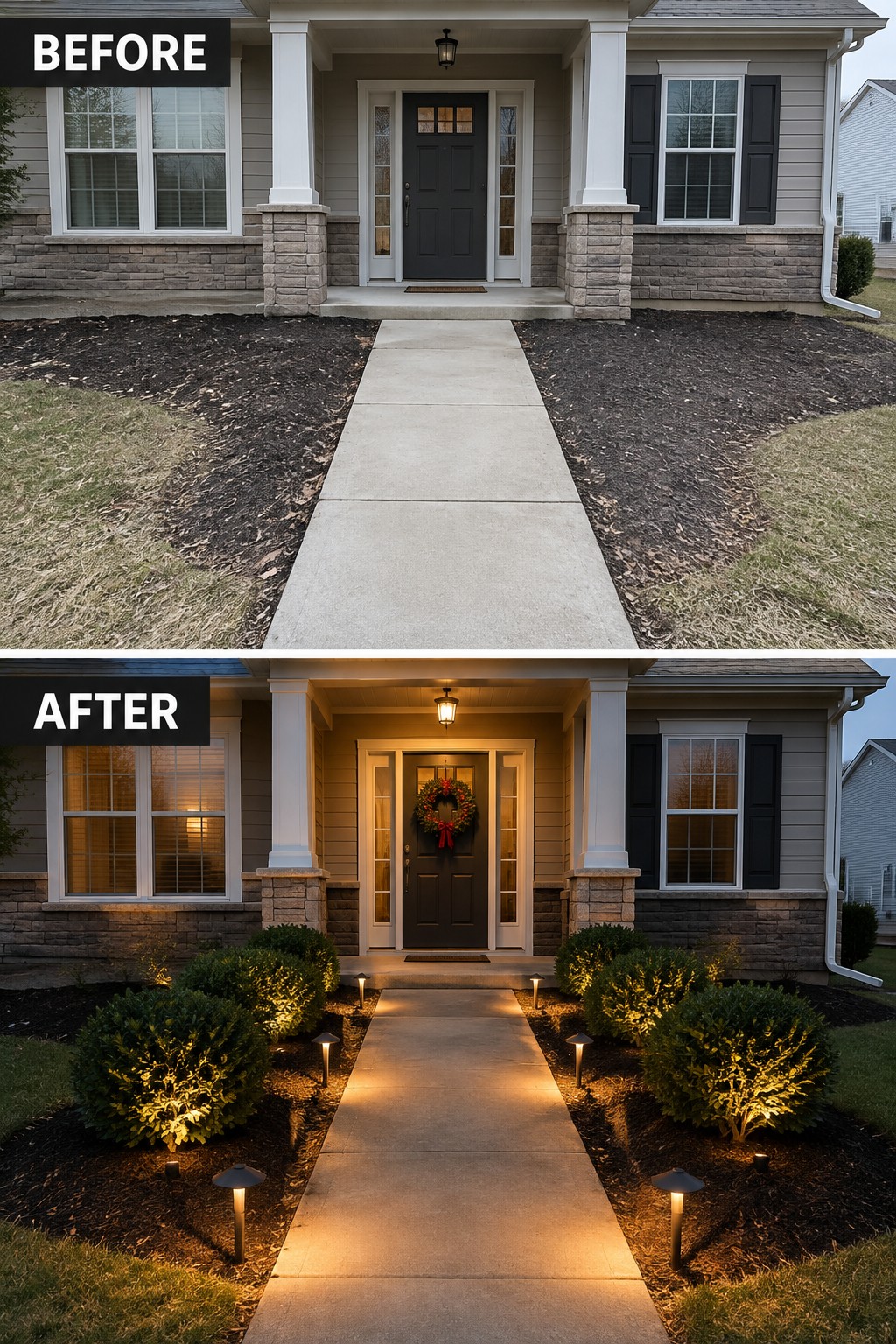
The main change here is how path lights turn a plain concrete strip into a clear, usable route at night. The lights sit low along both edges, marking the way while also picking up the new shrubs planted in the beds on either side.
This approach suits homes with a straightforward front walk that needs more presence after dark. Space the lights evenly, keep the fixtures short so they do not block the view of the house, and run them only where people actually walk. It keeps the focus on the path without adding clutter to the beds.
Use Path Lights To Define A Garden Path
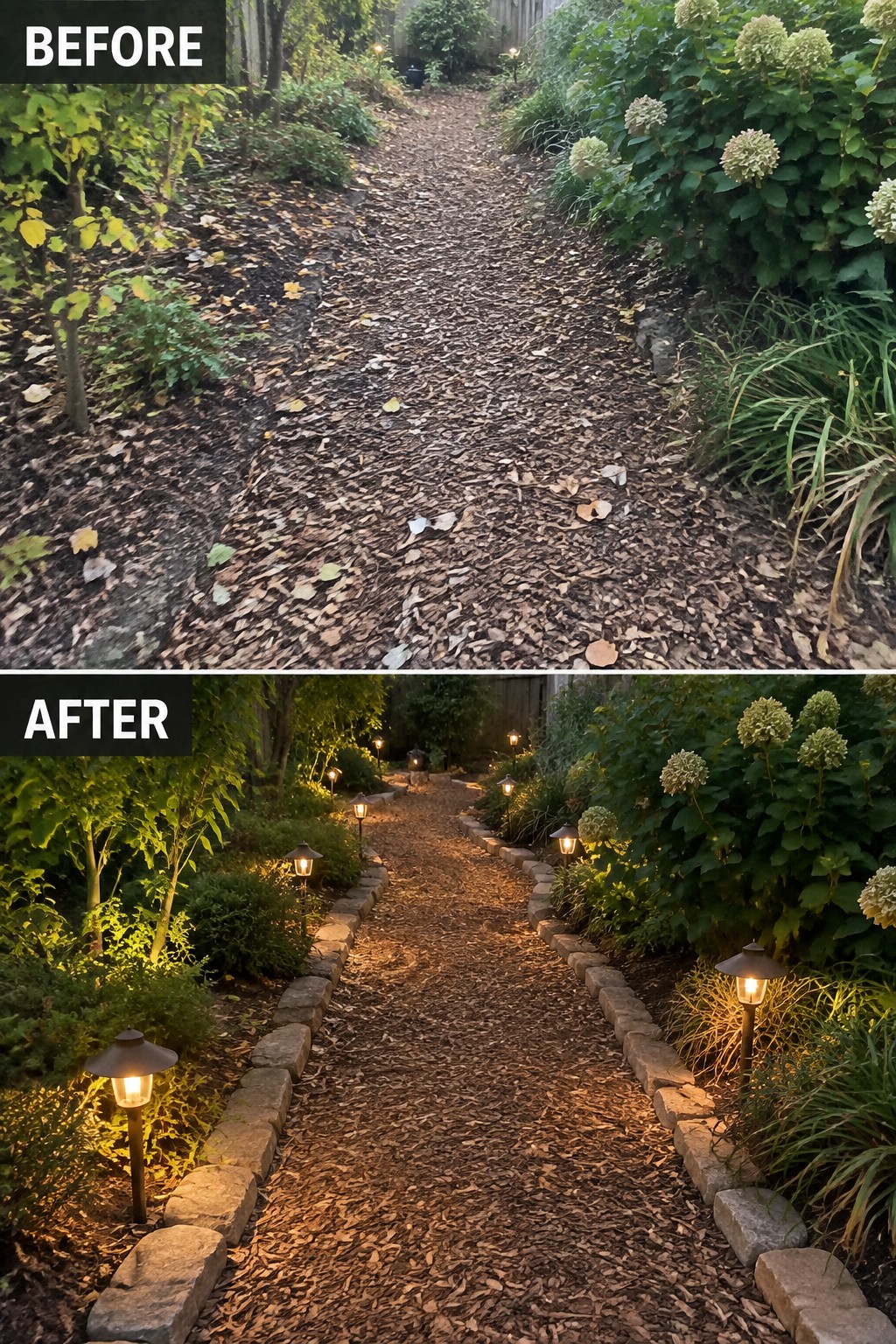
The path started as a simple mulch walkway with no clear edges and little light once the sun went down. Adding a low stone border on both sides and placing small path lights at regular intervals gave the route shape and made it easy to follow after dark.
This approach works best on side paths or back garden routes where you need gentle guidance without large fixtures. Place the lights close enough to the edge so the glow stays on the path itself, and keep the spacing even so the line feels steady rather than spotty.
Add Path Lights Along A Pool Walkway
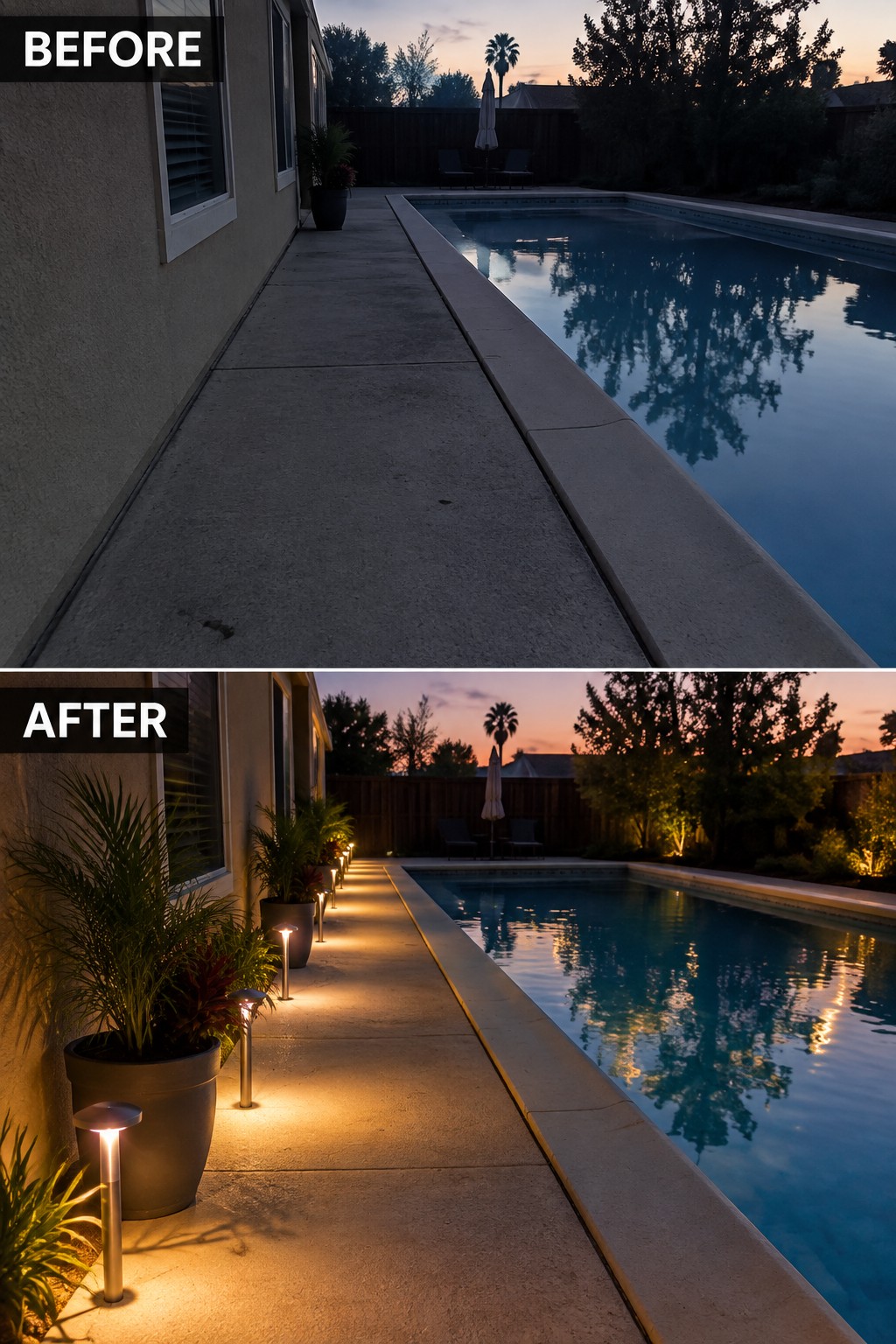
Path lights can turn a plain concrete walkway into something useful at night. The before photo shows a bare stretch of pavement next to the pool with almost no light once the sun went down. After the change, a simple row of path lights lines the edge and a few more lights highlight the potted plants. The path now feels safer to walk and the whole area looks more finished without any big construction.
This idea works best on long, straight paths where people actually walk after dark. Space the lights evenly so the ground stays lit without bright spots or dark gaps. Stick with low, warm lights that point down so they do not glare into the pool or neighboring windows. Start with just the walkway itself before adding extra lights on plants or trees.
Add Path Lights To Define The Lawn Edge
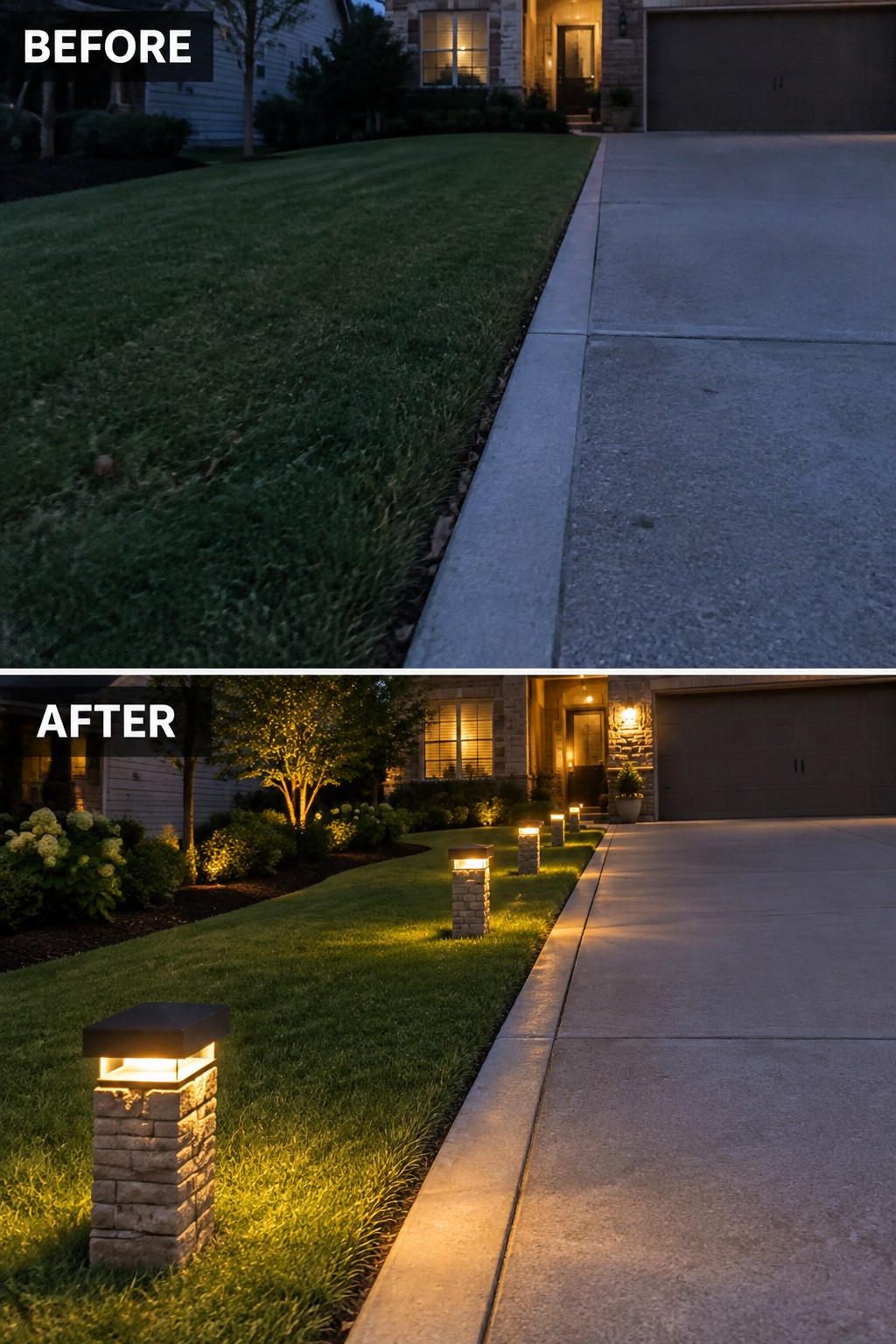
A clean row of path lights can turn a plain grass edge into something that feels intentional. Here the lights sit right along the driveway, giving the lawn a clear border and making the whole front yard easier to navigate at night.
This works best on homes where the lawn runs long beside a driveway or front walk. Space the lights evenly, keep them low so they do not block the view, and match the material to your house or existing hardscape. It is a small change that improves both how the yard looks and how safe it feels after dark.
Add Path Lights To Define A Stone Path
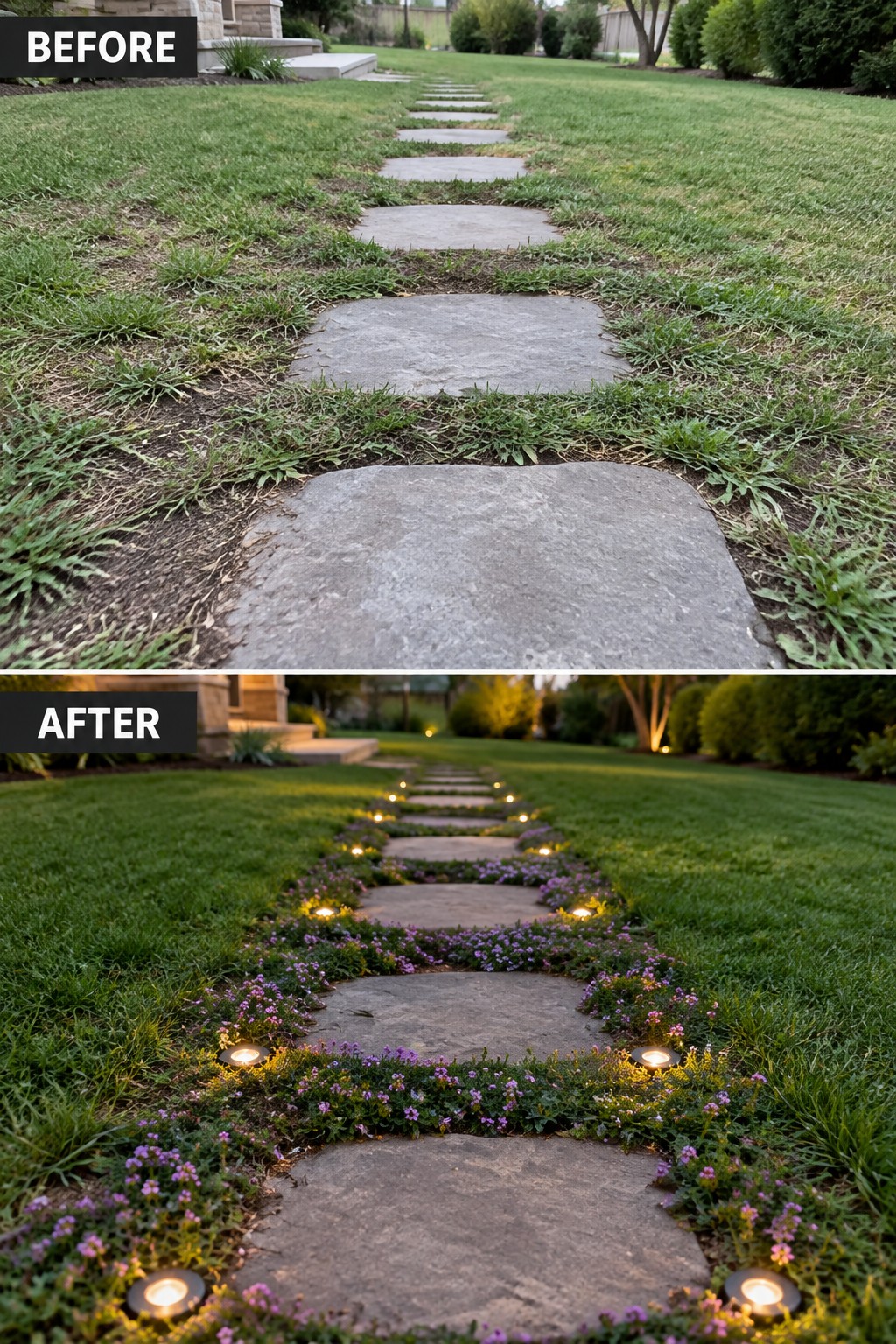
A plain stepping stone path often disappears into the lawn, especially once the sun goes down. Adding low path lights along both sides and a narrow border of small flowering plants gives the path clear edges and makes it easy to follow after dark.
This idea suits long yard paths that connect the house to a garden or seating area. Keep the plants low so they frame the stones without covering them, and space the lights evenly so they mark the route without creating glare.
Add Path Lights Along A Gravel Garden Path
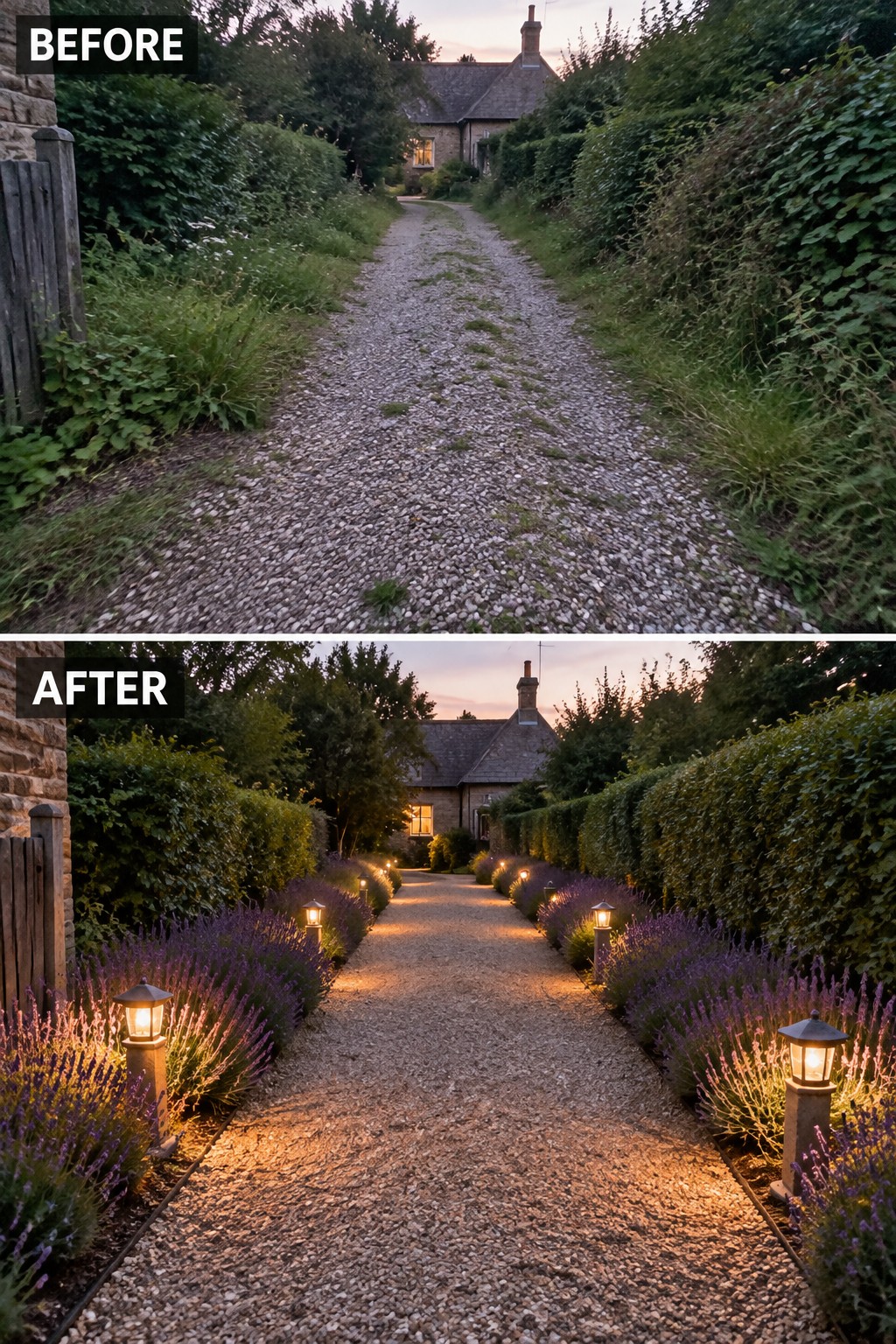
A plain gravel path can feel a bit lost once the sun goes down. Adding a row of low path lights on each side gives the walkway clear shape and makes it easy to follow at night. The simple lavender borders keep the edges tidy and stop the gravel from looking scattered.
This works best on long paths that lead to the front door or side entrance. Keep the lights evenly spaced and choose plants that stay low so the glow stays visible. It is a straightforward change that makes the path feel finished without needing major construction.
Add Path Lights Along A Narrow Side Path
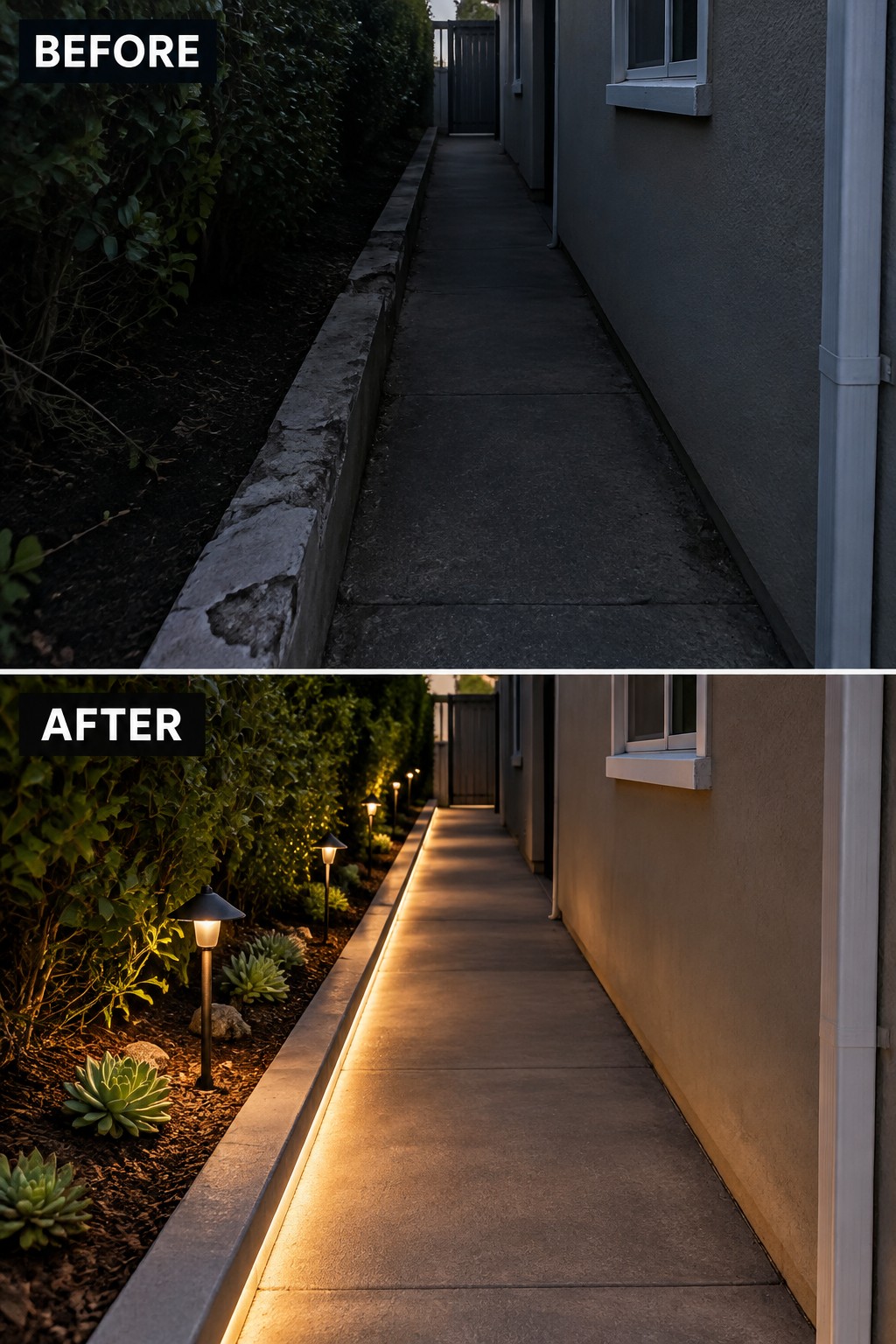
A dark concrete walkway next to the house often feels forgotten at night. Adding a row of path lights on the garden side and a low strip of lighting along the edge turns the same space into a clear, usable route. The lights guide feet safely while highlighting the plants without flooding the area with glare.
This approach works well on any tight side yard or service path where you need both function and a bit of warmth. Keep the fixtures low and spaced evenly so the glow stays gentle. Choose warm bulbs and simple black or bronze finishes that blend with most garden styles.
Add Path Lights Along A Garden Path
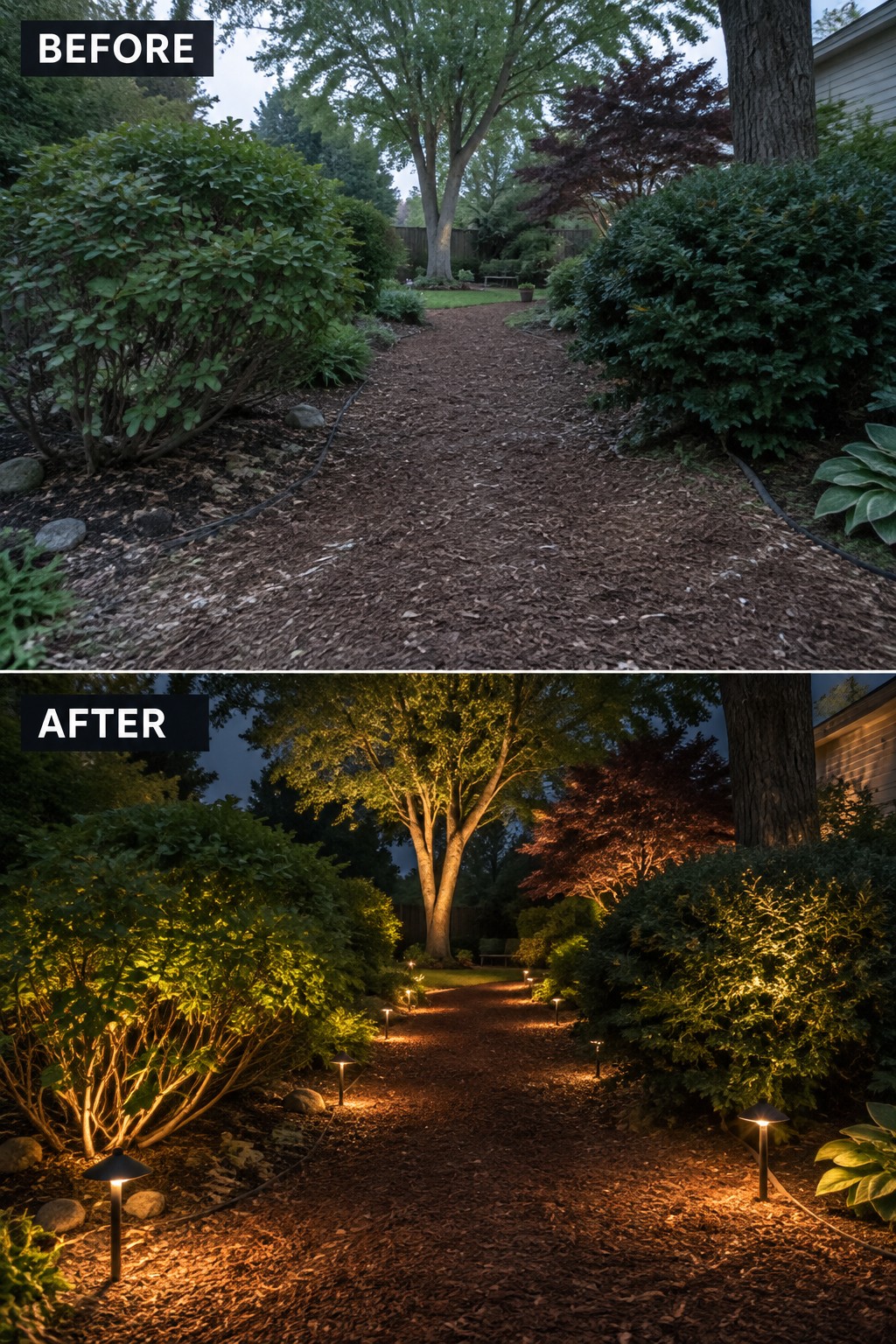
Adding path lights turns a simple mulched walkway into something you can enjoy after dark. The lights sit low to the ground and point upward, so the shrubs along the edges catch the glow without any harsh glare on the path itself. That one change makes the whole side yard feel more intentional once the sun goes down.
This idea works best on a straightforward path that already has decent planting on both sides. Keep the fixtures evenly spaced and aim them at the foliage rather than straight down. It is an easy upgrade for most suburban yards and does not require rewiring if you choose solar or low-voltage kits.
Line A Garden Path With Path Lights
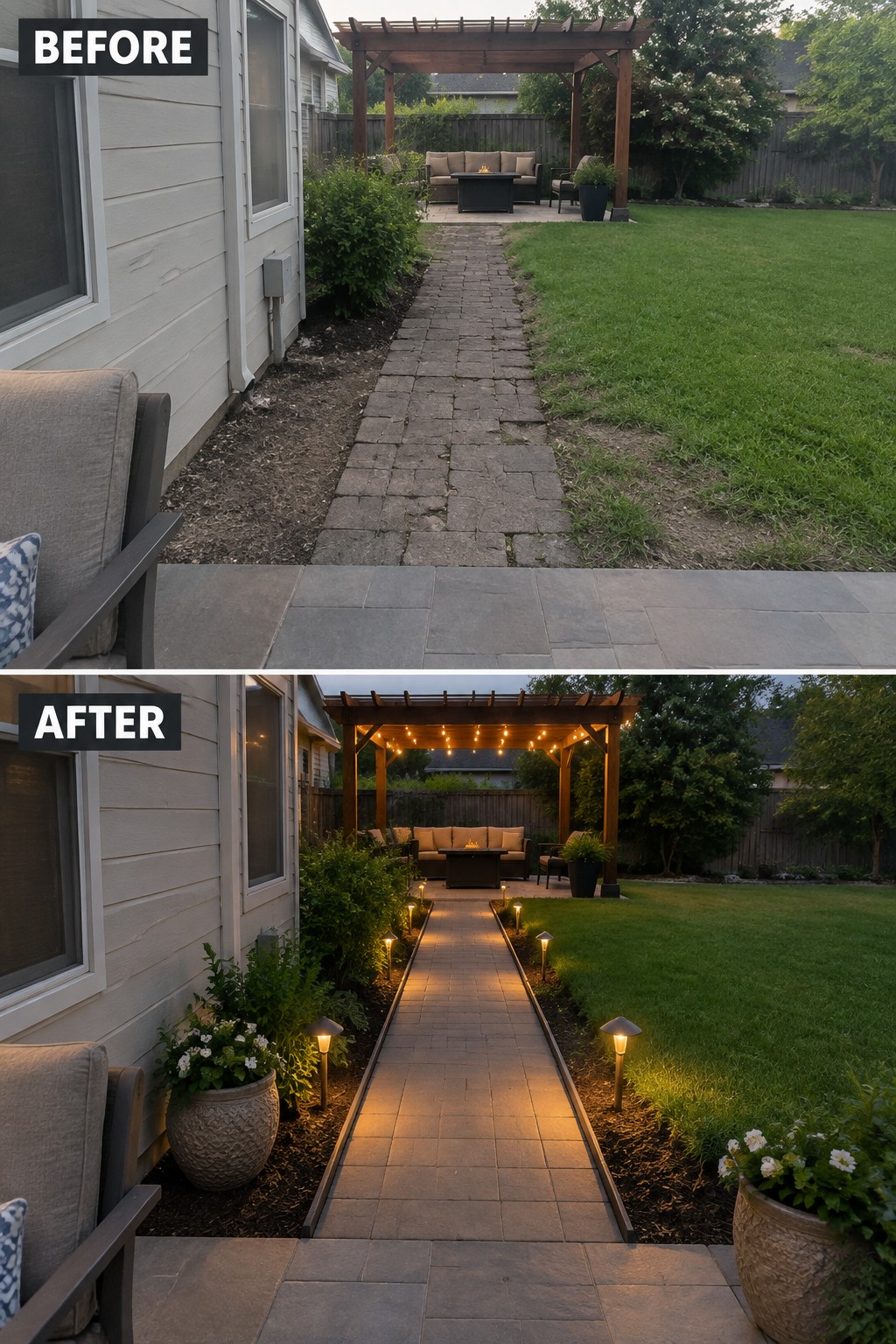
The stone path here went from looking like a leftover walkway with loose dirt edges to something that actually feels like part of the yard. Low path lights placed along both sides gave it clear borders, warmed up the surface at night, and made the garden beds on either side look more intentional.
This idea works best on any straight or gently curving walkway that already has decent paving but needs more structure. Keep the lights low and evenly spaced so they guide people without creating glare, and pair them with simple edging or a few larger pots rather than filling every inch with plants. It is an easy way to make a basic path feel finished once the main cleanup is done.
Add Path Lights To Define A Front Walkway
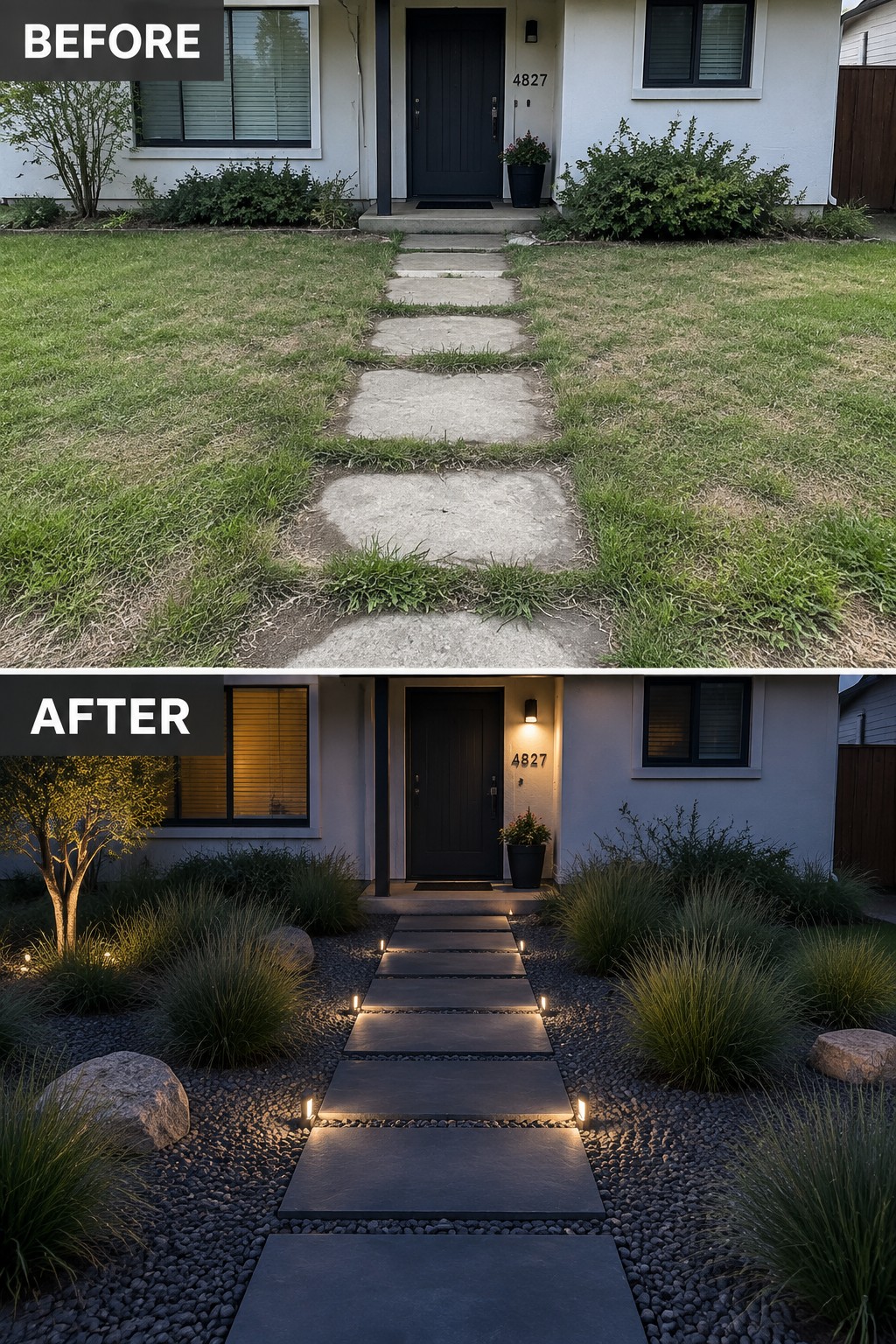
A front path that disappears into the grass at night feels unfinished and hard to follow. Adding path lights along the edges turns the same stones into a clear route while making the entry feel more intentional. The gravel borders and even spacing help the lights do their job without overpowering the space.
This idea works best on homes that already have a basic walkway in place. Focus on cleanup and edging first, then add lights at regular intervals so the path stays visible from the street. It suits most suburban front yards and requires little maintenance beyond occasional bulb checks.
Add Path Lights Along A Garden Walkway
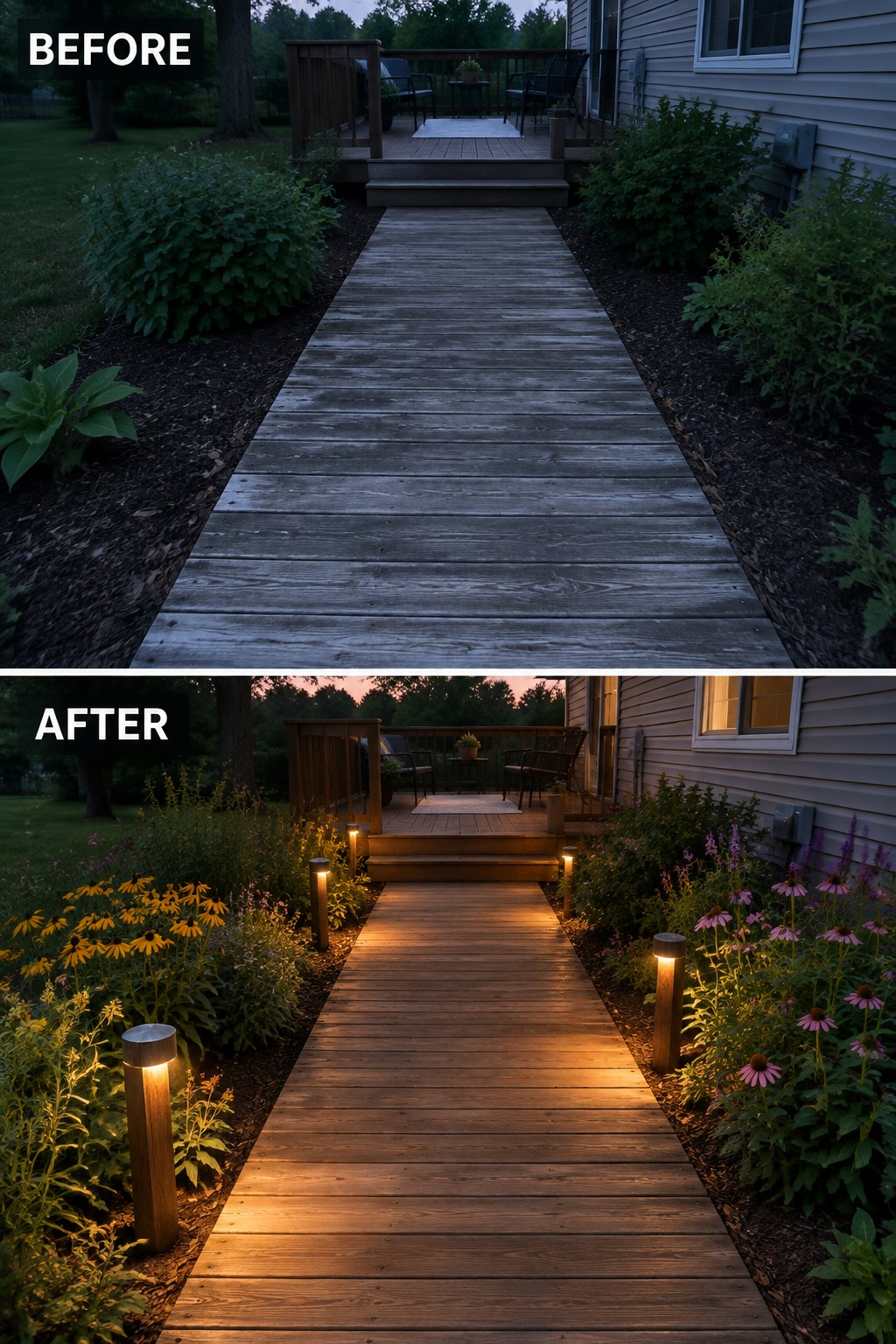
A plain wooden path can feel overlooked once the light fades. Placing simple path lights on both sides gave the walkway a clear line at night and made the refreshed borders on either side stand out without any extra fixtures.
This approach suits straight paths that lead to a deck or side door. Use low, evenly spaced lights so the glow stays gentle and the plants remain the main feature. Start with the lighting, then add flowers or foliage that catch the light. Keep the beds narrow enough that the path still feels open.
Add Path Lights Along A Front Walkway
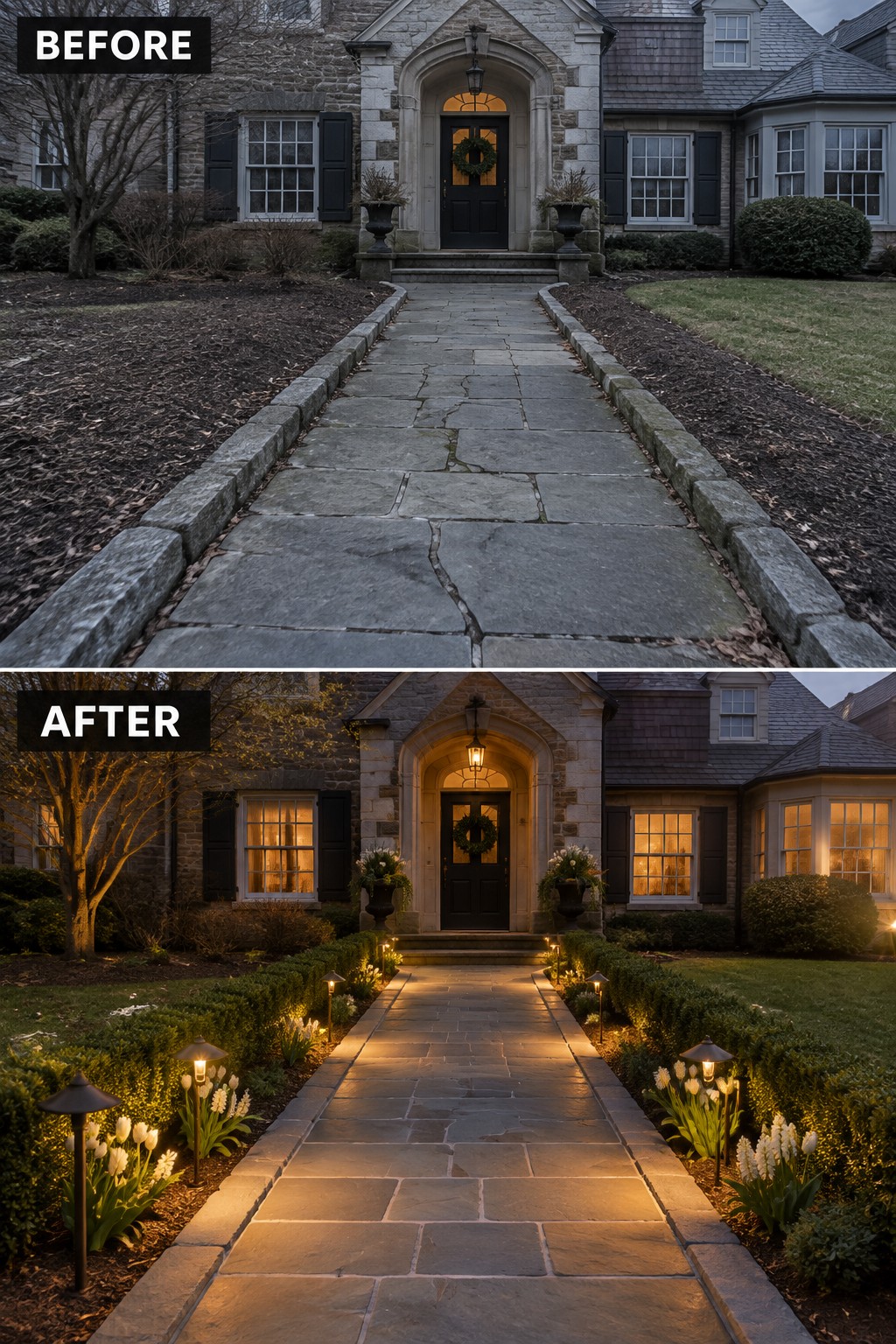
A plain stone path can feel forgotten after dark. Adding path lights along both edges gives it shape and makes the walk to the door feel intentional instead of just functional.
This idea works well on any straight or gently curving walkway that leads to the front door. Space the lights evenly, keep them low so they do not glare, and let them highlight the planting beds on either side. It is one of the simpler changes that still makes a noticeable difference at night.
Frequently Asked Questions
Q: Where should I start placing path lights along my front walk? A: Walk the path after dark with a flashlight and mark the spots where you need light most. This shows you the natural flow before you dig any holes.
Q: Are solar path lights bright enough to replace wired ones? A: Solar models work well if your yard gets steady sun and you want zero wiring hassle. They give a softer glow that feels plenty welcoming on most paths.
Q: What if the lights end up shining right into my living room windows? A: Angle the fixtures downward and test them at night before you finish installing. A quick tweak keeps the light on the ground where it belongs.
