

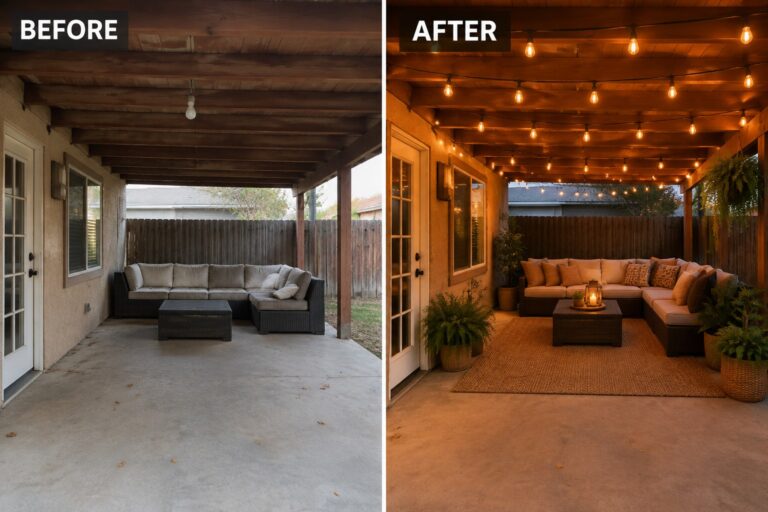
I often notice how a covered patio sits unused once evening arrives, even when the furniture and layout look decent during the day. Lighting choices tend to make the biggest difference in whether we actually spend time out there after dark. In my own yard I have found that testing a few simple fixtures first shows which spots need the most help before buying anything else. It feels good when the space starts to work for quiet evenings without losing the relaxed backyard feel that got us interested in the first place. Those kinds of adjustments are the ones I usually try before anything more involved.
Use String Lights To Make A Covered Patio Feel Cozy
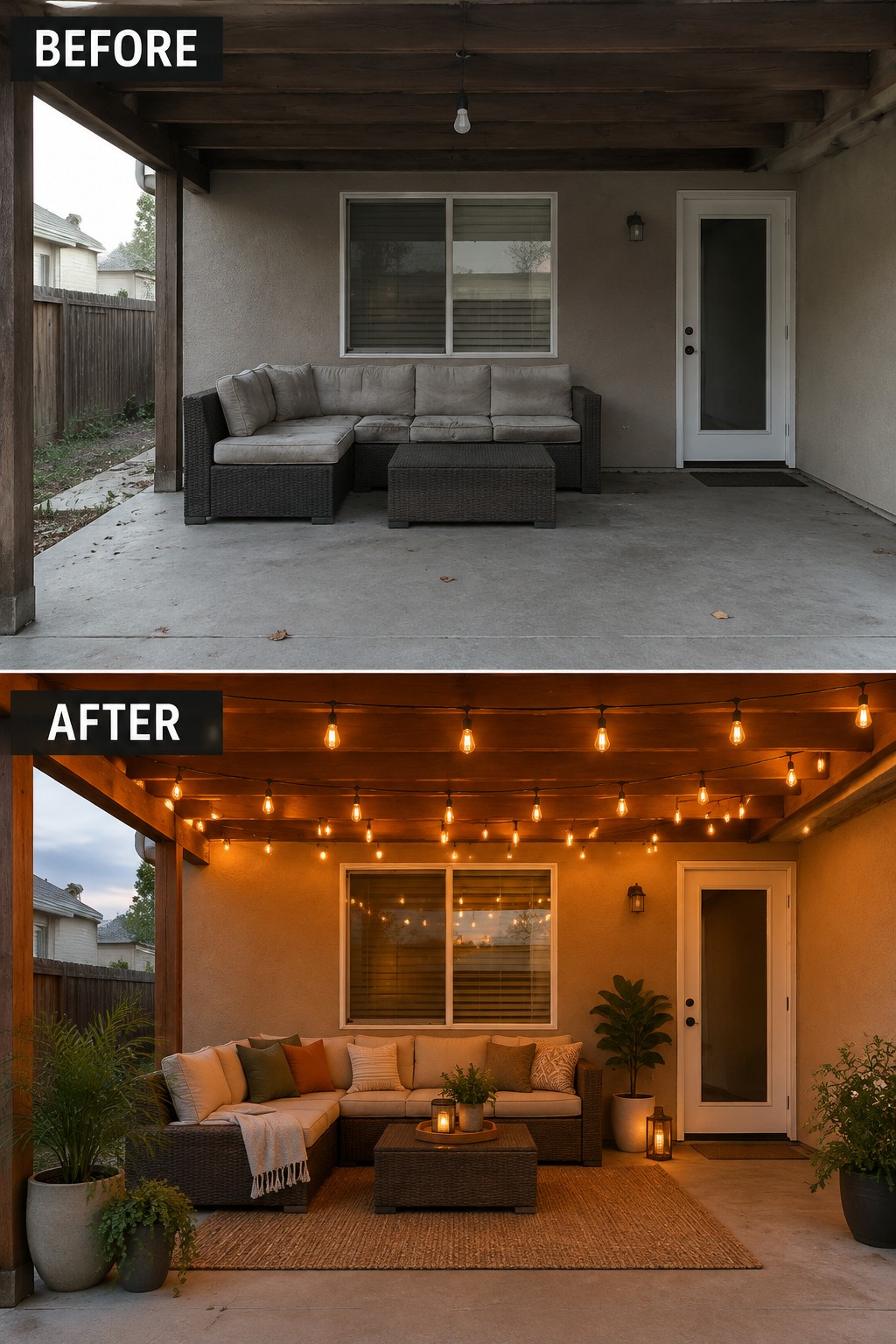
String lights can turn a plain covered patio into a space that actually gets used after dark. In the before photo the ceiling beams sat empty and the seating area felt flat. Once the lights were strung across the beams the whole zone gained a soft overhead glow that makes the furniture and rug feel finished.
This idea works on most covered patios or porches that see evening use. Run the lights along the main beams so they sit above the seating instead of hugging the edges. Keep the rest of the space simple with one rug and a few plants so the lights remain the main feature rather than competing with too many extras.
Add Recessed Lights To Make A Covered Patio Feel Cozy

The before photo shows a covered patio that feels empty even in daylight, with just two chairs and no real sense of purpose. In the after version, a row of recessed ceiling lights turns the same space into something you would actually sit in after sunset. The lights create a soft overhead glow that makes the area feel finished without adding clutter.
This approach works well on any covered patio that gets used in the evening. Keep the fixtures simple and spaced evenly so the light feels even rather than spotty. Once the lighting is in place, you only need one or two pieces of weatherproof seating and a small table to make the space usable.
Hang Pendant Lights Over A Patio Table

A single bright ceiling bulb can leave a covered patio feeling flat and uninviting once the sun goes down. Swapping it for a few pendant lights hung right over the table changes the whole feel of the space and makes it much more pleasant to sit and eat outside at night.
This idea works best on patios that already have a solid roof and a clear dining spot. Keep the pendants simple, make sure they are rated for outdoor use, and hang them low enough to create a pool of light without blocking views across the table. The rest of the patio can stay fairly plain.
Use Post Lights To Turn An Empty Patio Into A Seating Area
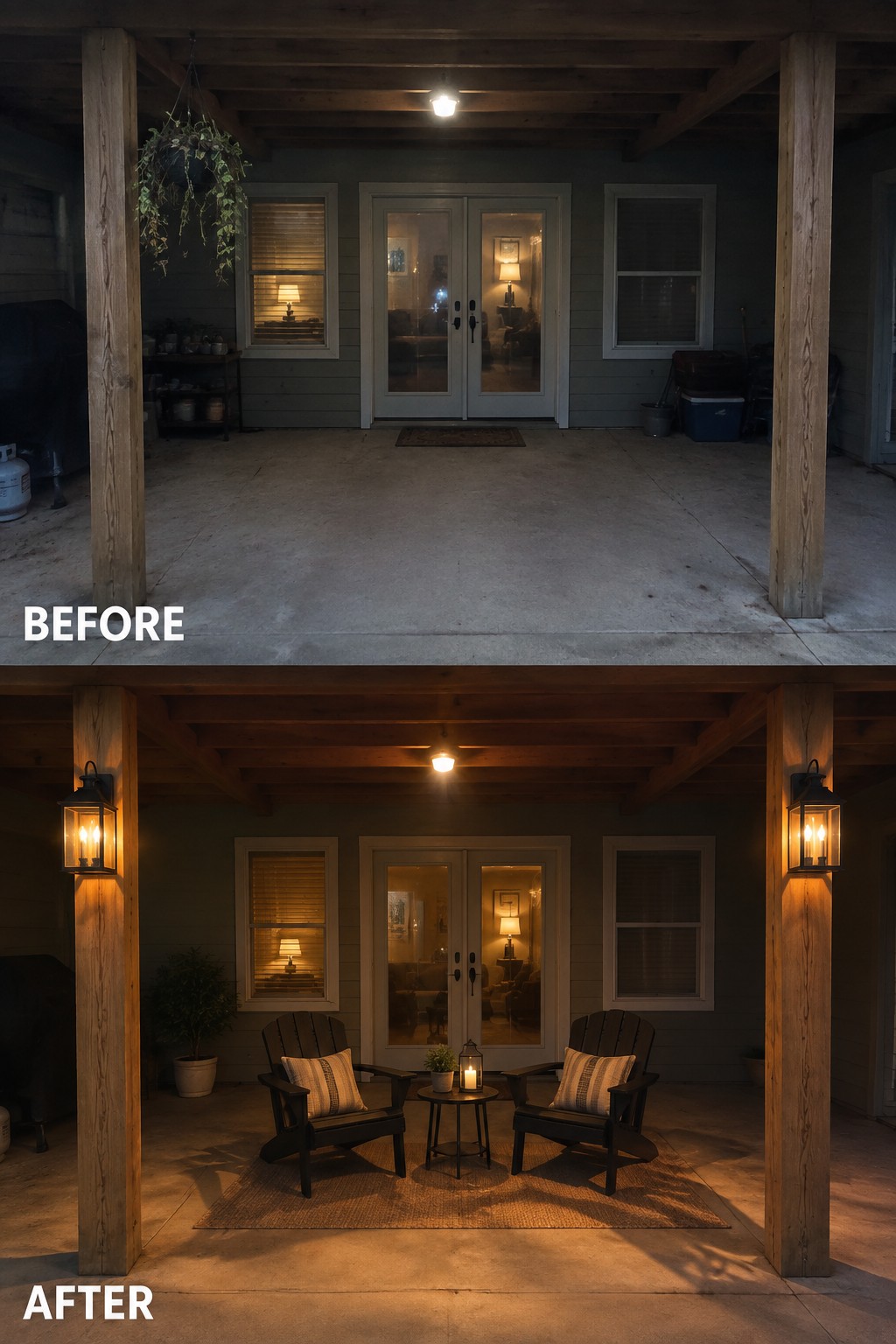
A covered patio with nothing but concrete and posts often feels like wasted space once the sun goes down. Adding lanterns to the posts creates a clear spot for chairs and gives people a reason to sit outside after dark. The before photo shows an open, unused slab. The after photo shows how two simple lights and a small seating setup make the same area feel like an outdoor room.
This idea works best on patios that already have a roof and posts. Mount one light on each main post near where you want to sit, keep the scale of the furniture modest, and add a rug to mark the zone. It suits homes where the patio connects to the back door and gets regular evening use.
Add Railing Lights To Make A Covered Porch Feel Cozy
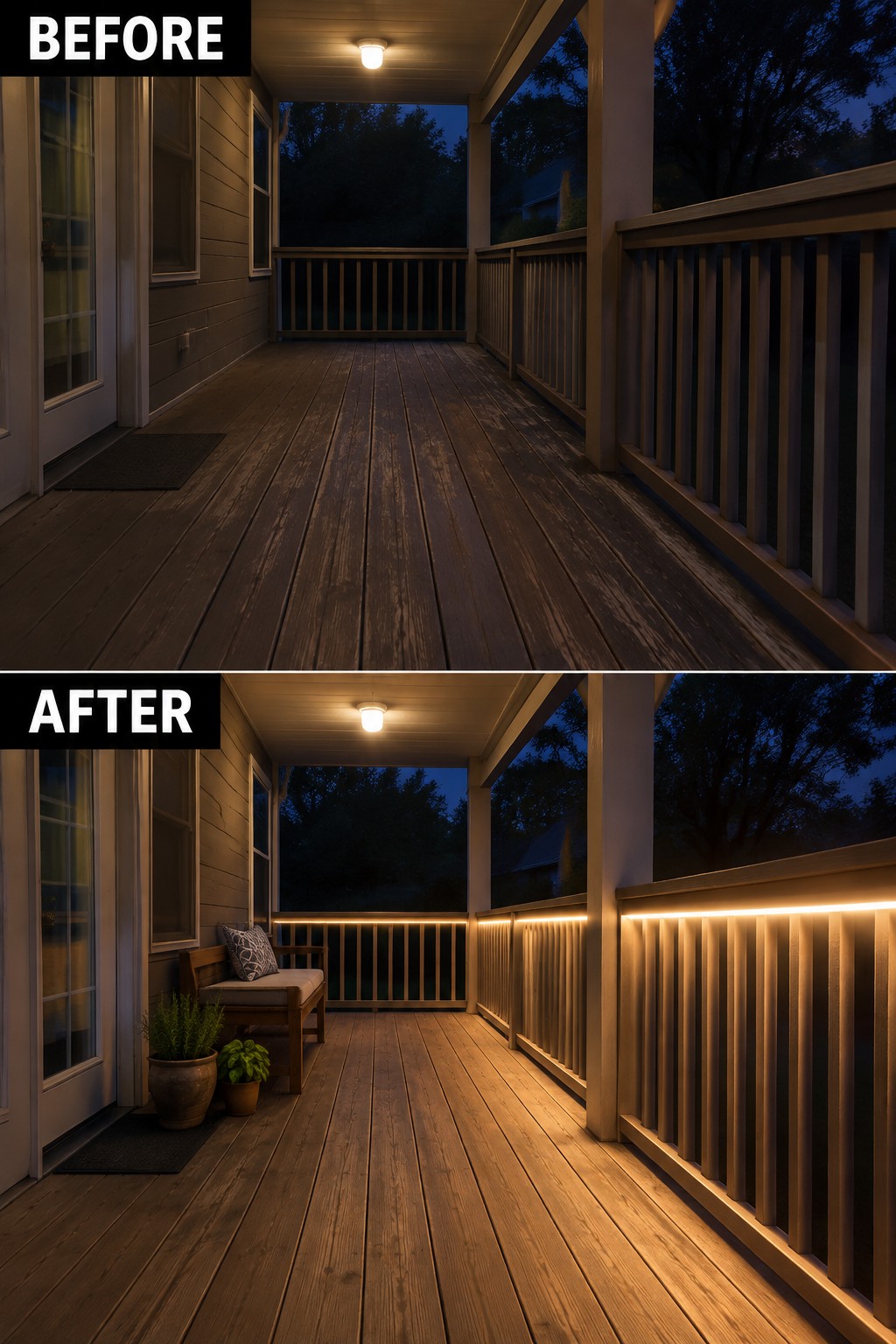
A porch with just one overhead light often feels dark and unused once the sun goes down. Running a simple line of warm LED lights along the railing changes that fast. The low glow lights up the seating area without shining in anyone’s eyes.
This idea works best on covered decks or porches where people actually sit near the edge. Use weatherproof strip lights that tuck under the top rail, keep the color temperature warm, and add a bench or a couple of chairs so the space feels ready for evening use.
Add Hanging Lights To Warm Up A Covered Patio
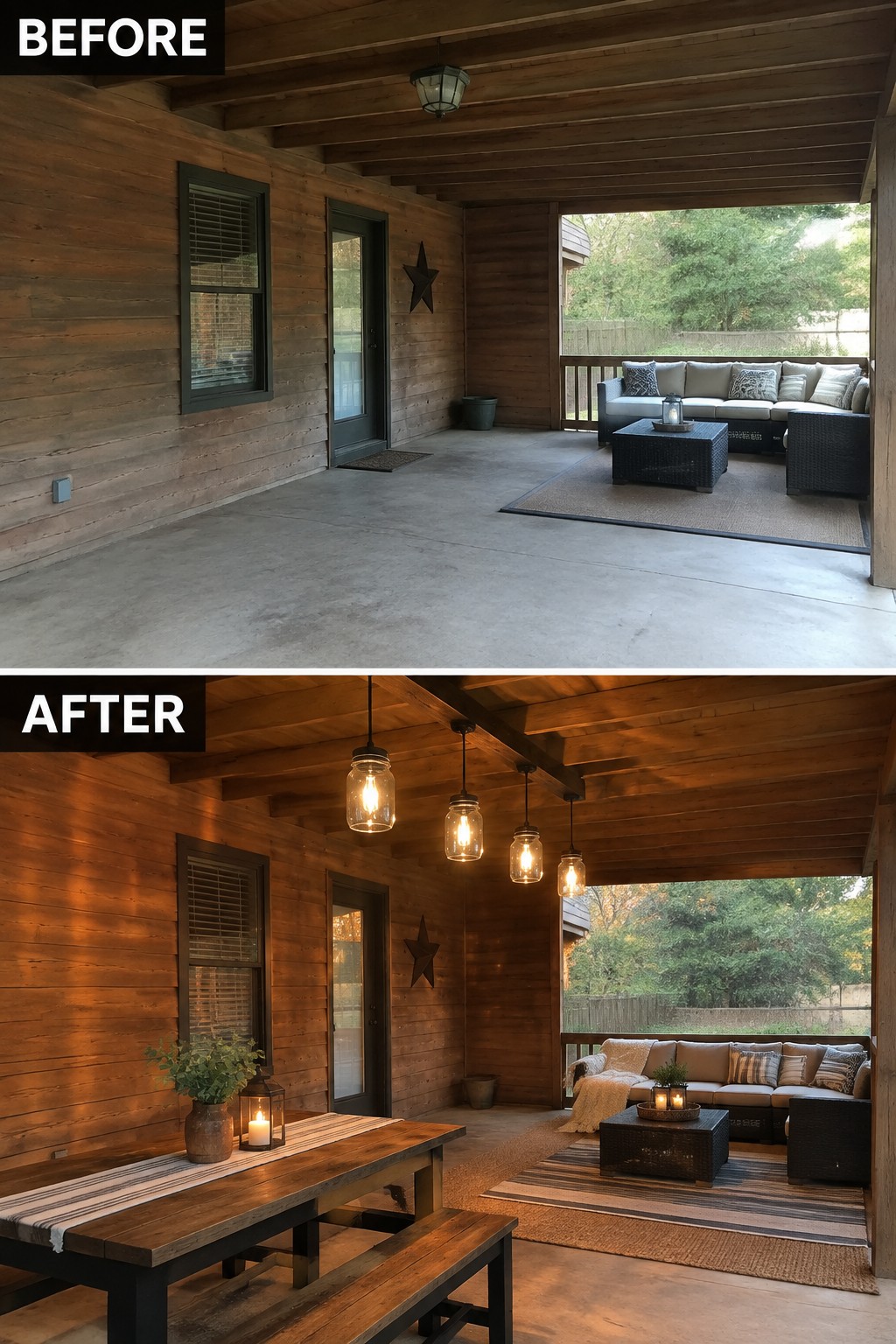
A bare covered patio often feels unused because there is no clear reason to stay once the sun goes down. Adding hanging lights changes that quickly. The before photo shows a flat concrete space with almost nothing overhead. In the after photo, several simple pendant lights now hang from the ceiling beams above a new dining table, which makes the whole area feel like an actual room.
This idea works best on patios that already have a roof or beams. Hang two or three lights at different heights over a table or seating area so the light falls where people actually sit. Keep the rest of the space simple and choose fixtures that can handle weather. The goal is just enough light to make the space feel welcoming without overdoing it.
Add Step Lighting To A Covered Porch
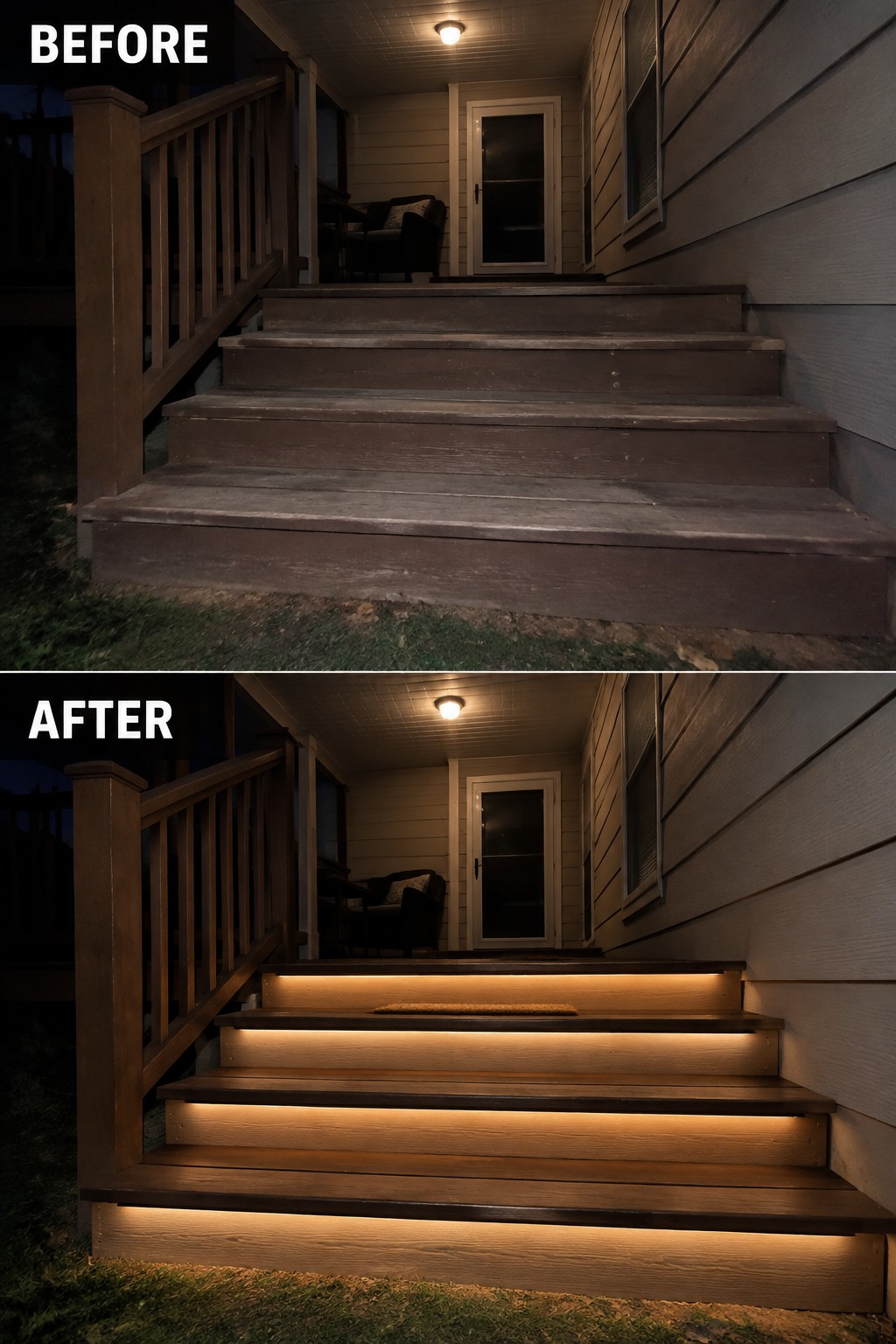
Adding lights under each stair tread gives a covered patio a much safer and more usable feel at night. The before photo shows a standard set of wooden steps lit only by one overhead bulb, which left the treads dark and hard to see. In the after photo, a simple row of warm lights along the front of every step changes that completely.
This kind of lighting works best on porches and decks where people come and go after dark. It stays low and even, so it does not create glare or bother neighbors, and it highlights the stairs without needing extra fixtures on the ceiling or railings. Just make sure the lights are rated for outdoor use and tucked in far enough that they will not get bumped or filled with debris.
Add A Ceiling Fan To Improve Lighting On A Covered Patio

A single bare bulb often leaves a covered patio feeling dim and unfinished even when the space is already there. Swapping it for a ceiling fan with an integrated light gives both better overhead illumination and air movement, which makes the area feel more like an extension of the house rather than just an outdoor spot.
This approach works well on patios that already have a solid roof and some seating. Keep the fan simple in finish so it blends with the ceiling, and add a couple of low lanterns or table lights only where people will actually sit. The goal is even light without creating glare or overcrowding the space with too many fixtures.
Use String Lights To Make A Covered Patio Feel Cozy

A bare covered patio often stays empty because it feels unfinished once the sun goes down. Running string lights along the beams and hanging a few lanterns on the posts adds enough warmth to turn the space into an area people actually use at night.
This idea works well on any covered patio that already has a solid roof and posts. Start with the lighting before filling the space with furniture, and keep the bulbs warm so the glow stays soft. It is an easy change that makes the patio usable without a full renovation.
Add LED Strip Lights To Make A Covered Patio Feel Cozy

The main change here is running LED strip lights along the ceiling edges instead of relying on one overhead fixture. That single bulb left the space feeling flat and dim at night. The new lighting wraps the whole area in color and makes it feel like a finished outdoor room rather than just a place to sit.
This works best on covered patios where you want to use the space after dark. Run the strips where they stay protected from rain, add a dimmer so you can soften the colors, and keep the rest of the setup simple so the lighting stays the focus. It is an easy way to make a basic patio feel inviting without buying new furniture.
Add Overhead Lights To Make A Covered Patio Feel Usable At Night

A row of simple ceiling lights changed how this patio works after dark. The before photo shows a flat, dimly lit space where the plants faded into the background once the sun went down. The added fixtures create a soft wash across the wall that lifts the whole area without needing much else.
This idea suits any covered patio that sits empty in the evening. Space the lights evenly along the beam, point them toward the back wall, and use warm bulbs so the glow feels natural rather than harsh. Once the lighting is in place you can add seating if you want, but the lights alone are what make the space feel finished.
Add Wall Lanterns And Under-Bench Lighting To A Covered Patio Bench
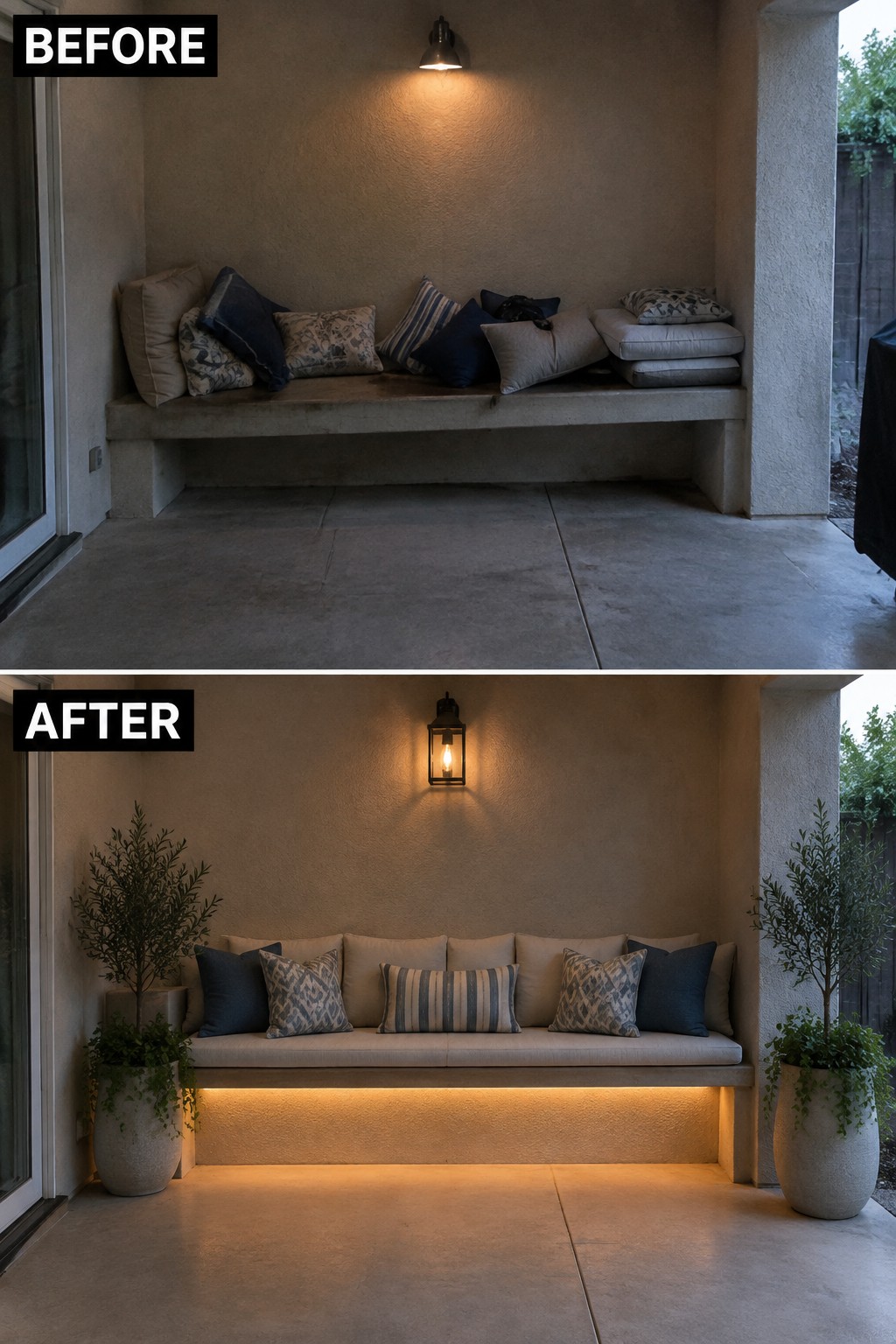
A single overhead light left this concrete bench feeling flat and unused at night. Adding a wall lantern at eye level plus a warm strip of light under the seat gave the space a gentle glow that actually invites people to sit down after dark.
This approach works well on covered patios where you already have a built-in bench or ledge. Start with one wall-mounted light centered above the seating, then add low lighting along the base so the glow stays soft and does not shine straight into eyes. Keep the rest of the area simple so the lighting becomes the main feature.
Hang Lanterns Overhead To Make A Patio Feel Cozy

A covered patio with just one ceiling light can feel flat once the sun goes down. Adding clusters of hanging paper lanterns changes that by creating layers of soft light right where people sit, turning the space into an area that actually gets used in the evening.
This idea works best on patios that already have a solid roof structure. Keep the lanterns at different heights so the light spreads evenly, and make sure the lowest ones still clear the heads of anyone seated below. Start with fewer lanterns than you think you need, then add more only if the corners still feel dark.
Use Overhead Lighting To Turn A Bare Patio Into A Cozy Spot

An empty covered patio often stays unused because it lacks any sense of purpose once the sun goes down. Adding a couple of ceiling spotlights and one large lit piece on the wall changed that completely. The lights now focus attention on the seating area and give the space a warm, finished feel without much extra effort.
This idea works best on patios that already have a roof or overhang. Aim the lights at the main seating zone rather than spreading them evenly, and use one stronger lit element on the wall to give the eye somewhere to land. Keep the rest of the furniture light so the lighting can do the work of making the space feel intentional.
Use Lighting To Make A Covered Patio Feel Cozy

A single harsh overhead light often leaves a covered patio feeling flat and uninviting after dark. Adding a few warm light sources at different heights changes that quickly. Uplighting on the pillars and a glowing fire pit table create soft layers that make the space feel finished and comfortable instead of empty.
This approach works well on most covered patios because it does not require major construction. Start with the spots where people actually sit, then add one or two accent lights on posts or planters. Keep the total number of fixtures modest so the area stays easy to use and not over-lit.
Add Hanging Lights To Warm Up A Covered Patio

The main change here is swapping one harsh fluorescent tube for three warm hanging pendants. That shift alone makes the space feel usable after dark instead of just functional during the day.
This idea suits any covered patio that sees evening use. Hang the lights low enough to create a defined seating zone, then keep the furniture simple so the area stays comfortable without feeling crowded.
Add Wall Lights To Brighten A Covered Patio
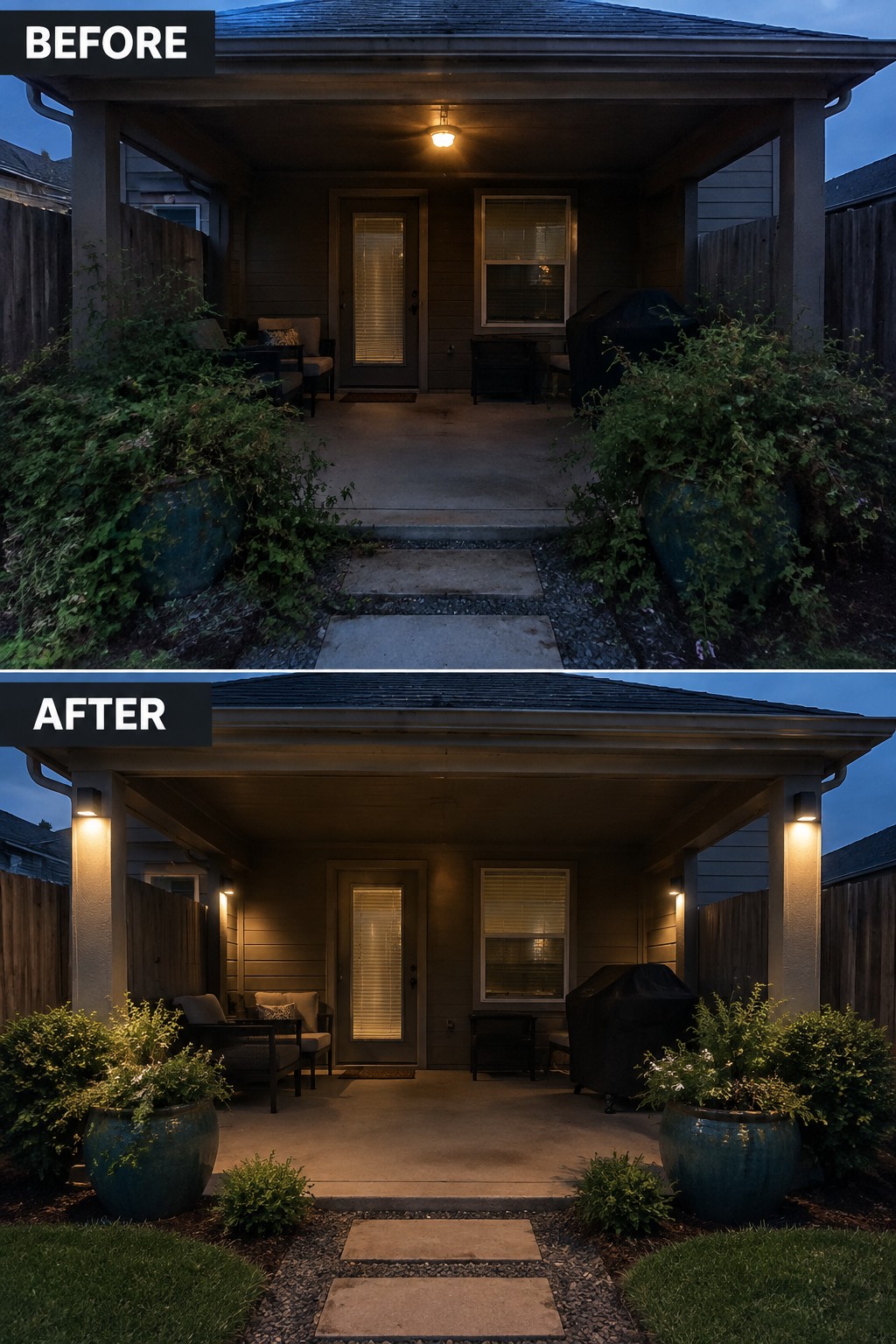
The before photo shows a covered patio that relied on one overhead light, leaving the edges and seating areas fairly dark at night. The after version adds several wall-mounted lights on the posts and siding, which spreads the light more evenly and makes the whole space feel more usable after sunset.
This idea works especially well on covered patios because the lights sit at a useful height and reduce the harsh overhead glare. Mount them on the main support posts first, then add one or two more along the house wall if needed. It suits most homes with a basic porch or patio where you want to extend evening use without rewiring the whole area.
Add Under-Counter Lighting To Make A Bar Area Feel Usable At Night
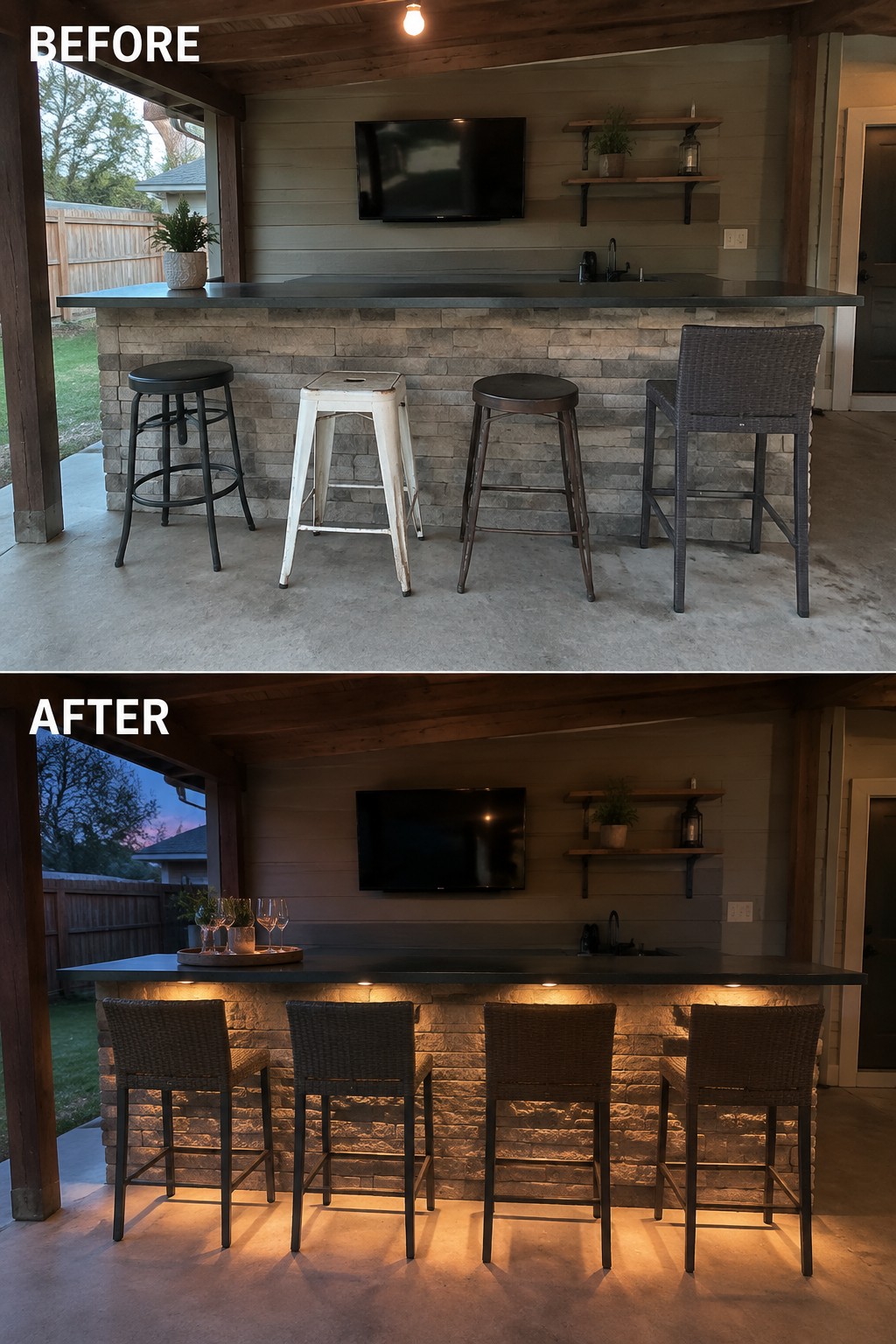
A single overhead bulb often leaves an outdoor bar looking flat once the sun goes down. Adding a row of small lights under the countertop changes that by casting a steady glow across the front of the bar and the floor below. The stools now sit in a warmer pool of light instead of fading into the background.
This works best on covered patios where you already have a solid counter and want to extend use into the evening without adding more overhead fixtures. Use outdoor-rated LED strips tucked behind a small lip or trim so the source stays hidden. Keep the rest of the lighting simple so the under-counter glow stays the main feature.
Use Lighting To Make A Patio Feel Cozy
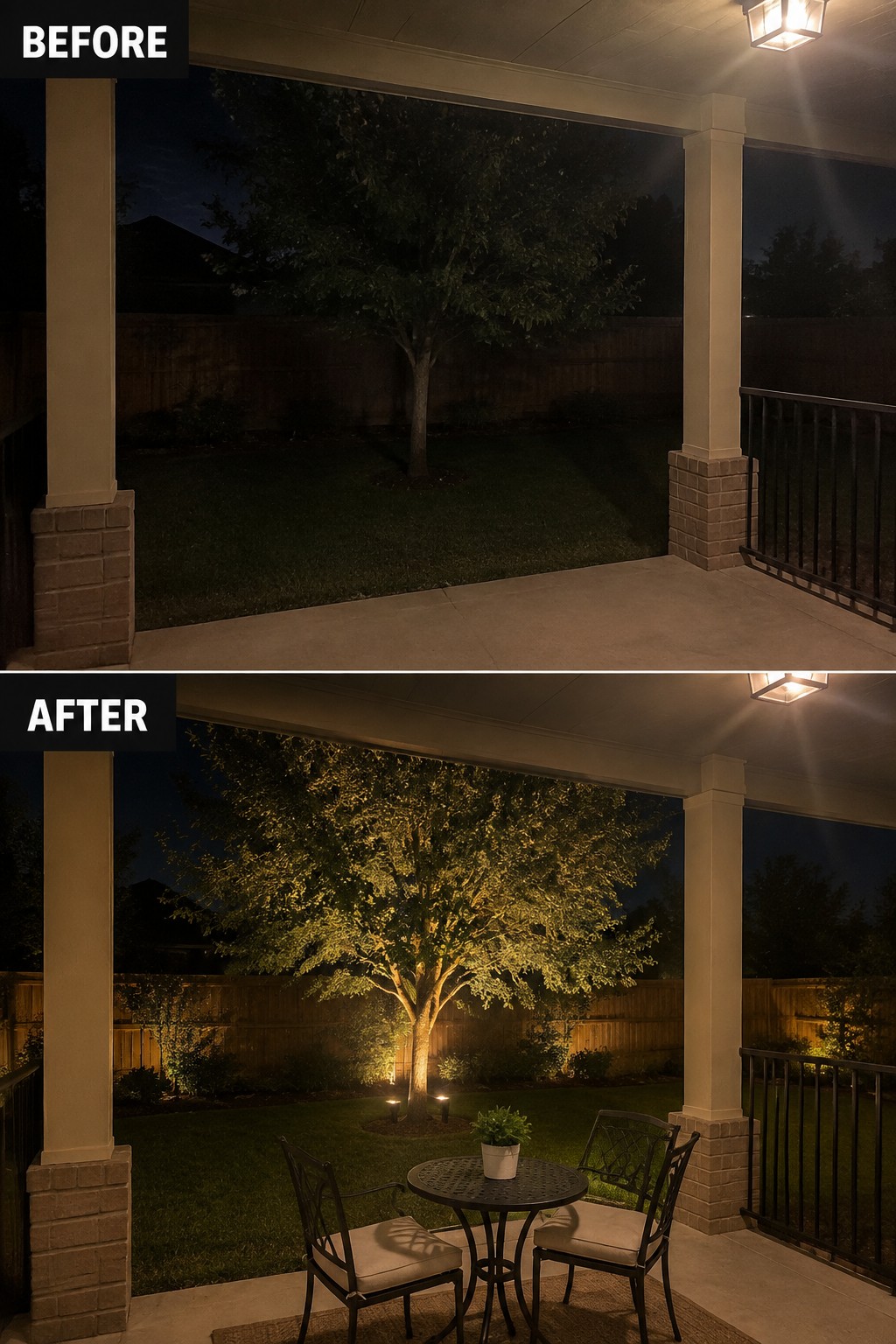
The before shot shows a covered patio that basically disappears after dark. Once a few lights were added to highlight the tree and mark the edges, the same space suddenly felt like an extension of the house rather than just empty concrete.
This idea works on most covered patios because it gives the area a clear purpose at night without needing a full remodel. Place one or two uplights on a tree or large plant first, then add a single overhead fixture above the seating spot so the light lands where people actually sit.
Add Candlelight To Make A Patio Feel Cozy At Night
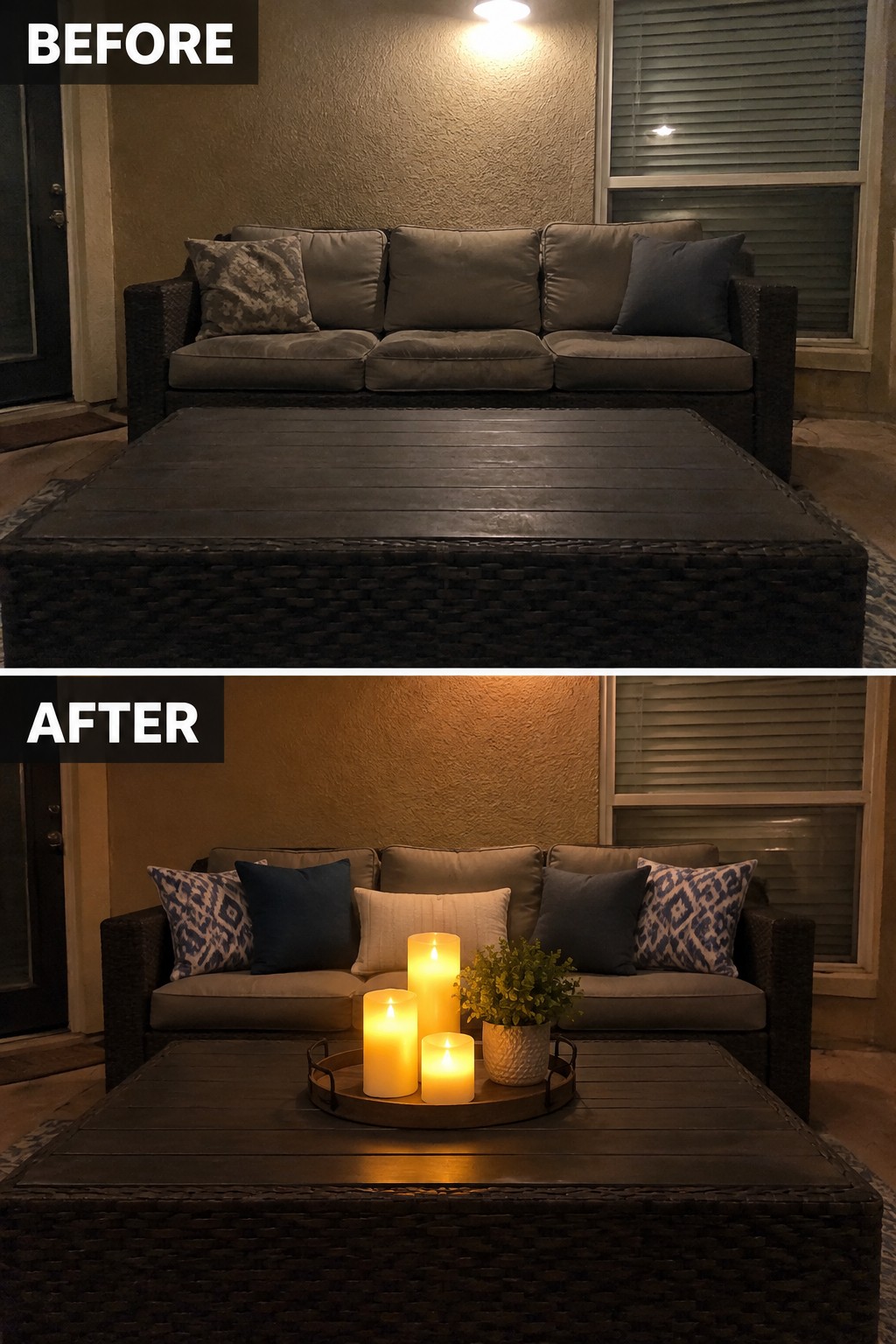
A bare coffee table can leave an outdoor seating area feeling unfinished once the sun sets. In this case, the before photo shows a plain table with nothing on it, while the after adds a tray holding three lit candles and a small plant. That one change brings a soft, warm glow that makes the space feel ready for evening use.
This works best on covered patios where you already have seating in place. Keep the candles grouped on a tray so they stay stable, and pick outdoor-safe ones if wind is an issue. It is an easy starting point before adding string lights or other fixtures.
Use Layered Lighting To Warm Up A Covered Patio
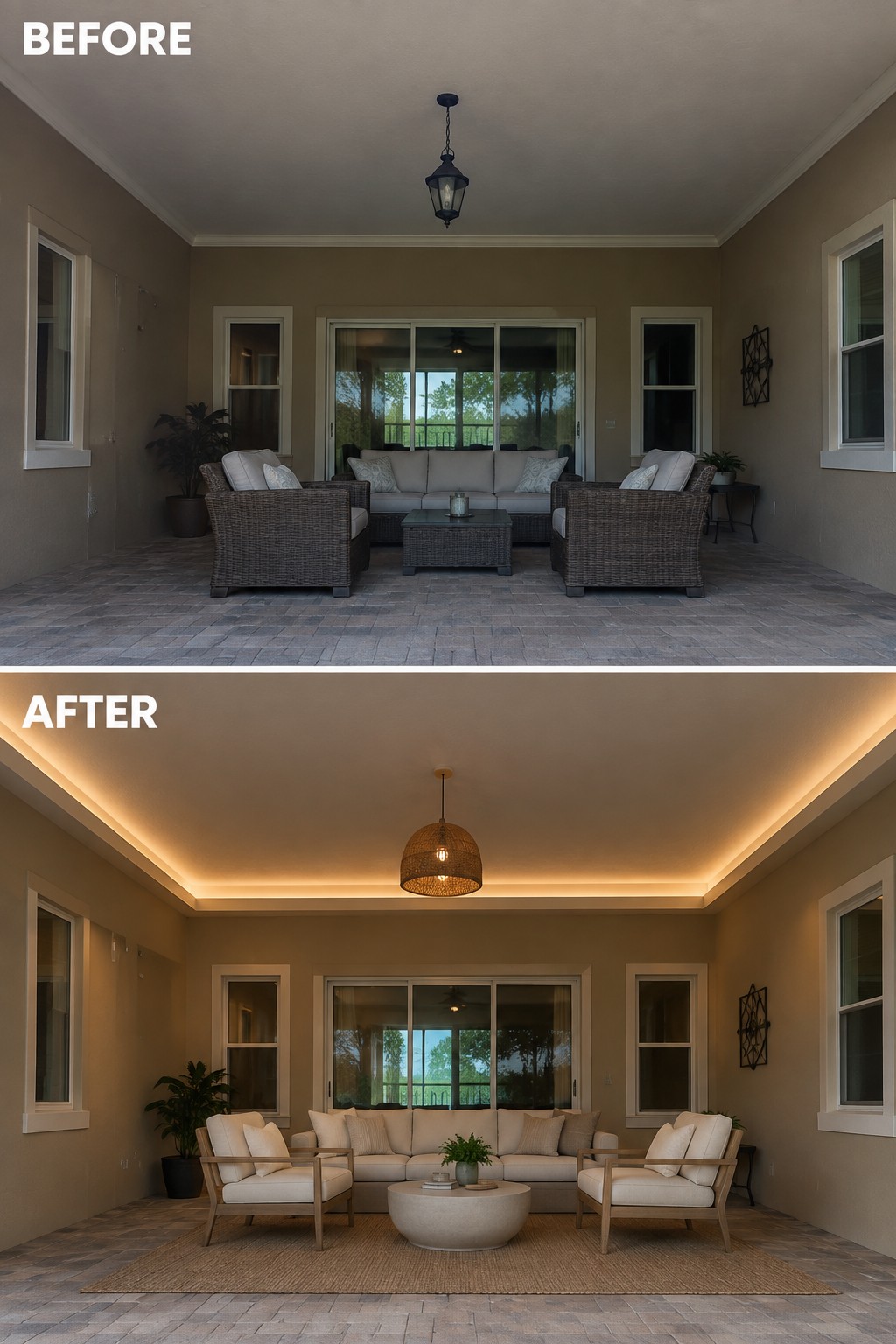
A single overhead light often leaves a covered patio feeling flat once the sun goes down. In this case the before photo shows a basic hanging lantern that did little to fill the space. Adding a warm cove around the ceiling edges plus a new woven pendant changed the whole mood without moving any furniture or changing the layout.
This approach works well on most covered patios because it gives both ambient light for evening use and a softer glow that makes the ceiling feel lower and more intimate. Start with the perimeter lighting first, then add one or two pendants over the seating area so the light actually reaches where people sit. Keep the fixtures simple and weather-rated, and test the color temperature before you commit.
Add Lanterns Along The Railing For Evening Use
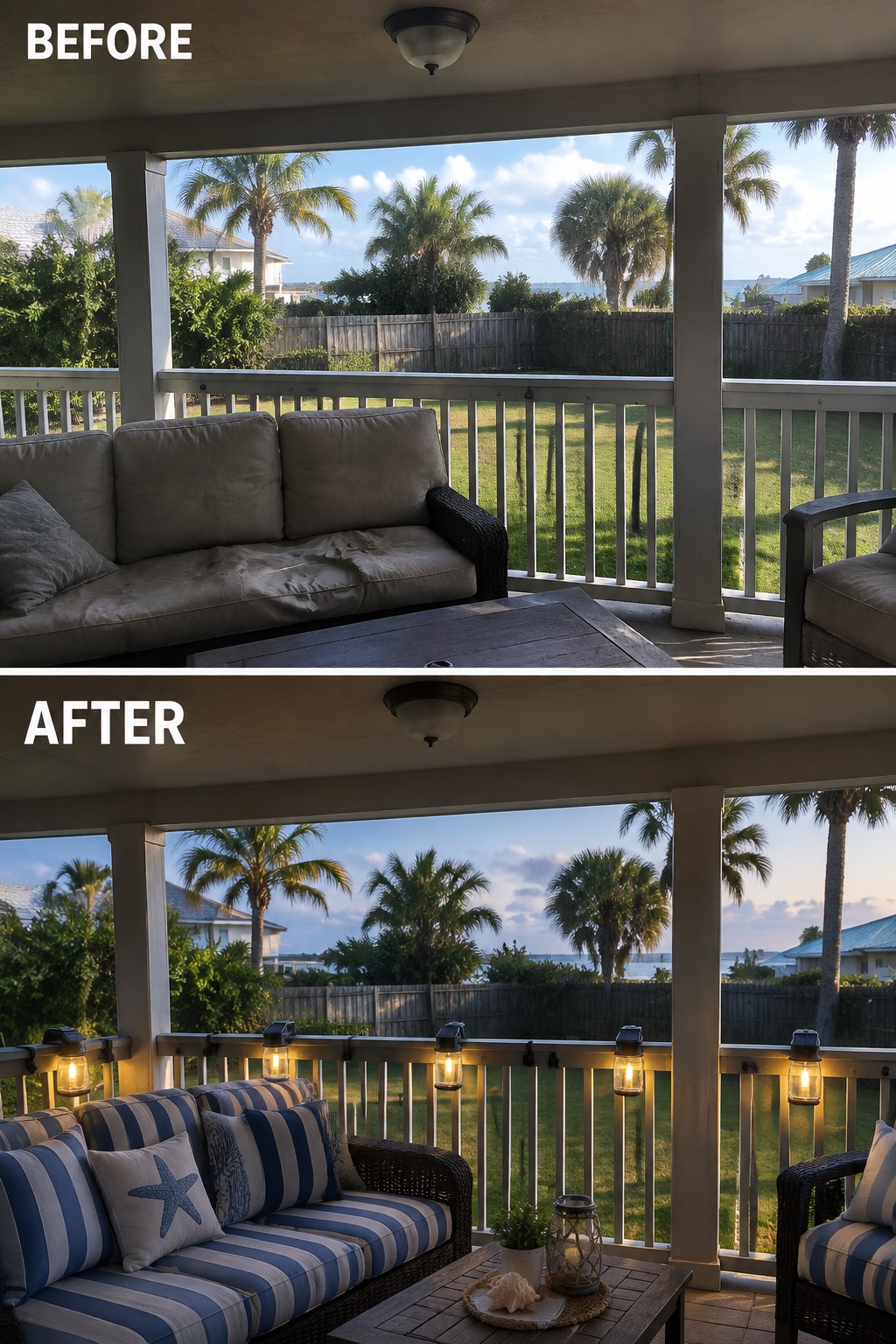
A covered patio often feels complete during the day but goes unused once the sun drops. Adding a row of small lanterns along the railing changes that without any wiring or major changes. The lights sit at a comfortable height, cast a soft glow over the seating area, and make the space feel ready for nighttime use.
This approach works on most porches or patios that have a simple railing. Choose weatherproof lanterns that clip or hang easily, keep the spacing even, and avoid overcrowding so the view stays open. It is an inexpensive way to extend the hours a patio feels inviting.
Use Lighting To Make A Covered Patio Feel Cozy

The before photo shows a patio with just one overhead light, which leaves the space looking flat once it gets dark. In the after, low lights tucked into the planters highlight the plants and a lantern sits on the table, giving the whole area a softer, more usable glow.
This idea works best on covered patios where you already have seating but need better nighttime ambience. Start with simple uplights on a few plants, then add one or two battery lanterns near the table. It suits most backyard setups and helps the space feel finished without major changes.
Add Lanterns To Make A Covered Porch Usable At Night
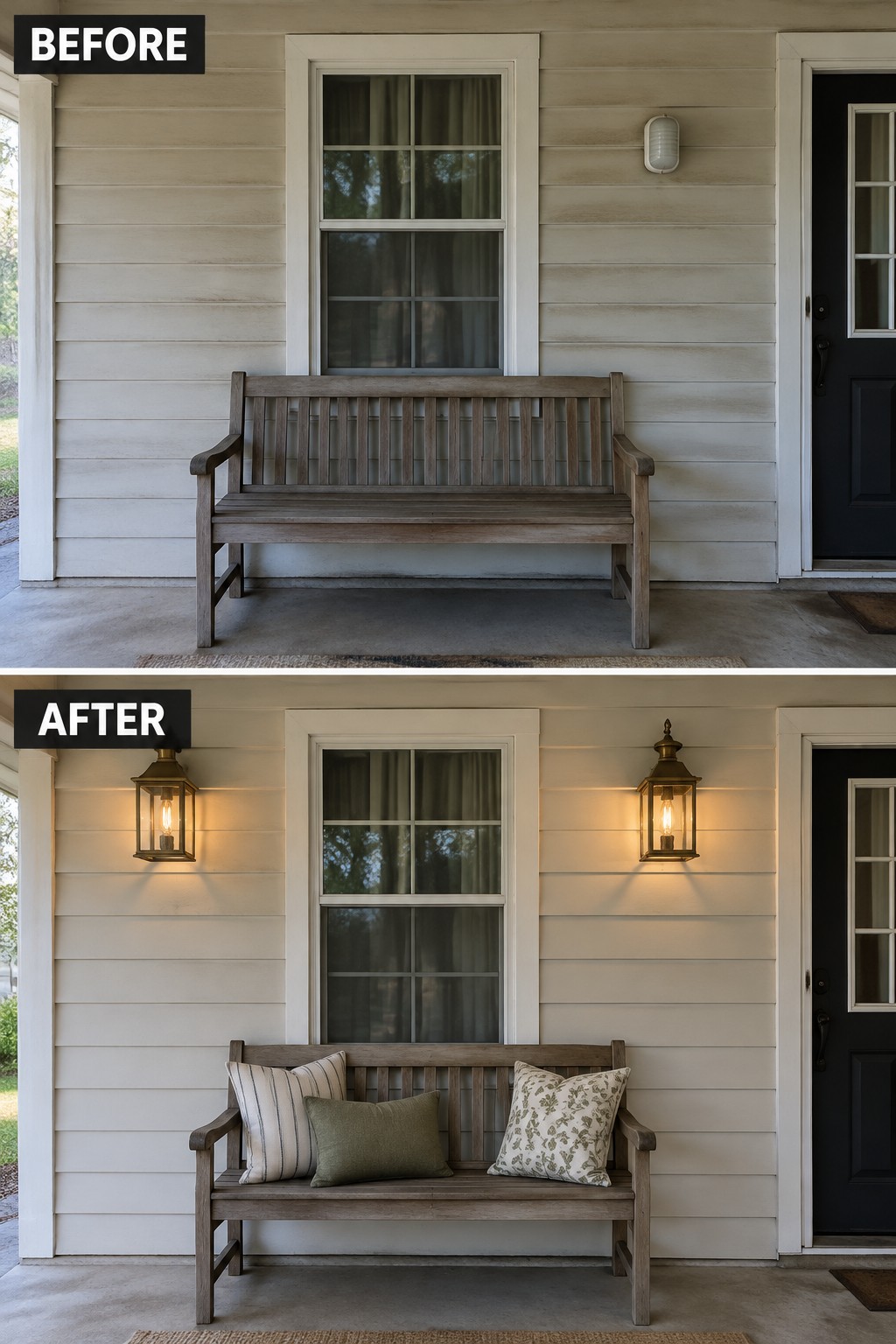
A plain bench on bare concrete feels like wasted space once the sun goes down. Adding a pair of wall lanterns on either side of the window brings the porch to life after dark and gives the seating area a clear reason to be used.
This approach suits any covered patio or porch that already has a bench or chairs but lacks evening light. Mount the lanterns at seated height so the glow reaches the cushions without glare, and choose simple styles that match your house trim. Keep the rest of the surface clear so the light stays the main feature.
Frequently Asked Questions
Q: How do I stop bugs from swarming around the new lights at night? A: Pick bulbs that give off a warm yellow glow instead of bright white. That color draws fewer insects while still lighting up the space nicely. Place the fixtures a bit higher so the light spreads out more evenly too.
Q: Can I add lights without tearing up the ceiling to run wires? A: Try solar powered options that clip right onto the beams. They charge during the day and turn on automatically when it gets dark. You skip all the electrical work and still get a cozy setup.
Q: What happens to the lights when it rains hard on the covered patio? A: Go for fixtures rated for outdoor use even under cover. They handle moisture and temperature changes without failing quickly.
Q: How much light do I really need for evening chats on the patio? A: Aim for soft layers from different spots rather than one strong source. This keeps faces visible without turning the patio into a stage.
