

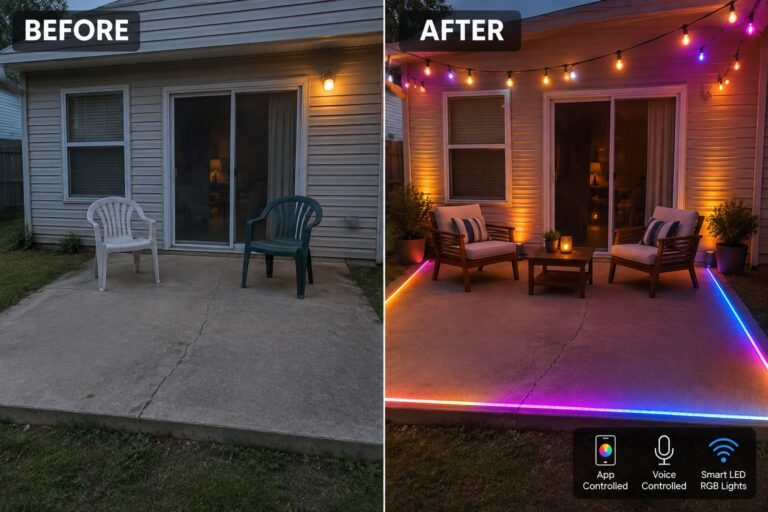
Many backyards and patios end up sitting empty once the sun goes down simply because the lighting does not feel inviting or easy to manage.
I have noticed that a few well placed lights can turn the same space into somewhere we actually use for evening meals or quiet time outside.
Adding smart controls means I can adjust everything from inside without needing to walk around flipping switches or dealing with timers that never quite work right.
That difference shows up fast.
Some of the setups in these ideas look like they could fit into different yard sizes and styles without much trouble.
Add Lighting To Make A Deck Usable After Dark
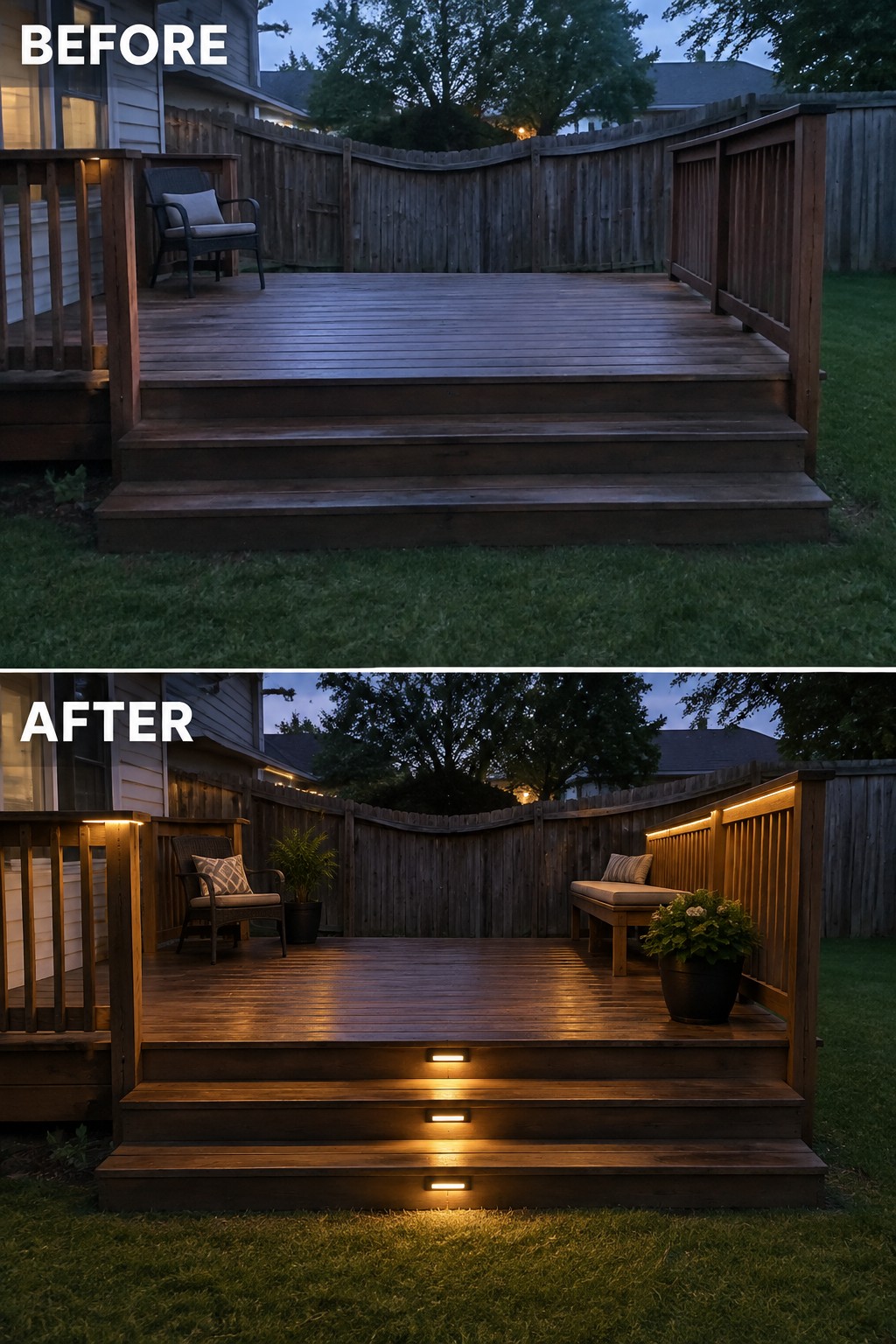
The deck sat mostly empty once it got dark. The stairs were hard to see and there was no real reason to stay outside. Adding lights along the railings and small recessed fixtures on the steps made the whole area feel open and much easier to use in the evening.
This works on most decks that have stairs or a railing. Put the brightest lights on the steps first for safety, then add softer lighting where people will sit. Pick fixtures built for outdoor use and think about smart controls so you can turn them on without going outside.
Use Lighting To Make A Patio Feel Cozy
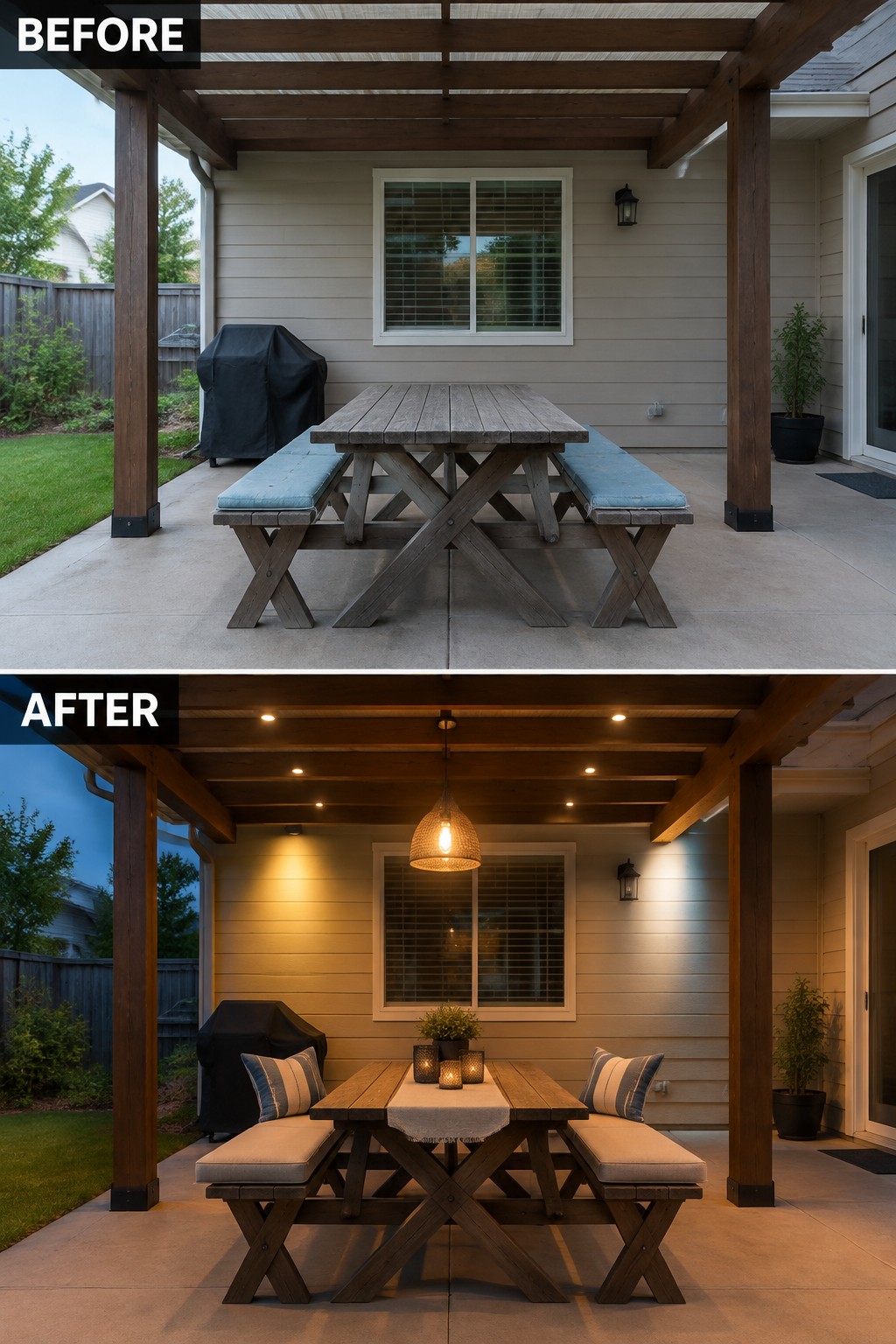
Adding lighting changed this covered patio from a daytime-only spot into one that feels usable after dark. The before photo shows a plain wooden table sitting under an empty pergola, while the after adds ceiling fixtures and one pendant light centered over the table. That single layer of light makes the whole area feel finished without needing much else.
This works well on any covered porch or patio where you already have a roof or pergola to mount lights. Place the main light source above the seating or dining area, then add a couple of smaller fixtures for even coverage. Smart controls let you dim the lights for dinner or turn them up for cleanup, and choosing simple weatherproof fixtures keeps the look clean and practical year-round.
Add Pool Lighting To Make An Evening Space Usable

The before photo shows a pool lit by one bright overhead fixture that left the water dark and the surrounding deck feeling empty. The after version adds underwater lights that make the pool glow while smaller fixtures around the patio create a softer, more even light.
This idea works best on homes that already have a pool but rarely use it after sunset. Start with one or two underwater fixtures, then add a few low landscape lights along the edges so the whole area feels connected. Keep the overall brightness gentle so people can sit comfortably without glare.
Use Layered Lighting To Make An Outdoor Kitchen Feel Cozy
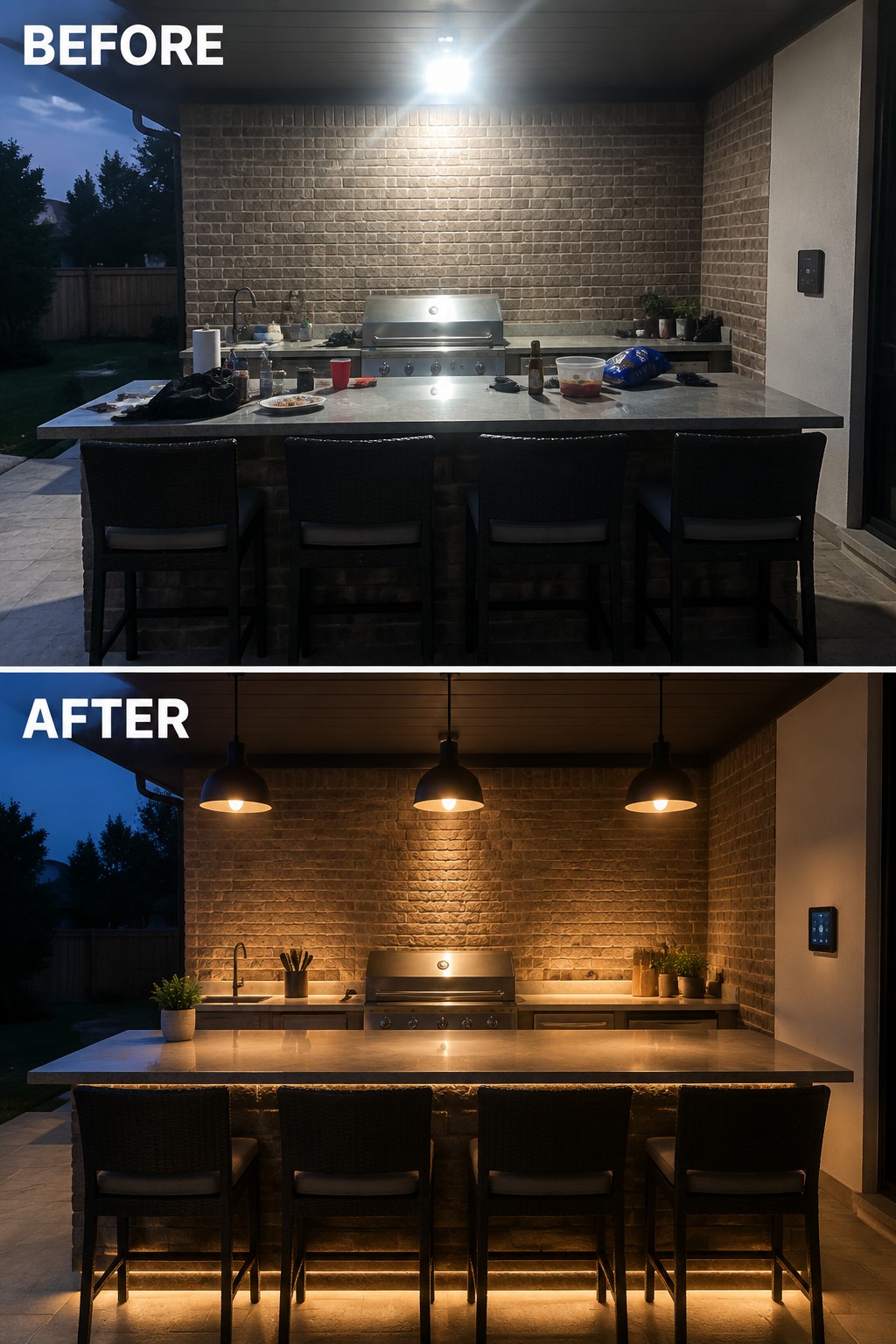
A single overhead light often creates glare and leaves the seating area in shadow. Switching to three pendant lights above the island plus a warm strip under the bar edge changes the feel completely. The pendants give useful task lighting while the lower glow makes the space comfortable for sitting and talking after dark.
This idea works best on covered patios or outdoor kitchens that already have the basic structure in place. Pick pendants rated for outdoor use, hang them at a height that clears heads but still feels intimate, and run a simple LED strip on a separate switch or smart control so you can dim the lower light without losing the counter brightness. It is an easy upgrade that makes the space usable well into the evening.
Use Lighting To Make A Fire Pit Area Feel Cozy

The before photo shows a basic fire pit with a few random chairs scattered on open ground. Adding low path lights around the perimeter and a couple of taller lanterns turns the same spot into a defined area that feels ready for evening use.
This idea works best in backyards where the fire pit already gets regular use but lacks structure after dark. Place the lights to mark the edge of the seating zone rather than right next to the fire, and pick fixtures on the warmer end of the spectrum so they blend with the flames. Smart controls make it easy to turn them on from the house without extra trips outside.
Add Landscape Lighting To A Cleaned-Up Border

The before photo shows a weedy strip that had grown out of control along the fence line. Once the overgrowth was cleared and replaced with mulch plus a simple mix of shrubs and perennials, the space already felt more intentional.
Adding a few low landscape lights made the biggest difference for evening use. One uplight on the small tree and several path lights along the bed create a clear edge without needing many fixtures. This works well in narrow side yards where you want the garden to look finished after dark but do not have room for seating. Put the lights on a smart controller so you can set schedules or turn them on only when you need them.
Add Pathway Lights To Make A Narrow Walk Usable At Night

A dark, overgrown side path can feel like wasted space once the sun goes down. Adding a simple line of low in-ground lights along the stones turns the walkway into something you can actually use after dark and gives the whole strip a tidier shape.
This idea works best on long, narrow routes that connect parts of the yard or lead to a gate. Space the lights evenly, keep the planting low on both sides, and choose warm bulbs so the path feels inviting rather than harsh.
Use Lighting To Make A Bare Patio Feel Cozy

A plain concrete terrace with nothing but two folding chairs can feel cold and unfinished once the sun goes down. Adding a few strands of string lights overhead and some simple wall sconces changes the whole feel. The space suddenly looks like a place where you might actually sit after dark instead of just walking through it.
This approach works well on rooftops, balconies, or any outdoor area that gets used mostly in the evening. Start with the lights first, then add a rug and a couple of plants so the seating area feels defined without crowding the space. Keep the controls simple so you can adjust brightness depending on whether you want quiet time or something more lively.
Use String Lights To Make A Balcony Feel Cozy After Dark

A balcony with just a couple of planters can sit empty once the sun drops. Running string lights along the railing and adding a thin glow under the planters gives the space a gentle light that makes it feel like a place to sit instead of a spot to pass through.
This idea suits small city balconies where space is tight and you want the area to work in the evening. Pick weatherproof lights you can dim or color from an app, keep the brightness low so it feels relaxed, and let the lights highlight the plants or a simple bench rather than filling the whole area with brightness.
Use Layered Lighting To Make A Gazebo Feel Cozy At Night
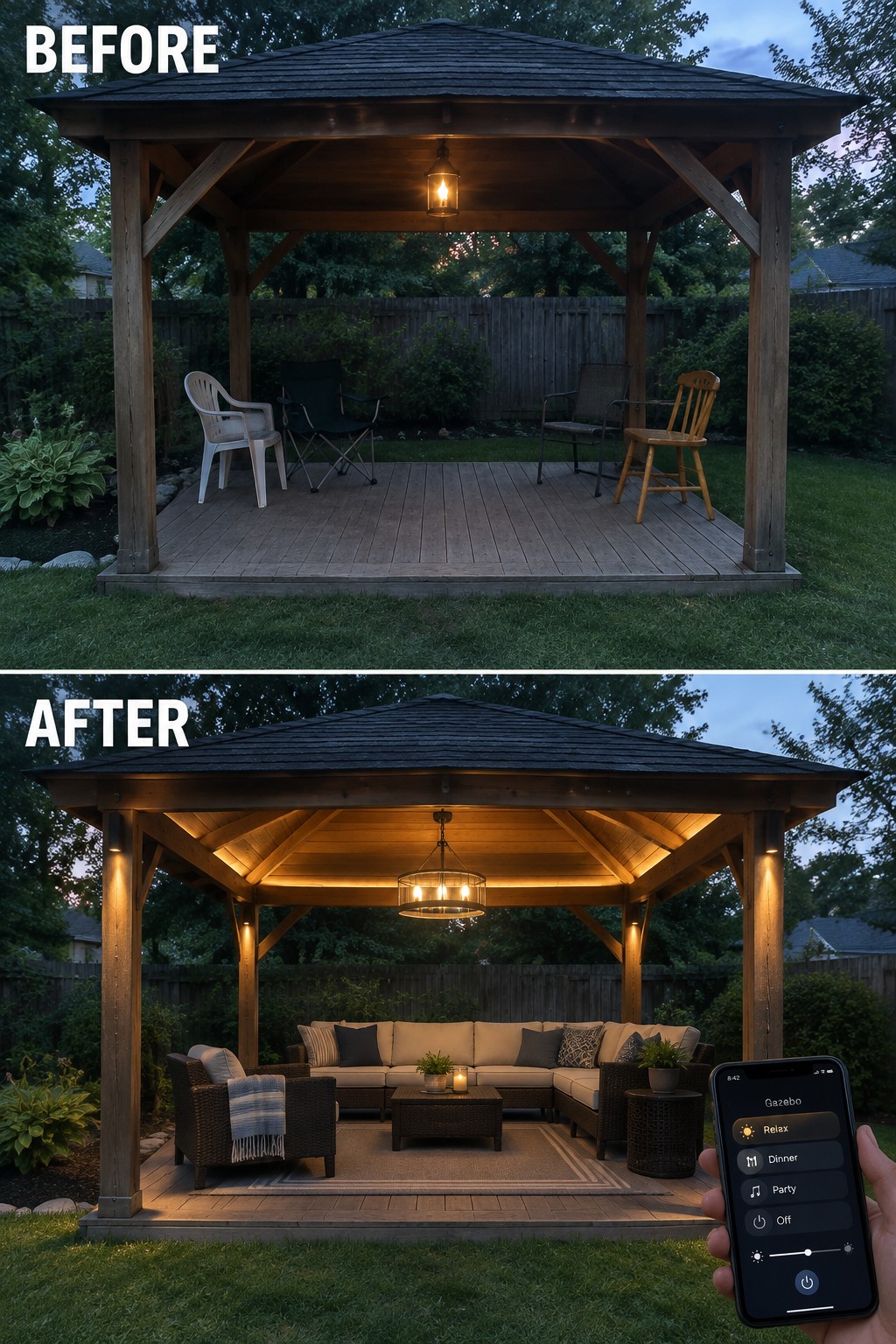
A single bulb hanging from the center often leaves a covered deck or gazebo feeling dim and uninviting after dark. Adding lights at different heights, such as post-mounted fixtures and a larger central chandelier, creates a much warmer and more balanced glow. Pairing those lights with a simple smart control app lets you switch between brighter settings for meals and softer ones for relaxing.
This idea works best on any covered outdoor space that already has a solid roof and floor but lacks atmosphere once the sun sets. Keep the number of fixtures modest so the area does not feel over-lit, and choose weather-rated pieces that can stay in place year-round. A phone app makes it easy to adjust everything without running new wiring.
Add Lighting Along A Fence To Improve The Backyard

Adding lights to the posts of a plain fence turns the whole border into something useful after dark. The fence shifts from something you mostly notice during the day to a clear edge that helps define the yard once the sun drops.
This idea works best on homes with long fence runs where you want light without filling the yard with extra poles or fixtures. Set the lights on a simple dusk-to-dawn schedule so they handle themselves, and keep the output low enough that it does not shine into the house or across the lawn.
Add Step Lights To Outdoor Stairs

Many homes have stairs that connect the yard to a deck or patio, but those steps disappear once the light fades. Adding small lights built into the risers and a pair of path lights along the sides makes the whole route clear without needing big fixtures.
This idea suits houses with any kind of sloped yard or multi-level outdoor space. Keep the lights low and warm so they mark the path without overpowering the stone or plants. It improves safety for evening use while keeping the focus on the existing structure rather than adding new decor.
Use Edge Lighting To Make An Outdoor Court Usable At Night
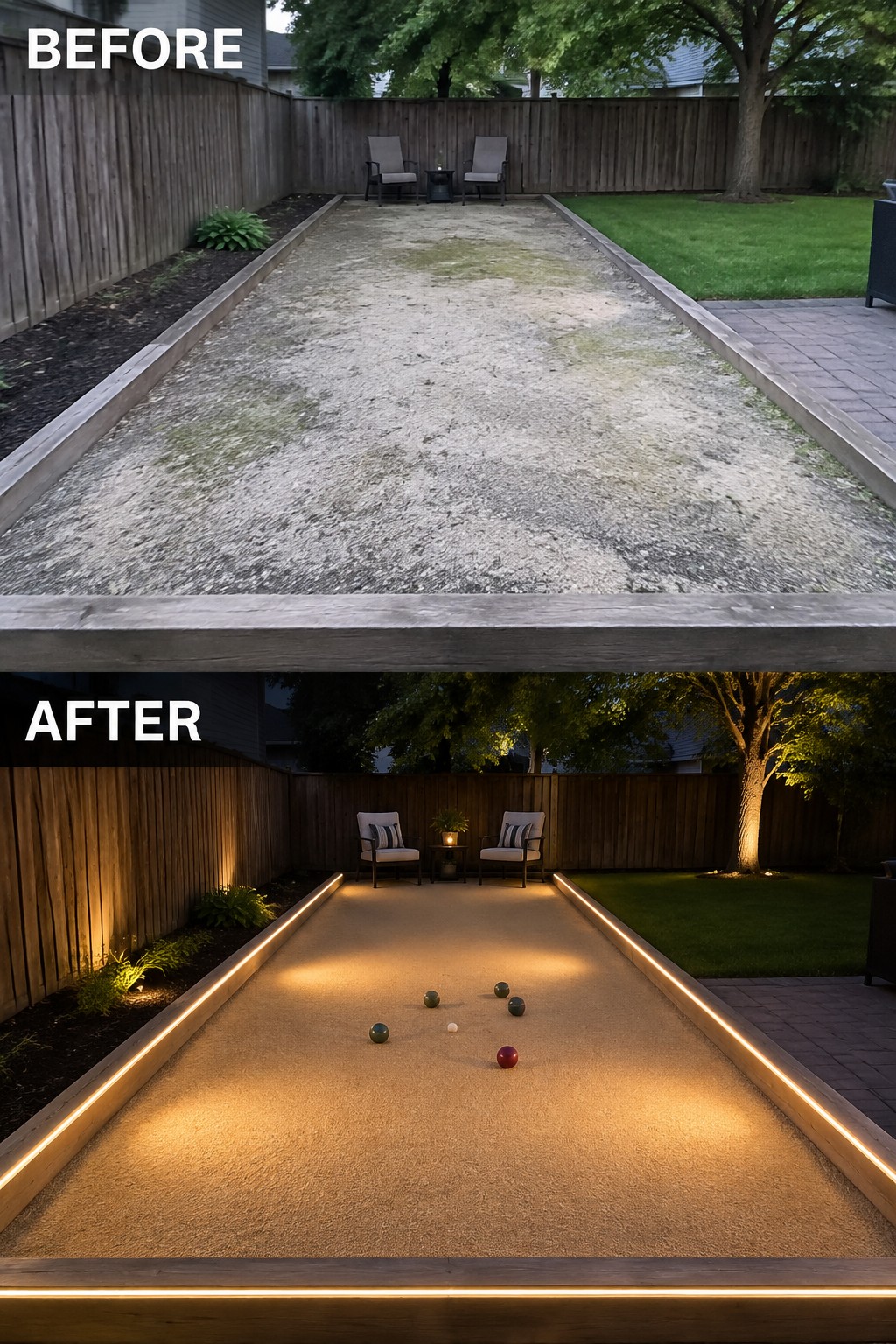
A long sandy court like this often sits unused once the sun goes down. Adding warm LED strips along the wooden borders turns the same space into a place where people actually gather after dark. The cleanup of the surface helps too, but the lighting is what makes the area feel intentional instead of forgotten.
This approach works well on bocce courts, shuffleboard areas, or any long rectangular patio zone. Keep the fixtures low and continuous so the light stays even and does not glare. Make sure the strips are rated for outdoor use and tucked into a lip or channel so they stay protected from weather and foot traffic.
Use Lighting To Turn A Dark Bench Into An Evening Spot
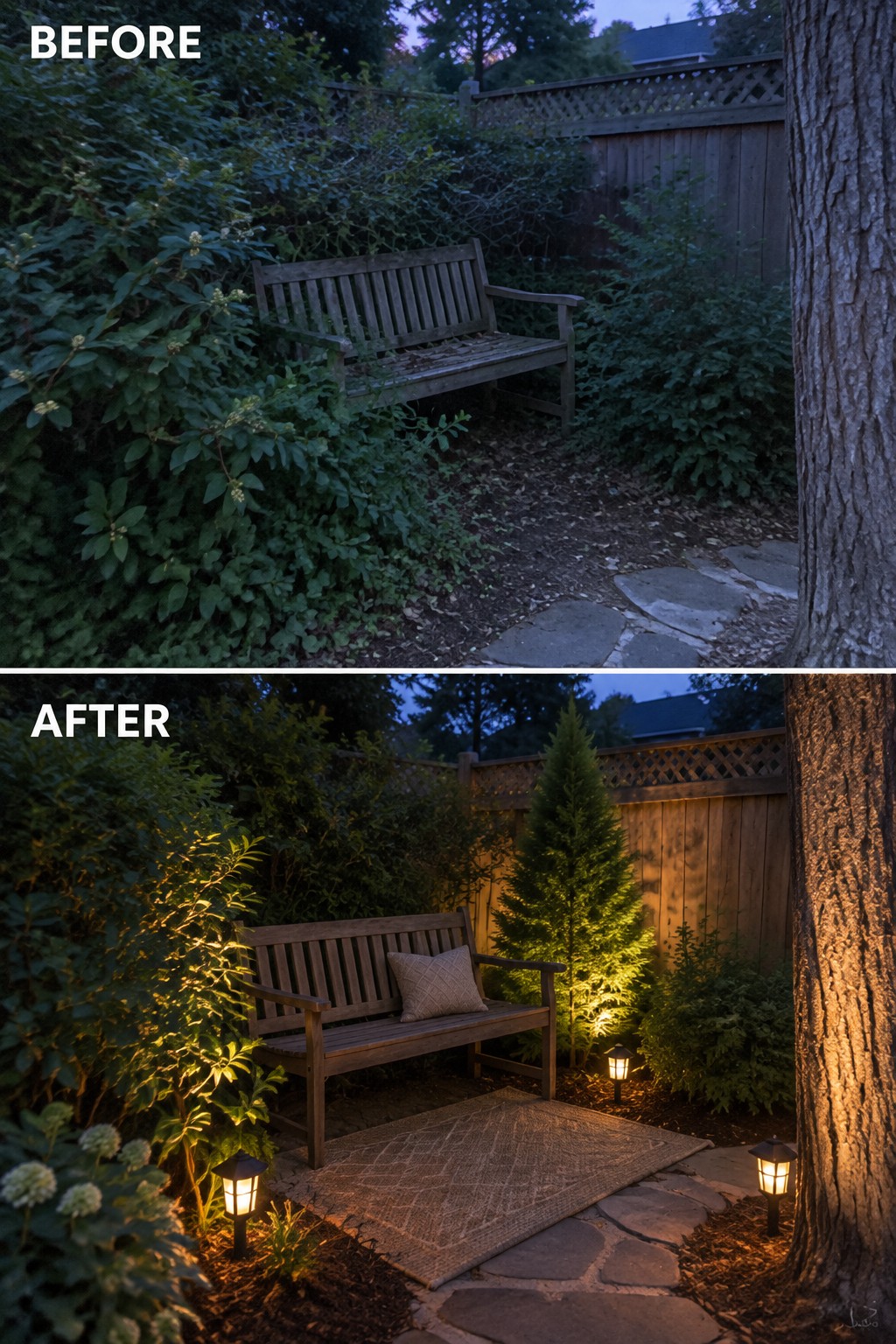
A bench tucked in the corner often gets ignored after sunset because the whole area feels too dark and closed in. A few low lights placed around the base of nearby plants and along the path change that fast. The space suddenly feels open enough to sit without needing to carry a flashlight.
This idea works best in side yards or smaller back gardens where you already have a seat but no real reason to use it at night. Place one or two path lights to mark the way in and add one or two small uplights to lift the plants behind the bench. Keep the bulbs warm and the fixtures simple so the light stays soft instead of turning the area into a spotlight.
Frequently Asked Questions
Q: Can I add smart controls to my existing outdoor lights without calling in a pro? A: You can swap in smart bulbs or plugs on many setups. Start by checking if your fixtures take standard bulbs. Then test a single light first to see how it connects.
Q: How do these lights hold up in rain and snow? A: Most outdoor smart lights come rated for wet locations. Pick ones with proper seals around the connections. They handle storms fine once installed right.
Q: Will using smart features make my energy bills jump? A: Smart controls let you set timers so lights only run when needed. This often cuts down on wasted power compared to leaving them on all night. Check your usage after a week or two to adjust.
