

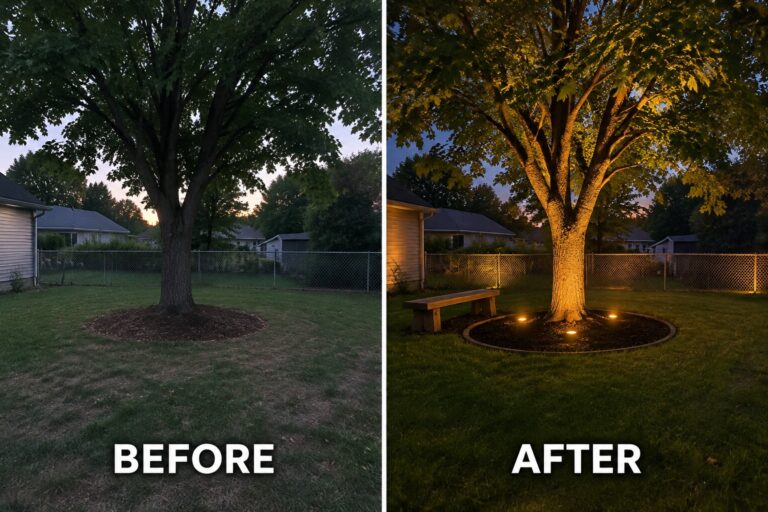
Many backyards sit unused once the light fades because nothing defines the edges or draws attention to the seating spots that could otherwise work well at night.
Uplighting around trees and low structures gives those areas enough shape and warmth to feel like they belong with the rest of the house.
I usually test a couple of placements first to see how they affect movement through the space.
The change shows up most clearly when the lights stay subtle rather than trying to brighten everything at once.
It leaves the yard feeling more intentional without requiring any major work on the layout.
Add Uplighting To A Backyard Tree
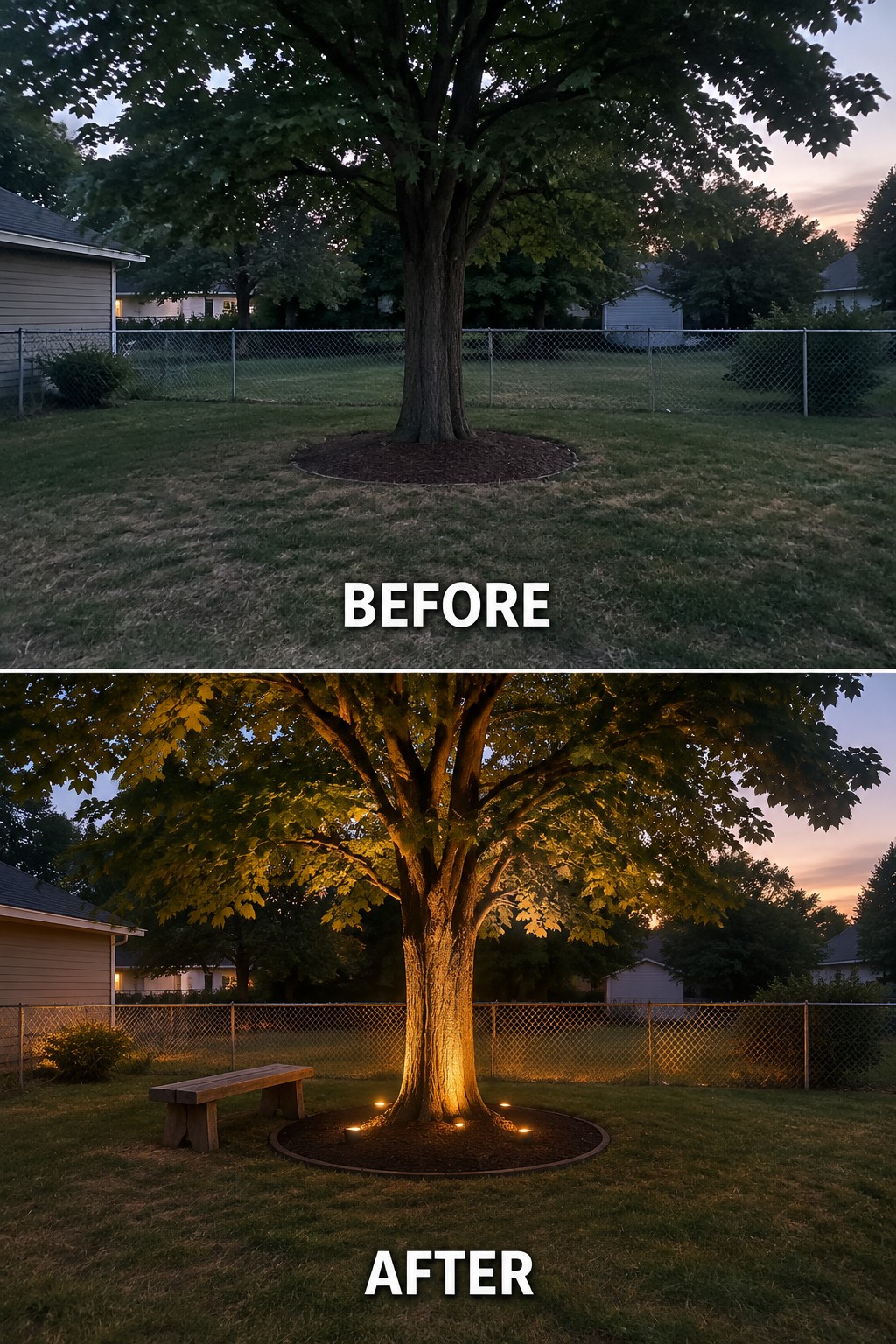
Placing a few low lights around the base of a large tree turns an ordinary backyard into a space that feels usable after dark. The uplighting lifts the trunk and canopy with a warm glow, and the simple addition of a bench makes the area feel more like a spot to sit rather than just pass through.
This idea works best in yards that already have a mature tree as a natural focal point. Use outdoor-rated warm LEDs, keep the fixtures low and angled upward, and add only one or two seating pieces so the lighting stays the main feature.
Use Uplighting To Make A Bare Patio Feel Cozy
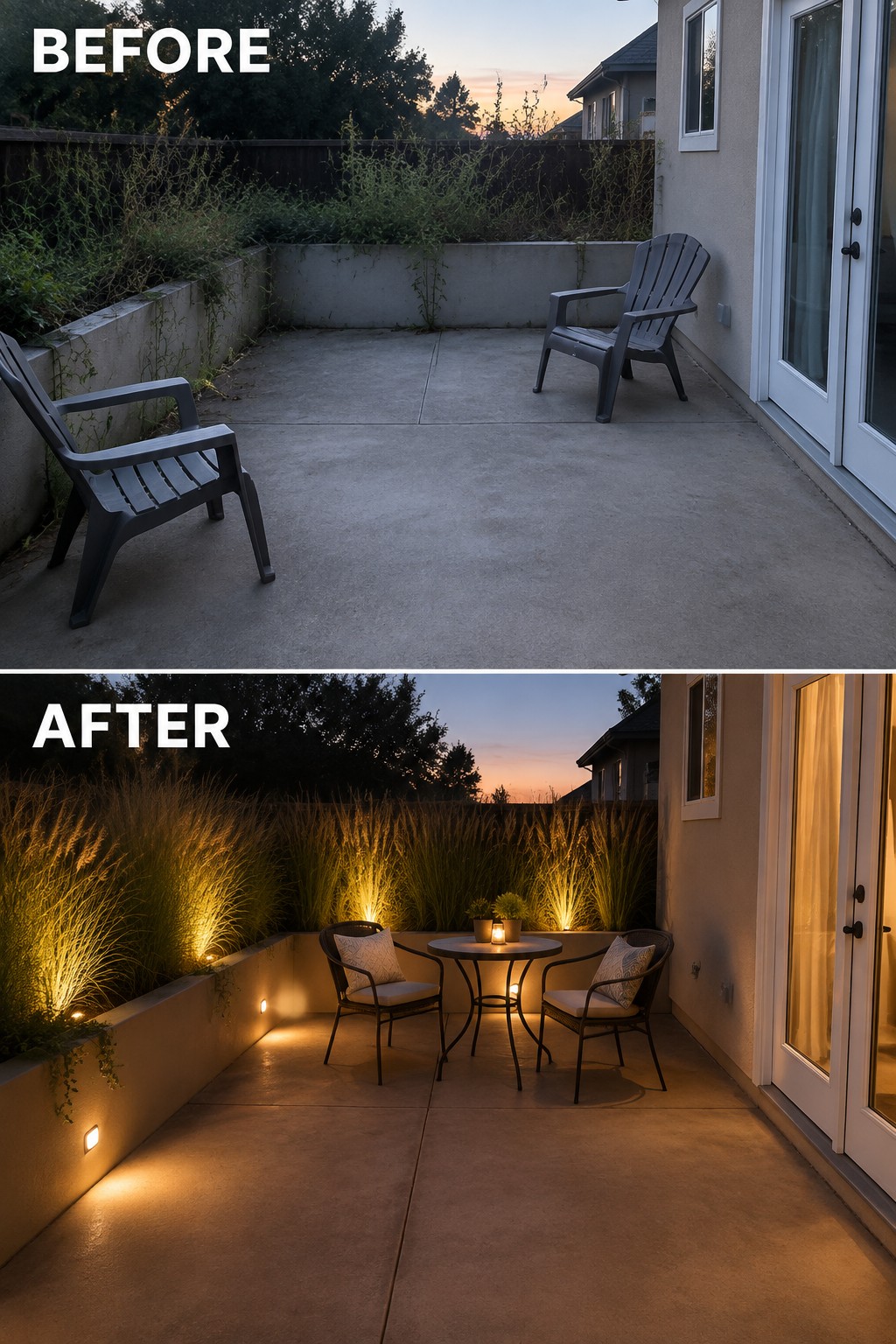
A plain concrete patio with just a couple of chairs can feel like wasted space once the sun goes down. Adding uplights at the base of the tall grasses and a few low ground lights completely changes how the area works. The plants become the main feature, the seating feels intentional, and the whole spot becomes usable in the evening without needing much else.
This approach works well on small patios or side yards where you want evening use without crowding the space with furniture. Place the lights so they highlight existing plants rather than trying to light the whole area. Keep the seating simple and make sure the lights do not shine directly into the house or into seating positions.
Add Warm Lighting To Exterior Stairs
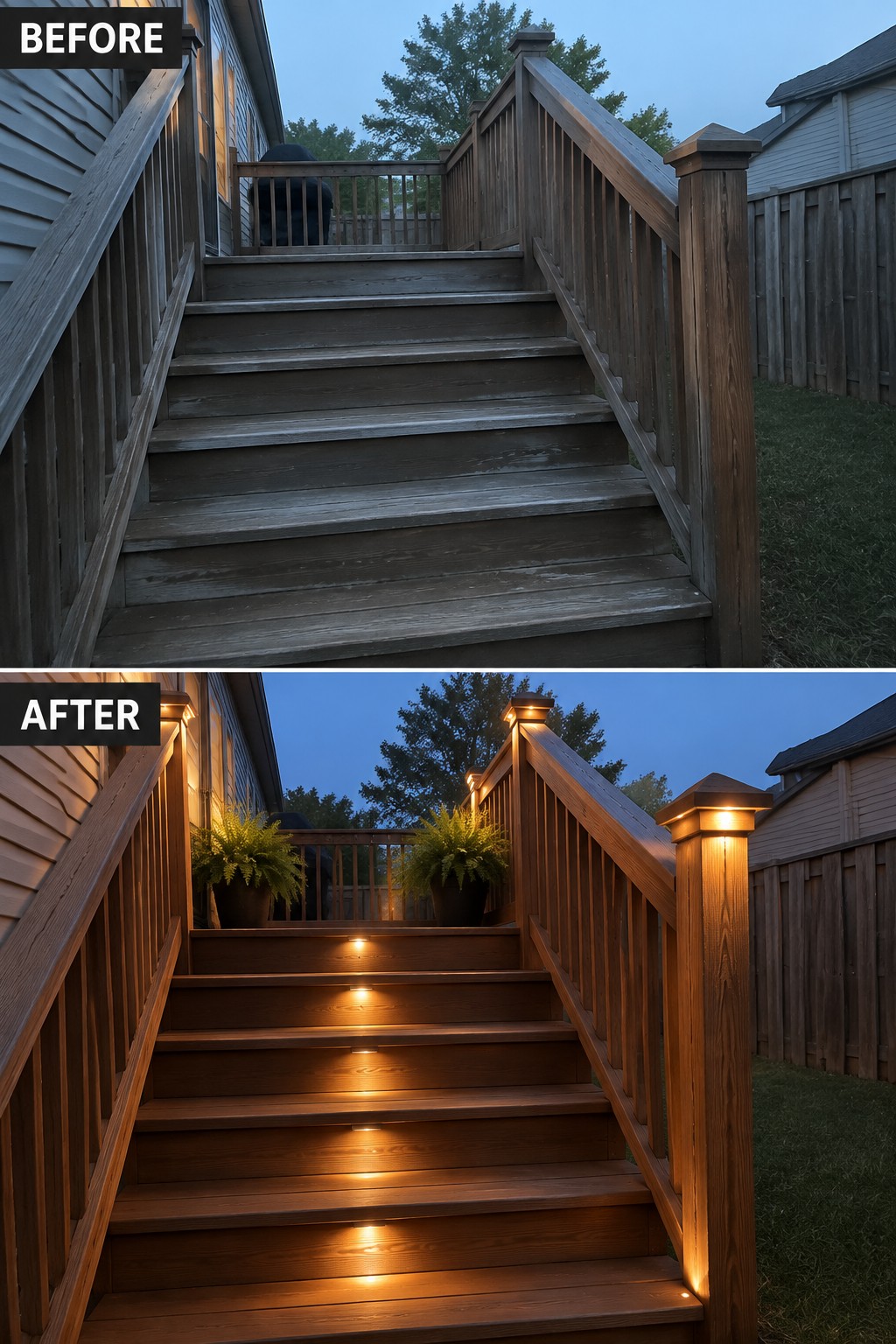
Dark stairs can make a backyard feel closed off at night. In this case, the before photo shows plain wooden steps with almost no light, while the after adds simple post lights and step lights that make the whole path easier to see and much more inviting. The change turns a basic set of stairs into a clear, usable route between the house and the yard.
This idea works well on any home with multi-level outdoor space or stairs that get used after dark. Start with one or two lights on the main posts, then add small recessed lights on the steps themselves. Keep the fixtures warm in tone and weatherproof so they last through the seasons.
Use Uplighting To Highlight A Retaining Wall
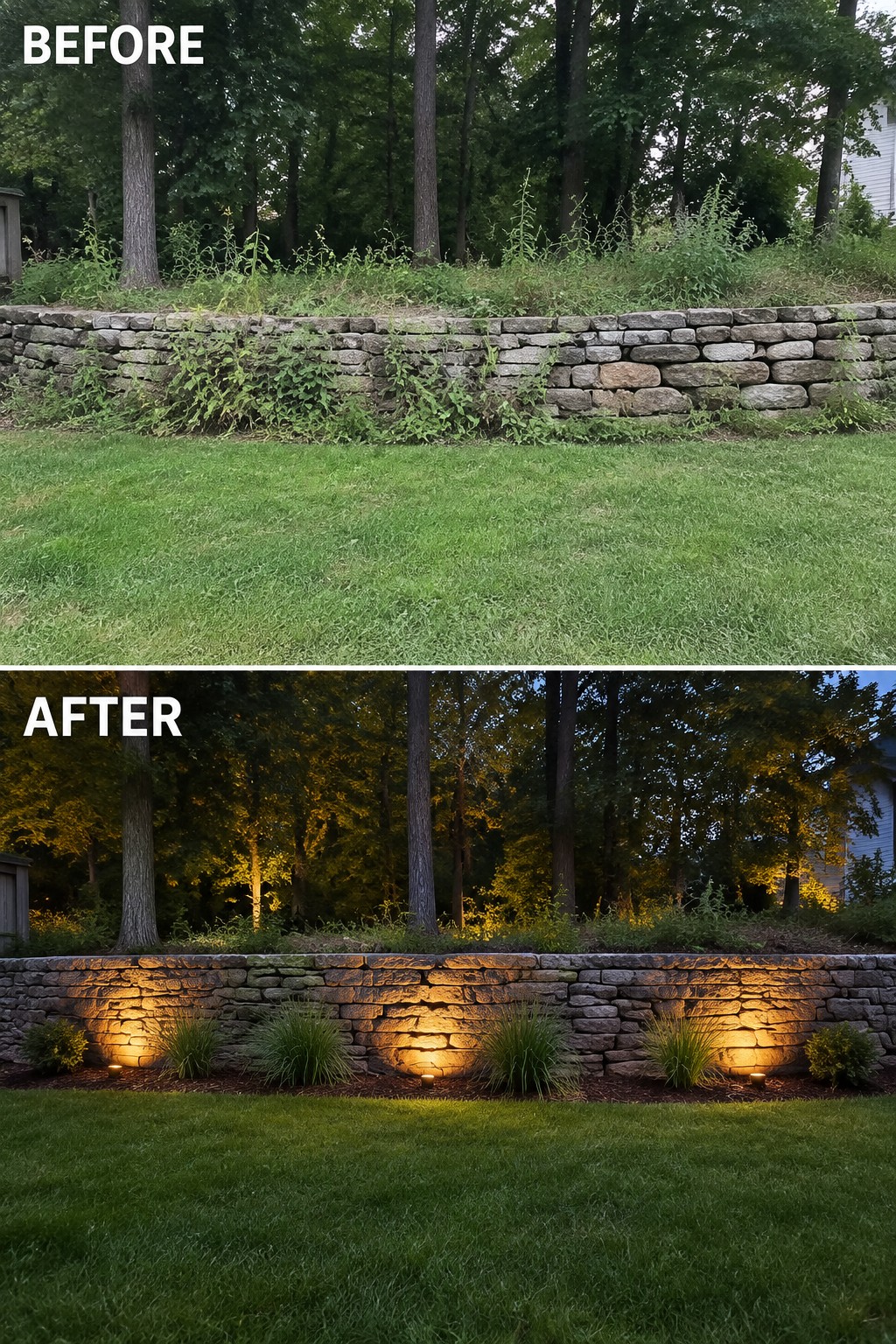
A stone retaining wall can easily fade into the background when weeds take over the base and the surface stays in shadow. In this case, clearing the overgrowth and adding a row of small uplights turned the same wall into a warm focal point that shows up nicely once the sun goes down.
This idea works best in backyards with existing hardscaping where you want evening interest without adding new structures. Space the lights evenly along the bottom, keep any new plants low and simple, and test the angle so the beam stays on the stone rather than shining into the yard. It is an easy step after basic cleanup and pairs well with wooded lots that already have some natural depth.
Add Uplighting Along A Fence For A Cozy Evening Yard

A plain fence often leaves the backyard feeling flat once the sun goes down. Placing uplights at the base turns the same fence into a soft, glowing wall that makes the whole space feel finished and much more inviting after dark.
This idea works especially well in average-sized yards where the fence is the main backdrop. Space the lights evenly, keep the fixtures low and simple, and add one or two lanterns near the gate if you want a bit more warmth. It is a low-cost change that makes the yard usable later into the evening without needing new furniture or big plantings.
Use Uplighting On Pergola Posts To Warm Up A Patio
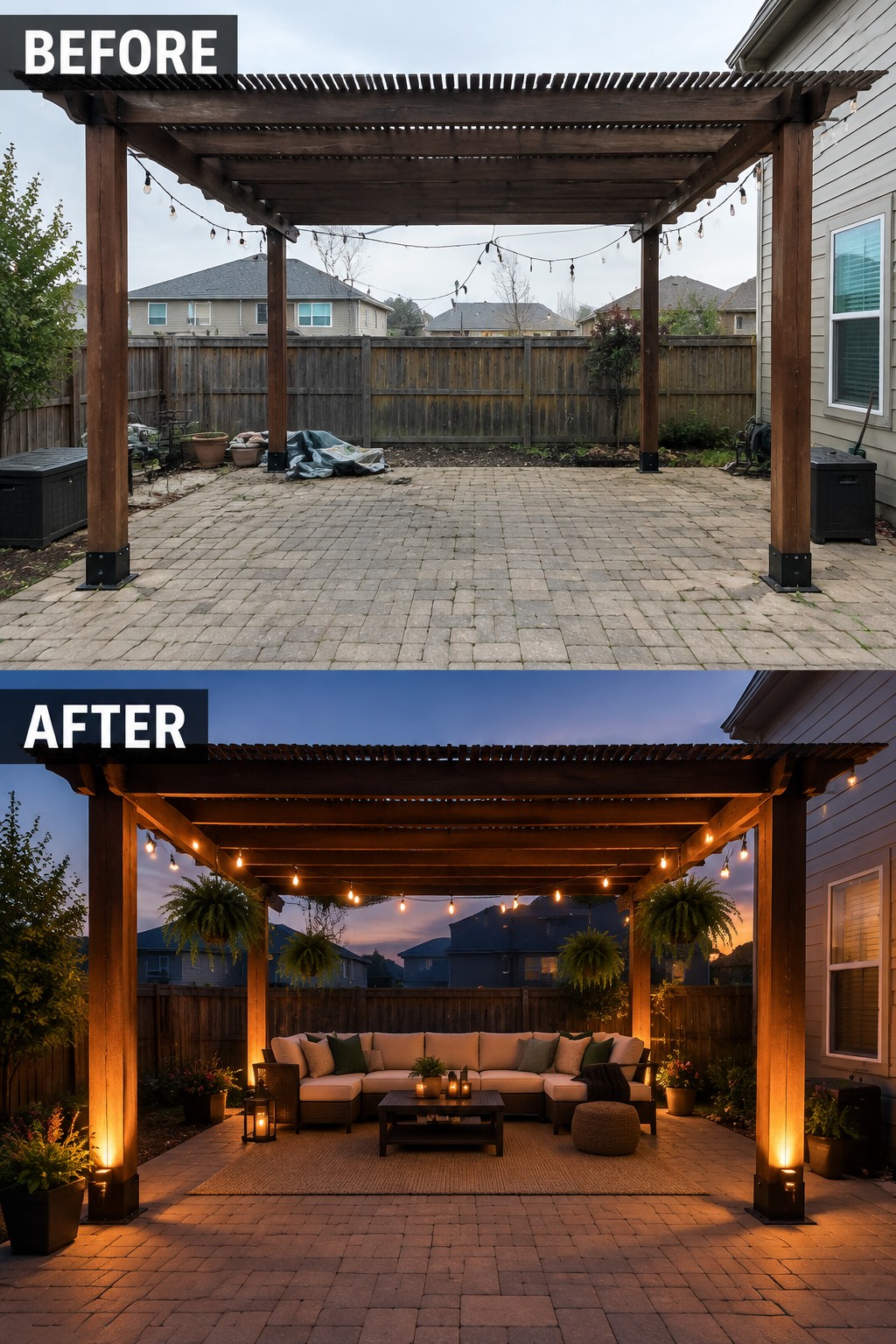
Adding lights at the base of the posts turns a plain pergola into a space people actually use after dark. The before version had string lights overhead but nothing to light the structure itself, so the area felt empty even with the roof in place. Once the posts were lit from below and seating was added, the whole patio gained a soft glow that made it feel enclosed and ready for evenings.
This idea works well on any covered patio or deck that already has a solid frame. Place low, weatherproof uplights against the posts so the light travels upward and hits the beams. Keep the seating simple and centered under the lit area so the light actually lands where people sit rather than just washing the posts.
Use Uplighting On Trees And Rocks Around A Pool
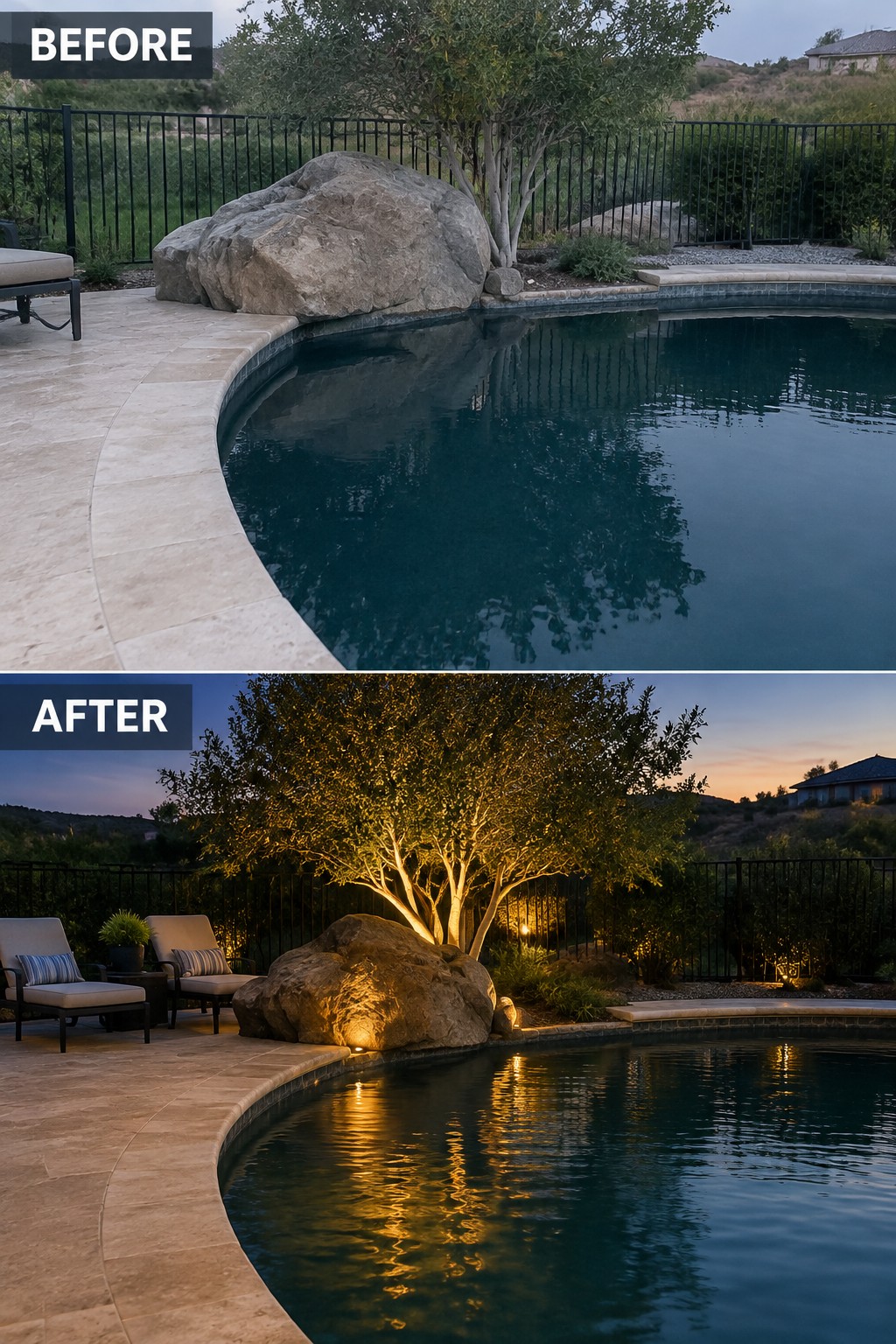
Adding uplights at the base of a tree and behind large rocks gives a pool area a much warmer feel once the sun goes down. The before photo shows a fairly flat space that lost most of its appeal after dark, while the after version uses just a few fixtures to create soft reflections on the water and a gentle glow on the planting.
This approach works best in backyards that already have a tree or boulder near the pool edge. Place one or two low voltage lights to highlight the main features instead of trying to light the whole perimeter. It keeps the space from feeling empty at night and makes the seating area more usable without adding a lot of extra fixtures.
Use Uplighting Along A Garden Path
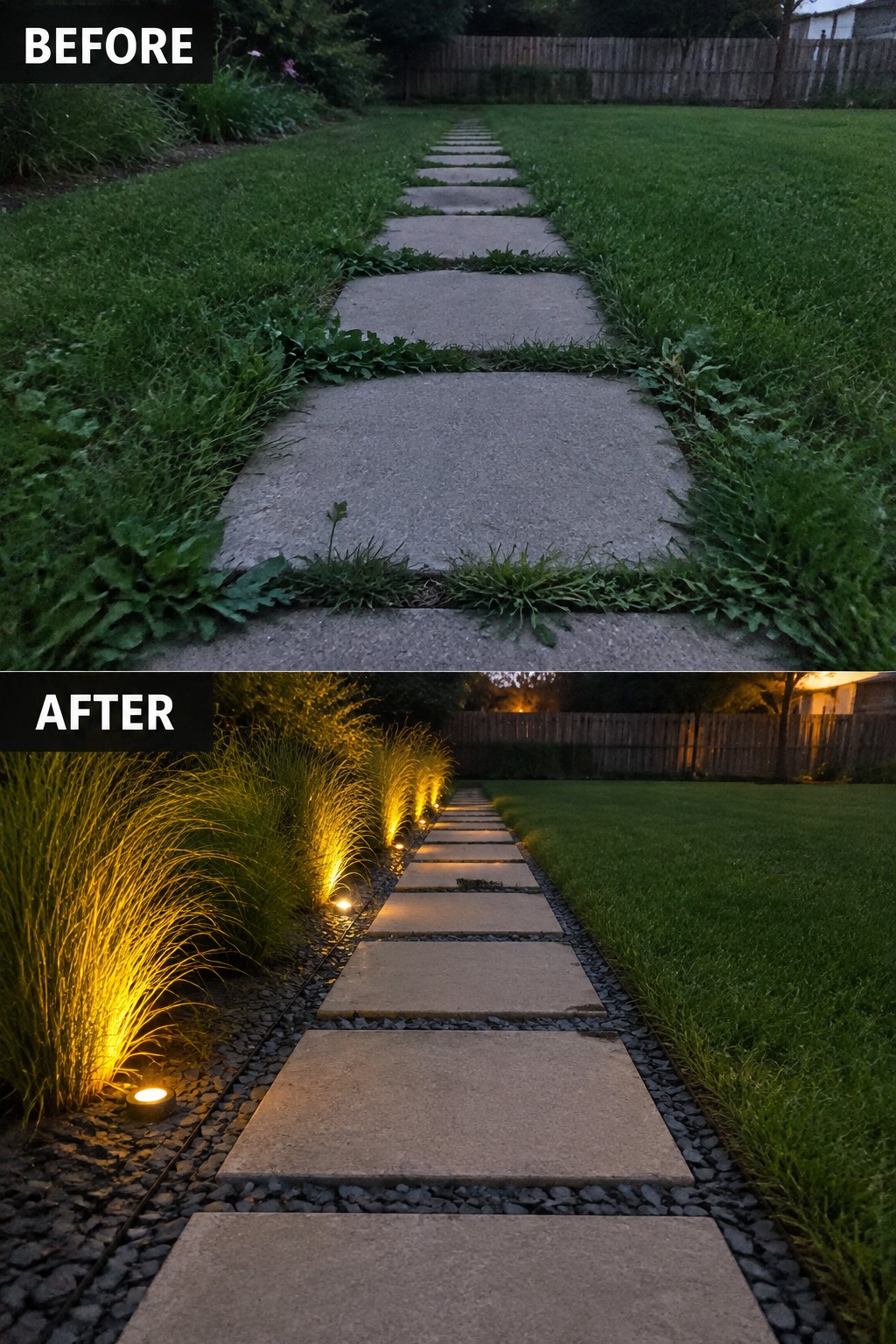
Adding uplights beside a simple path turns it into a clear feature once the sun goes down. The before version had stepping stones sitting in uneven grass with weeds pushing in from both sides. After the change, low fixtures tucked next to tall grasses send warm light upward while the gravel edge keeps the whole line tidy and easy to follow.
This approach suits any backyard that already has a walkway through the lawn. Set the lights so they hit the plants instead of shining straight into eyes, and pick grasses or shrubs that catch the glow. Keep the planting simple so the path stays the main line rather than getting lost in too much new growth.
Use Uplighting To Make An Outdoor Kitchen Island Usable At Night

Adding a few uplights along the base of an outdoor island changes how the space feels once the sun goes down. The before version looks flat and closed off after dark, while the after version shows how the same island now draws people in with a warm glow and a row of stools ready for use.
This works well on any solid outdoor kitchen or bar that already has a front face to light. Keep the fixtures low and aimed upward so the light stays soft and does not glare at seated guests. It suits patios or decks where you want the area to feel inviting without installing a full overhead system.
Use Uplighting To Highlight A Garden Sculpture
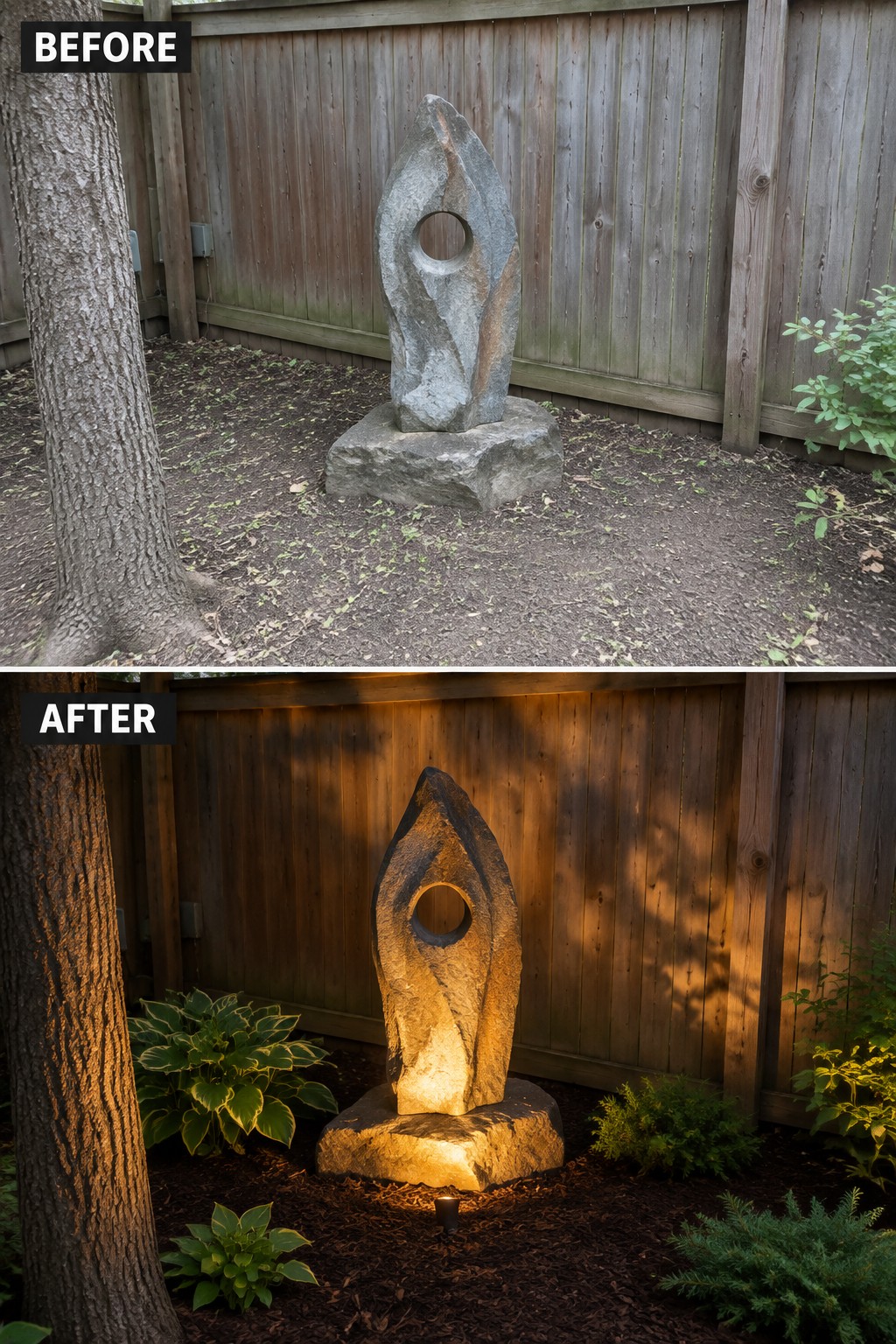
Adding one uplight at the base of a sculpture can change how the whole backyard feels at night. The before shows the stone piece sitting on bare ground with little else around it. In the after, a warm light from below makes the sculpture stand out against the fence while a few simple plants and fresh mulch give the spot a finished look.
This approach works best when you already have one strong object worth showing off. Keep the light low and aimed upward so it does not glare into seating areas. It suits smaller backyards where you want a single focal point rather than filling the space with many fixtures.
Use Uplighting To Highlight A Raised Garden Bed
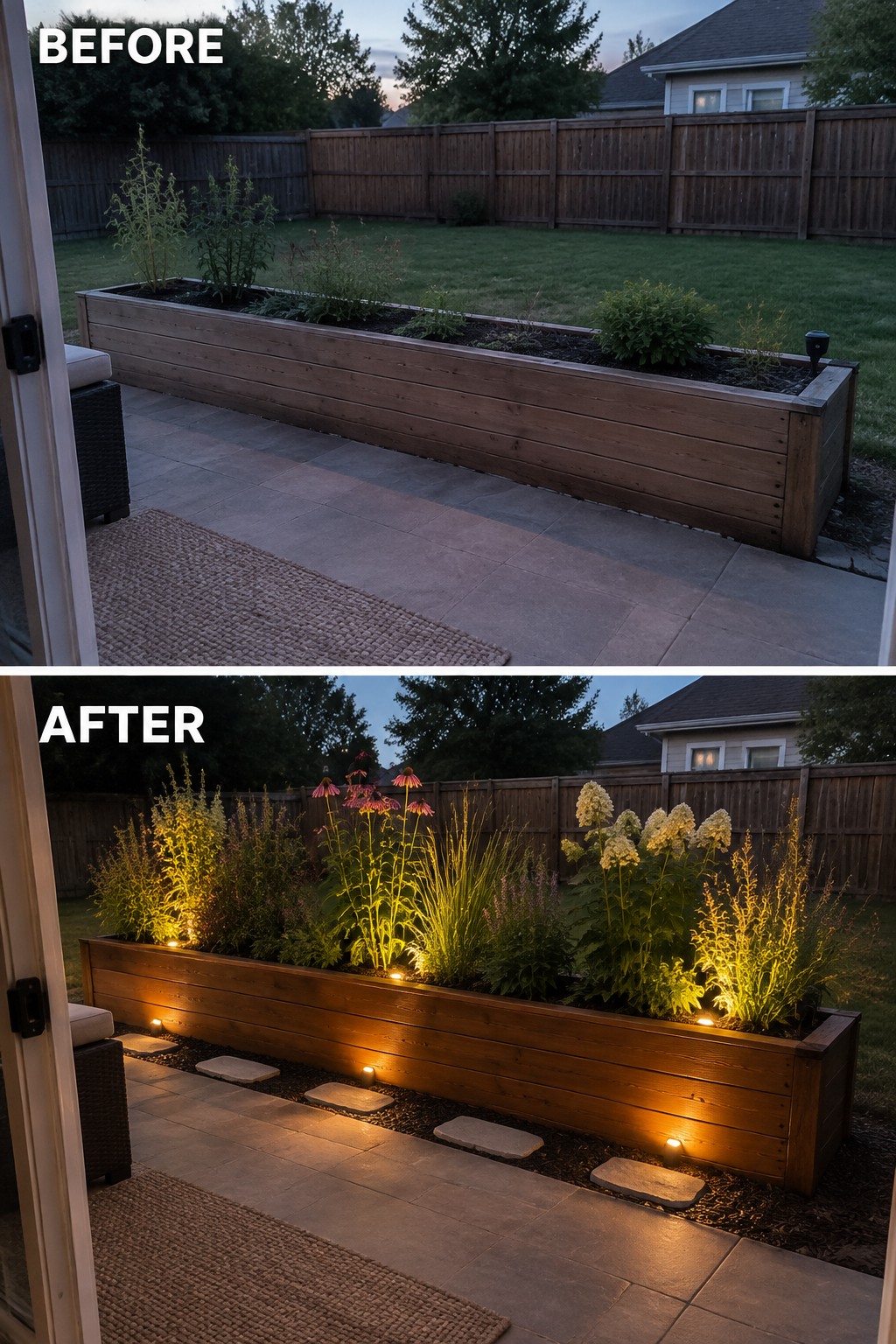
The main change here is simple. The raised wooden planter went from a daytime feature with basic plants to a nighttime focal point once low uplights were added among the foliage and along the front edge. Those small fixtures lift the plants from below and keep the patio area from going completely dark after sunset.
This idea works well on any raised bed or long planter that sits near a seating area. Start with a few weatherproof uplights tucked into the soil, then add a couple of path lights if there is foot traffic nearby. It keeps the space feeling used in the evening without needing a full lighting system or big budget.
Use Uplighting To Make A Gazebo Usable After Dark
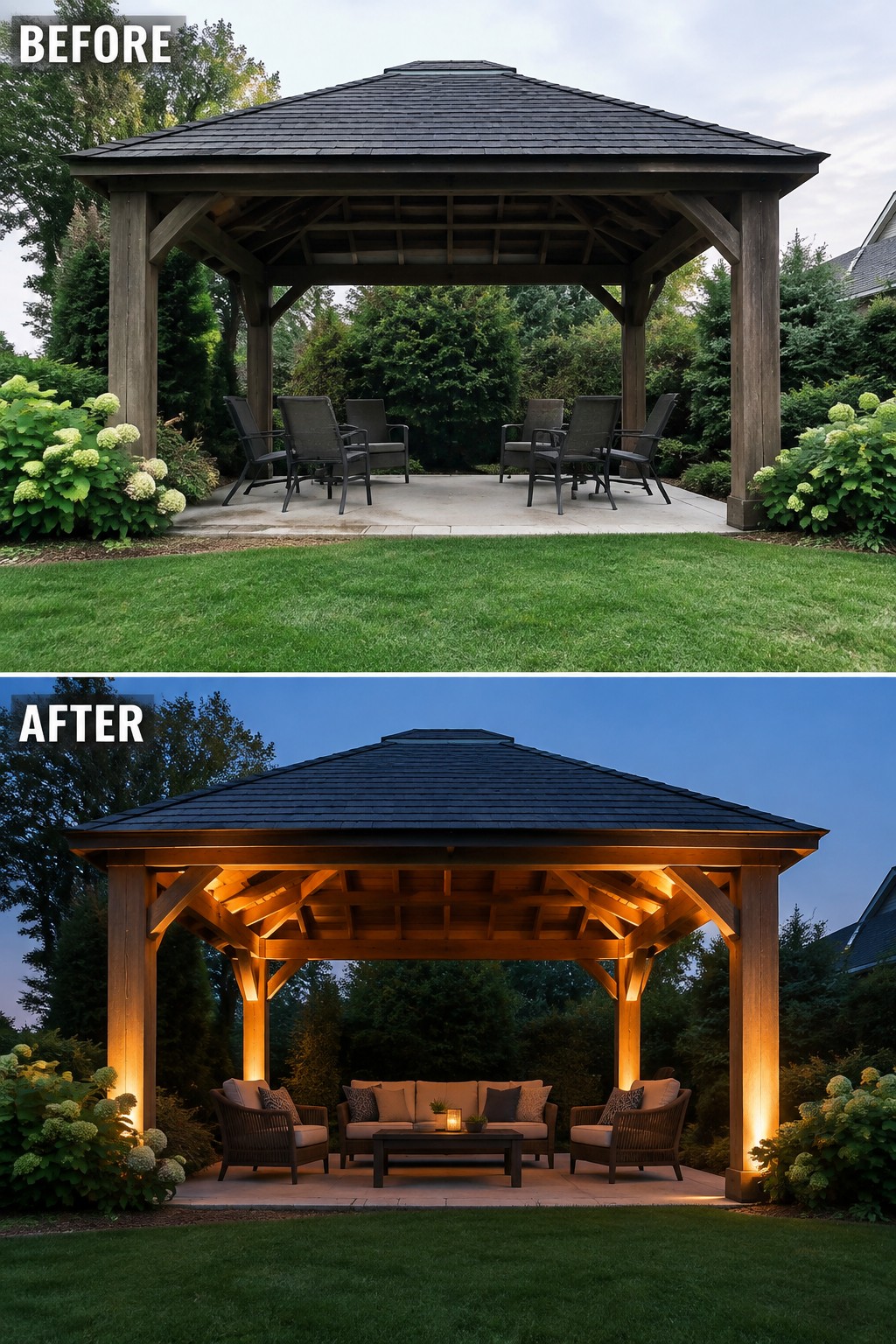
The before photo shows a basic gazebo with a few chairs sitting empty once the light fades. In the after, low uplights on the posts turn the wood structure into the main feature and create a clear spot for evening seating.
This approach suits any covered patio or gazebo that feels finished during the day but gets ignored at night. Place small fixtures at the base of the main posts so the light travels upward and stays contained within the structure. Keep the beam narrow and warm so it feels like part of the architecture rather than added decoration. It works best when the seating stays simple and the lights do not compete with other yard features.
Add Uplighting Along A Hedge
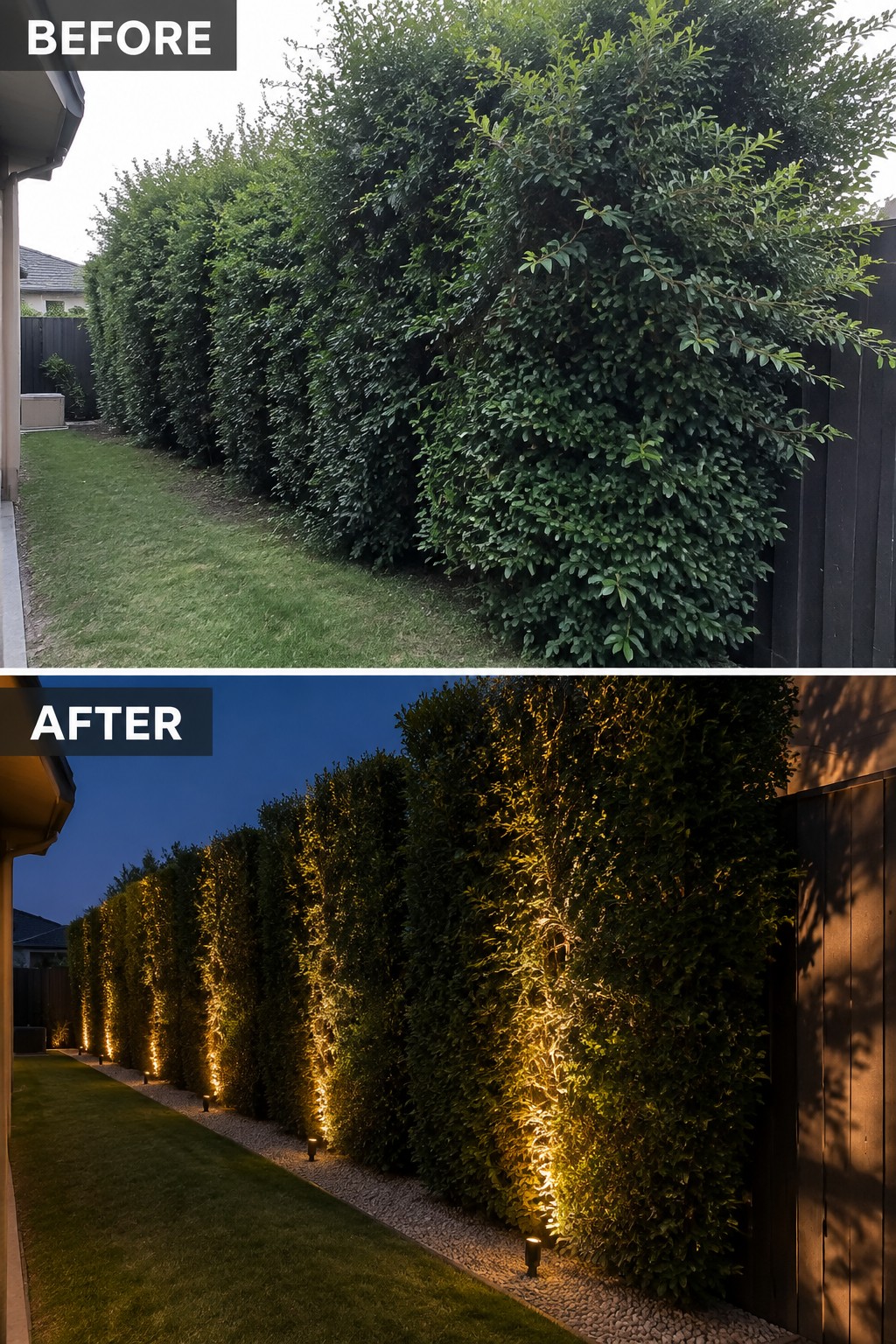
The before photo shows a thick, overgrown hedge that sits like a dark wall along the fence. In the after, the same hedge has been trimmed into shape and fitted with warm uplights that run up through the foliage. The lights give the planting height and presence without any new construction.
This approach works well on established hedges that already mark a boundary or edge of the lawn. Set low voltage uplights at the base every few feet and angle them into the thicker sections so the light spreads evenly. It suits yards that need evening interest but already have solid planting in place.
Use Uplighting To Warm Up A Fire Pit Area
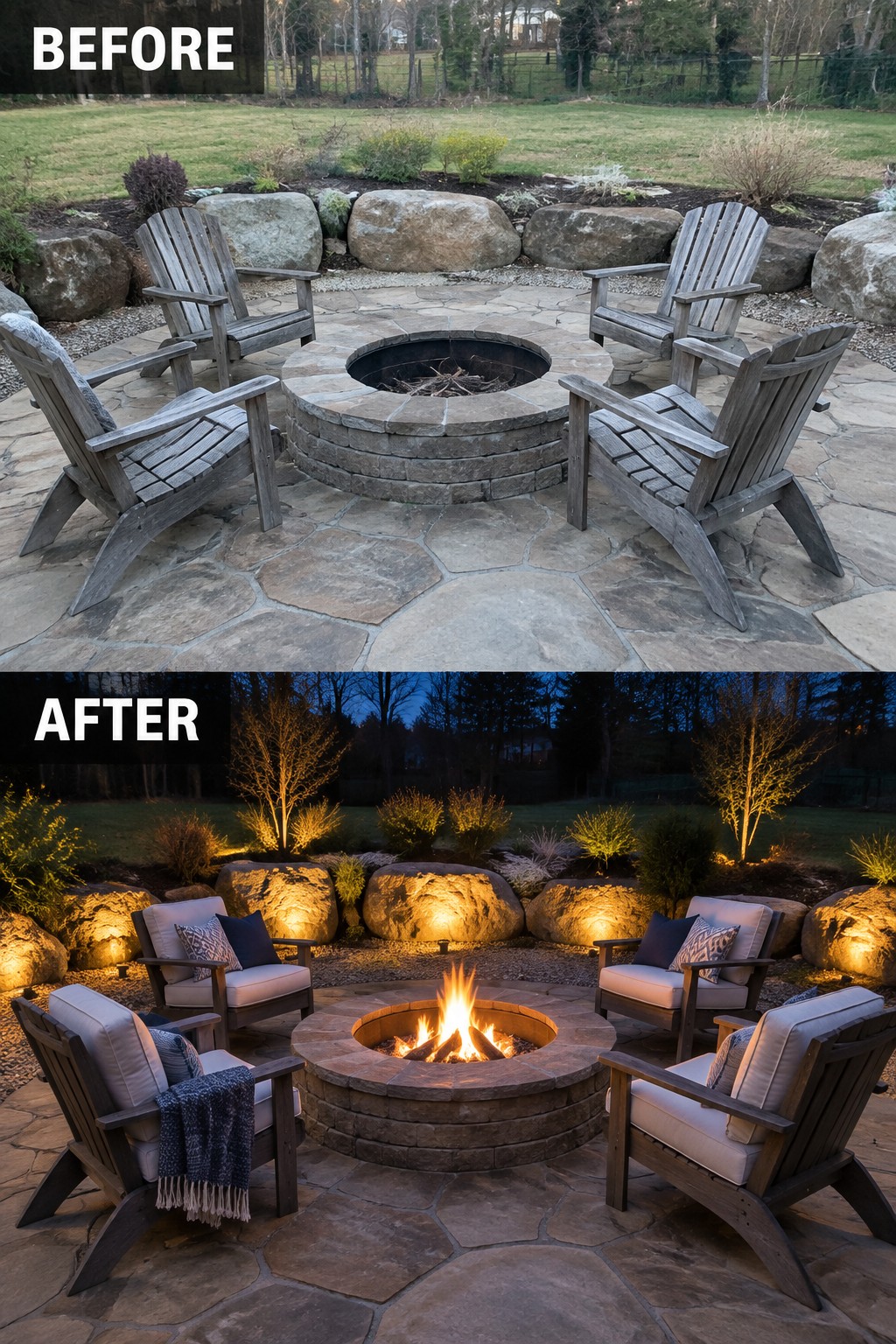
Adding uplighting to the rocks around a fire pit turns a basic daytime seating spot into a place people actually use after dark. The before photo shows plain wooden chairs sitting on the patio with no evening appeal, while the after uses lights tucked at the base of the stones to create a soft glow that makes the whole zone feel ready for night.
This works best in yards that already have large rocks or shrubs near the seating. Place low-voltage uplights behind the stones so the light washes upward without shining straight into anyone’s eyes, and let the fire itself handle the main lighting in the center. It keeps the setup simple and avoids the need for string lights or extra fixtures.
Use Uplighting To Make A Bare Patio Feel Cozy
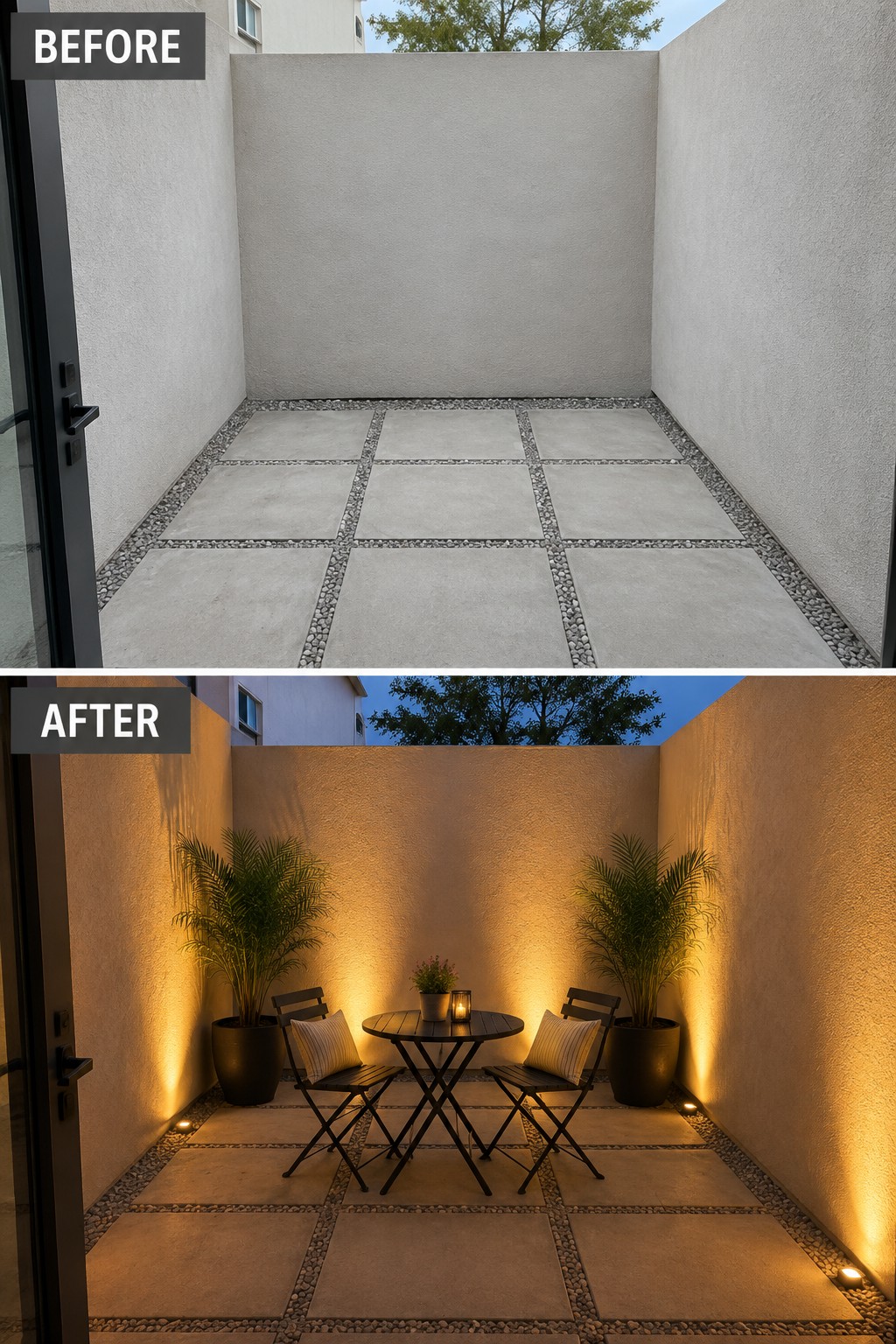
An empty patio can stay unused once the sun drops because it feels flat and cold. Placing small uplights along the base of the walls changes that by washing a warm glow upward, which makes the space feel enclosed and inviting without any extra structures.
This works best in small courtyards or side yards where the walls can catch and reflect the light. Keep the fixtures low and aimed at the corners or near seating so the light stays soft and does not glare. It pairs well with a few large pots to break up the open floor while the lighting does most of the work after dark.
Add Uplighting To Highlight A Hillside Garden
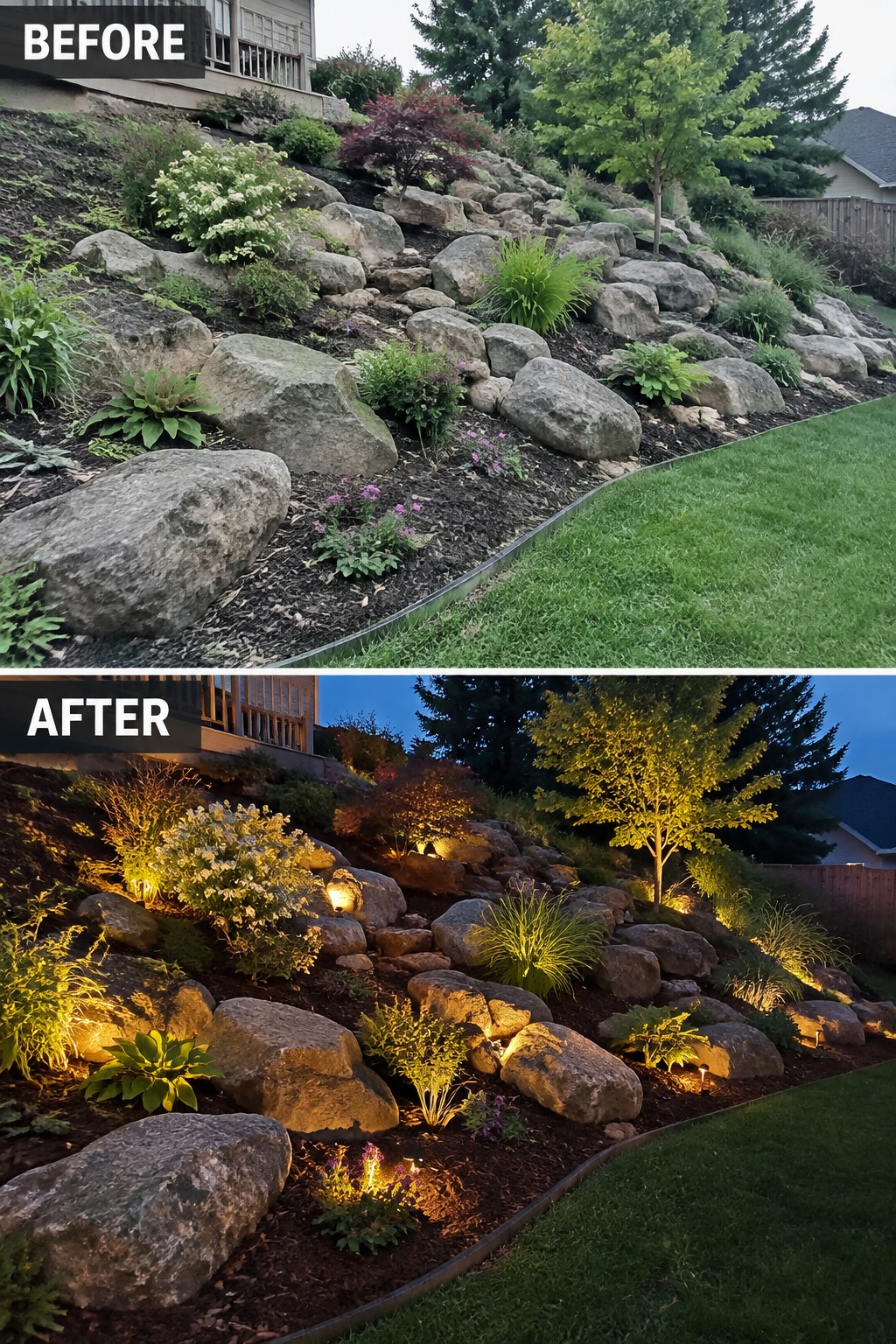
The before photo shows a daytime rock garden on a slope with mulch and scattered plants. In the after, a few low lights tucked at the base of trees and shrubs turn the same area into a glowing feature once it gets dark. The change does not require new plants or major digging. It simply makes the existing layout visible and inviting after sunset.
This works best on slopes or beds that already have some structure. Place lights to catch the undersides of larger trees and a couple of shrubs so the glow spreads upward naturally. It suits homes with established landscaping that just needs evening interest, and it is easy to test with a few fixtures before adding more.
Use Uplighting To Highlight A Backyard Pond
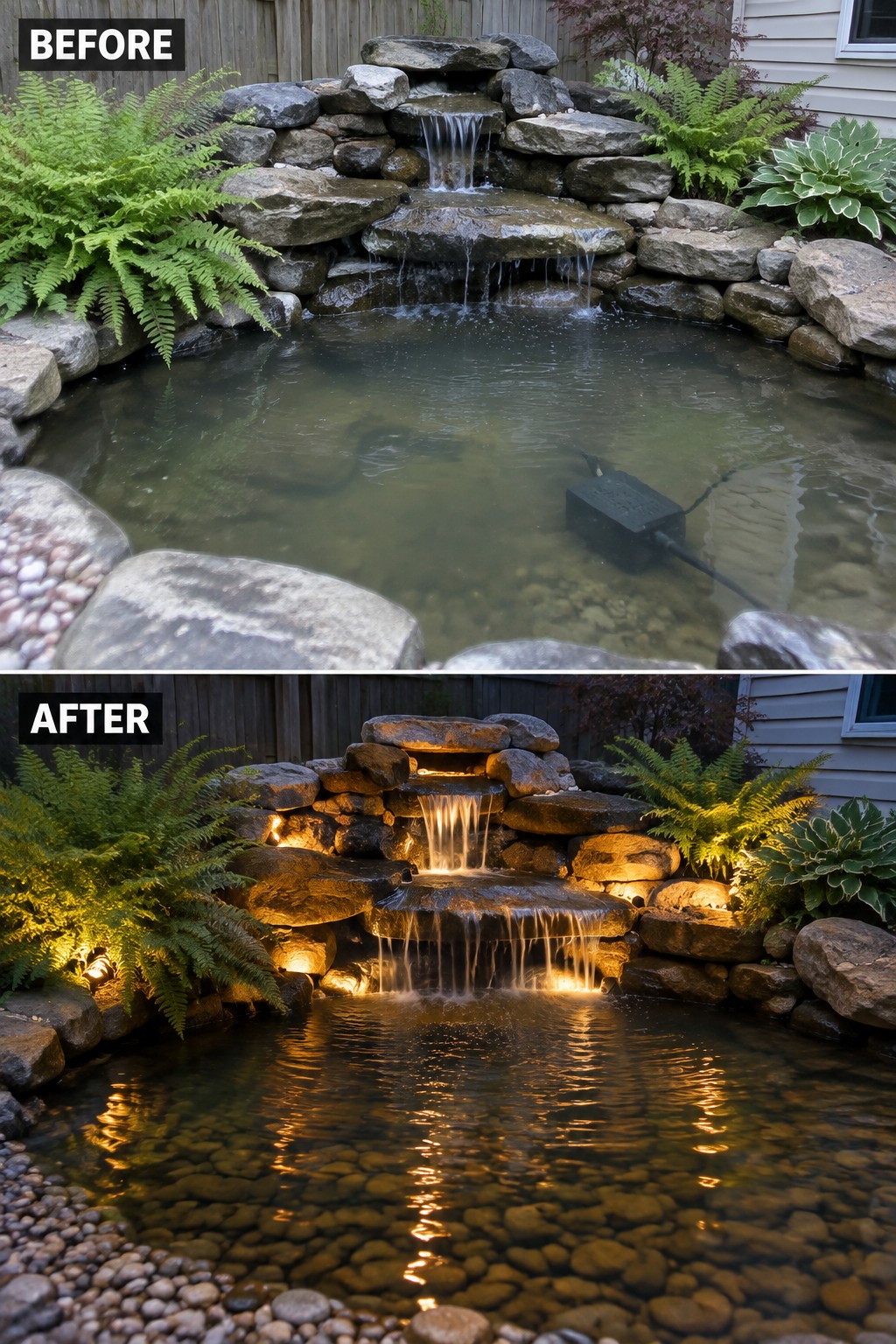
Adding lights around a water feature changes how the whole backyard feels once the sun goes down. In the before photo the pond sat mostly in shadow with just a pump box visible in the water. The after photo shows warm uplights tucked at the base of the rocks and ferns, so the waterfall stays visible and the surrounding plants catch the glow without looking overdone.
This works best in smaller yards where the pond is already the main focal point. Place low-voltage uplights close to the rocks and angle them upward so the light hits the stone and plants rather than shining straight out. Keep the fixtures hidden behind foliage or tucked into the gravel so the effect stays soft instead of looking like a spotlight display.
Add Outdoor Lighting To A Backyard Arbor
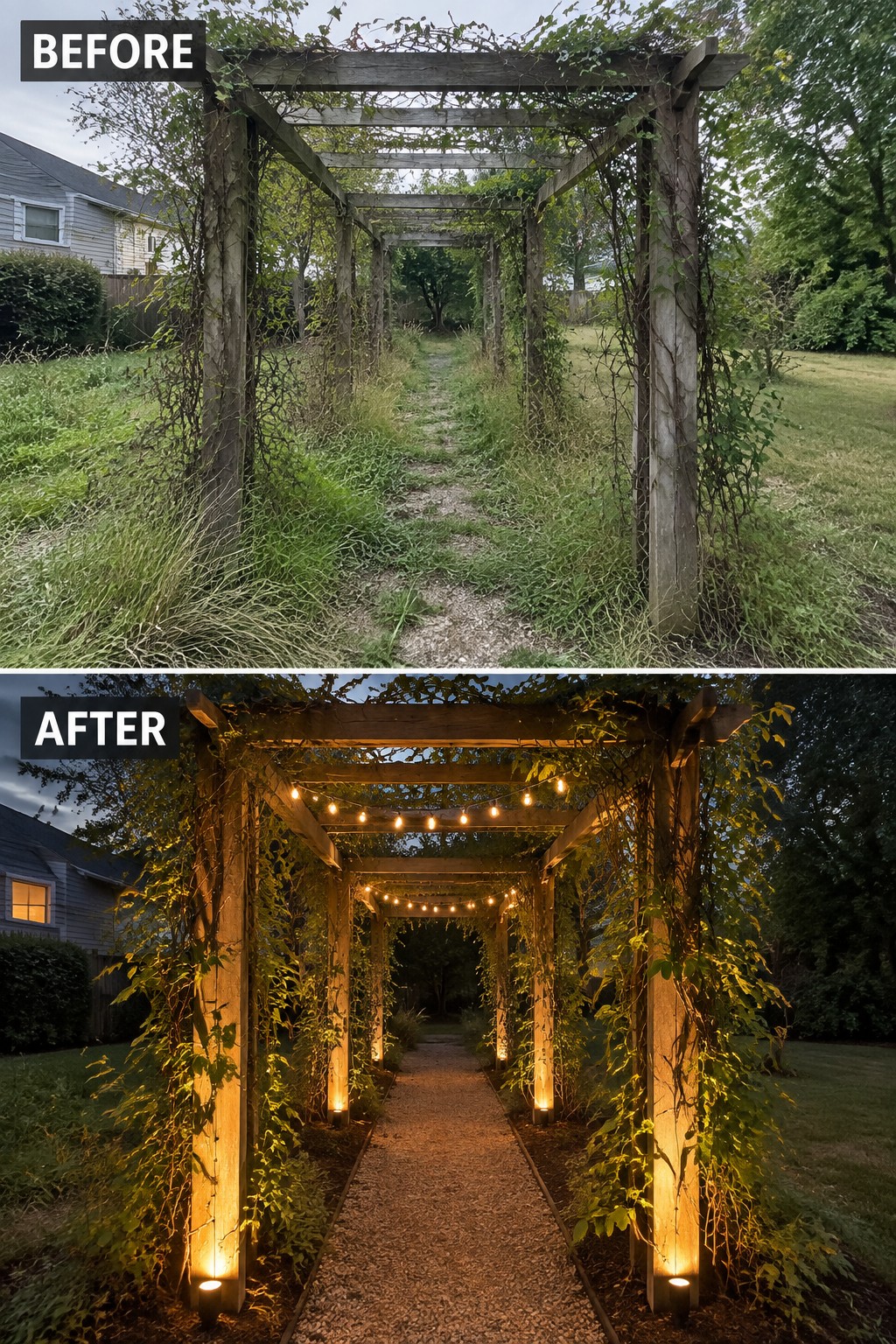
An arbor or pergola that sits empty during the day can feel even more neglected once the sun goes down. Adding a simple mix of string lights overhead and low uplights at the base of the posts turns the structure into a usable path at night. The lights highlight the wood and vines without overpowering the garden around them.
This approach works best on a straight path or narrow backyard feature where you want gentle guidance rather than bright task lighting. Start with one string of warm bulbs along the top beams, then add two or three small uplights at the posts. Keep the fixtures low and the bulbs warm so the space feels calm instead of like a walkway at an airport.
Use Uplighting To Highlight Garden Plants At Night
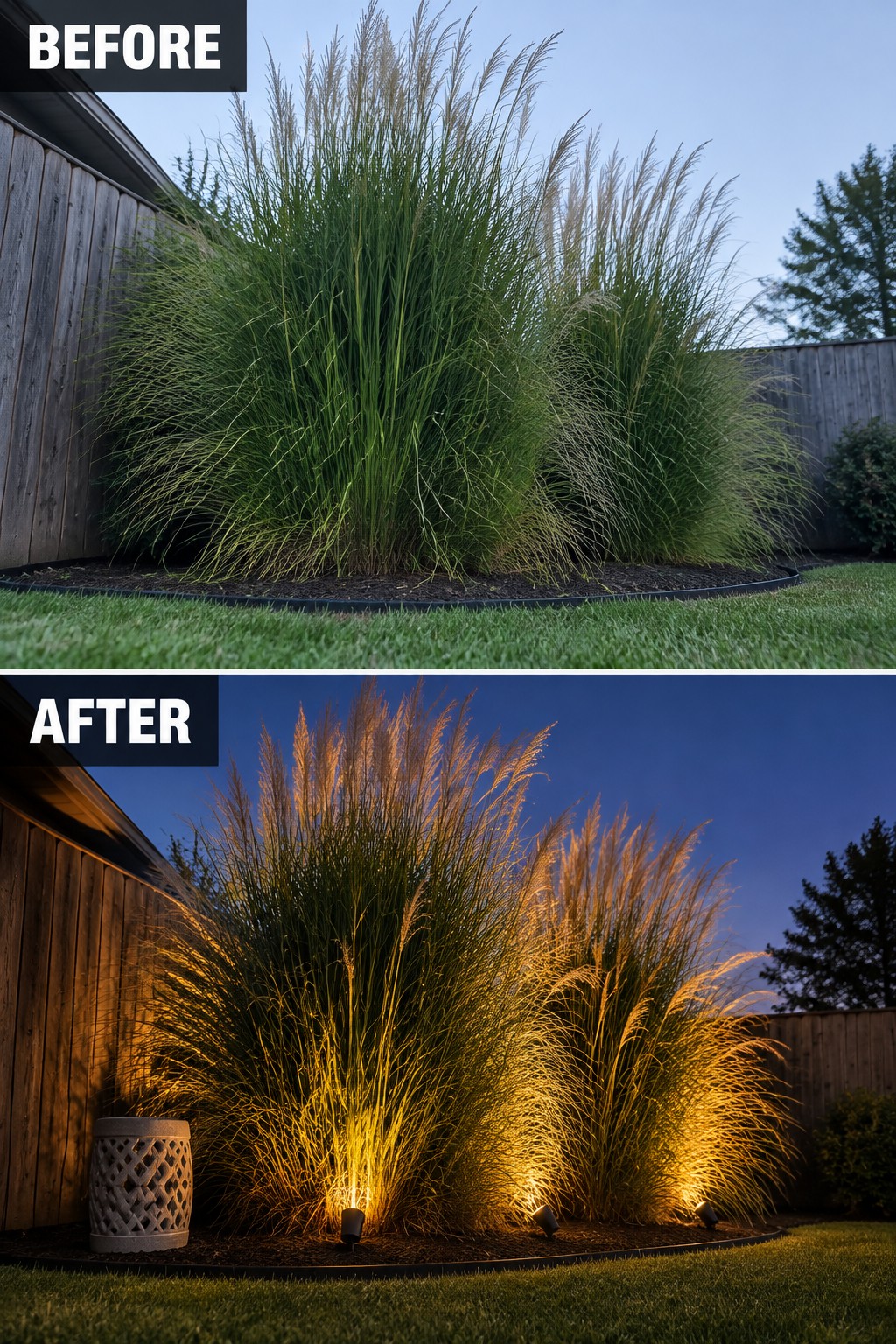
Many yards already have tall grasses or shrubs that look fine during the day but disappear once the light fades. Placing a few small uplights at the base of the plants turns them into a soft, glowing feature without adding clutter or changing the daytime look much.
This approach works best along the edge of a lawn or near a fence where you want a gentle focal point after dark. Use weatherproof fixtures, keep the beams narrow, and test the angle so the light catches the upper foliage rather than flooding the whole bed. Start with two or three lights and add more only if the space still feels balanced.
Use Uplighting To Make A Gravel Courtyard Feel Usable At Night

A plain gravel space with one plant can feel cold and unfinished once the sun goes down. Adding a few low uplights around the main plants and a simple sculpture gives the area a clear focal point and makes the whole space feel warmer without filling it with furniture.
This approach works well in small courtyards or side yards where you want evening use but do not need a full seating setup. Place lights at the base of plants or objects you already have, keep the fixtures small, and aim them upward so the light stays soft. One bench or a couple of chairs is usually enough once the lighting is in place.
Use Uplighting To Make An Under-Deck Area Feel Usable
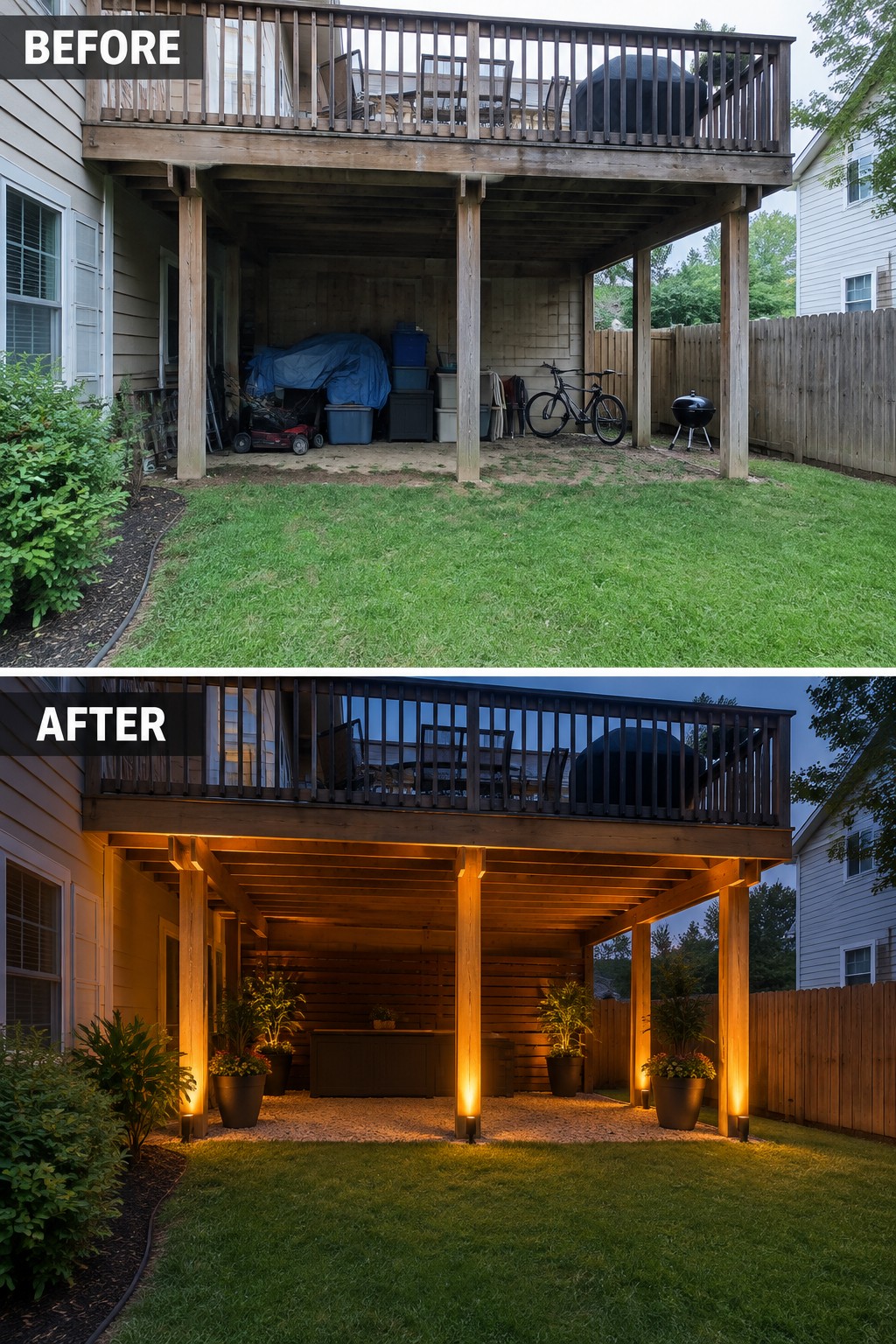
Adding uplights at the base of deck posts can turn a dark, unused space into an outdoor area that feels intentional. The before photo shows a bare dirt patch with scattered items and no real purpose. After the change, the same spot has a gravel base, a few large planters, and warm light washing up the posts, which makes the whole area feel defined and inviting at night.
This idea works best on decks with open space underneath where people already walk or gather. Clean out the clutter first, then add simple ground cover and a couple of weatherproof lights aimed upward. Keep the number of fixtures low so the glow stays soft rather than overwhelming the yard.
Add Uplighting To Frame A Garden Path
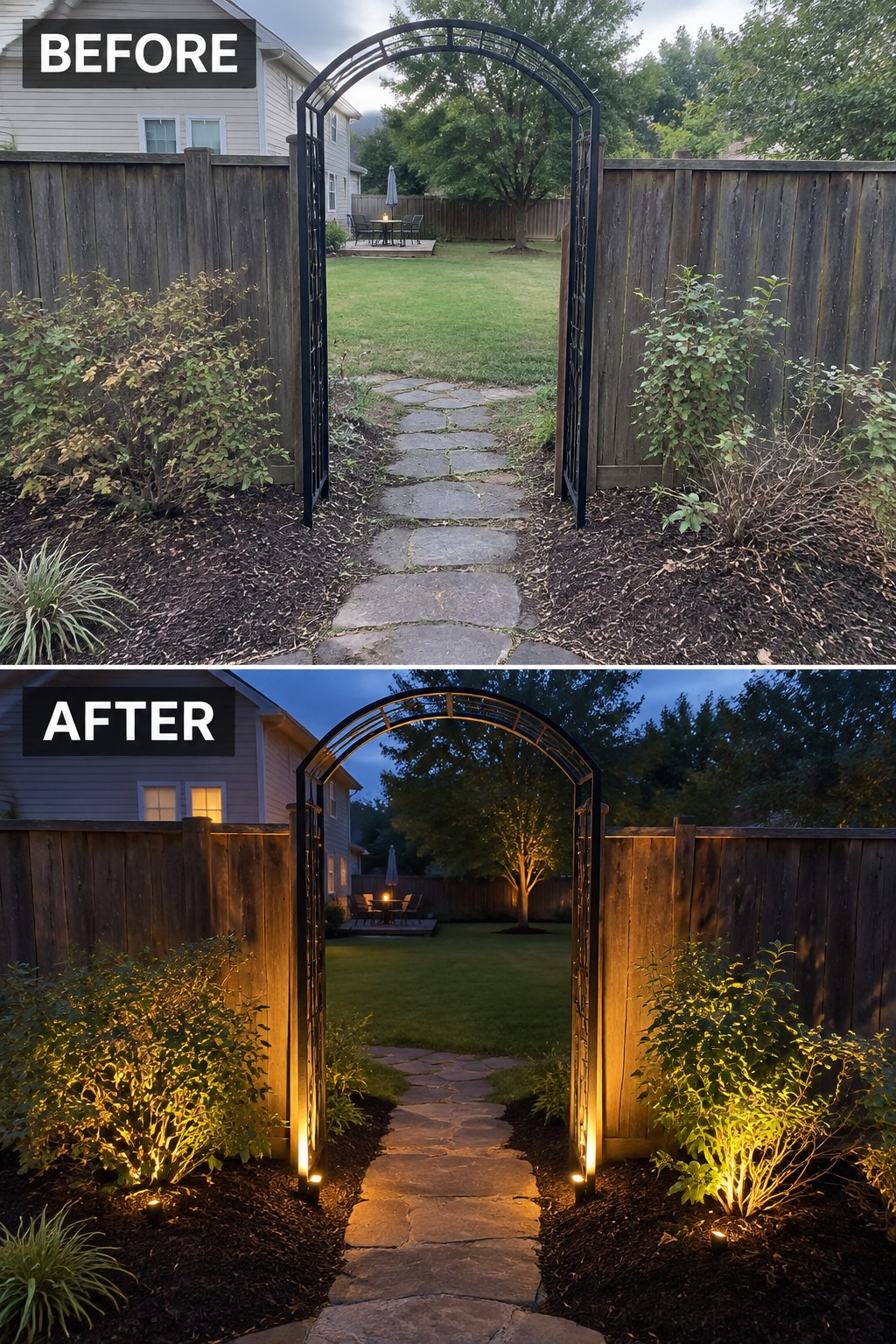
The main change here is simple. In the before photo the gate and path sit in shadow once the sun goes down. After, low lights tucked at the base of the shrubs and along the edges of the stone path create a clear, warm route into the yard. The plants now glow softly instead of disappearing, which makes the whole space feel more finished and easier to use after dark.
This idea works well in any backyard that has a main walkway or gate people use at night. Start with just a few low-voltage uplights aimed at the plants that already sit beside the path. Keep the fixtures small and pointed upward so the light stays on the foliage rather than shining into eyes. The result is a gentle guide that makes the yard feel open without needing a full lighting overhaul.
Frequently Asked Questions
Q: How do I stop the uplights from creating weird shadows on my fence? A: Place them a few feet away from the fence so the light spreads evenly upward. Walk around the yard after dark and shift any that cast hard lines. This keeps the whole area feeling open and inviting.
Q: What happens if it rains a lot where I live? A: Choose lights rated for outdoor use with sealed fixtures. They handle storms without issues when properly installed. Wipe off any dirt buildup every few months to keep the glow steady.
Q: Do the lights use much electricity if I leave them on all evening? A: LED uplights pull very little power so the cost stays low even for nightly use. Set them on a timer to match when you actually sit outside.
