

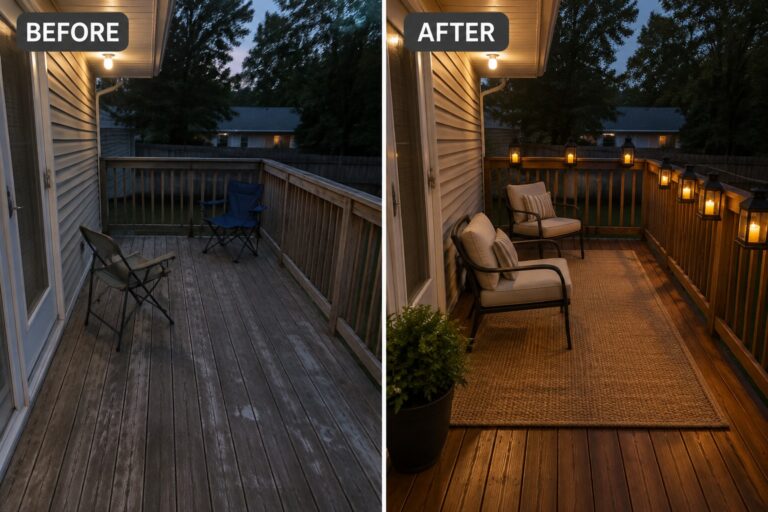
I have seen how a patio or deck can end up sitting empty once evening comes because there is never quite enough light to make it feel like a place worth using.
Lanterns give a simple way to fix that without running new wiring or building anything permanent.
Some placements make more sense than others.
I would probably start by trying a few along the edges of my own seating area to see if the light actually pulls people outside after sunset.
It feels good when those adjustments turn a bare spot into one that gets used on regular nights.
Use Lanterns Along The Railing To Light A Deck For Evening Use
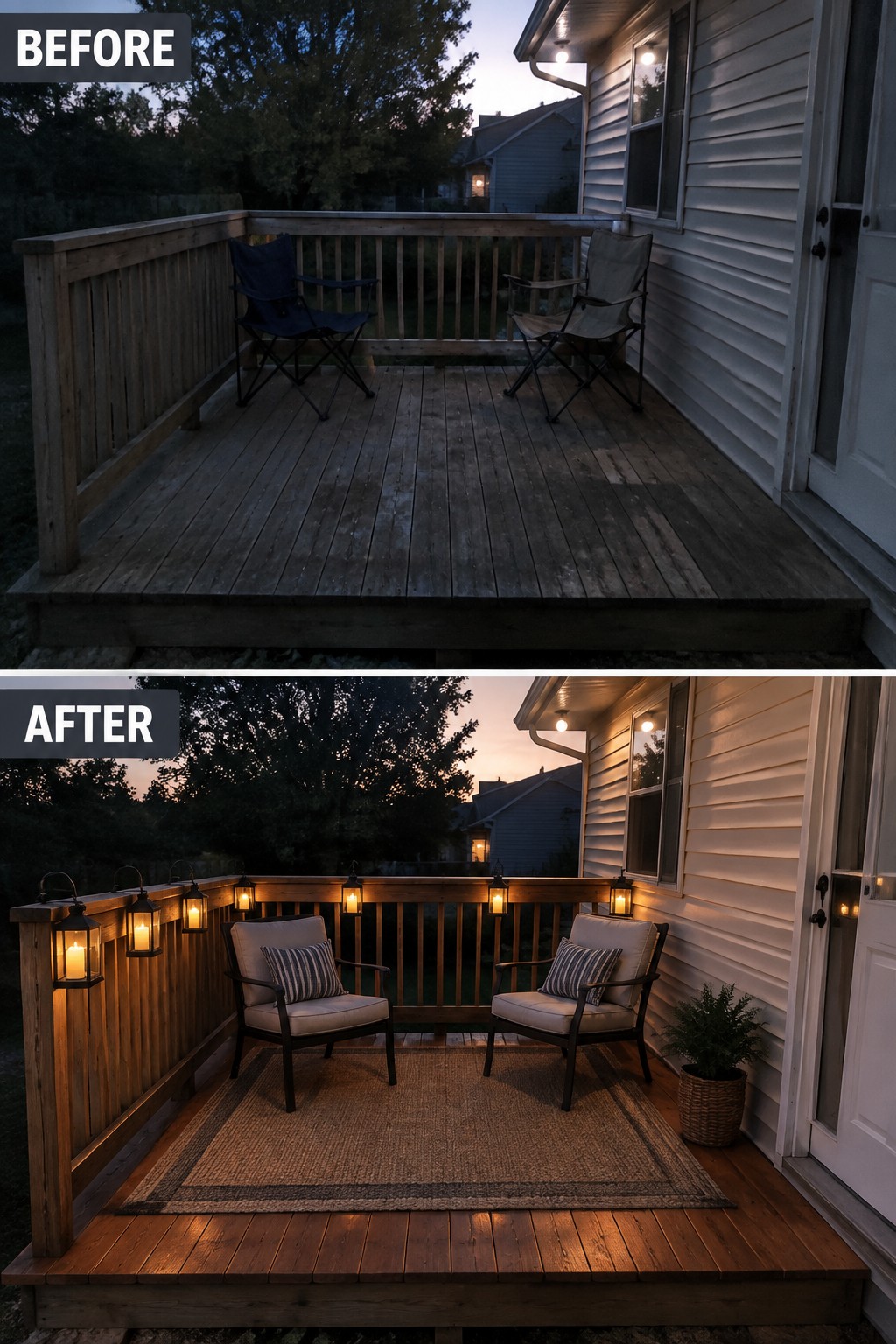
A deck that looks fine during the day can feel empty once it gets dark. Placing lanterns along the railing adds steady, low light right where seating goes, which makes the space feel finished and usable without needing much else.
This idea works on most wooden decks or porches that sit off the back or side of a house. Keep the lanterns simple and evenly spaced, then add only a rug and a couple of chairs so the lighting stays the main feature instead of getting lost among too many pieces.
Add Lanterns Along A Garden Path
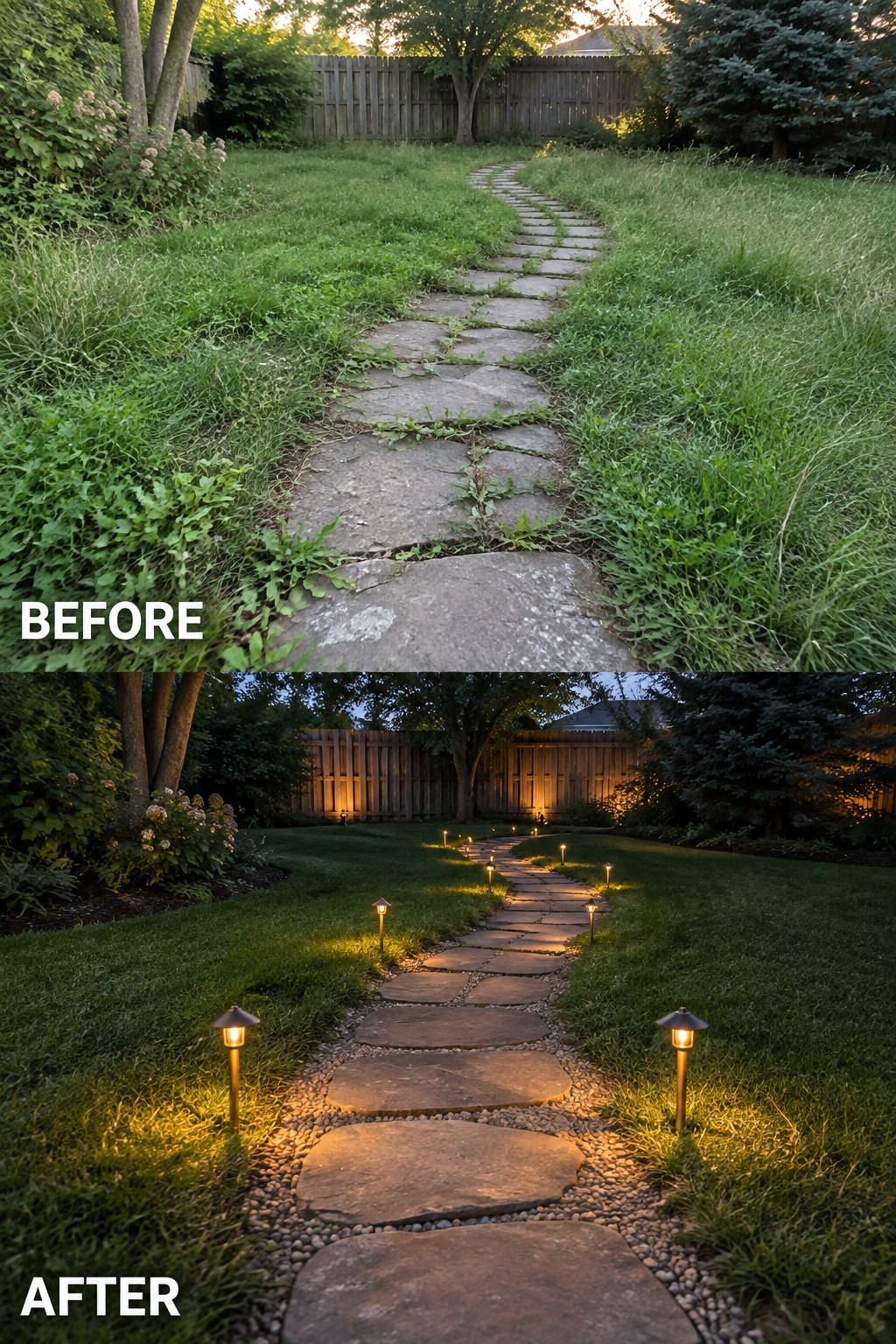
A simple path can disappear when grass starts creeping over the edges. Placing small lanterns on either side gives the walkway a clear line and makes it usable once the sun goes down.
This idea works best on existing stone or gravel paths that already have decent shape. Space the lanterns evenly, keep them low so they light the ground rather than the sky, and choose solar versions if you want to avoid running wires.
Use Lanterns To Make A Pool Area Feel Cozy After Dark
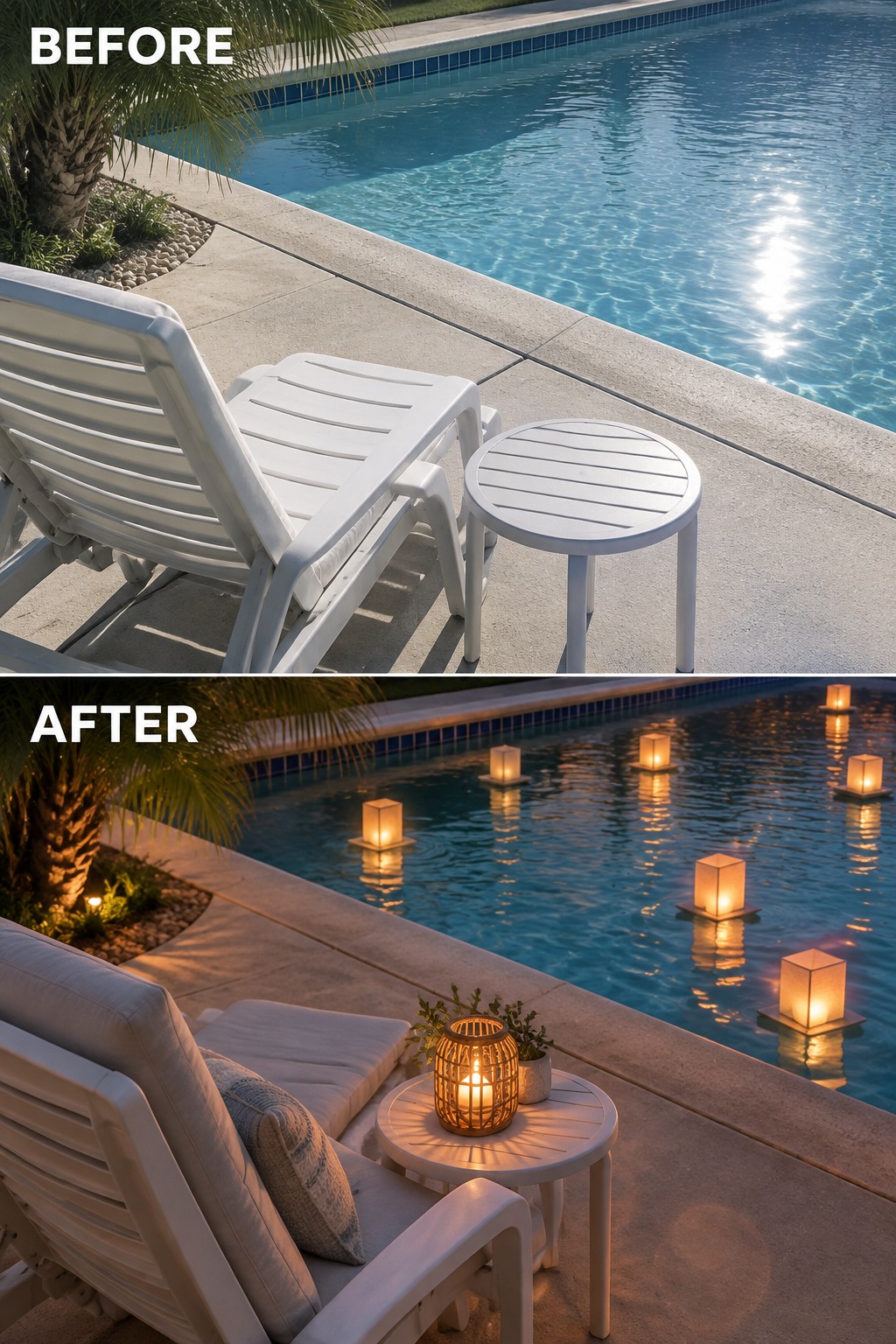
A plain pool deck can feel finished once you add soft lighting that works after sunset. The before photo shows a standard setup with just furniture and daylight. In the after photo, floating lanterns on the water and one on the table create a gentle glow that makes the space usable and pleasant in the evening.
This works best on pool decks or patios where you already have seating but need light that stays low and calm. Place a few waterproof lanterns in the water if it is safe to do so, then add one or two more near chairs or tables. Keep the total number small so the light stays soft and does not block the view across the pool.
Frame Your Front Door With Lanterns
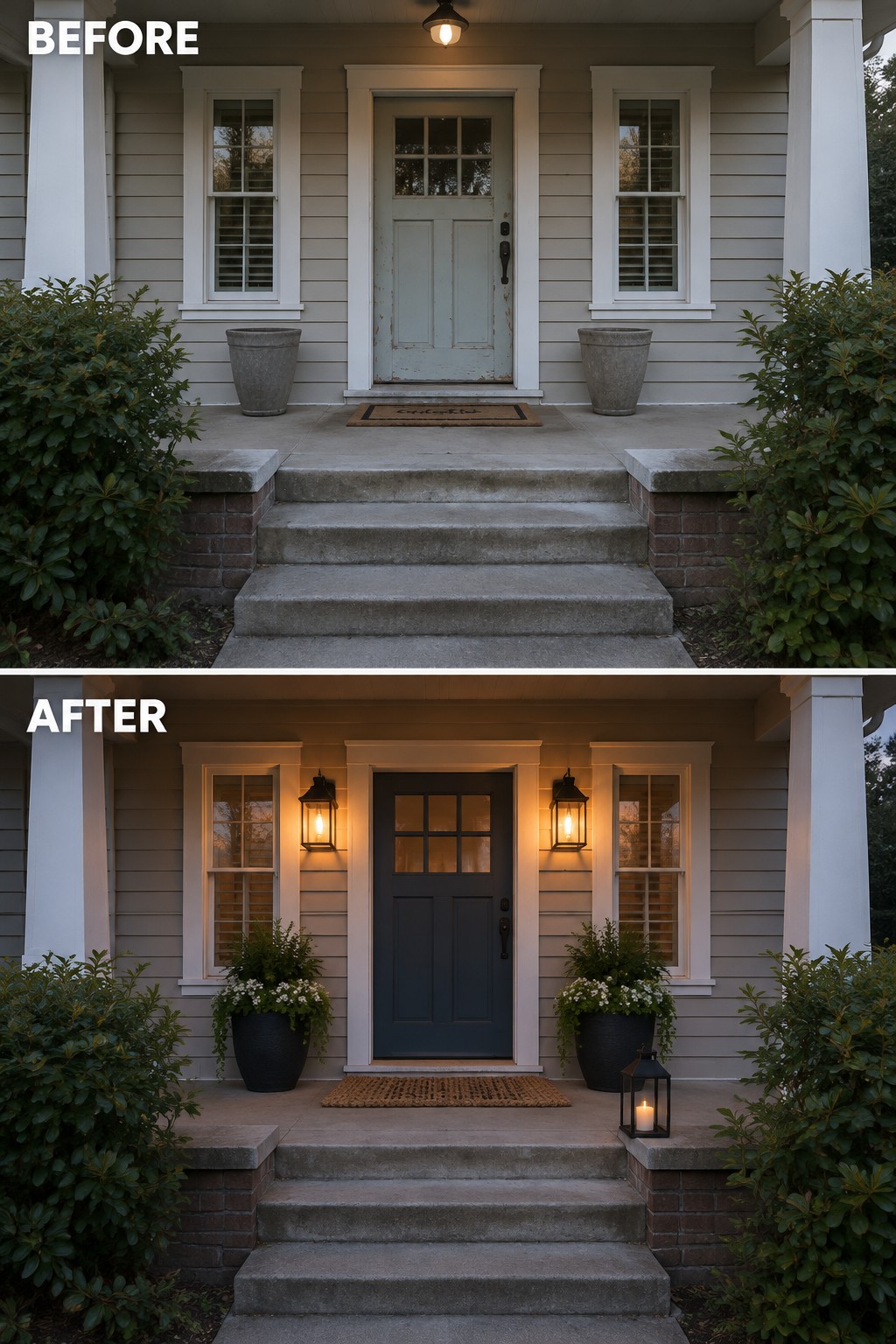
A plain entry with just one overhead light can feel flat and unwelcoming at night. Adding a pair of lanterns on either side of the door plus one lower down creates layers of light that make the space feel finished and easier to navigate.
This works well on simple porches where the architecture is already in place. Keep the lanterns in a matching style, place them at different heights, and choose bulbs that give off a warm glow. The goal is to light the door and steps without overdoing it.
Use Hanging Lanterns To Light A Patio For Evening Use
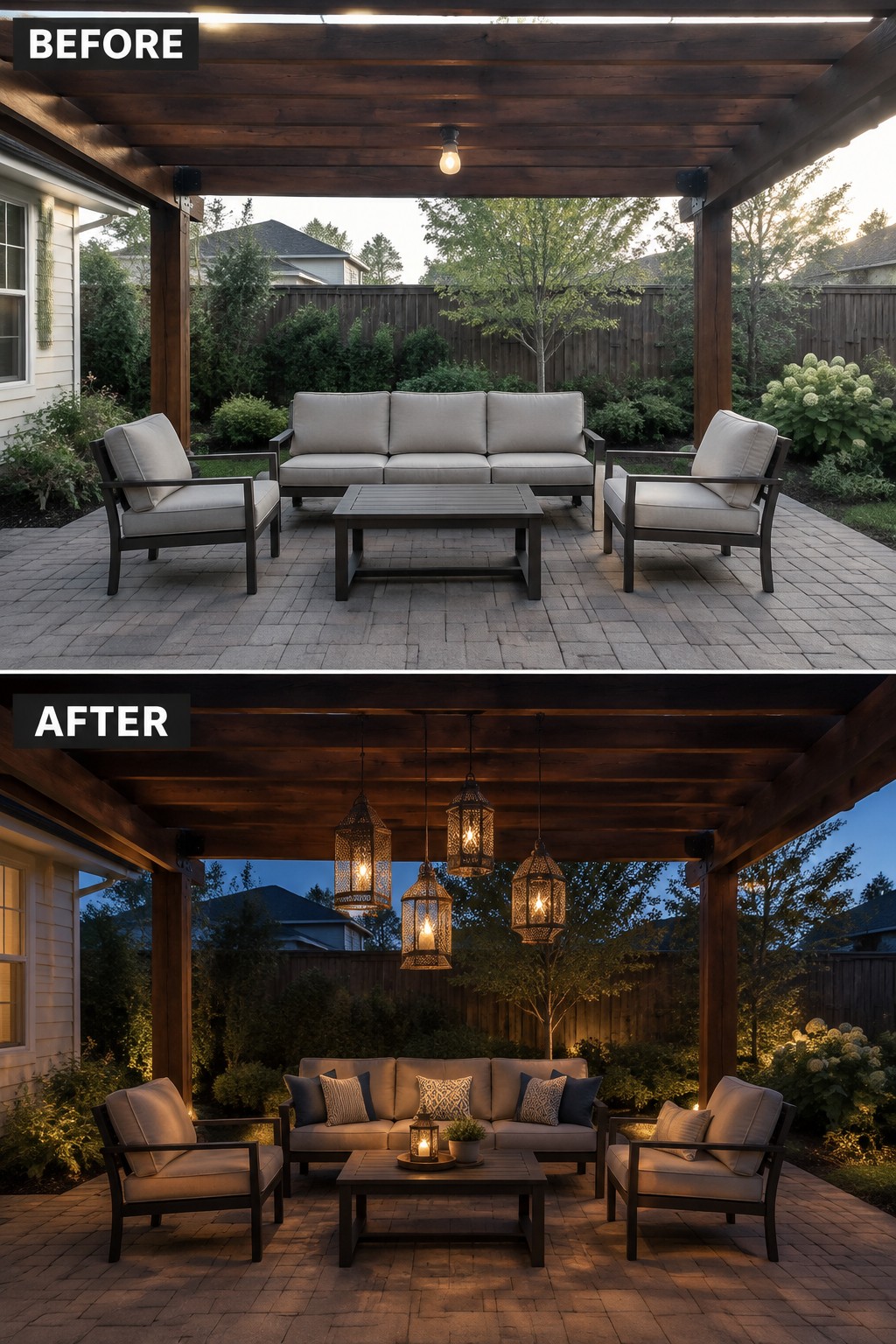
A basic patio with one overhead bulb often feels flat once it gets dark. The main change here came from hanging several lanterns at different heights above the seating area. That single step turned the space into somewhere people actually want to sit after sunset.
This works best on a covered patio or pergola where you can run chains or hooks from the ceiling beams. Start with three to five lanterns in similar styles, keep the bulbs warm, and place one smaller lantern on the table so the light sits at eye level. It suits most backyards and does not require rewiring if you choose battery or solar options.
Use Lanterns To Make A Fire Pit Area Usable At Night
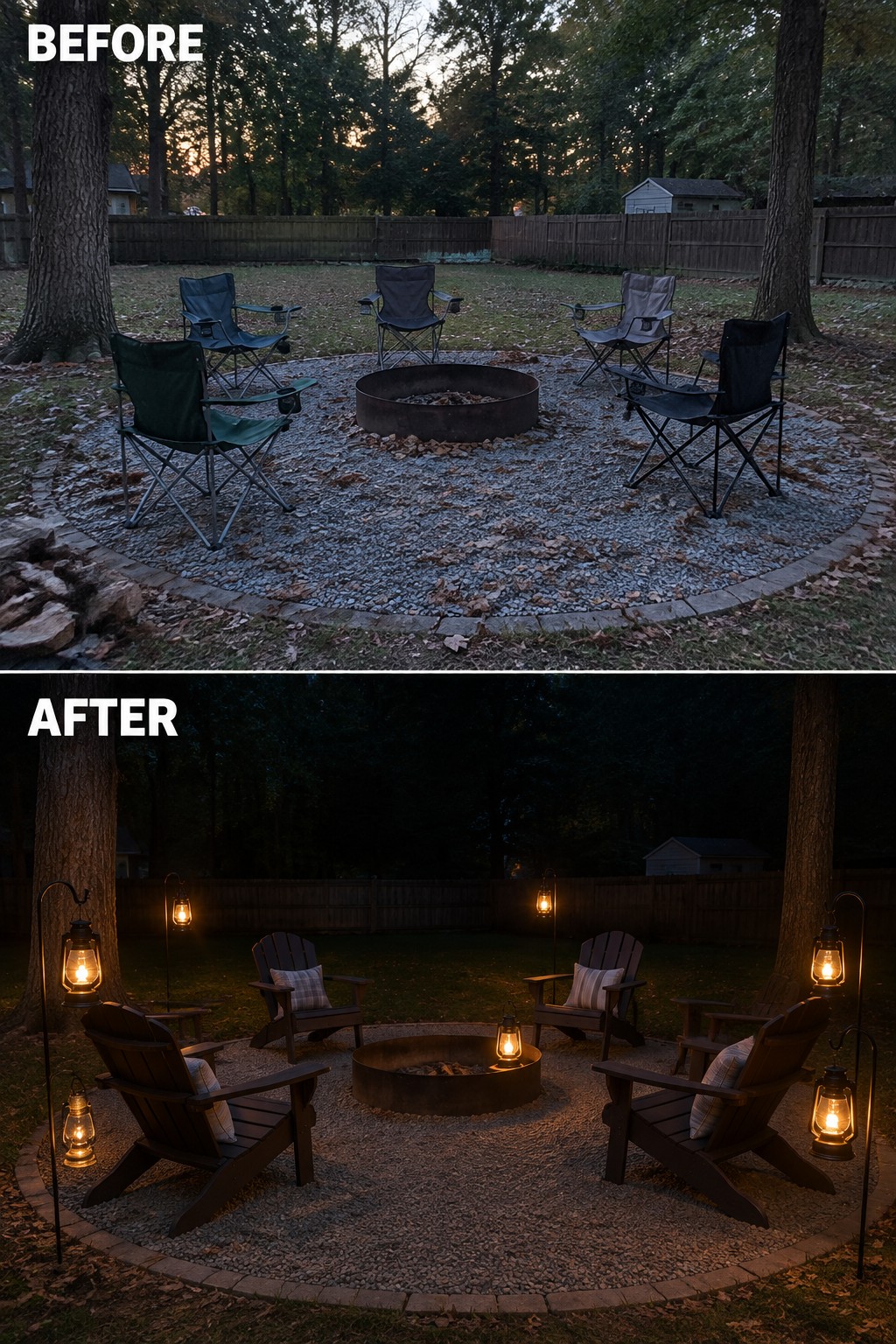
Adding a few lanterns around a fire pit turns an empty gravel circle into a place people actually want to sit after dark. The before photo shows basic folding chairs that work fine during the day but leave the space feeling flat once the light fades. In the after, simple lantern stands placed around the edge create a soft circle of light that makes the whole seating area feel intentional.
This idea works best in backyards where the fire pit is the main gathering spot. Use lanterns that can handle weather and keep them at a consistent height so the glow stays even. Start with four to six lights around the perimeter rather than crowding the center, and let the fire itself stay the brightest point.
Use Lanterns To Make A Basic Balcony Feel Usable At Night
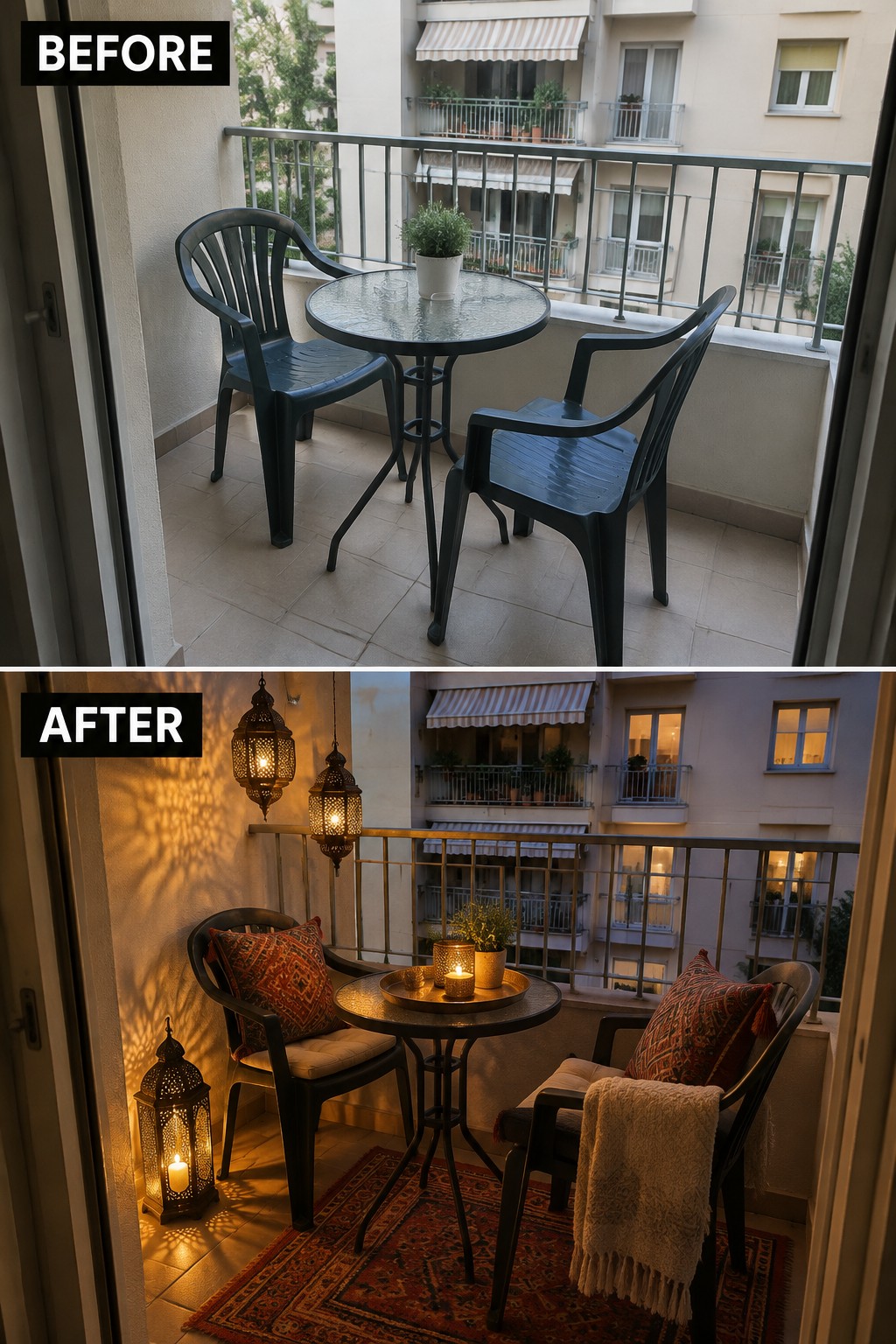
A simple balcony with just a table and chairs often sits empty once it gets dark. Adding a few lanterns with warm light inside turns the space into somewhere you actually want to sit after sunset.
This idea works best on small outdoor areas where you need quick, low-cost lighting that feels cozy rather than harsh. Place one or two lanterns at different heights near the seating so the light stays soft and useful without taking up much room.
Add Hanging Lanterns To Make A Patio Usable After Dark
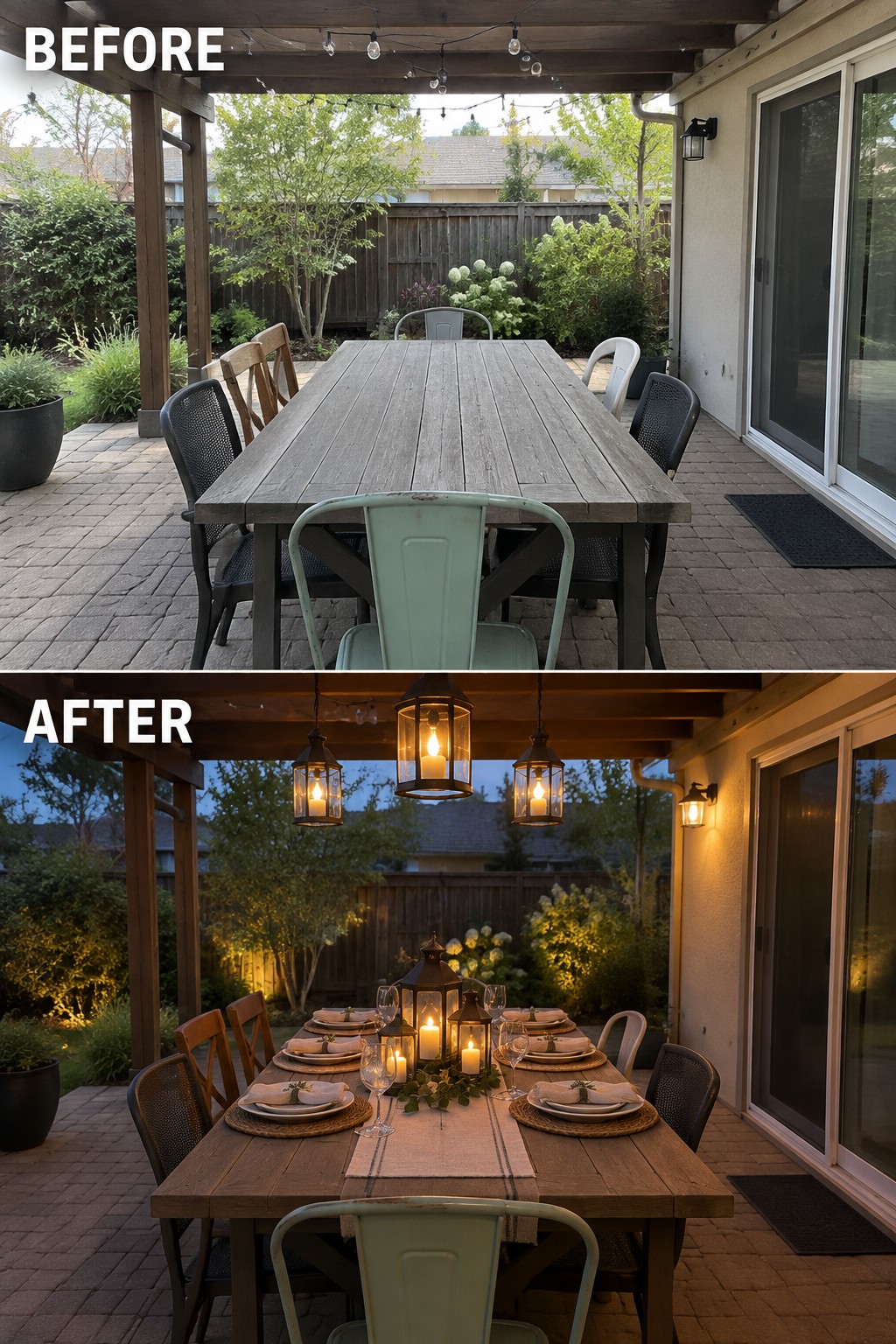
Hanging a few lanterns above the table is one of the easiest ways to turn a daytime patio into a space people actually want to sit in at night. The before photo shows a plain dining setup that looks finished only while the sun is up. Once evening comes, the area feels empty until the lanterns are added and the warm light fills the space under the cover.
This idea works best on patios or pergolas that already have a solid overhead structure. Hang the lanterns at different heights so the light spreads evenly, and keep the rest of the table simple so the glow stays the focus. It is a small change that lets you use the same furniture for both day and night without adding much more.
Hang Lanterns Along A Fence To Light The Yard
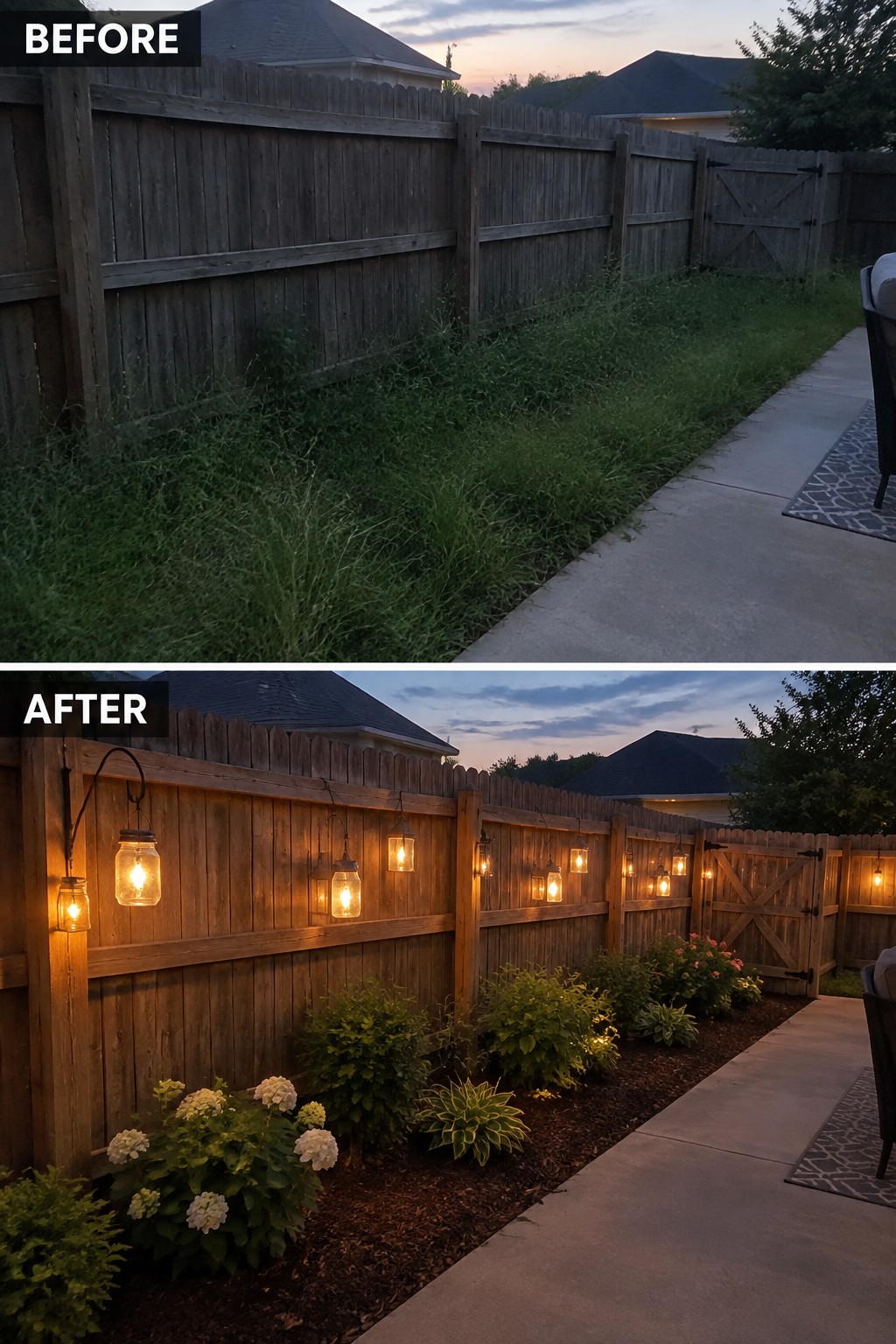
Cleaning up the strip along a fence first makes all the difference. The before photo shows tall weeds and an empty stretch that felt neglected. Once the grass was cleared, mulch and simple plants went in, and then the lanterns were added. The lights turn the same fence into a soft, useful border that actually shows up after dark.
This idea works well on any straight fence line that runs beside a path or seating area. Space the lanterns evenly so the glow feels balanced, and pick jars or metal styles that can handle weather. Start with the cleanup and planting before you hang anything. That order keeps the whole thing looking intentional instead of just adding lights to an overgrown spot.
Use Lanterns To Light A Garden Border
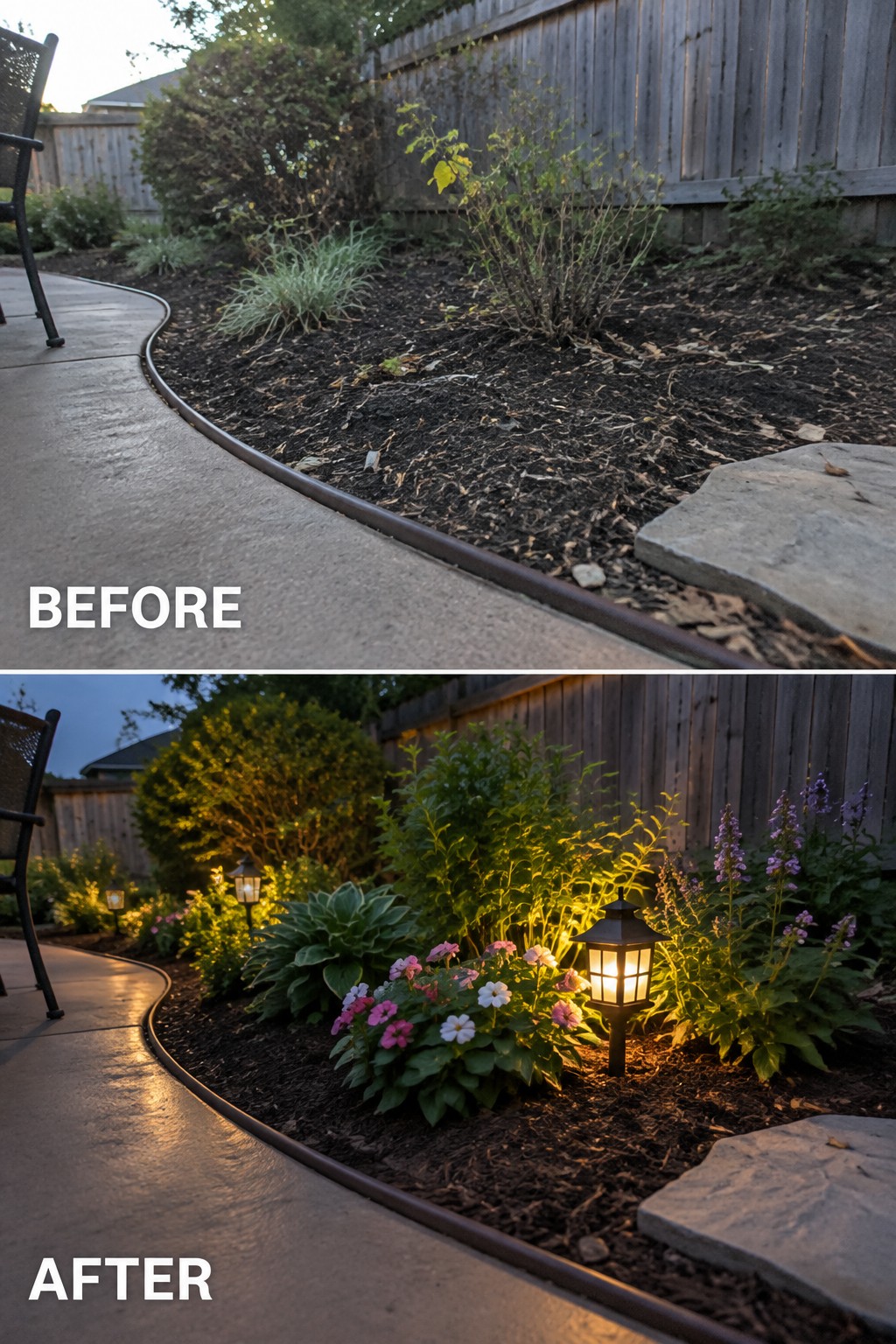
A bare strip of mulch next to a walkway often feels unfinished, especially once the sun goes down. Adding a few lanterns along the edge gives the border a clear purpose and makes the planting visible at night. In this case, the lanterns sit right among the new flowers, so the light falls on the blooms instead of just the ground.
This approach works well along paths, fence lines, or the front of any bed that needs a little structure. Start with the planting so the lanterns have something to highlight, then place them where they can be reached for battery changes or bulb swaps. Keep the spacing even and avoid crowding so the light stays soft rather than spotty.
Add Lanterns And Step Lights To A Plain Front Entry
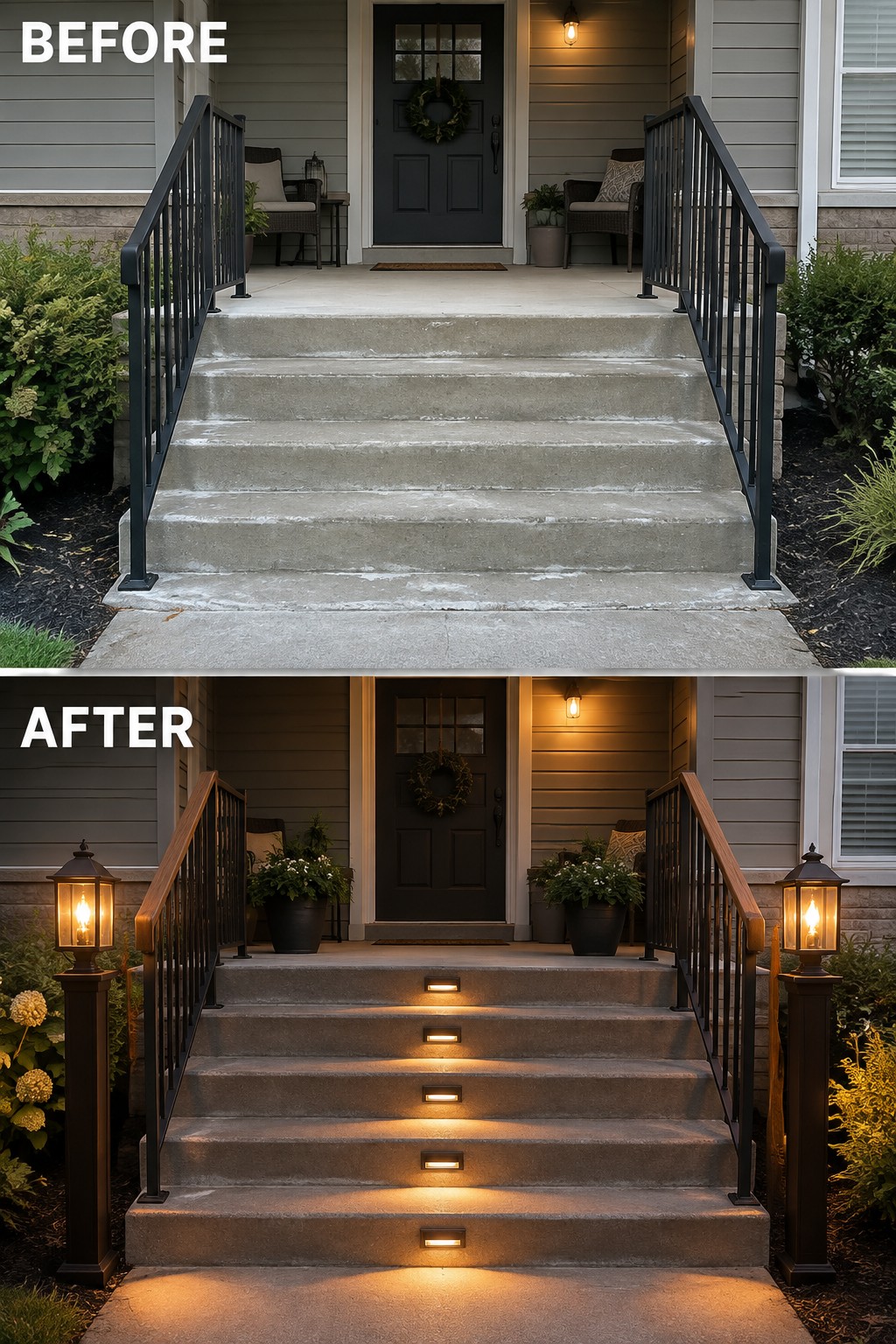
Front entries often feel dull after dark when the only light comes from a single porch fixture. Adding post lanterns and recessed step lights changes that by creating a clear path and a warmer look without any major construction.
This approach suits homes with basic concrete stairs and metal railings. Place one lantern on each side at the bottom of the steps so the light reaches the walkway, then add small recessed lights on the risers. It works on most suburban houses and keeps the focus on safety and simple curb appeal.
Use Lanterns To Make A Patio Feel Cozy At Night
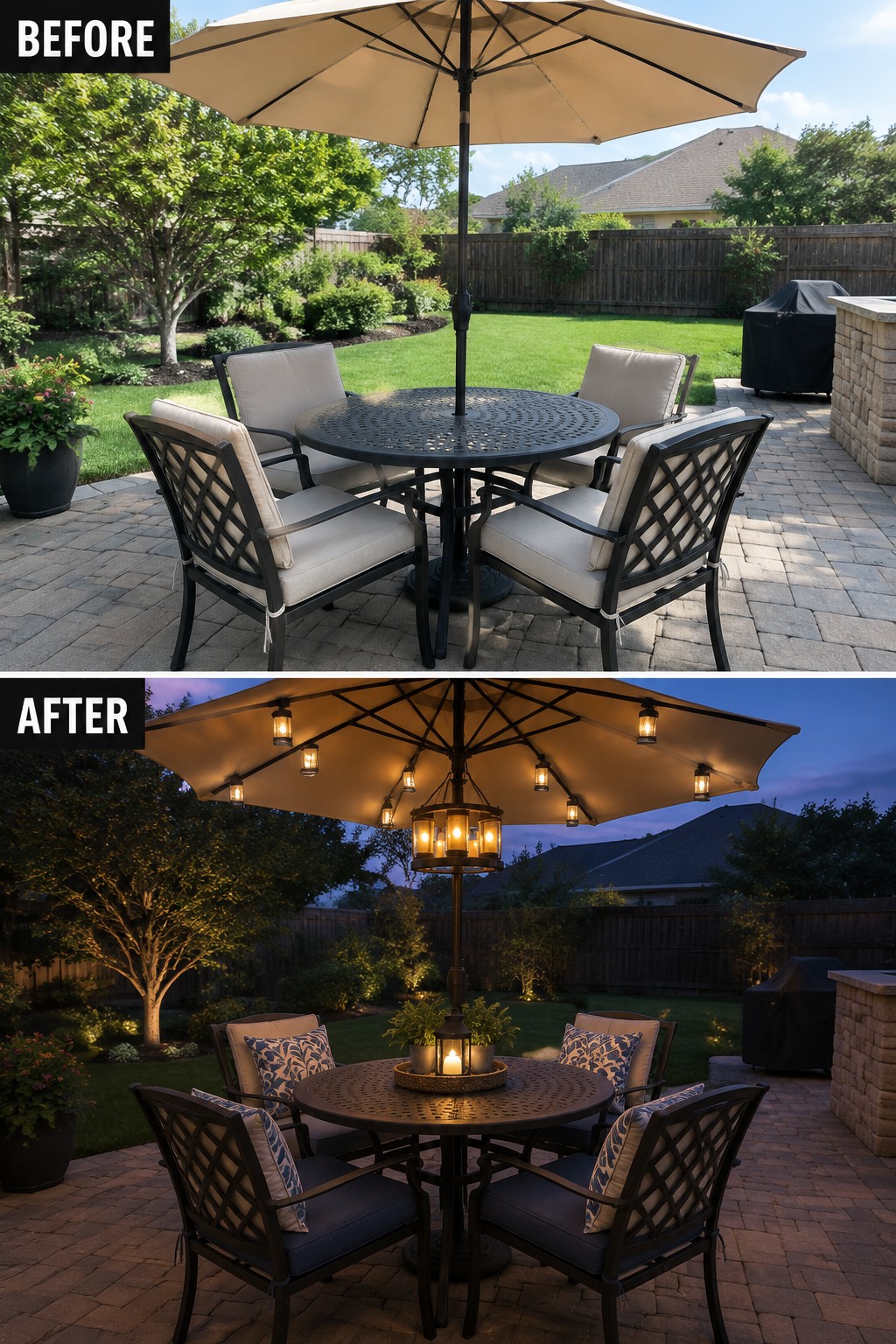
The main change here is simple. The daytime setup shows a standard patio table and chairs with an umbrella, but once the sun goes down the space feels finished because small lanterns were added around the umbrella edge and one larger lantern was placed in the center of the table. That single step turns a daytime spot into an area people actually want to sit in after dark.
This idea works best on patios that already have the basics in place but sit unused once the light fades. Hang weather-safe lanterns from the umbrella ribs or set one or two on the table itself. Keep the number modest so the light stays soft rather than harsh, and choose lanterns that match the scale of your table so the look stays balanced.
Add Hanging Lanterns To Make A Swing Usable After Dark
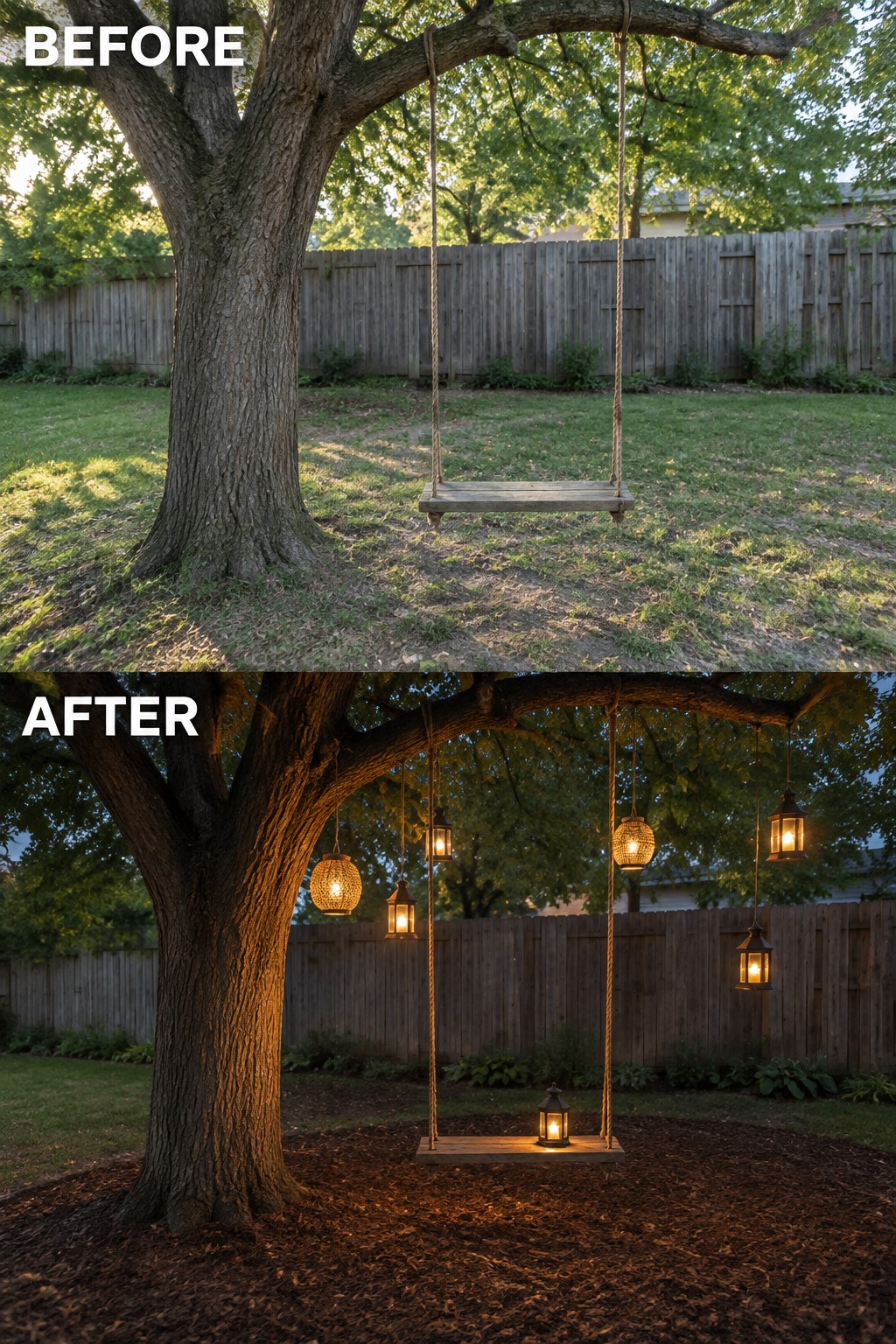
A plain swing under a tree often sits unused once the sun drops. Hanging a few lanterns at different heights on the branches brings enough soft light to make the spot feel inviting again without needing any new construction or wiring.
This idea works best in yards that already have a solid tree and a simple swing in place. Use lanterns that can handle weather, space them unevenly so the light looks natural, and keep the number modest so the area does not feel crowded. It is an easy way to stretch the usable hours of an existing outdoor feature.
Use Lanterns To Make A Plain Porch Feel Cozy
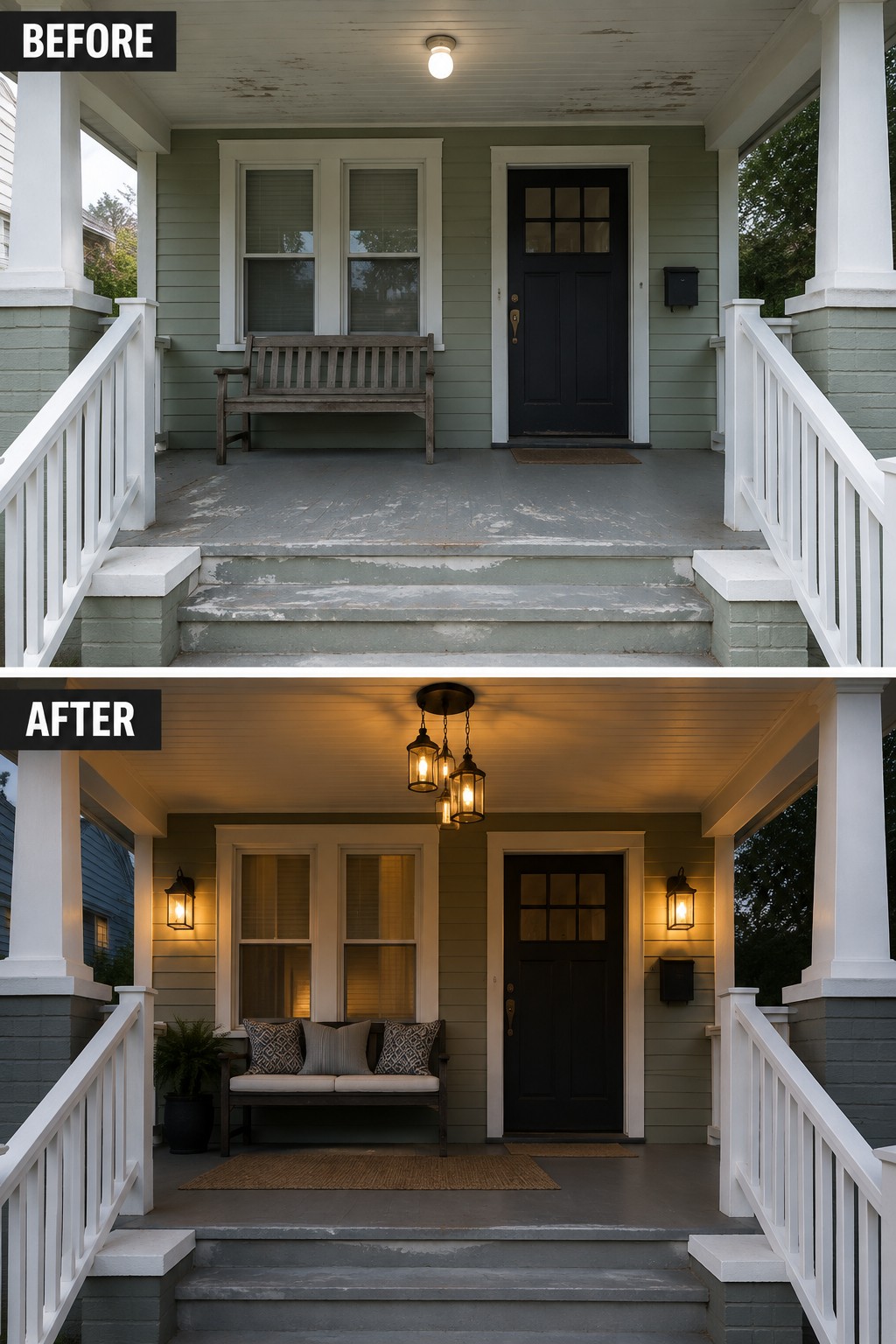
A few well-placed lanterns can turn a bare, dimly lit porch into a spot that actually feels usable after dark. In this case the main shift came from hanging a cluster of lanterns overhead and adding a pair of wall sconces, which immediately gave the space a warmer, more settled look without any big structural changes.
This idea works best on a covered porch that already has seating but lacks evening light. Pick lanterns in one finish and size, hang them at different heights over the main seating area, and add just enough wall lights to balance the glow. Keep cushions, rugs, and plants minimal so the lighting stays the focus.
Use Lanterns To Turn A Bare Patio Into Evening Seating
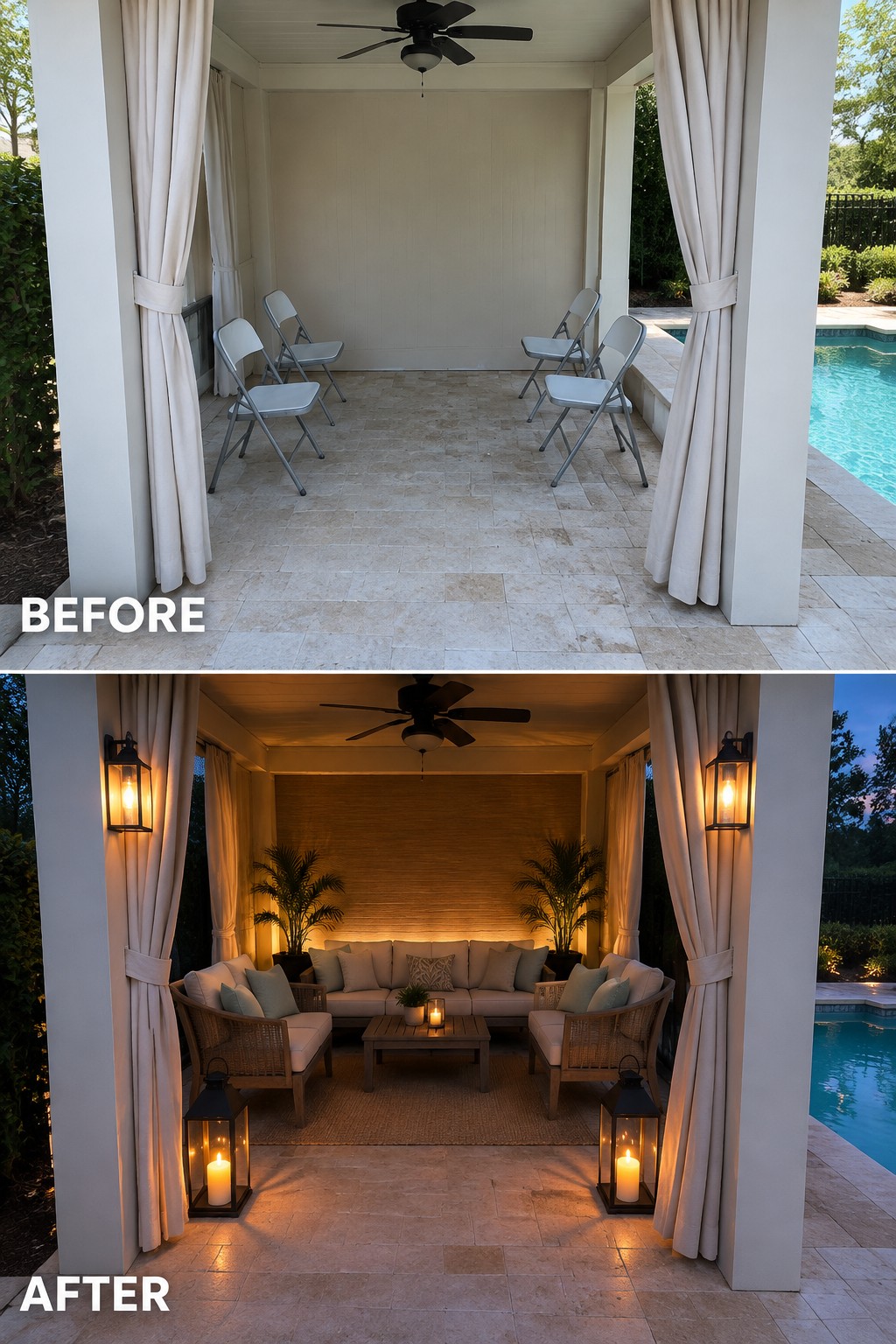
An empty patio with a few folding chairs often sits unused once daylight fades. Placing lanterns around the seating area adds the soft light needed to make the space feel welcoming and practical at night.
This idea works best on covered patios or poolside spots where you want light without bright overhead fixtures. Set lanterns at different heights near the seating, keep the furniture layout simple, and use a rug to mark the zone so the area feels like a real room rather than leftover space.
Use Lanterns To Make An Outdoor Kitchen Usable At Night
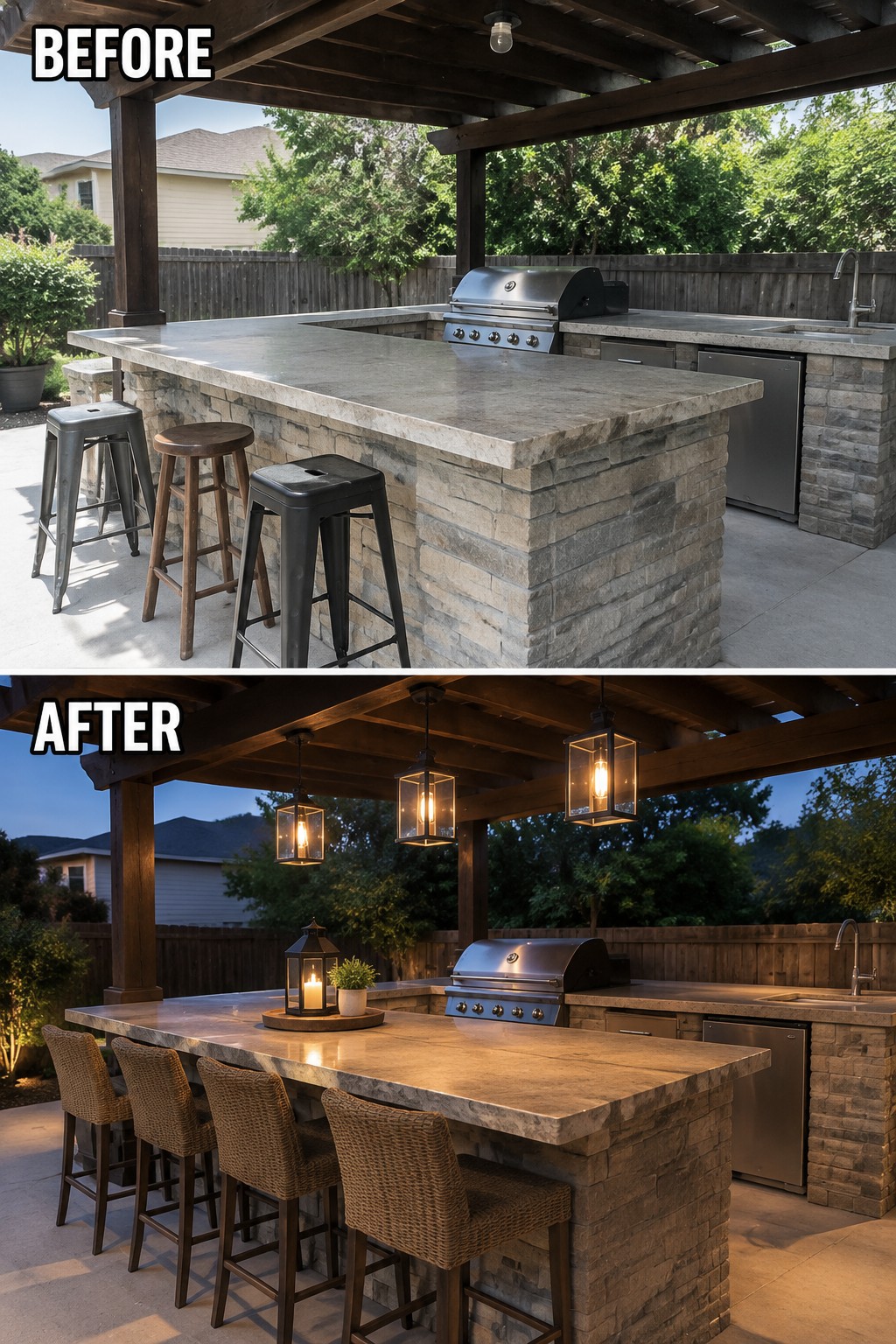
The before photo shows a basic outdoor kitchen with a plain concrete counter and a few mismatched stools sitting out in the open. In the after, several hanging lanterns were added under the covered ceiling, which instantly makes the same space feel ready for evening use instead of just daytime cooking.
This idea works best on covered patios or outdoor kitchens that already have some structure overhead. Hang lanterns at different heights over the seating zone so the light actually reaches people, and stick with simple, weatherproof styles rather than trying to fill every beam. Keep the number of lanterns modest so the area still feels open.
Use Lanterns To Make A Plain Patio Feel Cozy At Night
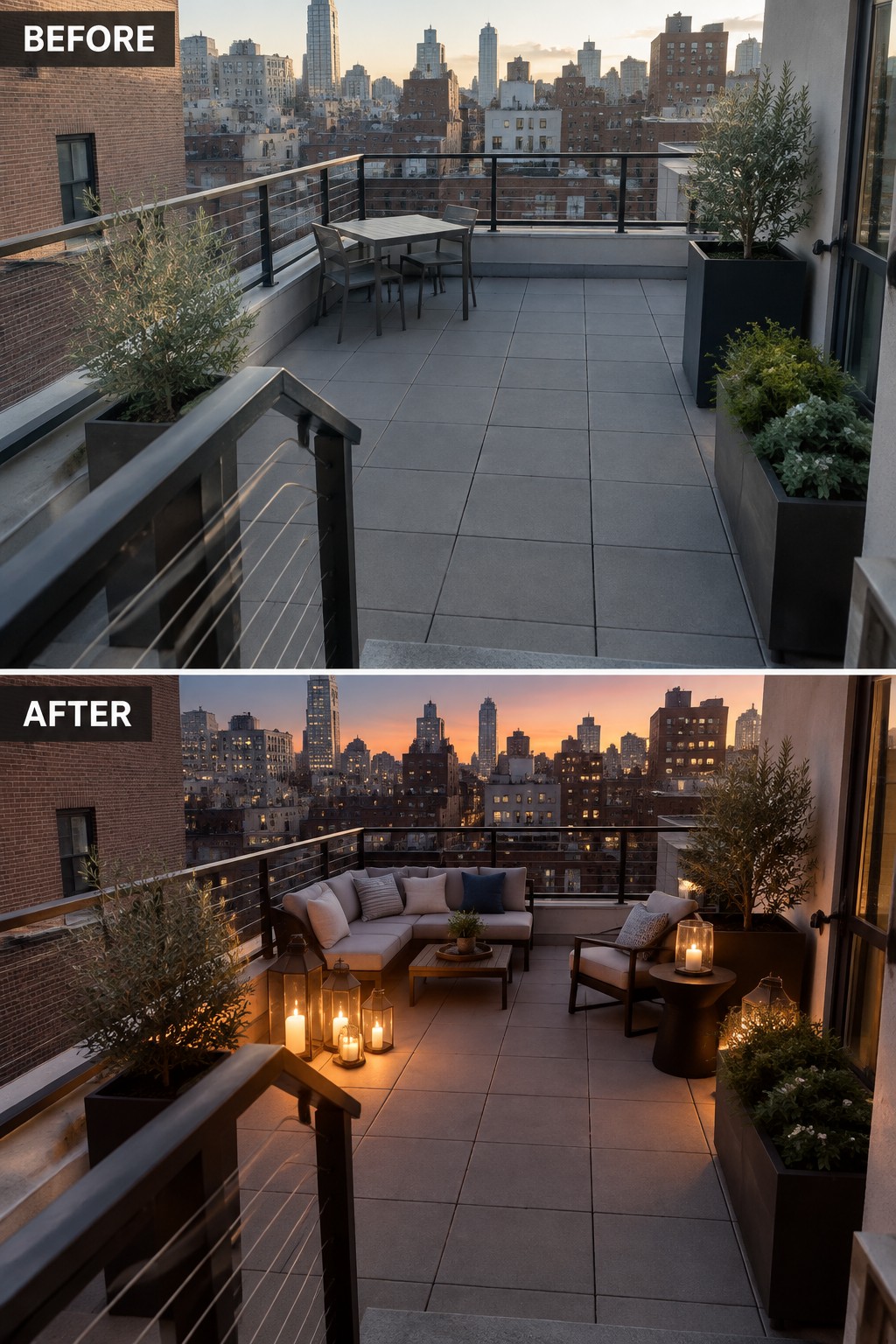
The main change here is the addition of several lanterns around a new seating area. The empty balcony now has a sectional, a couple of chairs, and a low table, but the lanterns are what make the space feel finished and usable once the sun goes down.
This approach works best on patios or balconies that already have a basic layout but need something to draw people out after dark. Keep the lanterns grouped near the seating rather than scattered, and choose styles that can handle being left outside. The goal is to add just enough light to make the area feel intentional without overfilling the space.
Use Lanterns To Light A Garden Path
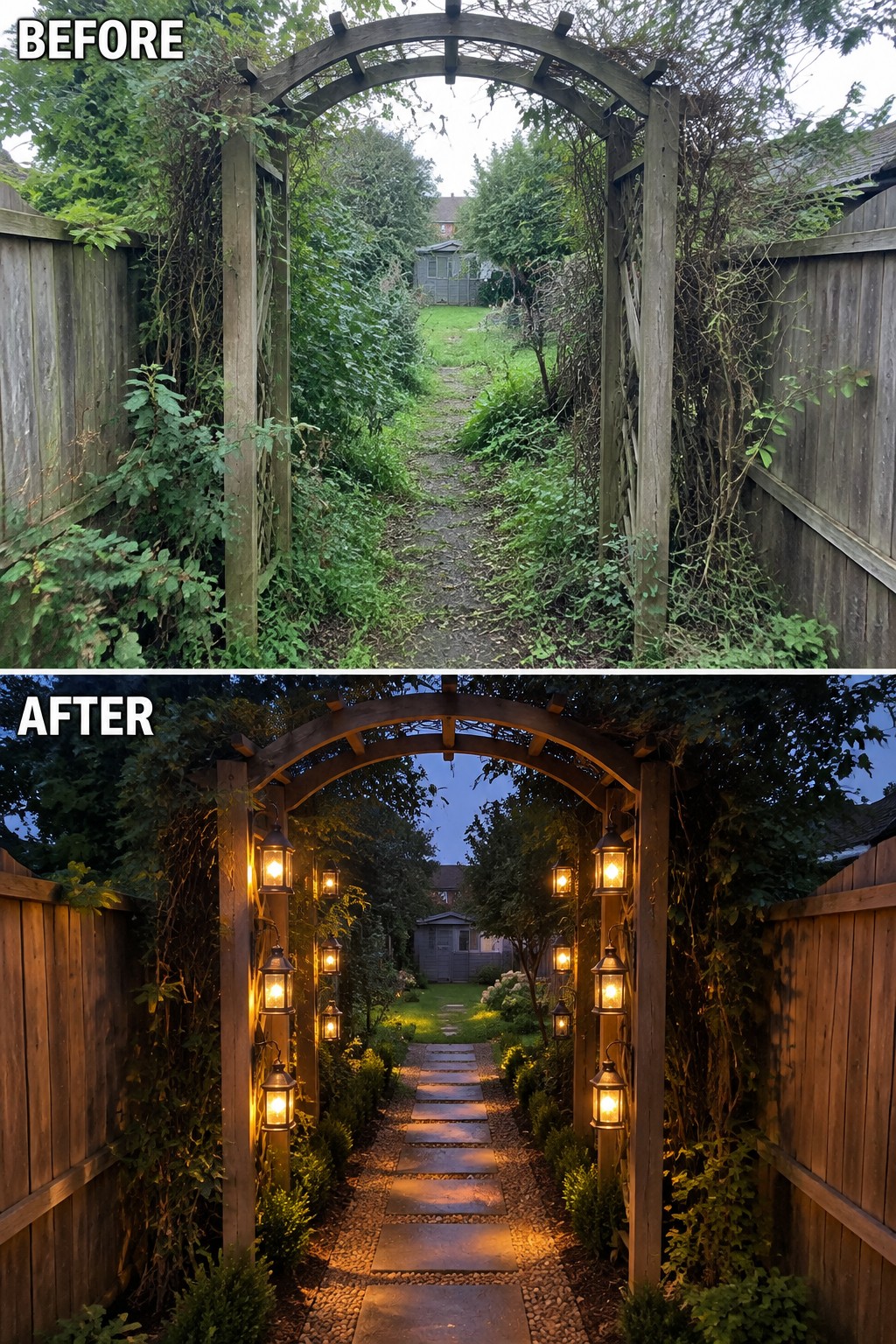
Adding lanterns to an arch or fence line turns a basic garden path into something usable after dark. The before photo shows an overgrown walkway with vines taking over the structure. In the after, the same arch now holds a row of lanterns that mark the route and make the space feel intentional once the sun sets.
This idea works best on existing paths that already have some structure like an arch or posts. Hang lanterns at varying heights so the light spreads evenly, and keep the ground clear with stepping stones or gravel. It suits homes where you want to extend outdoor time without building new seating areas or decks.
Use Lanterns To Light A Narrow Side Yard Path
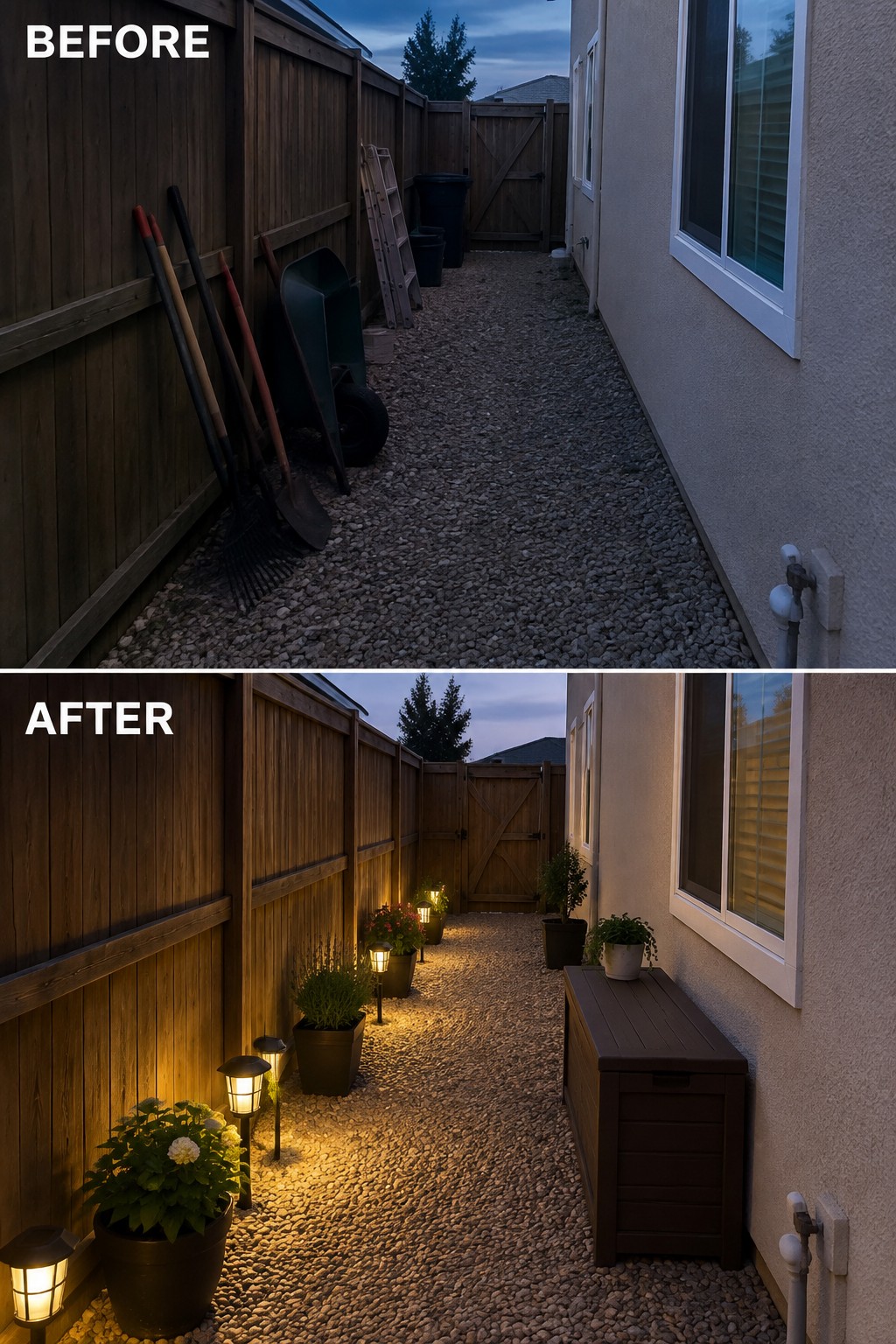
A narrow side yard often ends up as a forgotten strip used for storing tools or trash bins. Adding a few well-placed lanterns turns the same gravel path into a softly lit walkway that feels safe to use after dark and connects the front and back of the house.
This idea works best on homes with long, tight passages between the house and fence. Clear the clutter first, then set lanterns at even intervals along one side and add a handful of large pots to soften the edges. Keep the number of lights modest so the glow stays gentle rather than harsh.
Use Lanterns To Make A Plain Patio Usable After Dark
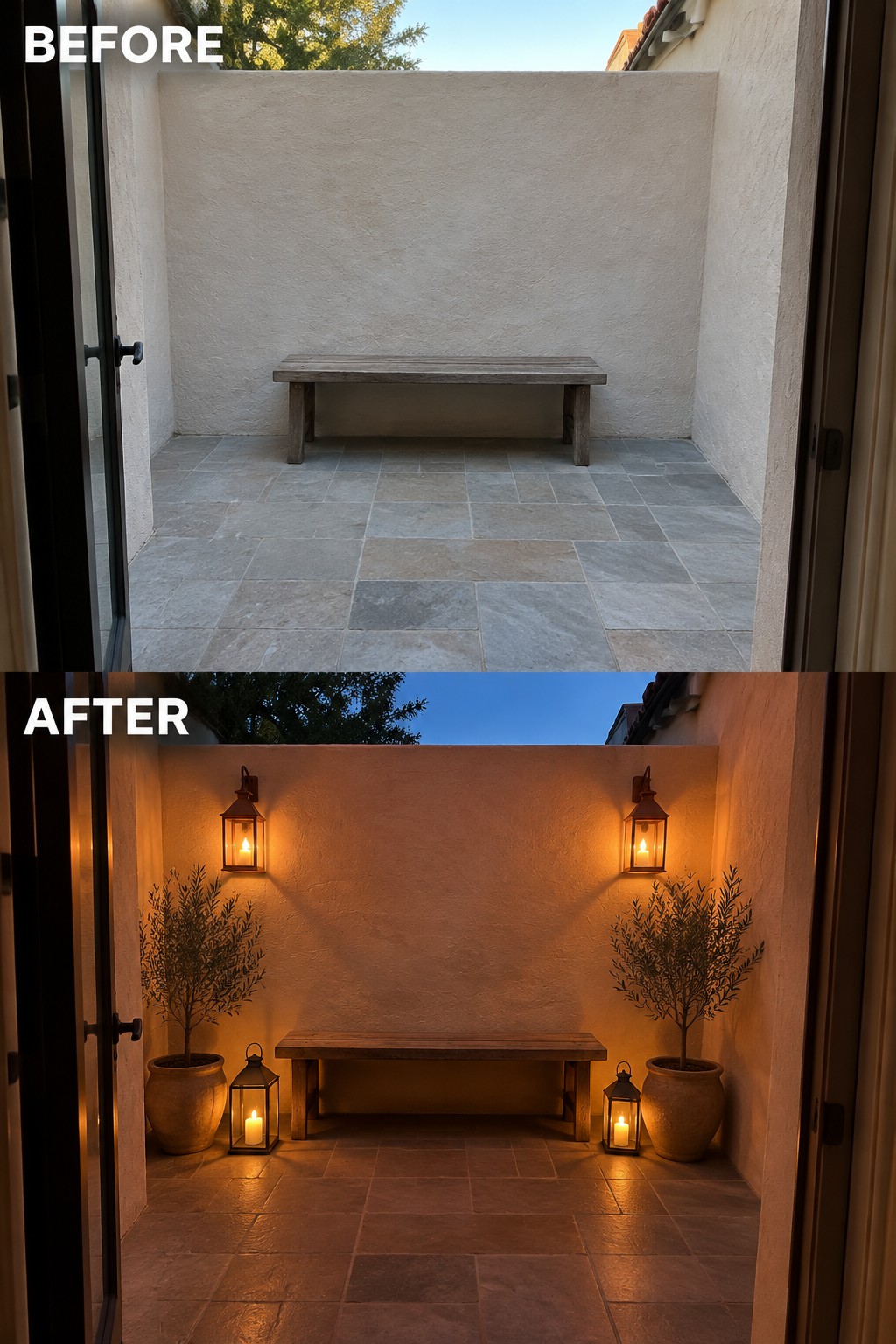
A bare patio with just a bench can feel finished during the day but empty once the sun sets. Adding lanterns at different heights brings a warm, steady light that turns the space into an area people actually want to sit in at night.
This approach works best on small outdoor spots where you want to extend use without adding much furniture. Start with a couple of wall lanterns and one or two floor lanterns near the seating, then keep the rest of the area simple so the light does the work.
Use Lanterns To Light Up A Garden Pond
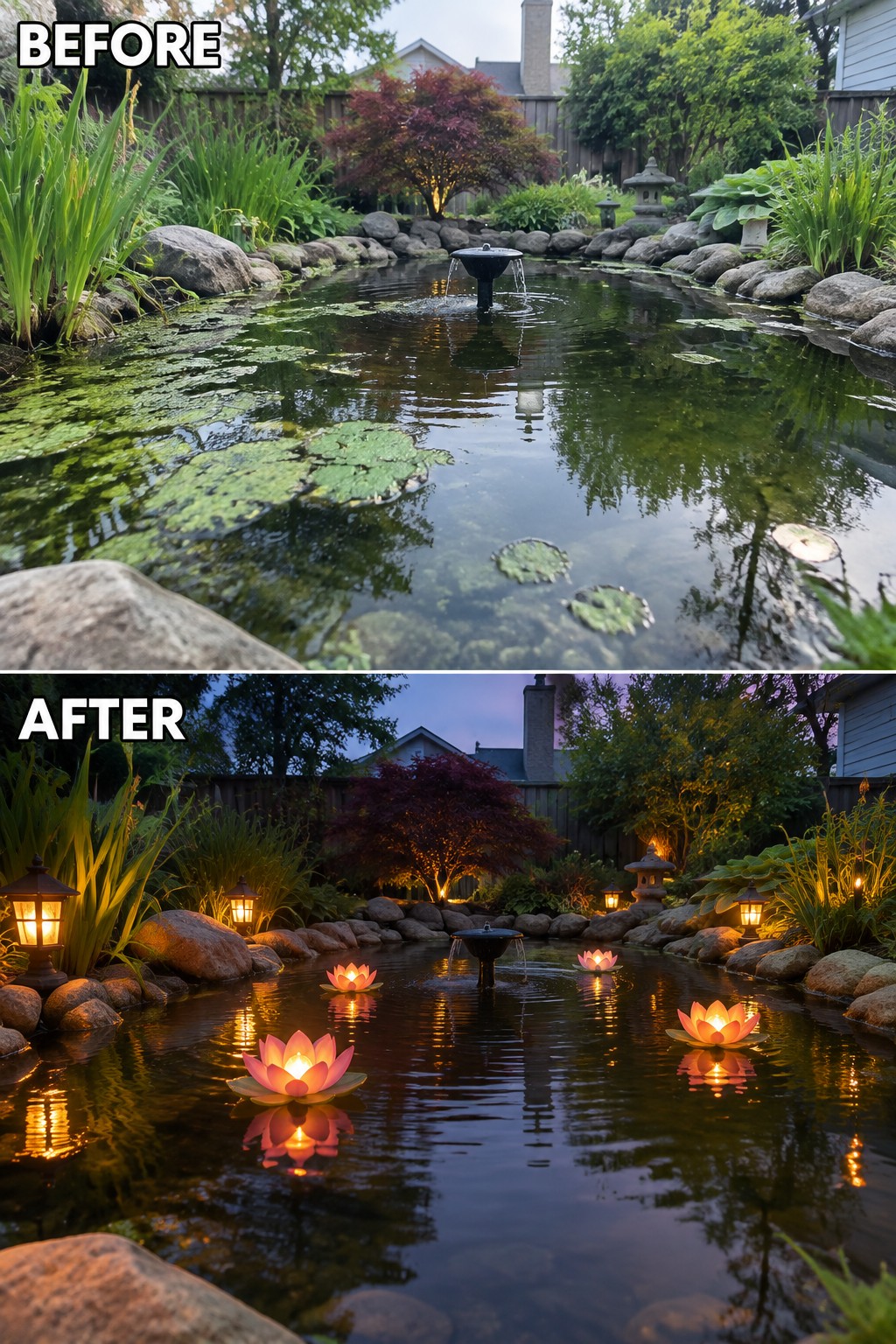
Adding lanterns turns a basic backyard pond into a calm evening feature without changing the plants or layout. The before photo shows a daytime pond covered in algae and lily pads. The after version uses floating lotus lanterns and a few lights placed along the rocks to create soft reflections on the water once it gets dark.
This works best in yards that already have a water feature but feel flat after sunset. Place two or three lanterns on the rocks for steady light and add a few floating ones that can handle water. Keep the number low so the glow stays gentle instead of turning the pond into a bright spot.
Frequently Asked Questions
Q: How do I keep lanterns from tipping over on a windy patio?
A: Set each lantern inside a shallow tray filled with sand or small rocks. The extra weight holds it steady without looking bulky. Place them close to a wall or railing for added shelter.
Q: Can I mix solar lanterns with battery ones in the same setup?
A: Yes, group the solar ones where they get direct sun during the day. Put battery lanterns in shaded spots like under trees. Swap batteries every few weeks so the whole area stays lit evenly.
Q: What works best if I want soft light without dealing with open flames?
A: Drop in an LED candle or a small string of battery lights. These give a steady glow that lasts all evening. You avoid wax drips and still get the warm look the article describes.
