


Lighting the front of a house can shift how it feels once the light fades, especially around the entry and along the edges that face the street.
I have found that placing a few fixtures to catch the lines of the facade or the shape of nearby plantings often makes the whole place seem more looked after without any major construction.
That change adds up.
Some setups focus on steady light along paths or under the porch roof where it actually gets used at night rather than just for show.
I would test one or two of those placements first if I were working on the outside of my own home.
Add Outdoor Lighting To Make The Entry Feel Welcoming

Many houses end up with just one light over the door, which leaves the path and the rest of the front dark after sunset. Adding a few simple fixtures changes how the whole entrance feels at night by making it easier to see and more inviting from the street.
Focus first on the walkway with low lights, then add a pair of sconces beside the door. This approach works on most homes because it highlights the main walking route and the entry without requiring major changes to the house or landscaping.
Add Path Lights To Brighten A Dark Front Walk
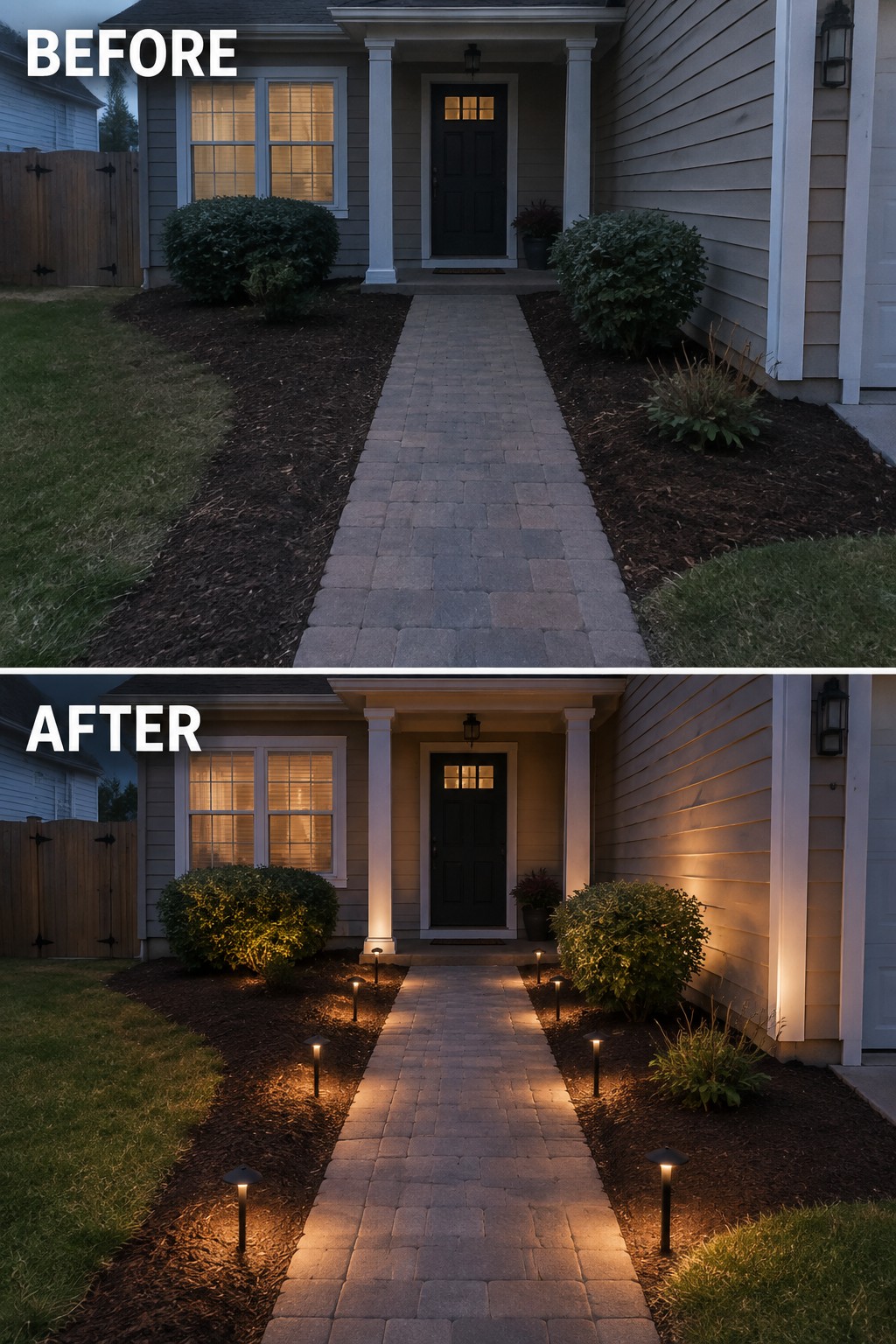
The main change here is adding a row of low path lights along both sides of the walkway, plus a few accent lights tucked into the planting beds. What was a plain, hard-to-see approach at night now feels guided and finished. The lights keep the focus on the door without overdoing it.
This idea works well on any home where the front walk feels forgotten after dark. Start with simple solar or low-voltage path lights spaced evenly, then add one or two uplights on the shrubs closest to the house. Keep the number of fixtures modest so the path stays the main feature rather than turning into a runway.
Add Step Lights To Make Front Stairs Safer At Night
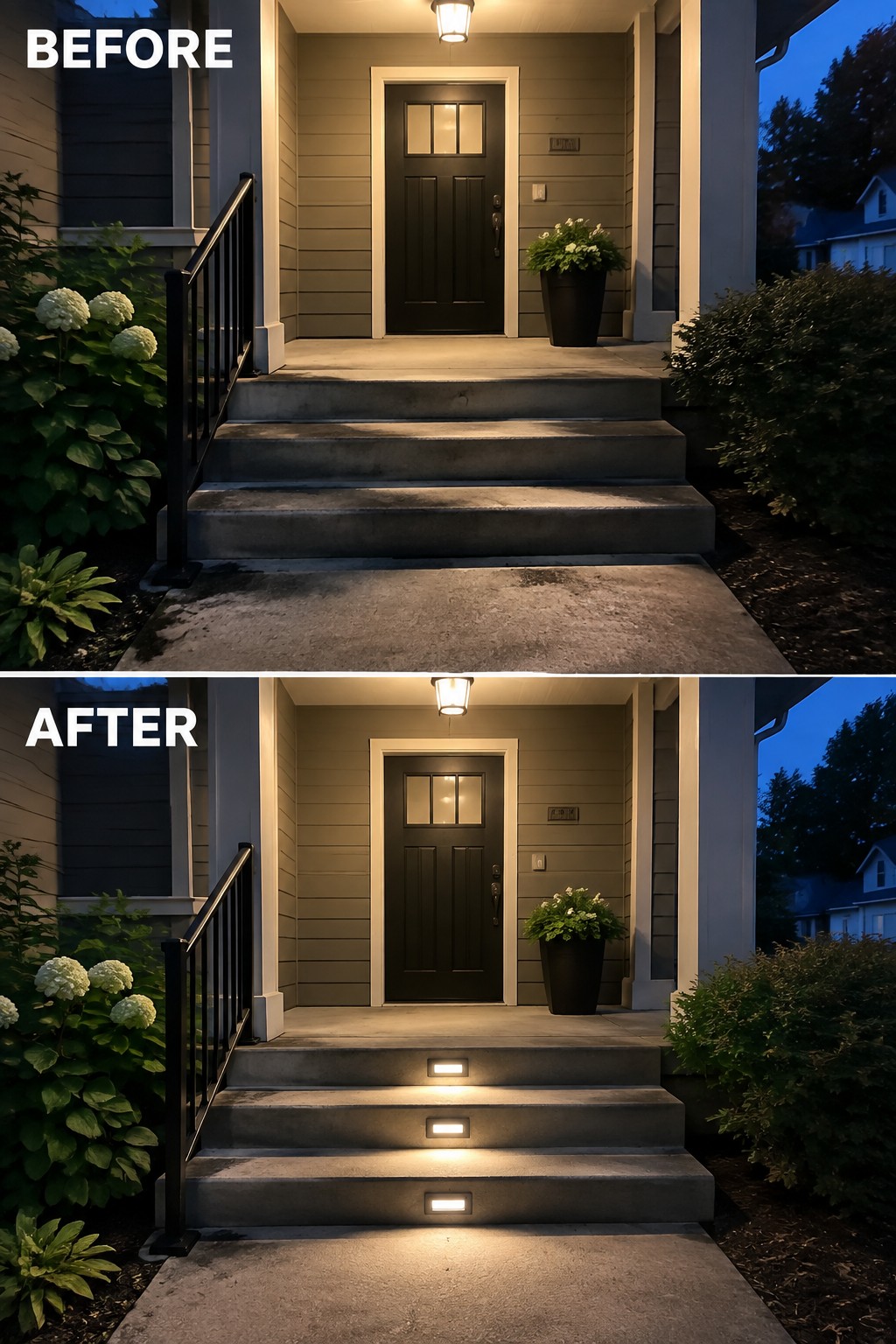
The steps in the before photo sit in shadow once the sun drops, which makes the entrance feel less welcoming and harder to use. Adding small recessed lights to each tread brightens the path without adding bulky fixtures or changing the look of the house.
This idea works on almost any home with concrete or stone stairs leading to the door. Pick low-profile LED lights made for outdoor use, space them evenly, and keep the color temperature consistent with your other exterior lighting. It is a small change that improves safety and makes the entry feel more finished in the evening.
Add Outdoor Lighting To Make The Exterior Feel Welcoming

The main difference here is how lighting changes the whole feel of the house once the sun goes down. A few well-placed lights on the tree, along the path, and near the entry turn a dark front yard into something that looks cared for and easy to approach.
This idea works best on houses with decent structure or mature trees already in place. Start with one or two ground lights at the base of a tree and a couple more along the walkway, then add a soft light near the door. Keep the brightness low so it feels natural instead of like a spotlight.
Add Landscape Lighting To Highlight Garden Beds

The before photo shows the shrubs and flowers sitting in the dark, while the after uses a few low lights to lift the same plants into view. The change turns a flat nighttime scene into one where the garden beds actually read as a feature instead of just background.
This idea works well along the front of a house or beside a walkway. Place small fixtures at the base of larger shrubs first, then add one or two more to catch a cluster of flowers. Keep the lights aimed low and spaced a few feet apart so the effect stays soft instead of spotty.
Add Layered Lighting To Your Front Entry

A single overhead light often leaves a front porch looking flat and uninviting after dark. Adding string lights along the ceiling and a new central lantern creates a warmer, more balanced glow that makes the entry feel welcoming without any major construction.
This idea works best on covered porches where you can run lights along the beams. Keep the main fixture simple, then layer in the string lights so the space feels finished rather than overdone.
Add Outdoor Lighting To Make Your House Feel More Welcoming

The main change here is swapping one harsh floodlight for several smaller, warmer fixtures placed along the roofline and over the entry. This spreads light evenly across the front instead of creating a single bright spot that leaves everything else in shadow.
This idea works on most two-story homes with mixed siding. Run a few linear lights where they catch the edges of the house and the door without pointing straight at windows. Put them on a timer so the front looks finished every night without extra effort.
Add Outdoor Lighting To Improve Evening Curb Appeal

A single harsh spotlight leaves one side of the house bright while the rest fades into shadow. Swapping that for a pair of wall sconces beside the garage doors plus a few low pathway lights creates even, welcoming illumination across the whole front.
This approach suits homes with wide garages or plain facades that need more presence after dark. Place lights at eye level or lower so they highlight the architecture without shining straight into windows, and stick with warm bulbs to keep the effect soft and natural rather than stark.
Add Path Lighting Along A Garden Walkway
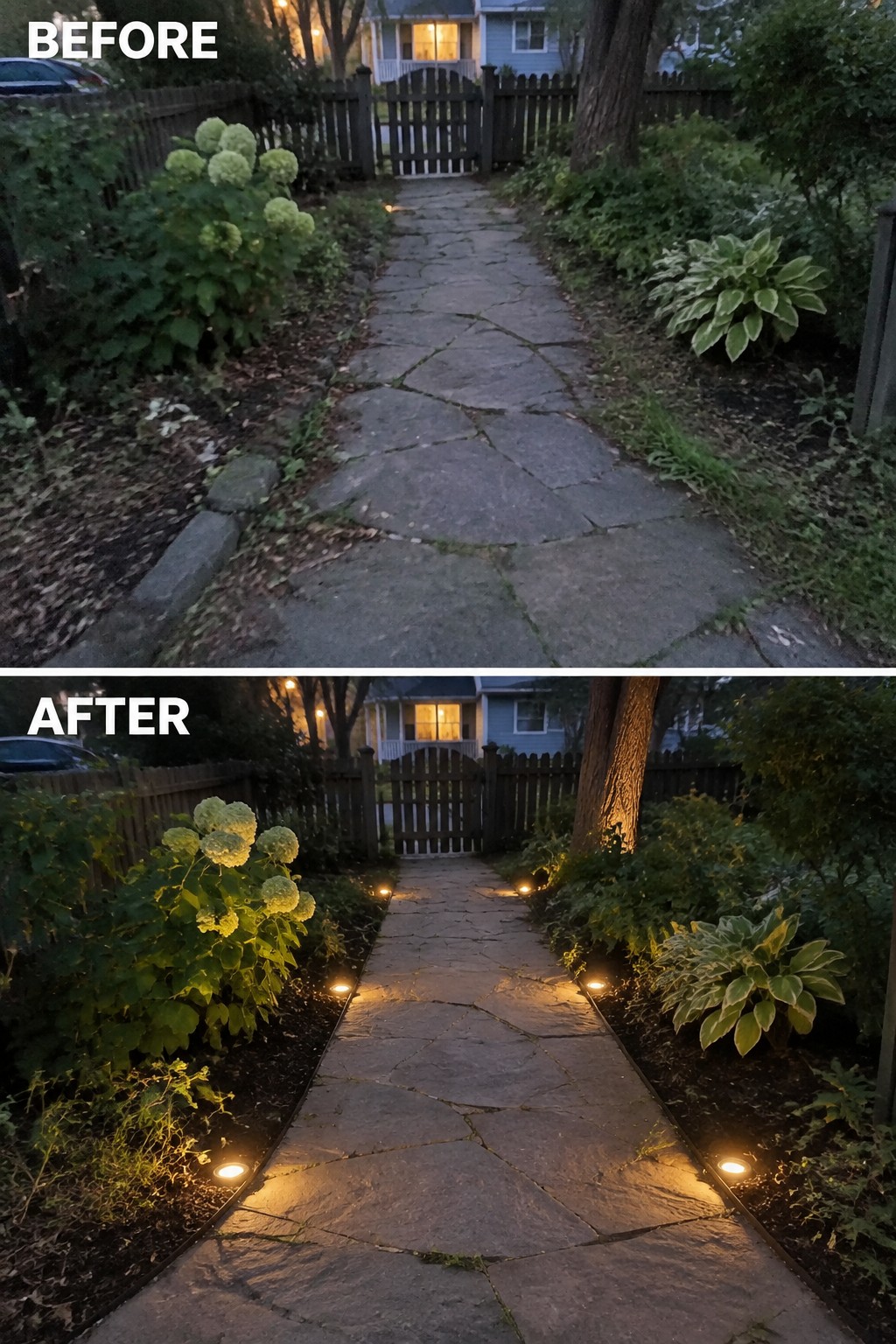
Adding low lights along the edges of a stone path makes the walkway much easier to use after dark. In the before photo the path disappears into shadow, but the after photo shows how a simple row of small fixtures creates a clear route and gently highlights the plants on both sides.
This works best on homes where the main path gets regular evening use. Place the lights close to the ground at even spacing, and keep the bulbs warm so the light stays soft. It is a low-cost change that improves safety and makes the whole front yard feel more intentional once the sun goes down.
Update Your Front Entry With Door Paint And Lighting
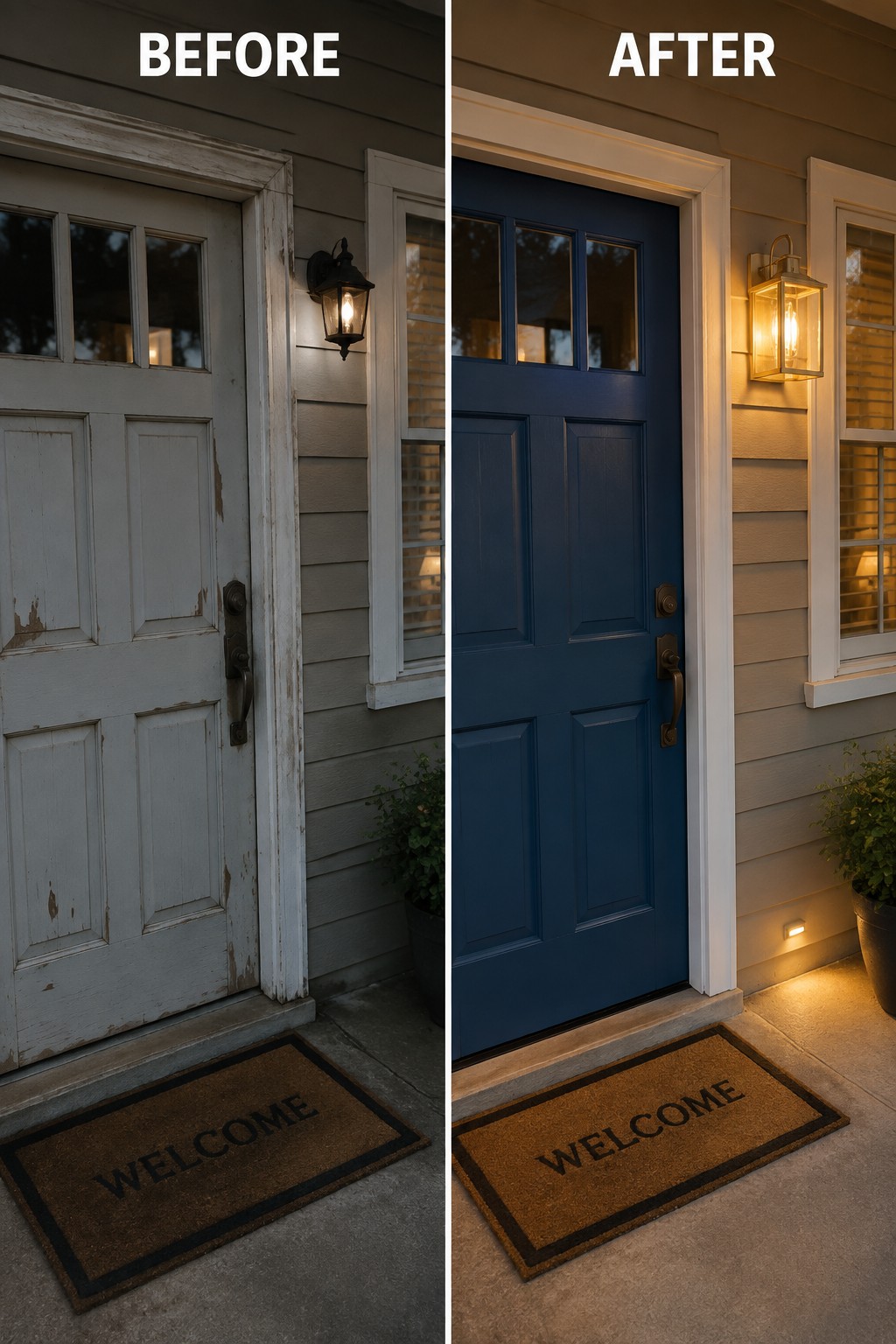
A faded front door and weak lighting can make an entry feel neglected once it gets dark. Painting the door a solid color and adding a brighter lantern fixture gives the whole front a cleaner, more finished look without major construction.
This idea works on many older homes with simple siding. Pick a door color that contrasts with the house, then place the light where it actually hits the door and step area. Keep the rest of the entry simple so the door stays the main focus.
Add Landscape Lighting To Highlight Your Yard At Night
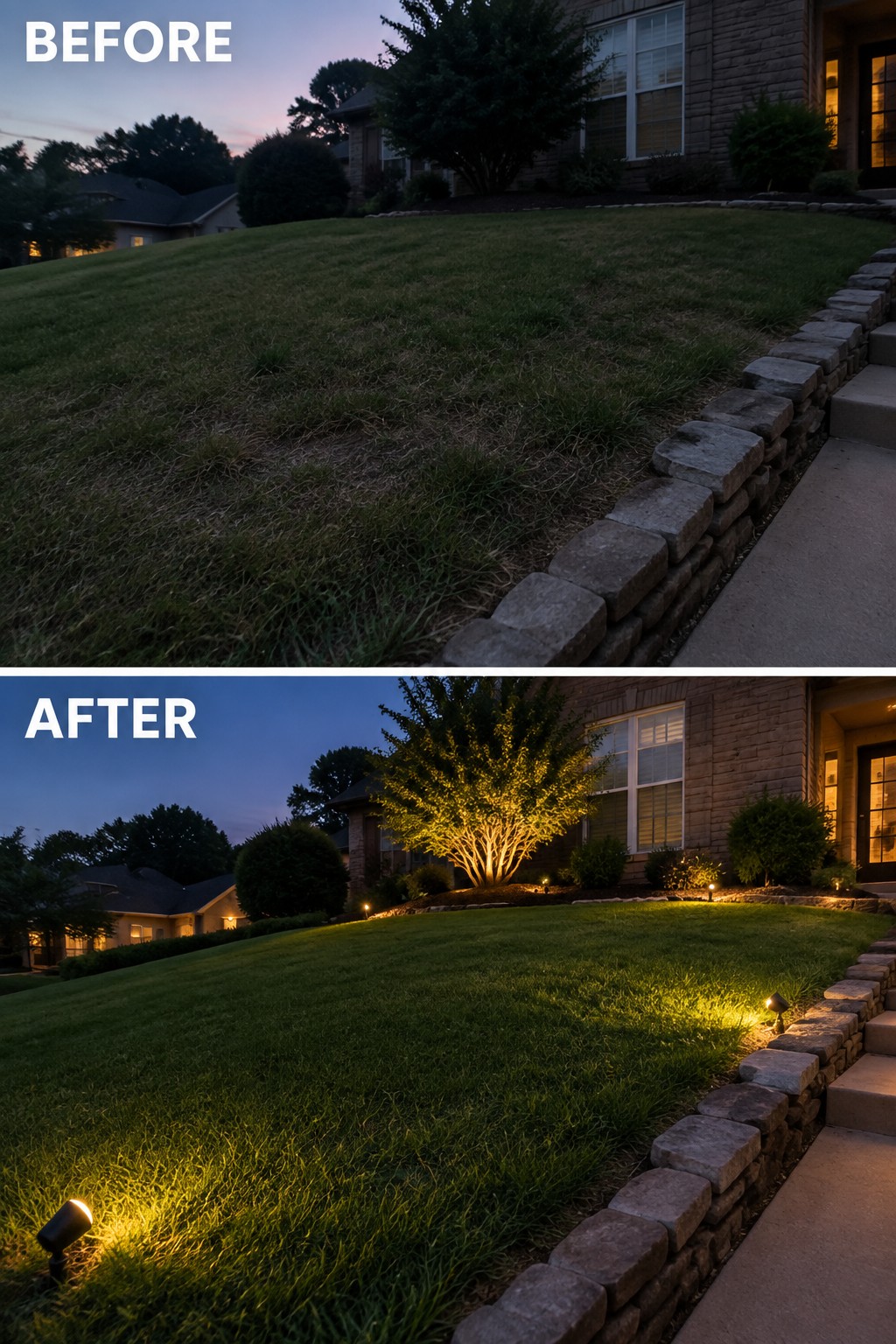
The main change here is the addition of several low landscape lights that were missing before. One light now shines up into the tree near the house, while others run along the stone border and across the lawn, turning a flat dark slope into something you can actually see and enjoy after sunset.
This works well on any sloped yard or front lawn where the house sits above the street. Place a few uplights at the base of small trees first, then add a couple of path lights along edges or walls. Keep the fixtures small and aim them low so they light the plants without glaring into windows or the sidewalk.
Add Lighting To Your Mailbox Post
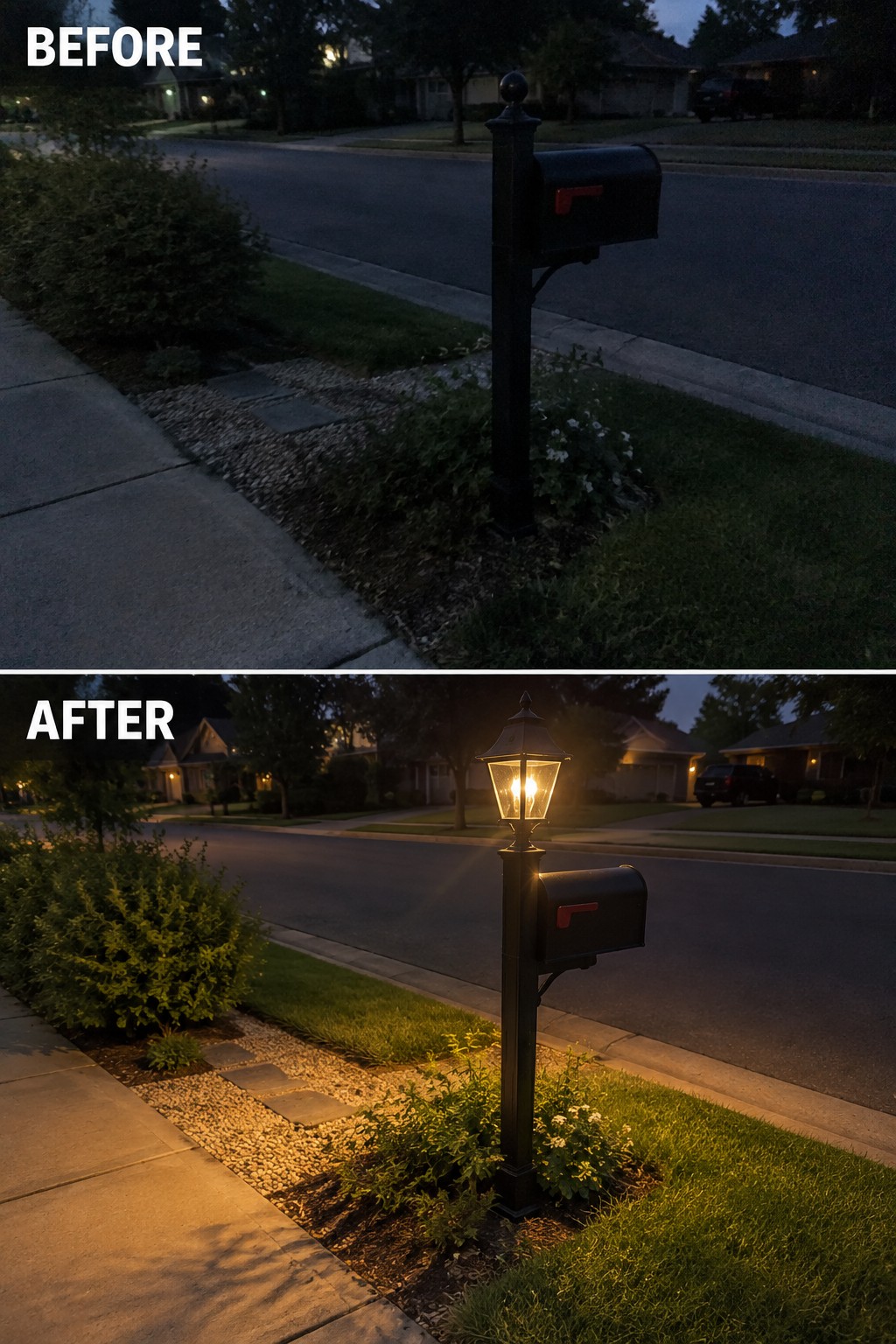
A mailbox post that sits dark at night blends into the background and feels a bit forgotten. Adding one lantern fixture right at the top changes that quickly. The light gives the post a clear purpose after dark and makes the front edge of the property easier to spot from the street.
This idea works best on simple posts that already sit close to the road. Choose a fixture that matches the post style, use a warm bulb, and angle it so the light stays on your own yard instead of shining into traffic. One well-placed light is often enough to start.
Add Uplighting To Your Porch Columns

Many front porches look fine during the day but lose all their shape once it gets dark. The columns here were basically invisible at night until small uplights were placed at the base. That single addition gave the whole entry a clearer structure and made the house feel more grounded after sunset.
This idea works on any porch with visible columns or strong vertical lines. Keep the fixtures low and aimed upward so the light washes the surface evenly. It is a simple change that improves curb appeal without adding furniture or changing the plants.
Add String Lights To Make A Porch Feel Cozy
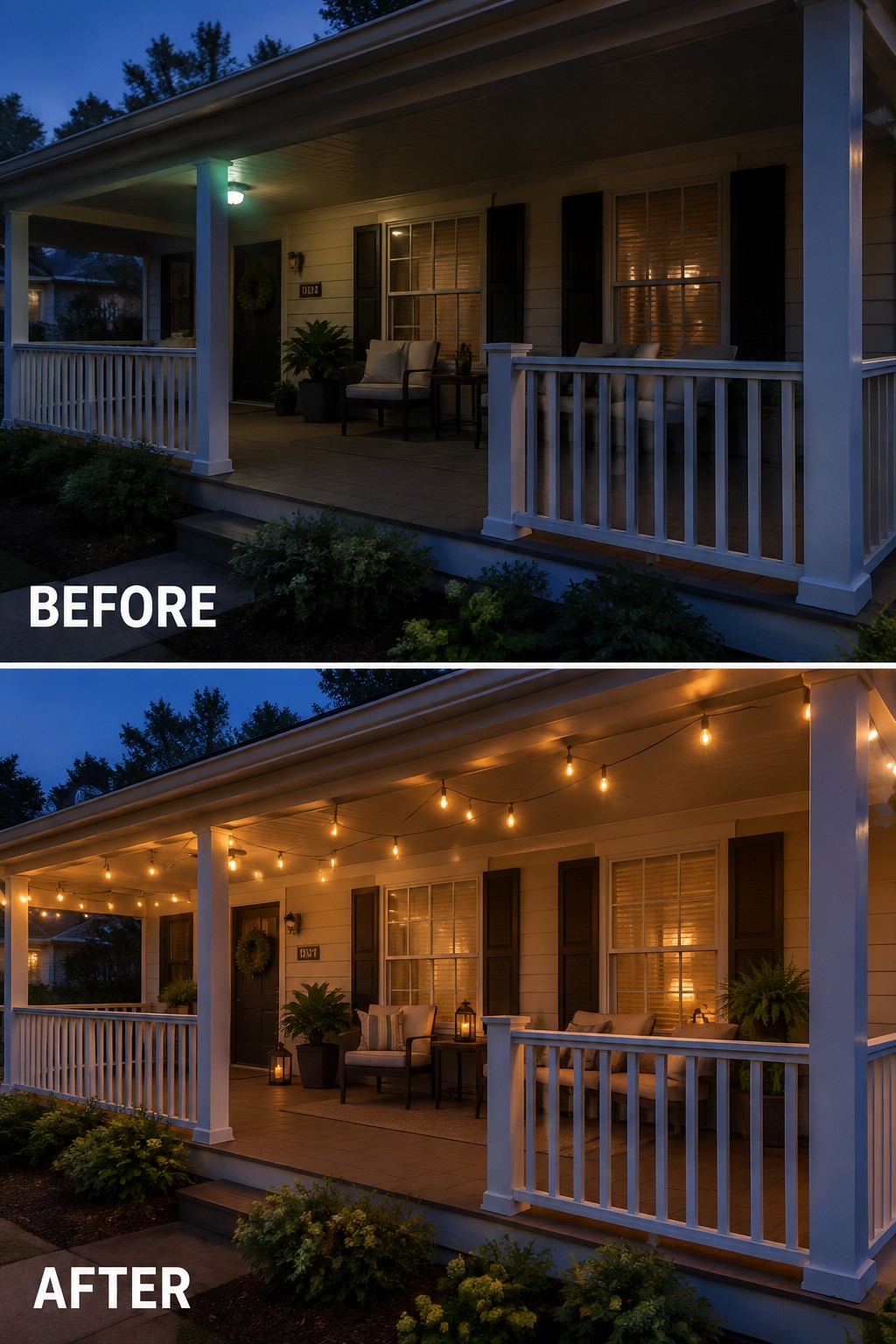
String lights can turn a basic porch into a space that feels ready for evening use. The before photo shows a fairly empty porch with only one overhead light. Adding a simple run of string lights along the ceiling and posts creates a softer, more even glow that makes the seating area feel much more welcoming.
This works best on covered porches that already have some furniture but need better lighting after dark. Run the lights along the roofline first, then add one or two lanterns on tables so the glow stays at seating height. It suits most homes with existing porches and does not require major changes to the structure or plants.
Add Path Lights Along A Front Walkway
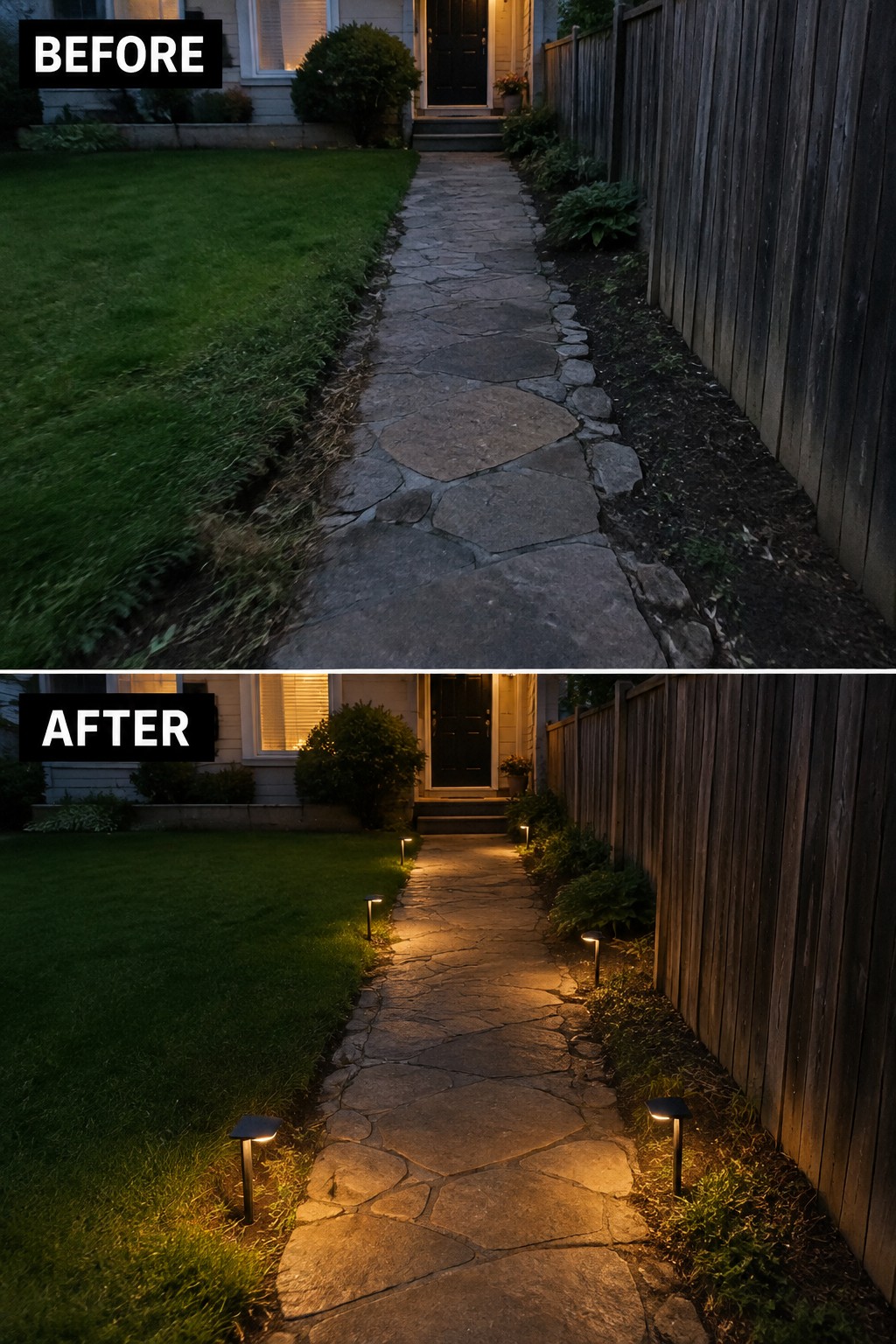
Adding a row of path lights turns a dark stone walkway into a clear, usable route at night. The before photo shows the path blending into the shadows, while the after shows how evenly spaced lights make the stones visible and the whole front approach feel more finished.
This idea works best on homes with a straight or gently curving front path. Keep the fixtures low and simple so they do not compete with the house or create glare. Start by spacing the lights about six to eight feet apart on each side, and test the placement after dark before you finish installing them.
Add Ceiling Lights To Brighten A Dark Porch
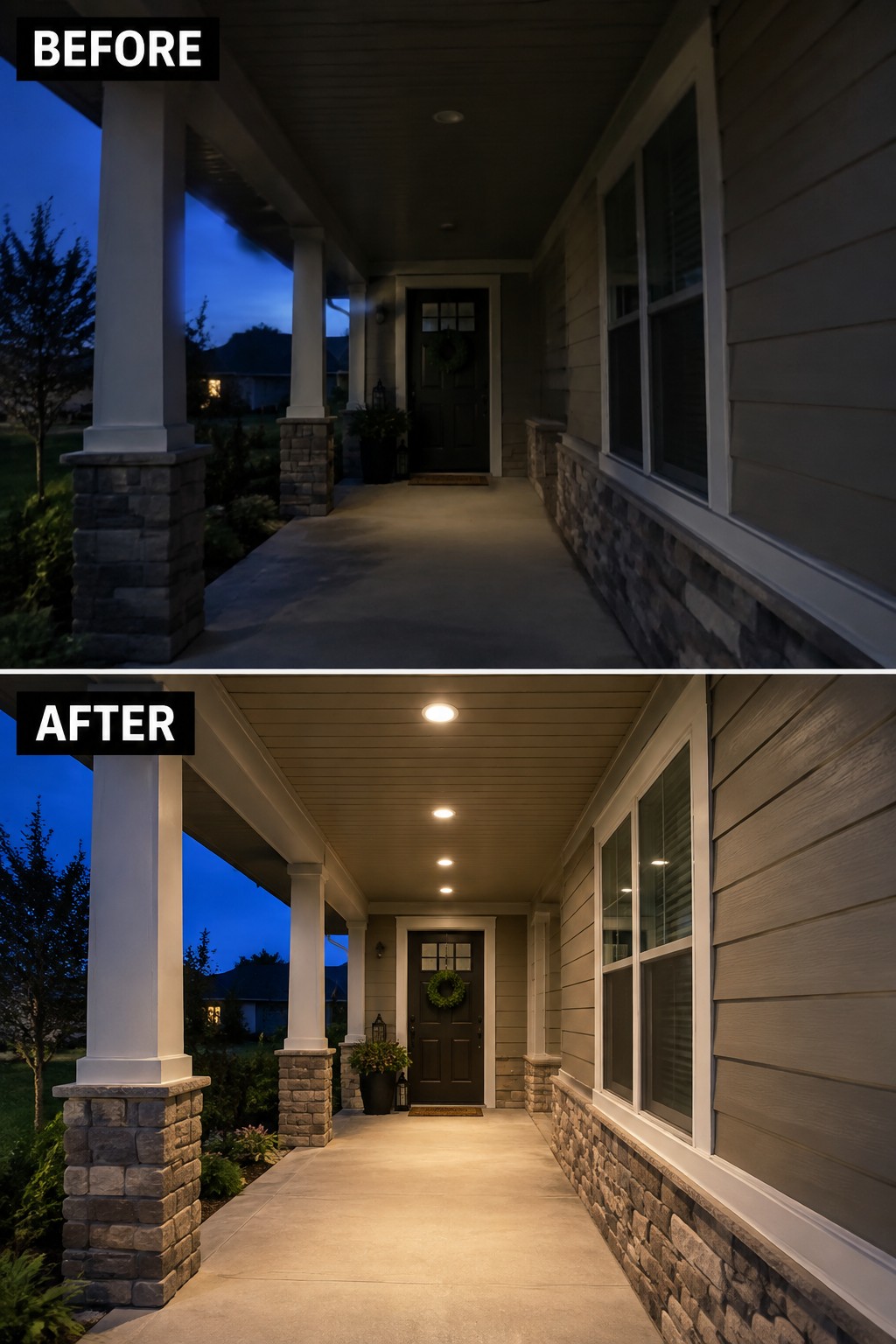
A dimly lit front porch can make the whole entry feel closed off once the sun goes down. Adding a simple row of recessed lights across the ceiling changed that by spreading even light along the walkway and up to the door.
This idea works on most covered porches where the main issue is low light rather than layout. Place the fixtures so they light the path without creating glare, and keep the spacing even so the space feels open instead of spotty.
Add Outdoor Lighting To Highlight The Entry

The before photo shows a plain front entry that disappears into the evening. In the after, a simple wall sconce and a light aimed at the potted plant make the door and the house siding stand out. The change is small but effective because it gives the eye a clear place to land instead of leaving the whole facade in shadow.
This idea works well on houses where the entry feels flat once the sun goes down. Place one light above or beside the door and a second low light on a plant or the wall next to the steps. Keep the fixtures modest in size and use warm bulbs so the light feels like part of the house rather than an afterthought.
Add Step Lights To Concrete Stairs For Evening Safety

The before photo shows a set of concrete stairs that blend into the dark once the light fades. Adding small recessed lights on each tread and a few low fixtures along the retaining walls makes the path clear without needing bright overhead lights.
This approach works best on homes with multiple levels or sloped yards where stairs see regular use after dark. Focus first on the steps themselves, then add just enough light at the edges of the beds so people can see where they are walking. Warm bulbs keep the light from feeling too stark against the house and plants.
Use Ground Lights To Highlight Garden Features

Adding a few ground lights makes a big difference once the sun goes down. Here the lights were placed low and aimed at the larger hostas and the statue, so those pieces stand out instead of blending into the dark mulch and shrubs.
This idea works best on small front beds where you already have one or two clear focal points. Place the lights close to the plants you want to show, keep the beams narrow, and use warm bulbs so the look stays soft instead of harsh.
Add Linear Lighting To Highlight Your Home’s Shape
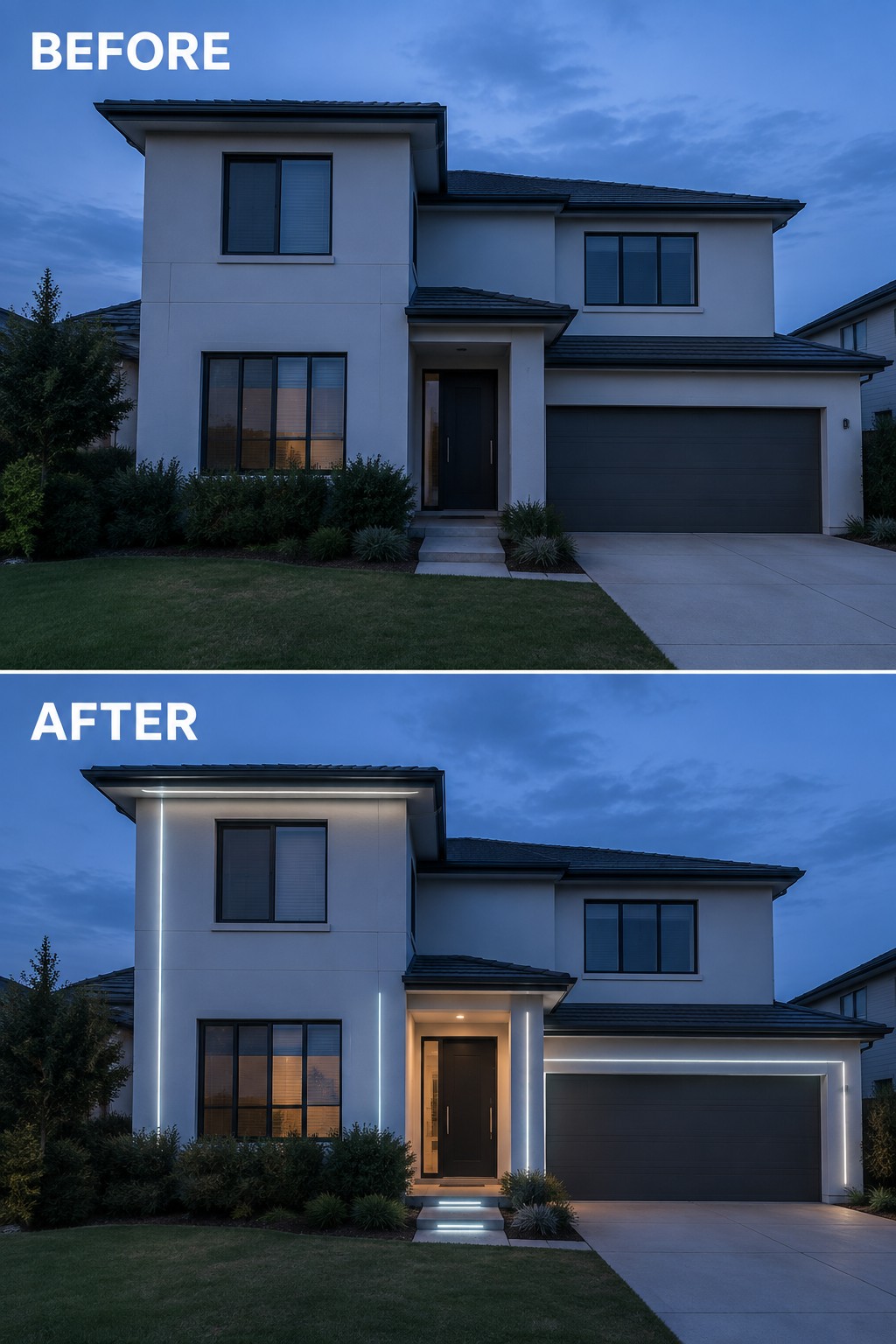
Many homes look flat once the sun sets because nothing defines their edges or height. In this case, the plain facade gained vertical LED strips that run up the corners and frame the main sections. That one change makes the two-story form readable at night without adding clutter or new fixtures everywhere.
This works best on houses with straightforward geometry where the lines are already strong. Run the lights along actual architectural breaks like corners or window bays, and keep the glow soft and even. It is usually easier to plan the layout before buying the strips so the wiring stays hidden and the result feels built in rather than added on.
Add Strip Lighting To Highlight A Porch At Night

Adding a line of warm LED strips under the porch roof instantly changes how the front of the house reads after dark. The before version shows a standard porch that fades into the background once the sun goes down. In the after, that same porch now has a steady glow along the eaves and down the columns, which draws attention to the entry without any extra fixtures or clutter.
This works best on houses with a covered porch or overhang where you can run the lights out of direct weather. Keep the color temperature in the warm range so it feels like an extension of indoor lighting rather than a security spotlight. Start with one continuous run along the main roofline before adding smaller accents on the posts.
Add Outdoor Lighting To Highlight Key Exterior Features

Adding a few well-placed lights can change how a house reads after dark. Here the chimney goes from nearly invisible to a warm focal point, and a simple line of light along the roof edge gives the whole front a finished look without any new construction.
This idea works best on homes that already have some brick or roof detail worth showing off. Place small uplights at the base of tall elements like chimneys first, then add a thin strip under the eaves if the roofline needs definition. Use warm bulbs and keep the fixtures tucked out of sight so the light feels natural rather than staged.
Add Path Lights To Brighten A Front Walk
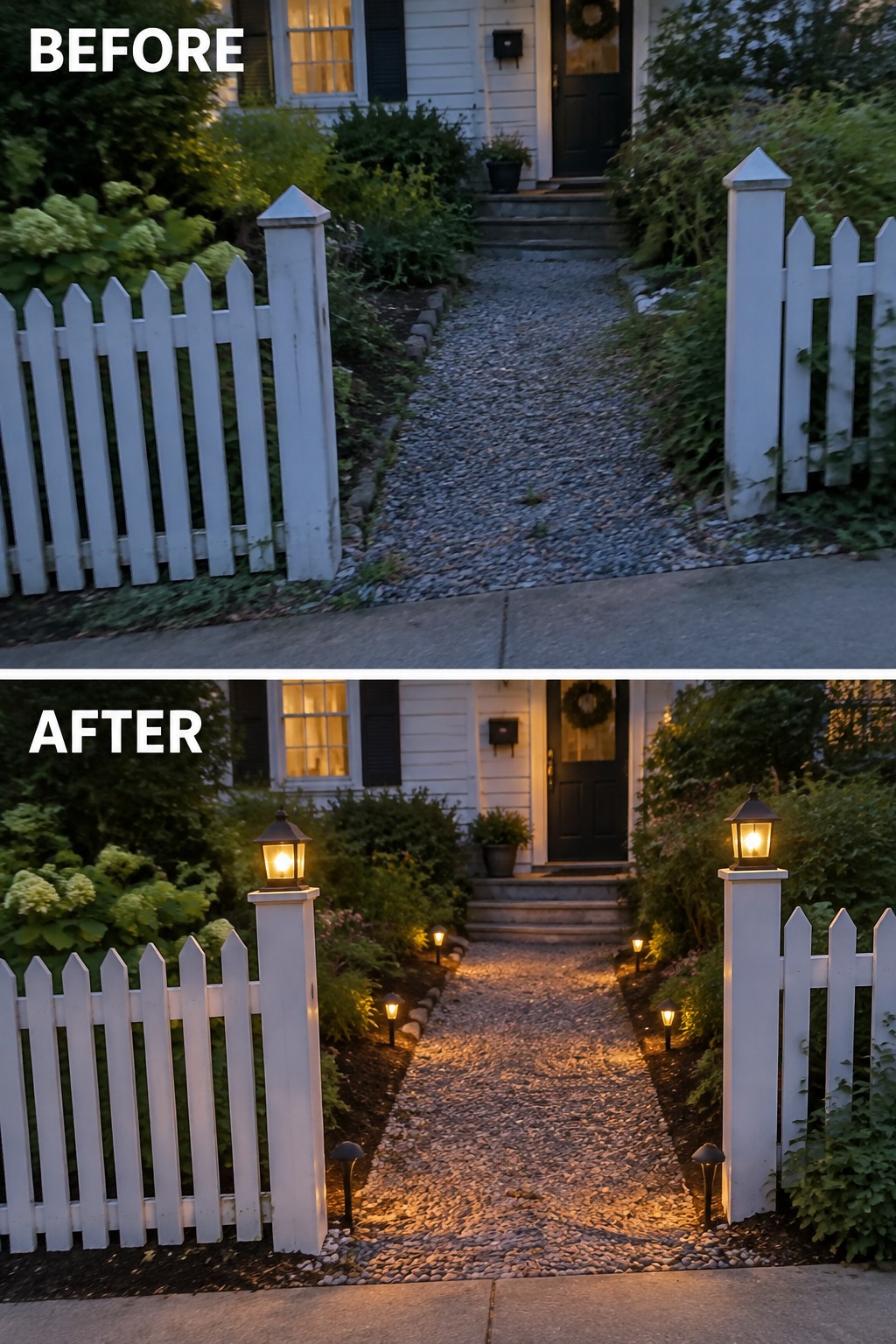
A dark gravel path can make even a tidy front yard feel closed off once the sun goes down. Placing small lights along the edges and on the fence posts turns the same walkway into a clear, inviting route that leads straight to the door.
This idea works best on homes with simple paths or garden borders where the lights can sit low and follow the natural line. Keep the fixtures modest in size and aim them downward so the light stays on the ground rather than shining into windows.
Use Lighting To Highlight A Fountain

Adding lights to a fountain gives the front entry a clear focal point after dark. The before photo shows the stone fountain sitting in shadow with almost no definition. In the after, warm lights inside the basin make the water glow and pull attention to the center of the courtyard.
This works best on homes that already have a fountain or similar feature near the entry. Use simple submersible lights that sit low in the water and keep the color warm rather than cool. It is a small change that makes the whole front feel more welcoming without new construction or major planting.
Frequently Asked Questions
Q: How bright should the lights be so they don’t bother neighbors or shine in windows?
A: Place fixtures low and angle them down toward the ground or plants. Walk around the yard at night with a flashlight to test the glow before mounting anything permanent.
Q: What works if I have no electrical outlets near the front yard?
A: Solar powered options charge during the day and turn on automatically. Bury the small panels in a sunny spot along the flower beds so the lights stay hidden.
Q: How do I keep string lights from sagging after a few months?
A: Use sturdy hooks every few feet and check the tension after heavy rain or wind. Swap in heavier gauge wire if the strings still droop.
Q: Will these changes still look good in winter when the plants die back?
A: Focus some lights on hard surfaces like paths or tree trunks that stay visible year round. Move a couple fixtures around once the leaves drop to keep the same evening feel.
