


I have noticed that small yards often sit unused once the sun goes down because there is not enough light to make them comfortable.
Adding a few well placed lights can turn an empty patch of grass into a spot where we actually want to sit after dinner.
Small changes like these add up quickly.
I would test the solar options first since they require no wiring and still give a soft glow in the evenings.
Seeing the yard feel more intentional after these changes reminds me that outdoor areas deserve the same attention as the rooms inside.
Use String Lights To Make A Patio Feel Cozy
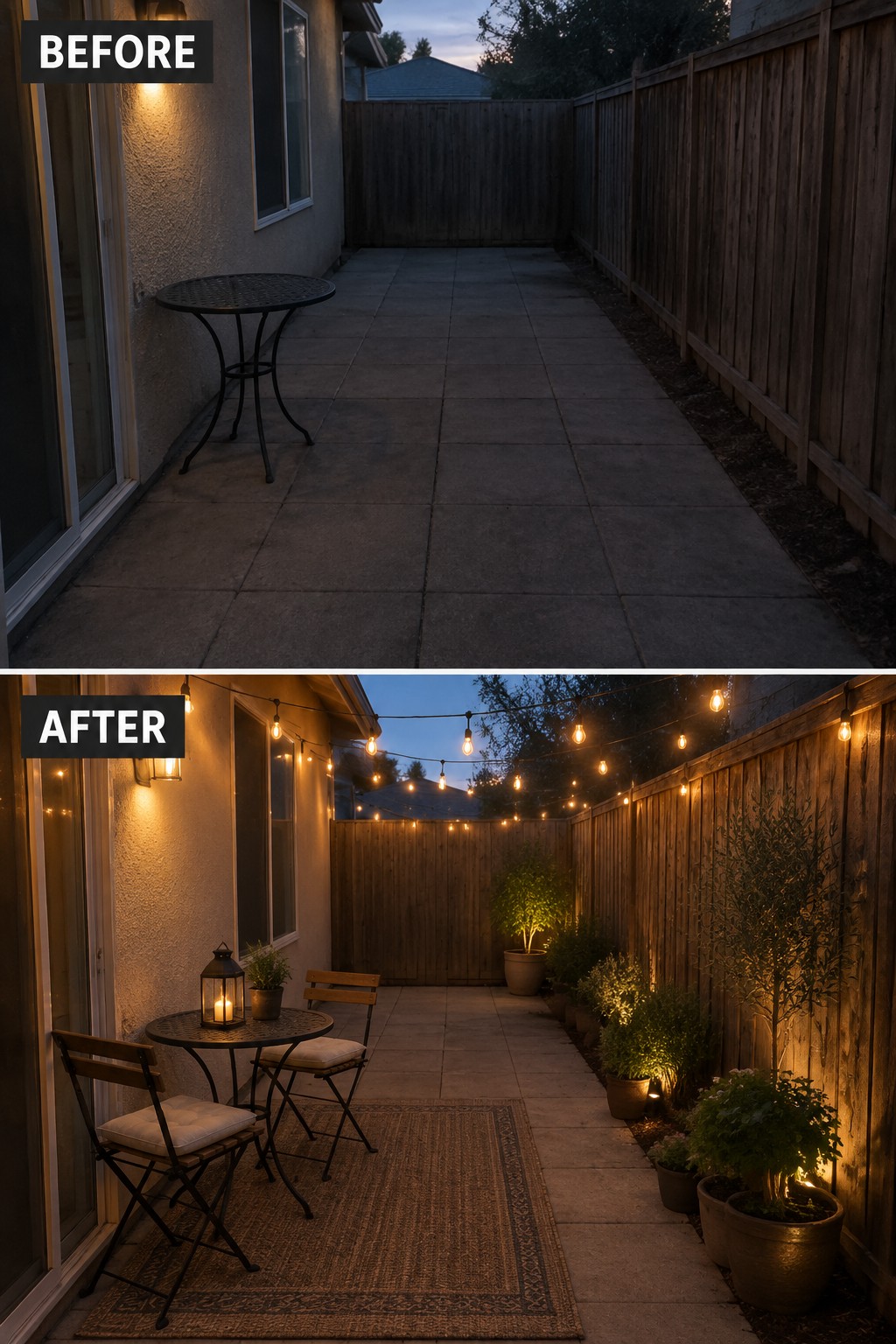
A bare concrete patio often feels like wasted space once the sun goes down. Adding a few strands of string lights across the area instantly changes that. The lights create a soft overhead layer that makes the space feel defined and much more inviting without any major construction.
This idea works especially well in small yards where you need one simple change to do most of the work. Run the lights from the house to the fence or between two posts, then add one or two lanterns on a table so the seating area has a clear focal point. Keep the furniture light and movable so the space still feels open during the day.
Add Solar Lights Along A Narrow Path
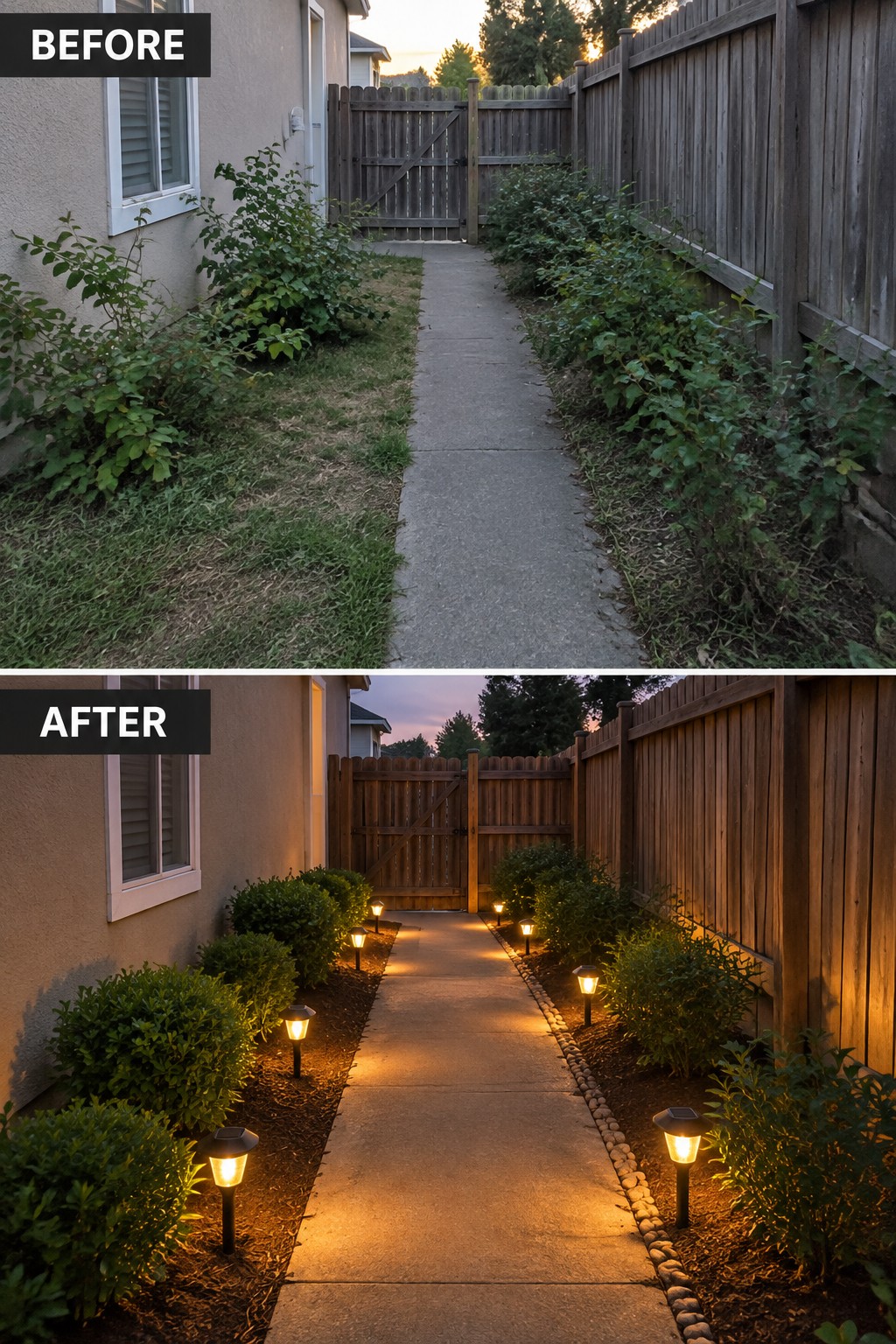
Adding a row of solar path lights is one of the simplest ways to make a small side yard feel more finished. The before shot shows an overgrown walkway with uneven grass and bushes spilling onto the concrete. After the change, low lights run along both edges and the beds look trimmed and contained, which makes the space feel wider and safer to walk through after dark.
This approach works best on narrow paths where you do not want to add wiring or large fixtures. Space the lights evenly, keep the plants cut back so the glow reaches the ground, and use a simple mulch or pebble border to keep everything looking tidy. It is an easy starting point that improves both looks and function without much cost.
Use String Lights And Mason Jars To Light Up A Fence
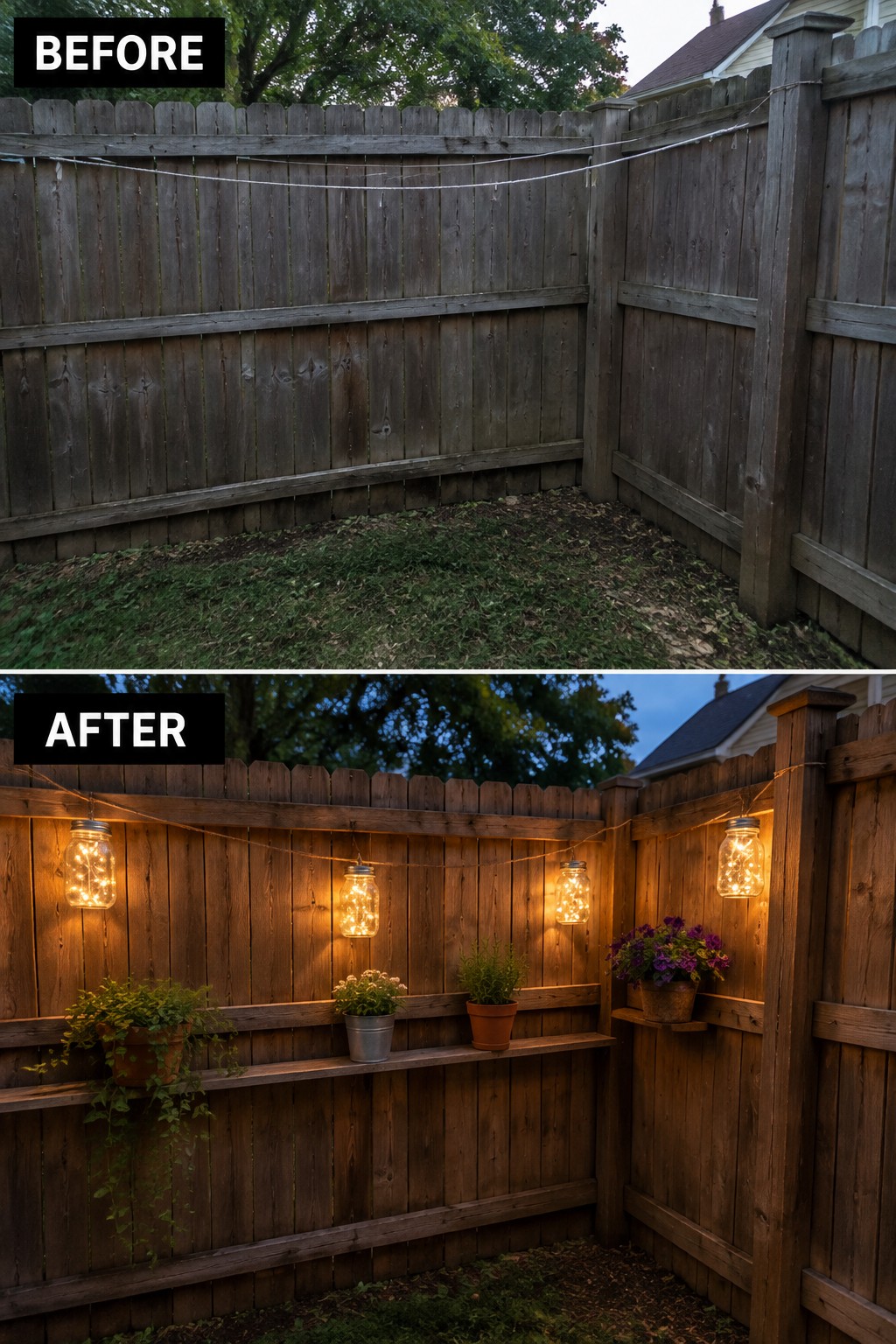
A plain fence can make a small yard feel empty at night. Running a simple string of lights along the top and adding a few mason jars turns the same fence into a soft, usable backdrop. The jars diffuse the bulbs just enough to create a warm glow without harsh spots, and the light actually reaches the ground where people sit or walk.
This idea works well in narrow side yards or back corners where bigger fixtures would feel out of scale. Start with one string and three or four jars, then add a narrow shelf or two if you want a place for plants. Keep the rest of the fence clear so the light stays the main feature.
Use Lighting To Make A Patio Feel Cozy

A bare concrete patio with just a bench often stays empty once the sun goes down. Adding warm light under the bench and a few small lights near plants makes the same space feel inviting enough to use in the evening.
This idea works well on small patios where you do not want to add much furniture. Run a simple LED strip under the bench seat and place one or two solar lights in nearby pots. The light defines the seating area without taking up floor space or needing a big budget.
Add Simple Lighting Layers Around The Front Entry
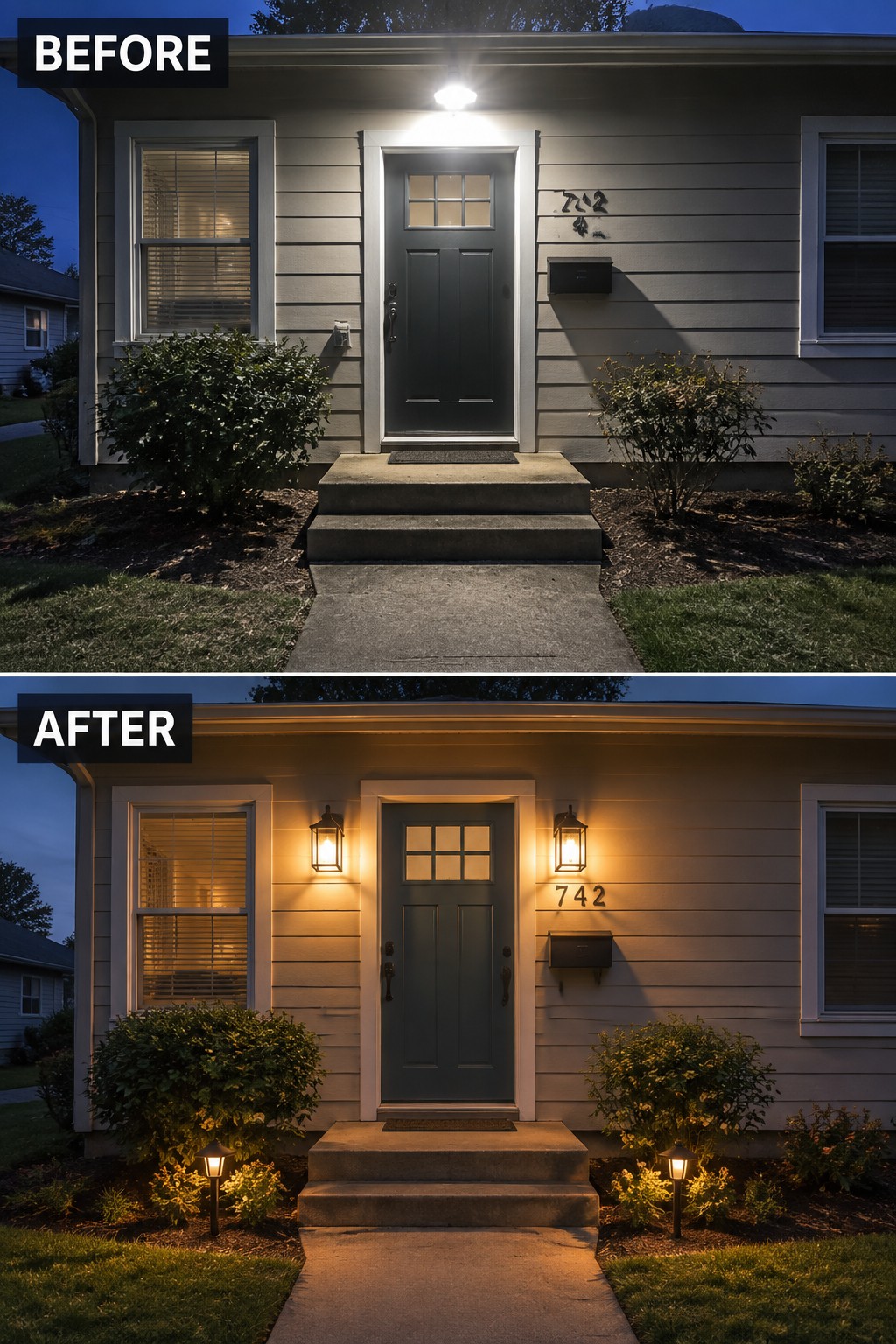
A single bright bulb over the door often creates harsh shadows and leaves the rest of the entry dark. Adding a pair of wall sconces beside the door and a couple of low path lights on either side of the steps spreads the light more evenly and makes the whole front feel more welcoming at night.
This approach works especially well on small yards where you cannot add many fixtures. Keep the lights modest in size, use warm bulbs, and place them where they actually guide people to the door rather than flooding the whole facade.
Add Outdoor Lighting To Accent A Backyard Tree
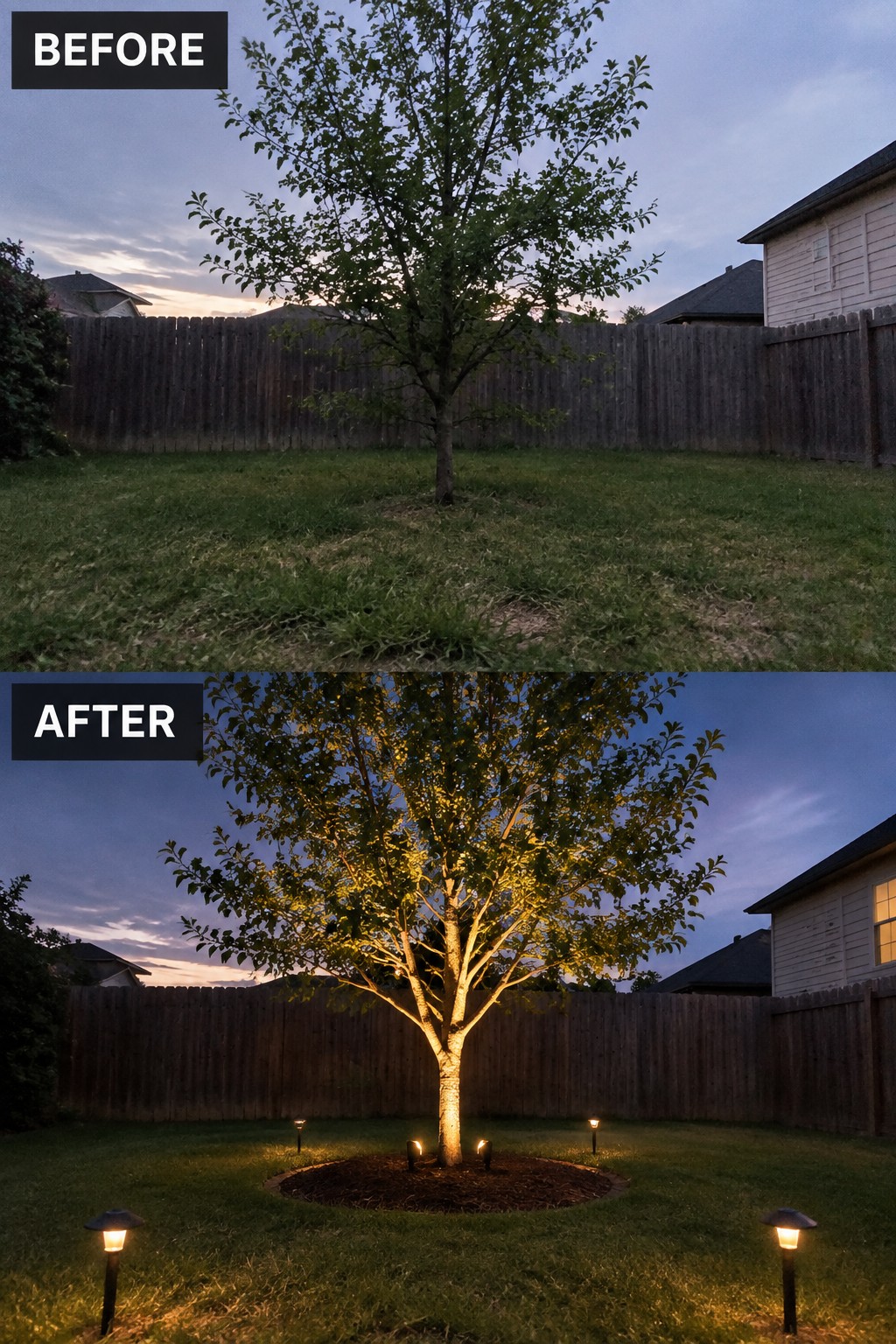
Many small yards have one tree that could become a focal point but stays unnoticed once the sun goes down. Adding a few low lights around the base turns that tree into something you actually see and enjoy at night without needing a big setup or high cost.
This works best in modest backyards where you want one clear feature rather than trying to light everything at once. Place lights to graze the trunk and catch the lower branches, then add a couple farther out if you have open grass. Keep the fixtures simple and low to the ground so they do not clutter the space during the day.
Add Wall Lights To Make A Small Patio Usable At Night
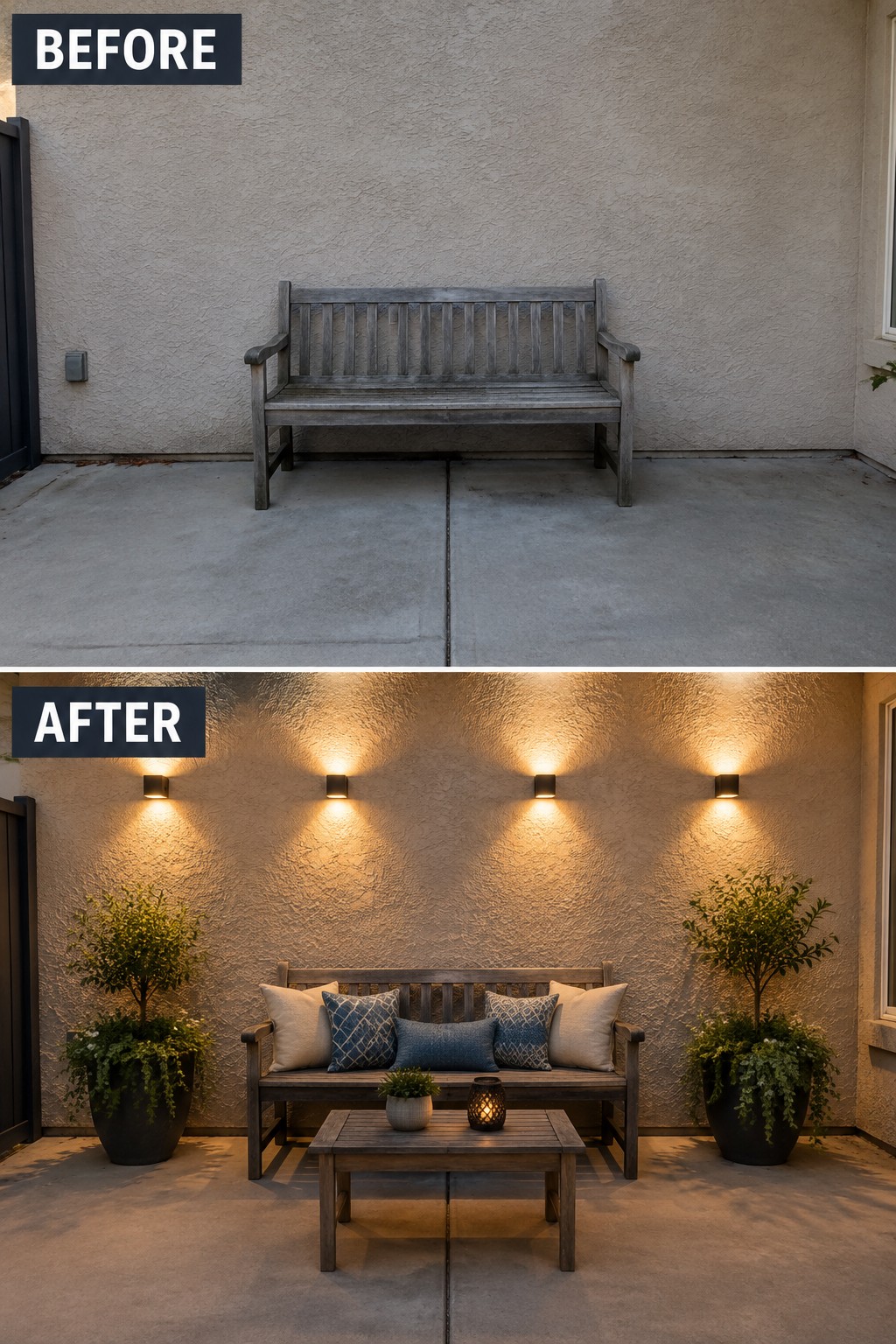
A blank wall and bare concrete can make a patio feel like wasted space once the sun goes down. Adding a row of simple wall sconces changes that by casting warm light across the seating area and giving the space a clear purpose after dark.
This works well on small yards where you cannot add floor lamps or string lights. Mount the fixtures at even spacing along the main wall, use warm bulbs, and keep the rest of the setup minimal so the light does the main job. It suits any concrete patio or deck that needs to feel inviting without a big budget or complicated wiring.
Add Path Lights Along A Garden Border
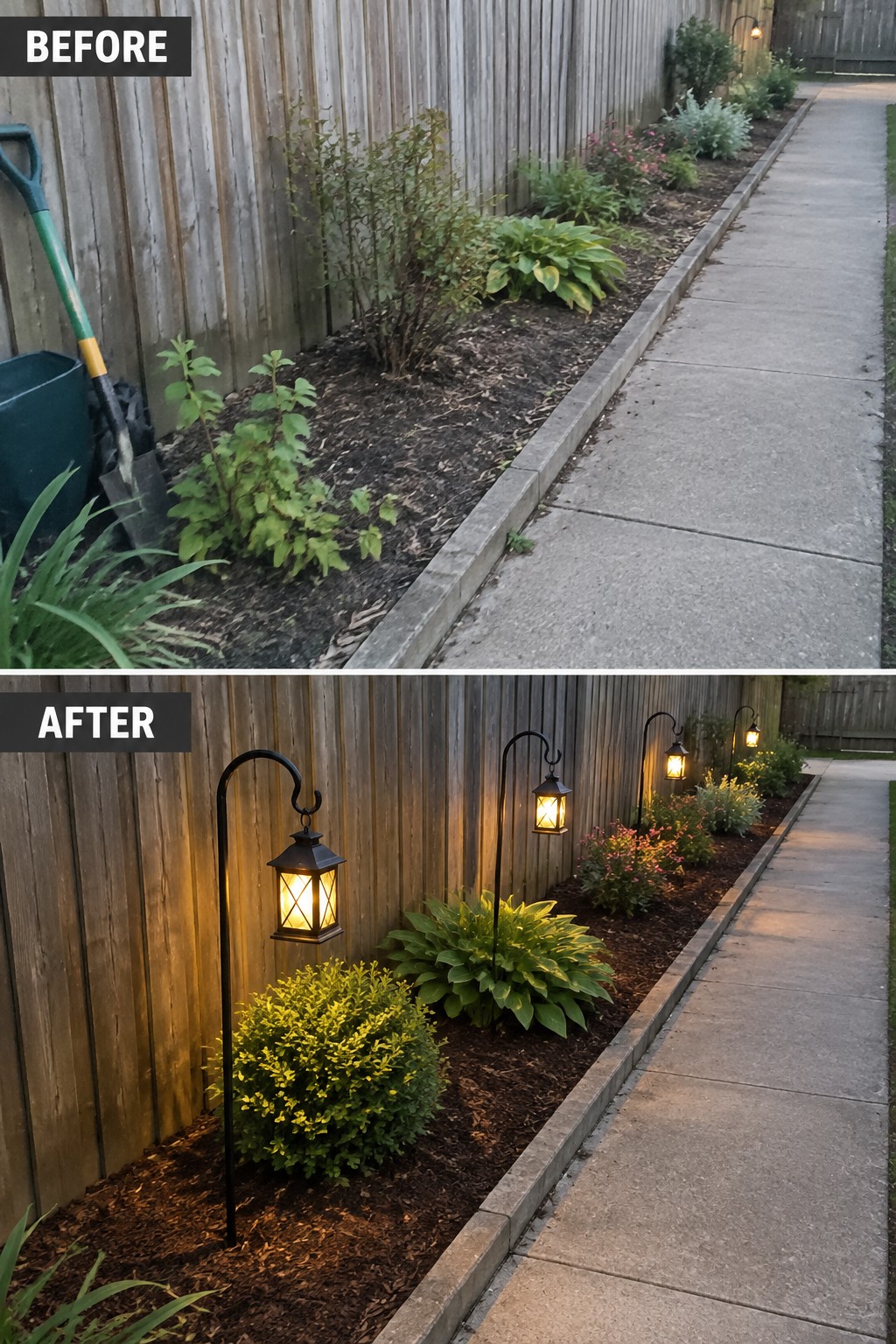
The main change here is how a few black path lights turned a messy strip of dirt and uneven plants into something that looks planned. The fresh mulch helped too, but the lights are what give the bed a clear edge and make it visible after dark.
This idea works well in small yards where the garden sits right next to a path or fence. Keep the lights spaced evenly, match the finish to your other outdoor fixtures, and stop once the line feels defined. Too many lights will make the space feel crowded.
Add Outdoor Lighting To Define Garden Beds
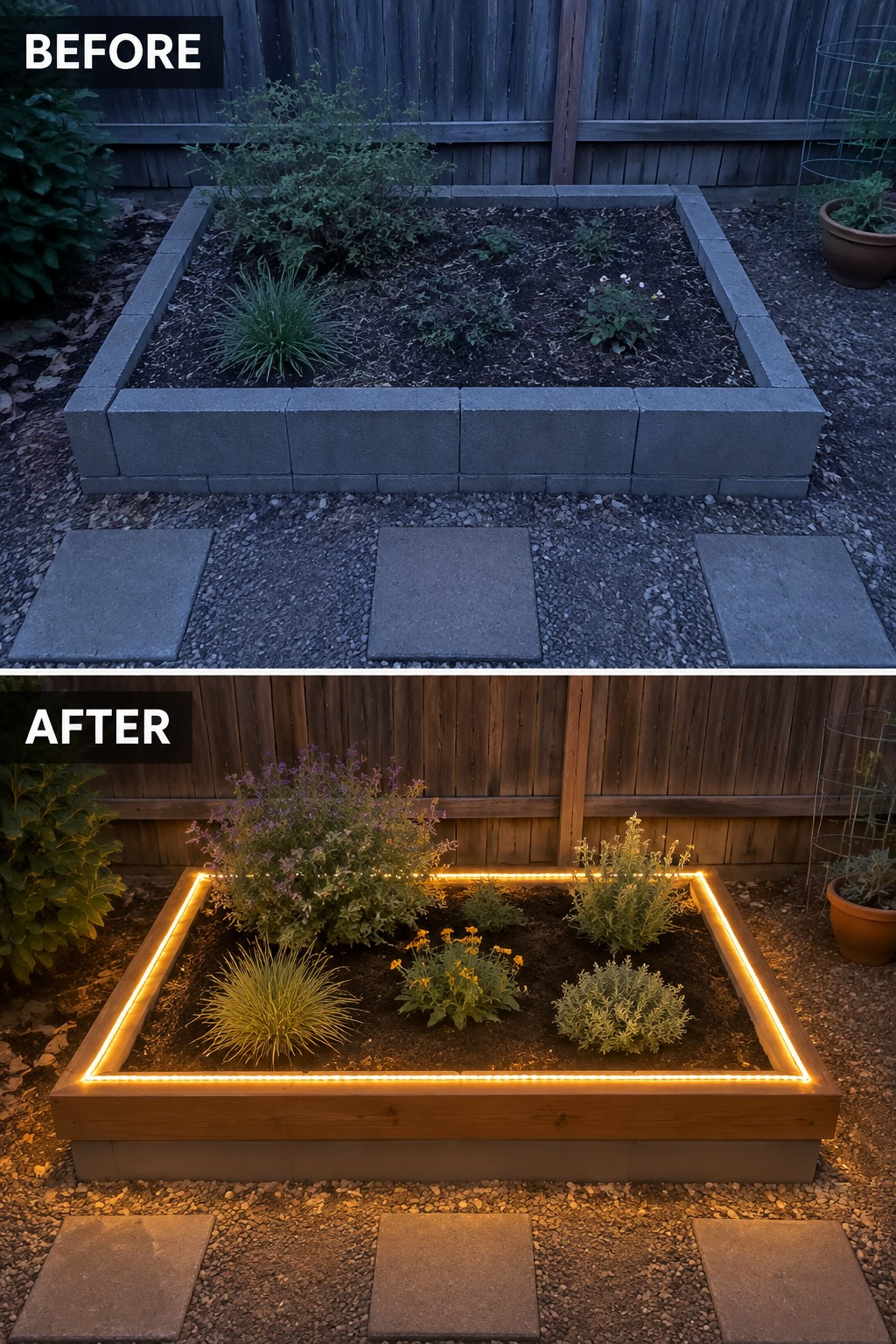
One easy way to improve a small yard at night is to add lighting around a raised garden bed. The before photo shows a basic concrete block bed that blended into the dark, while the after shows how a simple strip of warm lights along the edges gives the bed a clear shape and makes the plants more visible.
This idea works well when you want to highlight planting areas without building new structures or buying a lot of fixtures. Use outdoor-rated LED strips, keep the layout simple, and place the lights where they will not shine directly into seating spots. It is an affordable change that makes the yard feel more planned once the sun goes down.
Add Step Lights To Outdoor Stairs

Concrete steps can feel dark and difficult to use once the sun goes down. Adding small recessed lights along each riser gives the stairs a clear path and a warmer look without any big construction.
This works well on decks, raised porches, or any home with outdoor steps that see evening use. Choose simple low voltage or solar fixtures, space them evenly, and keep the rest of the area uncluttered so the light stays focused on safety.
Use String Lights To Make A Patio Feel Cozy
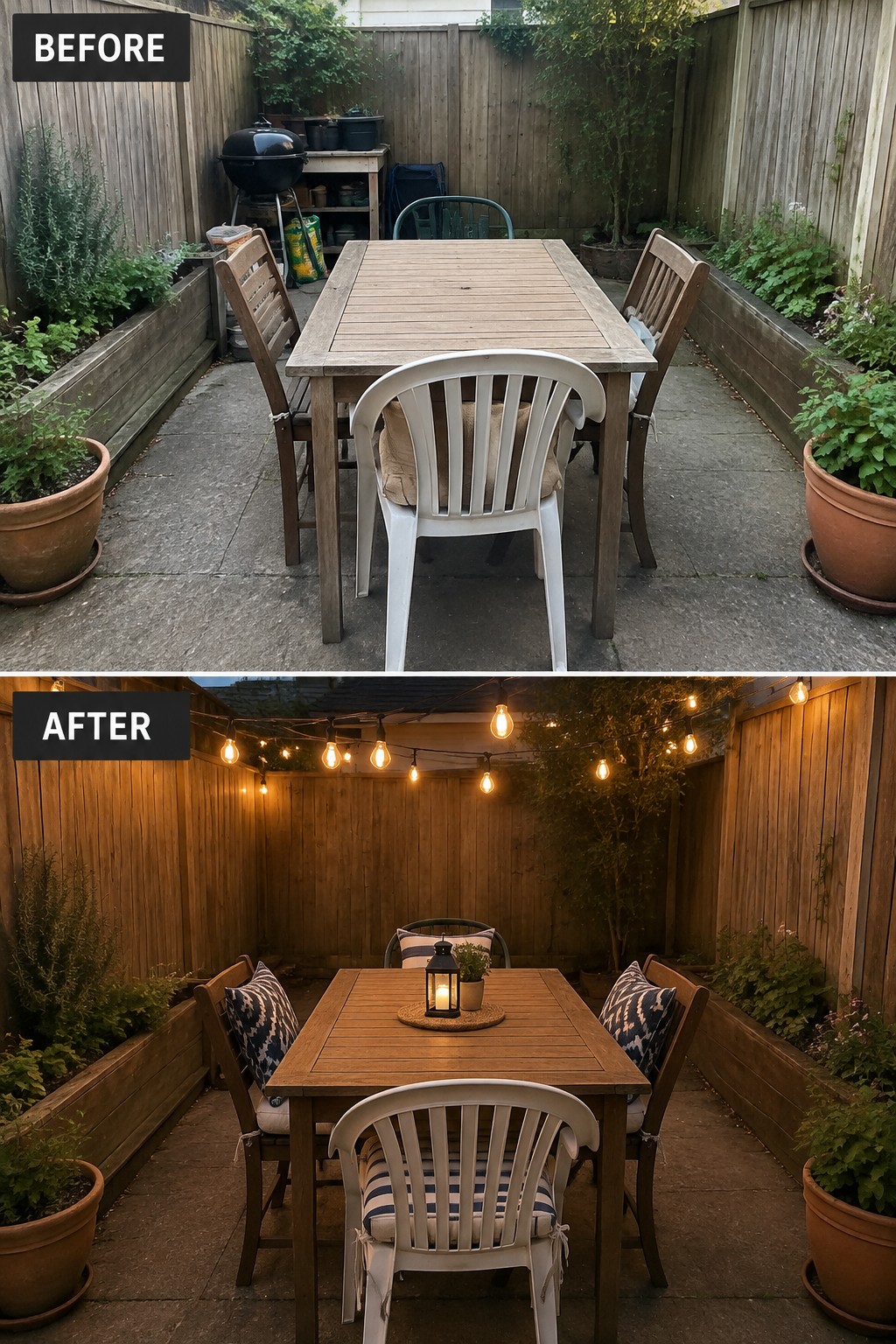
Adding string lights is one of the simplest ways to make a plain patio usable in the evening. The before photo shows a basic table and chair setup with no overhead lighting. Once the lights are strung across the space, the same area feels much more inviting after dark and gives the yard a clear sense of purpose.
This idea works best in small yards where floor space is limited. Hang the lights from the fence or existing posts, keep the furniture arrangement simple, and add just a few cushions or a lantern on the table. It keeps the focus on the seating zone without crowding the area.
Use Layered Lighting To Soften A Front Entry
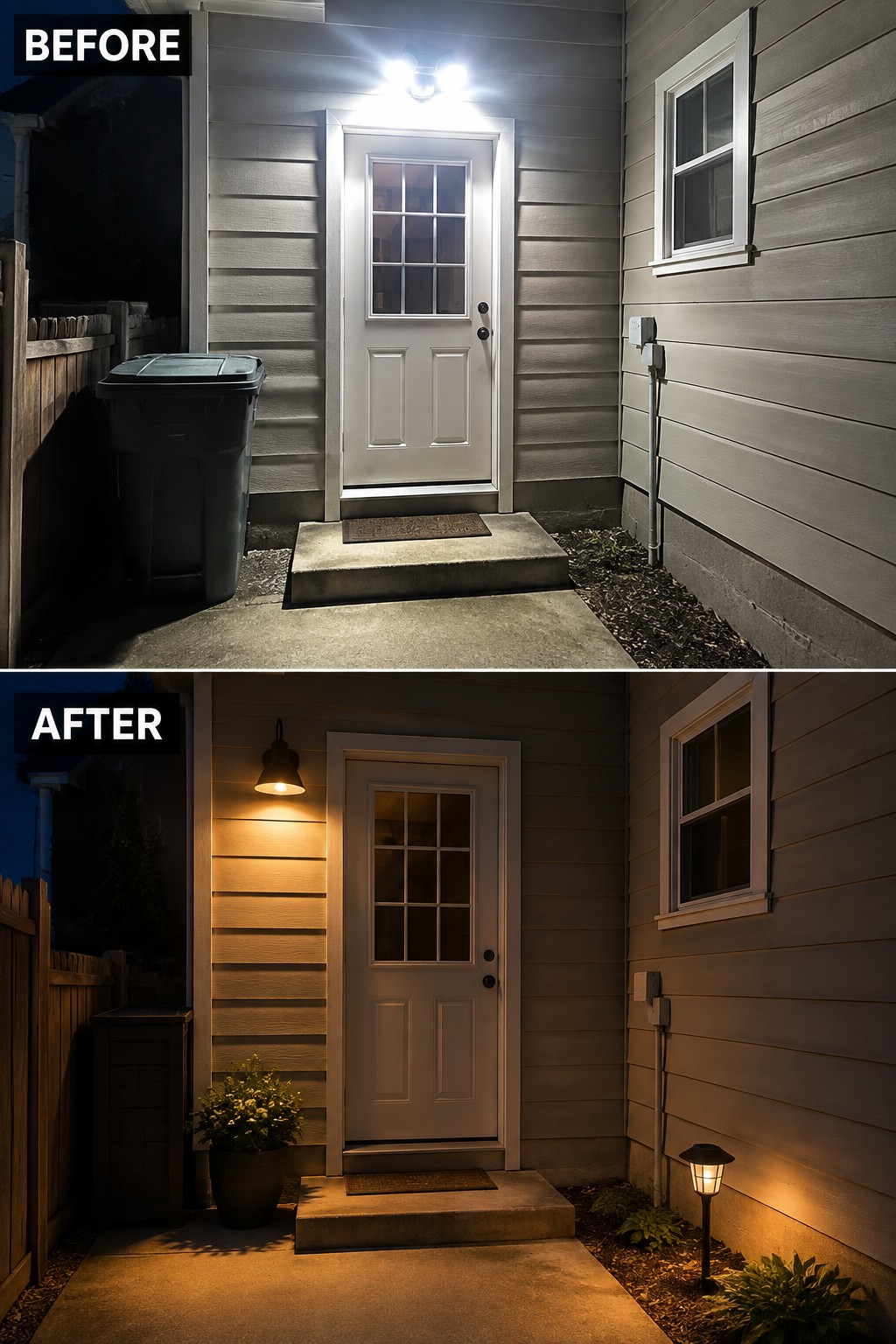
Bright overhead lights often create glare and harsh shadows right at the door. Switching to a single wall sconce plus a low path light spreads the glow more evenly and makes the entry feel calmer and more inviting without losing visibility.
This approach works well on small front yards where you want light for safety but do not want it to feel like a security spotlight. Start with one or two fixtures on timers or sensors, keep the bulbs warm white, and place them at different heights so the light fills the space instead of blasting straight down.
Use Lanterns To Add Warm Evening Lighting To A Small Patio
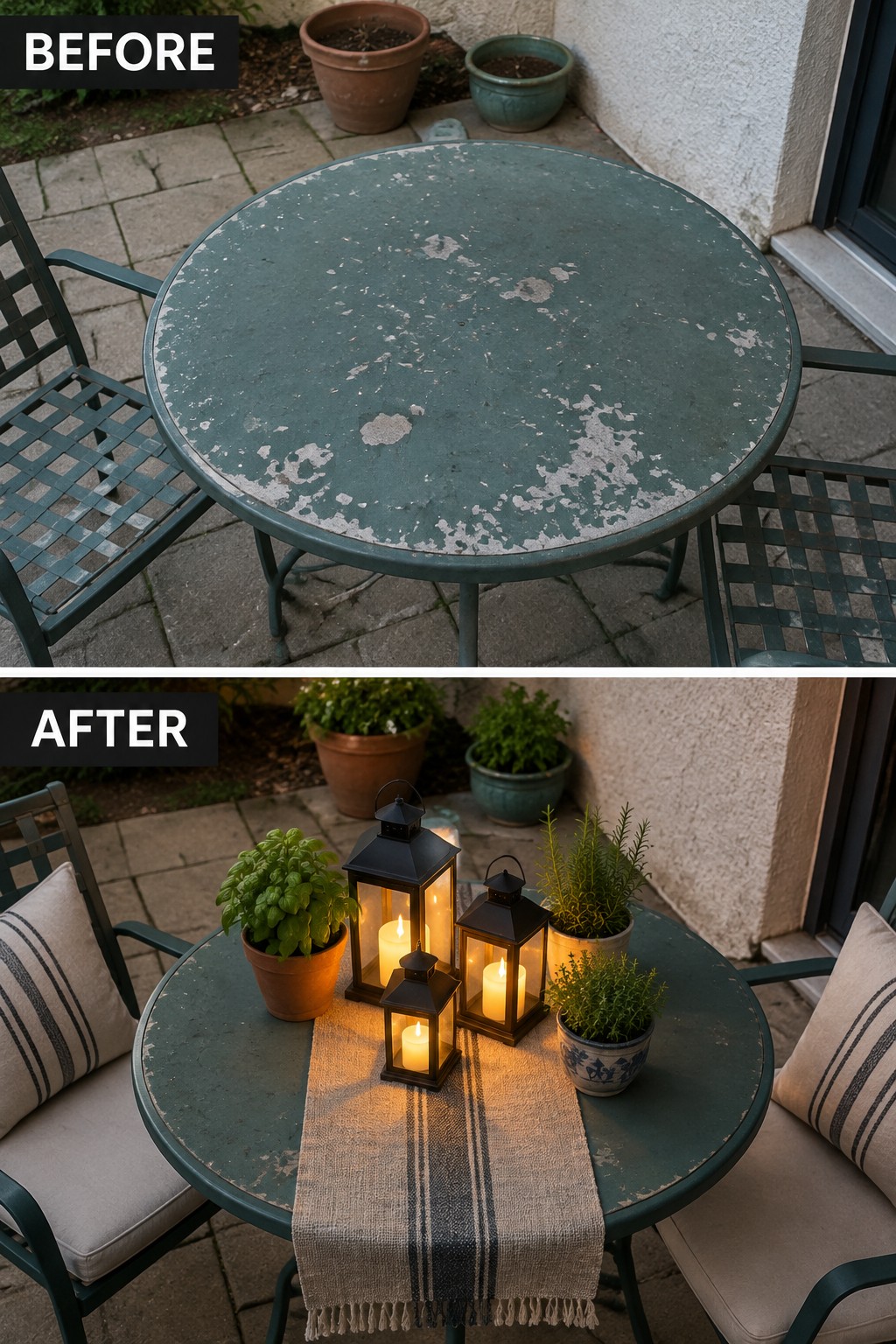
A plain patio table can feel unfinished once the sun goes down. Adding a few simple lanterns with real candles turns the same surface into a spot people actually want to sit at after dark. The before photo shows the table sitting bare on the concrete. In the after, three black lanterns line a basic runner and give off a soft glow that makes the whole corner feel used.
This approach works well on small patios because it needs almost no wiring and stays affordable. Place the lanterns where people will actually sit so the light lands on faces and tabletops instead of just the floor. Stick with one runner or a couple of plants so the lighting stays the main feature rather than getting lost in too many extras.
Add Path Lights Along A Front Walkway
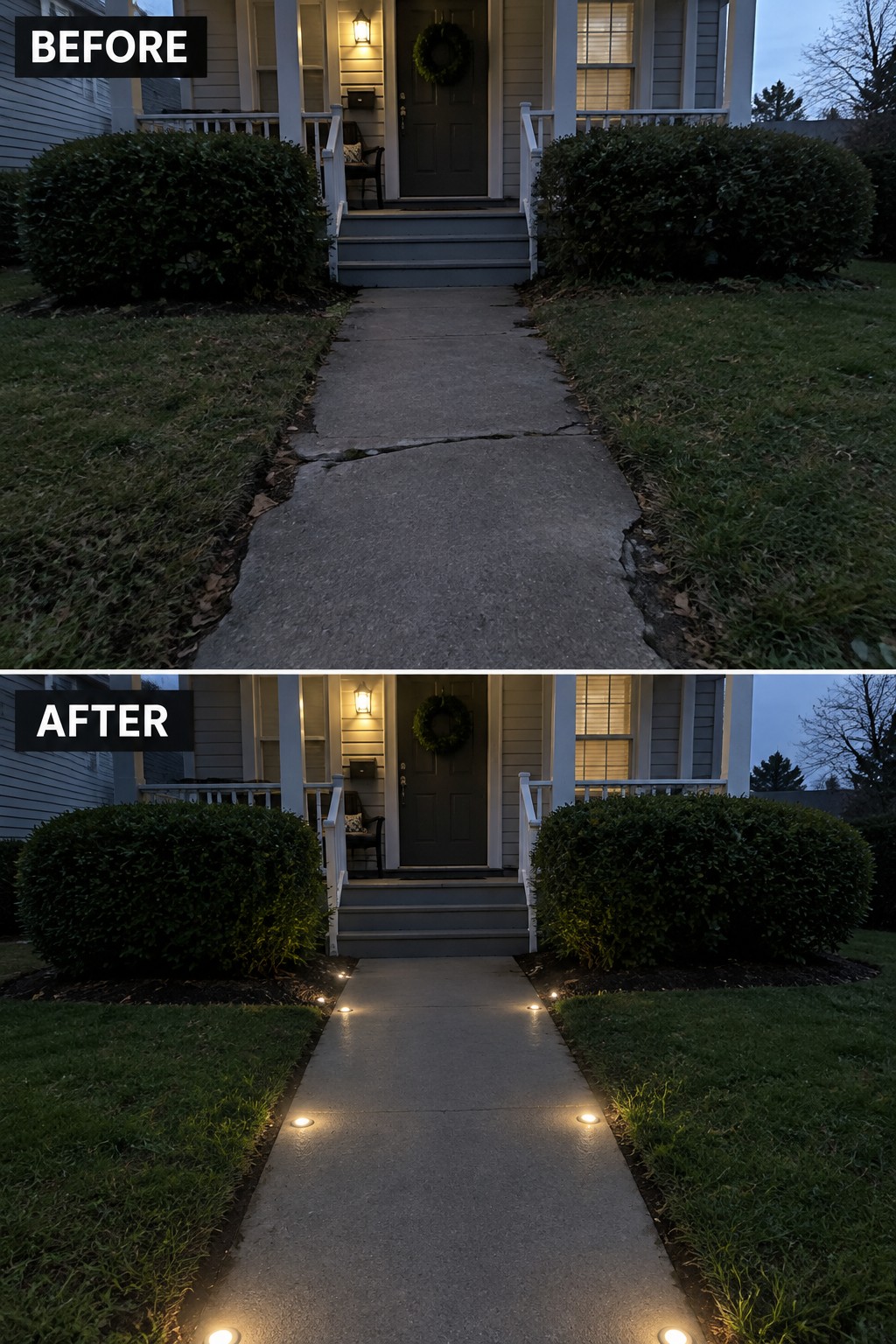
Adding a few low path lights made the biggest difference here. The before photo shows a plain concrete walkway that disappeared into the dark at night. Once the small ground lights were added along both edges, the path became easy to follow and much more welcoming without any big construction work.
This works especially well on small front yards where the main goal is safe footing after dark. Use solar versions so there is no wiring to run, keep the lights low to the ground, and space them evenly so the beam stays focused on the walking surface rather than shining into the house windows.
Add Simple Lighting To Highlight The Entry

A few well-placed lights can change how a house looks after dark without any major construction. The before photo shows a plain front that disappears into the evening. In the after photo, soft lights on the siding, a sconce by the door, and small path lights in the beds make the entry feel open and easy to find.
This approach works best on small front yards where you want to keep things simple. Focus on lighting the house itself first, then add one or two low lights near the walkway. Warm bulbs keep the look friendly, and aiming the light at the siding instead of straight out prevents glare for neighbors.
Add Post Lights Along A Fence To Light A Side Yard
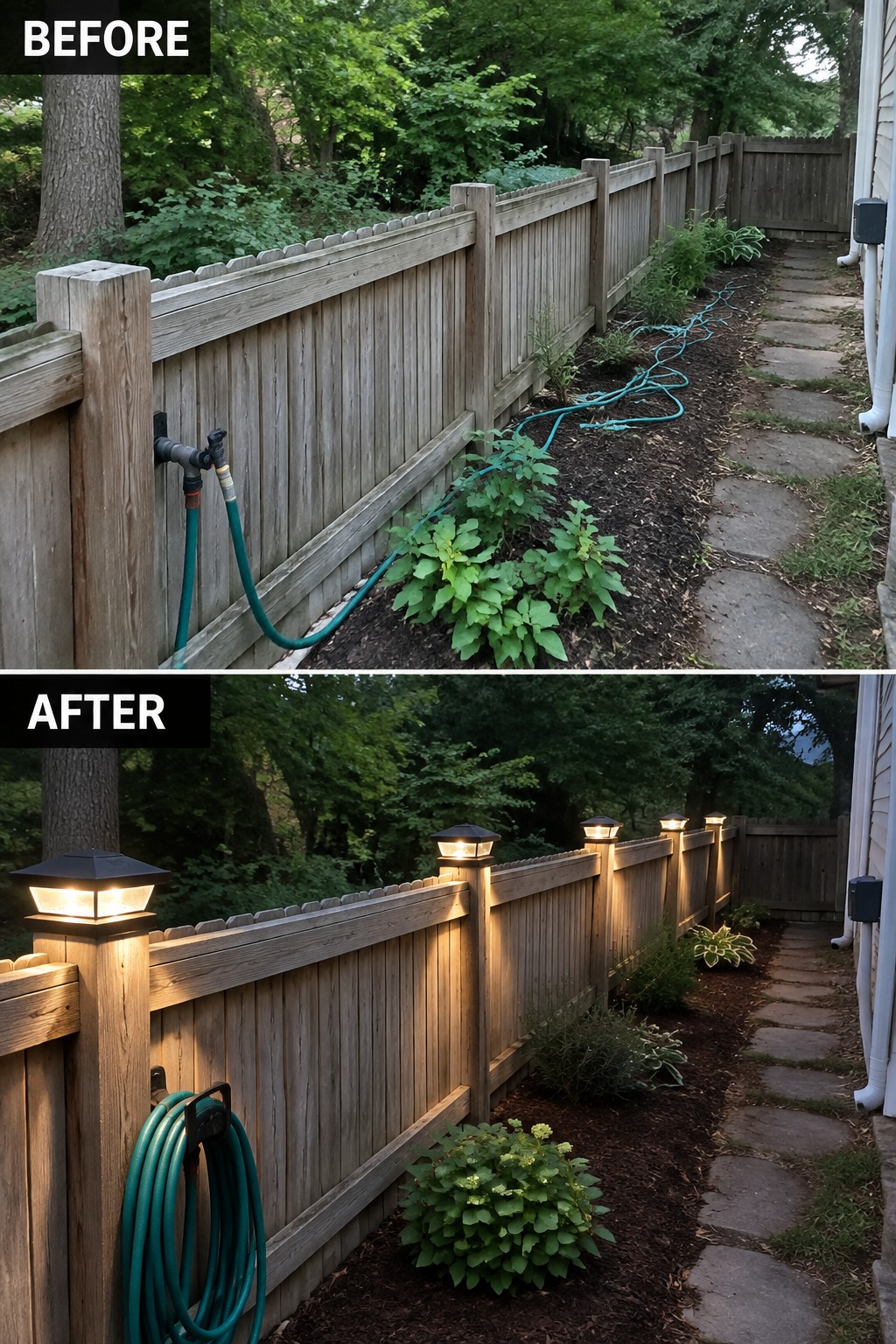
A narrow side yard often gets ignored because it feels dark and messy at night. Adding a few solar lights to the top of the fence posts gives the whole strip a clear purpose without any wiring or big expense. The fence now guides people along the path instead of disappearing into the shadows.
This works best on small lots where the side yard is mainly a walkway. Start with cleanup, then add one light every two or three posts so the glow stays even. Keep the planting low so the lights stay the main feature instead of competing with tall shrubs.
Add Hanging Lanterns To Warm Up A Small Porch

A single bulb overhead often leaves a porch looking flat once the sun goes down. Swapping it for a pair of hanging lanterns creates a softer, more even light that draws attention to the seating area and makes the space feel used.
This approach works best on small porches where you want to keep things simple. Hang the lanterns at eye level over the main sitting spot, choose weatherproof fixtures, and add just one or two other elements like a rug so the lighting stays the focus.
Add String Lights To Make A Pergola Usable After Dark

String lights can turn a basic pergola and bench into a spot people actually want to use once the sun goes down. The before version looks functional but empty, while the after shows how a few strands of lights instantly add warmth and purpose without any major construction.
This idea works best in small yards that already have a pergola, covered patio, or similar structure. Hang weatherproof lights from the beams so they drape at slightly different lengths, then add one or two climbing plants if the posts look bare. Keep the furniture simple and make sure the seating stays the main focus.
Frequently Asked Questions
Q: How do I hide the wires without digging up my whole yard?
A: Tuck them along the fence or under mulch. Solar options skip this step entirely if you want to keep things simple.
Q: What happens if I only have room for one or two lights?
A: Focus on one spot like the seating area first. It changes the feel fast without much effort.
Q: Do I need to worry about bugs swarming around the new lights?
A: Pick warmer bulbs instead of bright white ones. They attract fewer bugs at night.
Q: Can I move things around later if I change my mind?
A: Most affordable setups come apart easy. Start with stakes and clips so nothing stays permanent.
