


I have always noticed that gardens and paths tend to lose their shape once daylight fades, even after the beds and walkways are already set.
Low voltage fixtures let you add definition along edges and focal points without digging up the whole yard or dealing with high voltage runs.
I usually start by placing a few lights temporarily to see how they affect the layout at night before committing to any permanent spots.
These adjustments often make the space feel more complete in layers rather than all at once.
The difference shows up most when you actually use the yard after dark.
Add Low-Voltage Path Lights To Guide The Way

The before photo shows a plain concrete walk with dark shrubs on both sides and almost no light reaching the ground after sunset. In the after photo, small fixtures line the edges and cast a soft glow along the entire path while also highlighting the trimmed bushes. The change makes the front of the house feel finished and much easier to navigate at night.
This idea works well on any home where the main walk feels lost after dark. Start with a few low-voltage path lights spaced evenly and add one or two small uplights near the door or key plants. Keep the fixtures simple and the wiring hidden so the lighting looks intentional rather than cluttered.
Add Low-Voltage Lights To A Garden Border
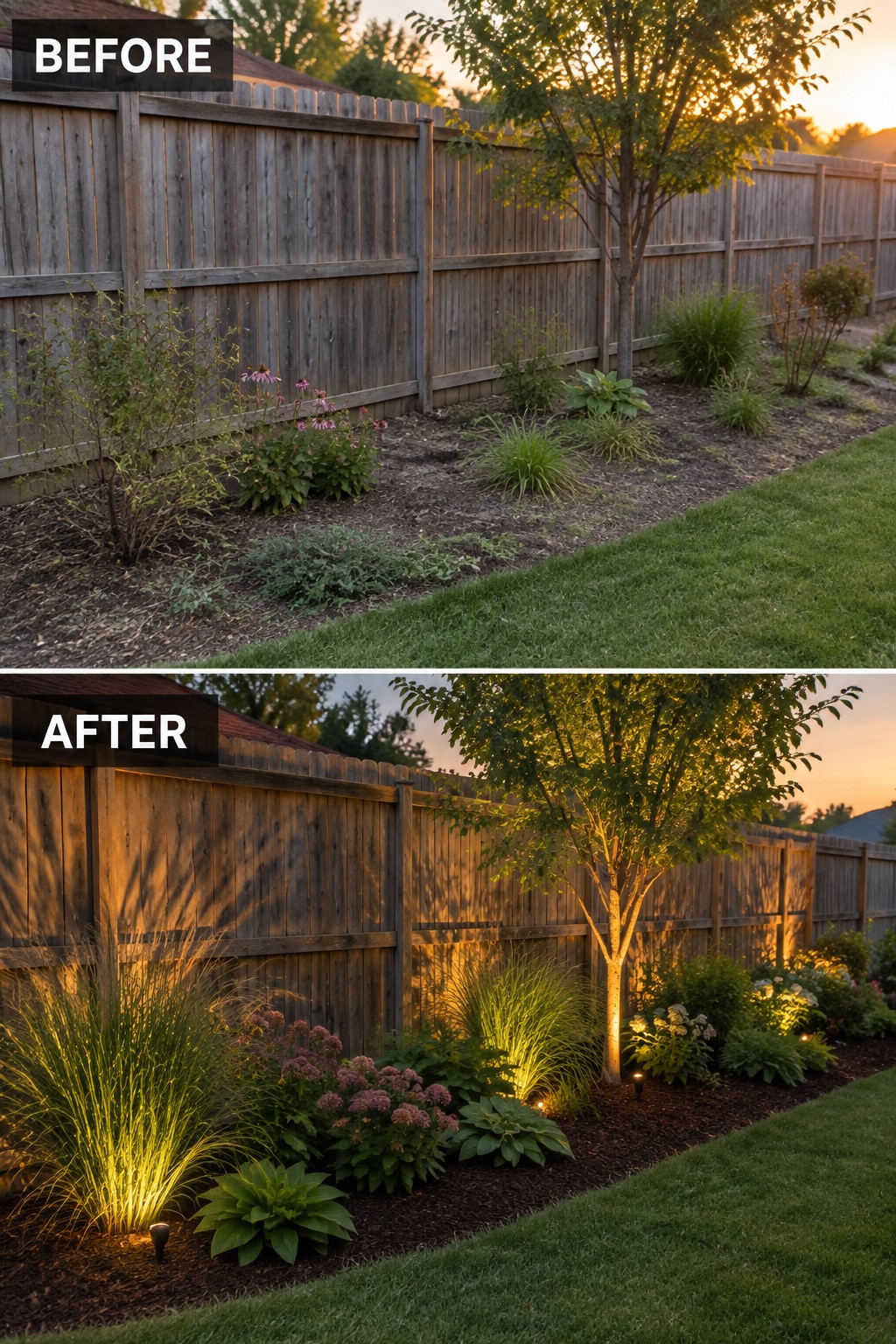
A few well-placed low-voltage fixtures can turn a plain strip of plants along a fence into something that feels intentional. The bed went from looking sparse and flat during the day to having real presence once the lights came on under the tall grasses and around the base of the tree. The mulch helps too, but the lighting is what gives the area shape after dark.
This works best on a simple border you already have, rather than a full redesign. Keep the fixtures low to the ground, aim them at one or two standout plants or the tree trunk, and avoid filling the whole bed with light. It suits yards where you want a quiet evening view from the house or patio without adding more plants or structures.
Use Low-Voltage Lighting To Make A Backyard Usable After Dark

A dark backyard often feels off-limits once the sun goes down. Adding a few well-placed low-voltage lights changes that quickly. In this case the main tree went from nearly invisible to the clear focal point, and the lawn picked up enough soft light to feel like an actual space rather than just empty grass.
This idea works best in yards that already have mature trees or a simple layout. Start with one or two uplights on the largest trees, then add a couple of smaller fixtures along the edges if needed. Keep the fixtures aimed at the plants and lawn rather than straight at the house so the light stays gentle and the system stays easy to adjust later.
Add Low-Voltage Lighting To Your Front Entry
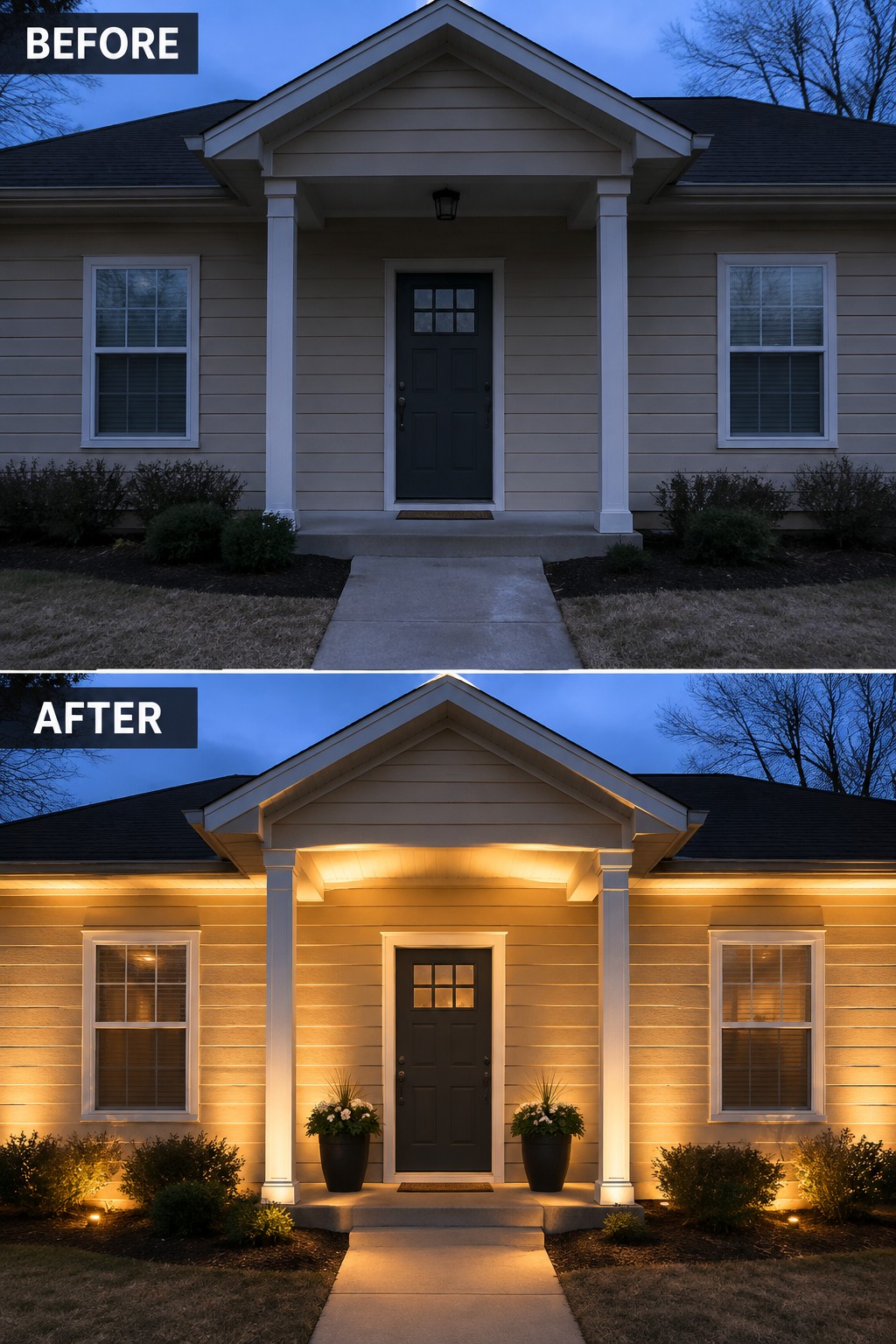
Many homes look fine during the day but lose all presence once the sun goes down. Low-voltage lights placed along the porch columns and at the base of the planting beds turn a flat facade into something that feels intentional and easy to approach at night.
This approach works best on houses with straightforward siding and a clear entry structure. Keep the fixtures small, aim them at the vertical lines of the posts first, then add a few low spots in the beds so the path stays visible without flooding the whole yard with light.
Add Low-Voltage Lights Along Stone Paths
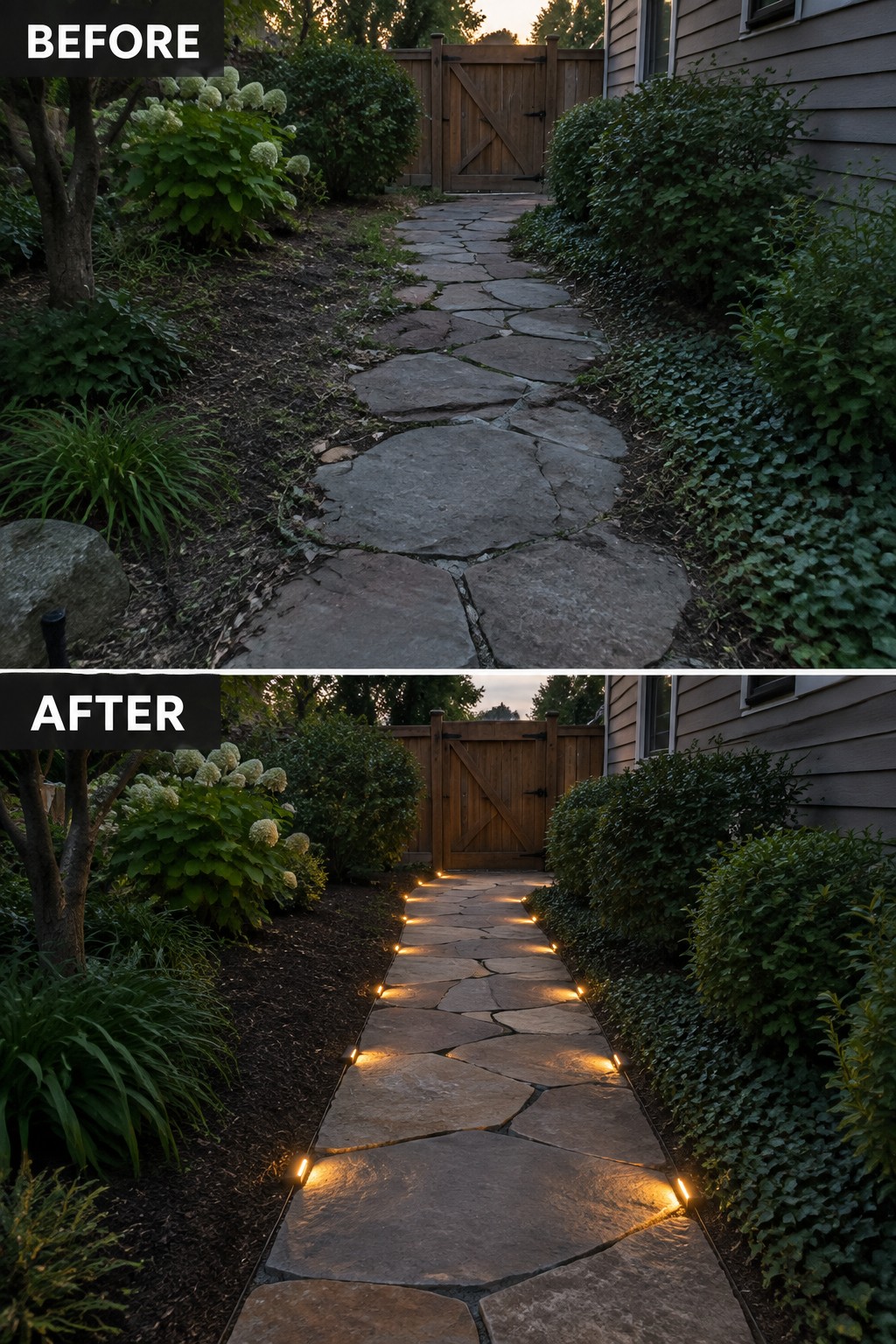
A simple stone path can feel unfinished once the sun goes down. Adding low-voltage lights along the edges turns the same path into something you can actually use after dark. The lights stay low and close to the ground, so they mark the route without overwhelming the plants or the yard.
This approach works best on existing hardscaping where you want to improve safety and visibility without major changes. Place the fixtures a few inches from the stones on both sides, and keep the spacing even so the path reads clearly at night. It is an easy upgrade for anyone who already has a path but finds it hard to navigate once the light fades.
Add Low-Voltage Lighting Along A Retaining Wall

A plain concrete retaining wall can feel like a missed opportunity once the sun goes down. In this case, the fix was simple. Low-voltage fixtures were tucked under the new cap so the light washes down the face of the wall without any visible bulbs or harsh glare. The result turns a basic structural element into a quiet focal point at night.
This approach works best on walls that already sit beside a lawn or garden bed. Keep the fixtures evenly spaced, aim them slightly downward, and use warm bulbs so the light feels soft rather than stark. It is an easy upgrade if you are already replacing the cap or refreshing the planting along the edge.
Add Low-Voltage Step Lights For Better Nighttime Safety
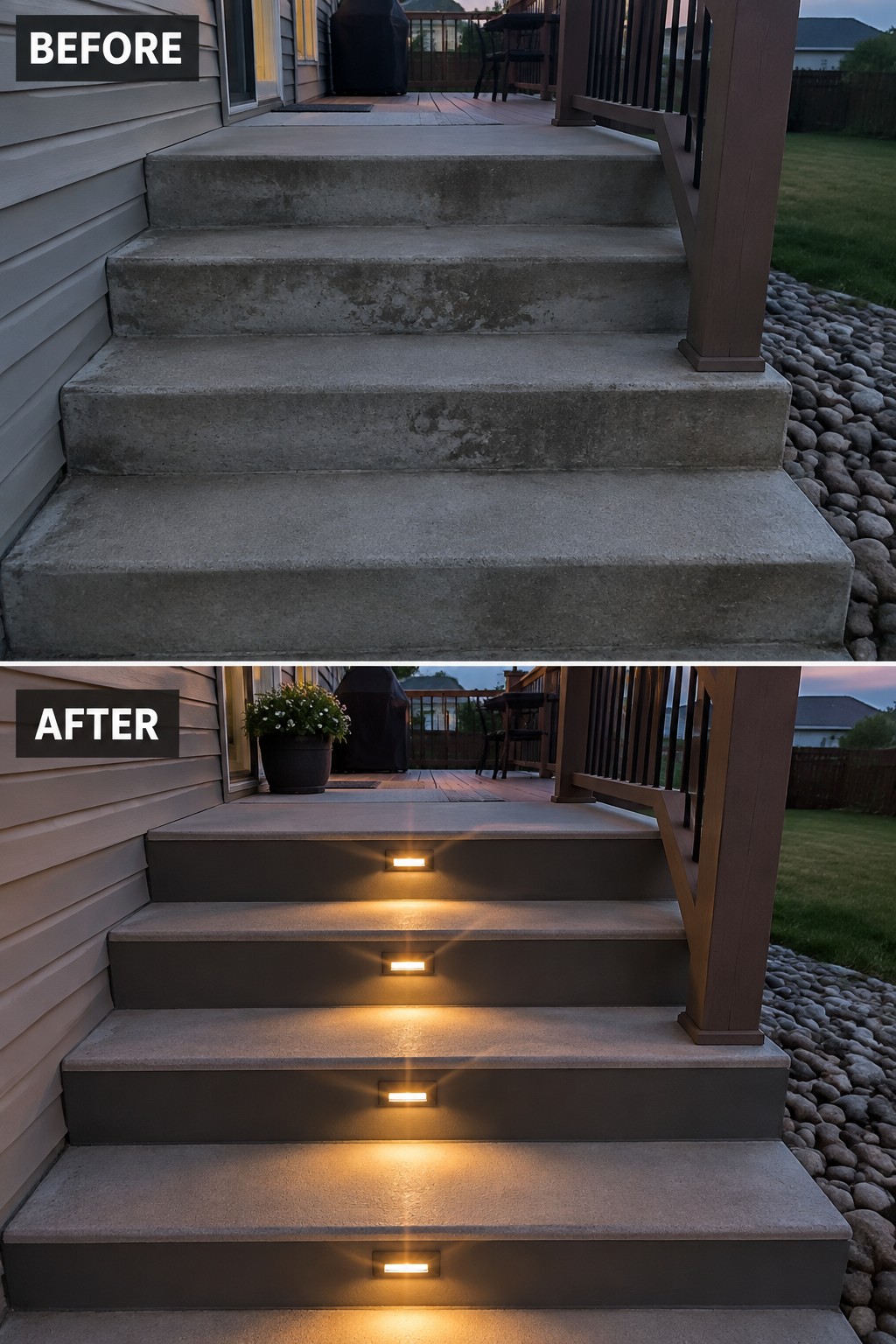
Plain concrete steps can feel risky after dark, especially when they lead up to a deck or porch. Adding small recessed lights into each tread makes the stairs much easier to see and use without needing bright overhead fixtures.
This idea works on most homes with outdoor stairs, whether the steps are concrete or wood. Keep the fixtures low and centered near the front of each tread so the light stays focused on the walking surface and does not create glare for people coming up or down.
Add Low-Voltage Lighting To A Garden Border

A narrow strip of rocks and weeds next to a path often looks messy because nothing stands out. Adding a few low-voltage fixtures changes that by lifting the plants and rocks into view at night and giving the whole border a clearer shape.
This idea works best on existing beds that already have decent structure but need evening interest. Place small uplights at the base of larger plants or rocks first, then add one or two linear lights along the ground to mark the edge. It keeps the focus on the planting instead of the fixtures themselves.
Add Low-Voltage Step Lights To Brighten An Entry
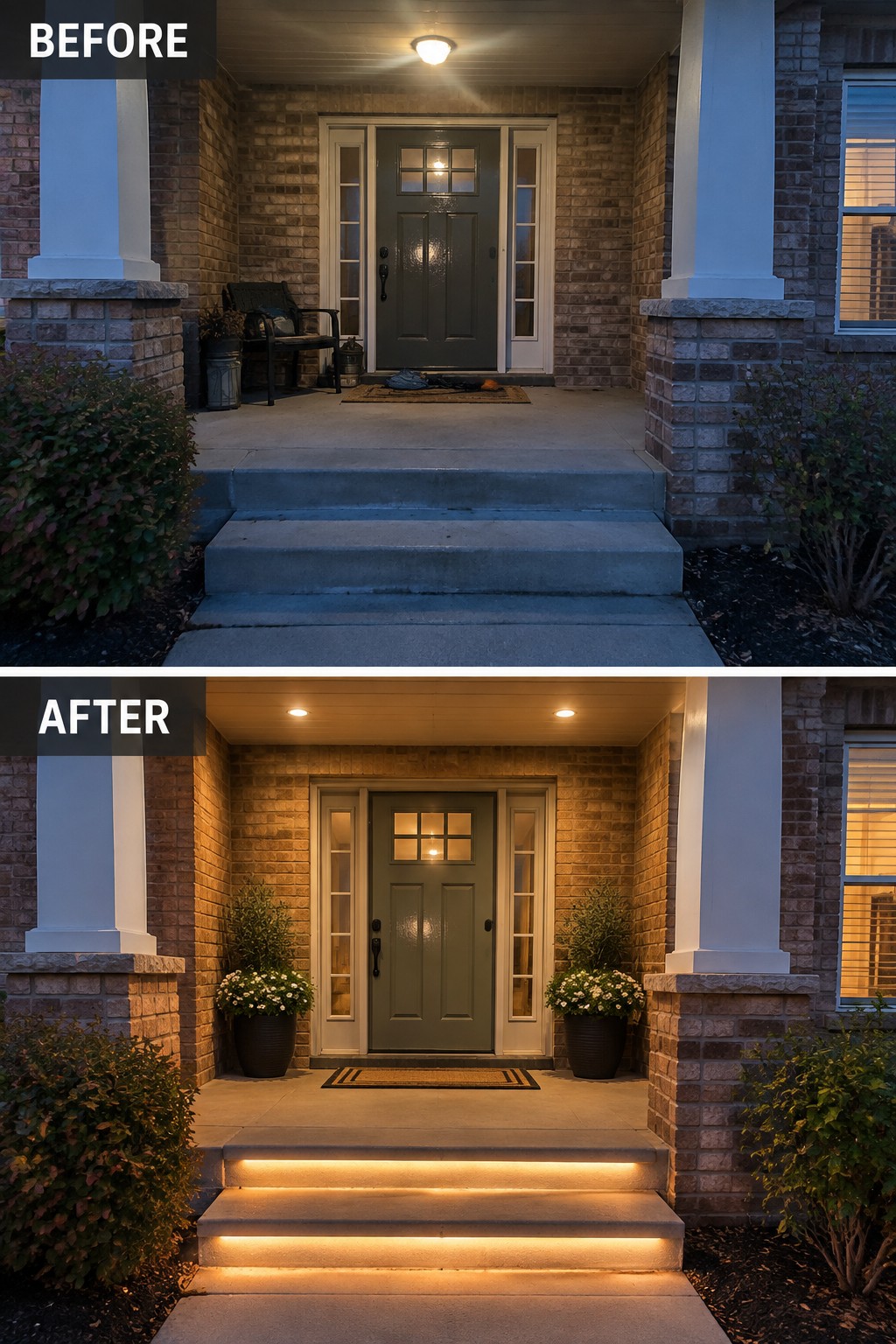
A dark set of concrete steps can make any front porch feel uninviting after sunset. Running a line of low-voltage lights along the front of each tread gives clear footing and softens the whole entrance without bright overhead glare. Adding matching planters on either side of the door further frames the space and keeps the focus on the doorway.
This approach suits homes with a simple raised porch or a short flight of steps. Keep the fixtures small and warm in tone so they blend with existing exterior lights. Place them where people actually walk, and avoid overloading the area with extra decor that could block the path.
Add Low-Voltage Lights Along A Garden Path

The biggest shift in this yard came from clearing the heavy overgrowth first, then adding a row of low-voltage fixtures along the path and at the base of the pergola. The lights turn a dim, hard-to-follow walkway into a clear route that feels safe and intentional once the sun goes down.
This idea works best in yards that already have a defined path or structure worth highlighting. Place the fixtures low and aim them to graze plants or posts rather than flood the whole area. Keep the spacing consistent so the light leads people forward without creating bright patches or dark holes in between.
Use Low-Voltage Lighting To Turn A Bare Patio Into A Seating Area
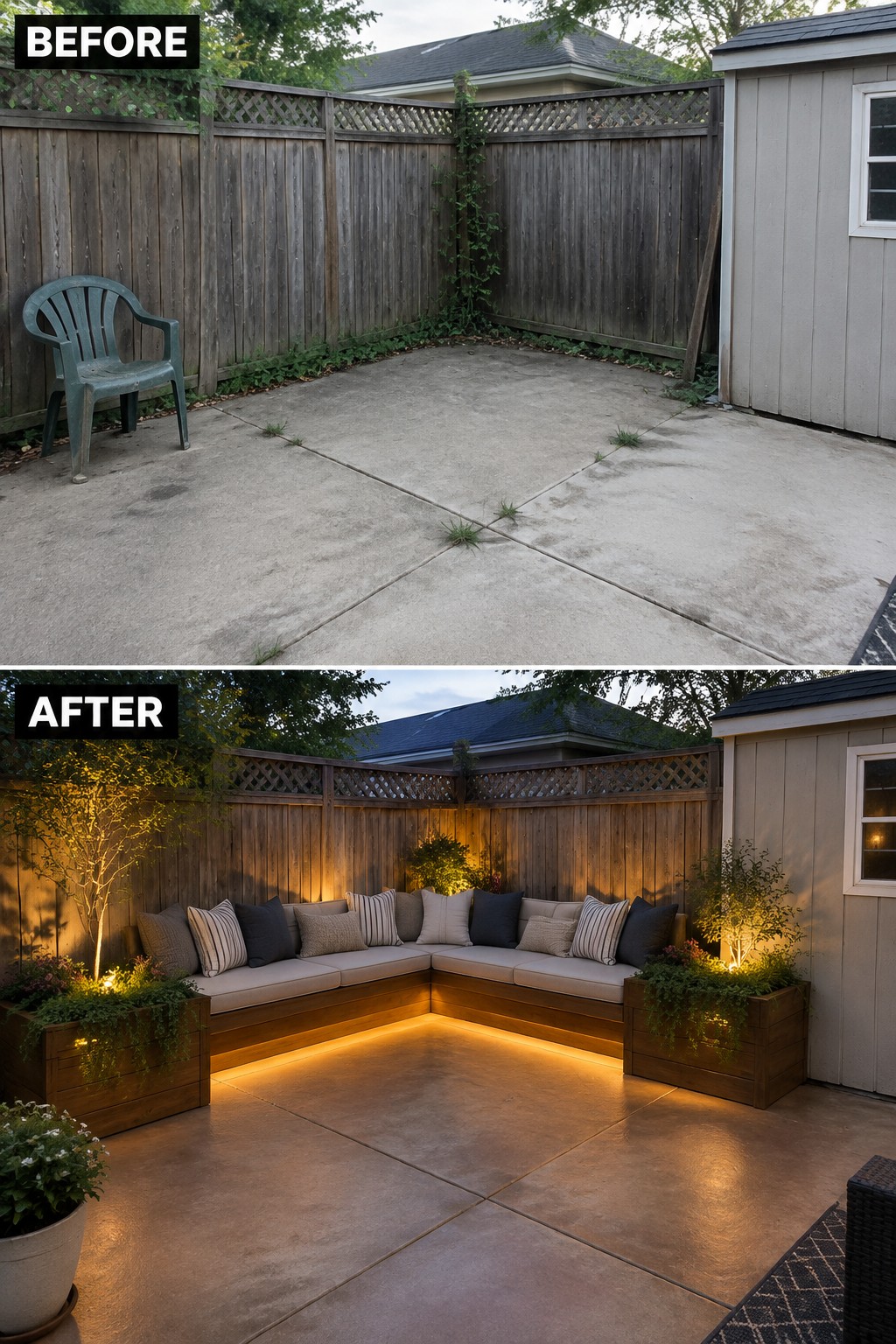
A plain concrete slab with one plastic chair does not invite anyone to linger once the sun goes down. Adding low-voltage lights tucked under built-in benches and inside the planters creates a gentle wash of light that makes the space feel like an actual room instead of leftover pavement.
This idea works best in smaller backyards where you need one clear spot for sitting rather than spreading lights everywhere. Keep the fixtures close to the seating so they highlight where people actually spend time, and choose simple warm bulbs that do not glare.
Use Low-Voltage Lights To Accent A Hedge And Pool Edge

A plain pool area often feels unfinished once the sun drops. Low-voltage fixtures placed at the base of the hedge and along the coping add gentle light that gives the space shape and makes it usable in the evening.
This idea works best in backyards where the pool and planting form the main view. Space the hedge lights evenly, keep the beam angles tight so the foliage glows without spilling, and add a few small fixtures along the pool edge to create soft reflections on the water.
Add Low-Voltage Lights Along A Fence Line

Many yards look fine during the day but lose all shape once it gets dark. The before photo shows a row of shrubs and a plain fence fading into the evening with nothing to mark the edge. A few low-voltage fixtures tucked at the base of the plants change the whole feel by lifting the foliage and casting a soft wash on the wood.
This idea works best in a backyard that already has a planted border you want to keep. Start by making sure the beds are weeded and mulched, then space the lights so they graze the leaves rather than shine straight out. It gives the fence line a clear purpose at night without adding furniture or hardscaping.
Add Low-Voltage Path Lights To Brighten A Front Walk

A dark walkway makes the front of a house feel unfinished once the sun goes down. Placing a few low-voltage path lights along the edges gives clear guidance to the door and lifts the whole look without any major construction. The after photo also shows a simple uplight on a small tree that adds a bit of depth to the planting bed.
This idea suits most suburban front yards where the path is already in place. Start with the walkway lights first, then add one or two uplights on a shrub or tree near the house. Keep the fixtures low and dark so they stay out of sight during the day, and make sure the spacing leaves enough room for people to walk comfortably.
Add Low-Voltage Lighting Along A Retaining Wall
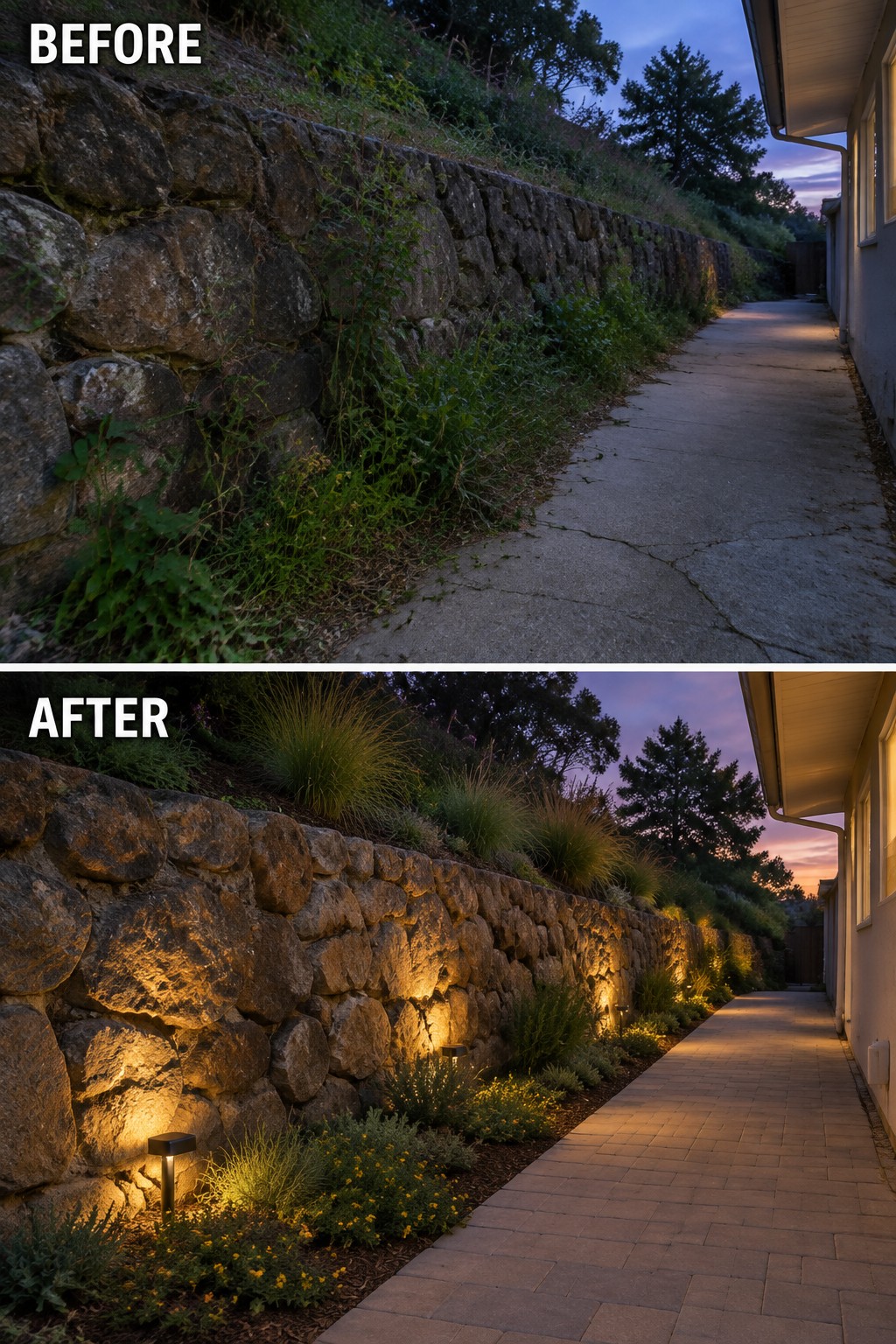
Low-voltage fixtures placed at the base of a stone wall turn a dark, overgrown slope into a clear garden feature. The lights bring out the texture of the stones while making the path feel safer and more intentional at night.
This idea works best on sloped yards where the wall already gives structure. Space the fixtures evenly, keep the light warm, and let the planting fill in around them rather than trying to light every inch.
Add Uplighting To Highlight A Front Yard Tree

Placing low-voltage lights at the base of a tree turns it into the main feature once the sun goes down. The before photo shows the tree fading into the background at dusk. After the lights were installed the canopy glows and the front yard feels more finished without any other big changes.
This idea works on most homes that already have a mature tree near the house. Aim the fixtures upward from the ground so the light spreads evenly through the branches. Keep the number of lights modest so the effect stays natural and does not overwhelm the rest of the yard.
Add Low-Voltage Step Lights To A Deck
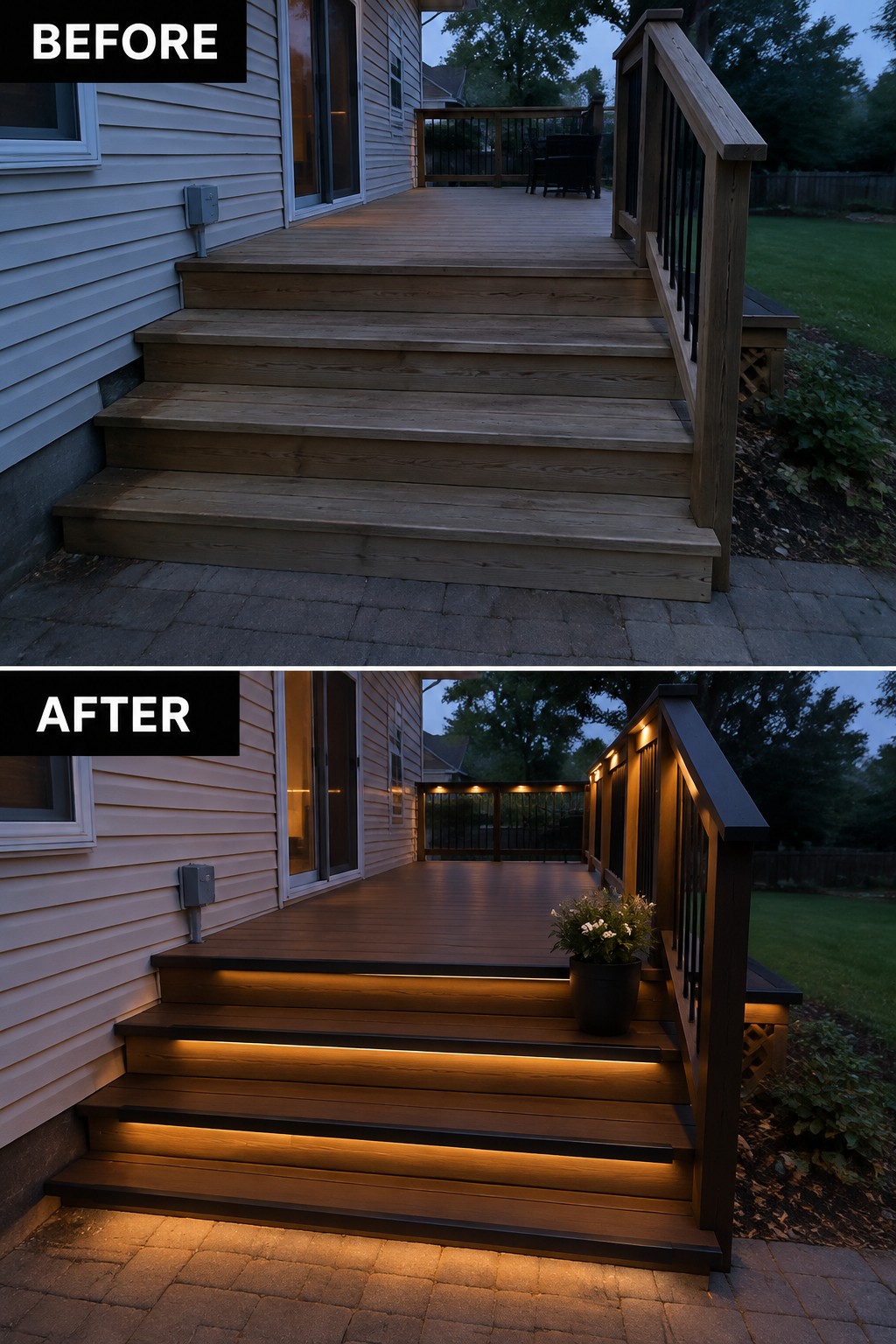
Many decks look fine during the day but become difficult to use once the sun goes down. The simple addition of low-voltage lighting under each stair tread turns a dark set of steps into a clear, usable path without needing a full electrical overhaul.
This approach works especially well on decks that connect the house to the yard. Focus the lights on the stairs first since that is where people need the most guidance at night. Warm white LEDs keep the wood tones looking natural while still providing enough light to walk safely.
Use Low-Voltage Lights To Highlight A Simple Garden Bed

The before photo shows a plain mulch bed with just one large empty planter and a bush. In the after, low-voltage lights were placed at the base of the new planting and around the central pot, which now holds a metal sculpture and flowers. The lights turn the whole area into a clear focal point once the sun goes down.
This approach works best along a front walk or near an entry where people see it at night. Keep the fixtures small and aim them at one main feature first, such as a large pot or a cluster of taller plants. Add a second light only if the bed still feels dark once the first one is on.
Add Uplighting To Porch Columns
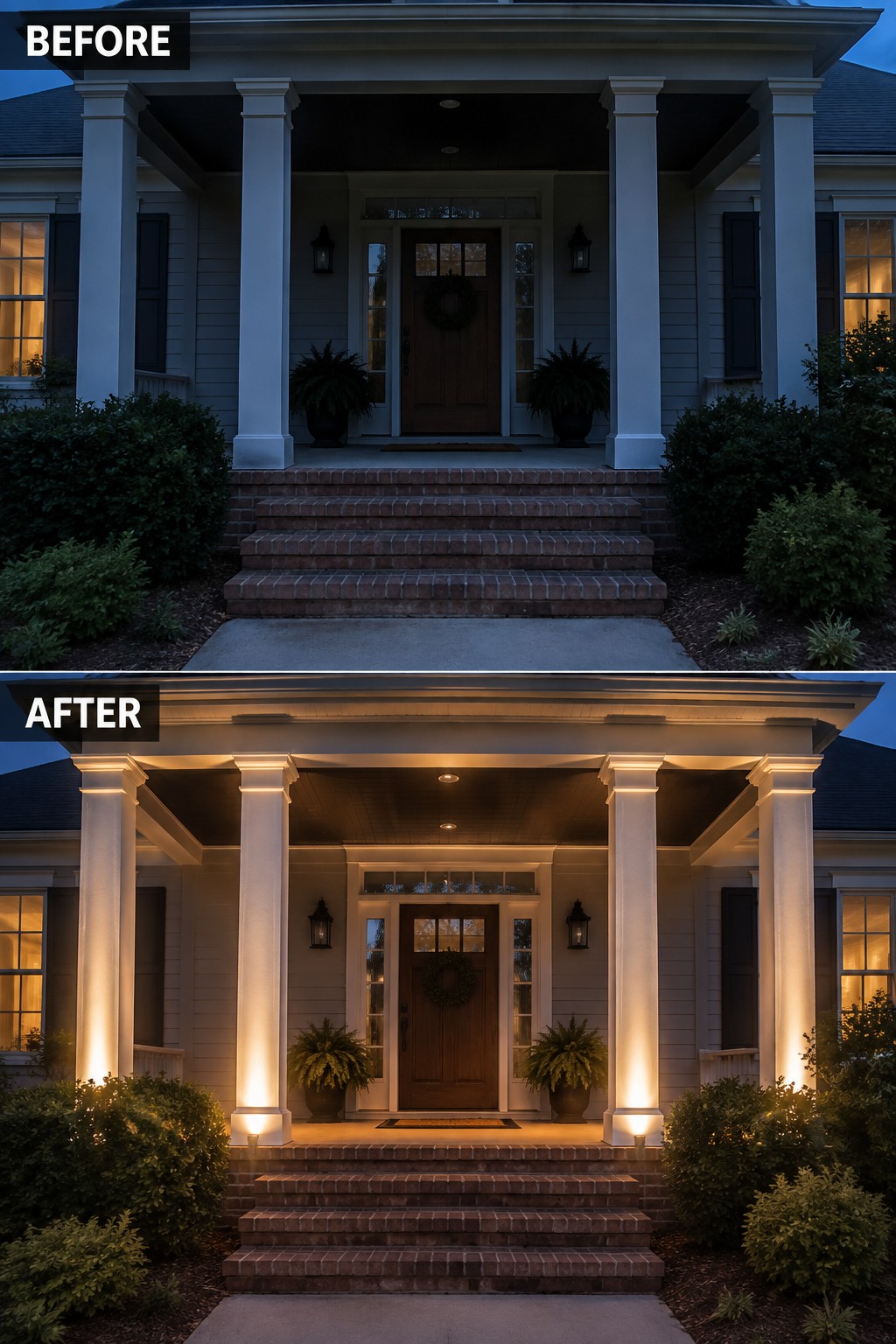
Many homes have nice columns that disappear at night. In the before photo the entry looks flat once the sun goes down. Adding a small uplight at the base of each column changes that right away. The light travels up the white surface and makes the whole porch feel more solid and welcoming without any extra fixtures on the ceiling.
This approach works well on houses with a clear front porch and simple columns. Place one low-voltage fixture on each side so the beam stays tight to the column. It is an easy first step if you want to improve curb appeal at night before you add more lights elsewhere in the yard. Keep the fixtures small and aim them carefully so the light does not spill into the windows.
Frequently Asked Questions
Q: How do I pick fixture styles that feel modern without clashing with my existing plants? A: Stick to slim, dark metal shapes that echo your house trim. Place one or two sample fixtures along the edge of a bed at dusk and step back to check the lines. Swap them out if the scale feels off before you commit to the full run.
Q: Can I handle the wiring run myself when the transformer sits near the house? A: Run the cable along the back of your beds and cover it with mulch or soil. Keep the depth shallow so you can lift it later for adjustments. Most remodels go smoother when you map the path on paper first.
Q: What if a light stops working after the first season? A: Unscrew the old fixture and twist in a replacement. Low-voltage setups let you do this without touching the main line. Keep one spare on hand so you fix it the same evening.
