

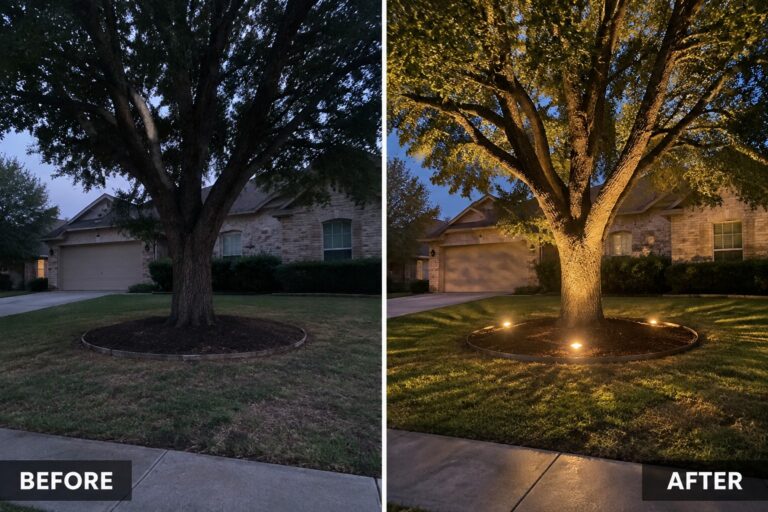
I’ve found that trees and plant beds often lose their presence once daylight fades even if the daytime layout already feels balanced.
Simple lighting choices can bring out their forms without needing a full redesign of the yard.
When I tested a couple of low fixtures around my own beds the difference showed up mainly in how the space felt used after dark.
These approaches keep things straightforward so the lights support the planting rather than compete with it.
A few stand out as practical starting points.
Add Ground Lights To Highlight A Tree

One simple way to improve a front yard at night is to add a few low landscape lights around the base of a tree. In the before photo the tree sits in a plain mulch circle with no illumination. After the change, small fixtures tucked into the mulch cast light upward, making the branches and canopy visible from the street without any bright glare.
This works best on a mature tree with an open canopy and a defined bed around the trunk. Keep the fixtures low and aimed at the trunk and lower branches rather than flooding the whole yard. Use warm bulbs so the light feels natural, and space them evenly so the effect looks balanced from the sidewalk.
Add Uplighting To Highlight Trees And Plant Beds

Placing a focused light at the base of a tree can turn an ordinary backyard into something that feels finished after dark. The before photo shows the space fading into shadow once the sun sets, while the after version uses one well-aimed fixture to lift the tree and the beds around it out of the dark.
This idea works best when you start with one strong focal point rather than trying to light everything at once. Set the fixture low, angle it upward so the light grazes the trunk and lower branches, and keep the beam tight enough that it stays within your own yard.
Use Uplighting To Highlight A Tree

Adding a few low lights at the base of a tree gives the yard a clear focal point after dark. The before shot shows the tree fading into the fence line once the light drops. The after version uses warm uplights to lift the canopy and keep the eye centered on that one feature instead of a flat wall of darkness.
This approach works best in smaller yards where you want one strong element rather than a scatter of lights everywhere. Keep the fixtures tucked close to the trunk, angle them upward to catch the lower branches, and pair them with simple mulched beds so the lighting stays the main event. It suits homes that already have a decent-sized tree and just need a way to make it visible at night.
Add Path Lights And Edge Lighting To Highlight The Front Walk
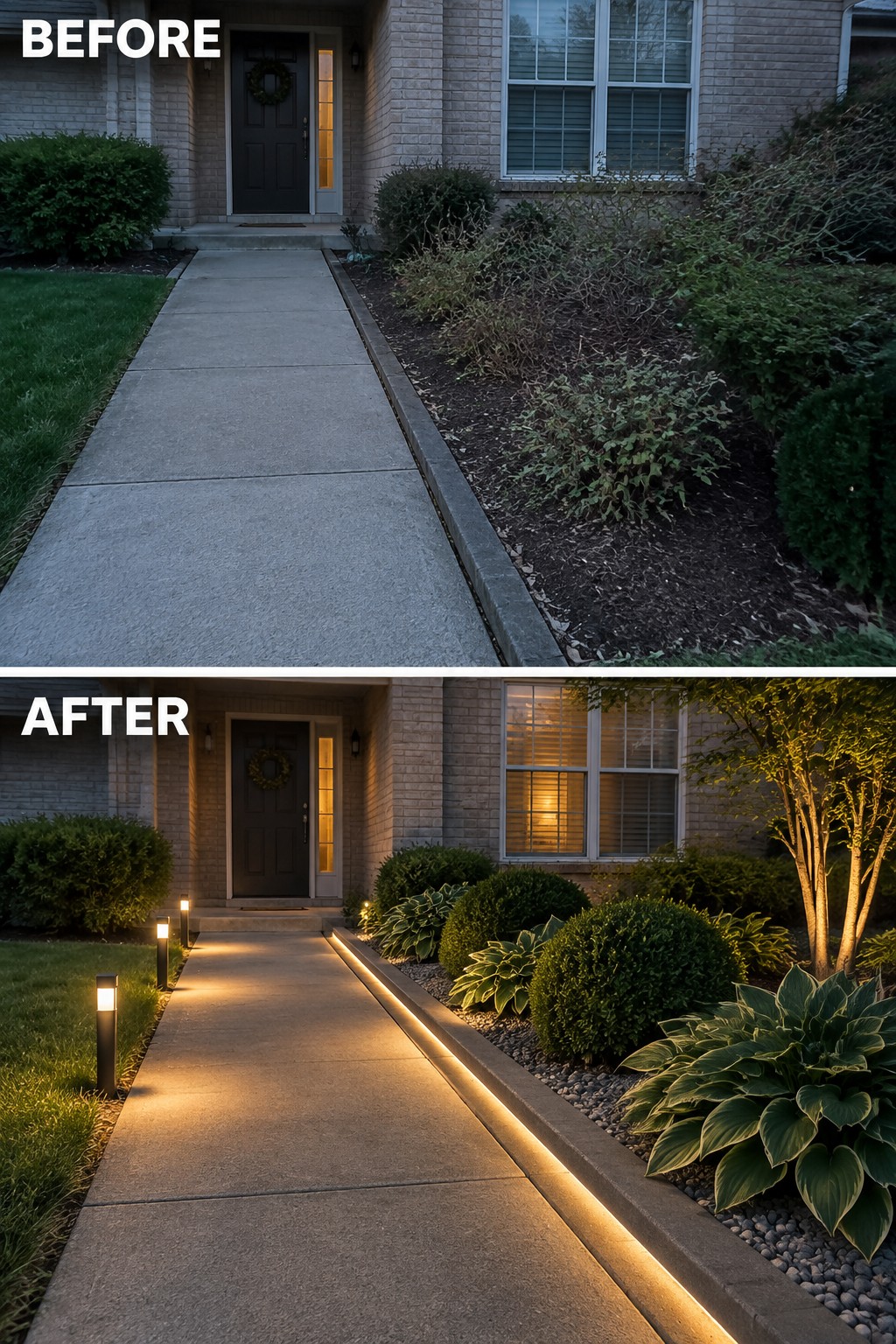
A plain concrete walkway can disappear at night, especially when the plant beds beside it are also dark. Adding a few low path lights along the lawn edge and a slim LED strip tucked into the bed border changes that completely. The lights make the route clear while gently picking up the shape of the shrubs and hostas without flooding the whole area.
This idea suits any front walk that needs better nighttime visibility. Place the path lights so they point down toward the concrete, and run the LED strip on a timer so it stays on after dusk. Keep the fixtures simple and dark so they stay out of sight during the day.
Use Landscape Lighting To Highlight Key Plants

The biggest change here is how the plants look once the sun goes down. In the before photo the large agave and surrounding shrubs just fade into the gravel at dusk. After adding a few low landscape lights, the same plants become the clear focus of the front bed without any extra planting or hardscaping.
This approach works well on any simple gravel or mulch bed that already has one or two strong plants. Place small fixtures at the base of the largest specimen and one or two smaller ones nearby so the light stays low and directed. It keeps the yard looking tidy at night and draws attention to the plants you already have instead of requiring new ones.
Use Landscape Lighting To Highlight Plant Beds
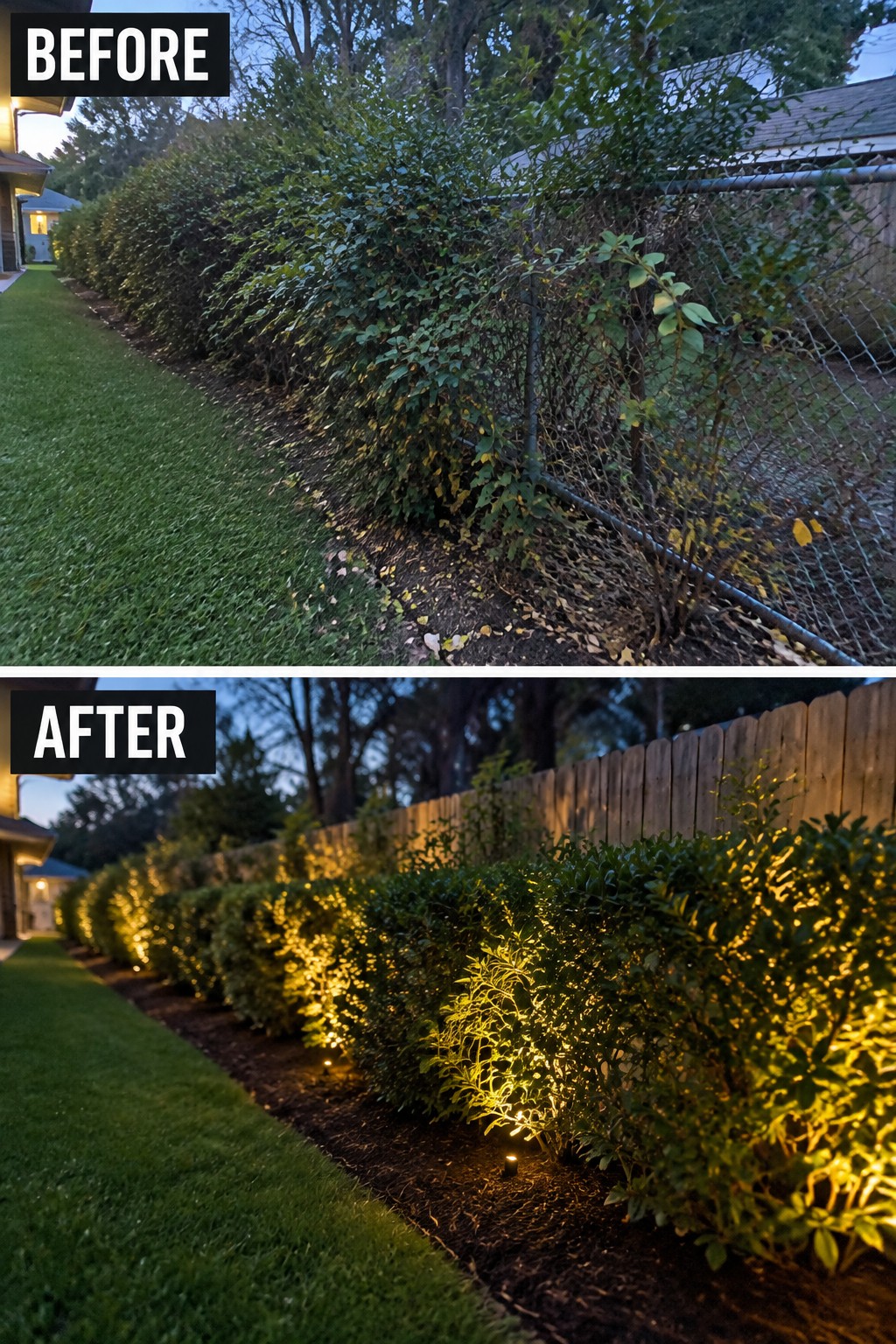
A messy border next to a chain link fence often gets ignored at night. Adding small uplights along the base of the shrubs turns the same strip into something you actually notice after dark. The lights catch the shape of the leaves and make the whole edge feel like a deliberate part of the yard instead of just the space left over.
This approach works best along the side of a house or the back edge of a lawn where you want a quiet glow rather than bright floodlights. Clean up the plants first, lay fresh mulch, then space the lights so they hit the middle of each shrub. Keep the fixtures low and warm so they do not glare into windows or the neighbor’s yard.
Use Landscape Lighting To Highlight Stairs And Beds
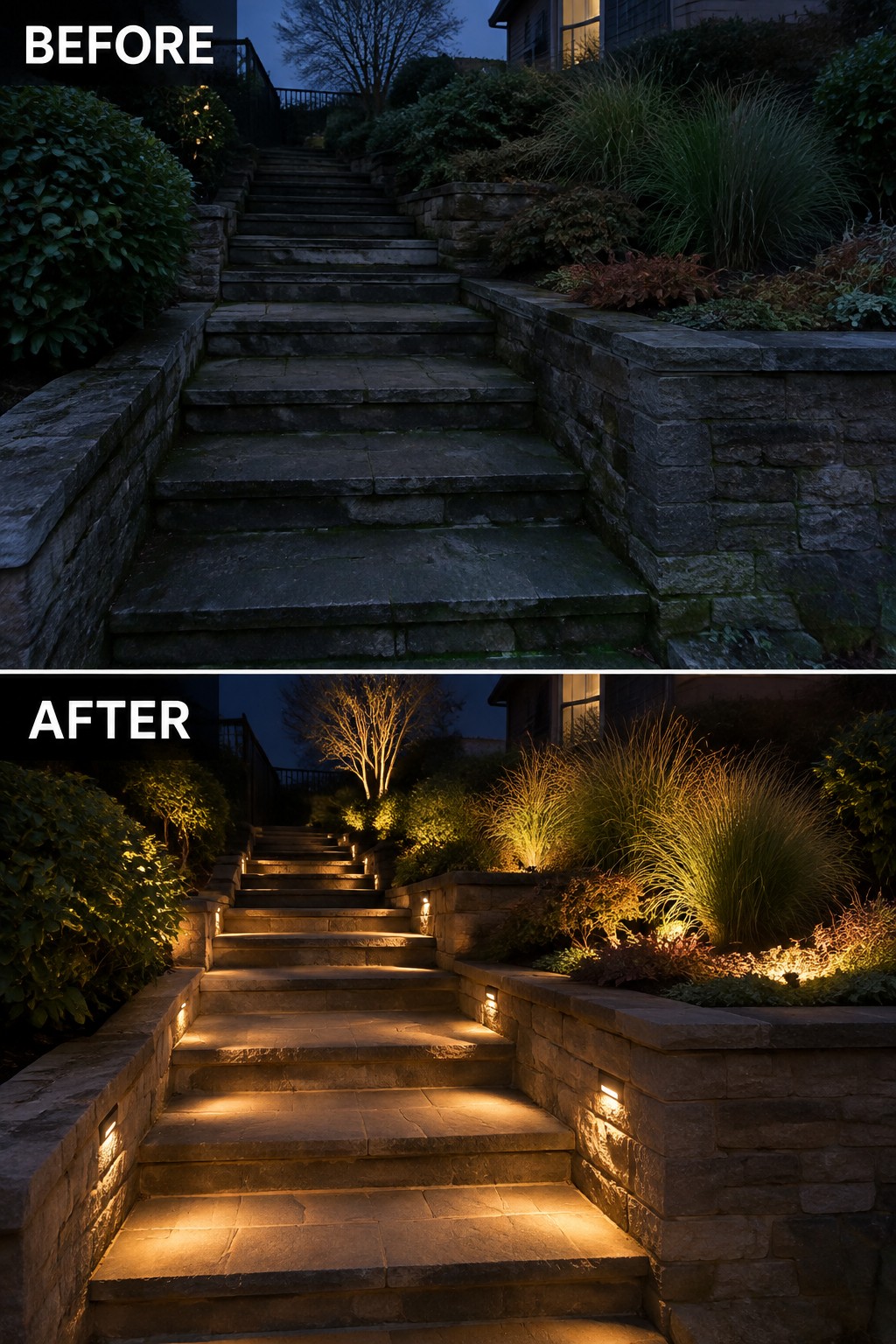
Dark stairs and plant beds can make a backyard feel closed off after sunset. Adding low lights along the step edges and at the base of the plantings opens up the space and makes it easier to use at night.
This approach works well on sloped yards or any path people walk after dark. Keep the fixtures small and aim them low so they light the stone and catch the plants without creating glare or washing everything out.
Add Low Landscape Lights To Highlight Trees And Plant Beds

The main change here is the addition of a few low lights tucked into the front beds. Before, the tree and plants faded into the dark once the sun went down. After the lights were added, the tree trunk and the edges of the larger plants catch a soft glow, so the whole border reads as a deliberate feature instead of just background planting.
This idea works on almost any home with existing beds that need more presence at night. Keep the fixtures low and aimed upward so the light stays on the foliage and does not spill onto the walkway or windows. It is especially useful on smaller front yards where you want the planting to feel finished without adding more plants or hardscaping.
Add Landscape Lighting To A Retaining Wall

A plain stone retaining wall can disappear at night if it has no light. In this yard the wall already had built-in plant pockets, but they faded into the background once the sun went down. Adding small ground lights at the base and inside a few pockets gave the whole structure shape and kept the plants visible after dark.
This approach works well on any sloped yard that uses a retaining wall to hold back a garden bed. Place the fixtures low so the light grazes the stone rather than shining straight out. Keep the number of lights modest and focus them on the wall itself instead of flooding the whole lawn.
Add Uplighting To Highlight Plant Beds

One easy way to give a garden border more presence after dark is to place a few low lights right at the base of the taller plants. The before view shows the grasses disappearing into the background once the sun sets. With the lights added, the same plants catch a warm glow and turn into a clear focal point along the yard edge.
This idea works best in beds that already have some height and structure. Tuck the fixtures into the mulch close to the stems and aim them slightly upward so the light filters through the foliage. Keep the number of lights modest so the effect stays clean rather than cluttered.
Use Landscape Lighting To Highlight Trees
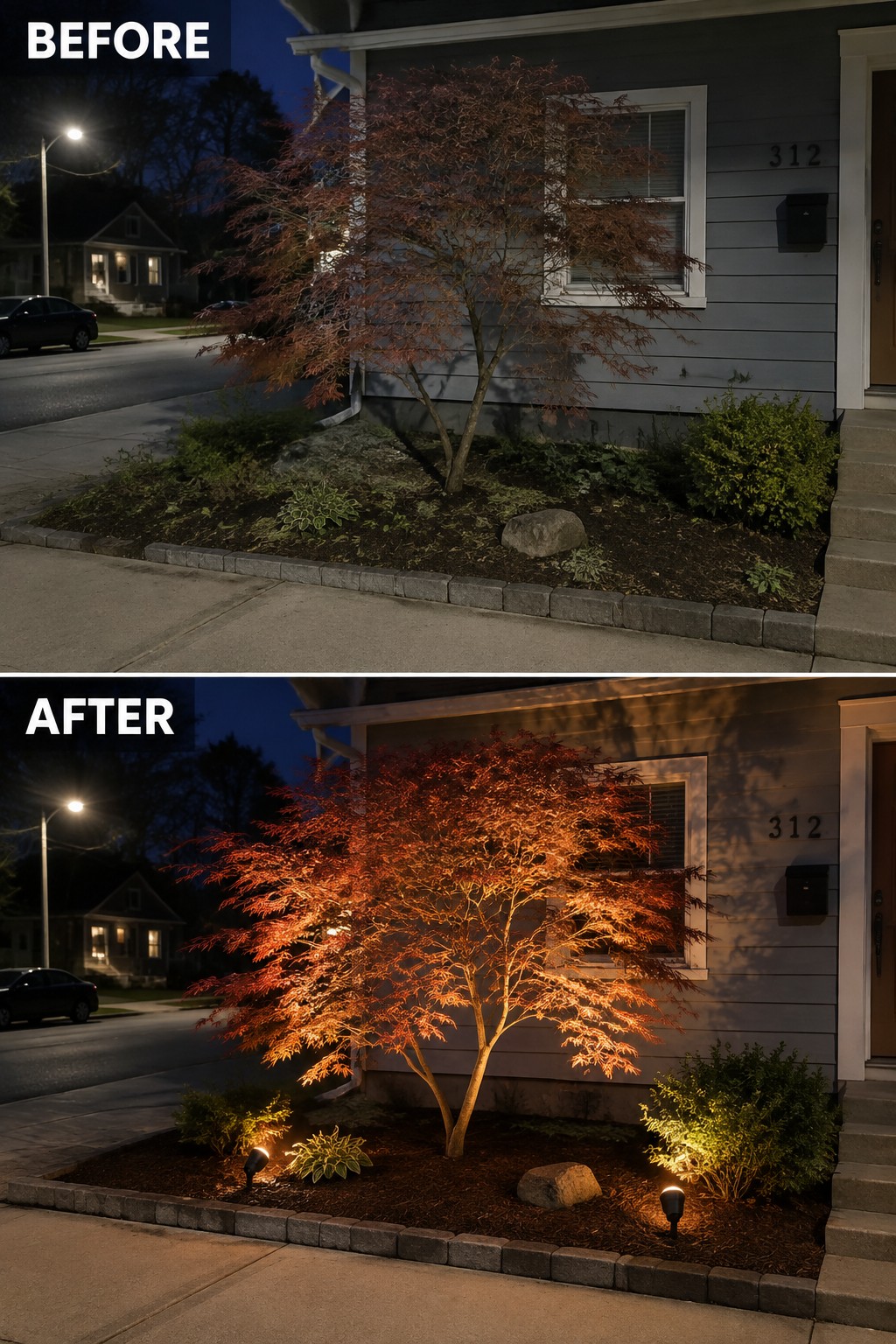
Adding a few targeted lights can turn a dark front bed into something that actually shows off the plants at night. The tree here went from fading into the shadows to standing out with a warm glow from below, while the shrubs picked up soft accents that keep the whole area from looking flat.
This idea works best on a single feature tree or a small group of plants near the house. Place one or two uplights close to the trunk and aim them up into the canopy, then add a couple of low path lights for the beds. Stick with warm bulbs and keep the fixtures tucked into the mulch so they stay out of sight during the day.
Add Landscape Lighting To Highlight Garden Beds
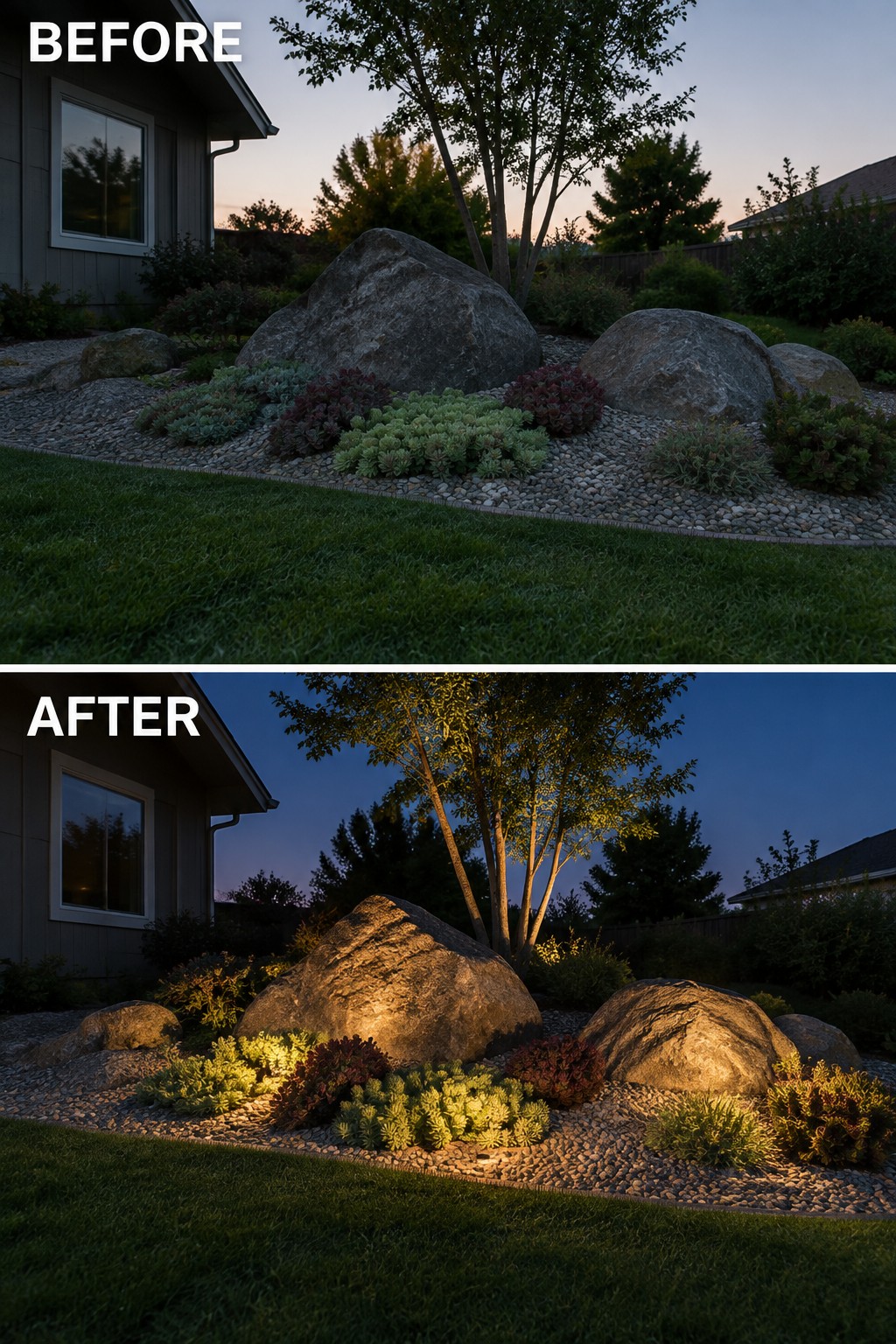
One easy way to make a plant bed look better after dark is to add a few low lights that point upward at the rocks and plants. Here the bed went from mostly hidden in the evening to having its main features softly lit so the shapes of the rocks and succulents show through.
This works best in front or side yards where you already have a clean bed and just need it to read at night. Start with two or three fixtures tucked near the largest rocks, then check the angle from the lawn so the light stays on the plants instead of shining straight out.
Add Lighting To Highlight Trees Along A Garden Path

A dark, overgrown slope becomes much easier to use once you add lighting that picks out the trees and marks the path. Low path lights along the steps and a few uplights on the trees turn an uninviting hillside into a clear route without needing a lot of fixtures.
This idea works best on sloped yards or side gardens where safety matters at night. Clean up the overgrowth first, then light just a few trees from below so the light stays soft. Keep the fixtures simple and tucked near plants so they stay out of sight during the day.
Add Landscape Lighting To Highlight Plant Beds
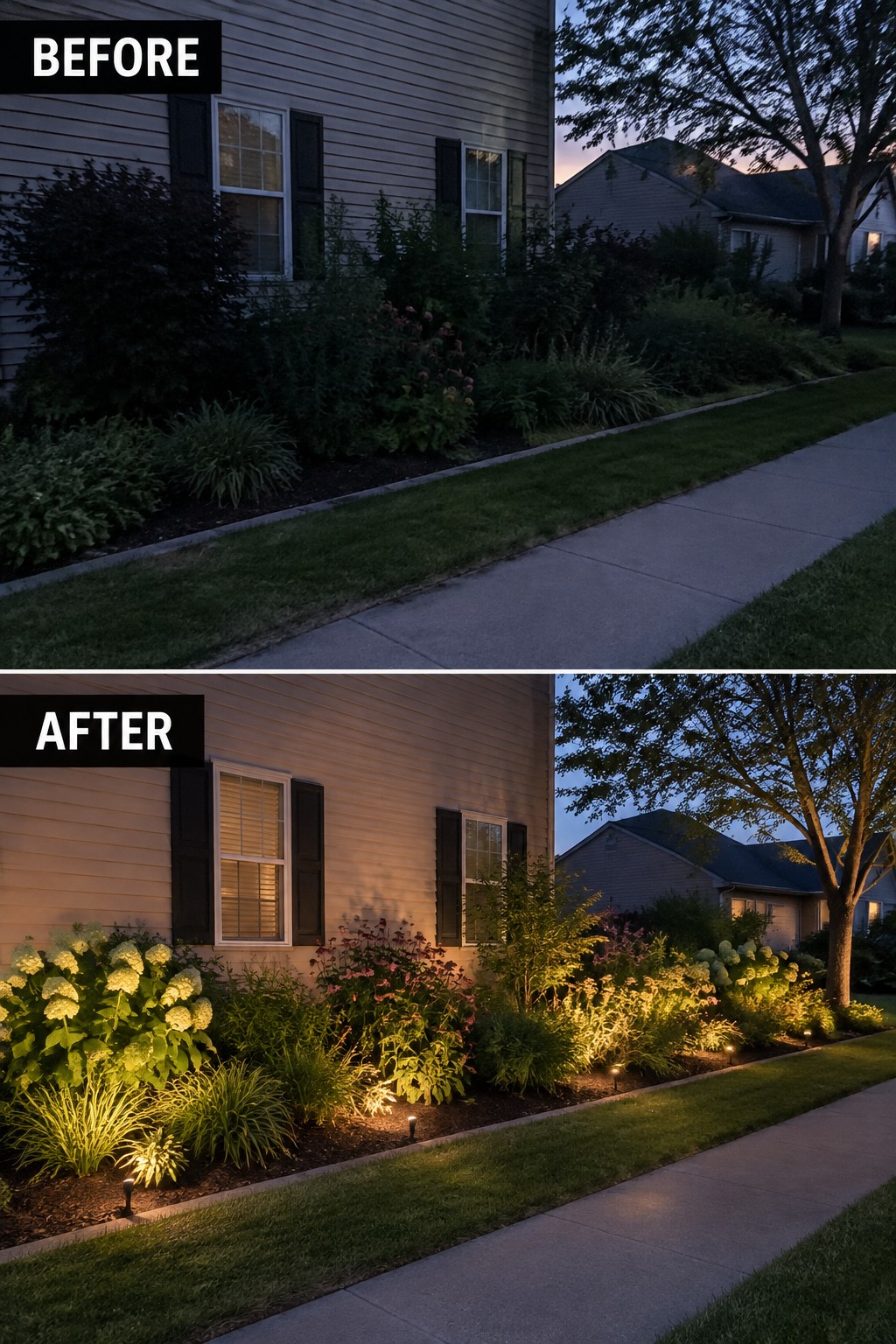
Adding a few low landscape lights can turn plain garden beds into something you notice after dark. The before shot shows the beds disappearing into the evening shadows, while the after version uses small fixtures to pick up the shape of the plants and give the front of the house a cleaner look.
This idea works well on any house where the beds run along a walkway or driveway. Place the lights close to the edge of the soil so they stay hidden during the day, and aim a couple toward taller shrubs rather than spreading them out too evenly. Start with just a few fixtures and add more only if the beds still feel flat at night.
Add Edge Lighting To Concrete Planters

One simple way to make plant beds stand out after dark is to run low LED strips along the front edge of concrete planters. In the before photo the beds looked flat once the sun went down. After adding the lighting the same planters now cast a soft glow onto the trees and grasses inside them.
This approach works well with modern hardscaping where the planters already have clean lines. Place the lights on the lower lip so they point upward into the foliage rather than shining straight out. Use warm white bulbs to keep the look natural, and make sure the strips are rated for outdoor use so they hold up through rain and sprinklers.
Add Uplighting To Front Plant Beds
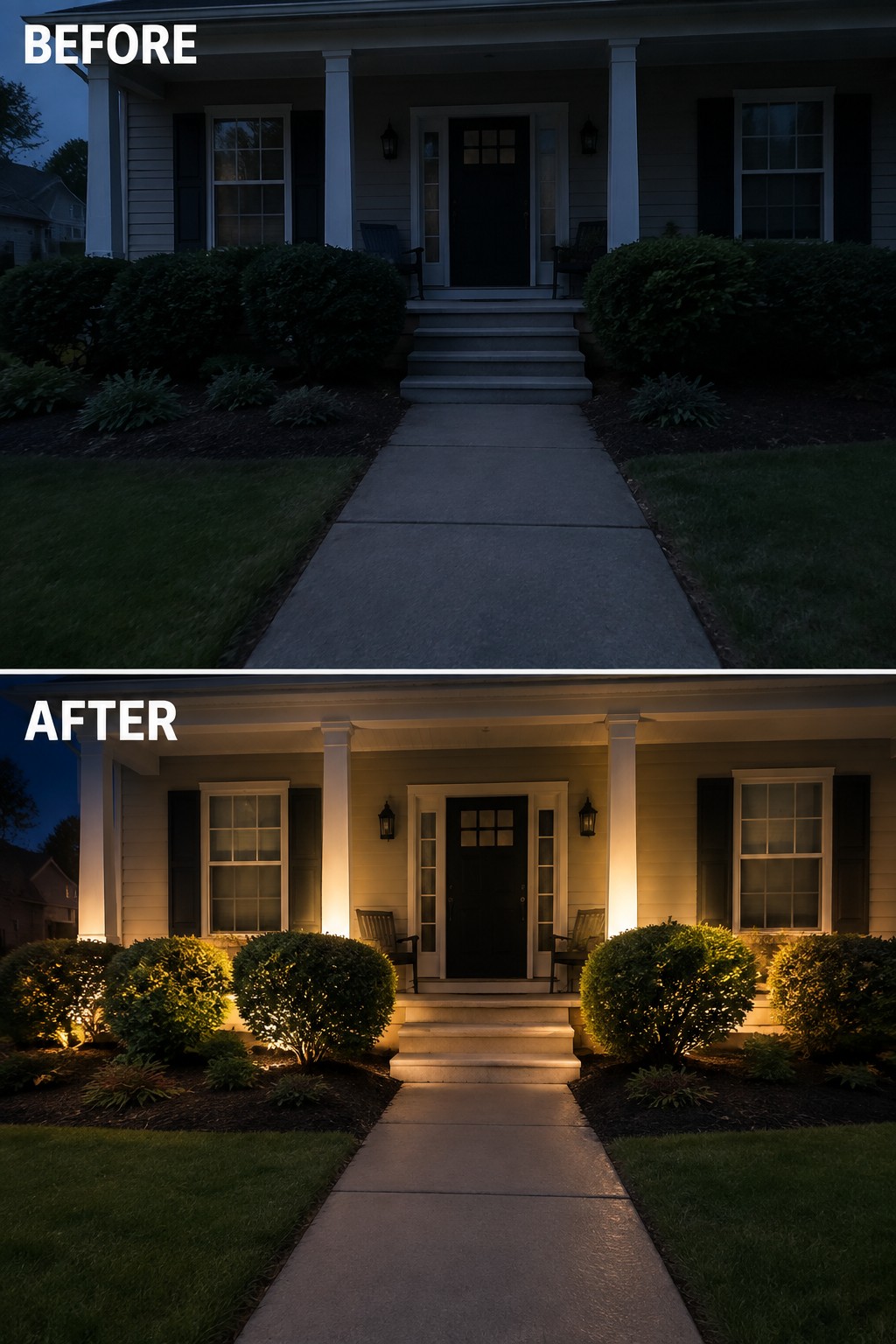
One of the simplest ways to improve a front entry at night is to add low landscape lights that point up into the shrub beds. The before photo shows a flat, dark approach where the plants disappear after sunset. In the after, a few well placed uplights make the bushes stand out, the steps become easier to see, and the whole front feels more finished without any new planting.
This idea works best on homes with existing foundation shrubs that just need definition. Start with two or three lights tucked at the base of the largest bushes, then add one or two along the walk if the budget allows. Keep the fixtures small and the light warm so the effect stays soft rather than harsh.
Use Landscape Lighting To Highlight Trees And Plant Beds
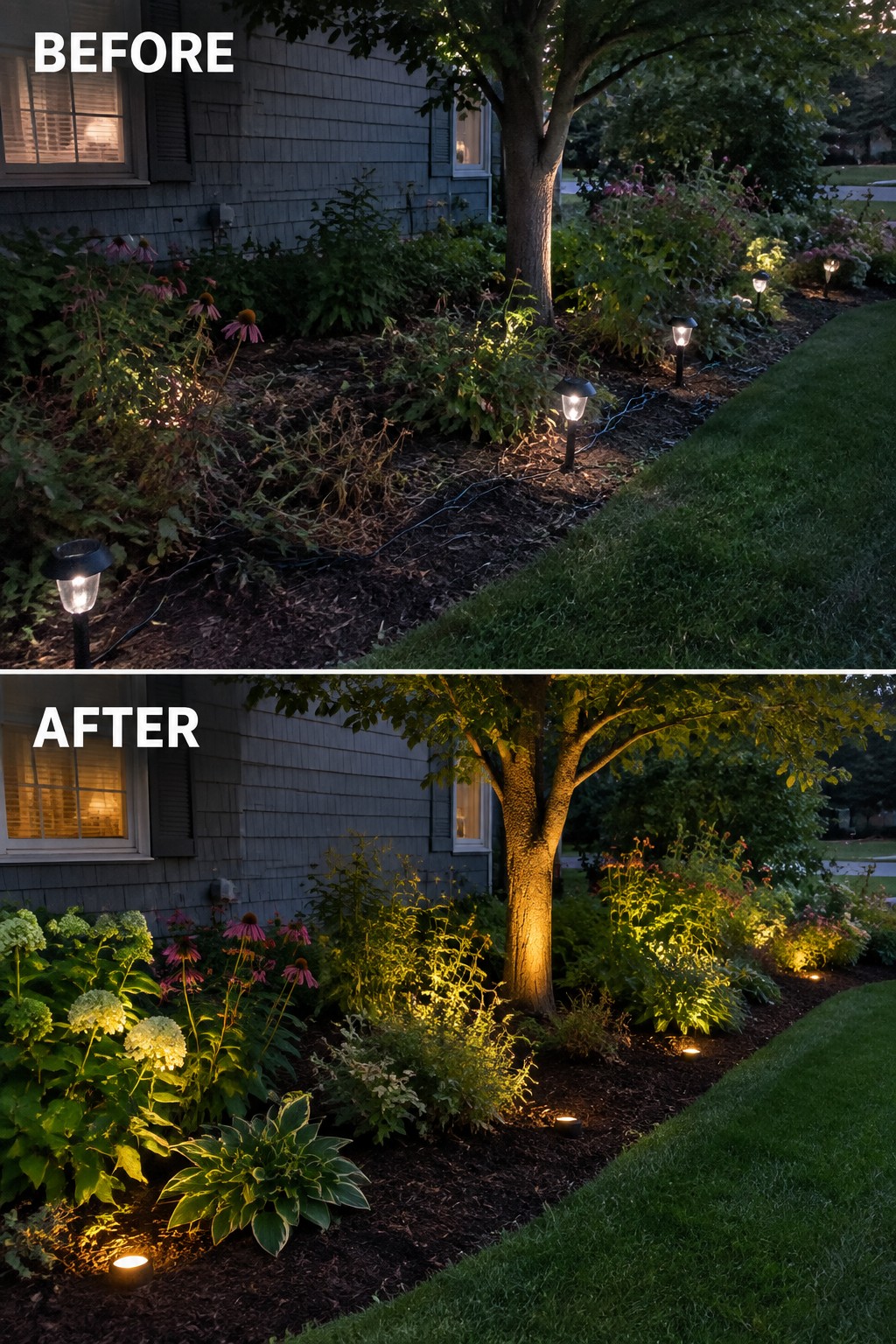
The main change here is shifting from basic path lights that just mark the edge to a few well-placed uplights that actually lift the tree and the beds. One fixture tucked near the base of the tree makes the trunk stand out, while smaller lights in the planting pull the eye through the foliage instead of leaving it flat.
This idea works best when you keep the number of fixtures low and aim them at the strongest shapes in the yard. Pick one tree or large shrub as the main focal point, then add just enough low lights in the beds to give them shape without filling every gap. It suits homes with established plantings that need a bit more presence after dark.
Use Lighting To Highlight Landscape Rocks And Beds
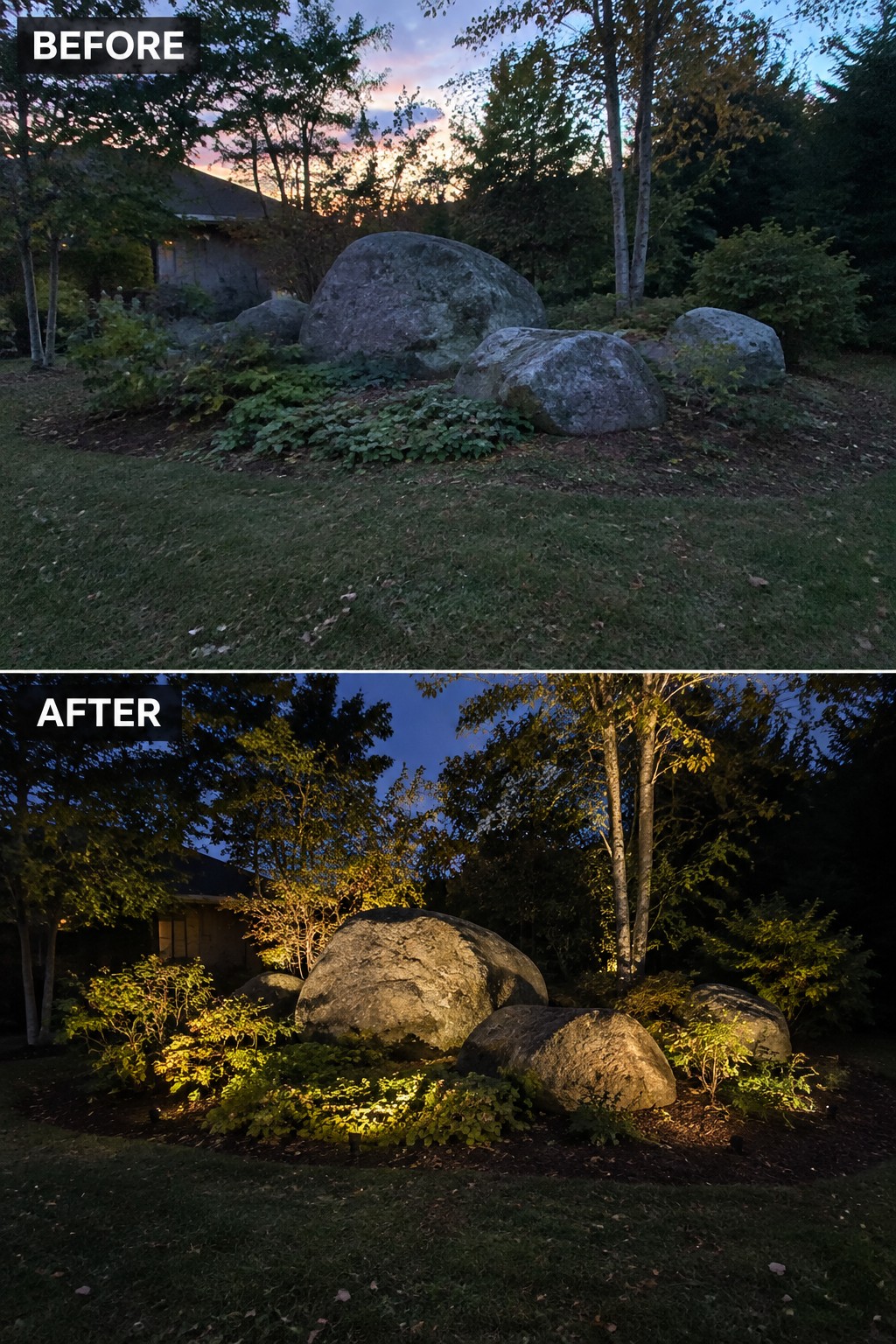
Adding a few lights can turn a simple rock and plant bed into something that stands out after dark. The before photo shows the area fading into the background at dusk, while the after version uses low lights to pick out the big rocks and warm up the surrounding plants and trees.
This approach works well in beds that already have some size and shape. Keep the fixtures tucked low and aim one or two lights up into nearby trees so the light layers without looking too bright. It suits homes with established landscaping where the goal is to enjoy the yard in the evening without major new planting or hardscaping.
Add Wall Lights To Highlight Plant Beds
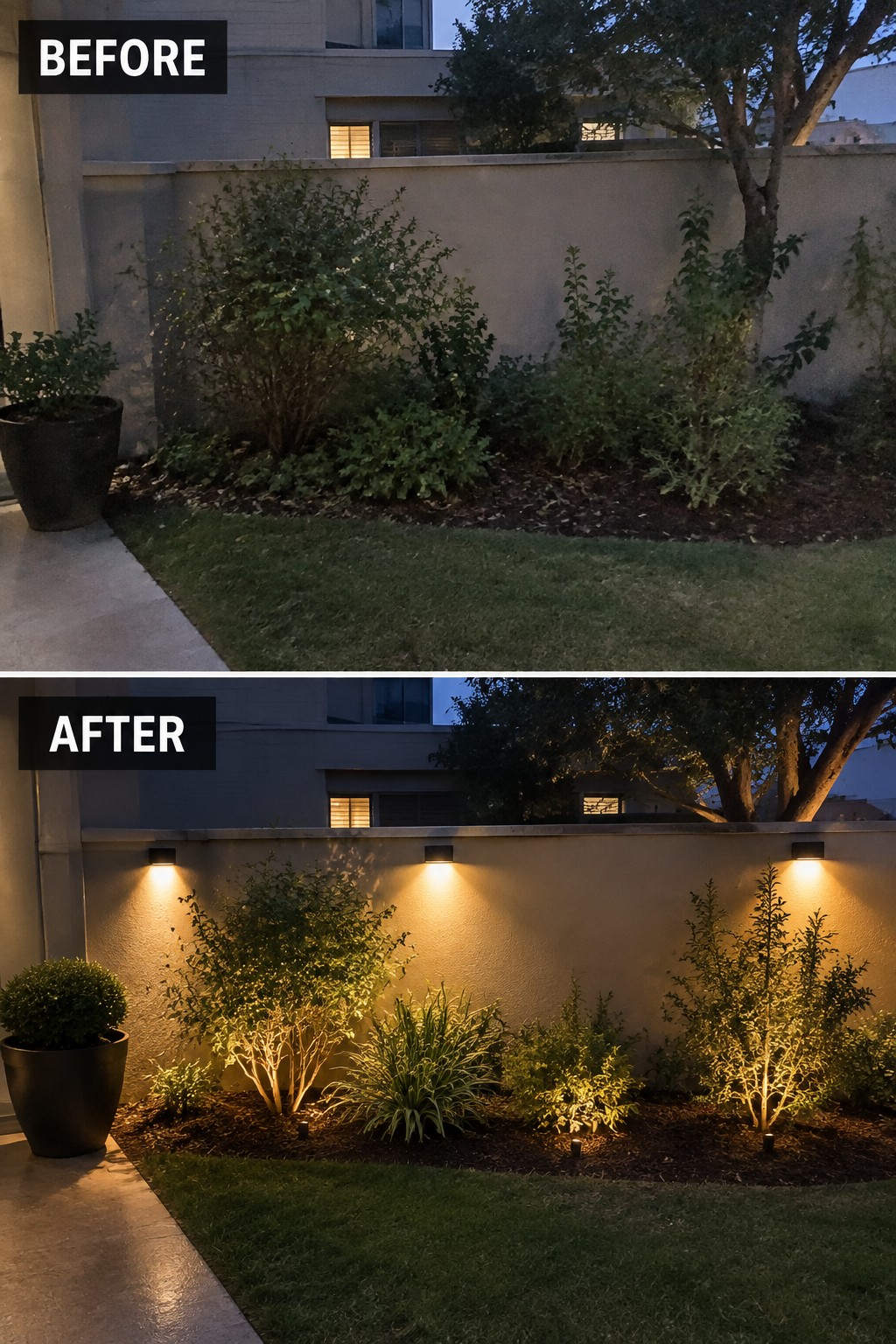
The main change here is the addition of a few wall-mounted lights that wash across the shrubs and smaller plants. Before the update the bed sat in shadow and blended into the wall. With the lights in place the foliage gains shape and the whole strip feels more intentional once the sun goes down.
This idea suits any long border that runs along a fence or house wall. Start with two or three fixtures spaced evenly, aim them at the taller plants, and let the light fall onto the lower layers. Keep the output warm and moderate so the bed looks calm instead of lit up like a stage.
Add Uplighting To Trees For Evening Interest

Adding a few uplights at the base of tall trees turns an ordinary backyard into something that feels finished after dark. The before photo shows the trees and beds fading into the background once the sun drops, while the after version uses simple ground lights to pull those same features forward and give the whole yard a cleaner shape at night.
This idea works best in open yards where the trees are the main view from the house or patio. Place one or two uplights per tree on the side that faces the main seating area, then tuck a couple of low path lights into the beds. Keep the fixtures aimed upward and spaced so the light spreads evenly without creating harsh spots.
Highlight Trees And Plant Beds With Landscape Lights

Adding a few well-placed lights can turn a dark stretch of planting into something that feels finished after sunset. Here the trees stand out with simple uplighting while low path lights mark the edge of the beds and keep the walkway easy to follow.
This idea works best along a driveway or front border where the planting already has some height. Place one or two uplights on the largest trees first, then add path lights only where they guide movement. Keep the fixtures low-key so they stay out of sight during the day and the focus stays on the light itself.
Use Low Lights To Highlight Trees At Night

The tree already had a clean mulch bed, but at night it blended into the darkness. Adding a circle of small ground lights around the base makes the trunk and lower branches stand out without needing tall fixtures or complicated wiring.
This idea works best in front yards or along the side of a house where you want one clear focal point after dark. Place the lights evenly in the mulch and aim them toward the trunk so the light travels upward naturally. Keep the number of fixtures low so the effect stays simple rather than busy.
Add Landscape Lighting To Highlight Plant Beds
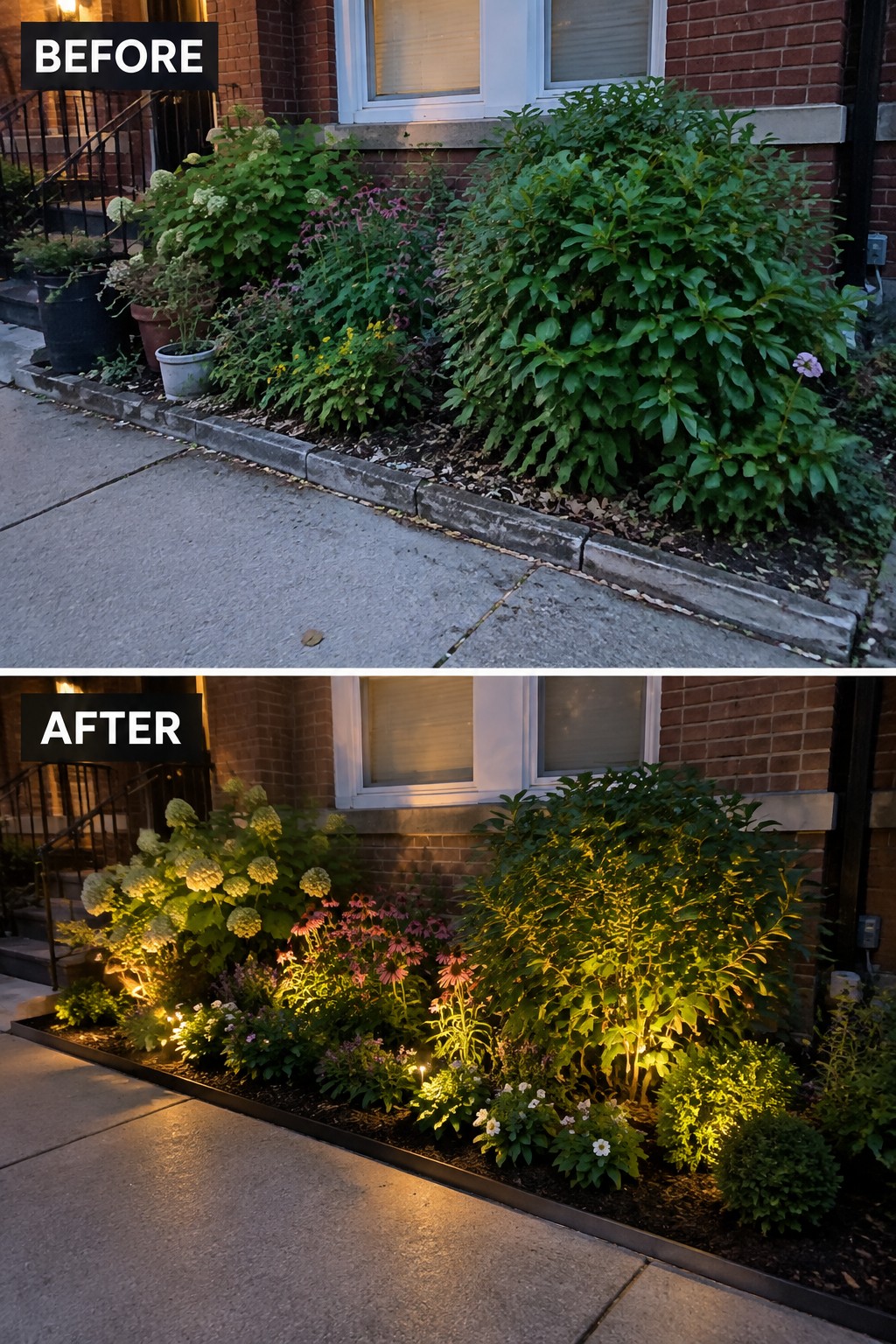
The biggest change here is how the garden bed went from looking flat and dark at night to having clear shape and presence. Low lights tucked into the planting pick up the foliage and flowers without overpowering the space, while the simple metal edging keeps everything neat along the sidewalk.
This approach works well on narrow front beds or along walkways where you want the plants to show up after sunset. Start with a few well-placed uplights on the larger shrubs and add a line of small path lights along the front edge. Keep the fixtures low and the bulbs warm so the bed feels inviting rather than harsh.
Frequently Asked Questions
Q: How do I stop roots from getting in the way when I bury the cables for tree uplights?
A: Dig a shallow trench along the outer edge of the bed and lay the cable there first. Then run short spurs inward to each fixture. This keeps the main line away from the root zone while still letting you place the lights right where you need them.
Q: What if the light ends up hitting the trunk too low and just makes it look like a stump?
A: Raise the fixture a few inches off the ground or tilt it so the beam starts higher on the trunk. Walk around the yard after dark and shift it until the light washes up into the canopy instead. One small change usually fixes the whole look.
Q: How often do I need to clean the fixtures once pollen and leaves start piling up?
A: Wipe the lenses with a damp cloth every couple of weeks during heavy shedding seasons. A quick rinse keeps the output bright without any special tools. Skip this step and the glow fades fast.
