

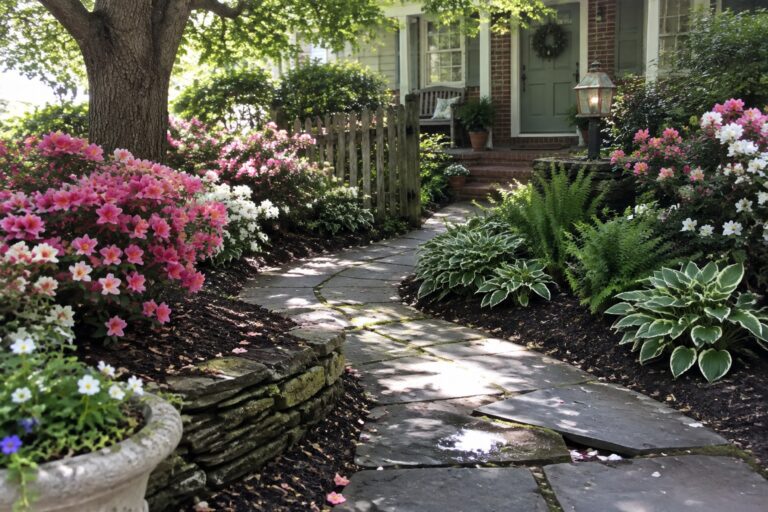
Shady front yards can be tricky to shape because the light changes what will grow well and how the whole space looks from the street.
I find that azaleas work best when their color is balanced with clear planting layers, tidy edges, and enough room for paths and entryways to feel open.
The first thing people often notice is the shape of the planting beds, especially where shrubs meet the walkway or frame the front door.
A thoughtful layout can make a small yard feel settled without hiding the home behind dense greenery.
Some of these approaches are easy to adapt to your own yard, and I’d start by testing which colors and planting forms suit its shade and scale.
Layer Azaleas Along a Curving Garden Path
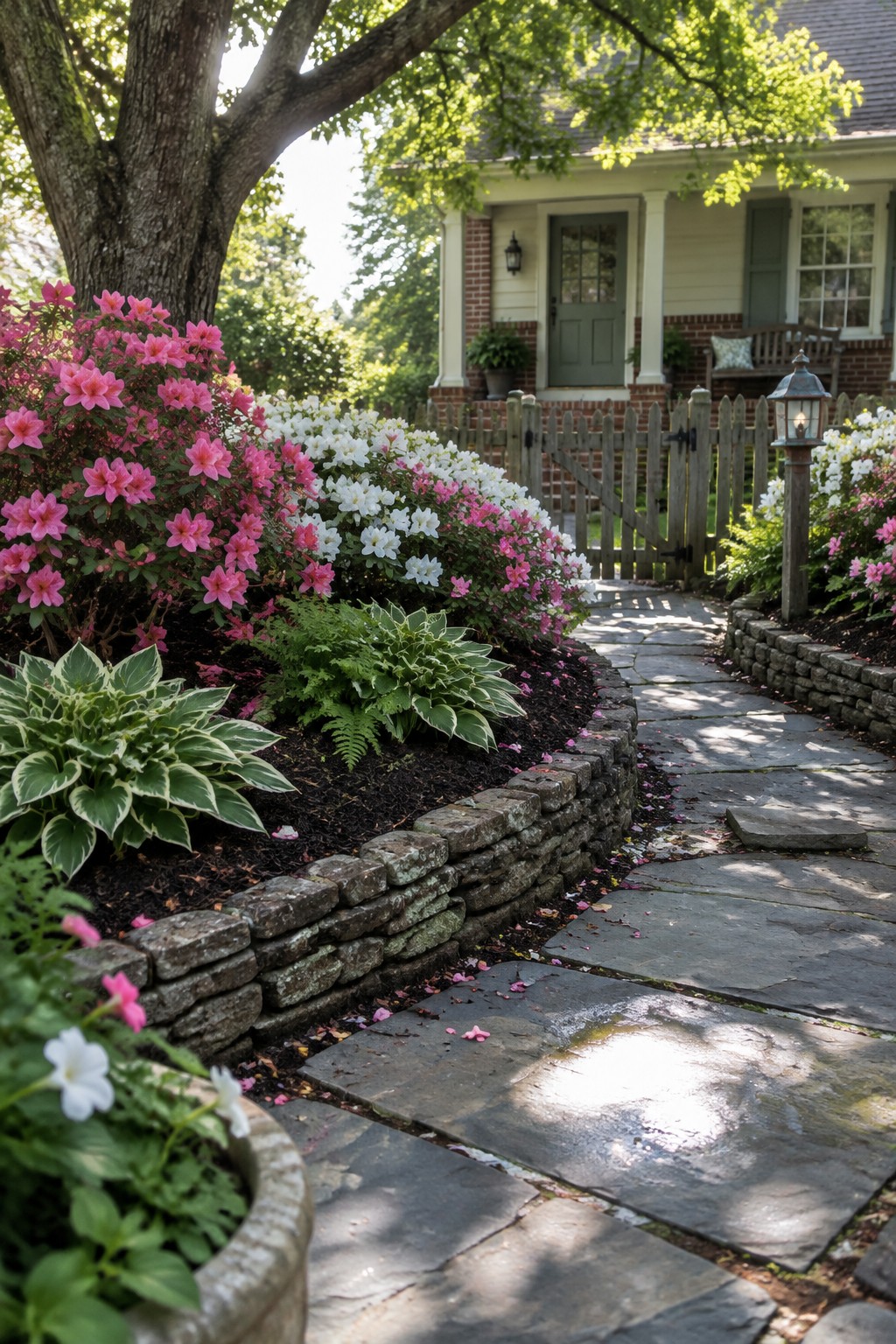
Azaleas look especially at home in a shady front yard when they’re planted in broad, layered beds. The low stone edging gives the flowers a clear shape, while the curved path lets the planting feel settled into the yard rather than lined up like a border.
Use this approach where a walkway passes beneath mature trees, and leave enough room for azaleas to spread without crowding the path. A mix of pink and white blooms adds variety, but keep the bed’s outline simple so it’s easy to maintain.
Use a Gravel Path to Guide the Front Garden
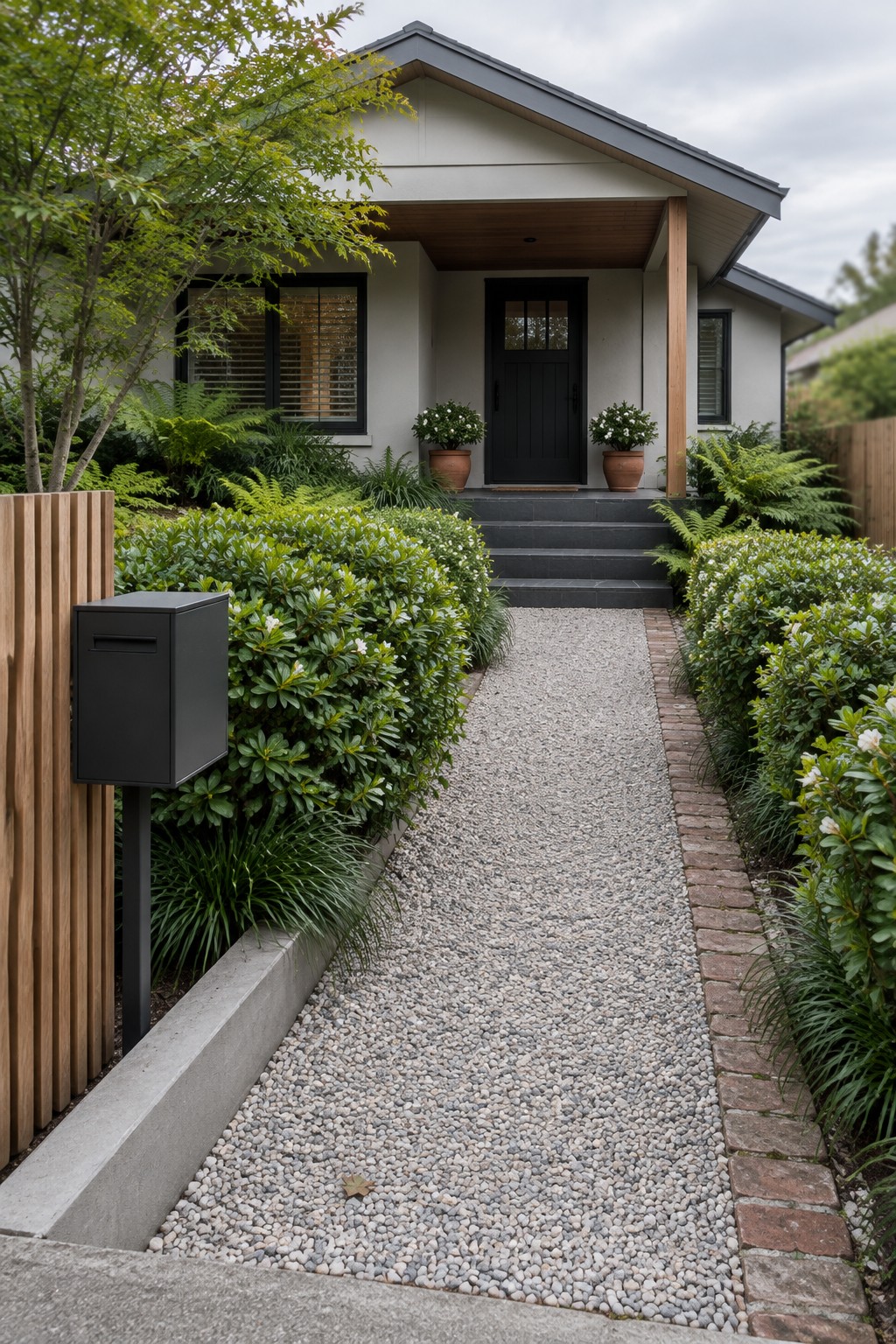
A gravel path gives a front yard a clear route to the door without paving over the whole space. It works especially well in a shady garden, where leafy planting can spill along the edges while the path stays open and easy to follow.
For a similar look, set the gravel within a firm border so it stays in place, and make the path wide enough for comfortable walking. Azaleas can be planted in groups along the edges, with room left between shrubs and the walkway for access and upkeep.
Let a Stone Path Wind Through the Shade
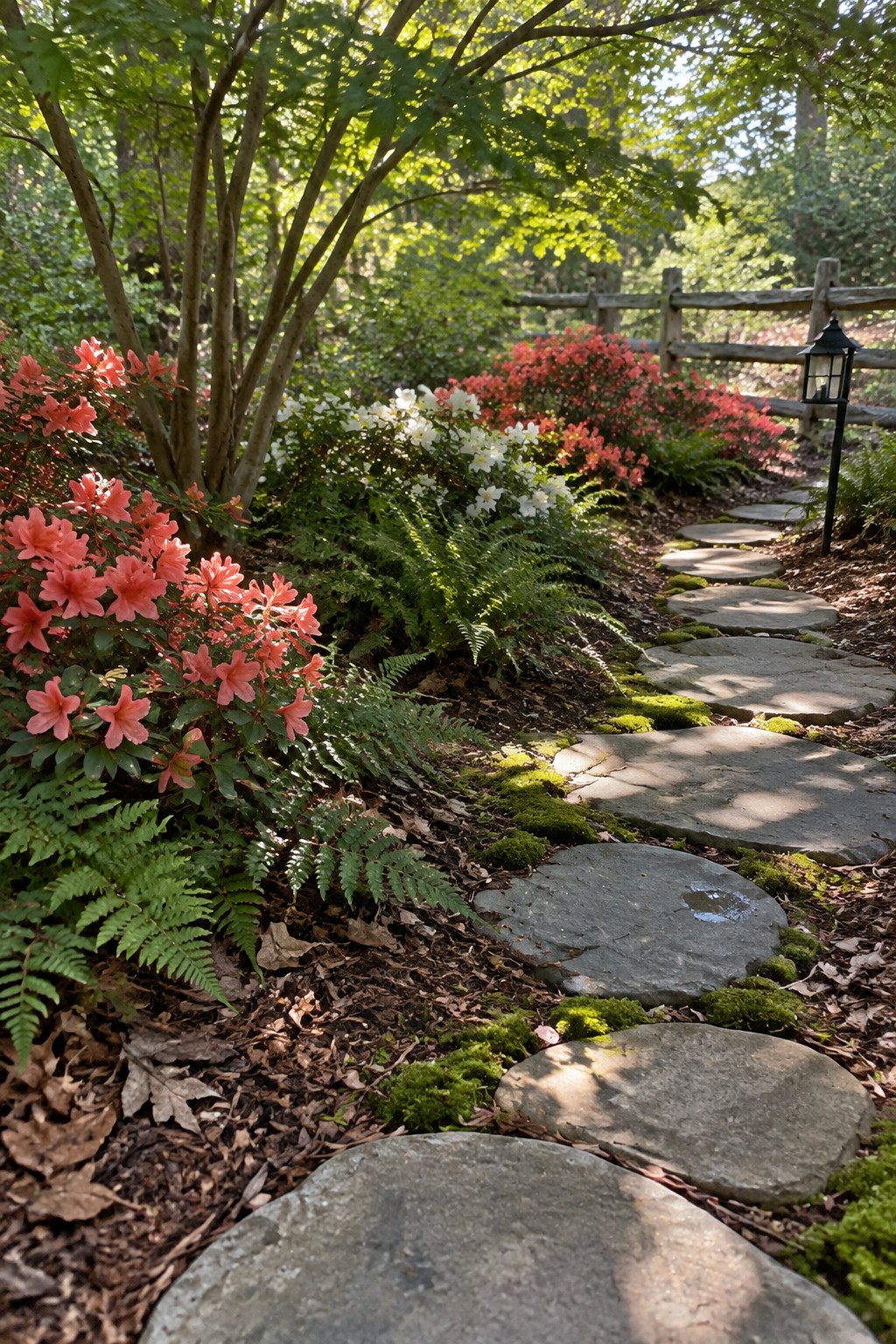
A gently curving stone path makes a shaded yard easier to move through and gives the planting beds a clear shape. Here, the broad stepping stones sit among ferns and azaleas, so the route feels like part of the garden rather than a strip cut through it.
Use irregular stones to suit a relaxed, woodland-style front yard, and leave enough room between them for moss or low groundcover. Keep the route wide and steady where people walk most, especially near the entry.
Use Curved Edges to Shape an Azalea Bed
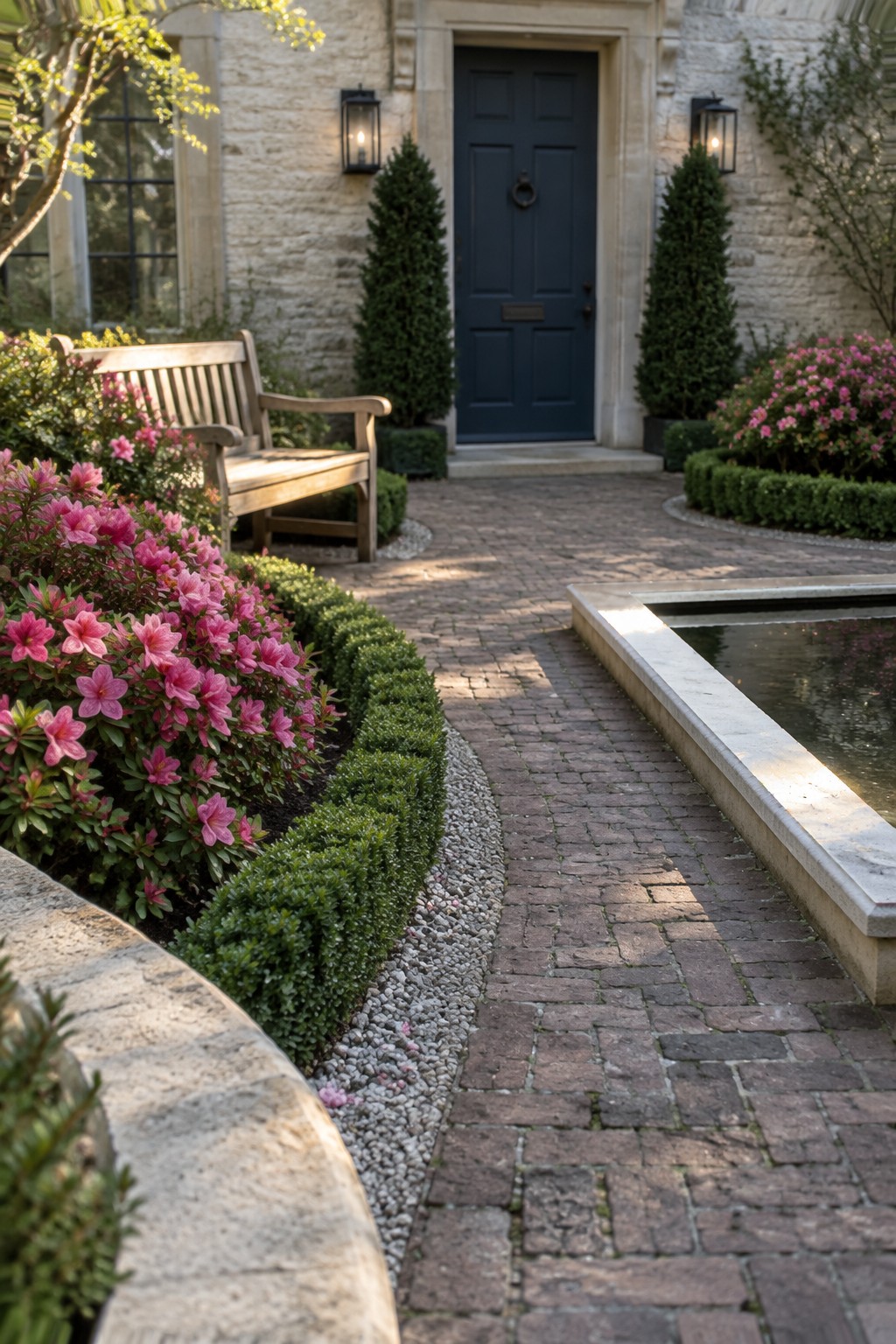
A curved planting bed gives a front yard a softer outline and helps guide the eye along a path. Here, low clipped shrubs define the bed’s edge, while pink azaleas fill the space behind them.
This approach works well beside a walkway or small courtyard, especially where you want flowers without blocking the route to the door. Keep the border low and leave enough room for azaleas to spread as they mature.
Build a Stepped Garden Into a Slope
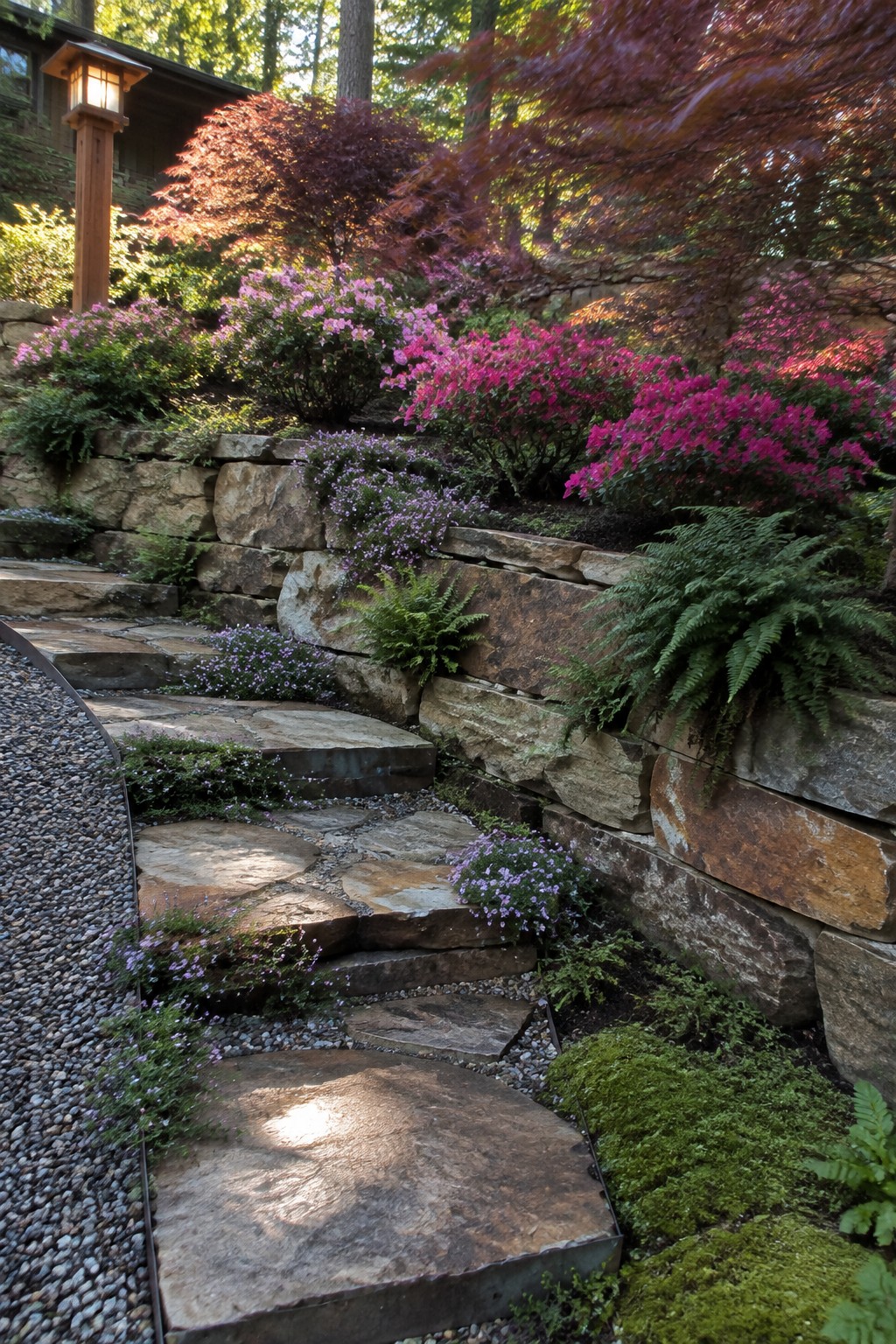
A stone path can make a sloped front yard easier to move through while giving the planting a clear structure. Broad stone steps feel settled into the garden, and the retaining wall creates useful planting space for azaleas and other shade-loving plants.
Use this approach where a steep or uneven yard needs both access and support. Leave enough room beside the steps for plants to grow without crowding the walking surface, and choose stones with a stable, even footing.
Plant Azaleas Along a Shell Path
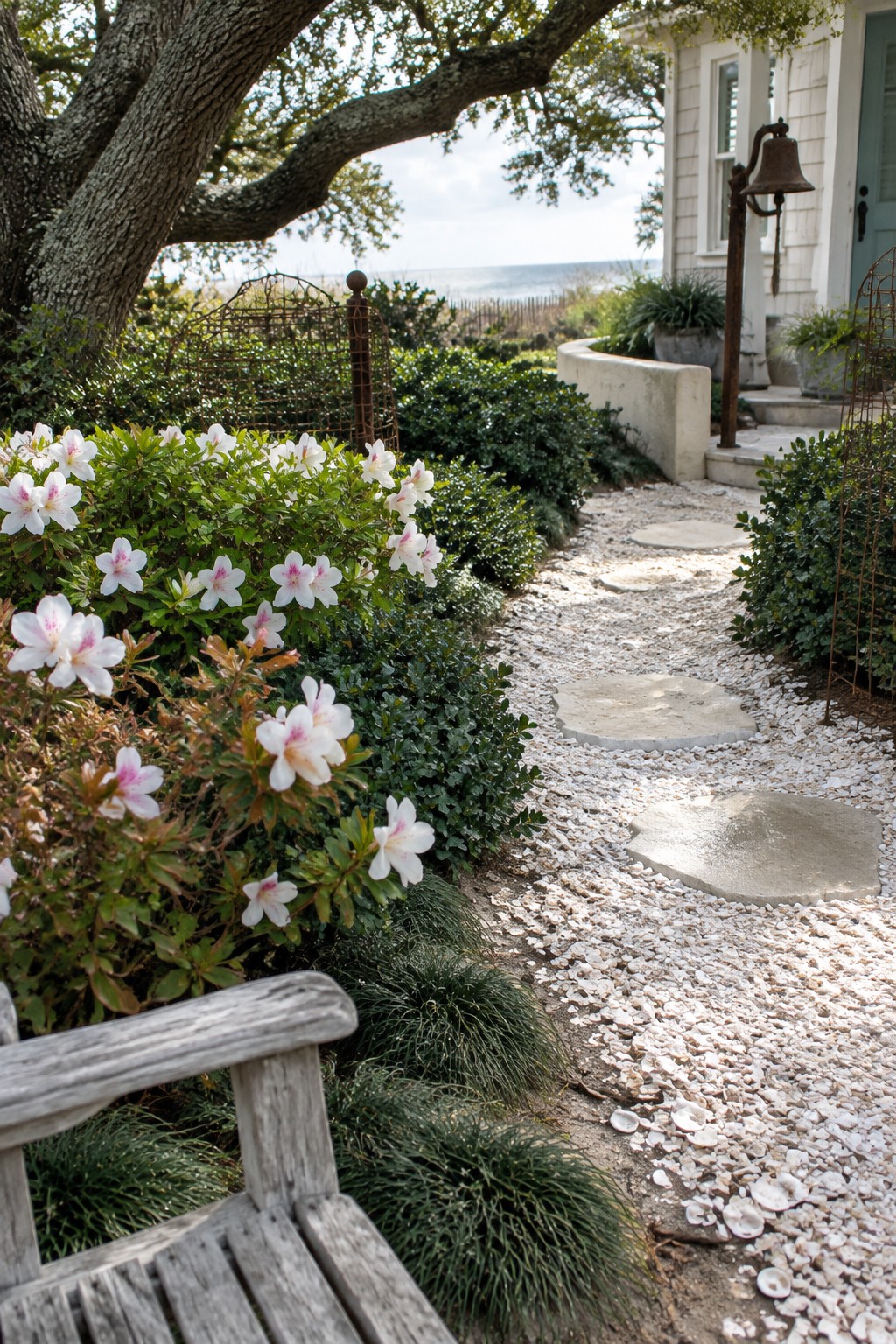
Azaleas can make a shady front yard feel full without blocking the way to the door. Planting them beside a narrow shell path gives the flowers a clear place to grow and leaves a simple route through the garden.
Use this idea where the path curves through a planting bed, and leave enough room for azaleas to spread as they mature. Shells suit a coastal home, but gravel or small stone can give the same effect elsewhere.
Use Stone Stepping Pads to Guide a Gravel Path

Stone stepping pads make a gravel path easier to follow while keeping the garden looking informal. The broad stones set into the raked gravel give the route a clear rhythm without needing a solid paved walkway.
In a shady front yard, this approach can work well alongside azaleas and other low plants. Leave enough room for comfortable steps, and keep the stones level so the path stays easy to use.
Use Azaleas to Fill a Shady Front Border
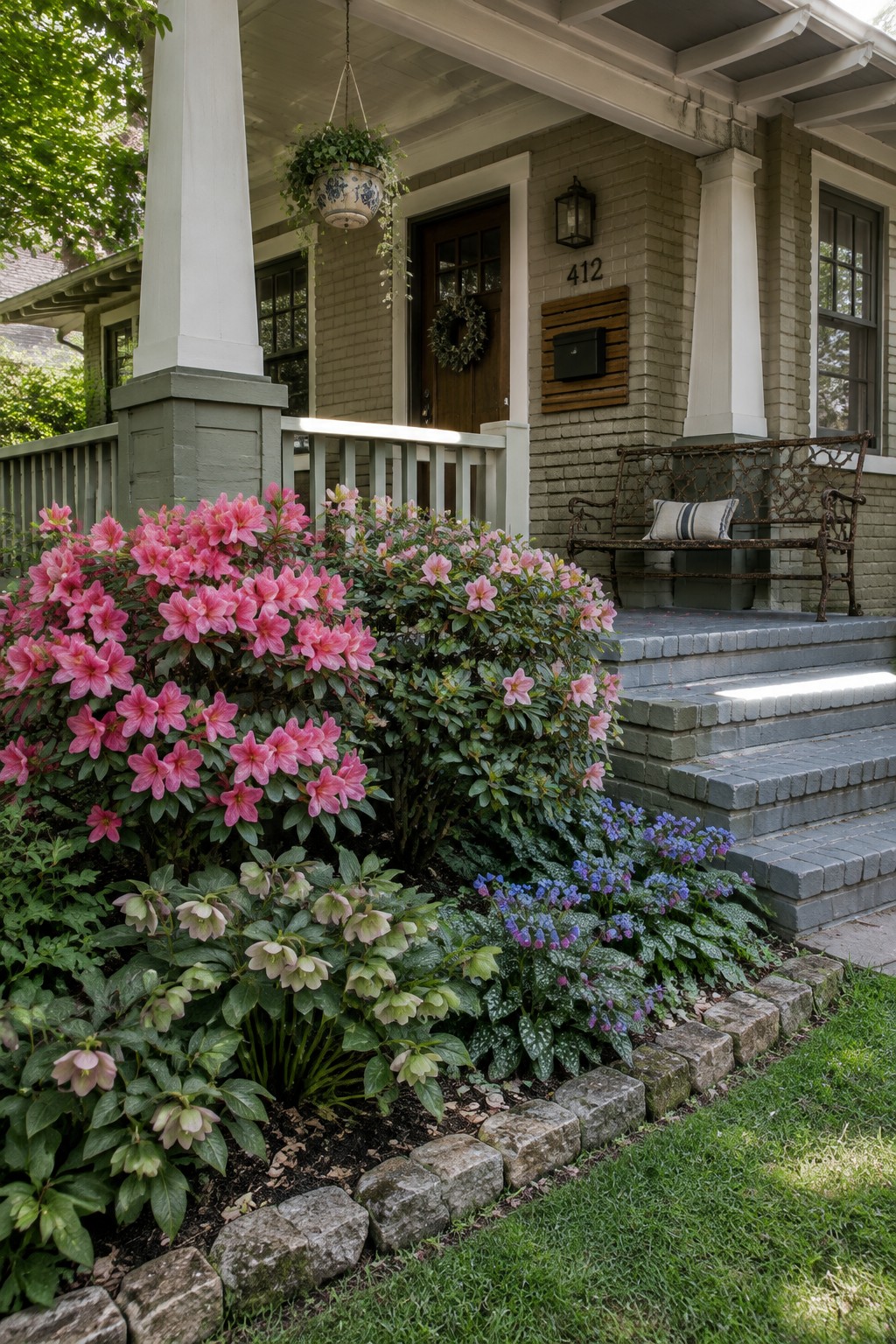
Azaleas make a good choice for a front garden that gets limited direct sun. Planted in a generous border, they create a band of spring color without needing a formal layout.
Give each shrub room to spread, and tuck in lower shade-tolerant plants near the front edge. This approach suits older homes with a deep porch or steps, but leave enough space for a clear walkway and easy access to the entry.
Use Large Stepping Stones Along a Narrow Entry Path
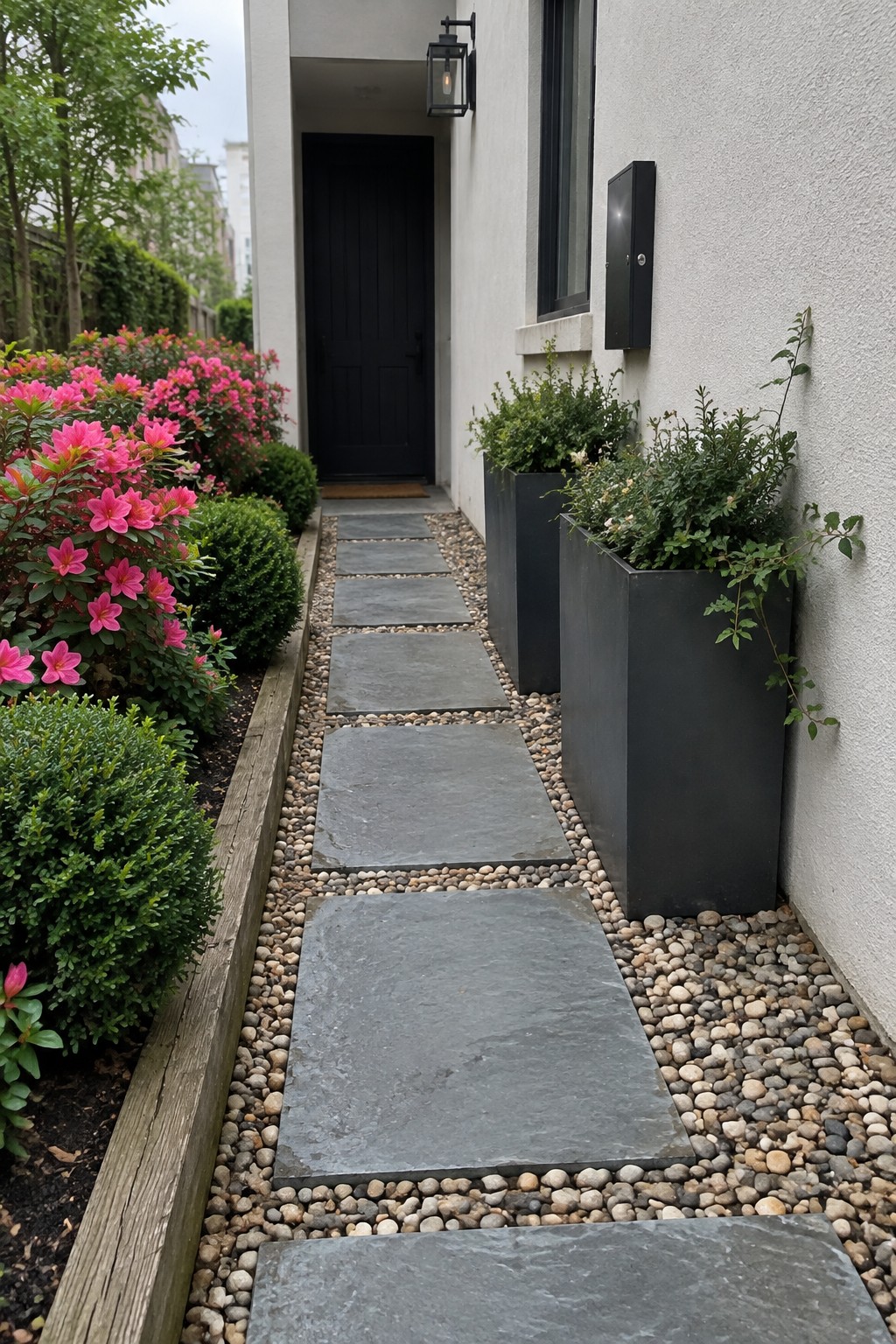
Large stone pads make a narrow front walkway easier to follow while leaving room for gravel between them. This simple layout suits a shady entry where a full paved path might feel too heavy.
Set the stones at a comfortable walking distance and keep them level so they feel secure underfoot. Azaleas can line one side of the path, with low plants or gravel along the other to keep the walkway from feeling crowded.
Use Azaleas to Frame a Brick Front Walk
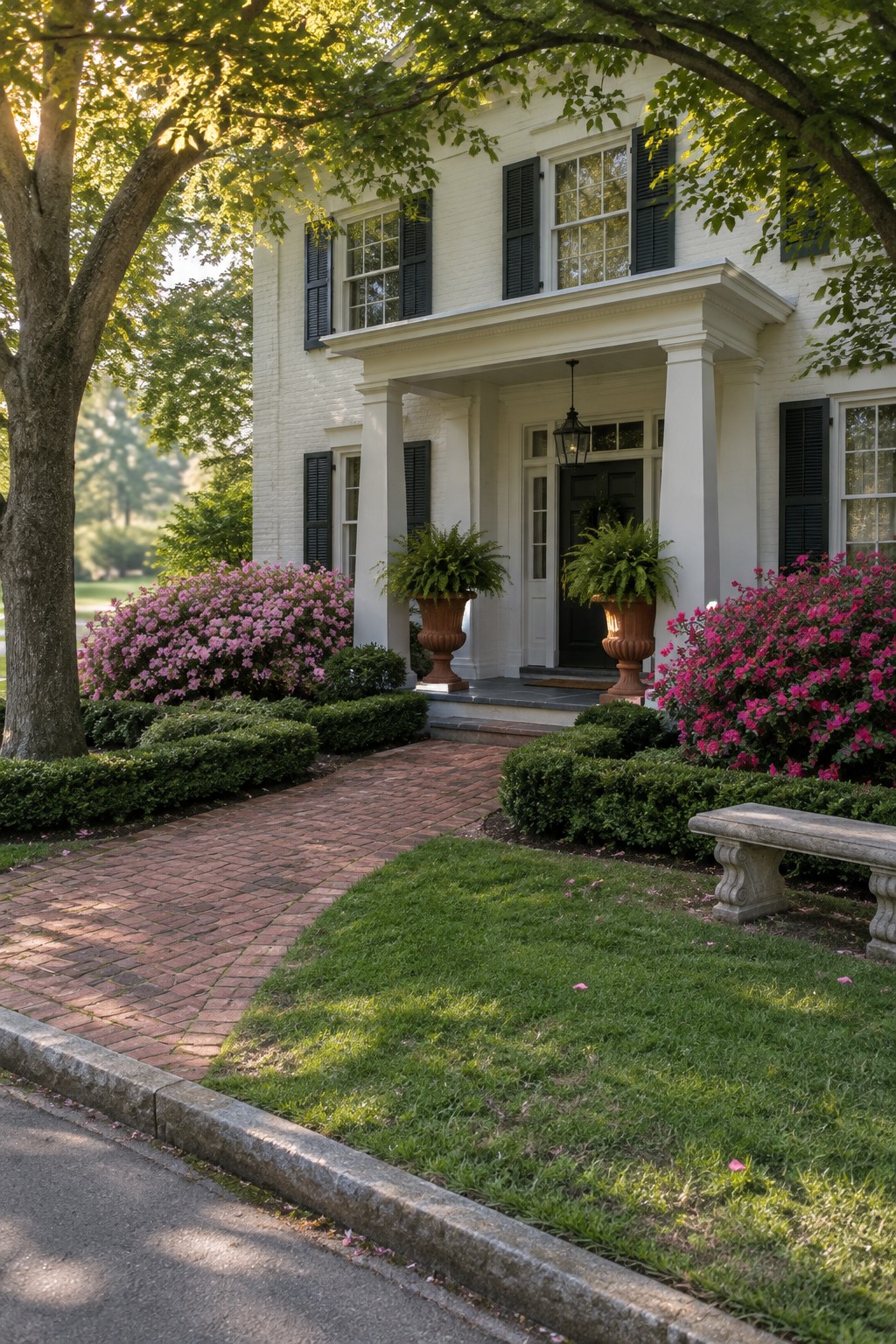
Azaleas planted along a front walk give the entry a clear garden edge and lead visitors toward the door. Their rounded shape works especially well beside a simple brick path, where the flowers can bring color without making the walkway feel crowded.
For a shady front yard, plant azaleas in broad beds beside the path and leave enough room for them to spread. Keep the walk itself clear, and use a few low evergreen shrubs near the edges to maintain a tidy outline after the flowers fade.
Train Azaleas Along a Garden Trellis
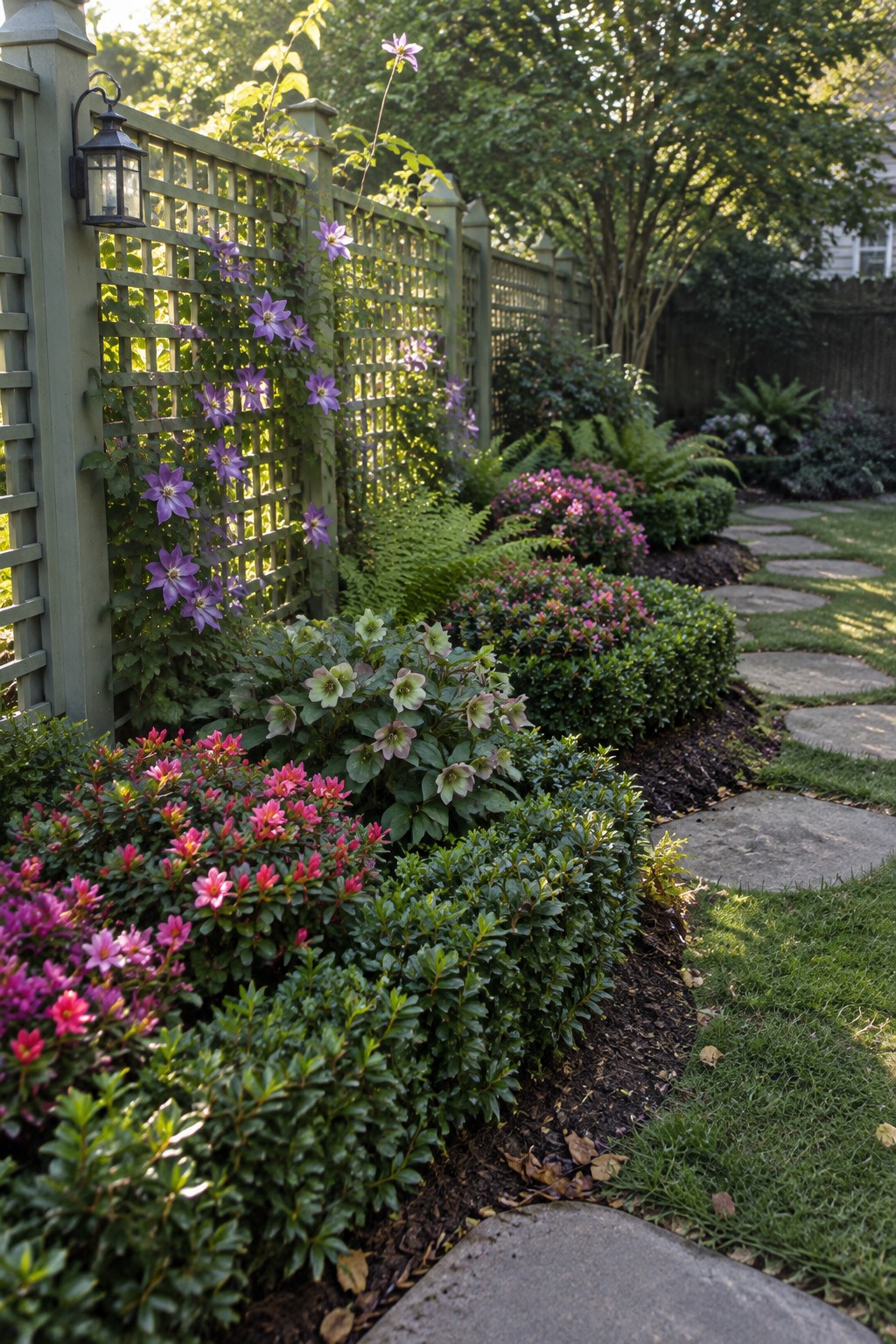
A trellis gives a shady garden a clear planting structure without taking up much ground space. Azaleas can fill the bed below while a flowering vine climbs the lattice, adding a vertical layer that makes a narrow border feel more complete.
Use a sturdy trellis along a fence or beside an entry, and choose a climber suited to your climate and light. Keep the vine from crowding nearby shrubs, and leave room for azaleas to grow without pressing against the structure.
Add a Reflecting Pond Beside the Entry Path
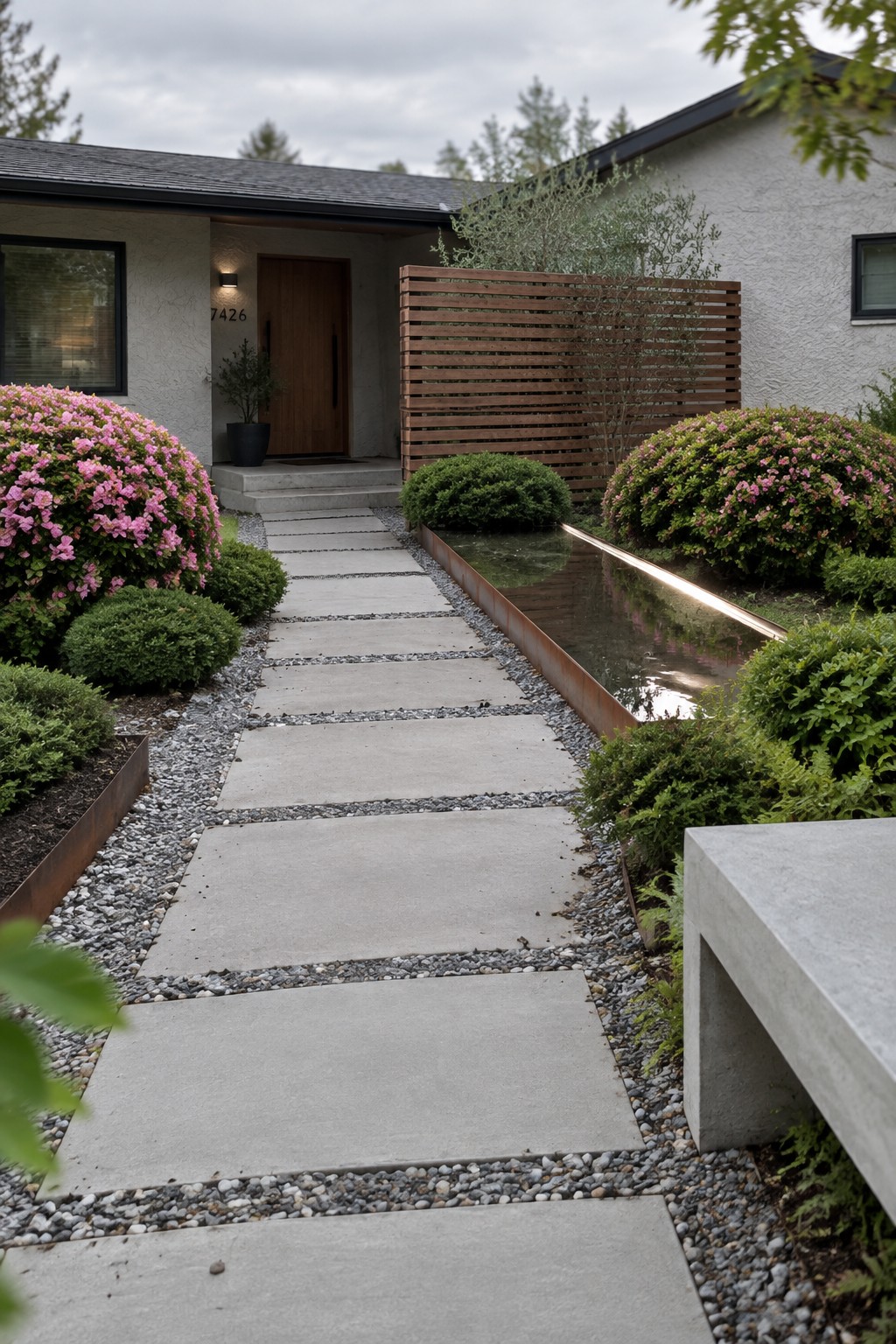
A narrow water feature beside a front walk can make a shady garden feel more settled without taking up much space. Here, the straight pond edge gives the path a clear boundary, while nearby azaleas bring color close to the water.
For a similar look, keep the pond slim and place it alongside a simple stepping-stone path. Azaleas work well in the surrounding beds, but leave enough room to reach the water and trim plants as they grow.
Use Azaleas to Shape a Shady Front Garden
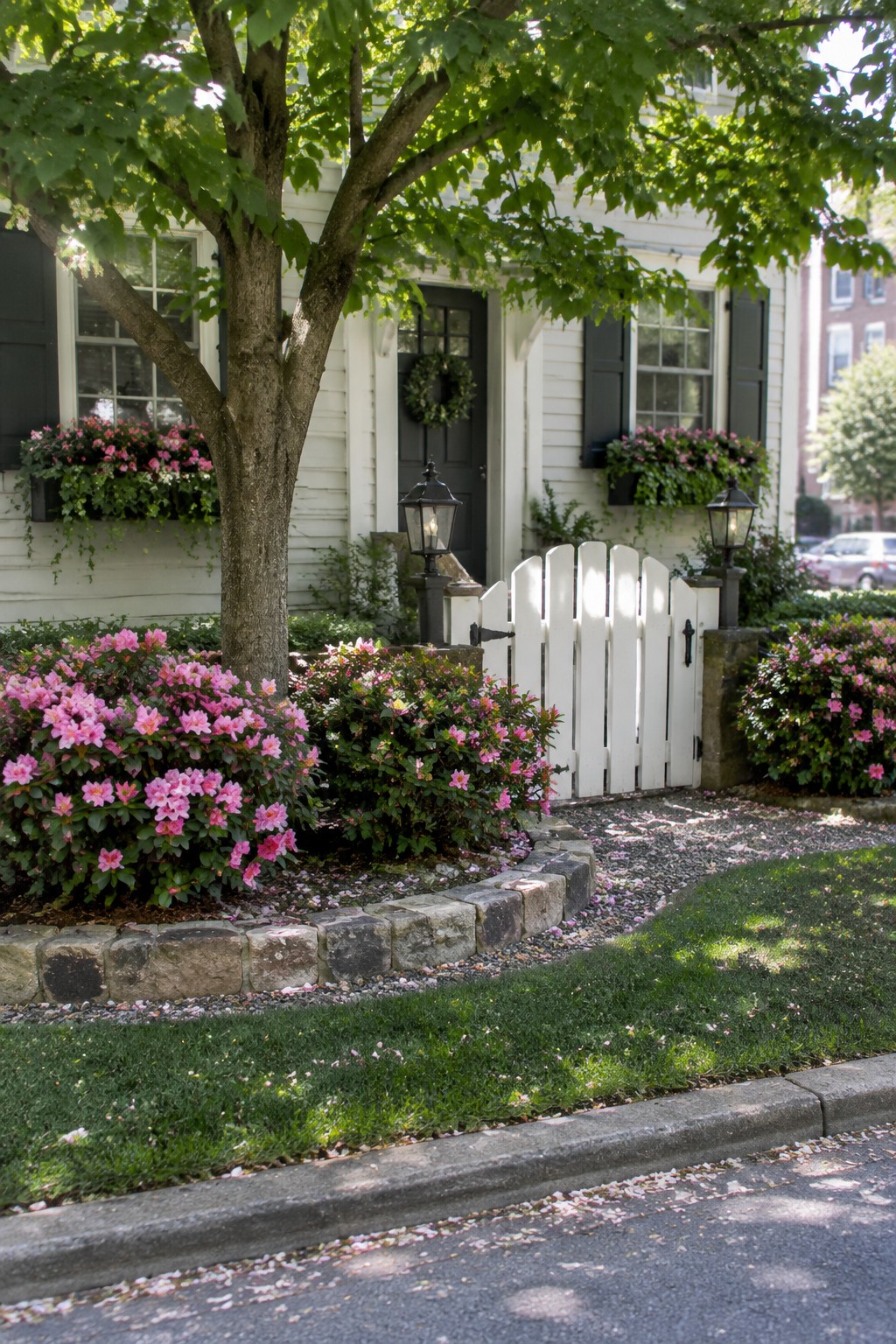
Azaleas can give a shady front yard a clear, welcoming structure when they fill the edges of a garden bed. Their rounded form and spring flowers make the planting feel full without needing a complicated layout.
Plant them in groups along a curved stone border, leaving enough room for each shrub to grow. They suit the shaded entry of a traditional home, but avoid crowding the path or gate so there is still an easy route to the front door.
Use Azaleas to Edge Front Entry Steps
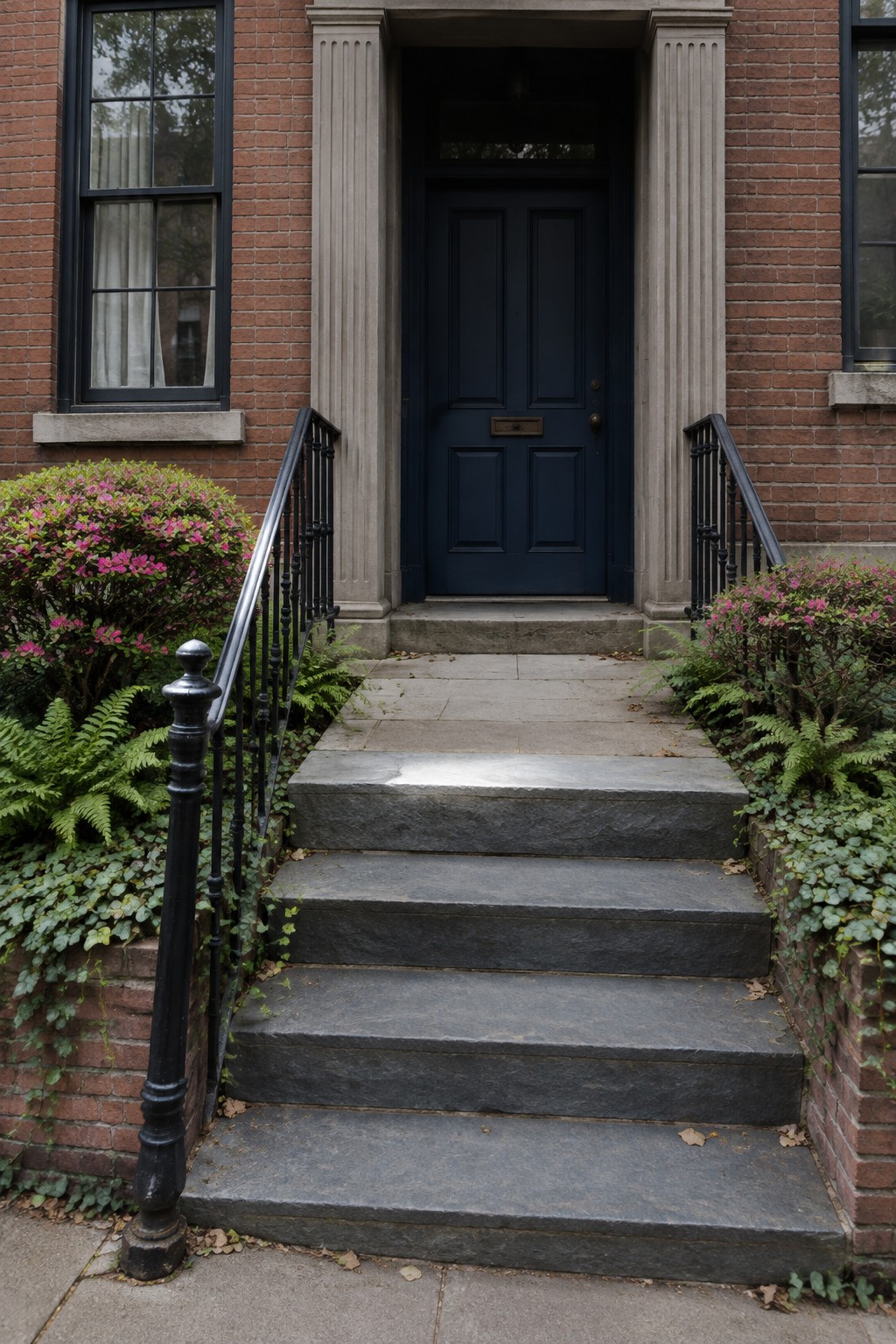
Azaleas can make a front entry feel connected to the garden when they grow along the sides of the steps. Their low, spreading shape adds color near the path without blocking the way to the door.
This works well in a shady front yard, especially beside stone steps or a short walkway. Keep the plants trimmed back from the railings and leave enough room for people to pass comfortably.
Use a Rock Waterfall in a Shady Azalea Garden

A small waterfall can give a shady garden a natural focal point without taking up much room. Here, water runs over stacked stones among azaleas, so the feature feels connected to the planting rather than set apart from it.
For a similar effect, tuck a recirculating waterfall into a sloped bed and plant azaleas around the rocks. Leave enough space to reach the pump and trim the shrubs, and check that the sound of the water suits the nearby entry or path.
Use a Brick Landing to Mark the Front Entry
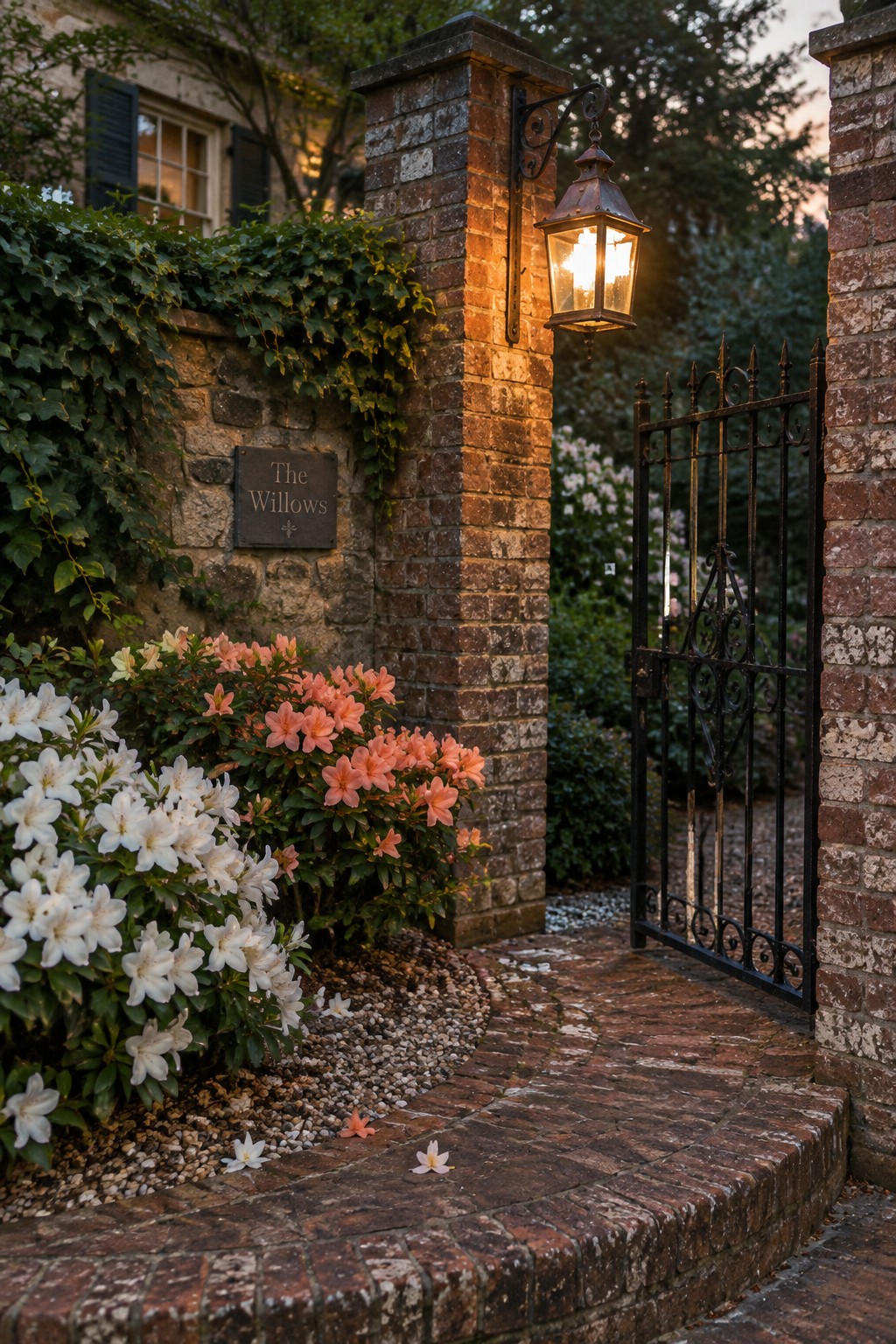
A small brick landing gives an entry path a clear place to pause before the gate. Its curved edge also helps the hard surface sit naturally beside a shady planting bed, rather than cutting straight across it.
For a similar look, use bricks that suit the home and keep the landing wide enough for comfortable footing. Azaleas can line the edge, but leave room for them to grow without spilling onto the walking surface.
Frequently Asked Questions
Q: Will azaleas bloom in a front yard that gets mostly shade?
A: Yes, many azaleas bloom well with morning sun and afternoon shade, or in bright, dappled light. Deep shade may mean fewer flowers, so look for a spot that gets at least a little gentle sunlight.
Q: How often should I water newly planted azaleas?
A: Check the soil a couple of inches down and water when it starts to feel dry. Keep the roots evenly moist while the plants settle in, but don’t let them sit in soggy soil.
Q: Can I plant azaleas under trees?
A: You can, as long as the spot has enough light and the tree roots aren’t crowding the planting area. Plant azaleas near the edge of the tree canopy, where they’ll have a better chance to get moisture and room to grow.
Q: How do I keep azaleas from looking bare in winter?
A: Pair them with evergreen ground cover or shrubs so the bed still has color when the azaleas aren’t blooming. Choose plants that like similar shade and soil conditions.
