

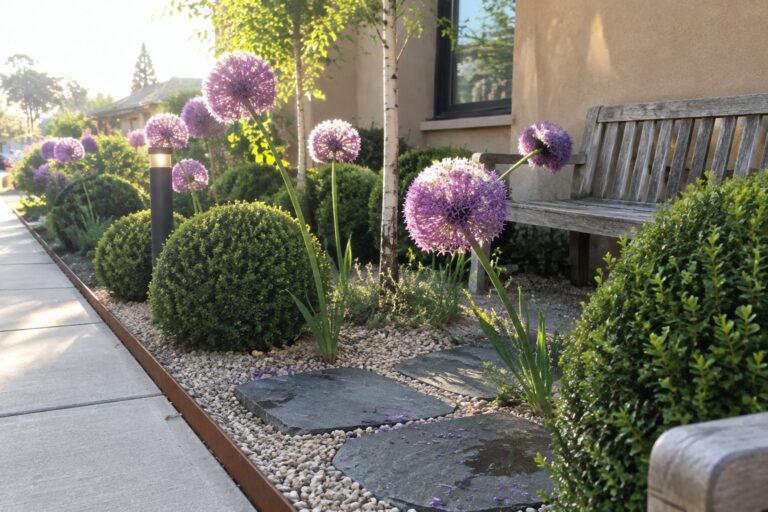
Alliums can bring a garden bed a clear sense of height and rhythm, but they work best when their placement feels tied to the rest of the planting.
I pay attention first to how the round flower heads sit against lower plants, paths, and bed edges, since that balance can make a border feel considered rather than scattered.
Their strong stems also give a bed structure as other flowers shift through the season.
I’d test combinations with grasses or softer, leafy plants, while leaving enough room for the bulbs to return without crowding.
The best layouts feel composed but still natural.
Use Alliums to Add Height to a Flower Bed
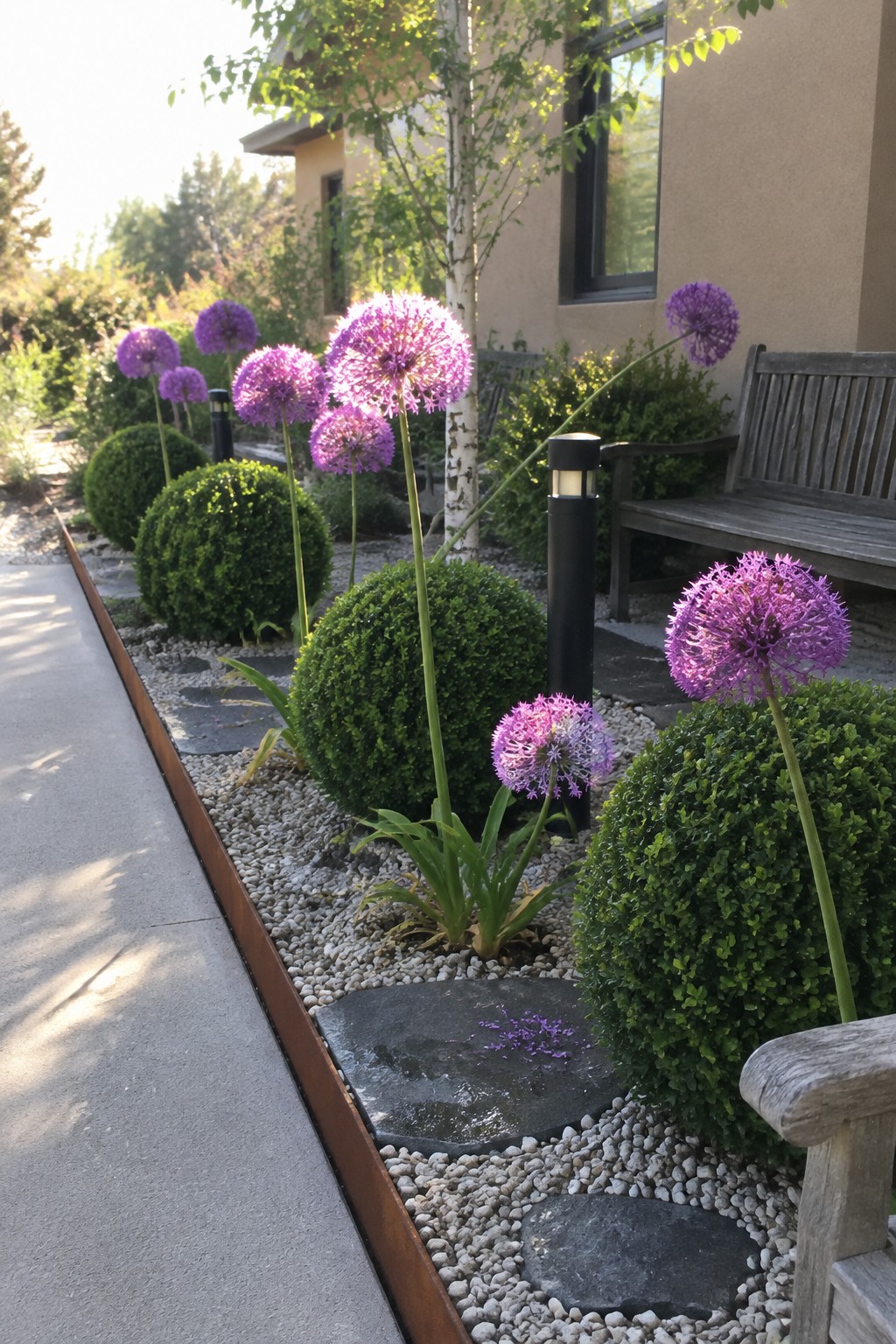
Tall alliums bring a little height and rhythm to a low, clipped garden. Their round purple blooms rise above the greenery, so they stand out without needing a large or crowded planting bed.
Plant them in small groups among low shrubs or groundcover, leaving enough room for their leaves to grow. They work well along a path or beside a house, where the upright stems add interest without blocking the view.
Use Alliums Along a Raised Garden Bed
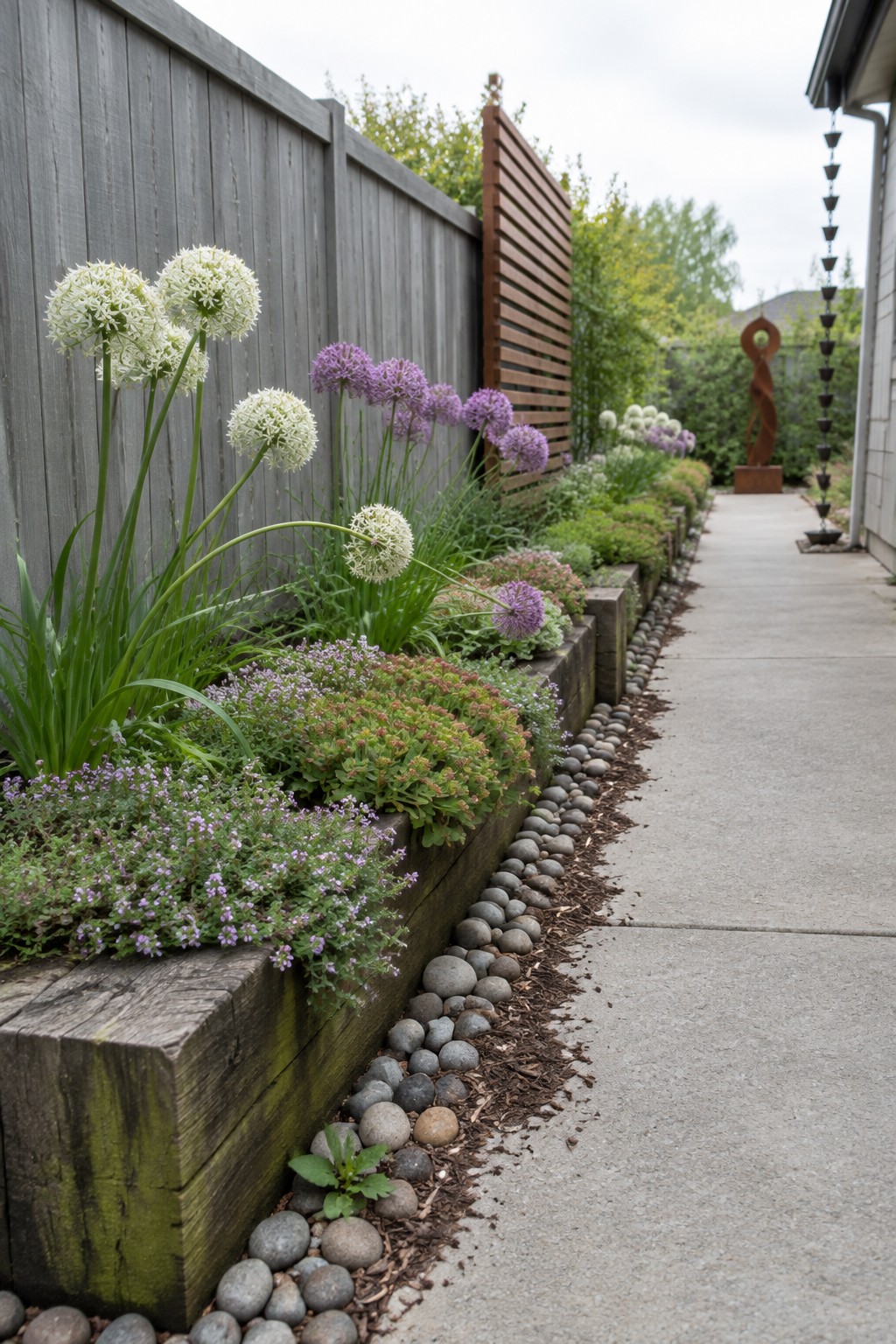
Alliums can give a flower bed a clear rhythm without taking up much ground space. Their tall stems rise above low-growing plants, so the bed feels layered while still leaving room for flowers to spread along the edge.
Plant them in small groups behind compact ground cover or edging plants, and repeat the groups down the length of the bed. This works especially well beside a fence or walkway. Leave enough space around the bulbs for foliage to die back naturally after flowering.
Use Alliums to Add Height to Gravel Beds

Tall alliums bring clear vertical accents to a low, gravel-filled garden. Their round purple flower heads stand above lavender and ornamental grasses, giving the planting bed an easy rhythm without making it feel crowded.
Plant them in small groups among lower plants, leaving enough open space for each stem to show. This approach suits modern gardens with gravel and simple paving, where a few upright flowers can add interest without needing a dense flower bed.
Use Alliums To Add Height To A Modern Flower Bed
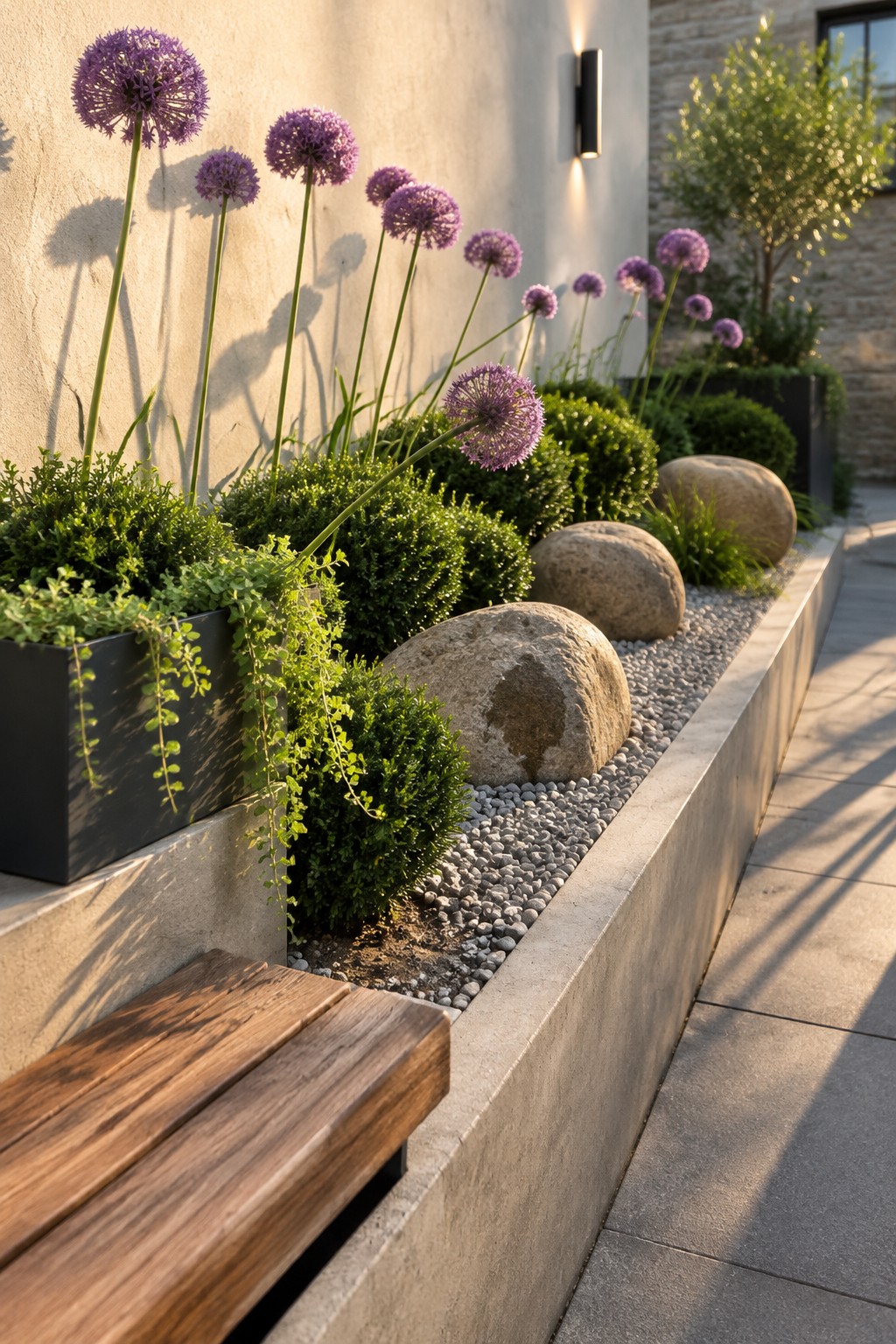
Tall alliums bring a simple vertical rhythm to a flower bed, especially when most of the planting stays low and compact. Their round purple blooms stand above clipped greenery without making the bed feel crowded.
Plant them in small groups through a narrow border or raised bed, leaving enough space for the bulbs to return each year. A gravel mulch suits this tidy look, but keep it away from the allium stems so water can reach the soil.
Add Alliums Along a Stepping Path
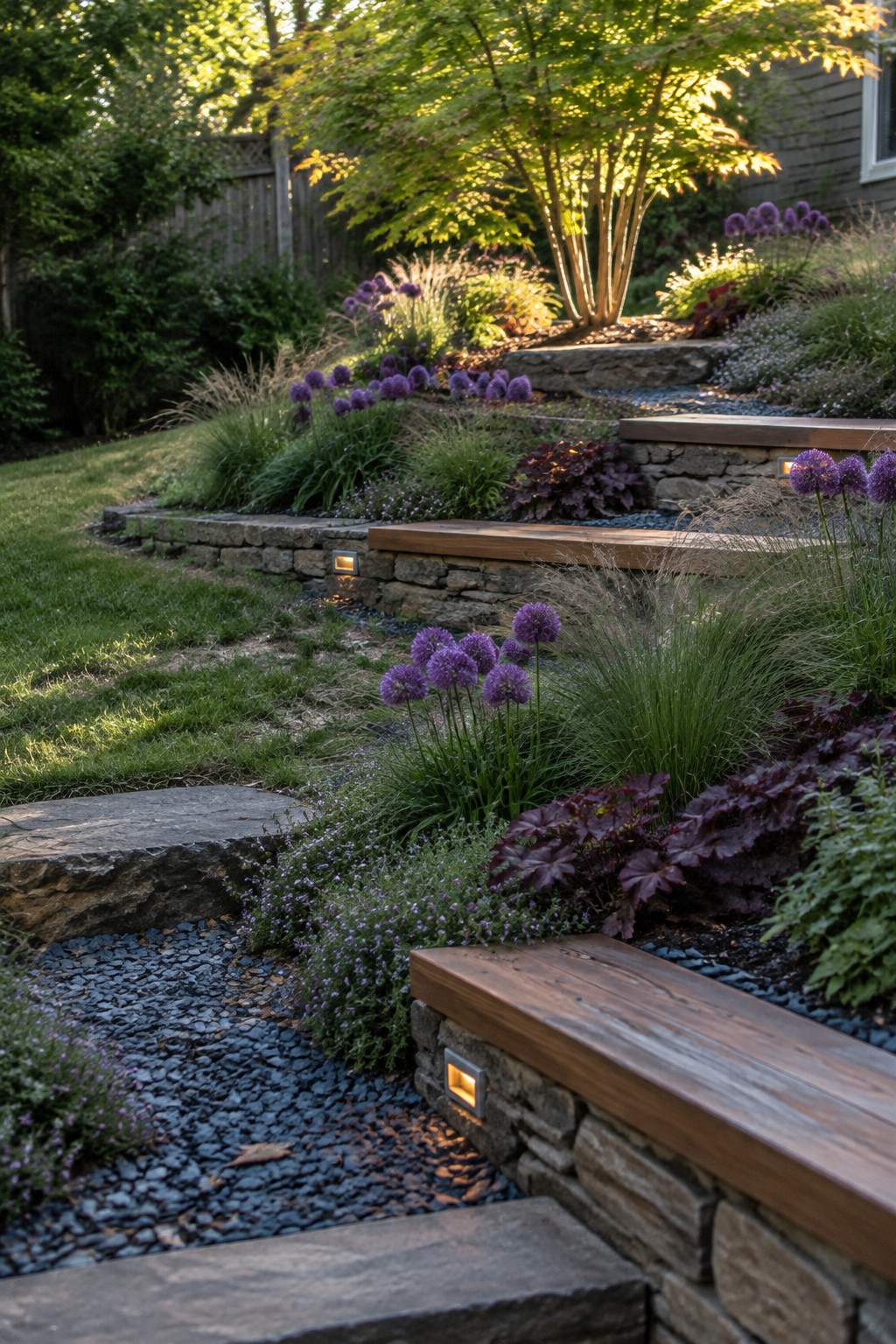
Alliums can help give a garden path a clear sense of direction. Their round purple blooms stand above lower plants, making the route easy to follow without needing a formal border.
Plant them in small groups beside a gravel path, leaving enough room for the foliage to die back after flowering. They work especially well among grasses and low ground cover, which can fill in around the plants later in the season.
Plant Alliums Along a Garden Path
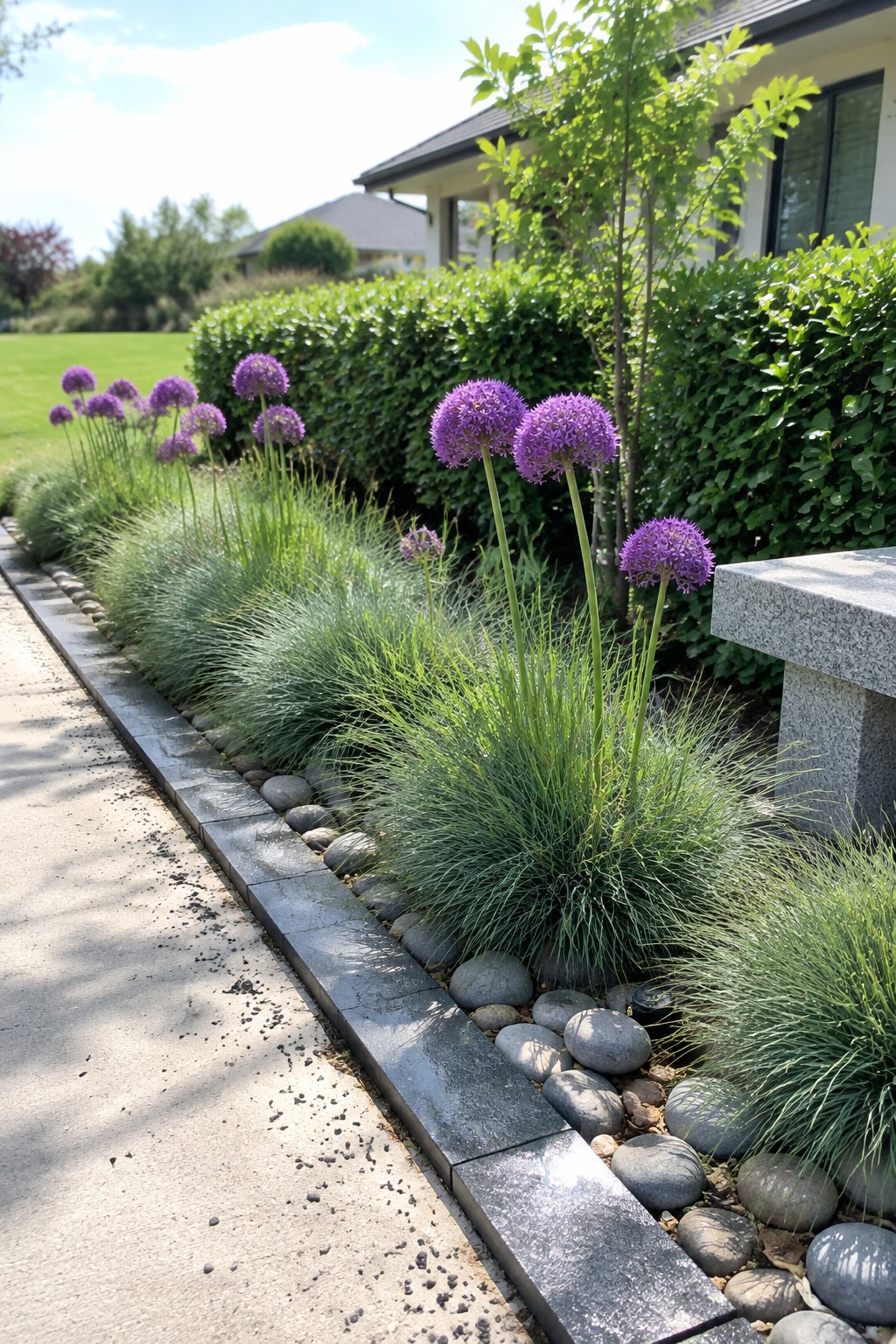
Alliums can give a narrow flower bed a clear rhythm without taking up much ground space. Their round purple blooms rise above low, fine-textured grasses, so the bed feels layered while the path stays open.
Use this approach beside a walkway or along a hedge, planting the bulbs in small groups rather than a straight line. Leave room for the foliage to fade after flowering, and choose grasses or other plants that can cover the leaves later.
Plant Alliums Among Low Garden Shrubs
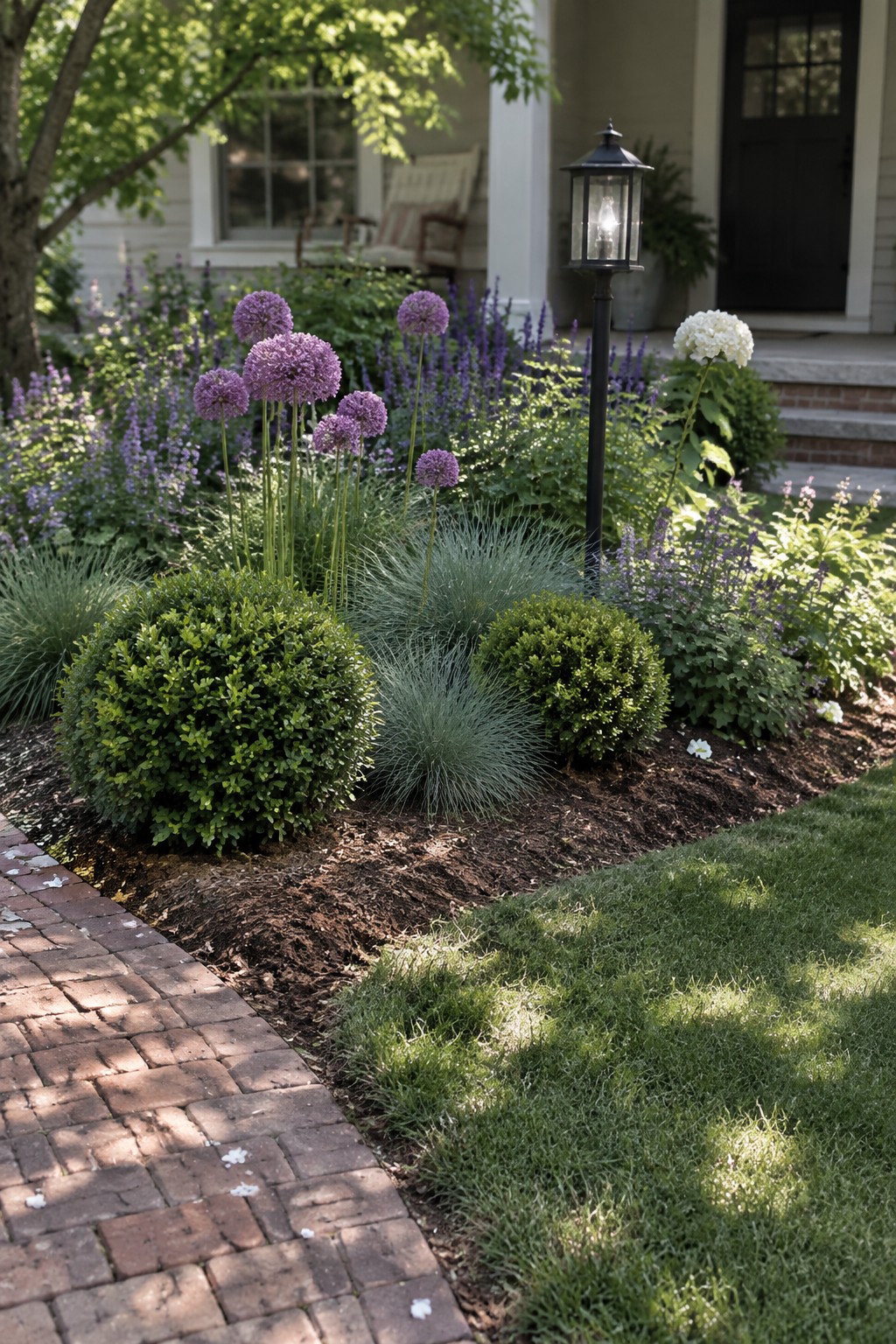
Alliums can bring a little height and a clear focal point to a mixed flower bed. Their round purple blooms stand out among low shrubs and fine-textured grasses without needing a large patch of their own.
Plant a small group toward the middle or back of the bed, then let shorter plants fill in around them. This works well along a front walk or near an entry, where the flowers can be seen from both the path and the house. Leave enough space for the allium leaves to fade after blooming.
Plant Alliums in a Long, Narrow Bed
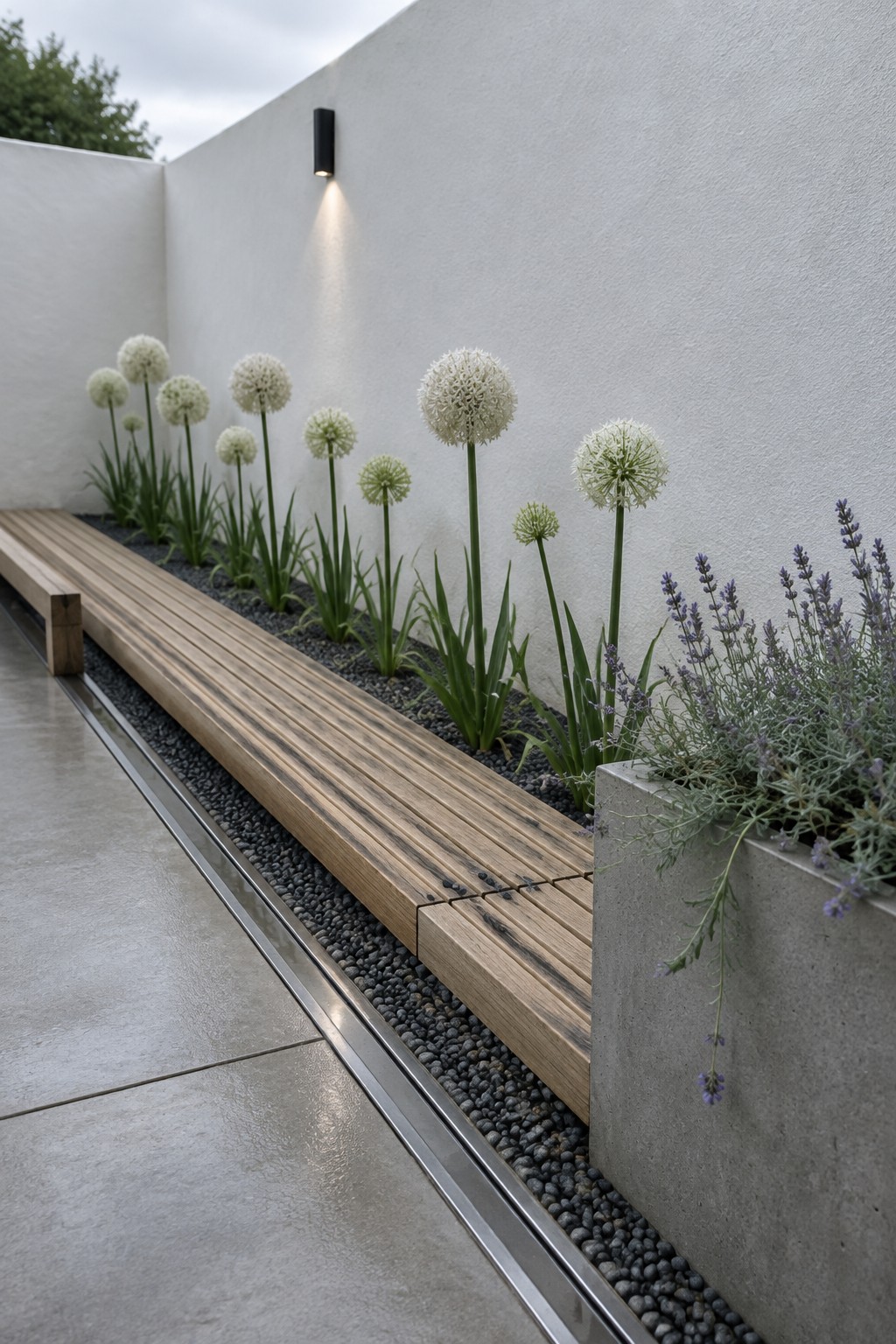
Alliums work well in a narrow flower bed because their upright stems add height without taking up much ground space. Their round flower heads also give the planting a clear rhythm along a wall or walkway.
Plant them in small groups, leaving enough room for their foliage to fade after blooming. A gravel mulch helps keep a slim bed tidy, while low plants such as lavender can fill in around the stems.
Plant Alliums Along a Poolside Bed

A narrow planting bed can bring alliums right up to an outdoor seating area without taking over the patio. Their tall stems and round purple flowers stand above low grasses, giving the bed a clear shape beside the pool.
Use a stone-edged bed where you want a tidy border between paving and planting. Alliums suit modern patios, but leave enough room for their leaves to die back after flowering without crowding the walkway.
Use Alliums to Add Color Along a Rooftop Garden Bed
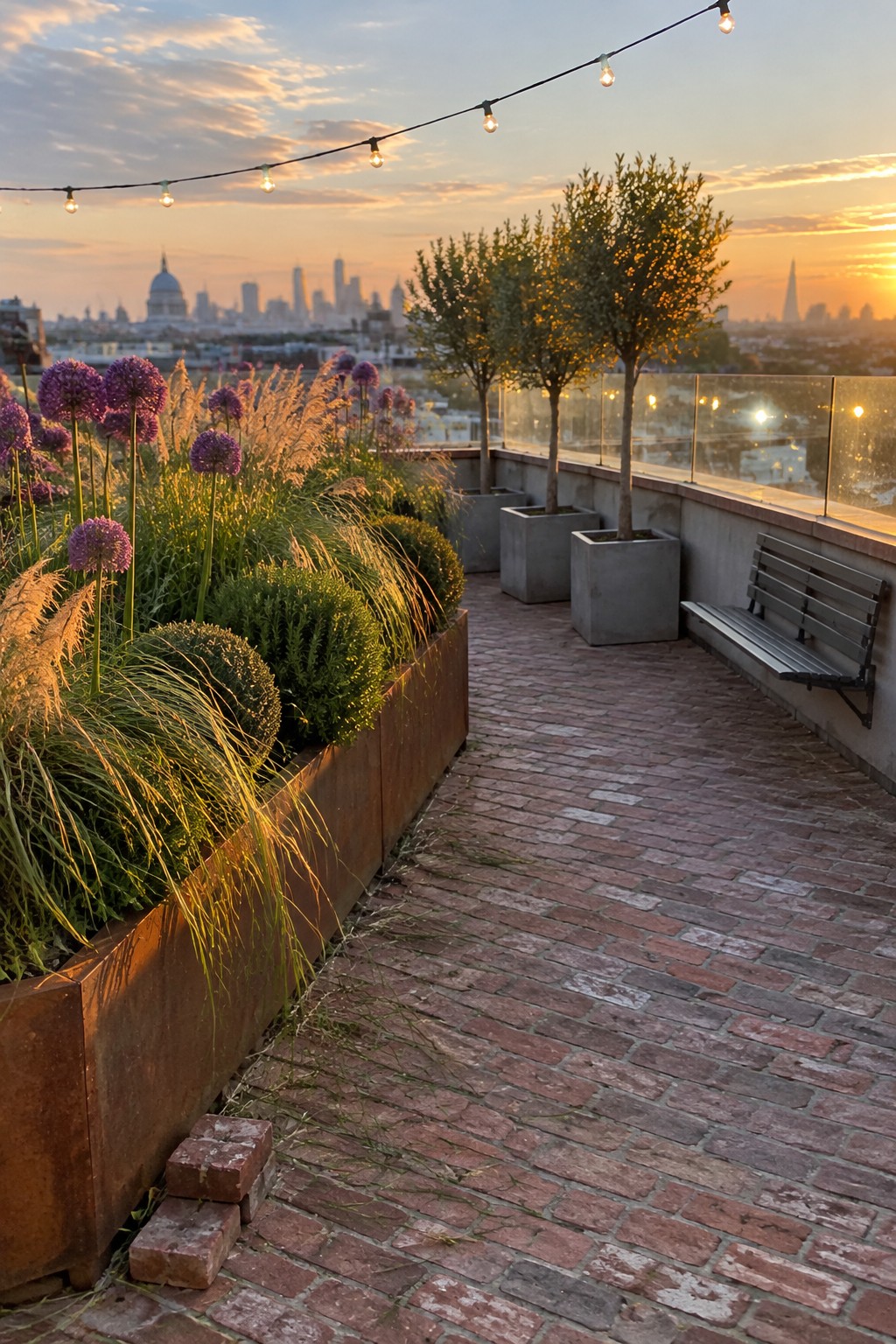
Alliums can bring clear spots of color to a rooftop planting bed without taking up much ground space. Their round purple flower heads stand above grasses and leafy plants, so they are easy to notice even in a narrow garden.
Plant them in small groups near the front or middle of a bed, leaving room for their leaves to fade after flowering. They suit rooftop terraces and other exposed spaces, but make sure containers have good drainage and enough soil depth.
Use Alliums in a Layered Sidewalk Bed
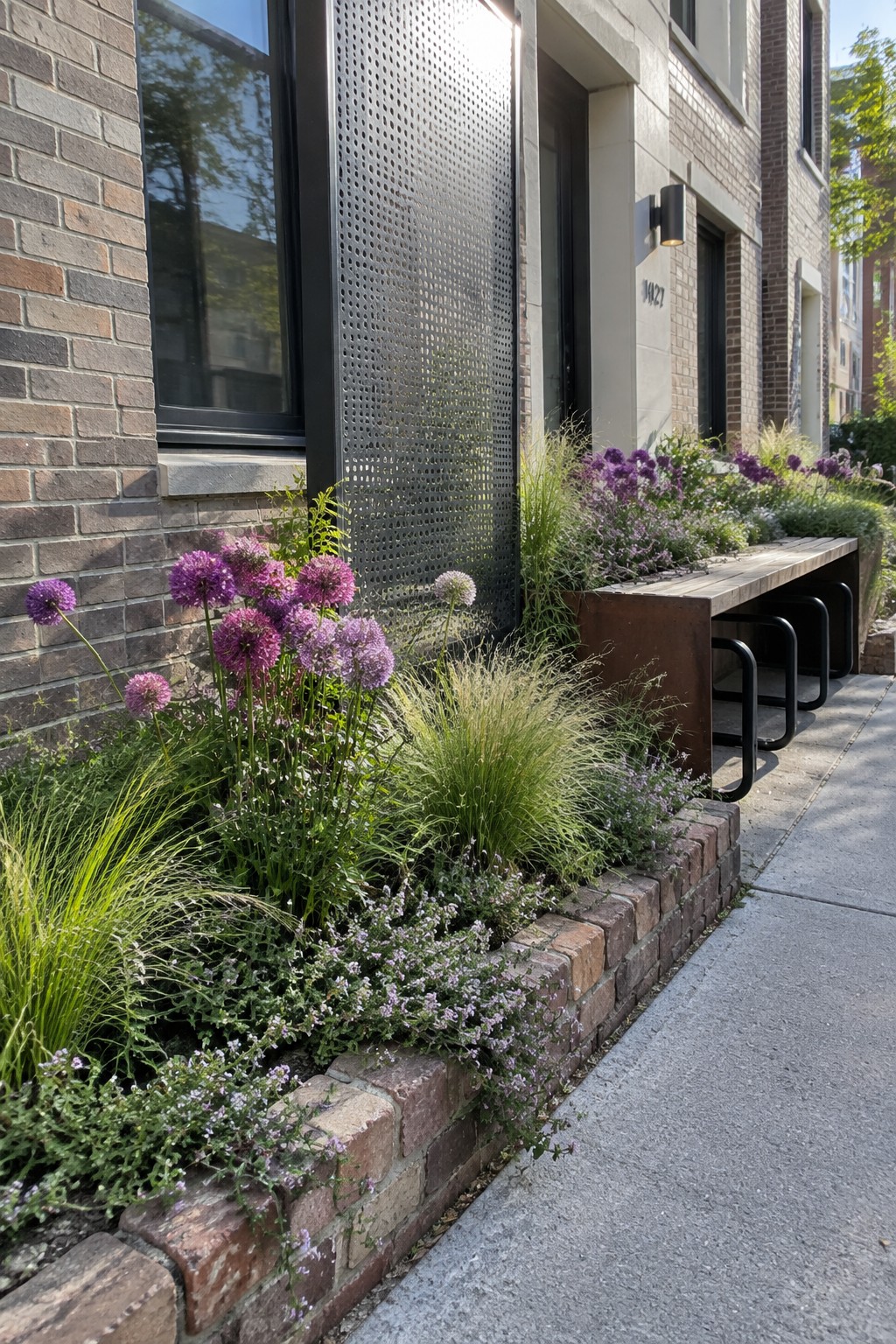
Alliums work well in a narrow bed along a building because their round flowers rise above lower plants without taking up much ground space. Here, purple blooms stand out among ornamental grasses and small flowering ground cover.
Repeat alliums along the length of the bed, leaving room between clumps for other plants to fill in. This approach suits city homes where planting space is limited. Check the mature height of each variety so the flowers do not crowd windows or block the walkway.
Use Alliums to Add Rhythm Along a Fence

Alliums planted at intervals can give a long flower bed a steady rhythm. Their round purple blooms stand out against the clipped greenery, while the repeated spacing helps the garden feel organized rather than crowded.
Try this approach in a narrow bed beside a fence or hedge, leaving room for the allium leaves and flower stems to grow. Low foliage plants can fill the spaces between bulbs, but avoid packing the bed too tightly.
Plant Alliums Around a Gravel Fire Pit

Alliums can bring color and height to the planting around a fire pit without blocking the open feel of the space. Their rounded purple flower heads stand above low greenery, so the garden still feels easy to move through.
Plant them in small groups along the edge of a gravel seating area, leaving clear room around the fire bowl and path. They suit informal courtyard gardens, but keep the stems away from the main walking route so they do not get in the way.
Let Alliums Mark the Path Through a Narrow Garden
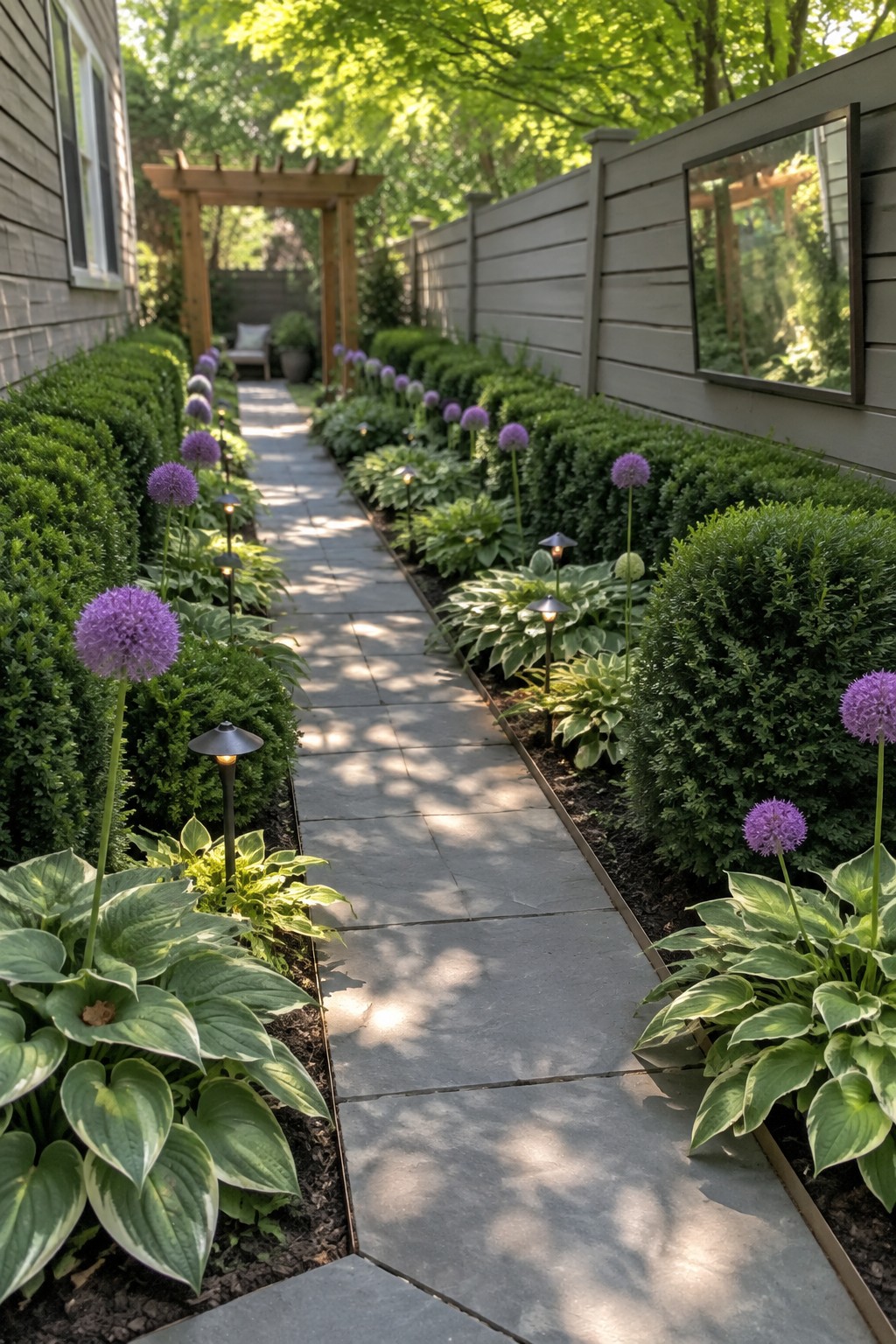
A straight stone path can make a side garden easier to walk through and give the planting beds a clear shape. Alliums add a repeating line of purple blooms beside the path, bringing color without taking up much ground space.
Use this layout in a narrow space between a house and fence, and leave enough room for the path to stay comfortable to walk on. Low shrubs can fill out the bed, while alliums rise above them. Check the plants’ mature spread so the flowers do not crowd the paving.
Shape Flower Beds With Curved Edging
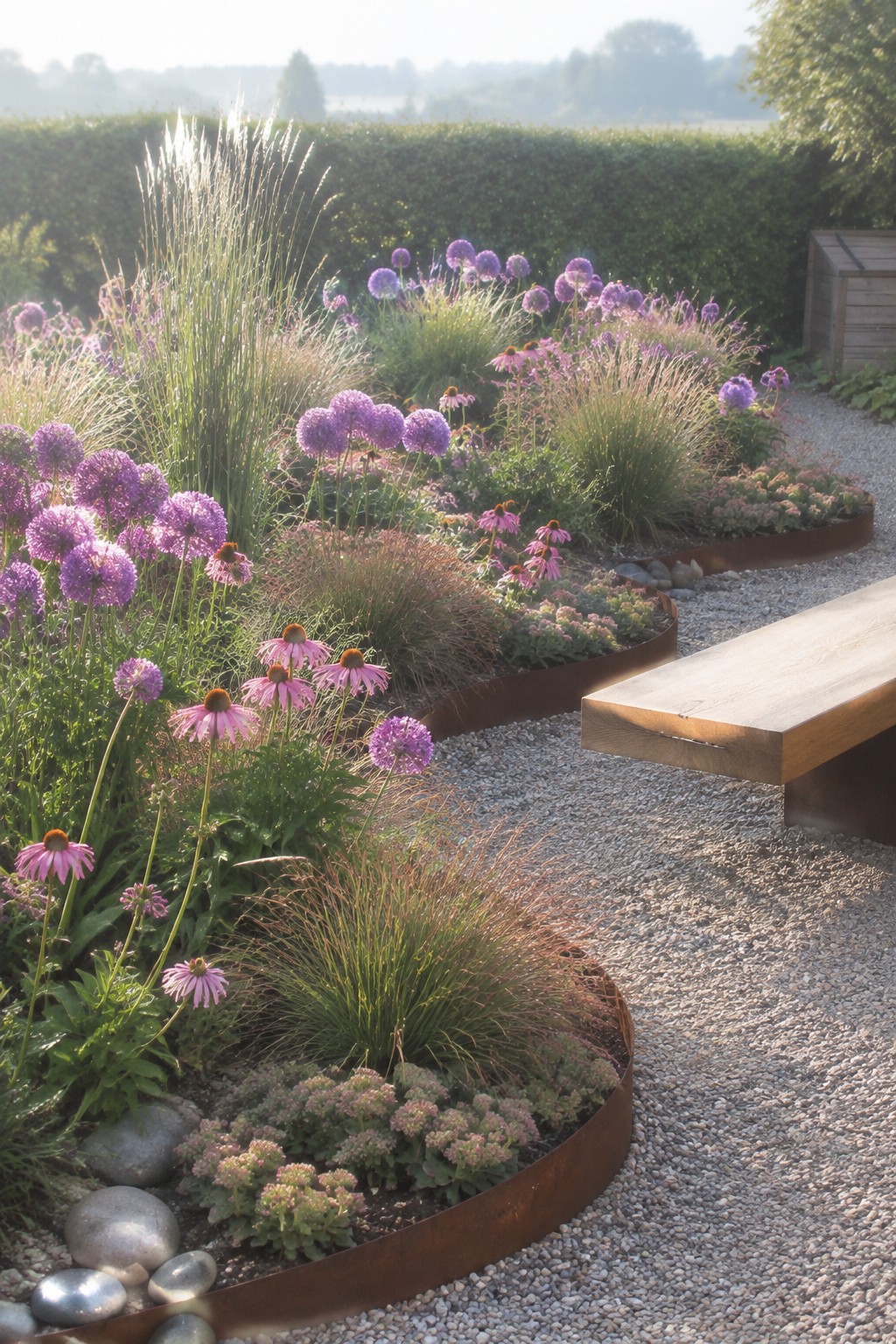
Curved bed edges give an allium planting a softer, more natural outline than a straight border. They also help a garden feel organized without making the flowers look too formal.
Use metal edging to create gentle bends along a gravel path, then plant alliums among grasses and lower flowers. Keep the curves broad enough to mow or maintain easily, and avoid making the bed so narrow that the plants feel crowded.
Use Alliums to Bring Rhythm to a Front Garden
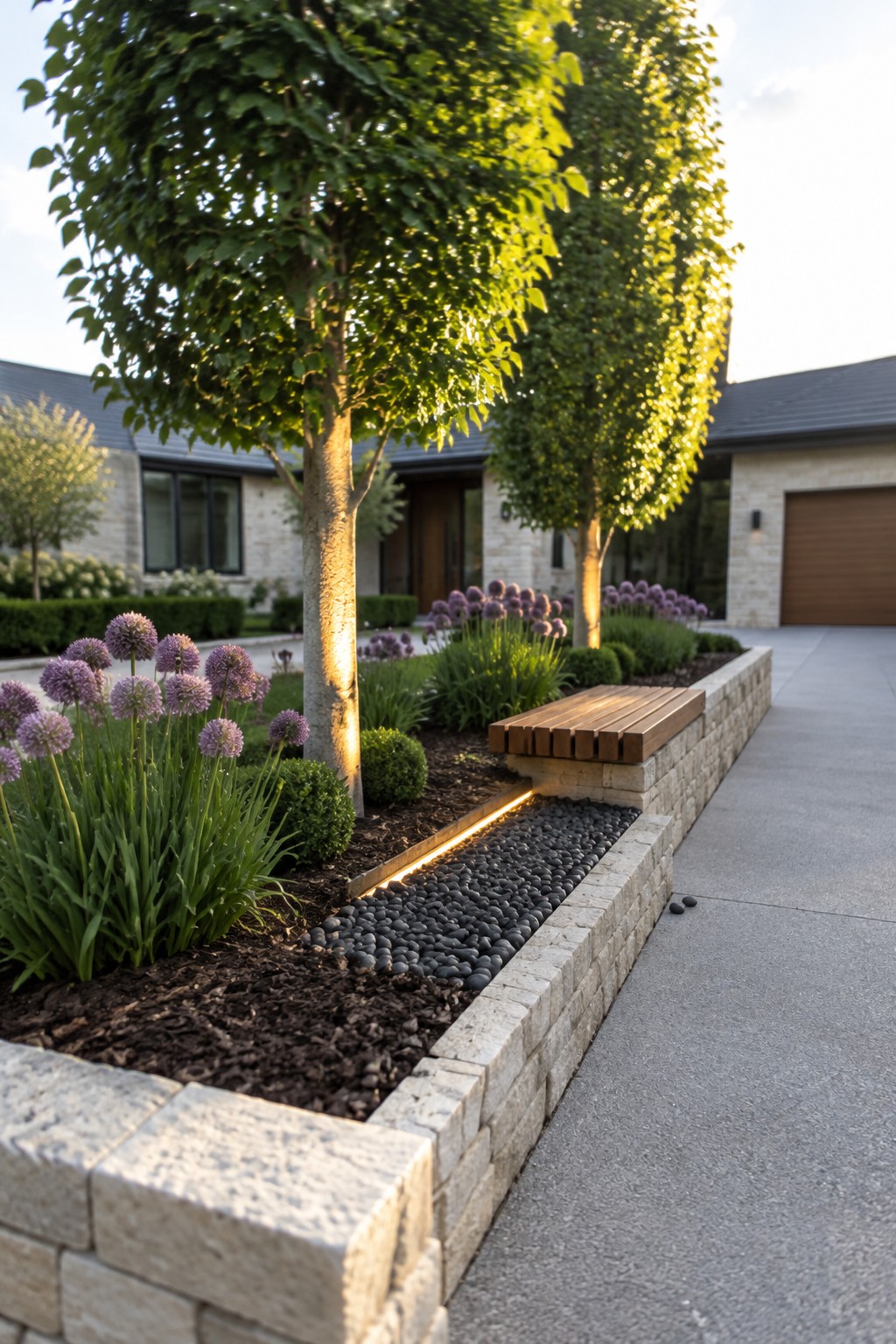
Repeating alliums through a front flower bed gives the planting a steady rhythm and helps connect it to the house. Their round purple blooms stand above the foliage, while the trees and low shrubs provide a calmer backdrop.
Plant them in loose groups along the bed rather than in a single straight row. They suit modern homes with clean lines, especially beside a path or low stone edging. Leave enough room for the leaves to fade after flowering, and let nearby plants cover them.
Grow Alliums in a Narrow Side Garden
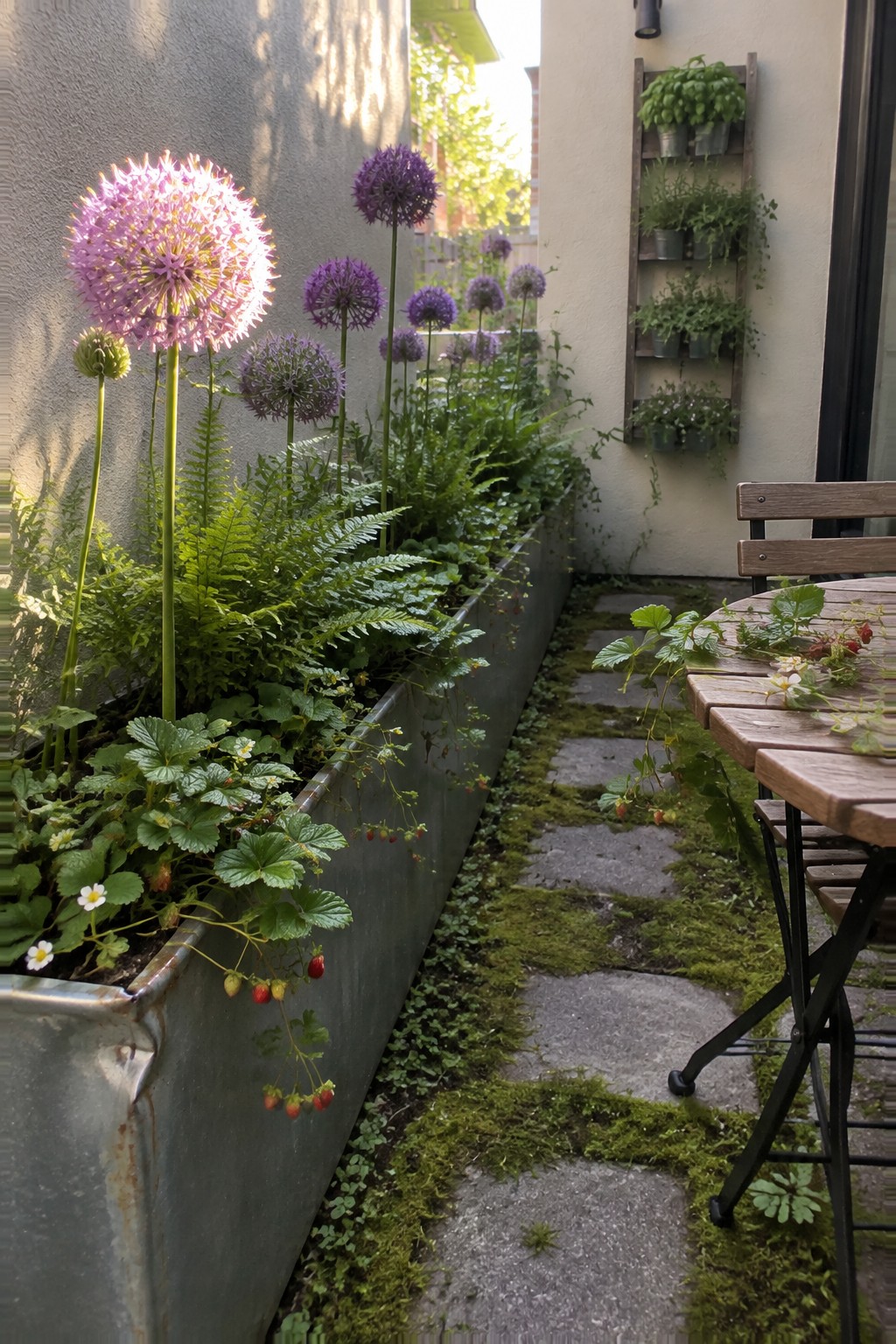
Alliums can bring height and a steady rhythm to a slim planting bed. Their round purple flower heads rise above lower greenery, so the bed feels layered without needing a wide strip of space.
Plant them in small groups along the bed, leaving room for ferns or other low plants around their stems. This approach suits the narrow side yard of a townhouse or small home. Keep the path clear, and choose varieties that will not lean too far into the walkway.
Create a Clear Structure With Alliums
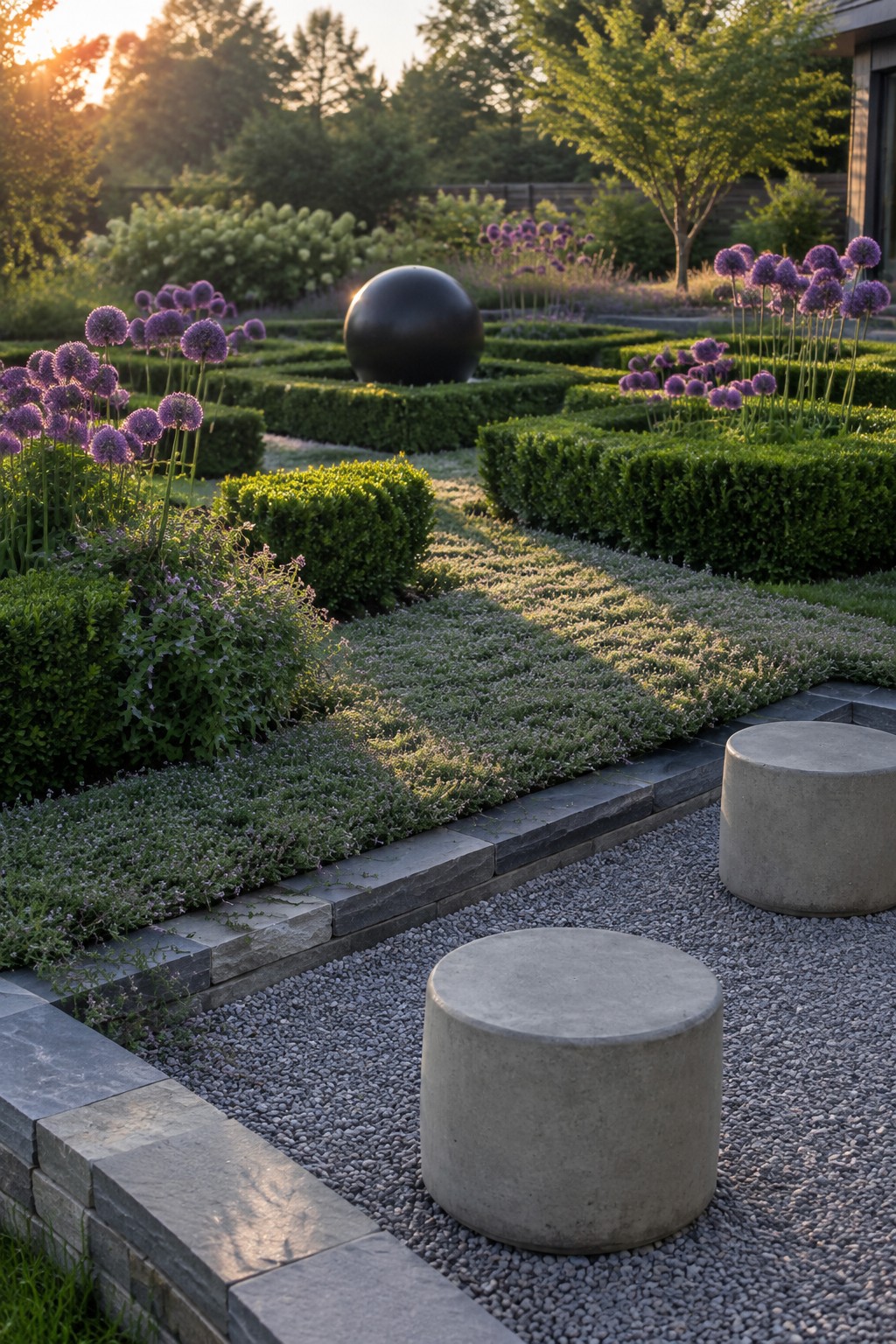
A few well-defined planting areas can make an allium bed feel orderly without looking too formal. Here, clipped low hedges divide the garden into neat sections, while the purple blooms add a looser touch above them.
Use this approach when you want alliums to stand out in a structured garden. Keep the edging low so the flower heads stay visible, and leave enough room between plants for their rounded blooms to read clearly.
Frequently Asked Questions
Q: When should I plant allium bulbs for spring flowers?
A: Plant them in fall, before the ground freezes, so they can settle in before spring. Choose a spot with good drainage, since soggy soil can cause bulbs to rot.
Q: Will alliums come back every year?
A: Many ornamental alliums return for several years if they get plenty of sun and the soil drains well. Let the leaves fade naturally after blooming, even if they look a little messy, so the bulbs can store energy for next year.
Q: What can I plant around alliums to hide their fading leaves?
A: Pair them with leafy perennials such as catmint, hardy geraniums, or ornamental grasses. These fill in as the allium foliage yellows without hiding the flowers when they’re in bloom.
Q: Do alliums need a lot of space?
A: Give larger varieties room to show off their round flower heads, and leave enough space for air to move between plants. Smaller alliums work well tucked along bed edges or between low-growing perennials.
