


Are you dreaming of a garden that beautifully combines flowers and vegetables? Mixing vibrant blooms with practical edibles can create a stunning outdoor space. From raised beds to vertical gardens, there are so many ways to achieve this balance. Ready to discover some creative ideas that will inspire your gardening journey? Let’s explore ways to bring beauty and function together in your garden.
Raised Garden Beds With Flower Borders

While I love the idea of adding beauty to my garden, raised garden beds with flower borders have always stood out to me.
They create a stunning frame for vegetables, making the whole space feel organized and inviting. Plus, the vibrant flowers attract pollinators, enhancing growth.
I enjoy mixing colors and textures, knowing my garden is both functional and visually appealing.
Vertical Gardening With Climbing Flowers and Vegetables
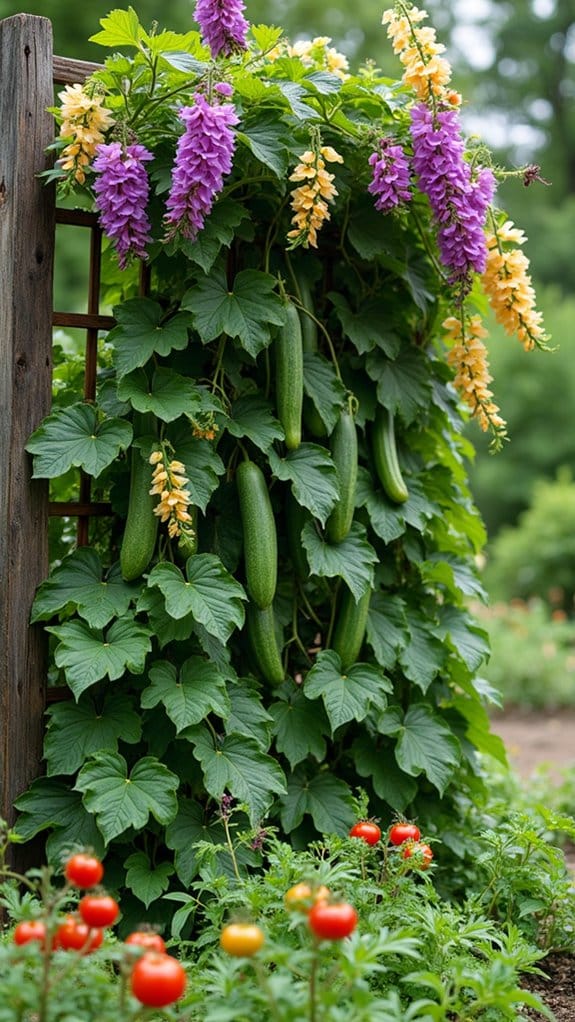
When I think about maximizing space in my garden, vertical gardening with climbing flowers and vegetables immediately comes to mind.
I love using trellises and arbors to support vibrant blooms like sweet peas and productive veggies such as cucumbers. Not only do they save ground space, but they also add height and beauty, creating a lush, inviting atmosphere in my garden.
Edible Flower Pathways
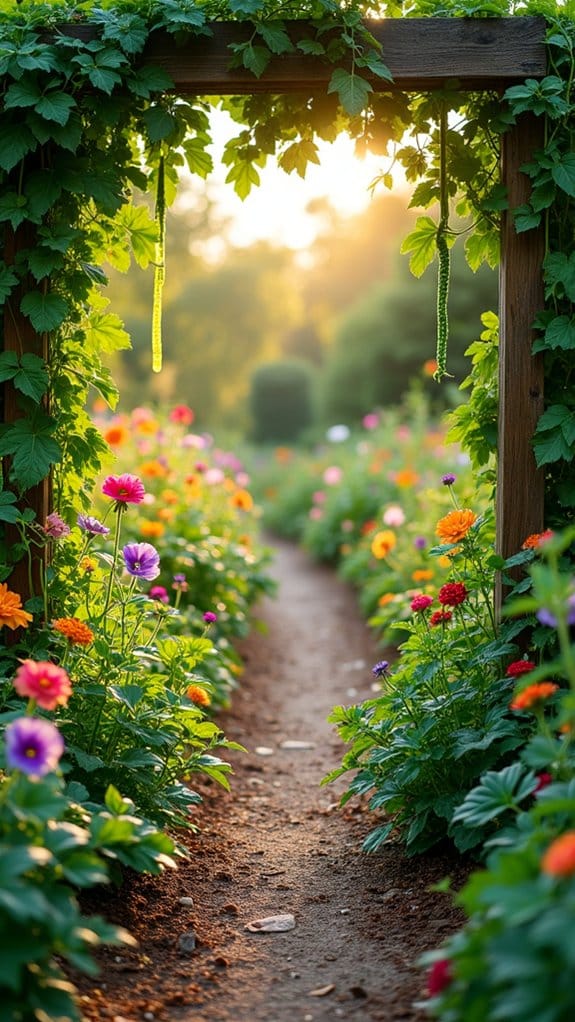
Creating edible flower pathways not only enhances the beauty of my garden but also invites a delightful sensory experience.
I love walking among vibrant nasturtiums and fragrant violets, which add color and flavor. These pathways not only guide visitors through my garden but also offer delicious, nutritious blooms for salads and garnishes.
It’s a perfect blend of functionality and artistry!
Companion Planting for Color and Nutrition

To enhance both the visual appeal and nutritional value of my garden, I embrace companion planting.
By pairing vibrant flowers with vegetables, I create a stunning landscape while boosting growth.
For instance, marigolds deter pests and attract pollinators, while basil enhances tomato flavor.
This harmonious blend not only looks beautiful but also fosters a thriving, nutritious environment for my plants and family.
Herb Spiral Gardens
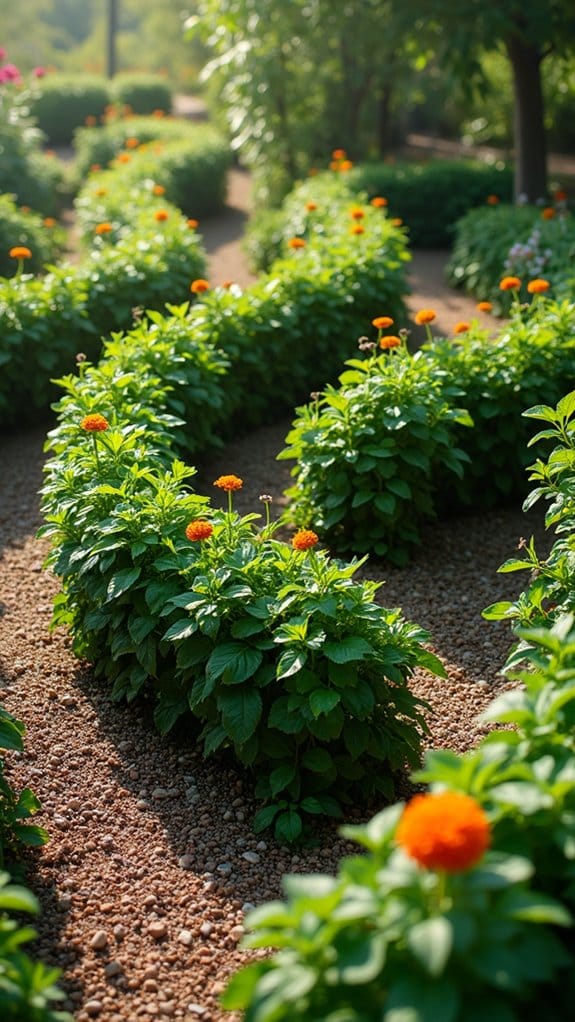
As I explore innovative ways to enhance my garden, herb spiral gardens stand out for their unique design and practicality.
These spirals optimize space while providing a variety of microclimates, perfect for growing diverse herbs.
I love how they create visual interest and accessibility, making it easy to harvest fresh flavors.
Plus, they’re a delightful focal point in my garden landscape!
Pollinator-Friendly Vegetable and Flower Mix

While I enjoy growing a variety of vegetables, incorporating flowers that attract pollinators into my garden has transformed the space into a vibrant ecosystem.
I’ve found that marigolds, zinnias, and cosmos not only brighten my garden but also draw in bees and butterflies.
This mix enhances productivity, as pollinators help improve fruit and vegetable yields, making my garden both beautiful and functional.
Colorful Container Gardens
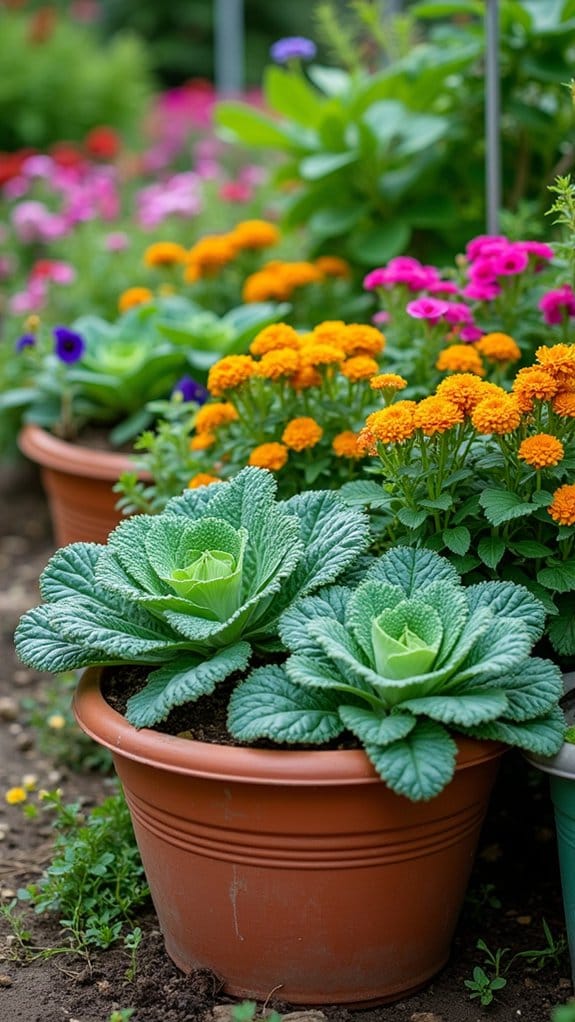
Container gardens burst with color and creativity, offering a fantastic way to personalize any outdoor space.
I love mixing vibrant flowers with leafy greens, creating a stunning display that’s both beautiful and functional.
Using varied heights and textures keeps things interesting, and I can easily move containers to change the look.
It’s a simple yet effective way to enhance my garden’s charm!
Interplanting for Visual Interest

After creating colorful container gardens, I found that interplanting can take my garden to the next level by adding depth and visual interest.
By mixing flowers and vegetables, I create a dynamic landscape that pleases the eye and maximizes space. I love pairing tall sunflowers with lush greens or vibrant zinnias alongside herbs.
It’s a beautiful, functional way to enhance my garden’s appeal!
Fruit Trees as Focal Points
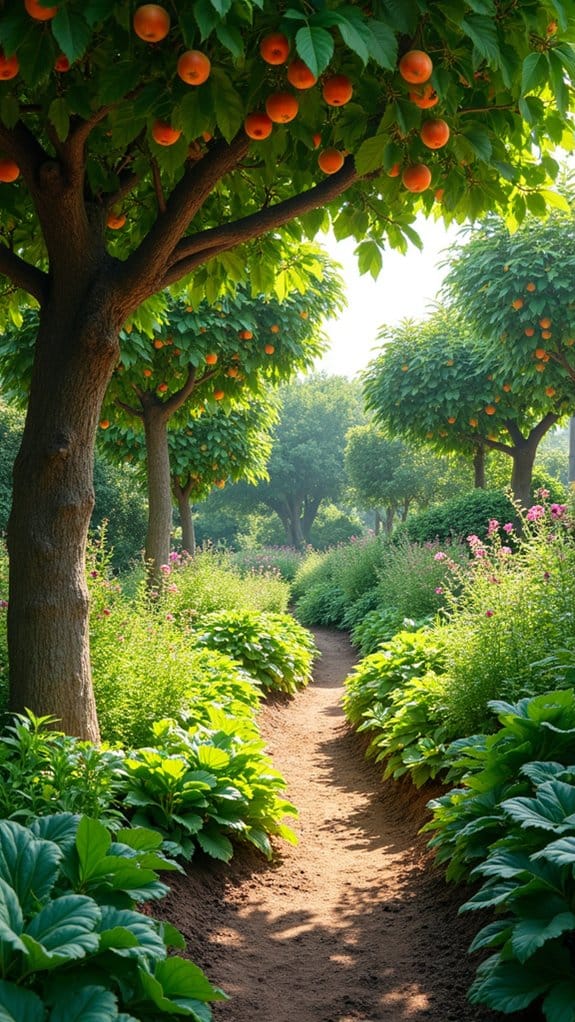
Fruit trees can truly transform a garden, serving as stunning focal points that draw the eye and inspire admiration.
I love how their blossoms create vibrant bursts of color in spring, while the promise of fruit adds excitement throughout the growing season.
Positioning them strategically enhances not just beauty but also functionality, providing shade and a natural habitat for wildlife.
Garden Arches With Climbing Veggies and Blooms

While I appreciate the beauty of traditional garden design, adding garden arches adorned with climbing vegetables and blooms brings a unique charm that can’t be overlooked.
These structures not only create a stunning focal point but also maximize vertical space for growing.
Imagine walking through a lush archway of tomatoes and morning glories—it’s a delightful way to blend functionality with visual appeal in my garden.
Seasonal Rotations for Continuous Beauty

To maintain a vibrant garden throughout the year, I’ve found that implementing seasonal rotations is essential.
By changing out flowers and vegetables based on the seasons, I can enjoy a continuous display of color and harvest.
In spring, I plant bright annuals, while summer brings lush tomatoes.
As fall approaches, I shift to hardy kale and winter blooms, keeping my garden alive and beautiful year-round.
Wildlife Gardens That Nourish and Delight
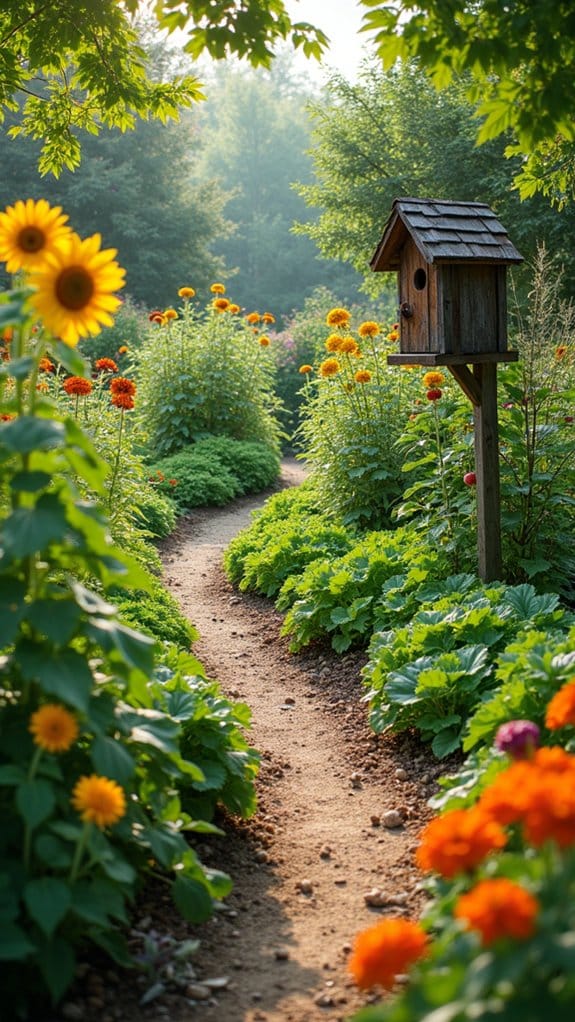
Creating a vibrant garden goes beyond just seasonal rotations; it can also be a haven for wildlife.
I’ve found that incorporating native plants, bird feeders, and water sources not only attracts beautiful creatures but also supports local ecosystems.
Watching butterflies flutter and birds chirp brings joy, while knowing I’m helping nature feels rewarding.
It’s a delightful balance of beauty and purpose.
Decorative Fencing With Climbing Plants
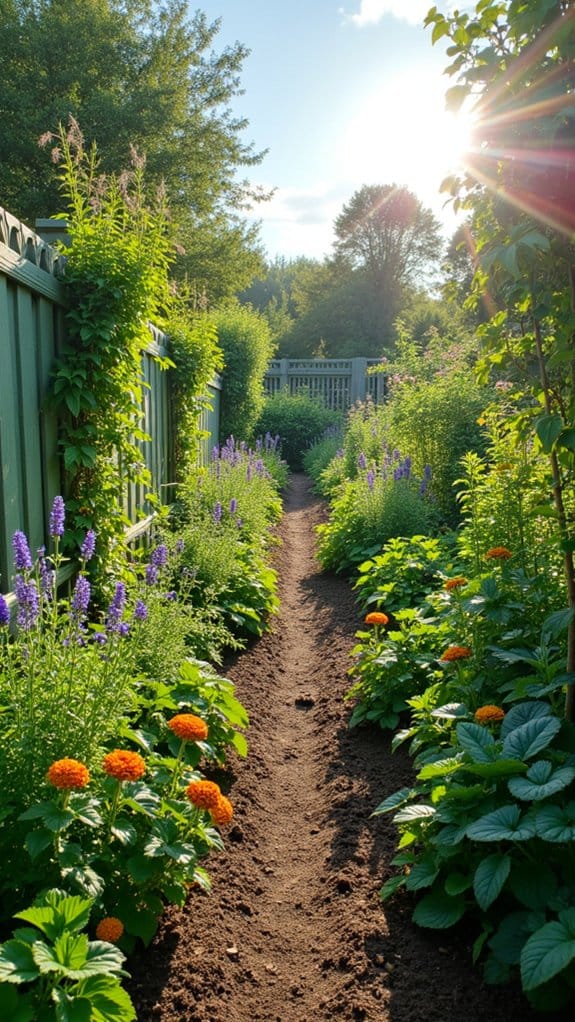
As I enhance my garden’s charm, I’ve discovered that decorative fencing adorned with climbing plants can transform an ordinary space into a lush retreat.
Using trellises or lattice panels, I let vines like clematis and jasmine climb and weave, creating a vibrant backdrop.
Not only does this add beauty, but it also provides privacy, making my garden feel even more inviting and serene.
Succulent and Vegetable Combinations

While I was experimenting with my garden layout, I found that combining succulents with vegetables not only adds visual interest but also maximizes space effectively.
For example, planting vibrant succulents like Echeveria alongside leafy greens creates a stunning contrast.
Plus, succulents require less water, making them a perfect companion for water-efficient gardening.
Succulents are ideal for water-efficient gardening, requiring minimal water while enhancing your garden’s beauty.
This combination truly enhances both beauty and functionality in my garden.
Rain Gardens With Edible Plants

Mixing aesthetics with function has always been my goal in gardening, and rain gardens with edible plants offer a perfect opportunity to achieve that balance.
I love incorporating plants like watercress and various berries into these gardens. They not only thrive in the wet conditions but also provide delicious harvests.
Plus, they attract pollinators, adding beauty and life to my garden space.
Aromatic Herb Borders

Creating aromatic herb borders can transform any garden space into a sensory delight.
I love planting herbs like basil, rosemary, and lavender along the edges of my garden. Not only do they add beauty, but they also fill the air with enticing scents.
Plus, having fresh herbs within reach while cooking is incredibly rewarding. You won’t regret incorporating them into your landscape!
Butterfly Gardens Featuring Edible Flowers

If you want to attract butterflies to your garden, consider incorporating edible flowers into your landscape.
I love using nasturtiums, pansies, and marigolds for their vibrant colors and tasty petals. These blooms not only beautify the space but also provide nectar for butterflies.
Plant them alongside your vegetables, and watch your garden come alive with fluttering visitors while adding a delicious twist!
