

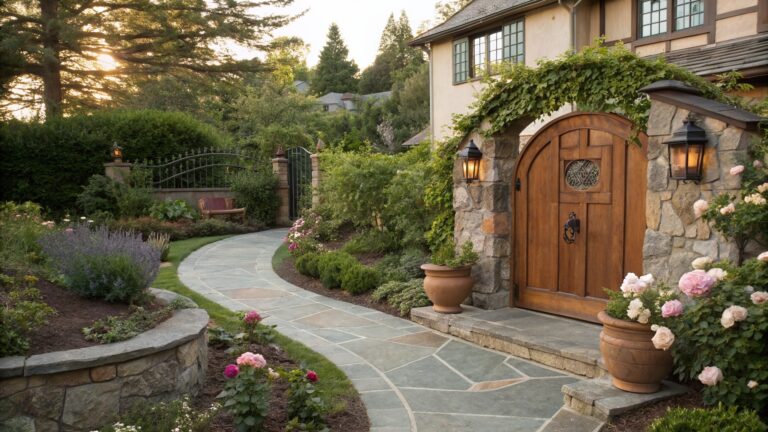
The front walkway is often the first real handshake with a home, where a well-planned flower bed can turn a plain path into something that pulls you right toward the door.
I’ve noticed over the years that the best ones use low edging and layered plantings to frame the route without crowding it, keeping maintenance sane as plants mature.
Guests pick up on that subtle guidance immediately, stepping confidently instead of hesitating at uneven spots or dead ends.
Simple borders of perennials mixed with bulbs work year after year in my yard, proving how these setups evolve nicely with the seasons.
You’ll find designs here that balance bold color pops with sturdy structure, easy to tweak for your soil and sunlight.
Winding Stone Path Through Flower Beds
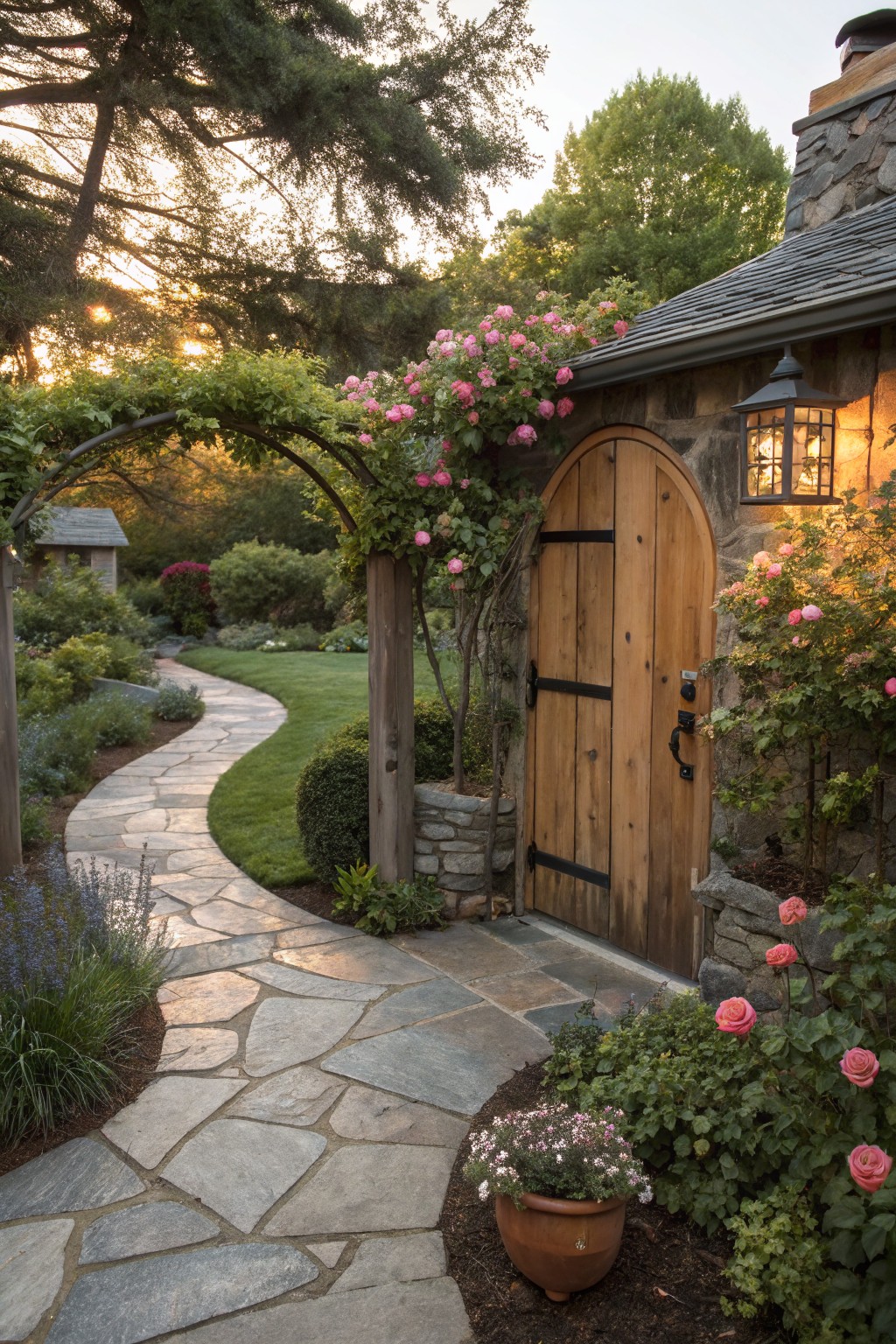
A simple winding path like this one makes the walk up to your front door feel like a little adventure. Made from irregular stone slabs, it curves gently through thick borders of roses and perennials, pulling your eye right to the entry. The climbing roses on the wooden arch add that extra touch of cottage charm without overdoing it. It’s a natural way to slow folks down and make them notice the garden.
You can pull this off in most front yards with average space. Lay the stones on a sand base for easy drainage, then plant low-growing flowers along the edges to keep it tidy. It works great on sloped lots or where you want to hide a straight driveway. Just keep the beds mulched to cut down on weeding… and pick tough roses that handle some shade.
Wide Concrete Path Lined by Grass Planters
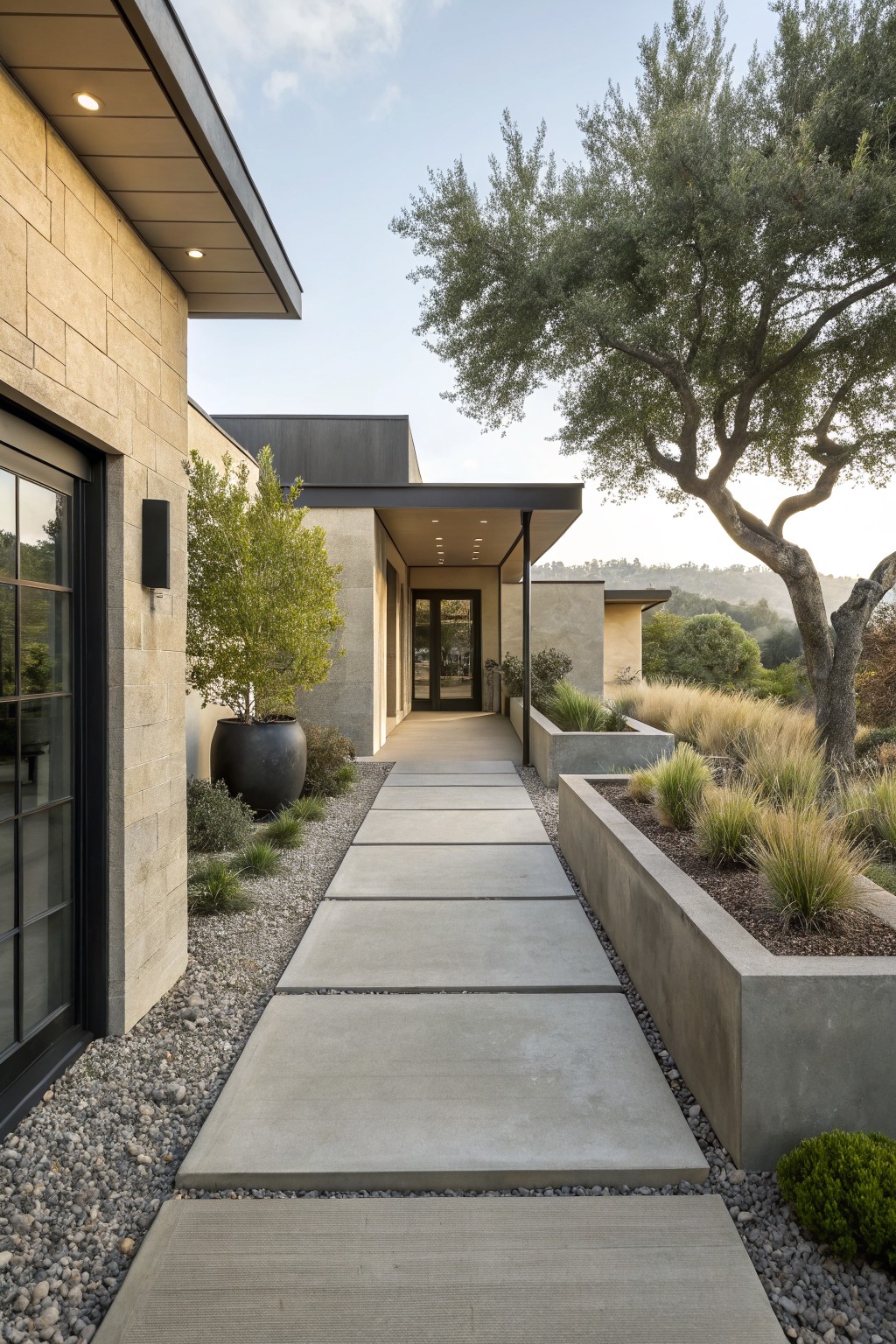
A wide path made from large concrete slabs set into gravel makes a clear route straight to the front door. Flanking one side, simple concrete planters hold clumps of tall grasses that add just enough green without crowding the way. It’s a practical setup that feels modern and ties right into the stone walls of the house.
This kind of path works best for homes with a clean, low-fuss look, especially in dry areas where native grasses stay put with little water. Lay the slabs wide enough for two people, keep the planters low profile, and you’ll guide folks in smoothly. Skip fussy flowers here… grasses handle foot traffic better anyway.
Winding Stone Path with Flower Beds
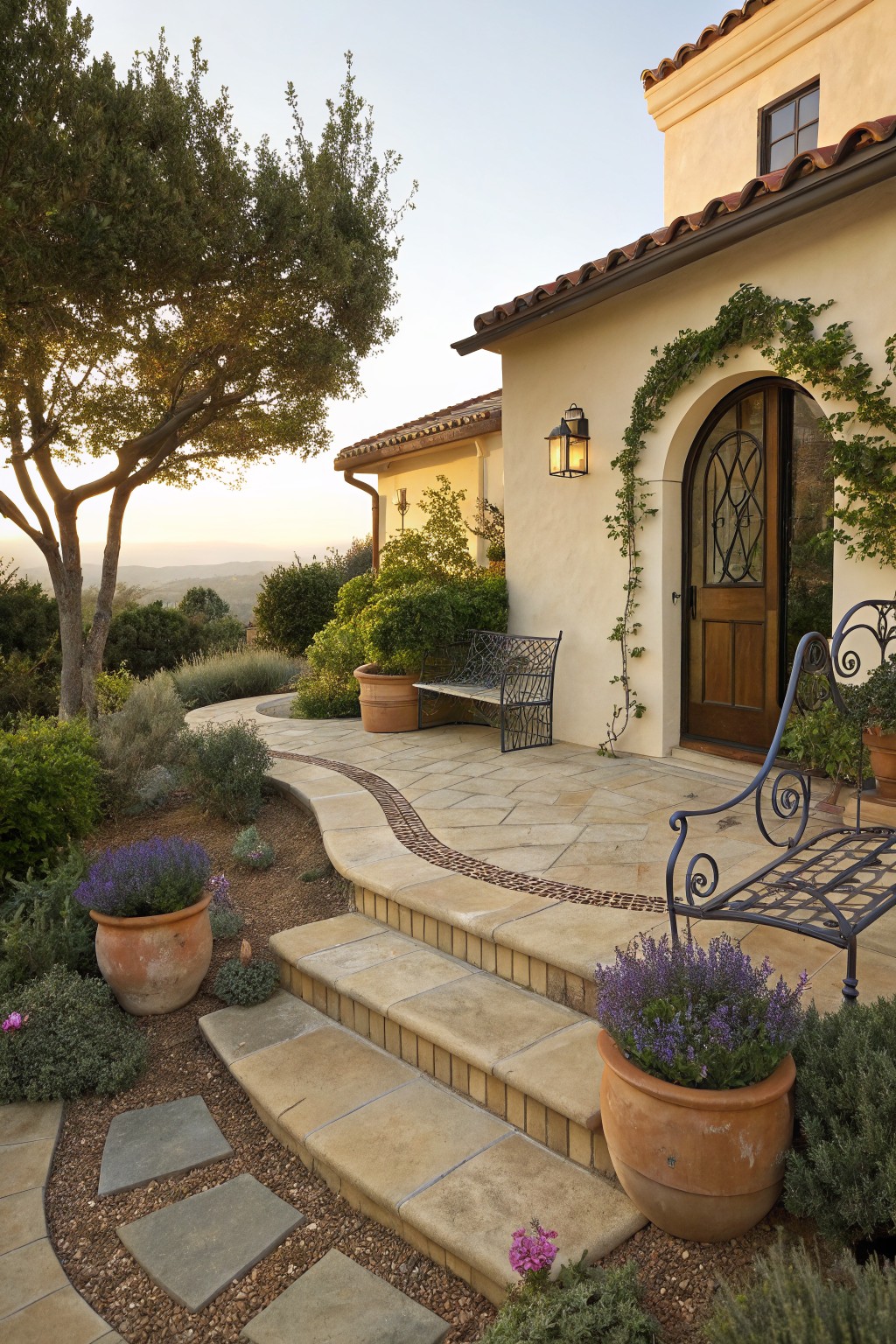
A winding stone path like this one softens the walk up to your front door. It curves gently with a thin terracotta inlay that echoes the roof tiles, and low flower beds run right alongside, planted with lavender and other drought-tolerant stuff. The effect pulls guests in without feeling forced, and those big terracotta pots add some weight without overcrowding.
This works best on a sloped lot or in a drier climate where you want low upkeep. Pick wide, textured stone pavers for grip, keep plantings under two feet tall, and tuck in a bench halfway if space allows. It suits stucco homes or anything with a relaxed Mediterranean vibe… just avoid tight curves if your path gets heavy foot traffic.
Winding Stone Path Through Flower Beds
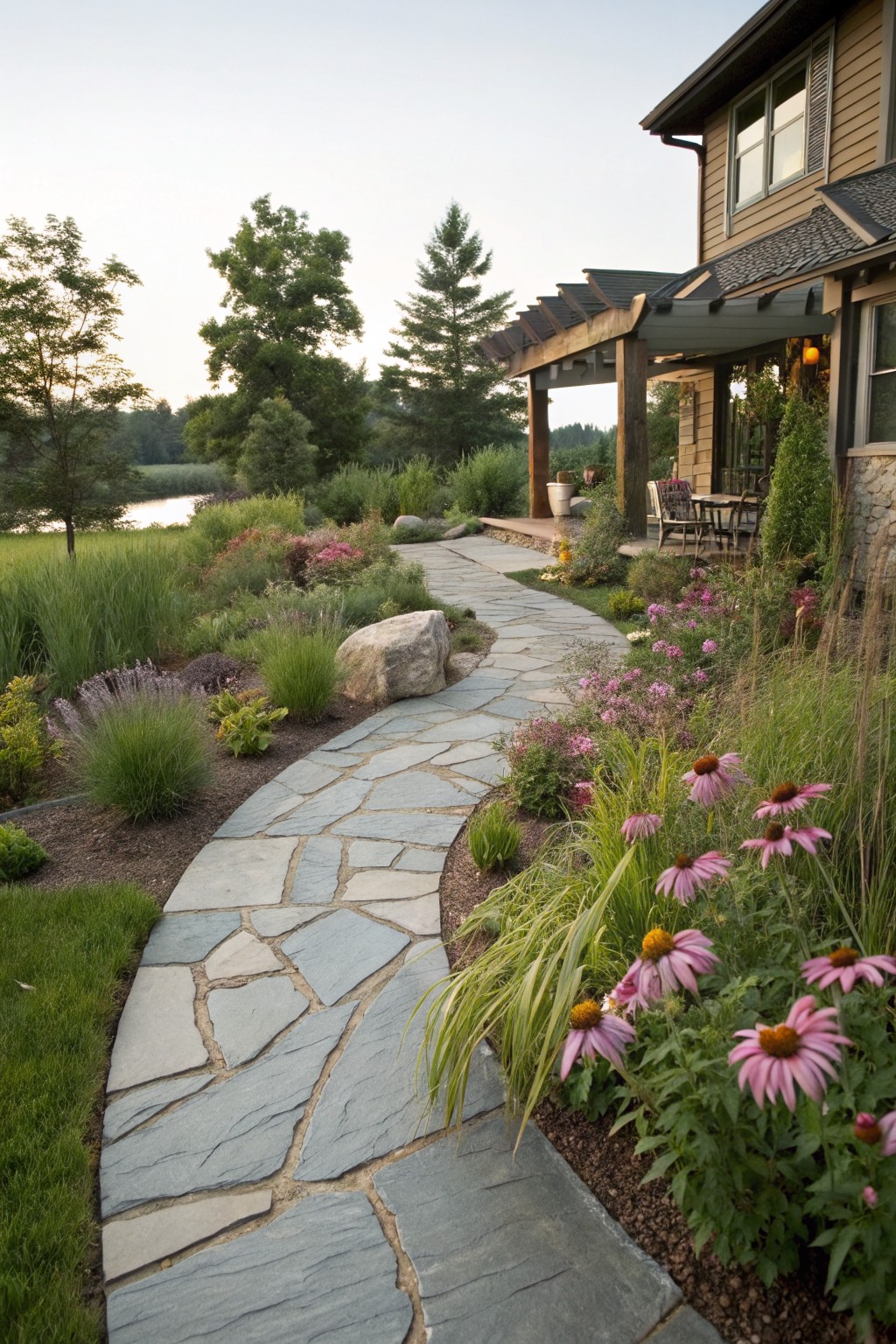
A simple winding path like this one uses irregular flagstone pieces set into the ground. It curves gently through beds packed with perennials and grasses. What makes it work so well is how the plants spill right over the edges. That softens the hard stone and pulls your eye along to the house. The big boulder adds a natural focal point without trying too hard.
You can pull this off in most front yards with decent sun. Pick tough plants like coneflowers and fountain grass that come back each year. Keep the path wide enough for two people. It suits homes with a casual vibe… avoids feeling too fussy. Just watch the weeds in those beds.
Symmetrical Boxwood Pathway to the Entry
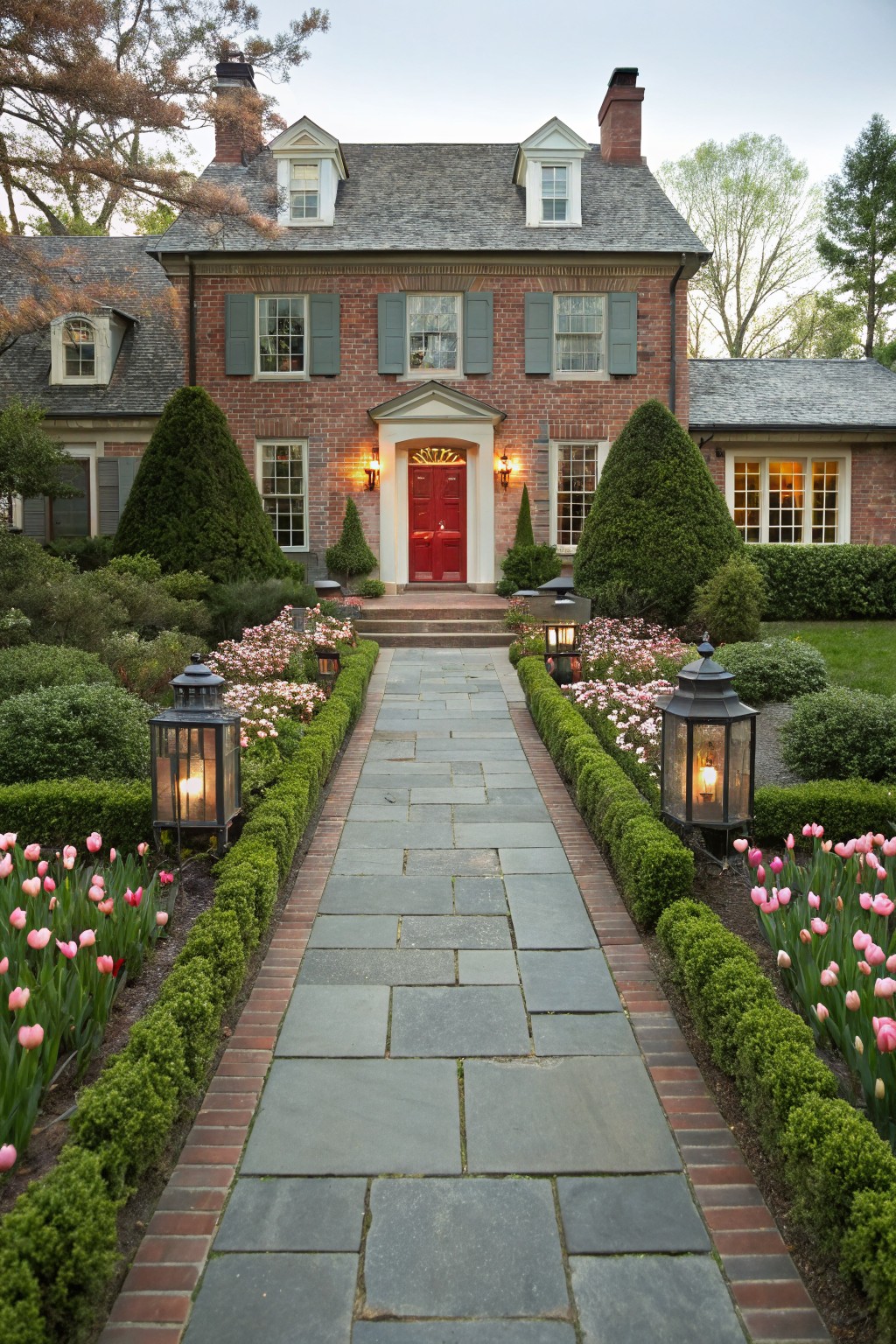
A straight bluestone walkway like this one runs right up to the front door, edged on both sides by neat rows of boxwood hedges. Pink tulips fill the beds inside those borders, and lanterns add a soft glow at dusk. What stands out is how the symmetry pulls your eye forward and makes the path feel like a proper welcome mat. It ties the house to the garden without any fuss.
This kind of layout suits classic brick homes or colonials best, where you want a formal look that doesn’t take much upkeep. Keep the boxwoods trimmed low, about knee-high, and swap in seasonal flowers like tulips or whatever blooms locally. Skip it for super modern places, though… it can feel too structured there.
Stone Path Through Flower Beds
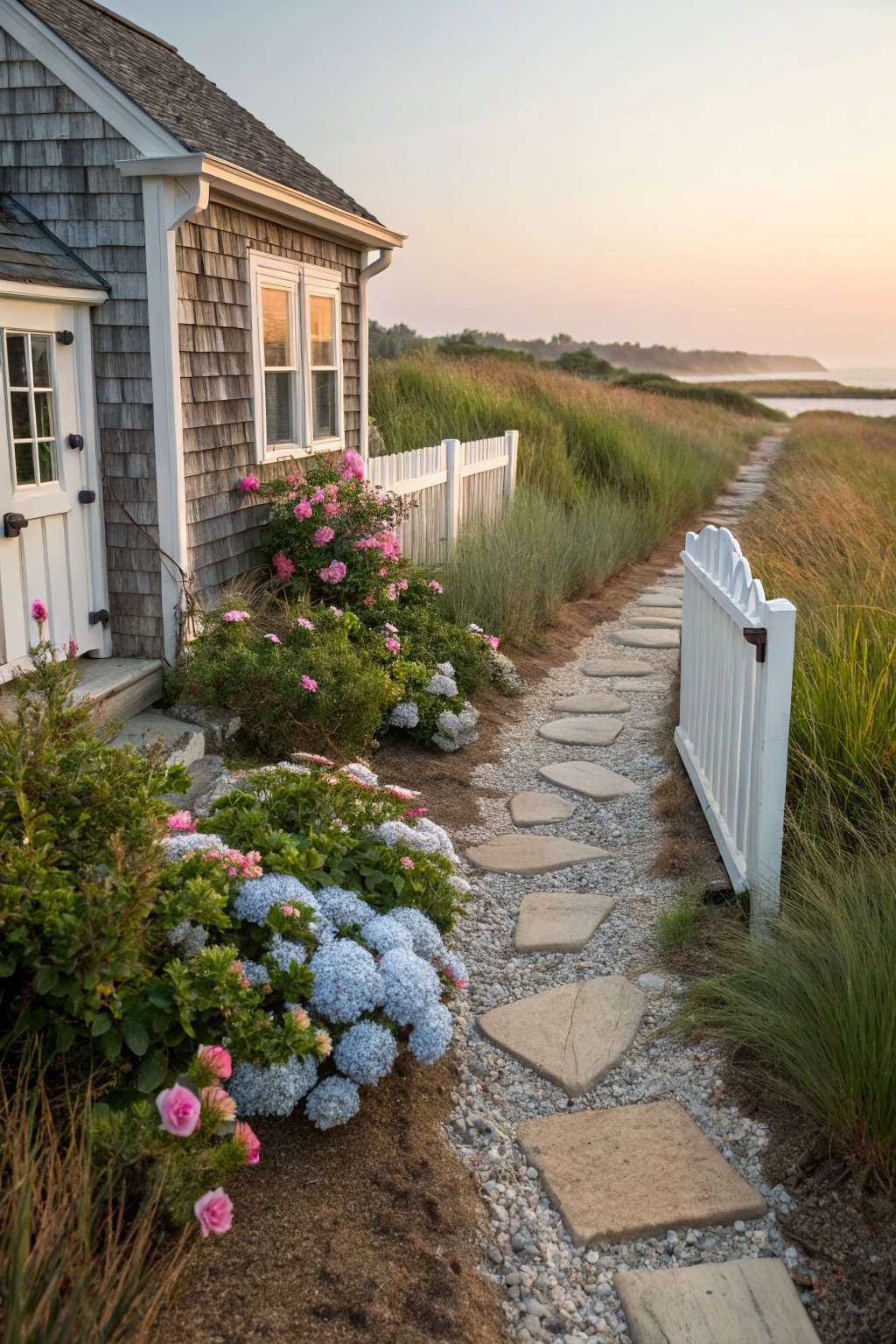
A straightforward stone path like this works well to lead folks from the street or yard right up to your door. Flat stones laid in gravel keep it casual and easy to walk, while flower beds stuffed with roses and hydrangeas hug both sides. The pinks and blues give it color without much fuss, and beach grasses add that wild edge.
This kind of walkway suits cottages or beach houses best, where you want something natural that blends with the landscape. Space the stones so they’re comfy to step on, and pick tough flowers that handle sun and salt air. A simple white gate at the end frames the entry nicely. Just watch that plants don’t creep onto the path over time.
Herringbone Brick Path with Bordering Flower Beds
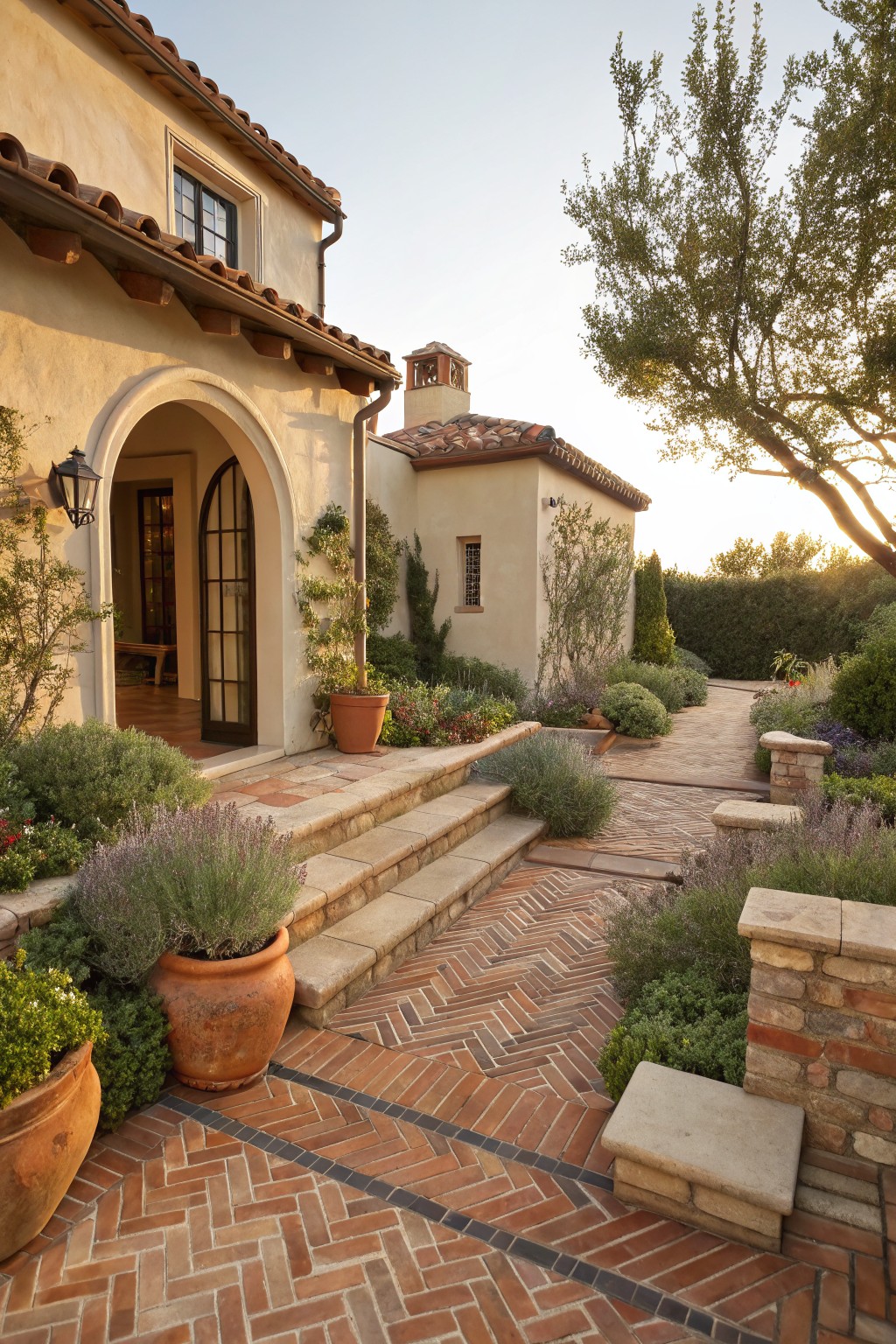
A simple herringbone brick walkway like this one guides visitors straight to the front door while flower beds run along both sides. The pattern in the bricks adds a bit of interest without much effort, and the beds hold low-growing lavender plus a few taller shrubs and big terracotta pots. It keeps the focus on the path but softens things with all that green.
This setup works best on homes with stucco walls or a touch of Mediterranean style, especially if your yard gets full sun for those lavenders to thrive. Lay the bricks in a solid base so they stay put over years, and keep the beds mulched to cut down on weeding. It turns a plain approach into something that feels put together.
Entry Path with Bordering Flower Beds
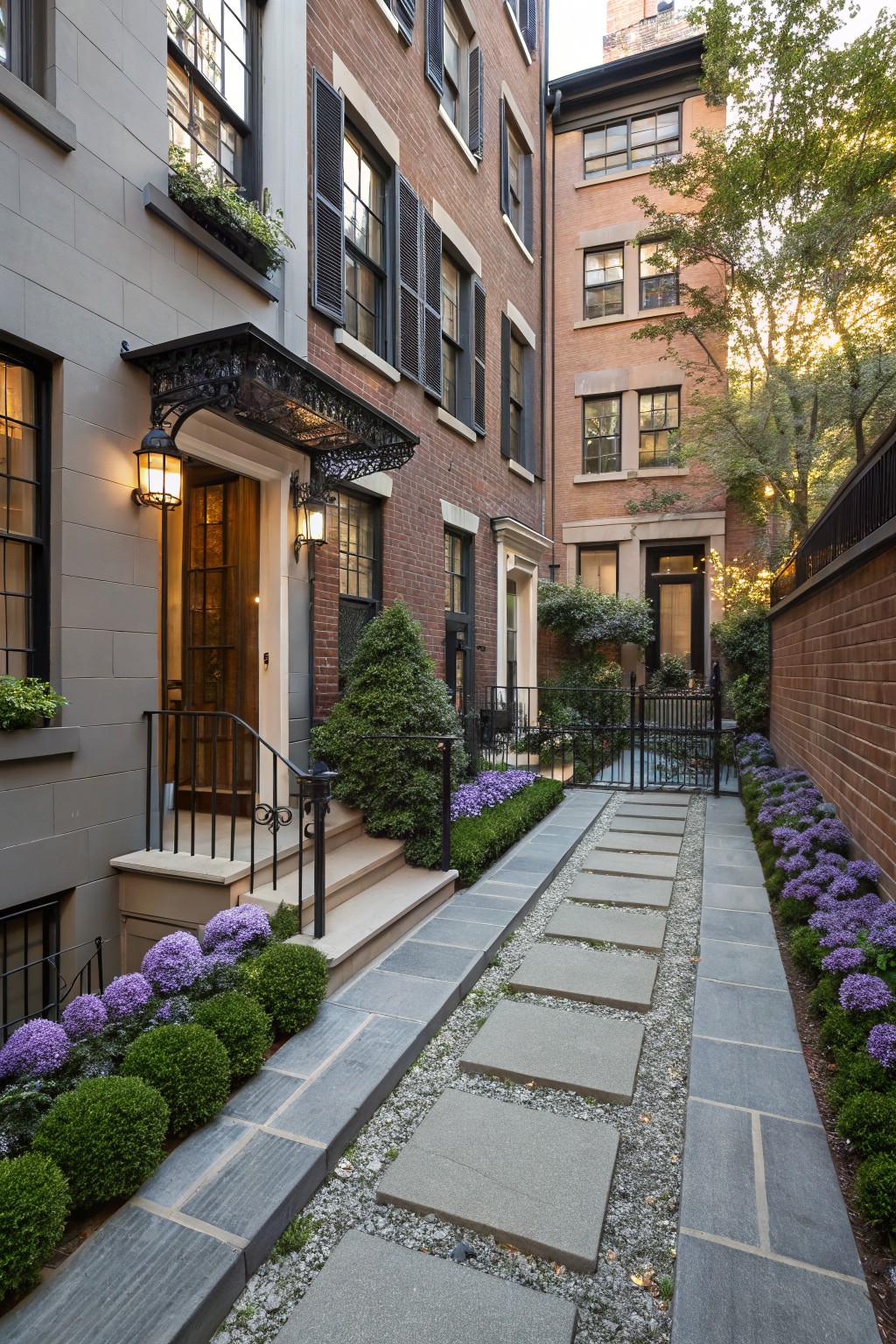
A straight stone path like this one sets a clear route to the door. Purple blooms and round boxwoods fill the narrow beds on either side. It feels tidy and pulls guests along without extra fuss.
This setup fits slim side yards or urban front entries best. Use gravel between the stones for easy drainage. Go with low-growing perennials that repeat through seasons… keeps the upkeep simple.
Curved Flagstone Path Lined with Plants
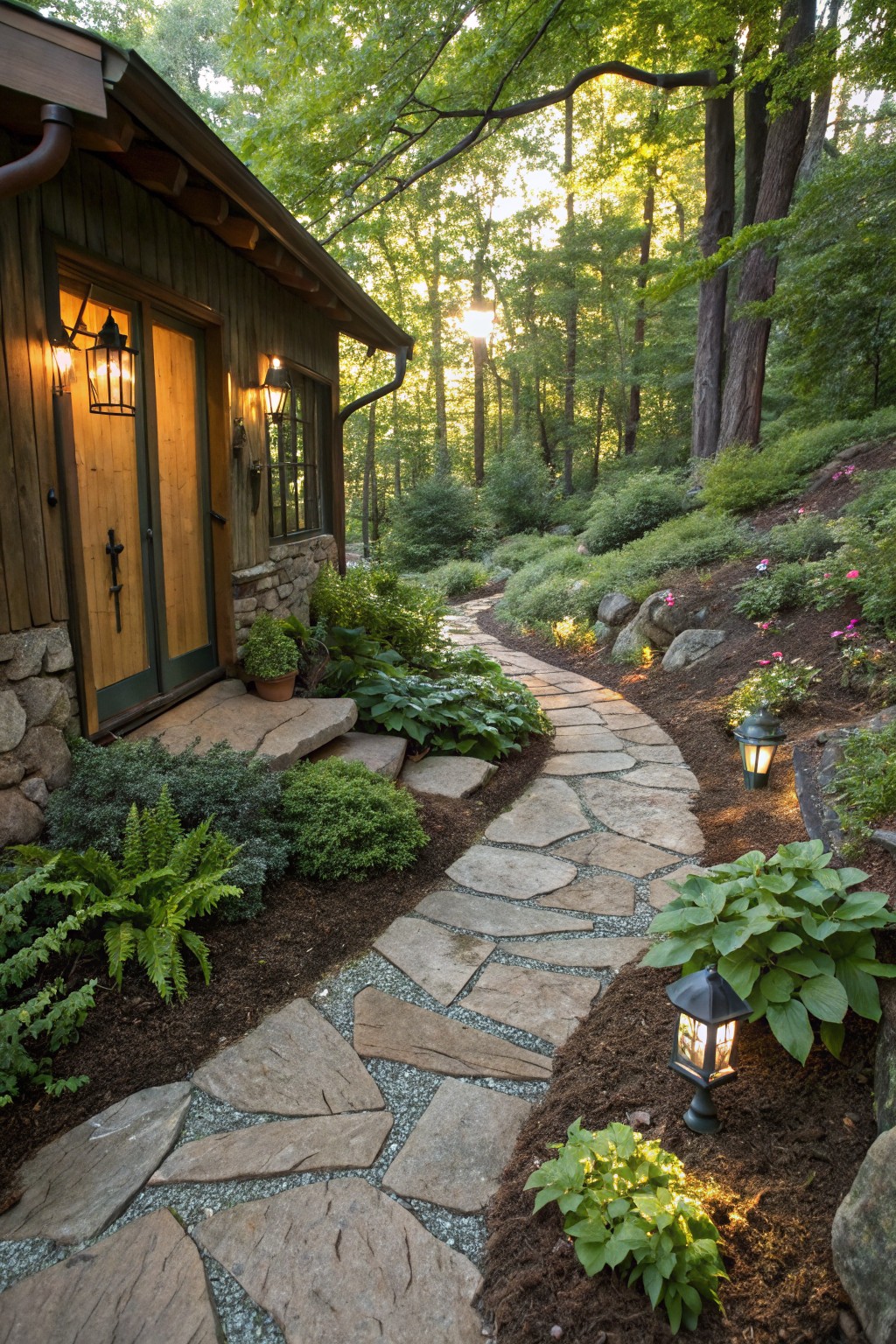
A simple curved flagstone path like this works well to guide folks right to your front door. The irregular stones fit naturally into the ground, and the lush plantings along both sides—think ferns, hostas, and little flower clusters—keep it from looking stark. Those low lanterns add just enough light at dusk without overdoing it.
You can pull this off on a sloped yard or wooded spot where straight lines won’t cut it. Lay the stones loose over gravel for drainage, tuck in shade-loving perennials that won’t need much fussing, and space lanterns every few feet along the edge. It suits cabins or cozy homes that blend into the landscape… keeps guests moving slow and steady.
Terracotta Walkway with Lavender Borders
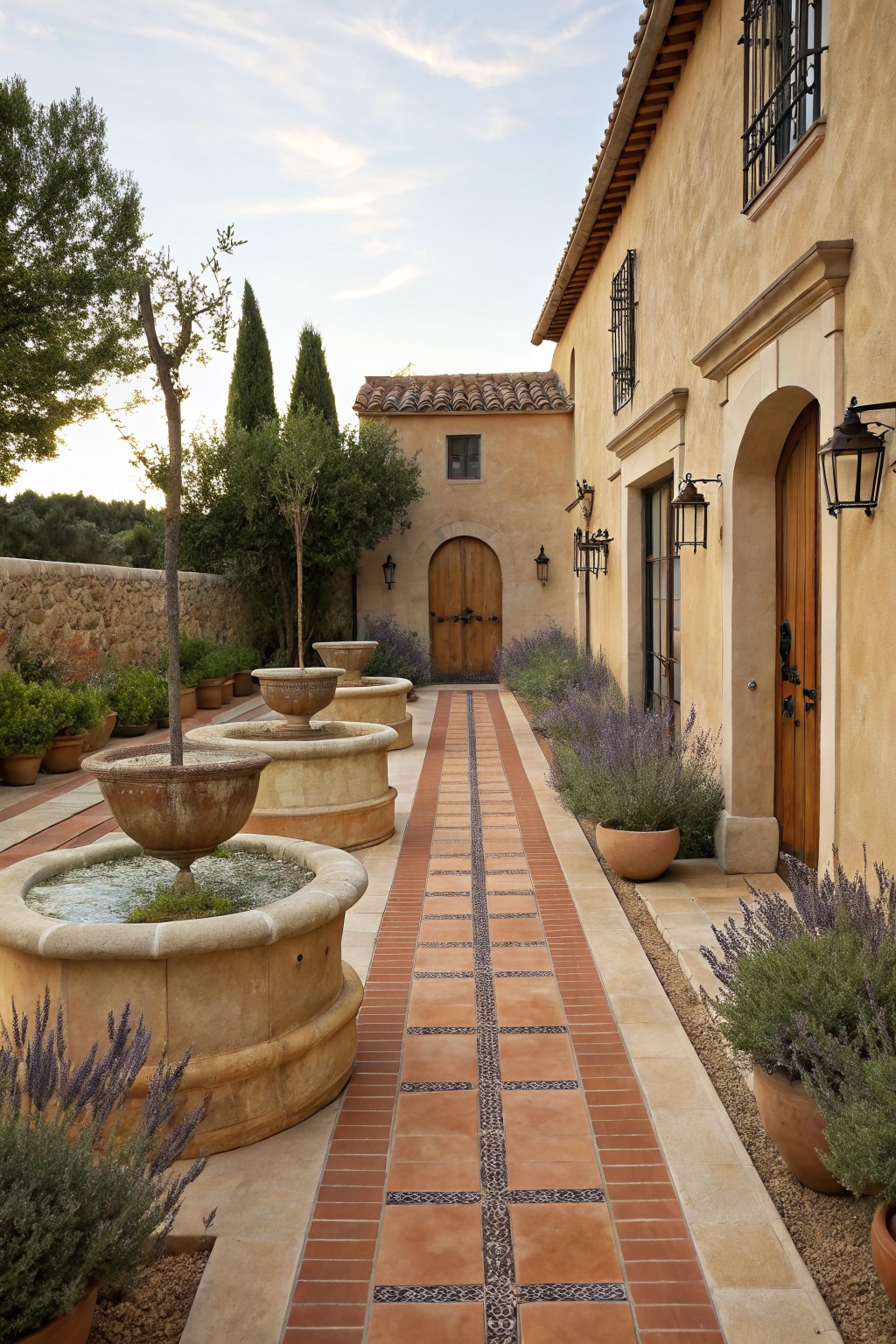
A terracotta brick path like this one draws guests right to the door with its clean lines and subtle pattern in the tiles. Lavender bushes run along both sides, filling the air with scent, while a few simple stone fountains add gentle water sounds. It keeps things low-key but makes the entry feel welcoming and put-together.
This works best in sunny yards where lavender grows easy and stays in bounds. Lay the tiles over a gravel base for good drainage, then edge with the plants for natural borders. Suits older homes or places with a bit of rustic charm… just keep the path wide enough for two people side by side.
Winding Stone Path in Xeriscape Garden
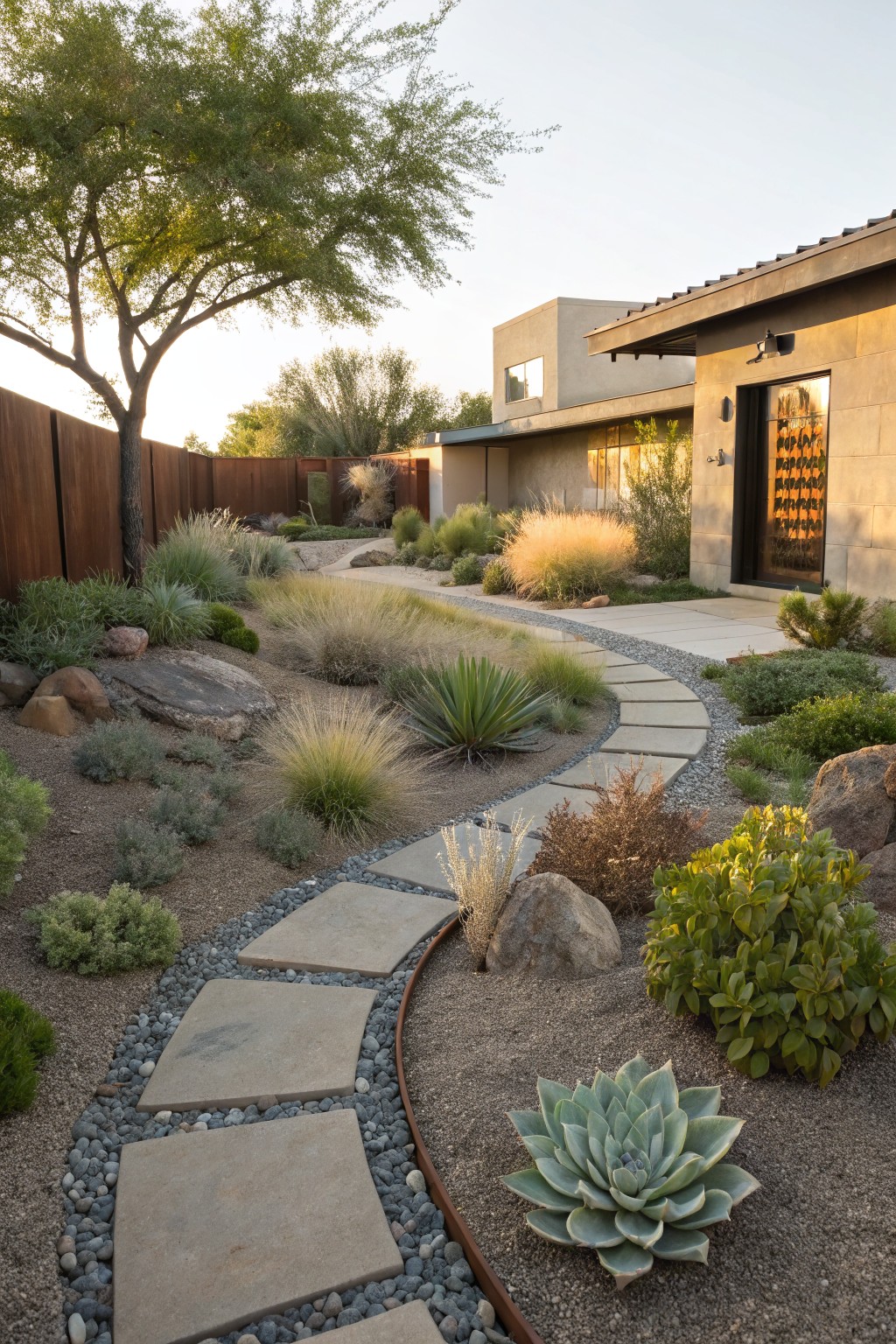
A simple curved path made from large stone pavers set into gravel works nicely here, winding through tall grasses, agaves, and boulders toward the front door. It feels natural, not forced. Guests follow the gentle bend instead of a straight shot, which makes the entry more welcoming without much fuss.
This setup suits dry climates or anyone wanting low upkeep in the front yard. Use native plants like those fuzzy grasses and chunky succulents that handle heat fine. Add a metal edge along the gravel to keep everything tidy. It fits modern houses with clean lines, but watch the slope for good drainage.
Curved Walkway Edged in Lavender
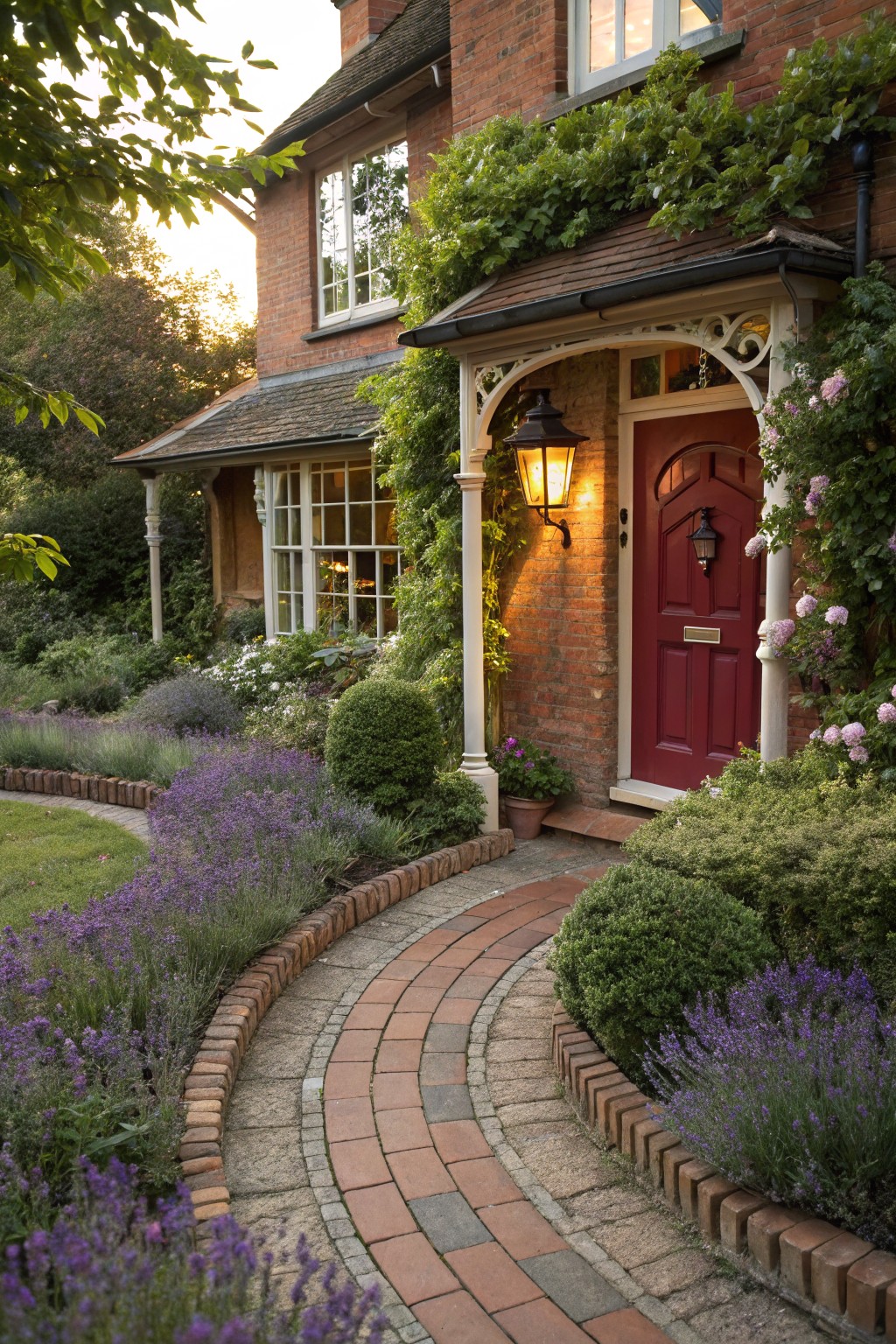
A simple curved brick path like this makes the walk to your front door feel easy and natural. Low lavender beds run right along the edge, giving a soft purple line that guides guests without any hard lines. That red door ahead pops nicely against it all, and the plants add a bit of scent on warm days.
This works best on homes with some garden space around the entry, especially cottage types or older brick houses. Lay down bricks in a gentle sweep, then tuck in lavender or similar low growers for the border, they come back year after year with little fuss. Skip it if your yard is too shady, lavender needs sun to thrive.
Winding Stone Path Through Gravel Beds
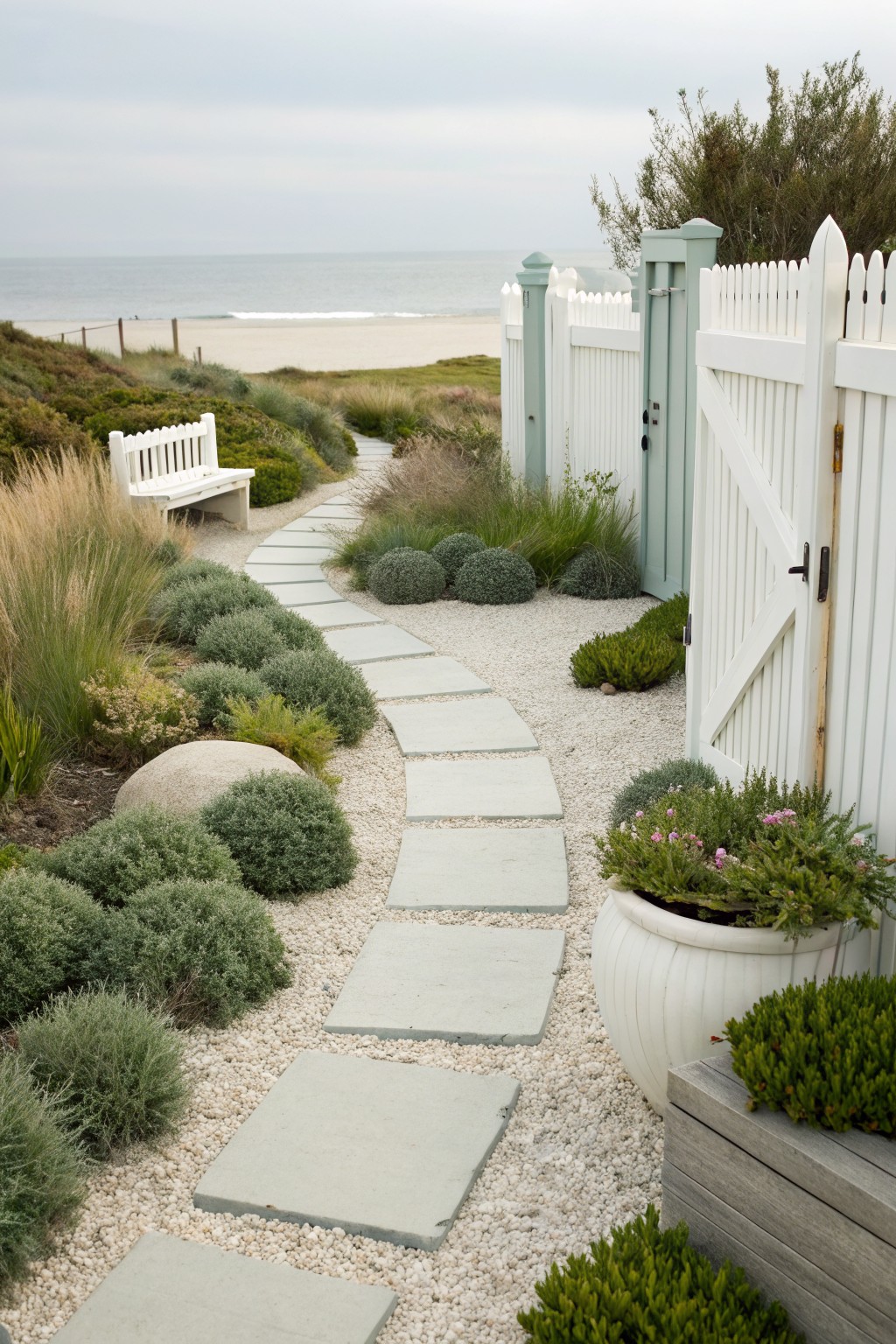
A winding path like this uses wide gray stone slabs set right into gravel. It curves gently past grasses, low shrubs, and a few boulders. The whole thing pulls you forward slow and easy toward the gate. That bench nearby makes it feel like more than just a walkway.
Set one up along your front approach where you have room for turns. Gravel drains fast and needs little upkeep. Stick to tough plants that handle dry spells. It fits coastal spots or sunny yards best. Just keep stones level so no one trips.
Built-In Planters Along Entry Steps
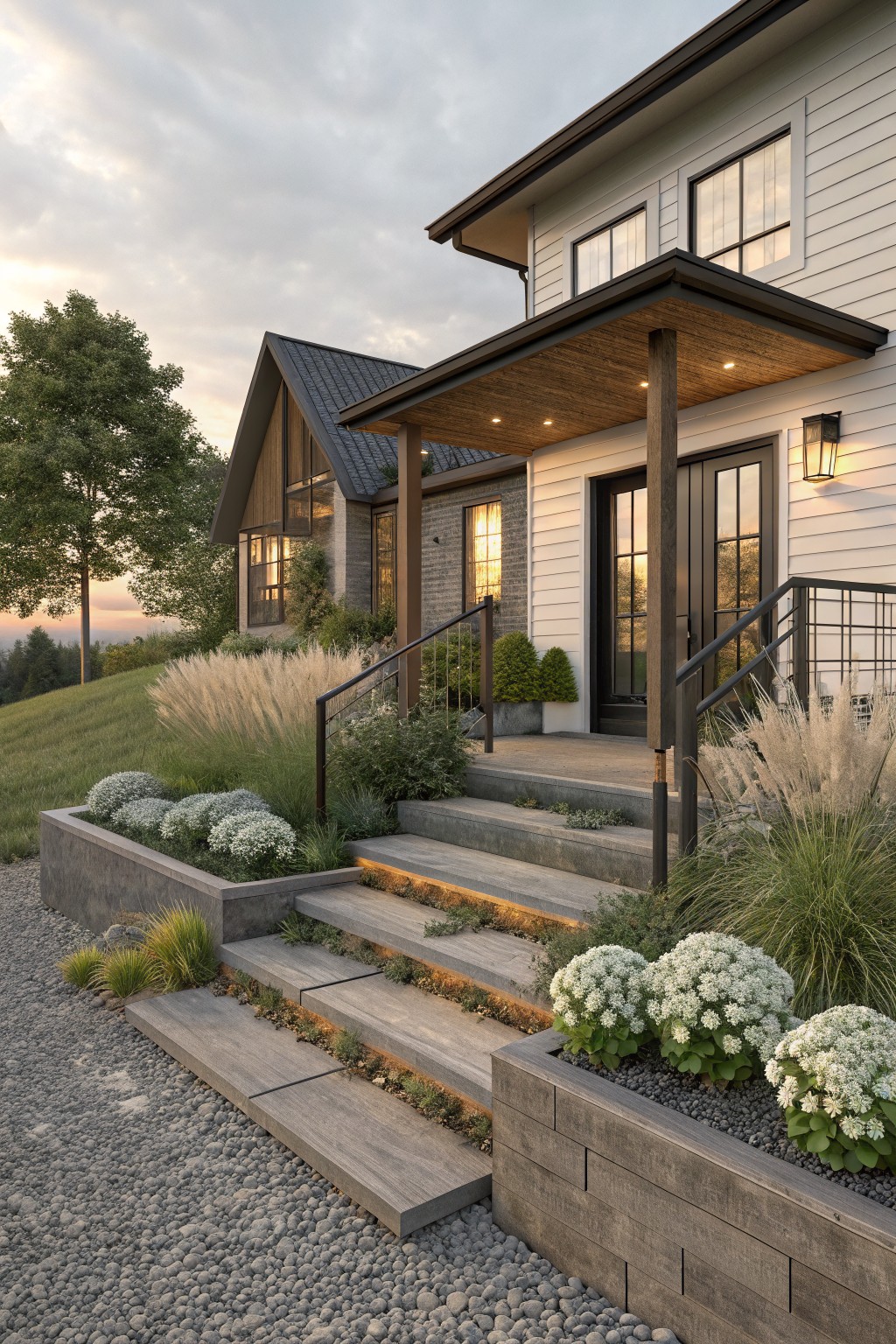
One smart way to guide guests right to your front door is with raised planters built right into the steps. Here, concrete retaining walls hold back the slope and double as deep beds for tall grasses and clusters of white flowers. It keeps the path clear while making the whole approach feel planted and natural, not stark.
These work best on sloped lots where you need to manage the grade anyway. Fill them with low-water grasses and perennials that spill over the edges a bit. They suit modern farmhouses or craftsman styles. Just make sure the walls are sturdy enough for soil weight, and pick plants that won’t flop onto the steps.
Gravel Walkways with Irregular Stepping Stones
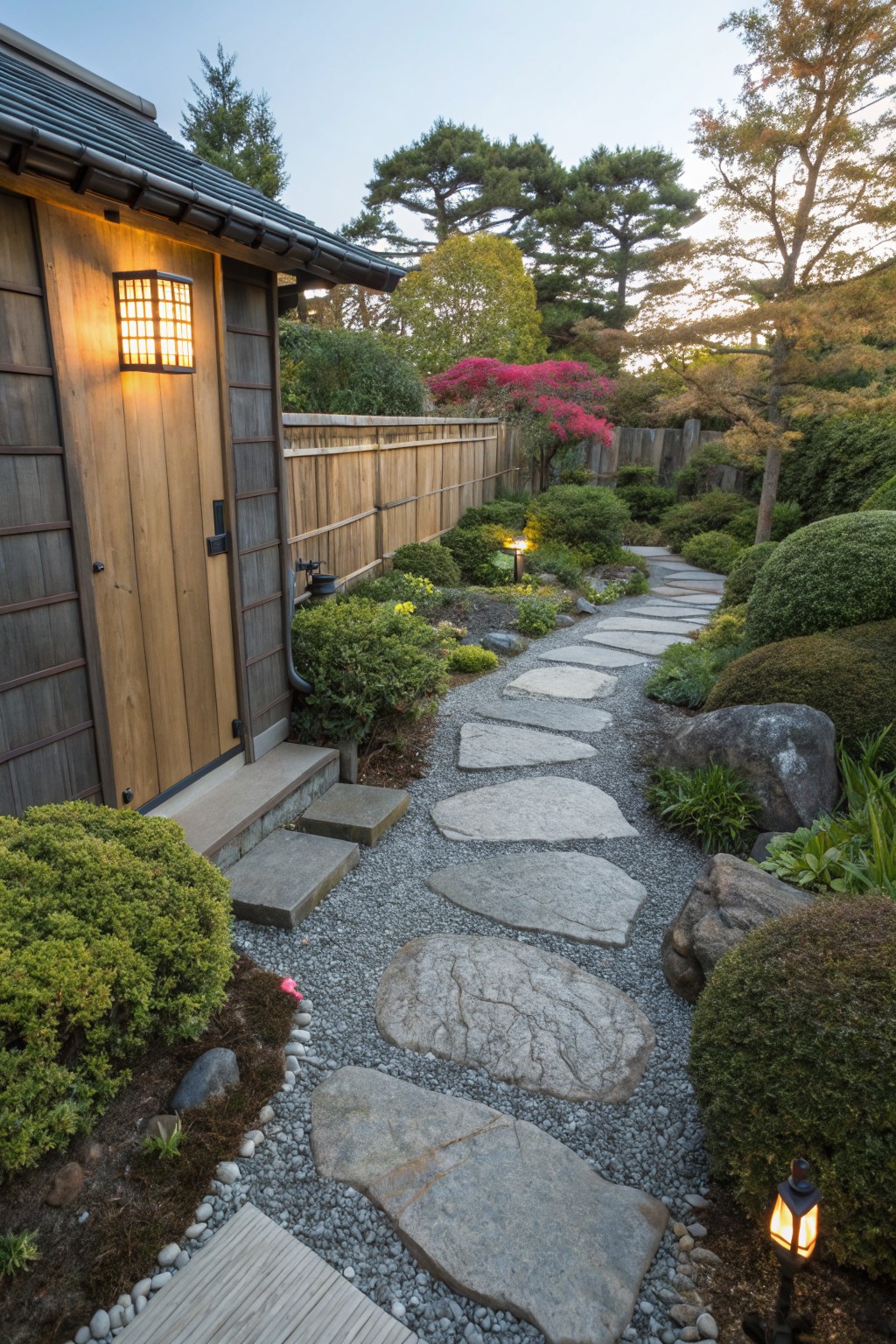
One straightforward way to guide guests through a front yard is with large, rough stepping stones set right into gravel. The path winds gently past low shrubs, boulders, and a few lantern lights, making the walk feel relaxed and part of the garden. It keeps things low-maintenance too, since gravel fills the gaps and weeds stay in check.
This works best in smaller spaces or yards with a bit of slope, where a straight sidewalk might look out of place. Plant boxwoods or grasses along the edges for that framed look, and add rocks for weight. Just space the stones so adults can step comfortably, about two feet apart.
Dense Flower Beds Edging a Paver Path
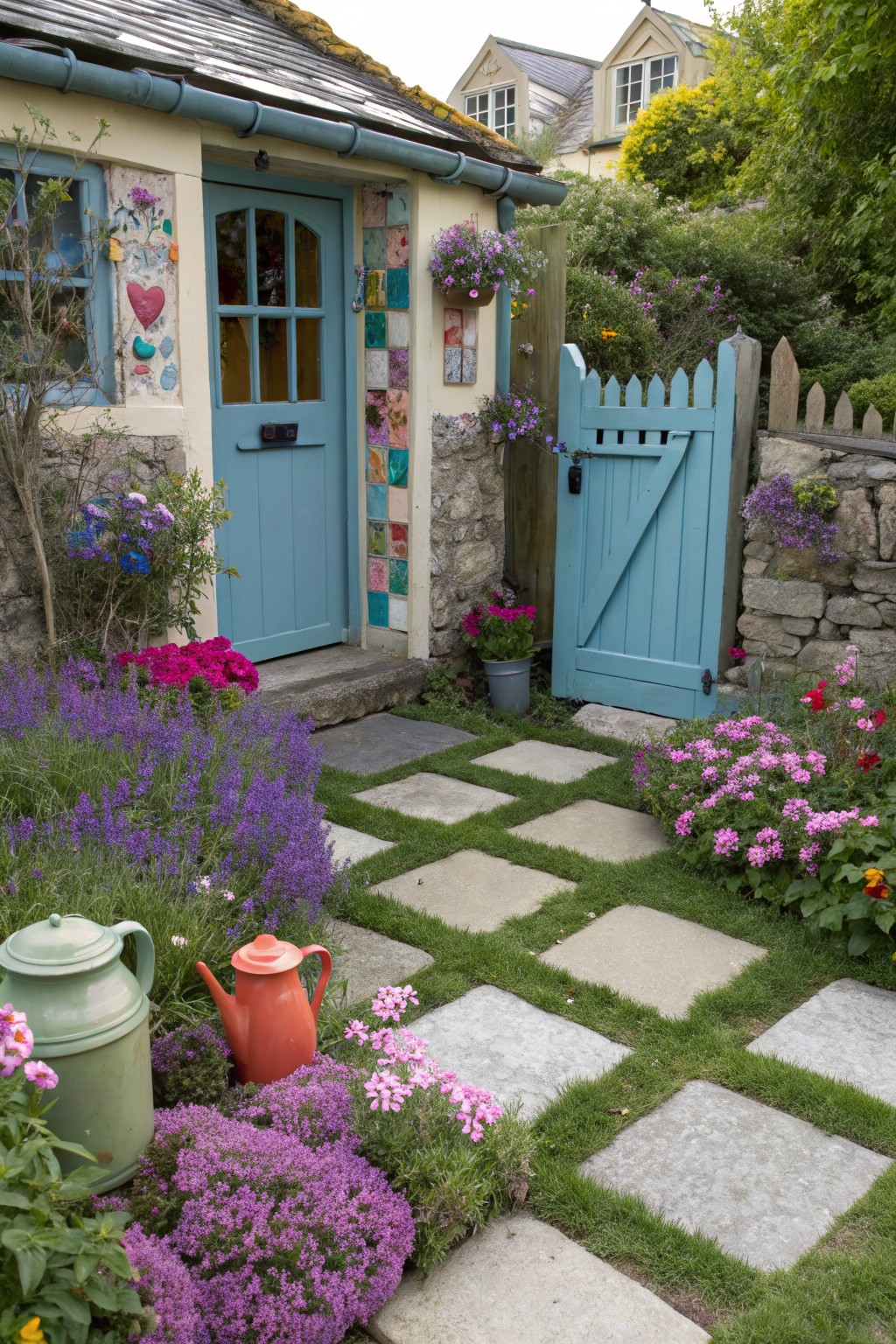
A simple stone paver path set right into the lawn works best when you pack the edges with dense flower beds like this. The mix of purples, pinks, and reds from lavender, salvia, and little blooms fills out the borders without much fuss. It keeps the walkway clear while making that walk to the door feel like a proper welcome.
This kind of setup fits older cottages or any home with a front yard to play with. Plant in layers close to the path so nothing spills over. Stick to tough perennials that come back each year… less work that way. Watch the scale though. Too wide a path and the beds look skimpy.
Entry Steps Lined with White Flower Pots
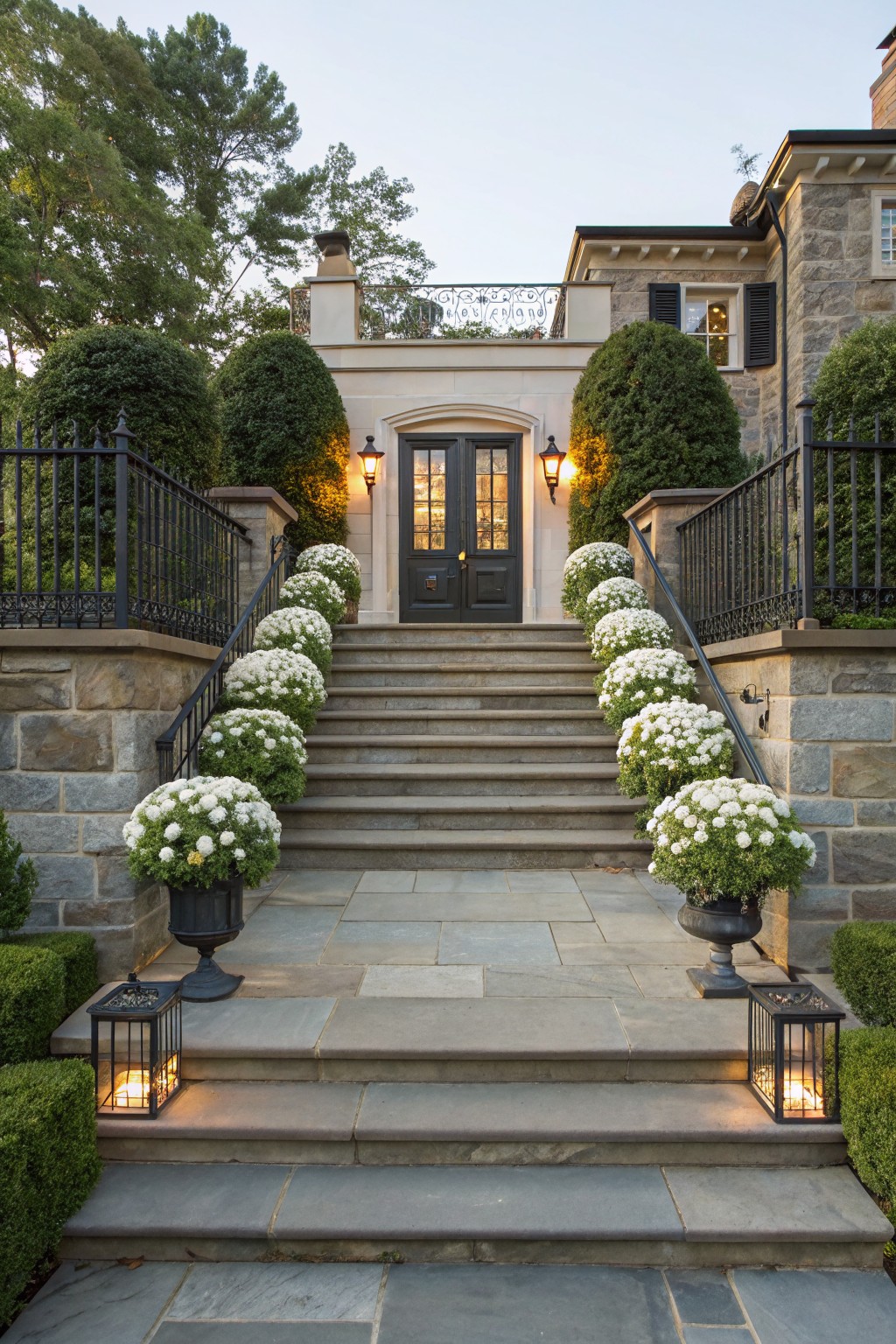
One simple way to make your front walkway more welcoming is lining the steps up to your door with matching pots of white flowers. Here the repetition of those round white blooms creates a steady rhythm that guides guests right where they need to go. It ties the stone steps and iron railings together without overwhelming the look.
This works best on wider entry stairs where you have room for pots on both sides. Go with low-growing white flowers like mums or alyssum that hold their shape. It suits stone or brick homes with a classic feel. Keep the pots uniform in size and material so the focus stays on the path, not the containers.
Colorful Tiled Steps Guide the Way Up
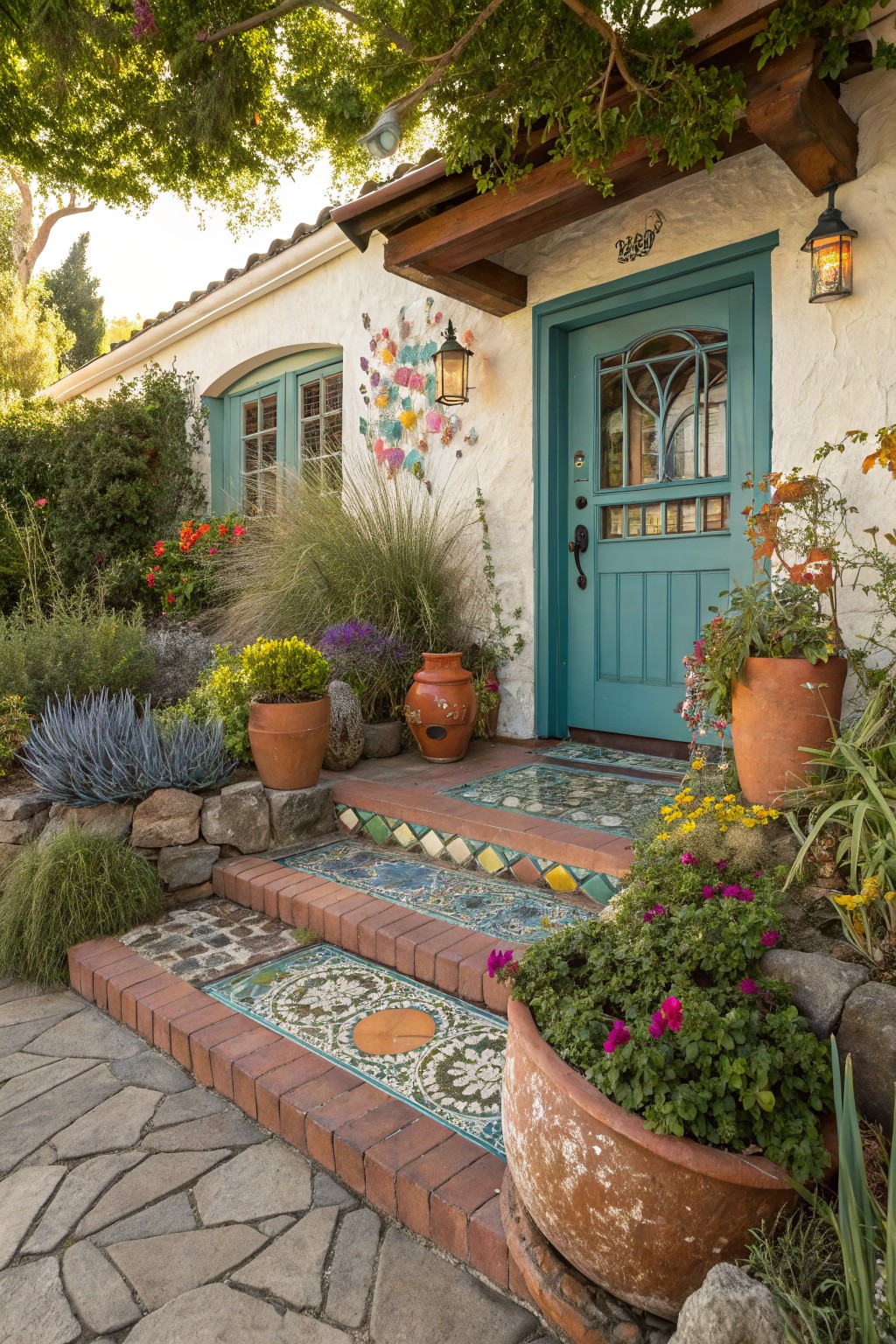
Those hand-painted tiles on the entry steps catch your eye right away. They turn a simple brick staircase into something with real character, especially with the patterns in blues and oranges that pick up the turquoise door nearby. Terracotta pots filled with agaves and flowering plants line both sides, filling out the flower beds without overwhelming the path.
This works best on homes with a bit of slope to the front yard, like in warmer climates. Go for durable tiles that handle foot traffic, and stick to tough plants in the pots so you aren’t replanting every season. It suits stucco houses or anything Spanish-inspired, giving guests a warm path to follow.
Meandering Flagstone Path to the Entry
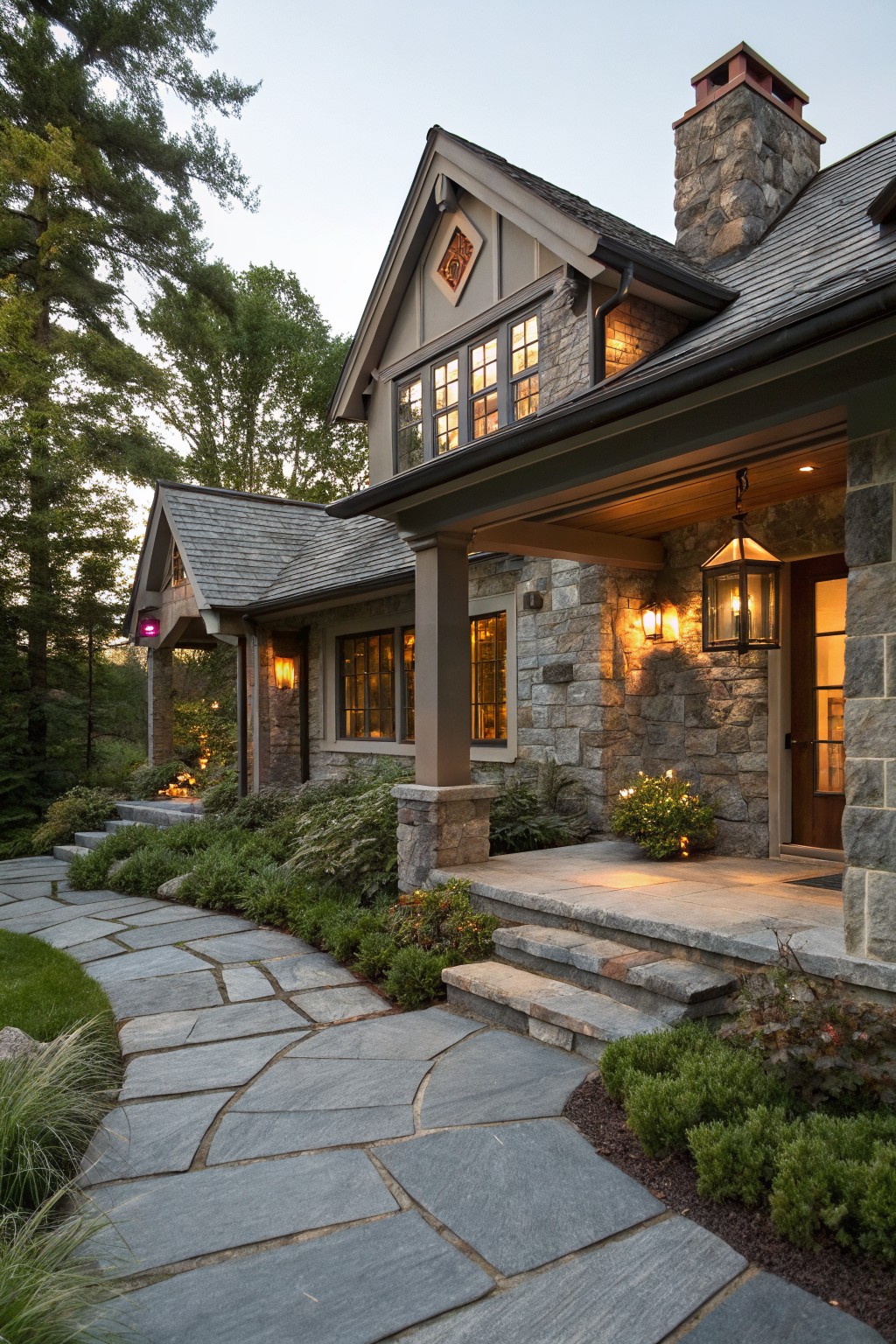
A simple curving path made from irregular flagstone slabs works so well here to guide folks right to the front door. It starts wide in the lawn and narrows as it goes, edged with low shrubs and a few flowering plants that keep things soft and full without overcrowding. That gentle bend makes the walk feel longer and more interesting than a straight shot would.
You can pull this off on most front yards, especially ones with a bit of slope or trees nearby. Lay the stones in sand or mortar for stability, then fill the borders with tough evergreens like boxwood or perennials that won’t need much fuss. It ties the house to the yard nicely and handles foot traffic year round.
Tropical Stepping Stone Entry Path
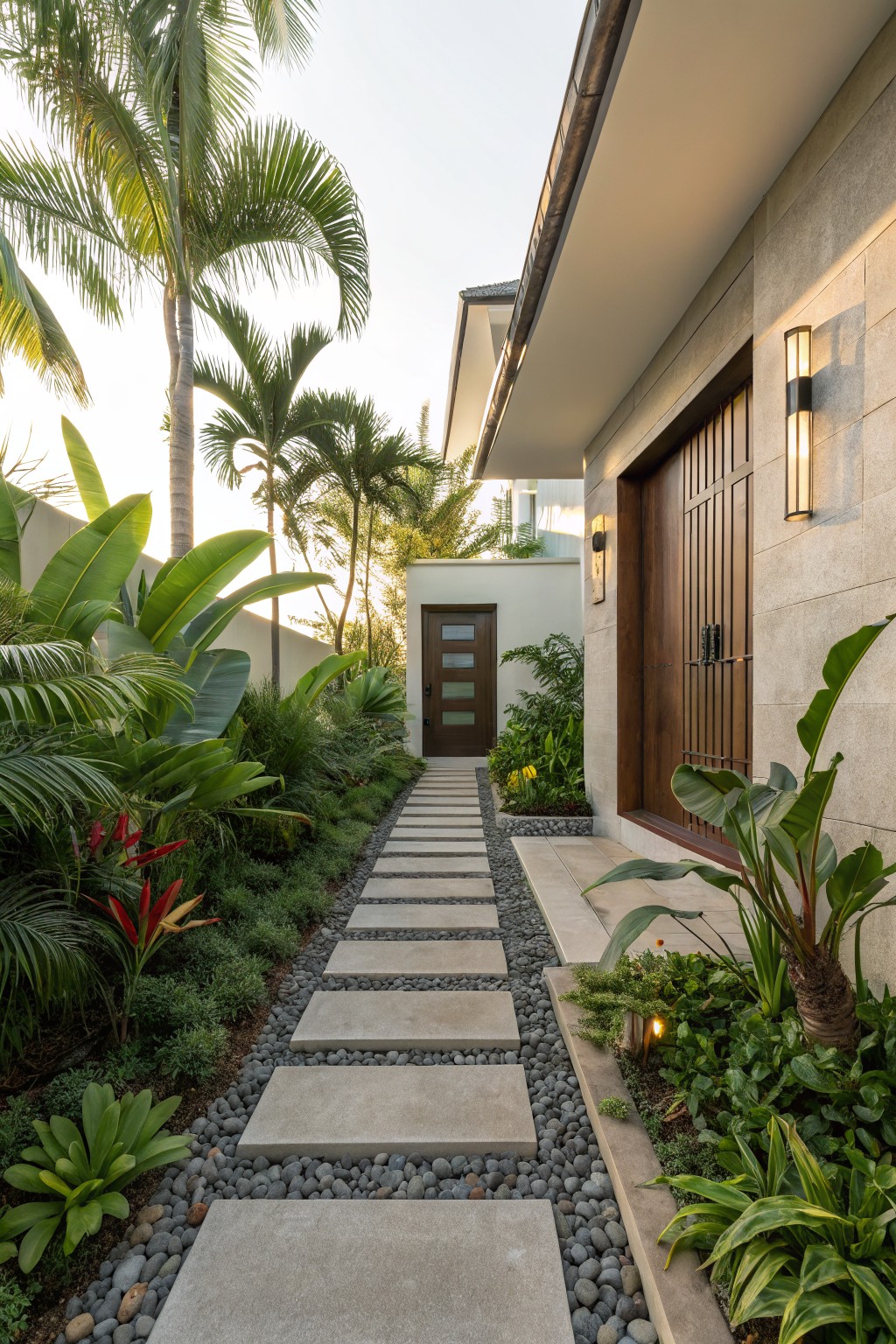
Wide concrete stepping stones laid out in a straight line make a simple, sturdy walkway here. Black pebbles fill the gaps between them, and thick tropical plants fill out the borders on both sides. It guides you right to the door in a natural way that feels easy on the feet and eyes. No rush, just a calm lead-in.
This setup works best in warmer spots where palms and big-leaf plants thrive. Lay the stones far enough apart for a relaxed stride, and edge with pebbles to keep weeds down without much upkeep. Suits modern homes with clean lines, or any place wanting that resort feel out front.
Raised Beds Line the Entry Path
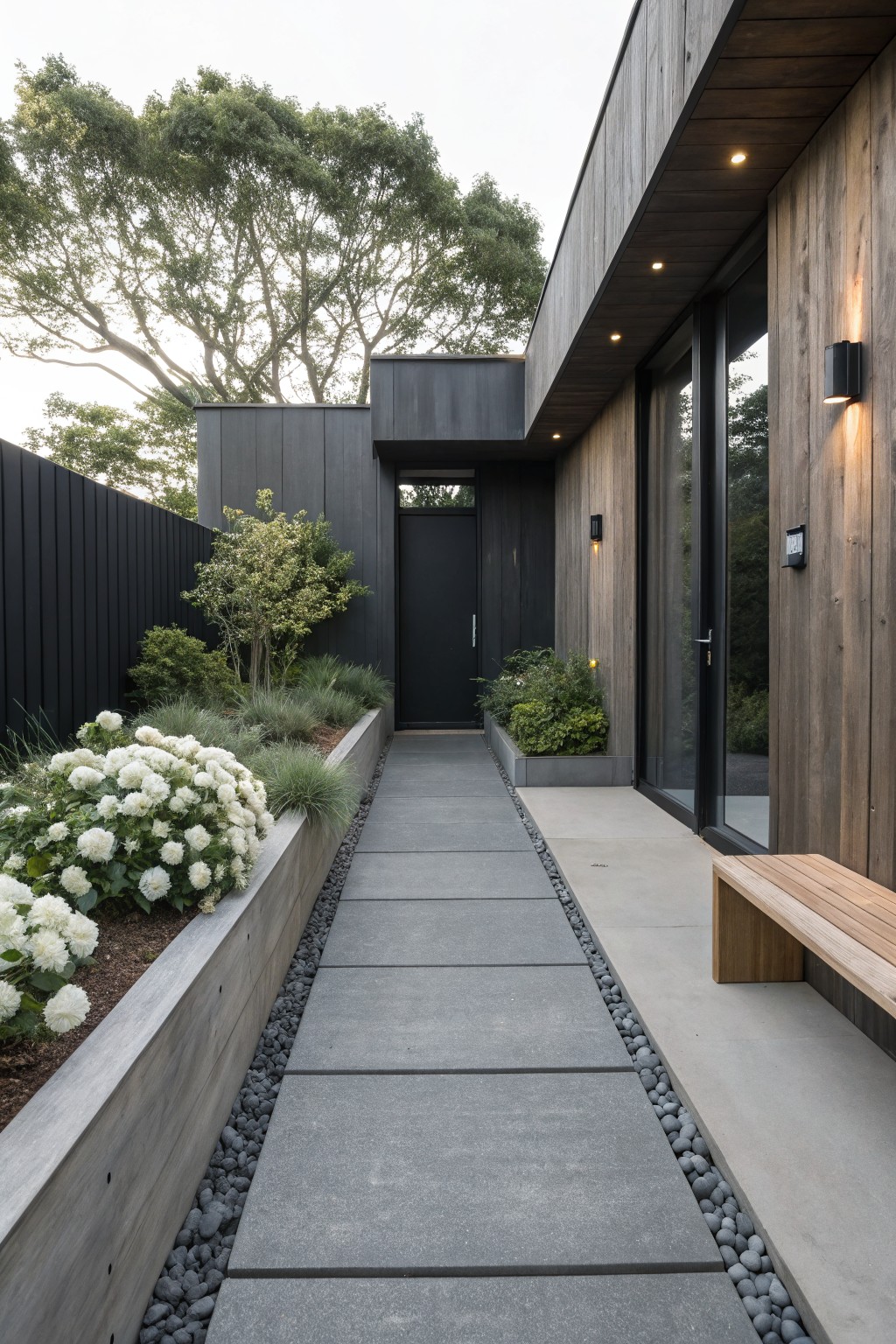
A straight stone paver walkway gets a nice lift from raised wooden beds tucked along one side. White hydrangea blooms and waving grasses fill them out, softening the hard edges while keeping things neat. That gravel strip between the path and beds finishes it off clean, no weeds sneaking in.
This works best on modern homes or any spot with a simple fence line. Pick sturdy timber that holds up outdoors, go for tough plants that don’t need daily water, and add a bench at the end if space allows. It guides folks right to the door without crowding the way.
Brick Path Edged with Lavender
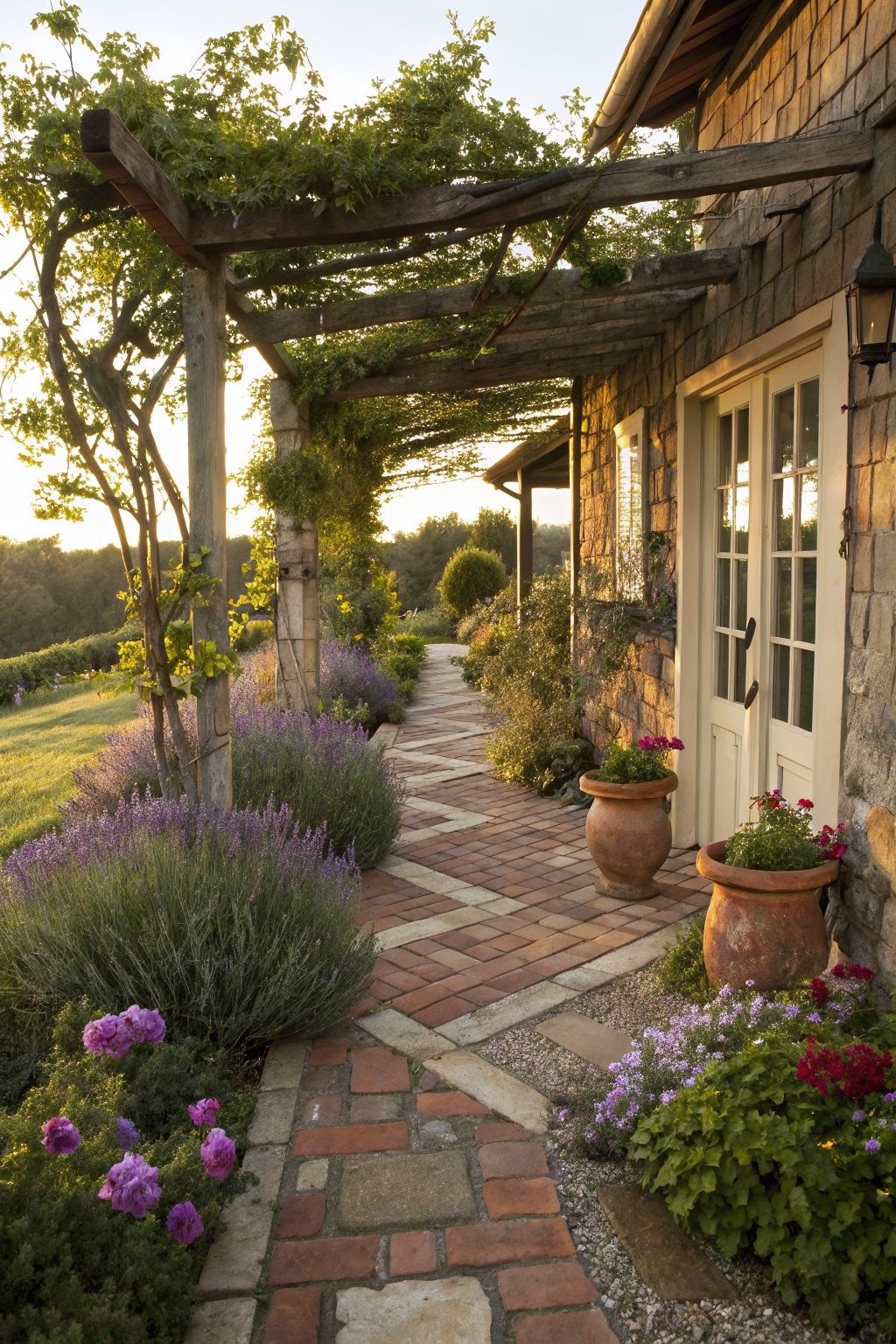
A brick walkway like this one makes guiding guests to your front door feel natural and pleasant. The path uses mixed brick pavers in a simple pattern, with bands of lavender planted right along both edges. That purple edging repeats softly as it curves ahead, keeping the eye on track without being too straight or formal.
You can pull this off in a side yard or along a driveway approach, especially if your house has some stone or wood details. Just keep the lavender trimmed low so it doesn’t block the way, and mix in a few pots of geraniums for color. It suits older homes with a bit of land… low fuss once it’s in.
Frequently Asked Questions
Q: What plants should I choose if my walkway gets mostly shade?
A: Go for hostas, ferns, and astilbe. They thrive in low light and add lush texture without much fuss. Plant them in clusters for that welcoming pop of green.
Q: How do I edge the flower beds to keep everything crisp?
A: Dig a shallow trench along the walkway side and line it with bricks or stones. Hammer them in snug so grass stays out. This simple step makes your path look polished year-round.
Q: Can I pull this off on a tight budget?
A: Start with perennials from a local nursery sale, they come back every year. Mulch heavily to cut down on weeding time and water needs. You’ll spend less upfront and save more later.
Q: How often do I need to water and weed these beds?
A: Water deeply once a week unless it rains. Pull weeds weekly while they’re small, it takes five minutes tops.
