

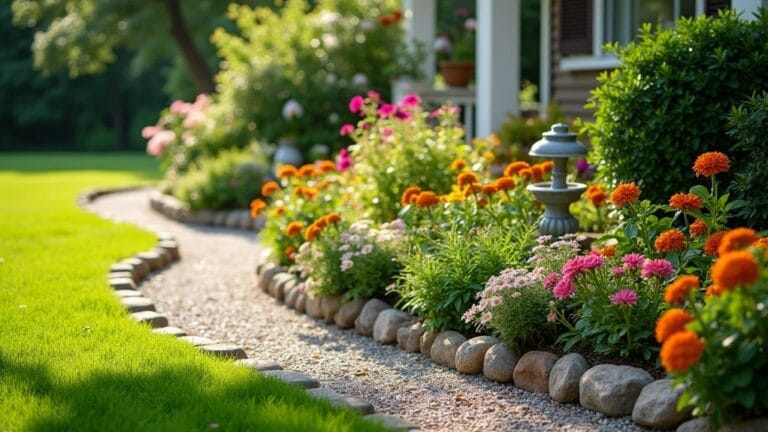
Transforming your front yard flower bed can be a delightful project that doesn’t have to take up all your time. With the right approach, you can create a space that impresses without the stress. Focus on choosing a harmonious color palette and opting for low-maintenance plants. Simple yet effective decisions can make all the difference. Let’s explore how you can achieve a charming flower bed that really catches the eye.
Choose a Color Palette

When I think about choosing a color palette for my front yard flower bed, I realize how essential it’s to create a harmonious look that reflects my style.
Choosing a color palette for my flower bed is crucial for achieving a harmonious and personal aesthetic.
I love mixing vibrant hues with softer tones, balancing bold flowers like sunflowers with delicate lavender.
This way, I can guarantee my flower bed attracts attention while still feeling inviting and personal.
It’s all about finding that perfect blend!
Incorporate Perennials for Low Maintenance

Incorporating perennials into my front yard flower bed not only simplifies maintenance but also guarantees a vibrant display year after year.
I love choosing hardy varieties like coneflowers and daylilies, which thrive in my climate. They come back each spring, reducing the need for replanting.
Plus, their established roots help with water retention, making my gardening routine even easier.
Use Annuals for Seasonal Color

Brightening up my front yard flower bed with annuals adds that splash of seasonal color I crave.
I love choosing vibrant varieties like petunias and marigolds to create a lively display. They’re easy to care for and bloom all season long.
Plus, I can switch them out each year for a fresh look, keeping my landscaping exciting and inviting.
Add Height With Vertical Elements

To elevate the visual appeal of my front yard flower bed, I’ve discovered that adding vertical elements makes a significant difference.
I love incorporating trellises, tall planters, or decorative stakes to draw the eye upward. These features not only break up the flatness of the garden but also create interesting layers.
Plus, they provide support for climbing plants, enhancing the overall design!
Create a Border With Edging Materials
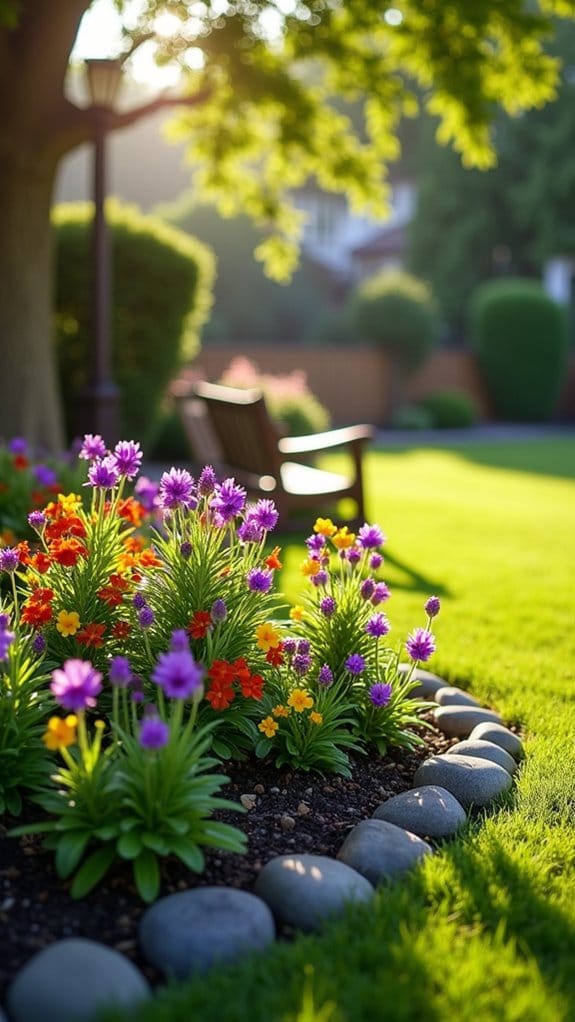
After enhancing the height of my flower bed with vertical elements, I realized that defining the space with edging materials adds another layer of distinction.
I chose simple, durable options like bricks and wooden borders to create a clean line. This not only keeps the soil contained but also gives my flower bed a polished look that really stands out in the yard.
Utilize Rocks and Gravel for Texture

Incorporating rocks and gravel into my flower bed has transformed the overall texture and visual appeal of the space.
I love how the different sizes and colors add depth, making the flowers pop. It also helps with drainage and reduces weeds. Plus, it’s low maintenance!
I often rearrange the rocks for a fresh look without much effort.
Plant Native Flowers for Sustainability
While I appreciate the beauty of various flowers, planting native species has become a priority in my flower bed for its sustainability benefits.
Native flowers attract local pollinators, require less water, and thrive in our soil without extra fertilizers.
By choosing these plants, I’m not only enhancing my garden’s beauty but also supporting the local ecosystem.
It’s a win-win for me and the environment!
Mix Different Flowering Heights

Building on my commitment to sustainability with native flowers, I’ve found that mixing different flowering heights adds depth and visual interest to my front yard flower bed.
I love placing taller blooms like sunflowers at the back, medium-sized coneflowers in the middle, and low-growing marigolds at the front. This layering creates a vibrant, dynamic display that draws the eye and enhances the overall beauty.
Implement a Theme or Style
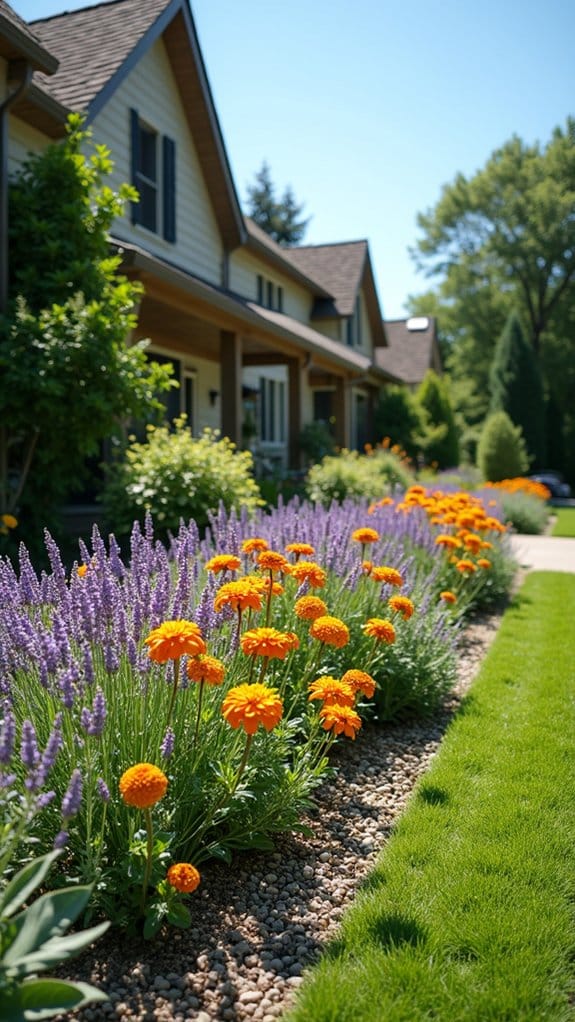
Choosing a theme or style for your front yard flower bed can transform it from a simple garden into a cohesive and inviting space.
I recommend selecting a color palette or a specific garden style, like cottage or modern. This consistency will guide your plant choices, making it easier to create a beautiful arrangement that reflects your personality and enhances your home’s curb appeal.
Use Container Gardens for Flexibility

If you want to add versatility to your front yard flower bed, consider using container gardens.
They let me easily change up my layout and experiment with different plants. I can move them around for the best sunlight or create focal points wherever I want.
Plus, they’re great for adding color and texture without committing to permanent landscaping. You’ll love the flexibility!
Create a Layered Effect

Creating a layered effect in your front yard flower bed can transform the space into a visually stunning landscape.
I love combining tall plants in the back, like sunflowers or delphiniums, with medium-height blooms in the middle, such as daylilies.
Finally, I add shorter flowers like pansies or petunias at the front.
This arrangement creates depth and draws the eye, making my garden truly enchanting.
Incorporate Foliage for Year-Round Interest
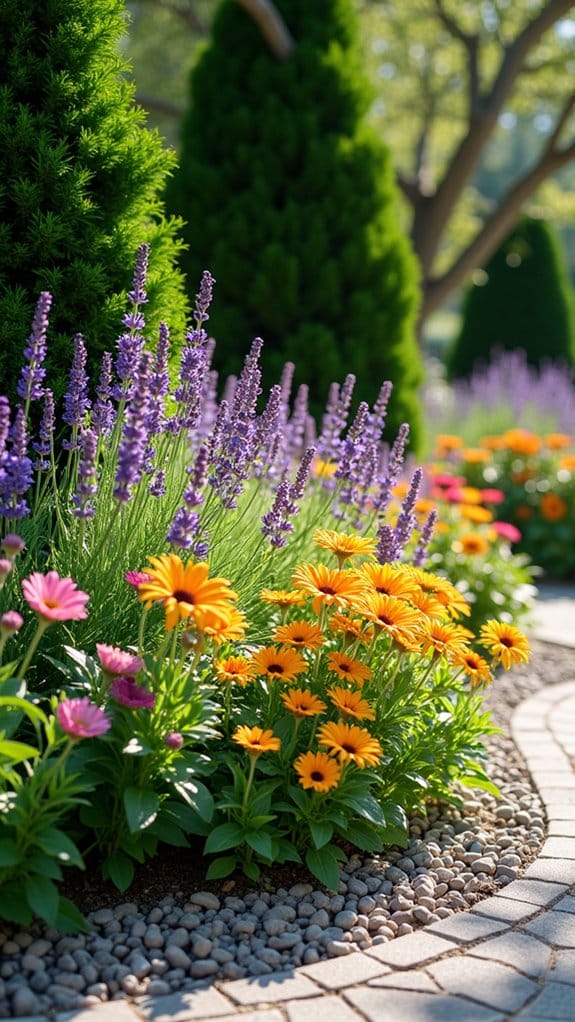
While vibrant flowers steal the show in spring and summer, incorporating foliage into your front yard flower bed guarantees your landscape remains enchanting year-round.
I love using a mix of evergreens, hostas, and ornamental grasses to create texture and color.
These plants not only provide contrast but also make certain my garden looks lively even in the cold months.
It’s truly a game-changer!
Add Ground Cover for Density

To enhance the density of your front yard flower bed, adding ground cover plants can make a remarkable difference.
I love using varieties like creeping thyme or ajuga, as they fill in gaps and create a lush, inviting look.
These plants not only add texture but also help suppress weeds, making maintenance easier.
Trust me, your flower bed will thrive with this addition!
Use Mulch to Retain Moisture

After adding ground cover to boost the density of your flower bed, using mulch can greatly enhance its health.
Mulch acts as a protective layer, helping to retain moisture in the soil. It also suppresses weeds, reduces temperature fluctuations, and adds organic matter as it breaks down.
Include Decorative Garden Accessories

Incorporating decorative garden accessories not only enhances the visual appeal of your flower bed but also adds a personal touch that reflects your style.
I love adding items like whimsical garden gnomes, colorful birdhouses, or elegant stepping stones.
These elements create interest and draw the eye. Plus, they invite a bit of joy and creativity into my outdoor space, making it feel uniquely mine.
Plan for Seasonal Changes

As I enjoy adding decorative garden accessories to my flower bed, I also consider how the changing seasons will impact my landscape.
I plan for seasonal changes by selecting plants that bloom at different times and incorporating evergreen elements for winter interest.
This way, my flower bed remains vibrant year-round, making it a delightful sight, no matter the season.
Create Pathways for Accessibility
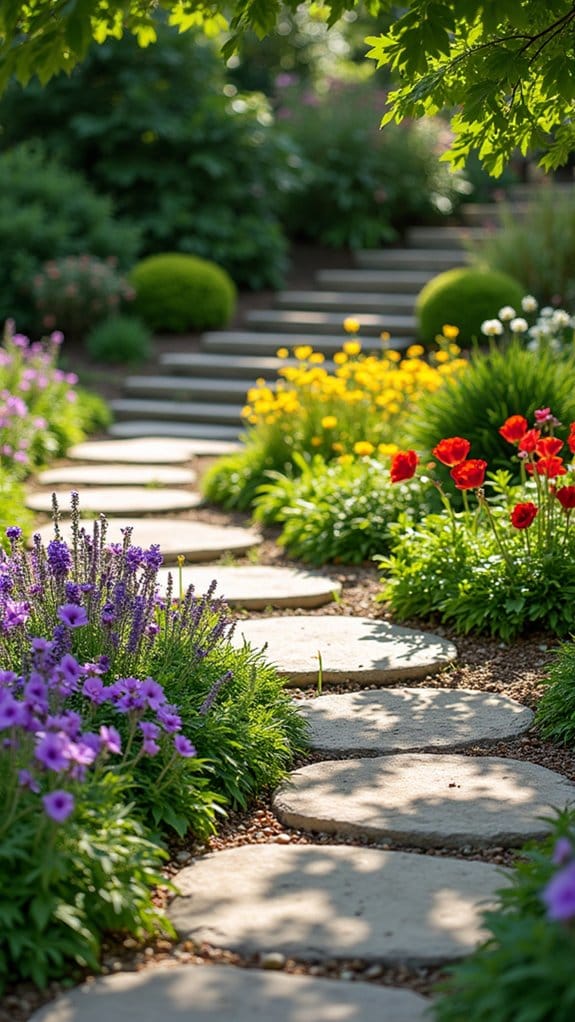
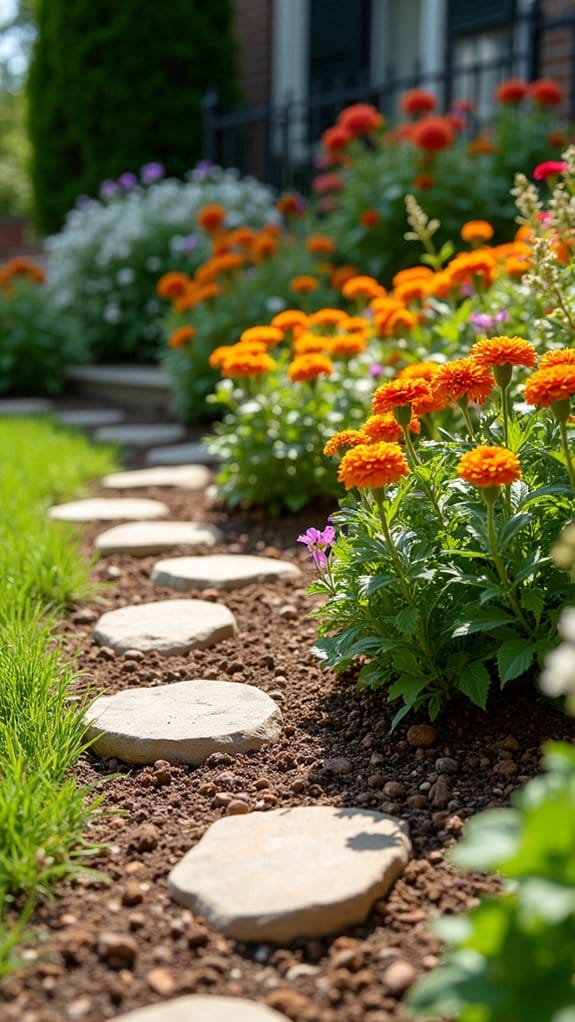
While designing my flower bed, I realized that creating pathways for accessibility is essential for fully enjoying the space.
I decided to use stepping stones and mulch to guarantee easy navigation. This not only enhances the aesthetic appeal but also allows friends and family to move comfortably through the garden.
Plus, it makes maintenance tasks much easier and more enjoyable for me.
Attract Pollinators With Specific Plants
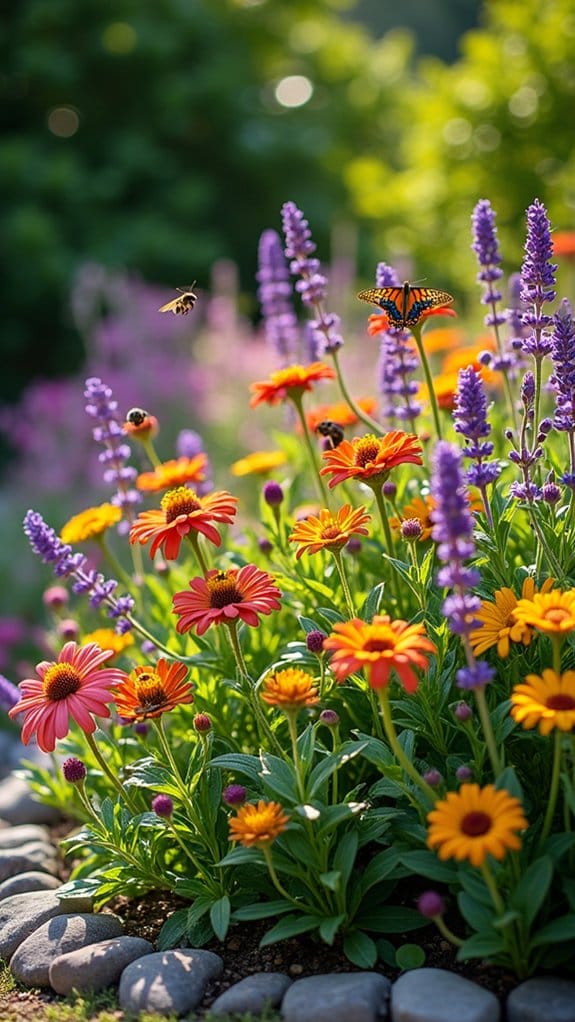
Creating accessible pathways not only enhances the enjoyment of my flower bed but also sets the stage for attracting pollinators with the right plants.
I’ve found that incorporating native flowers like coneflowers and milkweed draws in bees and butterflies. These vibrant blooms not only look stunning but also support local ecosystems, ensuring my garden buzzes with life throughout the seasons.
Maintain With Simple Routine Care
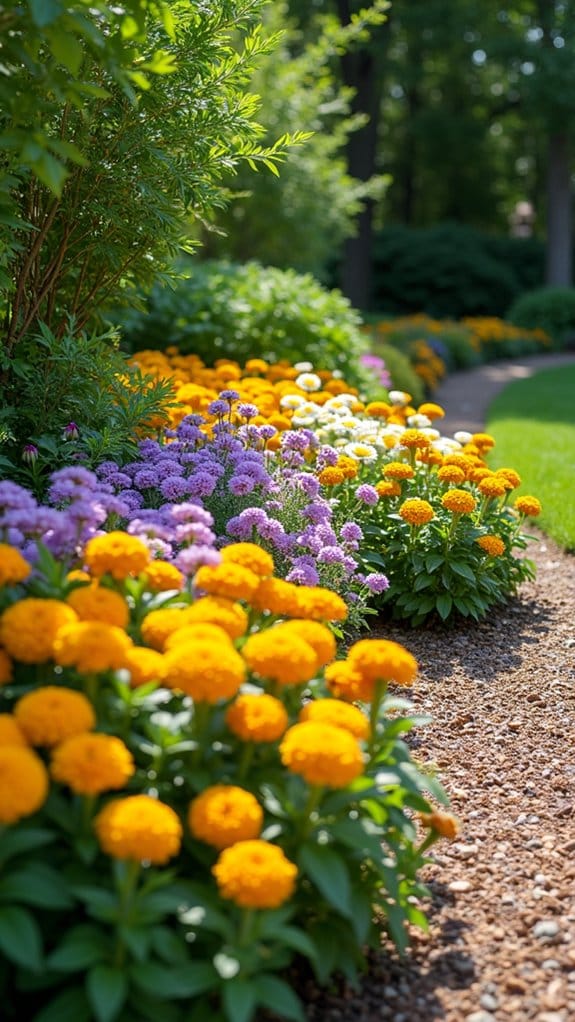
To keep my front yard flower bed thriving, I’ve found that a simple routine care approach works wonders.
I water regularly, ensuring the soil remains moist but not soggy. Pulling weeds weekly prevents them from overtaking my flowers.
I also mulch to retain moisture and suppress weeds. Finally, a light fertilization every few weeks gives my plants the nutrients they need to flourish.
