

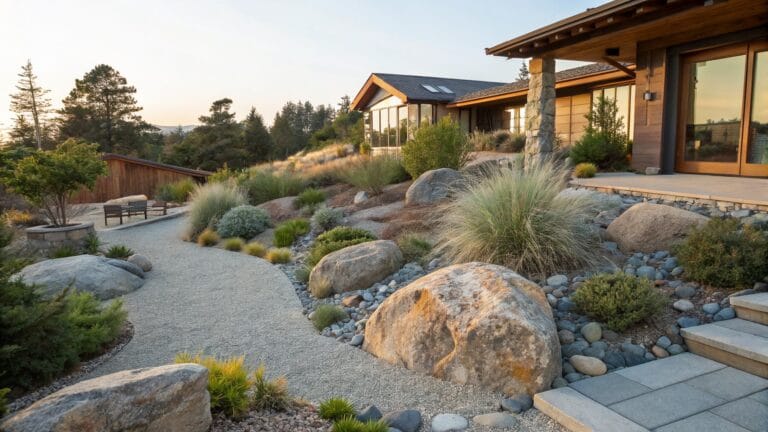
I’ve noticed that rock gardens shine when their layout follows the yard’s natural slopes and flow, creating paths that invite you to wander without extra mowing.
The real strength lies in how rocks form a sturdy structure over time, edging out weeds while letting a few tough plants fill in the gaps.
People usually spot the bold stone patterns first, the ones that turn a bare patch into something defined and calm.
Mixing boulder sizes adds that depth I always chase in my own setups.
These approaches prove worth tweaking for spots where upkeep stays simple year after year.
Boulder-Lined Winding Paths
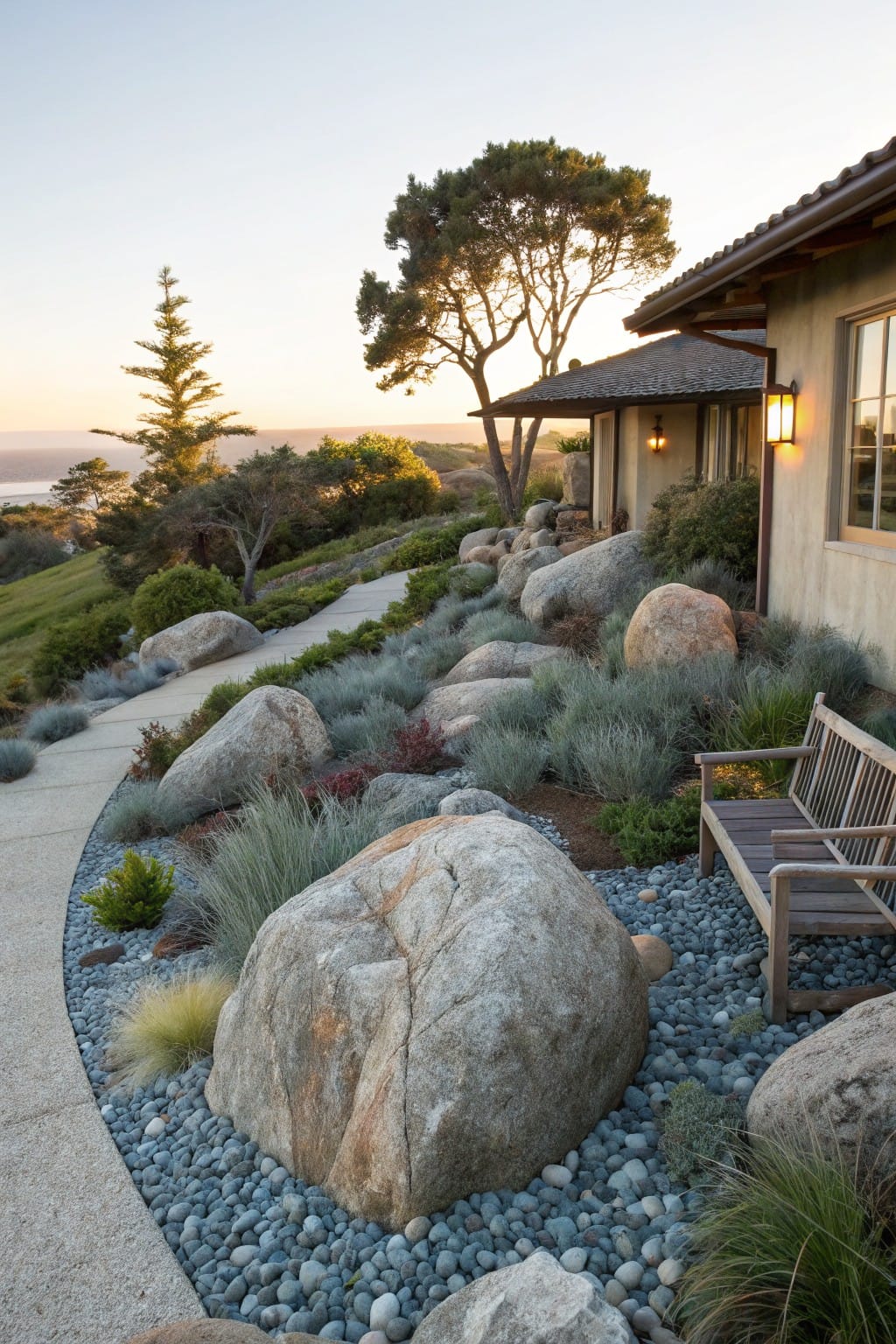
Big boulders like these make a garden path feel more like a natural trail. They anchor the space without much upkeep. Pair them with a simple concrete walkway and gravel edges, and you get that rugged coastal vibe. Drought-tolerant grasses fill in the gaps nicely, staying low and tidy year-round.
This works best on slopes or hillsides where straight lines feel out of place. Let the path curve gently around the rocks to draw people along slowly. Add a bench here and there for resting spots. It’s practical for dry areas, handles foot traffic well, and ties right into a house entry without overpowering it.
Large Boulders in Rock Gardens
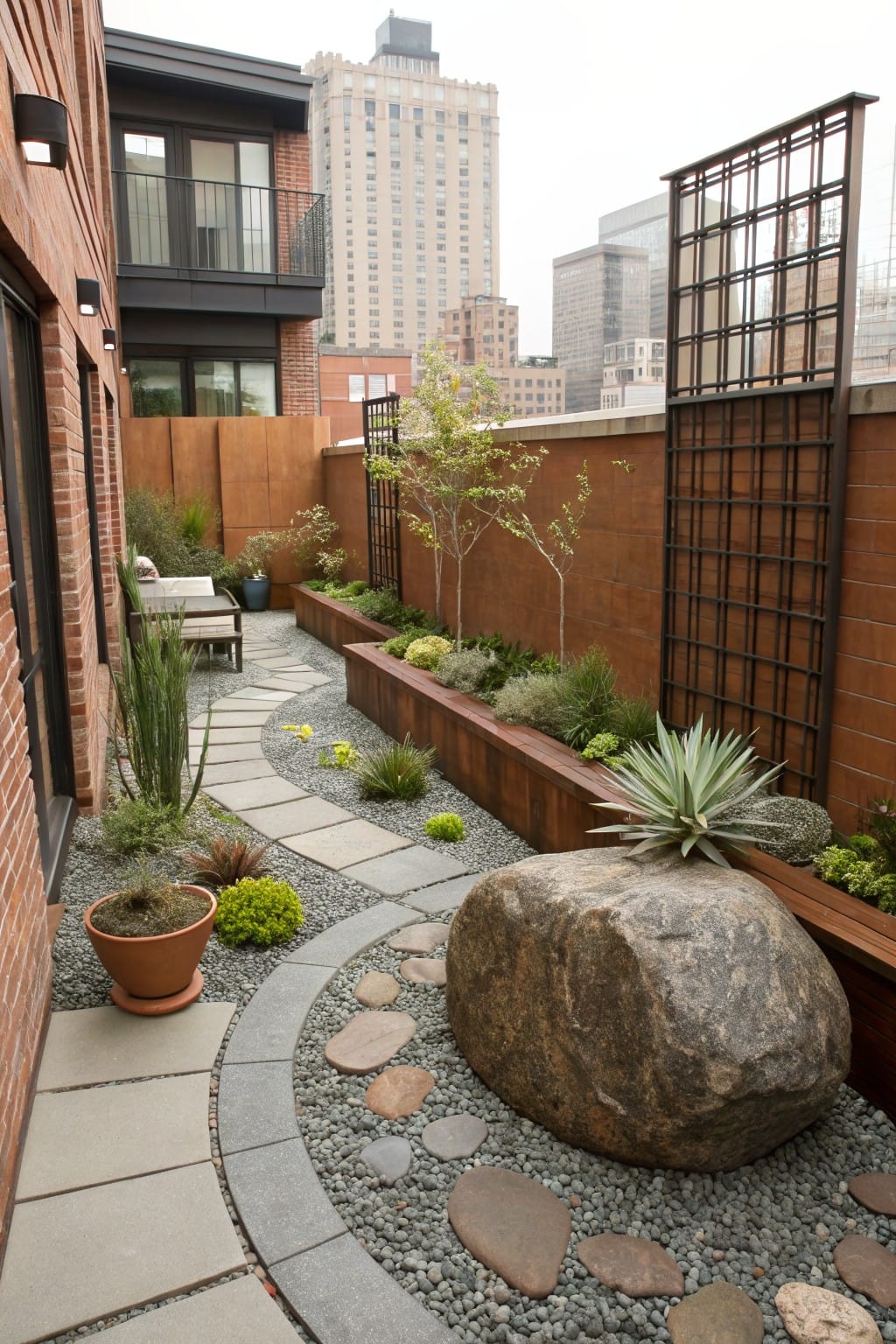
A big boulder like the one here sits right in the gravel section of this rock garden. It pulls the eye immediately and adds that solid, natural element without needing any care. The gravel and small plants around it keep things simple and low-maintenance, letting the rock do most of the work.
Put one in a small rooftop terrace or courtyard where space is tight. Surround it with drought-tolerant stuff like agave and grasses in raised beds, then wind a path of flat stones through the gravel. It fits urban spots well… just make sure the boulder isn’t too close to seating.
Terraced Rock Garden Pathways
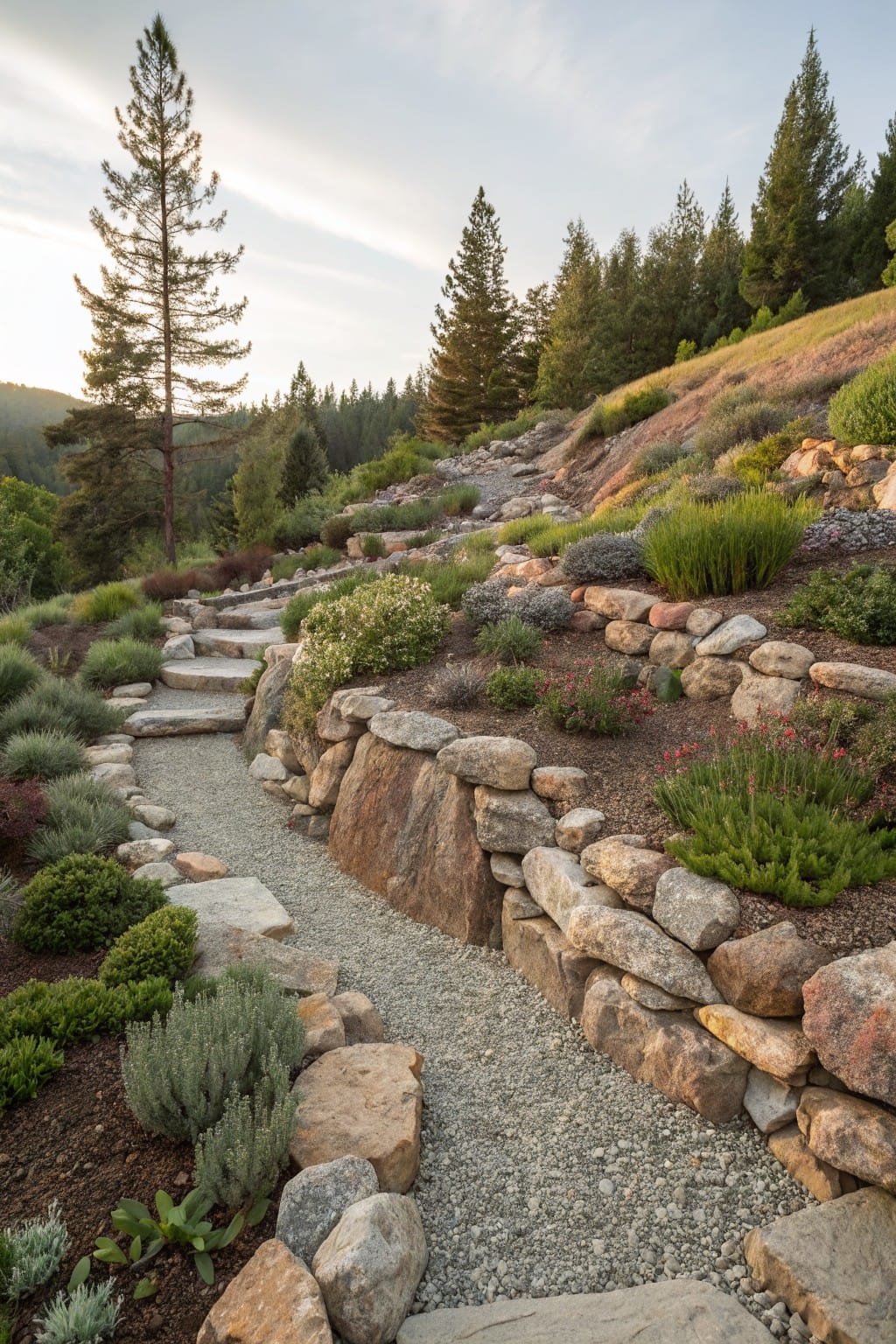
A simple gravel path winding up a hillside with stone steps fits right into a rock garden setup. The dry-stacked boulder walls hold back the slope while letting plants tuck in between. It keeps things low-maintenance since gravel and rocks need little upkeep, and the tough grasses and shrubs handle dry spots well.
Try this on any sloped yard where mowing is a hassle. Pick local stones for the walls to match the area, and space steps wide enough for easy walking. It works best in sunny, dry climates… just add a few drought-tolerant perennials for color without much work.
Curved Gravel Paths in Rock Gardens
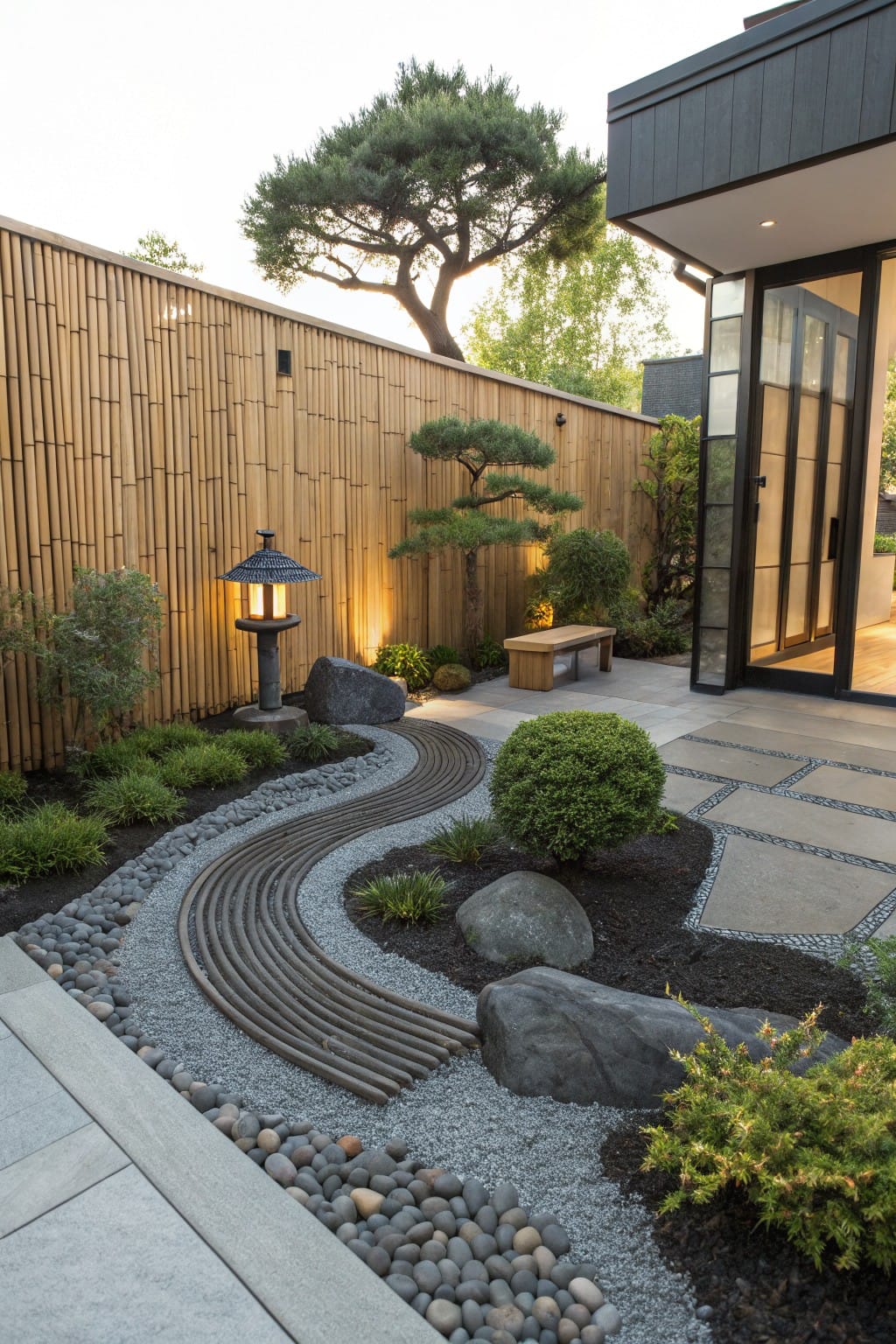
One nice touch in rock gardens is a winding gravel path like this one. The slim metal edging keeps the pebbles in a smooth curve that looks like a dry river running through. Paired with a few big rocks and low plants it gives that calm flow without much upkeep. Folks like how it pulls your eye right to the bench or house door.
You can add this in any backyard that needs a simple walkway. Line it with basic river rock gravel and those metal strips from a garden store. It fits modern homes or tight spaces best since there’s no mowing involved. Watch that the edging sits level so gravel doesn’t spill out over time.
Winding Pebble Path with Brick Edging
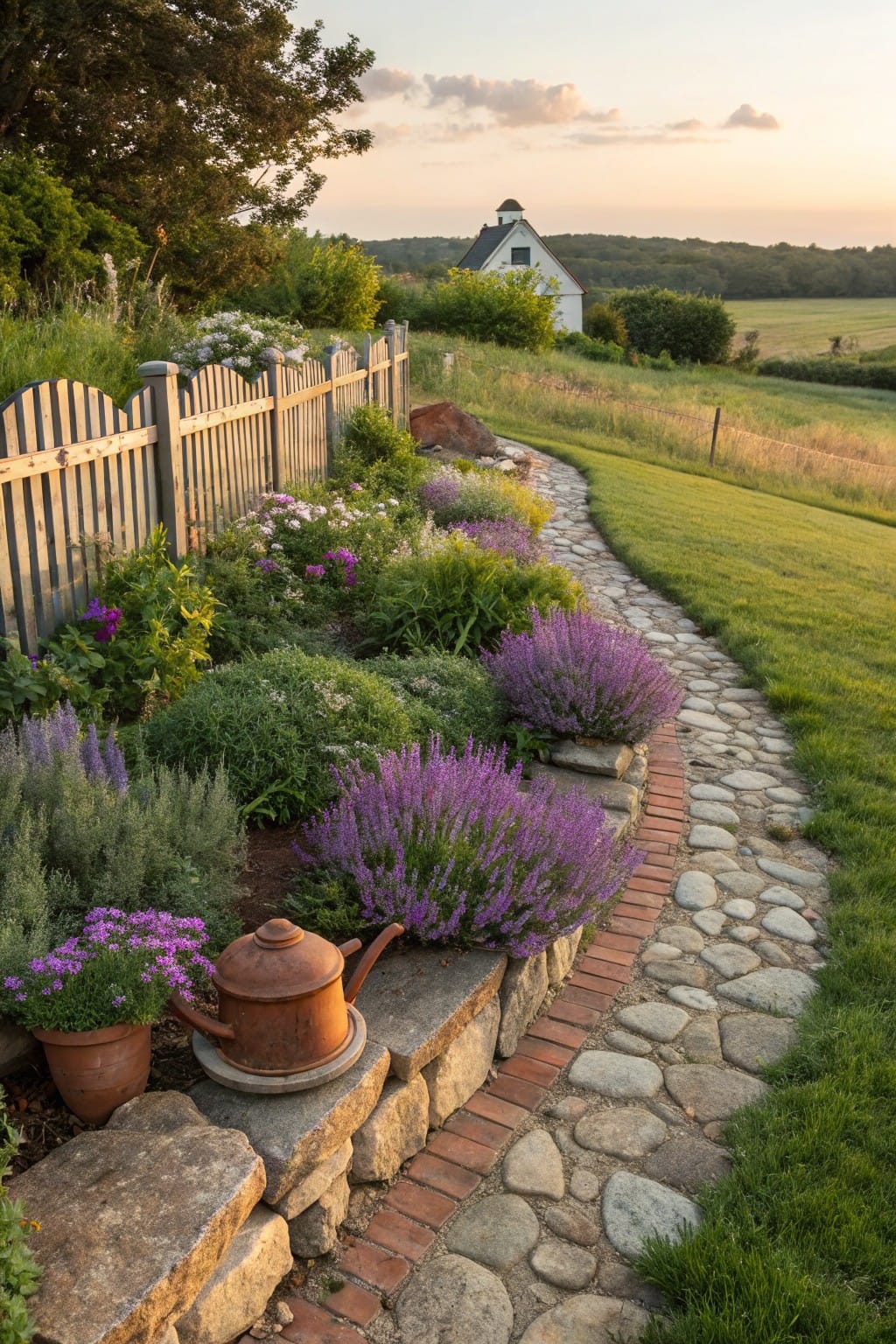
A simple pebble path like this winds gently through the garden, edged by bricks set into a low stone wall. What makes it stand out for low-maintenance landscaping is the mix of flat stones for walking and loose pebbles that let water drain right through. Lavender and other perennials tuck right along the edge, filling in without much trimming or watering once they’re established.
This works best on a slope or in a side yard where you want to connect different areas without a lot of mowing. Pick rounded pebbles for easy walking, and use bricks that match your house for a pulled-together look. It’s forgiving for beginners, but lay landscape fabric under the pebbles first to keep weeds down.
Rock Garden Path with Edge Lighting
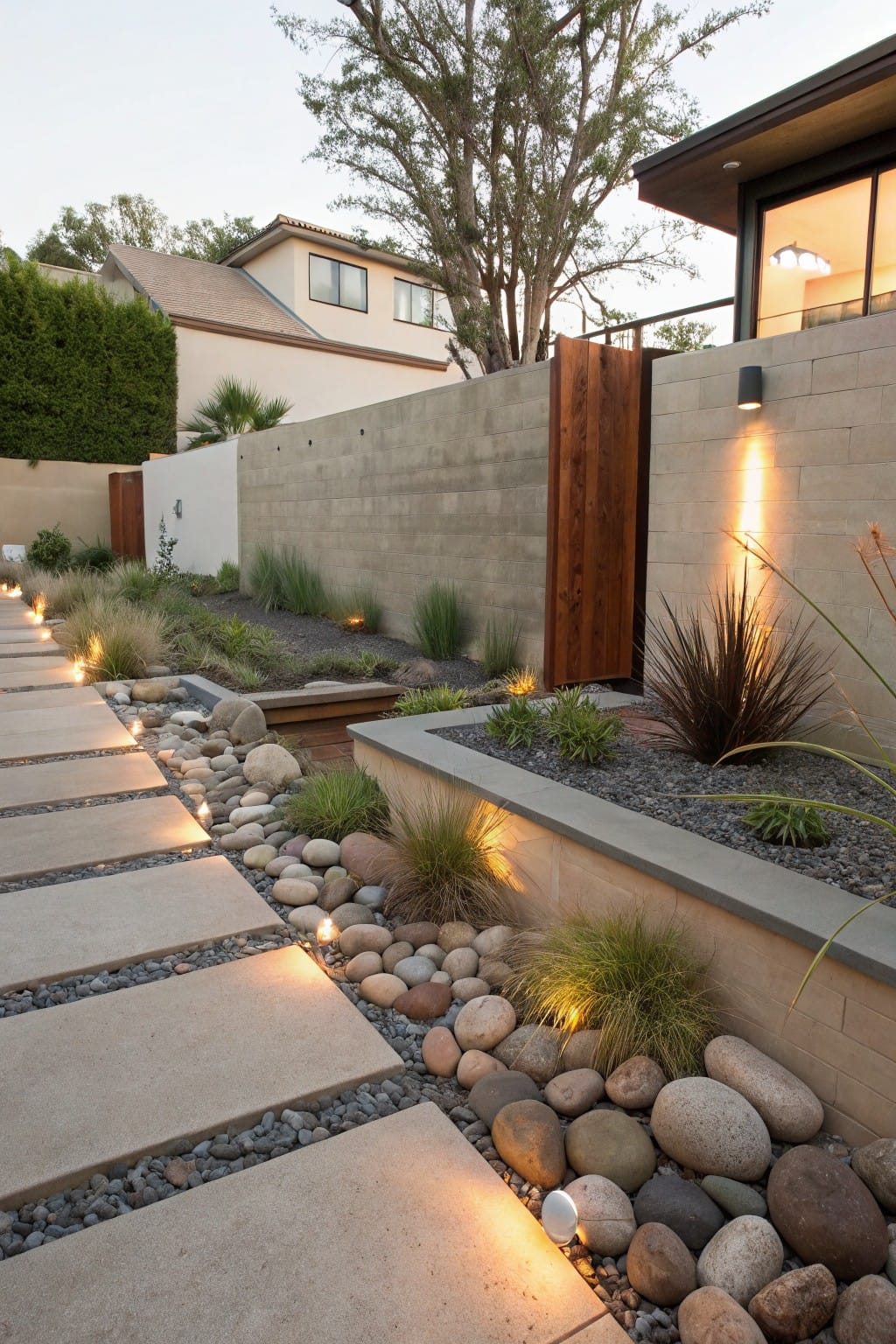
A straightforward path like this uses wide concrete slabs set right into smooth pebble beds for easy walking through a dry garden. The river rocks and tough grasses around it keep things low fuss. no mowing. no watering hassles. And those little lights along the edges make it glow nicely after dark. guiding you safely without overpowering the look.
You can pull this off in narrow side yards or as a way to the back patio. Pair it with drought plants that handle sun well. It fits modern homes with clean walls. Just space the stones for your stride and pick weatherproof lights.
Curved Stone Paths in Rock Gardens
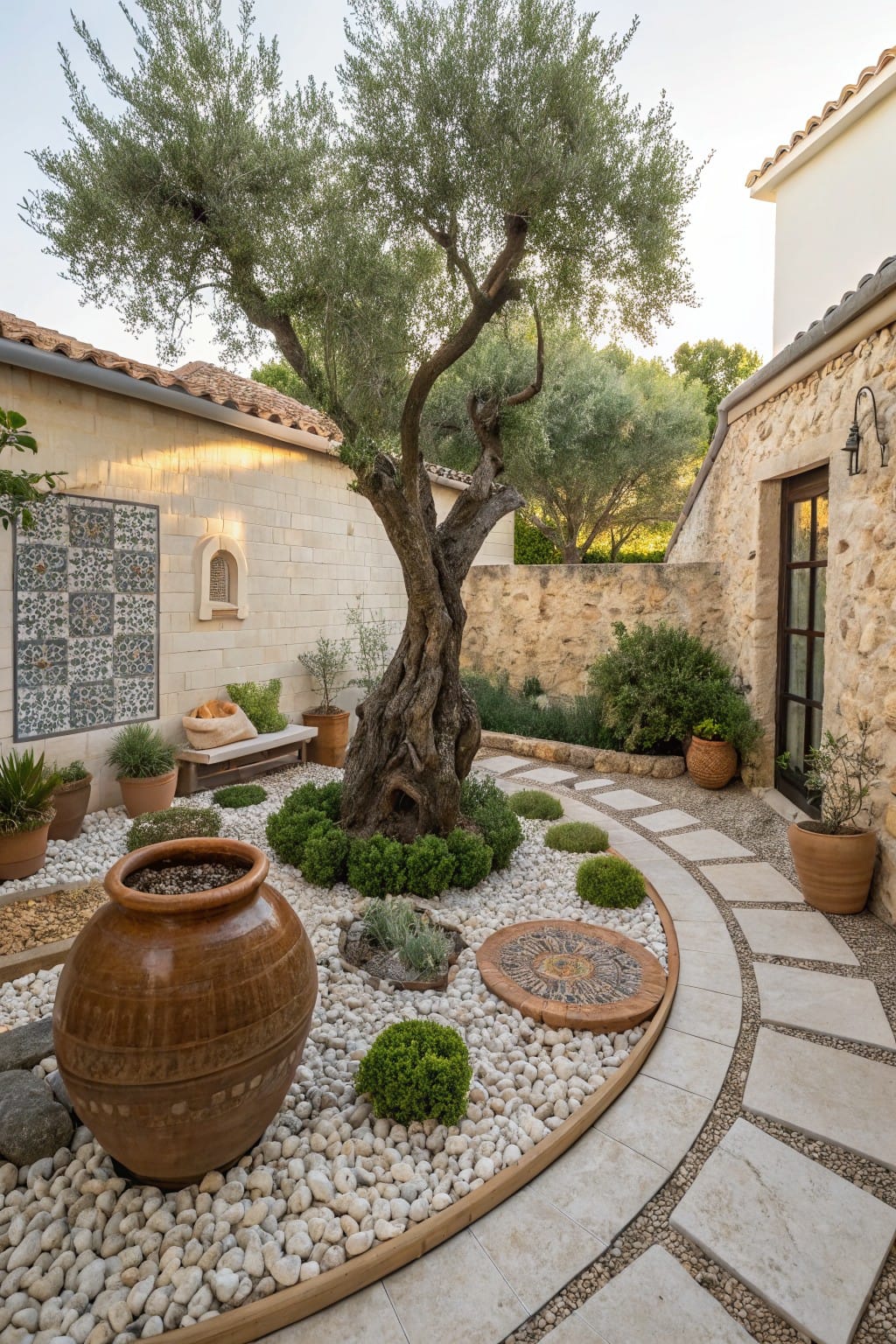
One straightforward way to shape a rock garden is with a curved stone path that loops around a central tree. Here the path circles an old olive tree sitting in a wide bed of white gravel mixed with low boxwoods and a few pots. It keeps foot traffic off the plants while giving the yard some gentle movement. No mowing needed, just occasional weeding.
This setup works best in sunny, dry spots like courtyards or side yards near a house. Pick flat stones that match your local style, and fill the bed with gravel plus tough, small plants. Skip anything too fussy… it stays neat on its own.
Poolside Boulder Landscaping
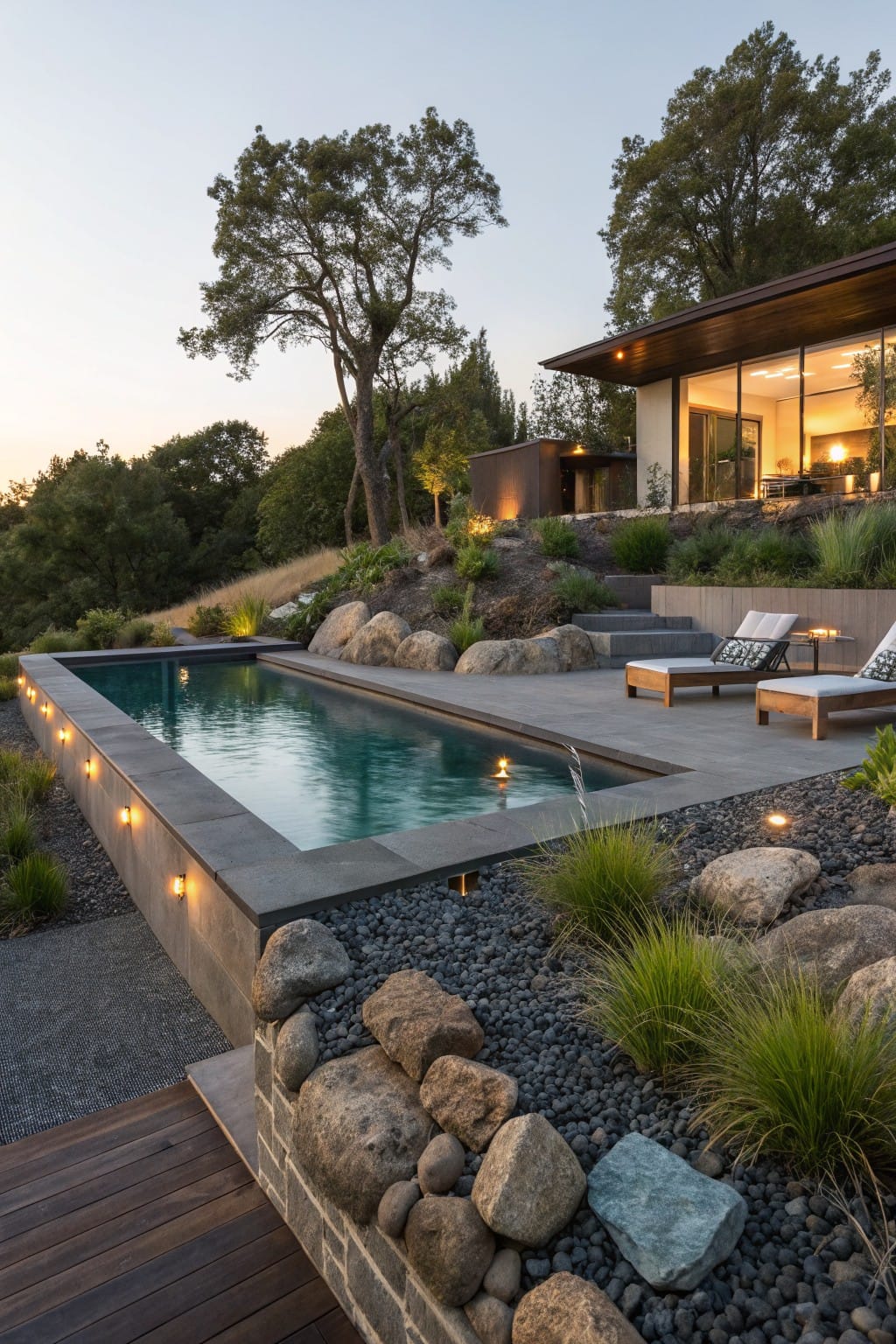
Large boulders placed right around a pool edge make for a rugged, natural border that keeps things low-maintenance. You see them here stacked casually against the concrete deck, mixed with gravel mulch and some tall grasses. They contrast nicely with the clean pool water and modern house lines without needing much upkeep. No mowing or trimming those rocks.
This setup works great on sloped yards where soil erosion is an issue. Tuck boulders into the grade around your pool or patio, fill gaps with gravel, and add a few drought-tolerant plants. It suits hillside homes like this one. Just make sure good drainage so water doesn’t pool behind the rocks.
Terraced Rock Gardens for Slopes
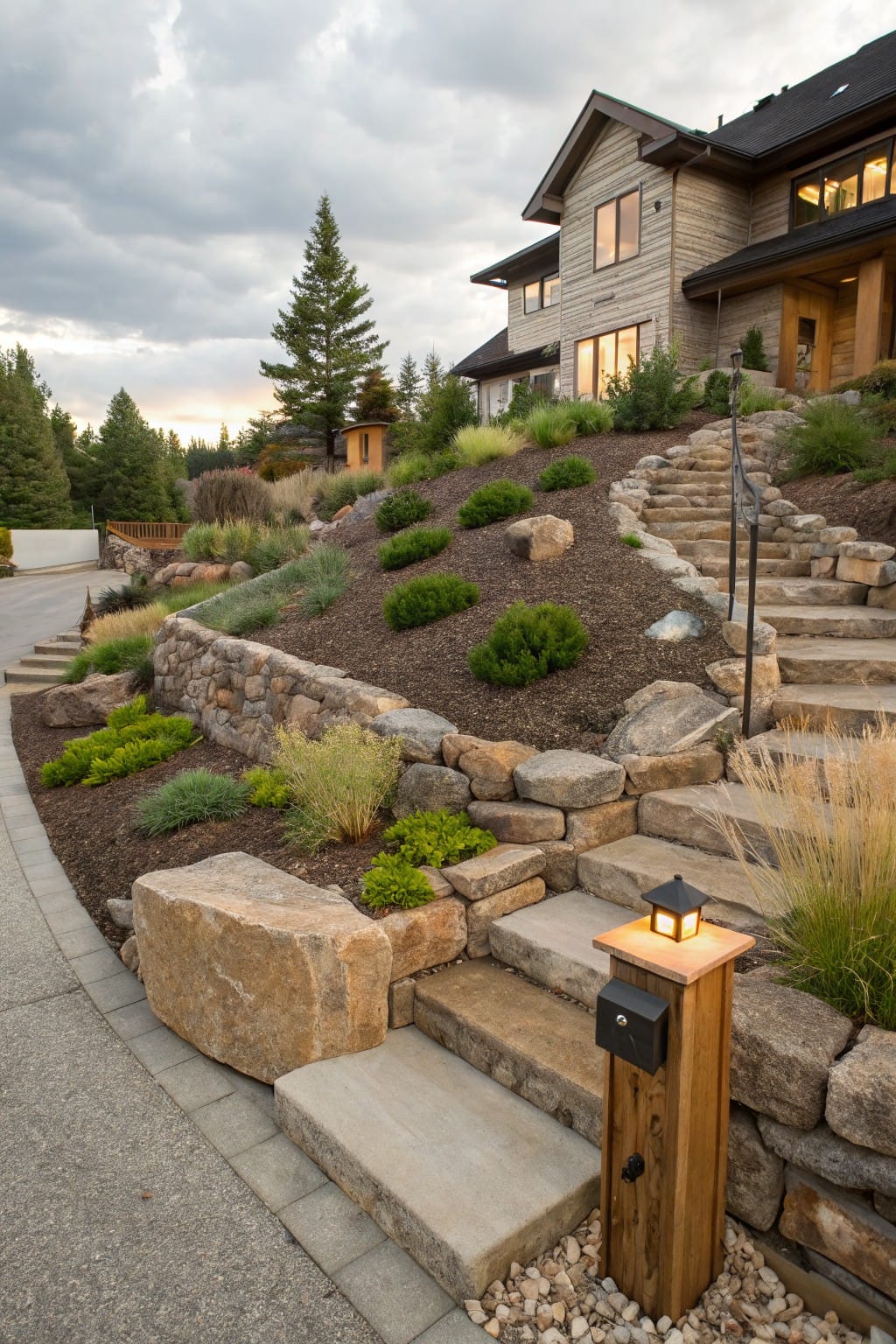
One smart way to handle a steep hillside is building terraces with large boulders and dry-stacked stone walls. This keeps erosion down and creates flat spots for plants without much upkeep. You see grasses and low shrubs tucked into the pockets, giving a rugged, natural feel that blends right into the landscape.
It works best on properties with a slope near the house entrance, like this one leading up to the front door. Pick stones from your area to save money and fit the surroundings. Go for tough plants that handle dry soil. Just make sure the walls are stable… a pro might help if the slope is really sharp.
Meandering Stone Path in a Rock Garden
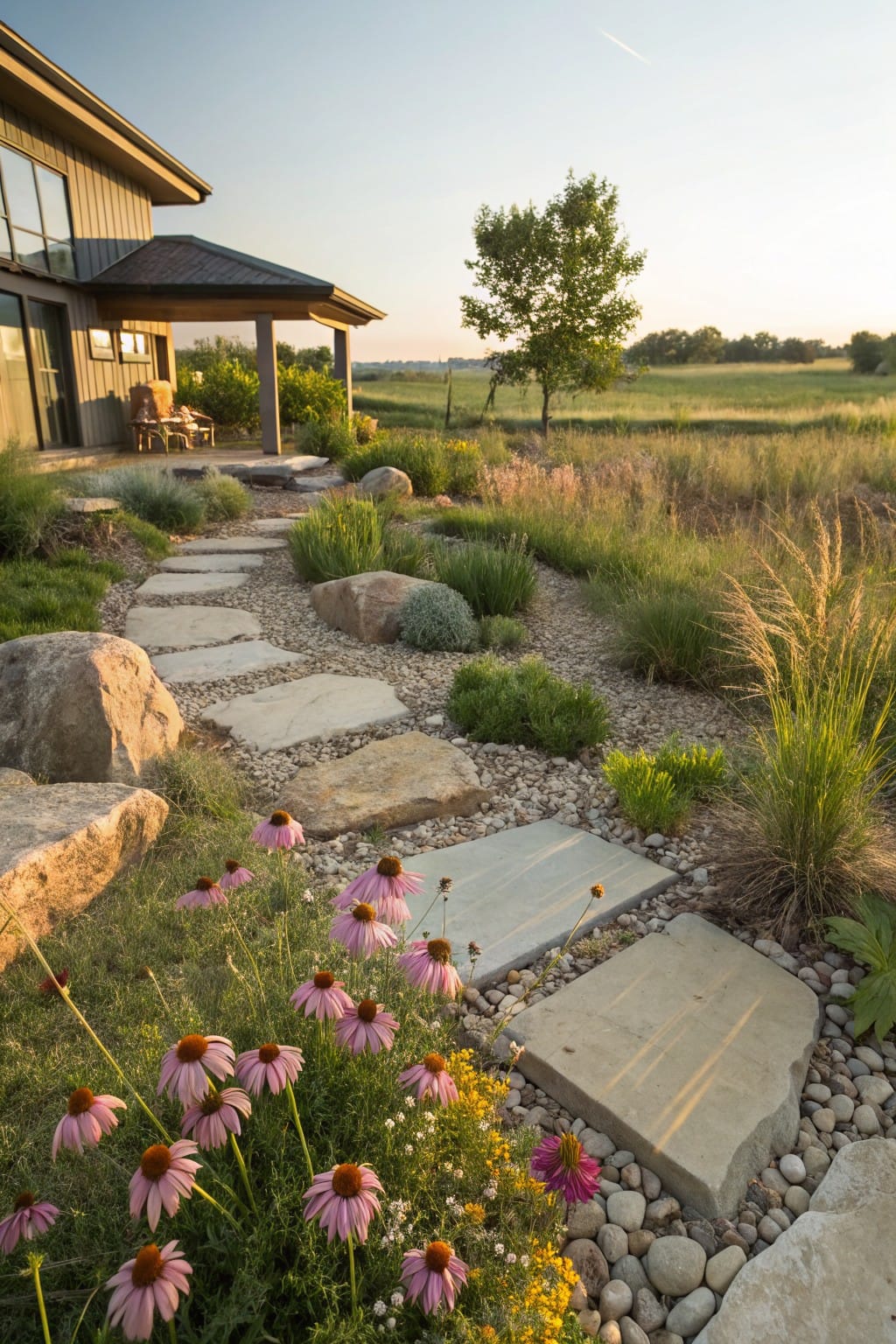
One straightforward way to handle a backyard or side yard is with a curving path made from large, irregular flat stones. These steppers wind through gravel mulch, big boulders, and low-water plants like coneflowers and tall grasses. It pulls your eye toward the house without feeling forced. Plus, there’s almost no mowing or weeding once it’s in.
Set the stones where they feel natural, maybe six to ten feet apart for a relaxed pace. This works best in sunny, dry spots near a patio or entry. Skip fussy edging. Local stone keeps it cheap and ties into the landscape… just watch for tripping spots on uneven ground.
Winding Stone Path in a Rock Garden
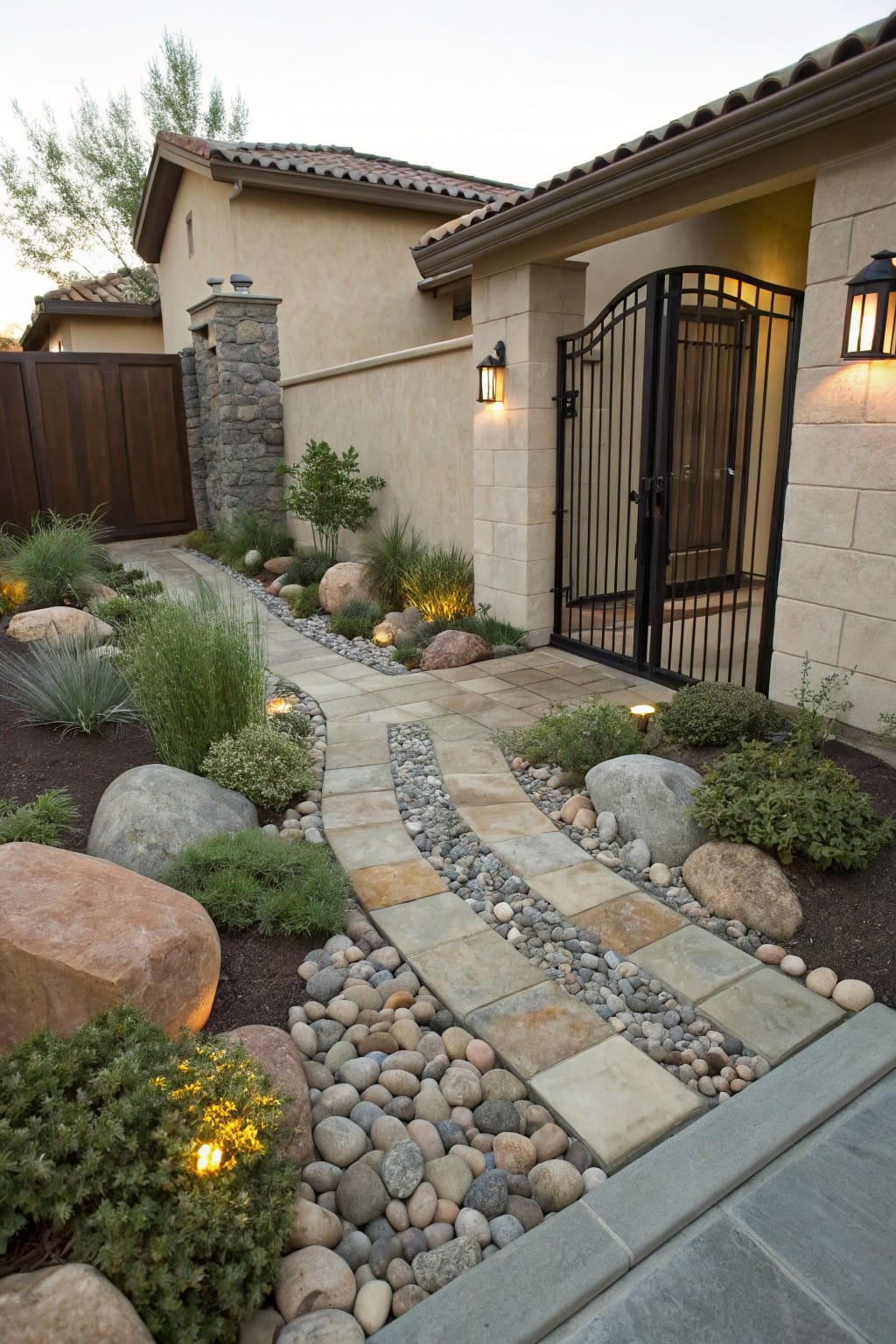
A simple winding path like this uses cut stone pavers set into gravel and edged with pebbles. It runs between large boulders and low plants, guiding you straight to the entry without much upkeep. The look stays neat year-round since it skips thirsty grass or fussy borders.
This setup fits front approaches or side yards in drier spots. Lay it where foot traffic is light, and pick rounded river rocks for the edges to avoid sharp bits. The path width here around three feet feels right for most homes.
Natural Stepping Stone Path in Rock Gardens
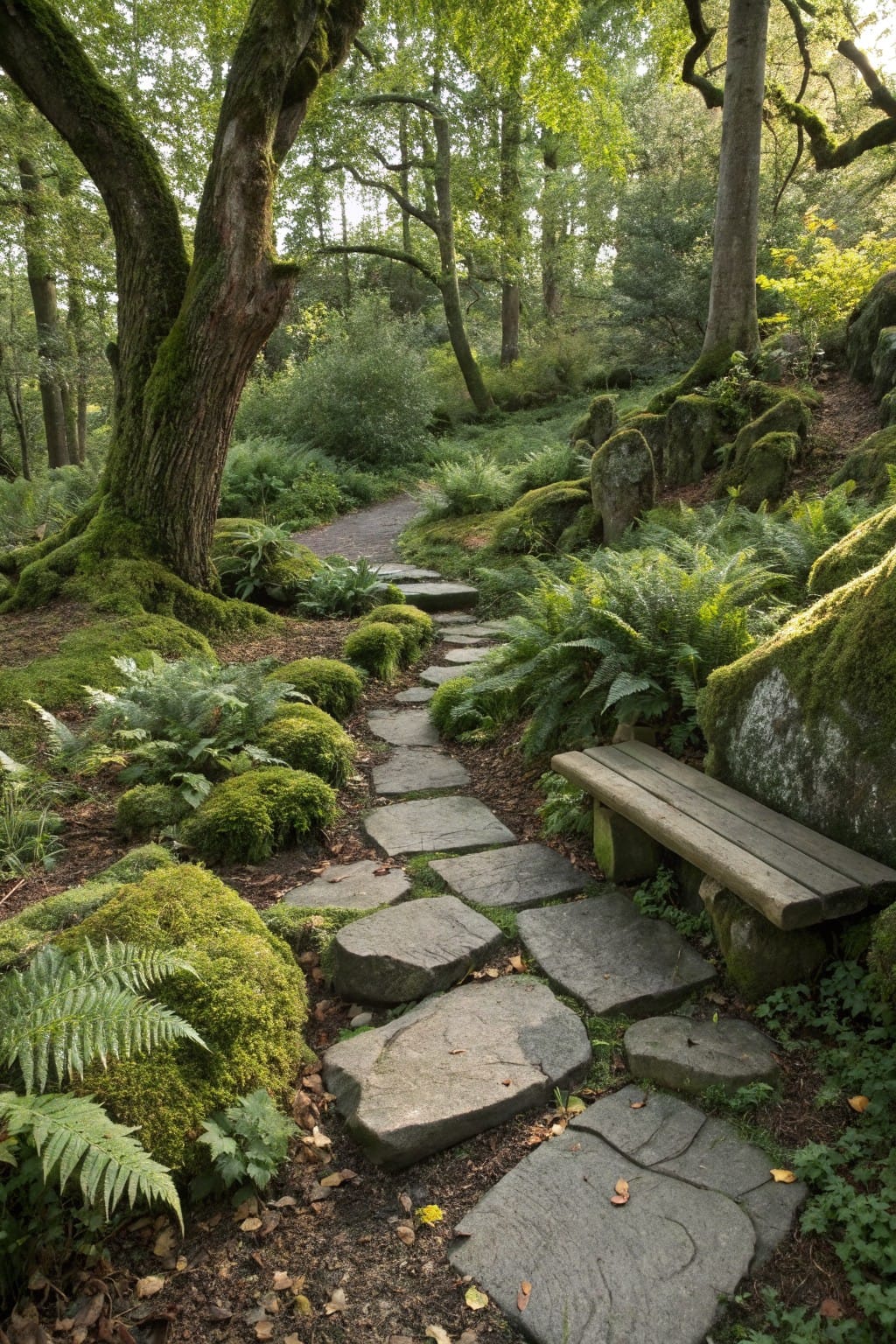
One simple way to add paths through a rock garden is with irregular flat stones set into the ground. They lead the eye along without straight lines, and moss grows right up around them for that lived-in feel. Ferns tuck in beside the stones, keeping things green year-round with almost no work. It’s low fuss because you skip gravel or mulch that needs refreshing.
These paths suit shady yards where lawn won’t grow. Space the stones a boot-length apart so feet find them easy. Plant tough natives like ferns or moss nearby to fill gaps. A plain wood bench nearby makes a good pause spot. Keep it to smaller areas at first, so it doesn’t overwhelm a tidy yard.
Balcony Rock Garden Border
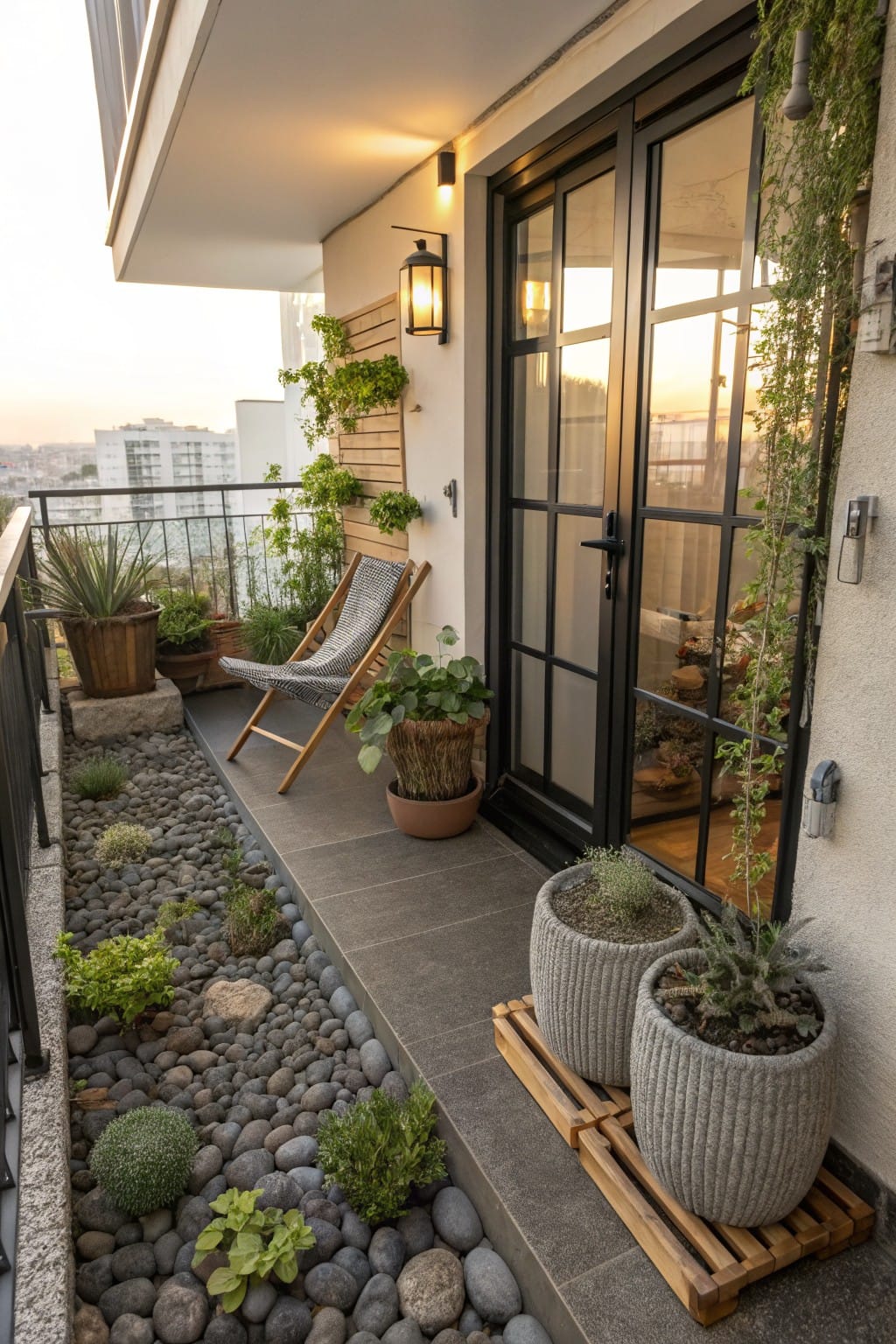
A narrow strip of smooth pebbles mixed with low succulents and grasses makes a perfect low-maintenance garden along a balcony’s edge. It fills the space without crowding the walking area, and the rocks help keep weeds down while letting water drain right through. Add a simple chair nearby, and you have a spot to sit and enjoy the view.
This setup works great on urban balconies or any tight outdoor spot where you want green but not the work. Pick drought-tolerant plants like those spiky agaves or fuzzy balls, layer in different pebble sizes for interest, and keep pots to a minimum. Just make sure the base slopes a bit for drainage, or you’ll end up with soggy spots after rain.
Rock Garden Pathway Up a Slope
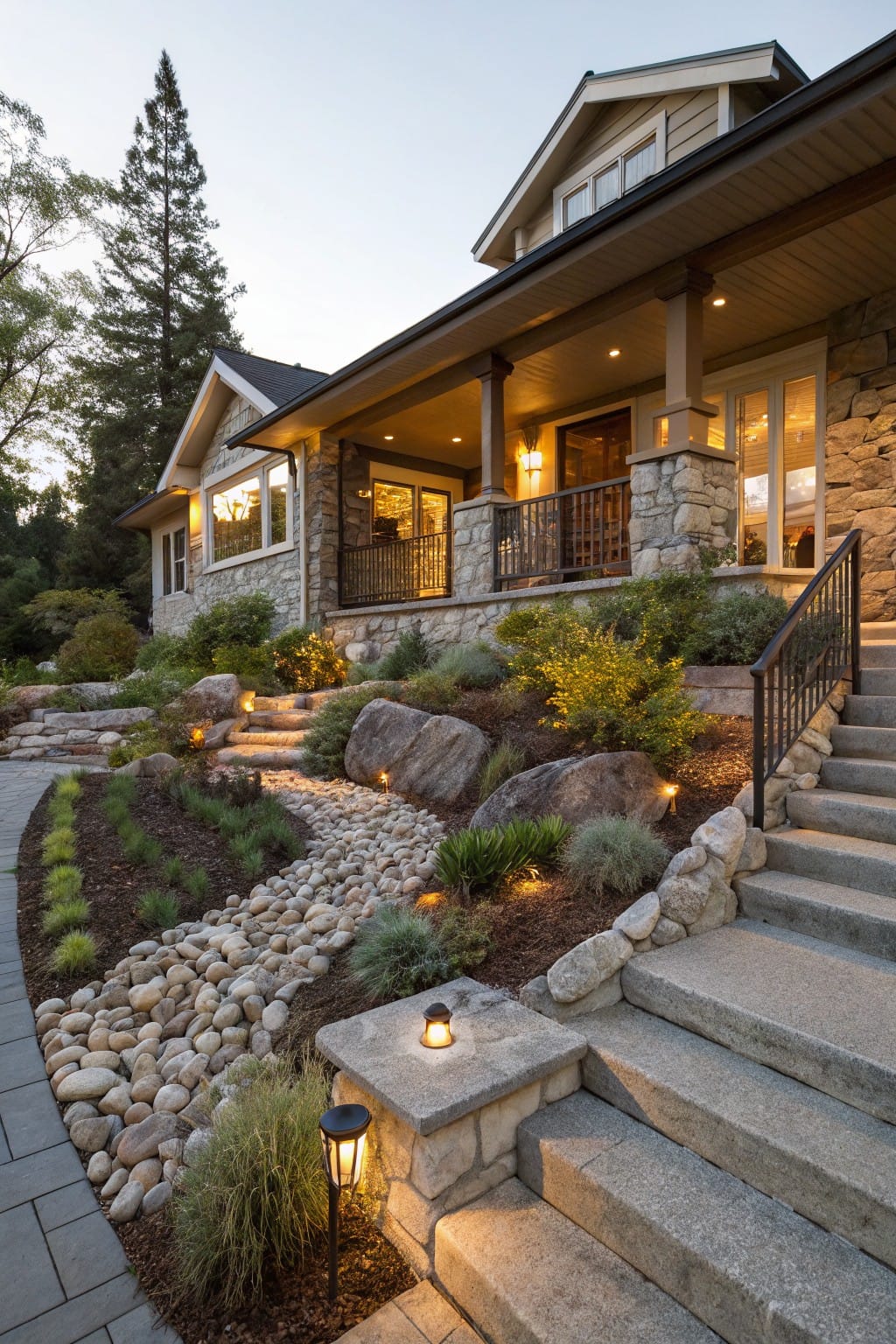
A simple gravel path winding through big boulders makes a natural way to reach the front door on sloped ground. It keeps things low-maintenance since there’s no grass to mow, just tough plants like grasses and shrubs that handle dry spells fine. The rocks and path lights guide you up without feeling steep.
This works best on hillsides where flat lawns are tough to manage. Start with larger stones for structure, fill the path with smooth pebbles, and tuck in a few perennials for color. Pairs well with stone houses or cabins…just scale the boulders to your yard size.
Terraced Rock Steps for Sloped Yards
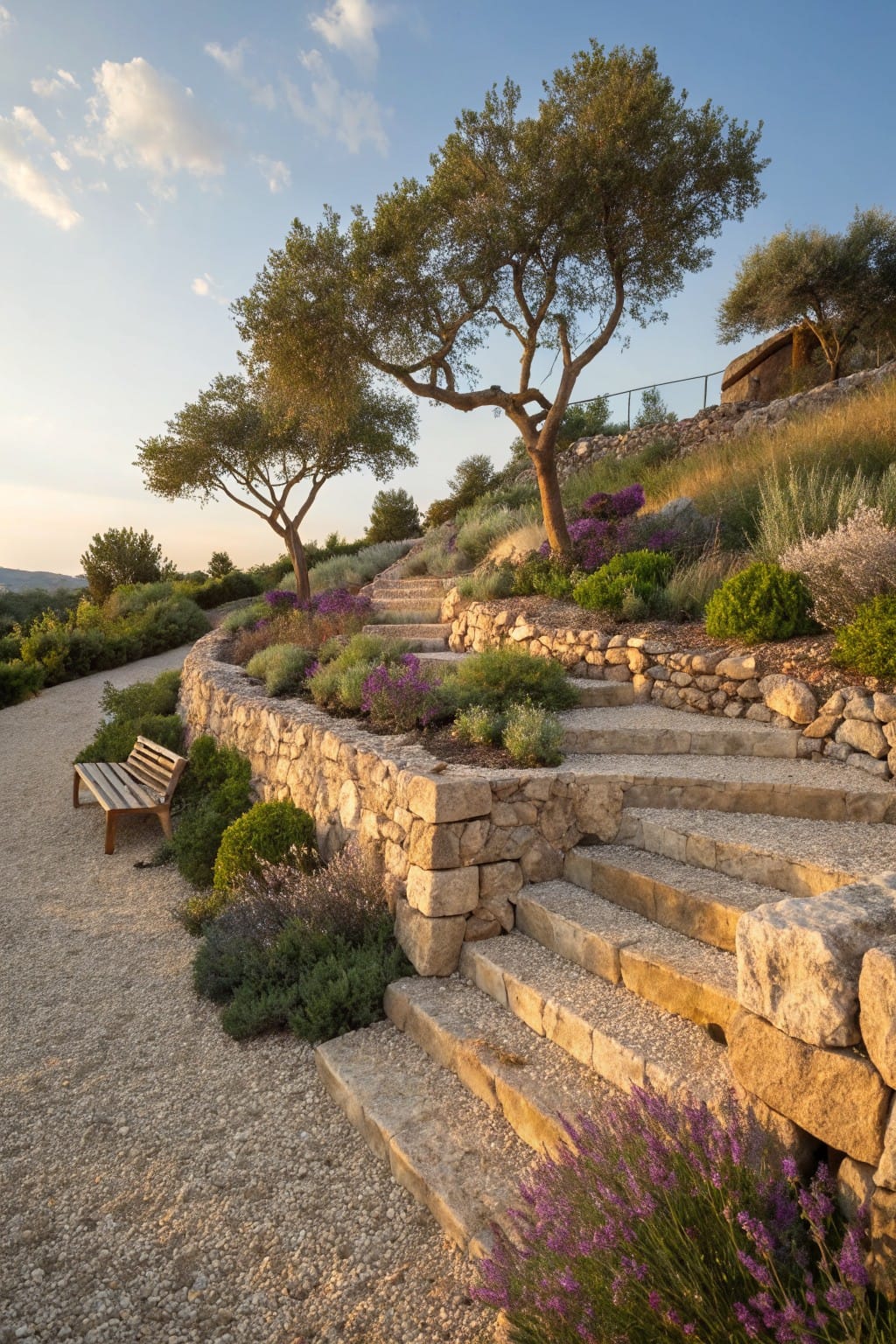
Slopes can be tricky in a yard. They erode or just sit unused. But broad stone steps like these turn the hill into something you actually walk on. Dry stone walls hold back the soil and create flat spots for plants. Lavender and olive trees fill in without much water or fuss. It’s a solid low-maintenance way to make a rocky spot useful.
These work best on hillsides with poor soil or dry spells. Pick stones from nearby if you can. It keeps costs down and looks natural. Layer in gravel paths beside the steps for easy walking. Just make sure water drains off well… or you’ll have slips after rain. Suits Mediterranean-style homes or any place with a drop in the terrain.
Rock Garden Path with Boulder Water Rill
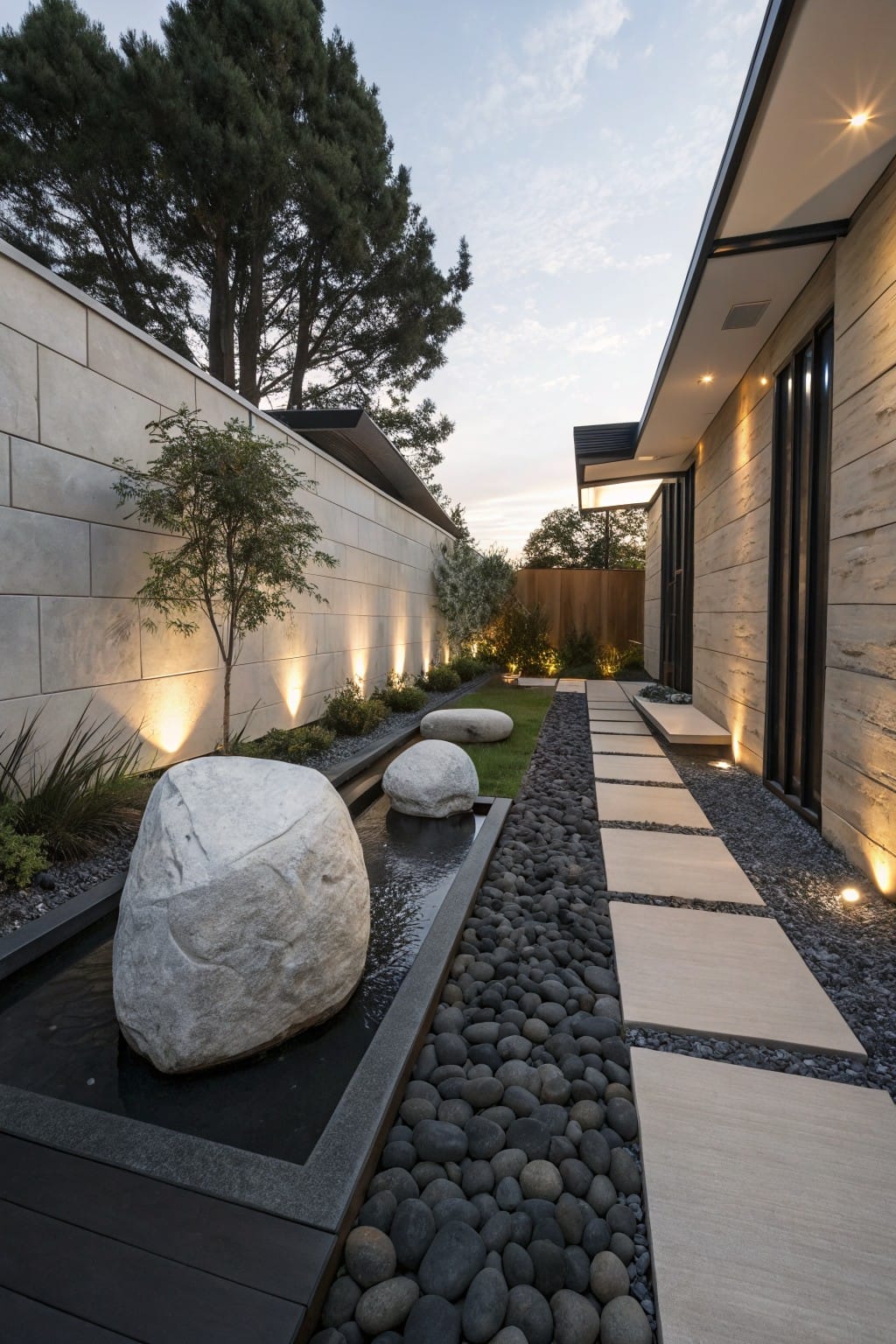
A narrow water channel runs right down the middle of this rock garden path. Big white boulders sit half in the water, with black pebbles filling the edges. It pulls the eye along without much planting to fuss over. Low upkeep like this fits busy yards.
Put one like it in a side walkway or entry approach. Dark pebbles set off light rocks nicely against plain walls. Works best where you want calm flow, not big color. Keep the water moving slow to avoid mess.
Winding Boardwalks in Rock Gardens
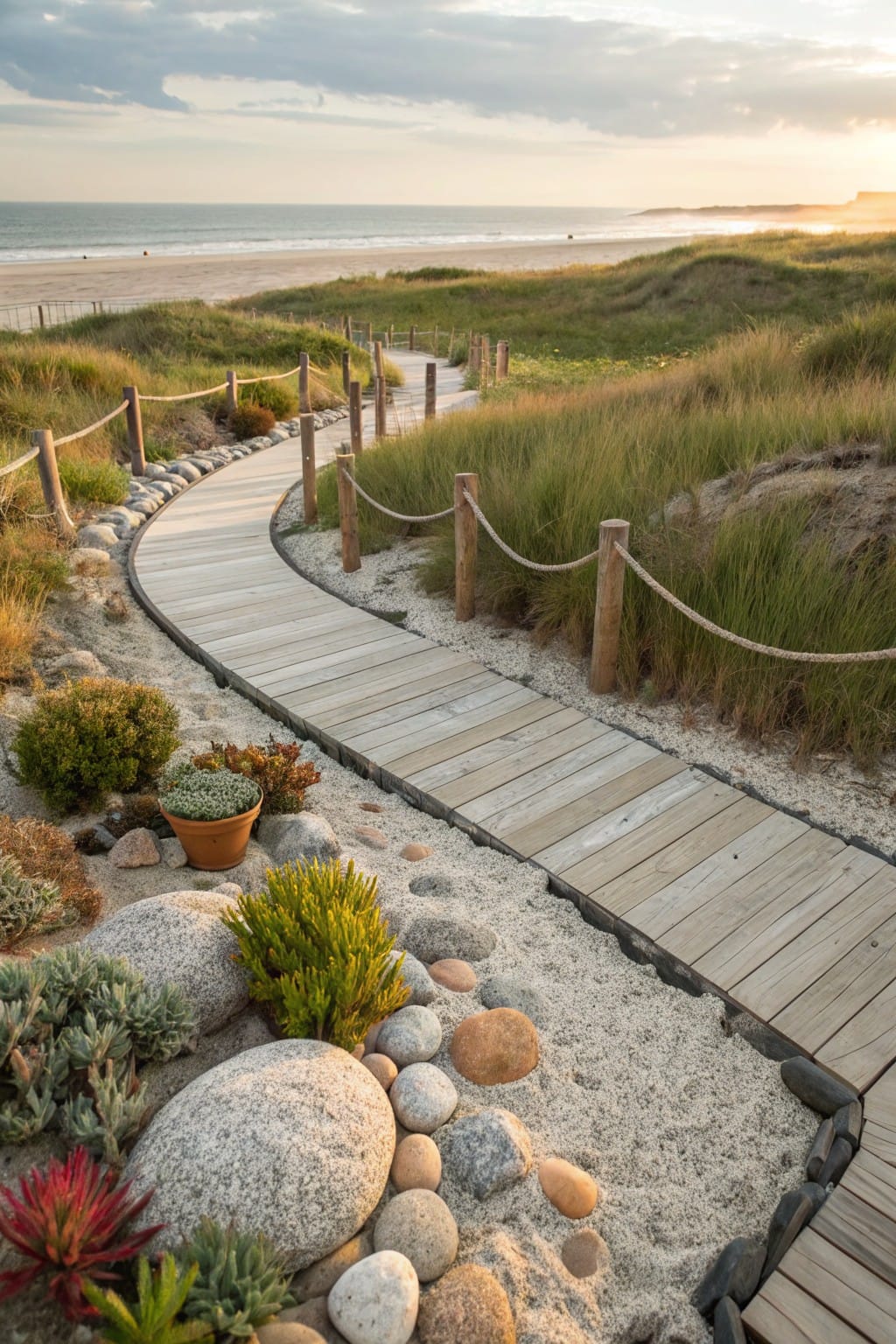
A simple wooden boardwalk curving through rocks and tough plants like succulents makes for easy walking in sandy spots. It keeps feet off the ground and lets the low-maintenance rocks and grasses do their thing without much upkeep. The path pulls your eye right along, tying the whole area together without looking forced.
Put this in coastal yards or anywhere with loose soil. Use pressure-treated wood for the planks and rope railings if you want a beach feel. Stick to drought-proof plants around the edges so you aren’t watering all the time. Watch the curves though. They work best where you have room to wander.
Winding Stone Path in a Gravel Garden
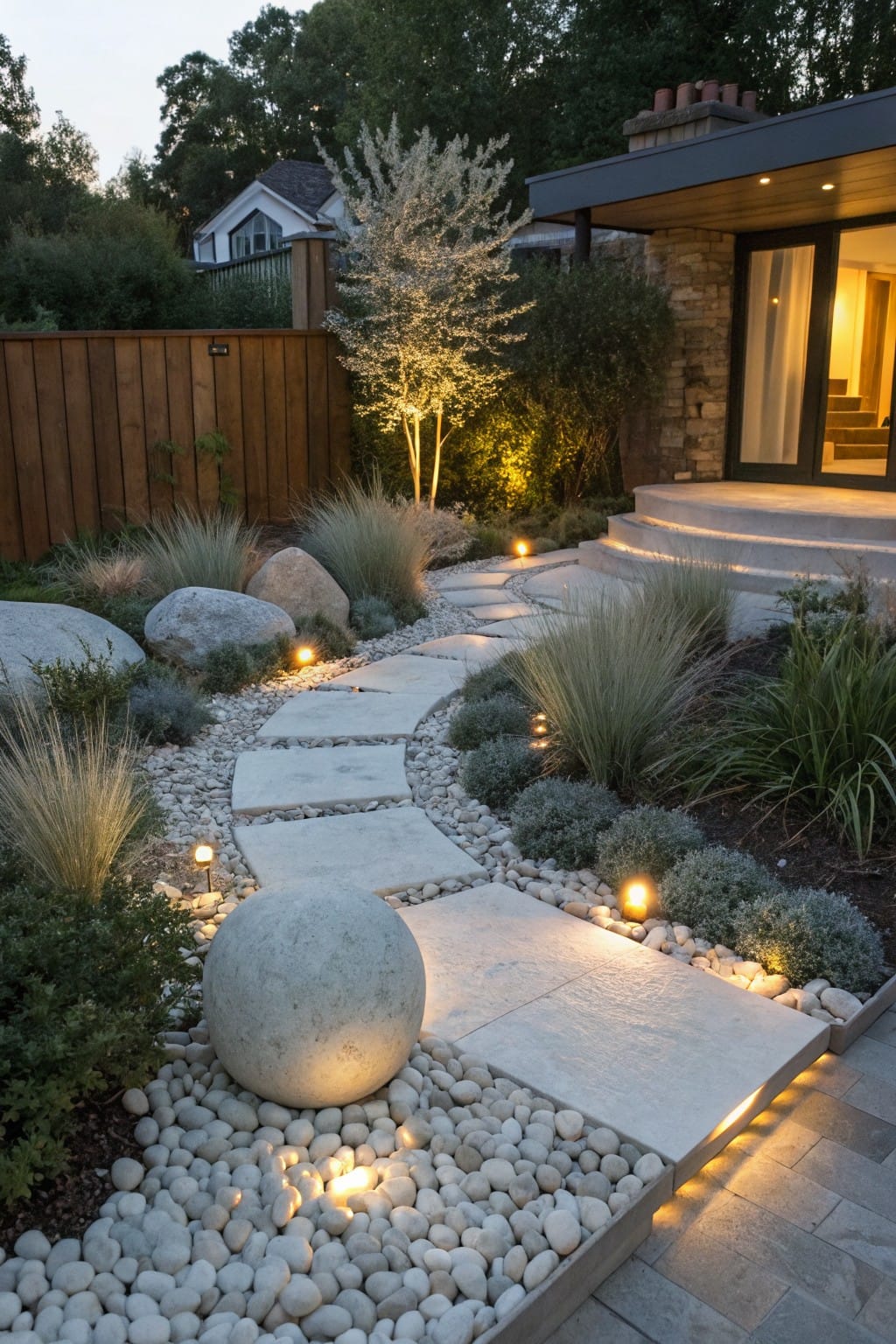
A simple winding path made from irregular stone slabs set into white gravel creates a natural walkway through this rock garden. Tall grasses and a few big boulders line the edges, keeping things low fuss while guiding you right to the house door. The path lights tucked along the way add a soft glow at night without much wiring hassle.
This kind of path works best in smaller side yards or back entries where you want easy access but not a full lawn to mow. Pick drought tough grasses like fescue or sedge that won’t need constant water. Just rake the gravel now and then… suits modern homes or any spot with a clean modern edge.
Frequently Asked Questions
Q: How do I keep weeds out without chemicals?
A:
Grab landscape fabric and spread it over cleared soil before dumping rocks on top. Punch holes only where you add plants. Weeds starve without sunlight.
Q: Do rocks heat up too much in summer?
A: Light-colored stones bounce back the sun’s rays. Plant drought-tough grasses between them for shade. Your feet stay comfy.
Q: What’s the quickest way to build one on a slope?
A: Dig shallow trenches to hold rocks in place. Stack larger ones at the base and let gravel fill gaps. Water settles naturally downhill.
Q: Can I mix in colorful gravel affordably?
A: Hunt free or cheap gravel from local quarries or riverbeds. Rinse it well and layer thin for pops of color. It drains fast and looks sharp.
