


I’ve tinkered with rock arrangements around my own house foundation over the years. They create solid edges for pathways and planting beds that hold their shape through seasons of rain and freeze. People notice those clean lines first when they approach the front door. In one setup I tried, larger boulders at the corners grounded the whole layout without needing constant upkeep. A few ideas like that are easy to scale for your yard and worth sketching out before you start.
Winding Flagstone Path to the Entry

A simple winding path made from irregular flagstone slabs leads right up to the front door. It curves gently through the lawn, edged with low plants and gravel mulch. This setup feels natural and pulls your eye toward the house without being too fussy. The stones in different sizes and shades of gray and tan give it a handmade look that fits right into a wooded lot.
You can do this in front yards with some slope or open grass. Lay the stones on a sand base for good drainage, then fill gaps with gravel or moss. It works best on homes with stone or wood details, like this one with its rock foundation. Keep plants tough and low-growing so the path stays clear. Just watch the edges don’t creep into walk space over time.
Meandering Stepping Stone Path
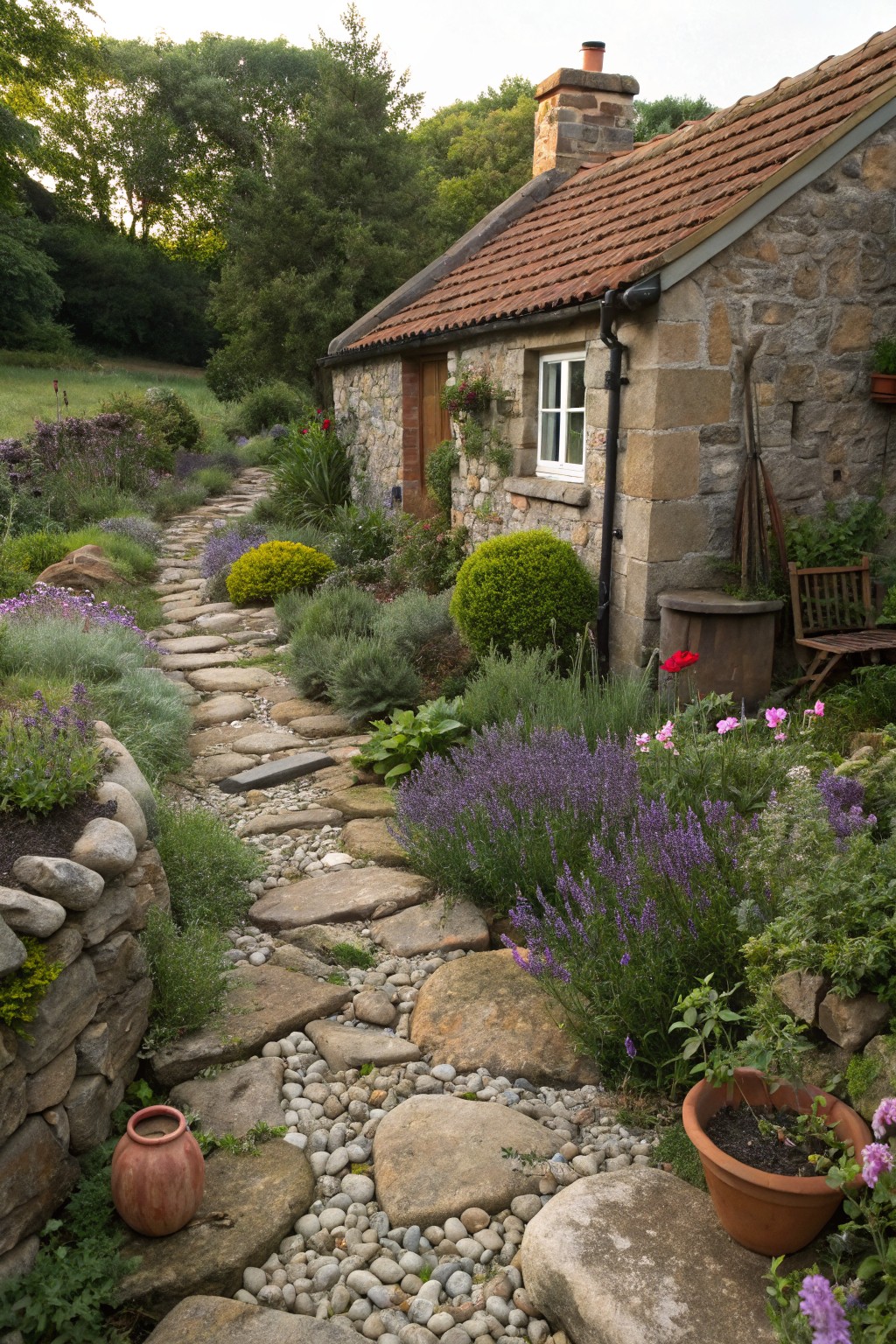
One simple way to guide visitors right to your front door is a path like this, built from big flat stones laid into gravel. It winds gently through low plants and herbs, making the walk feel easy and natural. The stones keep it sturdy underfoot, while the gravel fills in the gaps for good drainage. Around here, lavender and boxwood line the edges, tying into the stone cottage without overpowering it.
This setup works best on a side yard or entry approach where you want some curve instead of a straight shot. Use it near older homes or ones with stone details, since the rocks blend right in. Pick stones in similar sizes and colors to your house rocks, and keep plantings low so the path stays the focus. Watch the gravel depth, though. Too shallow and weeds pop up fast.
Gravel Entry Path with Stepping Stones
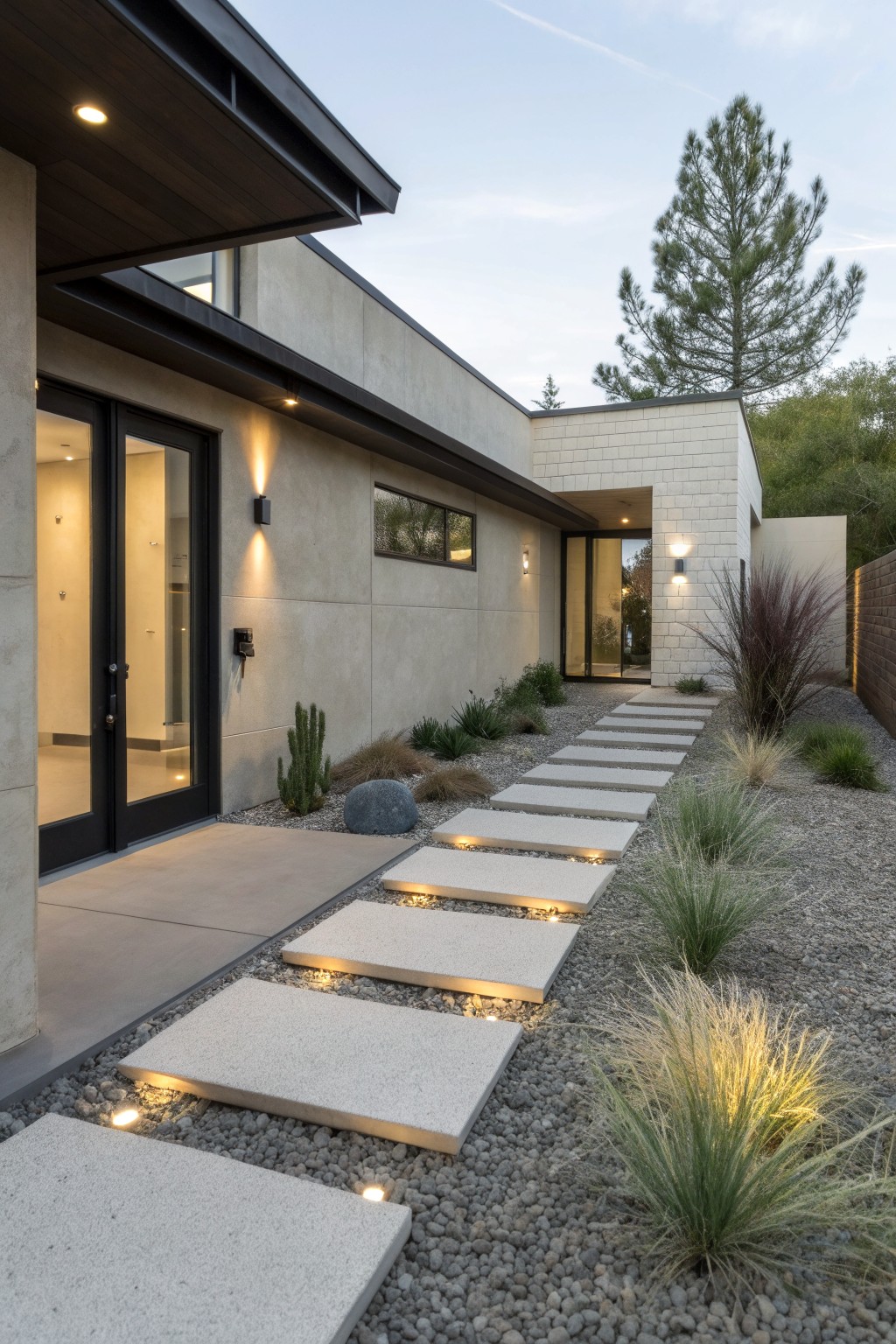
One easy way to boost curb appeal is a gravel path like this one leading right to the front door. It uses a bed of small rocks with big concrete pavers spaced out just right for stepping. Drought-tolerant grasses poke up around the edges, and low lights under the stones make it glow at dusk. This setup keeps things simple and modern without much upkeep.
You can pull this off in front of most homes, especially if you like a clean desert vibe or want low-water landscaping. Lay gravel a few inches deep over landscape fabric for drainage, set the pavers level, and add grasses that match your zone. Just make sure the path stays wide enough for two people… and check local rules on lighting if it’s near the street.
Terraced Rock Walls for Sloped Entries

One smart way to handle a slope next to your house is terraced rock retaining walls. They turn an awkward drop-off into neat planting levels that lead right up to the door. Here, dry-stacked stone holds back soil while lavender bushes and other low plants fill the beds, with big terracotta pots adding height and color. It keeps everything stable and makes the walk to the entry feel natural.
This works best on hillsides where you want curb appeal without big earth-moving costs. Pick stones that match your region’s look, like these rough beige ones, and stick to tough plants that don’t need much water. Just make sure the walls drain well to protect the house foundation. It’s low-fuss once set up.
Rock Mulch Along a Coastal Path

One easy way to make your yard feel tied to the beach is with river rocks and pebbles as mulch around a simple walkway. Here, small gray pebbles fill the beds right up to the house and path, mixed with taller grasses and a few big boulders. It cuts down on mowing and watering, and gives that natural, windswept look without trying too hard.
This works best on sloped or sandy lots near water, where regular grass struggles. Lay down landscape fabric first, then add two inches of pebbles over soil. Plant drought-tough grasses like deer grass for texture, and drop in rocks or a driftwood piece for scale. Skip it on flat, shady spots, though. It needs sun to stay tidy.
Winding Flagstone Path with Stone Walls
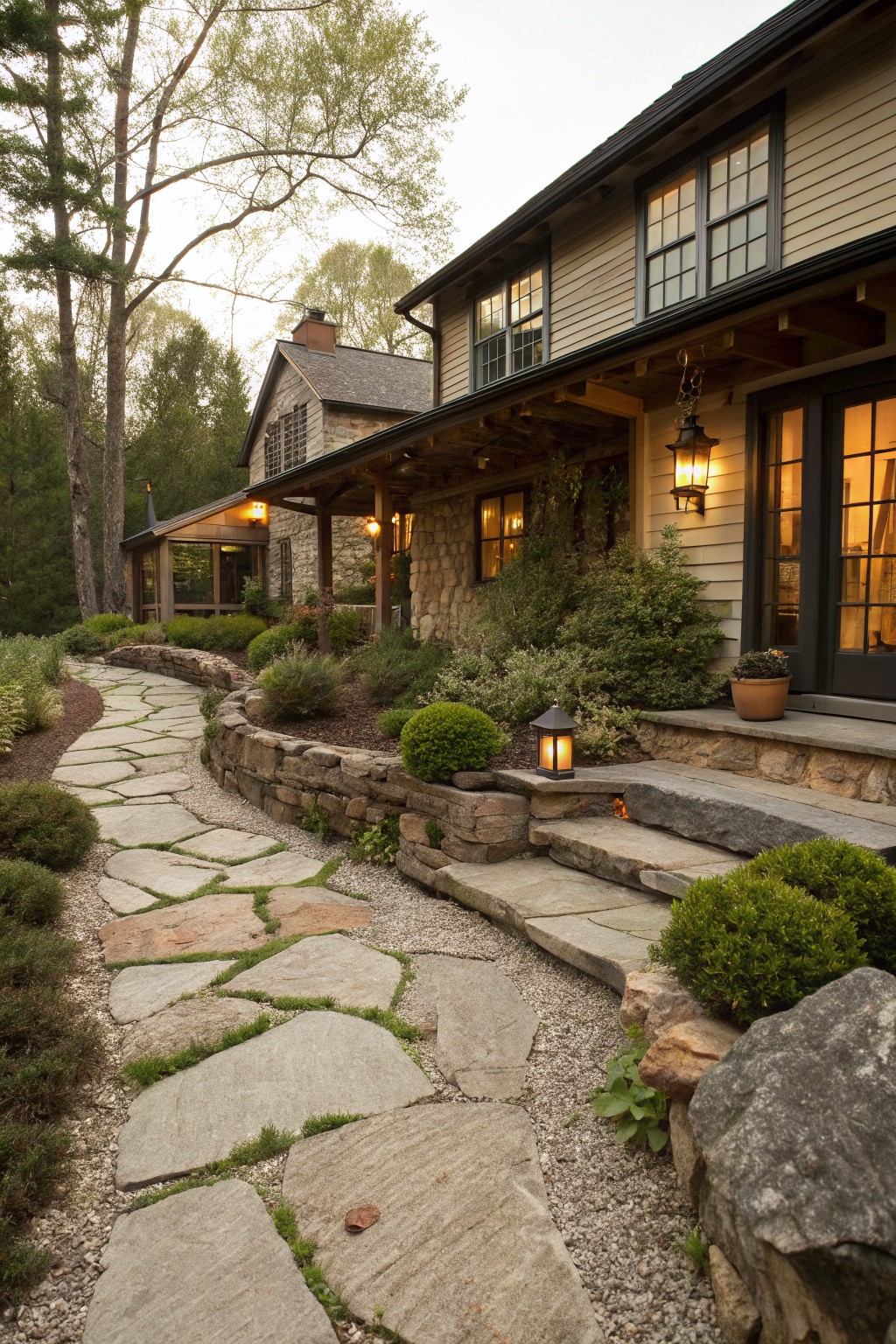
A winding path like this one uses big irregular flagstone slabs laid right into gravel beds. It hugs a low dry-stacked stone retaining wall packed with low shrubs and perennials. What stands out is how it pulls your eye straight to the house entry without feeling too formal. The rocks and path blend with the natural stone steps up to the door. Simple lanterns along the way add a soft glow at dusk.
This works best around homes with some slope or wooded edges, where you want to guide foot traffic without a straight shot. Pick slabs in similar tones to your house stone for that tied-together feel. Keep plantings clipped low so they frame the path, not crowd it. Watch the gravel fill, though. It needs occasional weeding to stay neat.
Boulders Framing a Gravel Walkway

One simple way to make your front yard look put-together without much upkeep is to place big boulders along a gravel walkway. In this setup, the large rocks sit right in the gravel bed, with a few tough plants like agave tucked nearby. It keeps things natural and low-water, while the path pulls your eye straight to the door.
This works great for dry climates or sunny spots where grass won’t grow well. Start by laying down gravel over landscape fabric, add your boulders where they feel stable, then set in stepping stones for the path. Skip too many plants to avoid work, and pick rounded rocks that match your house color. Just watch the scale, bigger rocks suit wider yards better.
Zen Rock Garden Paths
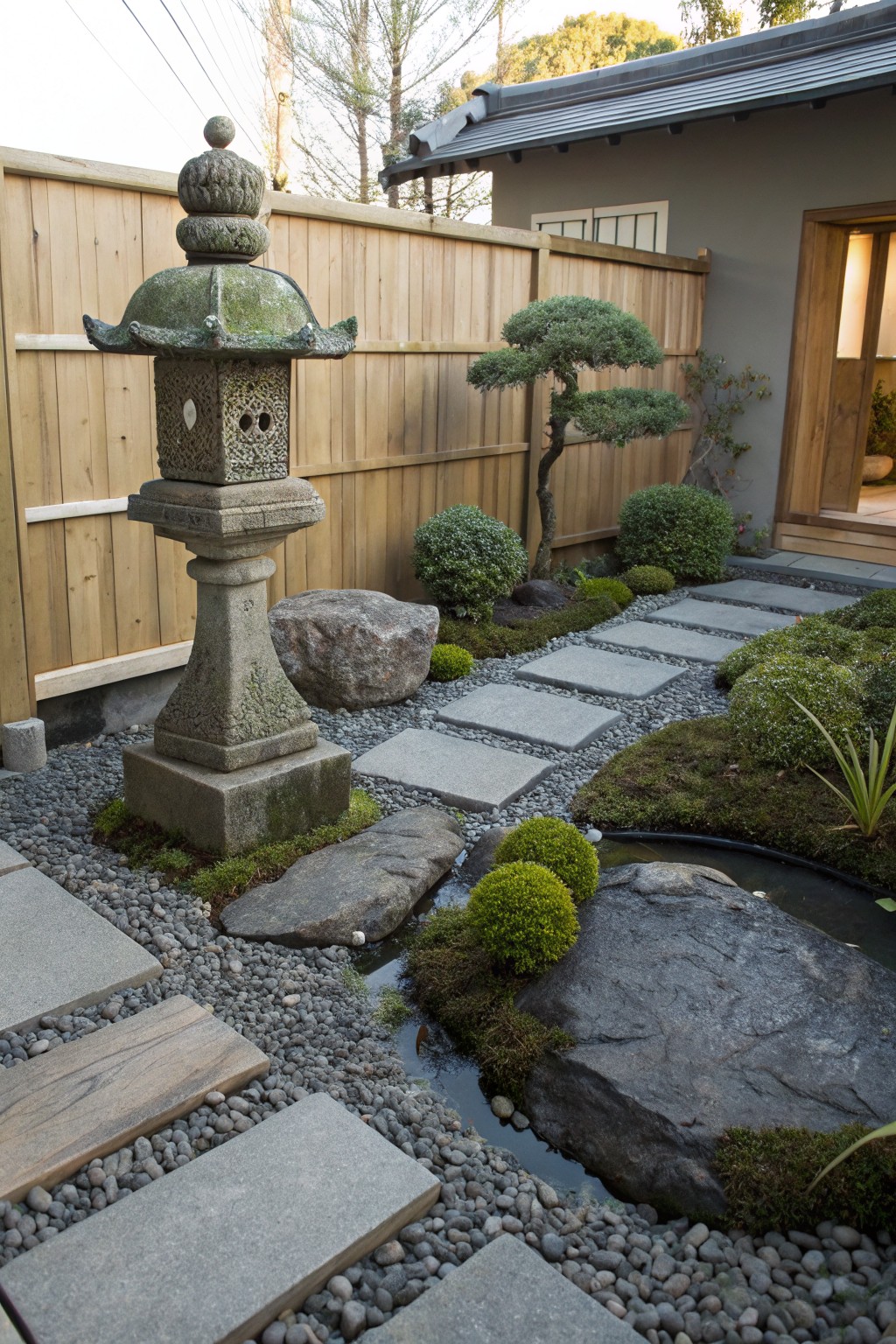
A simple way to use rocks in landscaping is to build winding paths like this one. Large boulders sit as anchors, with gravel filling the spaces and flat stepping stones guiding the way to the house door. That stone lantern up front gives it an authentic Japanese feel, and it all looks low-maintenance while hiding any yard clutter.
These paths work best around modern or traditional homes with a bit of Asian influence, or just for anyone wanting calm curb appeal. Start with bigger rocks near the house to frame the entry, then layer in smaller gravel and plants. Keep paths uneven for interest… but not too tricky to walk. Suits sloped yards too, tying the landscape right to your doorstep.
Curved Flagstone Path with Rock Retaining Walls

A simple curved path made from irregular flagstone slabs leads right up to the front steps here. Rock walls hold back the grade on one side, with low plants tucked into the edges. It feels natural, not forced, and pulls your eye smoothly from the driveway to the door. Folks like this because it slows you down a bit, makes the walk more pleasant.
You can do this on a sloped yard where you need to step up to the house. Use local stone for the walls and path to keep costs down and it blends better. Works great on craftsman or rustic homes. Just make sure the path is wide enough, at least four feet, so two people can walk side by side without bumping elbows.
Dry Creek Bed for Side Yard Drainage
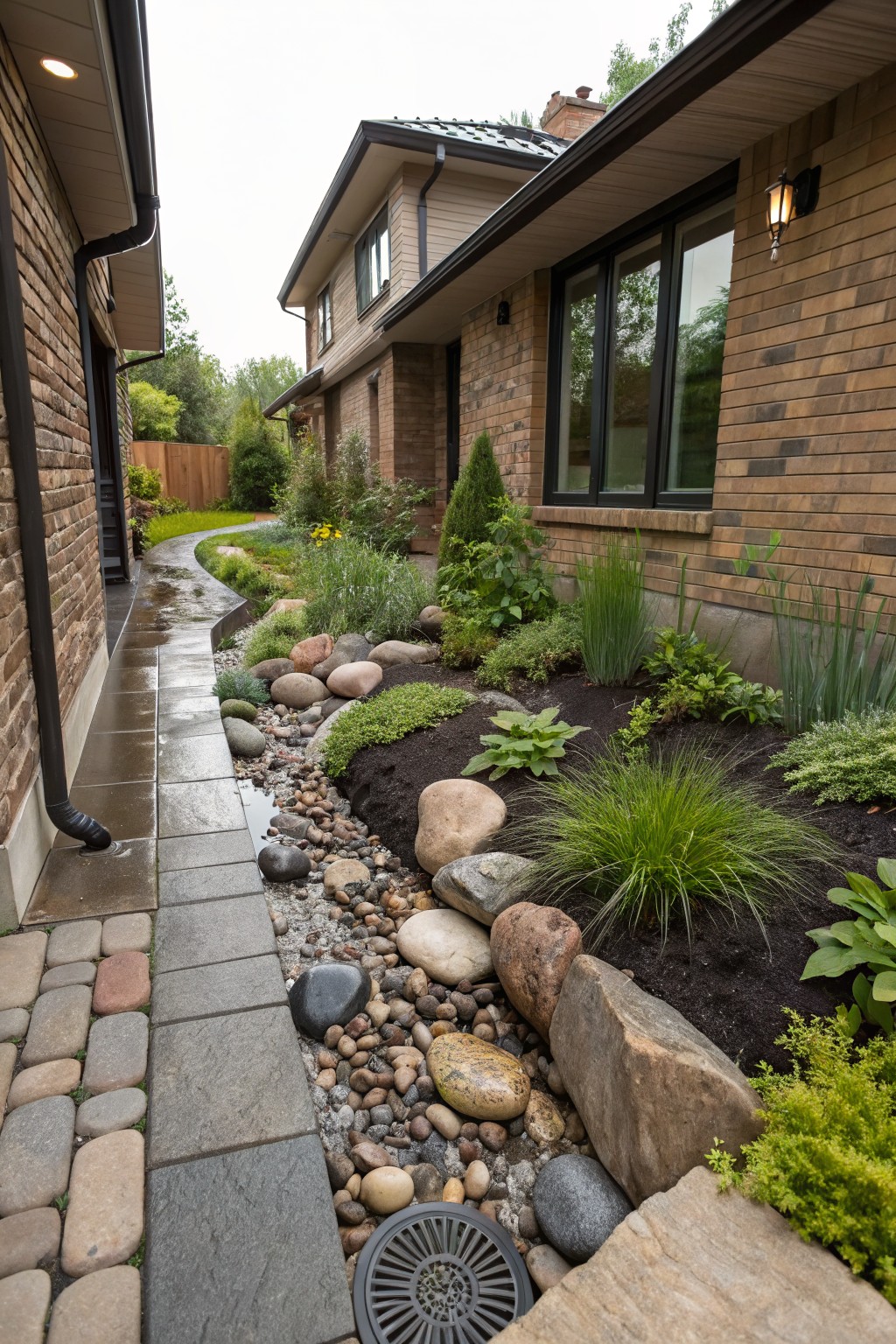
A dry creek bed like this runs water from the roof downspout right along the house without pooling or eroding soil. Filled with smooth pebbles, larger boulders, and edged neatly against a paver walkway, it looks natural and pulls the eye through the narrow space. The plants tucked in around the edges soften it up too.
Put one in on rainy side yards or between garages and fences. It works on any house style, from brick traditional to modern siding. Just make sure the rocks slope gently to a drain grate, and pick low-water grasses or hostas that fill in without fuss… keeps maintenance low year round.
Stone Retaining Walls for Sloped Yards

One smart way to handle a hillside is with these rough stone retaining walls. They hold the soil in place and carve out flat spots for plants and paths. Here, wide bluestone steps climb between the walls, with small lights tucked into each tread. It turns a tricky slope into something walkable and good-looking, especially come evening when the lights glow softly.
This works best behind a house where the ground falls away fast. Use local fieldstone for a natural fit, and plant tough stuff like lavender along the edges to soften things up. Watch the drainage so water doesn’t pool. It’s low fuss once set, and it pulls the house right into the yard.
Boulders and Gravel Beds Around the Foundation
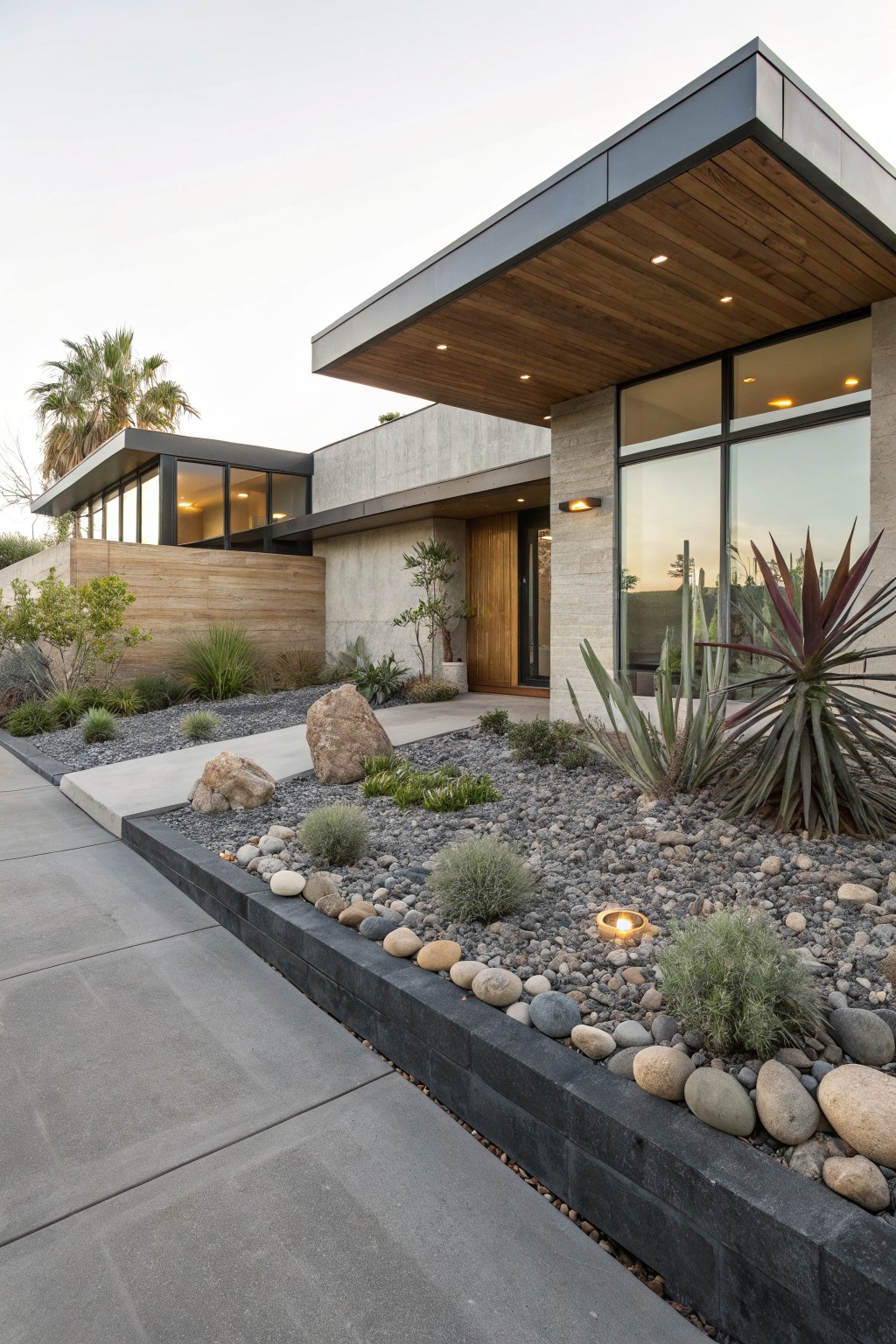
Big boulders mixed into gravel beds make a strong border that ties right into the house base. They add some weight and texture without needing constant watering or trimming. Paired with low plants like agaves, it keeps things simple and fits dry climates well.
Put these beds along driveways or walkways where you want definition. They’re good for modern homes or any spot with poor soil. Scale the boulders to your yard size, and use dark edging to hold it neat… weeds stay out easy.
Winding Stone Path with Gravel Edge

A simple stone path like this winds right up to the door, using rough-cut slabs set into gravel. The gravel strip on one side keeps things neat without much upkeep, and it lets plants spill over naturally. It pulls the eye along without overpowering the house, making the whole front yard feel put together.
This works great around older homes or cottages with stone details. Lay the slabs loose at first to get the curve right, then fill gaps with gravel for drainage. Skip straight lines. Add a few pots nearby, but don’t crowd it. Keeps mud off your shoes too.
Stone Fireplace Next to Outdoor Kitchen

A stone fireplace like this one makes evening hangouts in the backyard feel special right away. Tucked against the wall by the built-in grill, it throws off just enough light and warmth to keep things going after dark. The rough rock ties into the patio stones and plants without looking forced.
Put one in if you have a spot along a fence or wall near your grill setup. It suits homes with a bit of rustic style, especially where evenings cool off quick. Keep the surround simple with gravel or pavers so the stone does the main work. Just make sure it’s built solid for safety.
Flagstone Path with Boulder Edges
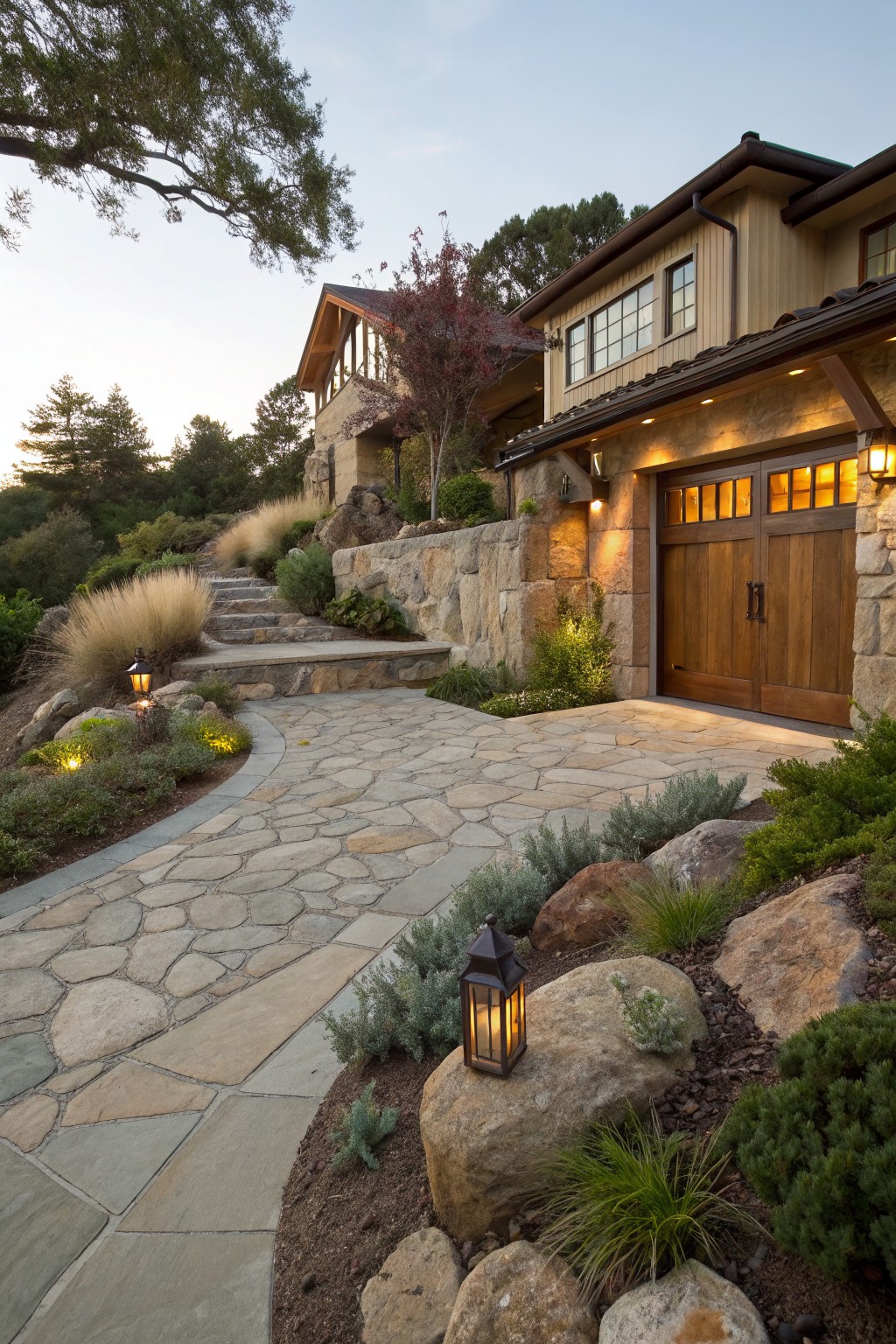
A simple flagstone path curves gently toward the garage, edged by large boulders and clumps of grass. Those rocks do a good job blending with the house’s stone walls and steps. It pulls the eye along without much fuss, and stays looking good year-round since rocks handle drought fine.
This works best on uneven ground around a driveway or entry, tying hardscape to the home base. Source local stones to match, space boulders irregularly for a natural look, keep plants tough and low. Skip it if your yard’s dead flat… might feel too busy.
Pebble Mulch Along Narrow Paths

One straightforward way to tidy up a side yard is to fill the beds with pebbles. You see it here along this slim walkway. The rounded stones in different sizes create a clean edge next to the turf path. They hold back the soil and plants without much upkeep. Grasses and low growers poke up through them for some green without the mowing hassle.
This works best in tight spots like between the house and a fence. Go for smooth river rocks in grays and whites to keep it neutral. Layer in a few tough plants like sedges or lomandra for texture. Skip anything that spreads too much. It makes getting to the backyard easier and looks put together year round.
Terraced Stone Walls on Slopes

Big rugged stones stacked into retaining walls make a steep slope feel stable and inviting. They create flat spots for plants and paths without looking forced. Here the walls hold back earth while grasses and flowers tuck right into the pockets, blending everything together nicely.
This works best around homes built into hillsides, where you need to control erosion and add curb appeal. Use local stone to keep costs down and match the site. Add simple steps between levels for access. Just make sure water drains away from the base to avoid shifts over time.
Circular Gravel Path for Front Entry
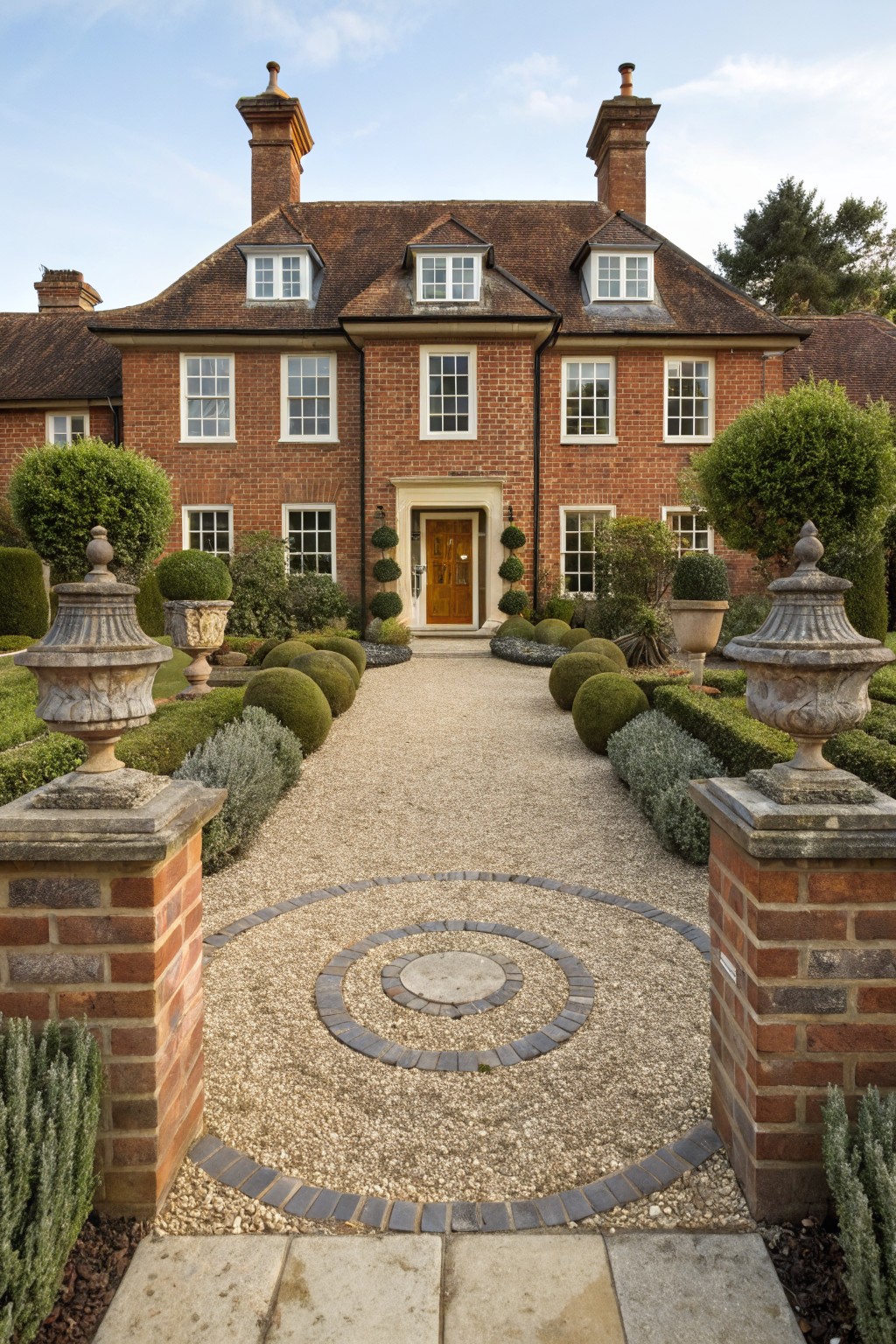
A simple gravel path like this one pulls everything together at the front door. It swirls into a neat circle right before the steps, edged with brick and lined by round boxwood hedges. That light gravel color picks up the stone details on the house without overwhelming the yard. Folks love how it feels formal yet easygoing, guiding guests in smoothly.
Try this on a classic brick or stone house with a flat entry area. Start with a weed barrier and compacted gravel base for stability, then add the circle using landscape edging. Pair it with clipped evergreens and a couple urns for height. It suits suburbs or country spots, stays low upkeep if you skip flowers, but watch for weeds in loose spots.
Rock Garden Path to the Entry
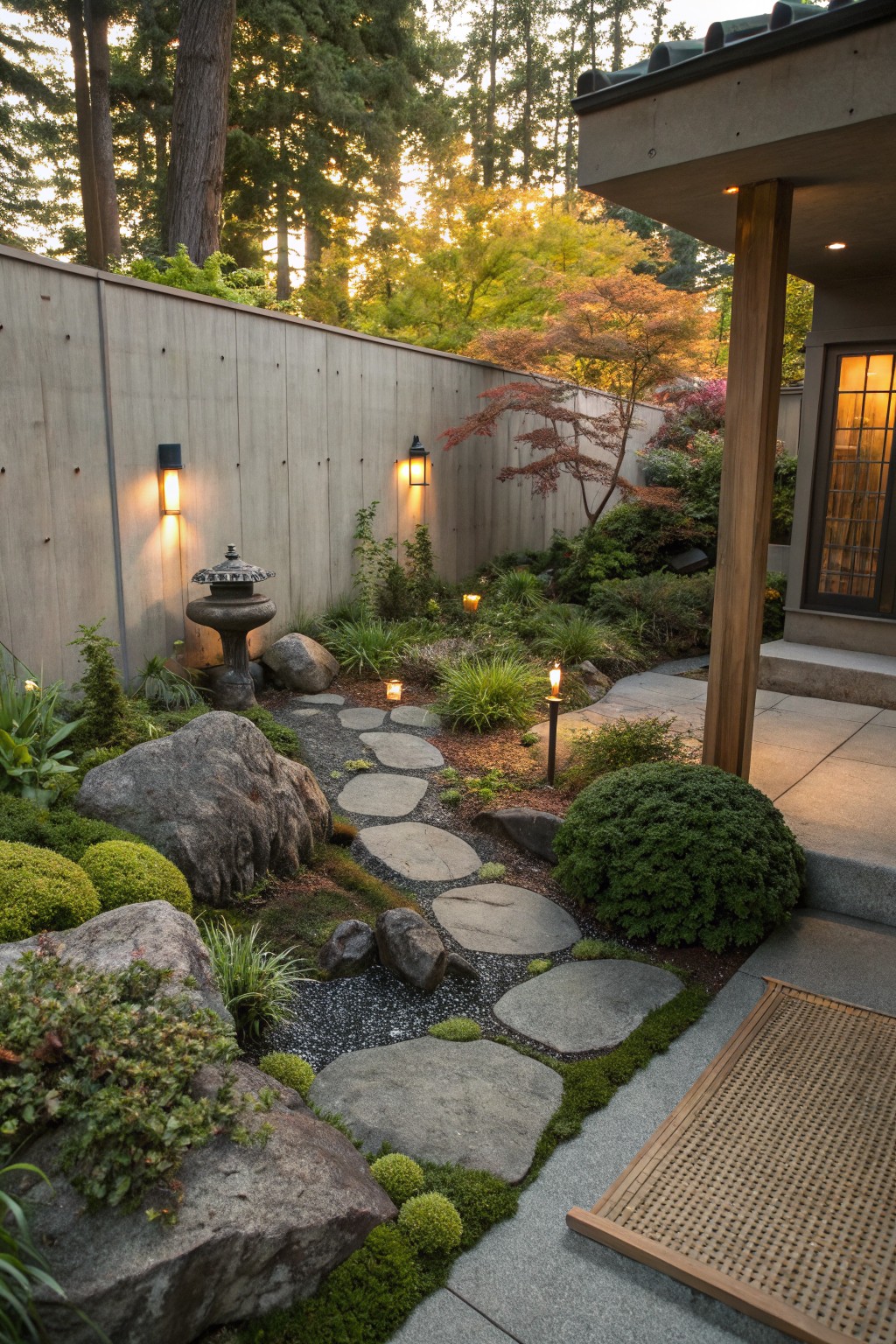
A simple stepping stone path winds through big rocks and gravel in this yard setup. The large boulders act like natural anchors, with moss and low plants filling in around them. It pulls the eye right to the house door without feeling too busy or formal. Folks like how it stays neat with little upkeep.
Try this in a narrow side area or backyard approach where you want subtle direction. Pick flat stones that match your local rock types, space them for comfortable steps, and add gravel between for drainage. It fits homes with clean lines, like midcentury styles. Just keep taller plants trimmed back so the path stays clear.
Frequently Asked Questions
Q: How do I keep weeds from taking over my rock beds?
A: Clear out grass and weeds first, then roll out landscape fabric over the soil. Dump rocks on top at least a couple inches deep. They block sunlight and make weeds give up fast.
Q: Can I handle rock landscaping myself?
A: Grab a shovel, wheelbarrow, and gloves, and tackle small areas over a weekend. Mark your layout with spray paint to visualize. Rent a tamper if your ground’s uneven.
Q: What if my yard gets lots of shade?
A: Rocks handle shade better than grass ever could…
Tuck in ferns or hostas for color pops. They fill gaps without much fuss.
Q: How do rocks hold up on a sloped yard?
A: Start rocks larger at the bottom to anchor everything. Bury edging strips uphill to contain them. Water settles stones in place over time.
