

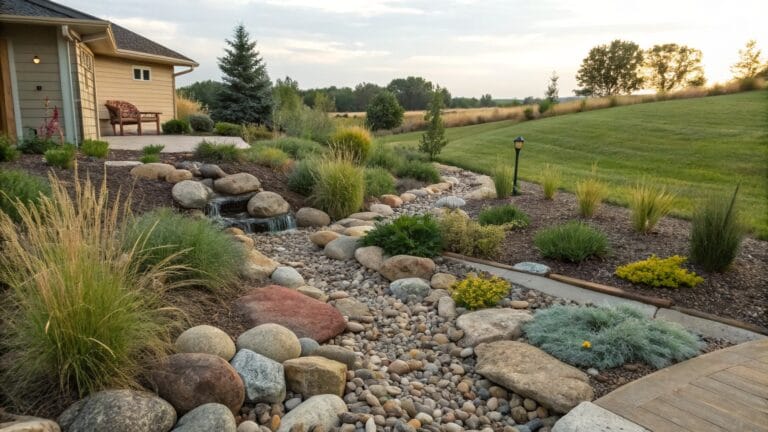
I’ve noticed over the years that rock landscaping works best when it respects the site’s natural slopes and contours instead of fighting them. In my own yard, I started with simple edging along pathways using local stones, and that choice made the whole layout feel steady and intentional right away. Folks usually spot those quiet rock groupings first, the ones that nestle into plantings and draw you deeper into the space without shouting for attention. What holds up over seasons is how moss and groundcovers gradually soften the edges, blending hard elements into the living landscape. Some of these setups are worth sketching for your next project.
Natural Rock Stream Beds in the Garden
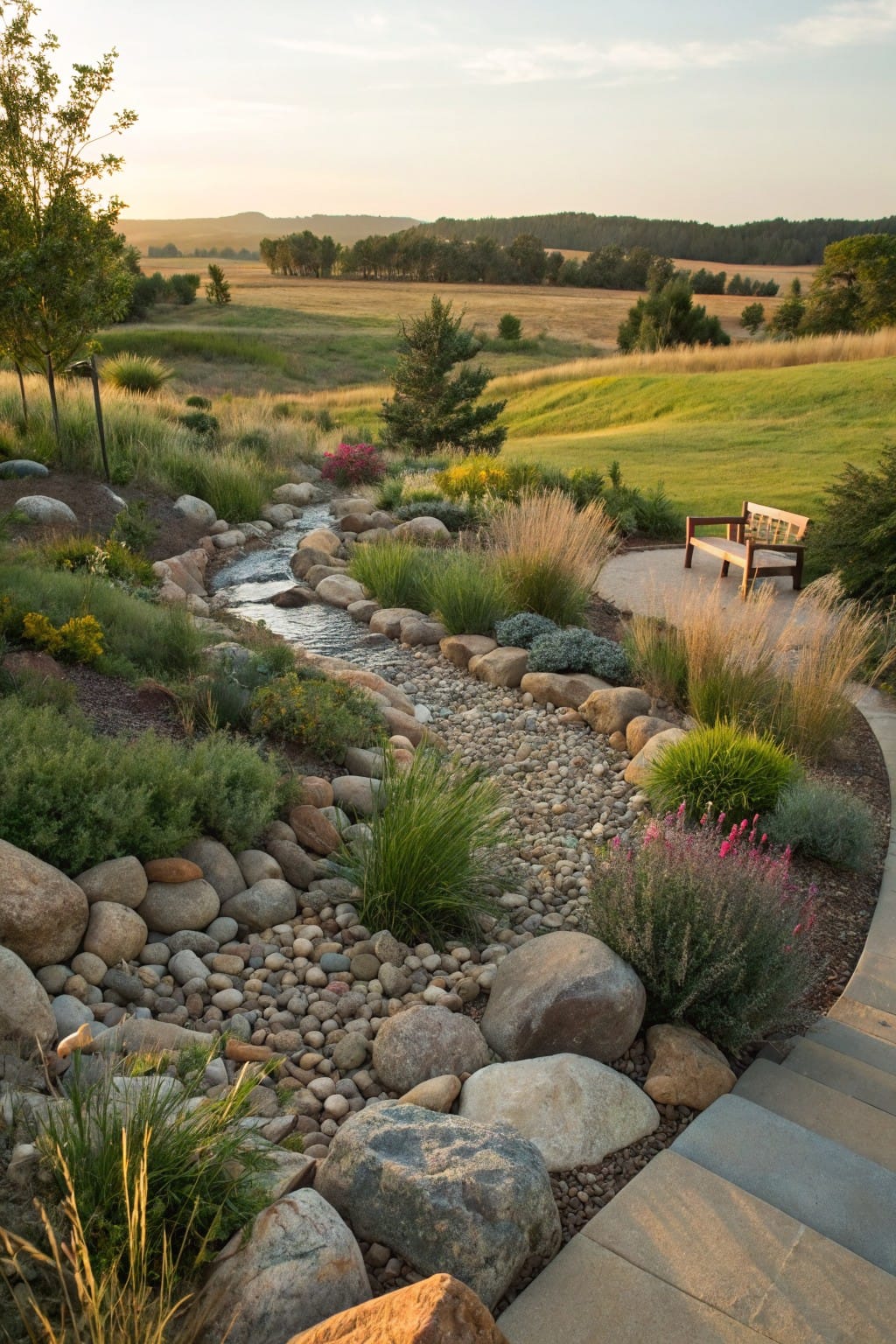
One simple way to add movement to your yard is with a rock stream bed. It uses big boulders and smooth pebbles to mimic a gentle creek winding through grasses and low plants. No water needed, so it’s low fuss, and it pulls the eye along naturally toward a spot like that bench.
Try this on a slope or open area where you want some flow without digging ponds. Edge it with larger rocks, fill the center with river stones, and tuck in tough perennials that sway in the breeze. It suits bigger lots blending into fields… keeps things wild yet tidy.
Natural Stone Steps on a Slope
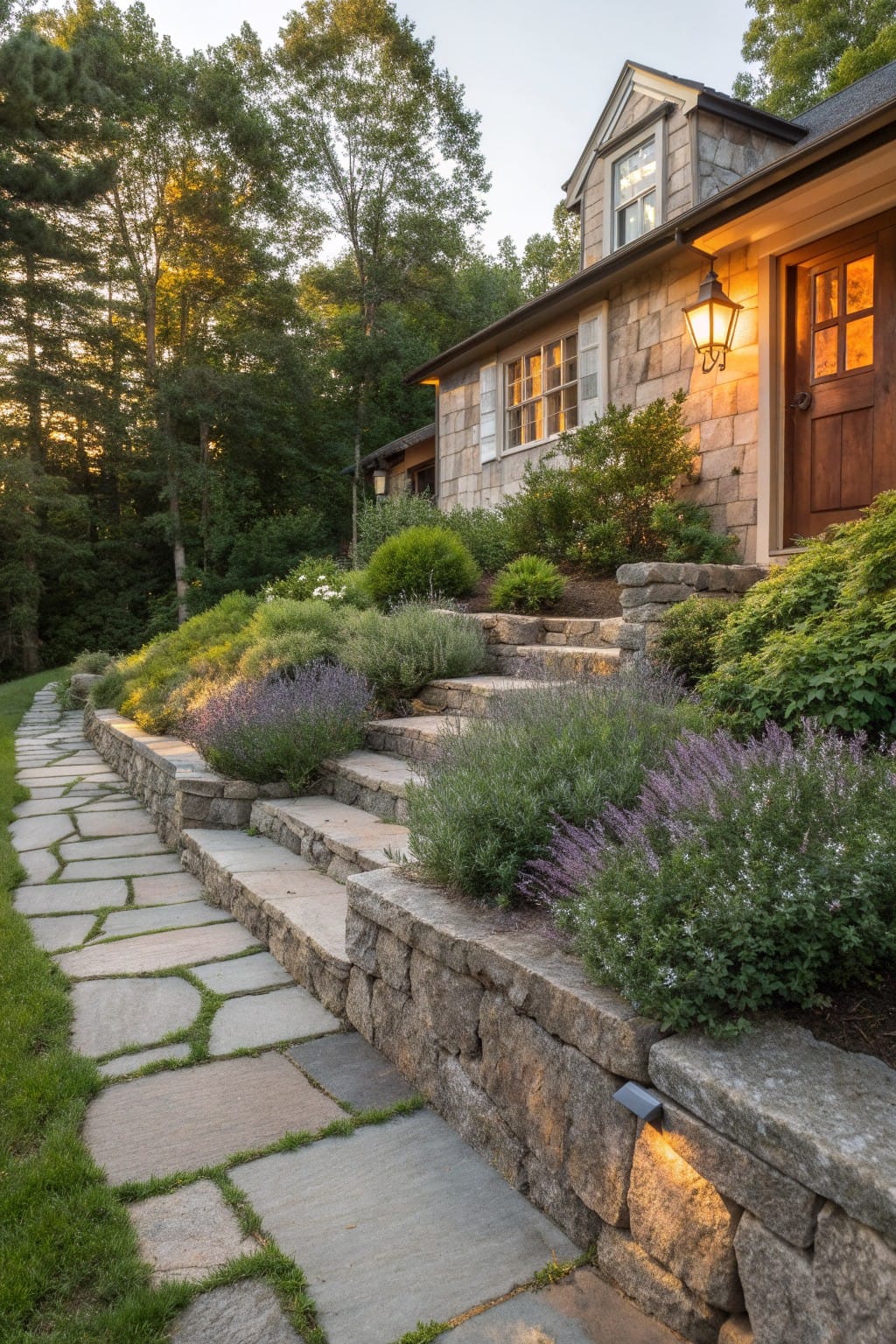
These steps use rough fieldstone walls to terrace a hillside right up to the house door. The irregular flagstone path winds alongside, edged with clumps of lavender that spill over softly. It keeps everything looking like it grew there naturally. No harsh lines. Just rock and plants working together.
This works best on wooded lots where the ground drops away from the entry. Source stone from nearby fields or quarries to fit your spot. Add drought-tolerant plants like lavender along the edges. They hold soil and add color without needing much water or trimming. Skip it on flat ground. It shines where you need to climb a bit.
Garden Paths Built Around Large Boulders
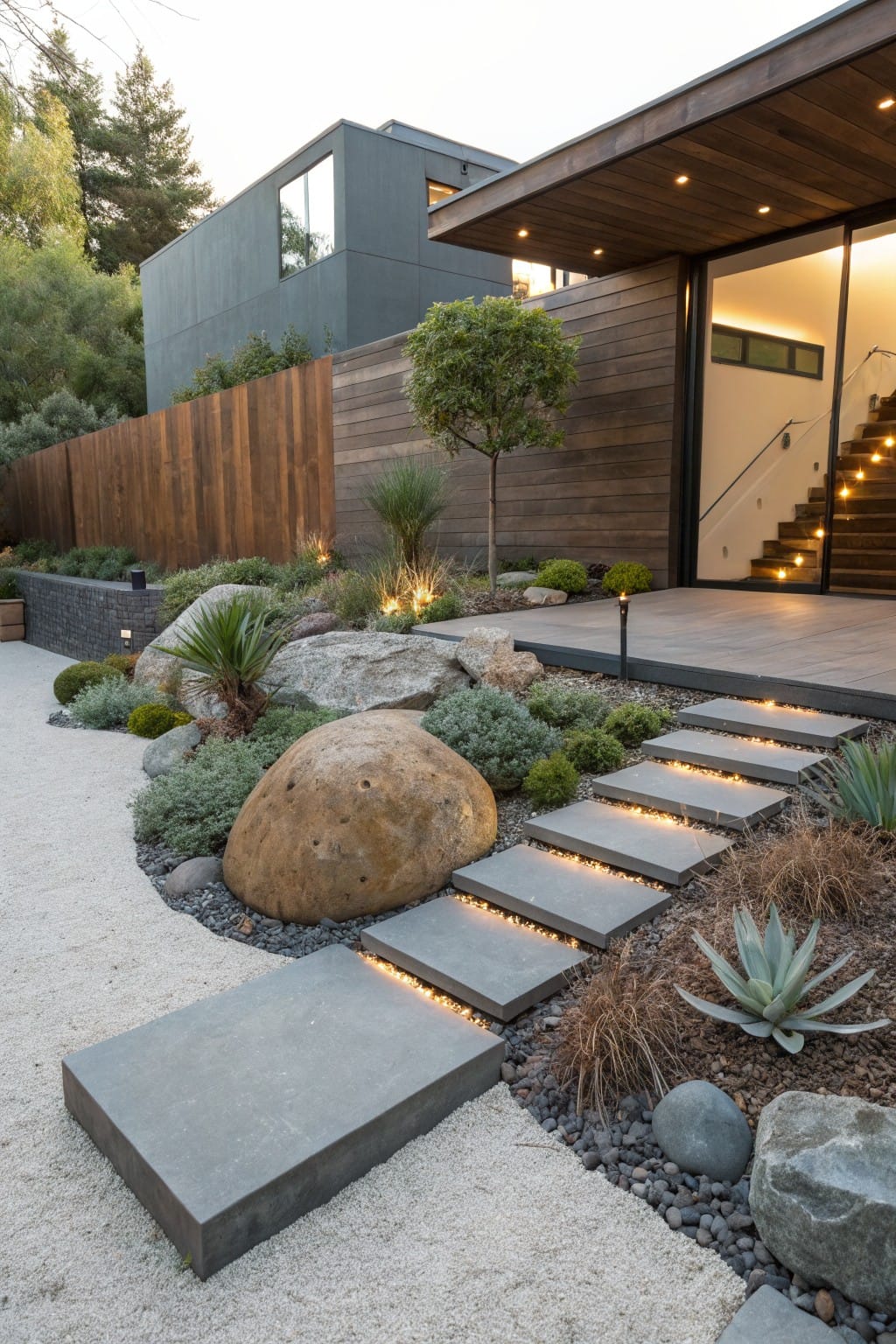
Large boulders like the ones here make a simple but strong statement in rock gardens. They sit naturally in gravel beds, almost like they rolled into place on their own. Paired with low plants and stepping stones, they guide the eye right up to the house without much fuss. It’s a look that feels rugged yet put together, especially in dry climates.
You can pull this off in side yards or entry approaches where space allows. Hunt for boulders at local quarries to match your soil and style, then tuck in drought-tolerant stuff like agaves around the base. Keep paths wide enough to walk, and add low lights under steps for evenings. Works best on sloped lots… avoids feeling too busy.
Moss-Covered Stone Steps
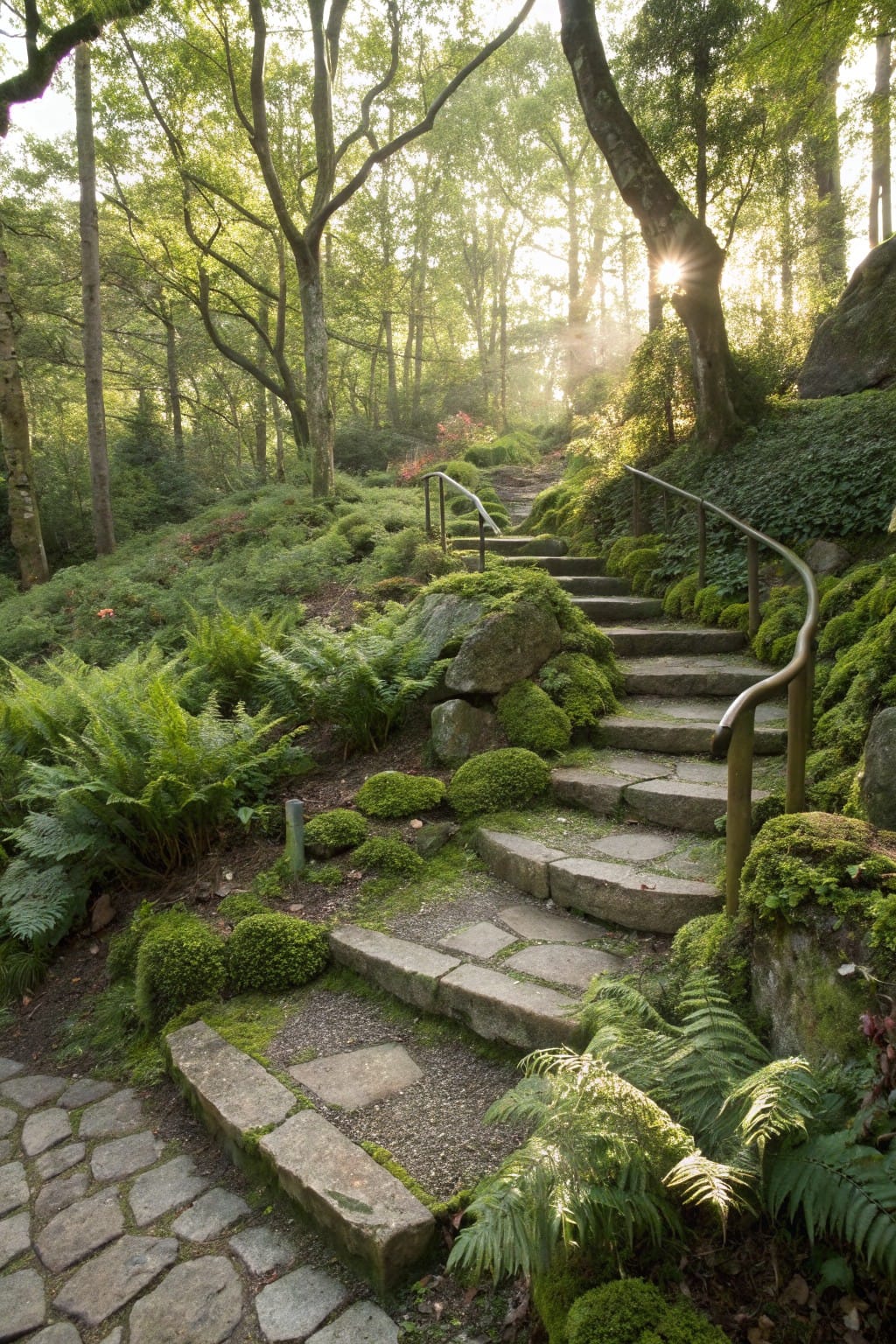
These stone steps wind up a slope like they grew right out of the hillside. Moss softens every edge, while ferns and boulders tuck in close, making the path feel more like a natural trail than built hardscaping. It’s a quiet way to handle elevation without screaming “landscape design.”
Try this in wooded yards or shady slopes where you need access but want it to blend away. Pick rough local stone, add simple railings if the drop is steep, and plant moisture-lovers like ferns nearby. Over time, the moss will settle in… just keep soil from washing over the treads.
Winding Stone Path Through Native Plants
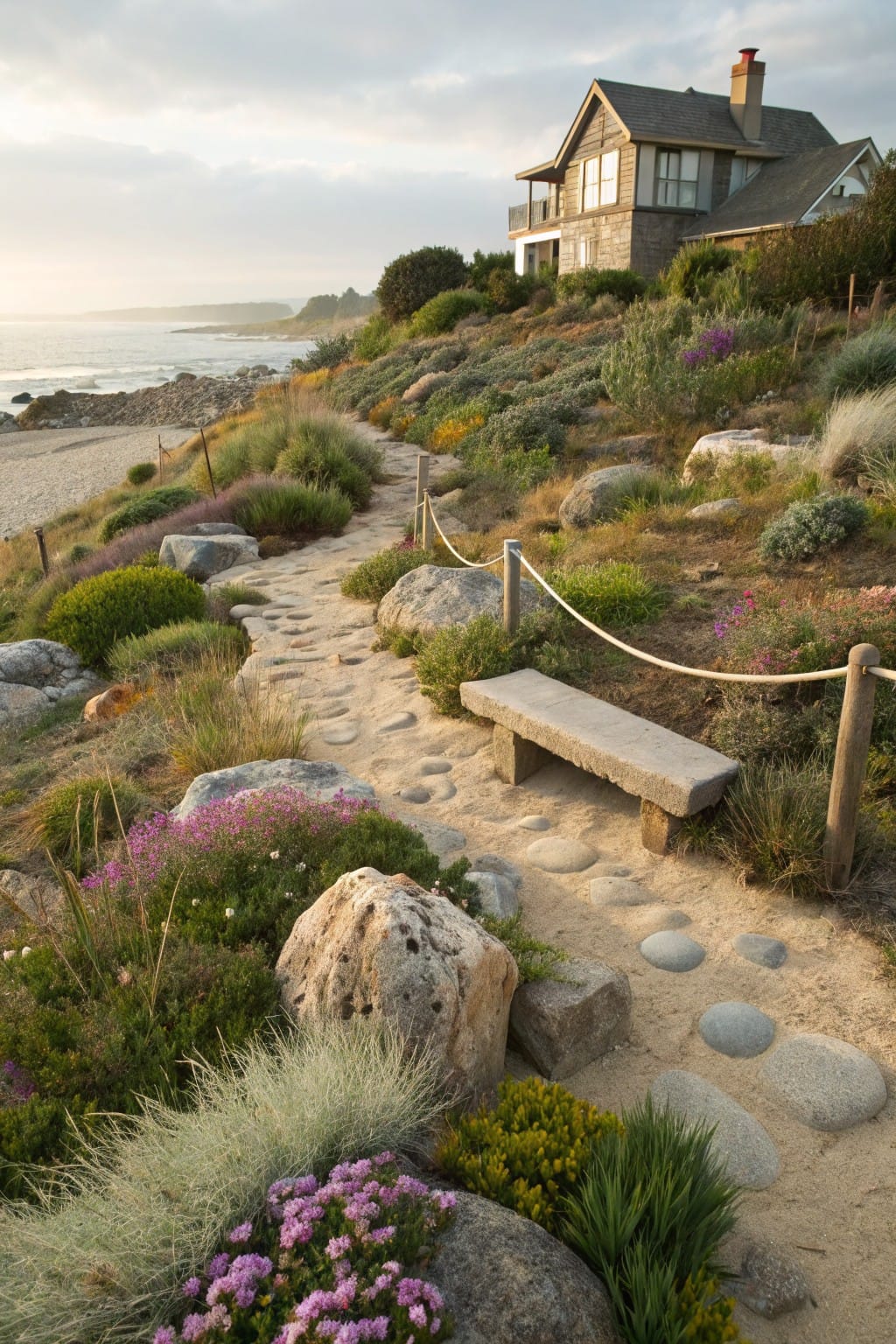
One straightforward way to tie your yard to the landscape around it is with a simple winding path made from flat stones set into sand. Here you see large boulders placed naturally along the edges, mixed in with coastal grasses and low flowers like ice plant. It feels easygoing and fits right into rocky seaside spots without looking forced.
This kind of path works best on slopes or uneven ground where you want to guide people toward the house or a seating spot. Use native plants that don’t need much water, and keep the stones spaced for a relaxed step. Skip straight lines. It keeps foot traffic off the grass and adds that quiet rhythm to the garden.
Natural Rock-Lined Pond for Courtyards
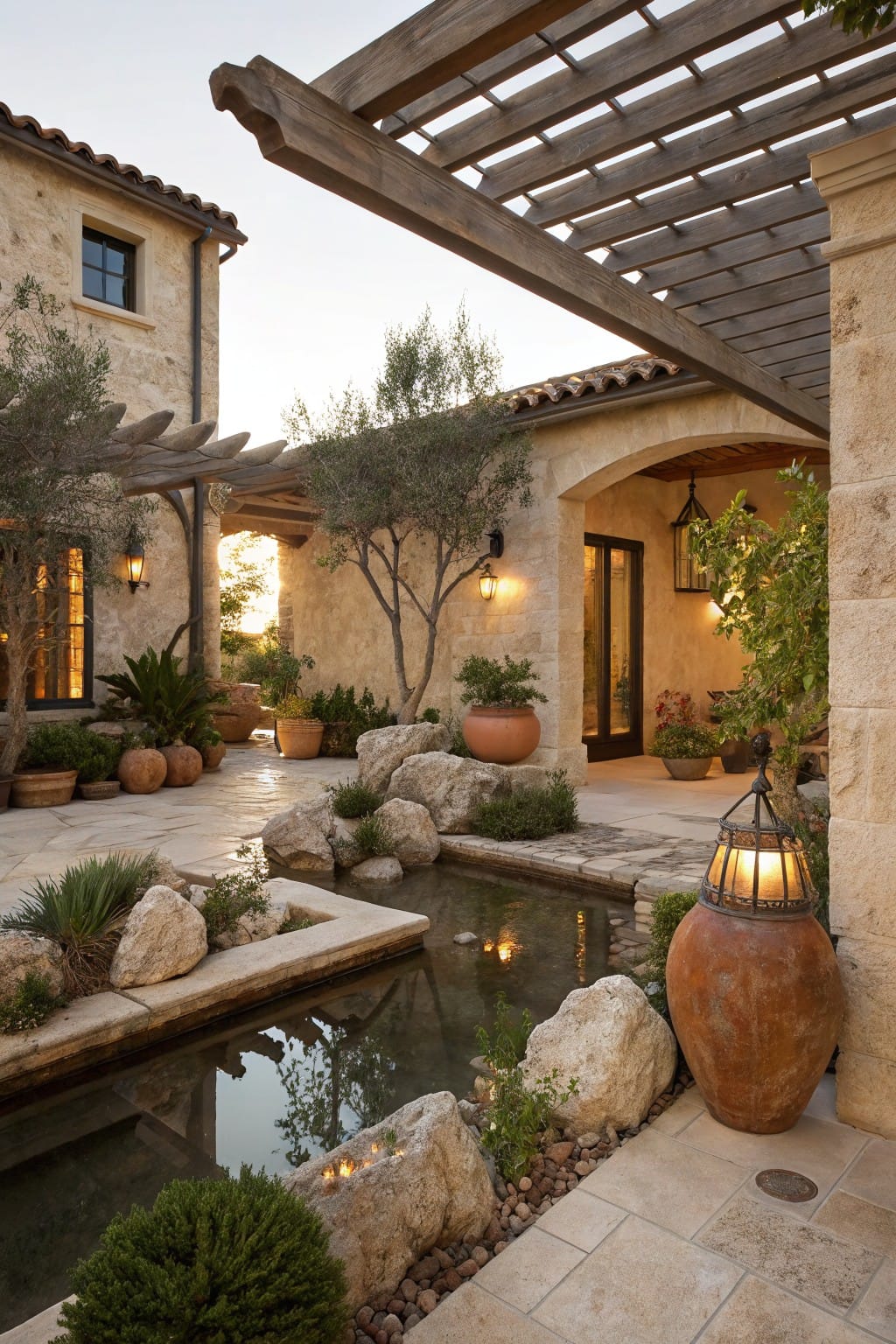
A simple pond edged with rugged boulders brings a quiet water element right into your courtyard. It fits naturally among stone paths and low plants, like those olive trees and terracotta pots you see here. The rocks make it look like it grew out of the ground, not something built. That natural feel calms things down without much upkeep.
Try this in a walled yard or between house wings where you want a spot to pause. Use local stones for the edges and bottom, keep the water shallow, add a few fish or floating plants if you like. It suits Mediterranean or rustic homes best. Just make sure good drainage so it stays clear… skip it if your spot gets heavy shade or runoff.
Natural Stone Fire Pit Blended with Boulders
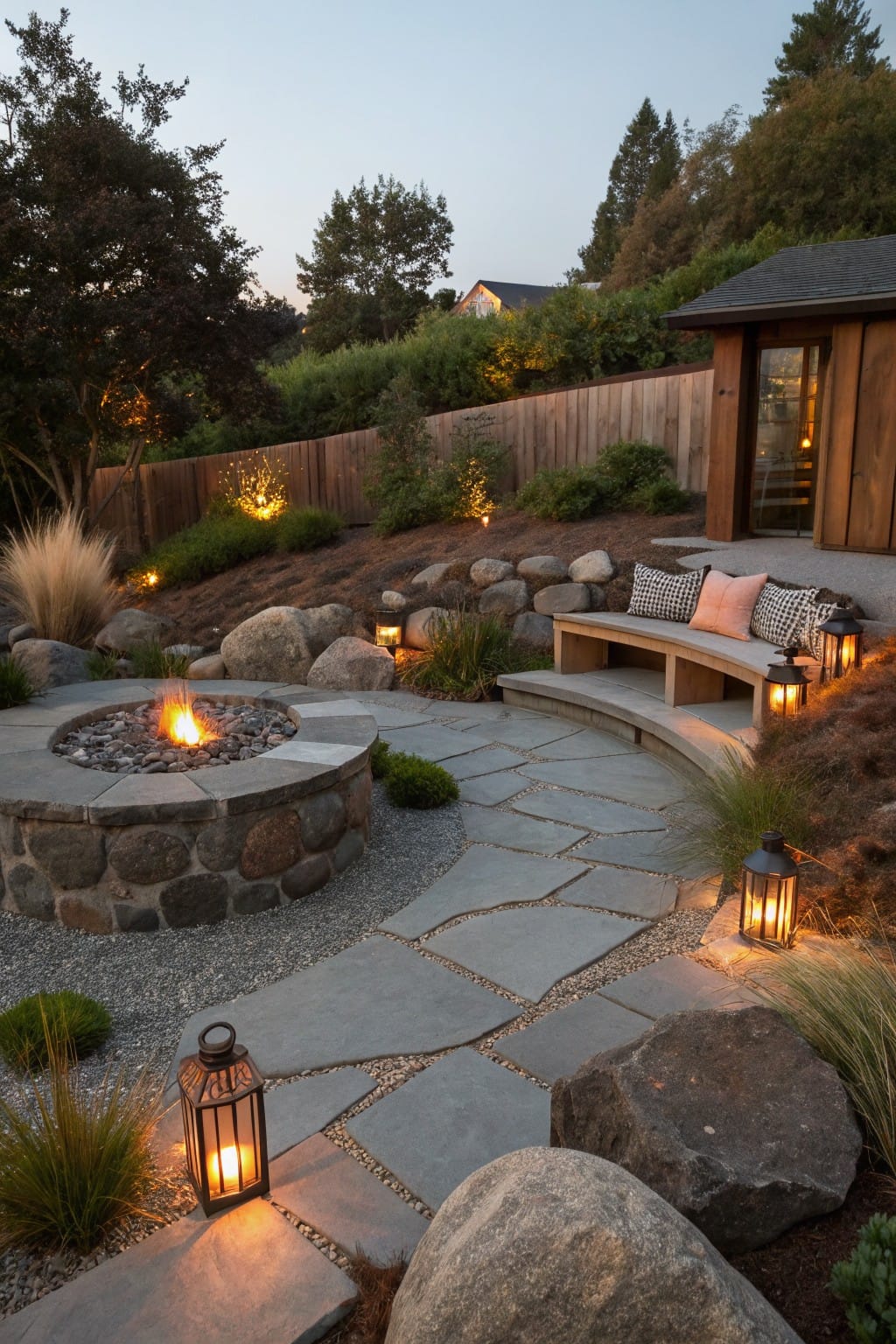
A fieldstone fire pit like this one pulls right into the landscape when you surround it with big boulders and gravel ground cover. The rough stones match up naturally, making the whole spot feel like part of the yard instead of an add-on. It’s simple but pulls people together around the fire without overpowering the natural look.
Put this idea to work on a backyard slope or flat patio area where you have room for seating nearby. Source local fieldstone for the pit and haul in boulders that fit the scale, then tuck in low grasses for a bit of green. Watch the fire safety around dry plants… it suits casual homes that see a lot of evening use.
Terraced Stone Steps on Slopes
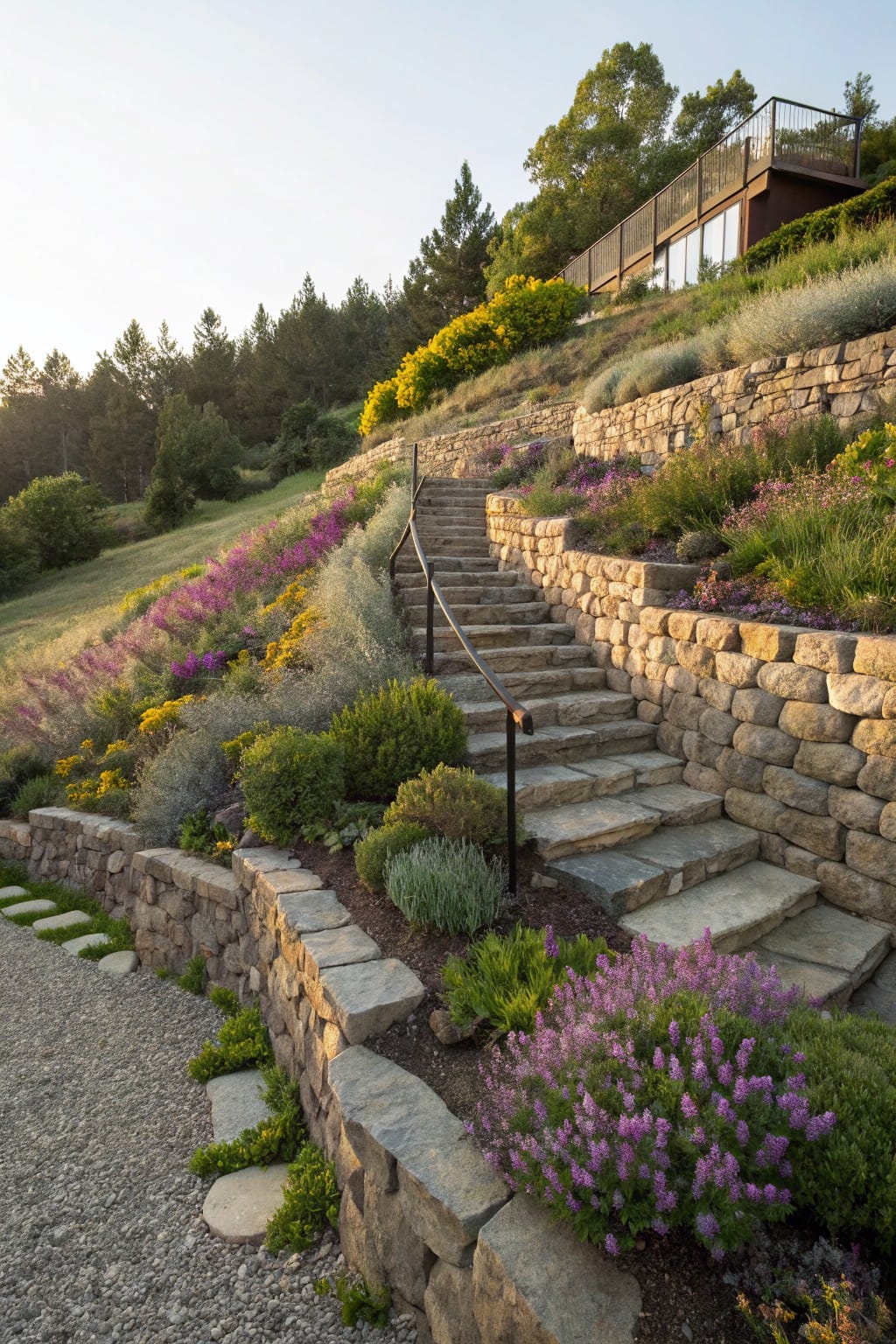
One simple way to tame a hillside is building steps right into terraced rock walls. Here the natural stone holds the soil steady as wide steps curve up the grade, edged with plants like lavender bushes and yellow flowers. It keeps everything from washing away in rain and turns a tough spot into an easy walk.
This idea fits homes on any slope where you want access without stairs that feel out of place. Go for rough local stone that matches the ground, then fill the terraces with tough natives that don’t need much water. Watch the drainage so the steps stay slip-free, and it makes yard work a lot less of a chore.
Stone Steps with Gravel and Boxwood Edges
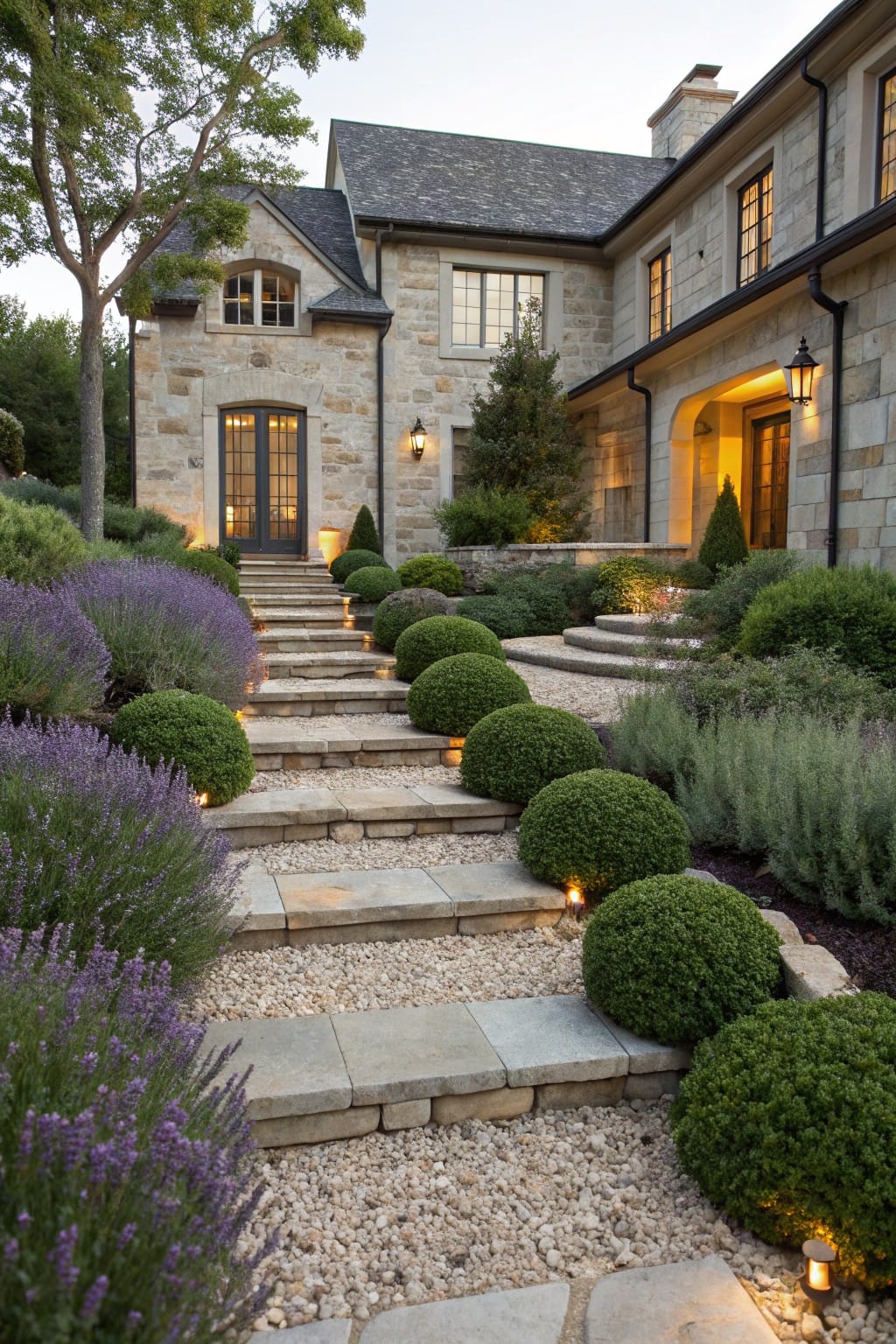
One nice way to handle a sloped entry is with broad stone steps set into gravel landings. Here the path curves gently up to the house, with round boxwood shrubs spaced along the sides and lavender bushes filling in the borders. It keeps things low key and natural, tying the stone facade right into the yard without much fuss.
This works best on hillsides where you need to go up but want to avoid steep climbs. Use rough cut local stone for the steps and pea gravel between them, then plant tough evergreens like boxwood that you can shear into balls once a year. Tuck in some solar lights along the edge for dusk walks, and it stays pretty simple to maintain.
Pebble and Grass Beds Along Pool Edges
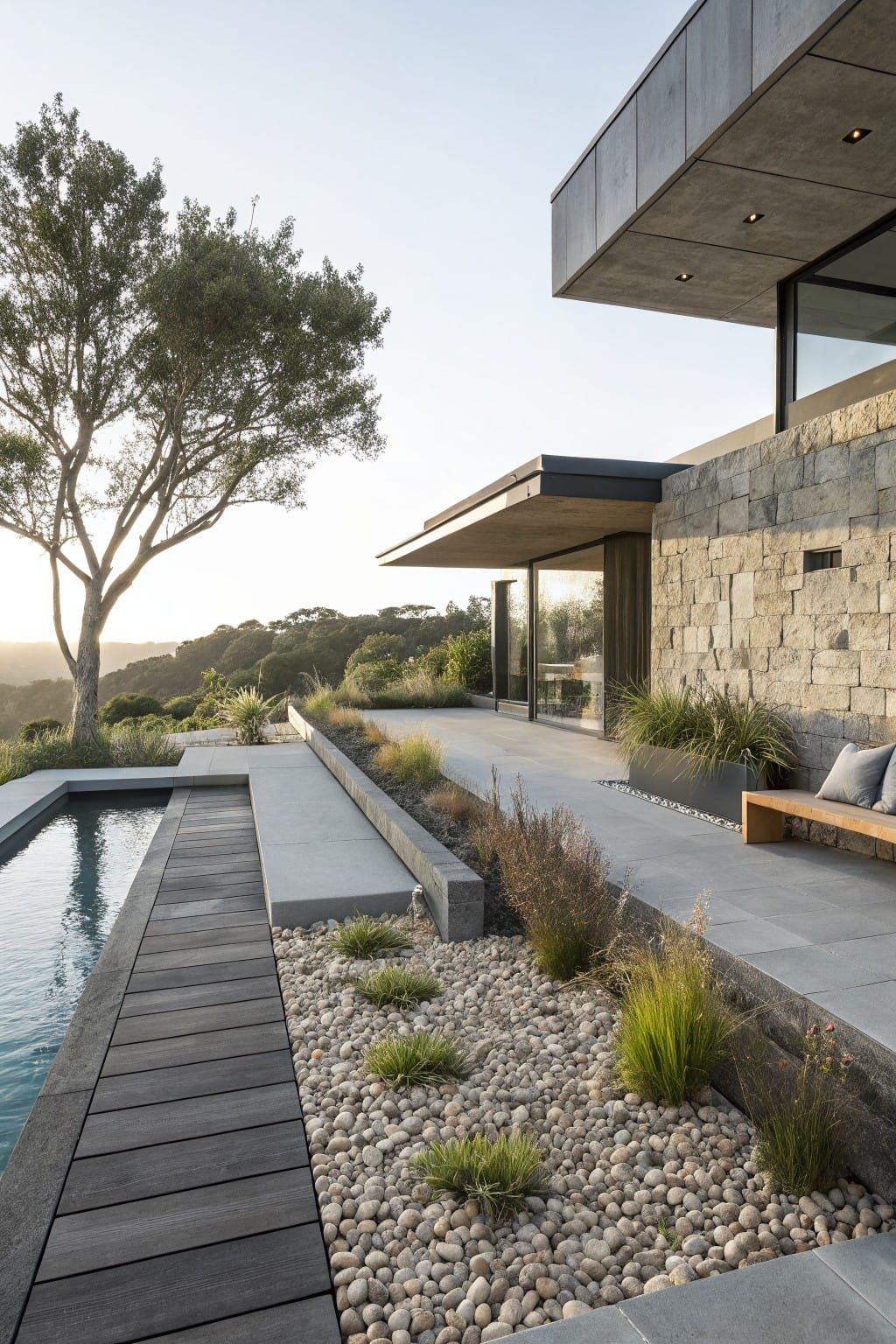
One straightforward way to ease the shift from house to yard is pebble mulch beds planted with soft grasses right up against the pool deck. Here, smooth gray pebbles fill the beds, dotted with feathery grasses that sway a bit in the breeze. They pick up on the house’s stone walls without trying too hard, and keep things looking tidy even if you skip watering now and then.
These beds work best in sunny, dry spots near patios or pools where you want some green but not a lot of upkeep. Line a wood or concrete path like this one, and add a simple bench nearby for sitting. Skip fussy flowers, stick to tough native grasses, and watch drainage so water doesn’t pool underfoot.
Gravel and Stone Path for Narrow Yards

One easy way to make a skinny side yard feel like a real garden is laying down a path of flat stones set into smooth gravel. It gives you that natural stepping-along feel without needing much width or fuss. Here the dark gravel lets the gray stones stand out just right, and a few bigger rocks add some weight to the edges. Plants like ferns and hostas tuck right in, keeping it all soft and lived-in.
This works best in those tight urban spots between buildings, where you want to connect the street to your back door without it looking forced. Go for irregular stones so it blends with nature, not like a sidewalk. Skip anything too uniform… it kills the calm vibe. Low upkeep too, since gravel drains well and weeds pull easy.
Natural Flagstone Paths with Moss

One easy way to tie your garden together is flagstone paths where moss grows right between the slabs. Those big, rough-edged stones laid irregularly let the green creep in, so the path doesn’t look forced. It blends hard surfaces with plants around a cottage or pond area, keeping things soft and lived-in.
Space the slabs loosely on a bed of soil or sand, then let moss or grass fill the gaps over time. Works best in shady, moist spots near stone walls or steps. Skip it if your yard gets heavy foot traffic, since moss can get slippery when wet.
Stone Basin Bamboo Fountain
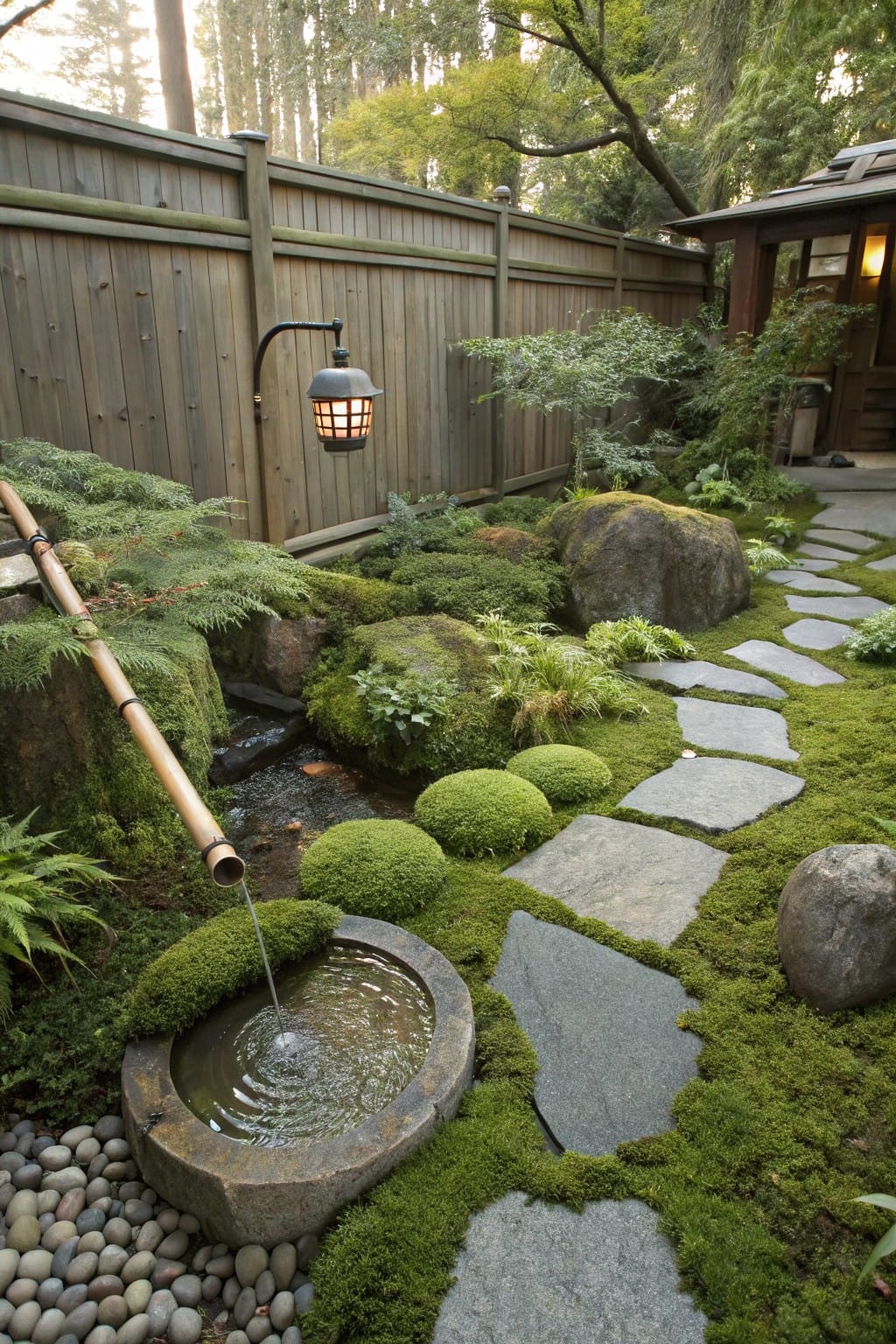
One easy way to bring calm to a rock garden is with a simple bamboo fountain that tips water into a rough stone basin. The rhythm of the water filling up and spilling over gives a quiet, natural sound that fits right in with mossy boulders and groundcover. It pulls your eye without being flashy, and keeps things feeling alive even in a mostly hardscaped spot.
This works best in shaded courtyards or along a backyard path where you want low upkeep. Pick a sturdy stone basin and bamboo pole sized to your space, surround it with pebbles and shade-loving moss, and let rain or a small hidden pump keep it going. Suits any size yard, especially if you’re after that Japanese garden feel without much planting work.
Entry Pathways with Dark Gravel Mulch
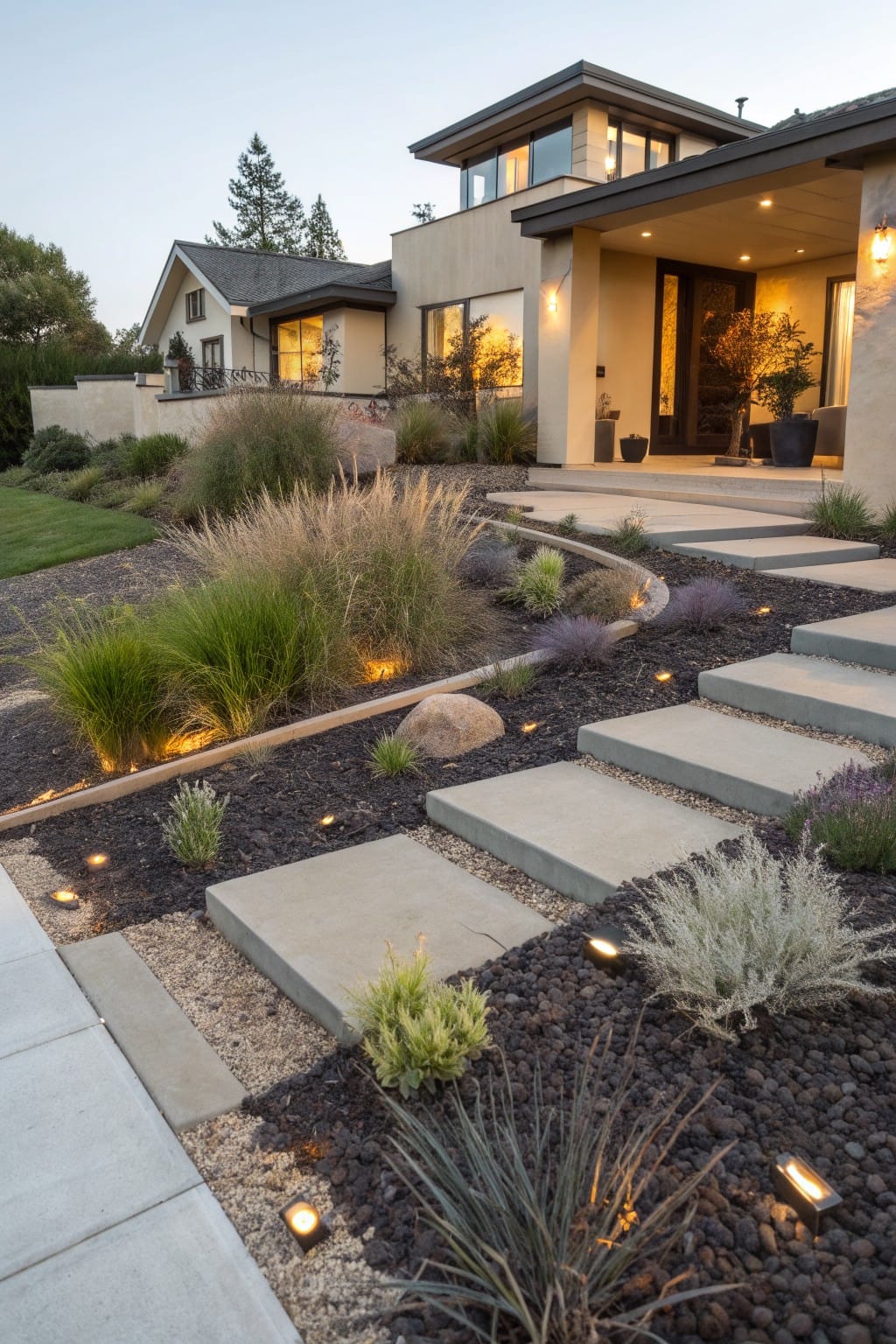
One straightforward way to tie your front yard to the house is with large concrete steps set right into beds of dark gravel. Tuck in some tall grasses and low shrubs along the edges, like you see here with the feathery plants and lavender. Add ground-level lights along the path for evening use. This keeps things simple and lets the natural rock texture show through without much upkeep.
It suits modern homes or drier spots where you want less mowing. Lay the gravel a few inches deep over landscape fabric to cut weeds, then space the steps wide enough for easy walking. Skip flowers if you prefer even less work, but the grasses add that soft movement people notice.
Pebble Patio Floors That Fit Right In

One simple way to make an outdoor space feel like part of the yard is with pebble flooring. Those irregular stones laid in a loose mosaic pattern look just like a dry riverbed, so they blend with whatever plants or rocks are around. In this setup, the pebbles cover the whole patio under the pergola, tying the stone kitchen right into the hillside without any hard edges.
You can use this in any backyard patio, especially where the ground slopes a bit. Go for local pebbles to keep costs down and the look authentic. Pair it with a grill station or dining spot, and add vines on overhead beams for shade. It drains well too, so no puddles after rain. Just sweep it now and then.
Natural Stone Steps with Recessed Lighting
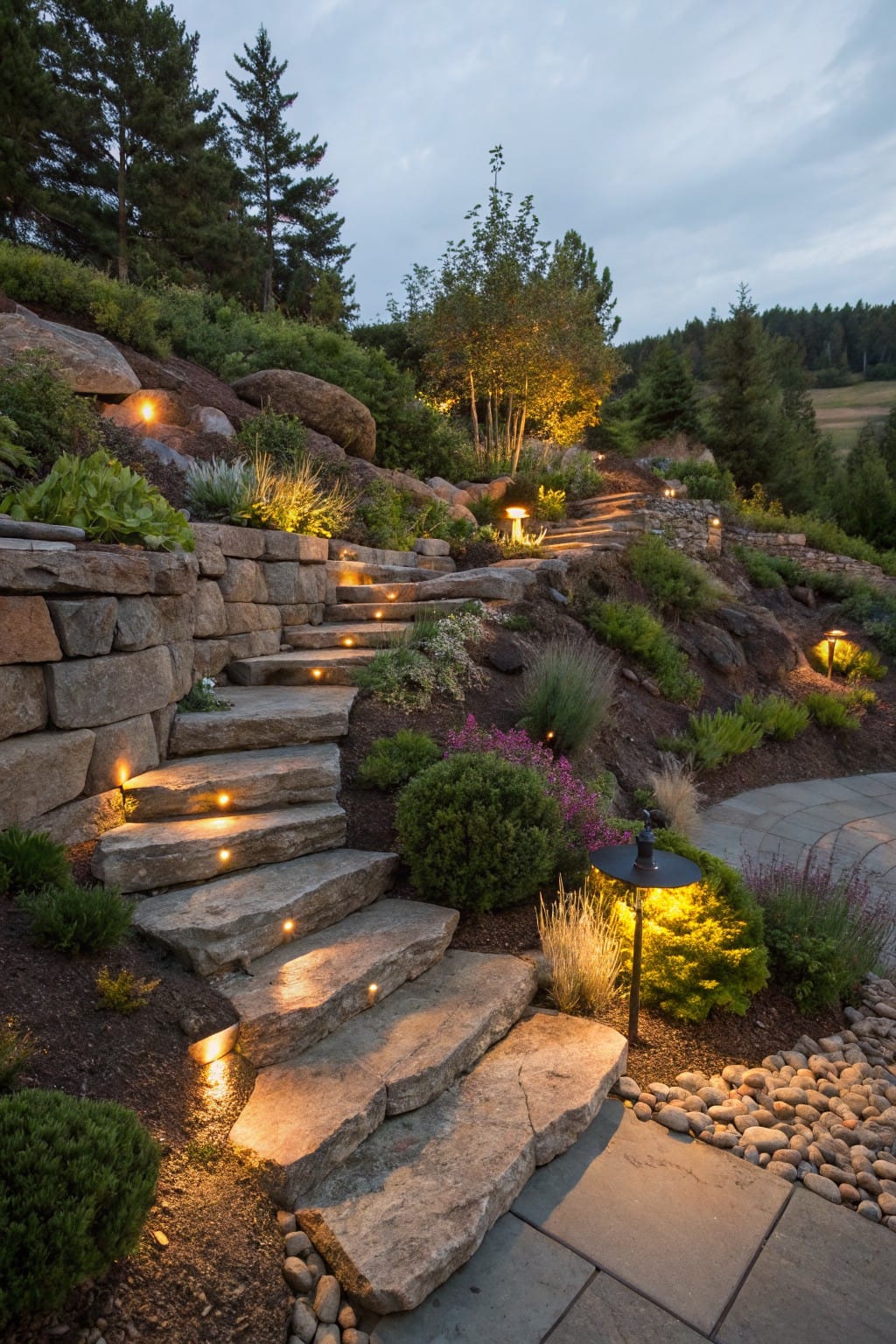
These steps use rough-cut stone treads with small LED lights recessed right into the edges. The soft glow lights each riser just enough to see where you’re going at dusk, while keeping the focus on the surrounding rocks and plants. It feels safe and natural, not like some bright patio setup.
You’ll want this in sloped backyards or hillsides with uneven terrain. Tuck low-voltage lights into existing stone during install, and pair with plants that hug the edges. It suits wooded lots best… skip it on super steep drops unless you reinforce the base.
Stepping Stone Path Over Water
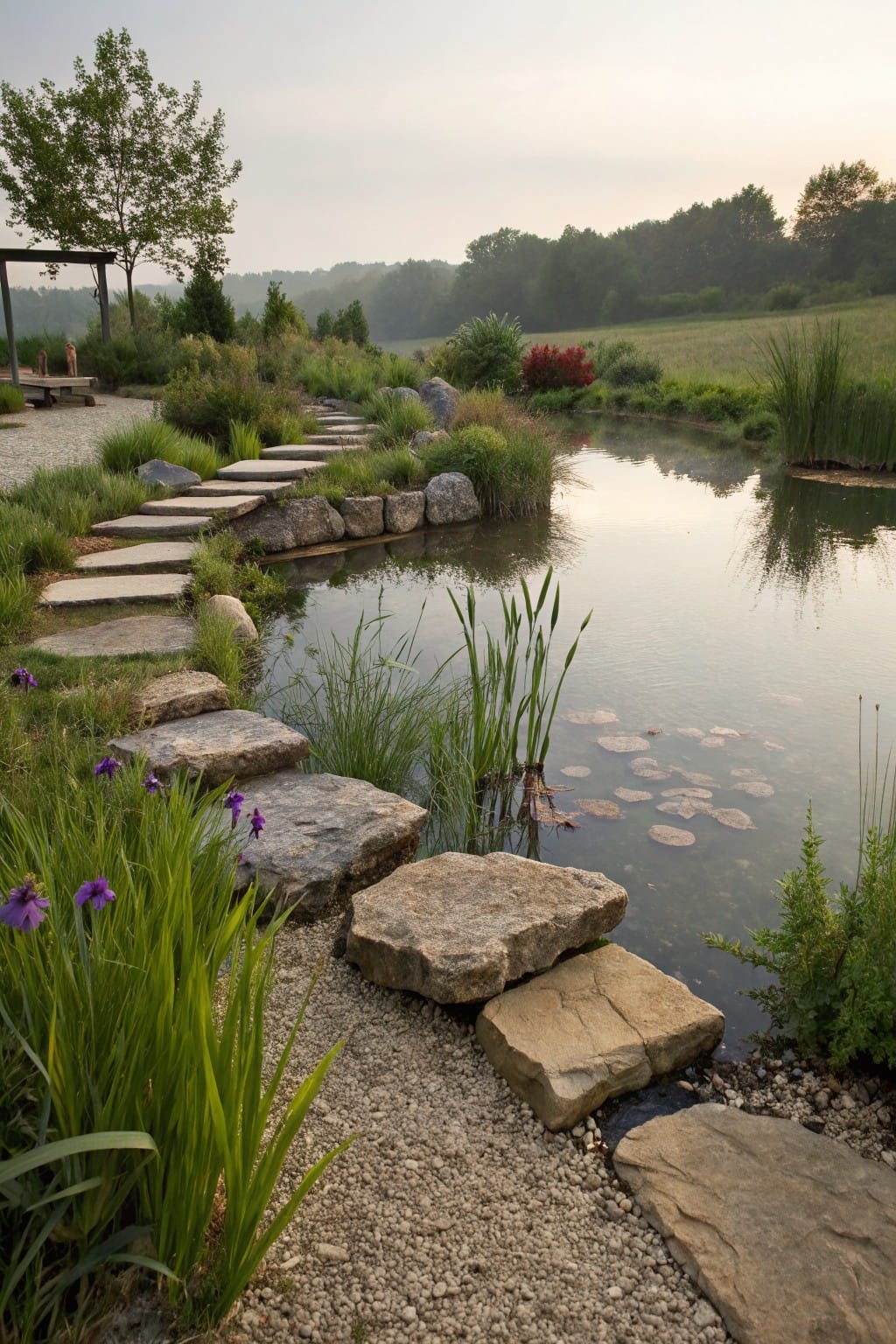
One simple way to move through a wet garden spot is with large flat stones set as steps right across the water. These natural rocks fit right in with reeds, water lilies, and edge plantings, making the path feel like part of the landscape instead of something added on. It keeps things dry underfoot while letting the water show through between steps.
This works best in backyard ponds or streams where you want access without a full bridge. Pick rough local stone for that blended look, and space steps about two feet apart for easy crossing. It’s low fuss once planted up with natives, though watch for slippery spots after rain. Fits any size yard aiming for calm and natural.
Stone Retaining Walls for Winding Paths
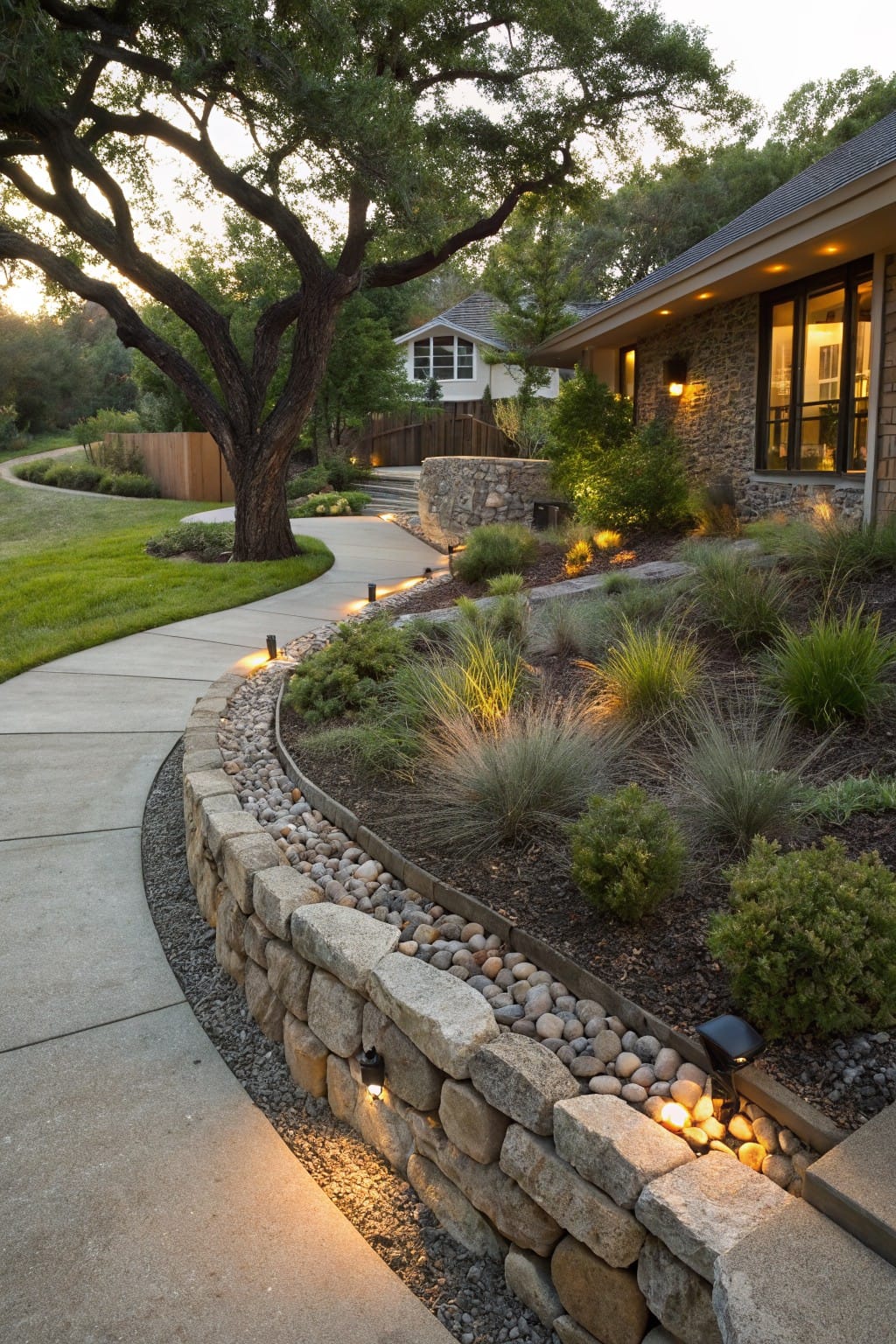
One simple way to guide people through your yard is with low stone retaining walls hugging a curved path. Here the walls are built from rugged, uneven fieldstone that looks right at home next to drought-tolerant grasses and gravel mulch. It creates a natural flow from the lawn to the house entry, without feeling too formal or fussy.
This works best on gentle slopes where you need to hold back soil and define planting beds. It suits homes in dry or hilly areas, keeping maintenance low since the gravel cuts down on weeds. Tuck in path lights at the base for safe evening strolls. Just pick stones that match your local rock type to avoid a mismatched look.
Frequently Asked Questions
Q: Where do I find rocks that actually look natural and not fake? A: Scout local riverbeds, quarries, or construction sites for fieldstone or river rocks—they match your area’s geology best. Ask around at landscaping yards; they often sell leftovers cheap. Skip the uniform bags from big stores.
Q: How do I prep my yard before dropping in the rocks? A: Clear weeds and level the spot with a shovel, then lay down cardboard or landscape fabric to smother grass. Top it with a couple inches of gravel for drainage so water doesn’t pool. Rake everything smooth, and you’re set.
Q: Will weeds keep popping up between my rocks? A: Pack gravel or sand tight around them to block light. Spot-pull any strays early, and refresh the mulch yearly. And hit ’em with vinegar spray if they get stubborn.
Q: Can I pull off one of these ideas without spending a ton? A: Start small—grab free rocks from a neighbor’s pile or Craigslist. Use what grows nearby for plants to keep costs low. You’ll see that serene vibe kick in fast.
