


I’ve spent years tweaking my yard’s layout, and nothing polishes it quite like mixing pavers with rocks to create defined pathways and sturdy borders. Those elements hold up to seasons of rain and foot traffic while letting plants fill in naturally around them. In my own setup, I laid pavers in a subtle curve to lead from the patio to the back fence, and it made the space feel twice as intentional without much upkeep. People tend to spot those clean rock edgings first, as they anchor the whole planting structure. Some of the setups here are straightforward enough to test in your yard, adapting as your beds mature over time.
Entry Walkway with Pavers and Gravel
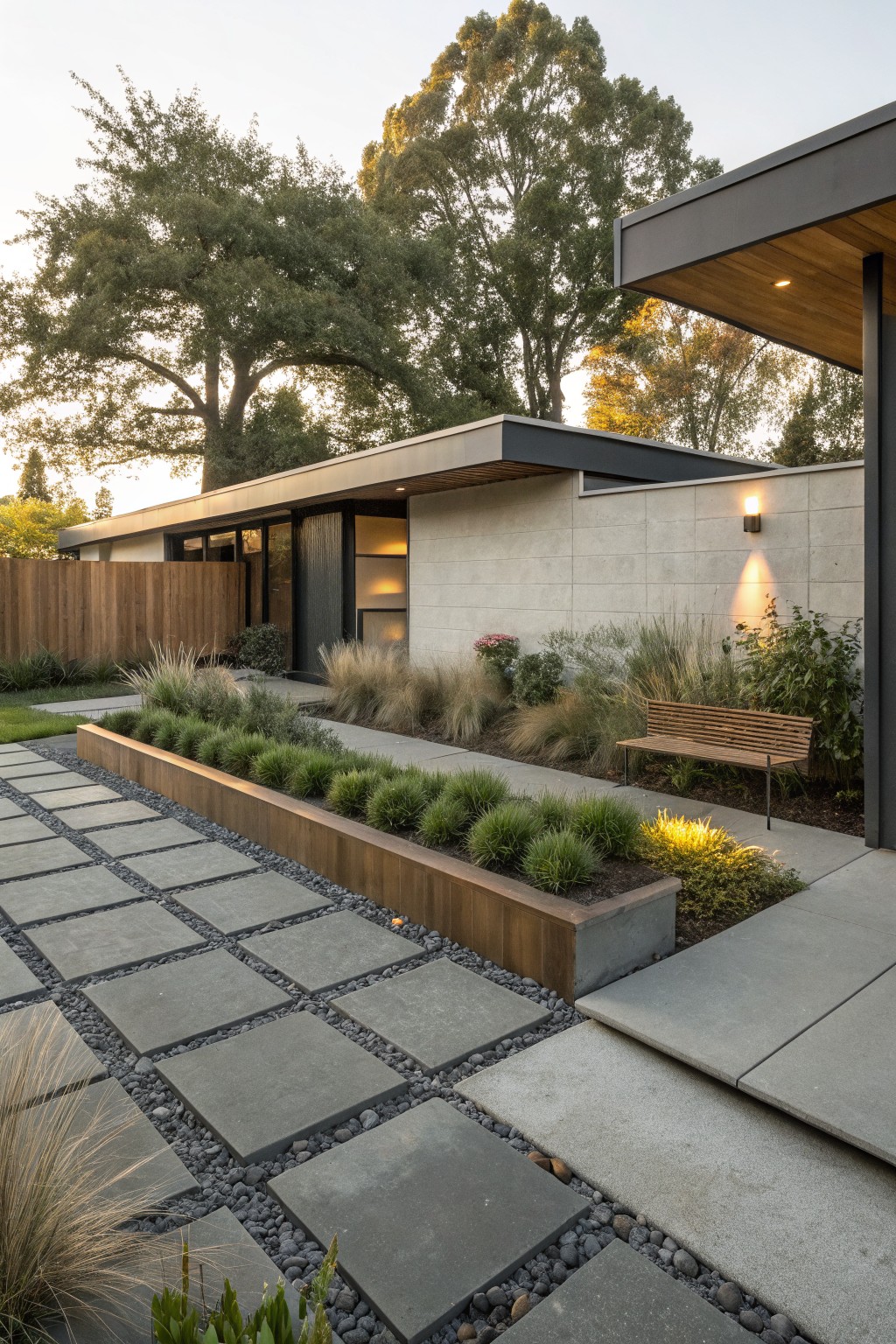
A straightforward path like this one runs right up to the house using large gray pavers spaced apart with small dark rocks filling the joints. Grasses grow up through spots along the edges. It keeps things neat and lets rainwater soak in without puddling.
This setup fits well around a modern home or any place with a clean yard. Line it with low planters for more structure if you want. Go for bigger pavers in front entries so they feel solid underfoot. Smaller ones work okay for garden paths.
Meandering Stone Paver Path
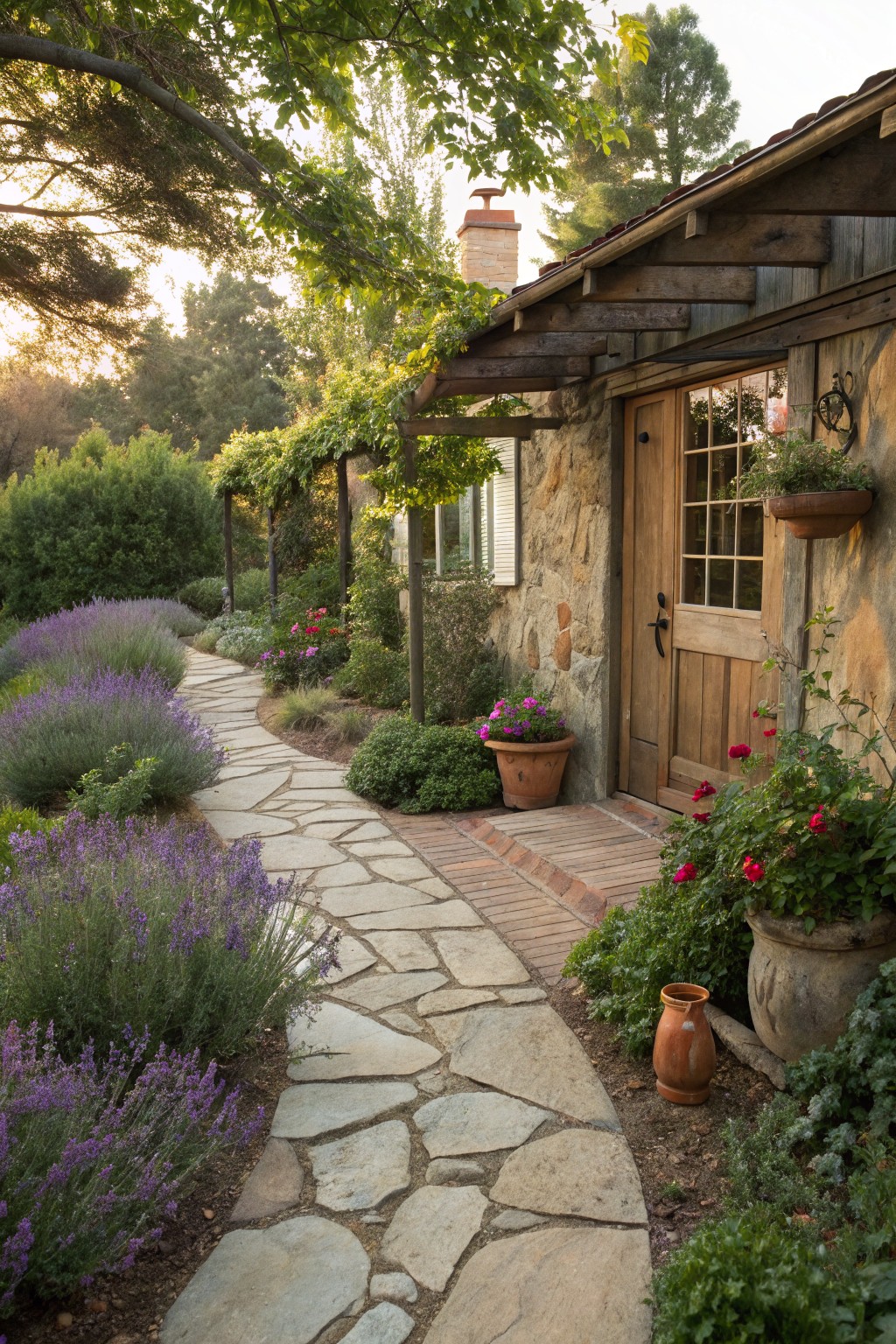
A winding path of irregular flagstone pavers runs through low lavender beds right up to the cottage door. It feels natural and easy on the feet. No straight lines here. The stones mix well with the gravel edges and keep the garden looking tidy without much work.
Try this in a side yard or front approach where you want to slow people down a bit. Pick flat pavers in earth tones and set them in sand for drainage. Border with tough plants like lavender that won’t flop over the path. Works best around older homes or dry spots.
Courtyard Patio with Central Fountain
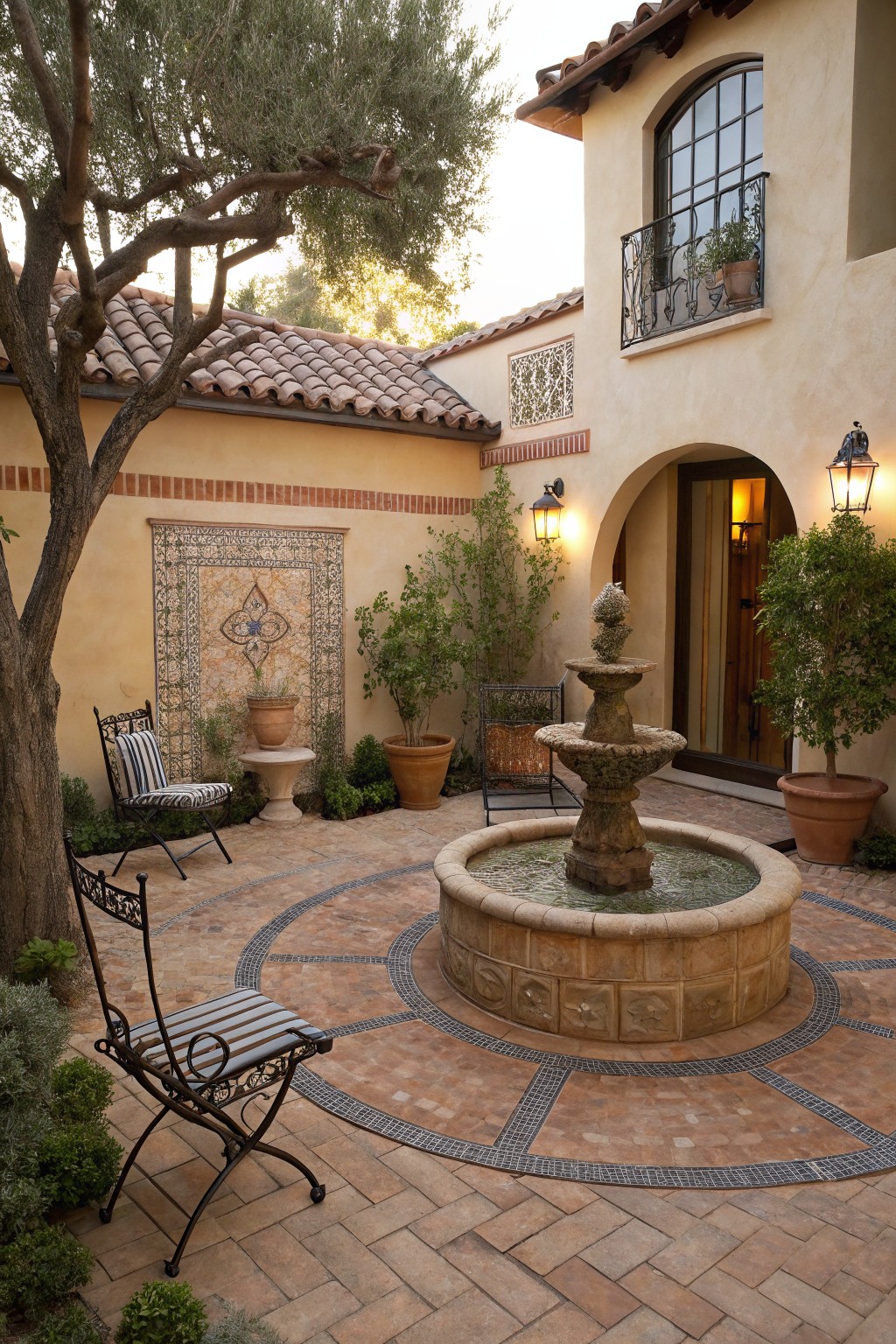
A simple way to pull together an outdoor spot is centering a fountain in a circular paver patio. The round layout draws the eye and sets up natural seating around the water feature. Here the terracotta pavers and stone basin create that focal point without much fuss. It turns a plain courtyard into something people actually use.
This works best in smaller spaces next to the house, like an entry area or side yard. Pair it with a couple of chairs and potted plants for easy setup. Keep the scale right… too big a fountain and it crowds things out. Suits warmer climates or homes with stucco and tile roofs.
Entry Path with Wide Paver Steps
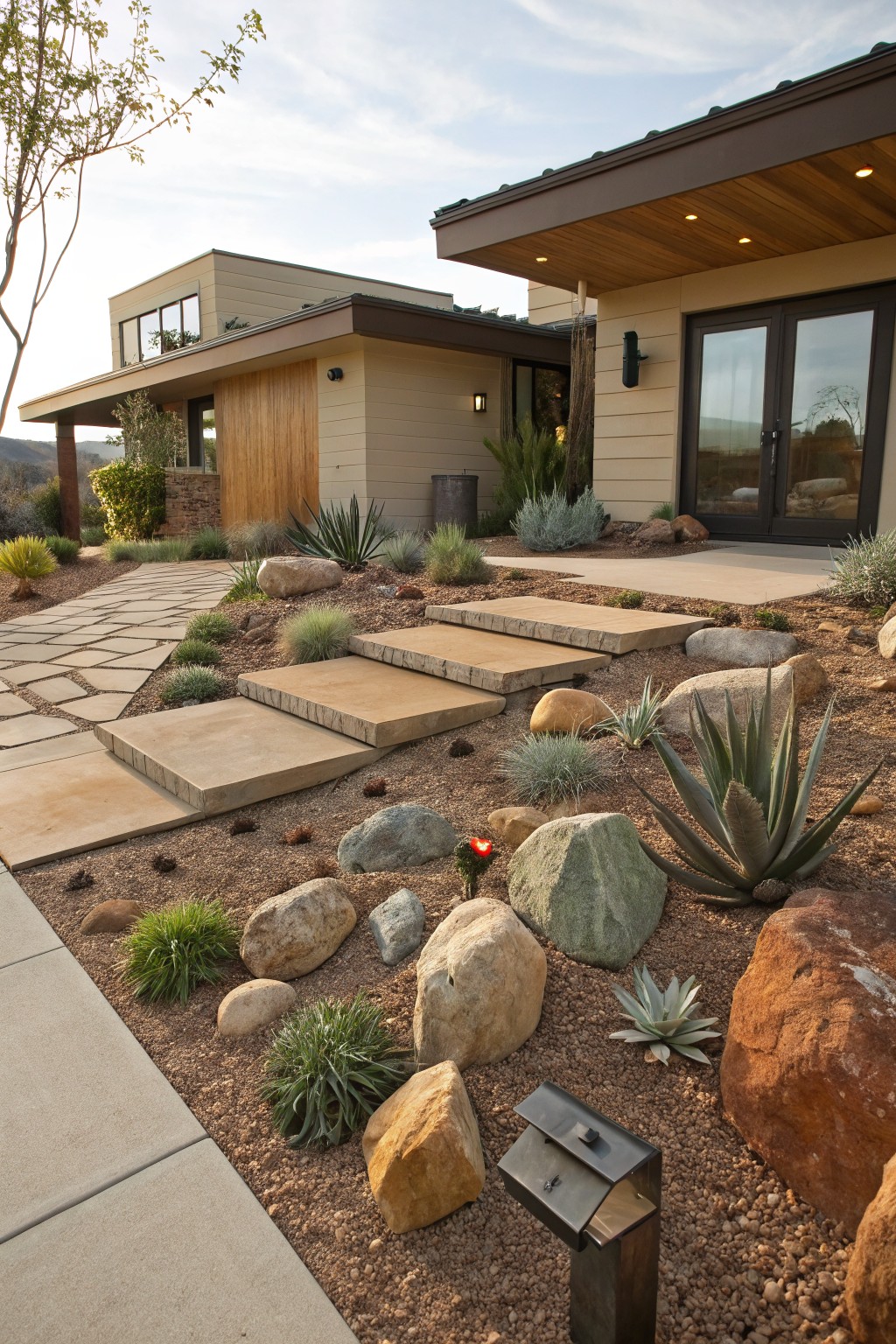
Wide paver steps like these make a simple statement at the front door. They rise gradually from a gravel base, edged with boulders and low-water plants such as agave. The look stays clean and modern without much upkeep, which is great for sloped lots where you want to guide people right to the entrance.
This setup suits homes in dry regions, where drought-tolerant landscaping keeps things looking sharp year-round. Start with large, thick slabs for the steps to handle foot traffic, then fill around them with rocks for drainage. Skip fussy grass. It directs the eye and feels welcoming… just check local codes for step heights.
Stepping Stone Paths in Gravel Beds

Big flat stepping stones set into smooth gravel make for an easy garden path that looks sharp and put-together. Pair them with a few large rocks nearby, and you get that balanced feel without a lot of plants taking over. The gravel fills in just right, keeping weeds down while letting the stones stand out.
This works well in narrow side yards or leading up to a back door. Go for irregular shapes to keep it natural. It’s low upkeep too… just rake the gravel now and then. Suits homes with Asian touches or anyone wanting simple yard traffic flow.
Paver Decks with Pebble Lines
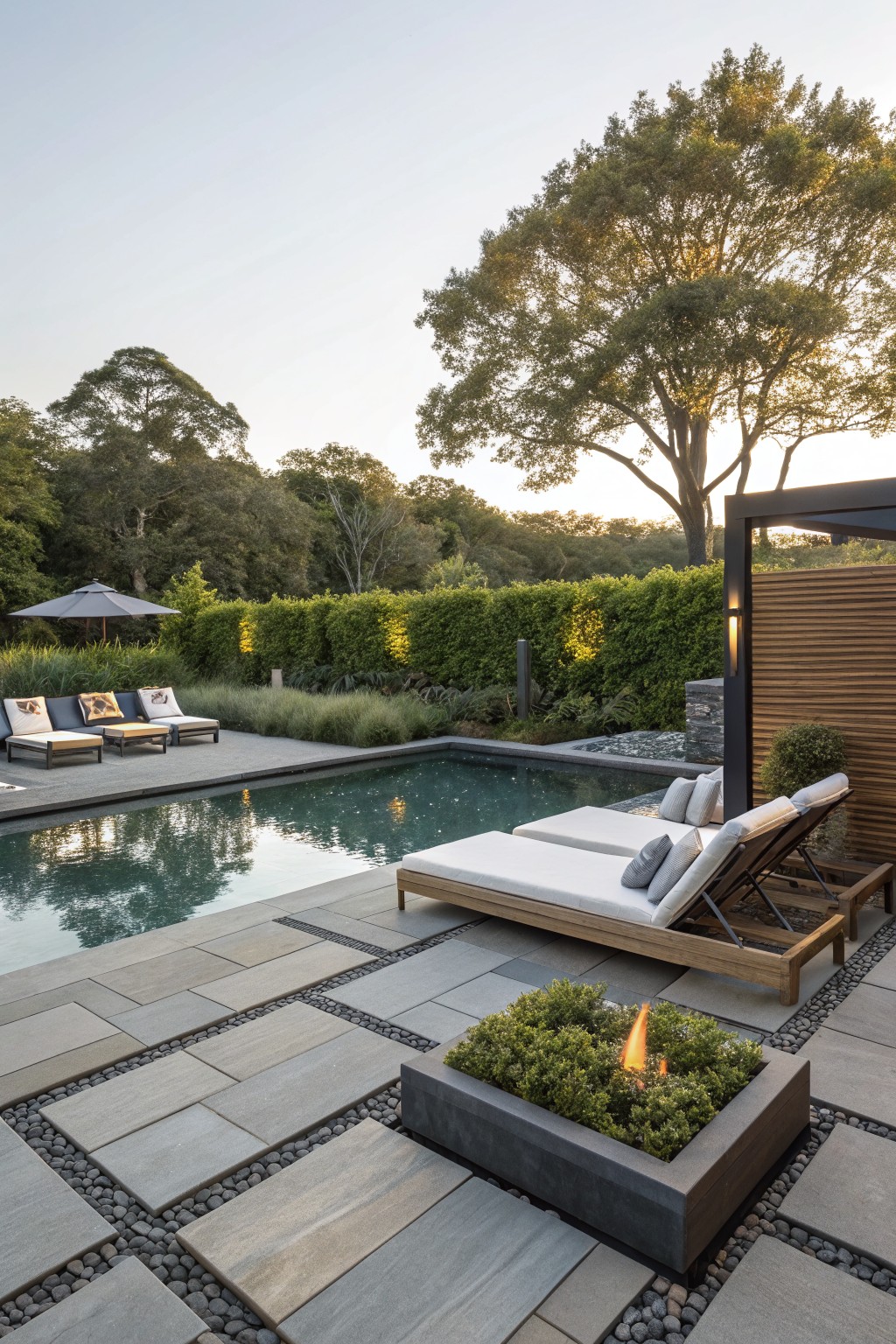
One straightforward way to give a pool deck a clean, finished look is laying large pavers with thin pebble lines running between them. In this setup, the light gray tiles form big rectangles, and the dark pebbles create subtle borders that guide your eye without much fuss. It keeps things from feeling like one flat slab, and that fire pit box with its low plants and flame sits right in, tying the hard surfaces together.
This works best around pools or patios where you want low upkeep but some texture. Use it in backyards with modern or simple houses, maybe 500 square feet or so. Just make sure the pebbles are packed tight so they don’t shift, and pick colors that match your stone or water edge. It holds up year round if drained right.
Curved Paver Walkway with Gravel Edges
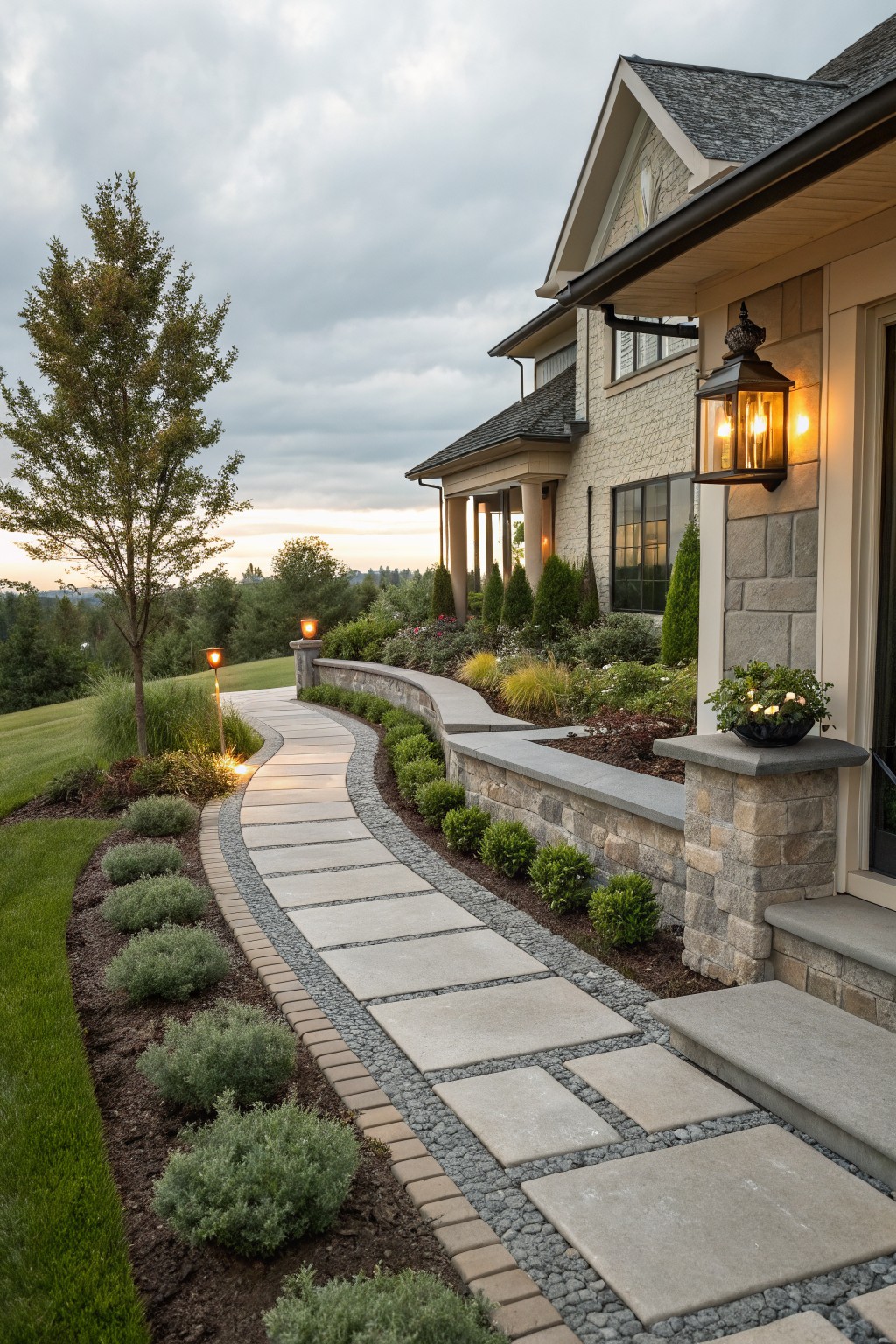
A gentle curve in the walkway draws the eye naturally toward the front door. Large rectangular pavers laid in a loose pattern give it a solid feel underfoot, while the gravel border keeps edges crisp without much upkeep. Low shrubs tucked along the sides add some green without crowding the path.
This setup works well in front yards where you want to connect house to garden smoothly. It suits homes with stone or brick details, especially on mild slopes. Just pick durable pavers and gravel that match your soil, and trim plants back now and then to keep the lines clean.
Sloped Stone Steps for Easy Yard Access
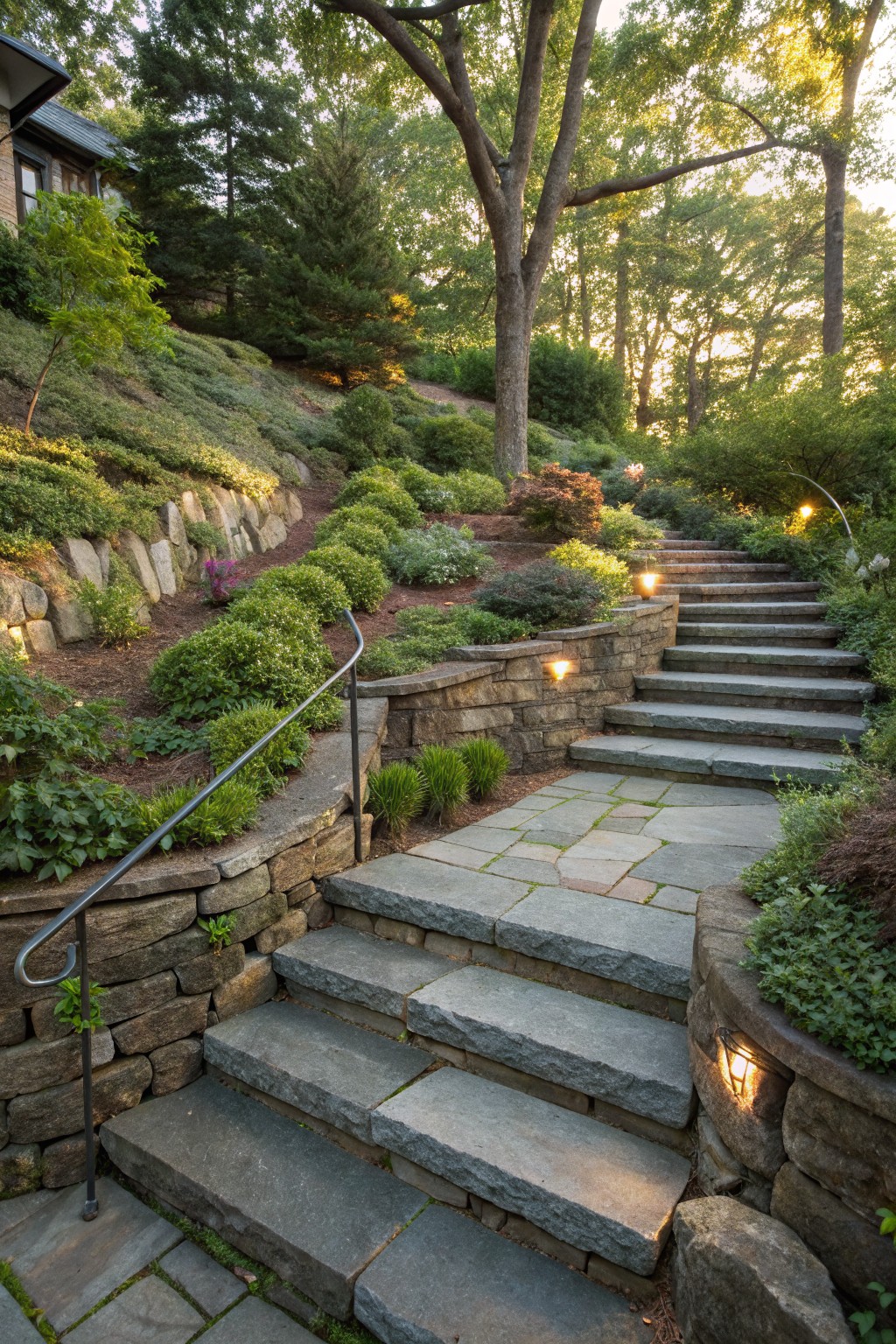
Handling a steep hillside doesn’t have to mean steep climbs or ugly fixes. These wide bluestone steps wind up the slope, supported by rugged stone retaining walls that keep soil in place. Plants fill in around the edges, softening the hard lines while the path stays practical. Low landscape lights along the way make it safe at dusk.
This works best on wooded lots or properties with natural elevation changes. Pick stones that match your area’s rock, like fieldstone or granite, and set them into the grade for stability. It’s low upkeep once planted with tough shrubs. Just plan for good drainage so water doesn’t pool on the treads.
Garden Paths with Checkered Pavers and Gravel
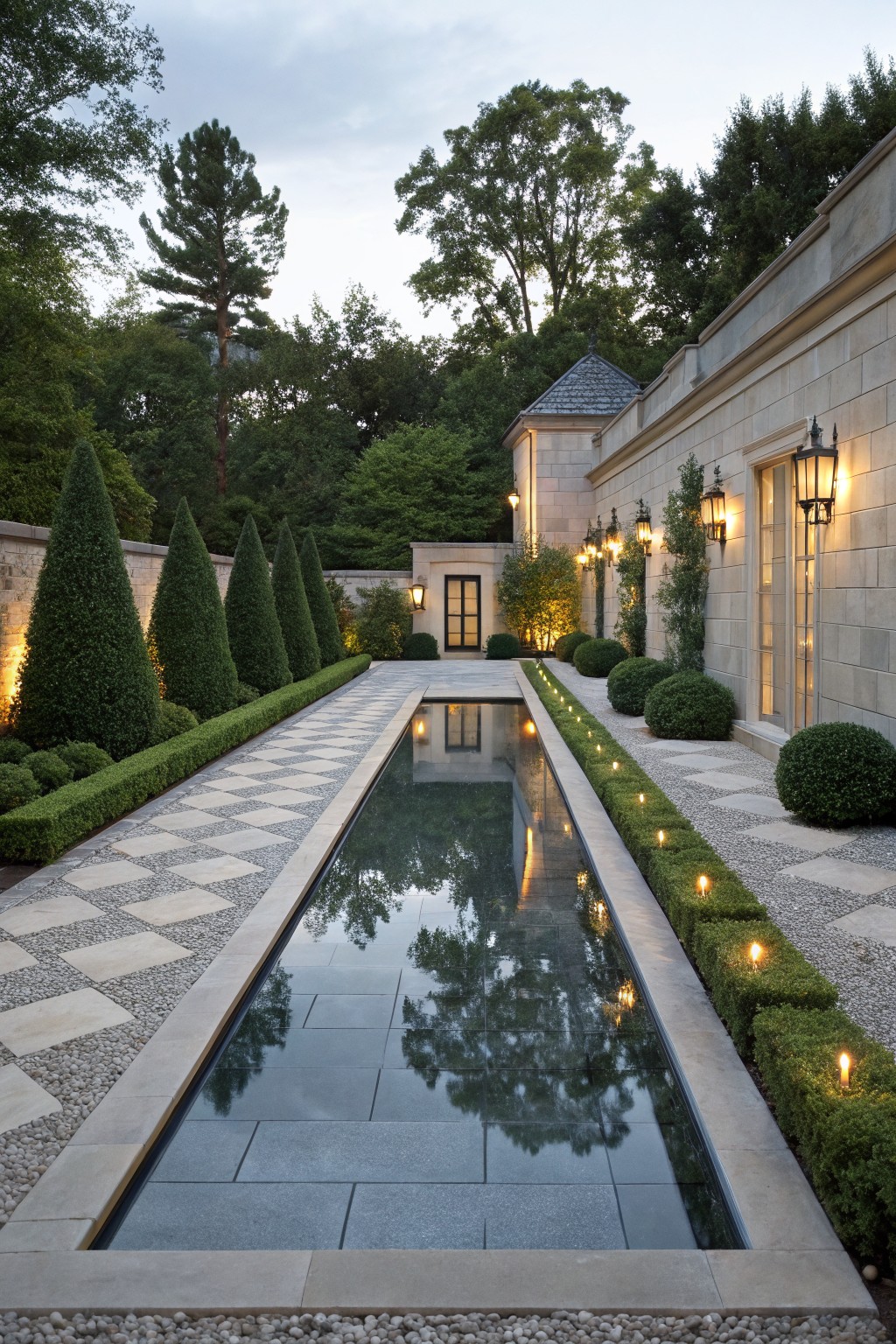
A simple way to give your yard a finished look is laying large stone pavers in a checkered pattern along a walkway, with gravel filling the gaps and edges. Here it’s paired with a narrow reflecting pool down the center, and low boxwood hedges on both sides. That setup keeps everything straight and orderly. It pulls the eye right through the space without much fuss.
This works best in longer, narrower garden areas where you want some structure. Stone walls or a house facade at the end make it feel complete. Go for pale pavers and white pebbles to stay bright, and add small lanterns for nights. Skip it if your yard is too curvy or wild, since the lines need room to breathe.
Fire Pit Circle with Pavers and Gravel
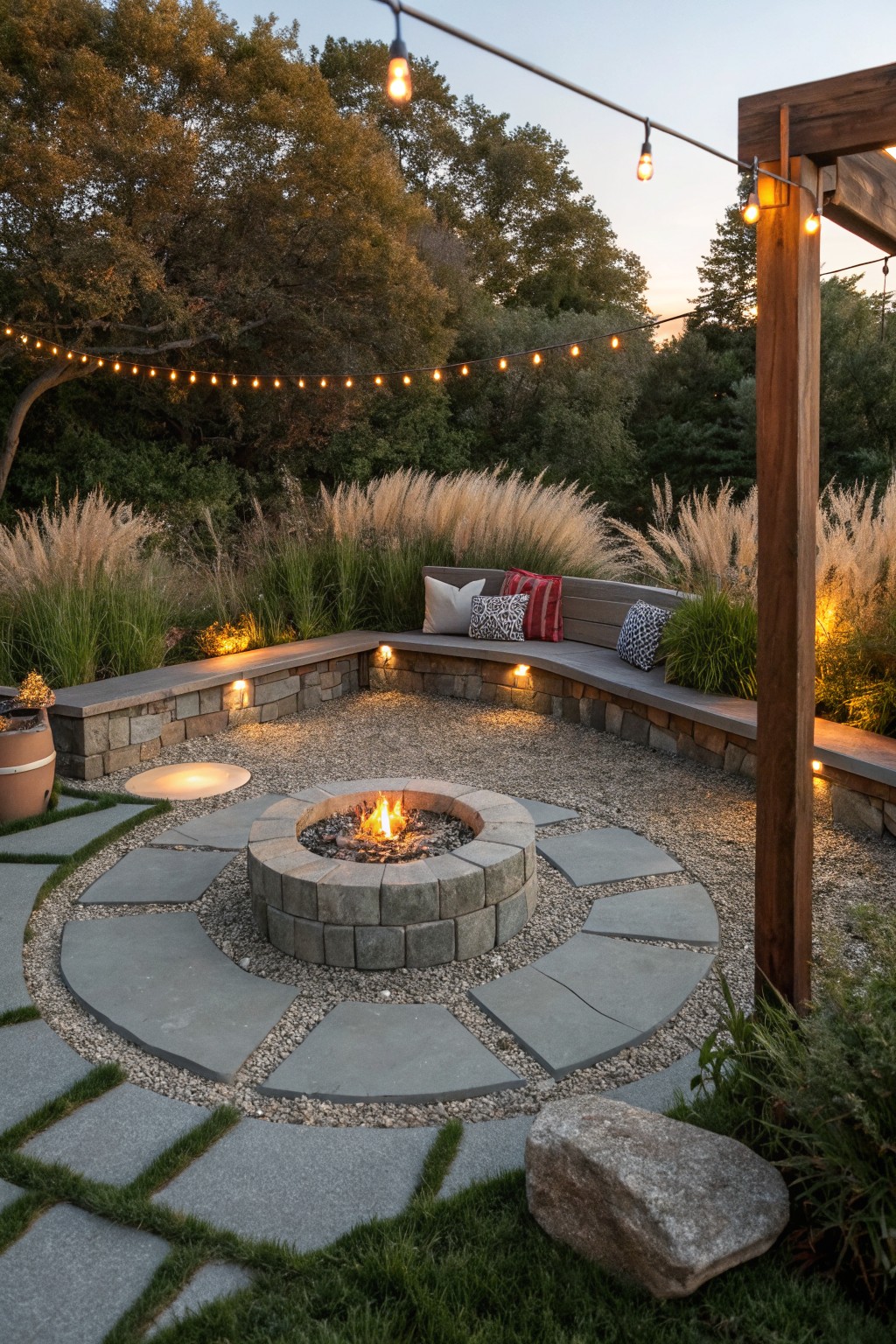
One straightforward way to pull together an outdoor gathering spot is with a simple circular layout around a fire pit. Here the stone fire pit sits right in the center, edged by wide bluestone pavers that curve out into gravel fill. It keeps things contained and easy to walk on, without needing a full concrete pour. The built-in stone benches along the edge make seating natural, no extra furniture required.
This setup works great in backyards with some slope or uneven ground, since the gravel handles drainage well. Add low grasses or a few rocks nearby to soften the edges, and it fits most any home style. Just keep the pavers level around the fire pit to avoid tripping, and you have a spot ready for evenings all year.
Gravel-Lined Paver Pathways
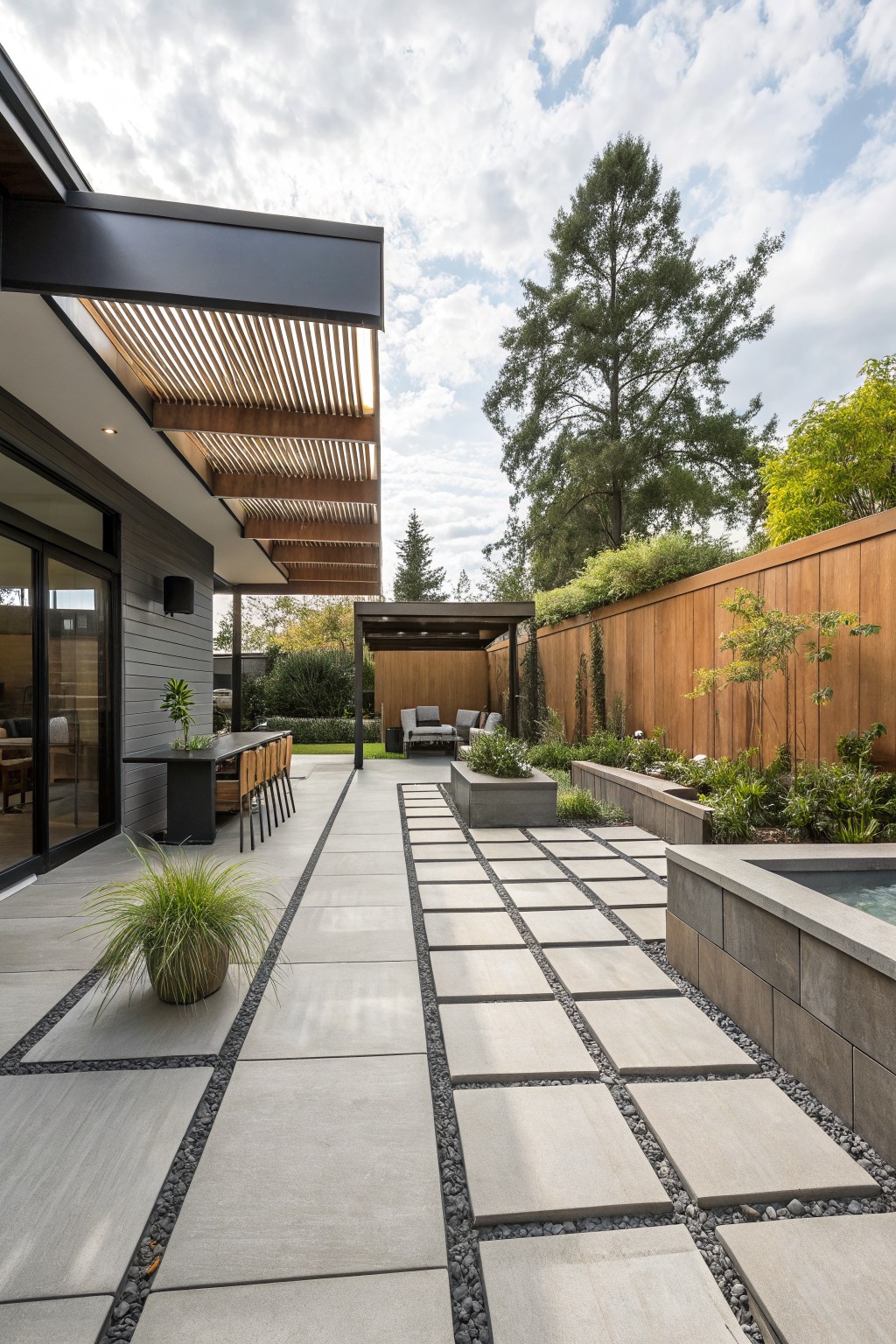
One clean way to handle yard traffic is laying large pavers with gravel channels between them. Here the wide gray slabs form straight runs across the patio, edged in dark pebbles that keep everything tidy and let water drain right through. It pulls the eye from the house doors straight to the loungers and spa without any mud or grass mess.
This works best in side yards or back patios where you need a low-fuss path to seating or a fire pit. Go for bigger pavers in backyards to cover ground fast, and pick gravel that locks in place. It suits modern houses mostly, but can refresh a plain lawn too. Skip fine pebbles, though. They scatter easy.
Pool Decks Edged with Pebbles
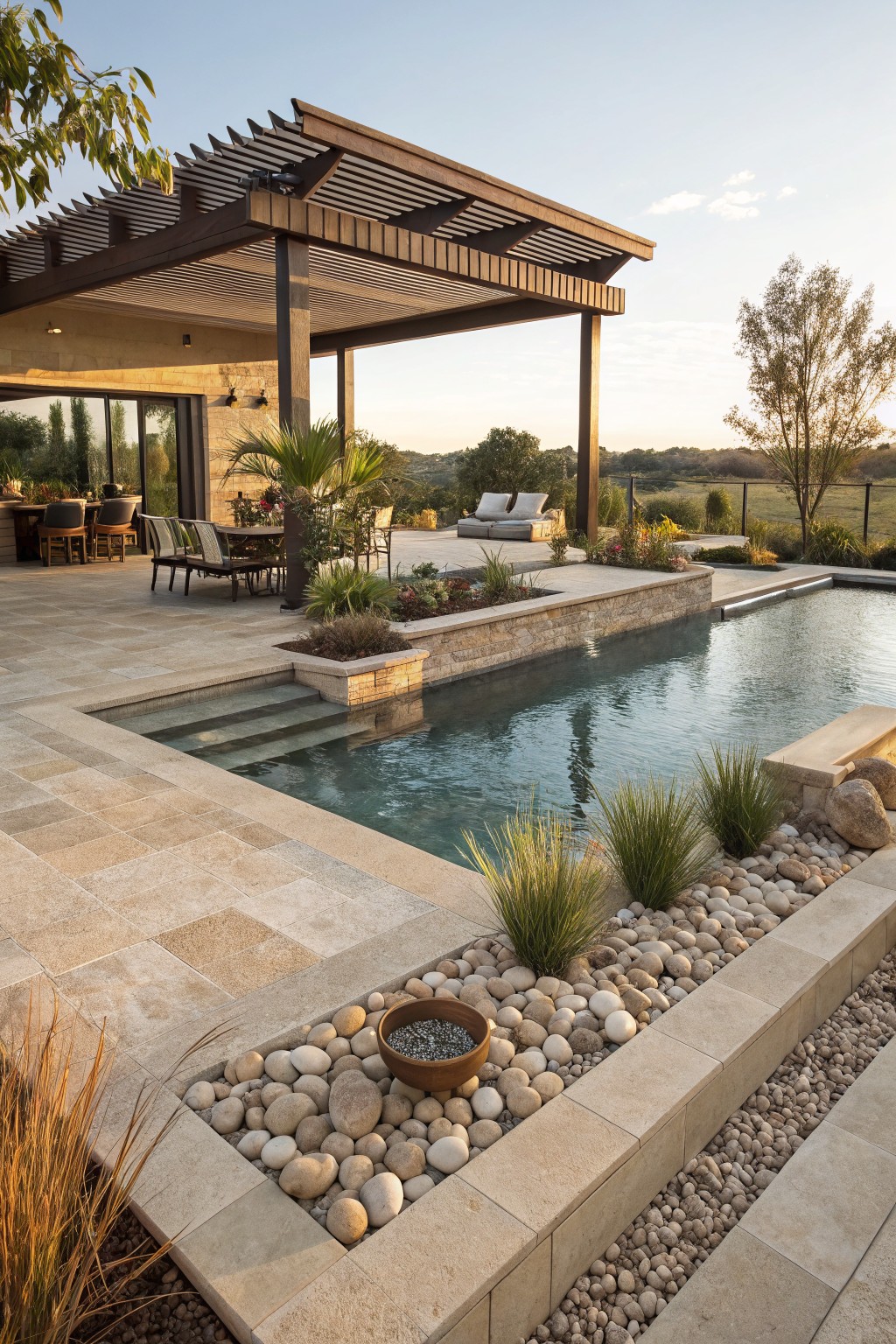
Smooth pebbles tucked into channels along these travertine pavers make the pool deck feel finished and easy to maintain. The rocks add a bit of texture without taking over, and they keep everything looking sharp next to the water and plants.
Try this on a sunny backyard pool or terrace where you want clean lines. Light pavers like these work well in warm climates… pair them with grasses for some height. Line the pebble strips with fabric first to cut down on weeds.
Curved Paver Paths with Rock Walls
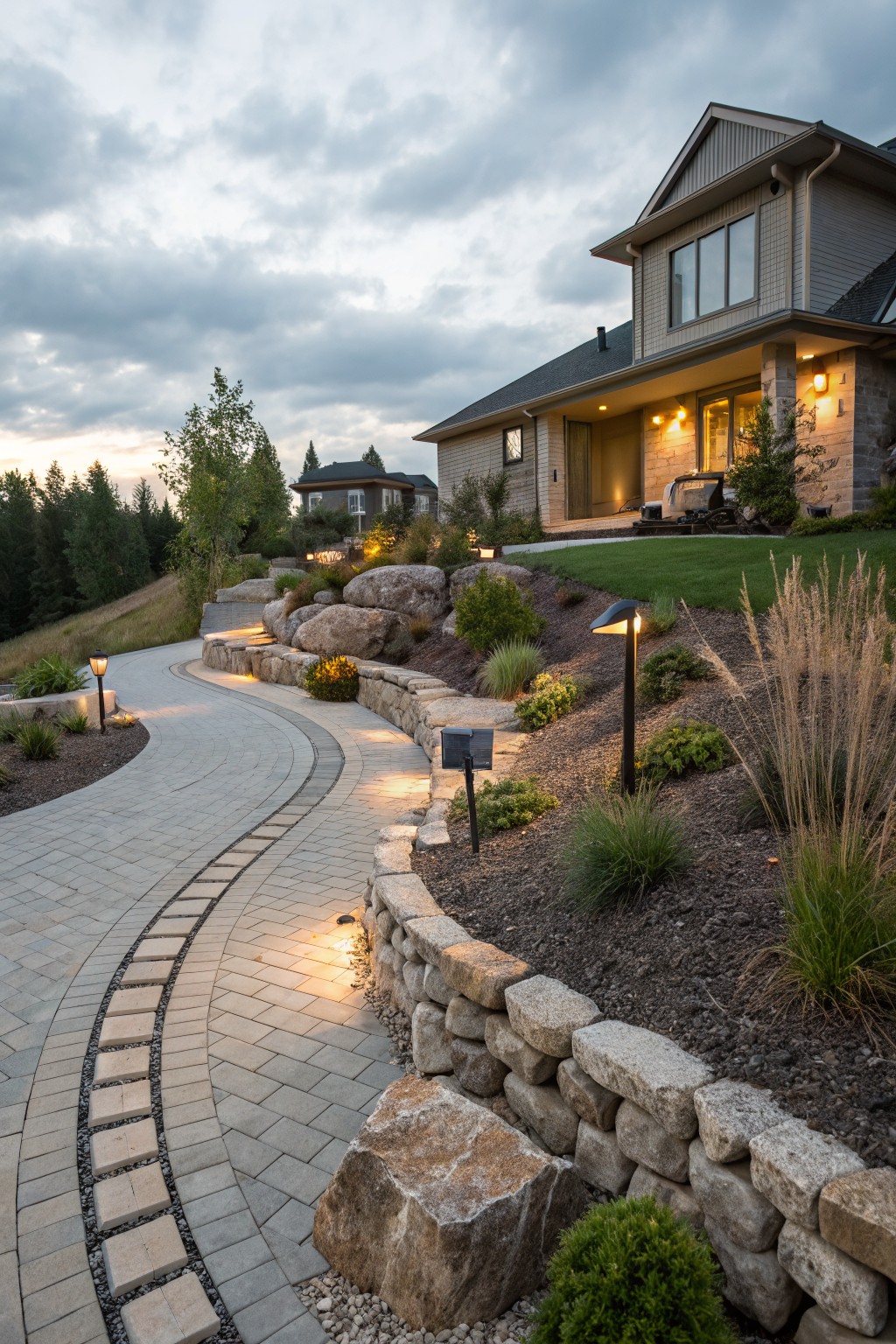
A winding paver path like this one makes getting to your front door feel easy and natural, especially on a slope. The gray pavers curve gently around boulders and plants, while sturdy rock walls hold back the soil. It gives a clean, finished look without feeling too rigid.
You can pull this off in hilly yards by laying pavers in a loose curve that matches your terrain. Stack local fieldstone for the walls to keep costs down and tie into the surroundings. Spot low-voltage lights along the edges for safe evening walks. Fits most homes, and the grasses stay low once established.
Pavers and Pebbles Around the Fire Pit
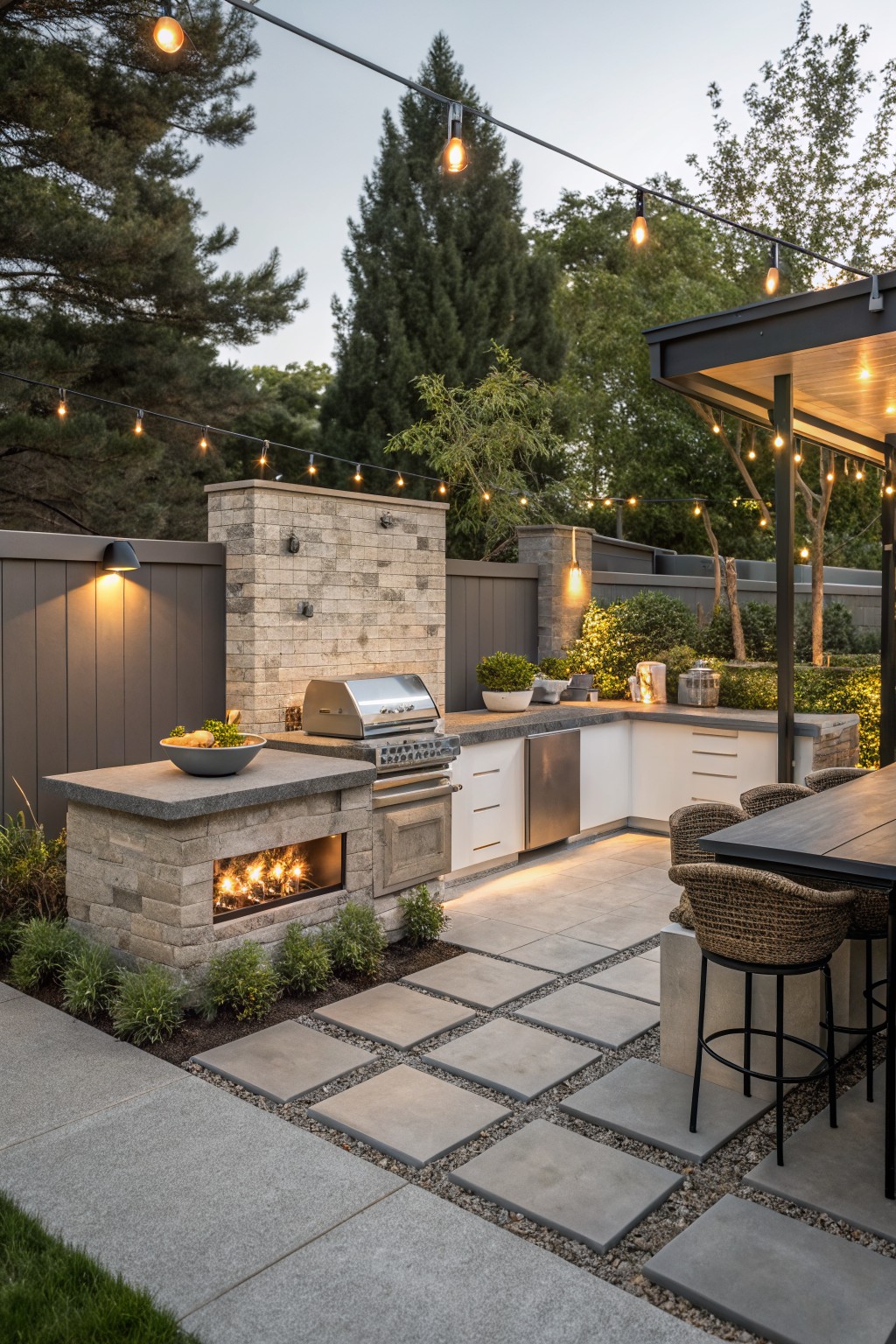
Large concrete pavers form the base here, with pebble strips tucked between them and edging the edges. That simple mix keeps things looking sharp and put-together without much upkeep. It ties the hard surfaces right into the yard, making the whole outdoor spot feel intentional.
You can pull this off leading up to a fire pit or kitchen island like this one. It suits modern backyards best, especially where you want clean walks that won’t turn muddy. Just pick pebbles that lock in place, and keep an eye on drainage so water doesn’t pool.
Herringbone Wood Pavers for Balcony Floors
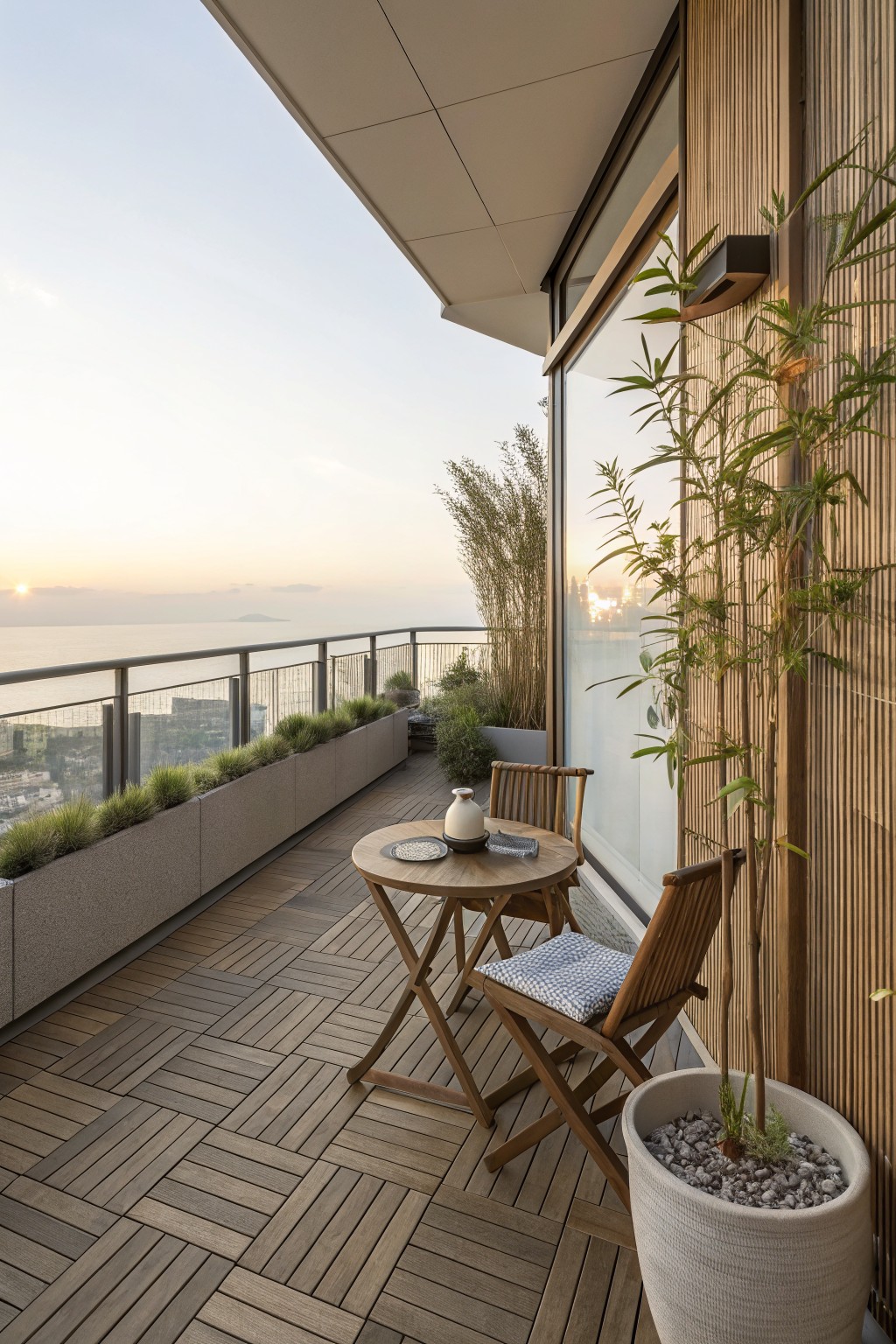
A simple way to make a balcony feel more finished is laying wood-look pavers in a herringbone pattern. It adds direction and rhythm to the floor without much effort. Here, the warm tones tie right into the bamboo screens and chairs, and those rock-filled pots at the base keep things grounded.
This setup works best on smaller urban balconies or terraces where you want low upkeep. Go for composite tiles that snap together, no pro install needed. Add grasses in planters along the rail and a few pebbles in pots for that clean edge. Skip it if your space gets heavy foot traffic, though. Might wear uneven.
Putting Green Edged with Rocks and Pavers
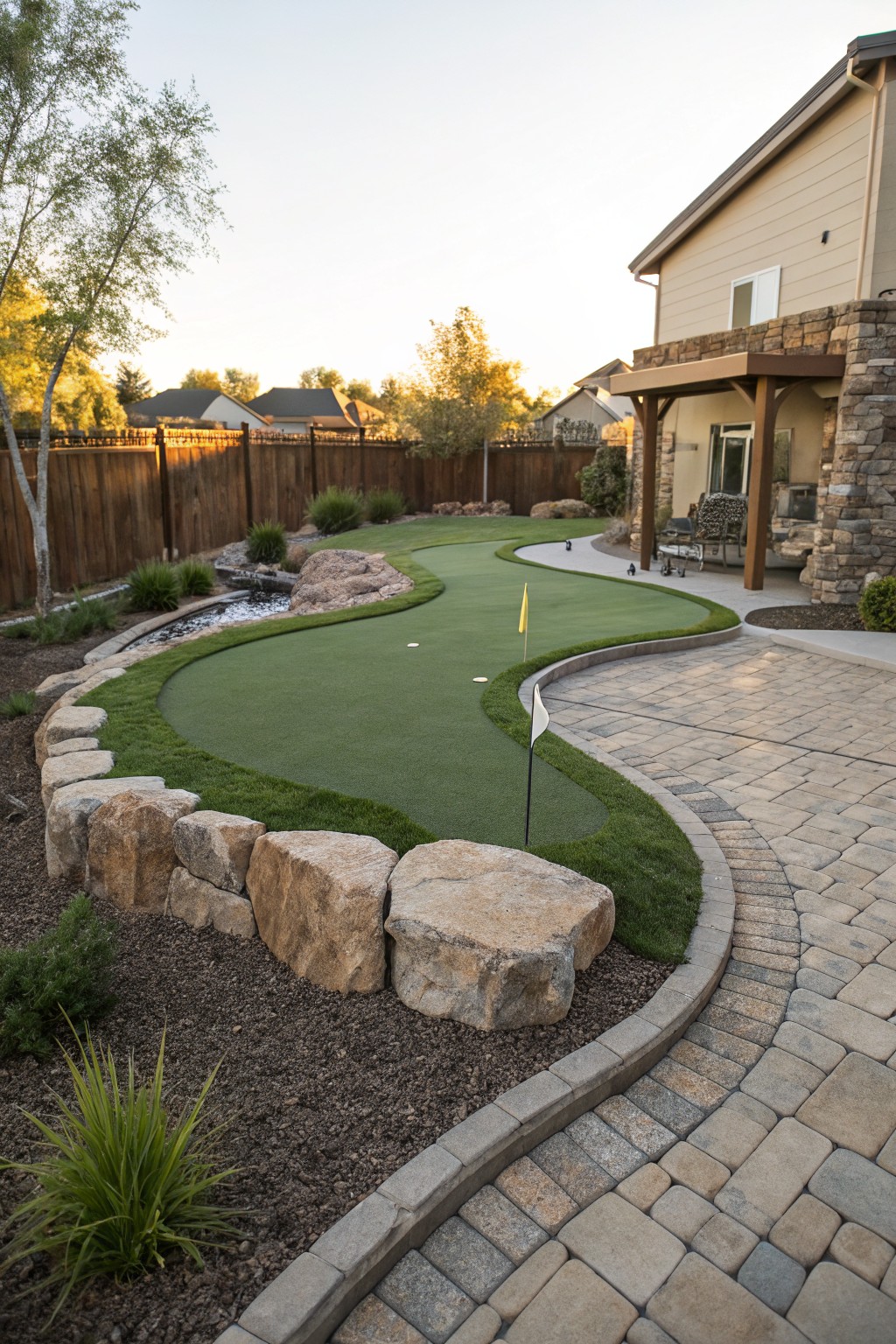
A simple way to add fun to the backyard is outlining a putting green with big rocks and pavers. Here the synthetic turf curves around like a real golf hole, held in place by stacked stones that look natural and sturdy. It keeps everything neat. No mowing needed either.
This works best in yards with room for play, maybe near a patio for easy access. Use it where you want low upkeep but some activity. Just make sure the rocks are set firm so they don’t shift. Suits modern homes or ones with a casual vibe.
Gravel Path with Spaced Pavers and Boulders
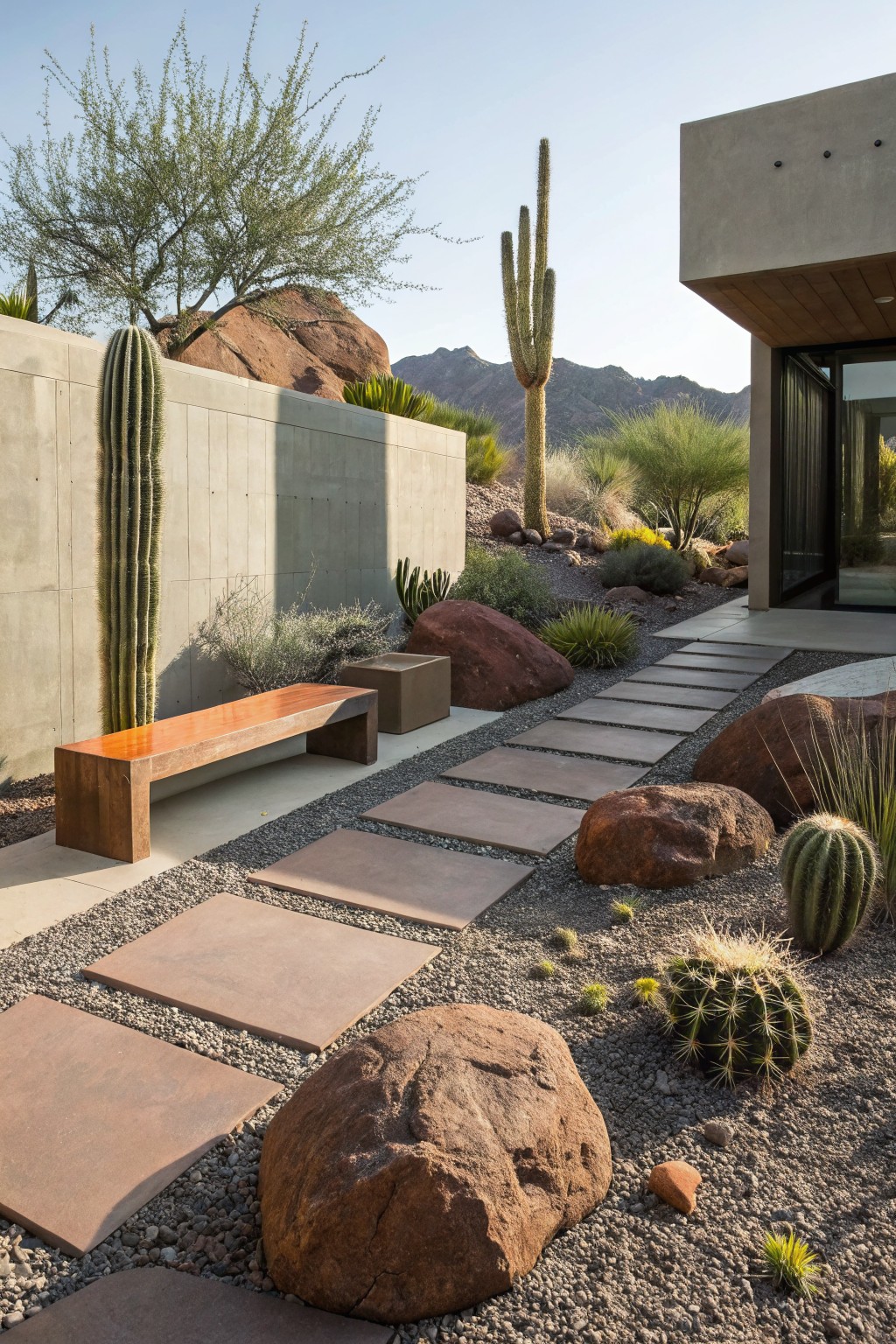
A simple way to guide people through the yard is spacing out wide terracotta pavers in a gravel bed. Big reddish boulders sit alongside, giving the path some structure without much work. Succulents and cacti tuck in naturally around them. It feels clean and desert-ready, no mowing needed.
This works best in sunny, dry spots where you want low upkeep. Match the paver color to your house or walls for a pulled-together look. Space the stones so you don’t trip… about two feet apart usually does it. Good for modern setups or any yard short on water.
Herringbone Brick Paver Patios
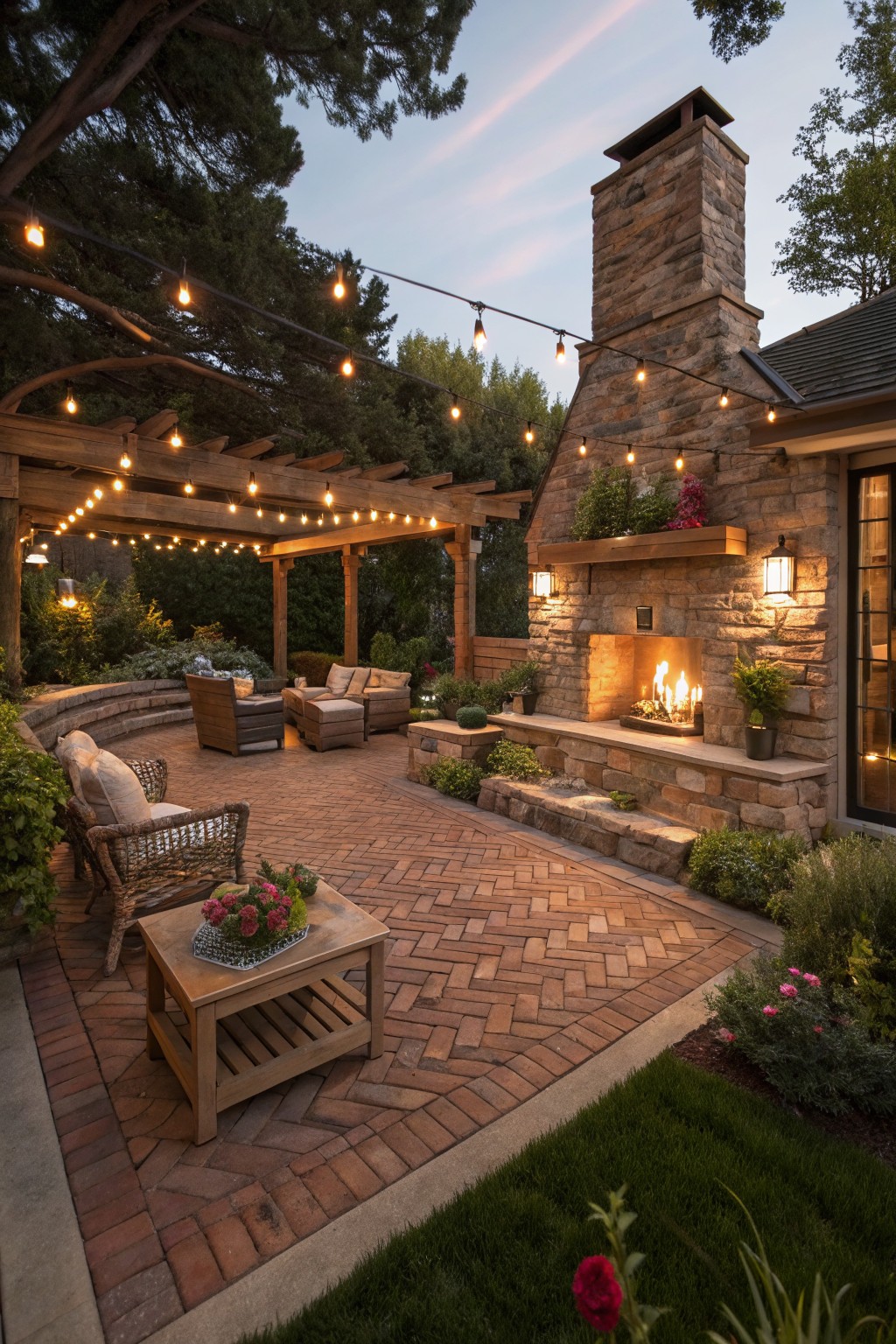
Brick pavers laid in a herringbone pattern make a patio feel put-together without much fuss. You see it here defining the open space around a built-in fireplace and seating. That zigzag layout adds some direction to the floor, which helps guide people through the area naturally. It holds up well outdoors too, and the reddish tones play nice with stone and wood nearby.
Try this on a backyard patio where you want room for chairs and a table. It works best in milder spots, not too shady, so the bricks don’t stay damp. Pair it with simple edging or low plants along the sides. Just make sure the base is solid first, or it might shift over time.
Frequently Asked Questions
Q: How do I level the ground before laying pavers?
A: Rent a plate compactor after you dig out 4 to 6 inches of soil. Dump in crushed gravel, wet it down, and compact in layers until it’s rock solid. Your pavers sit flat and stay put that way.
Q: What size rocks work best next to pavers for paths?
A: Pick 3/4-inch gravel to nestle right up against the edges. It fills gaps without washing away in rain. Larger ones, like 2-inch river rocks, shine in borders.
Q: How do I stop weeds in rock areas around pavers?
A: Roll out landscape fabric first, then pile on the rocks. Cut slits for pavers to lock everything down. Spot pull any strays early.
Q: Can I DIY this in a weekend?
A: Tackle a small patio or path, yeah. Clear the night before, work steady through Saturday. But hire help for big curves… they save headaches.
