

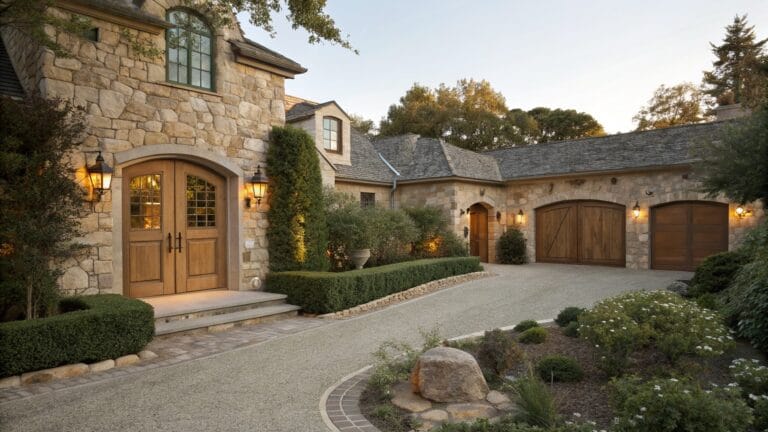
When you drive up to a home, the way the driveway and entrance unfold through rock landscaping often decides if the place feels solid and lived-in from the start.
I’ve redone part of my own entry with larger river rocks along the edges, and it changed how the whole front yard flows without needing constant upkeep.
The strongest designs layer stones to create subtle curves and borders that guide cars and footsteps naturally, while letting plants fill in over time.
They stand up to rain and tires better than smoother surfaces, keeping that clean look season after season.
A couple of these sloped pathway ideas would work well for adapting to uneven ground like what I deal with.
Rock-Edged Gravel Driveway Entrance
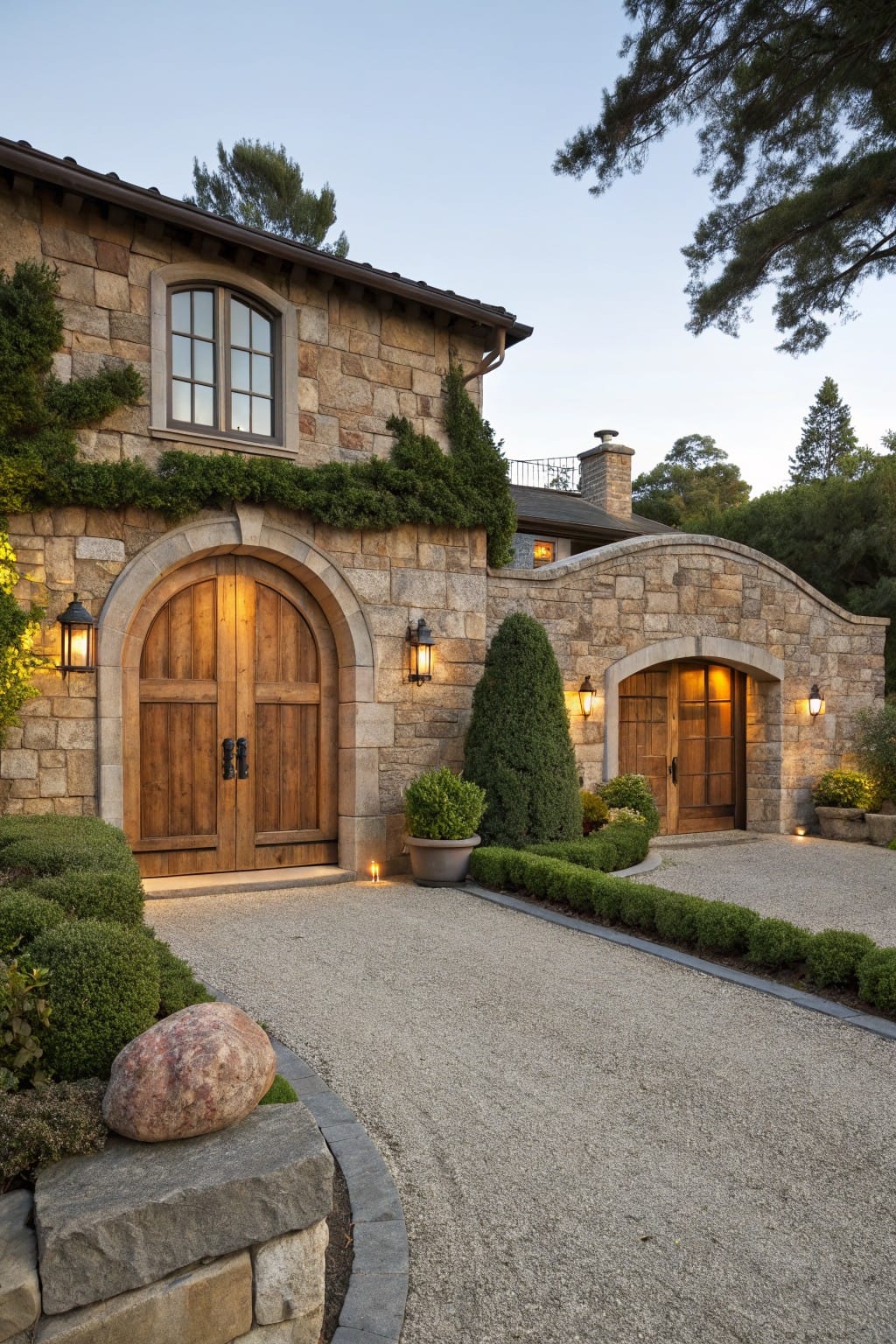
A gravel driveway like this one gets its clean look from low stone walls that hold everything in place. Paired with boxwood hedges along the edge and a big boulder tucked in, it creates a straightforward path up to the house. The setup feels solid and natural, especially with the house’s stone build matching right in.
This works best on larger properties where you want low upkeep but still some structure. Gravel drains well, stone keeps weeds out, and the shrubs stay trimmed easy. Skip it if your street floods a lot, but for a wooded lot or hillside home, it directs traffic neatly to the door.
Boulder Path Frames the Driveway Entrance
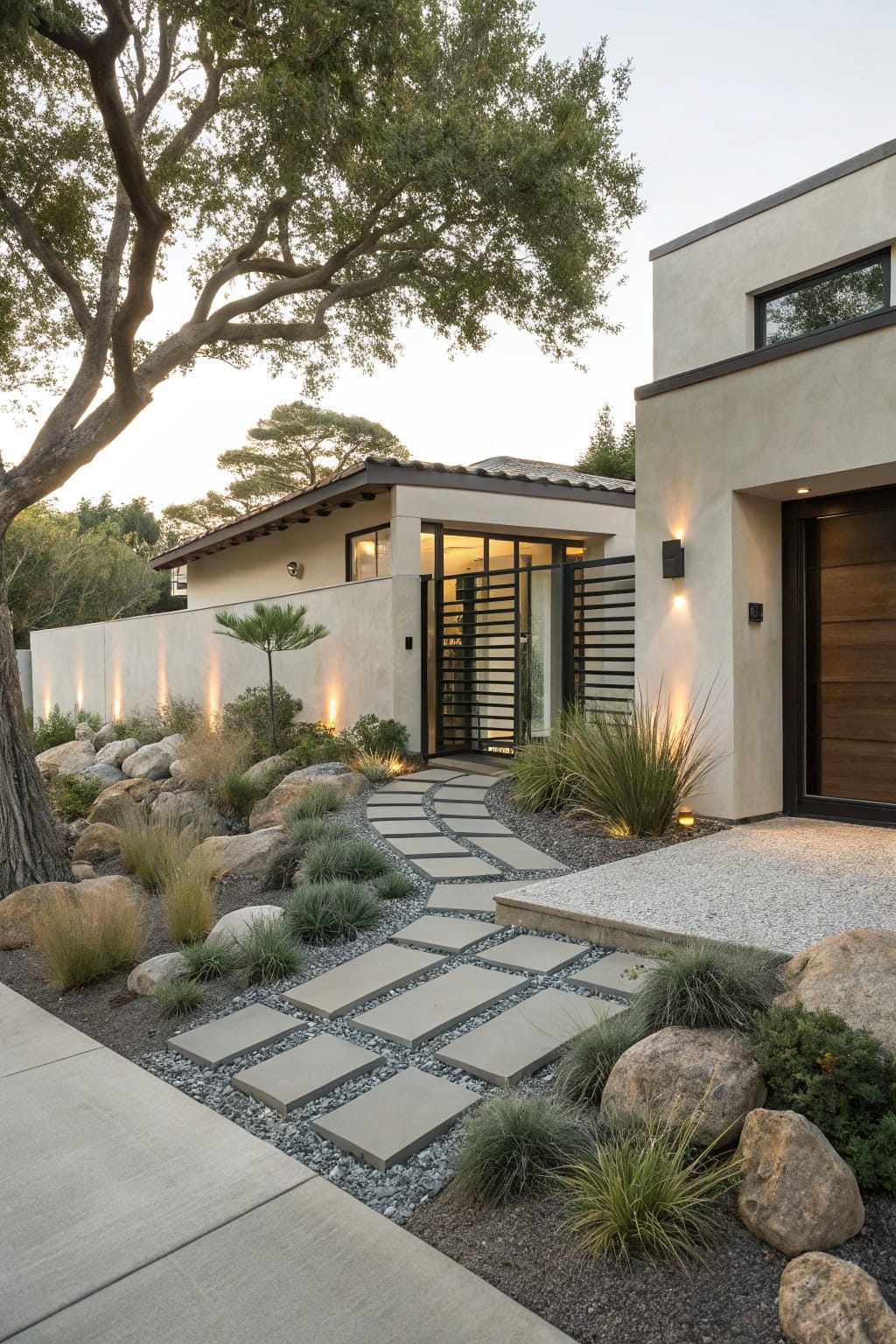
Big boulders scattered along a driveway make a strong first impression without much upkeep. Here they sit right by the street edge, mixed with gravel and clumps of tough grasses, leading to wide concrete stepping stones. The path feels natural, like it grew there. It pulls your eye straight to the front door past the garage, and those rocks add weight without crowding the space.
This works best on homes with clean lines, like stucco or modern builds in dry spots. Grab local stones for that real look, space the pavers so you step comfortably, and tuck in low plants that won’t need watering. Skip it if your lot floods. Easy to copy on a budget… just start with the rocks.
Dry Creek Bed Driveway Path
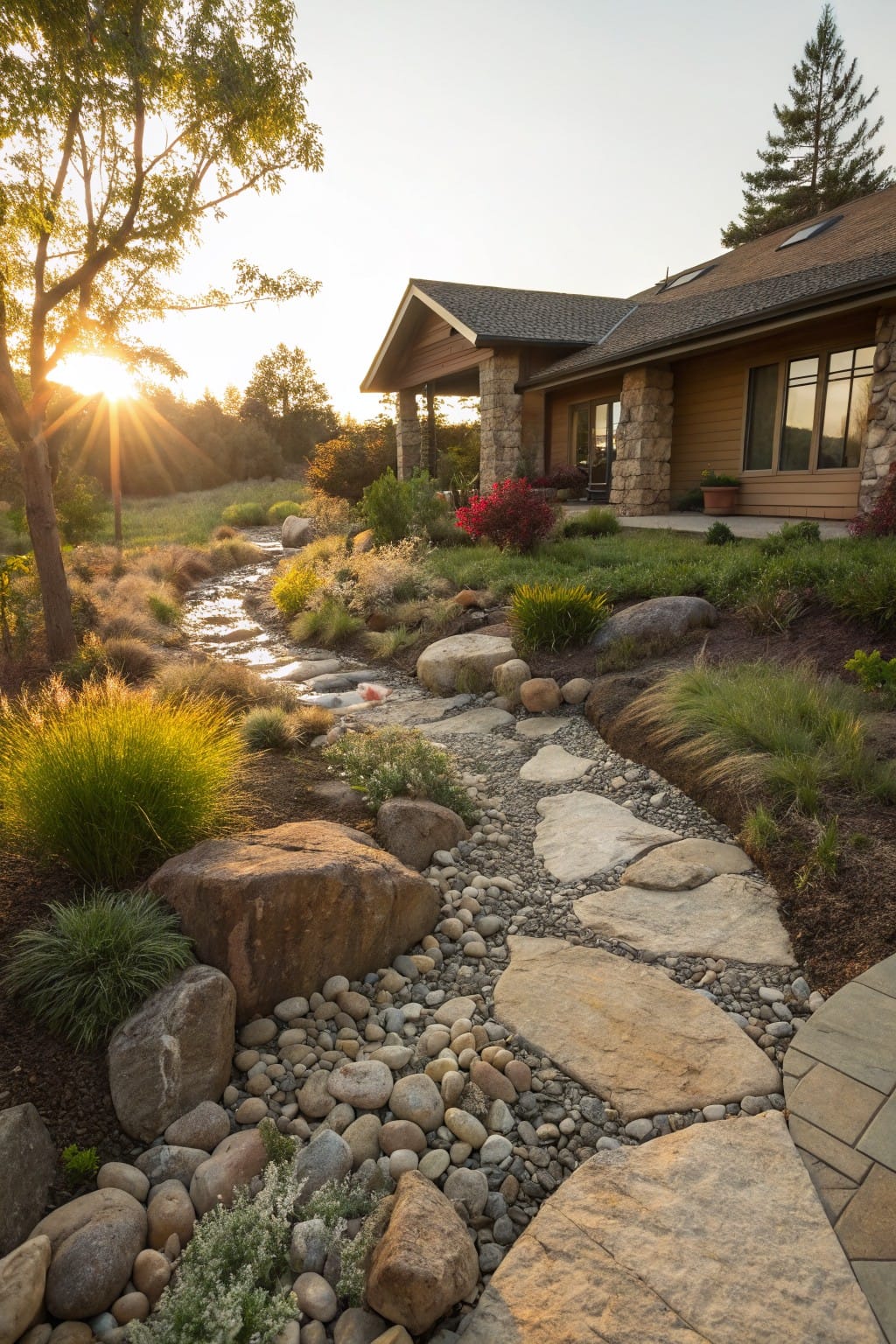
A dry creek bed makes a simple path that leads right up to the house door. Folks use big boulders and river rocks to line it, with gravel filling in the middle and flat stepping stones across for walking. Grasses and low plants tuck in along the edges. It pulls off that natural stream look without any water running through. Plus it handles rainwater well, sending it off to the sides instead of pooling.
This works best on a gentle slope where you want low upkeep. Pick stones from nearby if you can, to keep costs down and the style local. Drought tough plants like feather grass fill it out without much watering. Fits homes with a woodsy or craftsman feel. Just keep the path wide enough for cars if it’s your main drive.
Circular Boulder Bed Welcomes Guests
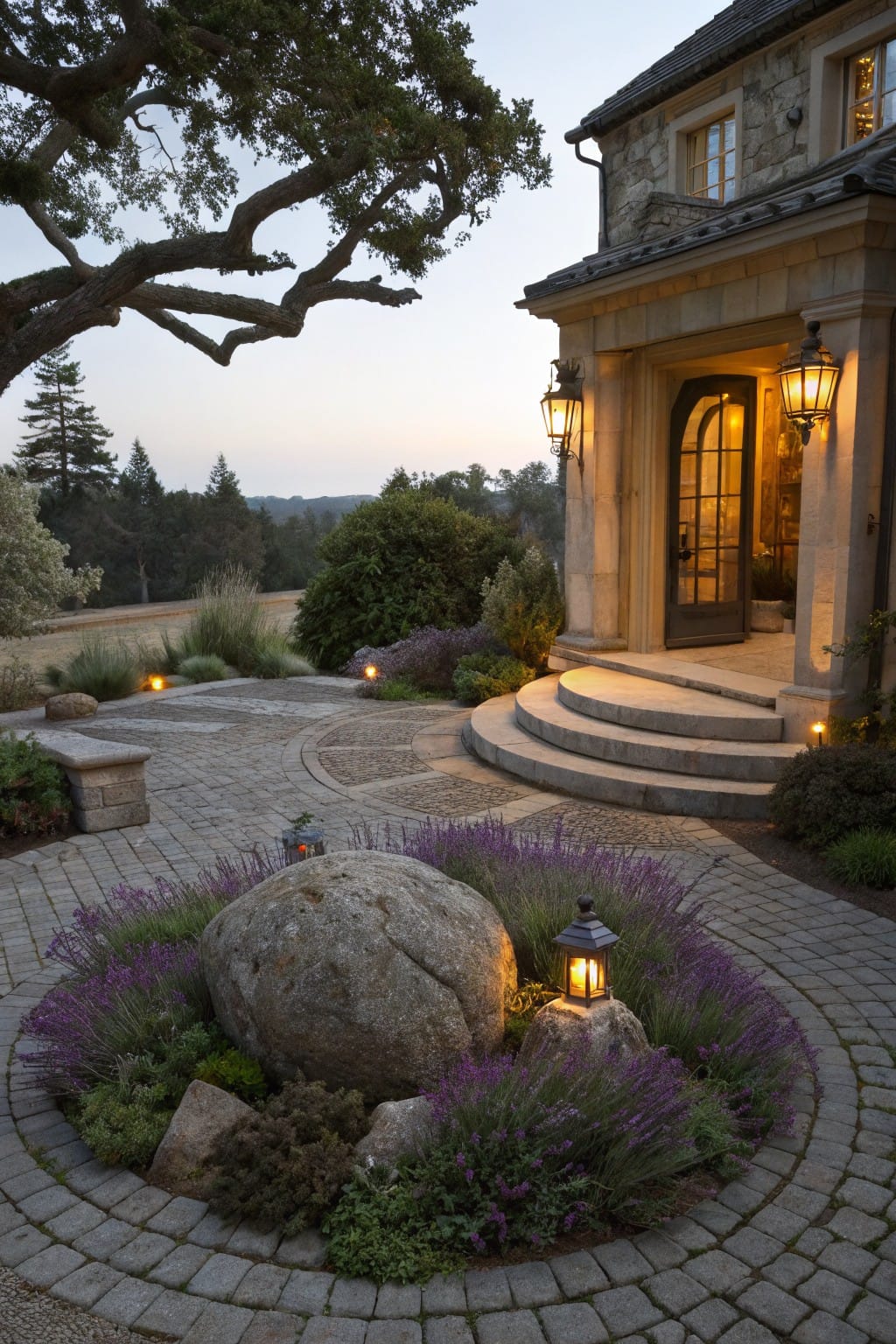
A simple circular planting bed packed with a massive boulder and flowing lavender makes a strong statement right at the driveway entrance. It pulls the eye along the curved path and up to the house steps without any extra fuss. That big rock feels natural and solid. Paired with the soft purple plants, it ties into the stone architecture nicely.
You can pull this off in front of homes with a rustic or hillside vibe. Pick a boulder that sits heavy on the ground, then fill around it with tough growers like lavender that don’t need much water. Tuck in a lantern for night light. Skip anything too tall so it doesn’t block the door view.
Stone Retaining Walls Frame a Curved Driveway Path
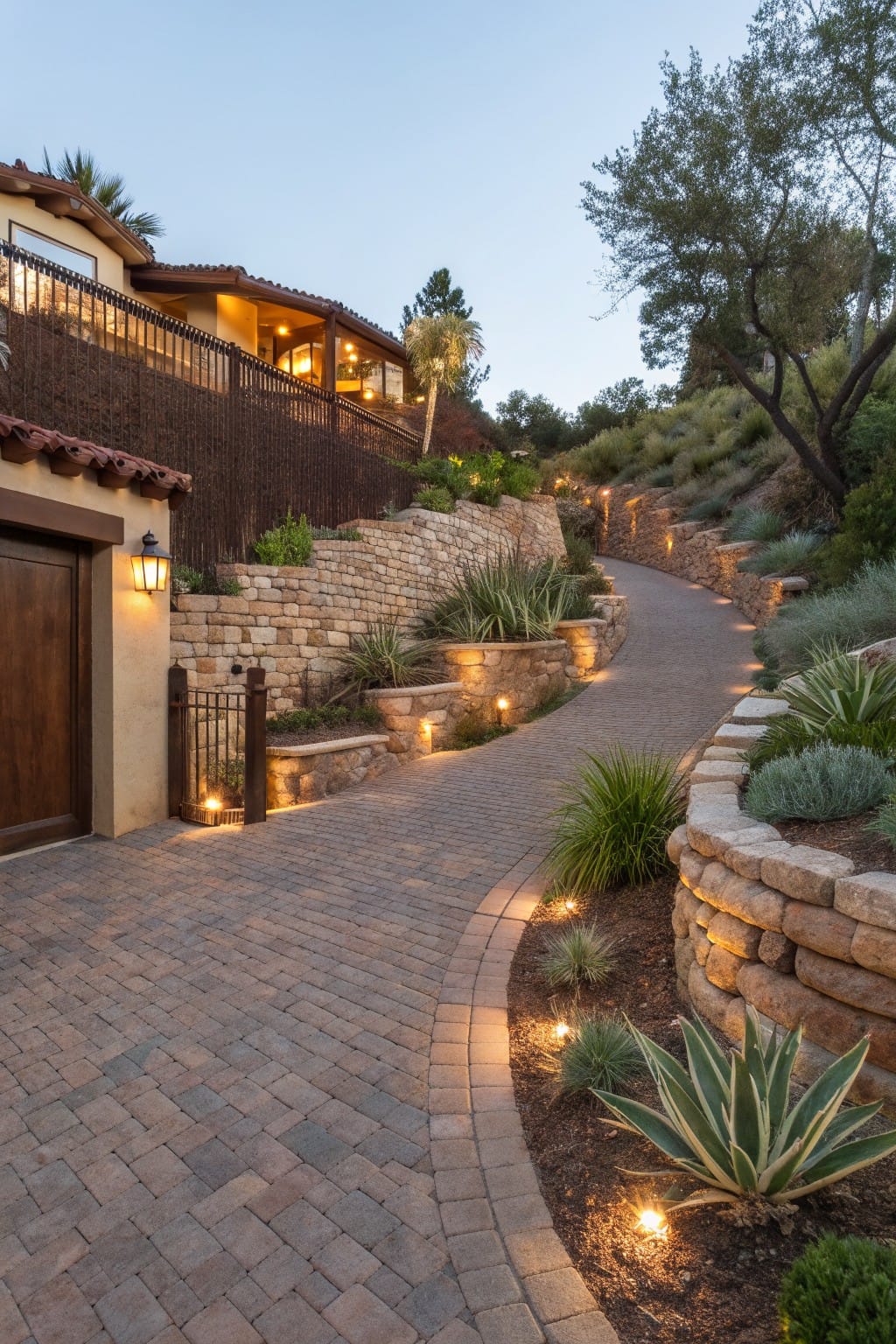
These dry-stacked stone walls run along the driveway and up the slope, holding everything in place while the paver path curves gently around. Tucked-in lights along the base and in the walls glow softly, guiding the way without being too bright. It’s a practical setup that turns a tricky hill into something that feels planned and welcoming right from the street.
You can pull this off on most sloped lots near the entrance or garage. Match the stone to local rock for a natural look, plant tough stuff like agaves in the pockets, and use simple low-voltage bulbs. Just space the lights evenly so no dark spots trip folks up at night.
Winding Stone Path to the Entry

A simple winding path made from irregular flagstone slabs set right into gravel works so well here. It pulls your eye straight to the turquoise door without feeling too planned out. The rocks and low plants along the edges make it blend into the slope, like the yard just grew that way.
You can pull this off on any hilly lot with natural stone nearby. Lay the slabs loose in gravel for good drainage, add a lantern or two for night. It suits older homes or cabins best, keeps upkeep low, and watch the gravel doesn’t wash out in heavy rain.
Boulder Edges for Driveway Entrances
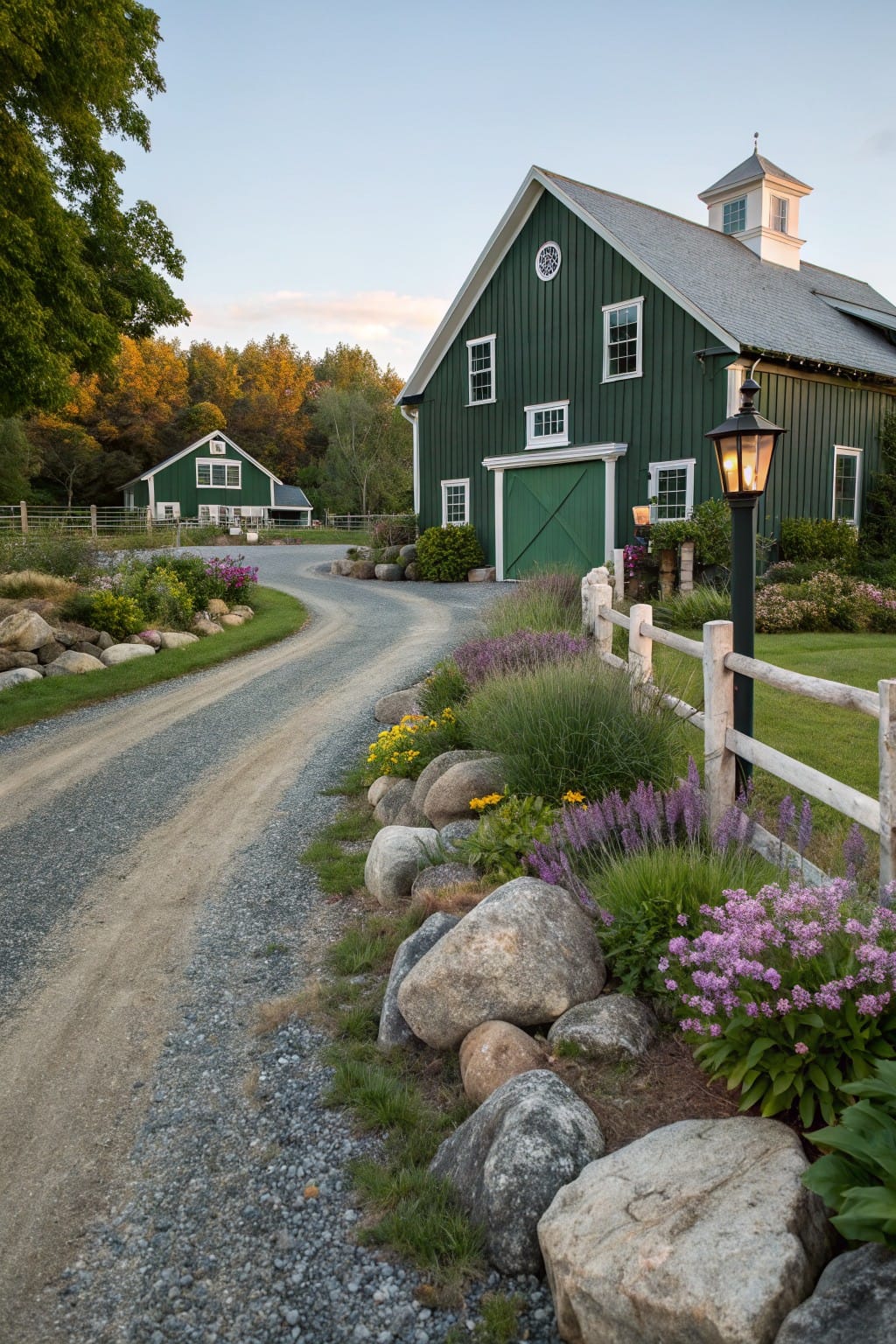
Big boulders tucked along a gravel driveway like this one make the whole entrance feel solid and settled into the land. Paired with simple flower clumps and tall grasses, they create a low-key border that draws your eye right up to the barn without any fussy trimming needed. The rocks do most of the work here, holding back the soil and giving everything a natural heft.
This setup suits country homes or farms with winding drives. Hunt for fieldstones in sizes from basketball to car-sized, then fill gaps with perennials that bloom in summer and fall… think pinks and yellows that handle dry spells. Skip tiny pebbles; go oversized for real presence, and it stays pretty much hands-off year round.
Winding Flagstone Path to the Entry
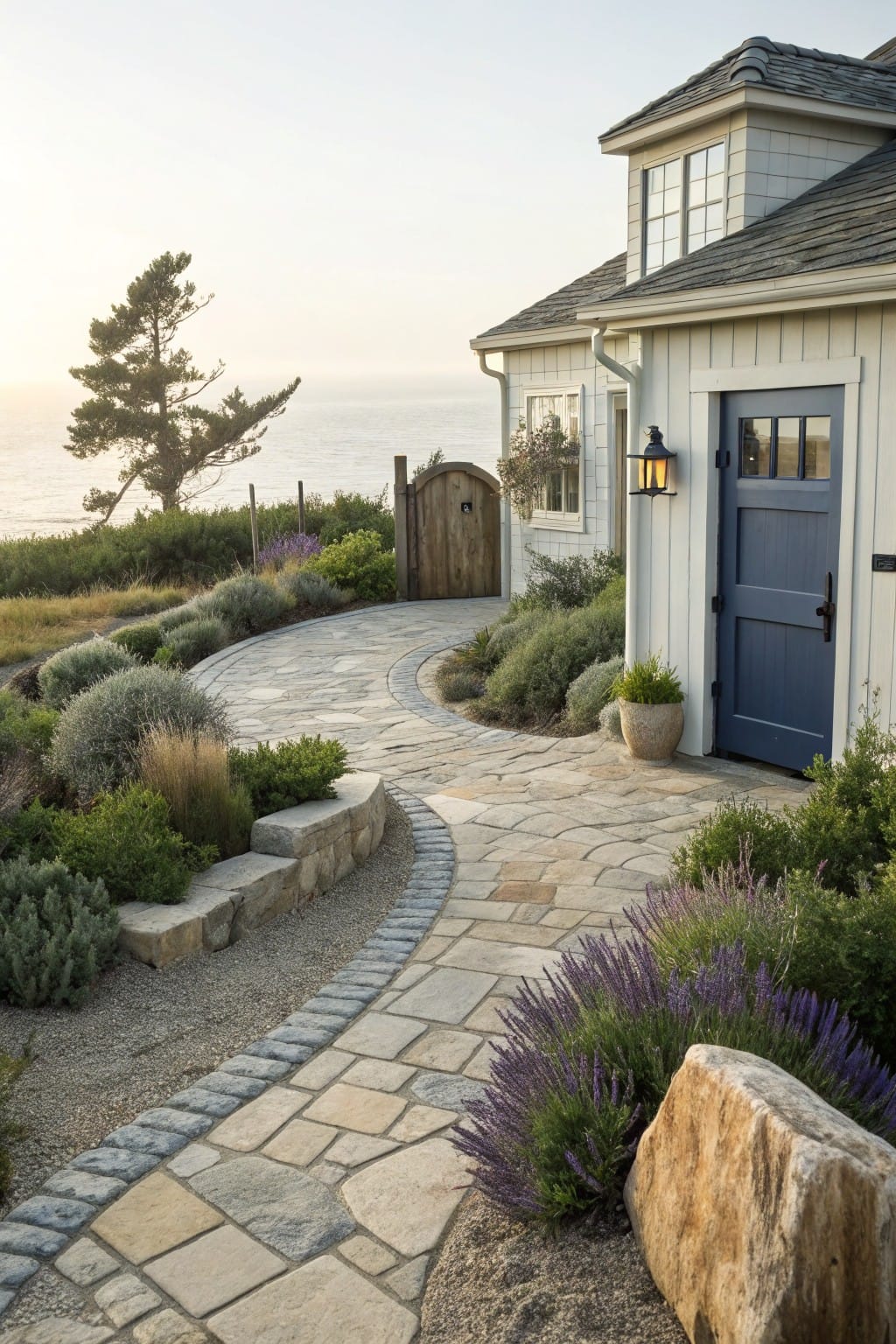
A good entry path doesn’t have to be straight or fussy. Here, irregular flagstone pavers curve through gravel borders and clumps of lavender, leading right up to a simple blue door. It feels natural and unhurried. The rocks give it weight and permanence without looking too manicured.
This works best on coastal lots or sloped sites where you want to tie the house into the landscape. Pick stones in earthy tones that match your region. Edge with gravel for easy drainage, and add tough plants like lavender or grasses. Just keep the curve gentle so it’s walkable in boots… or heels.
Circular Driveway with Central Fountain
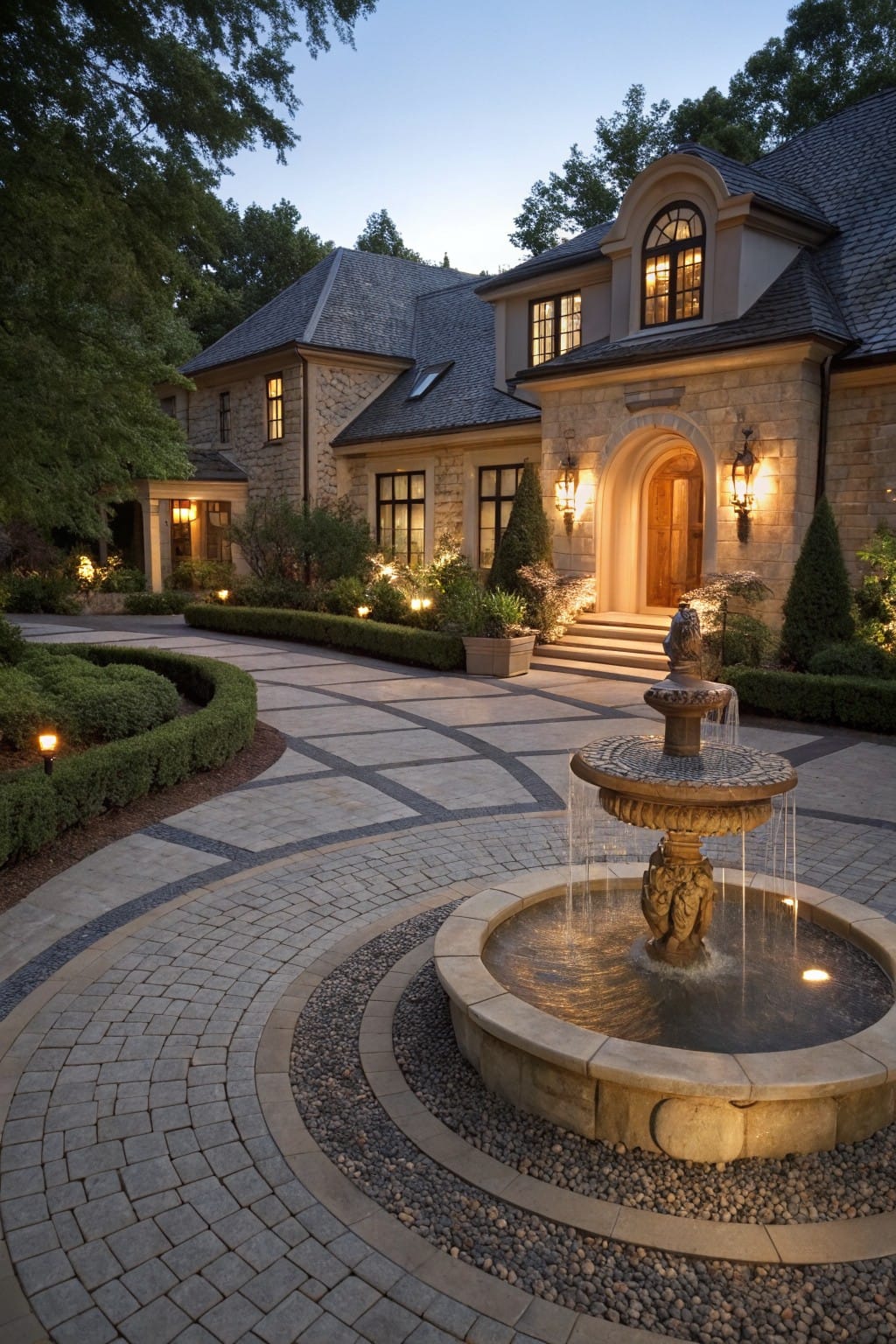
A circular driveway like this pulls everything together around a stone fountain at the center. The fountain sits on a raised base with water spilling down, and the driveway wraps around it in pavers edged with gravel and low boxwood hedges. It turns a simple arrival area into something that feels planned and welcoming, especially with the house’s stone facade tying right in.
This works best on bigger lots where you need room for cars to turn without backing up. Go for durable pavers that match your home’s stone, keep plantings neat and low around the edges, and add path lights so it shines at dusk. Skip it if your space is tight, though. It can overwhelm smaller setups.
Lavender-Lined Stone Pathway
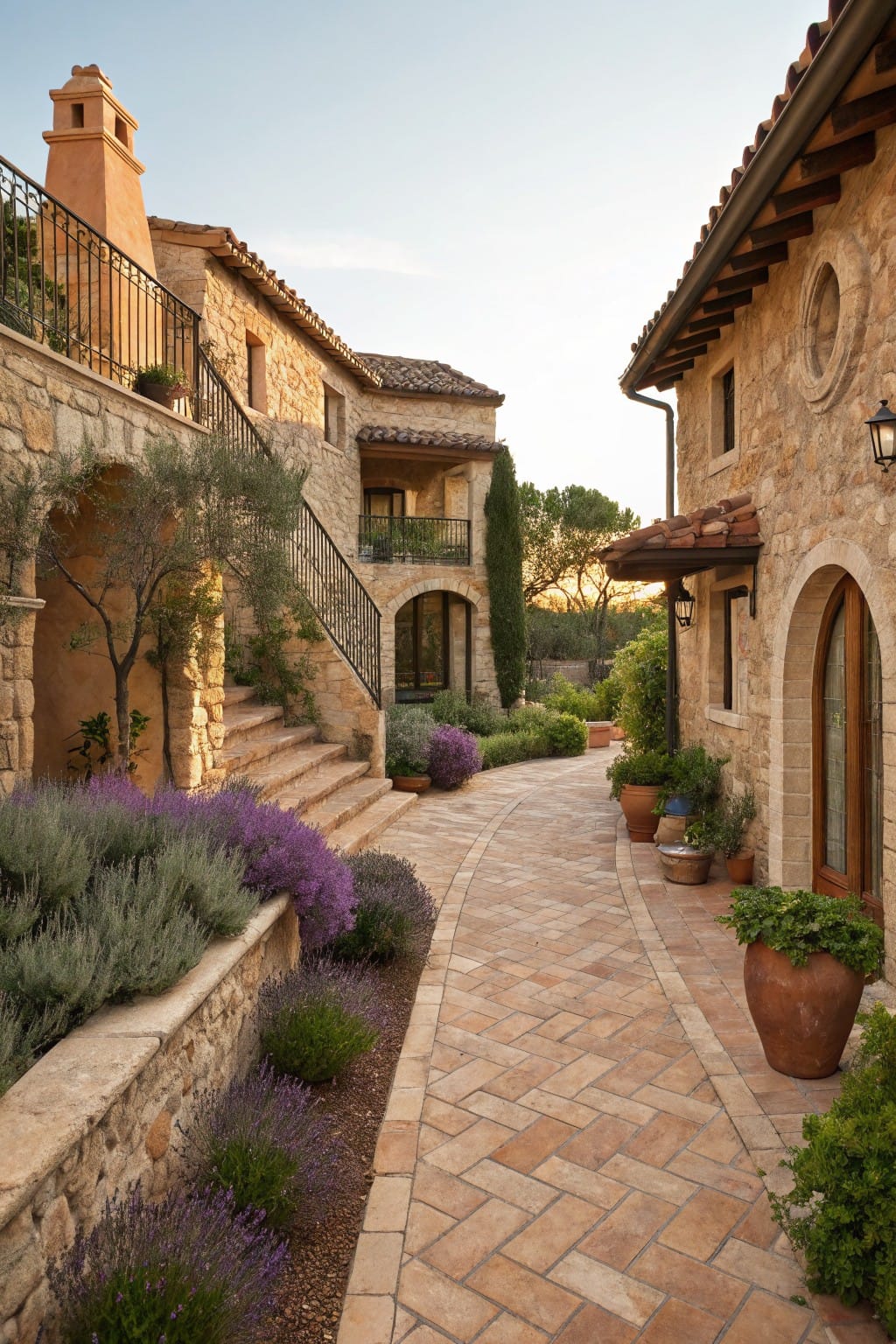
A good entrance path doesn’t need to be straight or fancy. This one uses simple terracotta pavers in a gentle curve, right next to low beds of lavender. The purple blooms give steady color through summer and that nice herby smell when you brush by. It makes walking up feel easy and pleasant.
Try this on a side or front approach where space is tight. Stone walls hold back the plants, and big clay pots add spots of green without much planting. It fits older stone houses best, stays low maintenance if you pick the right lavender variety. Just keep the path clear for footsteps.
Gravel and Stepping Stone Entry Path
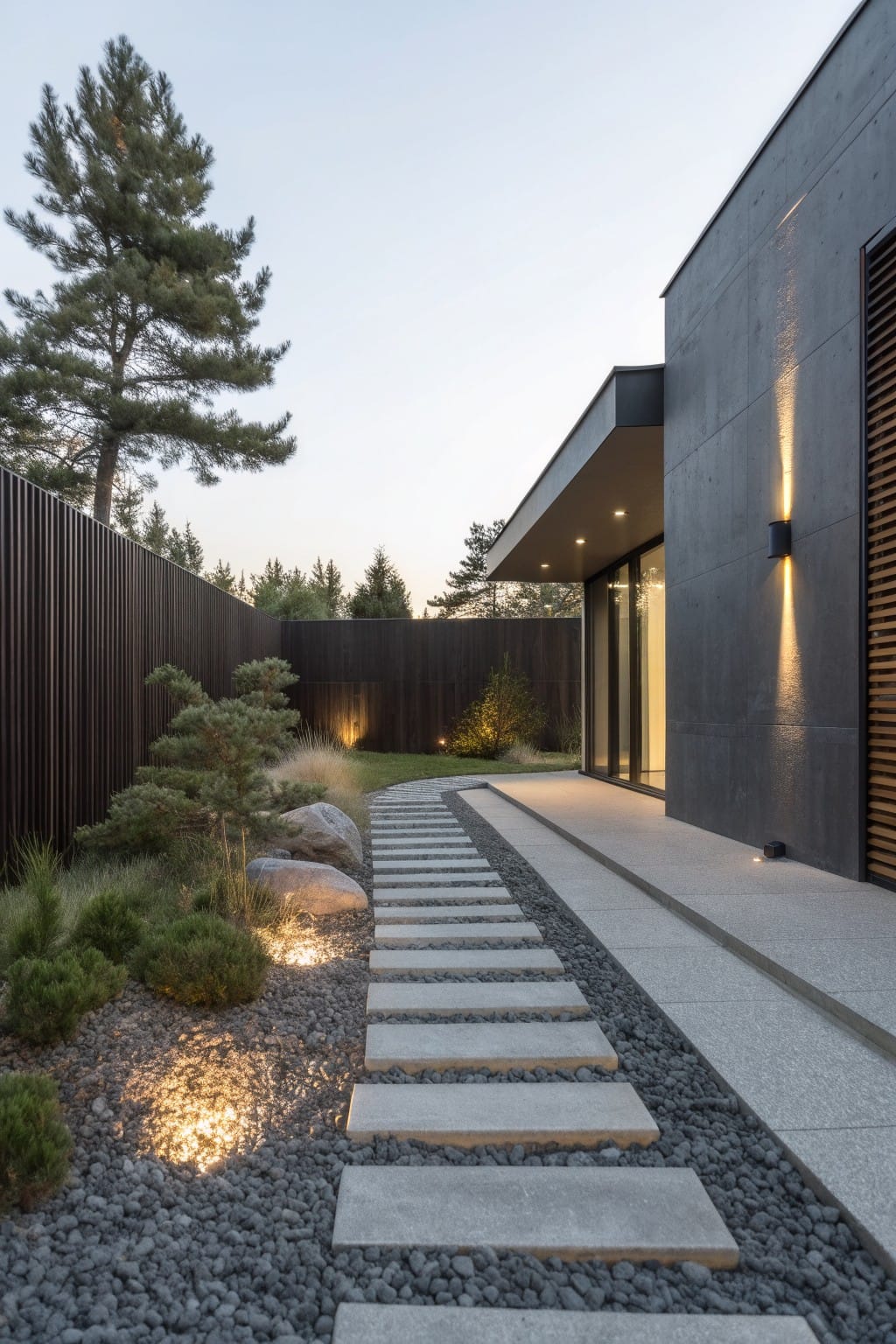
One straightforward way to make your front entrance feel special without much upkeep is a gravel bed with wide stepping stones. Here, large boulders sit among low grasses and shrubs, and the path winds gently toward the house. The dark gravel keeps weeds down, and those simple concrete slabs give just enough footing. It pulls your eye right to the door, especially with soft uplights along the way.
This setup works great on homes with clean lines like this modern one, where the gray stone facade meets a simple wood fence. Lay it in a side yard or along a driveway edge to save on paving costs. Go for rounded river rock if you want a softer feel, but watch the stones don’t shift over time. Add a pine or two for height, and you’ve got a path that looks good year-round.
Curved Driveway with Border Plantings
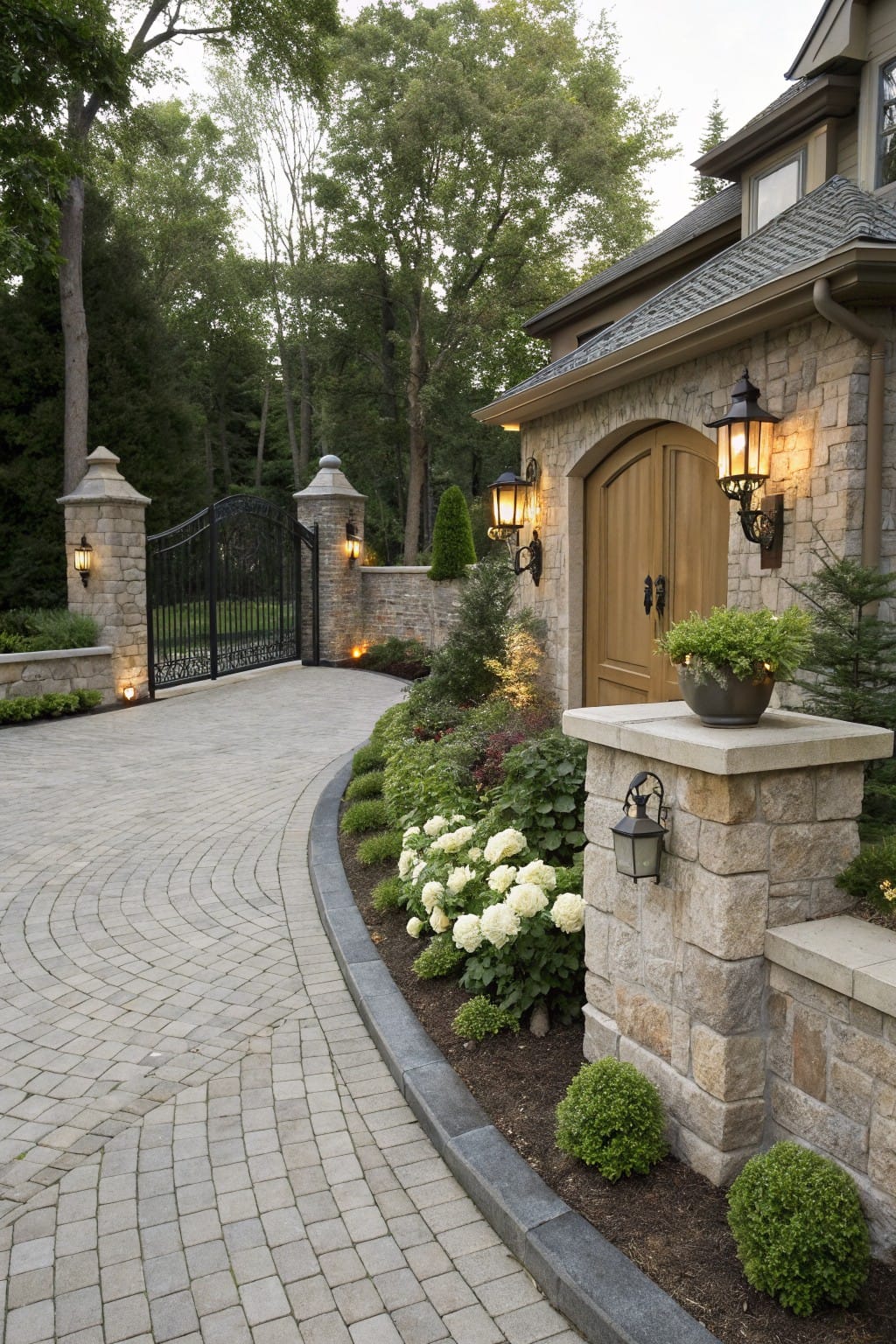
A curved driveway like this pulls you right in toward the house. Gray pavers sweep around in a smooth arc, with stone edging that holds back neat beds of white hydrangeas and green boxwoods. Lanterns on the pillars add a soft glow at night. It’s a simple way to make an entrance feel more interesting and less straight-shot.
This setup works best on bigger properties where traffic can handle the curve. Line your own driveway with low stone borders and perennials that fill out over time. Skip anything too tall near the path. It ties the gate and garage together nicely… keeps things looking put-together year round.
Oversized Pavers in Gravel for Desert Paths
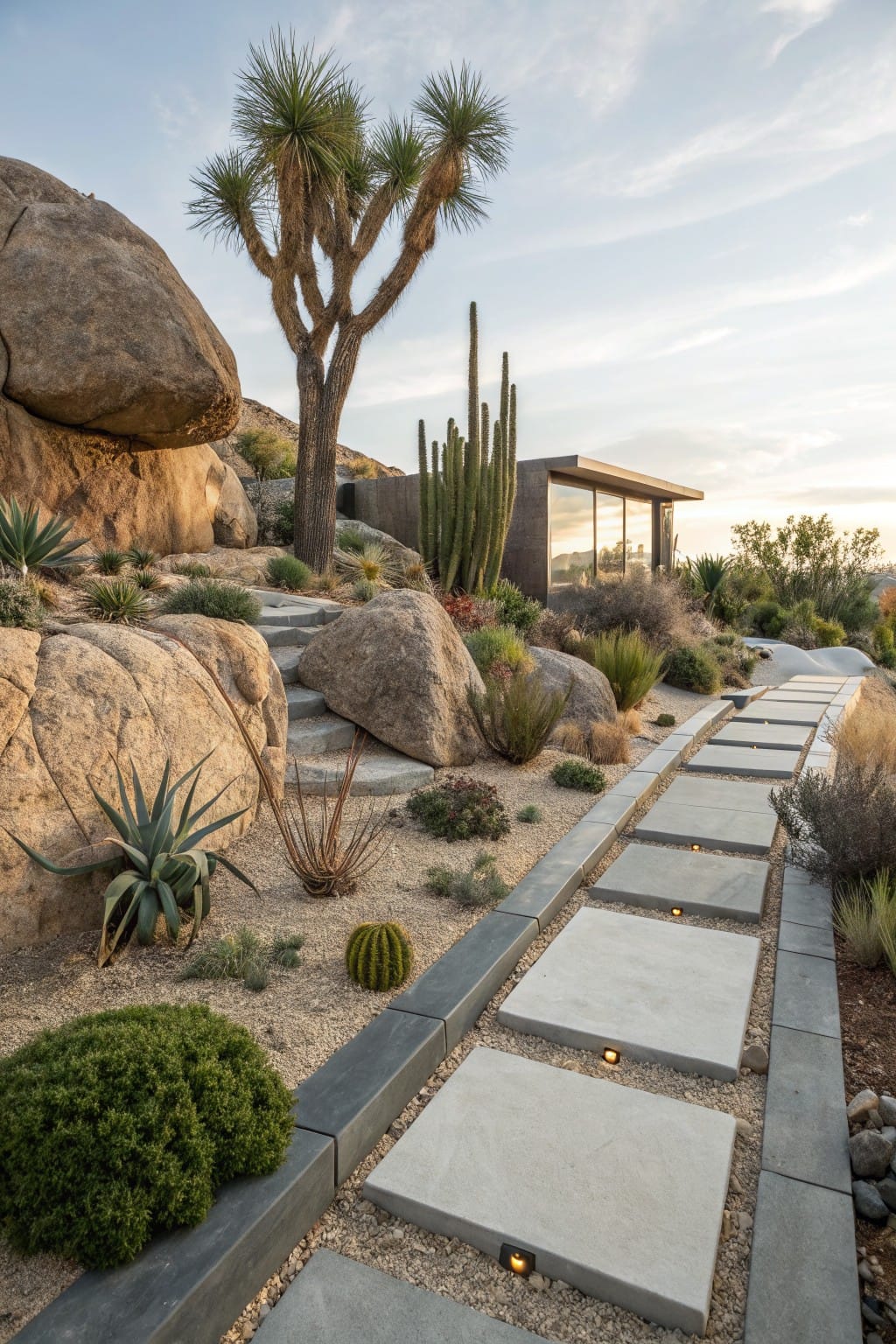
Big concrete slabs set into a gravel bed make a simple path that cuts right through boulders and spiky plants. The dark edging keeps everything crisp, and those low lights tucked into the pavers light the way without fuss. It stands out because it looks intentional, not like you’re battling the rocky ground.
This works well on sloped lots or arid yards where you want to highlight the natural rocks instead of covering them up. Lay the slabs wide for a driveway feel, or narrow them for a walkway. Skip fancy borders; the gravel fills gaps easily and drains fast. Best for modern homes that blend with the desert.
Climbing Roses Framing Stone Cottage Entries
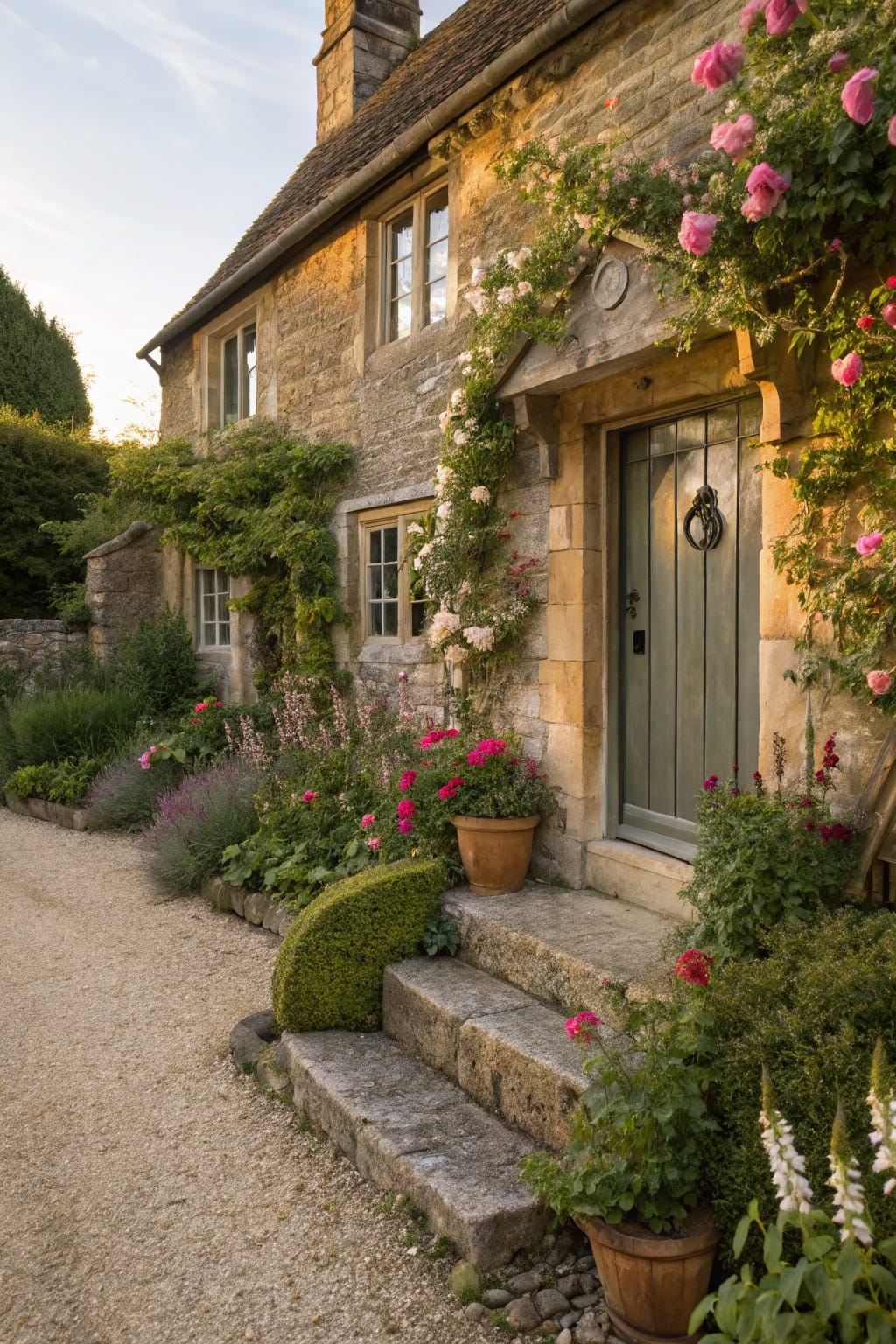
Climbing roses work wonders on older stone houses like this one. They drape softly over the rough walls around the front door, adding pink blooms and green foliage that make the entry feel warm and welcoming right away. The gravel path leading up pulls it all together without stealing the show.
Try this on any traditional facade with good support like trellises or arches near your driveway or walk. It suits country homes or cottages best, especially where you want low-fuss color through summer. Just prune lightly each year to keep the roses healthy and the path clear.
Uplighted Stone Path Lined with Grasses
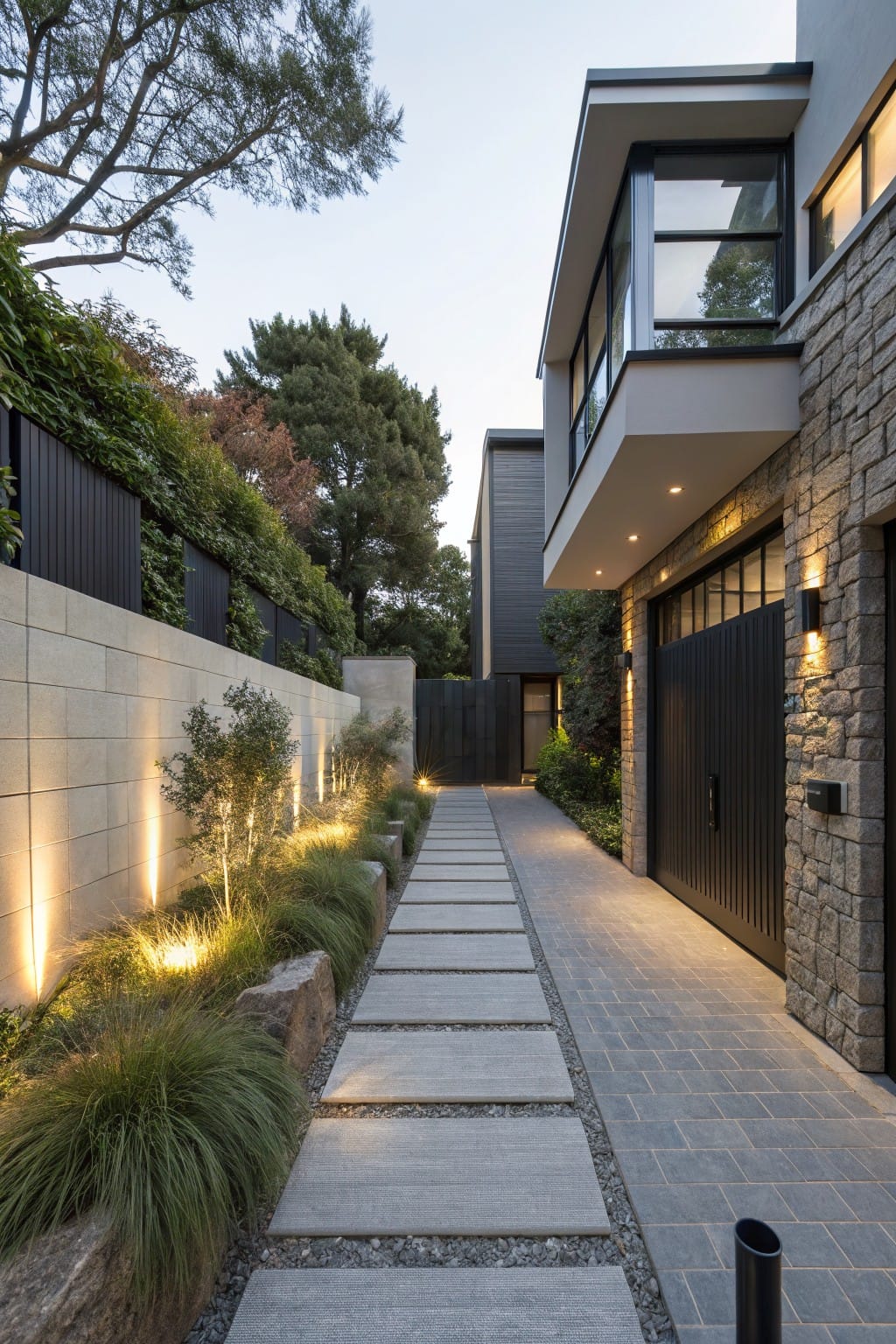
A narrow path of large gray stone slabs runs straight to the garage door here. Uplights along the concrete block wall cast a soft glow on the grasses and small boulders edging it. This setup turns a plain driveway approach into something more deliberate. It pulls your eye forward without much fuss.
You could add this to a side entrance or tight lot where space feels squeezed. Pick tough grasses that don’t need much water and LED lights for easy upkeep. It suits modern homes with stone or wood siding best. Just keep the path wide enough for two people.
Meandering Flagstone Path in Gravel
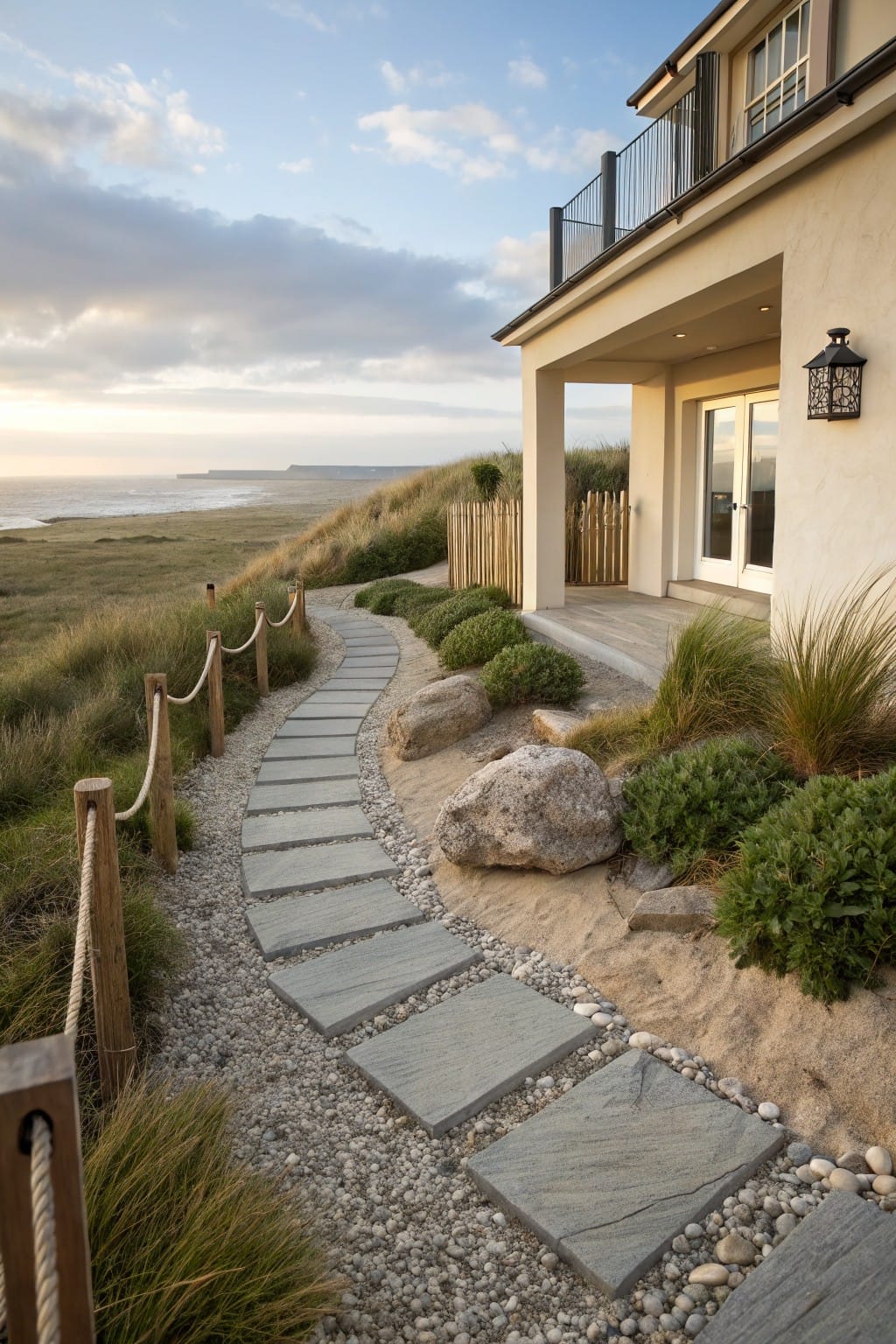
A gentle winding path like this one uses irregular gray flagstone slabs set right into a bed of small pebbles and sand. Large boulders sit along the edges, almost like they rolled there naturally, while clumps of dune grass add some green without much fuss. Rope strung between wood posts guides the way up the slope. It’s a quiet way to lead folks to your door that doesn’t fight the land around it.
Try this on any entry with a bit of rise, especially near beaches or open fields. Source stones in sizes that fit your space, space the slabs loosely for drainage, and plant tough grasses that handle wind. Skip it if your lot is flat or super formal… keeps paths from feeling too stiff. Suits casual homes best.
Boxwood-Lined Stone Walkway
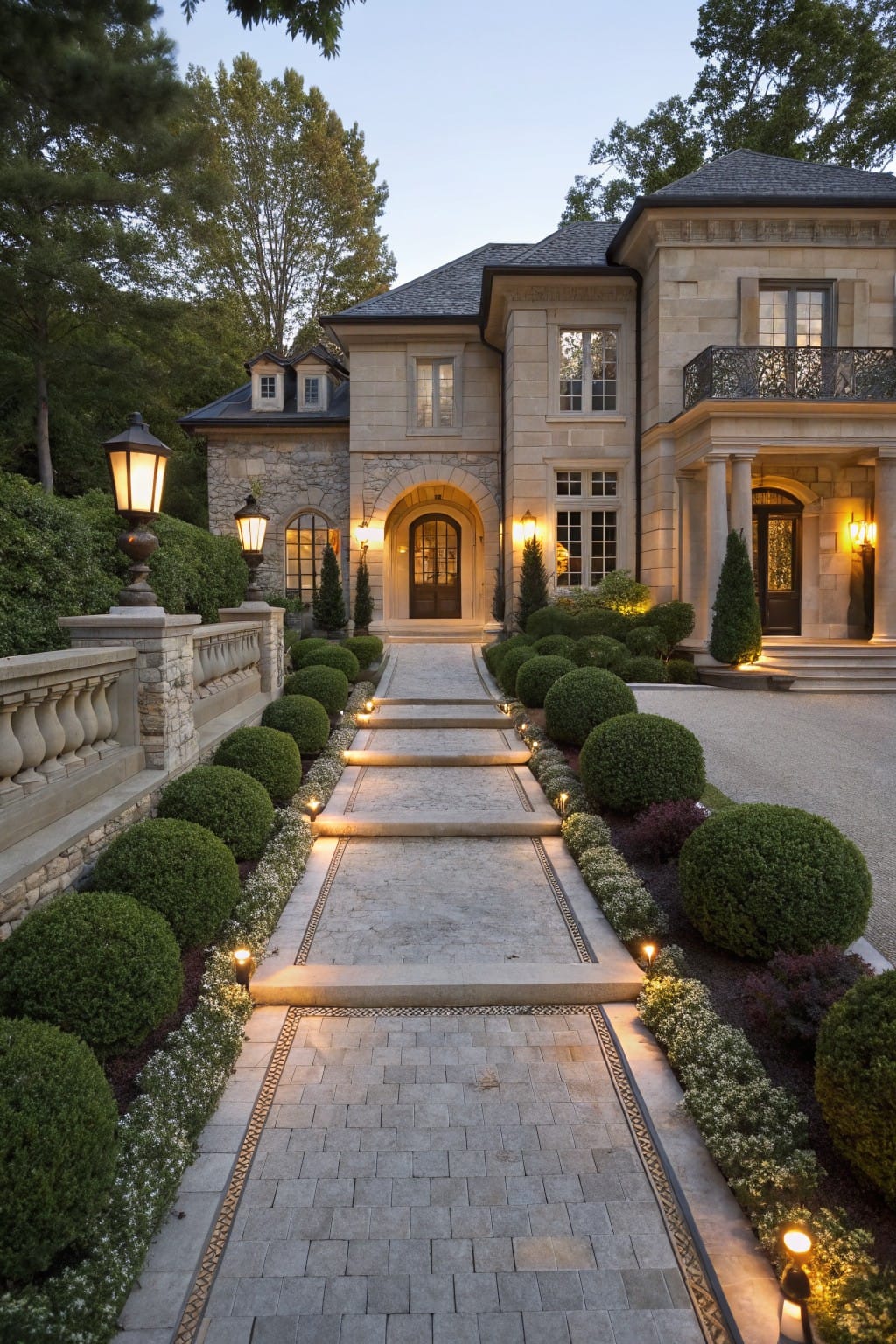
A simple row of round boxwoods lines this stone walkway, framing the path straight to the door. The shrubs stay low and tight, so they guide without blocking the view of the house. Small lights along the edges kick in at night. That soft glow makes the whole entrance feel put together and easy to approach.
This kind of setup fits homes with some driveway space and a formal front. Stone paths hold up well. Trim the boxwoods a couple times a year to keep the shape. It suits bigger yards… smaller spots might feel crowded. Pairs nice with rock facades like this one.
Stone Steps Lit from Below
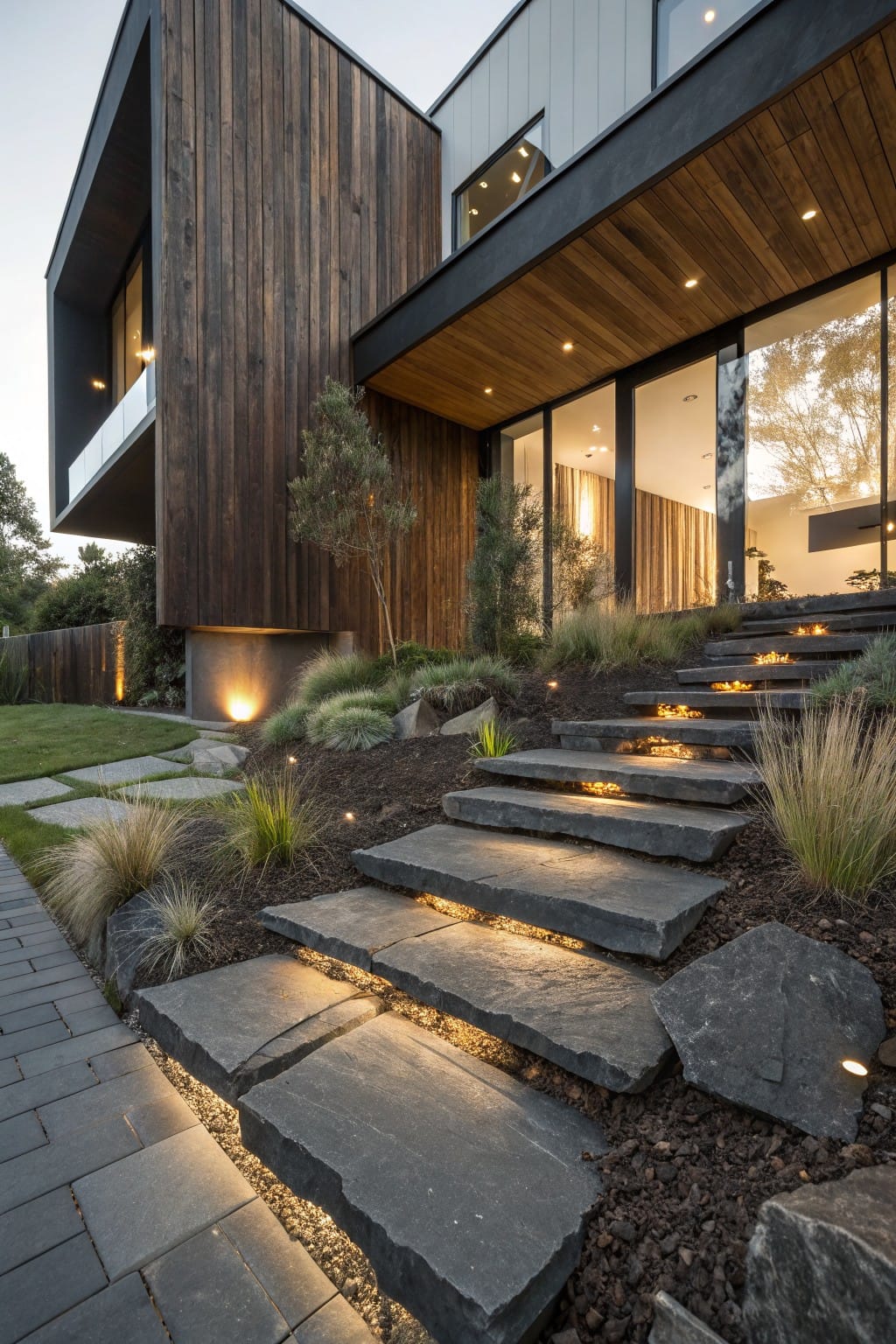
Big slabs of rough stone make these steps stand out on a sloped entry. Lights run along the edges, glowing just enough to guide you up at night without being too bright. Paired with grasses and small boulders, it feels natural, not fussy. Folks notice how it turns the climb into part of the appeal.
Try this on lots with some rise to the house. It suits modern places or ones tucked into hills. Go for thick, uneven slabs so they look like they belong there. Skip tiny steps. Low lights keep it safe, and drought-tolerant plants around the base mean less upkeep.
Irregular Flagstone Paths for Entrances
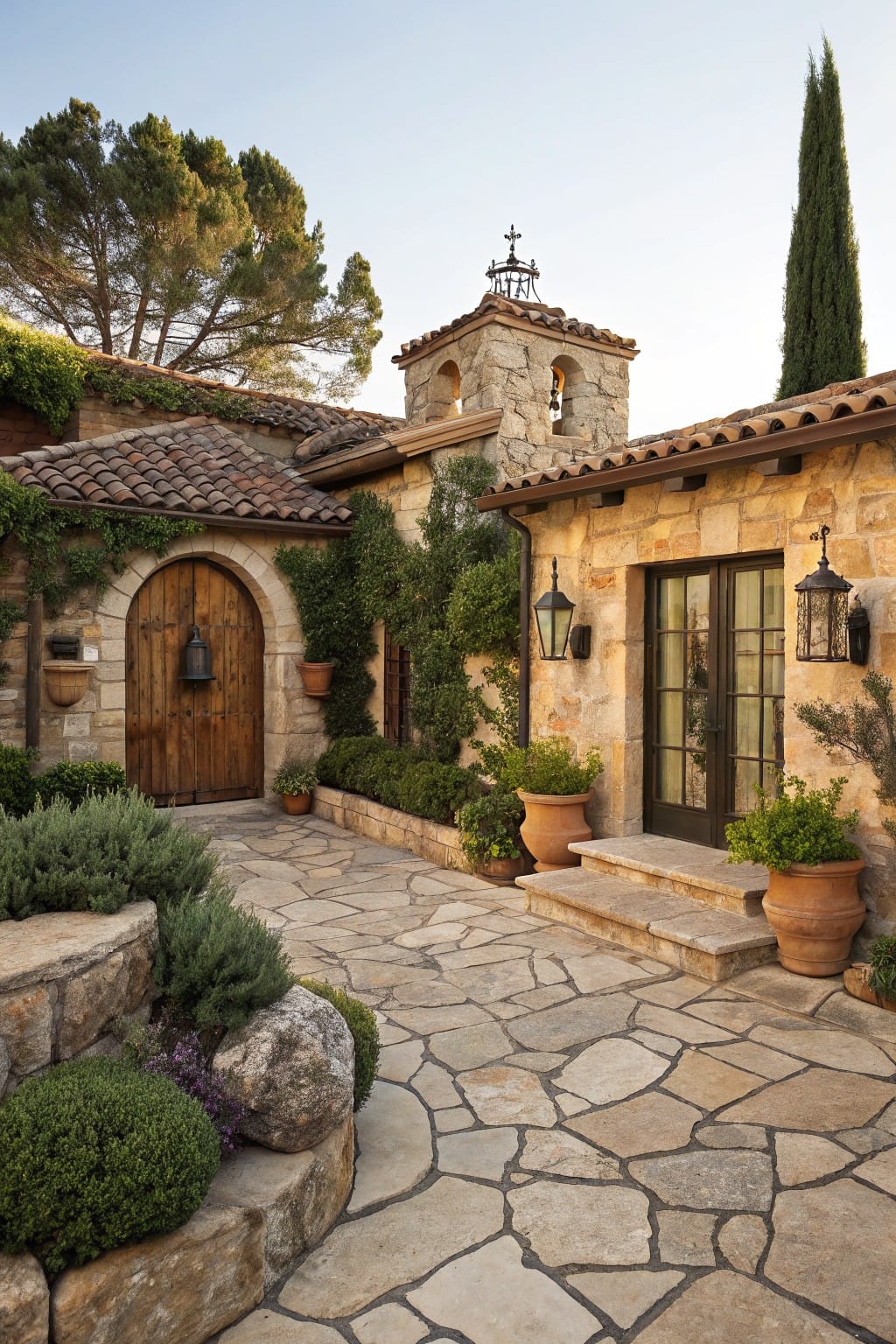
One solid way to make your entry feel grand is with a path of big, rough-cut flagstone pieces. They fit together loosely, like they grew there naturally, and lead right up to the door without feeling too stiff or formal. Here, low dry-stacked rock walls edge the path, holding back simple shrubs and a few bold rocks. It pulls the house’s stone look out into the yard and makes the walk to the front door something you actually enjoy.
These paths work best where you’ve got a bit of slope or uneven ground, since the rocks help with drainage and steps. Pick stones from a local quarry to save money and blend with your area. They’re tough on weeds too, if you keep the joints tight-ish with gravel. Skip them if your lot’s super flat, though. A straight concrete walk might suit better there.
Winding Cobblestone Path Entrance
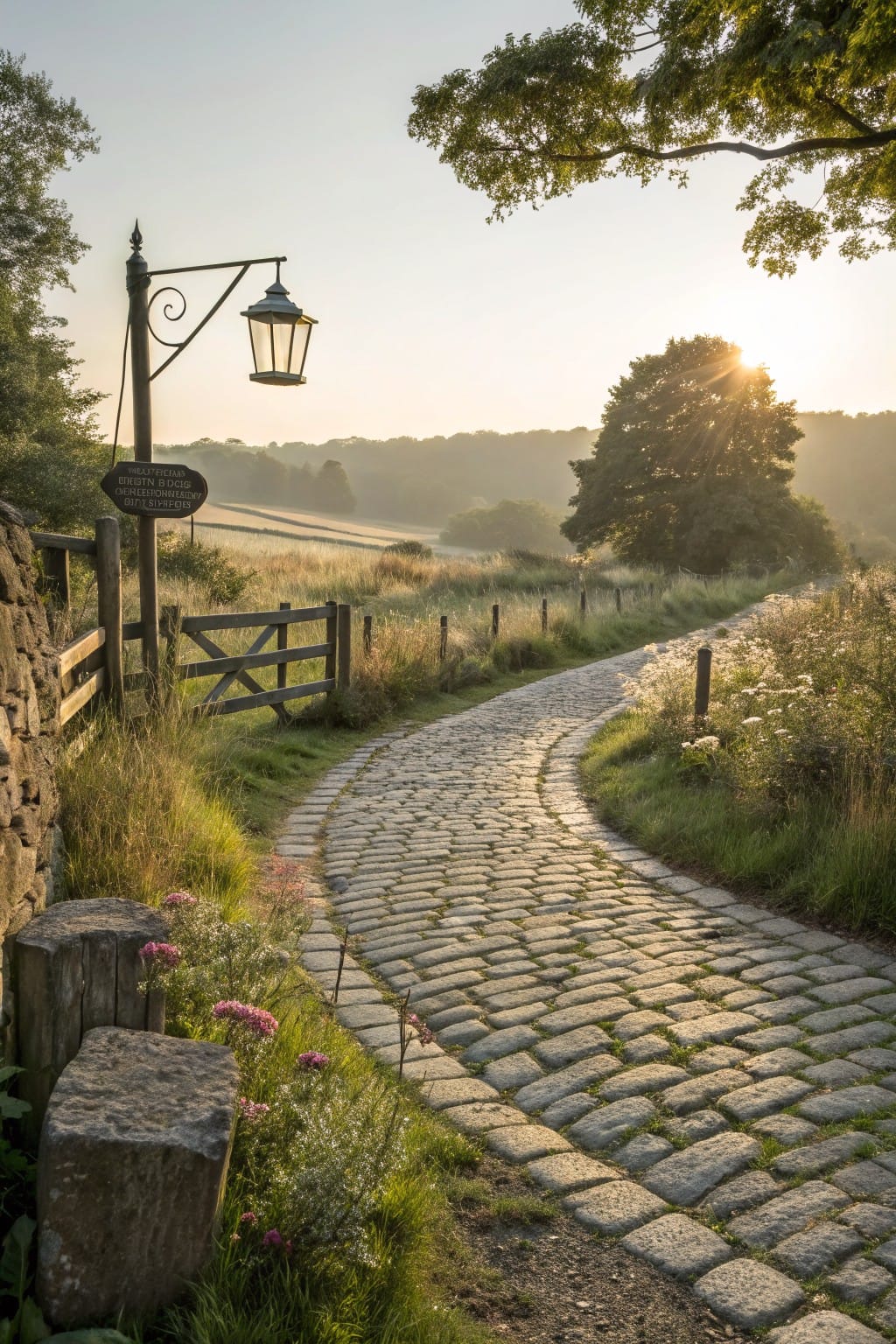
A good driveway entrance doesn’t have to be wide and straight. This one uses a narrow winding path of fitted cobblestones that curves through tall grass and wildflowers. The old lantern post and simple wooden gate give it purpose without overdoing it. That gentle bend pulls you along naturally. Feels grand in a quiet way.
Try this where you’ve got room for a meandering approach, like on a sloped lot or rural property. Source reclaimed stones to match the rustic look, and keep plantings soft around the edges so the path stays the focus. Avoid tight curves if you drive much. Suits homes with stone or wood details best.
Rugged Stone Steps on a Rocky Slope
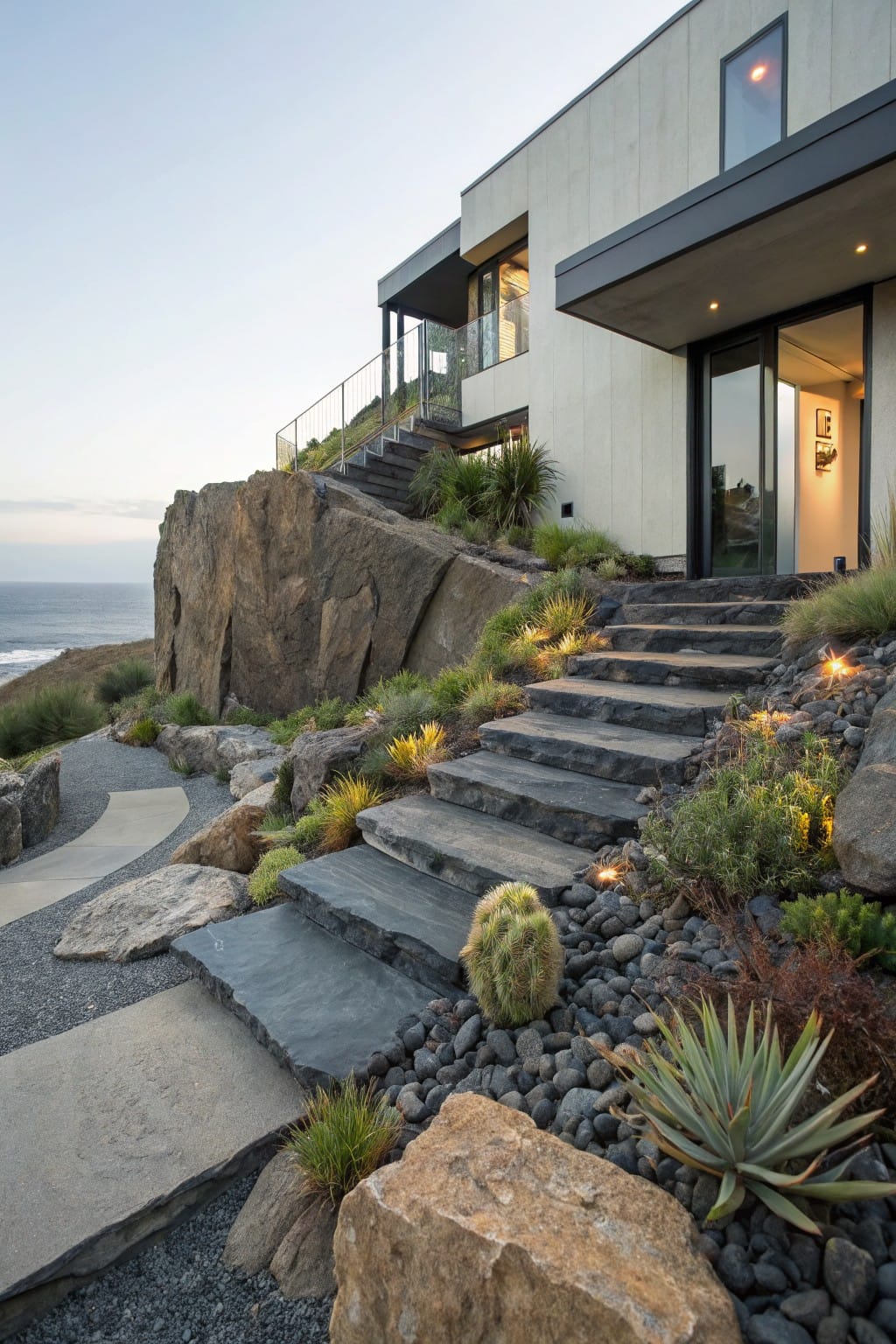
When you’re working with a steep, rocky site like a cliffside, stone steps cut right into the natural terrain make the whole entrance feel like it belongs there. These wide, dark slate treads wind up alongside big boulders and clumps of tough grasses and succulents, easing the climb without fighting the landscape. It turns what could be a tough access point into something solid and welcoming, especially heading toward a clean modern house.
This approach works best for coastal or hillside homes where you want low upkeep and a rugged look that ties the building to its spot. Use local stone for the steps to match the rocks around it, add a few path lights for evenings, and plant drought-tolerant stuff in the gaps. Skip it on flat lots, though. It needs that slope to shine.
Boxwood-Lined Gravel Driveway
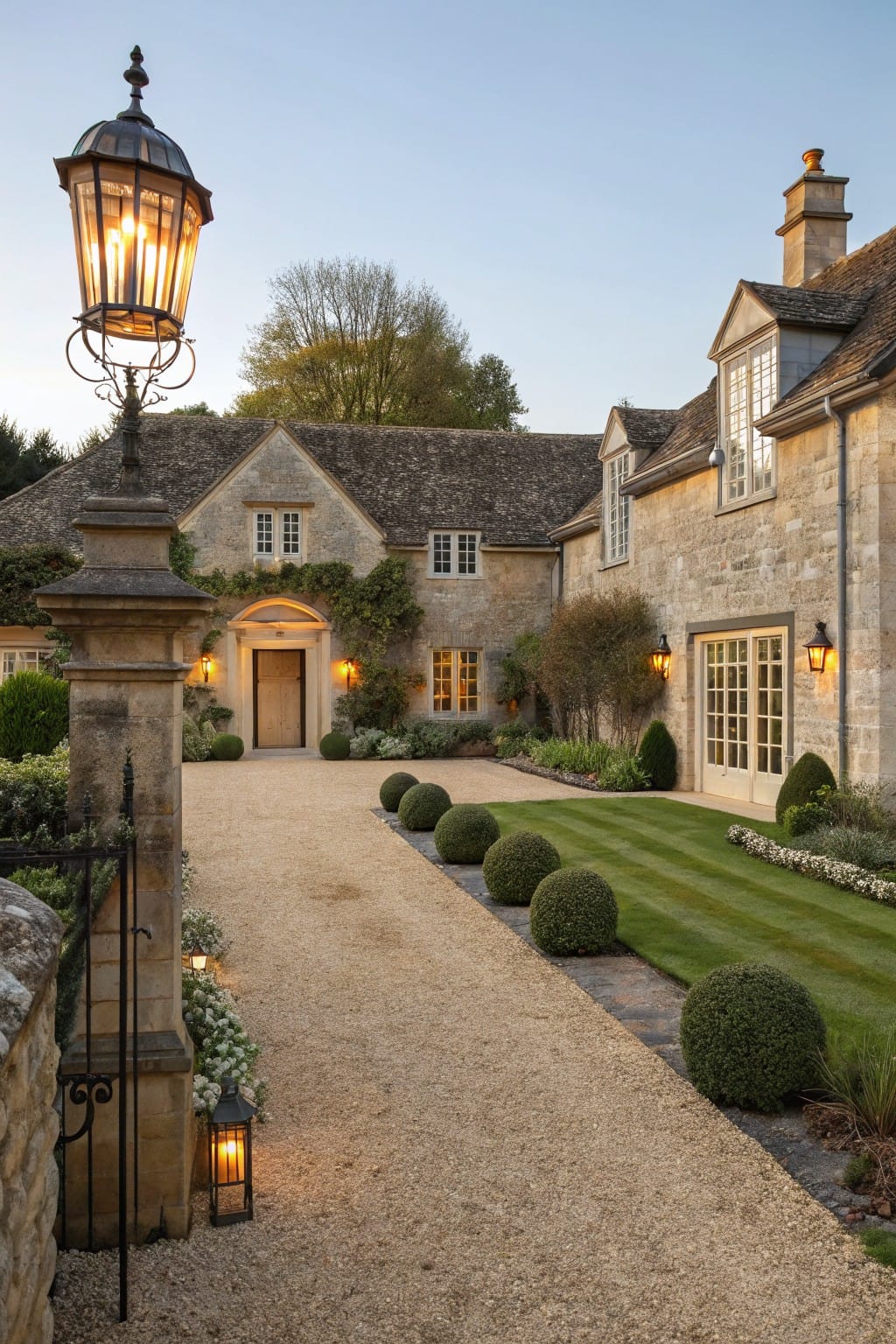
One straightforward way to make a driveway feel grand is lining it with round boxwood balls. They sit evenly spaced along both sides of the gravel path here, giving a clean rhythm that draws the eye right up to the house door. The spheres keep things simple and formal without much upkeep, and they pair nicely with the stone pillars at the gate.
This works best on straight driveways leading to traditional stone or brick homes. Space the boxwoods about five feet apart, keeping them clipped to the same size. Go for gravel that’s easy to rake, and add low lanterns along the edge for evening light… just make sure the plants get enough sun or they might thin out.
Frequently Asked Questions
Q: How do I pick rocks that grip well under tires? A: Choose angular crushed gravel around 3/4-inch size. These lock together tight and shrug off heavy traffic. Smooth pebbles shift too much and create ruts.
Q: What’s the trick to keeping weeds away in rock driveways? A: Roll out heavy landscape fabric first, then pile on 3 inches of rocks. Sun can’t reach the soil underneath. Spot-treat any breakthroughs with vinegar spray.
Q: Do rock entrances drain okay in heavy rain? A: Build in a gravel base layer sloped gently away from your house. Water sinks right through fast. Puddles become a thing of the past.
Q: How often do I refresh a rock driveway? A: Rake it smooth every spring and fall. Top up thin spots once a year. And you’re set.
