

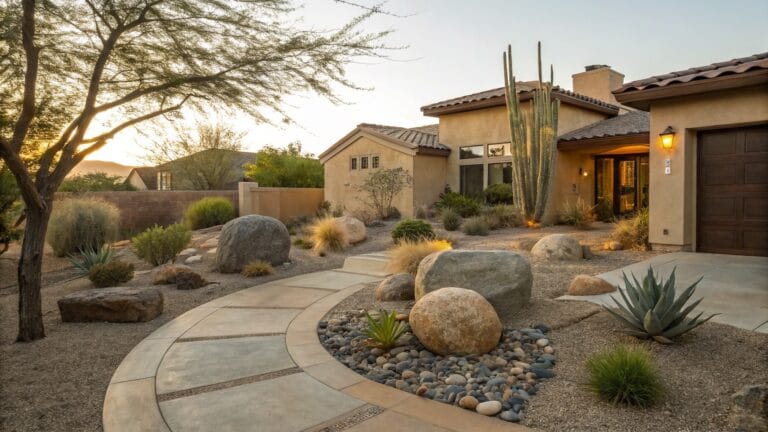
I’ve gardened in dry climates where rock landscaping becomes the backbone of any yard that lasts.
What grabs attention first is usually the way larger boulders and gravel beds create natural flow through the space, guiding steps along subtle pathways.
I always lean toward using native stones in my own setups because they settle into the ground over time without looking forced or flashy.
These approaches build depth with layered heights and textures that require little water yet shape outdoor areas for years.
A couple stand out for shrinking small lots visually.
Winding Stone Paths with Boulder Edges
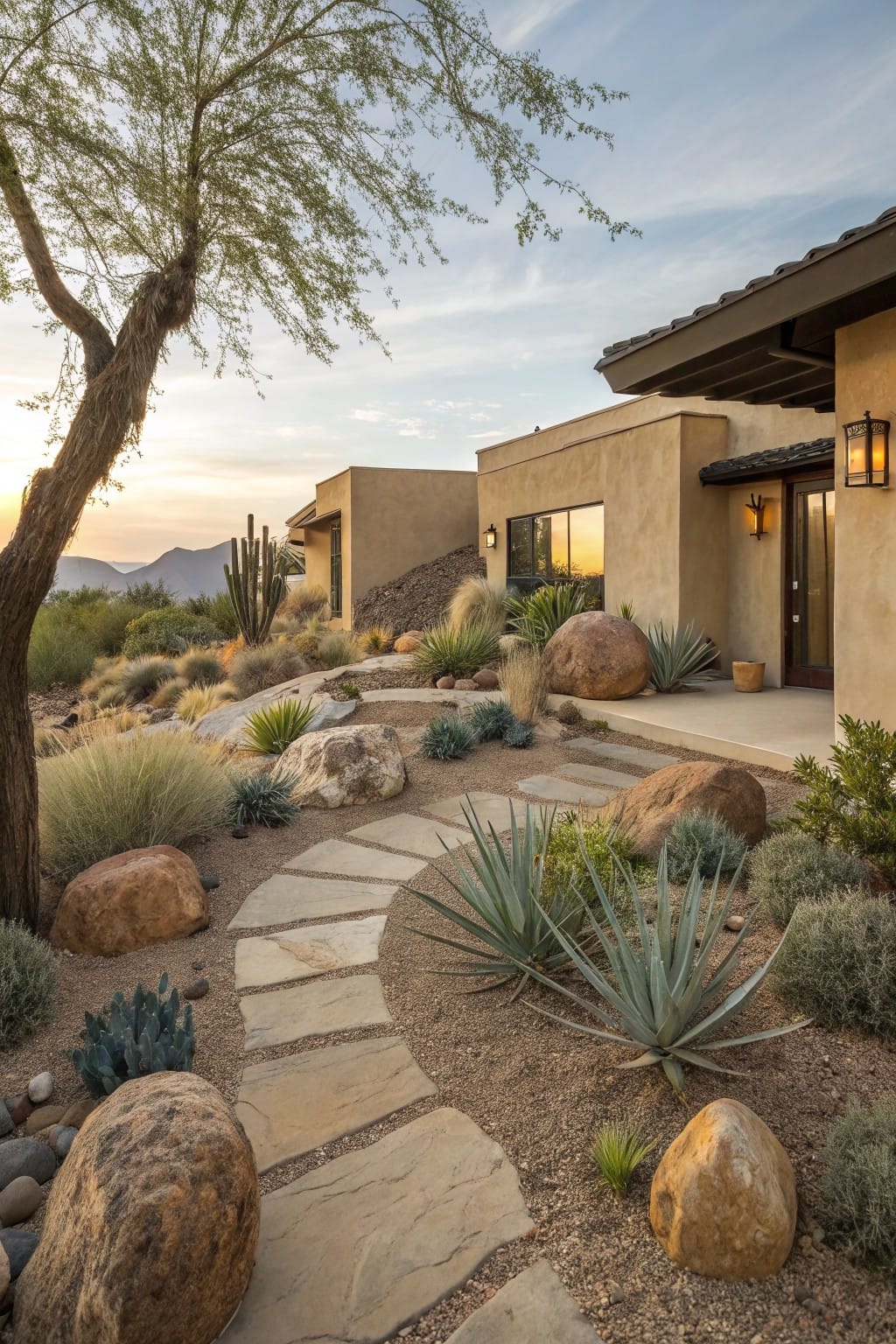
A simple winding path made from flagstone slabs works great in desert yards. It curves gently around large boulders and tough plants like agaves. This setup pulls you right to the front door without feeling forced. The rocks and plants make it look natural. Like the desert made the path itself.
Use this in dry spots where you want low upkeep. Pick boulders that match your local stone for that real feel. Tuck in succulents that take the heat. It fits modern homes with clean lines. Just keep the path wide enough for two people. Narrow ones get tricky.
Curved Gravel Path to a Courtyard Fire Pit
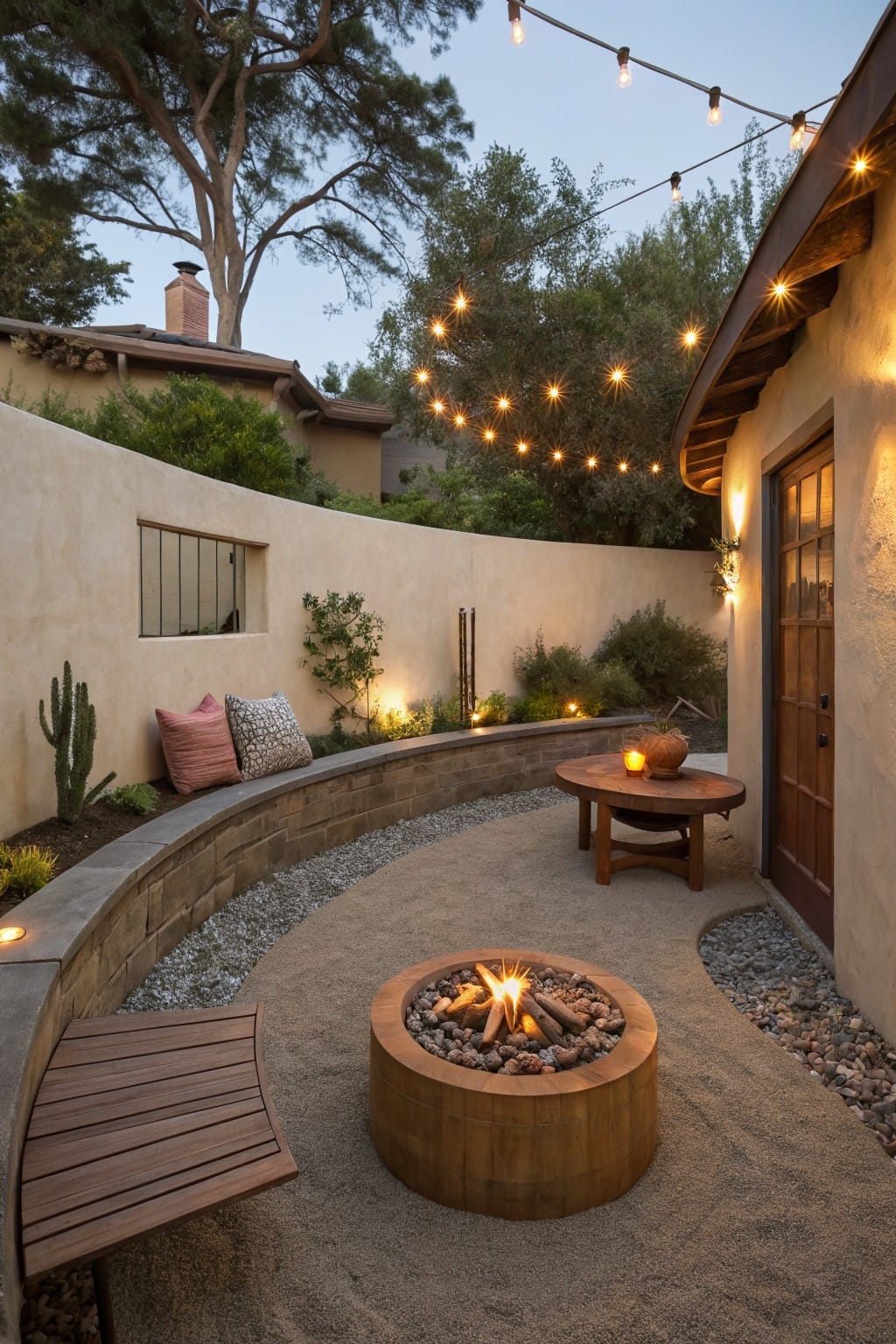
One simple way to pull together a dry-climate yard is with a winding gravel path that curves gently around plant beds and leads right to a fire pit. Here, the light-colored gravel sets off the central wooden fire pit nicely, while river rocks circle its base for that clean desert look. The curving stone wall keeps it all contained, making the space feel private without taking up much room.
This setup shines in smaller backyards or side courtyards where you want evening hangouts but not a lot of grass to water. Use decomposed granite or pea gravel for the path, add low-water succulents along the edges, and build the bench into the wall to save on furniture costs. It stays low-maintenance… just sweep the gravel now and then.
Rock Waterfall Plunge Pool
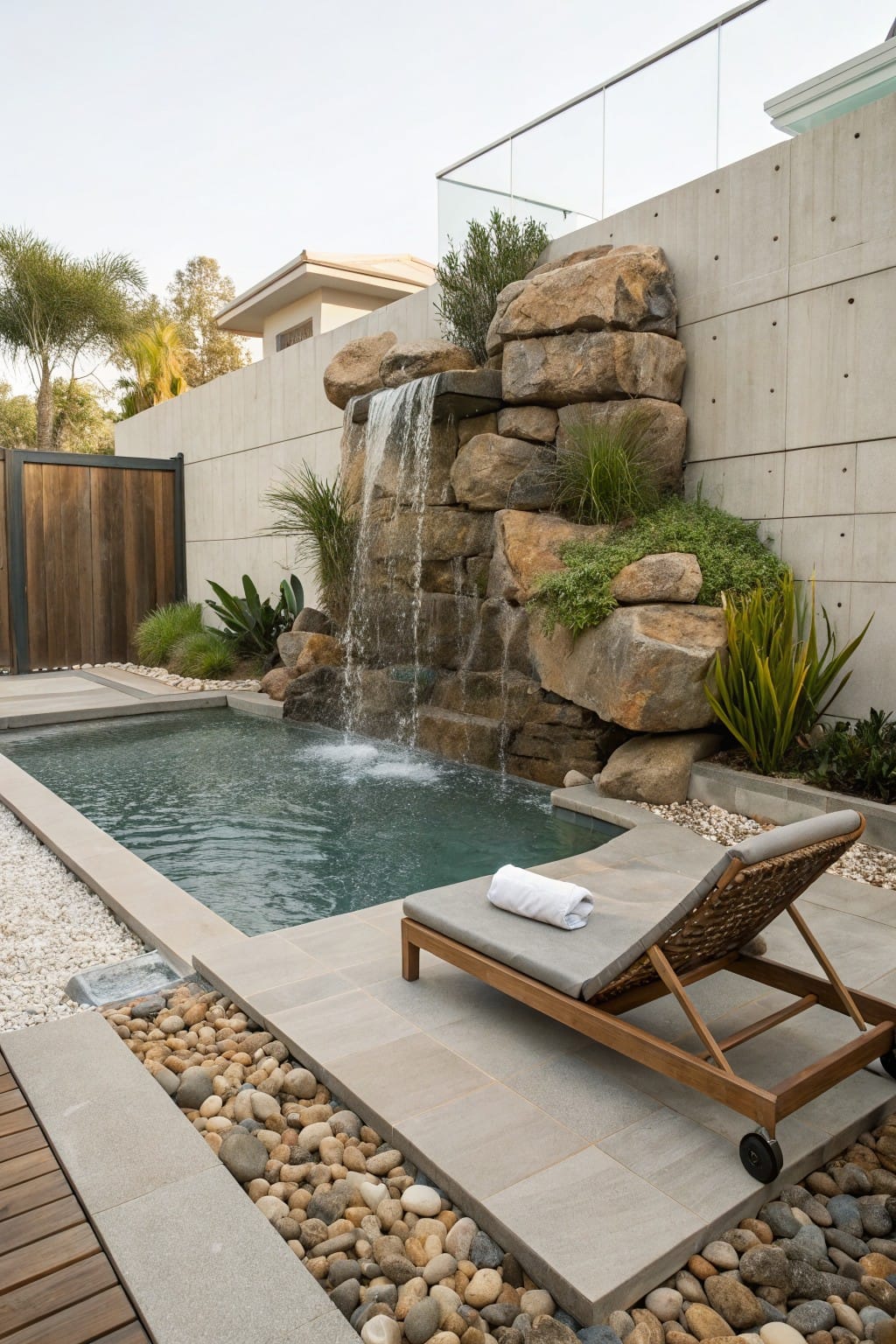
Big boulders stacked up make a simple waterfall that drops right into a small pool. It turns a plain backyard corner into something resort-like, especially where water is precious. The rocks look natural against concrete walls, and the water adds just enough movement without waste.
This works best tucked against a fence or wall in sunny, dry yards. Use drought-tough plants like grasses and succulents nearby, and skip grass for pebbles. A lounge chair pulls it together for relaxing. Watch the plumbing though. Pumps clog easy with mineral buildup.
Terraced Stone Walls for Sloped Yards
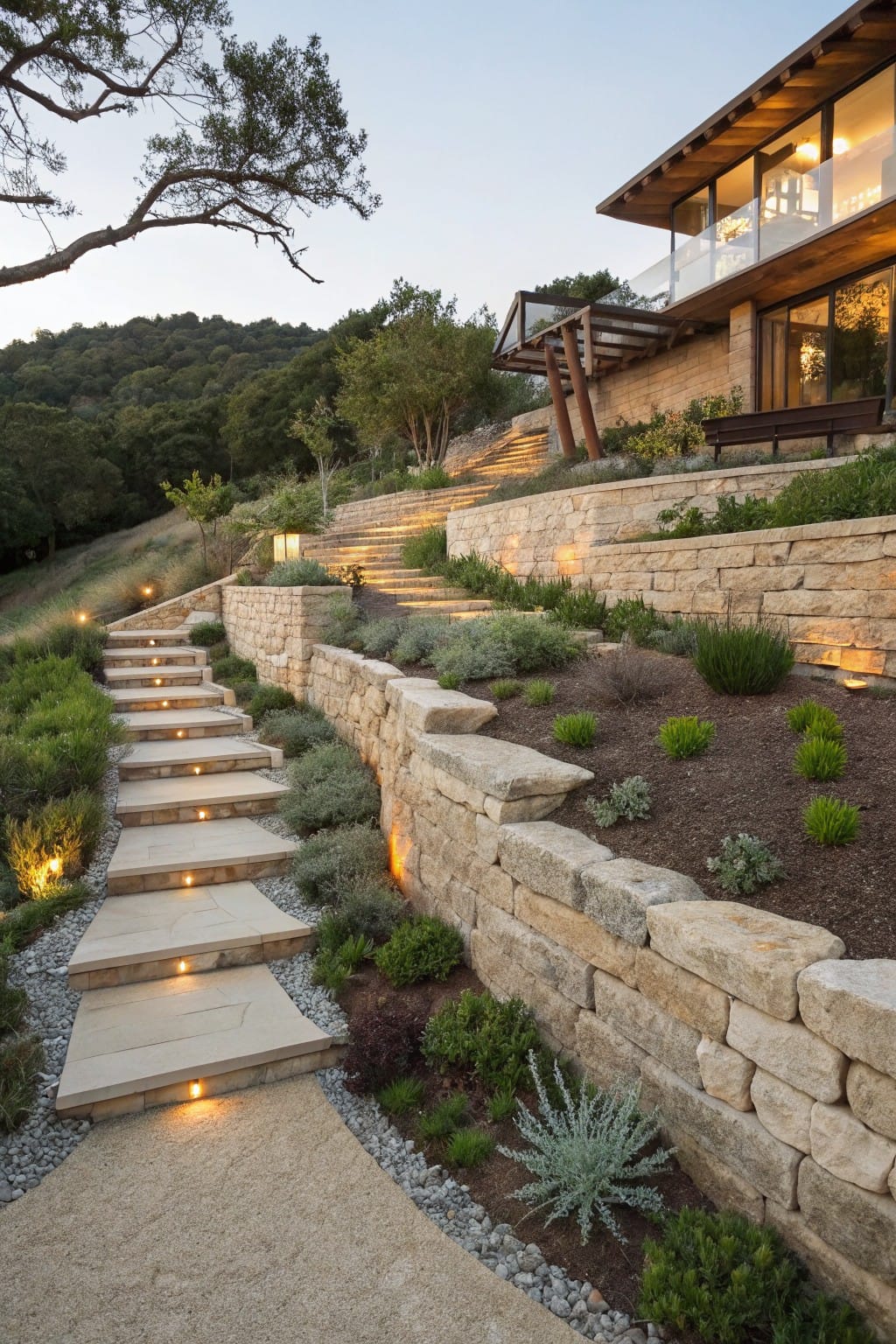
Steep slopes can be tough in dry areas. But terraced stone walls fix that. They turn unusable hillside into flat spots for plants and paths. Here, rough sandstone walls hold back the earth while wide steps wind up gently. Small shrubs and grasses tuck into the pockets, all low-water types that fit desert spots. The soft lighting along the steps makes it safe and pretty at night.
These walls work best on hills where you want to garden without fighting erosion. Stack local stone for a natural look that blends with the land. Add gravel paths between terraces to handle runoff. Skip smooth cuts. Let the stones look rugged. It suits homes in rocky, dry climates. Just make sure the base is solid to avoid shifts over time.
Boulders and Pebbles in Entry Beds
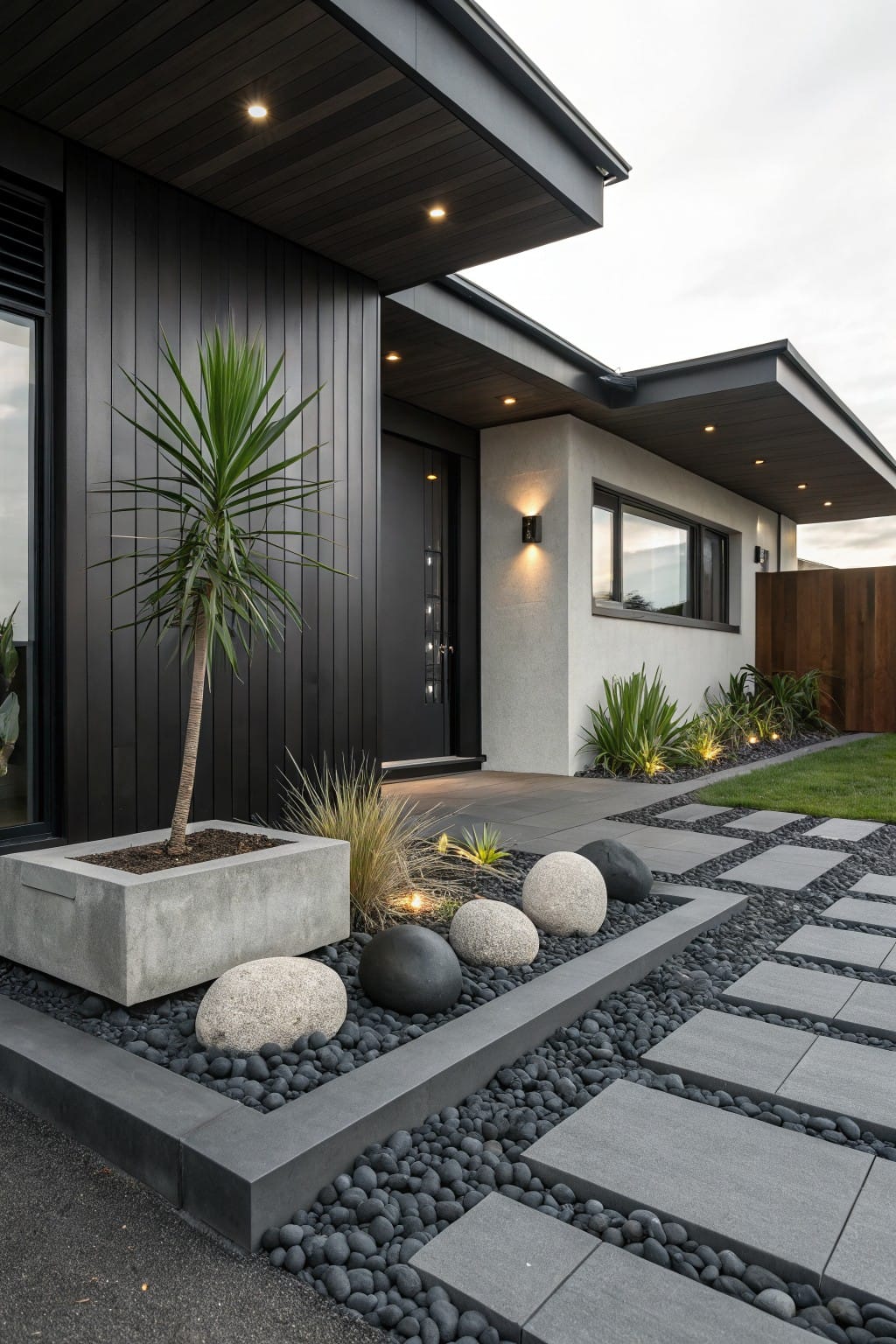
One straightforward way to add interest to a dry front yard is mixing large boulders with fine black pebbles in simple raised beds. This setup uses smooth white and black rocks around drought-tolerant grasses and small succulents, like those flanking a paver path. It creates texture without much upkeep, and the dark pebbles help define edges neatly against concrete borders.
These beds work best right at the entry where they guide people to the door without overwhelming the space. They’re perfect for modern homes in arid spots since they cut down on watering and weeding. Just keep the boulders in odd numbers for a natural feel, and go for local stone to blend with the surroundings.
Stone Fountain Garden Centerpiece
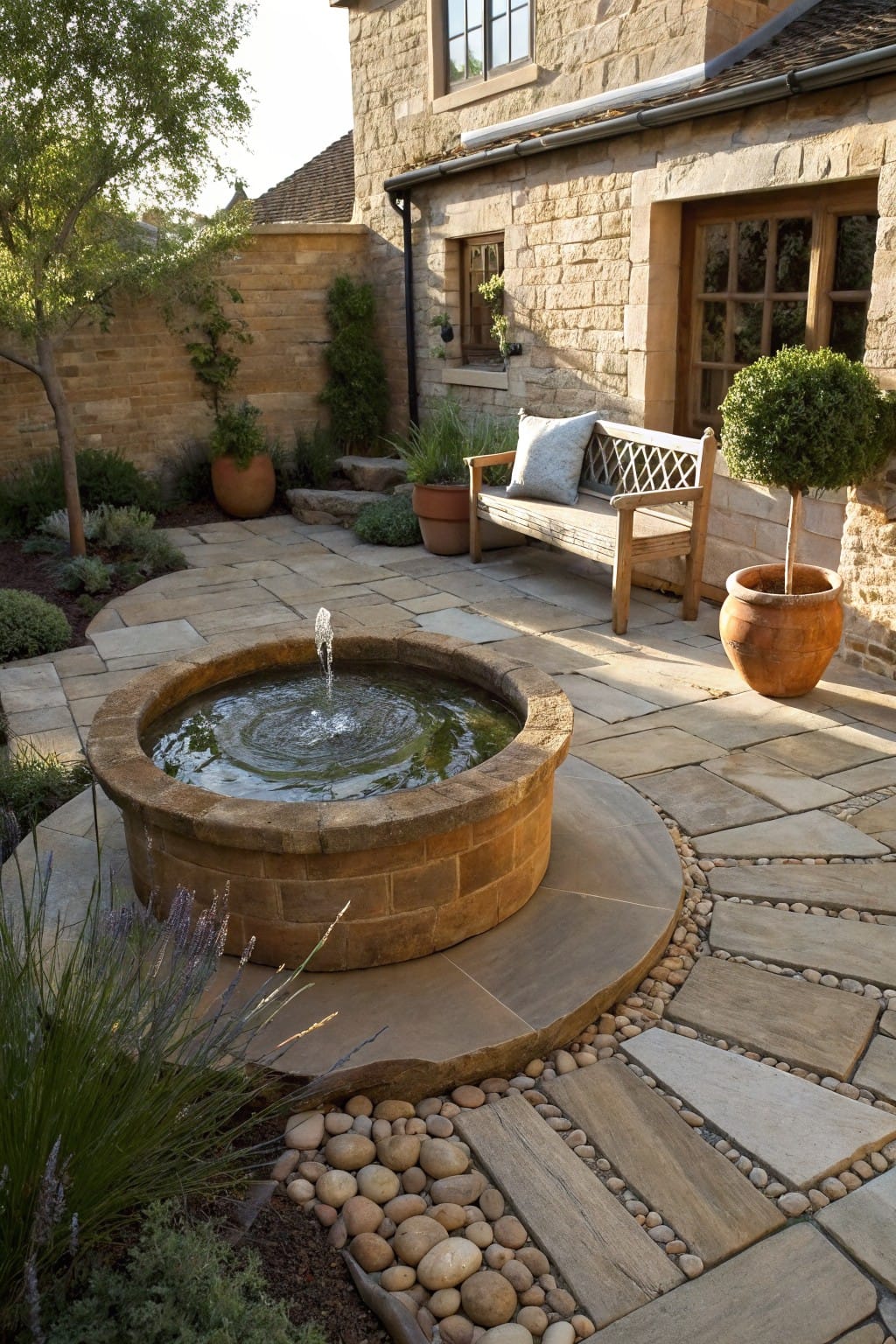
A raised stone fountain works well as the heart of a dry-climate garden. It adds gentle water movement and sound without heavy watering demands. Built from the same sandstone as the paths around it, this setup feels natural and pulls the eye right to the center.
Put one in a walled courtyard or small patio where curved slab paths lead up to it. Edge those paths with rounded pebbles for easy drainage and low upkeep. Drought plants nearby keep things simple. It suits compact spaces best, especially next to a house wall.
Boulders and Gravel Along the Driveway
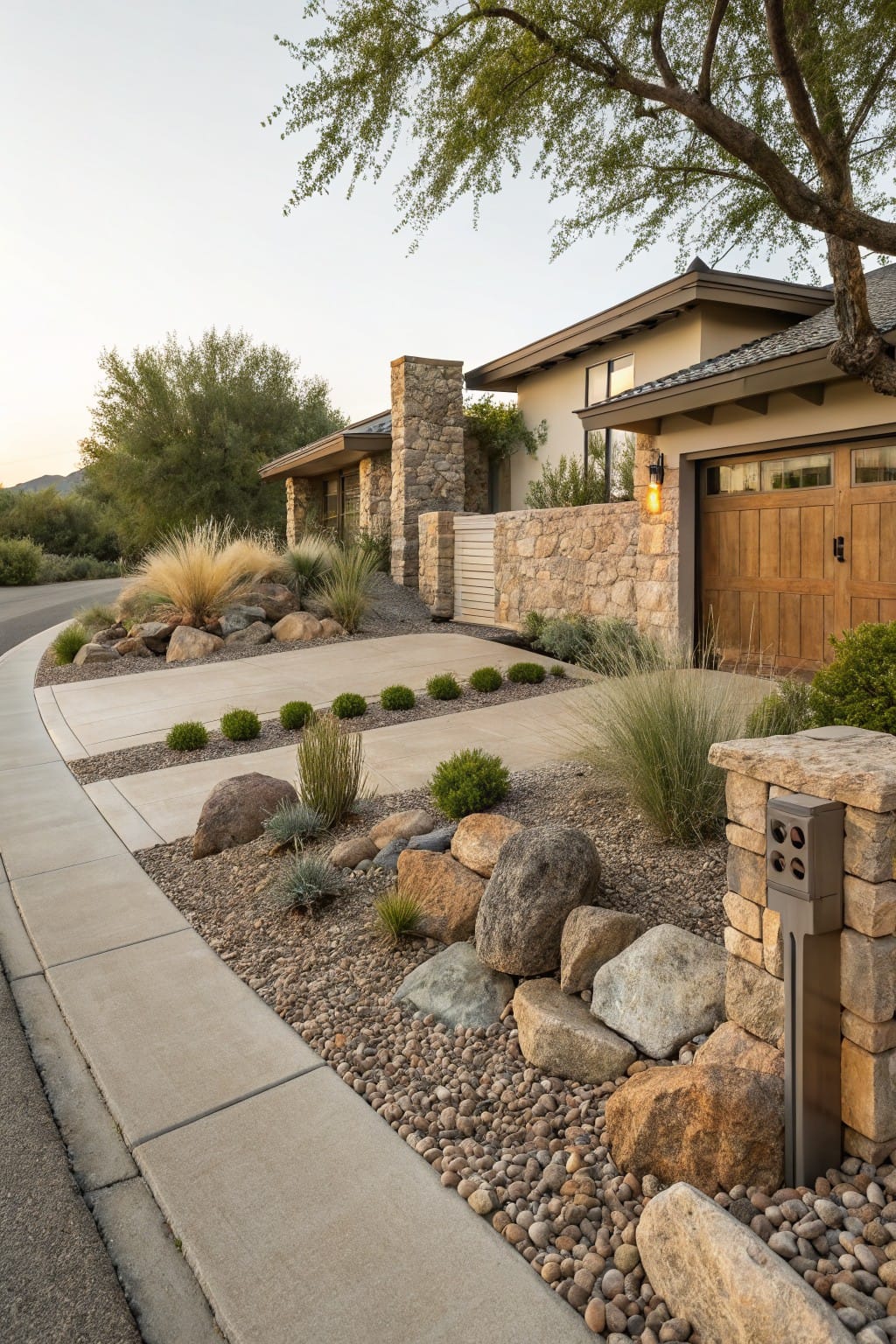
One straightforward way to handle front yard landscaping in dry spots is to line the driveway with beds of large boulders and gravel. The big rocks create natural height and shape without needing much plant filler. Just a few grasses tucked in keep it from looking bare. This setup matches stone house details and holds up to sun and wind.
It works best where water is at a premium or you want zero mowing. Start with concrete pads like these for the drive, then drop in boulders of different sizes for interest. Top the rest with pea gravel. Suits modern or rustic homes on a curve or straight run. Skip it if your soil washes out easy, though. Add the gravel deep enough to stay put.
Rooftop Succulent Beds with Rock Mulch
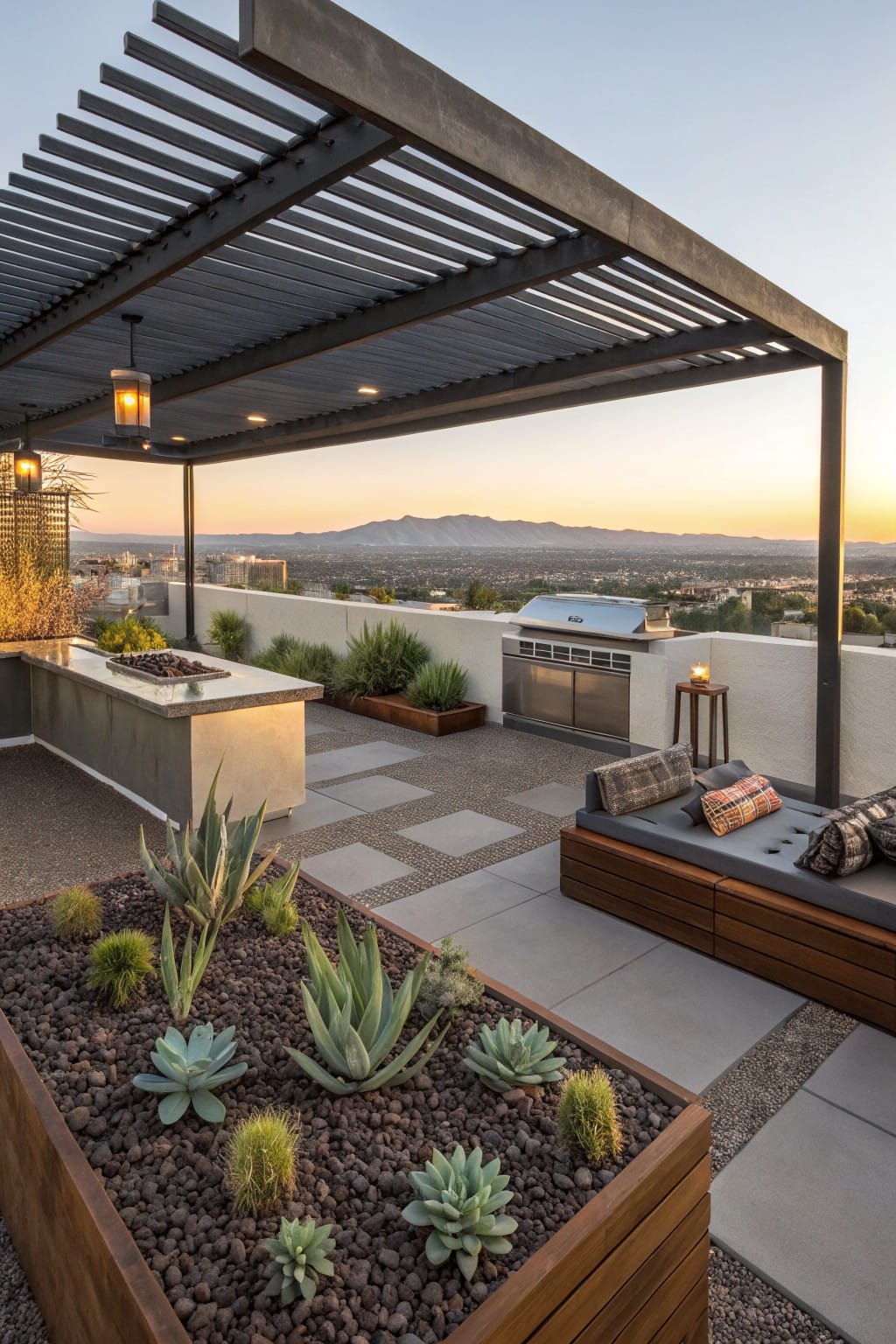
Rooftop spaces in dry areas often need plants that handle heat and low water. These raised wooden beds packed with dark pebbles and succulents like agave do just that. They add green without much upkeep, and frame the patio nicely.
Put beds like this around seating or kitchen zones to define areas without blocking views. They suit modern homes or apartments with balconies. Go for good drainage, since rooftops dry out fast.
Agaves and Gravel Along Concrete Paths
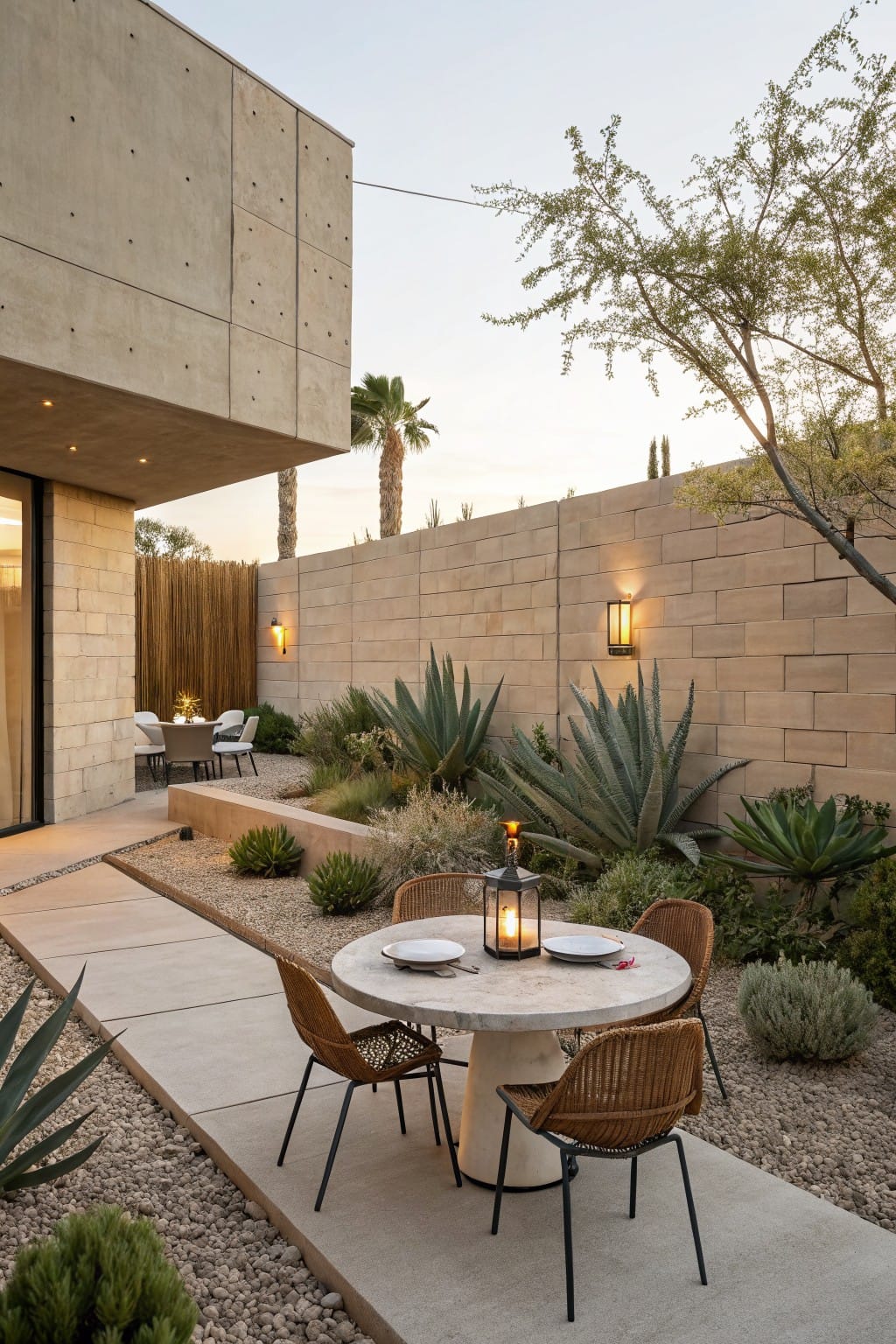
One straightforward way to handle desert landscaping is running a plain concrete path right through gravel beds planted with agaves. The big, sculptural leaves of the agaves stand out nicely against the neutral gravel and smooth path. It’s low fuss too. These plants handle heat and drought without much water, and the gravel cuts down on weeds.
Put this setup where you want to connect the house to an outdoor spot, like a dining table at the end of the path. It fits modern homes with stone or concrete walls. Go with larger agaves for impact, and keep gravel at least three inches deep. Watch the spacing so plants don’t spill onto the walkway over time.
Meandering Flagstone Paths
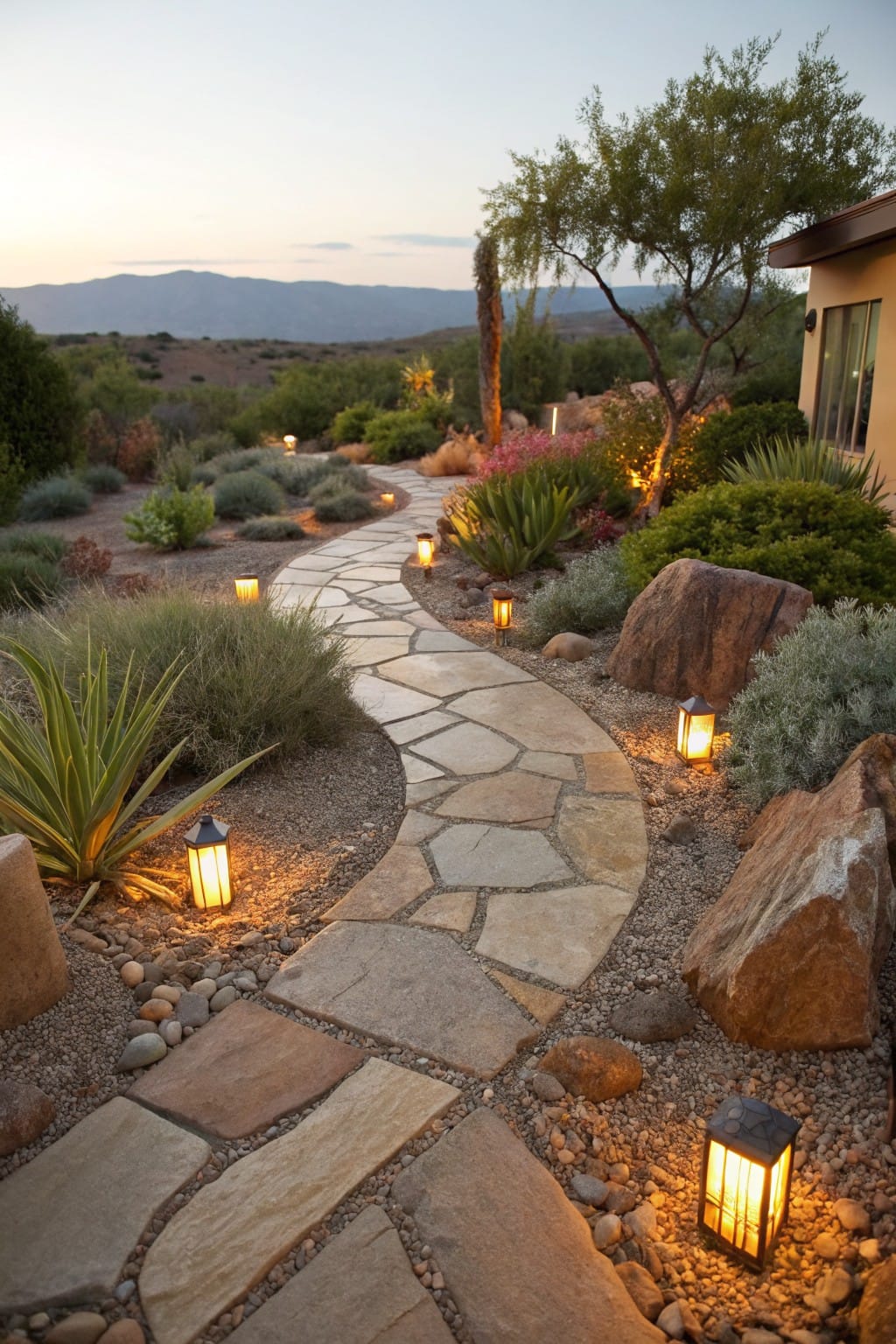
A meandering path like this one uses rough flagstone slabs set into gravel. It pulls you right through the yard without feeling too straight or formal. The lanterns tucked along the edges give off a soft glow that works great from late afternoon on. In dry spots, this setup blends with the natural rocks and keeps foot traffic clear.
Lay it out with wide curves to slow people down and enjoy the plants. Use boulders to frame the sides and add drought-tolerant stuff like agave nearby. It’s perfect for arid backyards or front approaches, easy to maintain once in. Just watch the spacing so it doesn’t get muddy after rare rains.
Large Boulders in Desert Rock Gardens
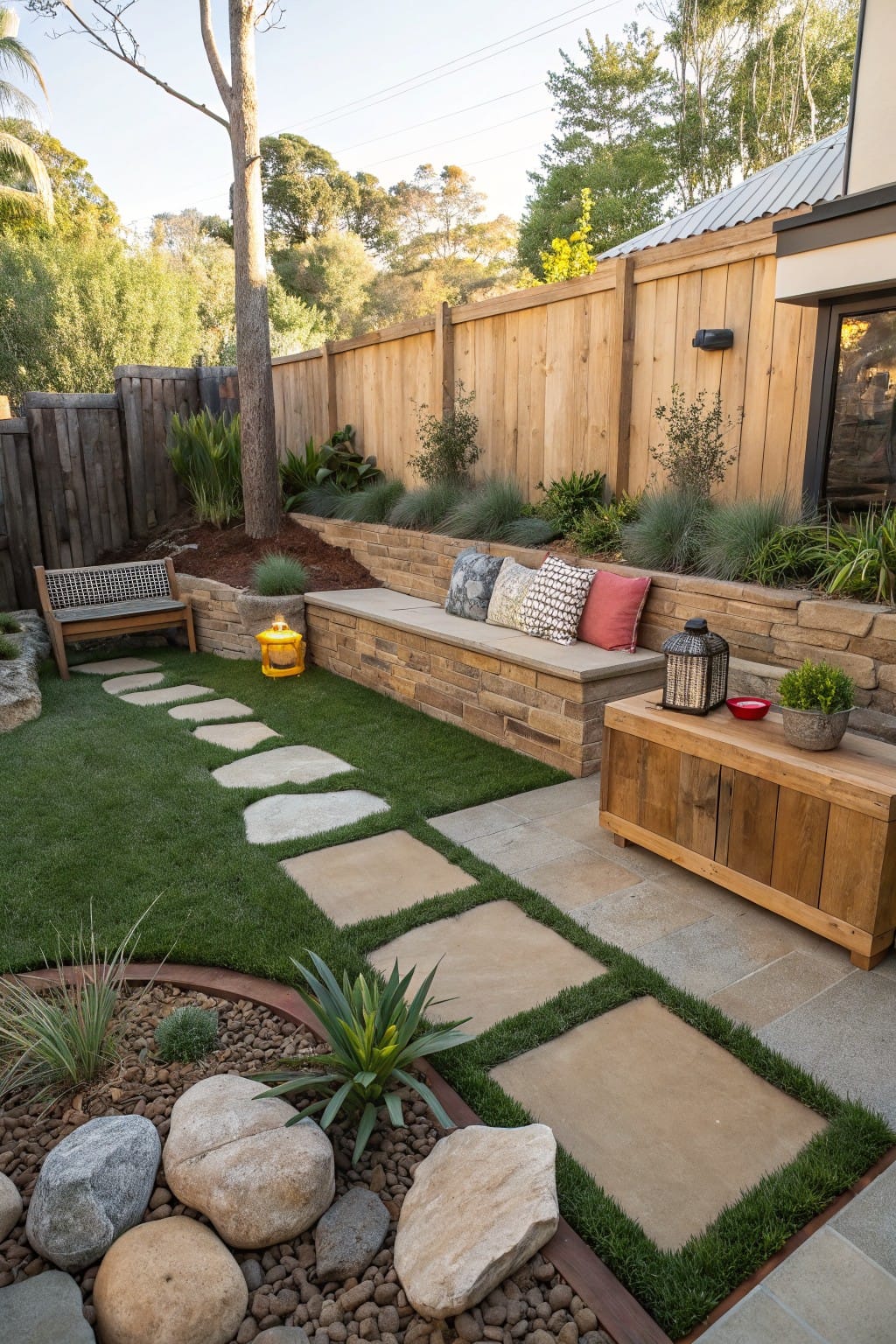
One straightforward way to make a dry yard look put-together is to drop in some oversized boulders. They give that natural, rugged feel without needing constant care. In this setup, the big rounded stones sit among gravel and a tough agave plant, creating a focal point that draws the eye right to the corner bed. It’s low-water and holds up in hot sun.
Place these boulder gardens along fences or near patios where you want some interest but not a lot of mowing. Mix in gravel for easy drainage and add one or two succulents to keep it alive. Works great for smaller backyards or sloped spots. Just make sure the rocks aren’t too close to walkways.
Concrete Retaining Walls with Gravel Beds
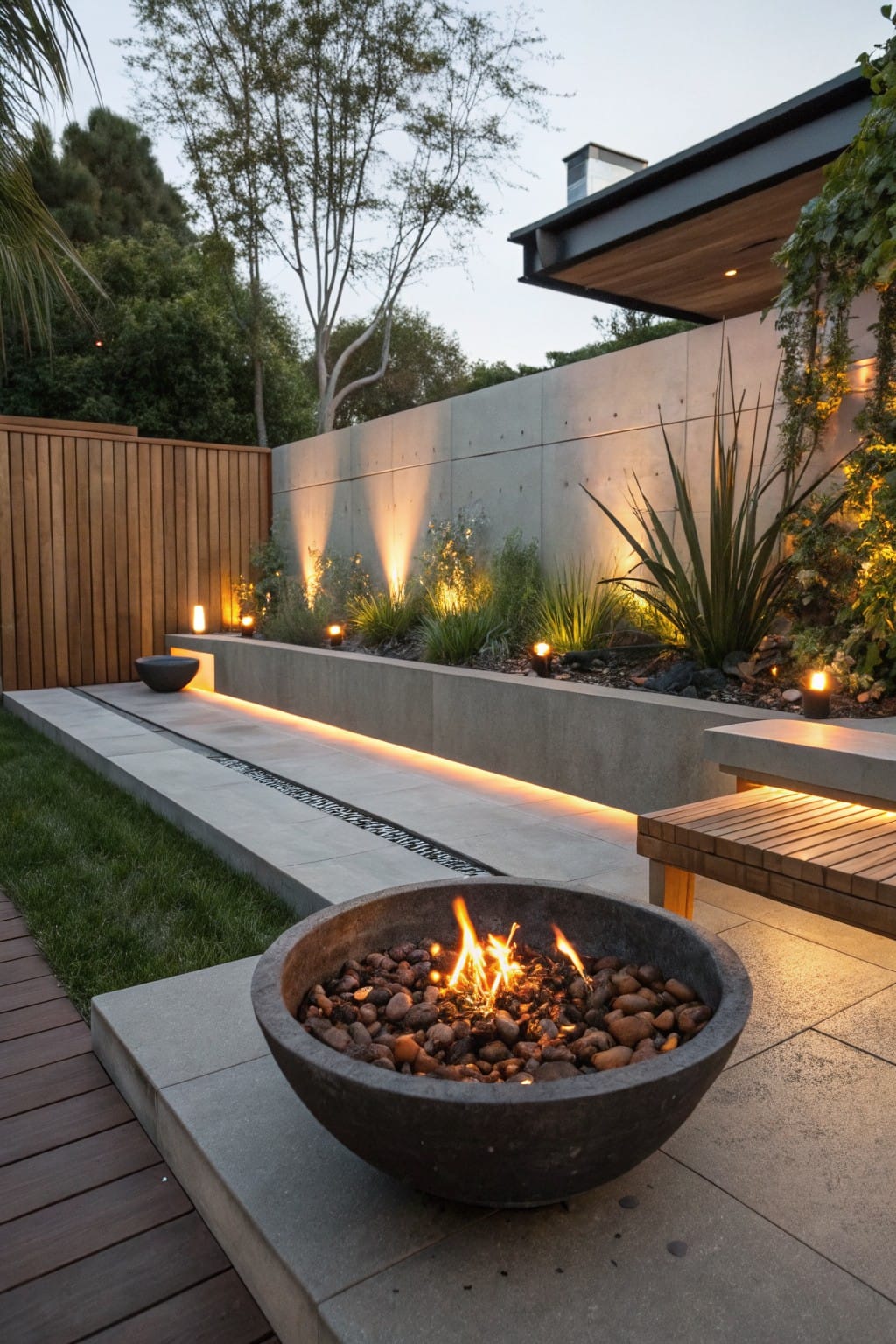
Concrete retaining walls make great raised planters in dry yards. You build them low, maybe two or three feet high, and fill the tops with gravel or small rocks for mulch. Then tuck in tough grasses and spiky plants like agave that don’t need much water. The smooth gray concrete gives a clean modern edge while the rocks keep soil from washing away and cut down on weeding.
This setup works best on slopes or flat spots where you want some height without fuss. Add simple uplights along the base at night, and it turns into a nice path border too. Stick to pale rocks that match the concrete so it stays simple, not busy. Good for smaller backyards trying to feel bigger.
Golden Barrel Cacti Clusters Boost Curb Appeal
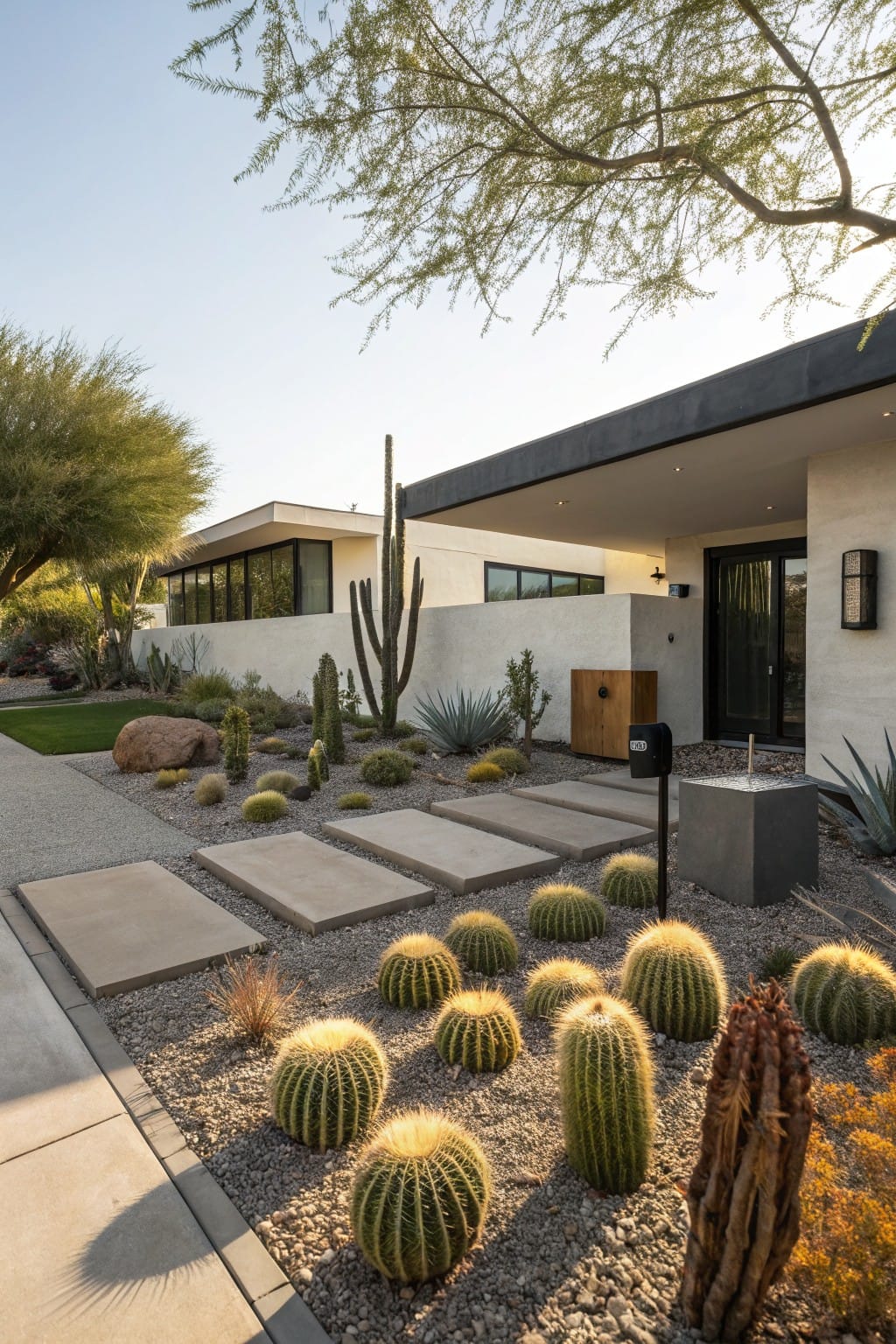
Nothing says desert style like a tight grouping of those round golden barrel cacti. They pop against plain gravel and look right at home leading up to a simple modern house. The clusters give the yard some natural shape without a lot of fuss, and they catch the light just right in dry spots.
Plant them in odd numbers like three or five for the best look, tucked into gravel beds with a few boulders nearby. This setup works great for entry paths or front yards in hot, low-rain areas. Skip overwatering, though. They thrive on neglect and pair well with stone steps for easy access.
Natural Stone Retaining Walls on Slopes
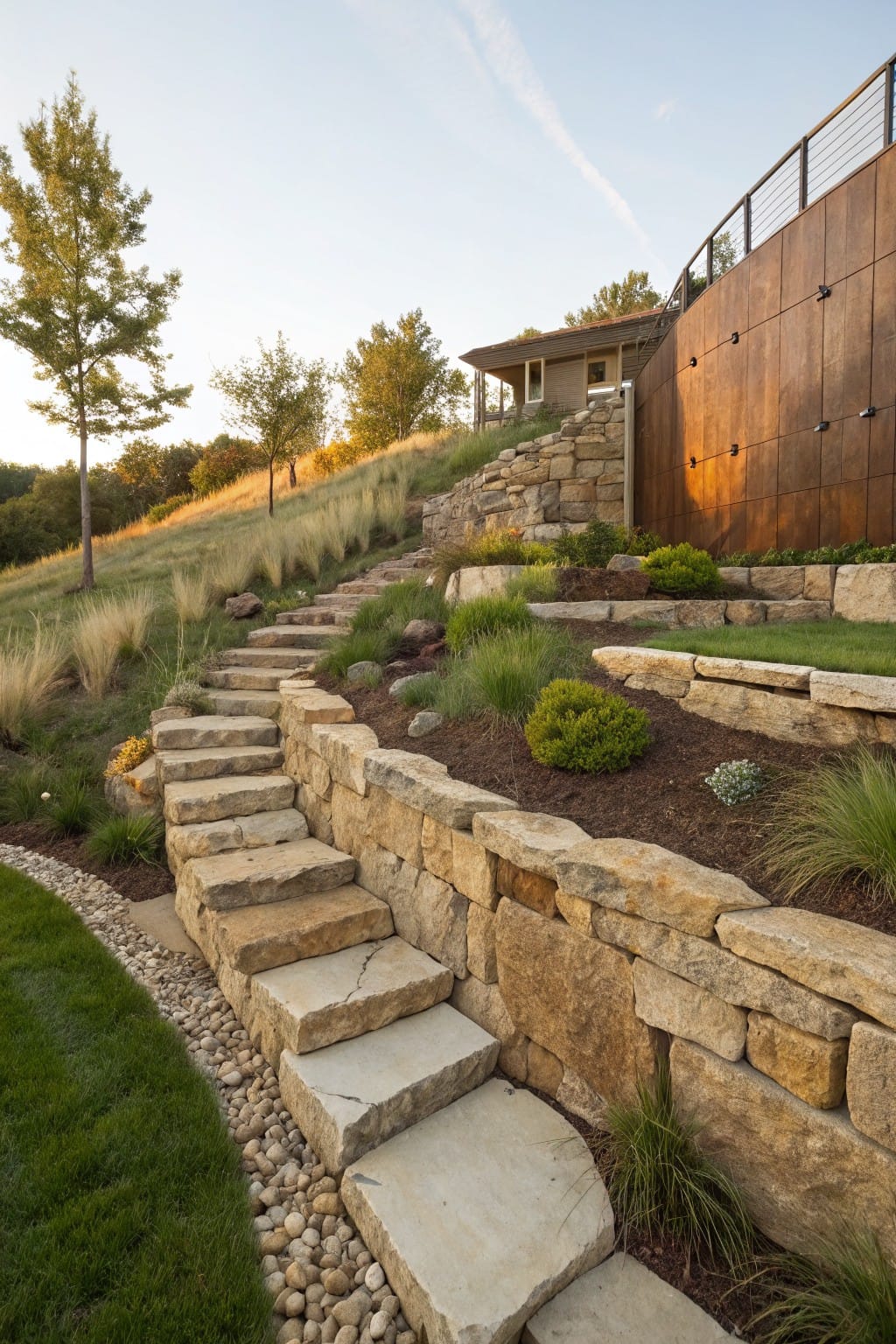
One solid way to handle a dry hillside is with rough-cut stone retaining walls. These walls stack up without mortar, holding back the soil while leaving room for grasses and low plants to tuck in between. The steps built right into them make the slope easy to climb, and it all looks like it grew there naturally. In dry spots, this setup drains well and needs little upkeep.
You can pull this off on any sunny slope around a home in arid areas. Pick local stone to match the ground, then add drought-tolerant bunchgrasses for texture. Keep the walls low, no more than three feet, so they stay stable. It works best where you want paths that lead somewhere useful, like to a patio or entry. Just check your soil first… loose dirt might need some gravel base underneath.
Narrow Gravel Paths with Flanking Planters
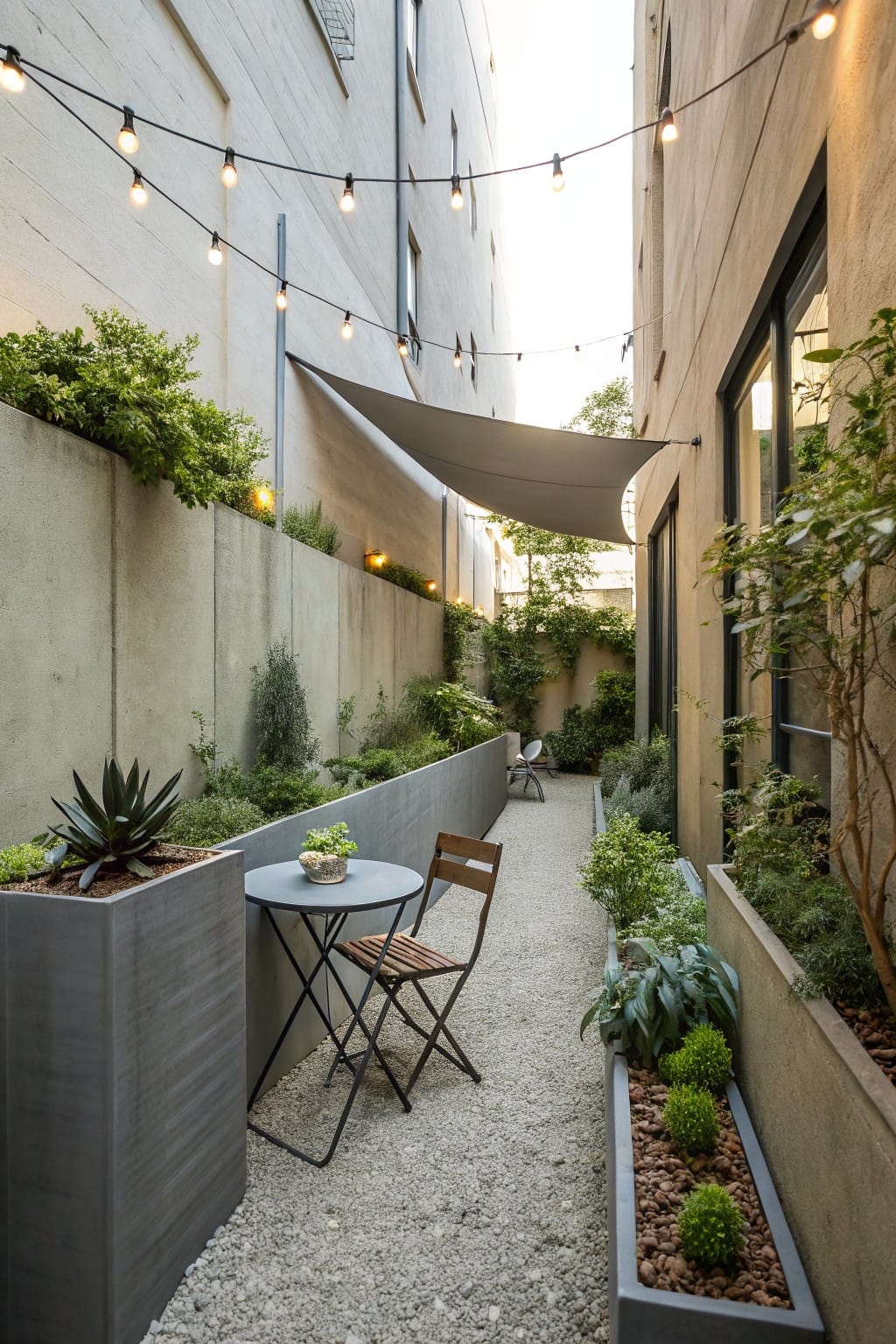
In small urban yards or alleyways, a straight gravel path down the center paired with tall raised planters along the walls makes the most of every inch. The concrete planters hold low-water plants like agave and herbs that spill over softly against the hard surfaces. Gravel underfoot stays simple and drains fast, perfect for dry areas where you don’t want grass.
This setup works best between buildings or in side passages where space is tight. Fill the planters with drought-tolerant stuff and top with rocks for even less upkeep. Drop in a bistro table if you want a spot to sit. Just make sure the gravel is compacted so it doesn’t shift.
Stepping Stone Paths Through Gravel Beds
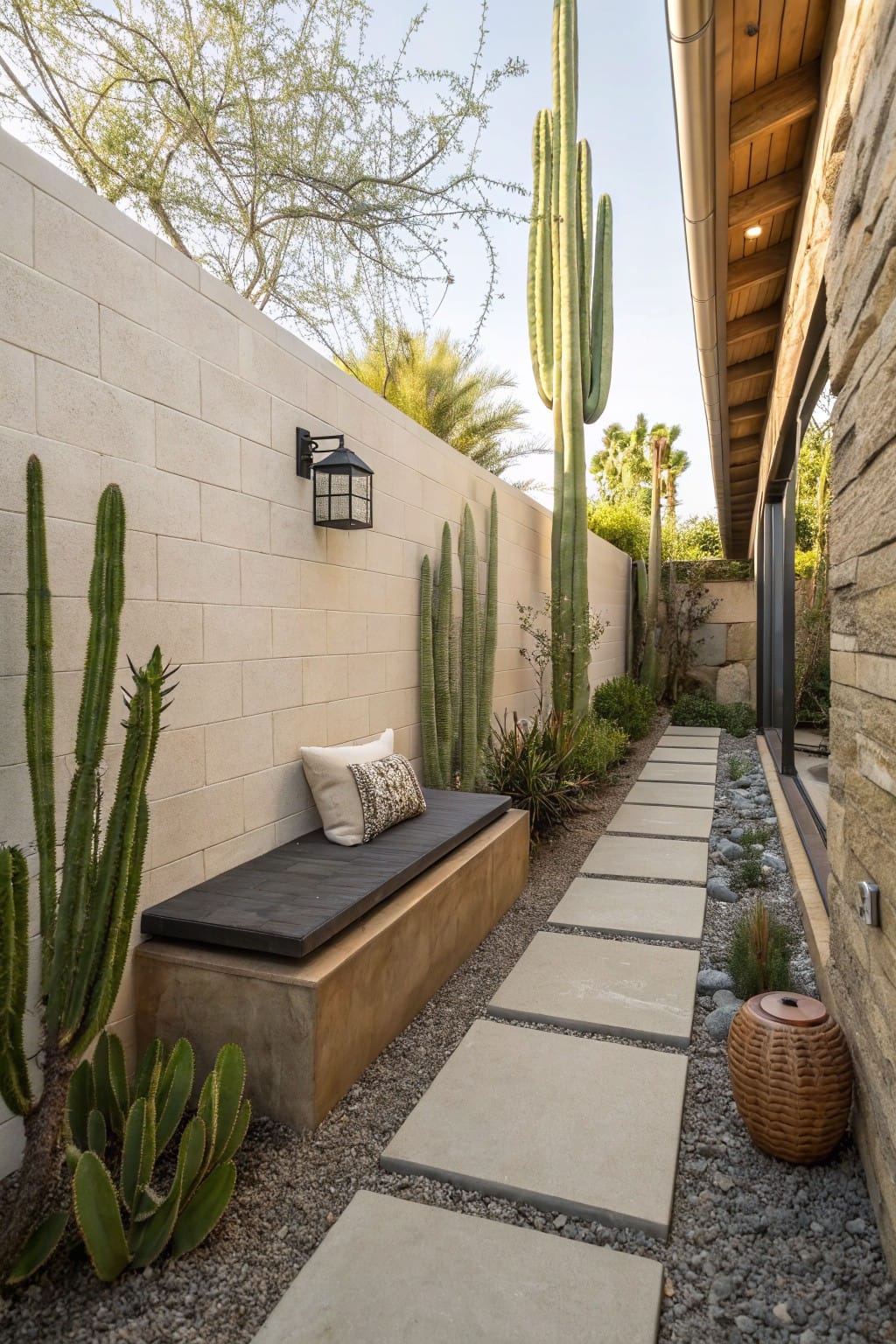
One straightforward way to handle a narrow side yard in dry areas is setting large concrete stepping stones into a gravel base. It keeps things low maintenance since gravel drains fast and weeds stay under control. Here the path runs between a stucco wall and the house, with tall cacti standing like natural posts along the way. That setup guides you right to the door without feeling crowded.
You can pull this off in any skinny walkway or entry path where full paving would cost too much or look heavy. Space the stones about two feet apart for a relaxed stride, and mix in a few low plants or a simple bench like the stucco one shown. It suits modern desert homes best, but watch the gravel type, pea gravel shifts underfoot while larger rocks stay put.
Natural Rock Waterfall into Pool
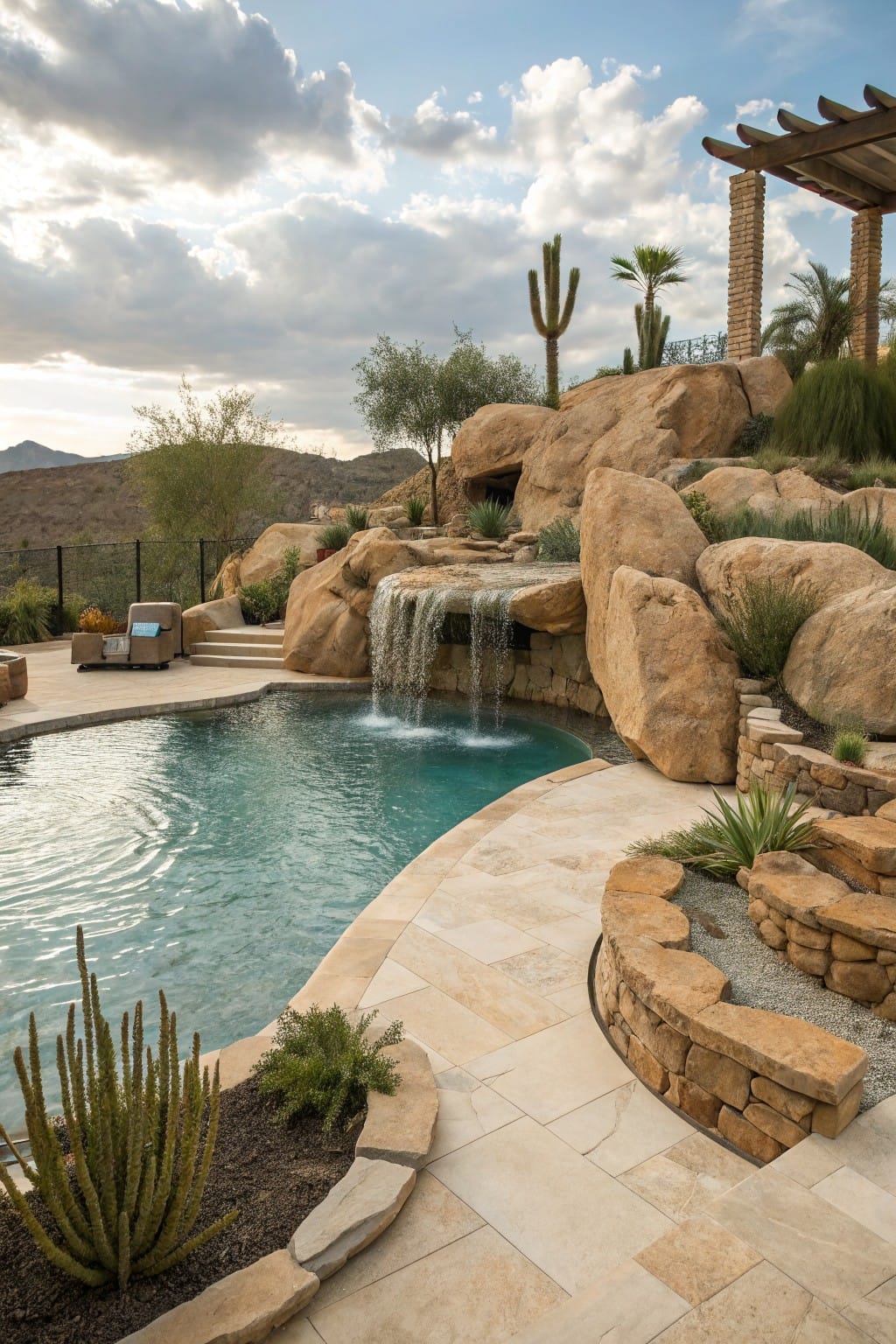
One standout way to use desert rocks is building a waterfall right into your pool. Those big boulders stacked to let water spill over look like they grew there naturally. It fits dry spots perfectly since it uses rocks you can source locally, and the pool keeps things cool without wasting much water.
This works best around a curved pool edge where the rocks can hug the shape. Add steps or a lounge spot nearby for easy access. Just make sure the engineering holds up, especially if your rocks are heavy. Pair it with tough plants like cacti to tie into the desert feel.
Winding Paver Paths in Desert Rock Gardens
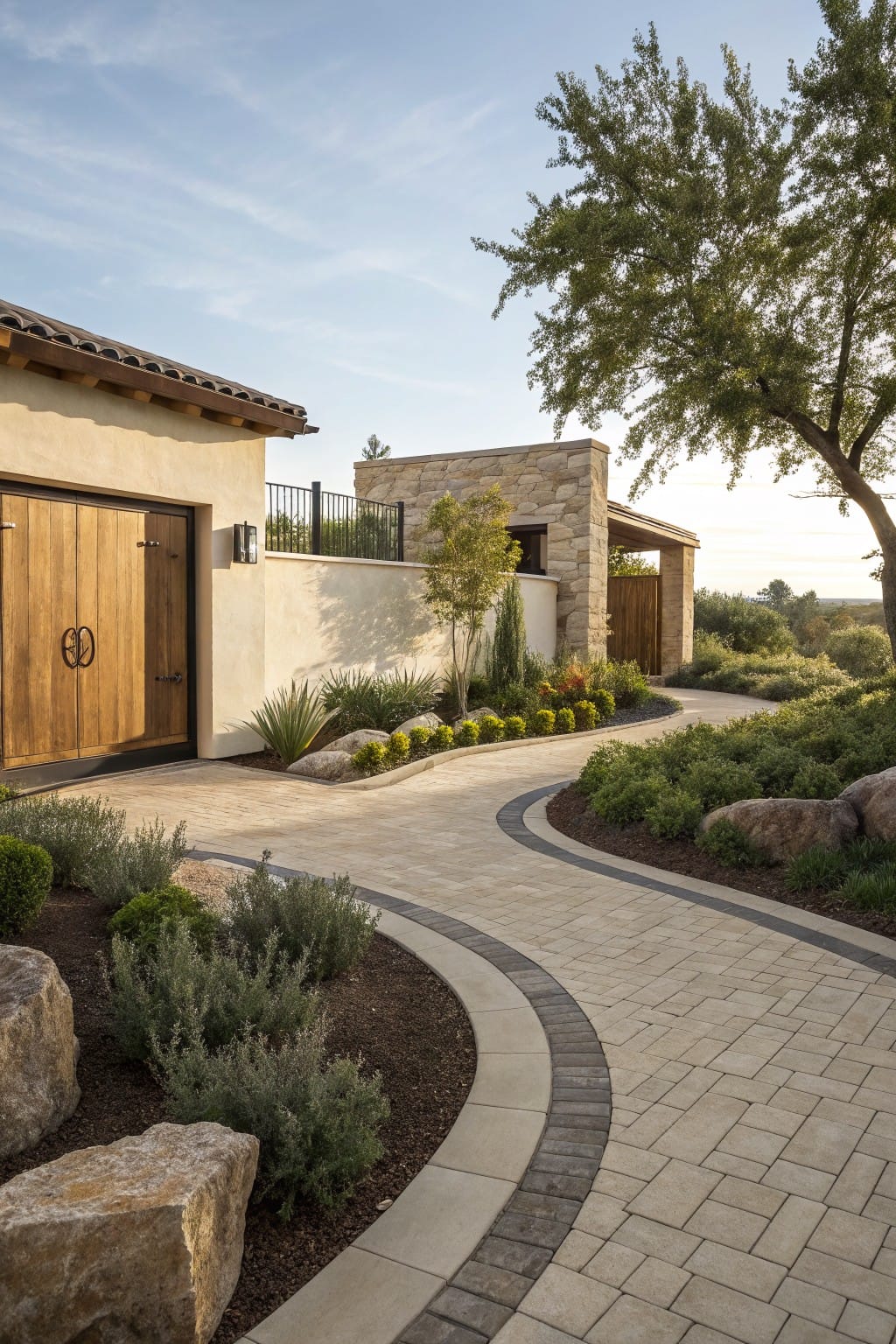
A simple winding path like this one makes getting around your dry yard feel natural and easy. Those beige pavers with dark edging curve gently through big boulders and low shrubs, pulling your eye right to the house without much fuss. It keeps things low-maintenance too, since rocks and tough plants handle the heat and drought just fine.
You can pull this off in any sunny, arid spot where straight lines feel too stiff. Lay the pavers over a gravel base for good drainage, then tuck in boulders and drought-tolerant stuff like agave along the edges. Works great leading to a garage or side door… just keep the curves wide enough for wheelbarrows.
Raised Beds with Gravel Mulch
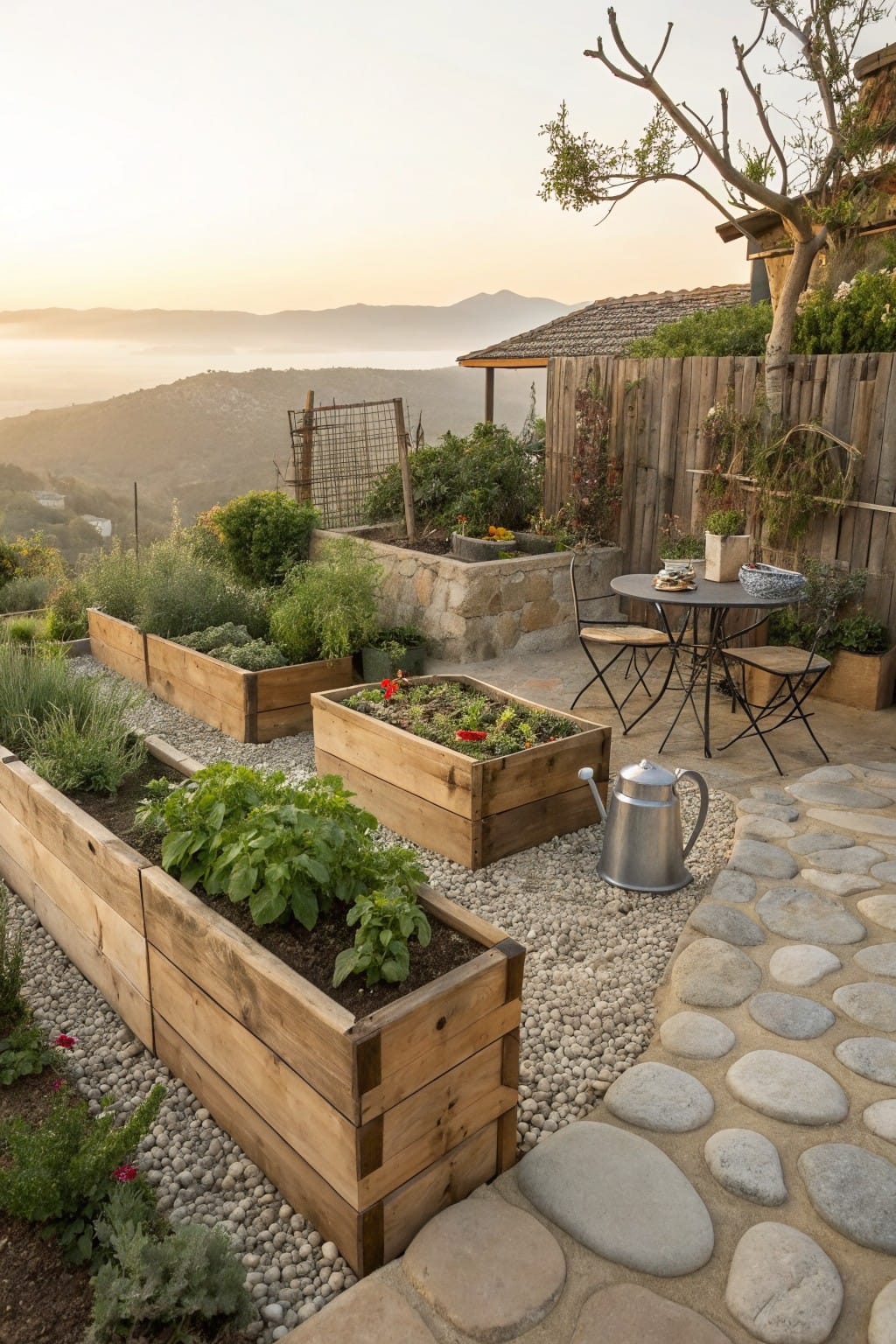
Simple wooden raised beds like these make gardening easy in dry areas. Filled with herbs, greens, and a few flowers, they sit right on gravel that handles drainage and cuts down on weeds. The light pebbles around them keep everything looking tidy without much work, and a stone path winds through for easy access.
This works best on slopes or terraces where water runs off quick. It’s good for backyard spots with a view, like this one. Use untreated wood if you want it to age naturally, and stick to tough plants that don’t need much water.
Flagstone Paths Set in Gravel Beds
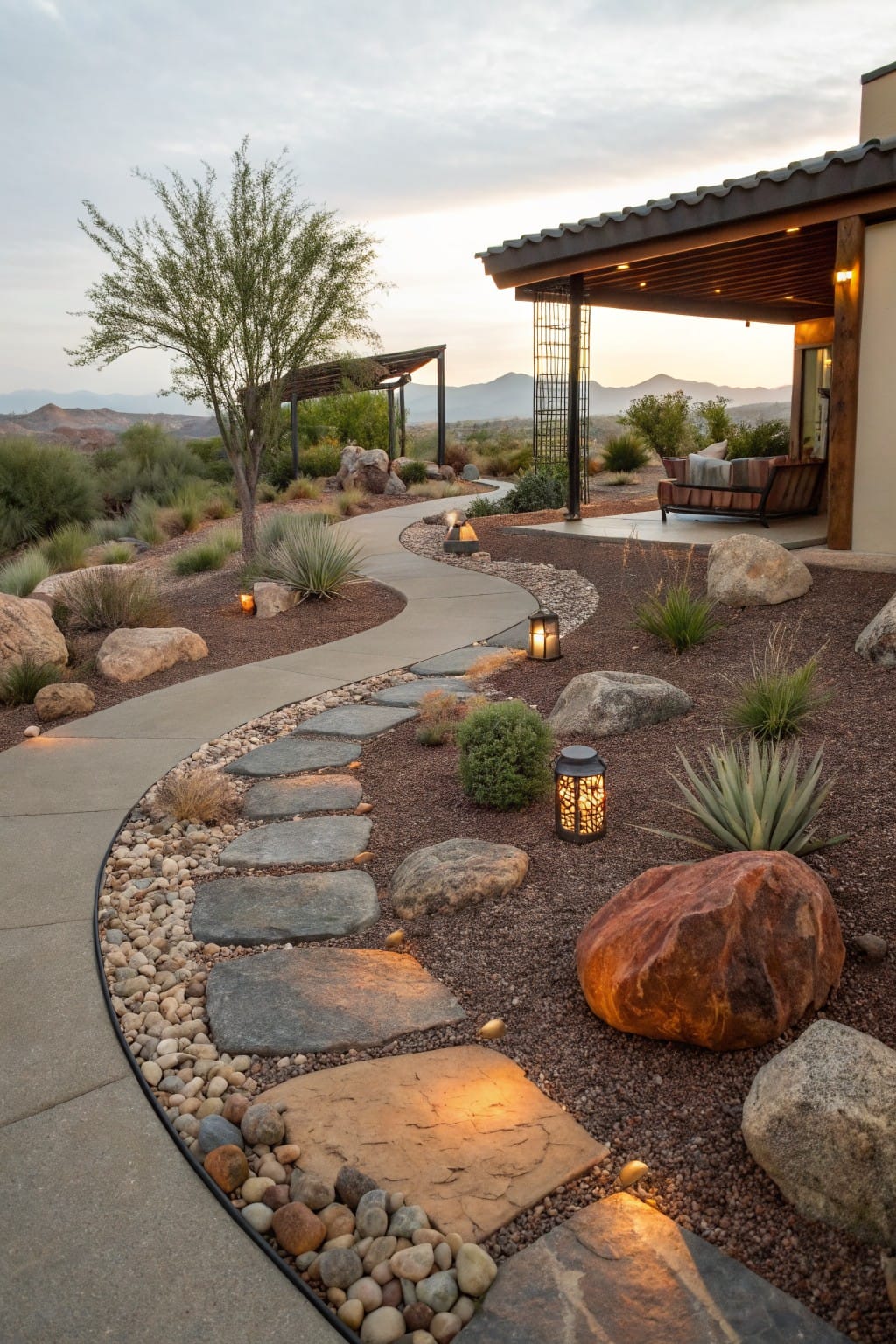
A good desert walkway starts with wide flagstones laid right into a gravel bed, like you see here curving through boulders and low plants. It gives a natural flow without needing much water or weeding. The concrete edging keeps everything neat, and those simple lanterns light it up nicely after dark.
This setup suits any dry yard where you need a path from the driveway to the back patio or entry. Use rounded local stones for the best fit, and keep the curves gentle so it’s easy to walk. It blends the house right into the landscape… perfect for hot spots like Arizona or Nevada.
Linear Gravel Beds for Desert Succulents
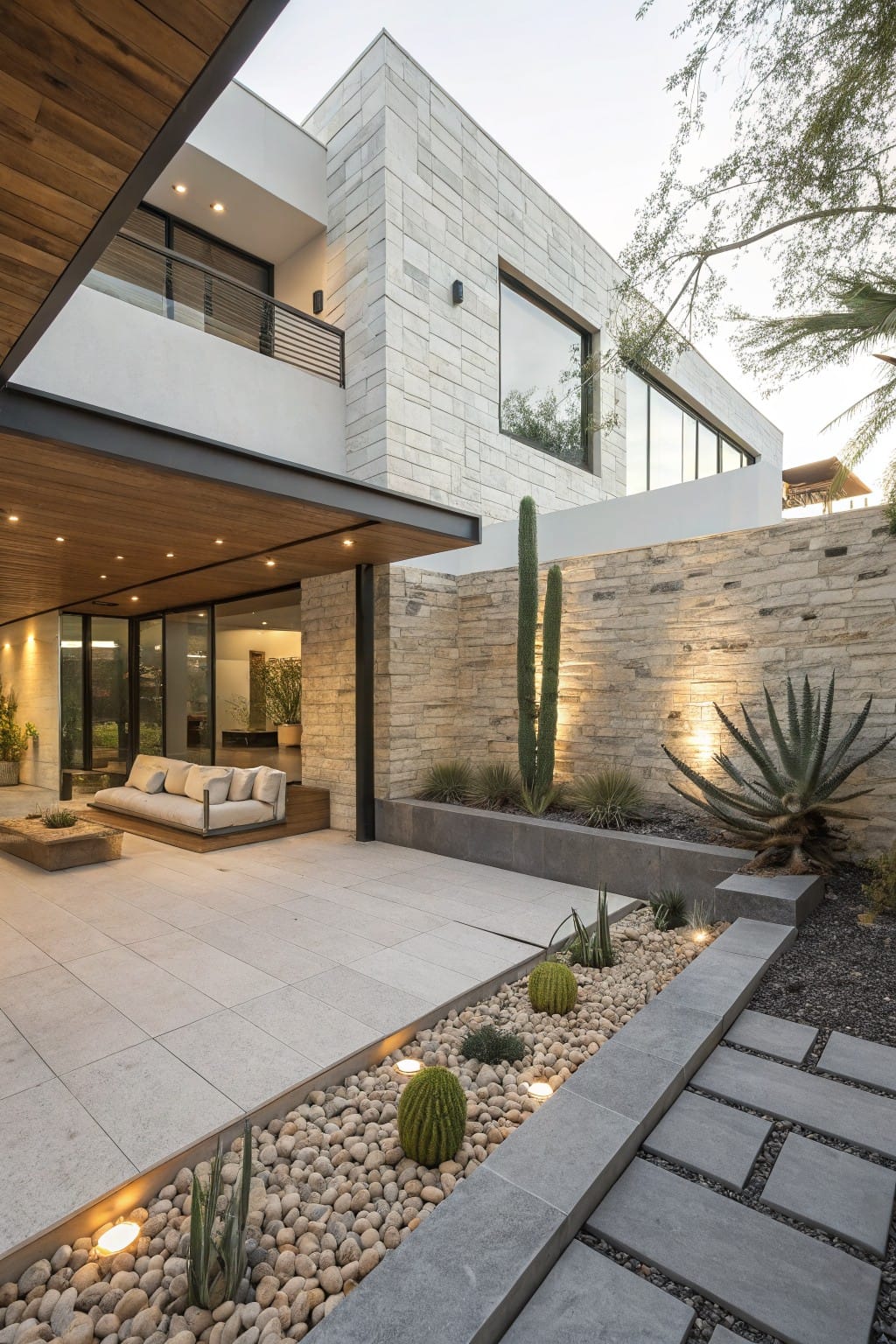
Gravel beds like these run right along the edge of a patio or walkway. They hold back gravel mulch and a mix of plants, from short barrel cacti to taller ones and agaves. The setup stays simple and clean. No grass to water. Just rocks and tough plants that fit dry spots perfectly.
Put these beds next to hard surfaces like concrete patios or stone paths. The light gravel pops against darker edging. Pick plants based on your space, taller ones for back rows. It works well around modern homes or anywhere water is short. Skip anything that needs much care.
Spiral Rock Labyrinths for Dry Yards
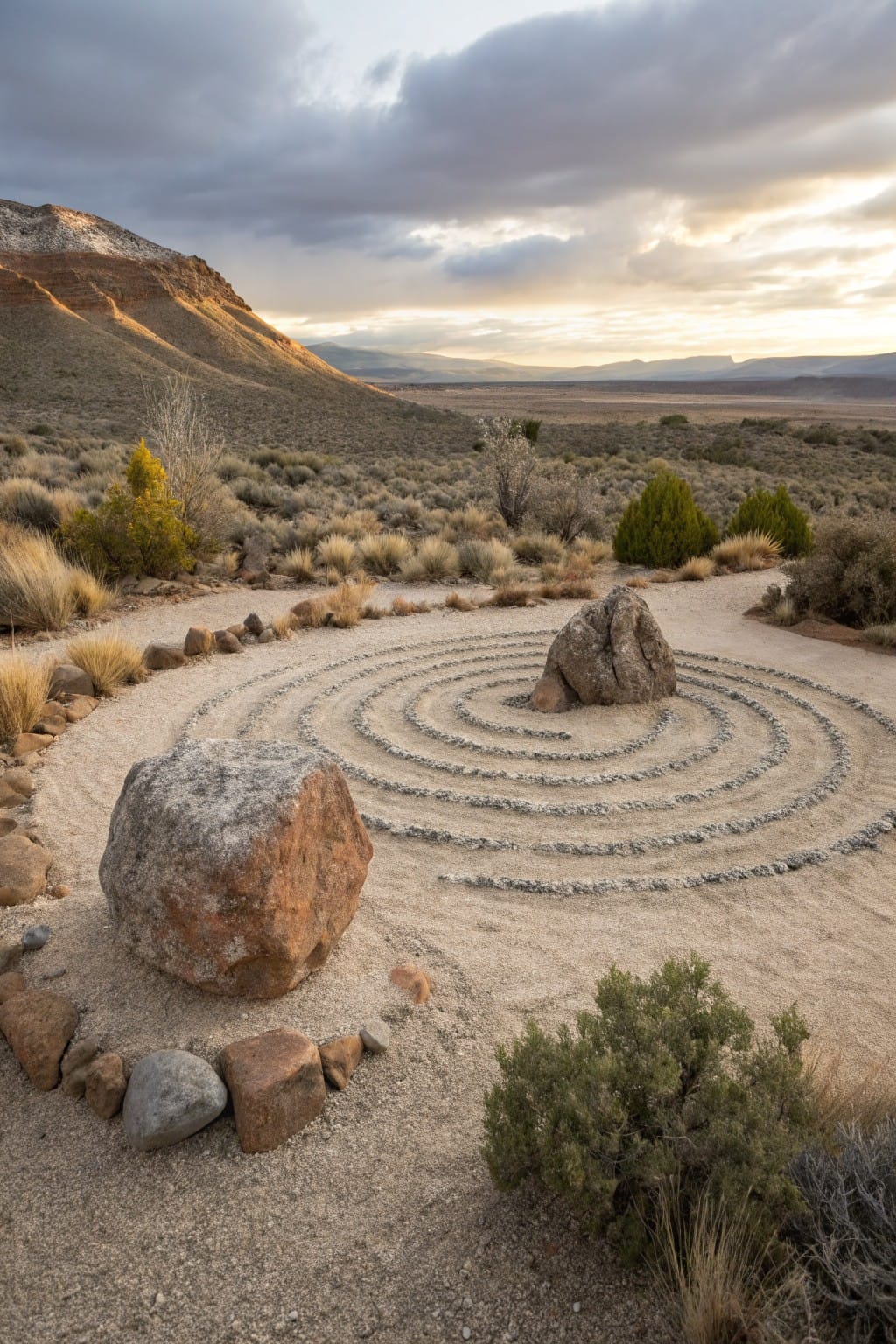
A spiral rock labyrinth like this one makes a strong focal point in desert landscaping. It’s built from simple gravel lines raked into tight circles, with a couple of big boulders placed right in the center. No plants or water needed. It fits right into arid spots and gives a quiet place to walk and think, especially with those wide-open views.
You can set one up in any flat yard area about 20 feet across. Use local rocks and decomposed granite for the paths, then add a few native bushes around the edge for framing. It suits low-water homes in places like the Southwest… watch for wind that might scatter the gravel, though. A quick rake keeps it neat.
Frequently Asked Questions
Q: How do I stop weeds from sneaking through all those rocks?
A: Grab some heavy-duty landscape fabric and spread it out first. Dump your rocks on top in a good two-inch layer. Weeds hate fighting through that combo.
Q: Will these rock setups handle a little rain without turning into mud?
A: Rocks drain fast, so light rain just soaks right through. Pick angular stones over round gravel; they lock together better. Even in a downpour, your yard stays put.
Q: Can I toss in a few plants without killing the dry-climate look?
A: Go for tough natives like agave or yucca that thrive on neglect. Plant them in pockets between boulders for a natural vibe. They sip water sparingly and punch up the drama.
Q: Where do I score affordable rocks for a big yard?
A: Hunt local quarries or construction sites for bulk deals. And check online marketplaces; folks often dump extras cheap. Mix sizes and colors right there to save cash.
