


I’ve spent time eyeing yards where rock landscaping pulls the whole space together without breaking the bank.
What catches my eye first is usually the way larger stones anchor pathways and define planting beds so everything feels structured from day one.
In my own backyard tweaks, I found that blending gravel sizes creates depth that builds character over time, just like pricier installs.
These approaches lean on smart layering and edging to shape outdoor areas that evolve naturally with the seasons.
One idea I keep coming back to is edging with flat stones—it holds up better than you might expect.
Rustic Flagstone Walkway

One simple way to get that high-end yard look without breaking the bank is a flagstone path like this. Big irregular stones laid right into gravel make it feel custom-built and natural. Paired with a few large boulders and tough grasses along the edges, it pulls the whole entry area together. Folks love how it stands up to foot traffic and needs almost no upkeep.
Lay it out curving gently toward your door for easy flow. Source stones from local quarries or salvage yards to keep costs down, then fill gaps with pea gravel. It works best around stone or stucco houses in dry spots. Just space the flags unevenly so it doesn’t look too perfect… that’s the charm.
Gravel Paths with Stone Steps
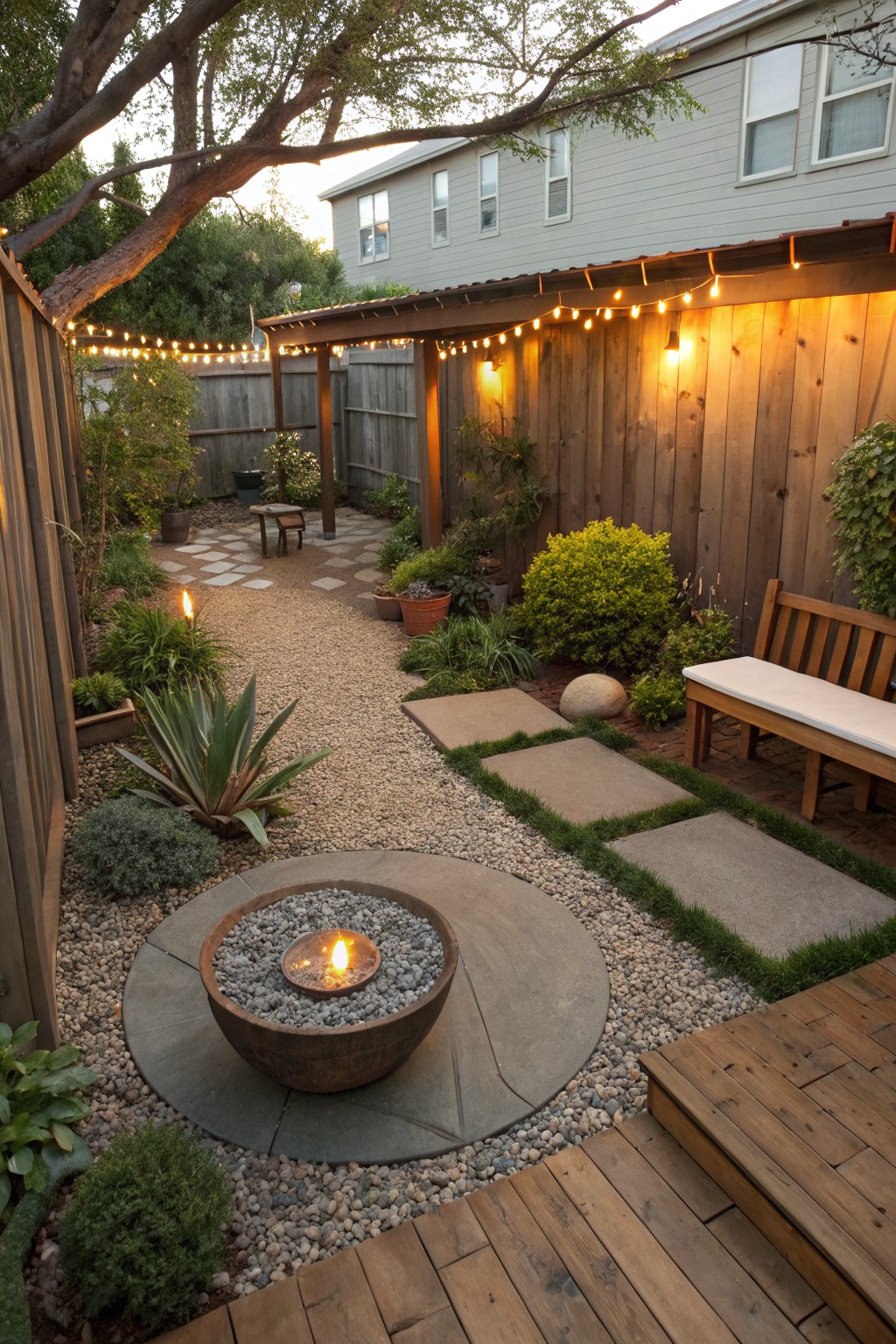
Gravel makes a simple base for garden paths that feel put-together without much cost. Here the path winds through a narrow yard using light pebbles for the main walkway and flat stone slabs set into it as steps. It pulls the eye forward to a fire pit up ahead and lets low-water plants like agave tuck right in along the edges. That mix keeps things clean and modern on a budget.
This works best in small backyards or side yards where you want flow without mowing grass everywhere. Start with landscape fabric under the gravel to block weeds then drop in the slabs for traction. Skip fancy edging if your fence is close by. Drought spots love it since gravel drains fast and plants stay happy with less fuss.
Terraced Stone Steps for Sloped Yards

One smart way to handle a steep hillside is building wide flagstone steps into dry-stacked rock walls. This path climbs gradually from the street up to the house entry, with plants tucked into the wall pockets for a natural feel. It makes the yard look established without much upkeep, and the rough stones give it that expensive handcrafted look on a real budget.
These steps suit homes on any slope where you need to connect levels without fighting erosion. Grab local fieldstone or quarry scraps, stack the walls about two feet high between flights, then set the flat stones for treads. Add low shrubs or grasses that won’t overwhelm… keeps the path clear year-round.
Stone Path with Pebble Edges
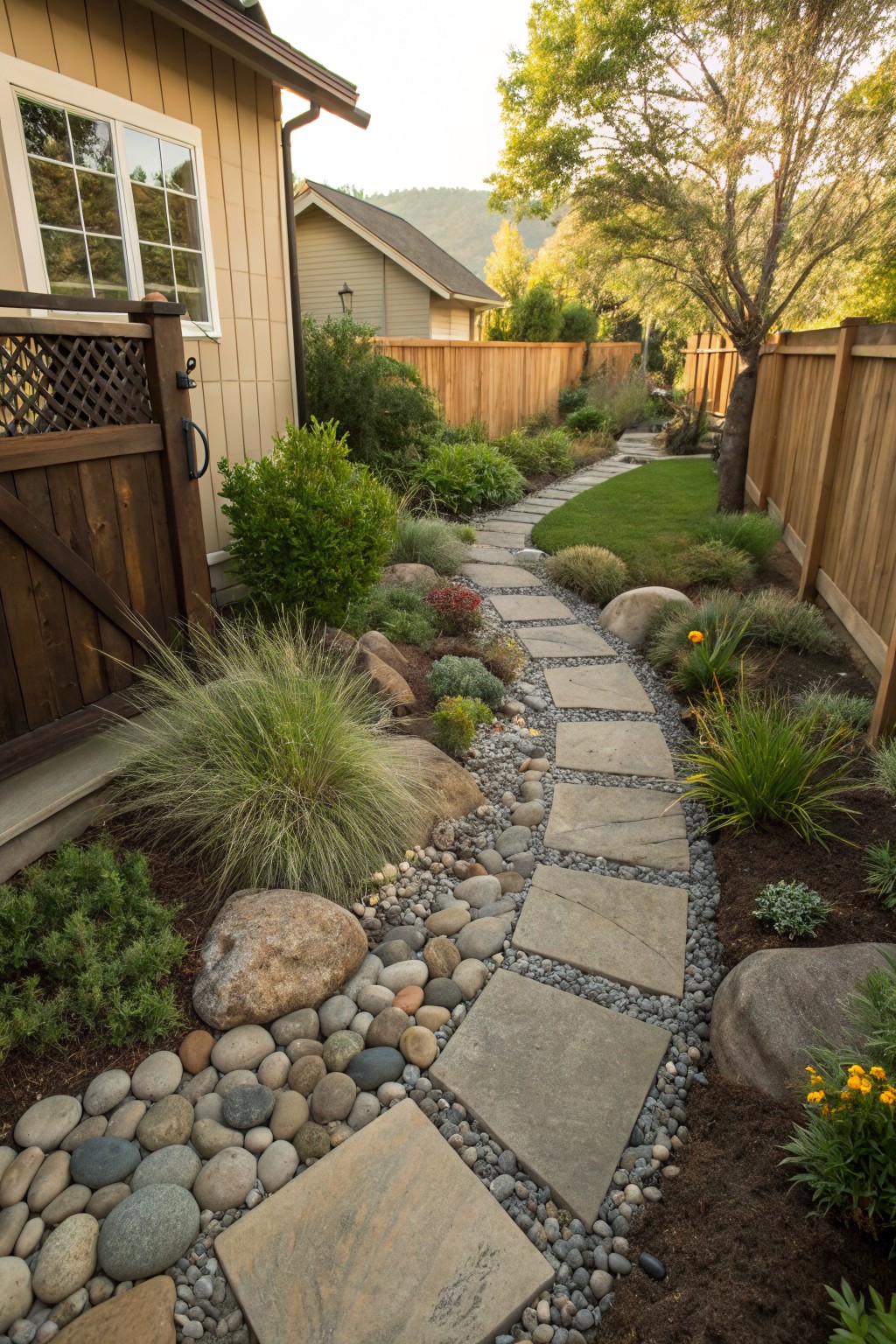
A simple way to add polish to a yard is setting large flat stones into a bed of pebbles and river rocks. It creates that winding path feel, like it was done by a pro. The mix of smooth stones, rounded pebbles, and a few big boulders keeps it from looking plain. Folks like how it guides you through the garden without much effort.
Try this in a side yard or along a fence where you need direction but not a full walkway. Grab affordable concrete pavers for the steps, bulk river rock for the borders, and drought-tolerant grasses to fill in. It suits sloped lots or narrow spaces best. Just level the ground first… or it’ll shift over time.
Layered Rocks Around Entry Steps
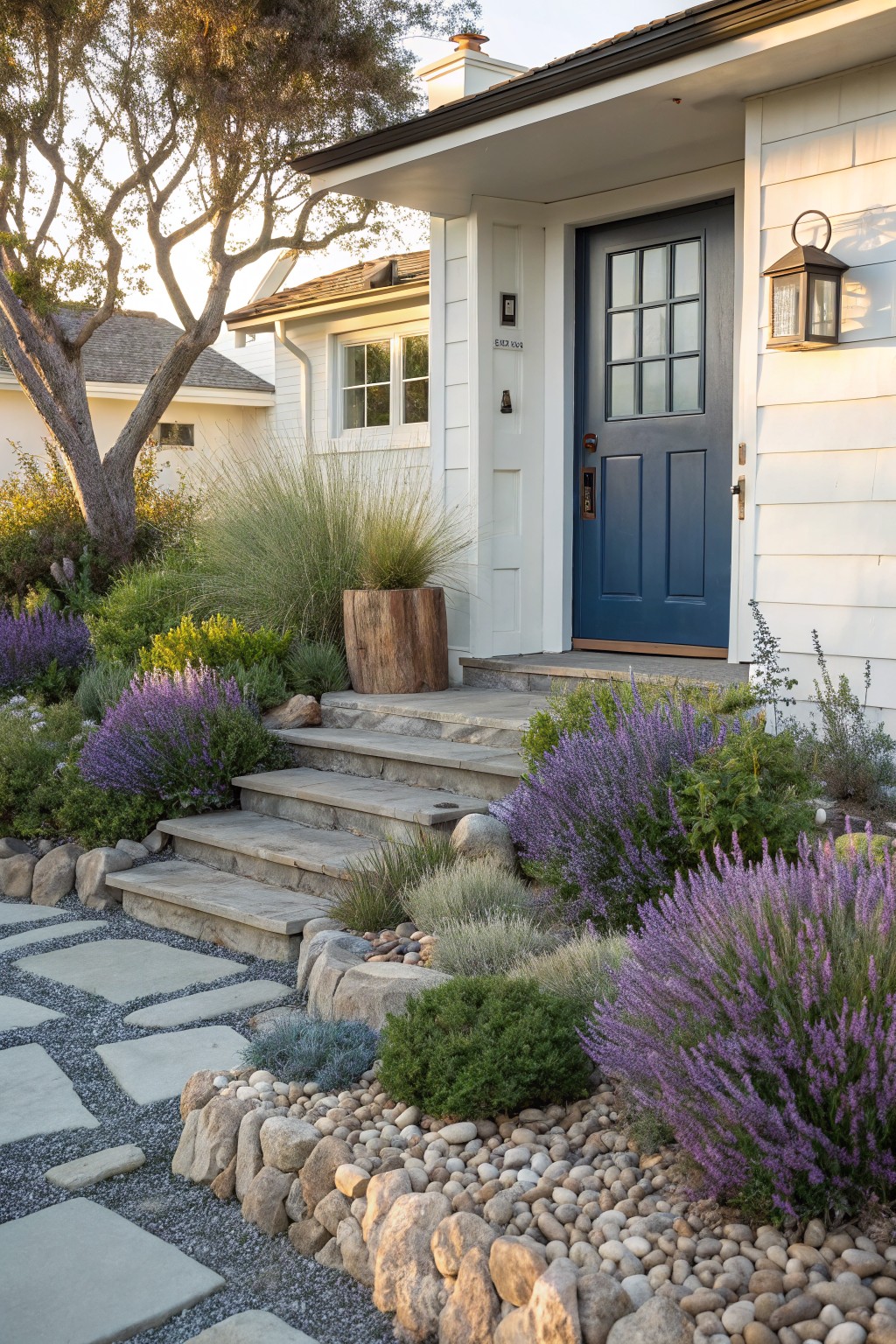
One smart way to get that polished garden look without spending a ton is layering rocks in different sizes right by your front steps. Start with a few bigger boulders for structure, then tuck in medium stones and fill gaps with pebbles or gravel. Here it’s paired with clumps of lavender that spill over softly. The mix adds real texture and keeps soil from washing out, all while looking like it took pro landscapers to pull off.
This works best in sunny spots near the house where you want low upkeep. Grab affordable bulk gravel and rocks from a local quarry, then plant tough stuff like lavender or grasses that don’t need much water. It’s perfect for sloped front yards. Just make sure the bigger rocks sit stable so nothing shifts over time.
Rustic Stone Path Through Flower Beds

This kind of path uses big irregular stones laid out in a casual curve through thick grass and flower borders. It pulls your eye right to the house door without any straight lines or fussy edging. Folks love how it feels natural and settled in, like it’s been there forever, and those bursts of pink daisies and yellow blooms make the whole thing pop for cheap.
Grab stones from a local quarry or even Craigslist to keep costs down, then set them into the ground with gravel underneath for drainage. Space them about two feet apart so adults can walk easy. It suits small front gardens or older homes best. Watch the spacing on slopes though, or it’ll feel awkward.
Curved Gravel Paths with Rock Edging

One straightforward way to make a yard path feel upscale is to edge it with natural rocks along curved concrete walls. You see it here with a gravel walkway that winds gently, held in by those simple stacked stones on top of the low walls. It keeps things tidy without much upkeep, and the rocks add that rugged texture that looks like it cost a bundle.
This works best in sunny, dry spots where gravel drains well and rocks won’t shift. Grab affordable fieldstones from a local quarry, build the curve to match your yard’s flow, and plant drought-tough stuff like olive trees or low shrubs nearby. Skip fancy mortars. Just stack them secure, and it’ll hold up for years.
Circular Rock Garden with Central Fountain

A simple circle of gravel and pebbles makes for an easy yard focal point. Fill it with a mix of larger boulders, a few tough plants like agaves, and a tall stone pillar fountain right in the middle. That setup looks intentional and calm. Without much upkeep, it turns a plain spot into something that feels designed.
Put one near a seating area or patio edge where you want eyes to land. Use whatever rocks you can find cheap or free, add a basic bubbler to the pillar top, and keep plants low-water. It fits small backyards or modern homes best. Just make sure the gravel drains well so it stays neat.
Natural Stone Steps Up a Slope

Big rough stone steps like these make climbing a hillside feel easy and look high-end. They’re set into the earth with boulders holding back the soil on both sides. Ornamental grasses and low plants fill in the gaps. It all blends right into the natural terrain without much upkeep.
Hunt for affordable local limestone or fieldstone at quarries or salvage yards. Lay wide treads for comfort. Use dry-stacked walls for the edges, no mortar needed. Add drought-tolerant grasses for that wild look. Perfect for backyards tying your house to outdoor spots. Just make sure the steps aren’t too steep.
Pebble-Lined Water Channels
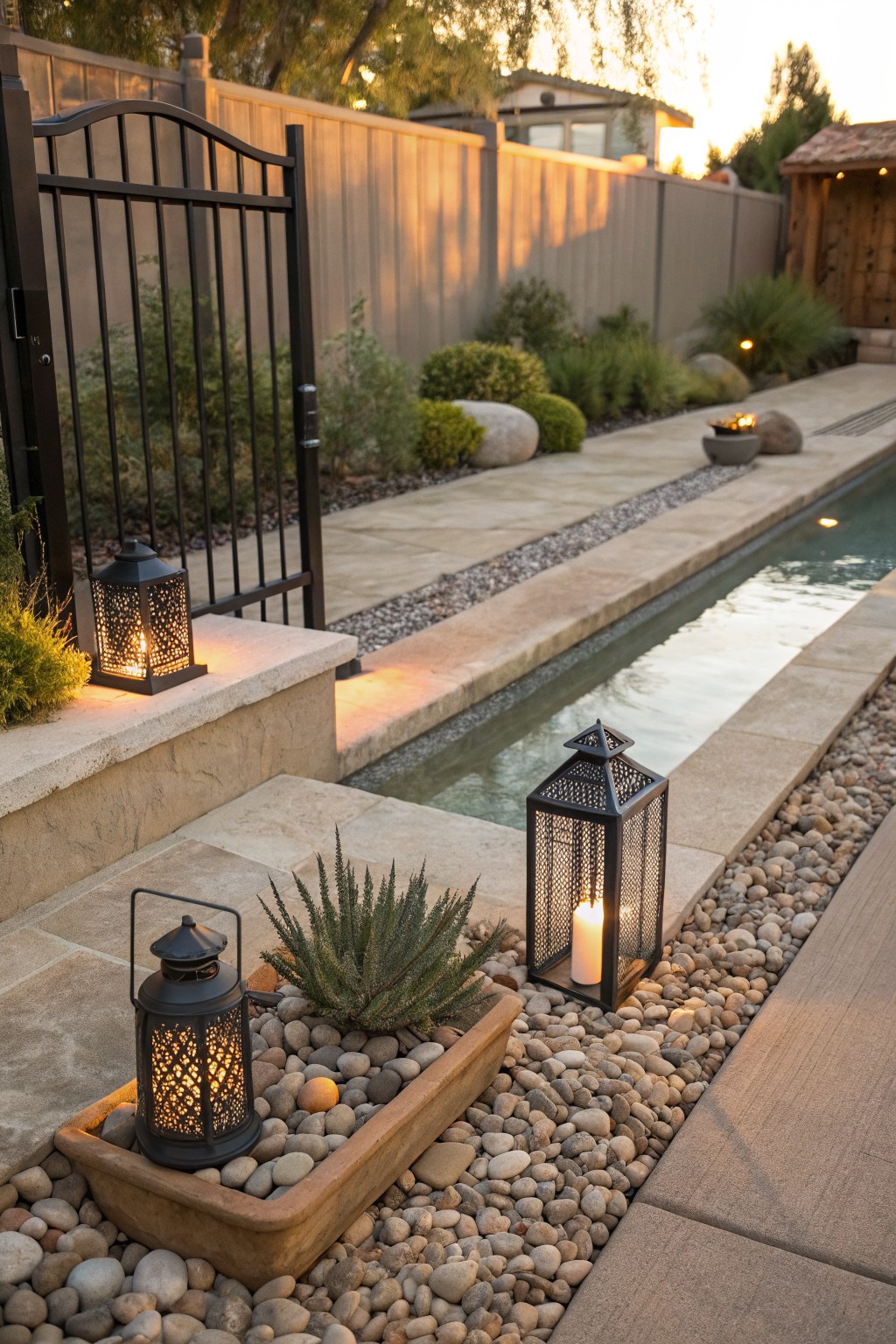
A slim water channel like this runs right through the yard, edged with smooth pebbles and bigger rocks. It pulls the eye along without taking up much space. Folks love how the rocks make everything feel calm and finished. Those black lanterns add a soft glow at night too.
You can do this on the cheap by grabbing bulk river rocks from a local supplier. Line a narrow concrete trough or even a preformed liner. It suits tight backyards or drought areas best. Stick to low-water plants nearby so it stays easy to handle.
Rustic Stone Walls for Raised Garden Beds

One straightforward way to make a backyard feel put-together without spending a ton is stacking natural stone into low retaining walls for raised beds. In this setup, the rough-cut stones hold back soil just right, letting plants spill over the edges in a natural way. It gives that expensive layered look, especially with gravel filling in around a simple paver path.
These walls work best on any gentle slope or flat yard where you want to create levels without big earth-moving costs. Stack the stones dry or with minimal mortar for easy DIY, then plant herbs or perennials that trail down. Keep it to two or three tiers max, or it might feel too busy. Pair with mulch or pebbles to stay low-maintenance.
Gravel and Stone Entry Path

One straightforward way to make your front yard look polished is a path of rough stone slabs set right into gravel beds. It leads casually up to the door with a few wider stone steps at the end. Paired with big hydrangea bushes along the edges, it feels established and a bit wild, like it’s been there forever. The gravel fills in the gaps so you don’t need perfect edging or mortar.
This works best on a gentle slope toward the house, especially with a cottage or shingle-style home. Pick up irregular fieldstones from a local quarry to keep costs low, then layer in inexpensive pea gravel or crushed stone. Plant low-growing stuff around the edges to hold it together. It drains well and stays neat with minimal weeding.
Gabion Baskets for Path Borders

Gabion baskets make a solid choice for edging garden paths without breaking the bank. These wire cages packed with rocks create a rugged, stacked-stone look that feels custom-built. You see them here holding back soil along a paver walkway, with plants tucked in for a natural touch. The texture stands out at dusk, especially with low lights tucked inside.
They’re easy to work with on sloped yards or anywhere you need low retaining walls. Source rocks locally to keep costs down, then add spill-over plants like lavender or grasses. This fits casual backyards best, giving that expensive hardscape vibe on a real budget. Just make sure the wire holds up in wet areas.
Gravel Walkways with Stone Stepping Slabs
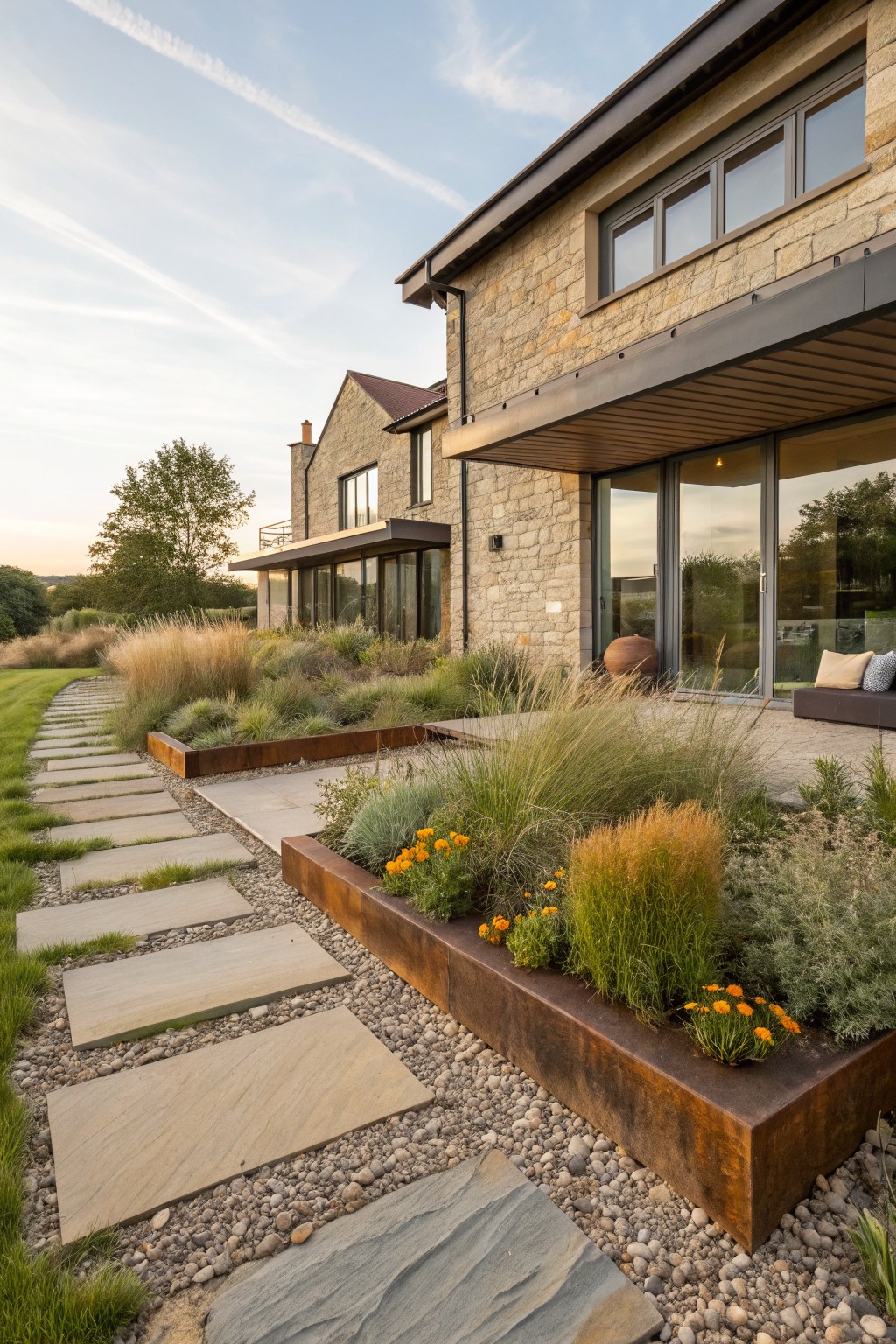
Gravel makes a solid base for paths that don’t cost much, especially when you drop in large, rough stone slabs as steps. Here the slabs lead right up to a patio, with gravel filling the gaps for that clean, natural look. Raised beds nearby hold grasses and a few flowers, keeping things low fuss but structured. Folks like how it feels custom without the big price tag.
Use this in side yards or to connect house doors to the lawn. It suits stone houses or any spot wanting a bit of wild edge. Go for local stone to save, and top the gravel with bigger pebbles so weeds stay down. Watch drainage though, or it turns muddy after rain.
Pavers Set in Pebbles
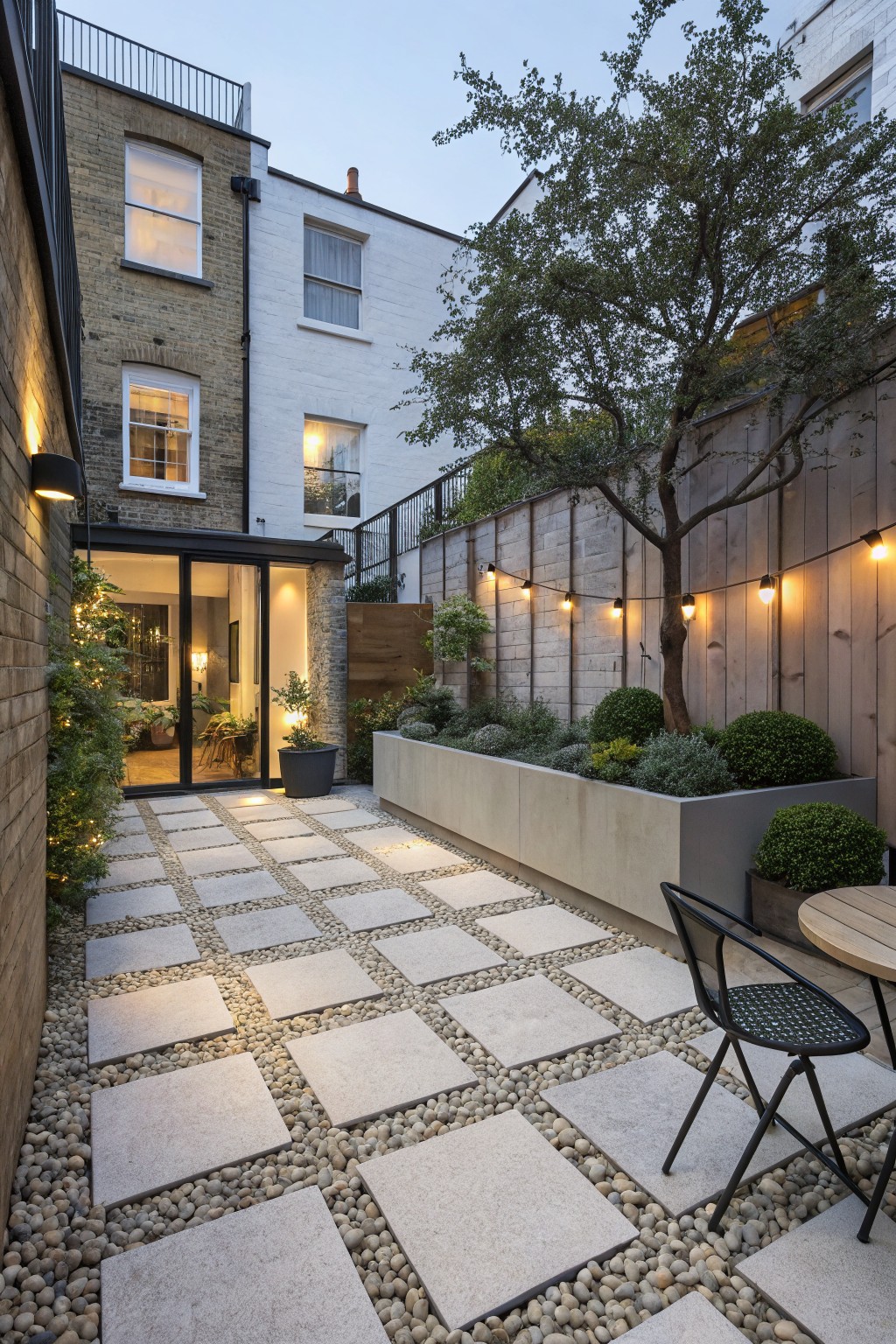
Big stone pavers laid loose in a bed of white pebbles make a simple path that punches above its weight. The gaps let it feel open and easy to walk on, while the pebbles keep dirt from piling up between slabs. It works because the combo looks intentional and clean, like something from a high-end garden without the full cost of mortar or edging.
Try this in narrow side yards or small patios where full paving feels too heavy. Go for smooth round pebbles and larger slabs to avoid a messy look. It suits urban spots with some shade, and adding a few raised planters nearby ties it into planting beds without much extra work.
Circular Gravel Bed Design
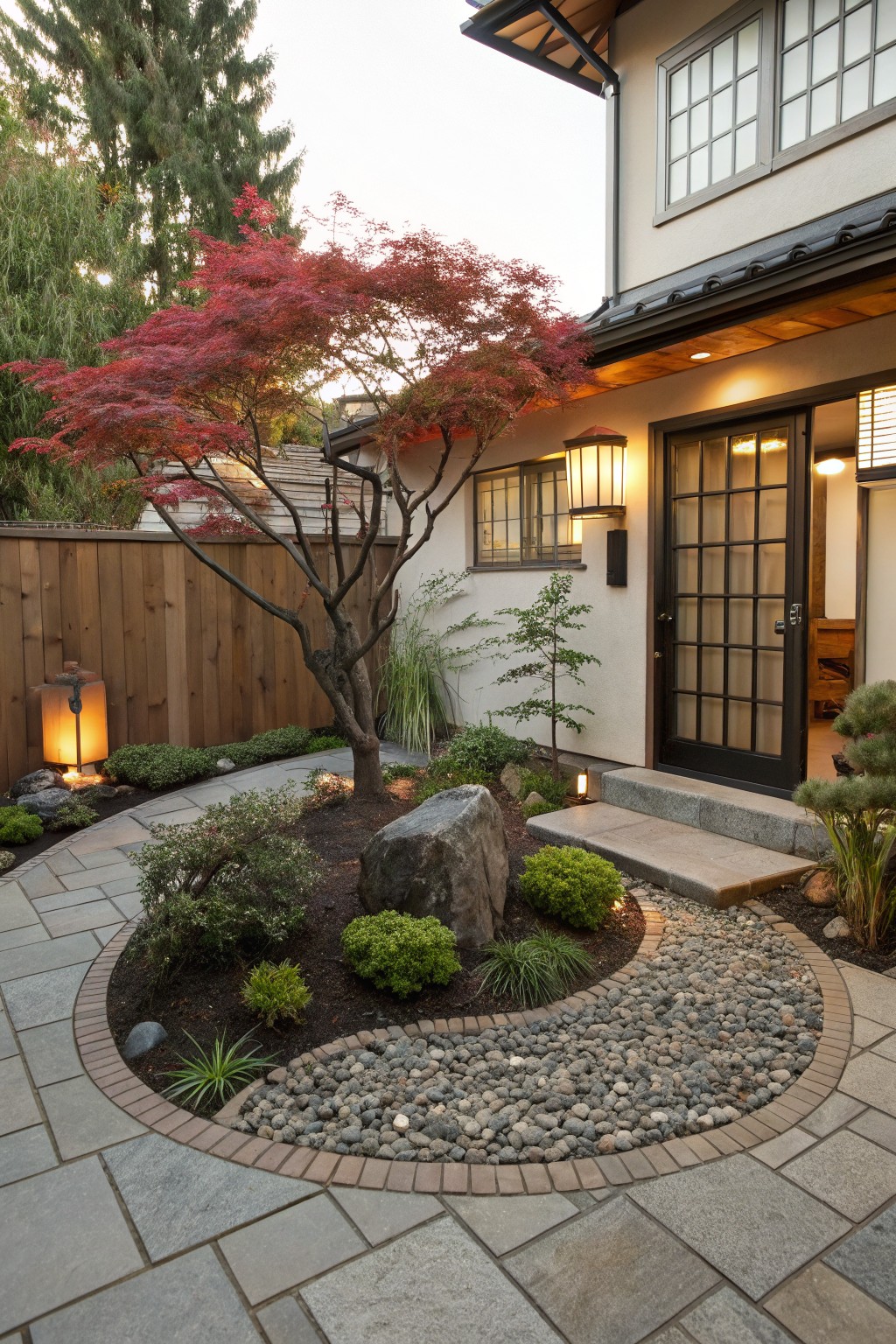
A circular bed like this one uses gravel and rocks to create a clean focal point in the garden. The large boulder in the middle gives it structure, while low plants and river rocks fill it out nicely. It’s simple to put together, and gravel costs next to nothing, so it punches above its weight in looks.
Put this near your back door or entry path where it can guide the way. It fits small yards or spots with a bit of Asian style, keeping things low fuss. Level the ground first, add brick edging to hold the shape, and go easy on the plants if you hate weeding.
Black Gravel Pathway with Stepping Stones
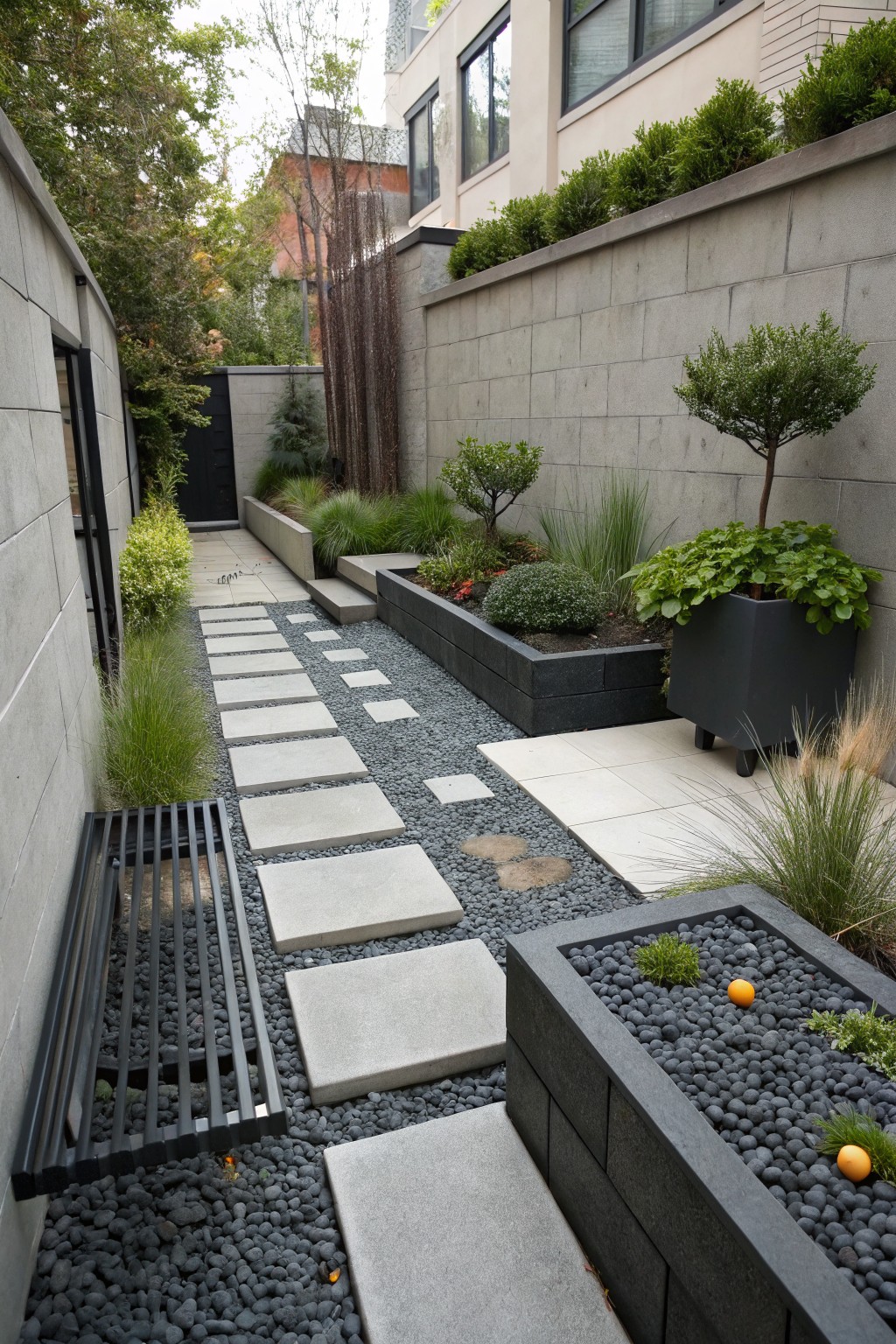
One straightforward rock landscaping idea is a dark gravel base with large concrete pavers as steps. The black pebbles create a sleek, even surface that ties into modern concrete walls and planters. It feels high-end but stays simple, and the gravel keeps weeds down without constant mowing.
This works best in narrow side yards or pathways where grass won’t grow anyway. Buy bulk gravel to save money, lay it over fabric for drainage, then space the pavers for a natural stride. Add grasses or low plants around the edges… suits rentals or tight budgets perfectly.
Frequently Asked Questions
Q: Where do I hunt for cheap rocks that still look great? A: Check out local landscaping yards or construction sites first. They often sell off leftover gravel and boulders for next to nothing. Haul them home yourself to save even more.
Q: How do I stop weeds from ruining my new rock garden?
A: Lay down landscape fabric before adding rocks. Cut slits only where you plant. Water sparingly since rocks hold heat and dry out weeds fast.
Q: Will this setup really fool people into thinking I spent a fortune?
A: Mix sizes and colors to add depth. Tuck in a few larger statement rocks upfront. It tricks the eye every time.
Q: What’s the quickest fix if my rock bed looks too flat?
A: Rake in some contours or mounds. Drop in low-growing plants for contrast. And boom, instant dimension.
