


I’ve tinkered with rock borders in my yard enough to see how they anchor flower beds and keep the layout from turning into a wild mess over time.
The stones create natural edging that shapes planting areas and even suggests pathways, giving the whole yard a sense of flow.
Folks walking by tend to notice the contrast first, that lush greenery spilling over sturdy rocks.
I favor the setups with mixed rock sizes because they build subtle height without dominating the plants.
Try layering yours this spring.
Winding Stone Path in Lush Beds
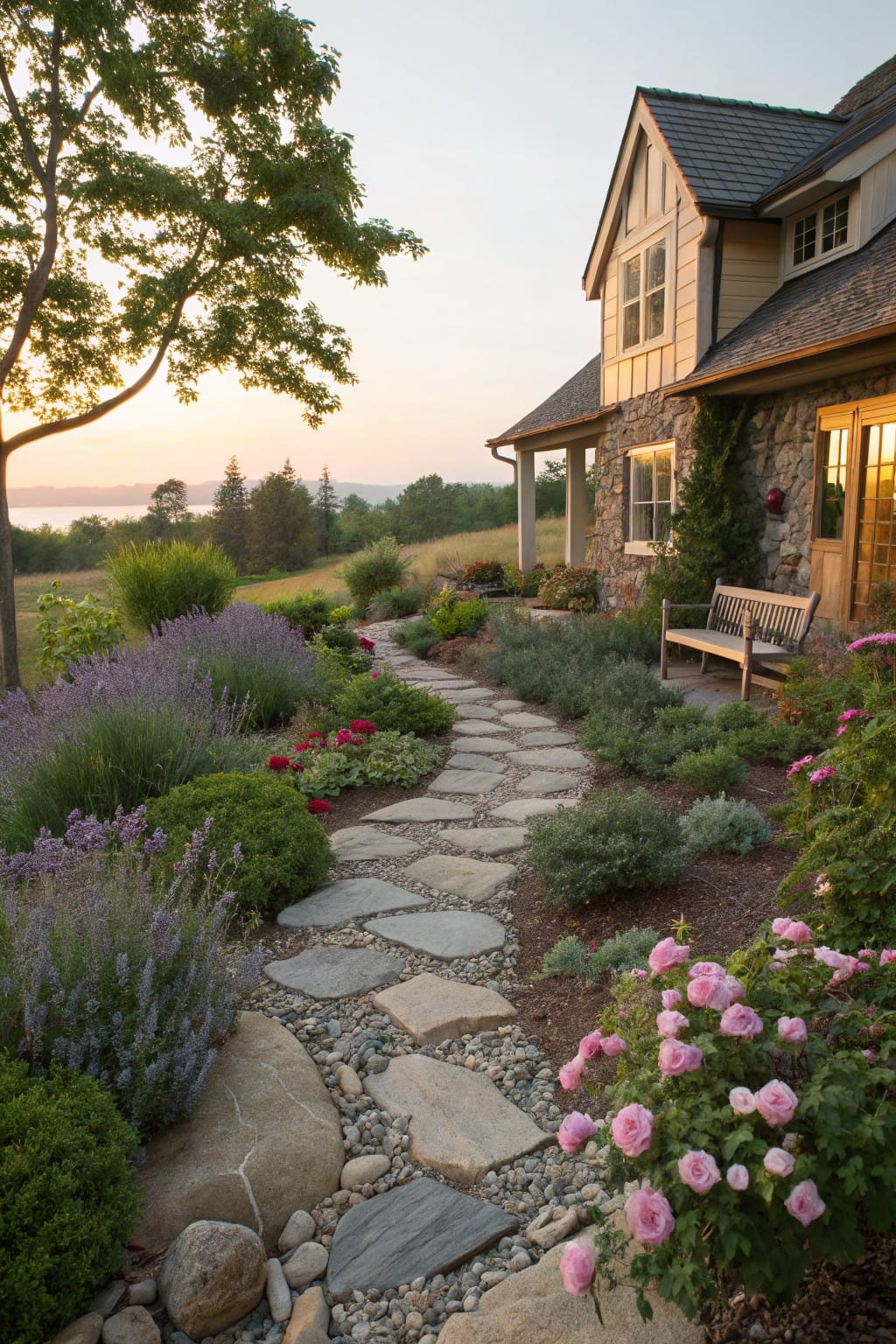
A casual path made from irregular flat stones set into gravel winds gently through dense plantings of lavender and roses. The rocks and low shrubs hold everything in place without stiff edging. It pulls the eye right up to the house in a relaxed way that feels more like a garden stroll than a straight walkway.
This works well leading to a side door or porch on a sloped yard. Pick flat fieldstone for the steps and gravel mulch to keep weeds down. Stick to tough perennials like lavender that don’t need much water. It suits homes with natural stone details already.
Lush Rock Beds with Boulders and Succulents

Big boulders mixed with tough succulents like agave make these beds stand out along a driveway. The rocks give weight and shape, while the plants add green spikes and texture without needing constant water. Gravel fills in the gaps for clean lines that match a modern house look.
Try this in sunny, dry yards where grass struggles. Pick local stones and drought plants to keep it low fuss. It suits sloped edges or entry paths best, just watch for sharp leaves near walkways.
Winding Rock Paths with Flower Edges
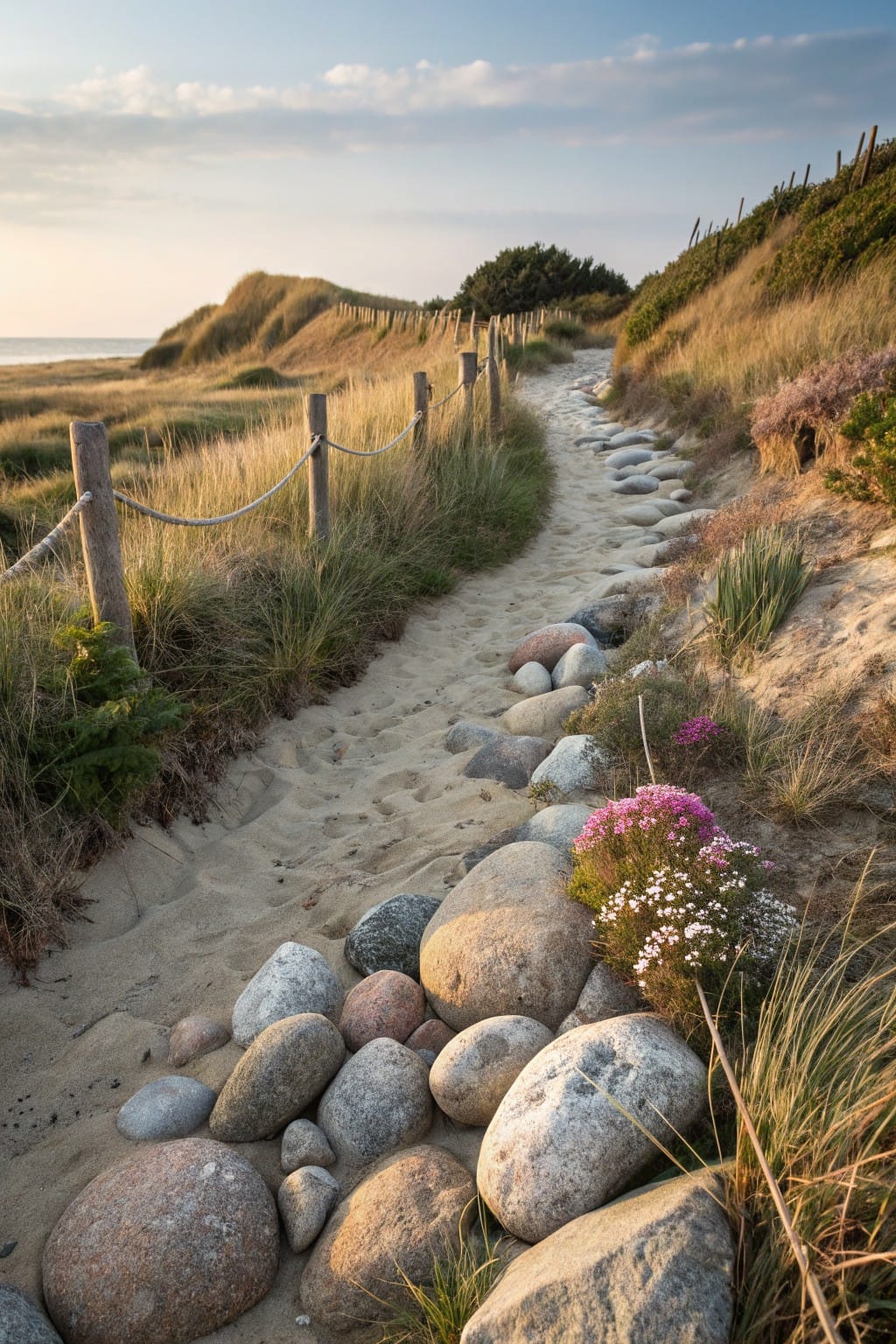
One simple way to brighten a yard is lining paths with smooth boulders and pebbles, then tucking in low flowers along the edges. Those big rounded rocks give a natural look, like they’re just part of the landscape, and the pink blooms add color without overpowering things. It keeps the ground from washing out in sandy spots too.
This works best in coastal yards or anywhere with loose soil. Pick local stones for easy sourcing, plant tough grasses and wildflowers that handle wind and salt, and add a rope fence if you want to guide the way. Skip it near pools though… too messy.
Stone Retaining Walls Filled with Flowers
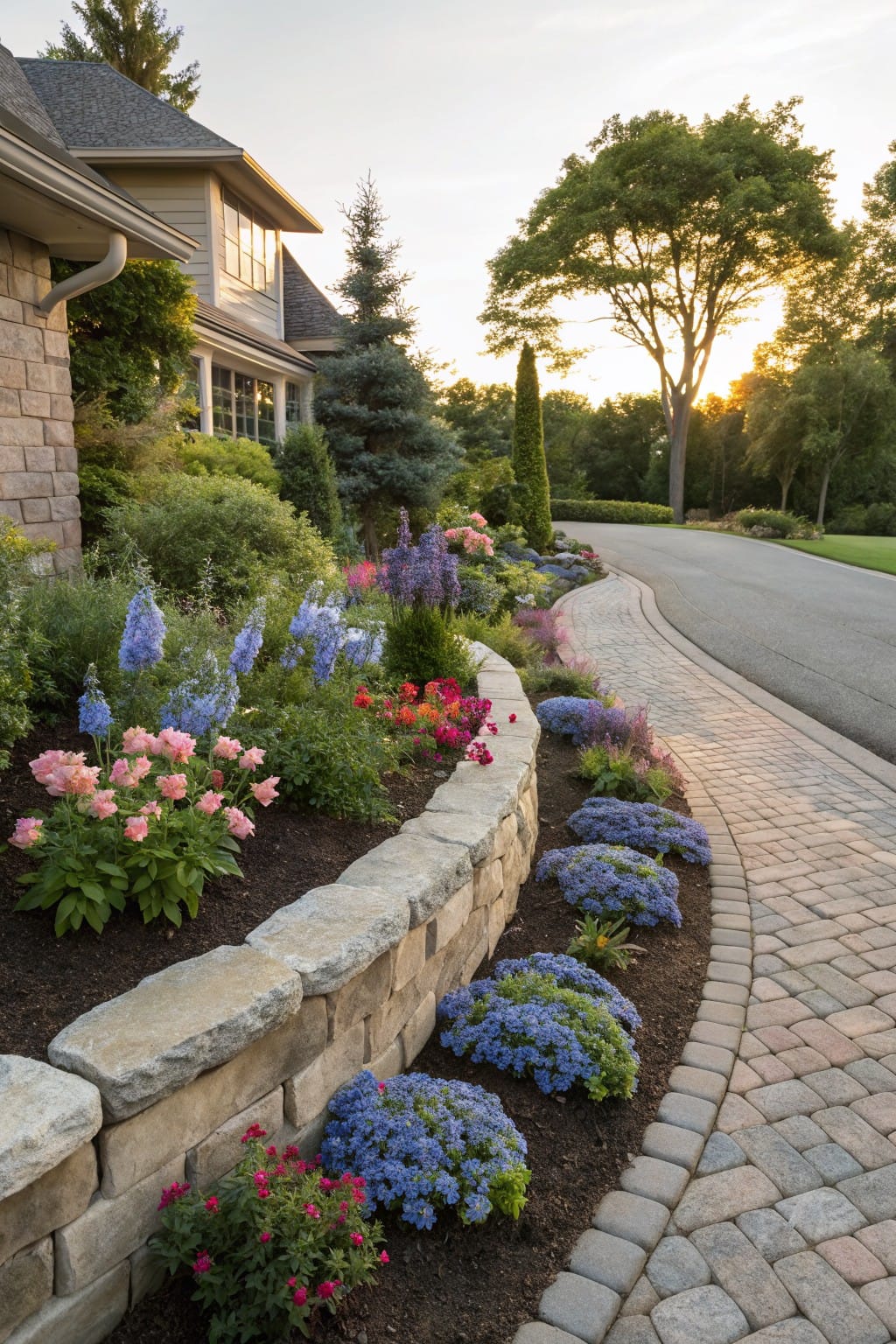
A simple stone retaining wall like this one turns a basic driveway edge into a real showpiece. The rough limestone blocks hold soil in place and let you pile in plants for height and color. Tall blue delphiniums rise up behind shorter pink blooms and low mounds of lobelia. It keeps everything neat while the curve follows the path naturally.
This works best on homes with a gentle slope or where you want curb appeal without big yard changes. Stack the stones dry for a casual look, then layer perennials that bloom at different times. Pick spots near the front door. Just make sure good drainage so roots don’t rot.
Stone Steps with Tucked-In Flower Beds
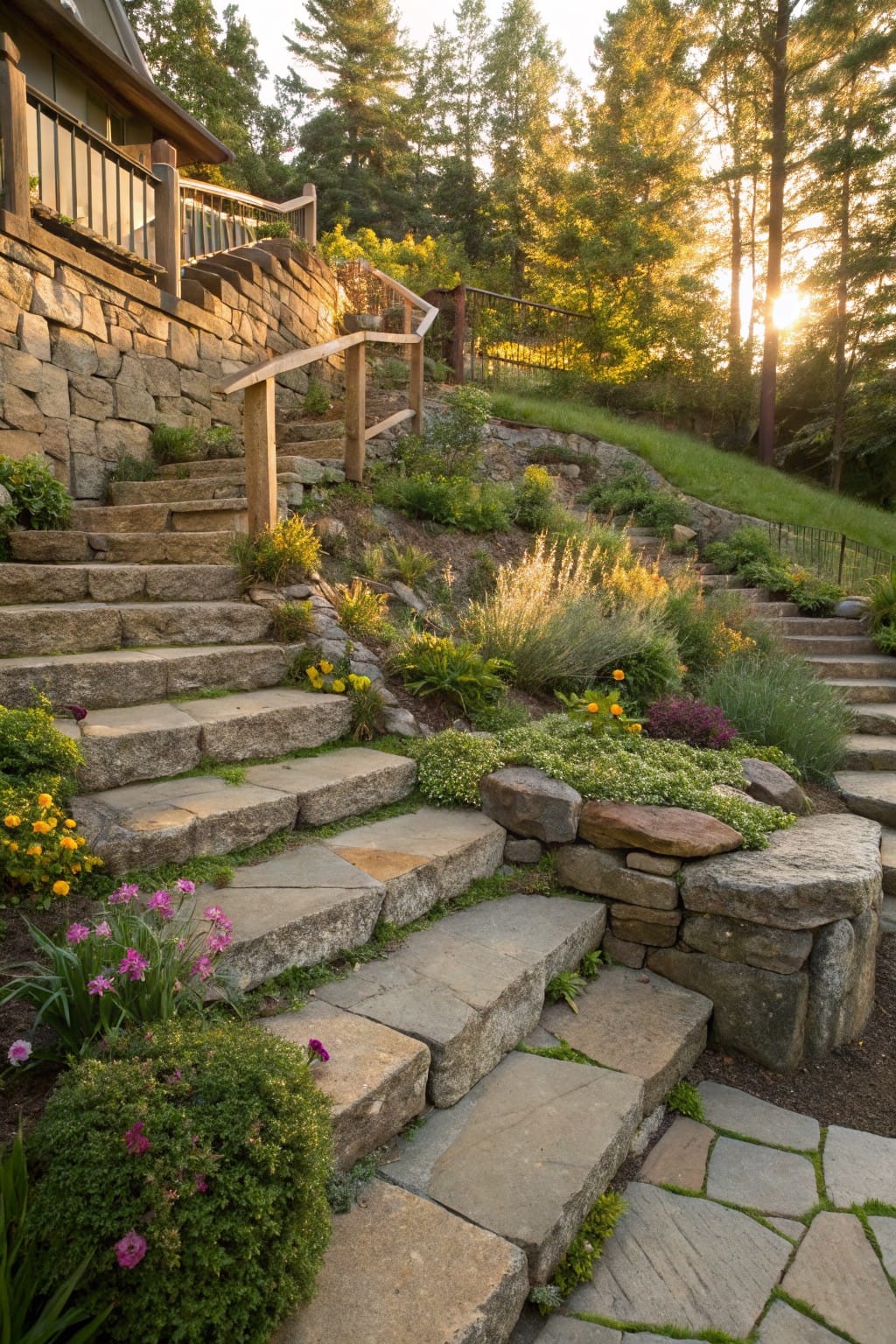
One simple way to handle a sloped yard is to build stone steps right into the hill, using the spaces between rocks for flower beds. Here, rough-cut flagstone steps wind up alongside sturdy rock walls, with plants spilling out from every crevice. Yellow coreopsis, pink phlox, and feathery grasses fill the gaps, making the path feel like part of the garden instead of just a way to get from bottom to top. It keeps things natural and easy on the eyes.
This setup works best on hillsides where you need both access and beauty. Pick drought-tolerant plants that thrive in rocky soil, like sedums or lavender, so you aren’t fighting nature. It’s great for cabins or homes in wooded areas… just make sure the steps are wide enough and stable. Low upkeep once established.
Rock-Edged Flower Beds Along the Curb
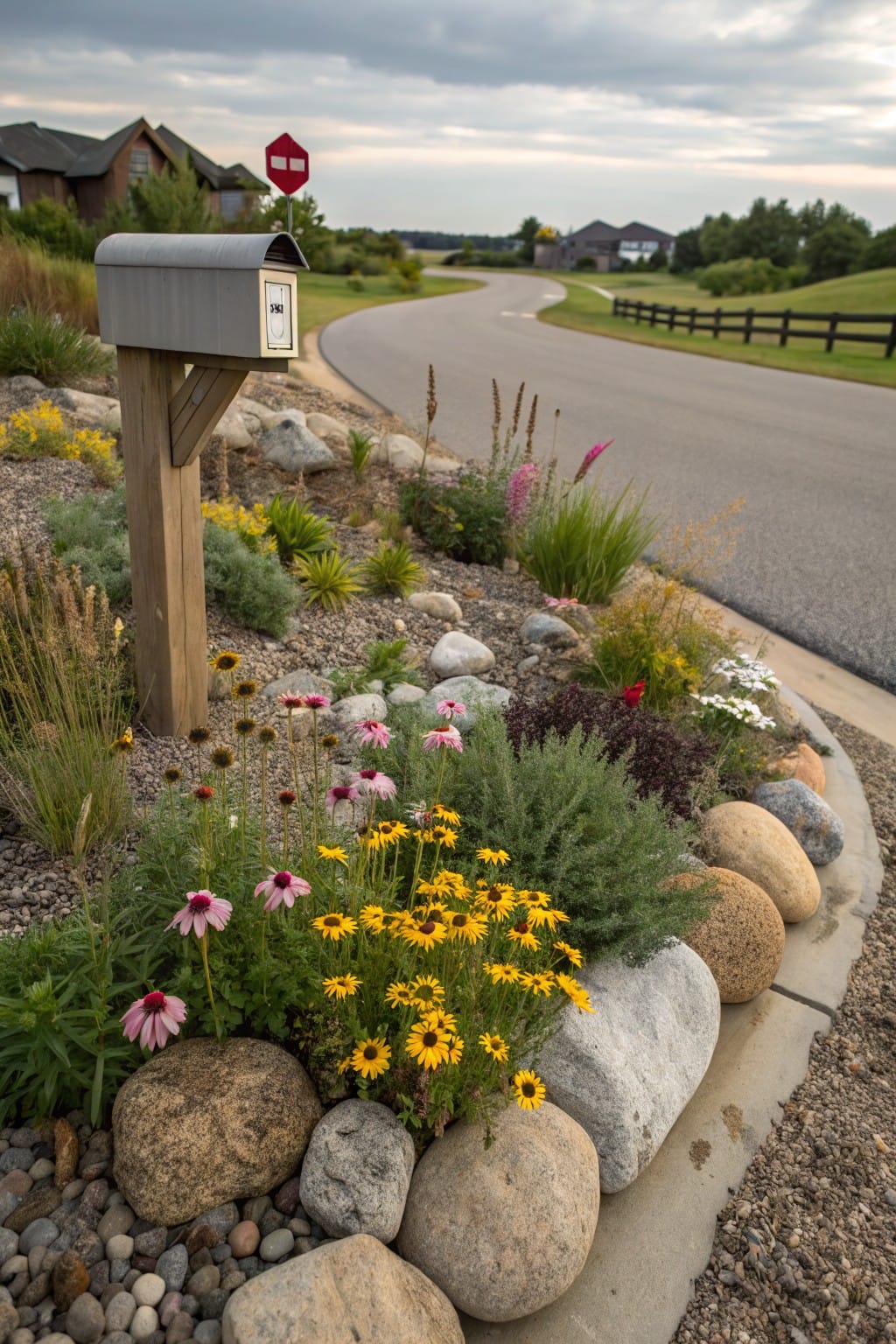
Big boulders mixed with gravel and tough perennials make a simple bed that hugs the road or driveway edge. You see coneflowers, black-eyed Susans, and some ornamental grasses filling in around a mailbox post. It gives that wild, natural feel without needing constant watering or weeding.
These beds work best in full sun where drought-tolerant plants thrive. Tuck them along curbs or entry paths on suburban lots. Start with larger rocks for structure, layer in smaller gravel, then plant natives that attract birds and butterflies. Skip fussy annuals… they just mean more work.
Stepping Stone Paths in Rock Gardens
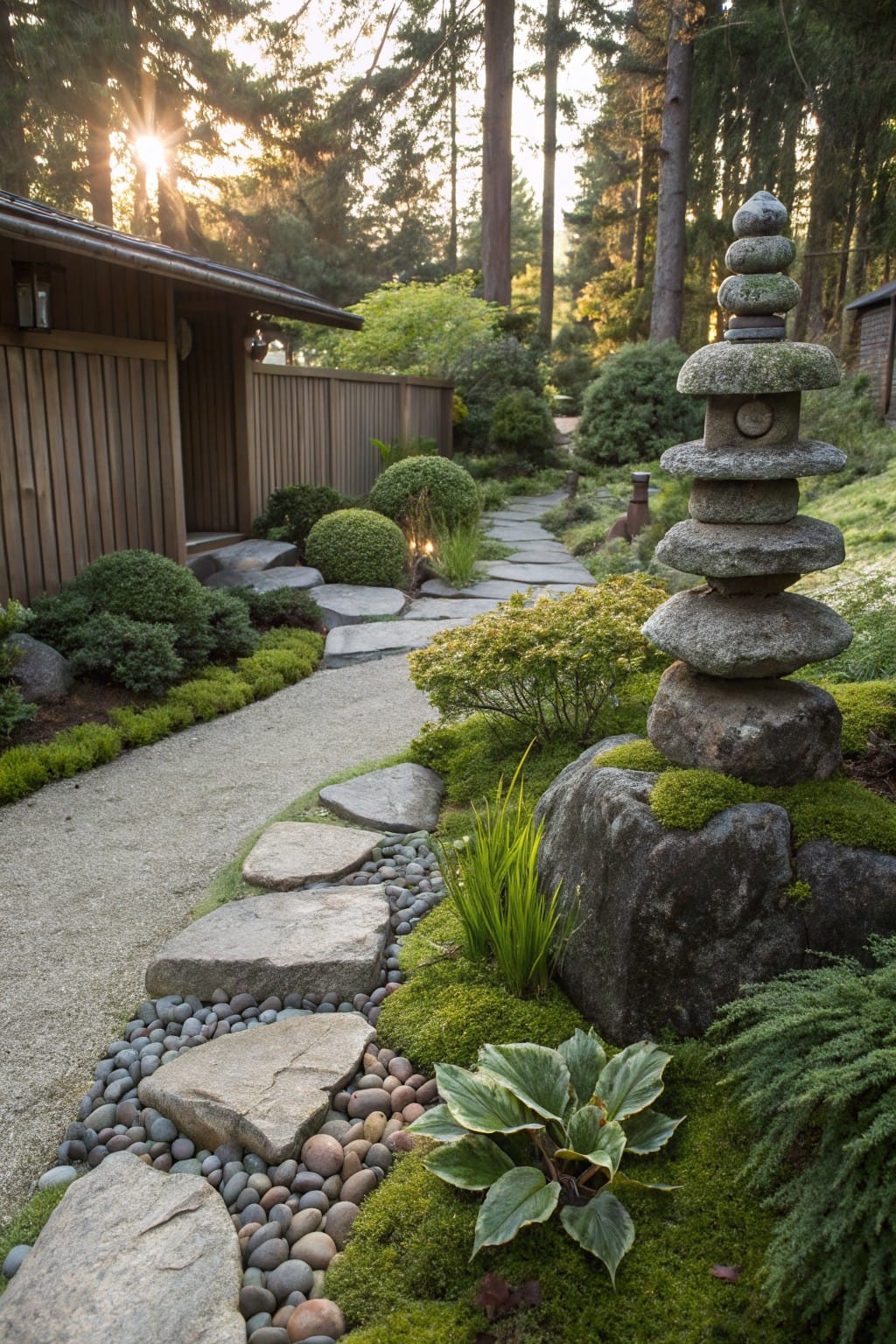
A simple gravel path lined with irregular stepping stones works great in rock-heavy garden beds. It pulls you right through the plants without mowing everything down. Those big flat stones set into pea gravel create a natural rhythm, and the beds around them stay full of moss, low shrubs, and hostas that spill right over the edges.
You can set this up in any backyard corner, especially shadier spots near trees. Start with good drainage under the gravel, drop in stones where your feet naturally fall, then fill gaps with tough groundcovers. It suits sloped yards too… just watch the stones don’t shift on hills.
Succulent Beds in Rock and Gravel

One straightforward way to build attractive yard beds starts with rocks and gravel as the base. Fill in the gaps with tough succulents like agaves, barrel cactus, and spiky ground covers. Large boulders give it structure while the tan gravel mulch keeps weeds down and ties into the stone path nearby. This look stays neat with little upkeep and matches homes with earthy walls.
Set these beds along patios or walkways where you want color without constant work. They’re ideal for sunny, dry yards or arid spots that get hot. Just pick plants suited to your zone, space boulders for scale, and avoid overcrowding so each one shows. Suits modern or Southwest-style houses best.
Winding Stone Path Through Lush Rock Beds
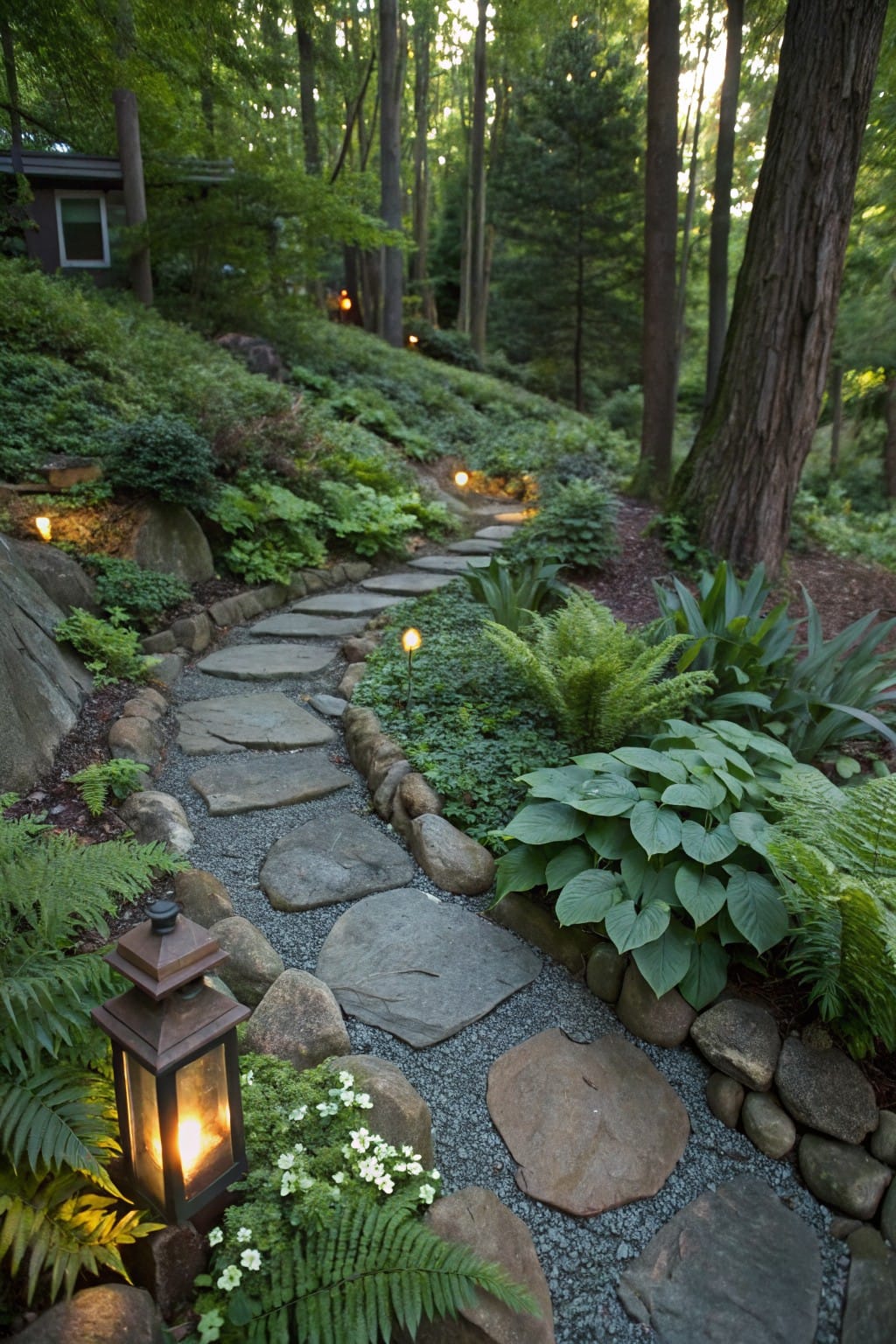
A simple winding path like this one uses flat stones set into gravel, with bigger rocks edging the beds on either side. Ferns and hostas fill in the spaces, making the whole thing feel tucked into the woods. What stands out is how the rocks keep everything neat without looking too formal. It turns a sloped spot into something you actually want to walk through.
This works best in shady yards with trees nearby. Pick stones that match your local area, and stick to tough shade plants that won’t need much fussing. Drop in a few lanterns along the way for light at dusk. Just watch the slope. if it’s steep, add steps or rails so it’s safe.
Tiered Stone Beds for Sloped Yards
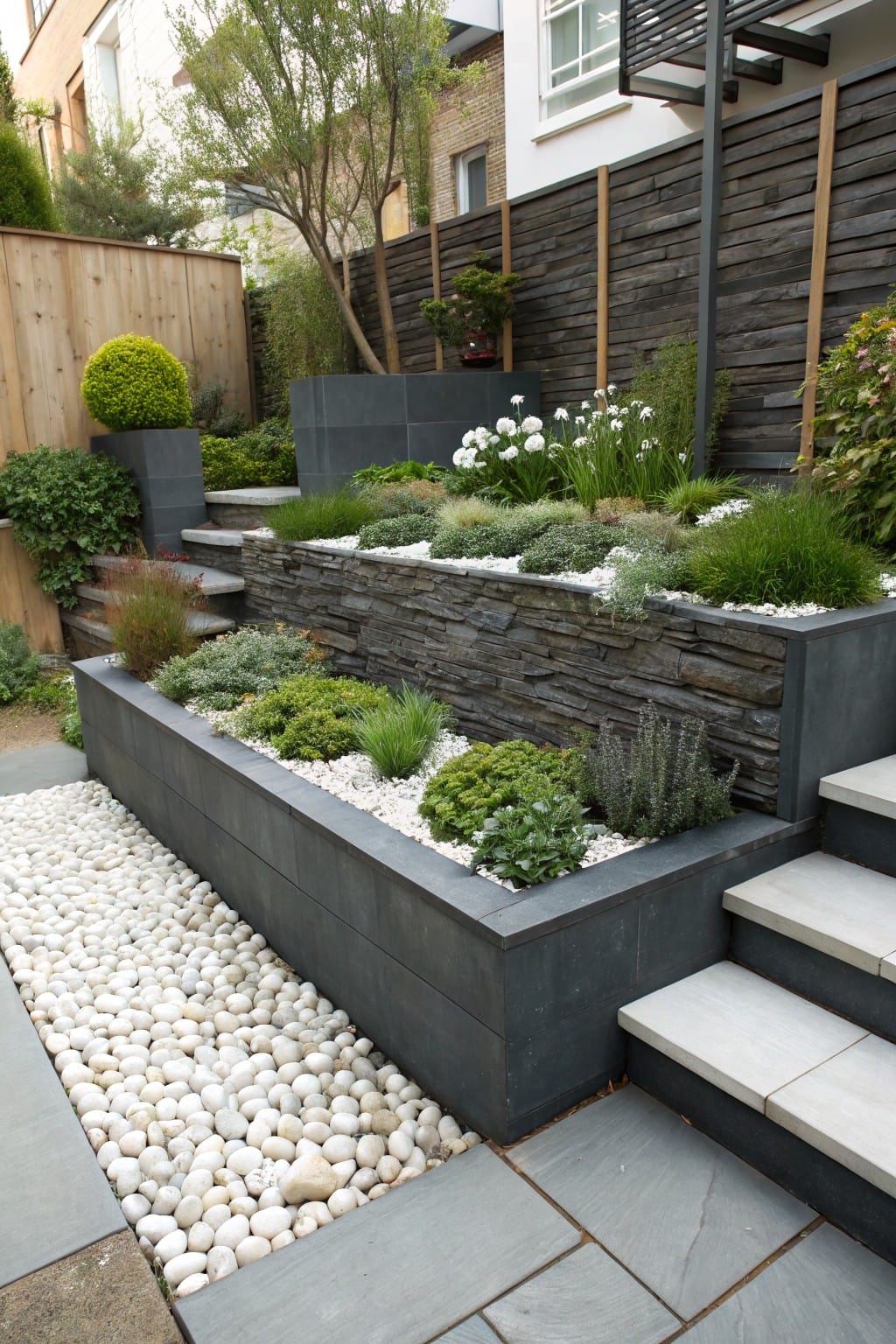
Tiered stone beds turn a tricky slope into usable garden space. These dark slate walls stack up neatly, holding back soil while framing pockets of grasses, sedums, and low shrubs. White pebbles down below fill in gaps and handle drainage without much upkeep.
Build them where your yard drops off, maybe near a patio or steps. They suit modern homes with clean lines. Go for rough-cut stone that weathers well, plant drought-tough stuff, and skip the mulch mess. One note… scale the tiers to your hill so it does not overwhelm.
Natural Rock Waterfall Feeds the Pool
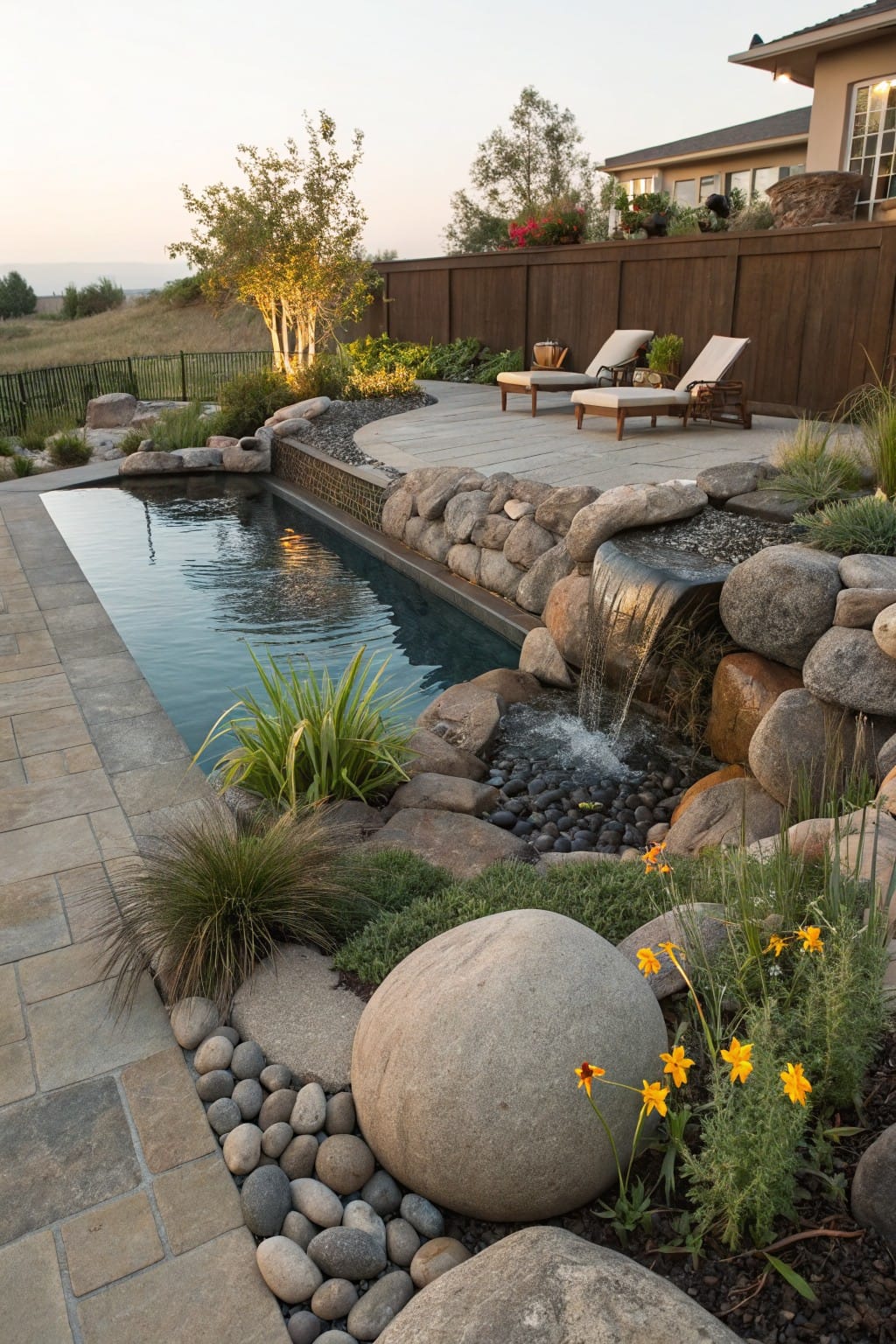
A simple way to add movement and interest to poolside landscaping is with a natural stone waterfall. Here large boulders stack up to form the falls, spilling water right into a sleek infinity-edge pool. River rocks at the base catch the flow, while tough grasses and orange flowers tuck in around the edges. It feels wild yet contained, like the yard borrowed from a mountain stream.
This setup works best in sunny spots with a slope or raised bed near the pool. Use rounded boulders for a softer look, and pick drought-friendly plants to keep maintenance low. It suits modern homes or any yard wanting low-water drama, but make sure the water line ties into your pool pump to avoid extra work.
Dry Creek Bed Path with Stepping Stones
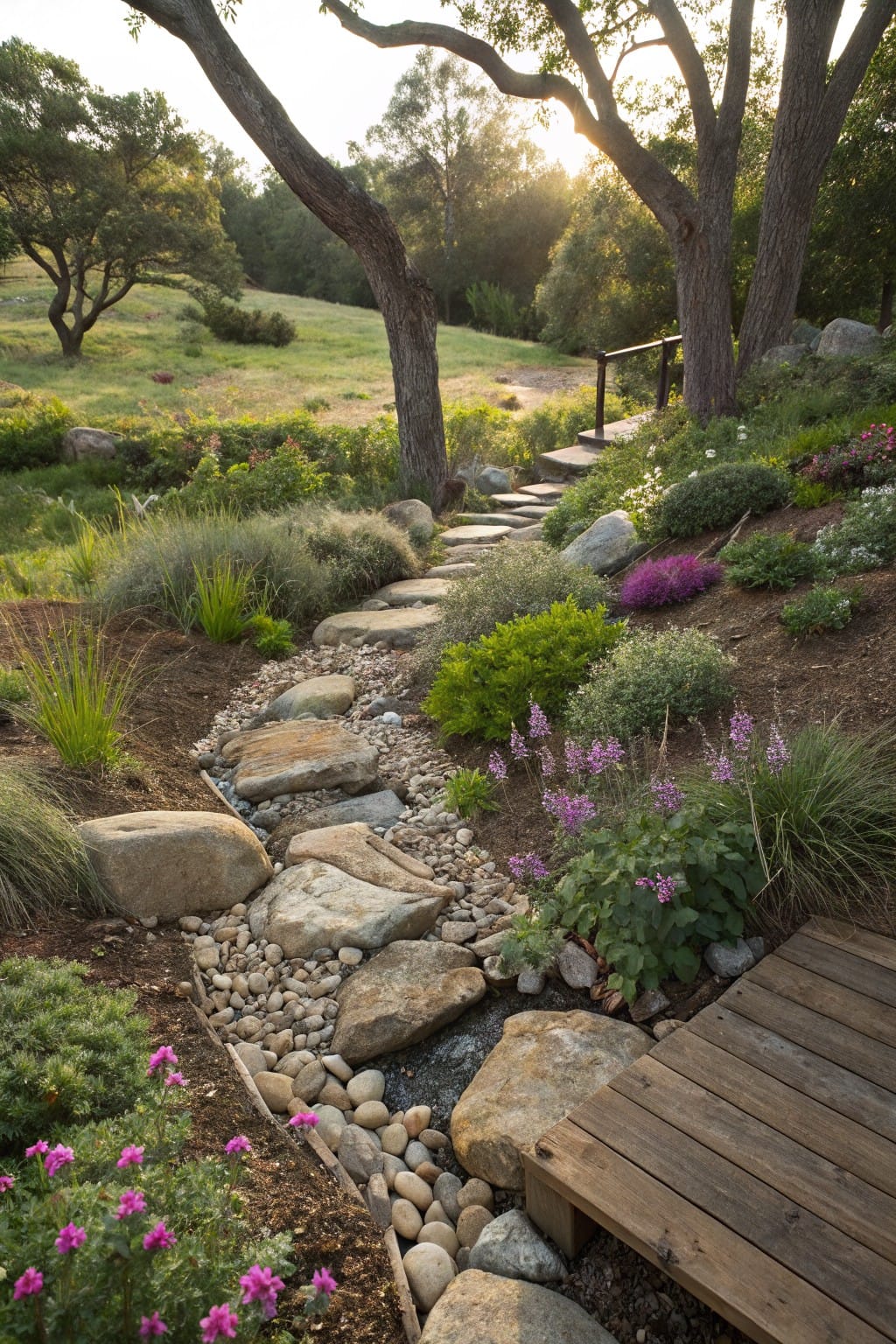
One simple way to guide folks through a sloped yard is a dry creek bed lined with flat stepping stones. It looks natural, like water once flowed there, but now it’s just gravel, boulders, and those pink flower clusters peeking out. The path winds gently uphill, making the walk feel easy and inviting without much upkeep.
You can set this up in any side yard or between garden beds where drainage is an issue. Use local rocks for the boulders and stones to keep costs down, then tuck in tough perennials like salvia or grasses around the edges. It works best on hills to slow footsteps and add some garden views along the way. Just make sure the stones are set firm so no one trips.
Simple Circular Gravel Flower Beds
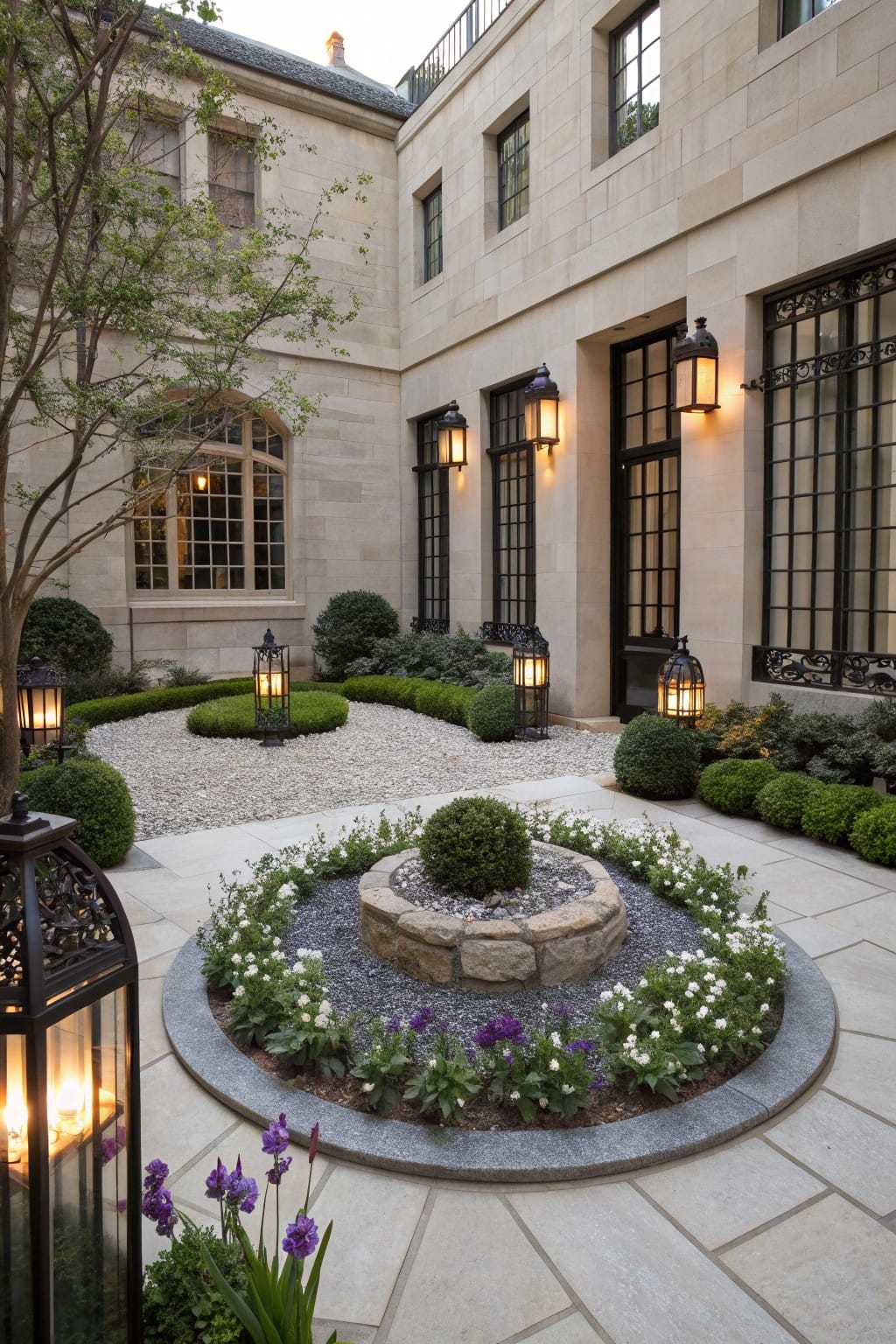
Gravel flower beds shaped in a clean circle make a nice focal point in a courtyard or small yard. They keep things tidy with low boxwood edging and let colorful blooms like white daisies and purple irises pop against the light stones. The rocks hold moisture well and cut down on weeds, so it’s practical too.
Put one right off a patio or entry path where you walk by it every day. It suits older stone houses or any spot with not much room to plant. Just pick drought-tough flowers and refresh the gravel now and then.
Terracotta Pots Boost Rock Gardens
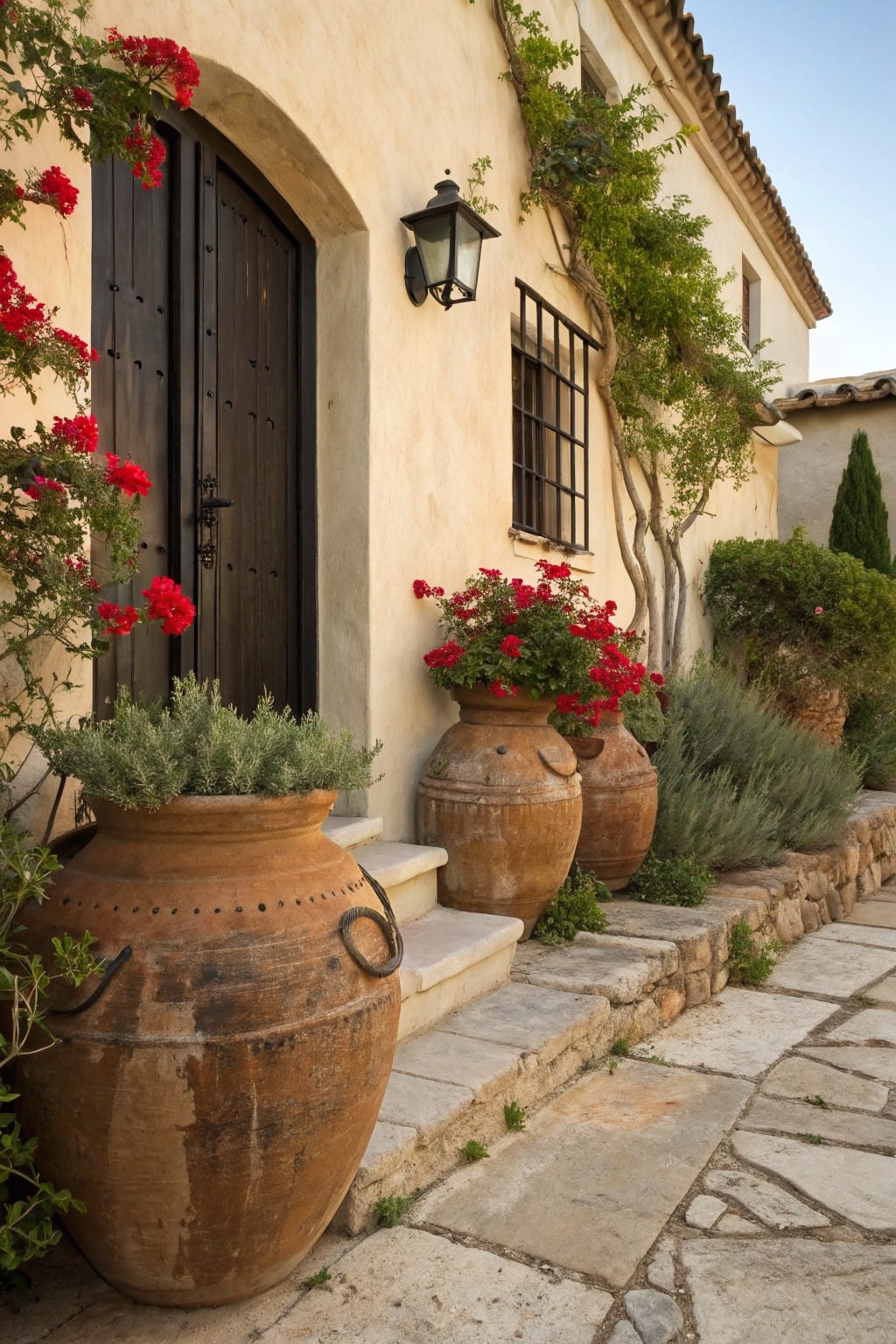
Big terracotta pots like these work great in rock gardens around doorways. They hold lavender or similar bushy plants that soften stone edges, while red geraniums fill in the beds for color. The setup feels settled and full without crowding the path.
Place them flanking steps or along low rock walls in sunny yards. They suit older stucco houses or cottage entries best. Go for weathered pots to blend in… and make sure they drain well so roots stay happy.
Rock Retaining Walls Packed with Lush Plants

One smart way to handle a sloped yard is stacking natural rocks into low retaining walls and filling the pockets with colorful flowers and grasses. Those rough stone edges get softened right away by spilling plants like lavender and red blooms, plus taller grasses for movement. It makes the whole area feel layered and alive, pulling your eye up the path to the patio without much flat lawn to mow.
This works best where you have some grade change, maybe leading from lawn to a deck or seating spot. Pick drought-tough plants so they thrive in the shallow soil. Tuck in low lights along the base for that evening path glow. Suits most homes, especially if your yard backs to woods or fence.
Stone Steps Lined with Flowering Rock Beds

One simple way to handle a sloped yard is to build stone steps into retaining walls made from boulders. Then tuck in low-growing purple flowers that mound up and spill over the rocks. It turns a tricky hillside into an easy path that looks full and natural right away. Those pinkish purple blooms catch the eye without much upkeep.
This works best heading up to a house entry on a moderate slope. Pick tough plants like sedum or heather that handle dry spots and root well in rocky soil. It fits homes with a wood and stone look, keeping things rugged yet pretty. Just make sure the rocks are set firm so nothing shifts over time.
Stepping Stones in a Narrow Lush Bed
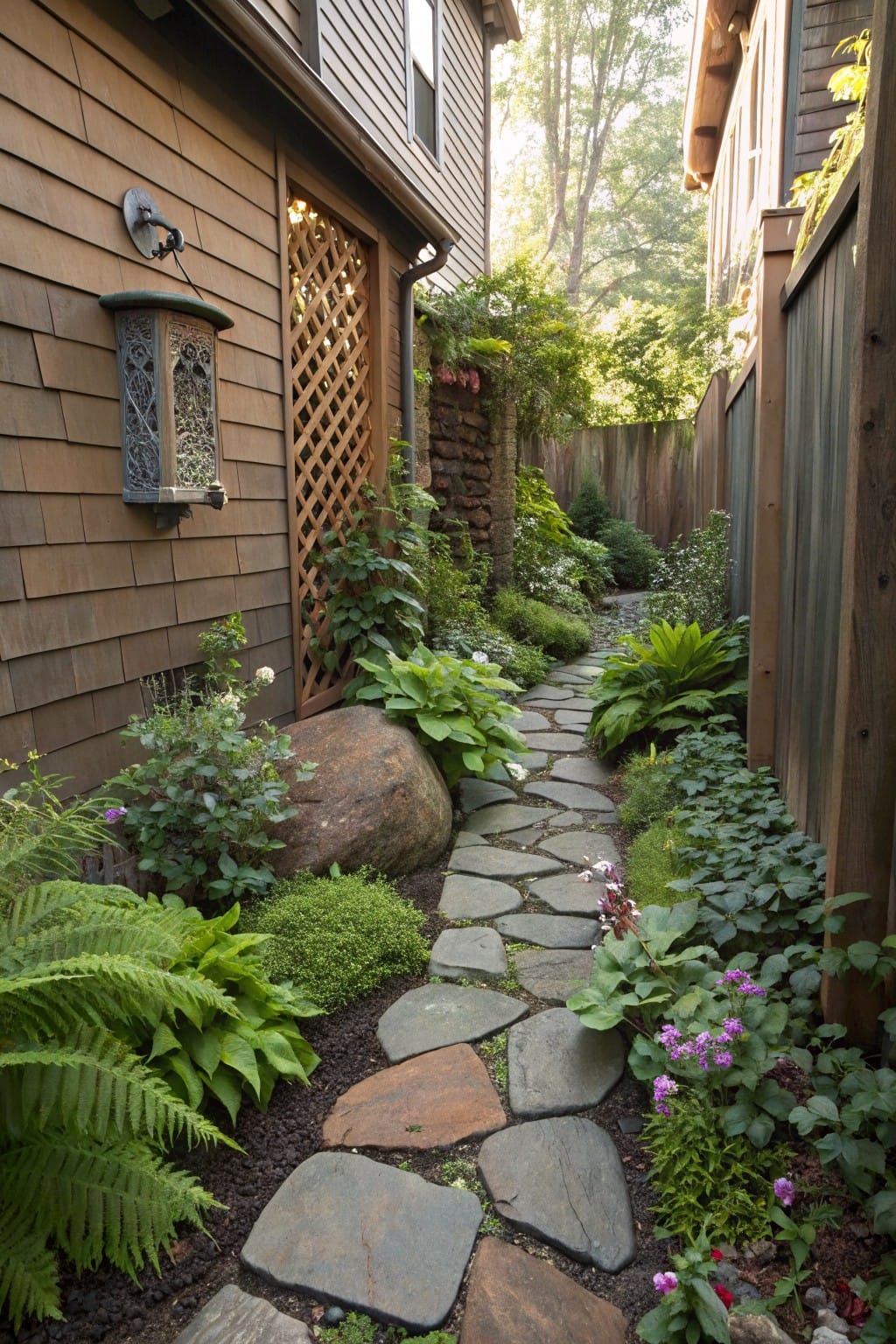
A narrow side yard like this turns into something special with just a winding path of flat stones set into the soil. Plants crowd right up to the edges, ferns and hostas mostly, with one big boulder placed just so. It feels tucked away and green all season, without needing much space.
You can do this along any house wall or fence line, especially shady ones. Pick stones in different sizes for that natural look, fill gaps with mulch, and layer in tough perennials that don’t mind low light. Keeps the path clear for walking but lets the bed stay full and wild.
Curved Path Through Boulder Beds
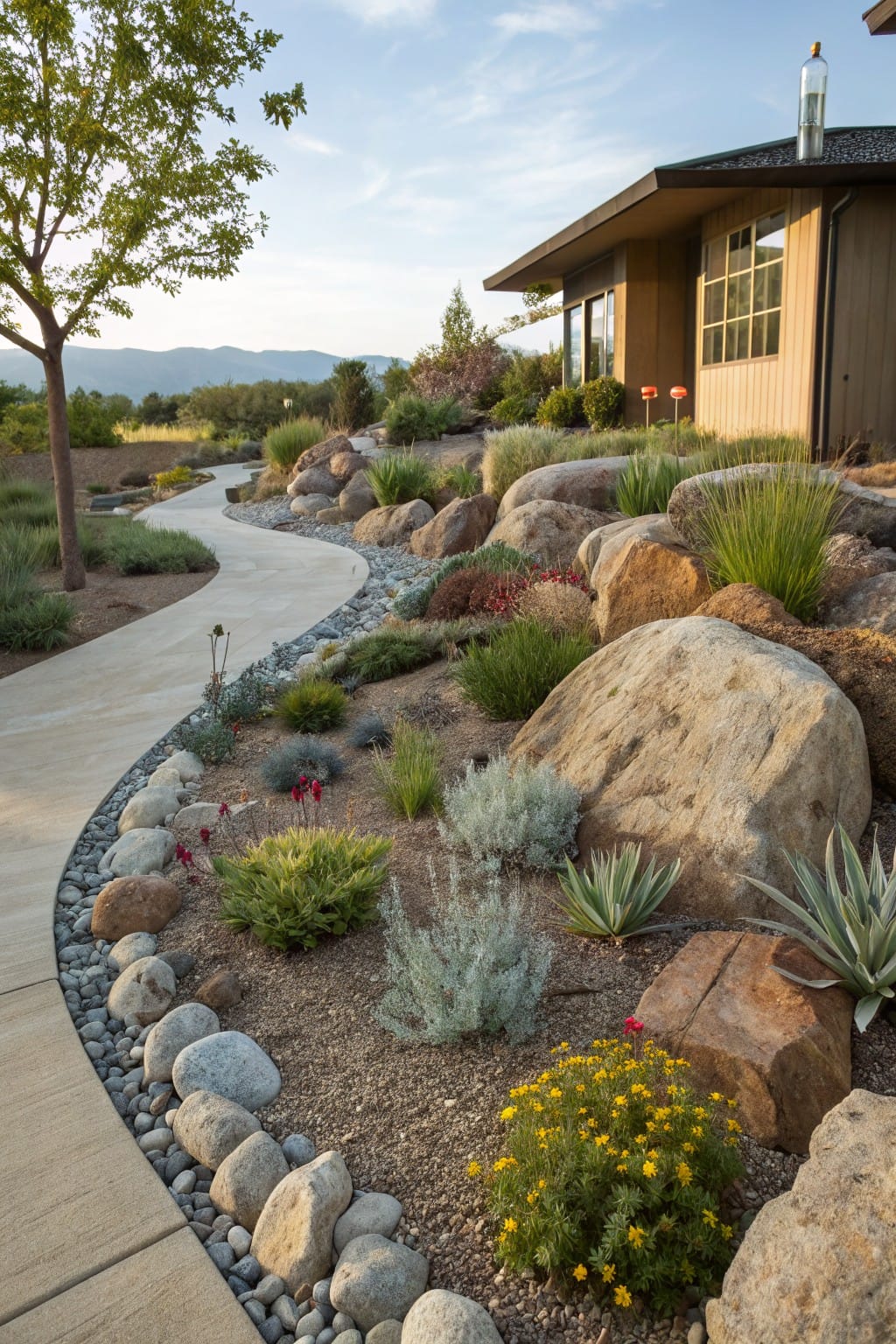
A gentle curving walkway like this pulls you through the yard without feeling straight and boring. Big boulders anchor the edges, with pockets of grasses, agaves, and yellow flowers adding color against the gravel mulch. It keeps things low maintenance but still lively enough to brighten up the entry.
Try it for dry yards or slopes where water is tight. Pour a smooth concrete path, stack local rocks around it, then plant drought tough stuff in the gaps. Pairs well with a simple house like the wood sided one here. Just pick plants that match your sun and soil.
Tiered Stone Walls for Sloped Gardens
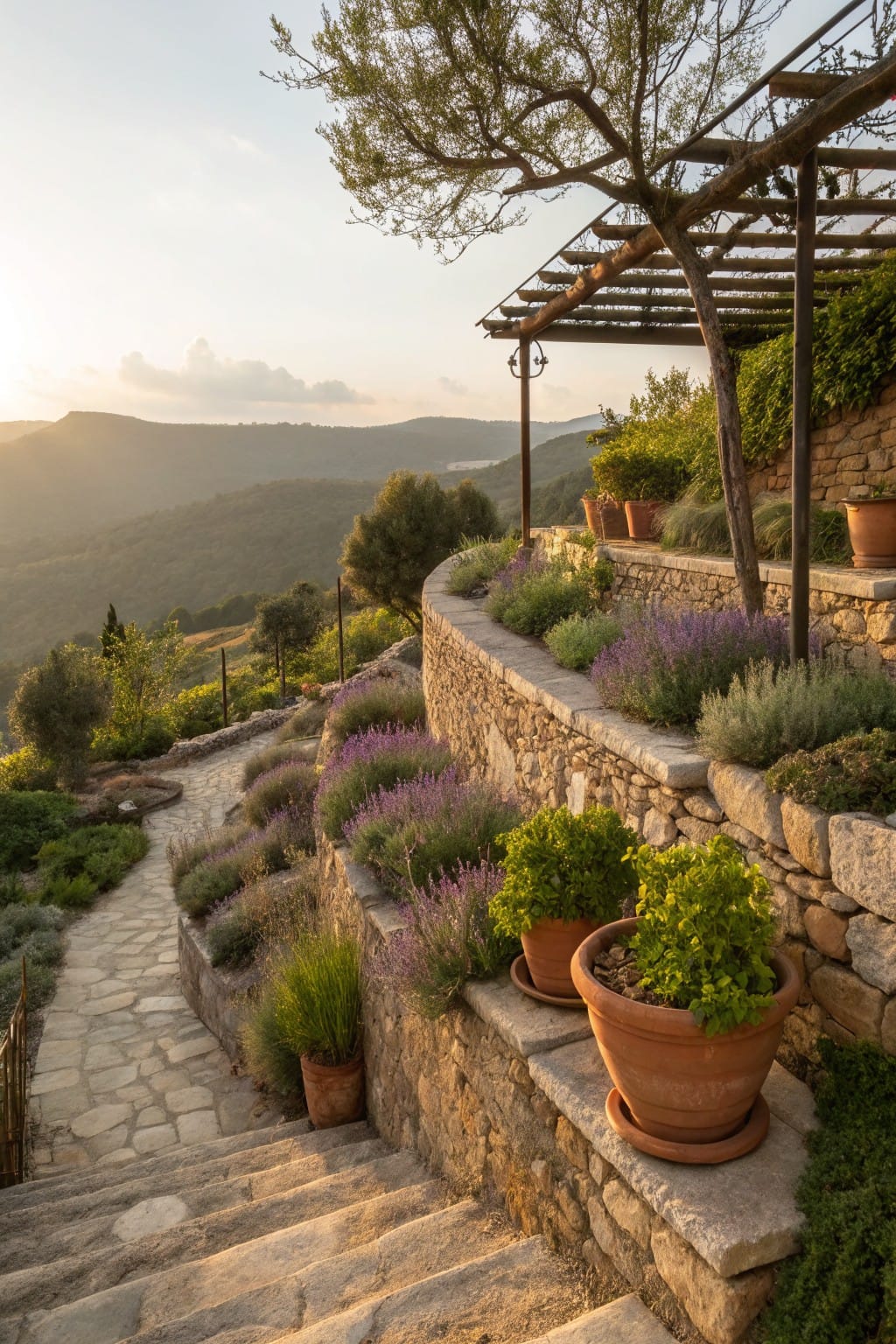
One smart way to handle a hillside is building tiered stone walls that hold back soil and create flat spots for flower beds. Here lavender fills most of the beds, with its gray-green leaves and purple spikes tumbling softly over the rough stone edges. The effect turns what could be a bare slope into something lush and stepped, easy on the eyes from up top or down below.
These work best in full sun where drought-tough plants like lavender thrive without much fuss. Stack local fieldstone for the walls to blend right in, then plant deep enough so roots grip the soil. Suits Mediterranean-style yards or any dry slope… just watch for good drainage to keep things happy long-term.
Boulder-Edged Stone Pathways
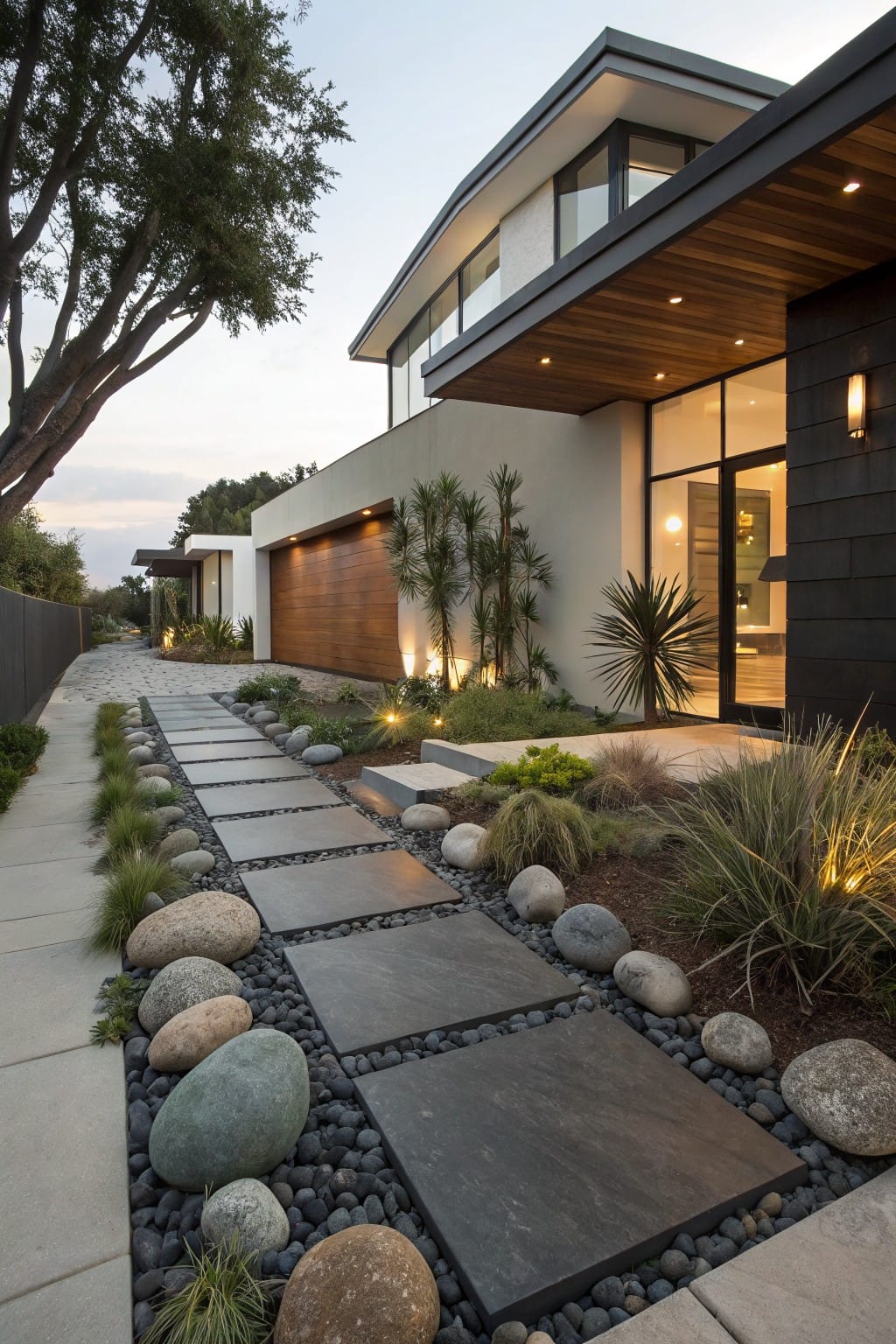
A straightforward way to guide visitors to your front door is with a path of wide, dark slate stepping stones. Flank it on both sides with big rounded boulders nestled in gravel mulch, and tuck in some feathery grasses for a bit of movement. This setup keeps things neat and low-fuss, while the rocks add weight that makes the whole entry feel settled and intentional.
It works great in front yards with modern or minimalist houses, especially where you want to soften hard surfaces without much upkeep. Space the stones about two feet apart for easy walking, and pick boulders in natural colors that match your soil or siding. Skip tiny pebbles here, they get lost. Just watch the scale, those oversized rocks need room to shine.
Tall Foxgloves in Rock-Edged Beds
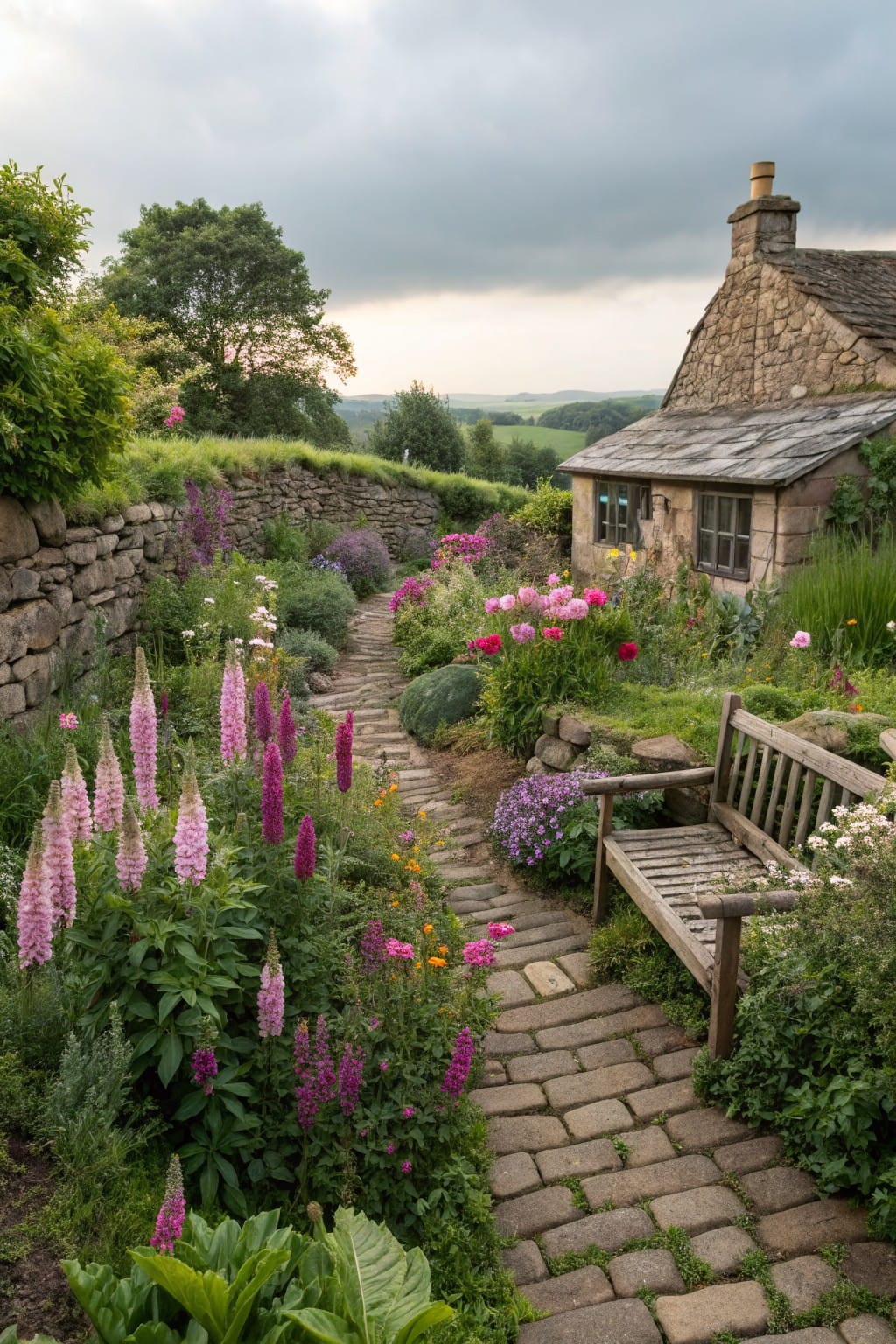
Stone walls make sturdy edges for flower beds like these. Tall pink foxgloves rise up against the rocks, mixed with peonies and lower plants for a full, layered look. It keeps everything in place while letting the garden feel wild and pretty.
Try this along a path or near a house entry. The rocks work on slopes or flat spots, and foxgloves add height without much fuss. Just pick a partly shady area, since they don’t love full sun… suits older homes or cottages best.
Dry Creek Beds for Yard Drainage
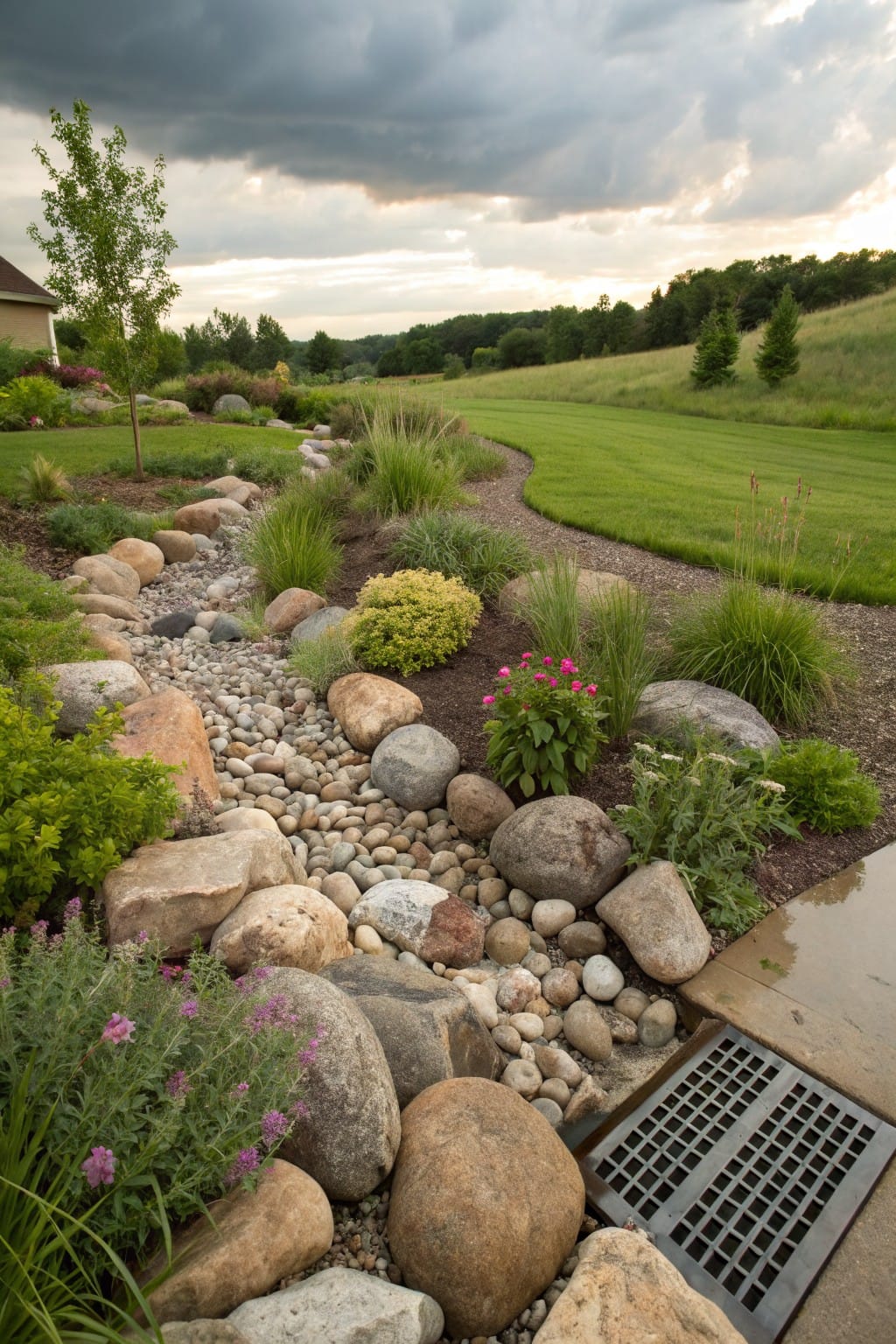
A dry creek bed like this one uses big boulders and river rocks to guide water across the yard in a natural-looking way. The winding shape follows the land’s contour, edged with grasses and perennials that spill over softly. It handles runoff from rain or sprinklers without pooling or erosion, and the mix of stone sizes adds real texture that doesn’t look forced.
Put one in spots where water collects, like near downspouts or low areas. Use stones from a local quarry to keep costs down and maintenance low… drought-tolerant plants around the edges make it even easier. Fits most homes with a yard, especially if you want something practical that still looks good year-round.
Natural Winding Path in Rock Gardens
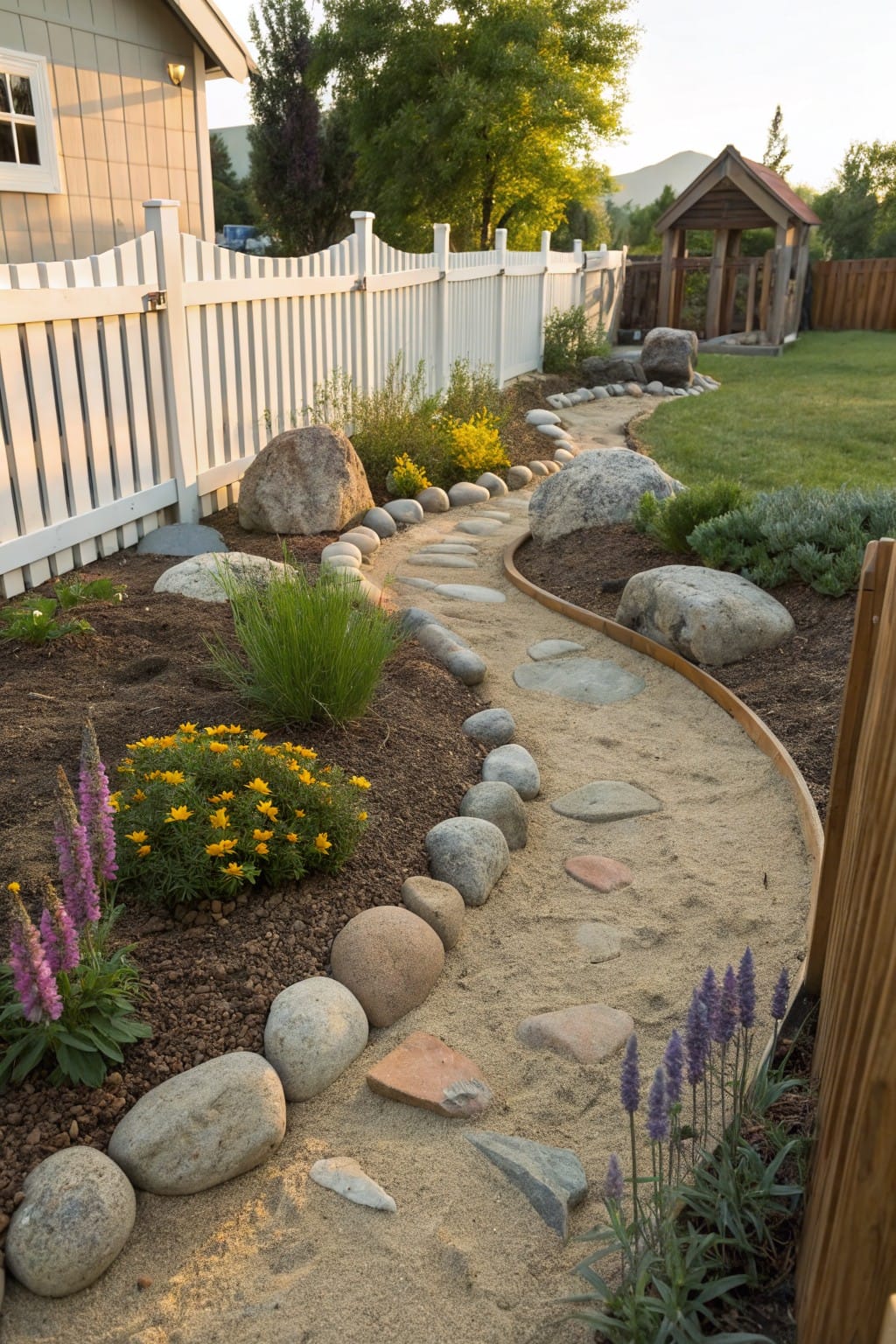
A simple winding path like this one uses sand filled with smooth pebbles and flat stones to snake through boulder clusters and flower beds. It feels natural and inviting, pulling your eye along without being too straight or formal. The rounded boulders give it weight, while touches of lavender and yellow coreopsis add color pops that brighten the whole yard.
This setup works best in sunny, dry spots where low-water plants thrive. Lay down landscape fabric first, then add sand and edge with larger rocks to keep everything in place. It’s perfect for smaller backyards or side paths, and stays neat with minimal upkeep… just rake the sand now and then.
Frequently Asked Questions
Q: How do I stop weeds from taking over my new rock bed?
A: Lay down landscape fabric before adding rocks and soil.
Push it tight against the edges. Rocks block light so seeds struggle to sprout.
Q: Can I build one of these on a tight budget?
A: Hunt for free rocks at local construction sites or along riverbanks.
Mix in gravel from bulk suppliers. Skip fancy imports and your bed still pops.
Q: What plants pair best with rocks in full sun?
A:
Go for lavender or sedum. They hug the rocks and barely need water once rooted. And they draw bees for free pollination.
Q: My soil is clay heavy. Will rocks help?
A: Rocks improve drainage right away. Work some into the top layer with your flowers.
Your plants stay happy through heavy rains.
