

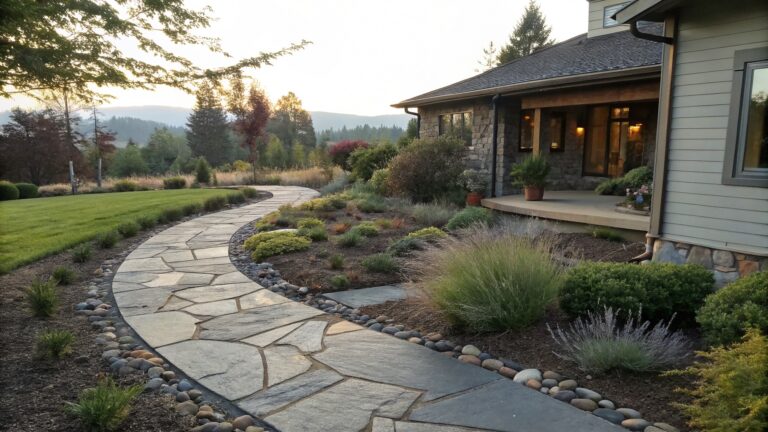
I’ve noticed over time how rock borders keep garden beds from blurring into the lawn, especially in messy wet weather. They quietly shape pathways and planting areas so the yard feels intentional rather than accidental. In my backyard, I lined a curving path with smooth fieldstones a couple years back, and now it holds the layout together even as perennials spread. Those crisp edges catch your eye first when you step outside. Several ideas here use local rocks that weather nicely, ones I’d tweak for sloped spots or shady corners.
Flagstone Path with Gravel and Rock Edging
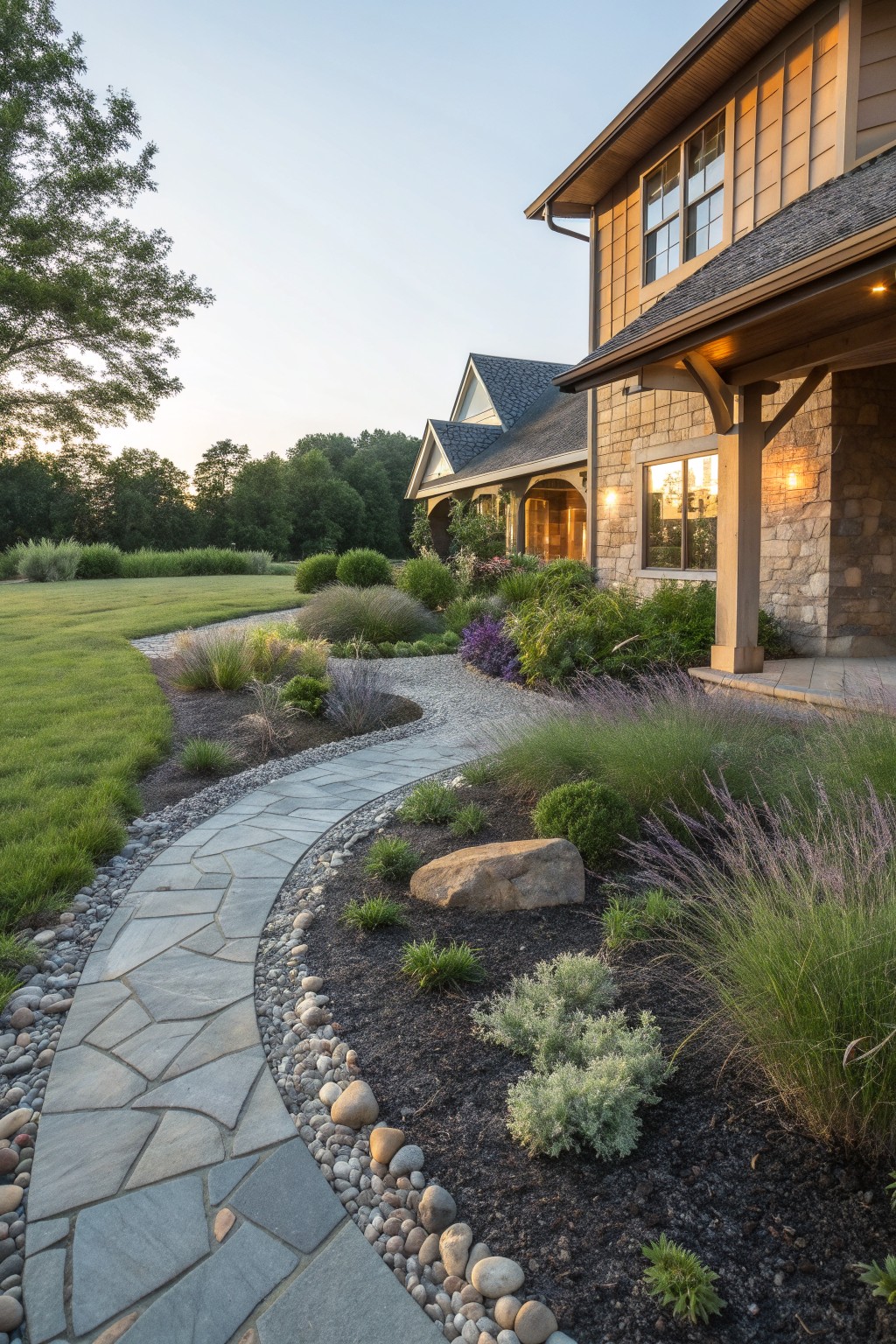
A simple flagstone walkway curves through the yard here, edged tight with dark gravel and smooth pebbles. Larger rocks sit in the beds for weight, and low plants like grasses and lavender fill in without spilling onto the path. It keeps everything defined but natural looking. No fuss, just clean lines that guide you right to the door.
This edging works best in front yards or side paths where you want low upkeep. Pick rounded river rocks or local gravel to match your stone steps. It suits bigger lots with some slope, holding mulch back and slowing weeds. Skip it if your soil washes out a lot… test drainage first.
Gravel Paths with Oversized Stone Pavers
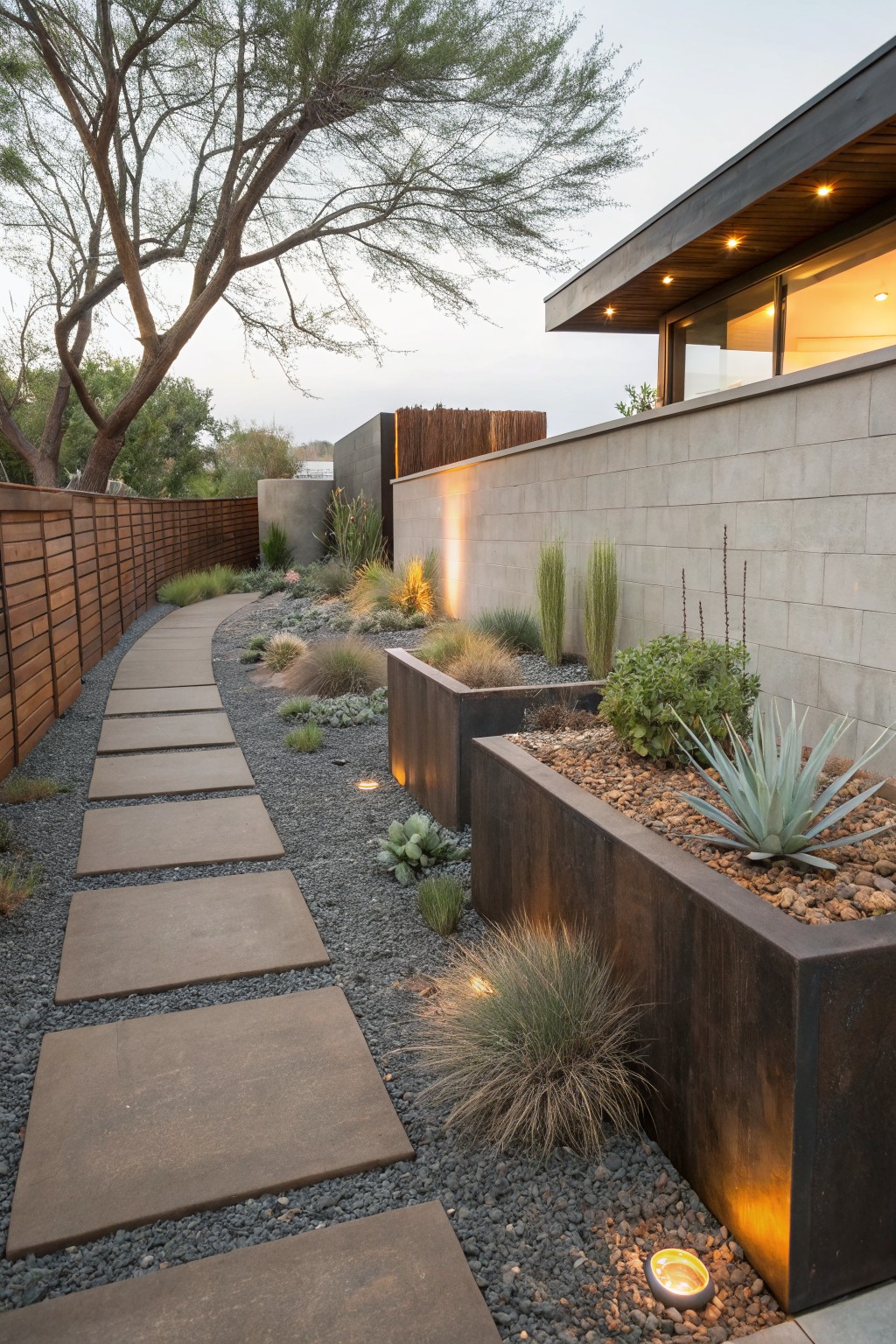
A gravel walkway like this uses big rectangular stone slabs set right into the gray pebbles. It keeps things simple and modern, especially around drought-friendly plants like agaves and grasses. The loose gravel between the stones drains well and cuts down on weeds, while the edges stay crisp without much upkeep.
Try this in a narrow side yard or entry path where you want to guide foot traffic without a full concrete pour. It fits desert homes or any low-water yard best. Just space the slabs for comfortable steps, and add a few metal planters nearby to hold rocks and succulents for extra definition.
Stone Walls as Garden Path Edging
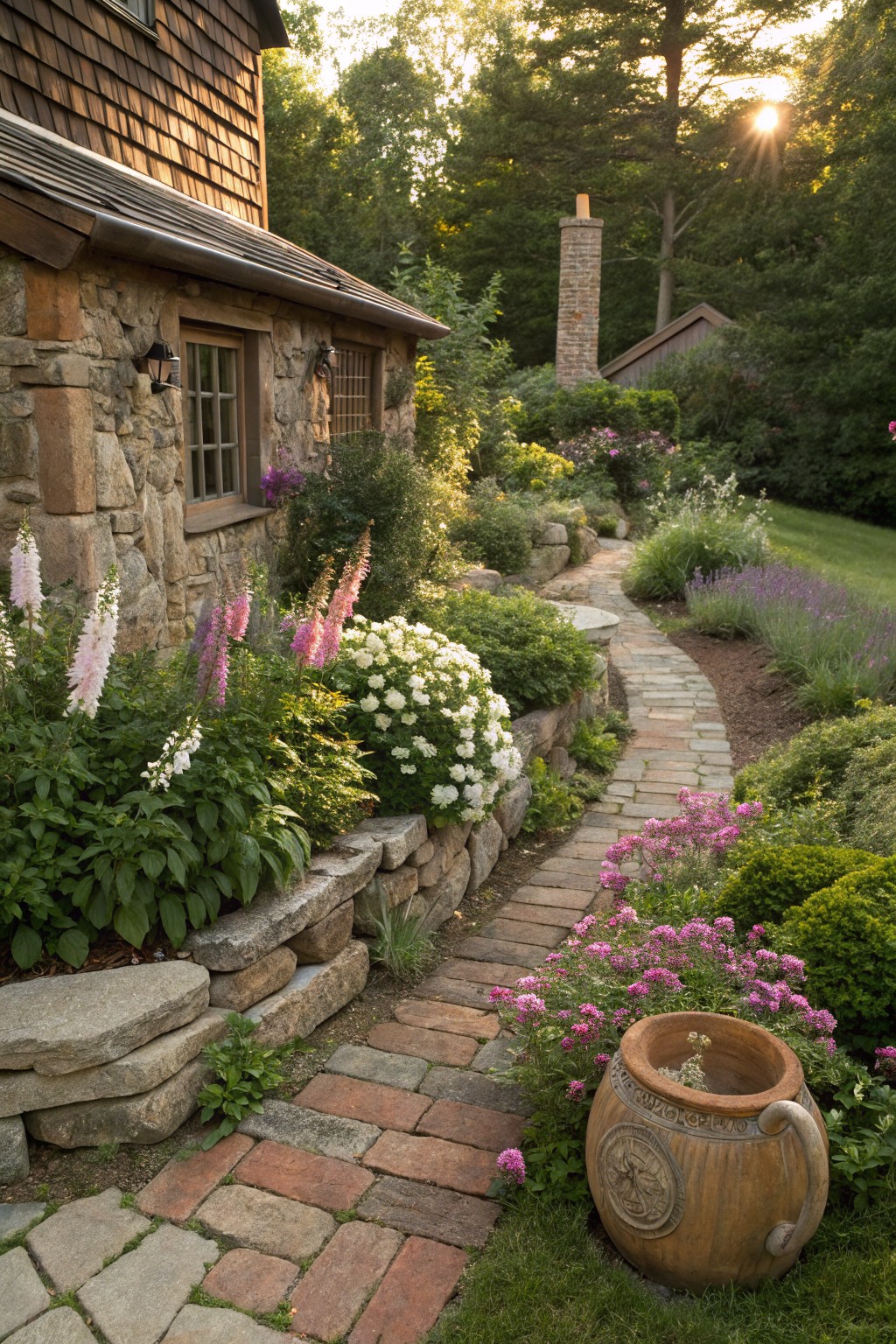
Nothing beats a sturdy stone wall to keep your garden path neat and the plants from spilling over. These dry-stacked rocks form a low border that follows the curve of the brick walkway, giving everything a natural edge without looking too fussy. The rough texture blends right into a wooded backyard like this one.
Stack fieldstones or whatever locals stones you have on hand, no mortar needed for that casual feel. It works best in cottage-style gardens or sloped spots where you need some retention too. Just make sure the base is level, or it might shift over time… and watch the height if you’ve got kids running around.
Gravel Paths Edged with Grasses
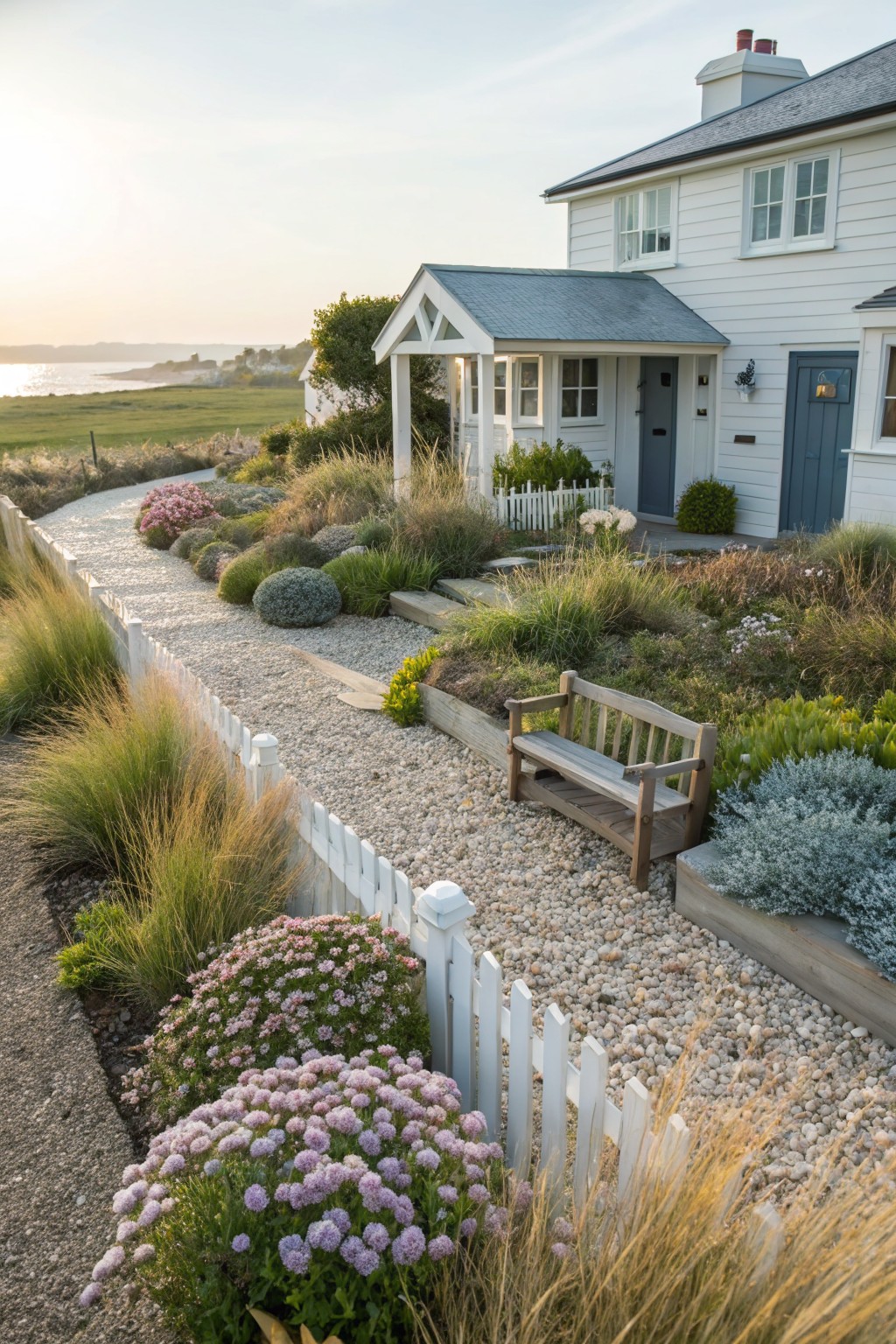
A gravel path like this winds gently toward the house, edged by clumps of ornamental grasses and low shrubs. The pale pebbles stand out against the green blades, making a clean line that guides you along without overpowering the yard. It’s practical too. No mud after rain, and the grasses sway nicely in the breeze.
This works best in cottage or coastal gardens where you want something low fuss. Plant drought-tolerant varieties along the edge, maybe add a picket fence on one side for extra definition. Keep the path three feet wide for easy walking. Avoid super steep slopes unless you add steps.
Rock Borders Forming Built-In Benches
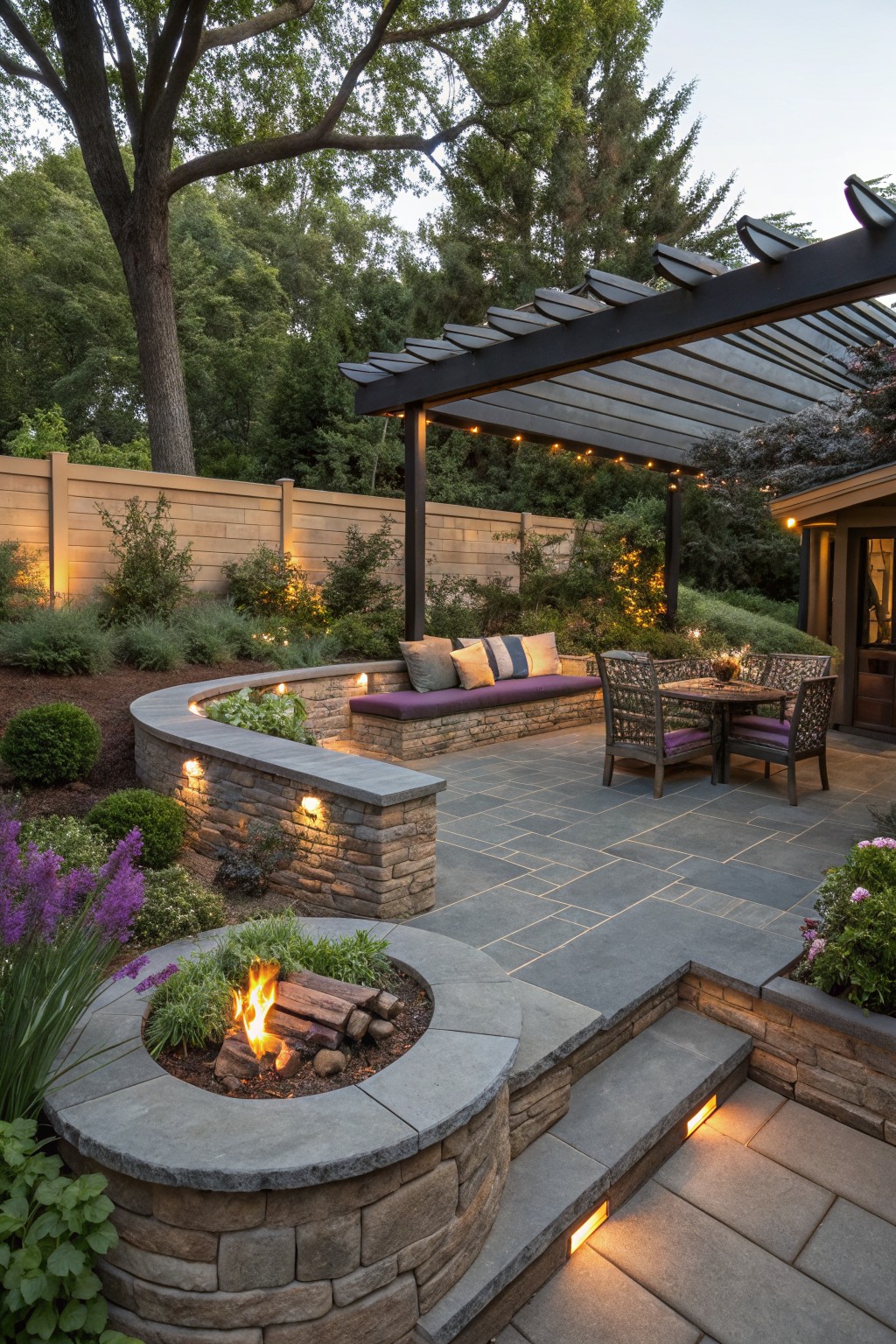
One smart way to edge a patio is with low stone retaining walls that turn into seating. In this yard, a curved wall of rugged stones wraps around the edge, holding back soil and plants while creating a wide bench top. The plants tucked into the wall add green right at your back, and low lights along the top make it usable at night. It keeps the space tidy without fences or rails getting in the way.
These borders work best where you have a little slope or want to zone off a seating area. They’re good for average backyards, not just big ones, since the bench saves floor space. Pick stones that stack well locally, and add gravel behind for drainage so roots don’t push things apart over time.
Dry Creek Beds with Mixed Rocks
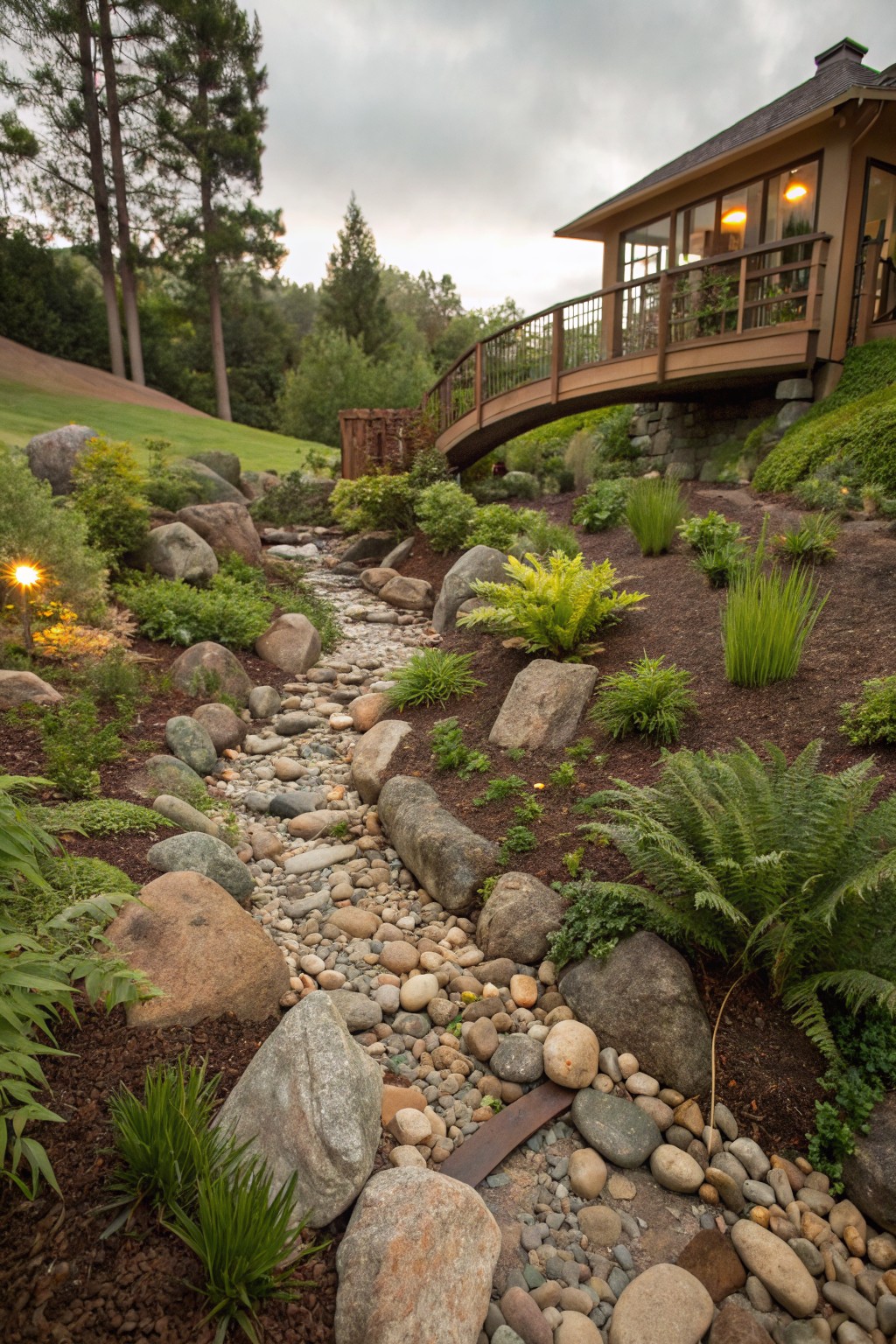
One easy way to edge and define a garden path is a dry creek bed. You line it with big boulders on the sides and fill the middle with smooth pebbles or gravel. It looks like a natural stream but stays dry most of the time. The different rock sizes add some texture, and low plants along the edges make it feel settled in.
Put this in a sloped yard to handle runoff, or just to guide people toward a patio or little bridge. It suits wooded lots or spots with some shade. Go for local rocks so it matches the area. Watch the scale, though… too many huge boulders can overwhelm a small space.
Dark Border Edging for Stone Paths
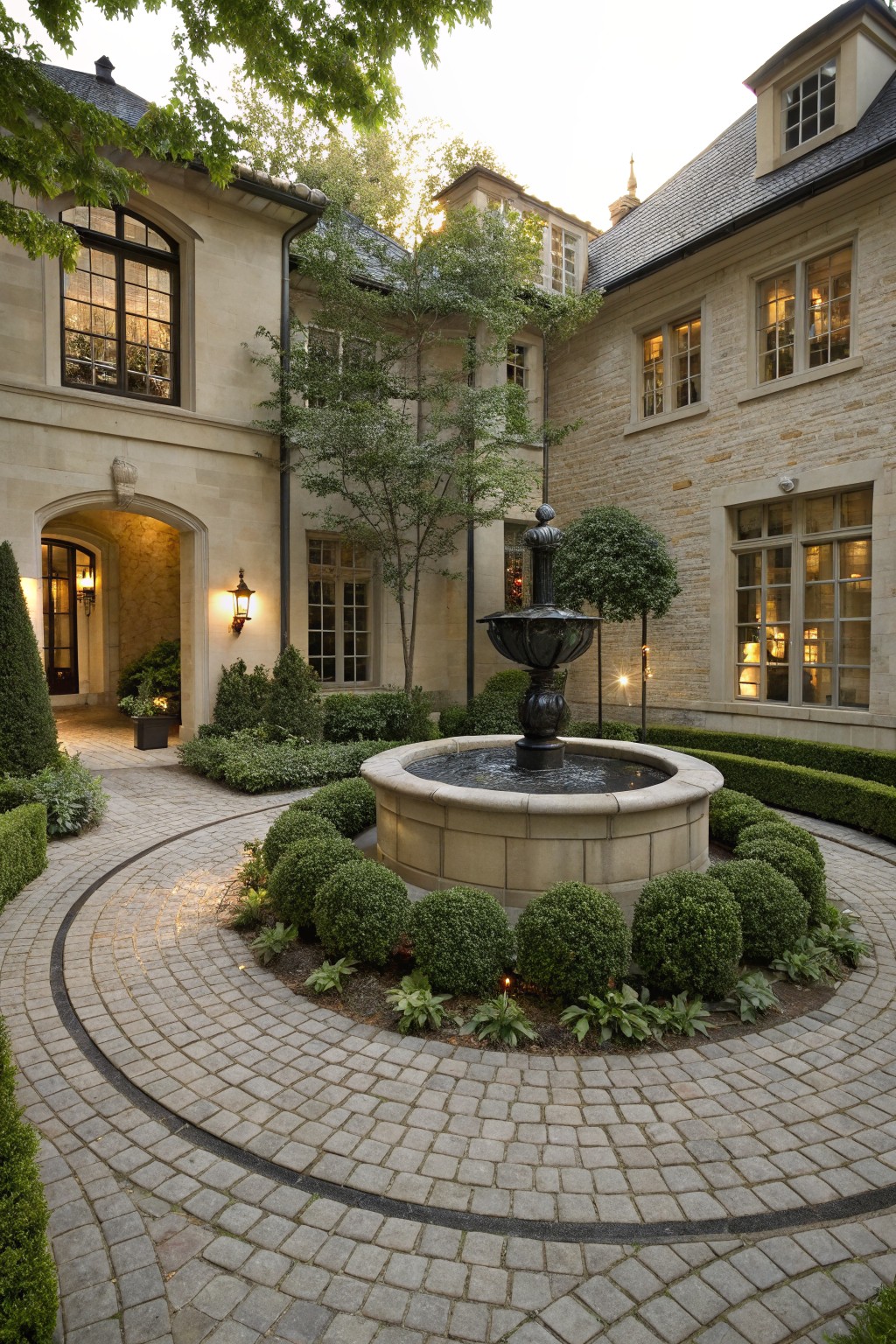
One clean way to define a path is with a dark stone border inset right into light pavers. Here it curves around a central fountain in a courtyard, keeping the whole space sharp and contained. The contrast makes the path pop without much fuss, and it ties into the surrounding boxwoods nicely.
This edging works best in formal entry areas or small gardens next to a house. Use it on driveways or walkways where you want low upkeep, just gravel or pavers inside the line. Suits stone or stucco homes. Skip it in wilder yards though, it needs tidy planting to look right.
Pebble Borders Along Pool Edges
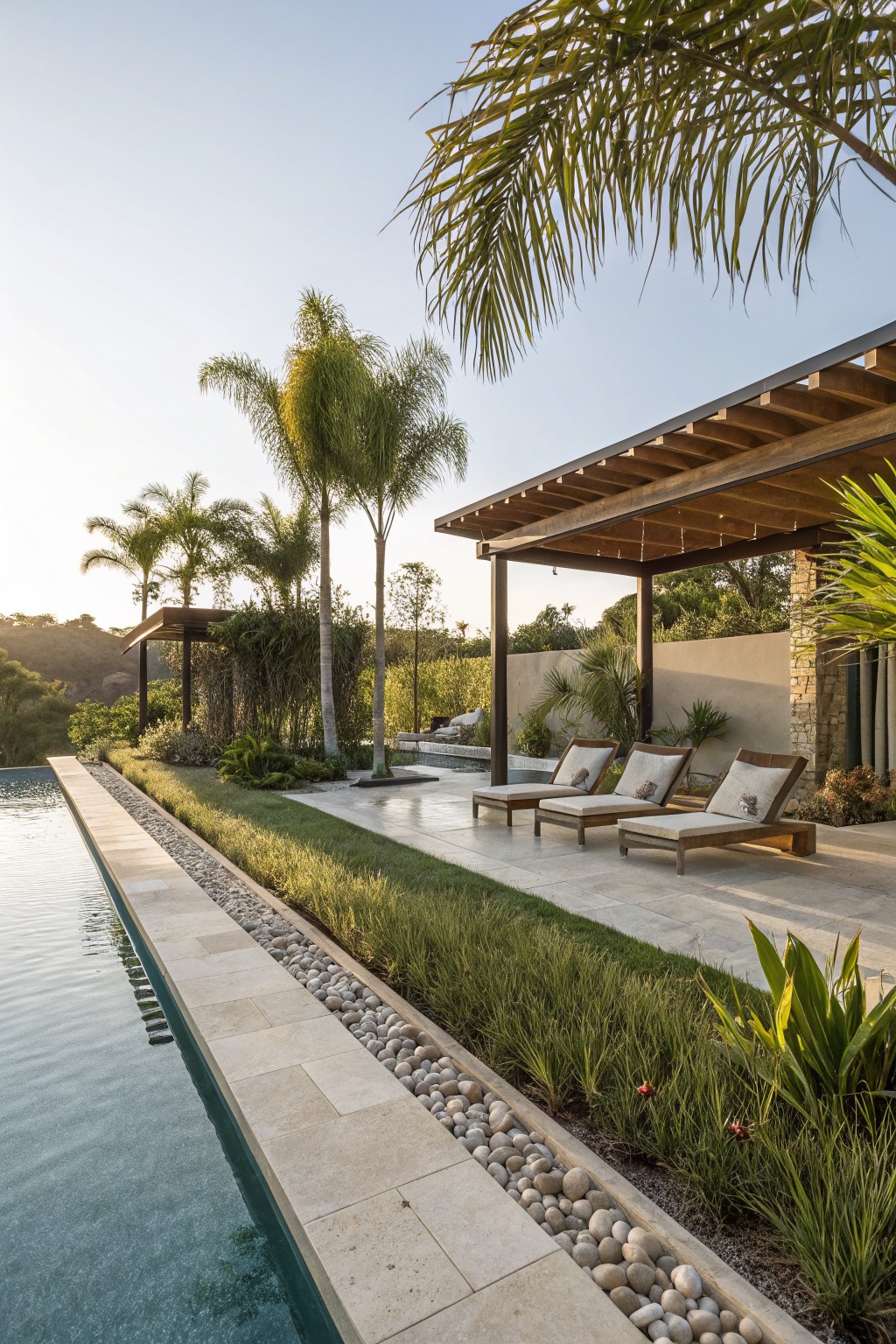
Smooth white pebbles laid in a single row make a clean break between the pool’s tile deck and the grassy planting strip. It’s a low-key way to define zones without hard lines or fussy trimming. Those pebbles catch the light just right and let water drain easily, keeping the edge sharp even after rain.
This edging fits best around modern pools or patios in sunny spots. Pair it with drought-tolerant grasses and big-leaf plants for that resort feel. Source rounded river rocks from a local supplier, and bed them shallow so weeds stay out. Skip it on sloped yards though. Water might wash them away.
Stepping Stones Edged with Boulders
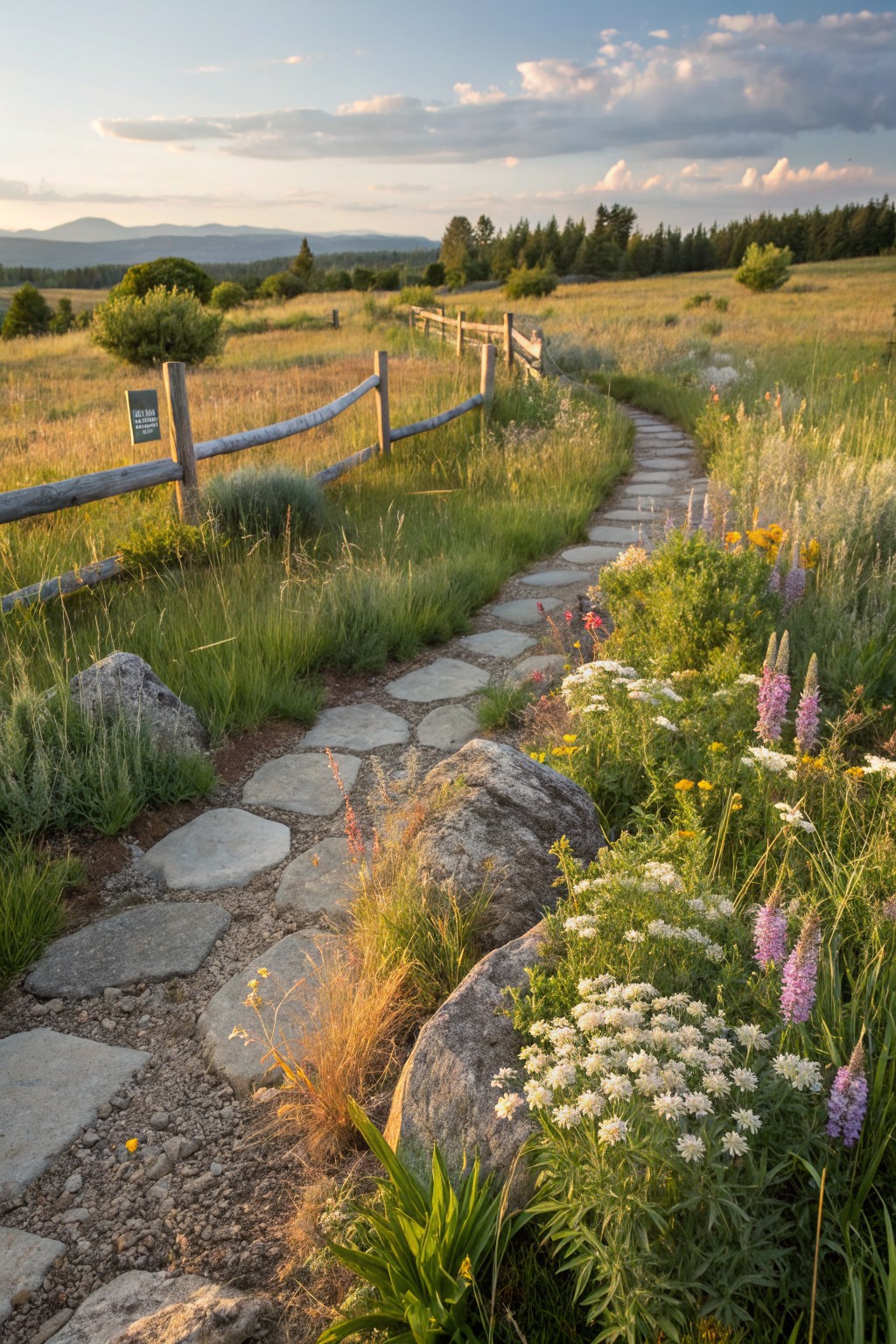
One straightforward way to define a garden path is to line it with big natural boulders. Here, flat stepping stones wind through tall grasses and wildflowers, and those rocks sit right along the edges. They hold back the plants without looking forced. It gives a clean line to walk on but keeps the whole area feeling wild and open.
This works best in bigger yards or meadows where you don’t want a lot of mowing. Just set the boulders in place to match the ground level, fill gaps with gravel if needed. Suits sloped spots too, since the rocks stay put. Skip it for tiny urban lots, though. Might feel too heavy there.
Pebble Edging for Stone Pathways
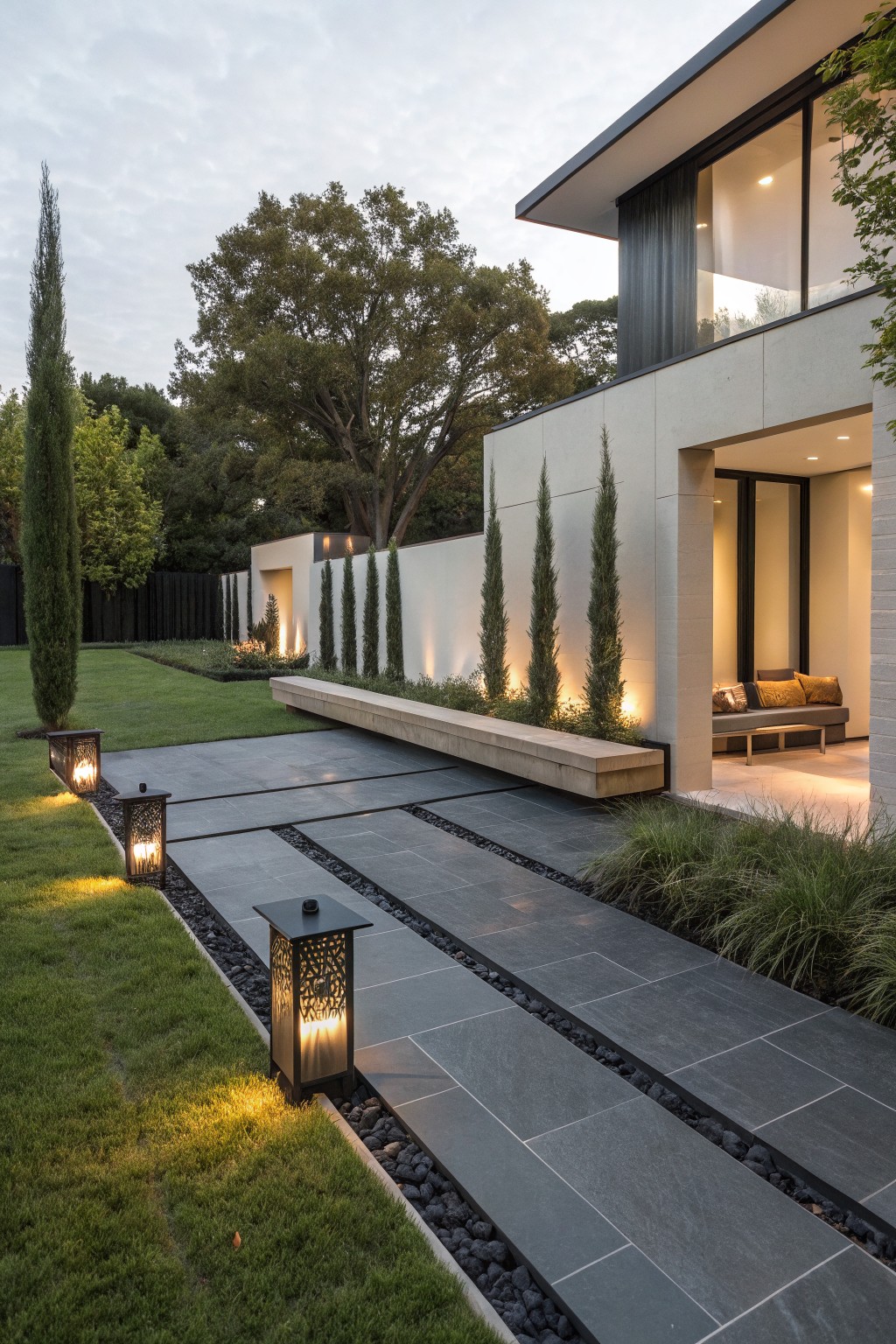
One clean way to define a walkway is with black pebbles tucked along both sides of stone tiles. In this setup, the dark pebbles make a sharp line against the slate pavers and keep the grass from creeping in. It gives the path a finished look without much fuss, and the low lanterns add just enough light to guide the way at dusk.
This edging works great leading up to a modern house entrance or any side path you want to keep neat. Use rounded pebbles for a softer feel or angular ones if you like more contrast. It’s low maintenance too, especially in sunny spots where weeds stay down. Just sweep off leaves now and then.
Gravel and Pebble Edging for Stone Paths
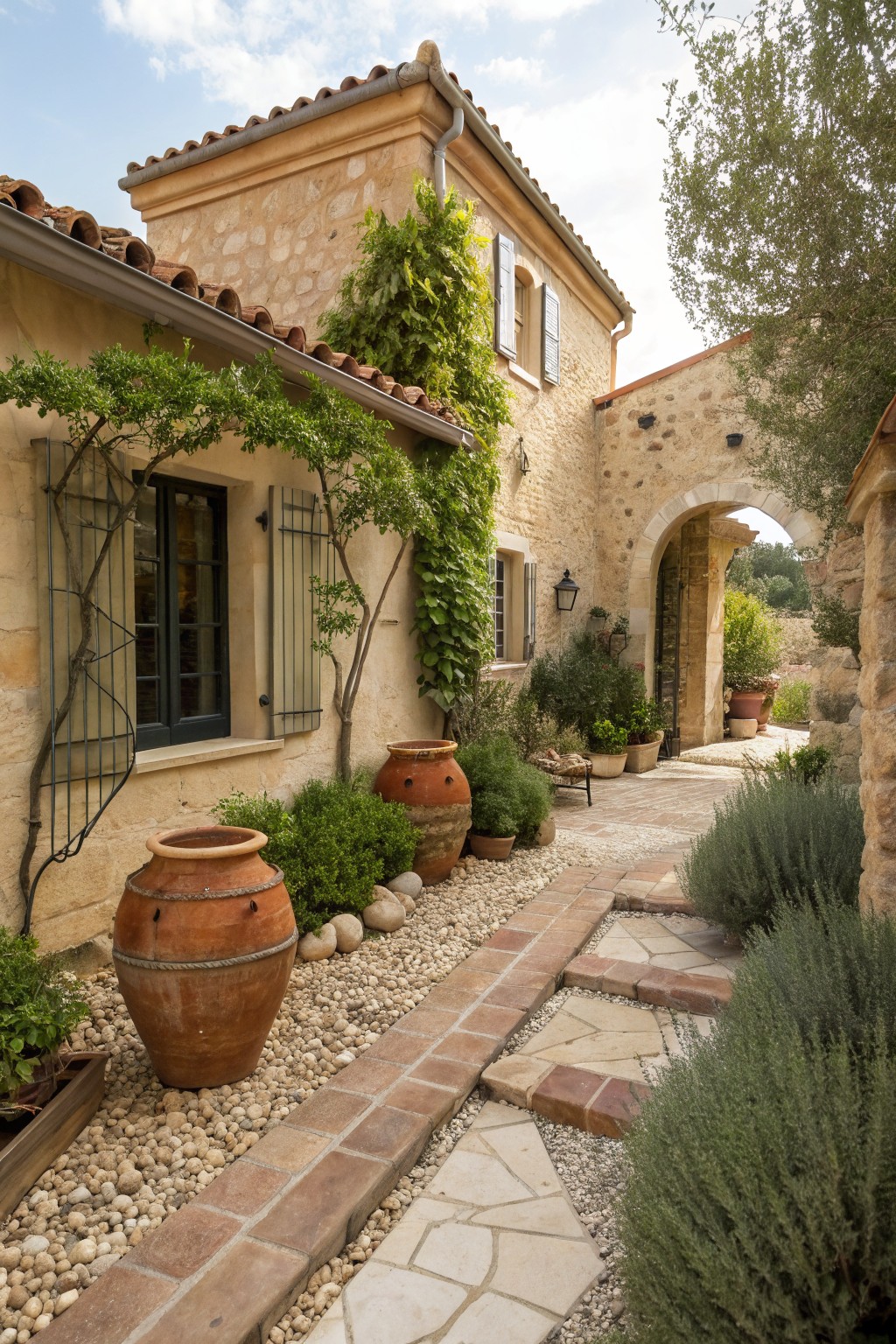
One straightforward way to define garden paths is with gravel and pebbles set against stone edges. Here you see a walkway made of rough stone slabs and bricks, bordered by smooth pebbles and larger rocks. It keeps everything neat without much upkeep, and those big terracotta pots add some weight to the planting areas alongside.
This edging works great around older stone houses or in dry spots where you want a clean line between path and beds. Lay down landscape fabric first to cut weeds, then add pebbles up to the stone curb. Skip it in wet yards though, since gravel can shift. Fits Mediterranean looks or simple country yards best.
Mossy Stone Walls Edge Garden Paths
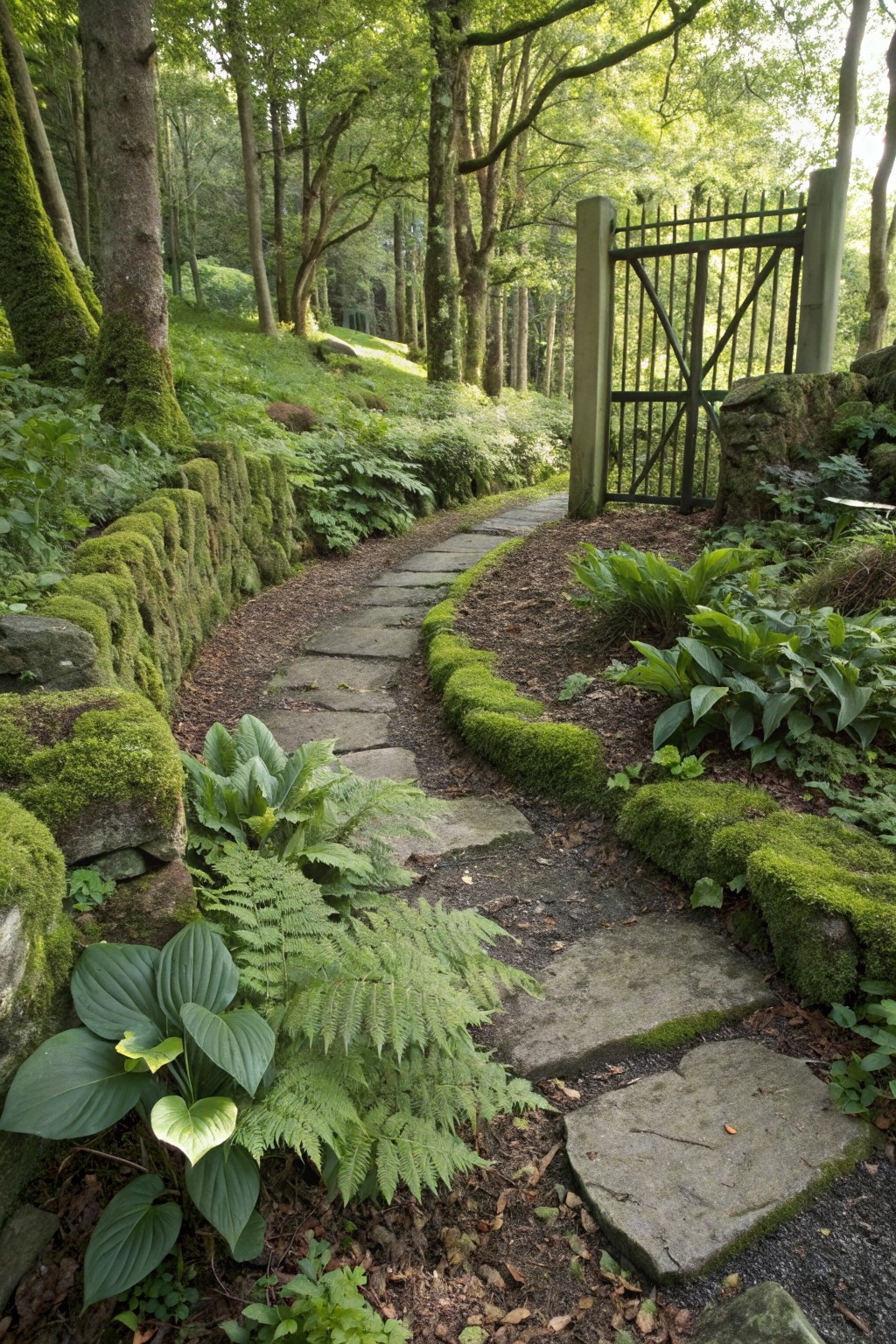
One simple way to define a garden space is with low stone walls covered in moss. They hug the edges of a path like this one, made from flat stones winding through the greenery. The moss gives it a soft, aged look that blends right into the woods around it. No need for fussy trimming. Plants like ferns and hostas tuck in along the base, making the border feel alive without much work.
These work best in shaded spots where moss grows easy, like under trees or along north-facing paths. Stack local rocks for the walls, maybe add some soil pockets for plants. Suits a cottage garden or woodland yard. Watch for too much sun, though. Moss fades fast there… just plant groundcover instead.
Pebble Edging Between Paver Slabs
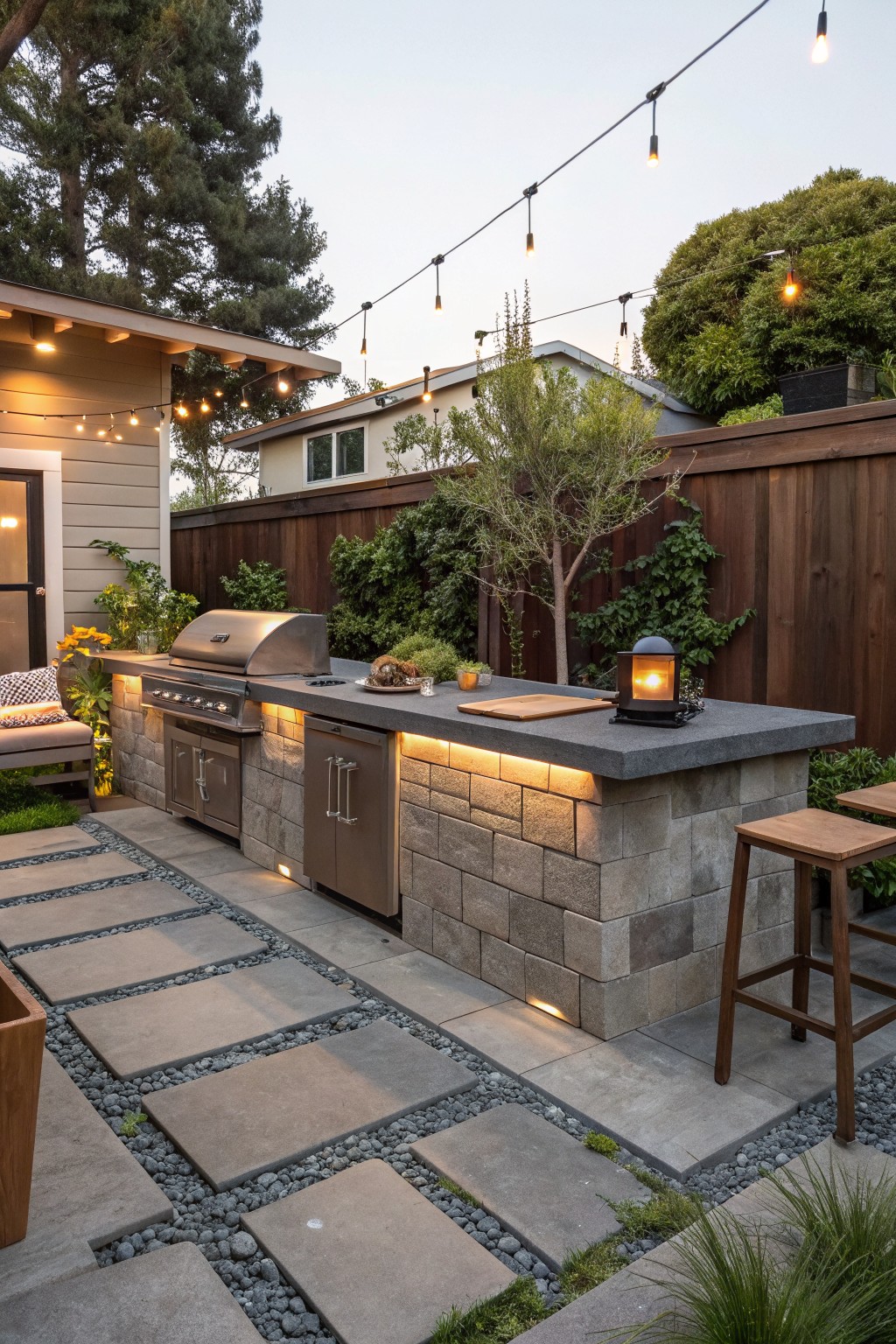
Large concrete pavers laid with pebble borders in the joints make a simple path that leads right up to an outdoor kitchen. The pebbles act as a natural edging that keeps everything contained and neat. It works well because the contrast between the solid slabs and loose stones adds a bit of texture without much upkeep. You see it here tying the walkway into the stone base of the kitchen setup.
This kind of edging suits backyards where you want defined zones around patios or seating areas. Use it on flat ground near hardscaped features like grills or bars. Go for pebbles that match your stone colors to blend it all. It’s forgiving for beginners. Just make sure to tamp down the base so weeds don’t sneak in later.
River Rock Edging Along Pathways
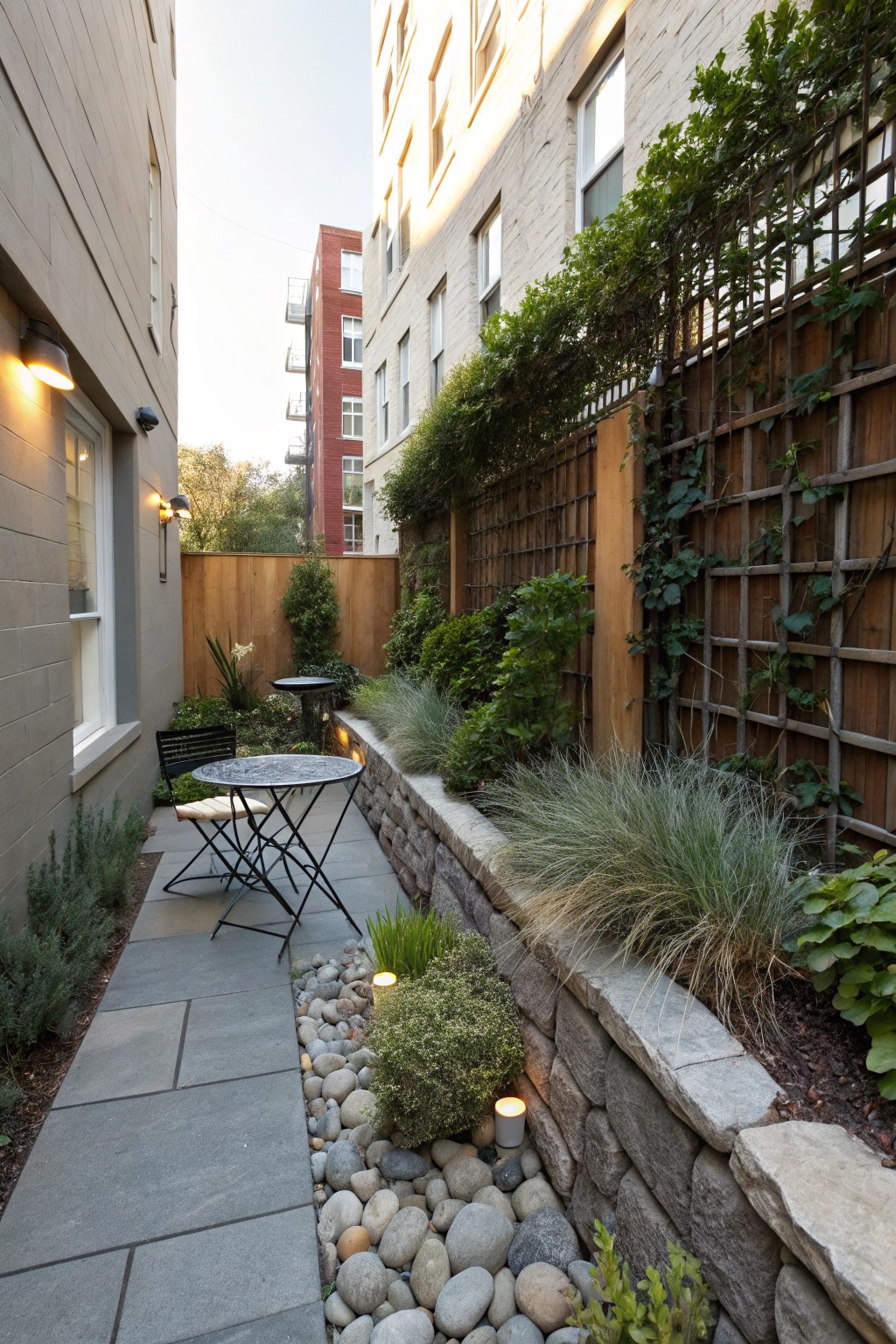
One clean way to define a walkway is with rounded river rocks tucked right along the edges. Here they run next to slate pavers in a slim side yard, holding back gravel and plants without much fuss. The smooth stones pick up the texture from a nearby dry-stacked wall, keeping everything tied together. It makes the path feel intentional, even in a tight spot.
This edging works best in narrow areas between buildings or along fences, where you want low upkeep. Pair it with tough grasses or succulents that won’t crowd the path. Suits urban yards or modern homes… just source rocks that match your local stone for that natural fit.
Natural Rock Walls Edging Sloped Paths
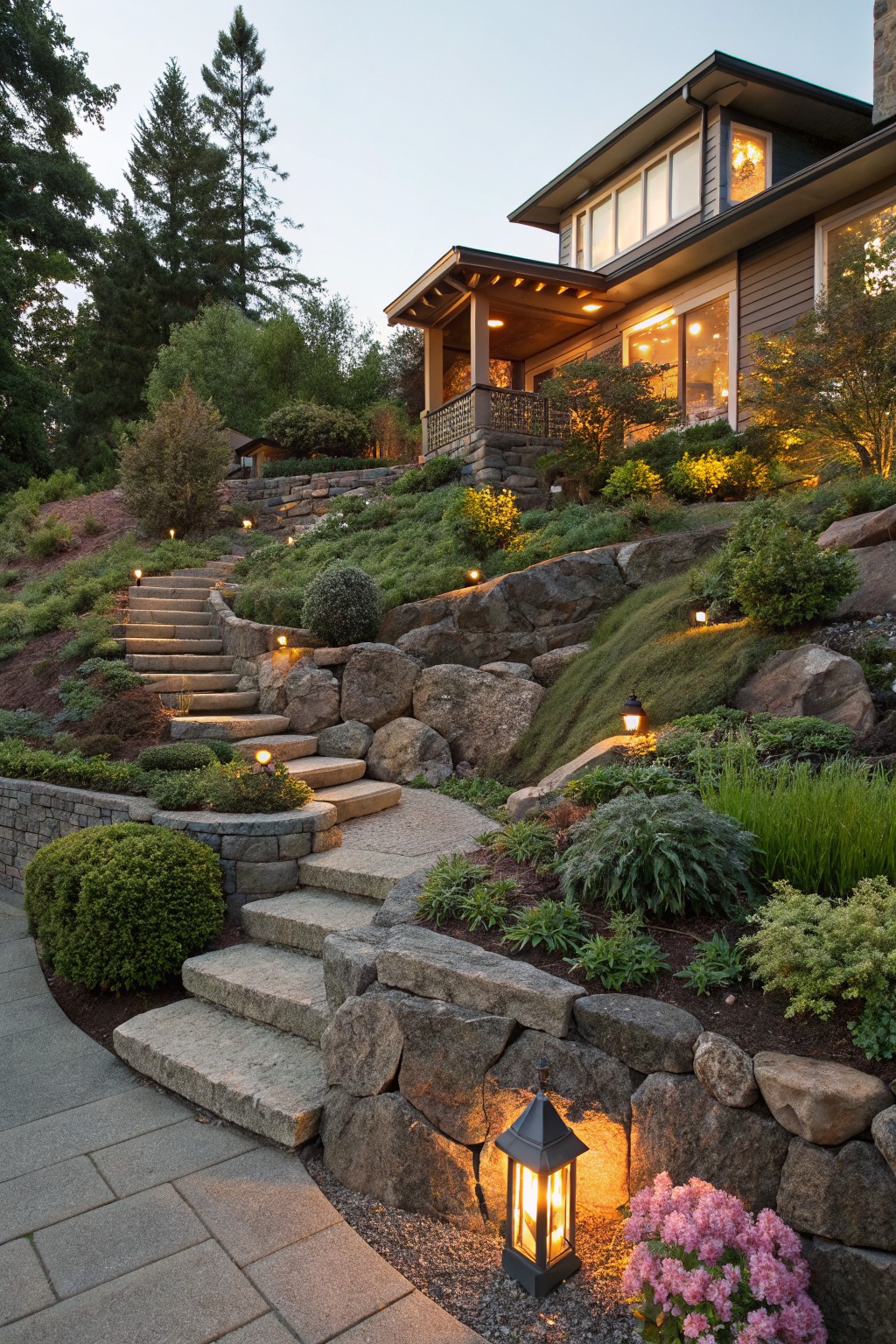
Big boulders stacked into low retaining walls do a nice job here of holding soil in place while framing the stone steps. Tucked-in plants and grasses soften the rocks just enough, and those path lanterns add a glow at dusk. It keeps the whole entry from feeling like a scramble.
This works best on steeper lots where you want defined garden beds without a lot of flat space. Use local stone to blend with the site, and keep walls under three feet high for easy building. Suits homes tucked into hillsides, modern or cabin-style.
Pebble Borders for Soft Patio Edges
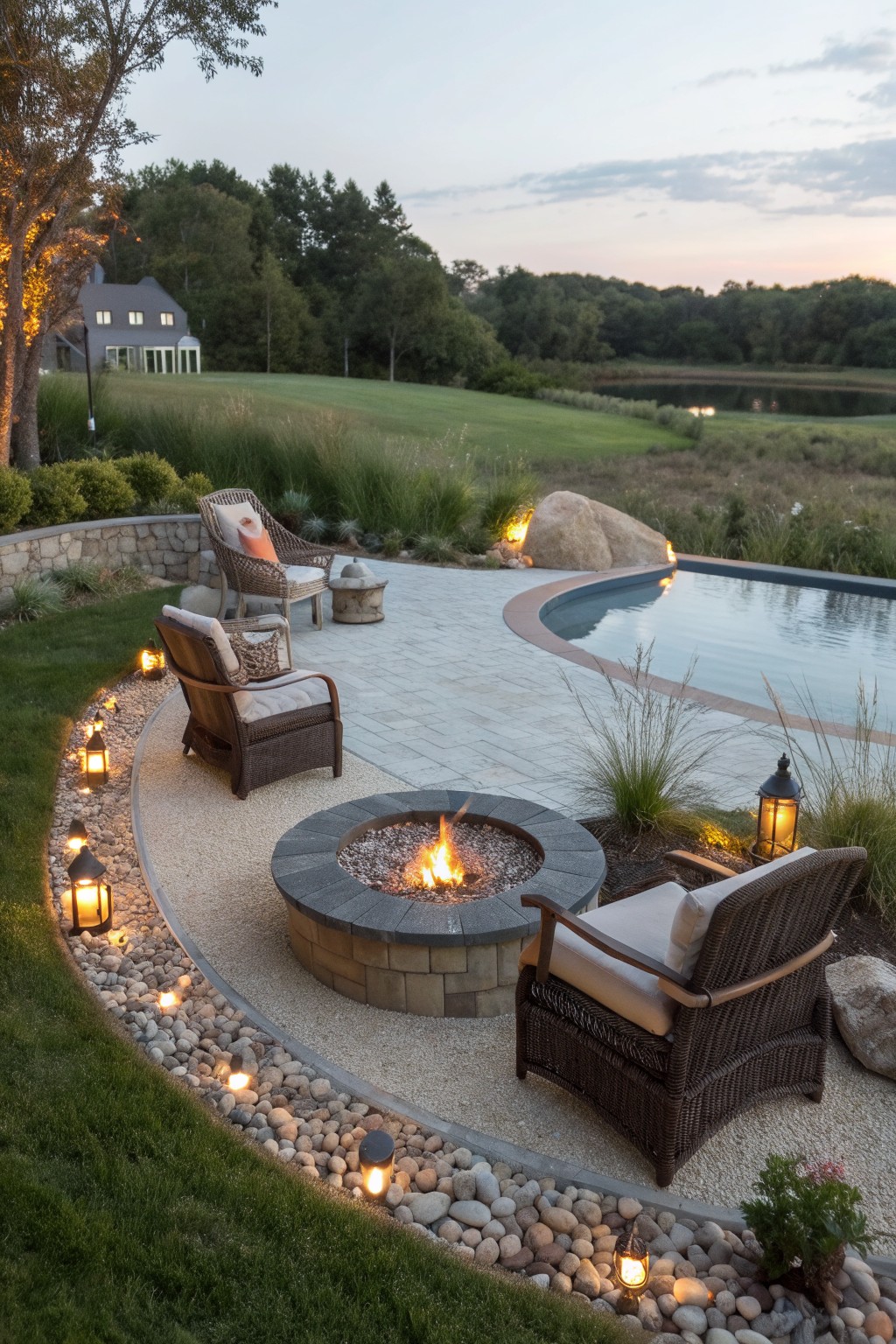
One easy way to define your patio or pool area is with a border of smooth pebbles or river rocks. In this setup, the curving line of pebbles separates the paver patio from the grass without hard lines. Small lanterns tucked into the rocks add light at night. It keeps things looking natural and low fuss.
You can run this kind of edging around fire pits, seating zones, or pool curves. It works best in yards with some slope or open lawn nearby. Go for rounded stones in neutral tones to blend with whatever plants you have. Just make sure the trench is deep enough so rocks don’t shift over time.
Boulders Edging a Stone Path
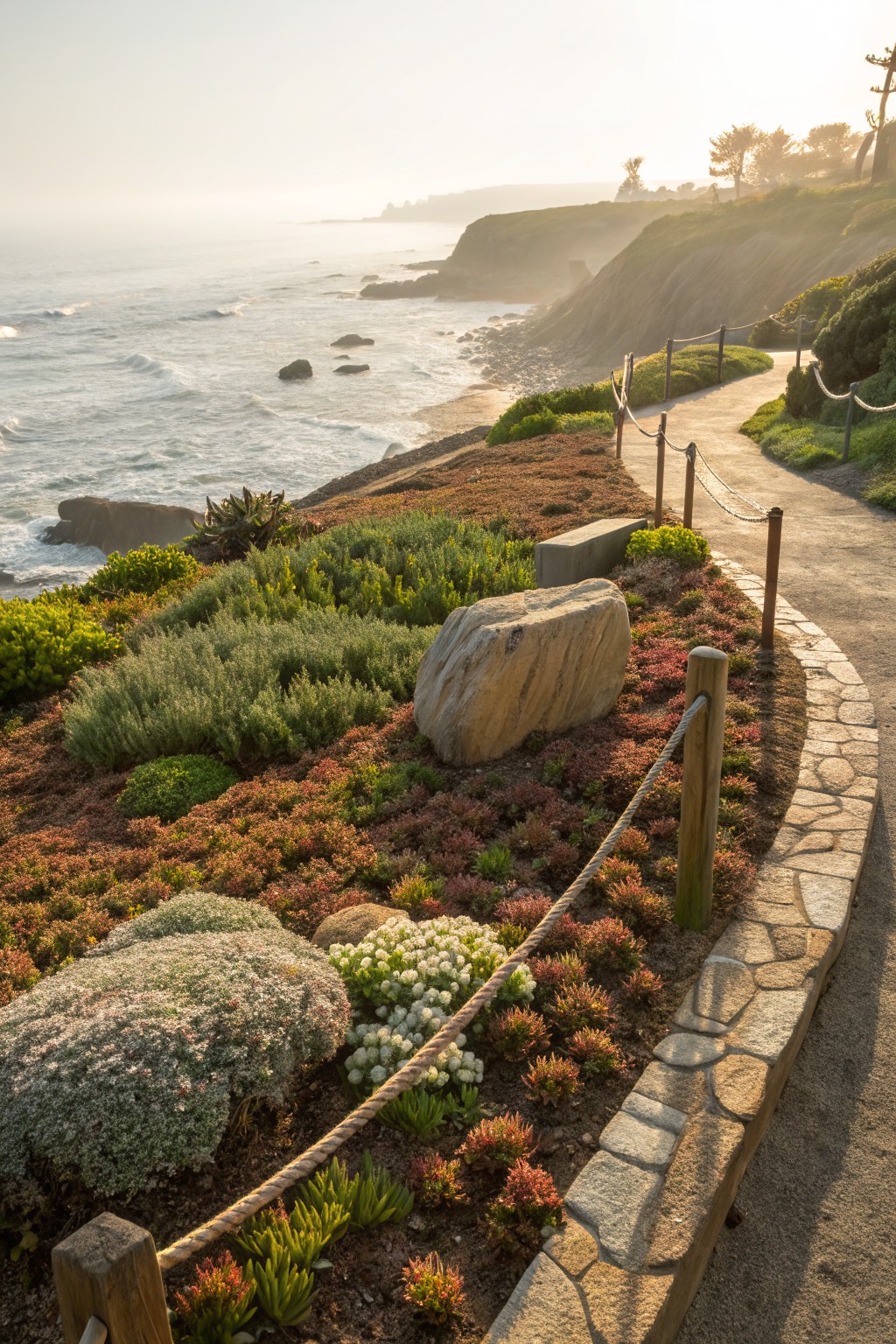
Large boulders tucked into low planting beds make a strong, natural border for this stone path. They hold back the succulents and groundcovers without looking forced. The mix keeps everything in place on a slope, and that rope fence adds a simple touch to guide the way.
This works great for coastal yards or any spot with a drop-off. Pick rocks that match your local stone for an easy fit. Plant tough, low stuff like ice plant around them to fill in and cut down on weeding. Skip it on flat lawns, though. It shines where you need real definition.
Natural Rock Edging for Garden Paths
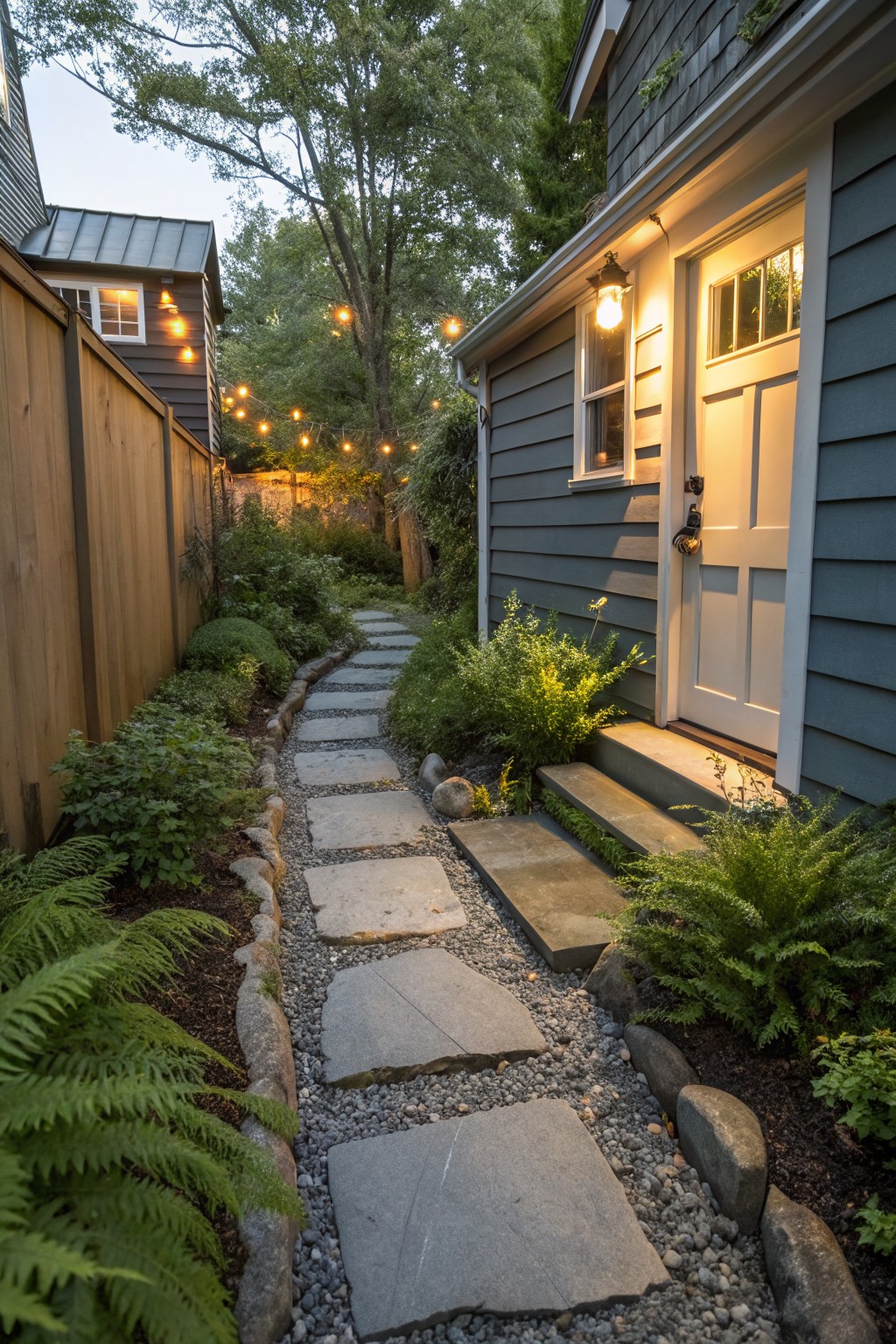
A simple way to guide foot traffic in a yard is with flat stone slabs laid as steps, edged by larger rocks and gravel mulch. Here, the irregular shapes fit right into the planting beds filled with ferns and low shrubs. It keeps everything neat without much upkeep, and the path winds gently toward the house door.
This works best in side yards or back entries where you want a low-key route. Pick stones from a local quarry to match your soil and climate. Leave room between slabs for gravel or mulch, then add tough plants that won’t crowd the way. Just watch that rocks don’t shift over time, especially on slopes.
Natural Stone Edging for Garden Paths
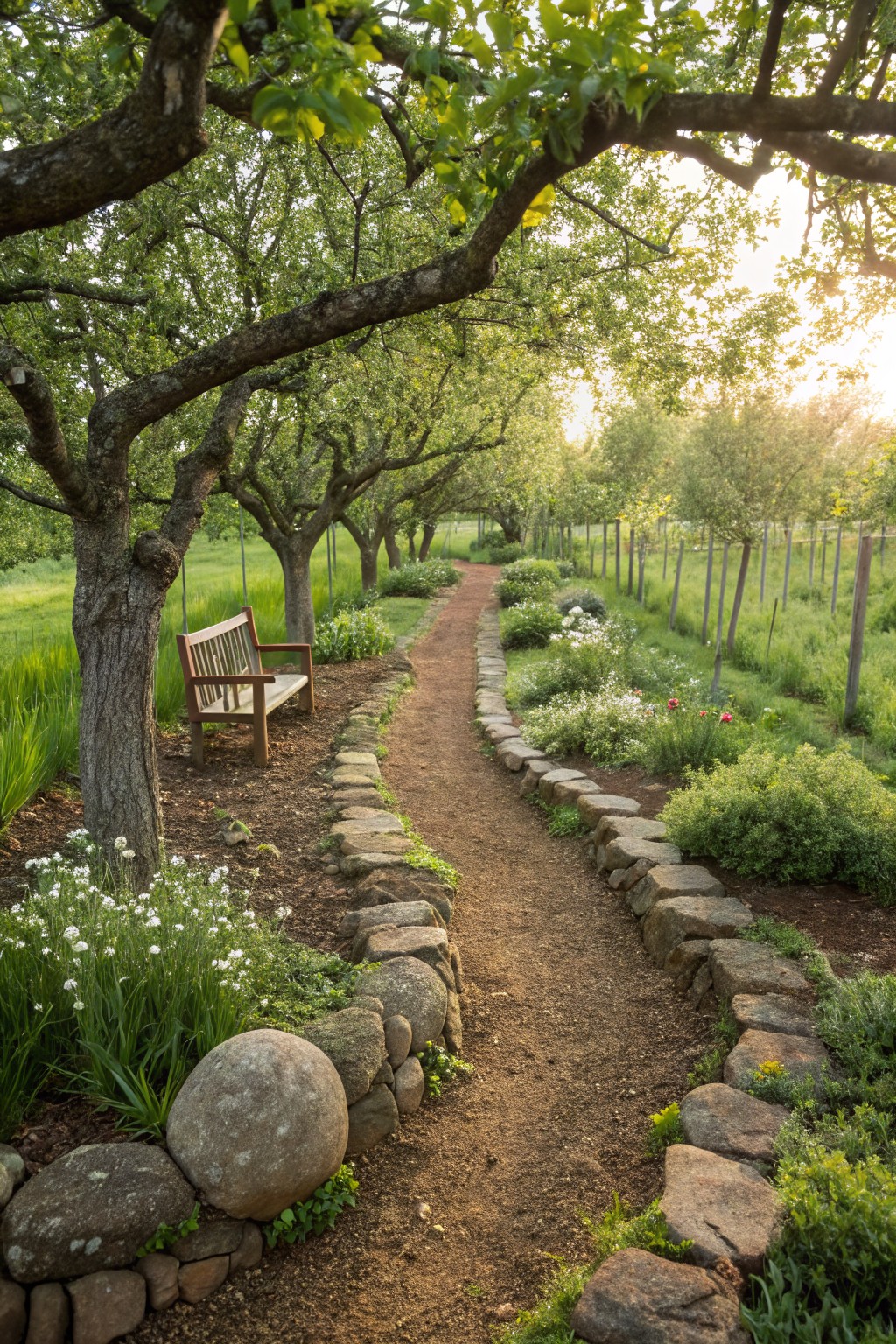
A simple dry-stacked stone border like this one runs along a winding gravel path. It uses rough fieldstones of different sizes, including a big round boulder here and there. What makes it work is how the stones keep the path clear while letting plants spill over just a bit. That soft edge feels right in a casual garden setting.
You can pull this off in most backyard gardens, especially where you want to separate a walkway from flower beds or lawns. Hunt for local stones to keep costs down, and stack them without mortar for that natural look. It suits cottage-style yards or orchards best. Just make sure the base is level so nothing shifts over time.
Gravel Edging Along Stone Paths
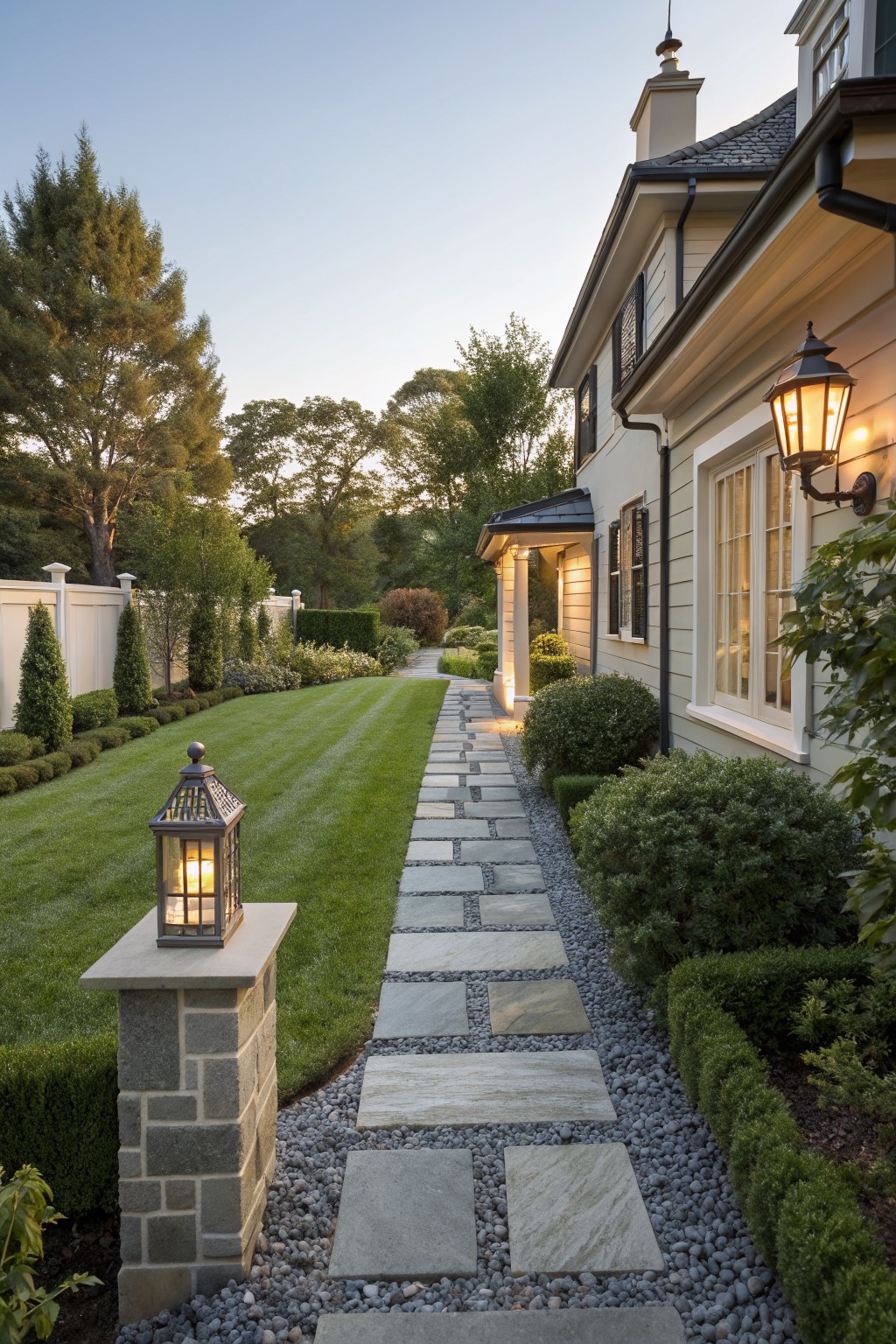
One clean way to edge a walkway is with loose gravel tucked right up against the stone slabs. Here, irregular bluestone pavers form the path, and a band of small pebbles runs alongside, keeping grass and mulch from creeping in. Low boxwoods back it up for a bit more structure. It looks sharp but takes little upkeep, and the gravel lets water drain right through.
This works best in formal front gardens or side yards where you want a straight shot to the door. Suits older homes with some traditional charm. Go for pebbles in a matching gray tone, and keep the strip narrow, maybe 6 to 12 inches wide. Watch that it doesn’t scatter onto the lawn… a hidden metal edge underground helps with that.
Curved Pebble and Rock Path Edging
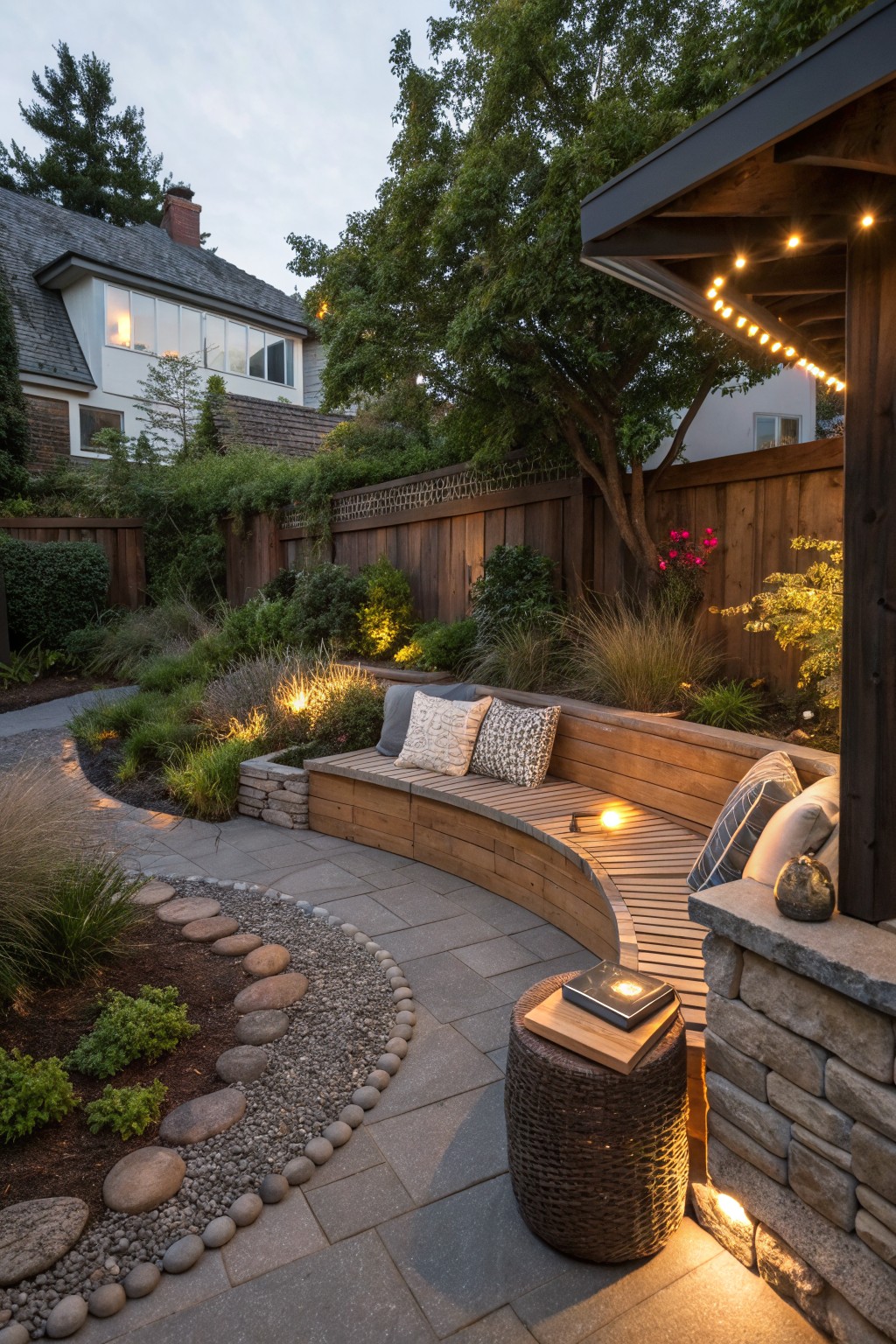
One simple way to make a garden path feel more defined is with a border of smooth pebbles and larger rocks. Here, a winding gray paver walkway gets that treatment, curving gently through plant beds with grasses and low shrubs. The mix of small pebbles and fist-sized stones softens the hard edges of the path. It keeps mulch or soil from spilling over without looking too rigid.
This edging works great in smaller backyards or side yards where you want some flow but clear lines. Lay down landscape fabric first, then add the pebbles in a loose circle or curve. Go for rounded river rocks in natural tones to blend with whatever plants you have. Skip it on steep slopes, though… the stones might shift over time.
Frequently Asked Questions
Q: How deep do I dig the trench for these rock borders? A: Dig 4 to 6 inches deep across the whole line. This depth locks the rocks in place so they don’t shift with foot traffic or rain. Add a layer of landscape fabric at the bottom before dropping rocks in.
Q: Do rocks alone keep weeds away forever? A: Rocks smother most weeds right away. Spray any stragglers with vinegar early on, and top up gravel yearly to block light.
Q: Can I mix rock types in one border? A: Stick to two similar colors or sizes at most… it keeps things from looking cluttered. Lay them out dry first to preview the flow.
Q: How do I make a smooth curve with the rocks? A: And here’s a trick: stretch a garden hose along your path to mark the curve. Set rocks loosely inside it, step back to check, then dig and place for good.
