


I’ve learned the hard way that sloped yards demand thoughtful structure to keep soil from sliding away during heavy rains. Erosion shows up first in those ugly gullies that strip away plants and leave the ground uneven and bare. Rocks provide a reliable backbone, forming natural terraces and edges that channel water while blending into the landscape over seasons. A simple contour of mixed-size stones on my hillside cut the runoff enough to let grass and shrubs finally establish roots. These patterns offer real staying power, the kind you can tweak for your own terrain and watch settle in year after year.
Terraced Stone Walls on Slopes
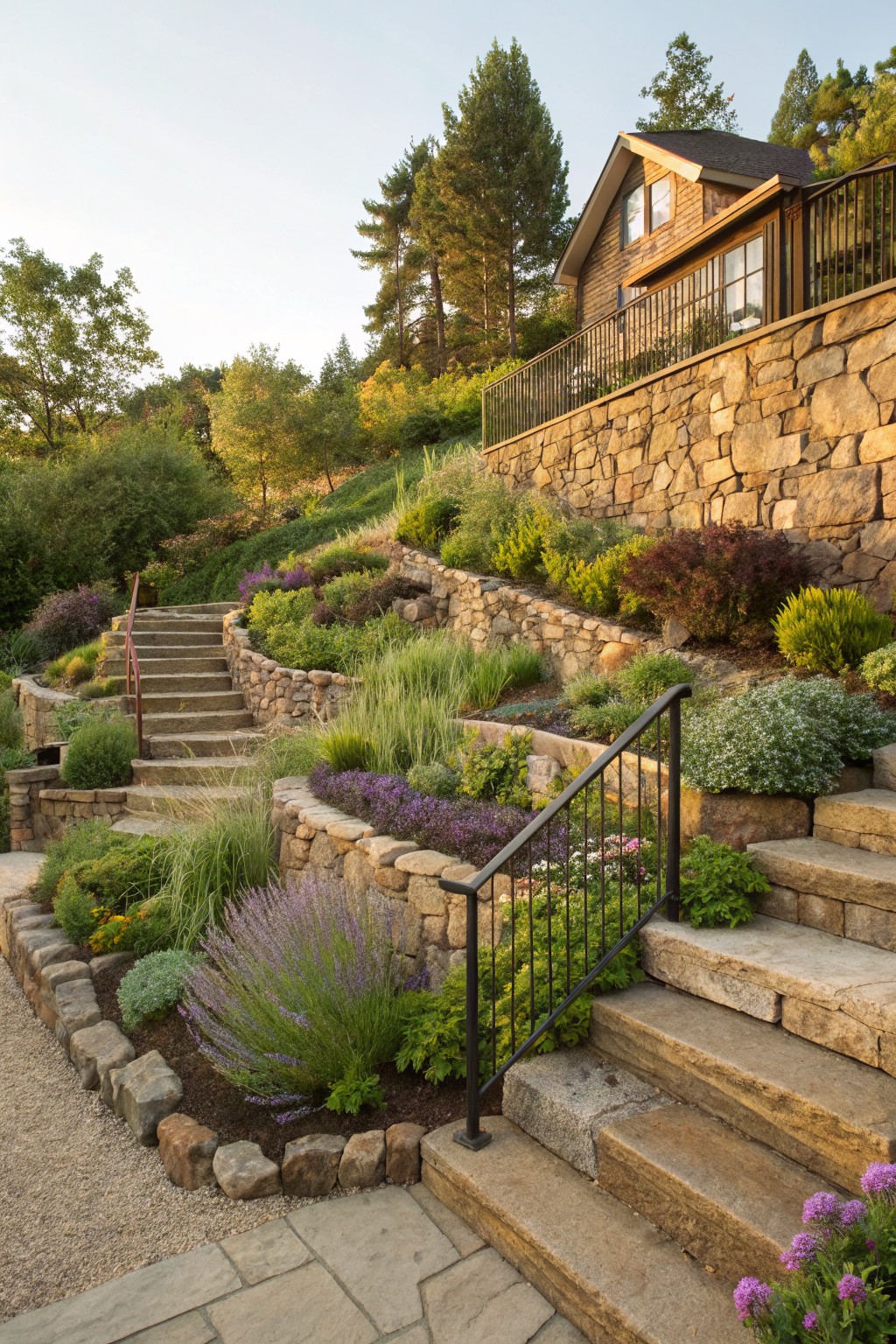
One smart way to handle a steep hillside is terracing with dry-stacked stone walls. These hold the soil in place and stop erosion, while the pockets between stones let plants root in naturally. You see lavender bushes and grasses spilling over here, softening the rock edges and keeping it from looking too harsh.
This works best on slopes leading to a house or patio. Pick stones that match your area, stack them without mortar for a rugged feel, and plant drought-tolerant stuff like sedums or ornamental grasses. Watch the drainage though, or water will pool behind the walls.
Winding Stone Path with Boulder Edges
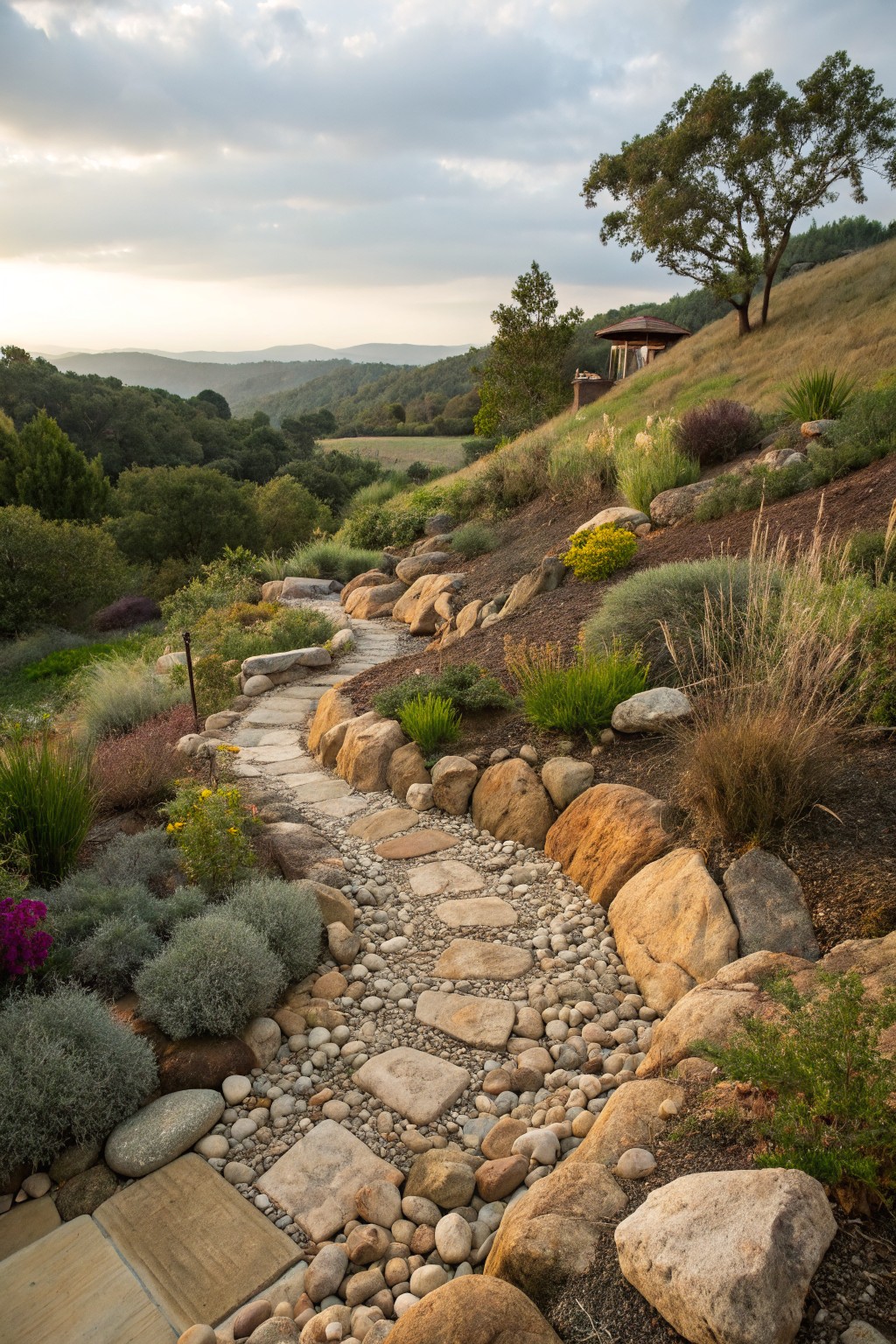
A simple winding path made from flagstone slabs set into gravel works great on slopes. Big boulders line both sides, holding back soil and slowing water runoff. Native grasses and low shrubs fill in around them, keeping the look natural and low fuss. It’s a smart way to direct foot traffic without fighting erosion.
Put this in side yards or up to a patio overlook. It suits dry hillsides best, especially in areas with seasonal rains. Pick rough local rocks for stability, and leave gravel loose enough for drainage. On steeper runs, add a few wider steps to make it safer.
Stone Retaining Walls with Built-In Steps
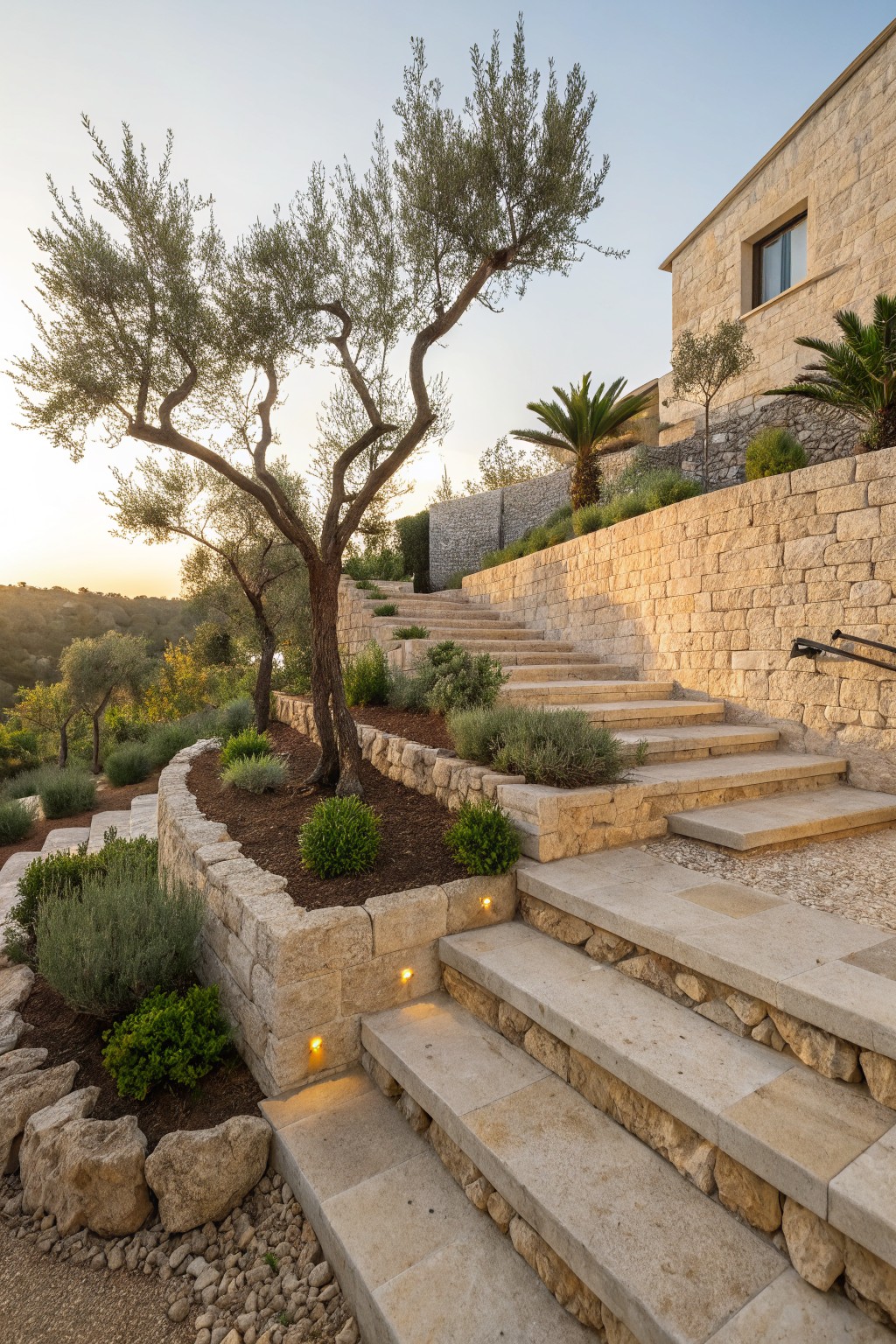
One smart way to handle a steep slope is stacking stone into terraced walls that double as steps. This setup holds soil in place and stops erosion while giving you a path up the hill. You see olive trees and low shrubs tucked into the beds, which keeps it all looking natural and not too rigid.
These work best on hillsides where you need both access and planting room. Use local stone to blend with the landscape, and add gravel or mulch in the beds for easy upkeep. It’s great for dry spots since the plants like lavender and boxwood don’t need much water. Just make sure the walls are sturdy enough for your slope’s drop.
Tiered Stone Retaining Walls for Slopes
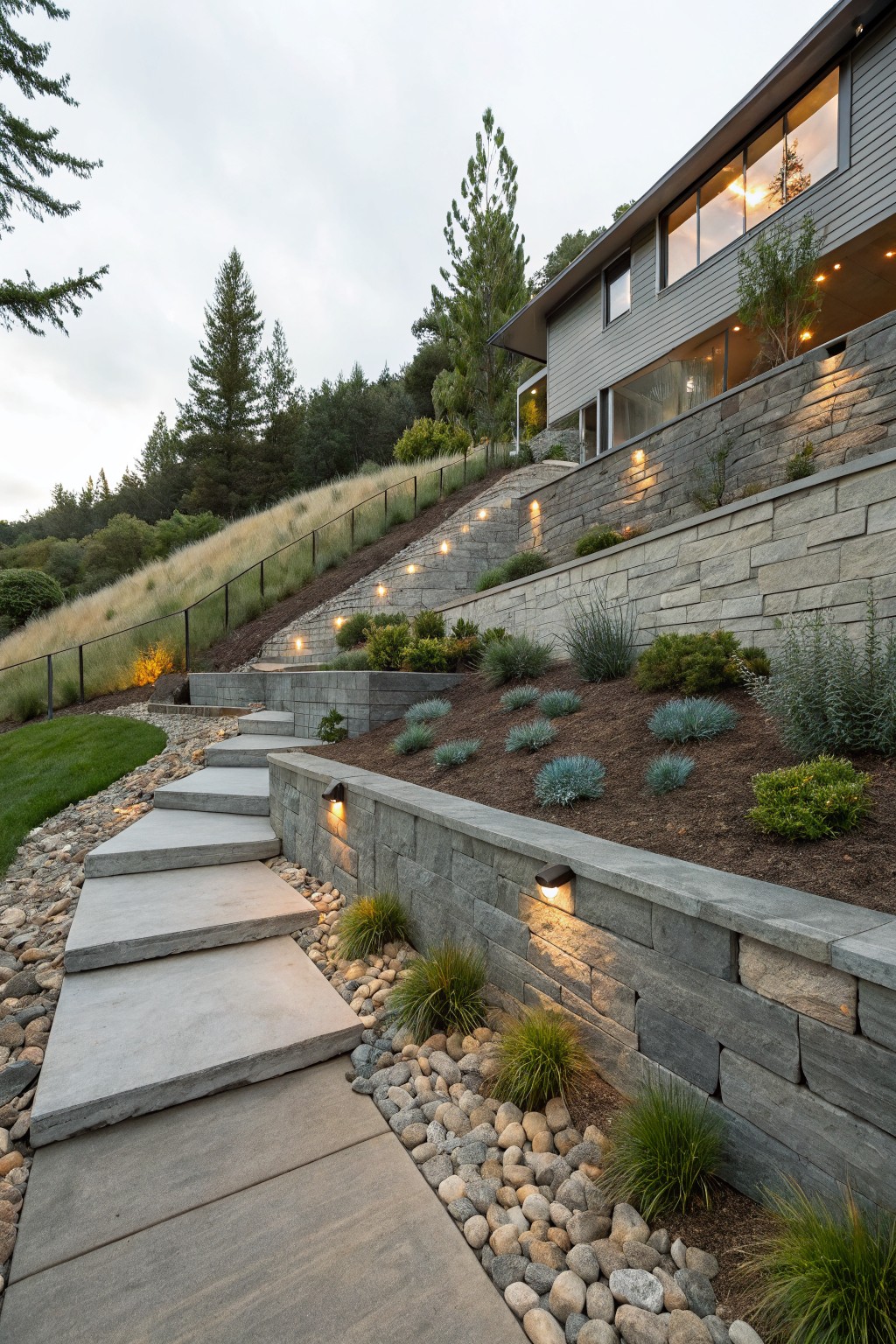
Tiered stone retaining walls like these turn a tricky hillside into something walkable and stable. The stacked stones create flat planting pockets and steps that hold soil in place, while gravel beds and tough grasses help with drainage and erosion. Those small wall lights add a practical touch too, lighting the way without much fuss.
This works best on moderate slopes where you need paths to a house or patio. Pick stones that match your local look, keep plants low and drought-tolerant, and space the tiers so you can reach everything for upkeep. Skip it on super-steep spots unless you add engineering help.
Terraced Stone Walls on Slopes
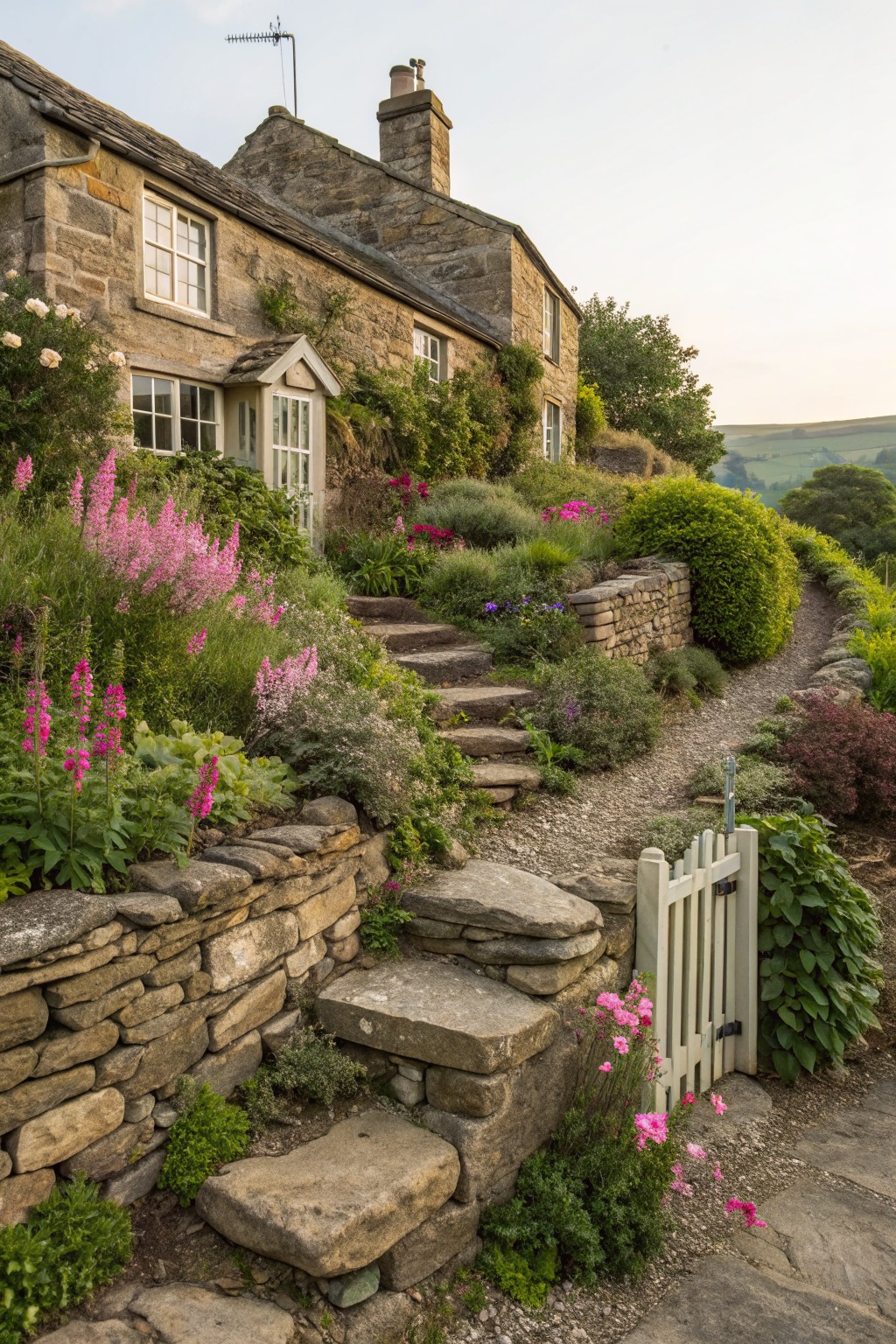
Steep slopes around a home can turn into a mess with runoff and erosion, but terraced stone walls fix that nicely. They hold soil in place while creating flat spots for plants and paths. In this setup, the rough dry stone walls step up the hill, letting pink flowers and greenery tuck right into the pockets. It keeps everything stable and gives the yard some real structure.
You can use this on hillsides from 20 to 40 degrees, especially leading to a back door or side yard. Pick flat fieldstone or whatever’s local to blend with the house. Stack without mortar for that natural drain, and plant deep-rooted stuff between stones. Just make sure each terrace slopes a bit for water runoff, or you’ll get soggy spots.
Stone Retaining Walls on Steep Slopes
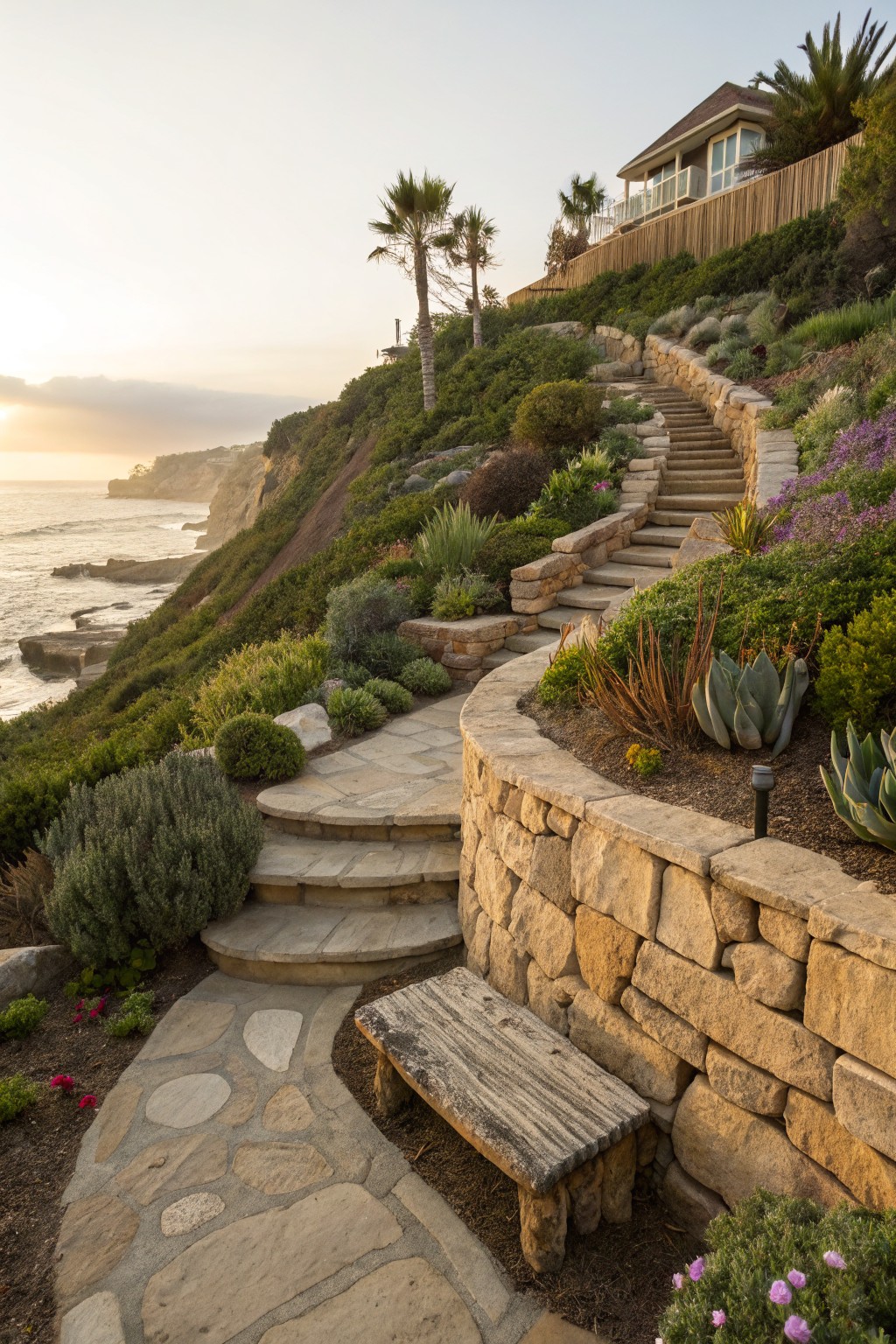
One solid way to handle erosion on a hillside is with dry-stacked stone retaining walls. They hold back soil naturally, without looking forced. In this setup, the walls curve gently and form wide steps that make climbing easy. Succulents and grasses planted right in the pockets keep everything stable and low-maintenance.
These walls work best on coastal slopes or any spot with loose dirt. Pick stone that matches your area, like the local sandstone here. Build them short, no taller than three feet, and add gravel behind for drainage. It’s practical for getting to a house up top… just hire a pro if the slope is really sharp.
Stone Terracing for Sloped Yards
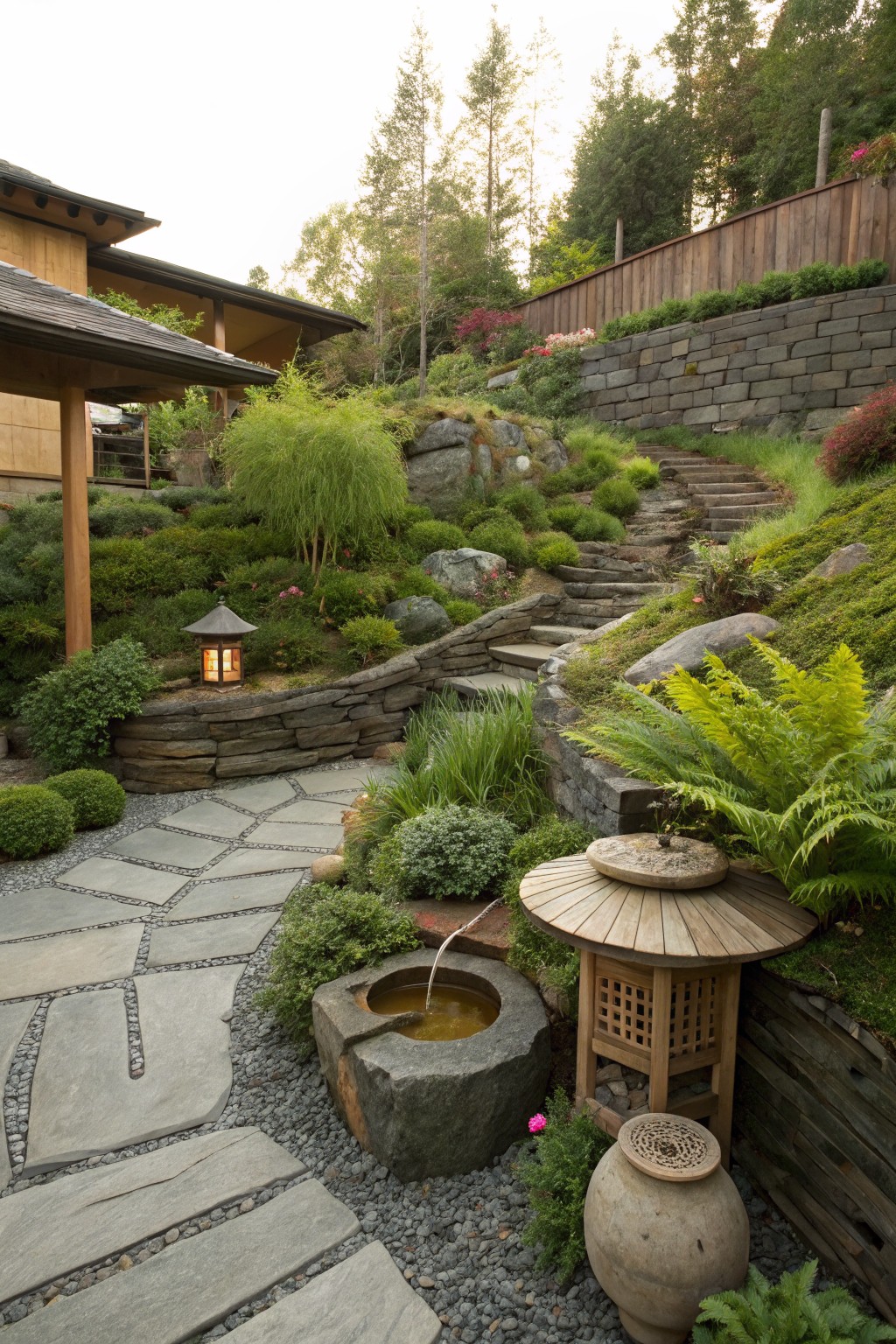
One smart way to handle a steep hillside is terracing it with natural stone walls. These walls hold back soil and create flat planting areas or paths where there were none before. They work well because the irregular stones blend right into the landscape, and plants tucked into the crevices help stabilize everything. In this setup, you see how the walls step down the slope, making the yard feel organized instead of wild.
This approach suits wooded lots or properties with natural slopes, especially where erosion is a real problem after rain. Start with dry-stacked walls if you want low maintenance, no mortar needed. Just make sure to plan for good drainage behind the stones, and add gravel paths between levels to direct water away. It turns a tricky spot into something walkable and pretty.
Terraced Stone Walls for Sloping Yards
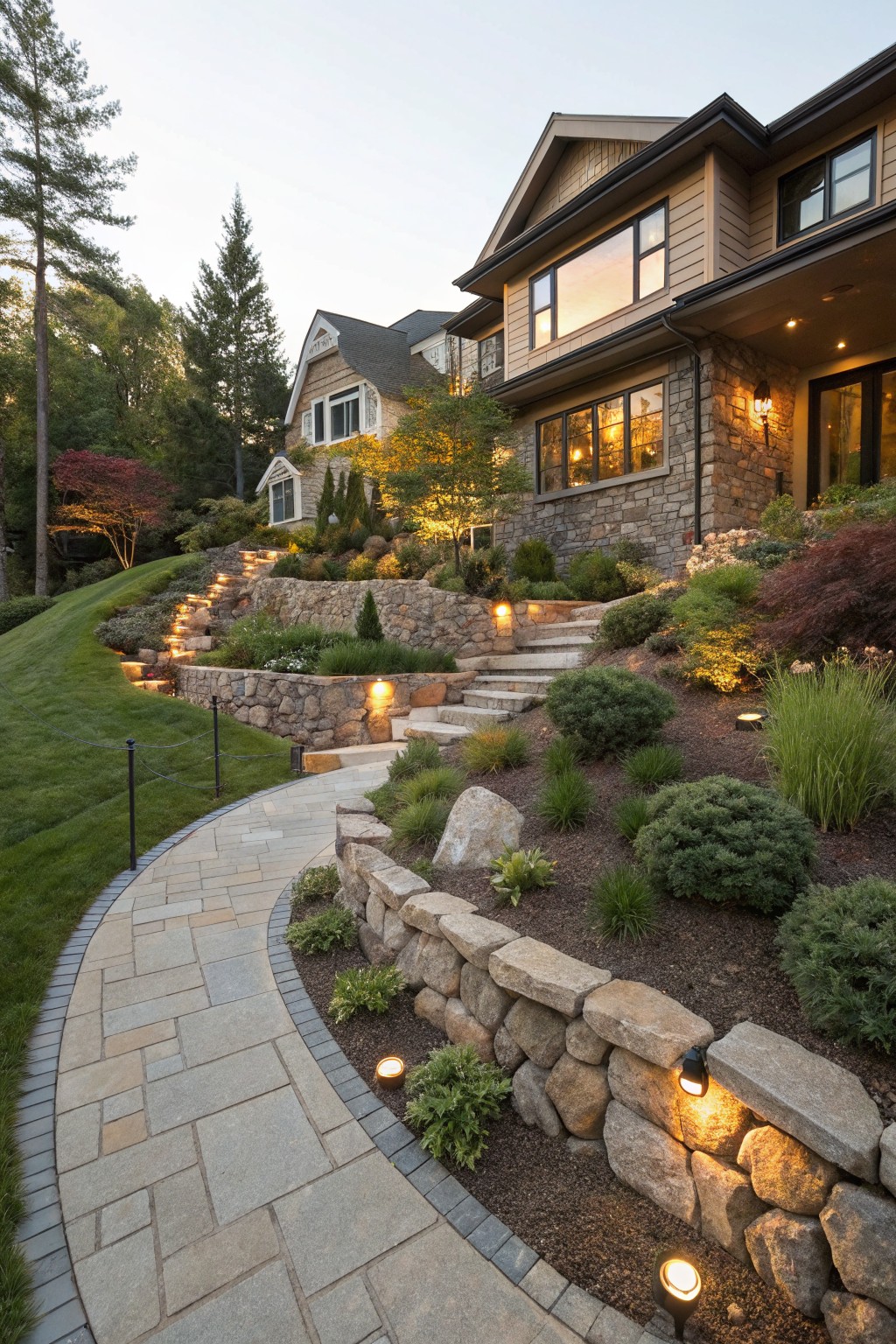
One smart way to handle a steep slope is terraced stone walls. They break up the hill into flat levels that hold soil in place and stop erosion. In this yard, the walls use rugged local rocks stacked without mortar for a natural fit. A simple path winds through, and plants tuck into the pockets, so it all looks settled and easy to walk.
These walls work best on hillsides with some sun and good drainage. Pick stones that match your area to keep costs down and the style right. Build them sturdy, about two feet high per level, and add steps where needed. It’s practical for homes backed up to woods or with uneven lots… just check local codes first.
Stepping Stone Path Over a Sloped Stream
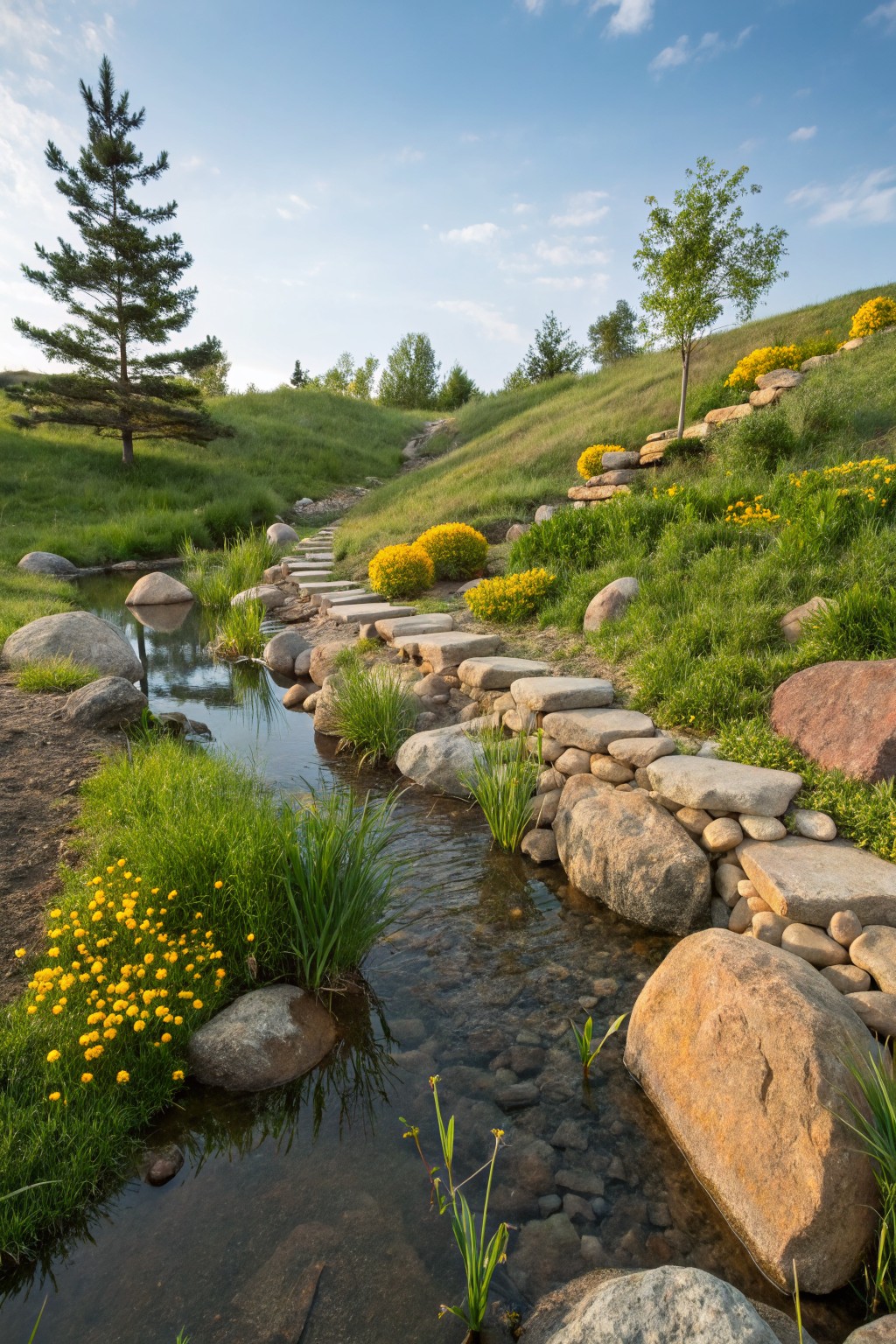
One simple way to handle water on a hillside is a flat stone path that steps right across the stream. Large boulders line the edges and help hold back soil erosion while the water flows between them. Grasses and low flowers fill in around the rocks. It keeps the slope stable without much upkeep.
This setup works best on gentle slopes where runoff needs a natural guide. Place the stones flat and firm so they don’t shift with rain. It fits casual gardens or yards with native plants. Just make sure the stream isn’t too fast or deep or the path could get tricky to cross.
Stone Retaining Walls on Steep Slopes
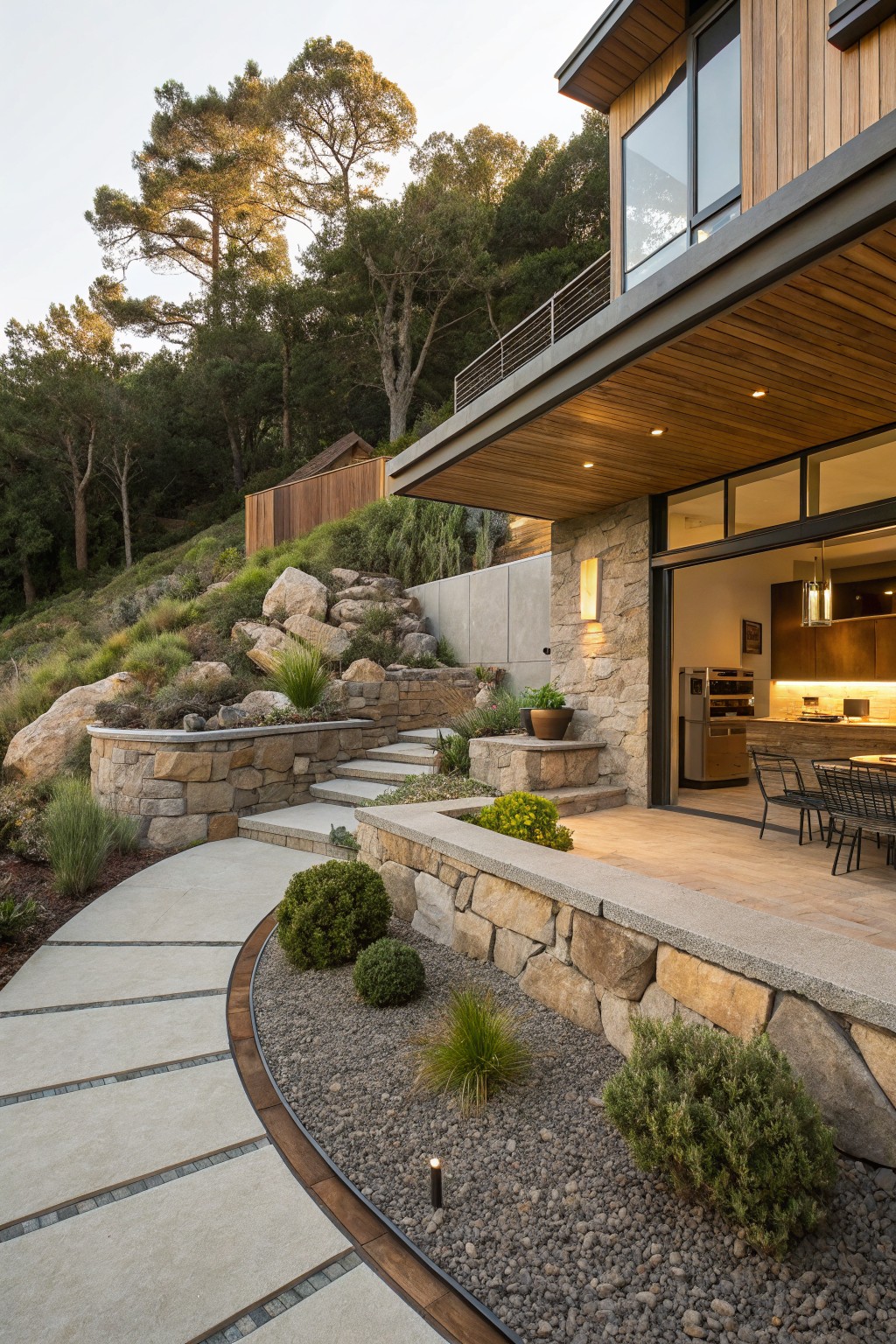
One solid way to handle erosion on a hillside is stacking natural stone into retaining walls like these. Large boulders form the base, with smaller rocks mortared or dry-stacked above. Plants tuck right into the gaps, and gravel mulch fills beds alongside. It keeps soil in place during rains and gives a rugged, low-maintenance look that fits right into the landscape.
These walls work best where you need to reach a patio or entry without slipping around. Build them terraced with steps cut in, then add a simple path. Suits modern homes on California hills or anywhere slopes meet the house. Just make sure the base is deep enough for your soil type, or it might shift over time.
Terraced Stone Walls for Hillside Gardens
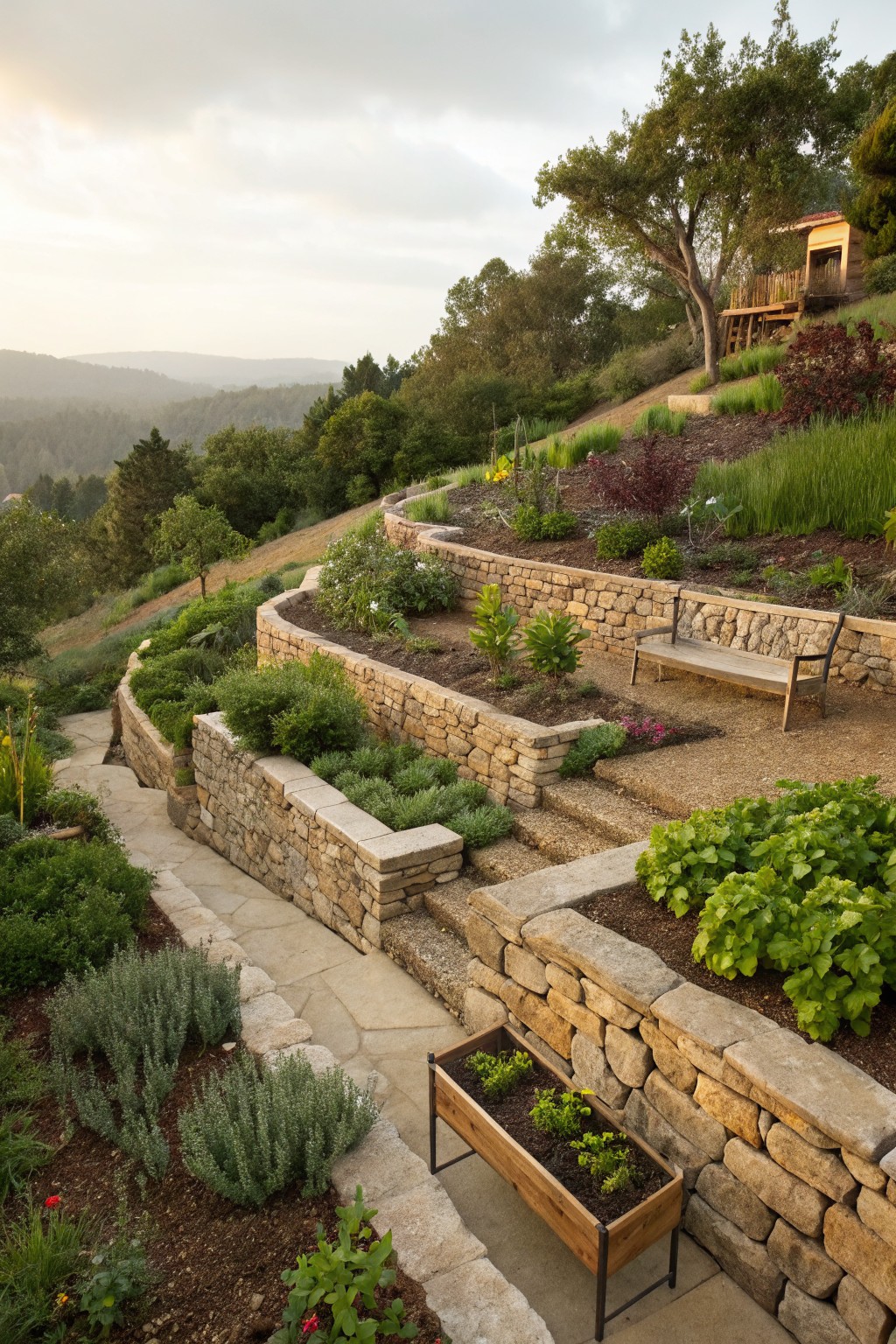
Slopes can be tough to work with. They wash out in rain and leave little room for plants or paths. Terraced stone walls fix that by carving flat levels into the hill. These dry-stacked walls hold back soil, stop erosion, and turn the whole area into usable garden space. You see benches tucked along the edges and plants spilling over the top, making it feel natural and settled.
This works best on moderate to steep backyard hills, especially in wooded spots. Pick stone that matches your local area, like fieldstone or limestone, to keep costs down and the look right. Fill the beds with tough, low-water plants like lavender or sedum that root into the cracks. Add simple stone steps for access. Just make sure the walls are sturdy enough for your slope’s height… no skimping on the base layer.
Wooden Steps Nestled in Rock Walls
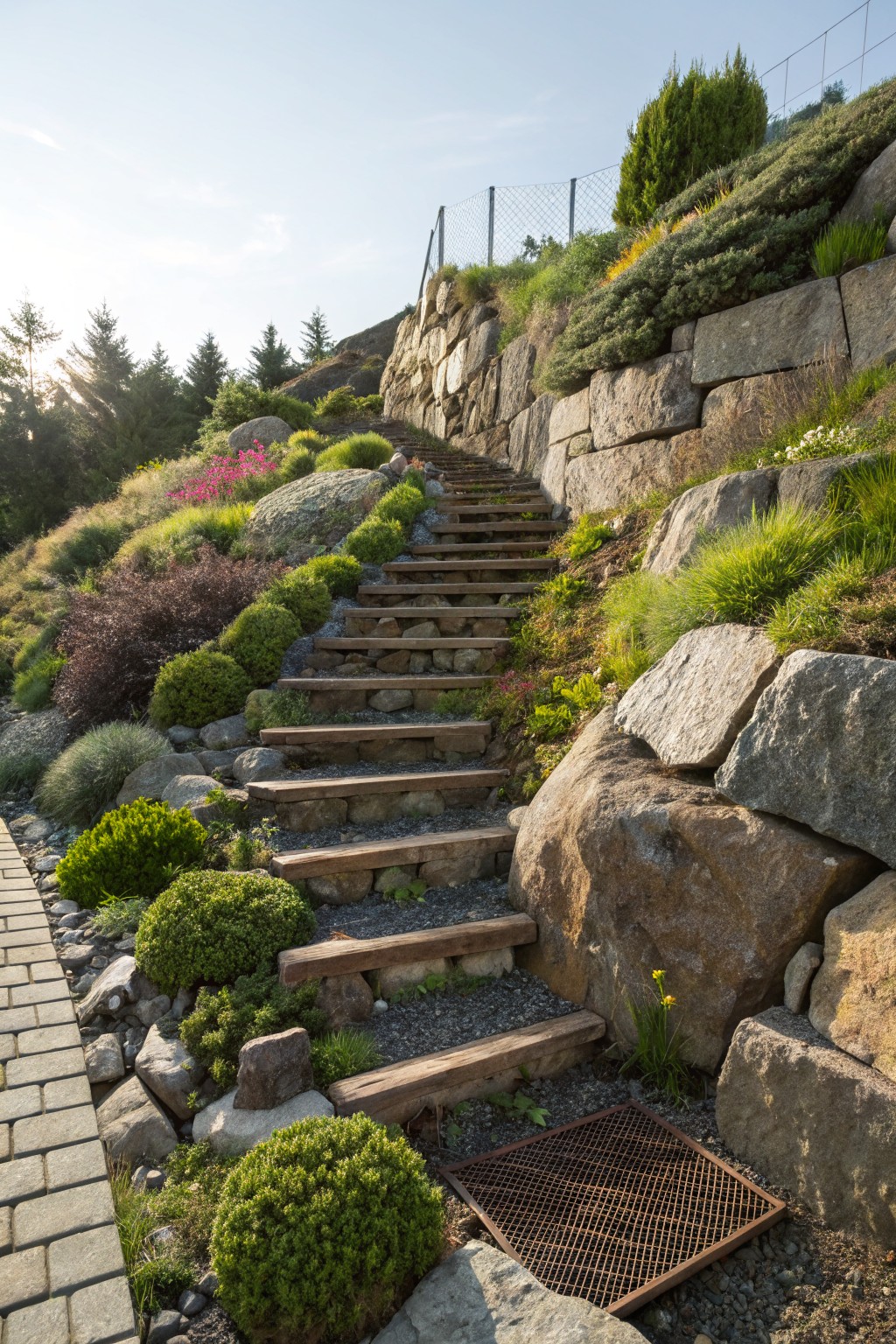
One smart way to handle a steep slope is with wooden steps built right into natural stone retaining walls. You see the treads made from rough wood slabs, set between big boulders and gravel fill. Plants like grasses and low shrubs tuck in around them, holding the soil steady while the whole path feels like part of the hill. It’s practical for getting up and down without slipping, and it beats pouring concrete that looks out of place.
Try this on hillsides near a house entry or garden spot where erosion is a problem. It fits homes in wooded or rural areas best, especially with native plants that don’t need much water. Just make sure the wood is treated for weather, and check drainage so water doesn’t pool on the steps.
Rock Terraces for Sloped Hillsides
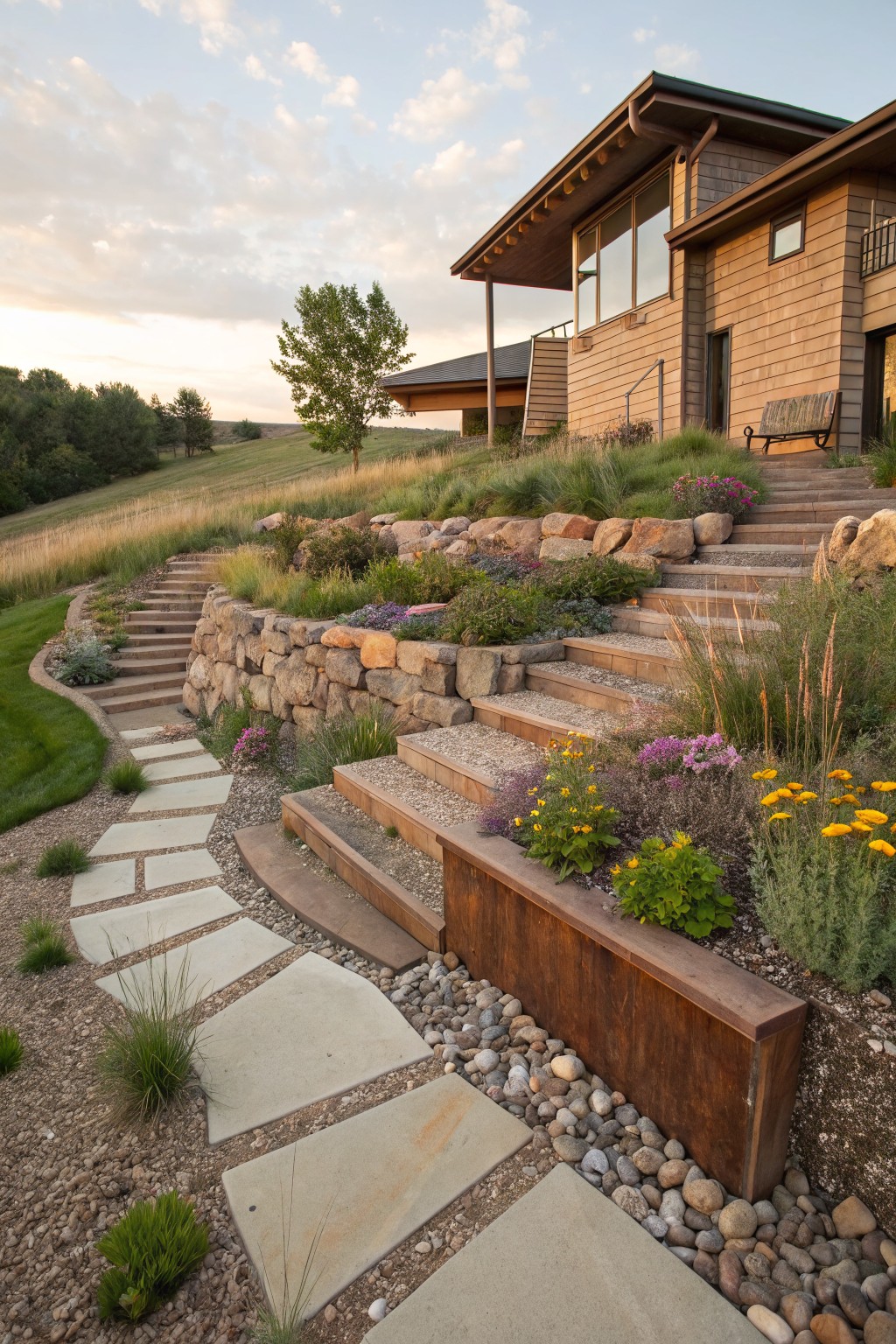
Slopes like this one wash away easy in heavy rain. Stacking big boulders into terraces fixes that. They lock the soil down and make level spots for plants to root in. You see it here with rough stone walls holding back the hill, letting grasses and flowers fill the gaps without much upkeep.
These setups suit homes on hills where you need paths up to the house. Use local rocks so it blends with the land. Add concrete or wood steps between terraces for walking. Keep plantings low-water natives. Watch for loose spots after big storms and reset any shifted stones.
Natural Stone Steps on Slopes
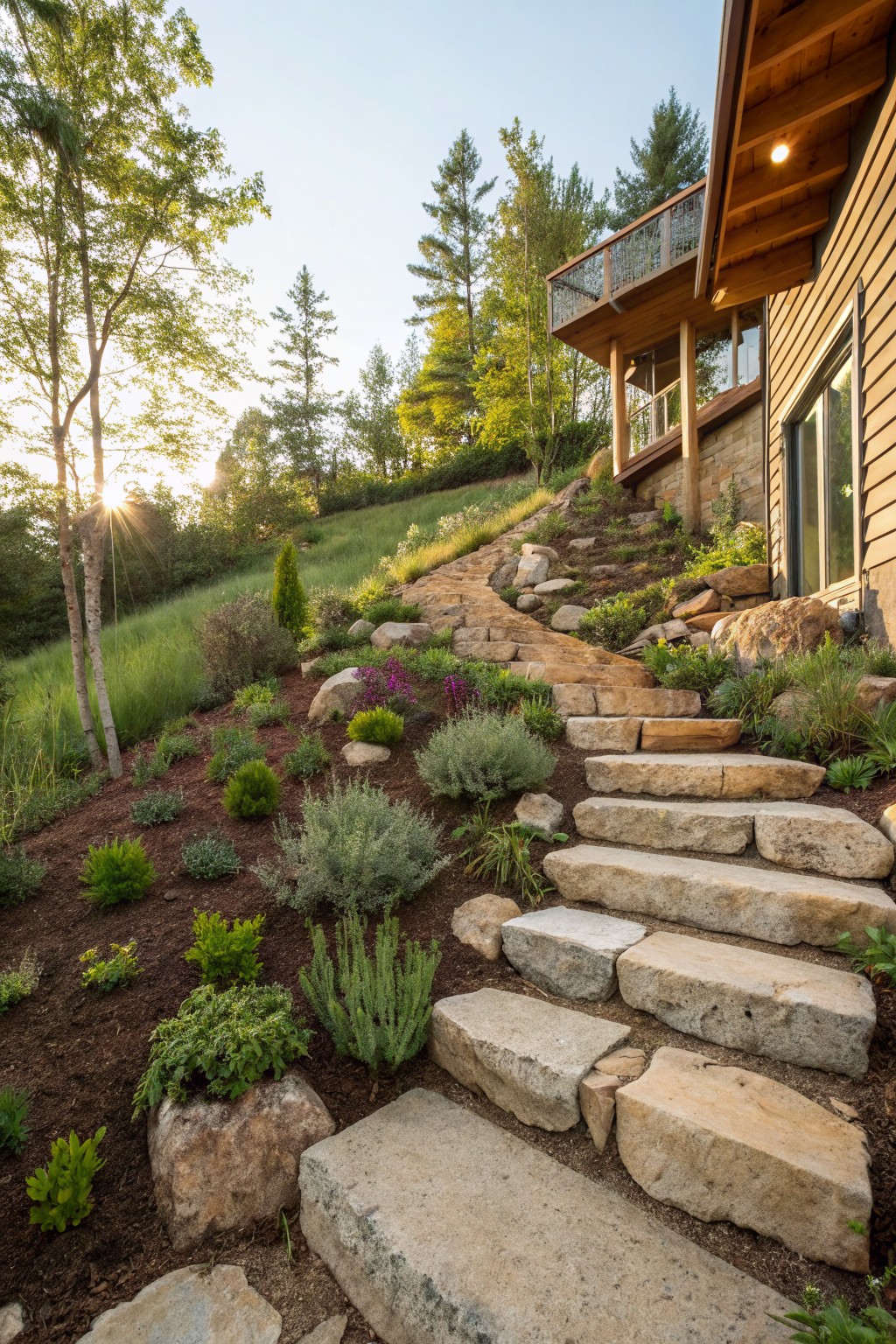
One solid way to handle a steep hillside is with big irregular stone steps that wind their way up. These fieldstone slabs fit right into the slope, with rocks and low plants tucked around the edges. It keeps soil from washing away during rain, and the path gives easy access to the house above without looking forced.
You can pull this off in most yard slopes, especially where you need to connect ground level to a deck or entry. Pick stones from nearby quarries to match your area, then add drought-tough shrubs like lavender or grasses. Just make sure steps are wide enough to walk comfortably… and level them well so no tripping.
Terraced Stone Walls for Steep Slopes
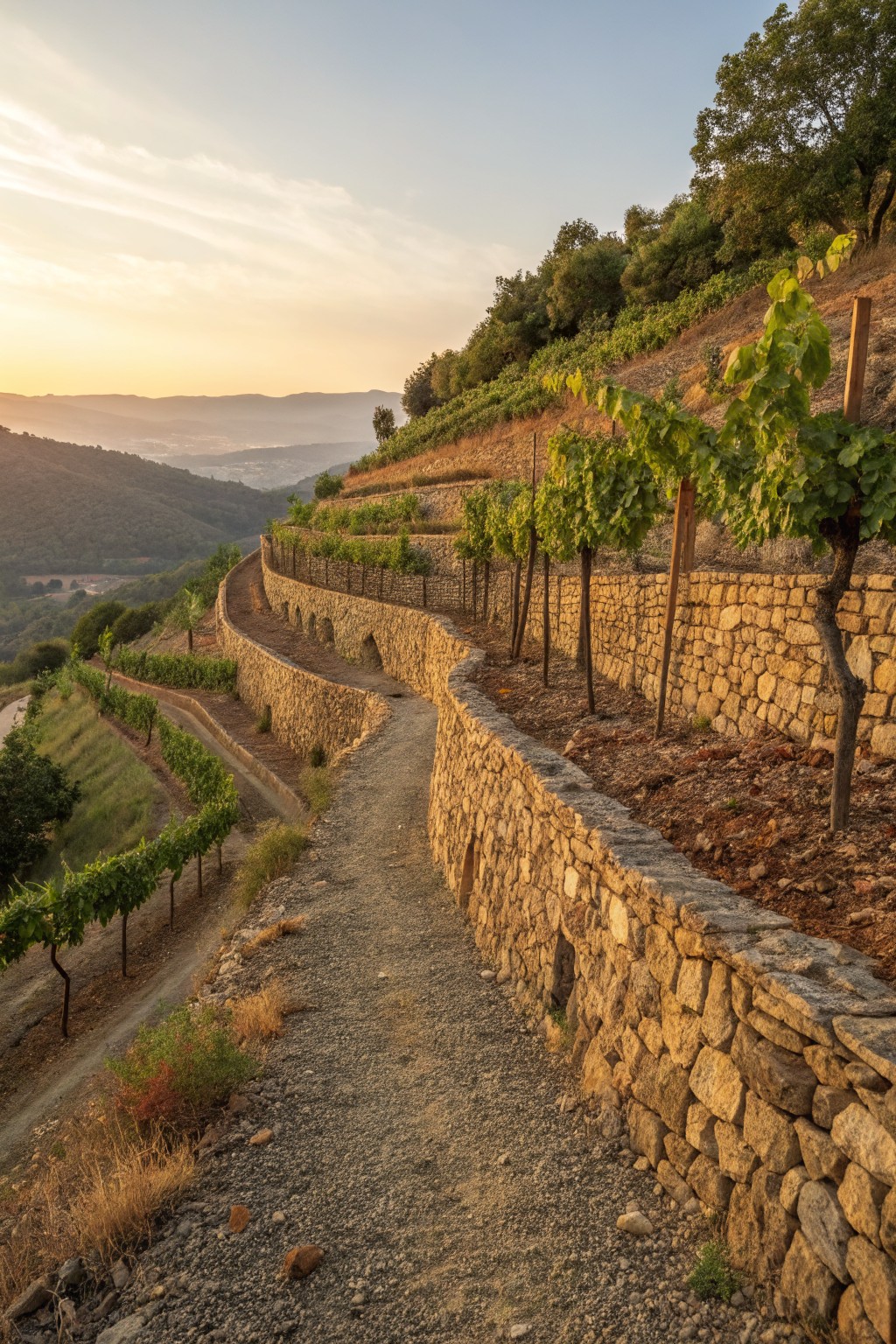
One reliable way to handle erosion on hillsides is building terraces with dry-stacked stone walls. These walls create level planting areas on otherwise too-steep ground. You see it here with rows of vines tucked neatly behind the low walls. The stones hold soil in place through rain and runoff. No mortar needed. Just good stacking.
This setup works best on rural properties or anywhere with a noticeable slope. It’s great for gardens, orchards, or even veggie patches. Start with local stone for a natural fit. Make sure walls are sturdy at the base and drain well. Pair with deep-rooted plants like these vines to lock everything down even more.
Winding Stone Steps on a Sloped Hillside
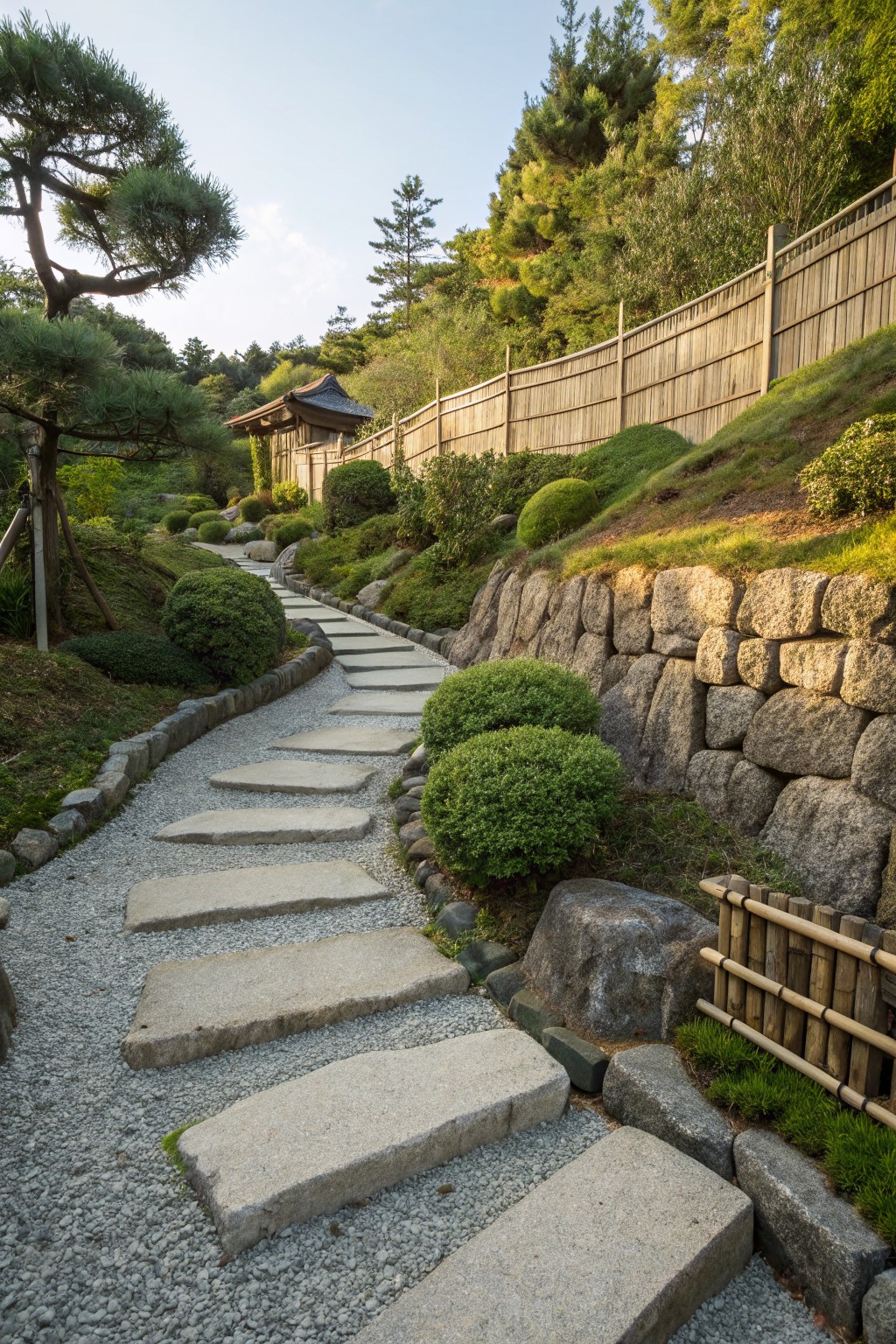
One smart way to handle a steep slope is with a path of large irregular stone slabs set into gravel. The stones guide foot traffic while the gravel lets water drain through. Stacked rock walls along the edge hold back soil, and low shrubs tucked in add extra stability. It keeps erosion in check without looking forced.
This works best in backyards with a natural feel, like wooded lots or Asian-style gardens. Pick stones from a local quarry to blend in, and keep the path wide enough for two people. Watch the spacing between steps so it’s not too tiring to climb. Simple upkeep too, just rake the gravel now and then.
Wooden Boardwalk with Boulders on Slopes
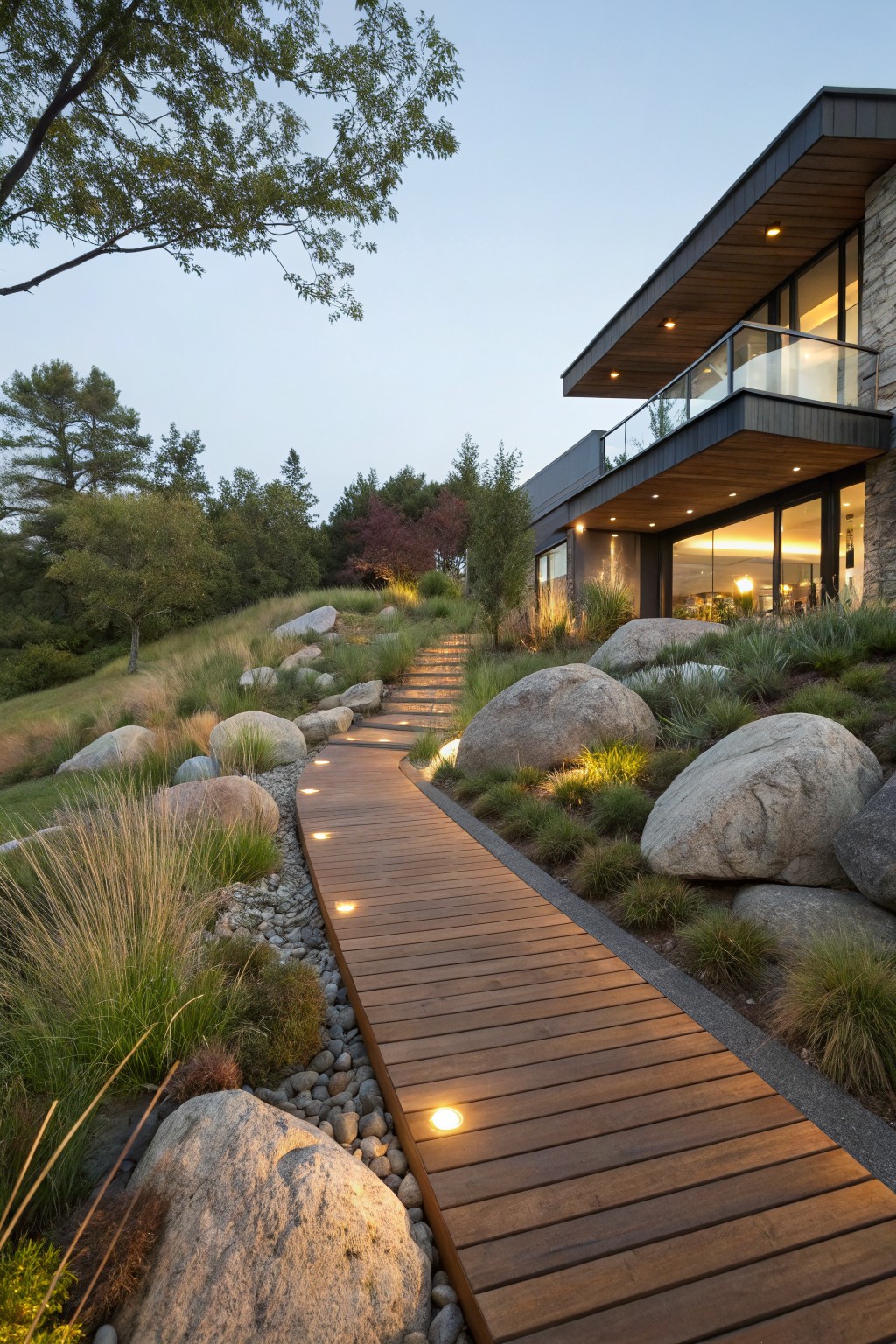
A wooden boardwalk path winding through big boulders turns a tricky hillside into something walkable and stable. The rocks hold the soil back while the wide planks give sure footing, and those low lights along the edges make it safe after dark. Grasses fill in the gaps without taking over.
This idea fits sloped yards near a house entry or patio, especially where erosion is a worry. Pick rot-resistant wood and place boulders to follow the natural grade. It keeps things low fuss, good for homes with a mix of stone and wood looks. Watch the drainage so water doesn’t pool.
Frequently Asked Questions
Q: How deep should I bury the bigger rocks at the base? A: Bury them about one-third into the soil so they lock in place and fight gravity. This anchors your whole setup against heavy rains. Skip this and you’ll chase rocks downhill next storm.
Q: Do rocks stop weeds from popping up between them? A: They cut down weeds a lot but don’t kill them forever. Rake out any sprouts early and refresh the top layer yearly. And toss in some gravel on top for extra smothering power.
Q: Can I handle a steep slope solo or need help? A: Small slopes you manage alone with a wheelbarrow and gloves. Steeper ones call for a buddy to avoid slips…
Q: What’s a quick fix if my rocks shift after rain? A: Wedge smaller stones behind the big ones to jam them tight. Water settles everything so check after the next downpour. That resets your erosion shield fast.
