

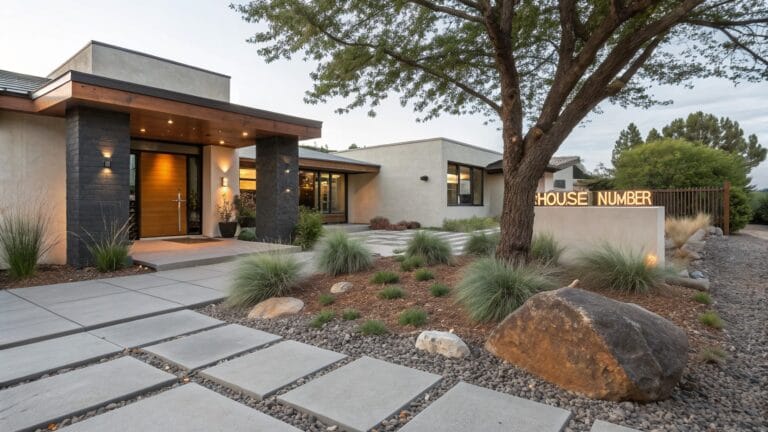
I’ve reshaped parts of my yard with xeriscape rocks over the past few years to save water without losing that grounded feel outdoors.
What draws the eye first in these setups is usually the way rocks define pathways and edges, guiding movement through the layout naturally.
They hold up well over time too, letting native plants fill in around them without much fuss from me.
I tested a simple mound of mixed gravel and boulders along my walkway last spring, and it made the whole front bed read as one cohesive piece.
Some of the approaches here adapt easily to different yard sizes, worth sketching out before you buy stones.
Winding Stepping Stone Path in Gravel
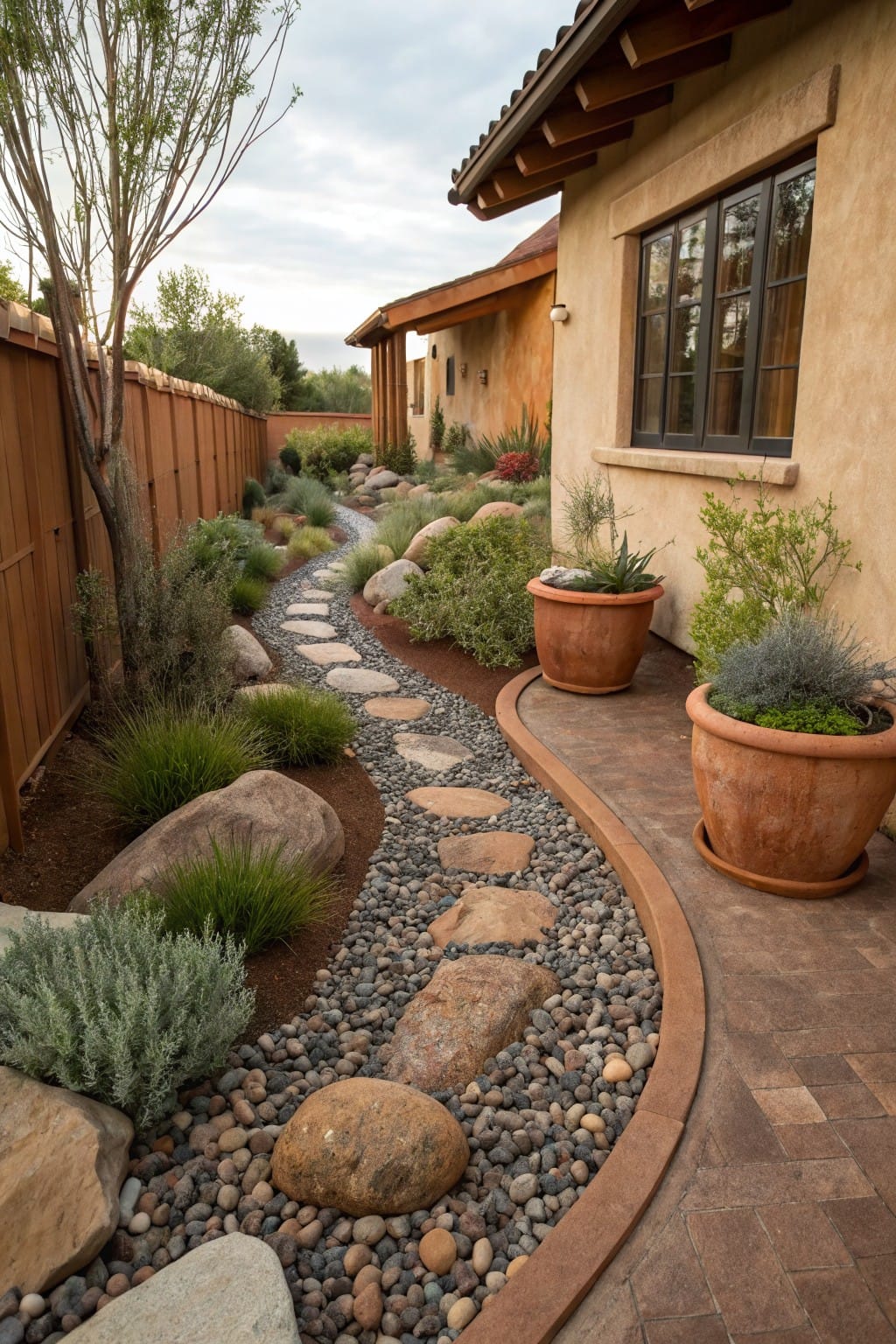
One simple way to move through a xeriscape yard is a winding path of flat stepping stones set into gravel beds. It gives a natural feel without needing grass or constant watering. Boulders along the edges add weight and keep things from looking too bare, while low plants fill in softly.
This setup works great in narrow side yards or along house walls where space is tight. Space the stones about two feet apart so you step comfortably, and use gravel that matches your local rocks for a pulled-together look. It suits sunny, dry spots best. Just make sure the edging holds the gravel in place over time.
Terraced Pebble Beds on Slopes
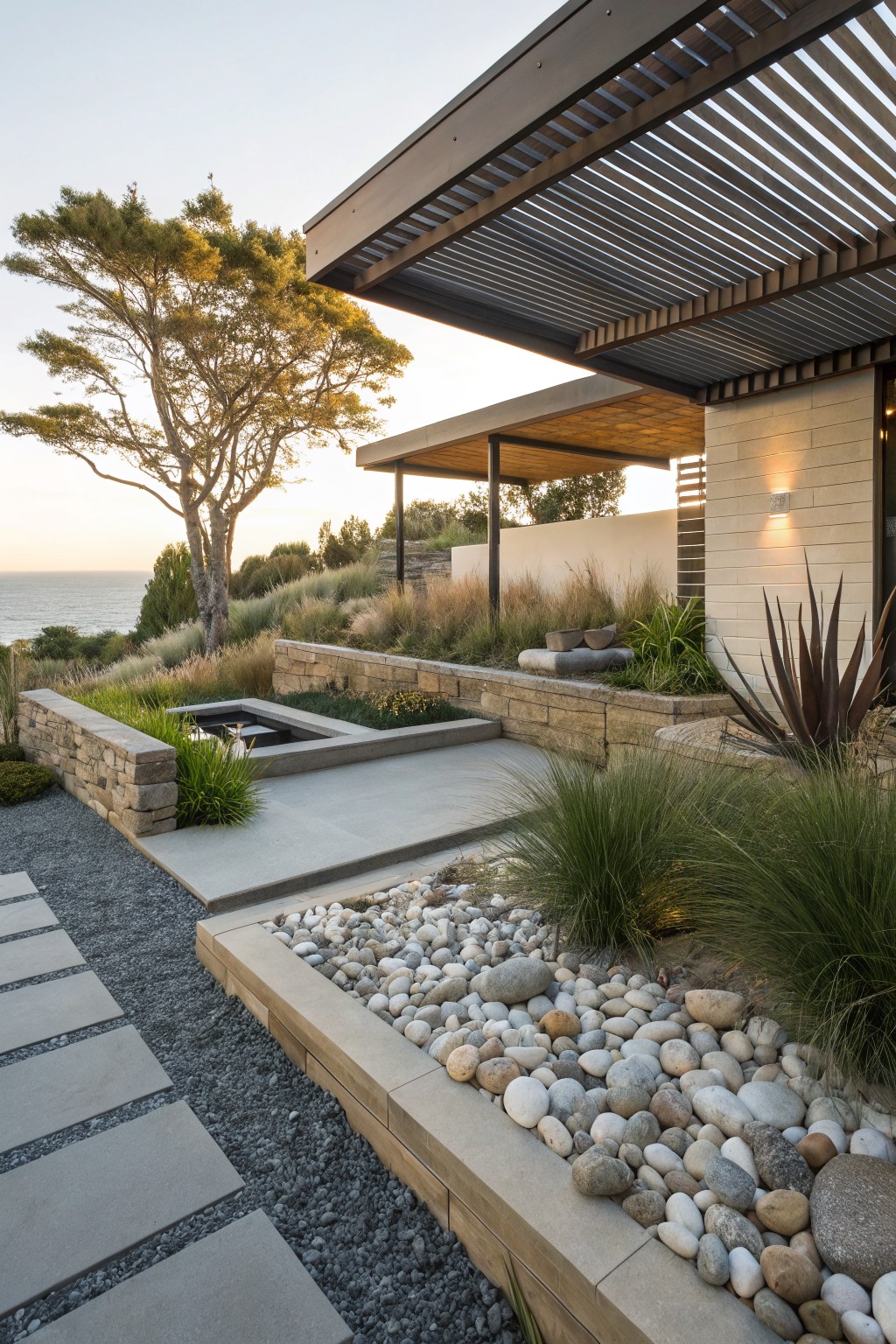
One smart way to handle a sloped yard without wasting water is terraced beds made from natural stone walls filled with smooth white pebbles. You see tall grasses and a few agaves poking up through the rocks here, which keeps things low-maintenance and gives a clean, layered look. It ties right into the house without overpowering it, and the pebbles let water drain fast while holding back soil.
This setup works best in dry spots like coastal hills or anywhere erosion is an issue. Stack local stone for the walls to match your home’s style, then layer in gravel paths between beds. Go easy on plants, maybe just deer grass or succulents, so it stays drought-tough. Just make sure the stones are set deep enough to hold up over time.
Rustic Gravel and Stone Entry Path
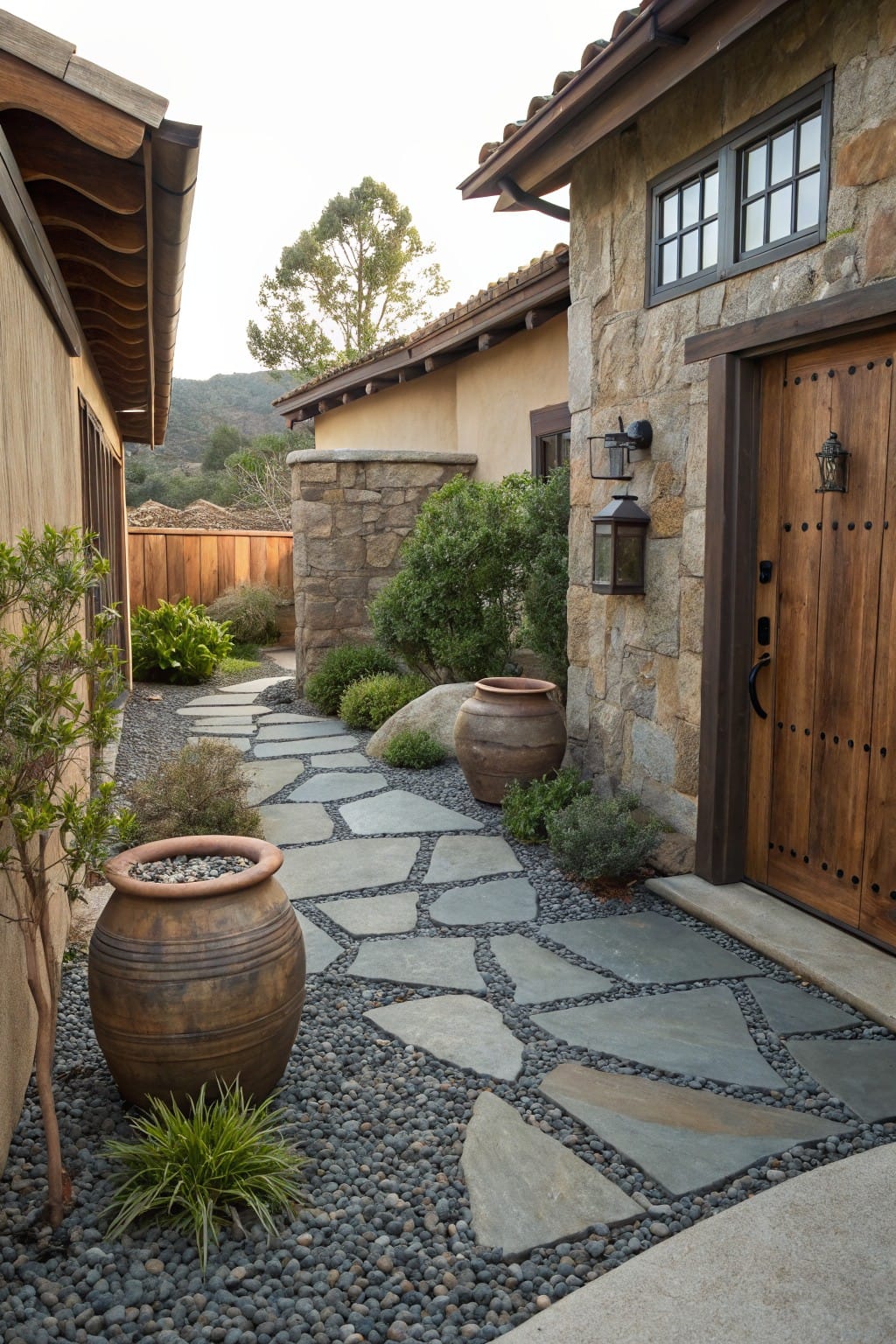
A simple path like this uses irregular flagstone slabs set loosely into smooth black gravel. It winds gently toward the door, keeping things low-water and easy to walk. Large terracotta pots sit at the edges, adding some height without needing much care. The gravel handles drainage and cuts weeds, while the stones stay put underfoot.
This works great for side entries or narrow yards in dry spots. Pair it with tough shrubs and boulders for that natural look. Go for gravel at least three inches deep to avoid shifting, and choose stones that match your home’s stonework if you can.
Boulder-Framed Flagstone Steps
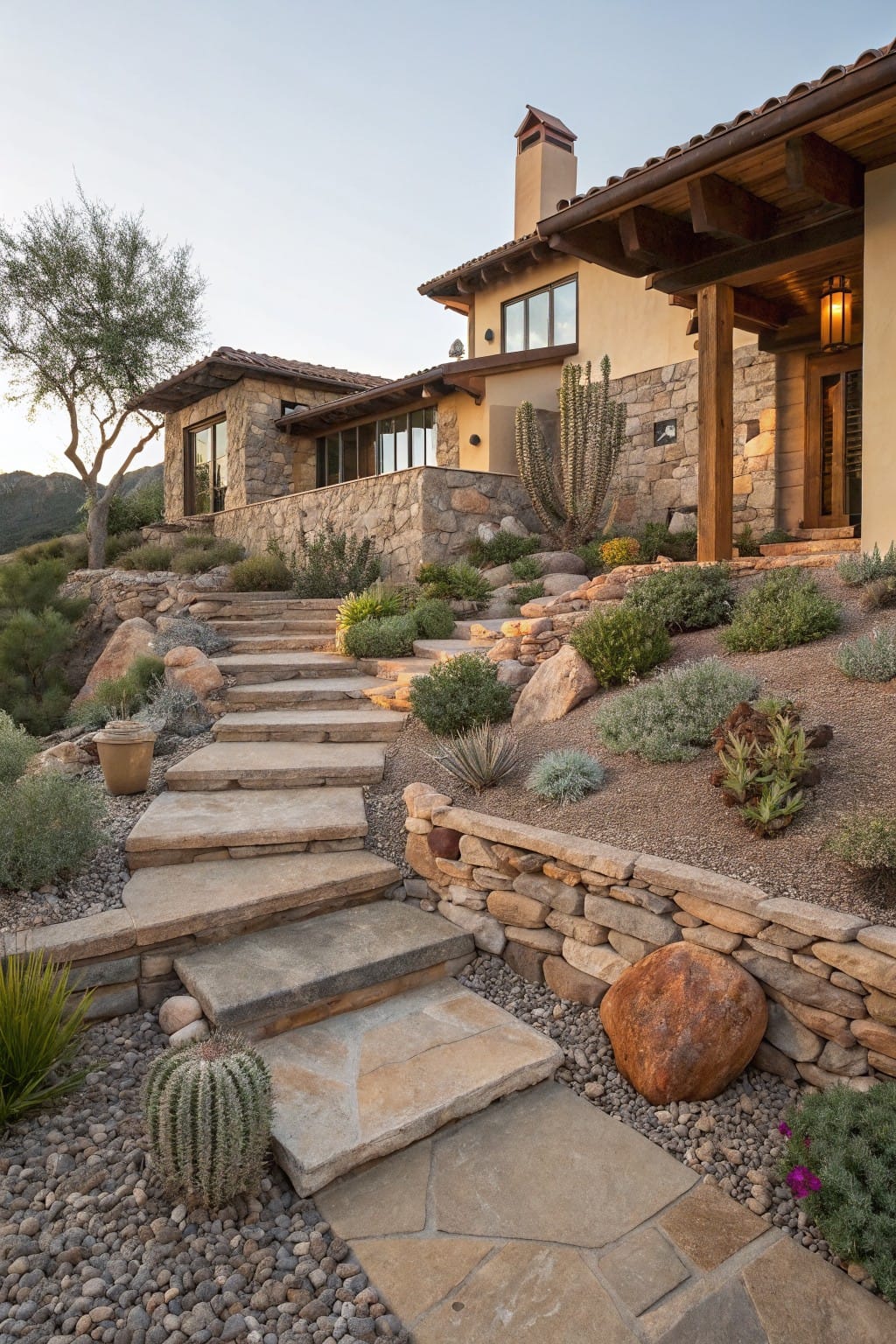
One simple way to handle a sloped entry in dry areas is with wide flagstone steps edged by big boulders. This setup looks like it grew right out of the hill. The rough stones fit the desert rocks around them. Add gravel between for drainage and low upkeep. A few tough plants like barrel cactus tuck in without much water.
These steps work best on hillsides where you need steady footing but want a natural feel. They’re good for homes with stone or stucco siding. Keep the boulders local if you can. It cuts costs and blends better. Just make sure the steps are wide enough to walk comfortably. Skip straight lines. The curves make it easier going up.
Stepping Stone Paths in Gravel Gardens
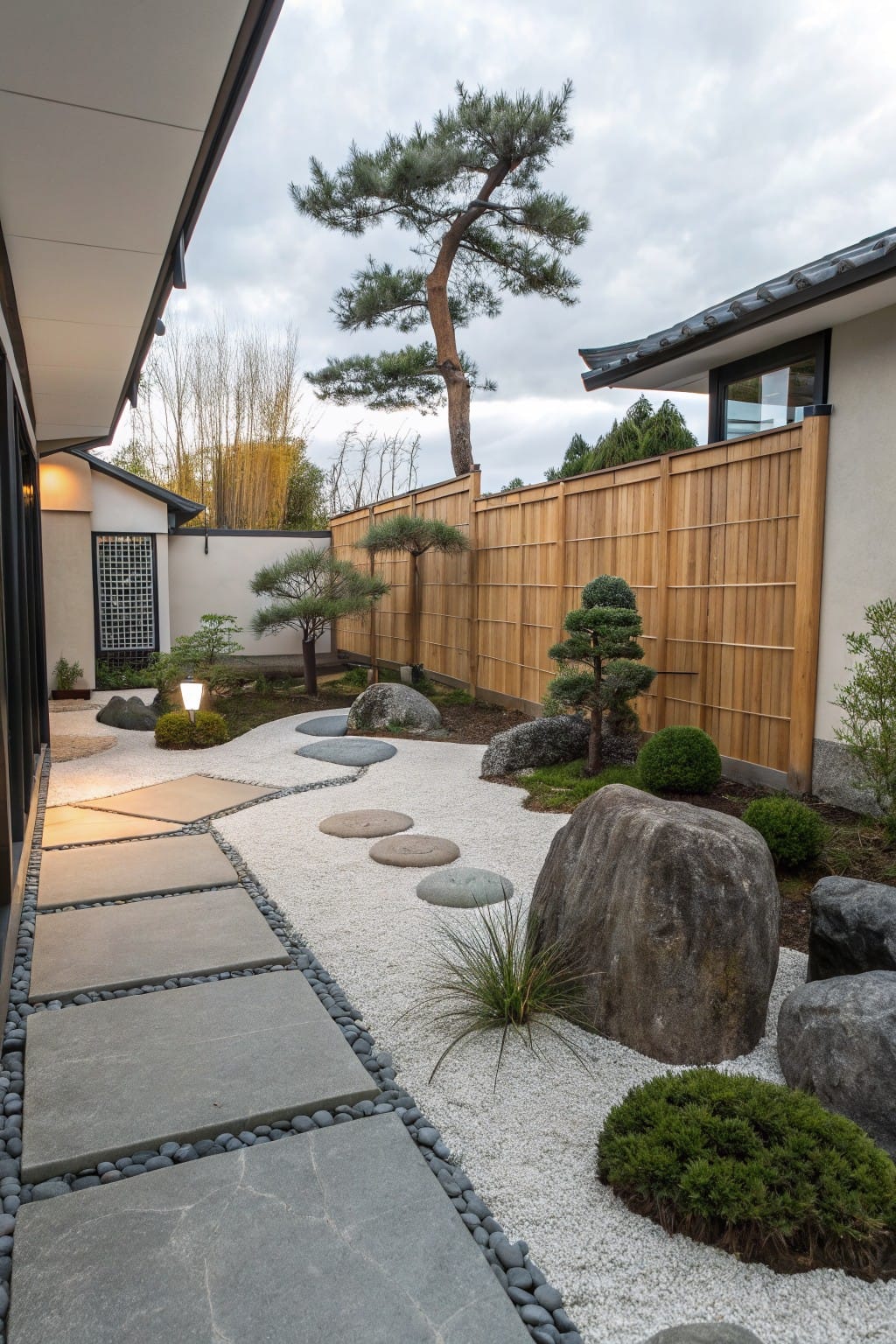
One straightforward way to handle a yard path without much grass or watering is to lay big flat stones right into white gravel. You see it here with those wide gray slabs stepping across raked pebbles, edged by rocks and low pines. It keeps things dry and simple. No mowing. Just a calm walk that fits xeriscape living.
Put this in a narrow side yard or courtyard where space is tight. Pick stones that match your local rock, maybe three to five inches thick so they stay put. Surround with gravel for drainage, add a few boulders for weight, and skip thirsty plants. Watch the gravel doesn’t wash away in heavy rain… top it up now and then.
Dark Gravel Beds with Succulents Poolside
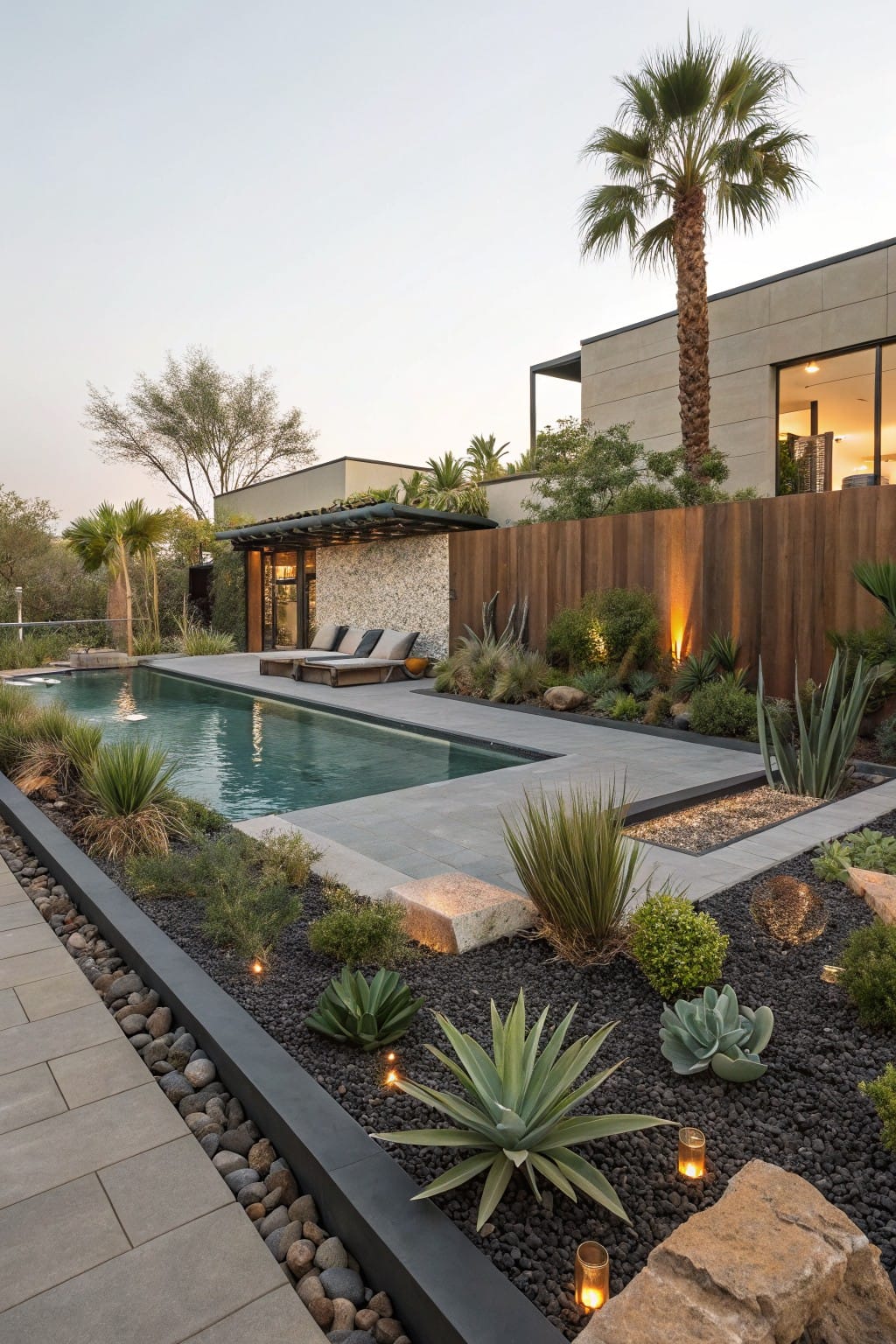
Black gravel makes a clean base for xeriscape beds around this pool. Filled with spiky agaves and softer succulents, it cuts down on watering needs while giving a strong texture contrast. The dark stones hold heat but stay simple to rake clean now and then.
Line the beds with low stone edging to match the pool deck. This works best in hot, dry spots near patios or seating areas. Skip thirsty grass here. Add a boulder or two for scale, and it ties right into modern house lines without much upkeep.
Stone Paver Path with Gravel Borders
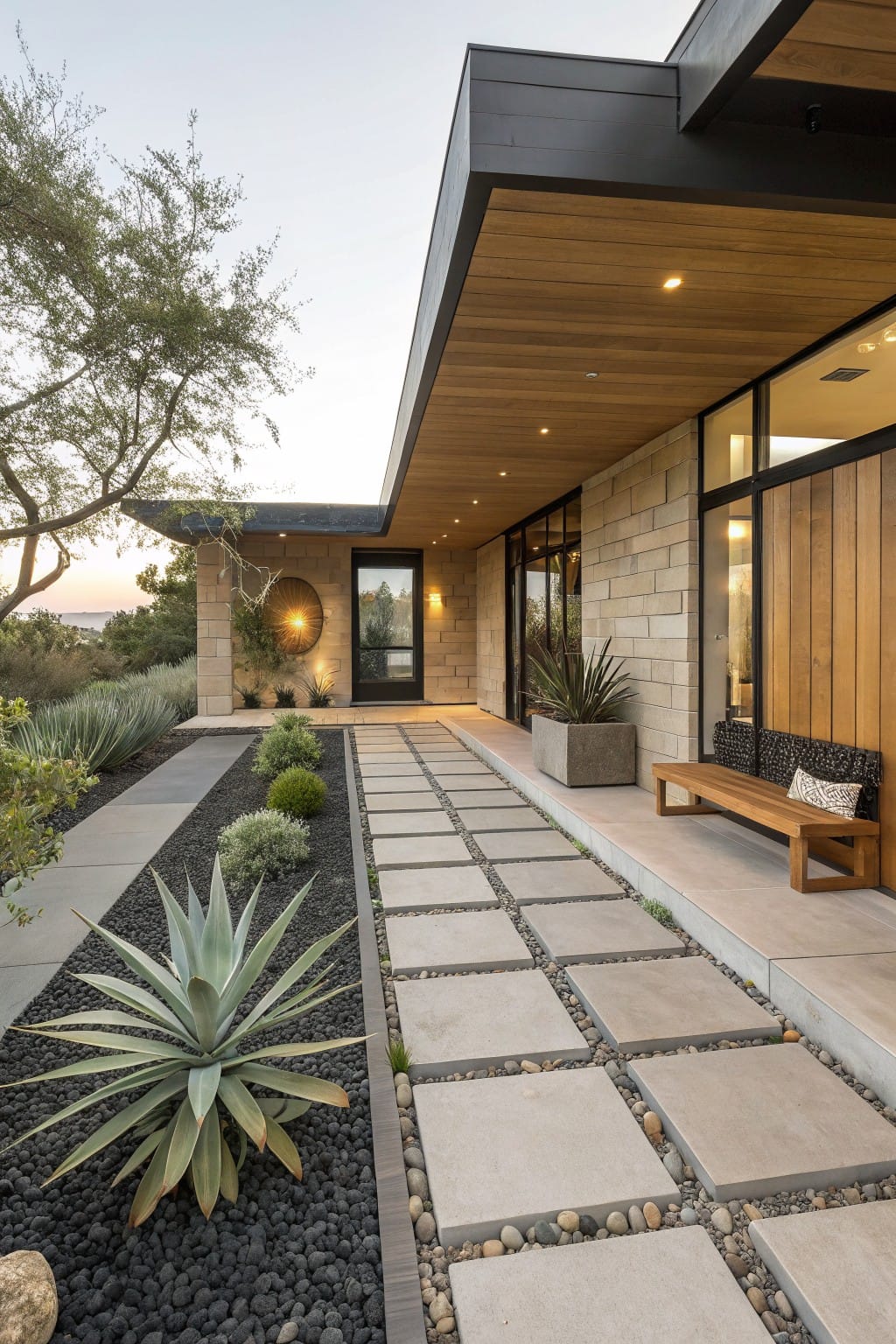
A straightforward walkway like this one uses large rectangular stone pavers set into a bed of smooth pebbles. Black gravel fills the borders, with tall agaves planted right along the edges. It keeps things simple and low-water, pulling your eye right to the front door without any grass to fuss over.
This setup fits front entries in dry climates or anywhere you want to cut back on watering. It suits modern houses with clean lines, or even ranch styles wanting a fresh look. Go for pavers that match your stonework, and keep the gravel deep enough so weeds stay away.
Winding Flagstone Path with Rock Borders
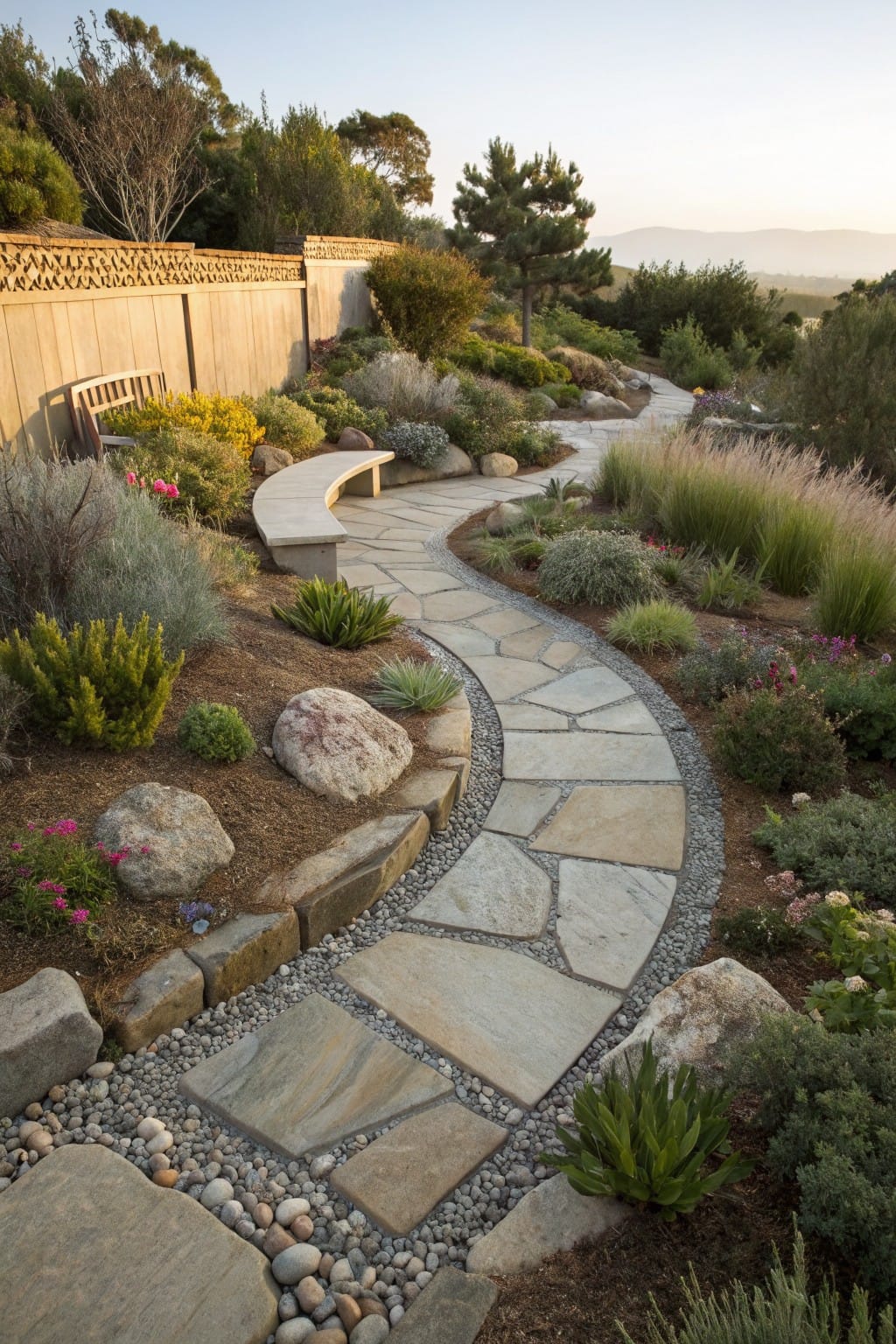
A simple winding path like this uses irregular flagstone slabs set right into gravel. Boulders line the edges, giving it a natural feel that fits dry gardens perfectly. It pulls the eye through the plants without any straight lines or extra watering needs.
This works best in backyards with some slope, where you want a clear route to a bench or gate. Use local stone for less cost, and keep plants tough like agave or grasses. Just space the big rocks so they don’t crowd the walking area.
Winding Paver Paths in Xeriscape Gardens
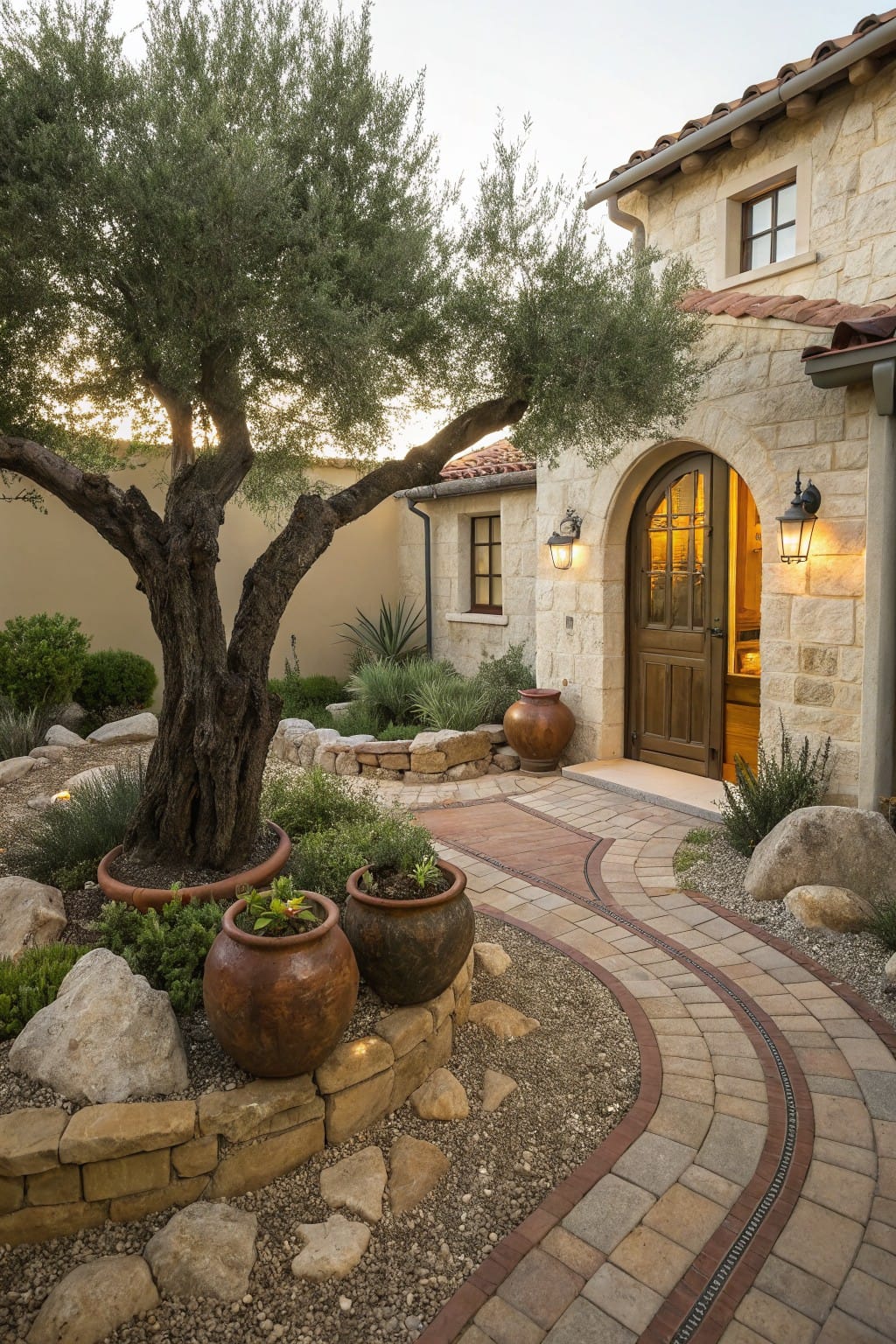
A curved path of terracotta pavers winding through gravel and rocks offers a practical way to guide visitors to your entry in a water-wise yard. It stands out because it feels natural, not rigid, and fits right with drought-tolerant plants like that olive tree nearby. No mowing needed, just occasional sweeping.
This setup suits stone houses in dry climates where you want low upkeep around the front. Lay the pavers loosely in gravel for drainage, edge with low stone walls, and add a few large pots for color. It keeps mud off shoes too… watch for weeds in the gravel though.
Gravel Walkway with Stepping Stones
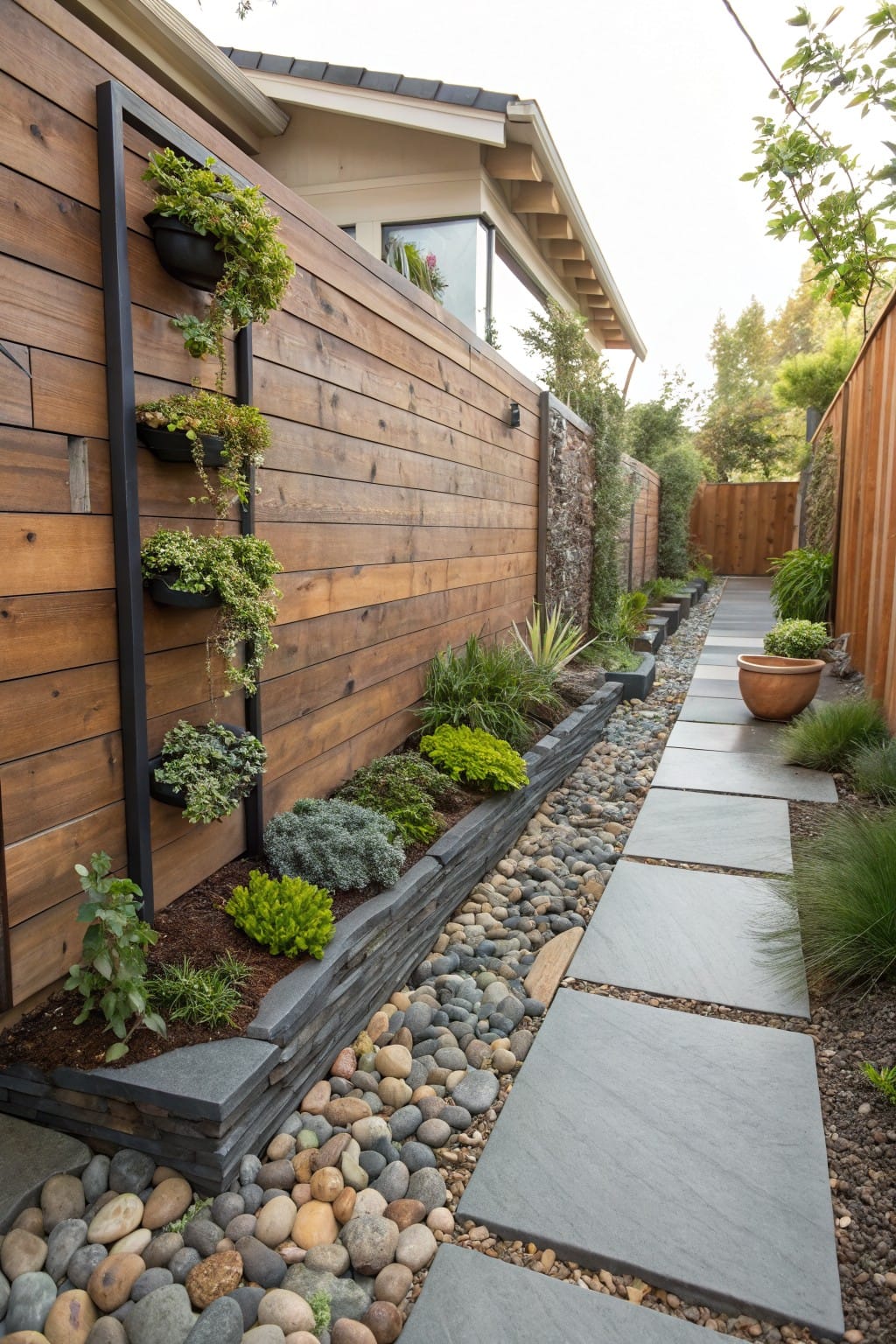
A gravel walkway like this keeps things simple in tight spaces. You lay down river rocks for the base, then set in wide slate slabs as steps. The black stone edging holds it all in place, and low plants tuck along the sides. It saves water since gravel drains fast and needs little upkeep. Plus, it gives a clean path without grass to mow.
This setup works great for side yards or access paths where you don’t want to waste room. It fits modern homes with wood fences or clean lines. Just make sure the gravel is deep enough for good drainage, or puddles might form after rain. Add a few tough succulents, and you’re set for low effort.
Terraced Stone Walls for Sloped Yards

One smart way to handle a hillside is building terraces with dry-stacked stone walls. They hold back soil, create flat planting beds, and let you add steps right into the design. Here, wide stone steps wind up through levels of lavender and gravel, turning a tough slope into easy garden space. Low-water plants like that lavender thrive in the setup, keeping things simple and dry.
This works best on any yard with a drop, especially where water runs off fast. Use local rock for that natural fit, mix in gravel for paths, and pick tough plants that don’t need much care. Just make sure the walls drain well so nothing shifts over time.
Winding Flagstone Path in Rock Gardens
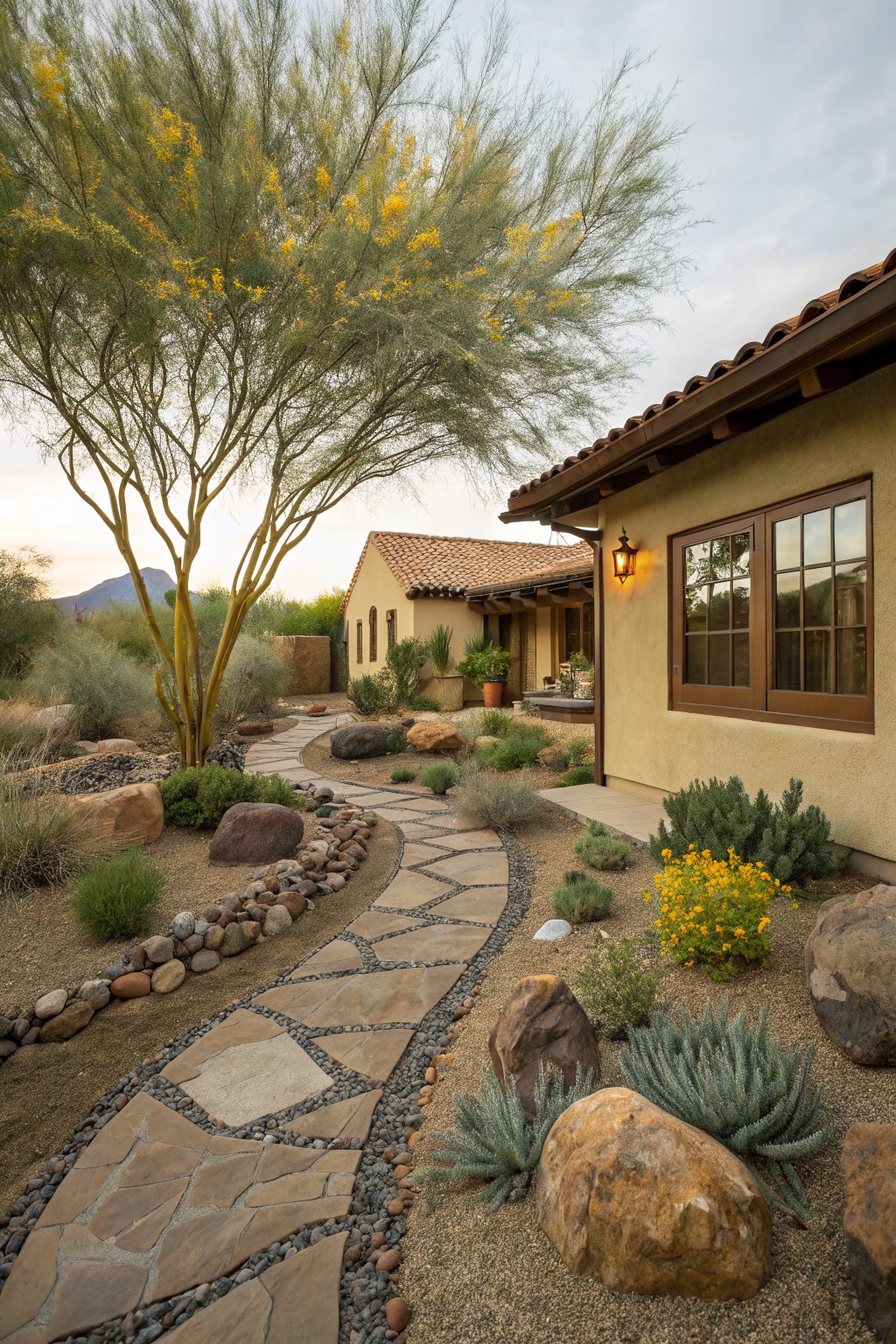
One simple way to guide people through a xeriscape yard is a winding flagstone path like this. The large, rough-cut stones fit right into the gravel and boulder edges, making the walk feel natural instead of forced. Low plants and rocks fill in around it, keeping everything low-water and easy to maintain.
You can use this in front yards or side paths where you want some direction without grass. It suits desert homes best, since the stones handle heat well and the gravel drains fast. Just space the flags unevenly for that casual look, and add a few bigger boulders to hold it all together.
Gravel Mulch for Xeriscape Beds
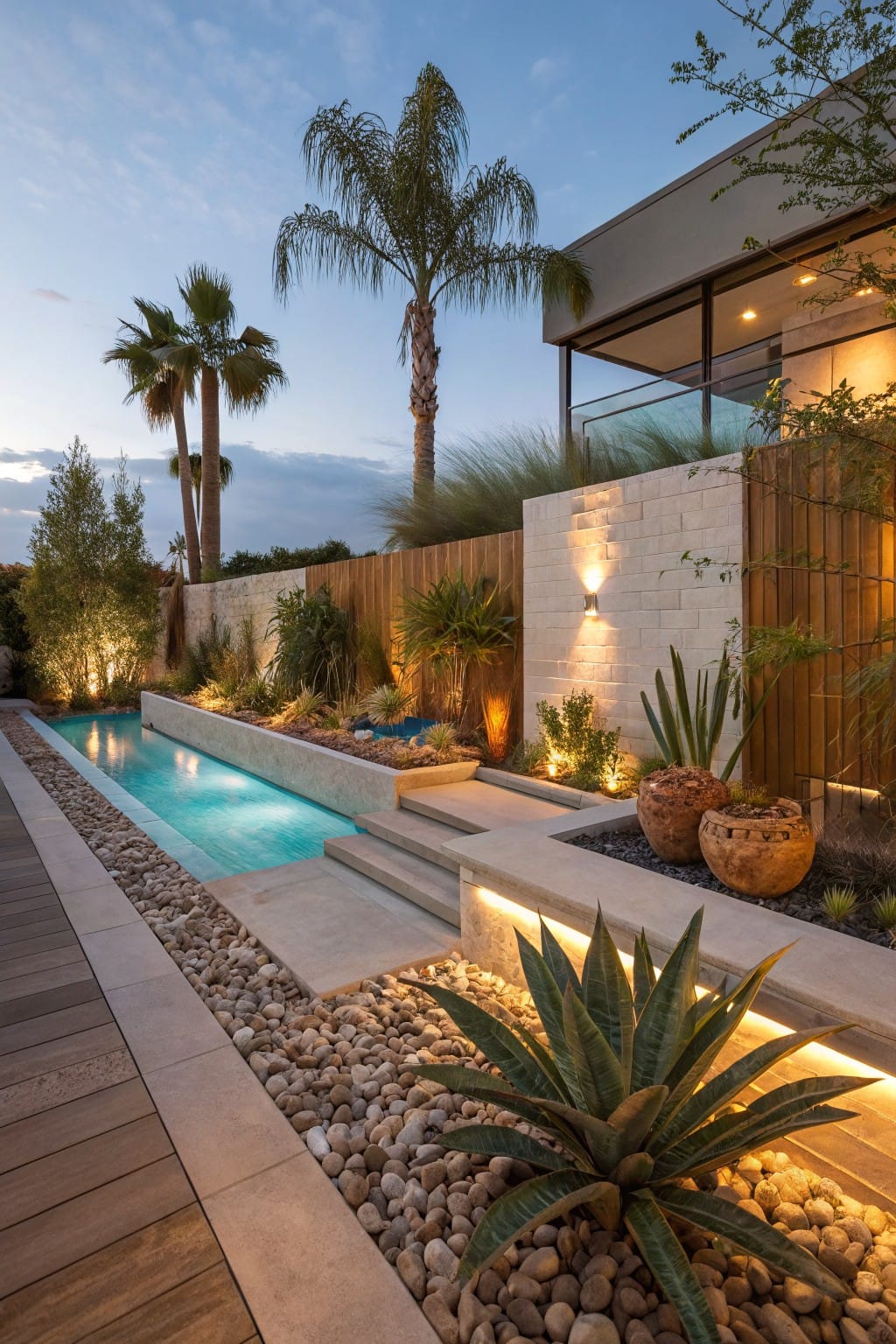
Gravel mulch like you see here turns simple plant beds into something practical and sharp-looking. It holds in moisture so your drought-tolerant plants like those big agaves don’t dry out as fast. And it keeps weeds down without much work, while the light pebbles make the green leaves pop against the clean edges.
This setup fits right along poolsides or yard borders in dry climates. Lay down a couple inches of smooth river rocks or gravel after edging your beds, then plant tough stuff like succulents or grasses. It suits modern homes with hard lines… just pick gravel that drains quick to avoid soggy spots.
Curved Gravel Path with Stone Edges
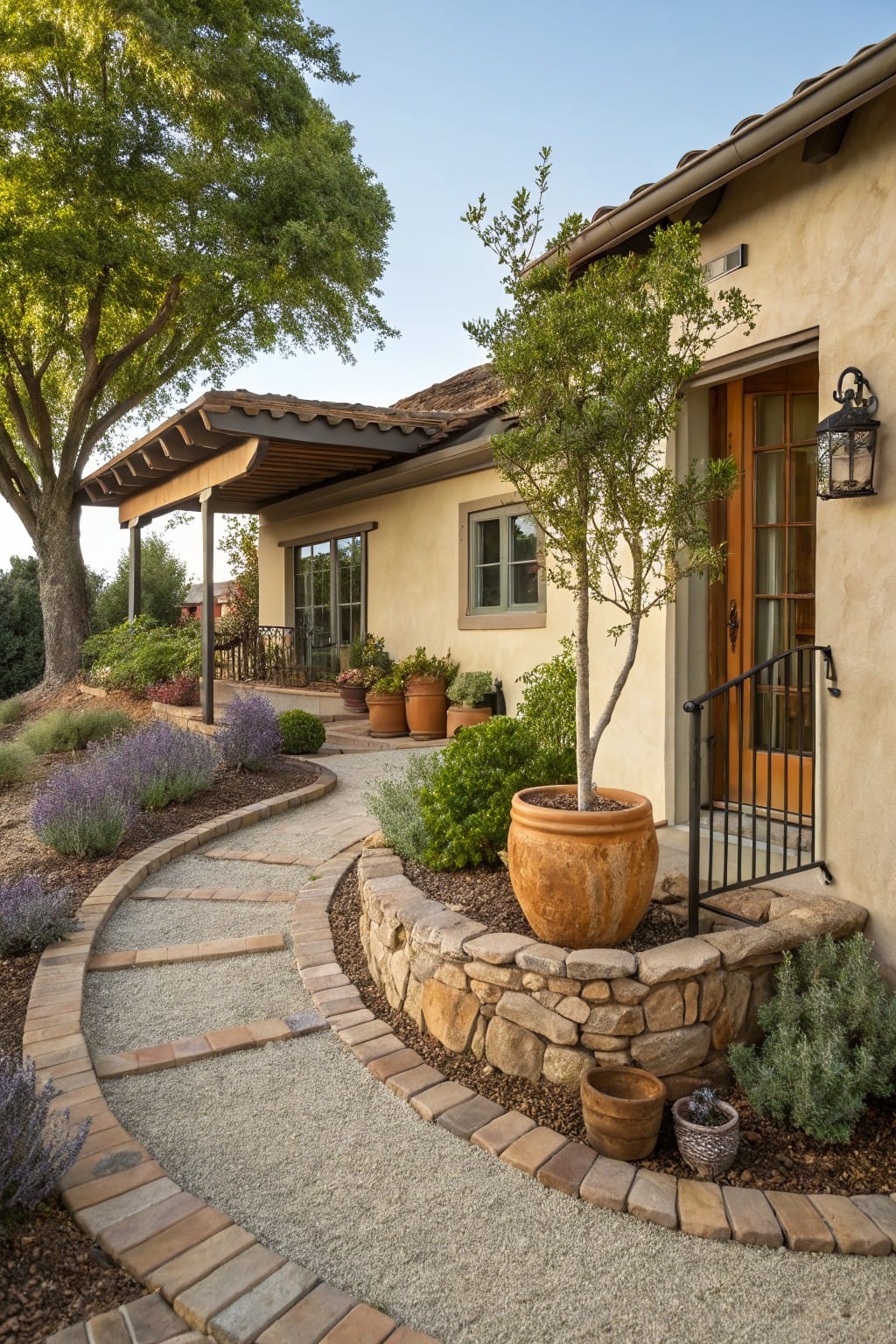
A simple curved path like this one uses gravel fill between brick pavers, edged by a low dry-stacked stone wall. It winds gently toward the house entry, with lavender bushes tucked along the curve and a big olive tree in a terracotta pot right by the gate. What makes it smart for xeriscape is how the gravel drains fast and the plants need almost no water, yet it still feels welcoming and put-together.
You can pull this off in any front yard with a slope or straight shot to the door. Start with the stone wall to hold soil back, lay gravel for the base, then add pavers for steps where needed. Drought plants fill in the gaps without much fuss. Skip it if your yard floods easy… gravel won’t hold up there.
Fire Pit with Curved Stone Bench
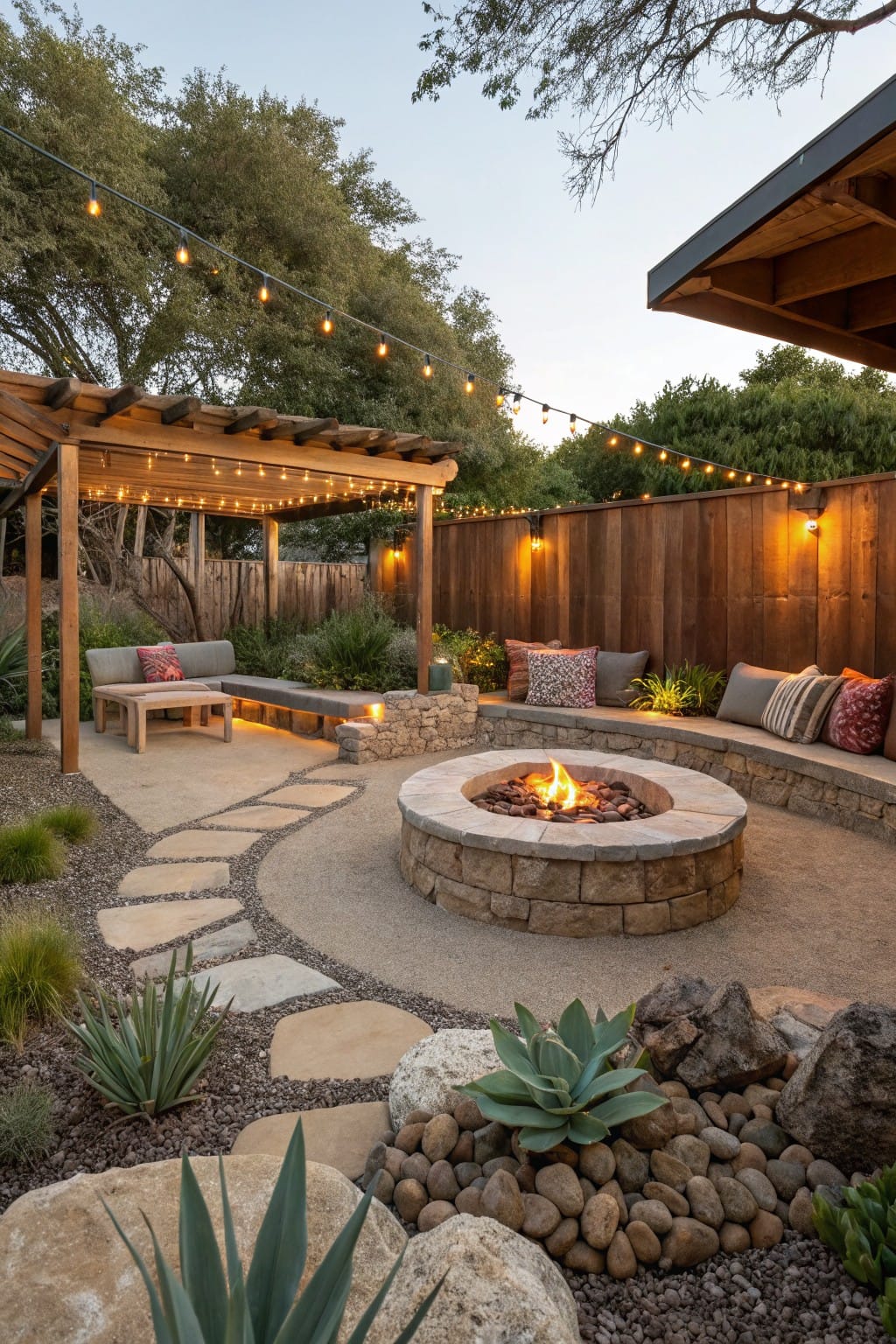
One simple way to make a backyard feel like a real hangout spot is a fire pit ringed by a built-in stone bench. It pulls people in naturally on cool evenings, and the stone keeps things sturdy without much upkeep. Here, the rough-cut stones fit right into the gravel yard, making the whole area look settled and easygoing.
This setup works best in dry spots where you want low-water style. Pair it with gravel ground and a few tough plants like agave to tie it together. Keep the curve gentle so seating feels open, not cramped. It’s great for smaller yards too, since it saves space compared to loose chairs.
Frequently Asked Questions
Q: How do I stop weeds from popping up between the rocks?
A: Lay down landscape fabric before adding rocks. Cut holes only where you plant drought-tolerant goodies. Top it with a thick layer of gravel or pebbles to block light.
Q: Do rocks make the yard too hot for plants nearby?
A: Pick light-colored rocks like white gravel or pale river stones. They reflect sunlight instead of soaking it up. Plant heat-loving natives a bit away from the hottest spots.
Q: Can beginners pull off one of these ideas in a tiny yard?
A: Start with a simple border around your patio using pea gravel and a few succulents. Clear the area, edge it with plastic or metal, then dump in the rocks. You’ll see results in a weekend.
Q: How often do I need to water a xeriscape rock setup?
A: Settle everything in with deep water once a week the first month. After that, nature handles most of it—rain or occasional hose for new plants. Mulch around any greenery to lock in moisture.
