

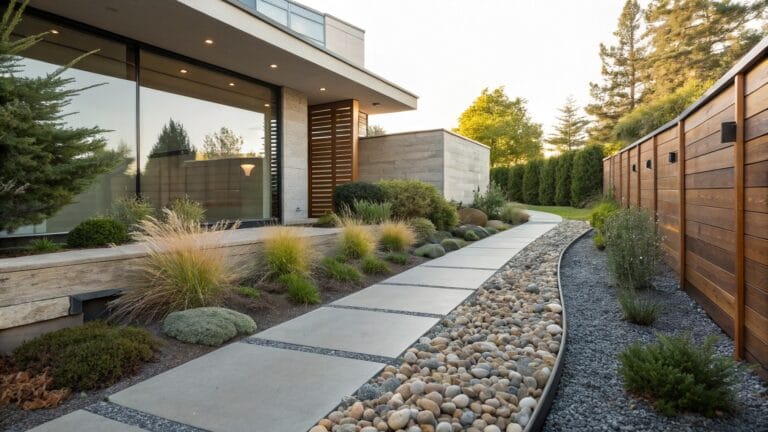
When I circle my house on a walk-through, those bare foundations and clunky AC units jump out every time because they throw off the yard’s natural lines.
Rocks fix that in a low-fuss way by building layered beds that hug the base and guide drainage right where you need it.
I’ve edged mine with larger stones before, and it made the whole setup feel more grounded as plants filled in over a couple seasons.
The layouts in this article pay attention to how rock sizes and placements keep soil stable while letting grass or mulch edge up cleanly.
One approach with mixed gravel zones is worth sketching out for your own spots.
Gravel Trenches Beside Walkways
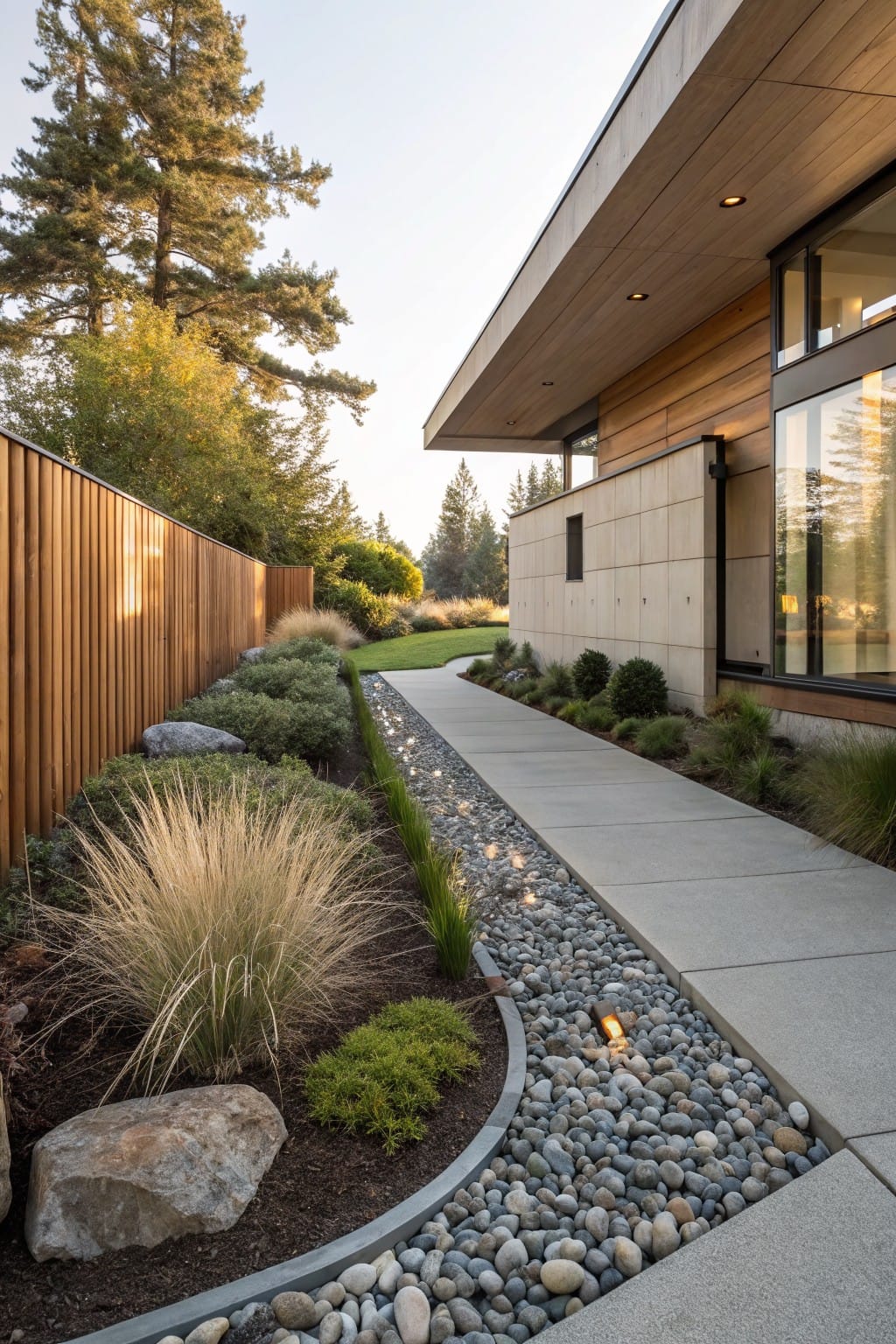
A gravel trench makes for smart landscaping right along your house foundation. Here, a concrete walkway runs parallel to the base of the home, with a narrow bed of smooth river rocks edged neatly in place. Low grasses and shrubs fill in the edges, keeping soil away from the walls while letting water drain off easily. It’s low fuss and looks clean year round.
This setup fits narrow side paths or spots hiding AC units. Use it where you need something tough and simple, like on a slope or in partial shade. Go for rounded pebbles so they shift less, and keep plantings sparse to avoid crowding the path.
Large Boulders Around the Foundation
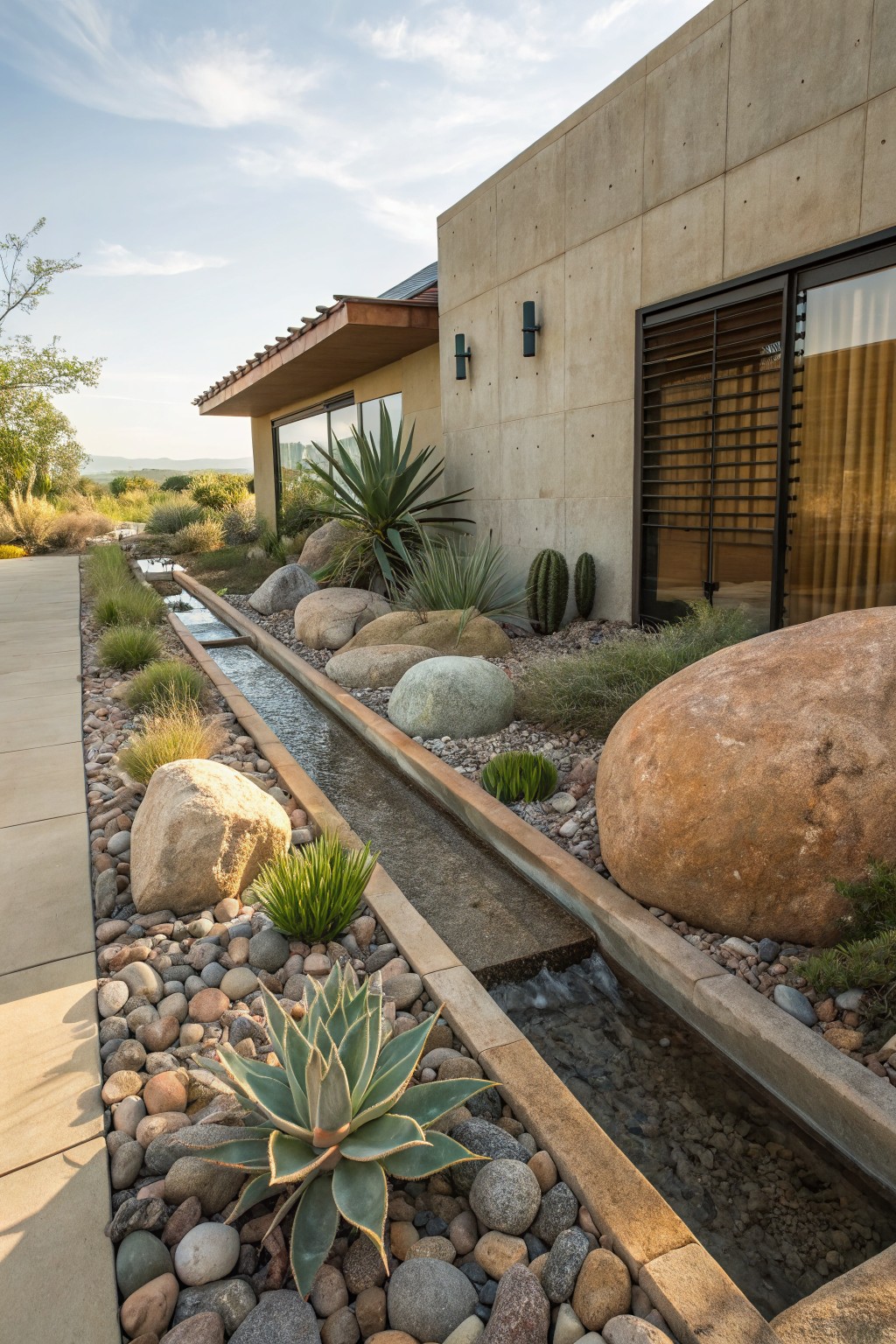
Big boulders placed right along the house base do a good job of hiding that plain concrete edge. They mix in naturally with gravel mulch and a few tough plants like agave and cactus. This setup keeps things low-maintenance and fits right with a modern look. No fussy mowing or watering needed much.
It works best in dry spots or where you want to cover foundations without much upkeep. Grab rocks in different sizes for interest, tuck them close to the wall, and add gravel to fill gaps. Good for hiding AC units too. Just make sure the boulders aren’t too uniform… variety helps it feel real.
Large Boulders in Gravel Paths Around Foundations
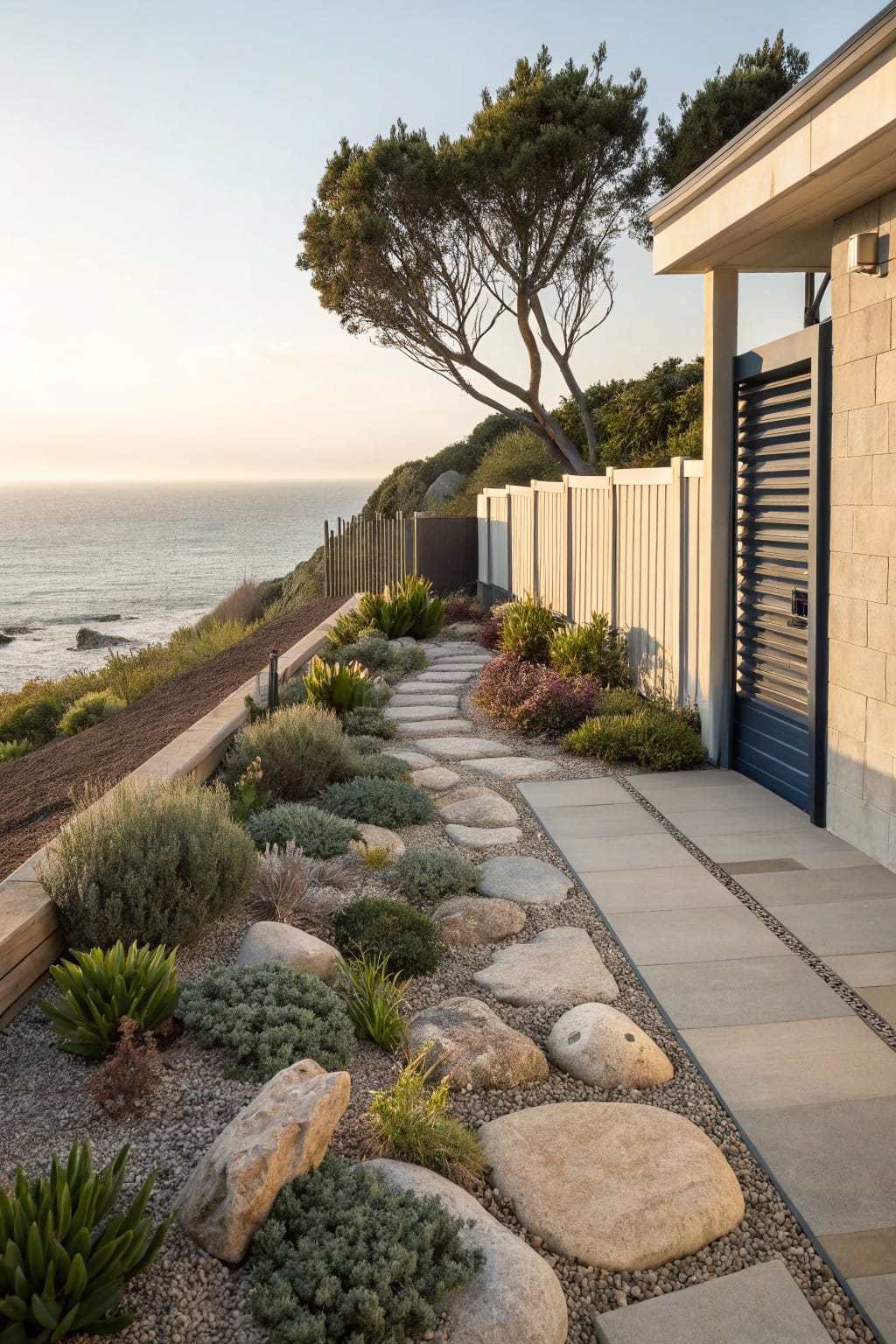
Big boulders tucked into gravel beds like this make a natural-looking cover for house foundations. They mix right in with low plants such as agaves and ground covers, keeping the base hidden while letting water drain easy. The whole thing stays low-maintenance, no mowing needed.
Set it up on sloped lots or dry areas where grass struggles. Start with gravel for the base, drop in a few oversized rocks for weight and shape, then add flat stepping stones for foot traffic. Works best near entries or along walls, just watch for spots where rocks might shift over time.
Rock Edging Along Foundation Paths
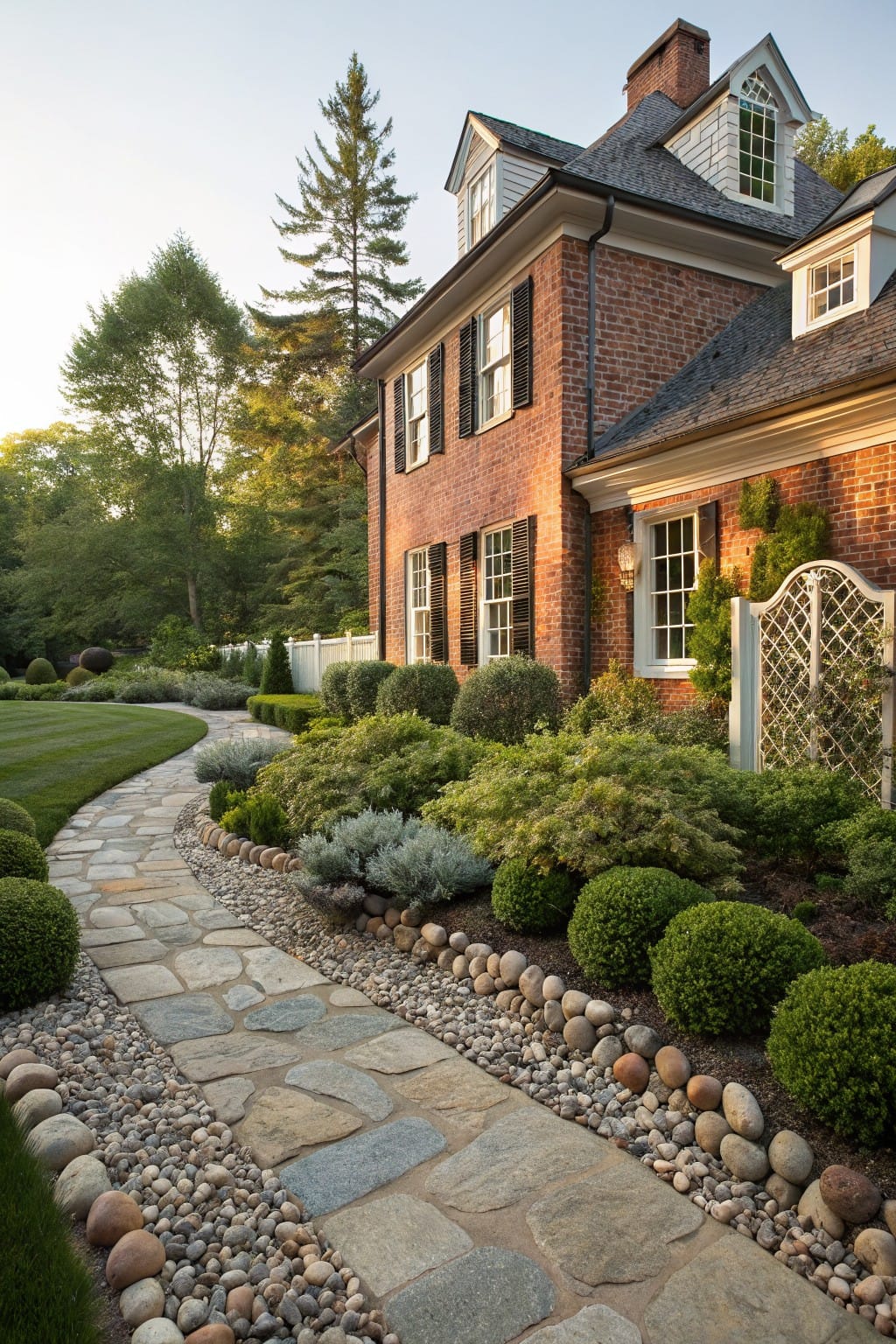
A straightforward way to tidy up the ground right against your house is to edge a path with rocks and pebbles. This setup uses irregular flagstones for the walkway, then a strip of smooth river rocks next to the foundation, topped with bigger rounded boulders. It covers the bare base cleanly, stops weeds, and gives a natural flow from lawn to entry without looking fussy.
You can pull this off on any side yard or front approach where the foundation shows. Start with fabric under the rocks to block growth, keep the pebble layer shallow for easy raking, and mix in tough shrubs like the ones here. It suits brick or stone homes best. Just don’t let the rocks creep onto the path itself.
Rocks and Boulders Around the Foundation
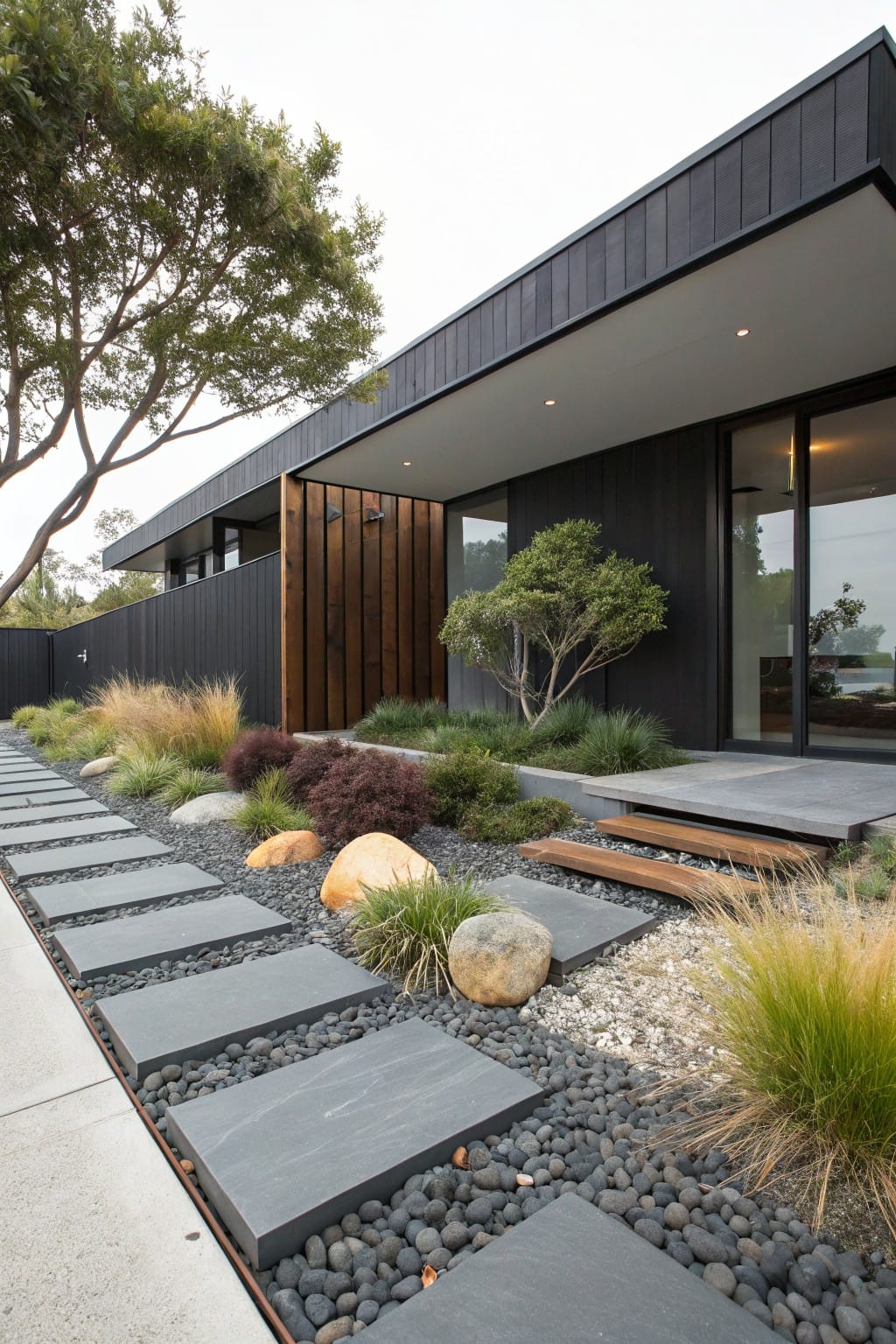
One straightforward way to tidy up the area right next to your house is with big boulders mixed into gravel beds. In this setup, smooth river rocks and pebbles fill the spaces between wide slate stepping stones, while a few oversized boulders add some weight and interest. It keeps things looking sharp without much upkeep, and the dark tones blend right into a modern black siding like you see here.
This works best on smaller yards or side entries where you want foot traffic without a full paved walkway. Plant some low grasses in the edges for a bit of green, but skip anything that needs watering. It’s practical around foundations or even AC units since rocks let air flow and block weeds. Just make sure the boulders aren’t too close to the house to avoid moisture issues.
Stepping Stones with Boulders Around Structures
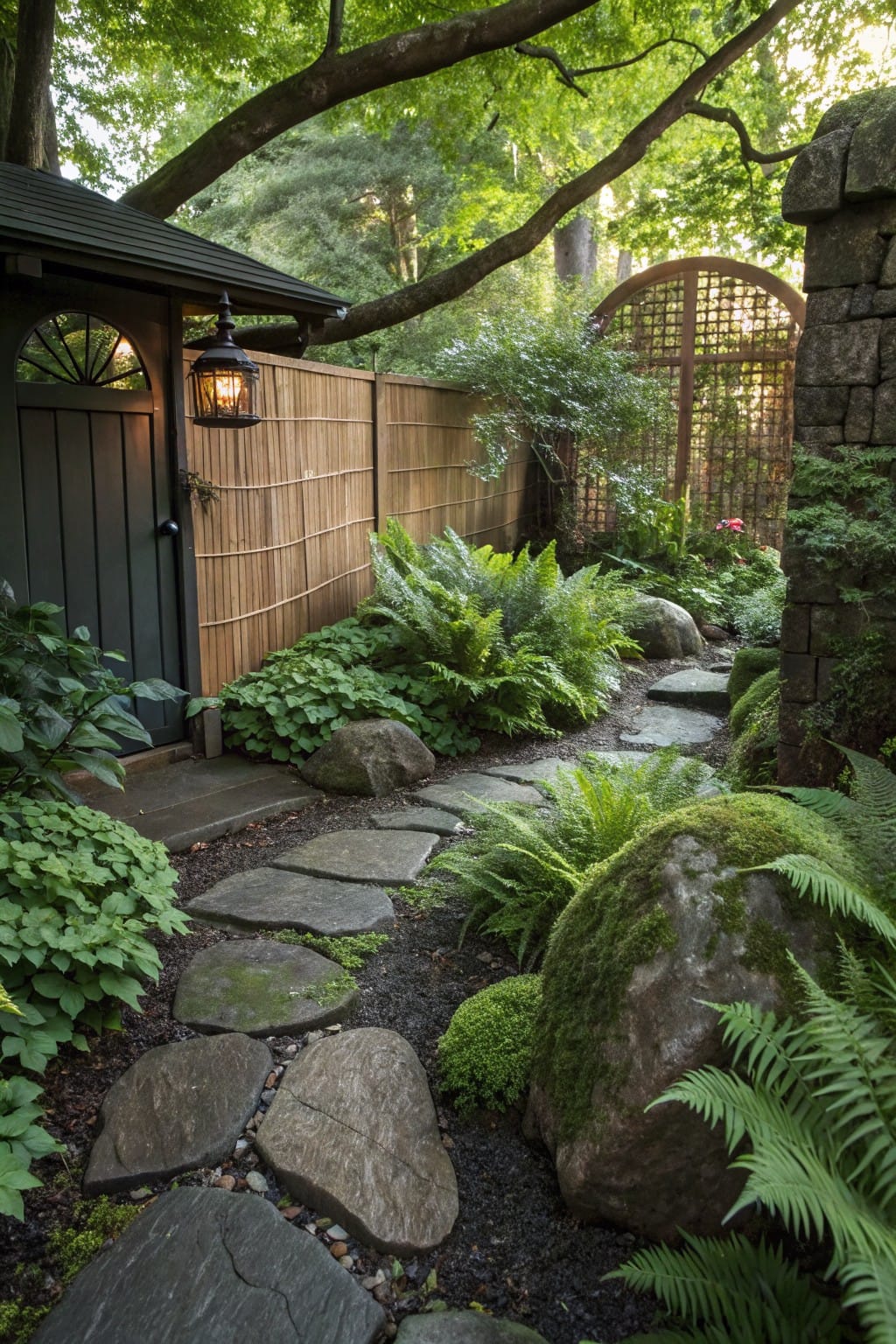
Large boulders paired with flat stepping stones set in dark gravel create a rugged path that winds right up to a small outbuilding. Ferns tuck in around the rocks, and moss adds that aged look without much work. It hides the concrete base nicely and directs foot traffic where you want it.
Put this setup to work around foundations, AC units, or sheds in shady yards. The gravel keeps mud down, and the plants fill gaps on their own. Skip it in full sun, though. Ferns won’t hang on there.
Rock Mulch Around Shed Foundations
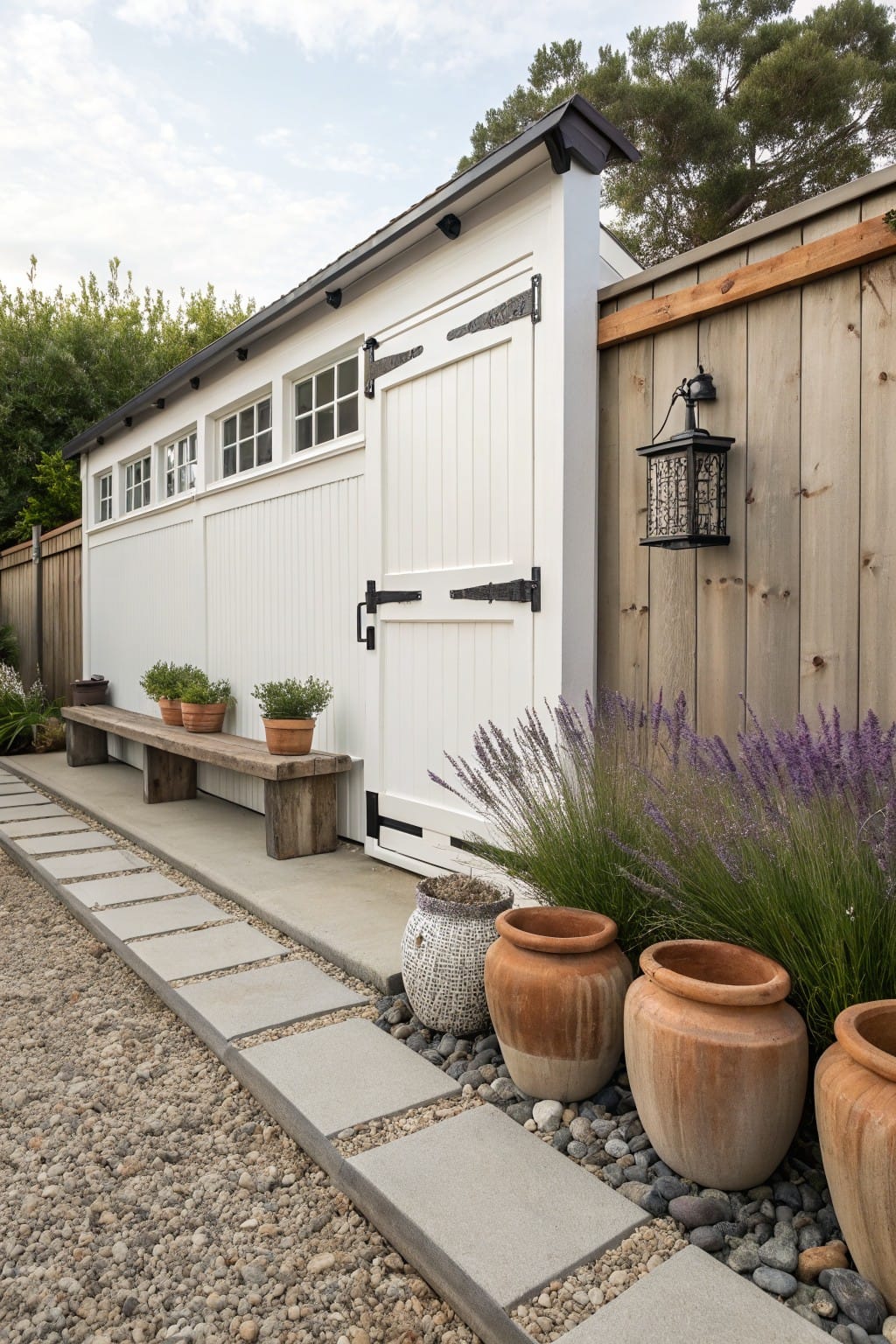
One practical way to handle the ground next to a shed or outbuilding is with gravel topped by larger rocks. It covers the foundation area neatly, stops weeds without much effort, and lets water drain right away. Here, the mix of fine gravel and smooth stones fills in around the base of a white clapboard shed, making the spot look finished without grass or mulch that rots.
You can do this along any house addition or garage side where mowing is a hassle. Add a few oversized terracotta pots with lavender or grasses for height, and run stone pavers from the path right up to it. Keeps mud away… suits sloped yards or dry spots best.
River Rock Borders Hide Foundations
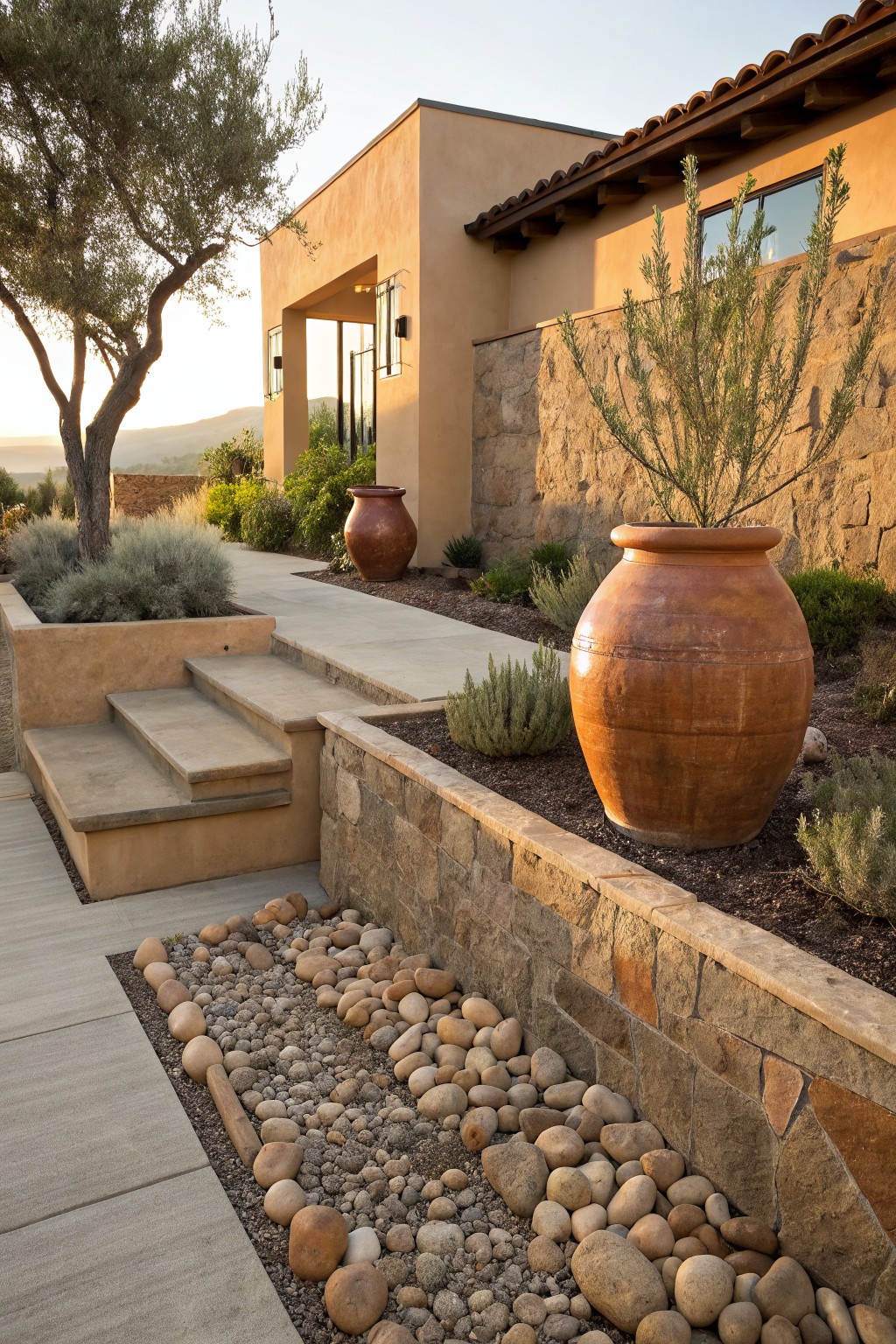
A simple river rock border runs right along the house foundation here. Mixed smooth pebbles and bigger rounded stones fill a narrow bed next to the concrete walkway. It covers the raw base without any fuss, and the tan tones pick up the stucco walls nicely. Keeps dirt and weeds away too.
This setup suits drier yards or spots near AC units where you don’t want mowing right up to the house. Lay down fabric first to block weeds, then add rocks in varying sizes for some texture. Add a few tough plants like agave along the edge if you want green, but rocks alone do most of the work.
Dry Creek Beds Beside Walkways
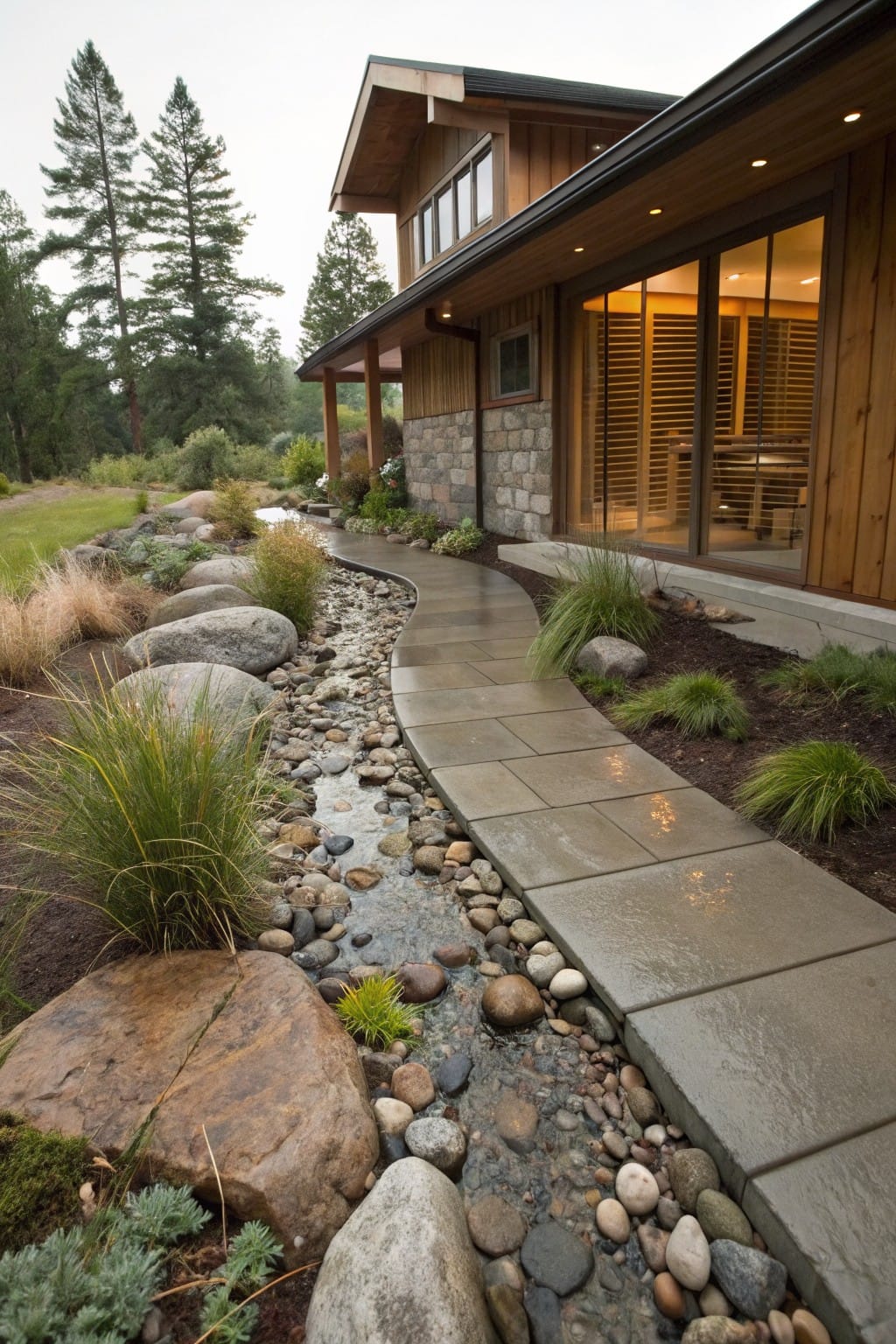
One smart way to handle drainage around your home’s foundation is a dry creek bed running right next to the walkway. You fill it with smooth river rocks and a few larger boulders, then tuck in some low grasses along the edges. It looks natural, like water carved it out over time, and it channels rainwater away from the house without much upkeep. In this setup, the path stays clear for walking while the rocks do the practical work.
This works great on sloped lots or anywhere rain pools near the entry. Pair it with concrete pavers for the path itself, and keep plants tough like sedges that won’t flop over. It suits homes with a woodsy or modern-rustic feel… just make sure the bed slopes enough so water actually flows downhill, or it might not drain like you hope.
Gravel Beds Flanking a Simple Side Path
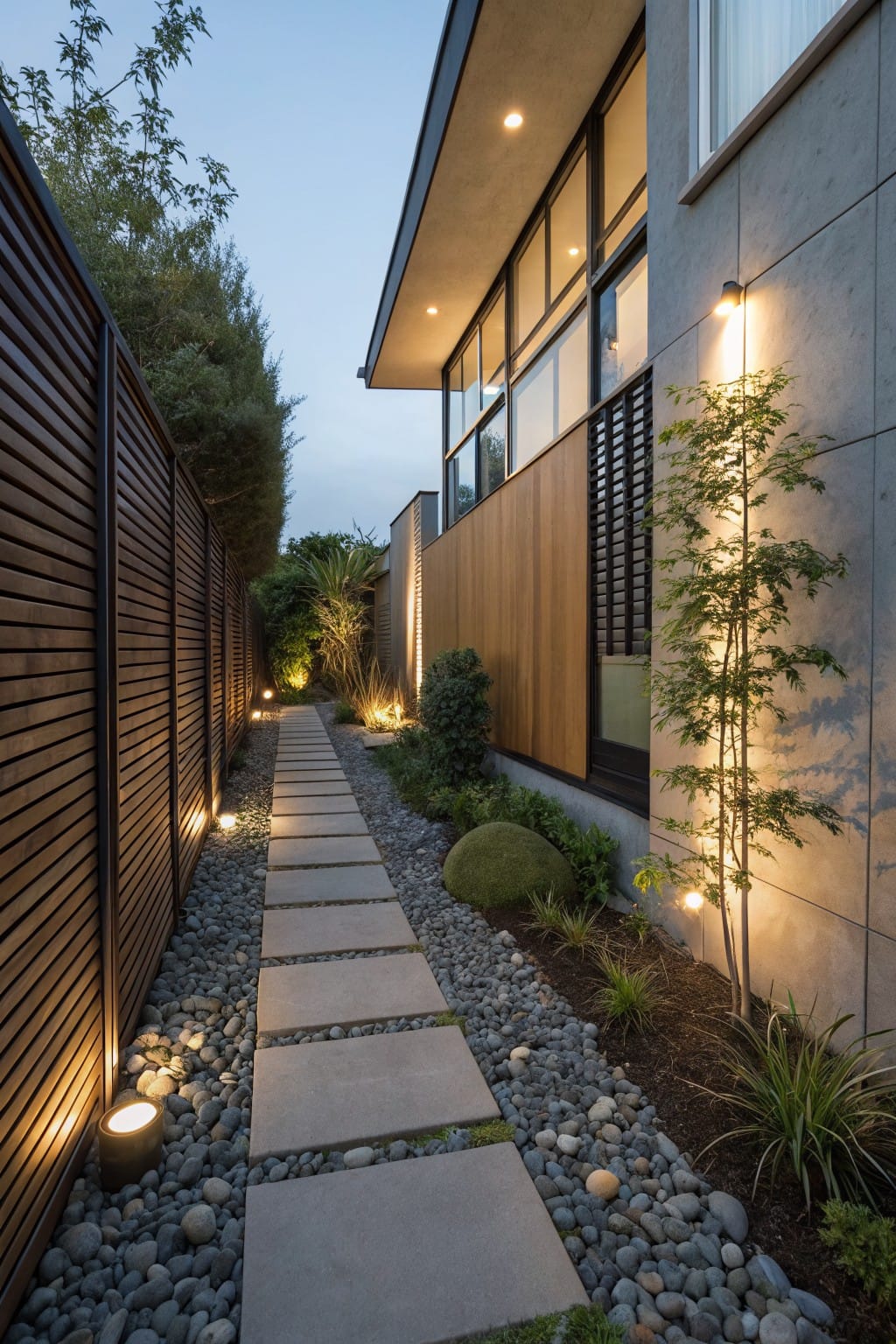
Gravel beds like these make a lot of sense around house foundations. You fill the area with smooth river rocks or pea gravel, then drop in a few wide concrete pavers for footsteps. It covers the base nicely, handles water runoff without washing out, and stays low fuss year round. Those soft uplights along the edge just make it practical after dark.
This works best in skinny side yards where you want easy access without mowing right up to the wall. Suits modern homes with clean lines, or any spot hiding an AC unit. Skip big plants that crowd the path. Keep rocks uniform so it doesn’t turn into a weedy mess over time.
Natural Rock Beds Around Foundations
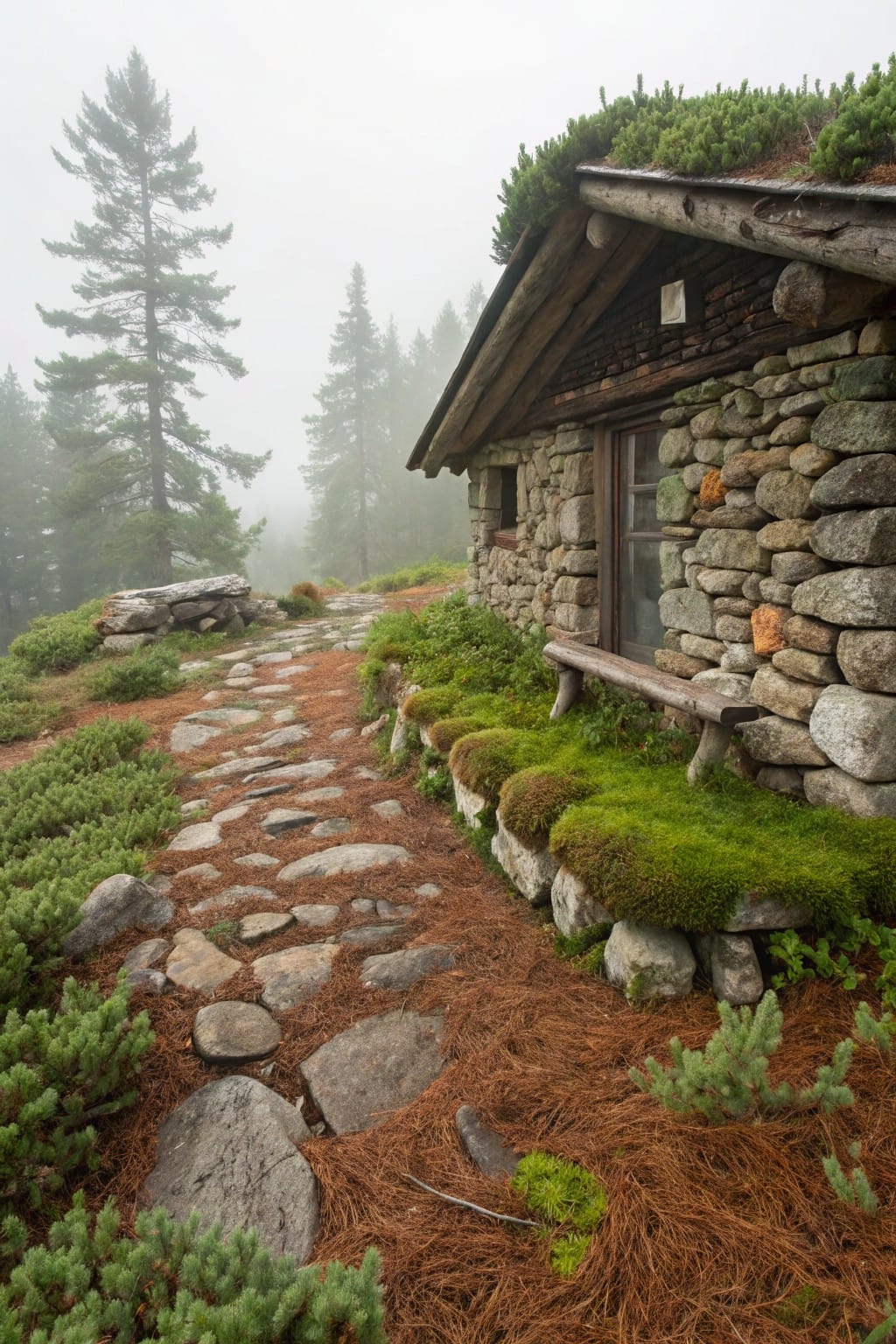
One smart way to handle the base of your house is piling up local fieldstones and mossy boulders right against the foundation. Like this cabin shows, it turns the bottom of the house into part of the landscape. No sharp lines or bare concrete. The rocks hold back soil on slopes and keep things looking wild but tidy.
Grab stones from nearby if you can. Stack them loosely, tuck in moss or low shrubs, and let nature fill the gaps. It suits cabins or stone homes in wooded spots best. Just make sure drainage stays good so moisture doesn’t creep up the walls.
Stepping Stones in Gravel Beds
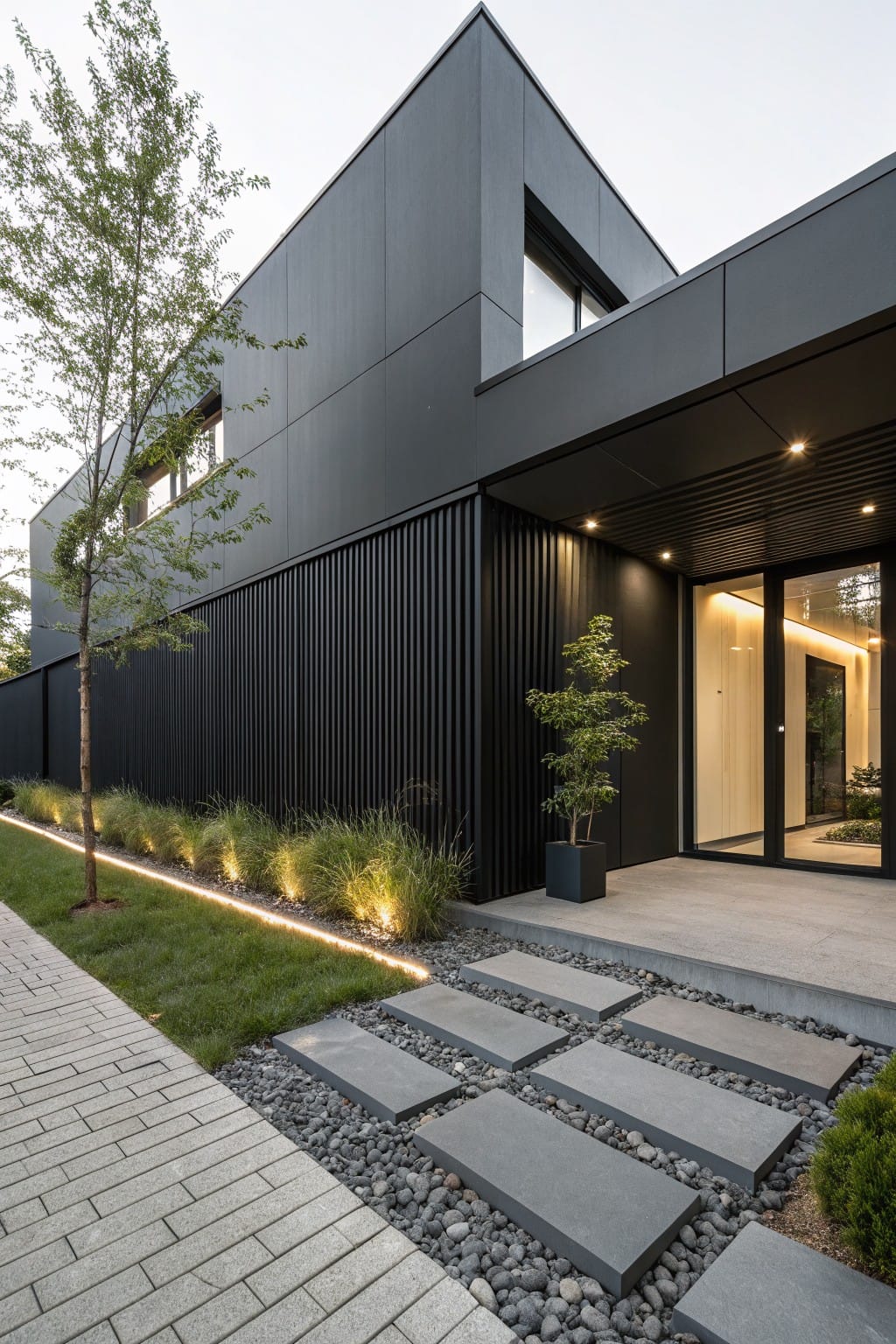
One straightforward way to handle landscaping around your house foundation is to lay large stone slabs as stepping stones right in a bed of gravel. It keeps things simple and low-maintenance. The gravel fills in around the stones nicely, and you can tuck in some taller grasses along the edge for a bit of green without much upkeep. In this setup, it leads straight to the front entry and softens the base of the dark siding.
This works best for modern homes or anywhere you want a clean path that doesn’t need mowing or weeding all the time. Just make sure the gravel is deep enough for good drainage, especially near the foundation, so water doesn’t pool. Skip it on steep slopes though. Add low-voltage lights under the grasses if you like the evening glow.
Fieldstone Walls Stabilize Coastal Foundations
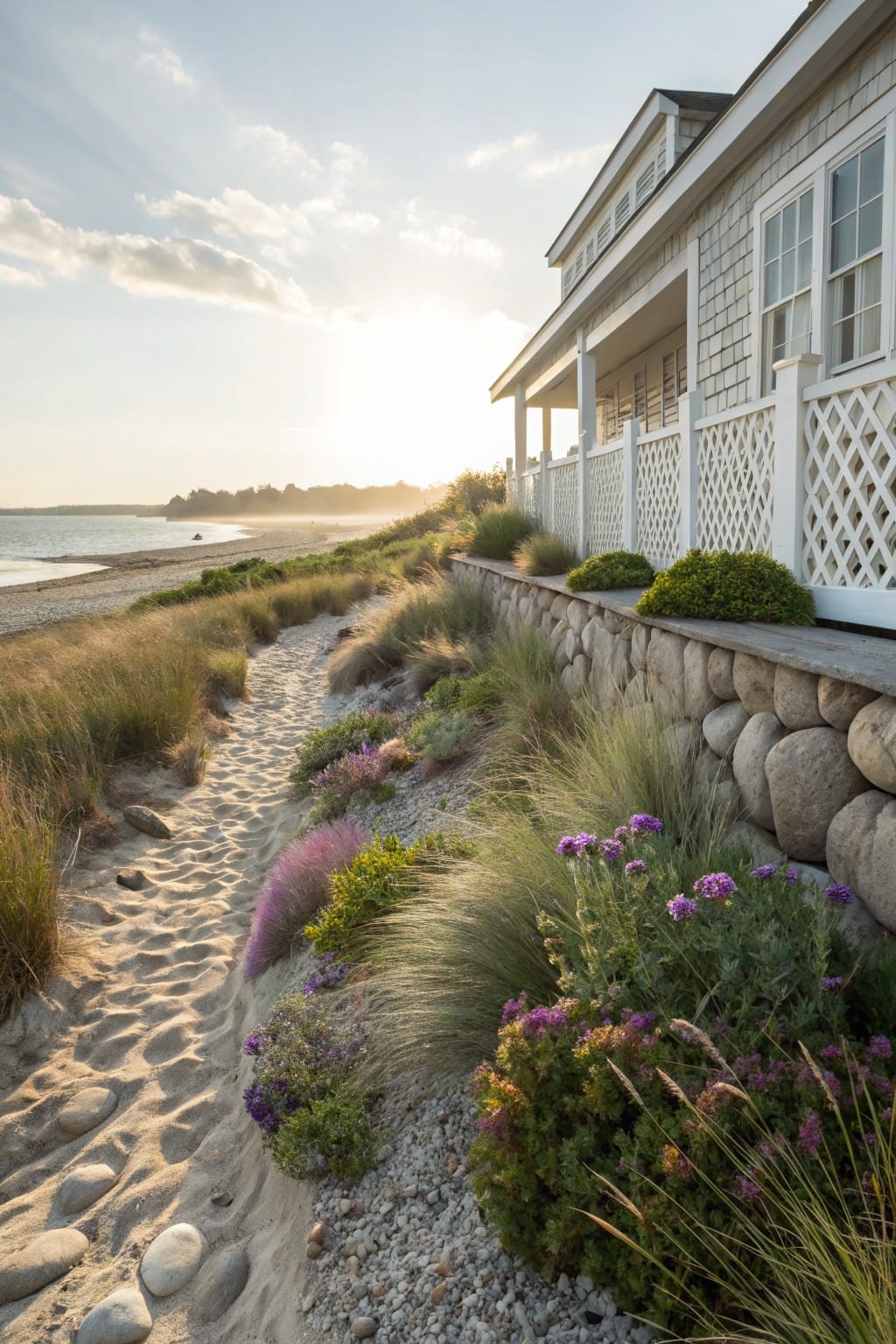
One smart way to handle sloped beachfront lots is stacking fieldstones into a sturdy retaining wall right against the house base. Here it’s paired with clumps of dune grass and low purple flowers that spill over the rocks. This keeps soil from washing toward the foundation during storms. Plus it gives a rugged, natural edge that fits right into the seaside setting without looking forced.
Try this on sandy dunes or gentle slopes near water where erosion is a worry. Source stones locally for better blending, and stick to salt-tolerant plants like beach grasses or sea lavender. It hides the house’s lower level nicely and stays low-maintenance once established. Just make sure the wall drains well to avoid water buildup.
River Rock Beds Hide Foundation Lines
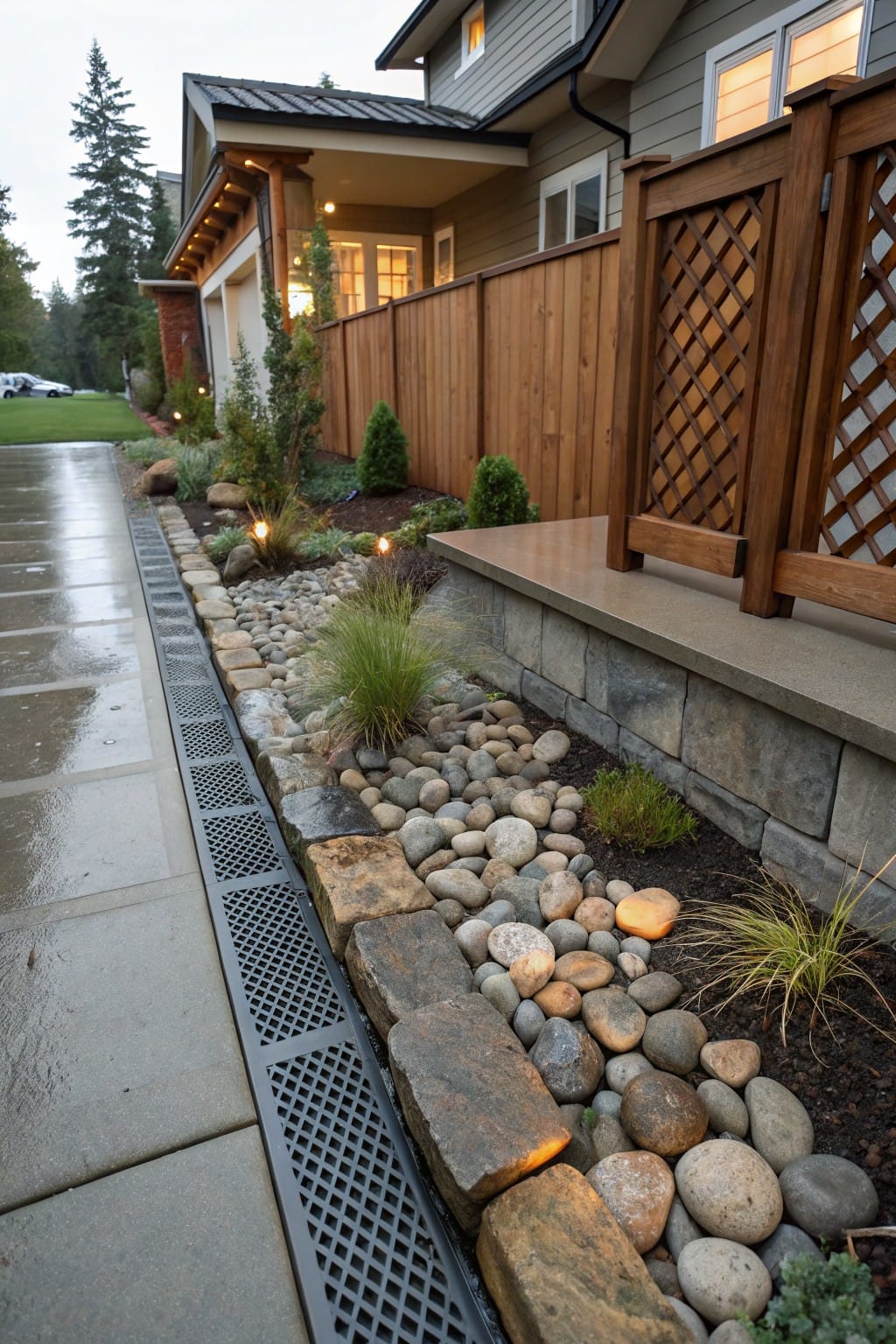
Rock beds like this one make foundation areas look finished without much work. Rounded pebbles and bigger boulders fill the space right against the house, tucked behind a low stone wall. Paired with a few grasses, it keeps things tidy and lets water drain right through that grated trench along the driveway. No mud, no mess after rain.
You’ll see this a lot in rainy spots or along driveways. Grab smooth river rocks in a mix of sizes, layer them two feet deep or so over weed cloth. Add drought-tough plants sparingly. It fits craftsman or modern homes best… watch for spots where runoff pools.
Rock Beds Hide Foundations Cleanly

Big boulders paired with black pebbles make a smart cover for house foundations. They tuck right up against the wall, hiding concrete bases without much upkeep. Low moss and clipped shrubs fill in the gaps for a soft look that ties into the yard. This keeps things tidy around entries or side paths.
It works best in narrow spots like this walkway, where you need access but want less mowing. Layer the pebbles over soil or landscape fabric first, drop in a few stones for interest, then edge with plants that stay small. Avoid overcrowding, or it gets hard to reach AC units.
Rock Walls Edging Yard Beds
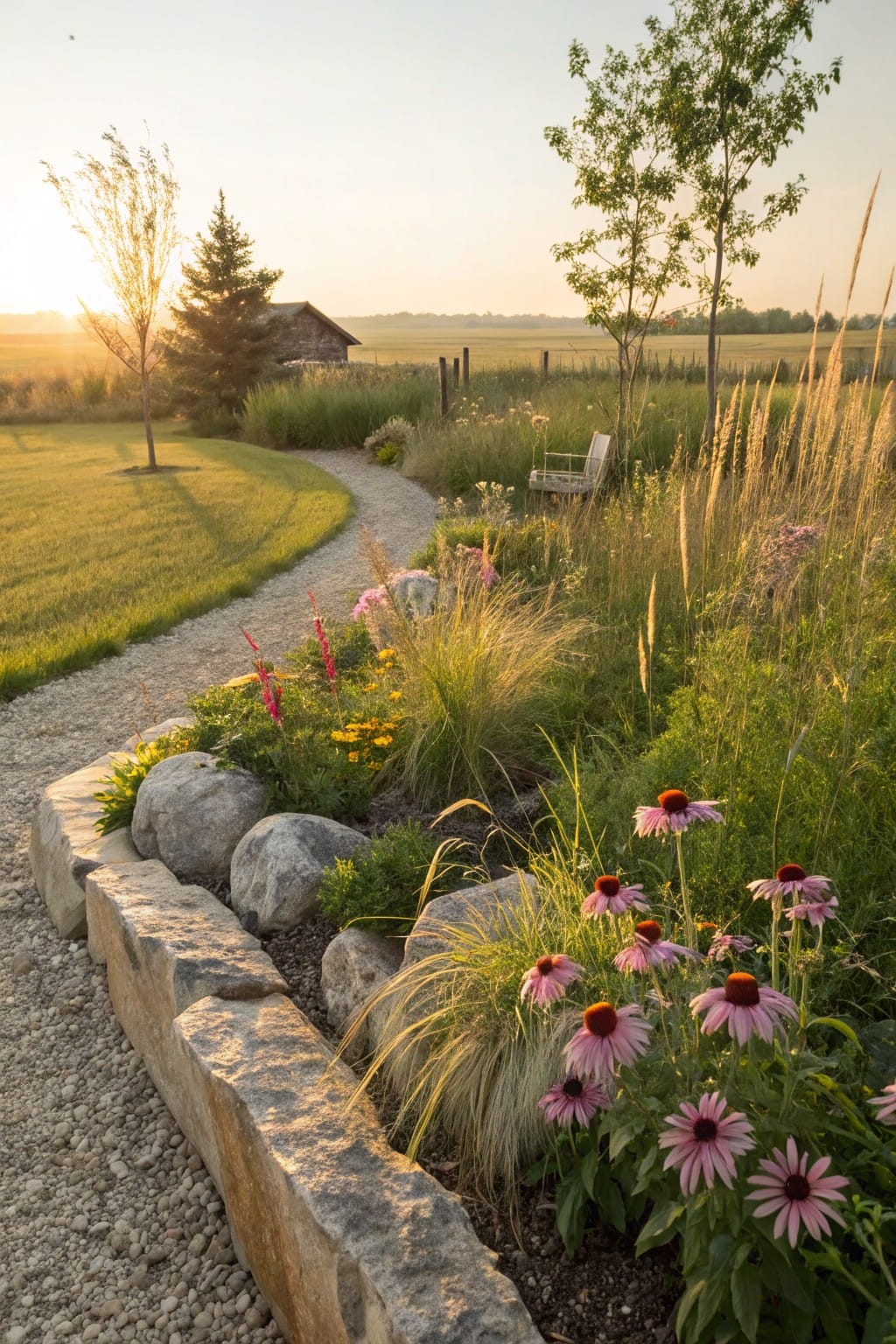
One practical way to handle landscaping around your home’s foundation or outbuildings is with sturdy rock walls like this. They hold back soil and plants without much upkeep, and the large boulders mixed in give a natural, rugged feel that fits right into a yard setting. Perennials such as coneflowers and tall grasses tuck in nicely, staying put year after year.
These walls work best in open yards or along paths where you want definition but not a fussy look. Stack local fieldstone if you can find it, or use whatever rocks are handy, and plant drought-tolerant stuff on top. Keep drainage in mind at the base… water runs off easy. Suits ranch homes or cabins especially well.
Pebble Beds Along Side Paths
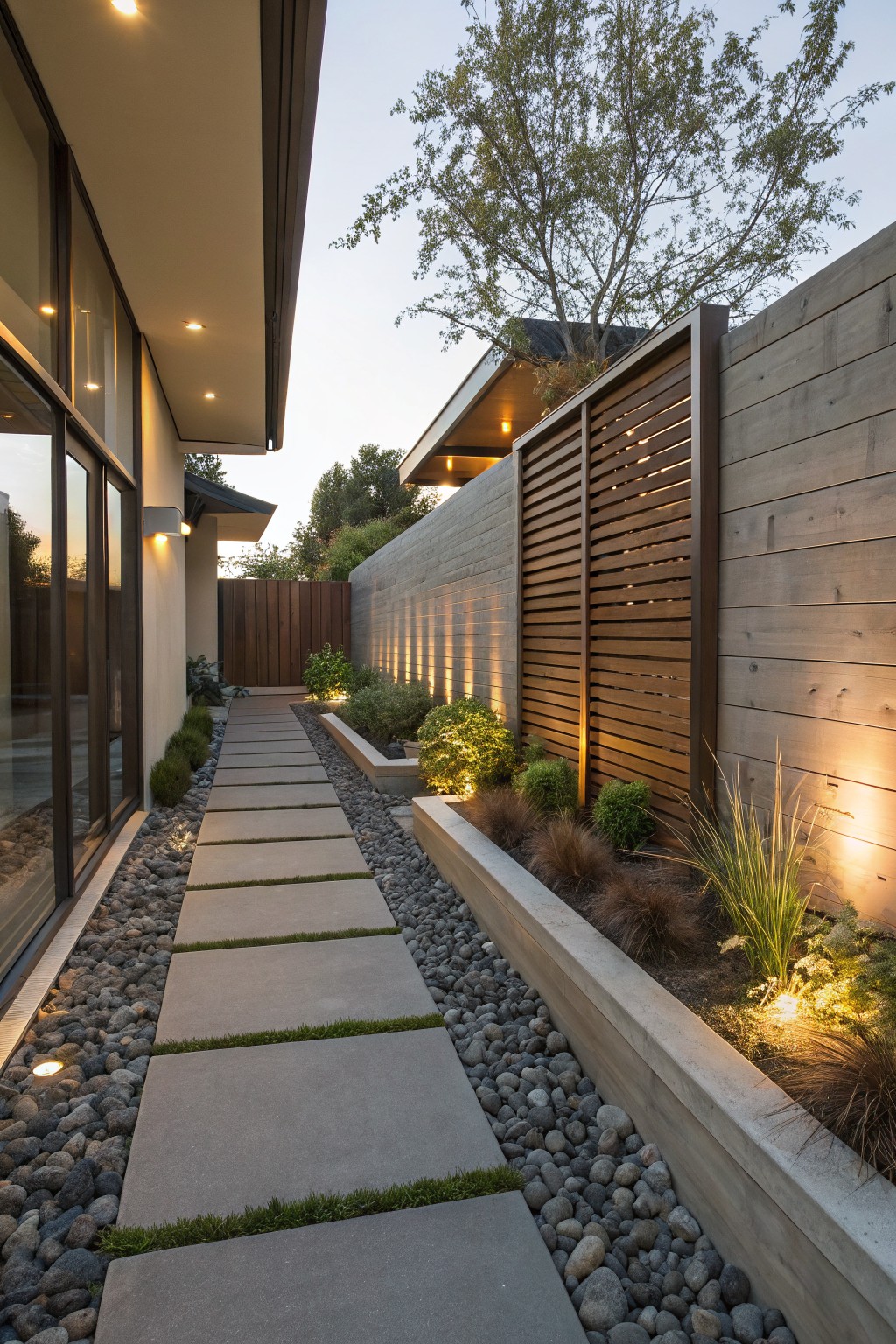
One straightforward way to handle landscaping right up against the house is filling narrow beds with small pebbles. You see it here with gray river rocks tucked between the concrete paver path and the wall. It covers soil cleanly, cuts down on weeds, and lets excess water drain fast. Those low grasses poking up add some green without crowding the walk.
This works best in tight side yards where you want low upkeep around foundations or even AC units. Pick rounded pebbles in a neutral tone to blend with concrete or stucco. Keep plants sparse and tough, like sedges or boxwoods, so the rocks stay visible. Avoid piling too deep or it might shift under foot traffic.
Rock Beds Framing House Foundations
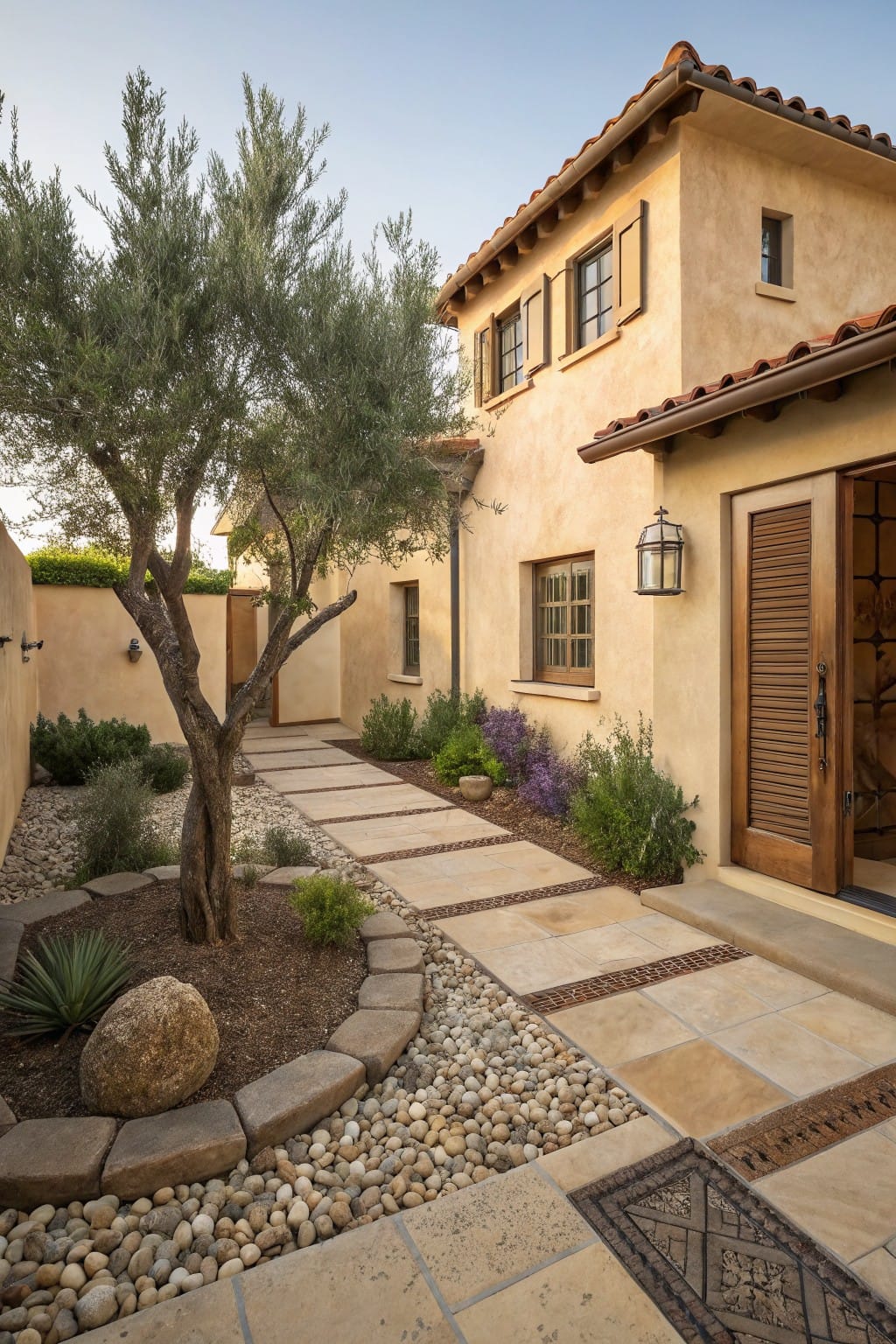
One straightforward way to tidy up the base of your house uses curved beds of rocks and gravel. In this setup, a big olive tree sits in a mulched circle edged with boulders, then gravel fills in around low plants like agave. It keeps things neat without much upkeep, and the pale stones pick up the house’s stucco color for a smooth tie-in.
This works best around foundations in sunny, dry spots where grass won’t grow well anyway. Pull back soil a foot or so from the wall, lay down landscape fabric, add bigger rocks for anchors, then pebbles or mulch. Skip it if your area gets heavy rain, as water might pool. Fits most any style home that wants low fuss out front.
Rocks Around Foundations and AC Units
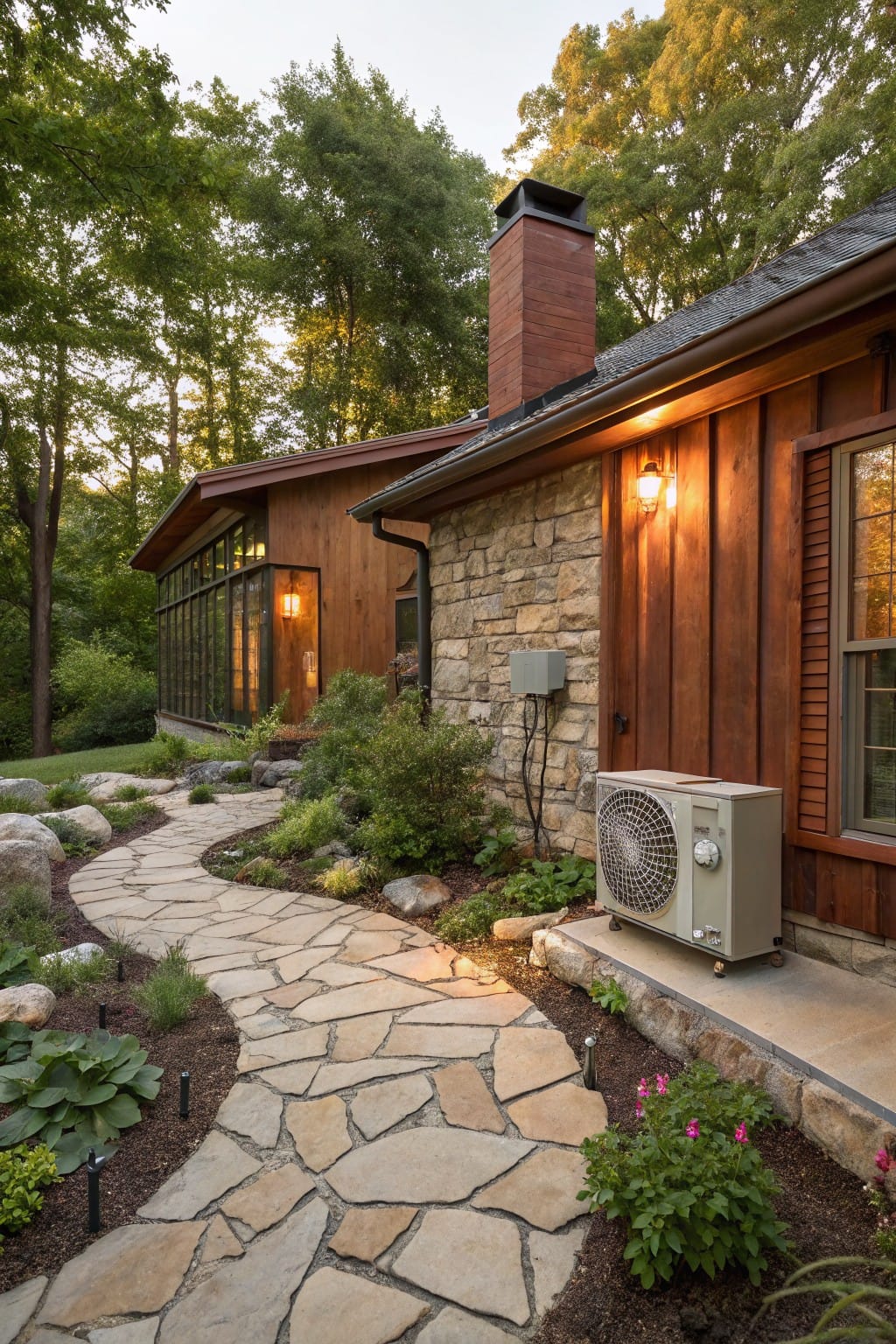
One smart way to handle the side of your house is with rocks placed right along the foundation and around the AC unit. Here you see big boulders mixed with mulch and low plants that cover the base without hiding the equipment completely. It keeps things neat and lets the stone wall of the house blend into the yard naturally.
This works best on homes tucked into wooded spots or with uneven ground. Pick rocks that match your local stone, like fieldstone, and tuck in tough plants such as hostas or sedum. Just make sure nothing grows too tall over the AC vents. Easy to do yourself on a weekend.
Gravel Beds Conceal AC Units Neatly
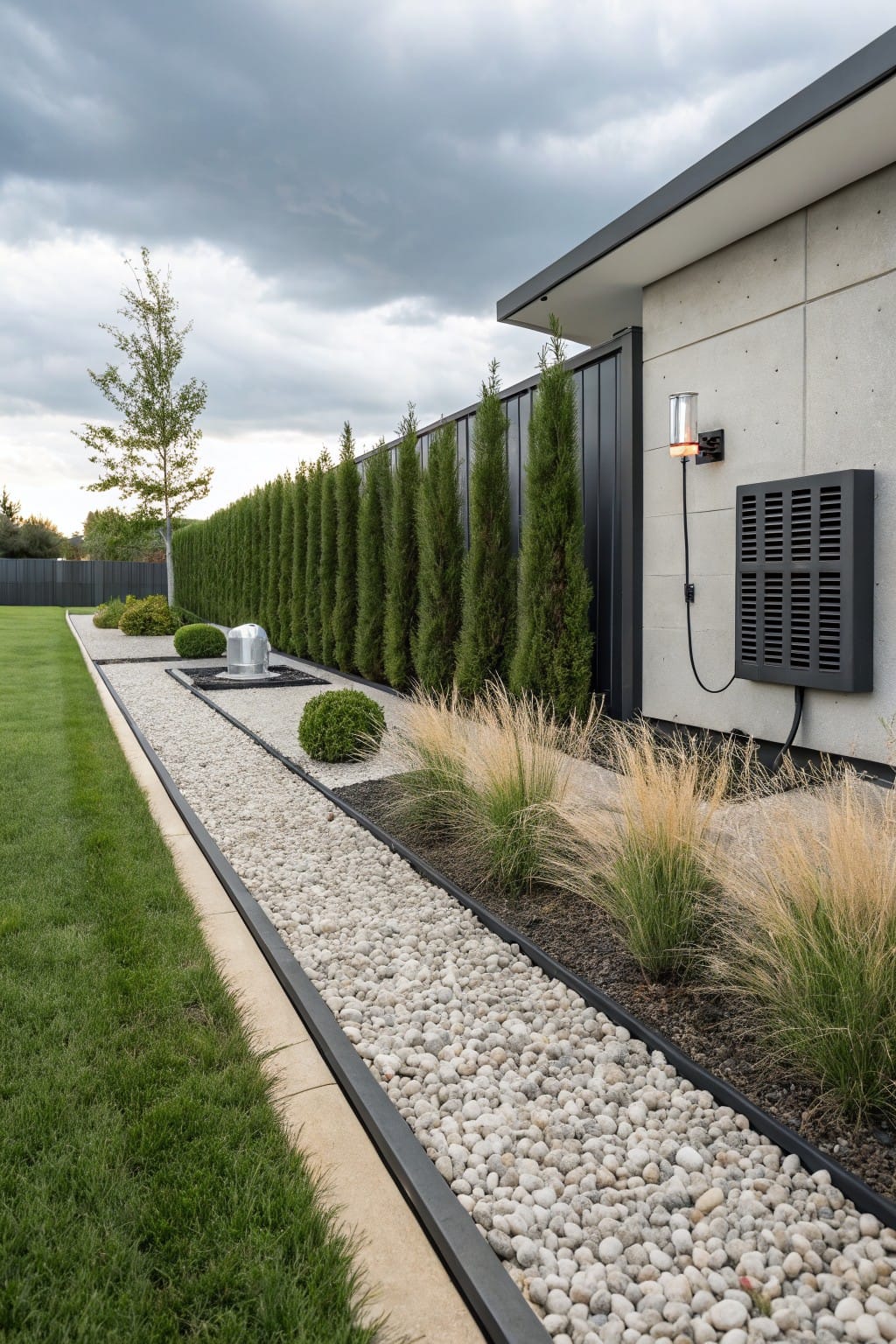
White pebbles fill wide beds right up against the concrete wall, with clumps of wavy grasses and round shrubs adding some height. A black AC vent tucks in behind the rocks, hidden but ventilated, while thin black gravel lines and flat metal edging hold the edges sharp against the lawn. It keeps the modern house base looking clean without much upkeep.
This works well for side yards or utility zones on contemporary homes. Start with fabric under the gravel to block weeds, use steel edging pounded in straight for that crisp look, and pick tough grasses that sway without crowding the unit. Skip it if your area floods, since rocks shift easy.
Rock-Lined Streams for Foundation Drainage
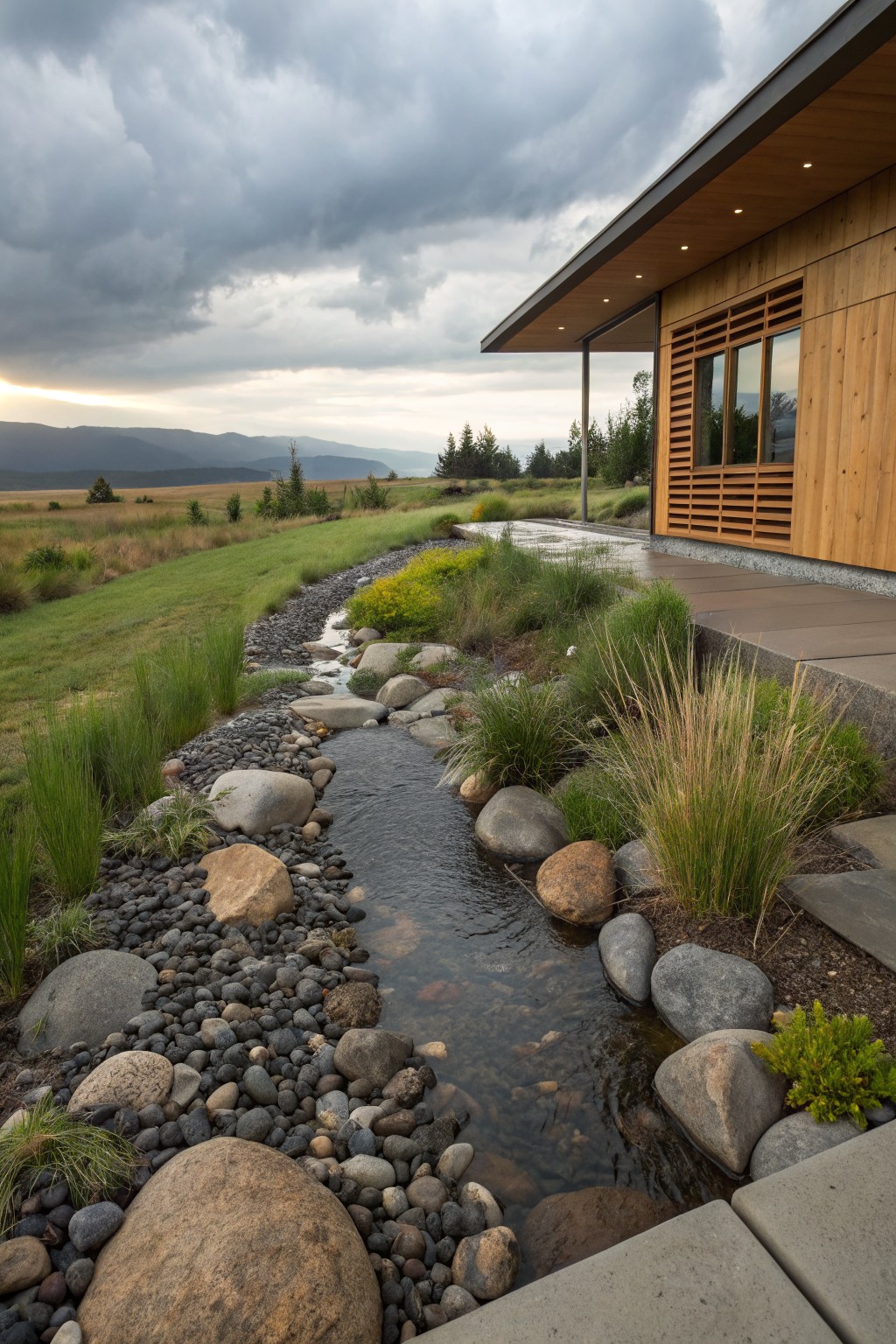
One smart way to handle water around your home base is a shallow rock-lined stream. It guides runoff right past the foundation without pooling up. Here you see big boulders mixed with pebbles and some tall grasses holding it all together. The water flows gently through, and it just looks like part of the yard. Folks like this because it keeps the house dry during rains and doesn’t need much upkeep once planted right.
You can set one up along a sloped side of the house or near downspouts. Pick smooth river rocks in a couple sizes for the bed, then add low-water grasses or sedges on the edges. It works best on modern homes or ones in rainy spots… just make sure there’s enough drop for the water to move. Avoid straight lines. Let it curve a bit to feel natural.
Rock Beds Around Foundations and AC Units
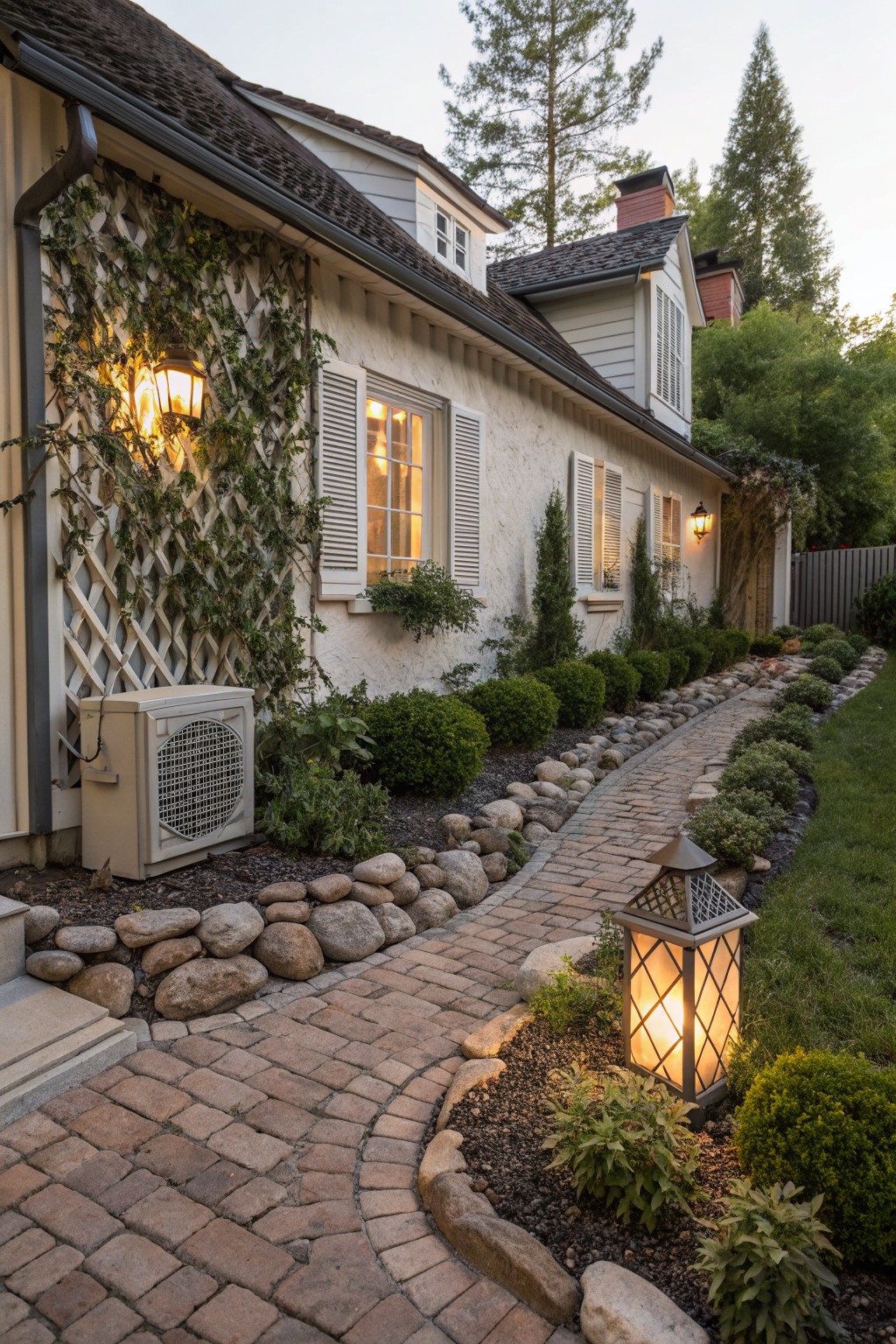
One practical way to handle the area right next to your house foundation is with rock beds like these. They cover the bare spots, hide the AC unit, and keep mulch from piling up against the siding. Gravel and larger rocks mix in to hold everything in place, and a few low shrubs add some green without crowding the space. It looks neat even at dusk with path lights on.
This setup works best on side yards or less-seen spots where you want low upkeep. Use rounded river rocks for the edging and finer gravel inside the beds, then tuck in tough plants like boxwoods that won’t mind the dry spots. Keep it to two or three layers of rock so water drains well. Fits older homes with stucco or siding, just steer clear of super steep slopes.
Frequently Asked Questions
Q: How deep should I put the rocks around my foundation?
A: Aim for 2 to 3 inches deep after settling. That depth blocks weeds and lets water drain right through. You grab a rake to level it smooth once you spread them out.
Q: Will rocks mess with my AC unit’s airflow?
A: Keep the rocks at least a foot away from the unit all around. Air needs space to move freely or your system works harder. Pile them up a bit higher there if you want coverage without crowding.
Q: What’s the trick to stopping weeds in the rocks?
A: Dump down 3 inches of rock right over bare soil, no fabric needed. Weeds struggle to push through that much weight. Spot-pull any stragglers early.
Q: How do I stop rocks from sliding into the grass during rain?
A: Dig a shallow trench along the edge and line it with plastic edging. Bury the edging halfway so rocks stay put. Tamp the soil firm and call it good.
