


I’ve found that rock retaining walls give sloped yards the backbone they need to support thoughtful planting beds and winding paths. They turn potential eyesores into layered spaces where everything from ground covers to shrubs can thrive without sliding away over time. One time, I watched a simple stacked rock wall in a friend’s garden hold firm through heavy rains, proving how the right choice blends strength with the natural lay of the land. Those rugged faces stand out first against green backdrops. The designs ahead offer real staying power worth sketching out for your own terrain tweaks.
Rock Retaining Walls for Sloped Pathways
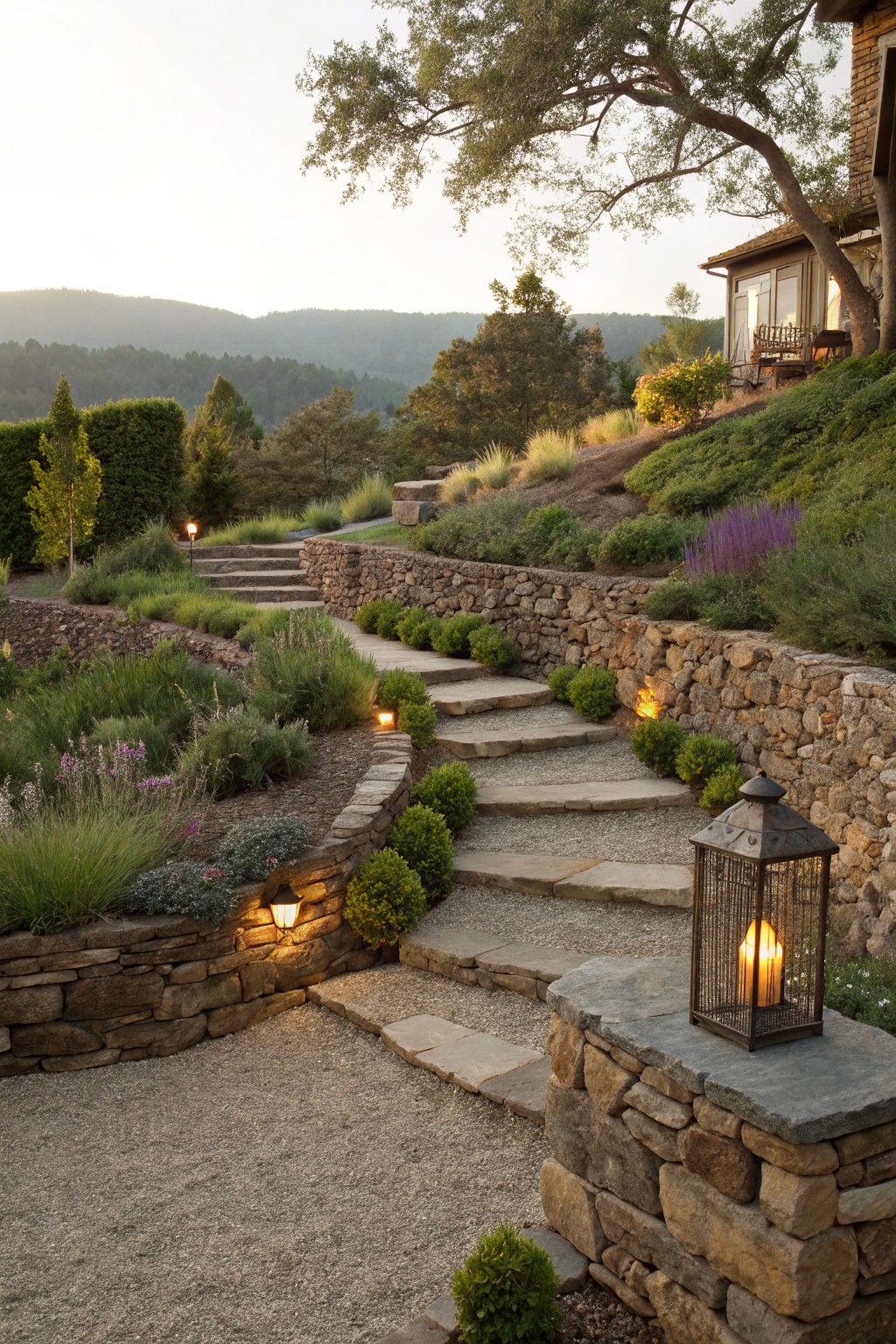
These dry-stacked rock walls do a great job holding back soil on a hillside while framing a simple winding path of flagstone steps. They give the garden some structure without looking too rigid. The natural stones blend right into the landscape, and small touches like wall-mounted lanterns add light for evening walks.
You can use this setup on any yard with a drop-off or hill. It works best where you want to connect different levels, like from a patio up to a house or seating area. Pick local stone to keep costs down and make it feel at home… just make sure the walls are built solid by someone who knows retaining work, since slopes can shift over time.
Terraced Stone Walls for Sloped Yards
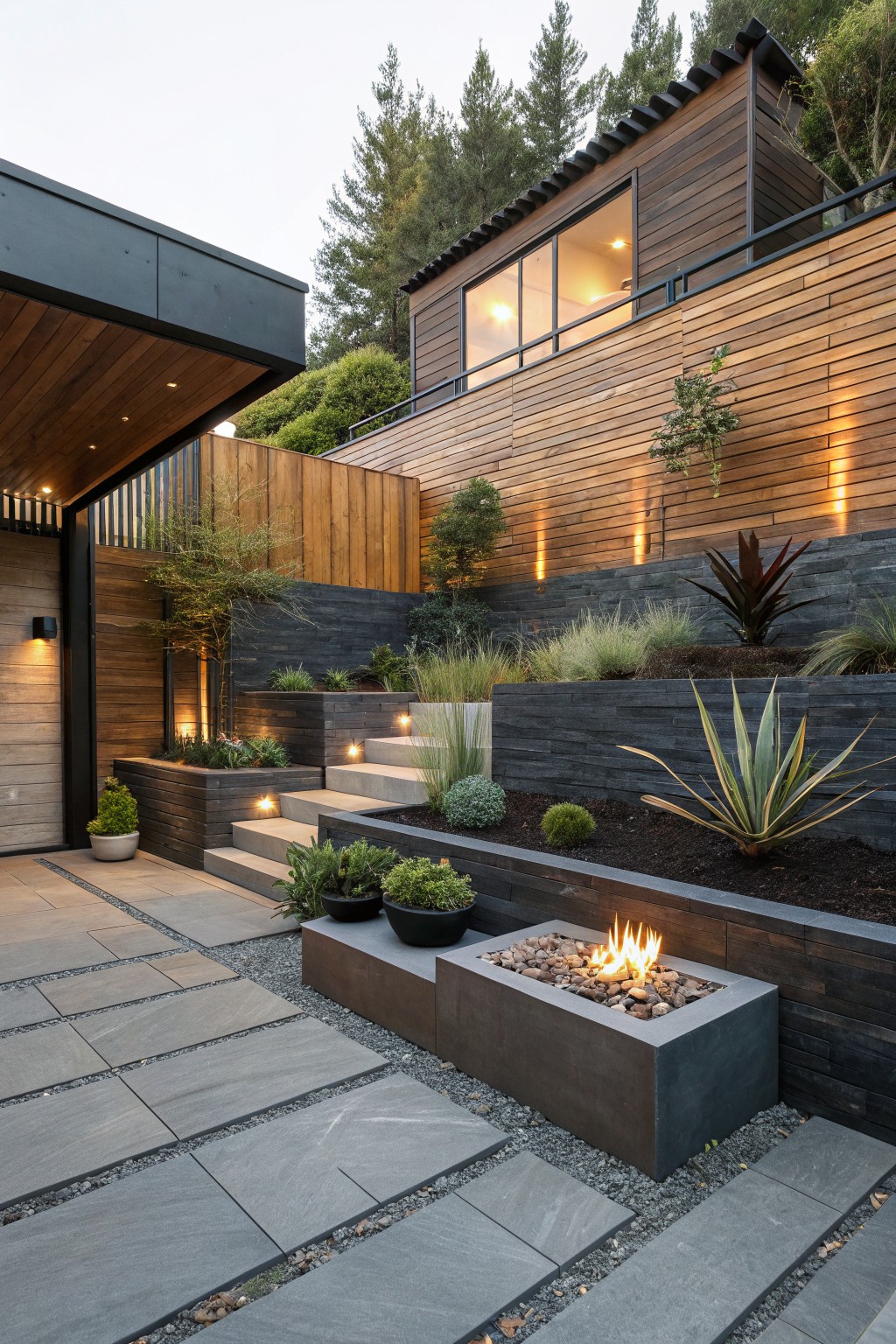
Strong retaining walls like these turn a steep hillside into usable garden space. Built from dark slate blocks, they stack up neatly to form flat terraces where you can plant tough succulents and grasses. The walls do the heavy work of holding soil back while steps weave through to connect it all to the patio below.
This approach fits homes on uneven lots, especially in dry areas where low-maintenance plants thrive. Keep the stone dark to blend with wood siding nearby. Watch the scale so walls don’t overwhelm smaller yards… and add edge lights for nighttime paths.
Stone Retaining Walls for Sloped Sites
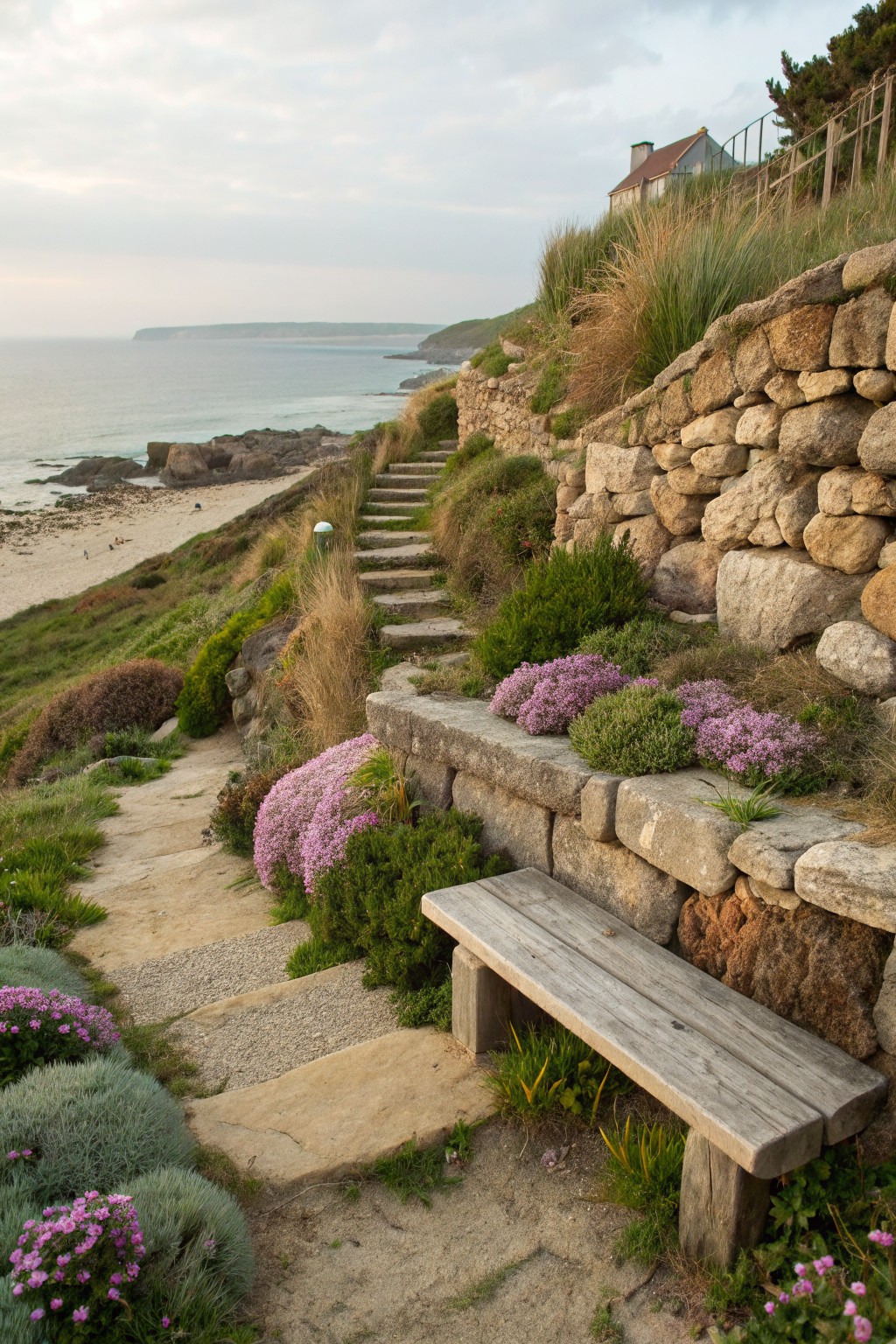
One solid way to handle a steep drop in your yard is with these rough stone retaining walls. They stack up naturally from local rocks, holding back soil without looking forced. Plants tuck right into the crevices, like those pink cushions and grasses here, so the wall feels part of the land instead of fighting it. It keeps erosion in check and makes the slope usable.
Put this to work on hillsides near the coast or anywhere soil shifts easy. Stack bigger stones at the base for strength, then fill gaps with low growers that won’t overload the wall. A simple bench along the way adds a spot to sit. Works best with older stone houses or cottages, but watch the drainage so water doesn’t pool behind.
Tiered Stone Retaining Walls on a Slope

These tiered stone retaining walls turn a tricky hillside into a real feature. Built from rugged natural rock, they hold back the earth while creating flat levels for plants and paths. The steps cut right into the tiers, with terracotta tile risers that add some color without overdoing it. It’s a solid way to handle slopes that feels natural, not forced.
You see this kind of setup working best around homes with a bit of Spanish or Mediterranean style, especially in drier spots where olive trees and succulents fit right in. Stack the stones dry or with minimal mortar for that aged look, then tuck in big terracotta pots for instant green. Just make sure the walls are engineered right if the slope is steep. Keeps erosion in check and gives your yard some backbone.
Rugged Stone Retaining Walls for Sloped Gardens
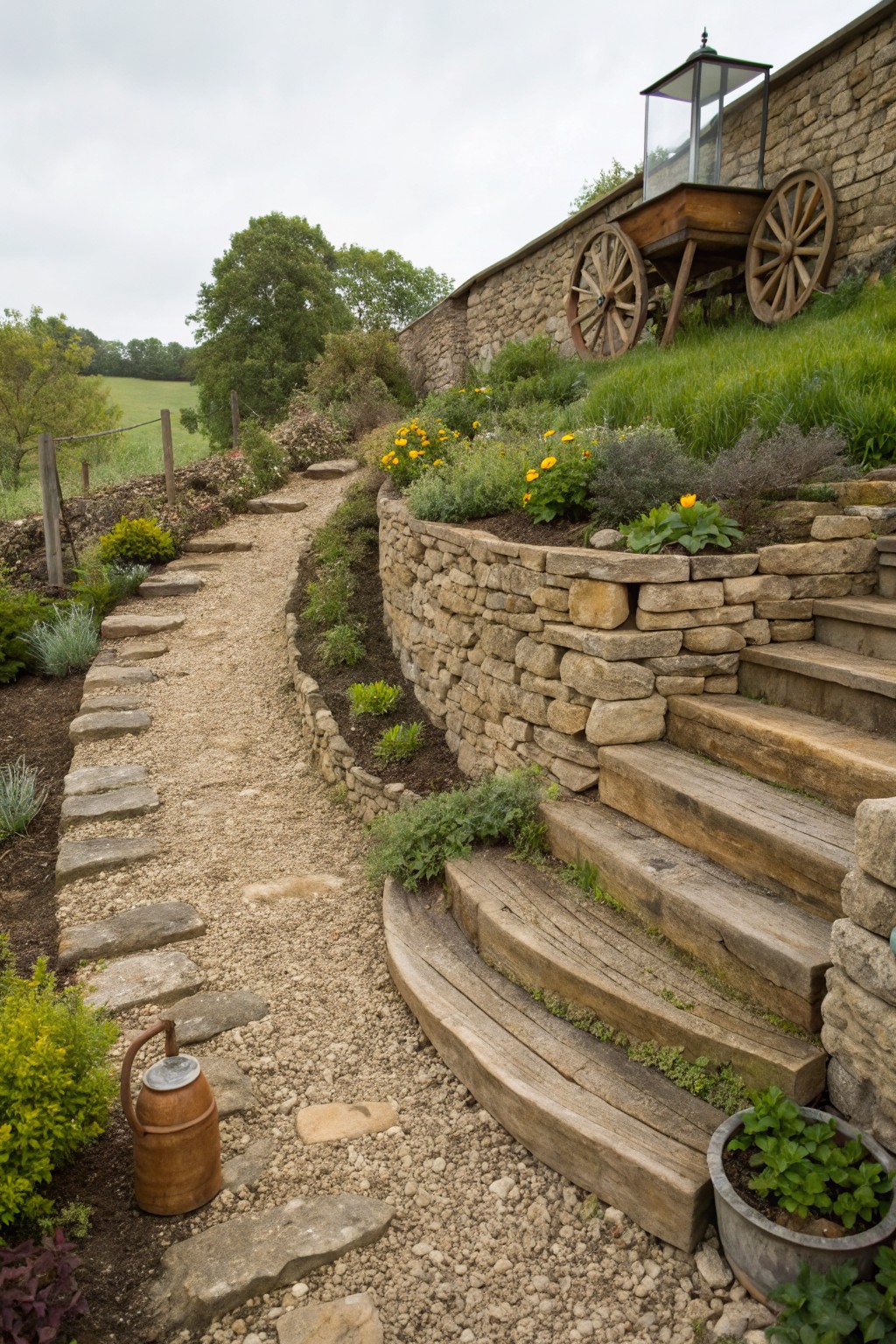
These walls do a solid job holding back soil on a hillside. Built from rough, uneven local stone, they form terraces that let you plant right into the levels. A gravel path winds alongside, with wooden steps curving up where needed. It keeps everything stable and looks like it grew there naturally.
Use this setup in yards with a drop-off, especially if you want low-key garden beds without big earth-moving. Stone like this blends with countryside spots or older homes. Watch the drainage though, or water can pool behind the walls.
Moss-Covered Stone Retaining Walls

Those rough stone walls stacked up the slope catch your eye right away. Covered in thick green moss, they hold back the earth without looking stiff or new. The moss softens the rocks and ties right into the plants around them. A simple path of flat stones runs alongside, making the whole thing feel like it grew there naturally.
You can pull this off on any backyard hill that needs taming. Start with local fieldstone or whatever rugged rock you find cheap. Let moss and ferns take hold over time, or seed it yourself. It suits cottage gardens or Asian-inspired yards best. Just make sure the base is solid so it won’t shift. Add a lantern nearby… and you’ve got quiet drama.
Rugged Stone Retaining Walls Turn Slopes into Gardens
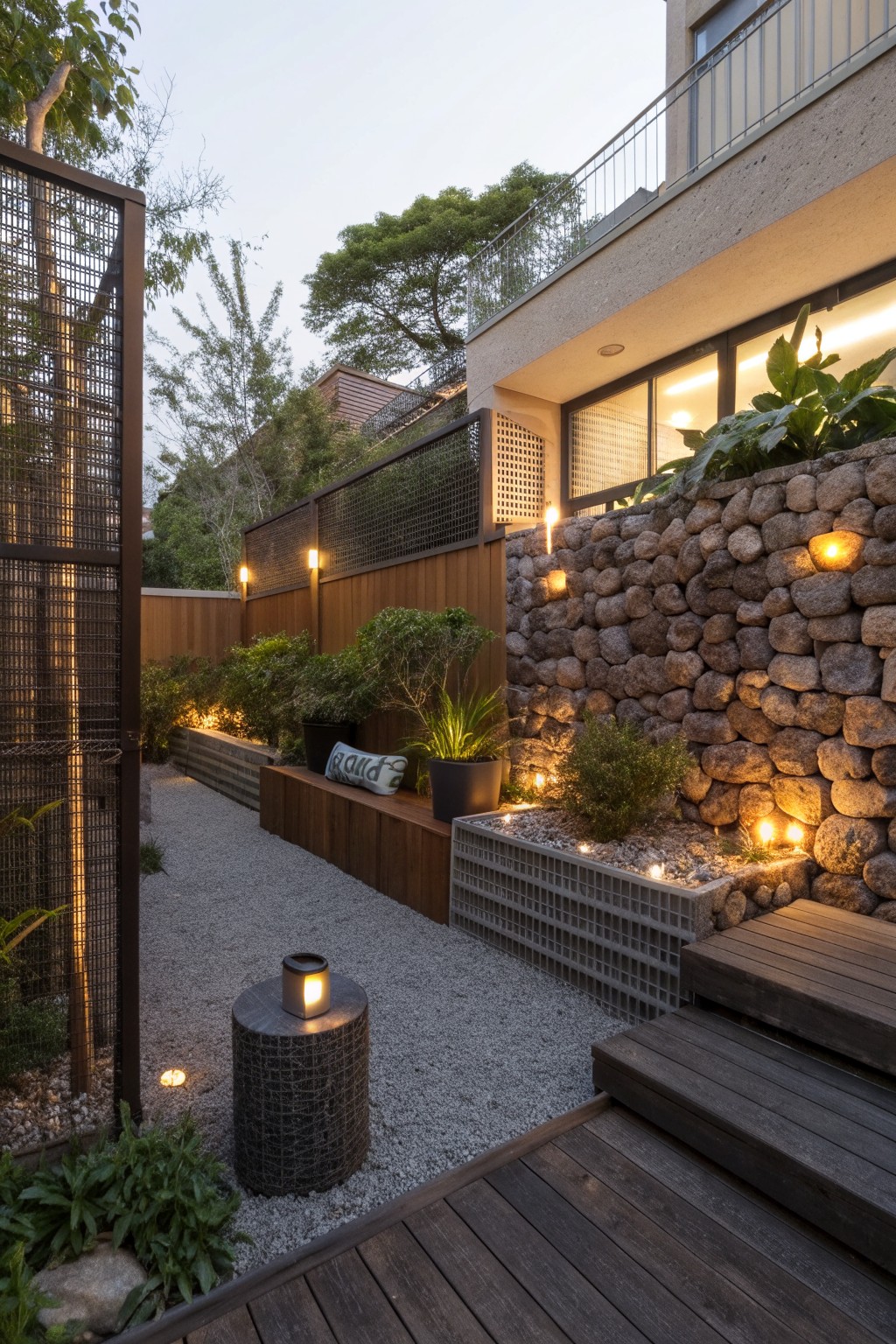
Sloped yards can be tough to work with. But this setup shows how a sturdy wall of rough boulders fixes that. Stacked naturally without mortar, it holds back soil and creates a flat gravel path below. The texture from those uneven stones gives the whole area a grounded, outdoorsy feel that fits right in with nearby trees and shrubs.
Try this in any backyard that drops away from the house. Build the wall tall enough for your slope, then add plants at the base and simple uplights along the rocks for night interest. It suits modern or natural-style homes best. One thing, get a pro to check stability so it lasts.
Stone Retaining Walls with Built-In Waterfall
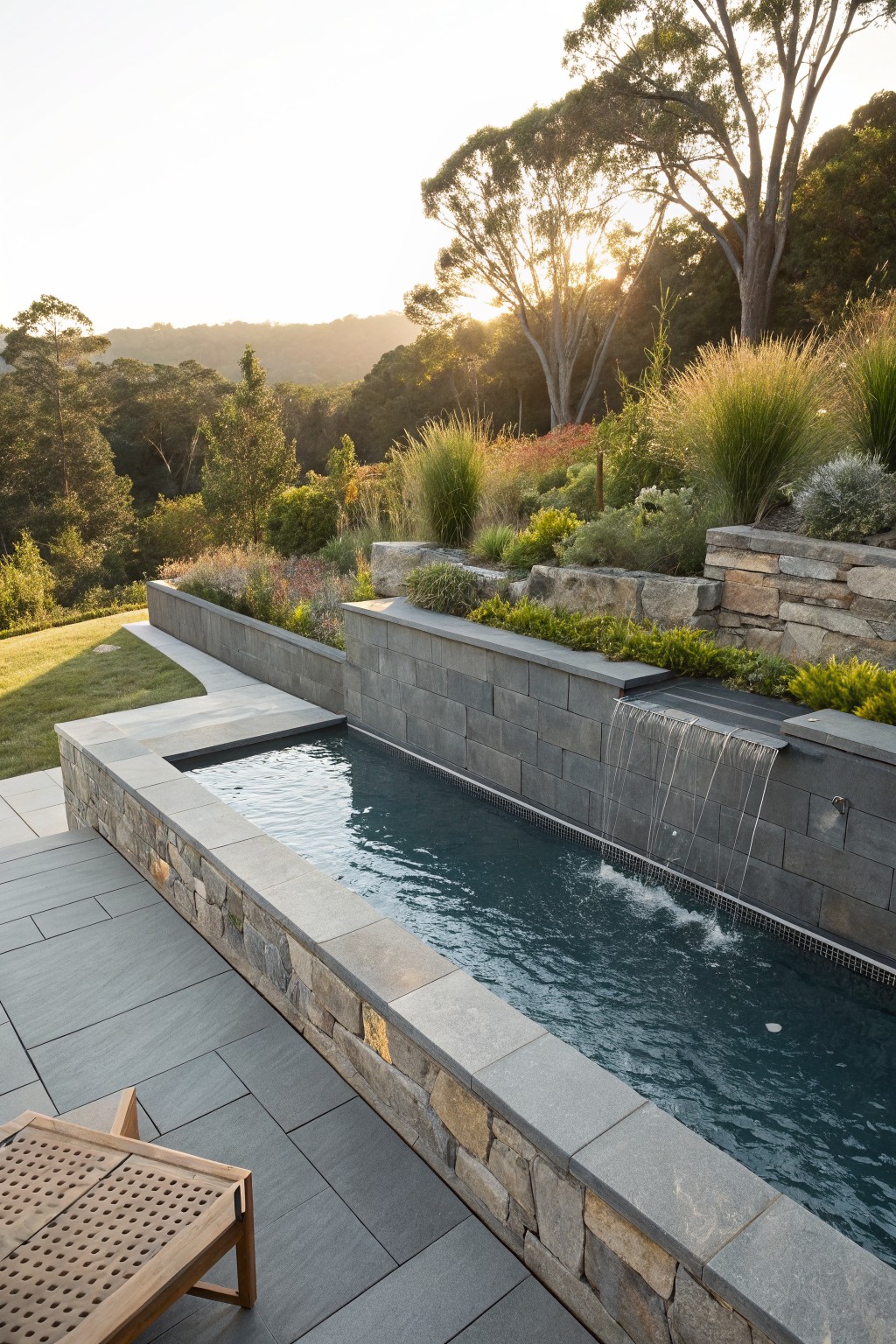
Tall retaining walls like these make a real statement in sloped yards. Here, dark slate blocks stack up to hold back the hillside, while plants and grasses soften the edges along the top. The best part is how the wall turns into a waterfall, with water sheeting down into a long narrow pool below. It keeps the whole setup feeling structured but natural, especially with the mix of cut stone and rougher boulders.
You can pull this off on any decent slope where you need to level things out for a patio or pool area. Go for local stone to blend with the surroundings, and keep the pool slim if space is tight. It works great for low-maintenance spots since the hard surfaces mean less mowing around the base. Just make sure the engineering is solid for the water flow.
Tiered Stone Retaining Walls on a Slope

Steep yards can feel tricky to use, but these tiered stone retaining walls fix that problem nicely. Built from solid limestone blocks, they create flat levels for planting and steps right into the design. You see pairs of tall cypress trees lining the walls, plus big urn planters at key spots. It keeps everything stable while looking natural against the house above.
This works best on hillside lots where you want more usable garden space without big earth-moving costs. Pick stone that matches your home’s color, like this warm beige tone, and plant low hedges or grasses along the edges for hold-down. Steeper slopes need thicker bases at the bottom. It’s practical for any size yard, just scale the tiers to fit.
Rugged Rock Walls Along a Curving Path
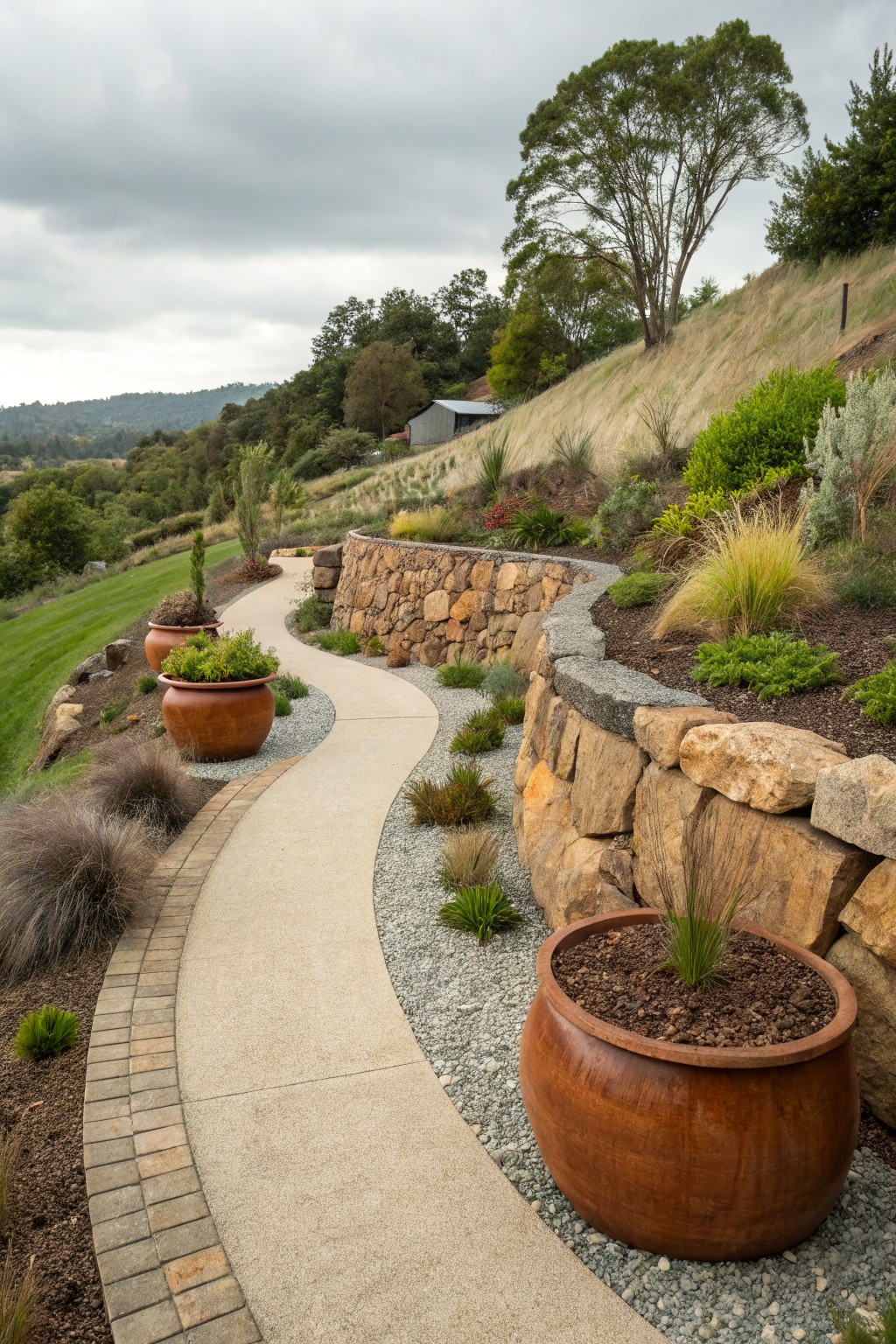
Sloped yards can feel tricky to work with. But these rugged rock retaining walls change that. They hug a smooth concrete path that winds gently uphill, using irregular stones stacked in a natural way. Large terracotta pots sit right at the base, adding scale without overwhelming the stone. It creates levels for plants and keeps everything from sliding down.
This setup works best in hilly spots where you want structure but not something too formal. Use local rocks for a seamless look that blends with the landscape. Add grasses and low shrubs in the pockets to soften it up. It’s practical for homes with big yards, low upkeep once planted, and holds up well over time.
Retaining Walls Built for Fire Pits and Plants
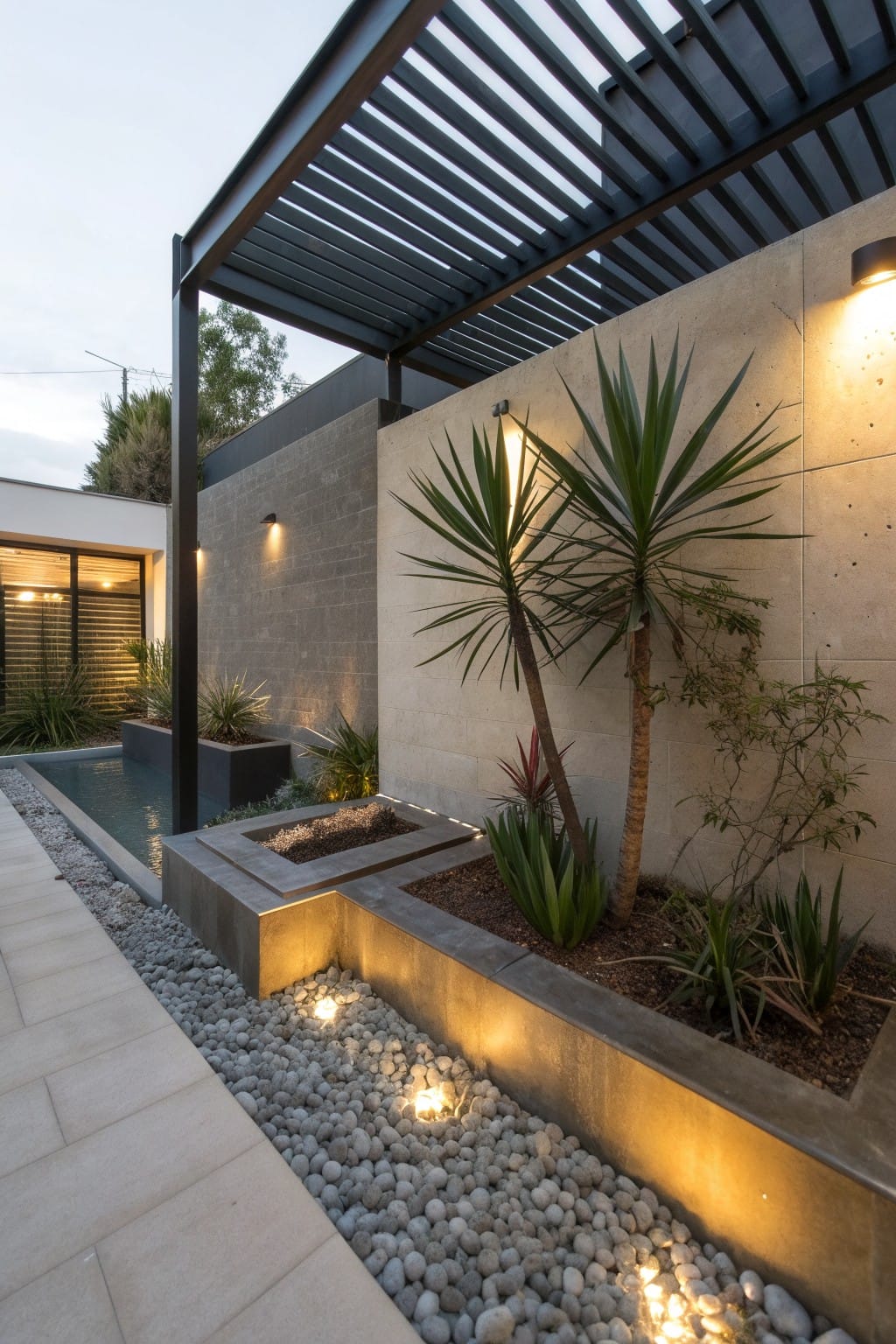
One smart way to handle sloped yards is with low concrete retaining walls that pull double duty. Here, the wall holds back soil for tall yucca plants while the top edge forms a clean base for a long gas fire pit. The textured concrete gives it a solid, modern feel that ties right into the poolside setup. White pebbles line the path below, keeping things tidy without grass to mow.
You can pull this off in smaller backyards or courtyards where space is tight. Use precast concrete blocks for easier install, and tuck in drought-tolerant plants like agaves that won’t overload the wall. Add low-voltage lights under the ledge for evening glow. It works best on modern or midcentury homes… just make sure the engineer checks the load if your slope is steep.
Terraced Stone Walls for Hillside Gardens

Steep slopes can be tough to work with in a yard. But these rugged stone retaining walls turn the problem into levels of usable space. Each wall holds back soil while creating flat planting beds and wide steps that climb the hill. Small lights tucked into the rock pockets light the way at dusk. Olive trees and low shrubs fill in the pockets naturally. It makes the garden feel structured but not stiff.
This setup works best on properties with natural slopes, like in hilly or coastal areas. Use local fieldstone for a seamless look that blends with the landscape. Keep walls under four feet high for safety, or add railings on steps. Pair with gravel paths and drought-tolerant plants to keep maintenance low. It’s practical for bigger lots where you want to expand outdoor space without big grading costs.
Hillside Retaining Walls with Recessed Lights
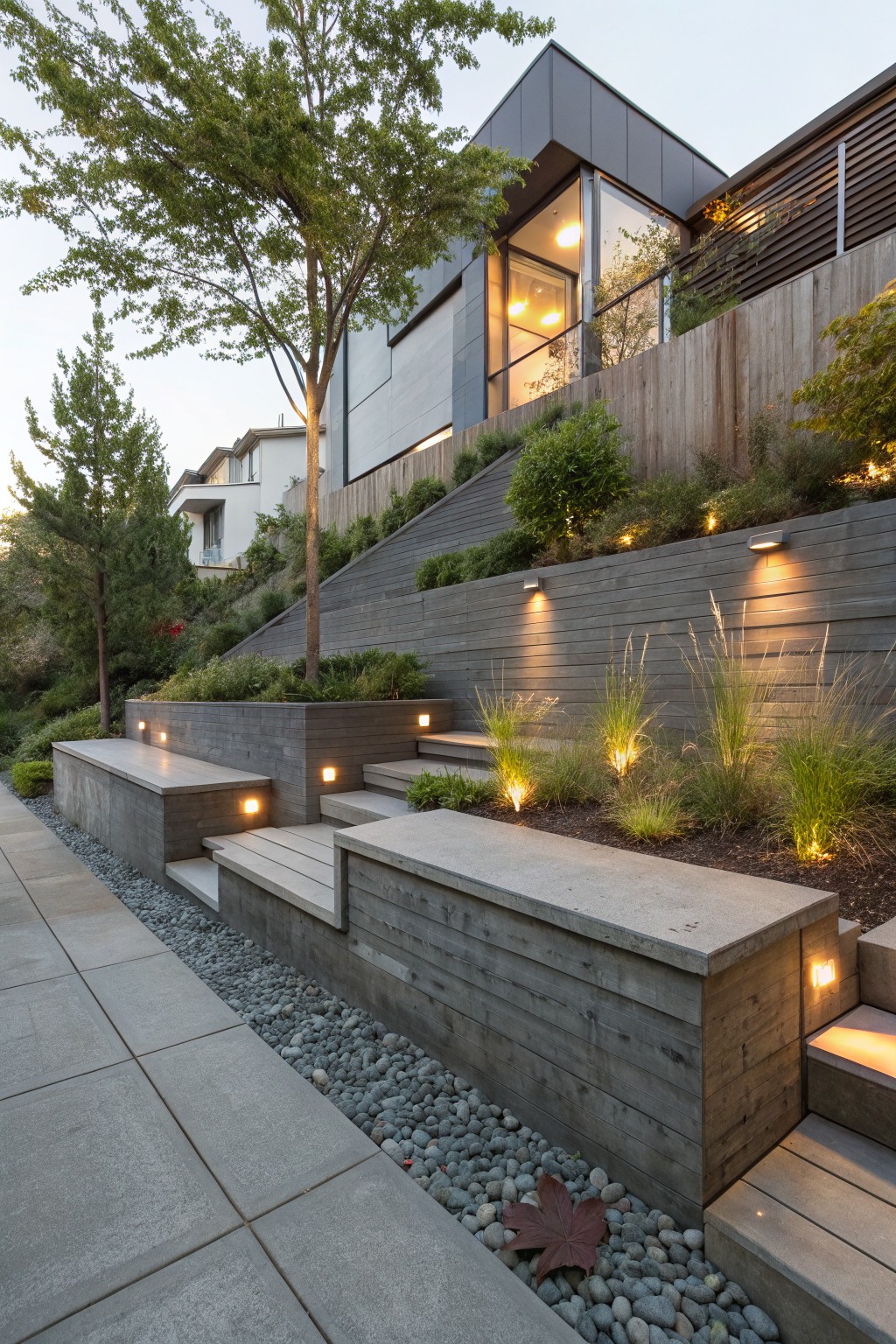
These retaining walls use stacked concrete blocks to tame a steep slope. They form clean terraces that hold back soil while making room for steps and low plants. Small recessed lights tucked into the blocks and steps glow softly at dusk. That lighting turns a practical fix into something you actually notice and enjoy walking through.
You can pull this off on any hillside yard needing structure. Stack blocks in a dry-fit style or mortar them for stability, then add drainage behind to avoid water issues. Tuck in tough grasses like fountain grass for color without much upkeep. It suits modern homes but works on others too if you pick a block texture that blends.
Frequently Asked Questions
Q: Can I tackle a rock retaining wall as a DIY project? A: Grab a weekend or two if your wall stays under three feet tall. Rent a mini excavator to dig the trench right and use landscape fabric to keep soil from sneaking through the rocks. Call in pros for anything taller, they handle the engineering to keep it stable.
Q: How do I pick rocks that fit my yard’s vibe? A: Wander local quarries or suppliers and grab samples to test in your space. Match the rock size to your slope, bigger chunks for steeper drops. Layer colors and textures that echo nearby plants or paths.
Q: What’s a ballpark cost for one of these walls? A: Expect $20 to $50 per square foot, rocks eat up half that budget. Shop bulk from nearby sources to shave dollars, and factor in delivery fees. Shorter walls keep your spend lower.
Q: How often do these walls need maintenance? A: Check them yearly for shifting rocks or erosion after big rains. Tuck back any loose stones and refresh gravel behind if water pools. They hold up great with that light touch.
