

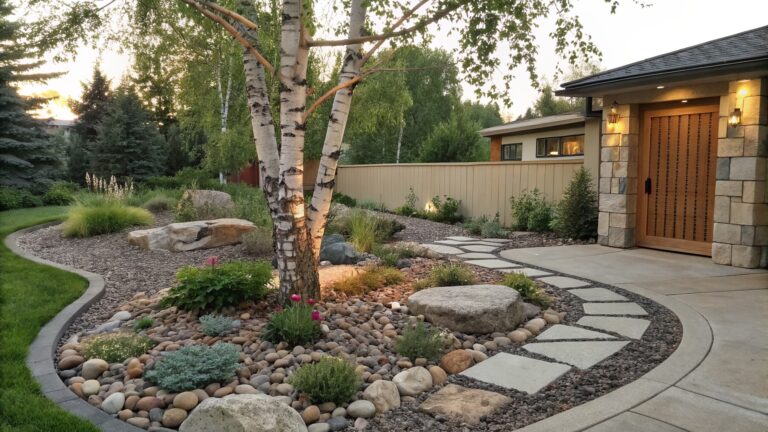
I’ve noticed that the space right around a tree trunk often decides if a yard looks tended or thrown together.
Bare soil or patchy mulch there catches the eye first on any walk through the garden.
Rocks sort that out.
They layer in texture that complements the tree’s bark and roots while edging beds cleanly for better flow.
I’ve adapted a couple of these setups in my own yard, and they hold up well as the seasons shift things around.
Edging Trees with Stacked Rocks
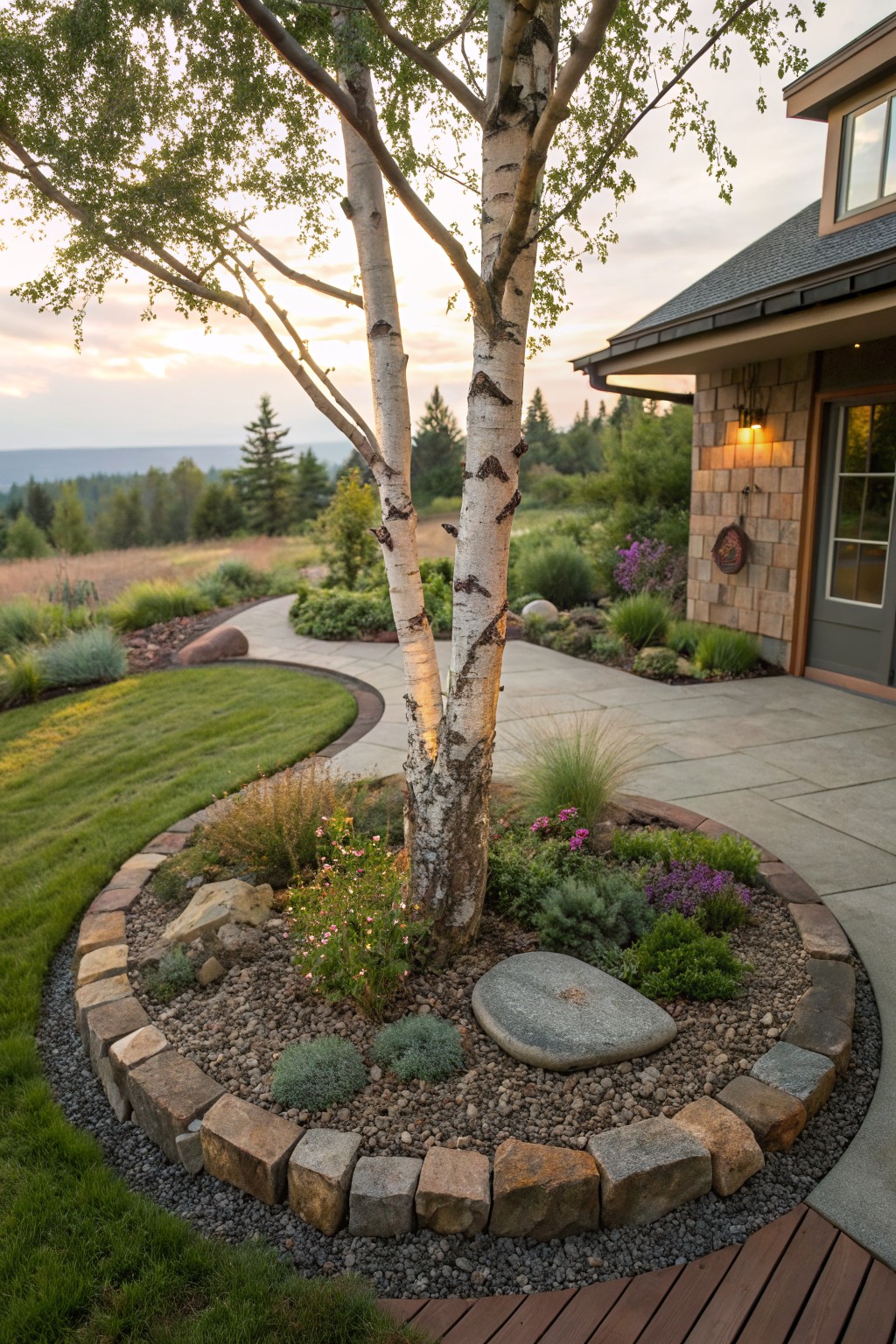
One straightforward way to handle the area right around a tree is with a border of stacked, rough-cut rocks. It defines the bed nicely, holds back the gravel mulch, and gives some rugged texture without much upkeep. Low plants tucked in along the edge fill it out just enough to soften things.
This works well in bigger yards or spots near a patio where you want clean lines but not a fussy look. Pick stones that match your local area for that natural tie-in, and stick to drought-tolerant stuff inside. Watch the height though. Too tall and it starts looking like a wall.
Rock Edging Along Curved Paths Around Trees
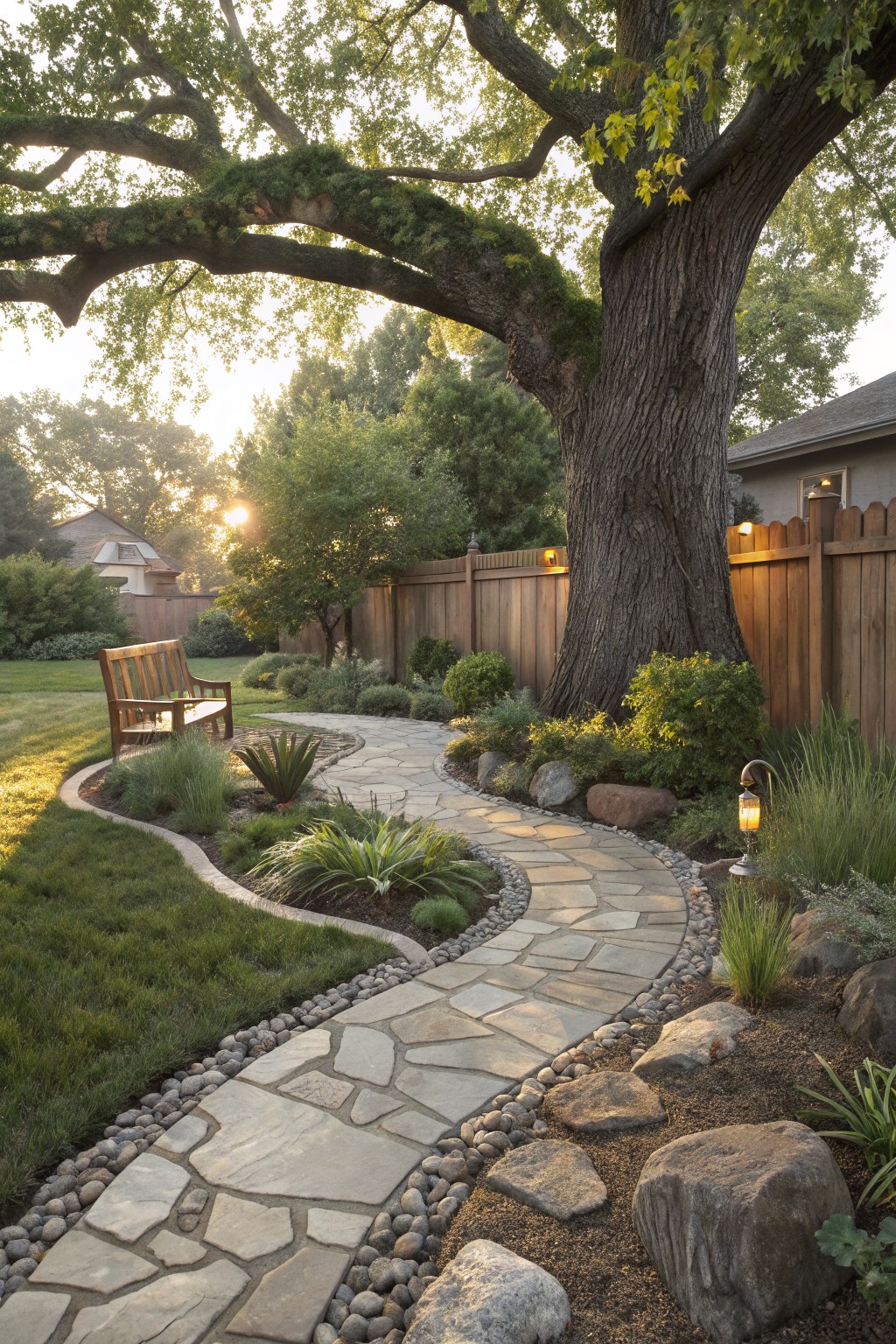
One nice way to handle landscaping around a big tree is to run a winding flagstone path right by its base, then edge it all with pebbles and boulders. The small rounded pebbles fill in tight spots smoothly, while bigger rocks add weight and keep the path from shifting. It pulls the eye along without competing with the tree, and the texture from the mixed stones gives the whole yard more interest.
This works best in backyards where you need a practical walkway but want to protect tree roots from foot traffic. Pick stones in natural colors that match your soil, layer low plants like grasses in the beds, and keep mulch minimal. Suits older homes with established trees… just avoid piling rocks too high against the trunk to let it breathe.
Circular Gravel Bed for Tree Bases
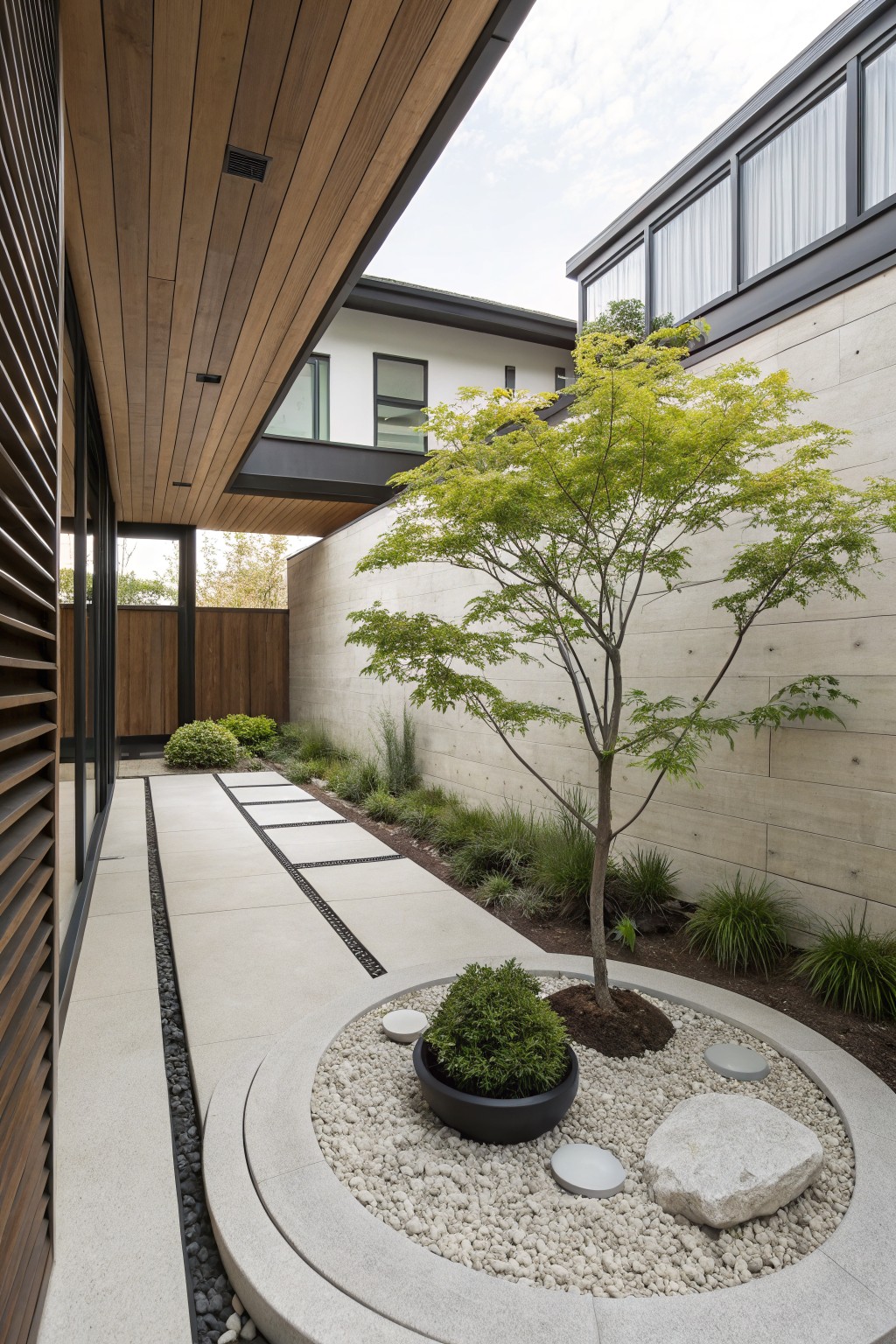
One straightforward way to landscape around a tree is with a wide circle of smooth white gravel right at the trunk. Here it’s edged in concrete and filled with a mix of larger boulders, a black pot holding a clipped bush, and a few flat stones. That setup adds real texture fast, especially against plain walls and paths. Keeps weeds down too.
Try this in a narrow side yard or courtyard where grass won’t grow well. Pick gravel that contrasts your hardscape, like light tones on gray concrete. Size the circle big enough for the tree’s drip line… and add just two or three big rocks so it doesn’t look busy. Works best with one focal tree, not a group.
Rock Gardens Around Tree Bases
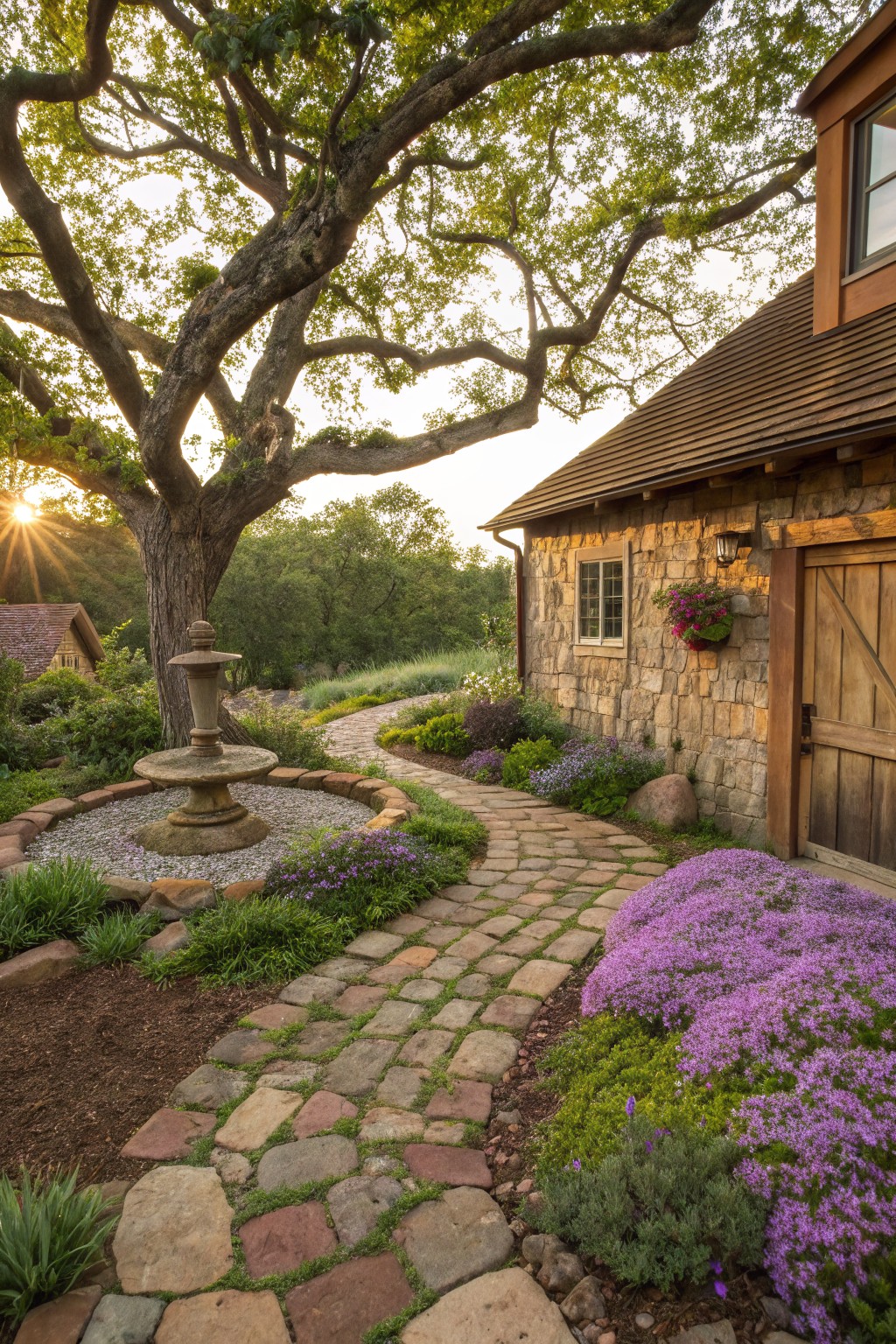
One straightforward landscaping idea is to build a simple rock garden right around the base of a mature tree. Here, a gravel circle edged with larger stones frames a stone fountain, with low purple flowers tucked in for color. It defines the root zone cleanly, cuts down on mowing, and gives the trunk some texture that stands out against all that rough bark.
This setup fits well near a house or walkway, like leading to a garage. Pick rounded gravel for easy drainage, stack bigger rocks loosely for the border, and add tough ground covers that won’t fight the tree roots. Skip it if your soil stays soggy… water could pool.
Boulders and Pebbles Along a Curving Path
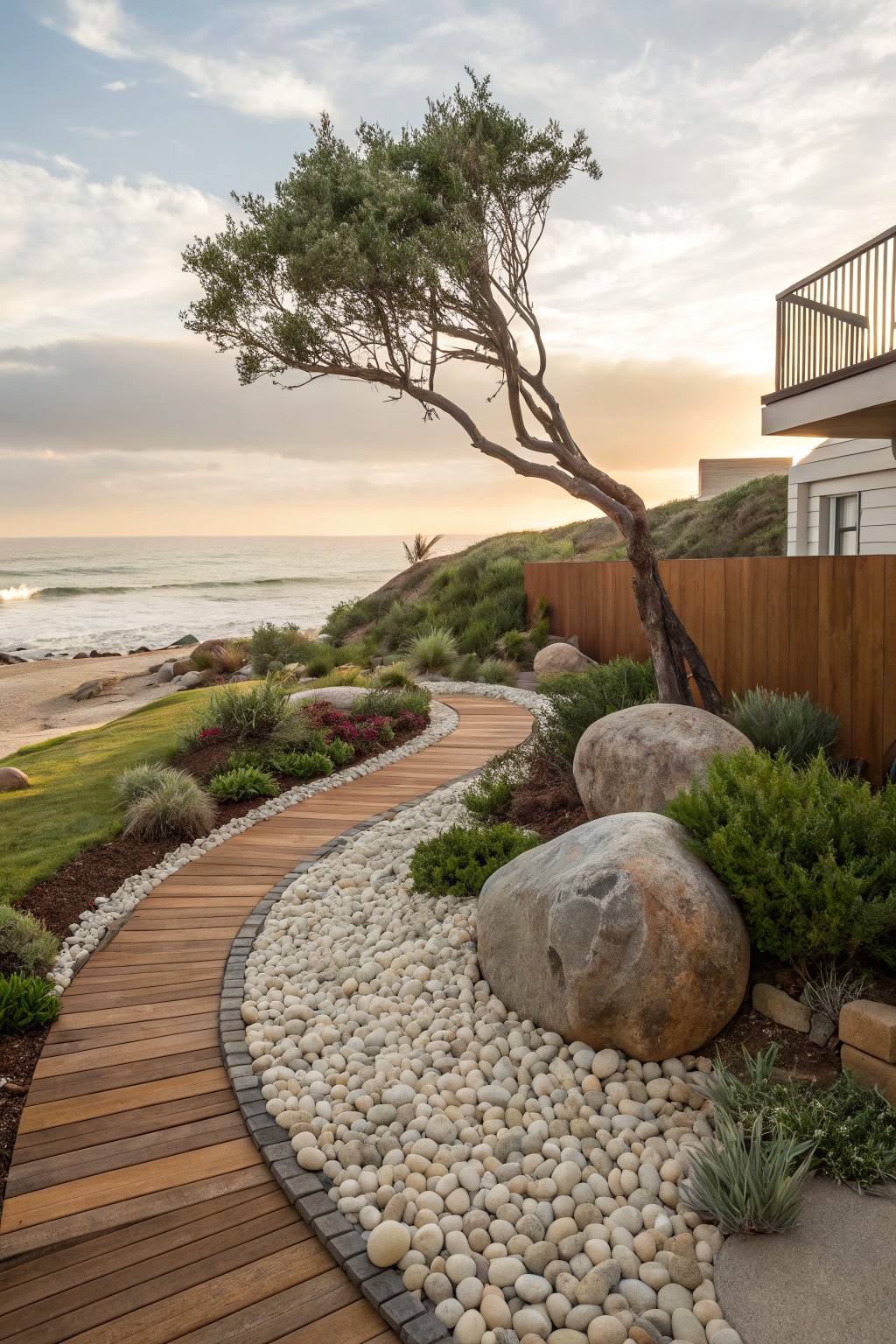
Big boulders clustered near a leaning tree, edged with smooth white pebbles around a wooden walkway. This mix gives the garden real texture and pulls you right through to the beach view. The rocks stay put, no mowing needed, and they make that path feel like part of the landscape.
Try it on a side yard or entry walk where you want low fuss. Pick boulders that match your local stone for a natural look… scale them to your space so they don’t overwhelm. Suits coastal spots or anywhere with slopes, just ensure good drainage under the pebbles.
Gravel and Rocks Around Tree Bases
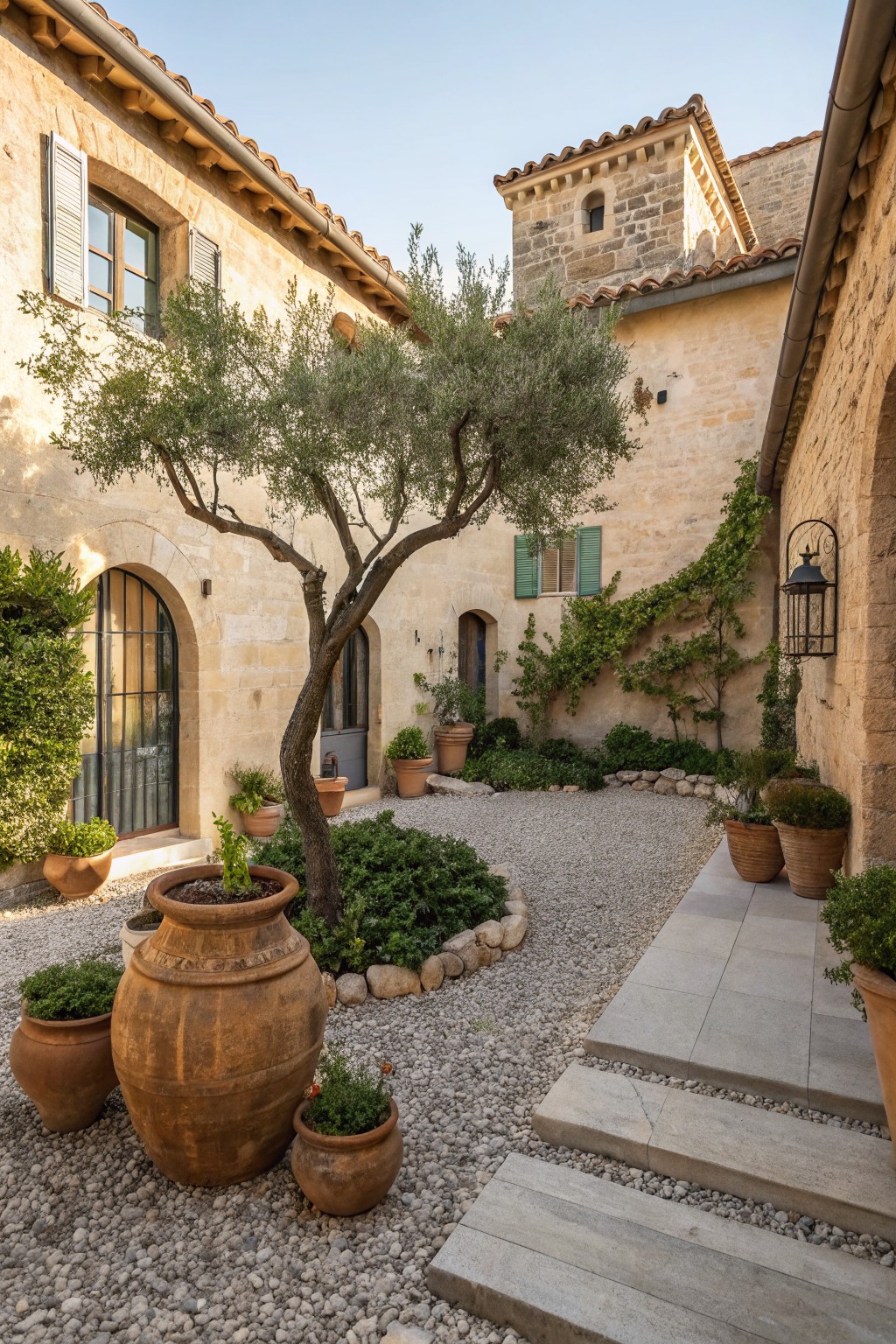
One straightforward way to add texture to a yard is circling the base of a tree with gravel and larger rocks. In this courtyard setup, a mature olive tree sits right in the middle of a gravel bed edged with stones and low plants. It keeps things simple and low maintenance while letting the tree stand out. The rocks give a natural, earthy feel that ties into stone walls without much fuss.
You can pull this off in small courtyards or side yards where space is tight. Just clear the area under the tree, lay down landscape fabric, then add gravel topped with a few bigger rocks for contrast. Mix in terracotta pots with herbs or small shrubs around the edge. It works best on homes with a Mediterranean or rustic look… watch for too much gravel overwhelming a shady spot, though.
Winding Stone-Edged Paths Around a Tree
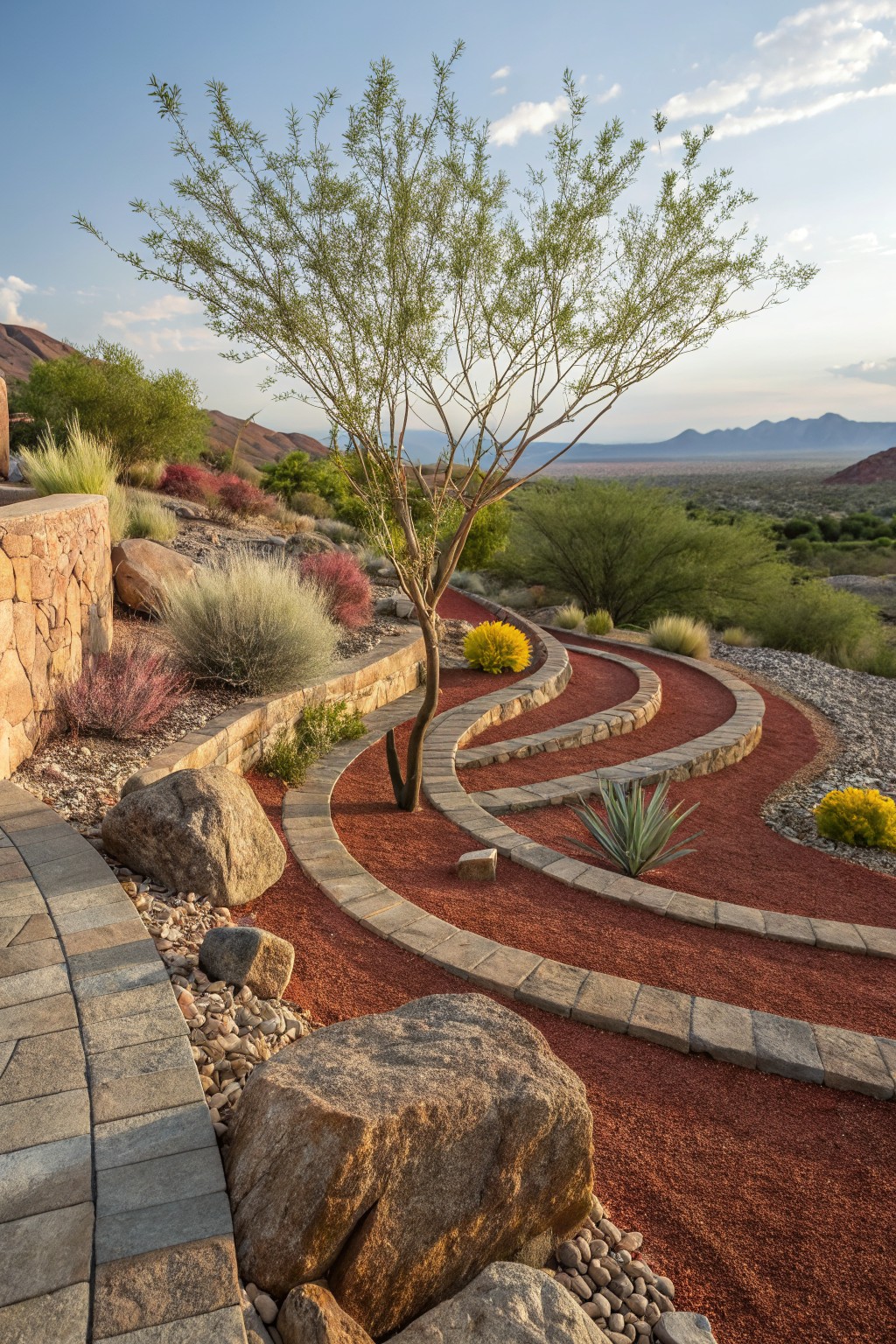
One simple way to add interest around a tree is with curving paths made from red gravel and lined with low stone walls. Here the paths swirl right up to the trunk of a palo verde tree, mixing in big boulders for a rugged feel. It keeps things low maintenance while guiding the eye through the space.
You can pull this off in any dry yard or sloped spot where you want definition without grass. Stick to gravel that matches your soil color, and tuck in a few native plants along the edges. Just watch the scale, the rocks shouldn’t overwhelm the tree.
Pebble Strips Between Pavers and Grass
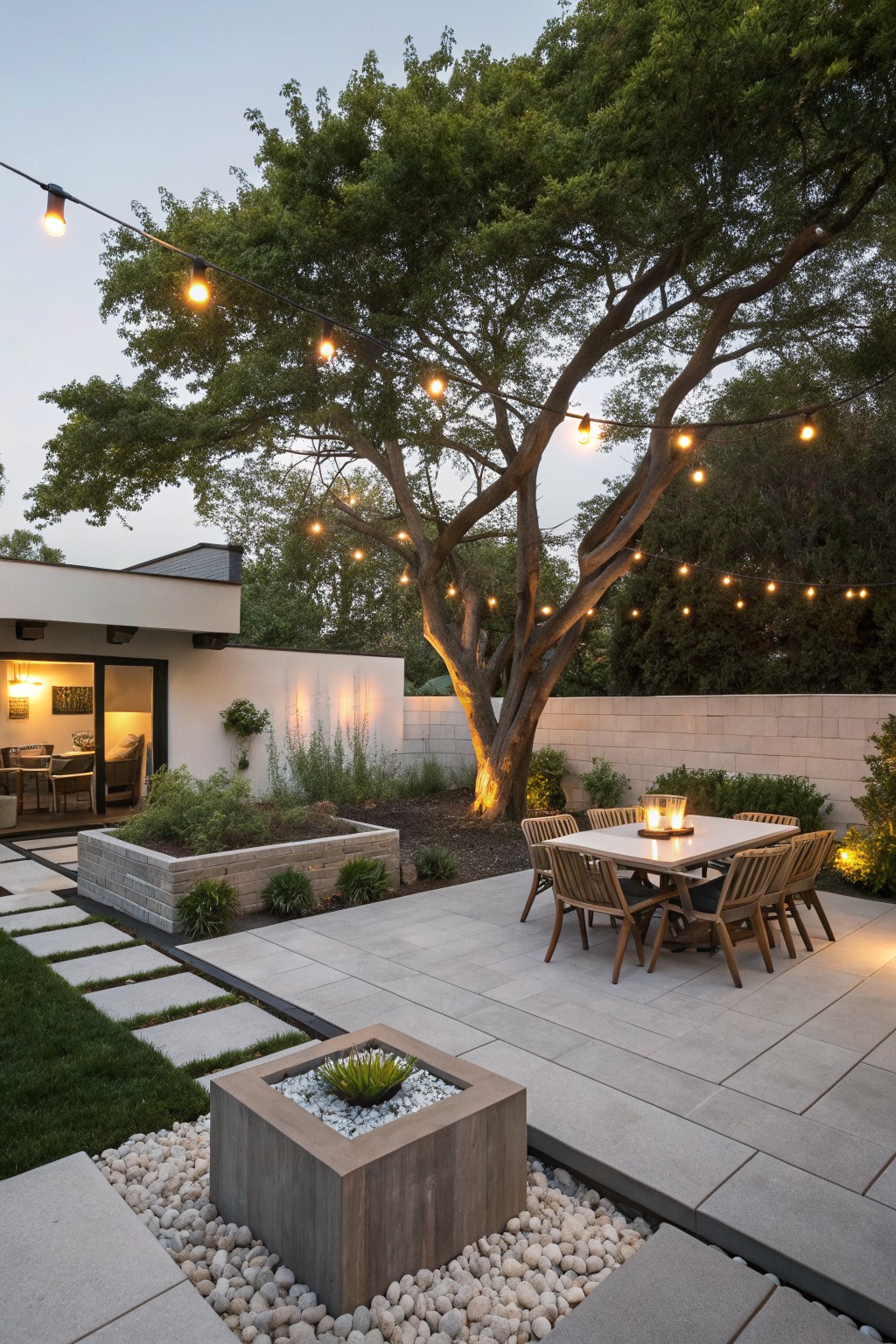
White pebbles laid in a simple strip where the patio pavers meet the lawn add nice texture without much fuss. They pick up the evening light from the string lights overhead and keep the edge looking sharp next to the tree. It’s a clean look that fits right into the yard flow.
You can pull this off in most backyards with a patio setup. Line the strip with fabric first to stop weeds, then dump in smooth river rocks. It suits modern houses best, or any spot near a tree where mowing meets hardscape. Just keep the strip narrow so it stays tidy.
Stone Tree Ring in a Curved Path
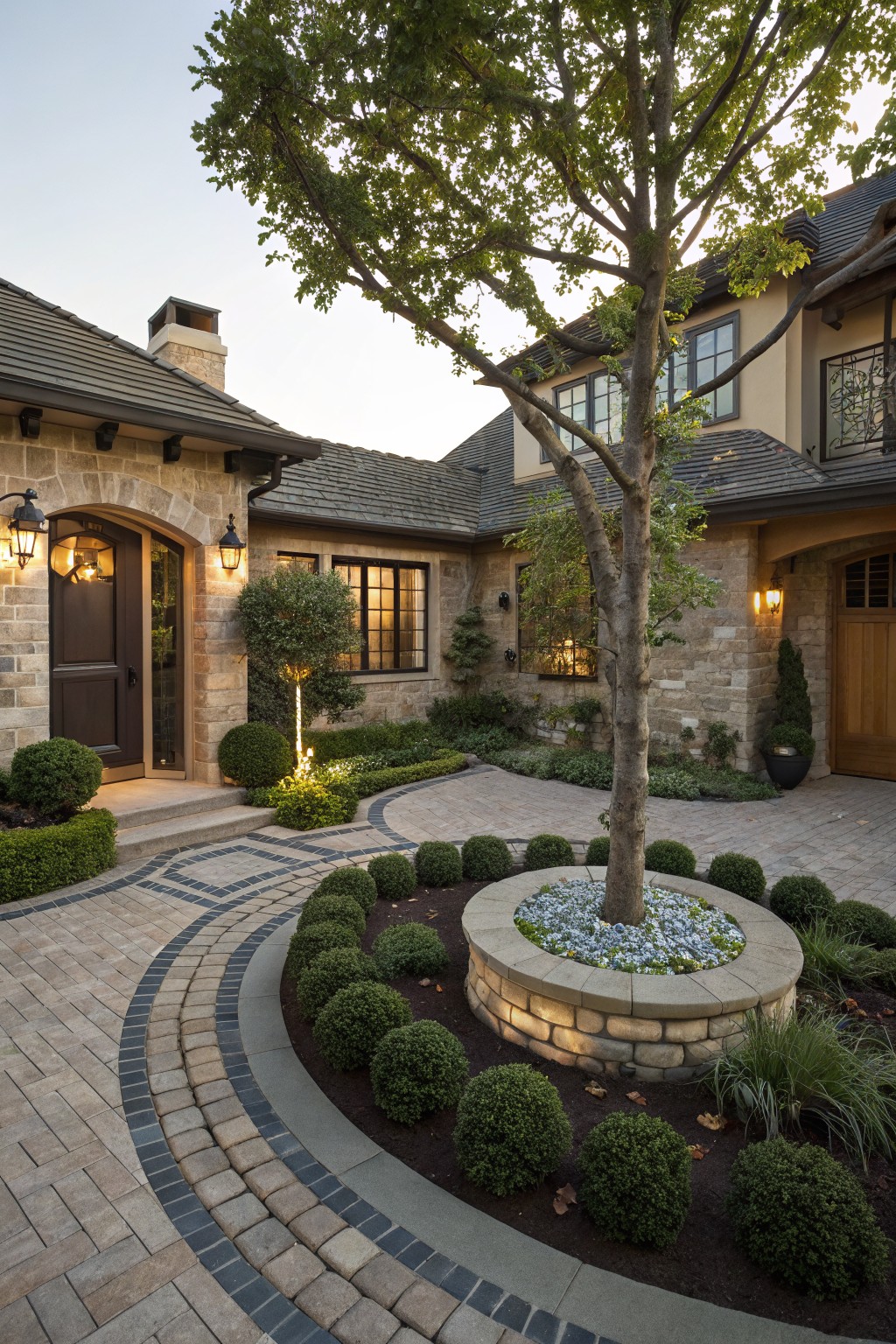
One straightforward way to handle landscaping around a tree is building a low stone ring right into your pathway. Here, a young tree sits in a raised limestone circle packed with white pebbles and a few low blue flowers. It ties the path’s brick curves together nicely and keeps everything contained. The boxwood shrubs planted just outside add a soft green edge without crowding the walk.
This works best in front yards or driveways where you want a clean focal point. Pick stones that match your house, like these light ones against the stucco. Leave room around the trunk for growth, and refresh the pebbles now and then. Suits most homes, especially if you’re after low fuss.
Curved Flagstone Path Around a Tree
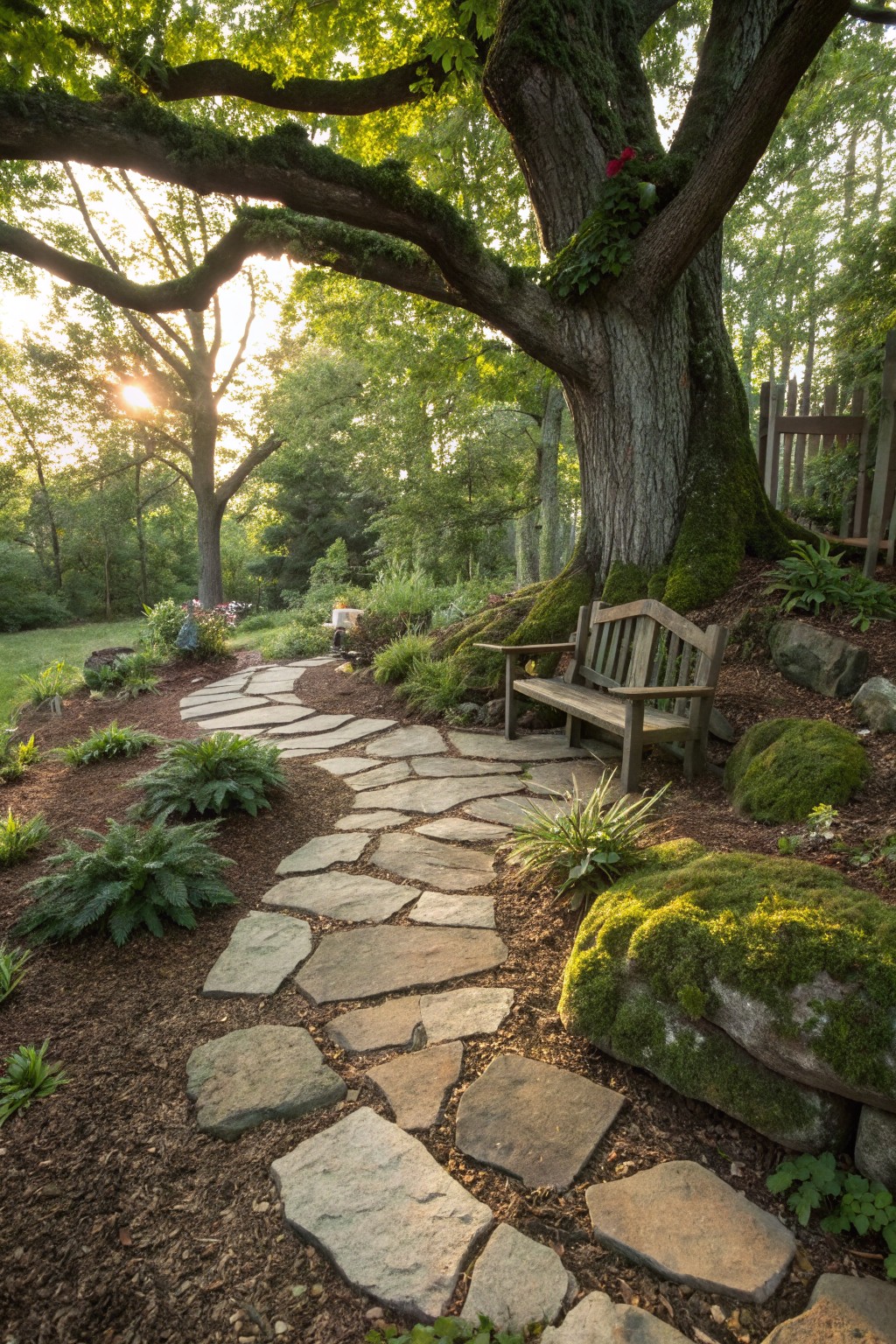
A winding path of irregular flagstones curves right around the base of a big old tree, blending into mossy rocks and low plants. It pulls your eye along without feeling forced, and those textured rocks at the trunk add real interest up close. The bench at the end makes it feel like a spot to pause.
You can do this in any shady garden spot with a mature tree. Lay the stones loose over soil or mulch so roots have room to breathe, then tuck in mossy boulders for that aged look. It suits sloped yards especially well… keeps things from getting muddy after rain.
Rocks Around Trees in Linear Planters
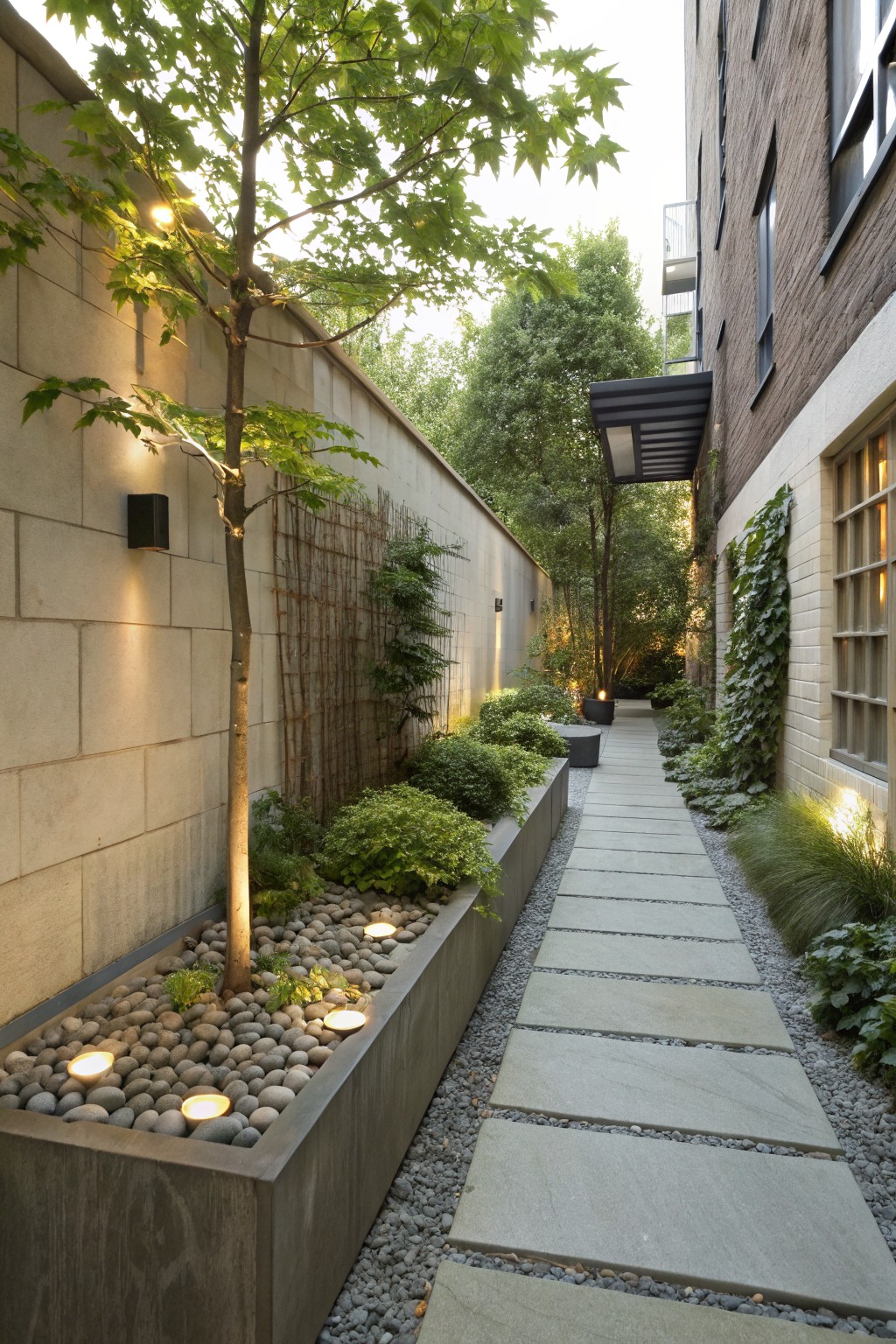
One easy way to add texture around a tree is to set it in a long concrete box planter filled with smooth pebbles. Here the slim trunk sits right in the middle of rounded stones, tucked along a stone walkway. It keeps mulch from washing away and gives the base a clean, layered look that fits tight spaces.
This works best in narrow yards or passages where you want definition without crowding the path. Go for light-colored pebbles to bounce light around, and pair with ground covers spilling over the edge. Skip it in big open lawns, though. It shines where architecture meets planting.
Rock Mulch in a Raised Tree Bed
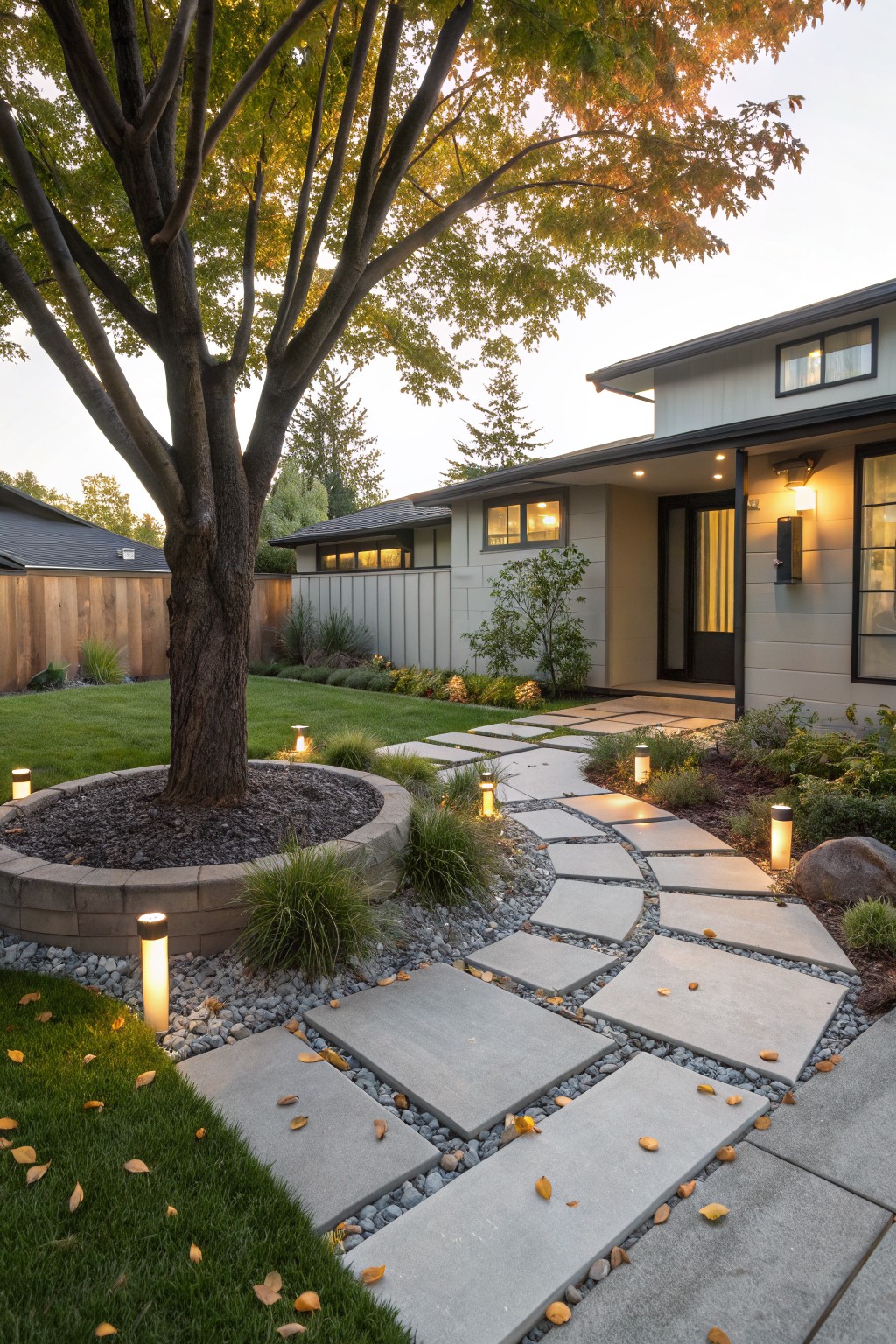
One straightforward way to handle the area right around a mature tree is a raised concrete bed filled with dark rock mulch. It keeps the grass from getting trampled near the trunk and lets you add some low grasses for a bit of height. The rocks give good texture without much upkeep, and they handle fall leaves pretty well too.
Pair it with a curving path of wide concrete pavers set in gravel for an easy walkway to the house. This setup works great in yards with modern homes or sloped ground. Just make sure the bed is wide enough, at least four feet across, so the roots have room. Skip it if your tree is too close to a walkway people use a lot.
Rock-Edged Stone Path Around a Tree
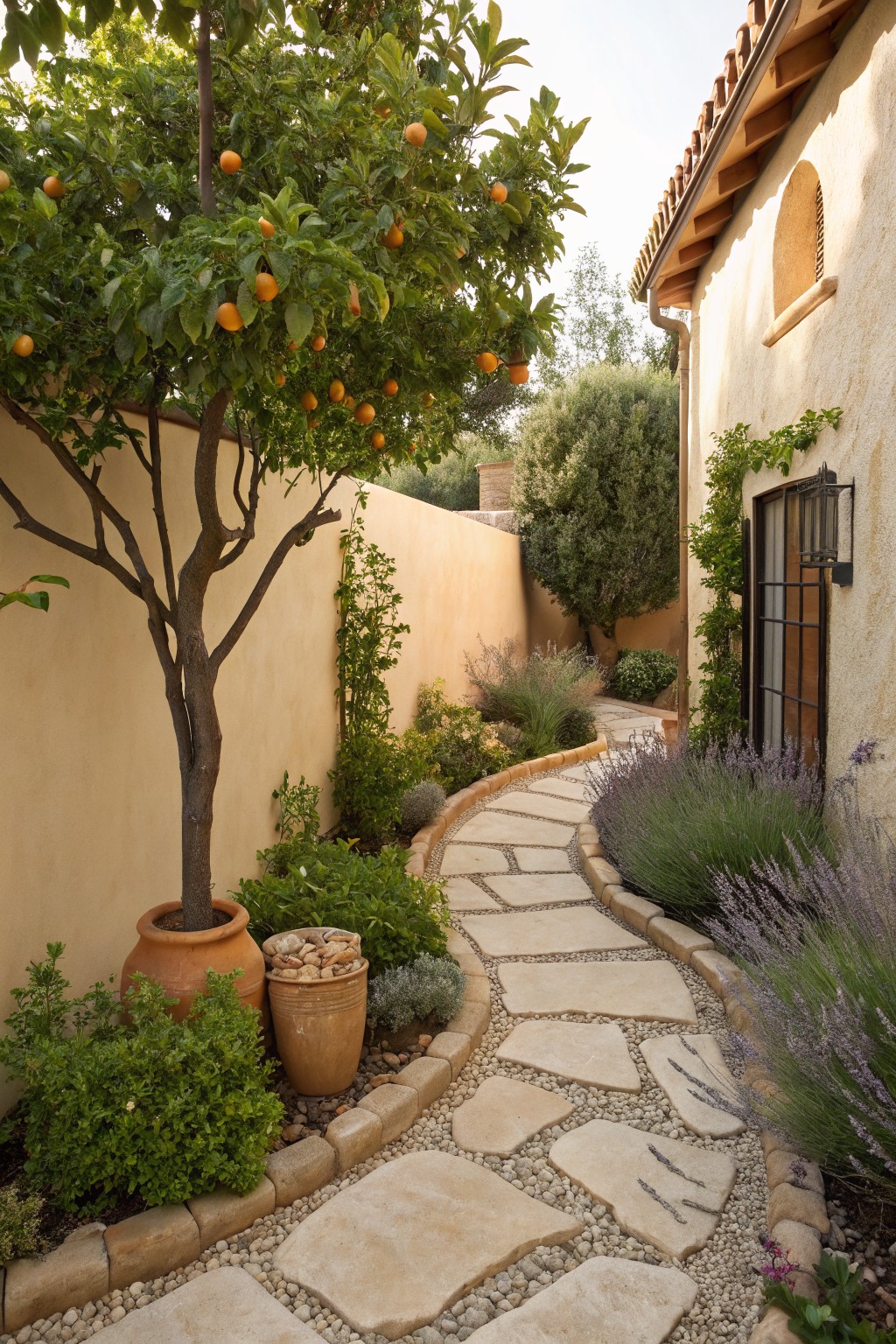
A simple way to add texture in the garden is this curved path made from irregular stone slabs, edged with gravel and a few larger rocks. It winds right around the base of an orange tree, mixing hardscape with the tree’s natural shape. The rocks keep things tidy and let low plants like lavender fill in the edges without much fuss.
This works best in a side yard or walkway to a back door, especially where space is tight. It suits sunny, dry spots with citrus or other trees that drop fruit or leaves. Go for rounded river rocks so they don’t shift too much, and top them off now and then.
Rock Retaining Walls Around Trees
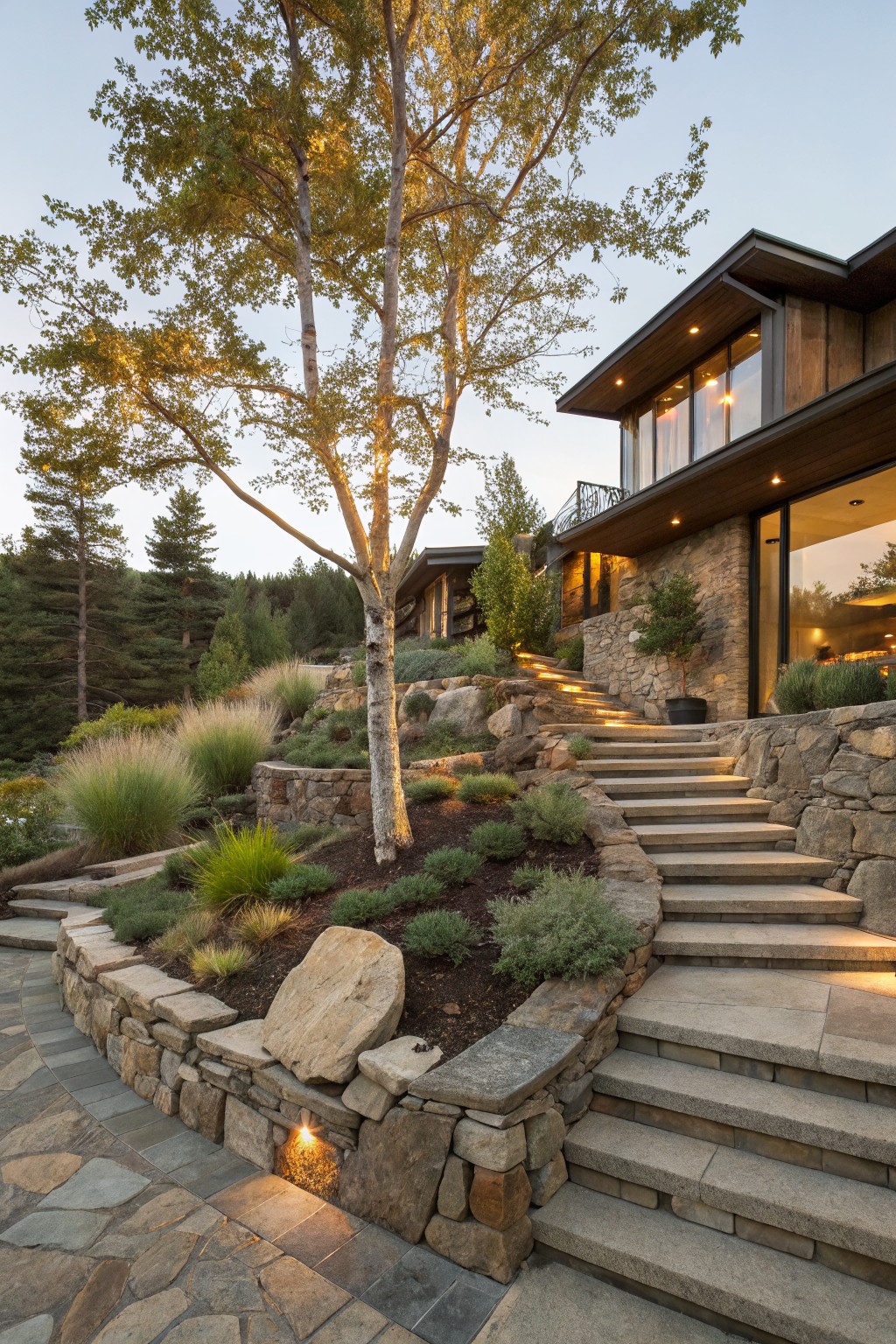
One smart way to handle a sloped yard is building low stone retaining walls that curve around a tree trunk. Here a big boulder sits right next to the tree, with walls stacking up to hold back soil and create flat planting pockets. It gives the whole area a rugged, natural feel that ties the tree into the landscape instead of letting it stand alone.
These walls work best on hills where you need to terrace without big earth-moving. Pick rough local stone for that seamless look, and fill the beds with tough grasses or shrubs that won’t mind the shallow roots. Just keep the wall height under three feet or add steps like these to make it climbable. Suits wooded lots especially well.
Swirling Pebble Paths Around Trees
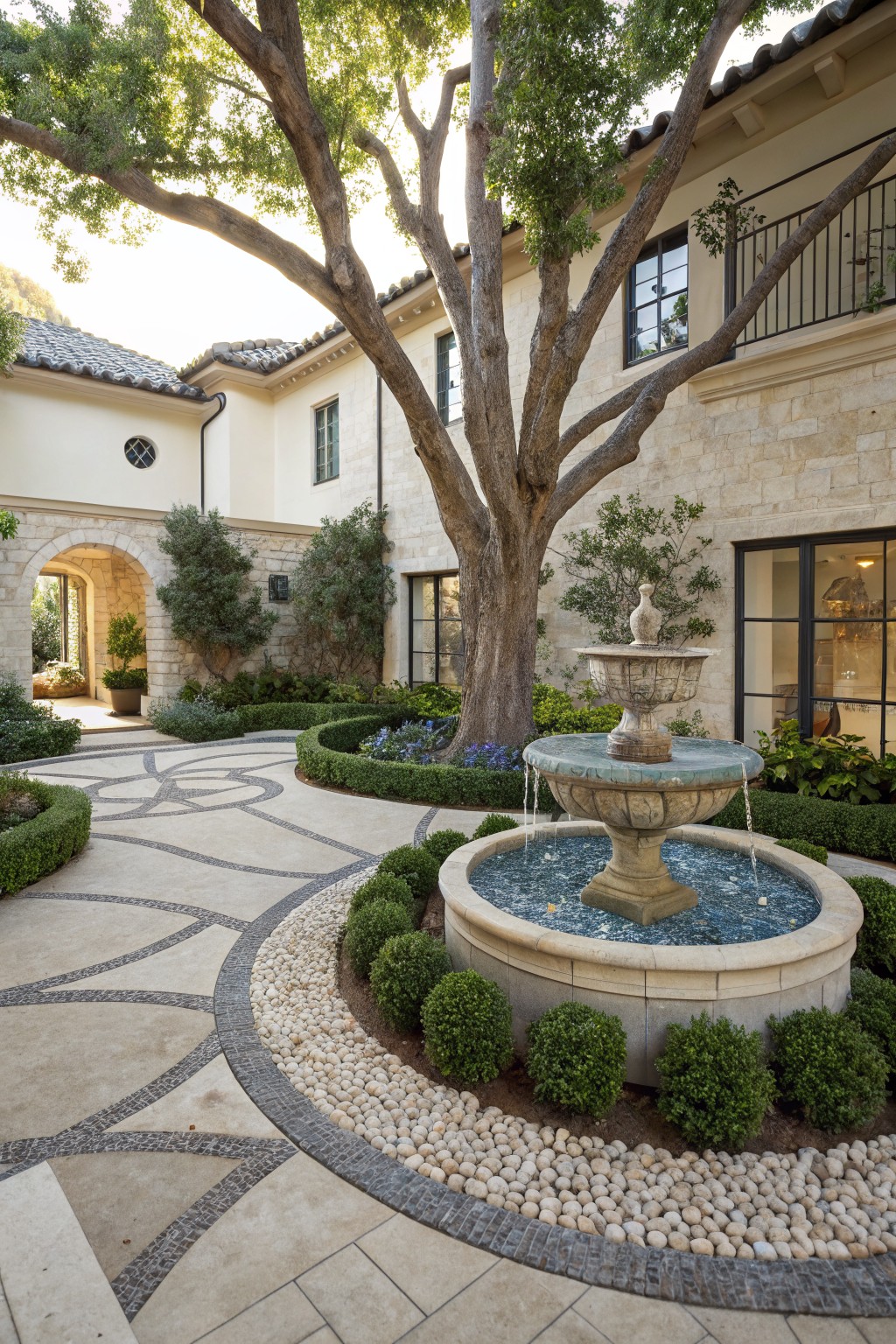
One simple way to add interest around a big tree is with curving paths made from light pebbles set into stone pavers. In this setup, the white pebbles form loose swirls that hug the tree trunk and lead to a fountain nearby. It gives the ground some pattern without much upkeep, and the rocks pick up the stone house walls for a tied-together look.
You can pull this off in a courtyard or side yard where you want paths that feel natural but neat. Line the pebble edges with low boxwoods to keep it crisp. It works best on bigger properties with mature trees, though scale down the curves for smaller spots. Just make sure the pebbles drain well so they don’t shift over time.
Spiral Pebble Paths Around Trees
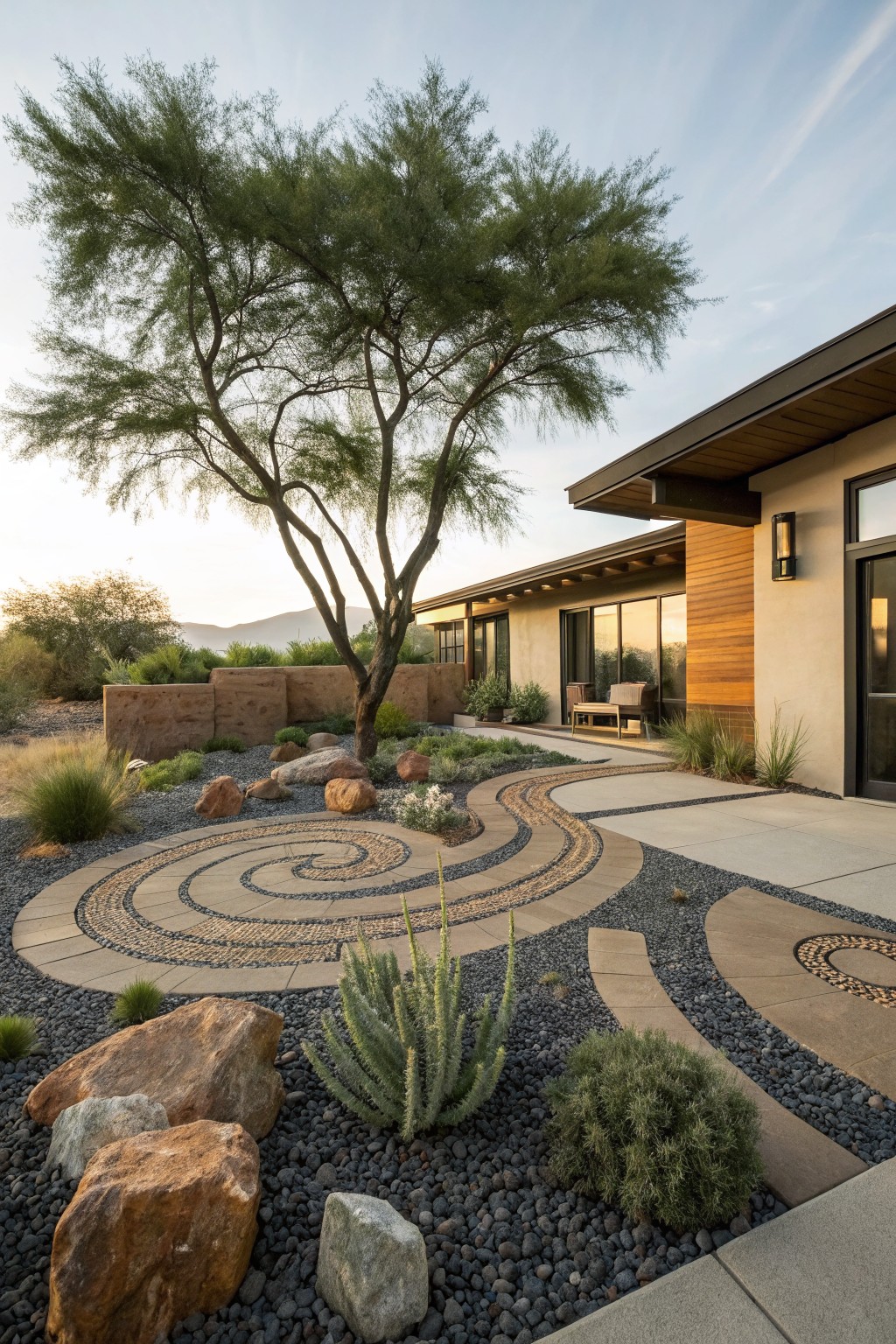
One simple way to add interest around a mature tree is a spiral path made from pebbles set in concrete. Here it’s winding right around the base of a big mesquite tree, with larger boulders placed nearby for contrast. The curve pulls your eye in without taking up much space, and the mix of smooth pebbles and rough rocks gives good texture against the gravel ground cover.
You can do this in dry yards or anywhere with a focal tree. Use local stone to keep it low maintenance, and pair it with tough plants like agave or grasses. It works best near a house entry or patio, leading the way naturally. Just make sure the path is wide enough to walk.
Curved Rock Bed Around a Tree
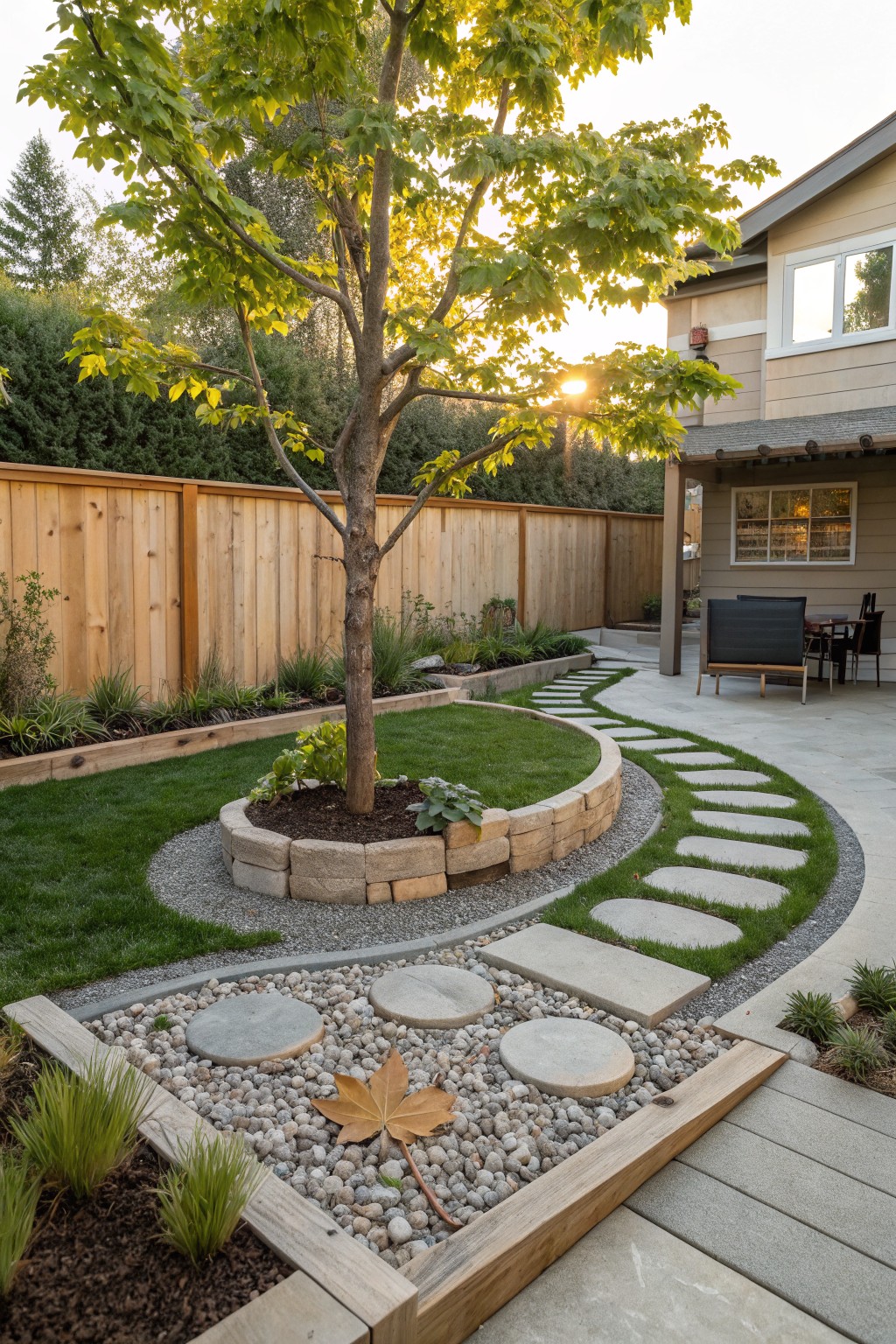
One straightforward way to handle landscaping around a tree is a curved raised bed like this. Stone blocks form the edge, with gravel inside for mulch. It keeps the area low maintenance. The tree sits right in the middle, and grass fills the rest of the space. That setup adds nice texture without taking over the yard.
You can pull this off in most backyards with some open lawn. Use larger stones for the bed if you want it to feel sturdier. Add a few stepping stones winding through the grass to connect it to the patio or house. It fits casual homes best. Just make sure the bed isn’t too high so water drains well.
Frequently Asked Questions
Q: Won’t piling rocks around my tree hurt the roots?
A: Keep rocks at least 3 inches away from the trunk. Let roots breathe with some organic mulch in that gap. Your tree stays happy and healthy that way.
Q: How do I stop weeds from sneaking through the rocks?
A: Spread landscape fabric over cleared soil before adding rocks. Use 2 to 3 inches of rocks on top to block light. Pull any weeds you spot early to keep it clean.
Q: How far from the trunk should the rock area extend?
A: Go out to the tree’s drip line, where branches end. That covers roots without crowding the trunk. Shape it into a nice wide circle or freeform bed.
Q: Can I mix rock sizes and colors for more texture?
A: Absolutely, grab small pebbles with bigger boulders. Layer them loosely around the tree base. It adds that natural, rugged look without much fuss.
