


I’ve tinkered with my yard enough to know that overgrown beds eat up weekends and hose time fast.
Rocks build solid structure around pathways and edges, letting the space mature without constant reshaping or replanting.
They shape how water flows too, pooling where you want it instead of washing everything out.
Clean rock borders grab attention right away on a stroll through the yard.
A couple of these setups changed how I handle slopes, and they’re worth tweaking for your own plot.
Winding Flagstone Path with Rock Borders

A simple winding path like this makes getting to your front door feel like part of the garden. It uses large flat stones set in gravel, with river rocks and boulders along the edges to keep everything in place. No grass to mow means less work, and the drought-tolerant plants around it cut down on watering. Those big rocks add weight without much upkeep.
This setup works great for homes in dry areas or sloped yards. Lay the stones loose over gravel base so water drains right through, and pick rounded boulders that won’t shift. It suits modern or rustic houses, just scale the path width to your traffic. Watch the stone sizes so steps stay even… uneven ones trip folks up.
Dry Creek Bed Pathway

A dry creek bed running alongside wide stone stepping stones makes for a smart, low-maintenance path through a narrow yard. It mimics a natural stream with smooth pebbles, larger rocks, and just a few tough plants on the edges. No mowing or watering needed here, and it directs rainwater away from the house without any hassle.
This works best in side yards or tight spaces between fences and walls. Lay down landscape fabric first, add gravel base, then pile in the rocks and set the pavers. Pick drought plants like grasses or succulents to fill gaps. Skip it if your yard floods often, though.
Simple Rock Circle Fire Pit

A rock and gravel circle around a fire pit makes a natural spot for evenings outside without much upkeep. The wide ring of smooth pebbles and big boulders keeps weeds down and water use low, while the central fire bowl draws folks in. Low shrubs tucked around the edges add a bit of green that stays neat on its own.
This works best in courtyards or patios tucked against the house, where you want a defined hangout area. Lay gravel over fabric for drainage, scatter rocks for shape, drop in a gas fire pit. Skip thirsty plants. It fits modern or minimalist yards, stays sharp even if you’re busy.
Curved Pathways with Rock Retaining Walls
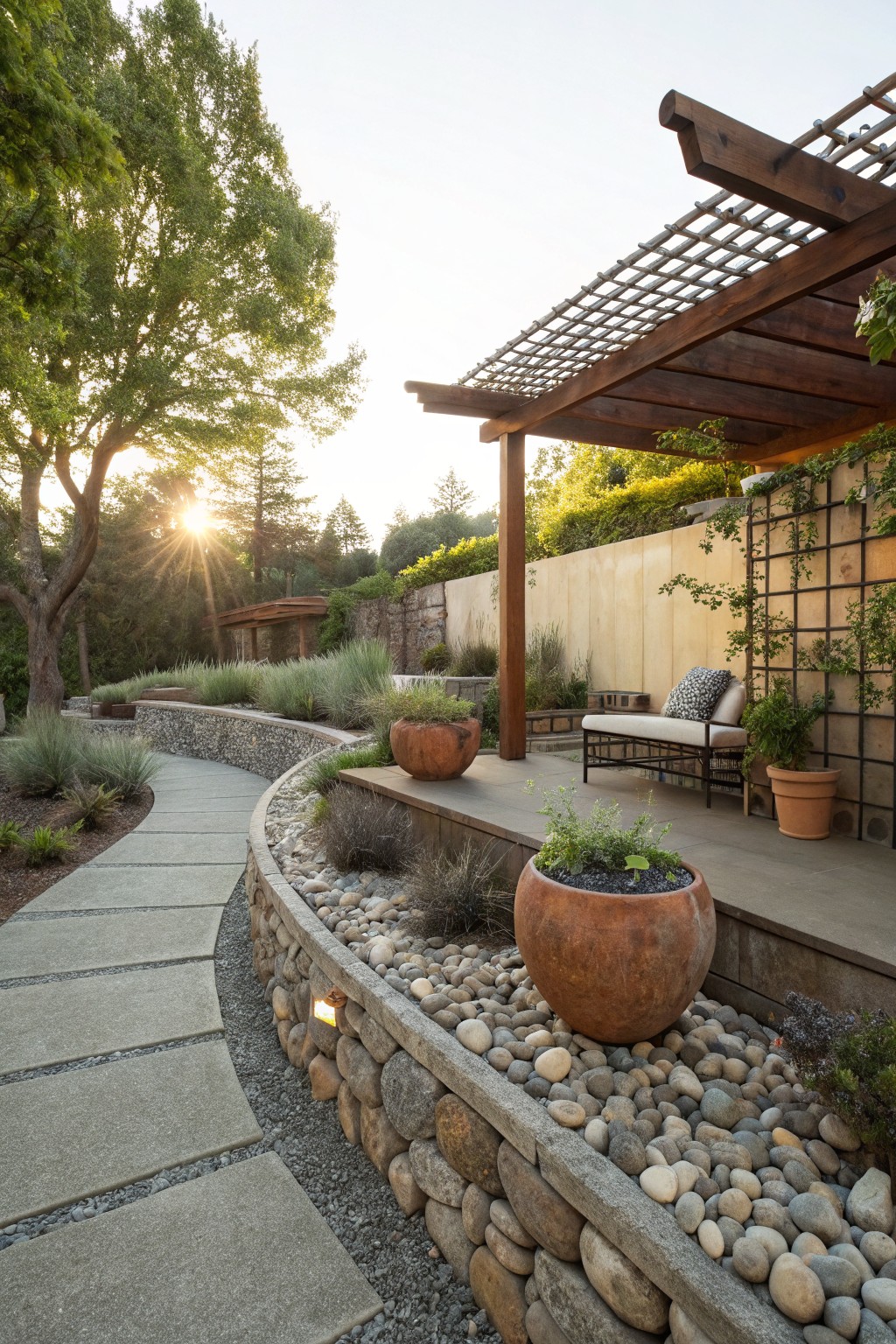
A simple curved path like this makes navigating a sloped yard feel natural and easy. The concrete walkway winds along, edged by low dry-stacked stone walls filled with river rocks. That setup holds back soil without mortar or plants that need trimming. It drains well too, which cuts down on mud after rain.
Use this in yards with any drop in grade, from small backyards to bigger lots. Keep plants sparse, like clumps of grass or sedum in the beds. Skip grass lawns altogether for real time savings. Just rake the gravel now and then.
Sloped Stone Steps with Boulders
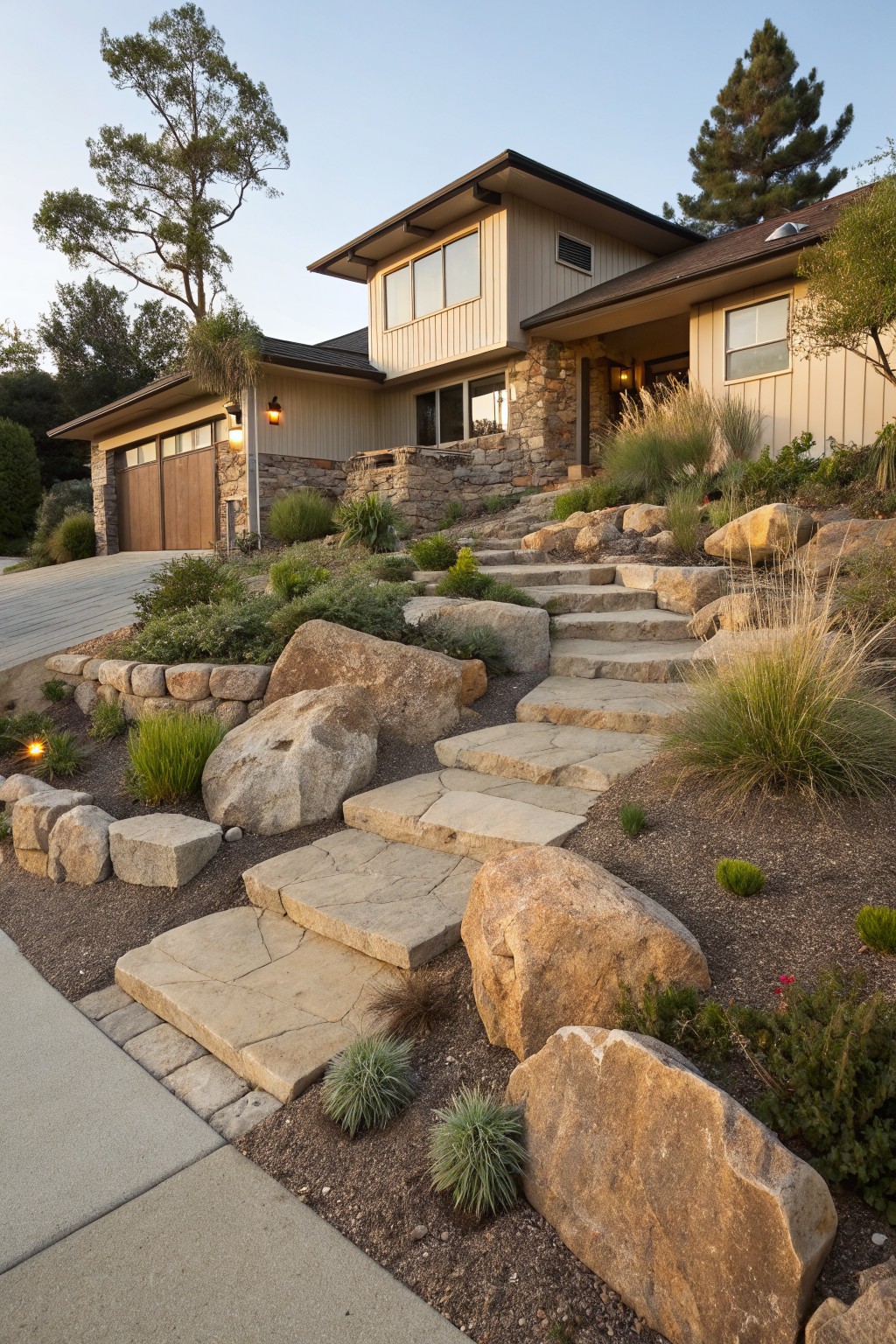
Big boulders placed along rough-cut stone steps make a simple path up a hillside. This keeps things low-maintenance since rocks don’t need watering or trimming. Drought-tolerant grasses tucked in here and there add some green without much work. It ties right into the driveway and gives the front yard a rugged, natural feel.
Use this on any sloped lot where you want to connect the street to your garage or entry without grass that turns brown in summer. Pick local stone to save money and fit the area. It suits modern homes or older ones with a casual vibe. Just make sure the steps are wide enough to walk comfortably.
Gravel Courtyard Centered on a Stone Fountain

One straightforward way to handle a small outdoor space is to pave it mostly with gravel and build everything else around a simple stone fountain. This setup keeps things low-fuss since gravel needs no mowing or watering, and the fountain gives a spot for your eye to land right away. Drought-tolerant picks like olive trees and lavender fill in the edges without much work.
It works best in sunny, dry spots or anywhere you want an easy extension off the house, like a Provence-style yard. Just make sure the gravel drains well so you avoid puddles, and keep plantings sparse to stay truly low-maintenance. Add a few pots if you need more green later.
Stepping Stones in Black Gravel
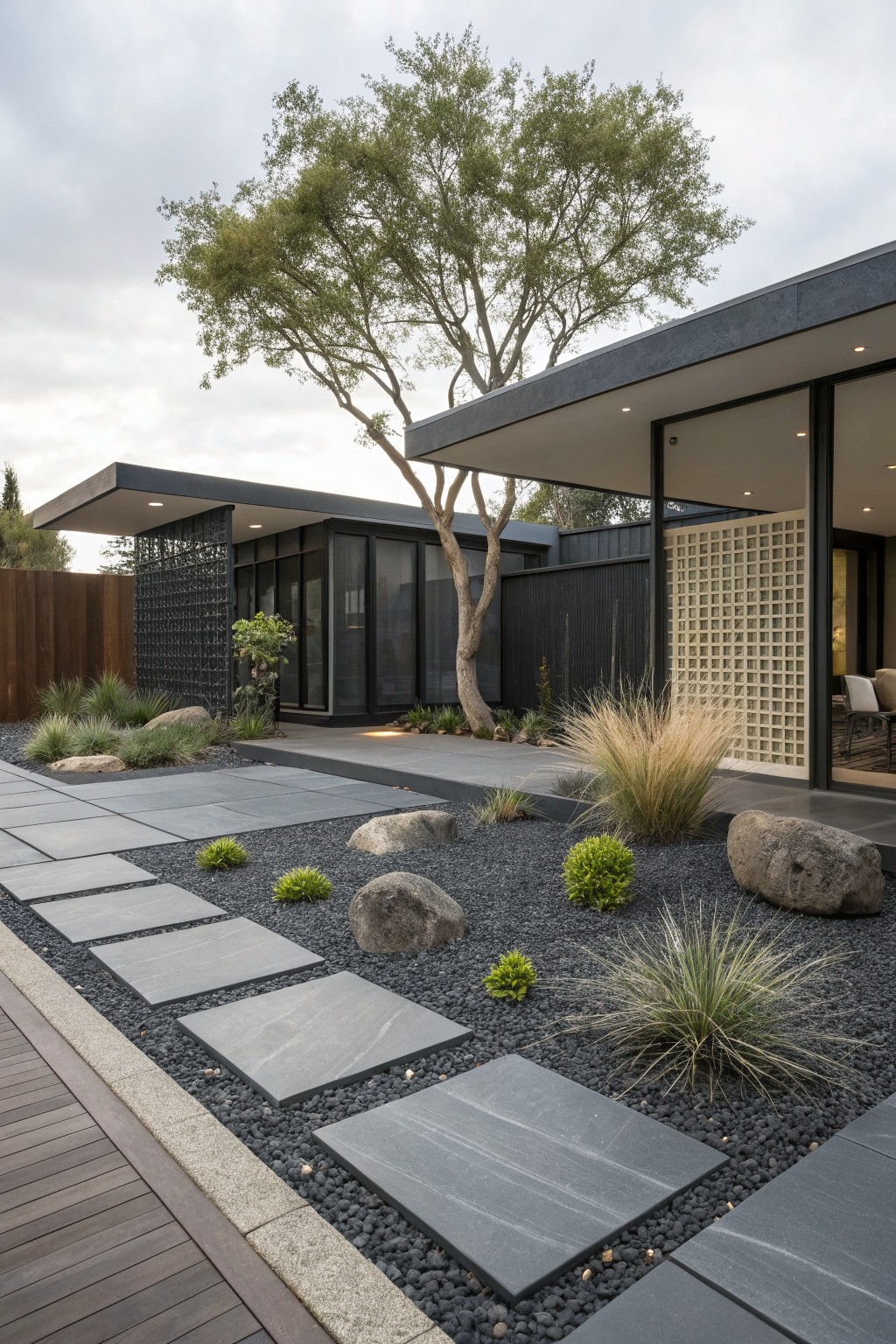
One easy way to handle a walkway without grass is to set big slate stepping stones right into black gravel. Add a few boulders and some tough grasses around them, and you have a path that looks sharp but needs almost no upkeep. The dark gravel pulls it all together and cuts down on weeds while letting water drain fast.
This works best leading up to a house entry or along a side yard where you don’t want to fuss much. Lay down landscape fabric first, then spread the gravel a couple inches deep. Space the stones so your steps feel natural, maybe two feet apart. It suits drier spots or modern homes that match the clean lines.
Rock and Gravel Pool Borders
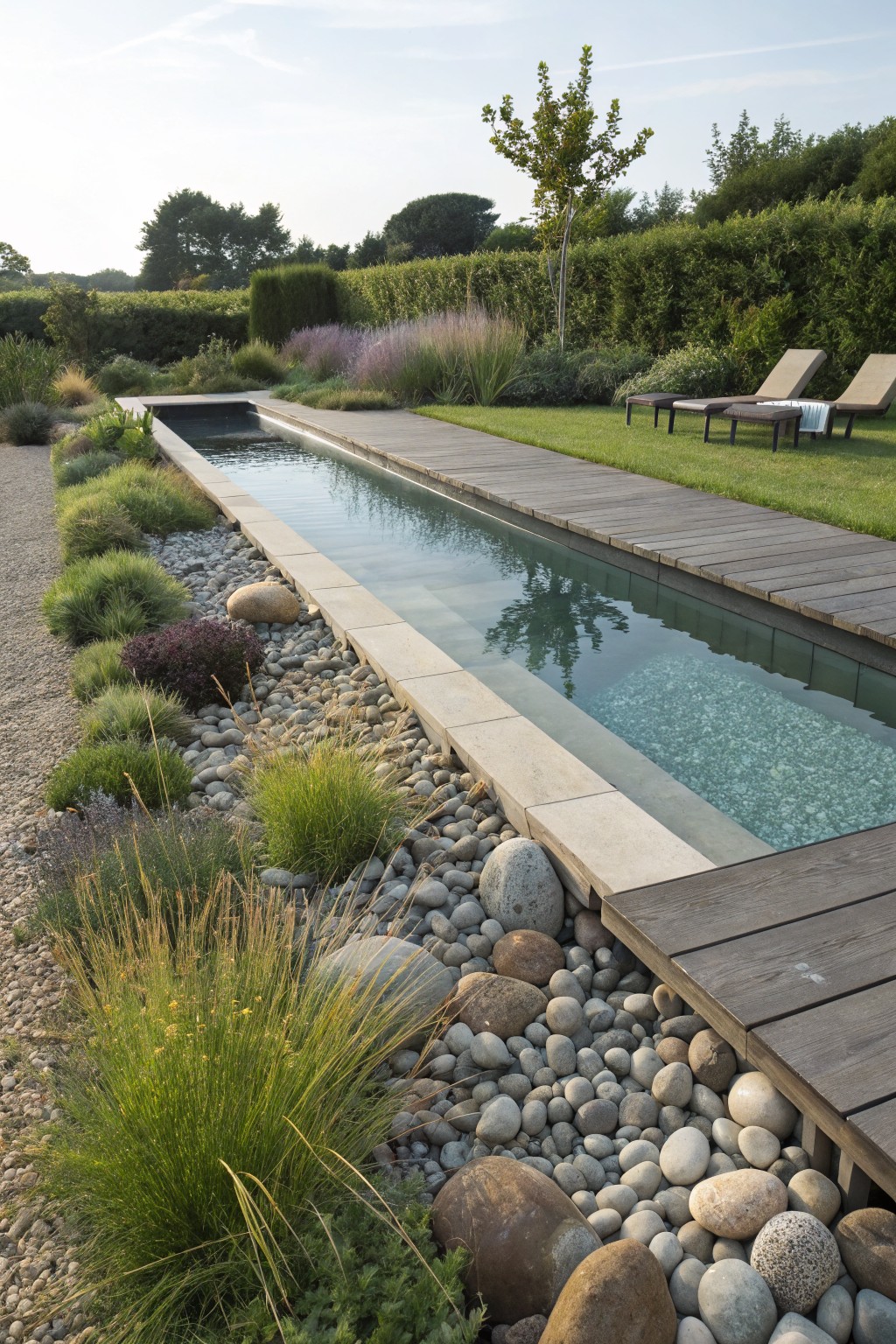
One easy way to add a pool without extra yard work is to flank it with gravel and smooth river rocks. Here the narrow water feature sits right in wide beds of pebbles and larger boulders, edged with tough grasses that don’t need much water or mowing. It saves time and keeps everything looking sharp, especially next to a simple wood walkway.
This works well in sunny backyards where you want some reflection and movement but hate weeding flower beds. Use rounded stones for a softer feel, mix sizes for interest, and stick to low-water plants. Just check your soil drains well first, or the gravel might hold too much moisture. Suits modern homes with open yards.
Balcony Pebble Bed for Succulents

A simple pebble bed running along the balcony edge holds succulents like agave in gray concrete pots. White pebbles fill the spaces between plants and cover the soil. This setup keeps things tidy without much work. It saves water too since succulents don’t need frequent watering. The rocks stop weeds and hold moisture on hot days.
This works great for small balconies or any tight outdoor spot. Build a low trough from concrete or wood along the rail. Add drainage holes. Plant tough succulents that handle sun and wind. Skip thirsty flowers. It fits urban apartments overlooking the city. Just rinse pebbles now and then.
Winding Gravel Path to Fire Pit
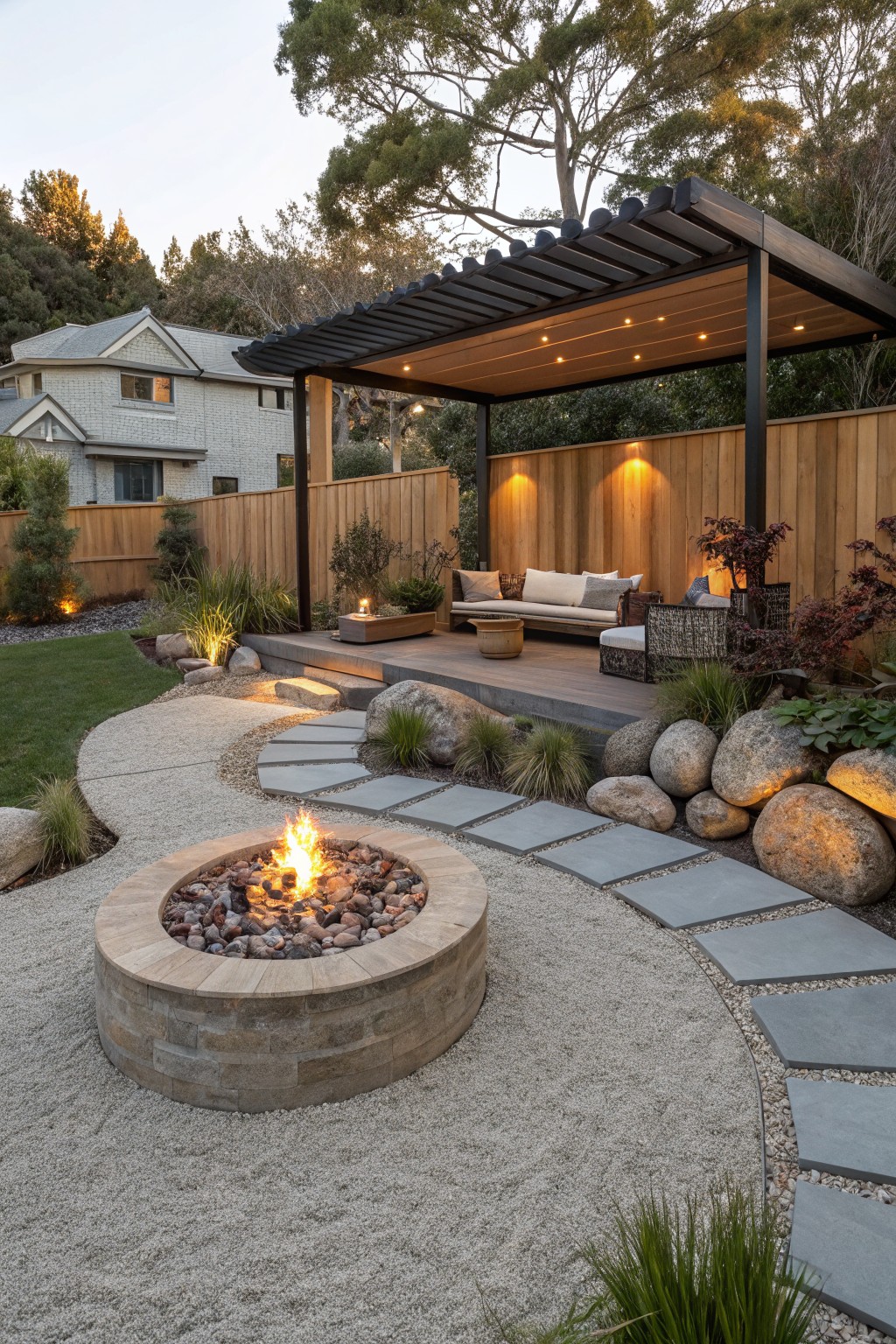
Gravel makes a smart base for paths like this one. It curves gently with wide stepping stones that lead right to the fire pit. Boulders line the edges for a natural look. No grass to mow means less work and water. The fire stays the focus without extra plants stealing attention.
Put this in smaller yards or slopes where turf struggles. Flat stones keep it walkable even when wet. Go for light gravel so dirt doesn’t show. It fits modern homes or anything casual. Just check drainage first or add some underneath.
Rock and Gravel Pathway Borders

One easy way to cut down on yard work is to border your walkway with big boulders and gravel mulch. This setup keeps things neat without much weeding or watering. The path here uses wide concrete slabs with a subtle cobble inset, and the edges are piled with smooth river rocks plus low grasses that barely need attention. It pulls your eye right up to the house entry too.
Put this in front yards or sloped areas where grass would struggle anyway. Line the path on both sides with 2 to 3 foot boulders for structure, fill between with dark gravel, and tuck in a few drought-tolerant plants like sedum or fescue. Skip the mower paths entirely. Just rake the gravel now and then, and it stays sharp year round.
Winding Pebble and Stone Garden Path
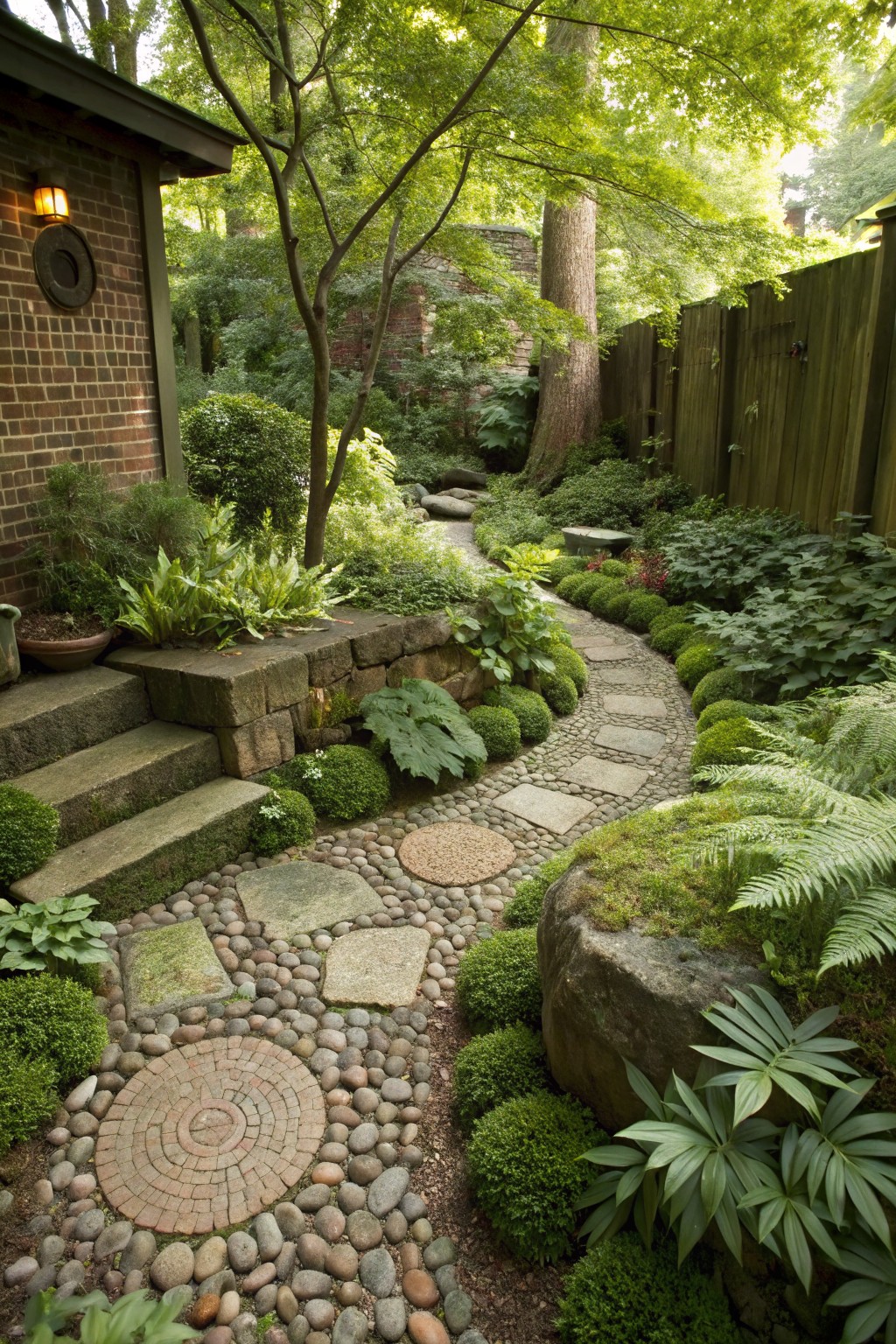
A winding path like this one uses flat stones set into smooth pebbles, with gravel filling the gaps. It gives a natural walkway that feels tucked into the garden, and the rock base keeps things low-maintenance. No grass to mow, just tough plants like ferns and mossy boulders that handle shade and dry spells well.
This works best in a backyard corner or along a fence, leading to a bench or shed. Start with landscape fabric under the pebbles to block weeds, then drop in stones where feet naturally fall. Suits older homes with brick walls… adds that quiet garden feel without much upkeep.
Winding Gravel Paths Edged in Boulders

A simple gravel path like this winds gently through the yard, edged by hefty boulders and low-water plants such as agave and grasses. It directs foot traffic right to the house without any grass to mow or trim. Gravel drains fast, so you save water and avoid mud after rain.
This works best on slopes or dry yards where you want easy access without upkeep. Start with fabric under the gravel to stop weeds, drop in boulders for definition, then tuck plants along the edges. Suits coastal homes or anywhere with poor soil… just source rounded river rocks for that smooth feel.
Terraced Stone Steps on Slopes

Slopes can be tricky in a yard. They erode easy and make walking a chore. But terraced stone steps fix that. You stack local rock into low walls that hold back soil and form wide treads. Add gravel between for drainage. Tuck in tough plants like lavender or olive trees in the pockets. It all stays put with little upkeep and uses way less water than grass.
These steps work best on moderate hills behind a house. They suit dry spots like California hillsides. Start small if you’re DIYing. Just dig footings deep enough and backfill with soil that matches your plants. Skip mortar for a natural look. One thing: check your slope angle first so it doesn’t turn into a slide after rain.
Raised Stone Beds with Pebble Mulch
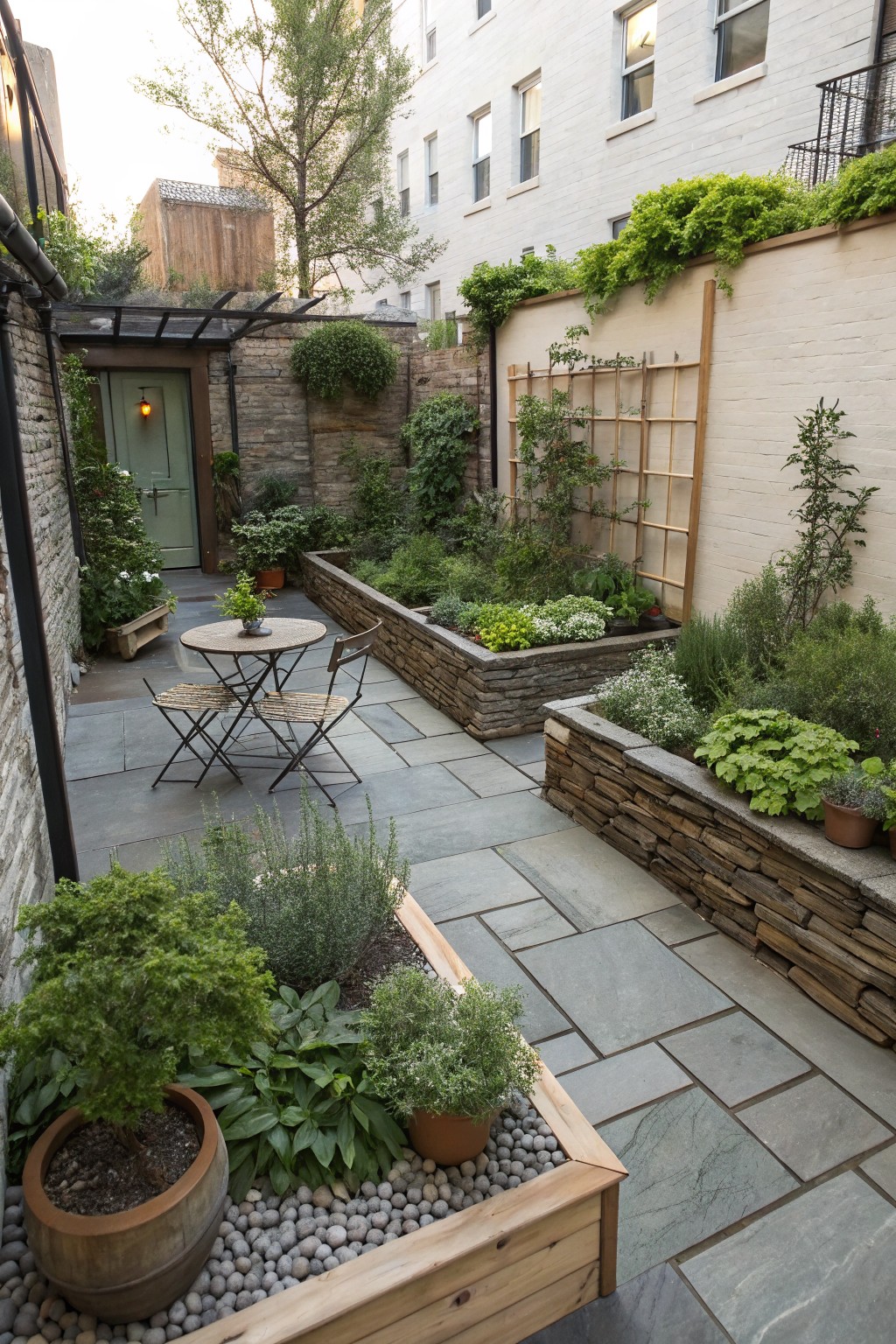
Raised beds edged in stacked natural stone turn a small courtyard into a tidy herb garden without much upkeep. The stone walls keep soil contained and drainage good, while a layer of smooth pebbles at the base stops weeds and holds moisture. You see it here with lush greens and pots tucked in, all thriving on less water.
Set these up along a patio edge or walkway where you want to sit nearby. They fit urban spots backed by brick walls, and drought-friendly plants like rosemary or sedum keep things easy. Just avoid overplanting to let air move around.
Gravel-Jointed Paver Pathways
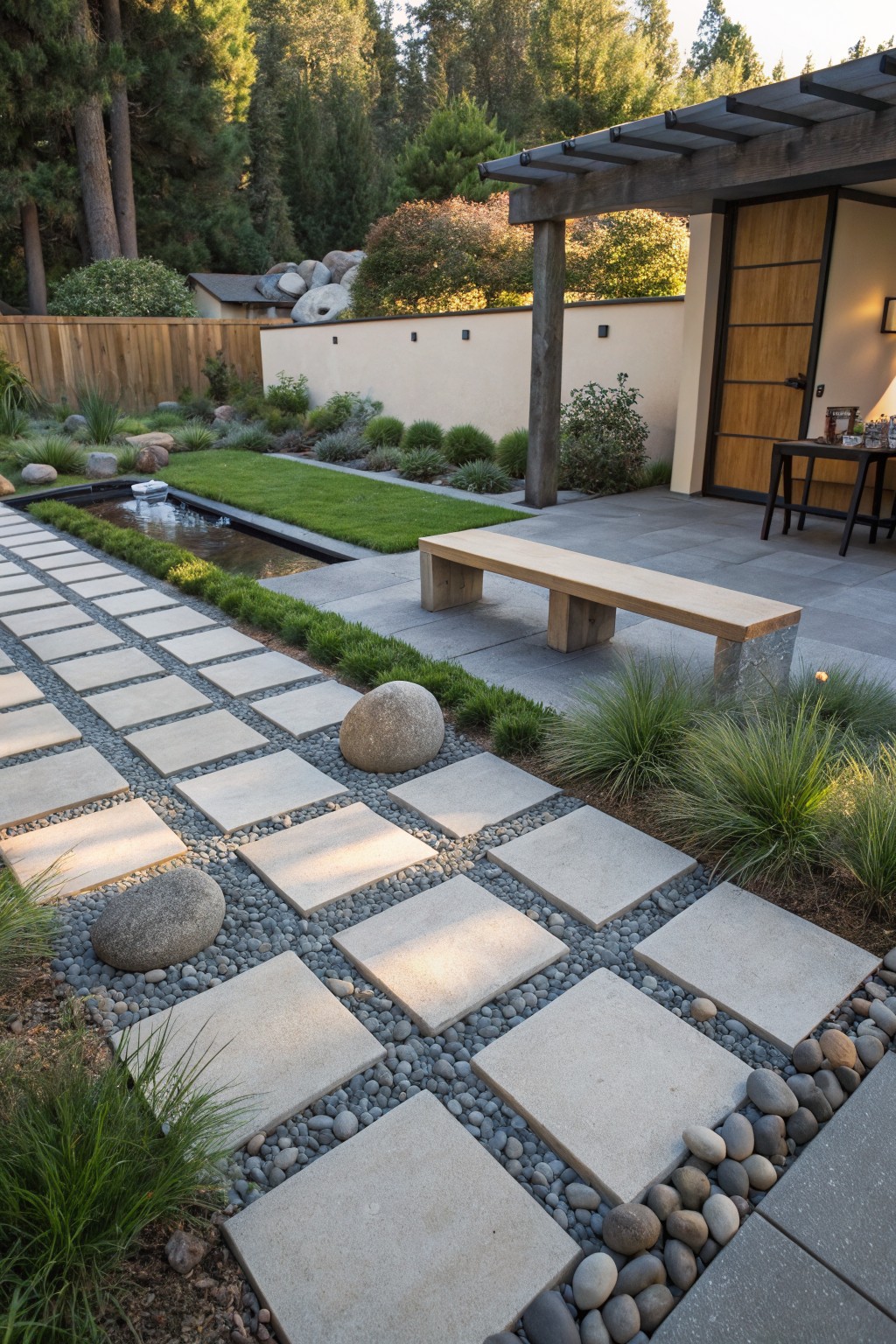
One straightforward way to handle yard traffic without much upkeep is spacing out large square pavers in gravel beds. You see it here with light gray slabs set into smooth pebbles, edged by tough grasses and a few big boulders. It cuts down on mowing or watering since gravel stays dry and pebbles block weeds. Plus the look stays sharp year-round.
These paths work great leading from the gate to a patio bench or back door. They’re best in sunny spots or sloped yards where drainage matters. Just level the base well first and pick pavers thick enough for foot traffic. Skip it if your soil holds water too long, or add more gravel underneath.
Stone Steps on Rocky Slopes

Rough stone steps like these fit right into a boulder-filled slope. They wind down naturally, with gravel and big rocks holding everything in place. A few low grasses add some green without needing much care. This keeps the path sturdy and the look rugged, perfect for spots where mowing or trimming would be a hassle.
Try this on hillsides leading to a lake or backyard edge. Source steps from local quarry stone so they match the site. Fill gaps with pebbles and plant drought-tough natives only where they won’t flop over the path. It saves water and time… just rake gravel now and then.
Stepping Stone Path in Gravel Mulch
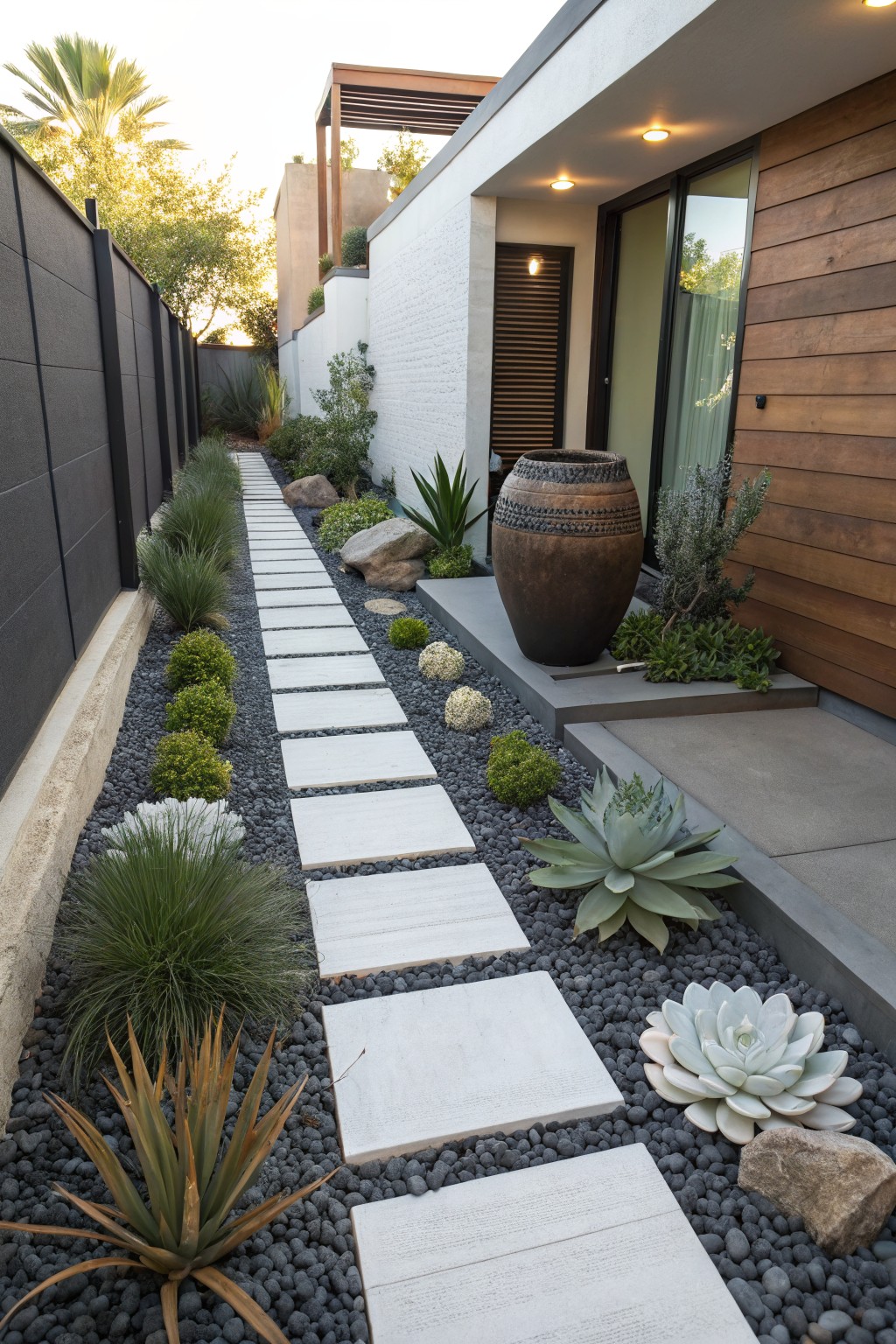
A straightforward path like this uses wide white pavers set right into black gravel mulch. Succulents and tough grasses edge both sides, keeping things neat without much fuss. The gravel cuts down on weeds and watering, while the stones give solid footing. It’s practical for getting around without the upkeep of grass or poured concrete.
This works best in side yards or narrow spots leading to a back door or gate. Pair it with drought plants like agave or sedum that handle sun and dry spells. Skip it in wet areas where gravel might shift… just stick to level ground and good drainage.
Stone Raised Beds Along a Path
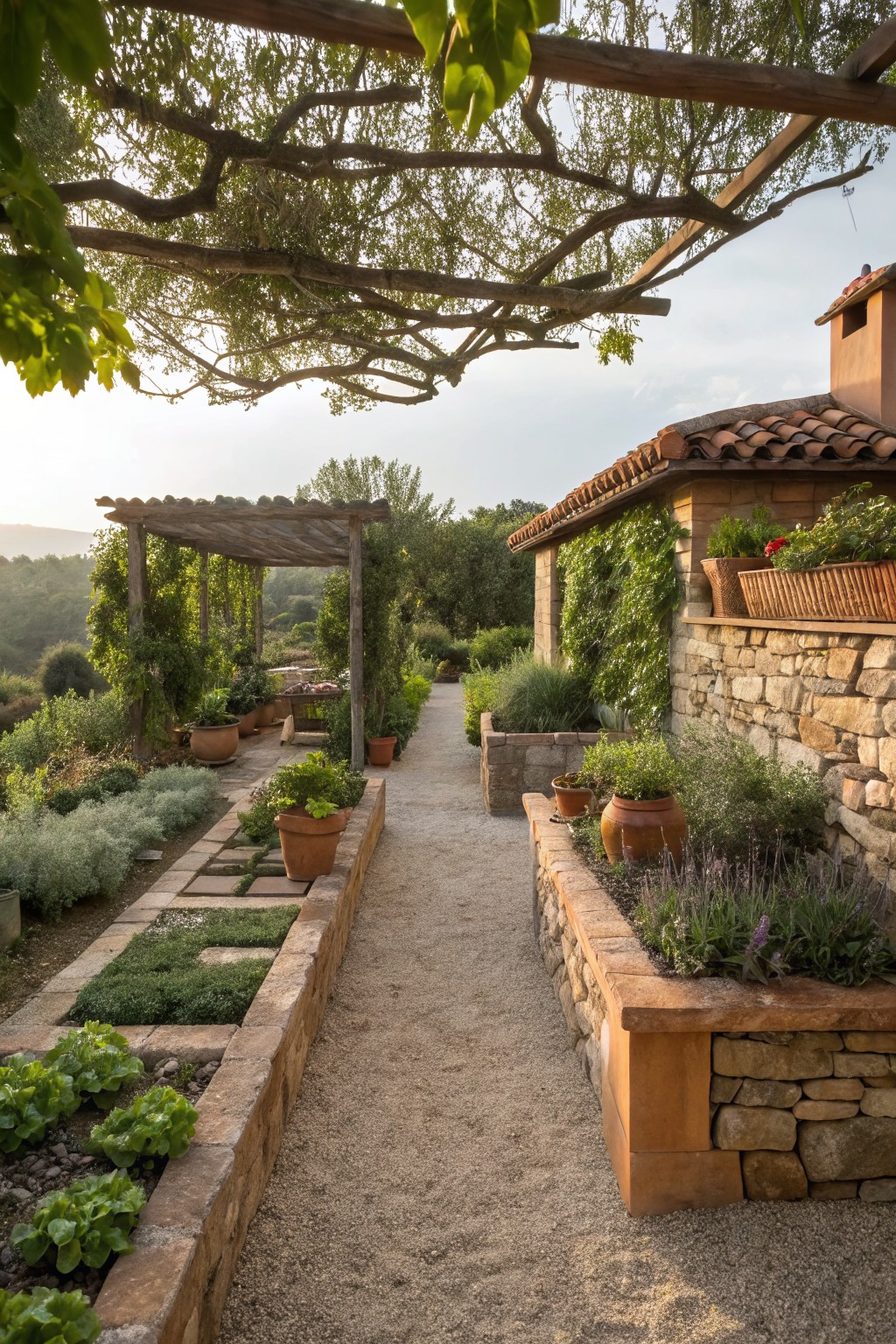
Raised beds built from rugged stone walls make gardening simple and tough. You see lettuce, herbs, and greens thriving right in those beds, with gravel paths keeping things neat between them. The stone holds soil steady, lets extra water drain fast to save on irrigation, and fits right into rocky or sloped yards without much upkeep.
Put this in a sunny side yard or near the house for easy picking. Local stone blends best, maybe add a few terracotta pots for color. It suits older homes or dry spots… just watch for weeds creeping from the gravel edges.
Rock Garden Paths with Boulders and Stepping Stones
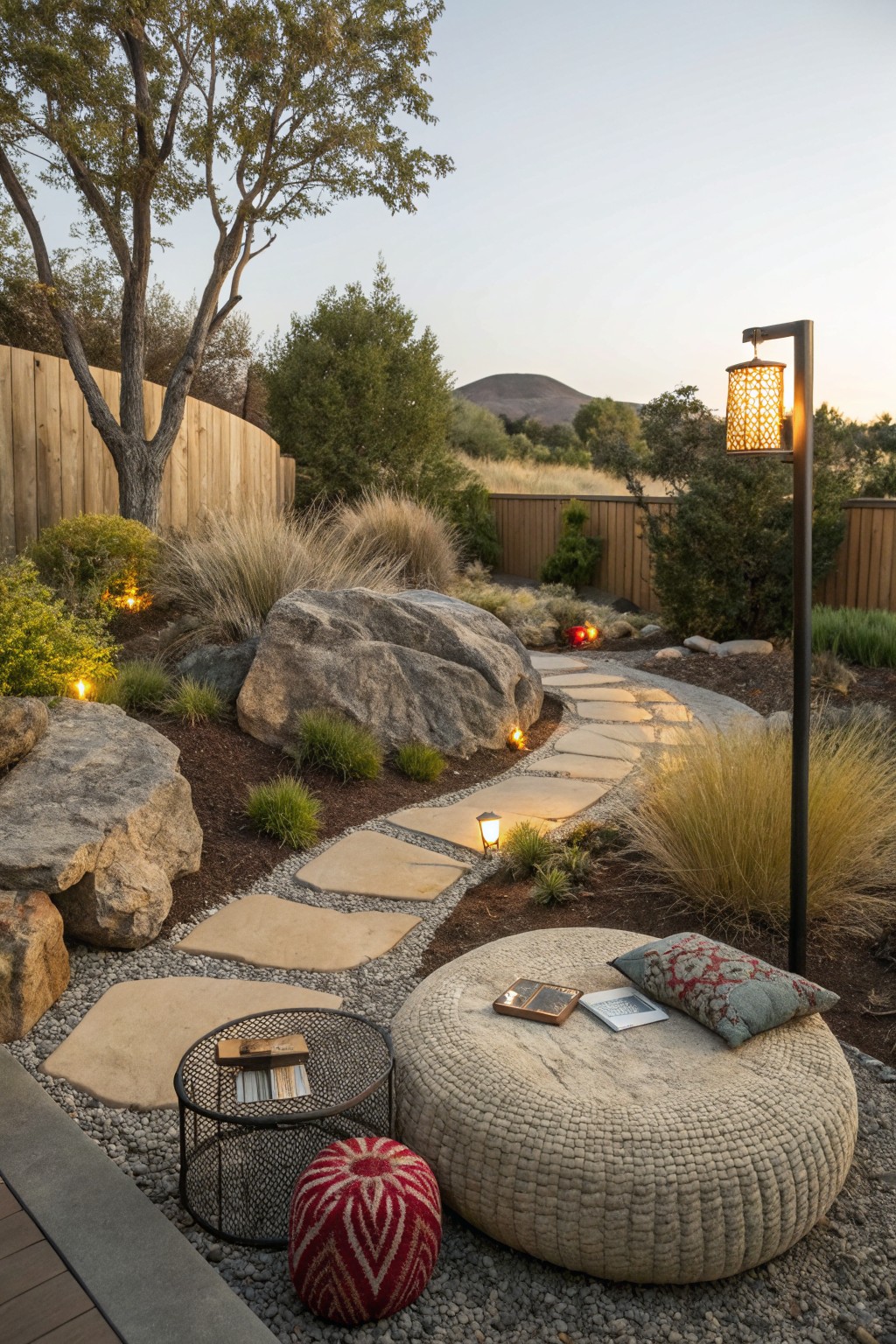
Big boulders make great anchors in a low-maintenance rock garden. Pair them with flat stepping stones set into gravel or mulch, edged by tough grasses like feather grass. The path winds naturally, leading to a simple seating spot. It saves water since everything’s drought-tolerant, and there’s no mowing or constant trimming needed. Looks rugged and put-together without much work.
This works best in sunny, dry yards where you want a trail to a patio or reading nook. Start by placing a few large rocks as focal points, then lay the path stones irregularly for that casual feel. Skip thirsty plants, stick to natives. Watch the scale, though… boulders can overwhelm small spaces.
Terraced Steel Planters for Slopes

Corten steel makes sturdy raised planters that fit right into hilly yards. You see them here holding gravel mulch and succulents like agave along steps and a pool deck. The rusted look blends with rocks and dry grasses. It cuts down on watering since these plants thrive on neglect. Plus the metal walls hold soil in place without much upkeep.
Put these where the ground drops off or around outdoor spots like patios. They suit modern homes in dry areas best. Start with bigger pieces for taller terraces. Let the rust build over time…it gets better. Just make sure drainage is good under the gravel to avoid wet roots.
Gravel Paths Edged with Boulders

A simple gravel path winding through the yard makes getting around easy without much upkeep. Large boulders line both sides, holding back low-water plants like grasses and wildflowers. That setup keeps weeds down and water use low. The path stays neat year after year, and the rocks give it a natural feel that fits right into the landscape.
Use this in side yards or front approaches where you want a clear route but not a lot of mowing. It works best on sloped spots since the boulders help with erosion. Pick gravel that matches your soil color, and plant drought-tough stuff around the edges. Just rake the path now and then… that’s about it.
Frequently Asked Questions
Q: How do I stop weeds from taking over my rock garden?
A: Roll out landscape fabric before you add the rocks. Push down a 2-inch layer of rocks right on top. Weeds struggle to push through that setup.
Q: Can I add plants to these rock ideas without extra work?
A: Choose tough succulents or sedums that love dry spots. They root right into the gravel and pull water from the rocks. Skip thirsty flowers to keep it simple.
Q: What if my yard has a slope—will rocks stay put?
A: Pick angular gravel or larger stones that lock together. Rake them in place and add a shallow trench at the bottom to catch runoff. Your slope turns into a no-fuss feature.
Q: Do light rocks really stay cooler than dark ones?
A: White or beige gravel reflects sunlight best. Dark rocks soak up heat fast… go pale if kids or pets play there. Spread it thin for even coverage.
