

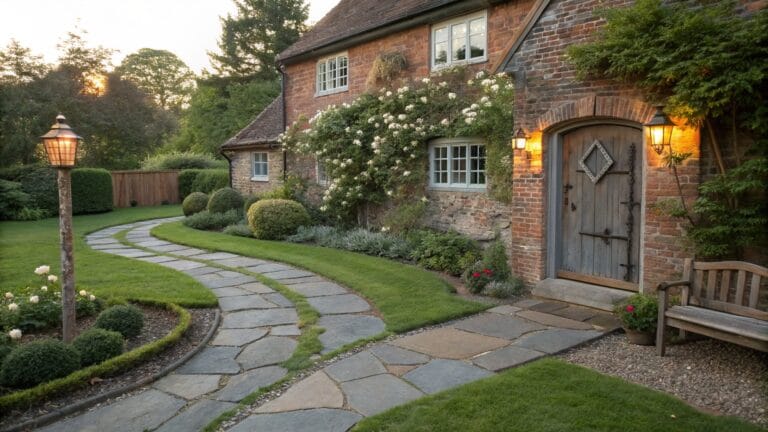
When I wander through a garden, the pathways draw me in first because they quietly organize the layout and make every planting bed feel connected.
Rock versions work so well since they settle into the ground over time, framing edges without overpowering the plants around them.
In my yard, I swapped out a crumbling gravel walk for flat stones last year, and it finally gave us a reliable route that doesn’t wash out in storms.
These designs build on that sturdy base to create natural flows through curves and straight runs alike.
One or two catch my eye for testing in real dirt.
Irregular Stone Pathway Through Grass
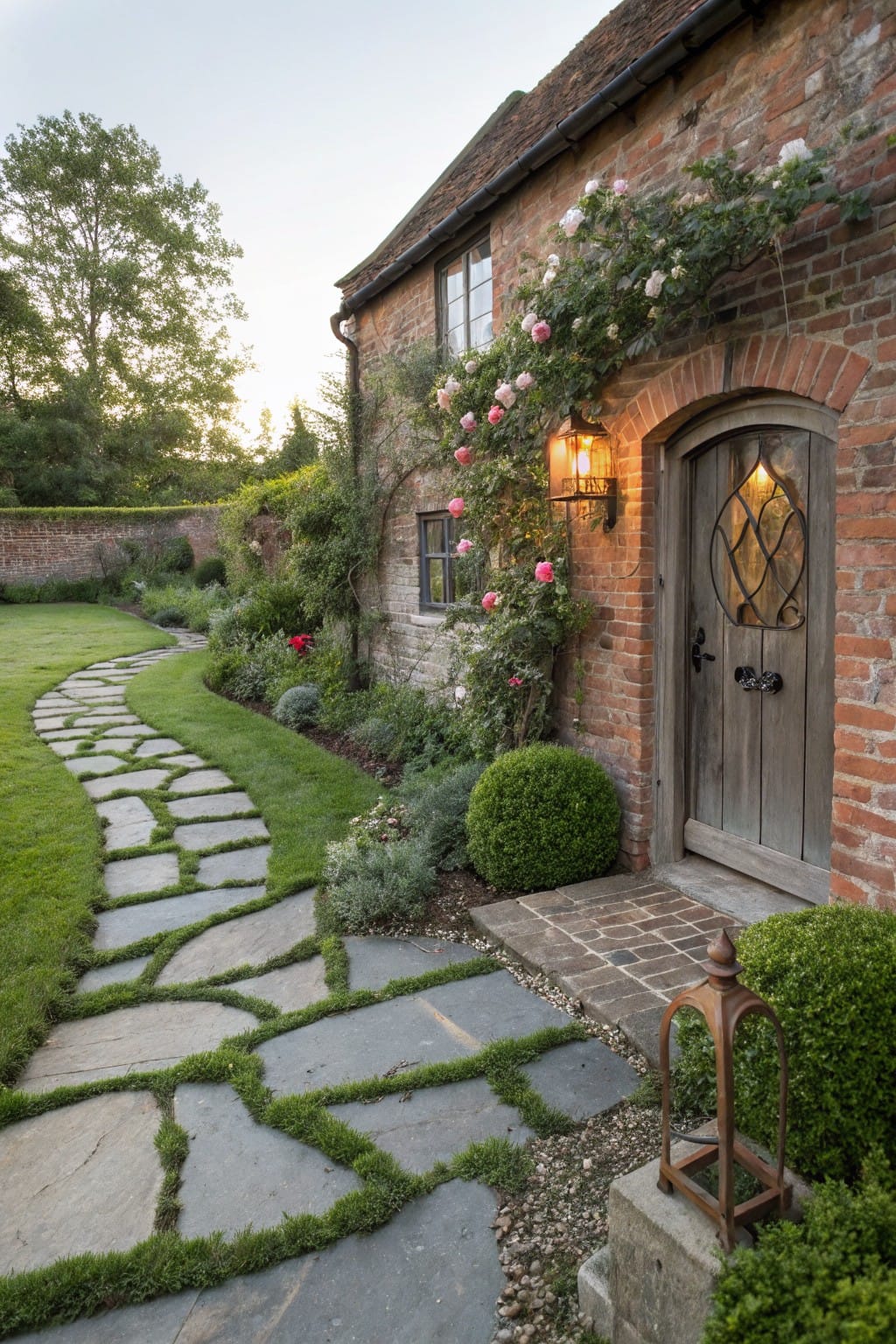
One simple way to guide folks to your door is with big irregular stone slabs set right into the lawn. The path here curves gently past garden beds, with grass filling the gaps between stones. It looks natural and easygoing, blending into the yard instead of cutting through it. No need for edging or gravel. Just lets the green peek through.
This works best in cottage-style yards or softer landscapes where you want a relaxed feel. Pick flat-ish slate or local stone in various sizes to avoid too much cutting. Lay them where people naturally walk, maybe 2 to 3 feet apart. Suits front approaches or side garden entries. Keep the grass mowed around it, and it stays neat without much fuss.
Stepping Stones in Gravel for Side Paths
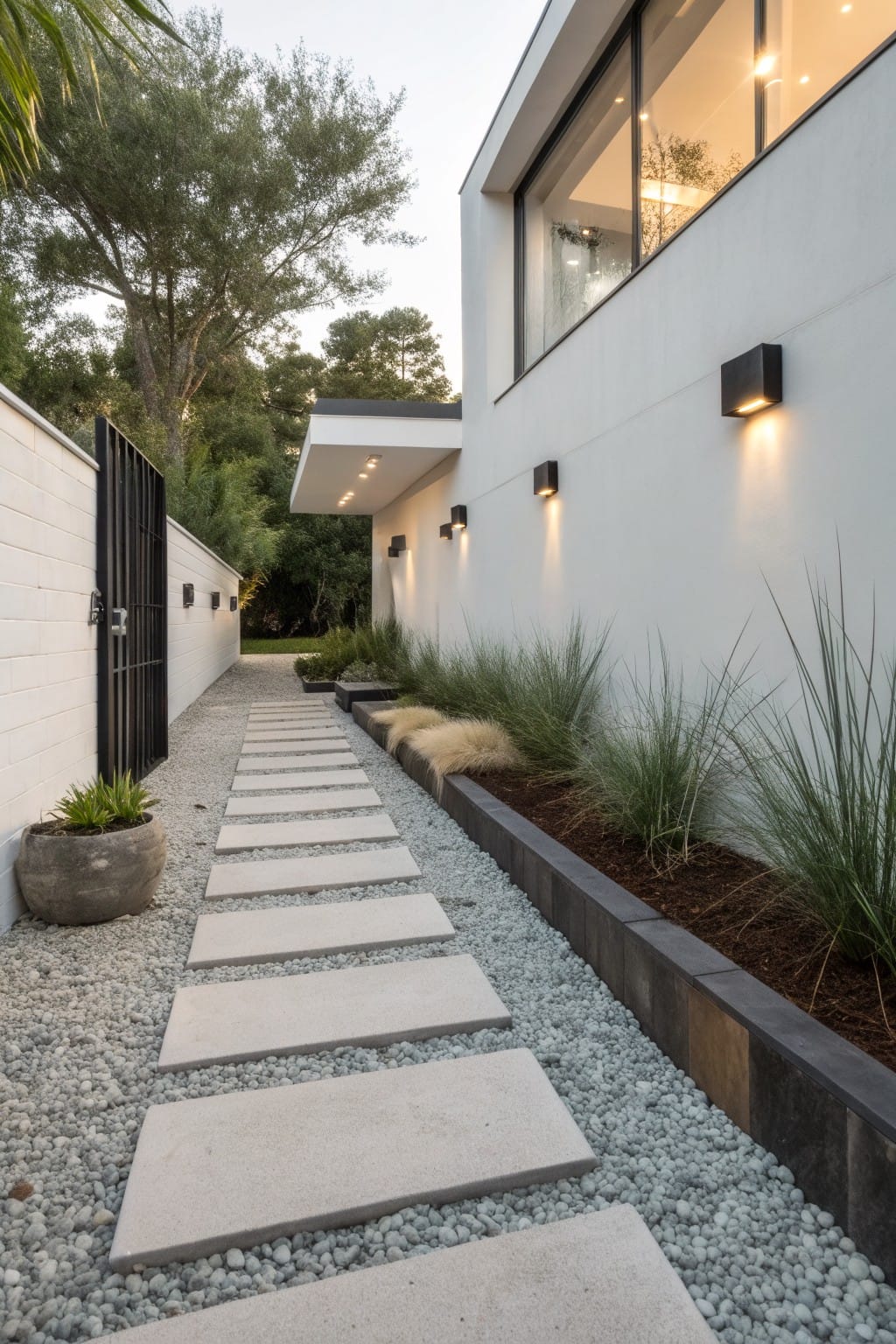
One straightforward way to handle a side walkway is to lay wide concrete stepping stones right into a bed of white pebbles. It keeps things simple and clean, especially next to a modern house like this one with its white walls and black-trimmed gate. The grasses in the raised beds along the edge add just enough green without much upkeep, and the spacing between stones lets the gravel show through for that natural feel.
This setup works great for narrow side yards or secondary entries where you want low maintenance and good drainage. Go for drought-tolerant plants like those tall grasses if you’re in a dry area, and keep the stones big enough so you don’t have to tiptoe. It fits most homes but shines with crisp architecture… avoids muddy trails after rain too.
Winding Flagstone Path in a Wooded Garden
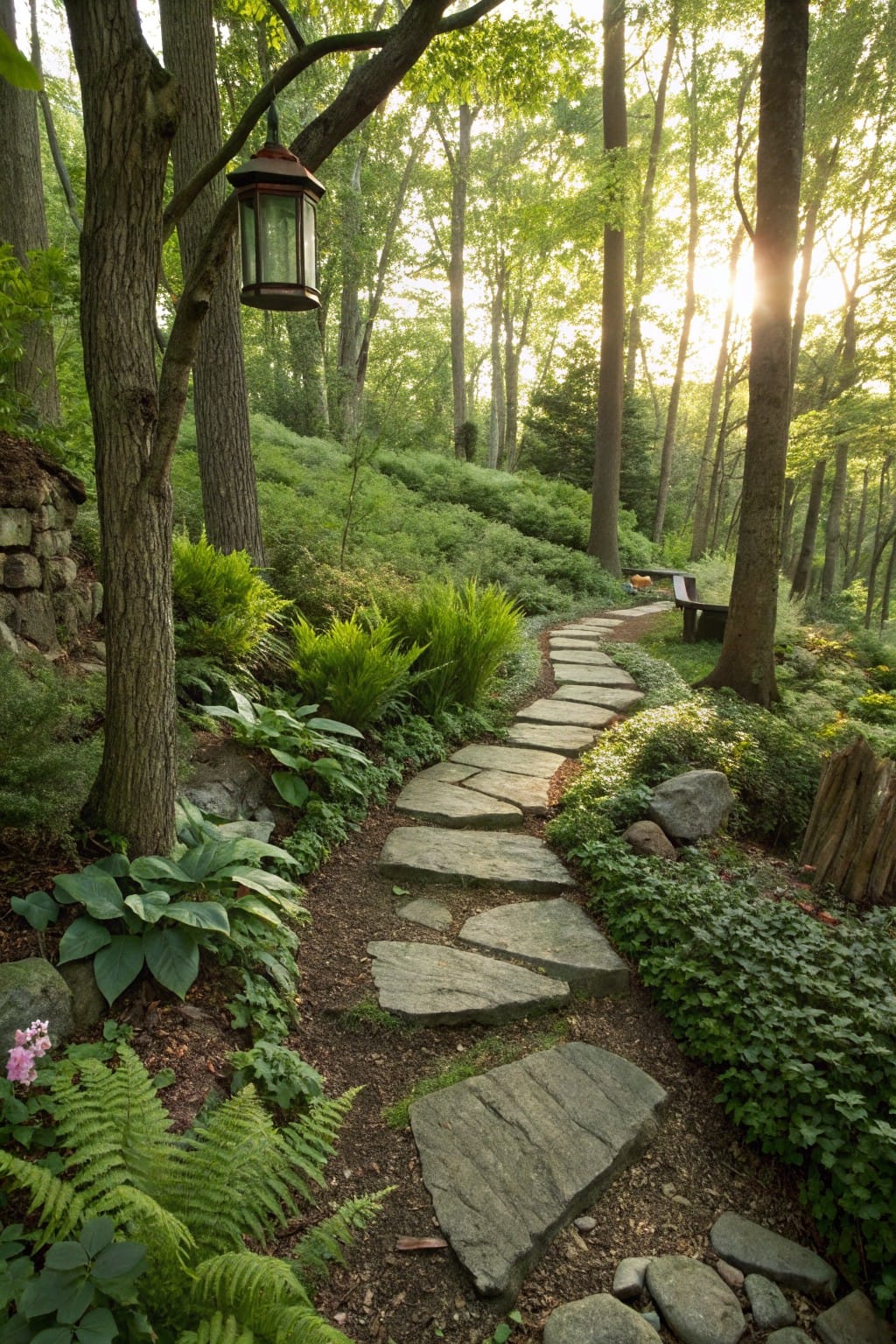
A simple winding path made from irregular flagstones set right into the soil stands out here. It curves gently uphill through tall trees and dense plantings, pulling you along without any straight lines or harsh edges. That natural flow makes the yard feel like an extension of the woods around it.
This setup works best in shaded, sloped spots with mature trees where grass struggles anyway. Edge the stones with ferns and hostas for easy green cover, then add a bench partway up. A hanging lantern gives it evening use too. Just watch the footing on those uneven stones after rain.
Lavender-Lined Pathway to the Entry
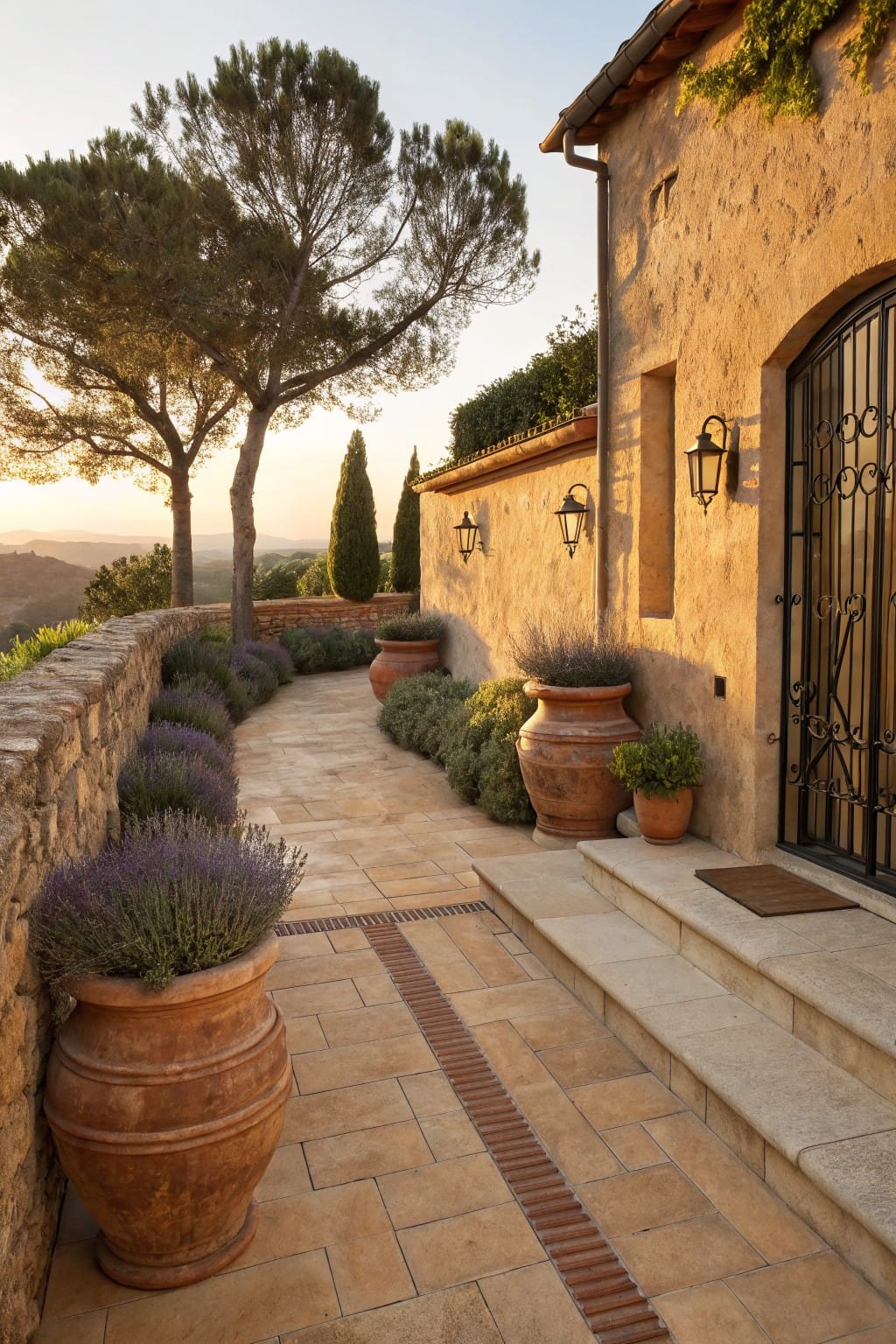
A simple row of lavender plants runs right along this walkway, tucked into beds and spilling from big terracotta pots. It pulls your eye straight to the door without much fuss, and that soft purple color keeps things feeling relaxed and country-like. The low stone wall on one side adds just enough edge to hold it together.
You can pull this off in any side yard or front approach where you want a natural guide to the house. Go for drought-tough lavender since it thrives in sun and doesn’t need babying. Mix in a few oversize pots for bigger impact, and it suits older homes or sloped lots best. Skip it if your spot stays too shady.
Pebble Walkway Through Coastal Dunes
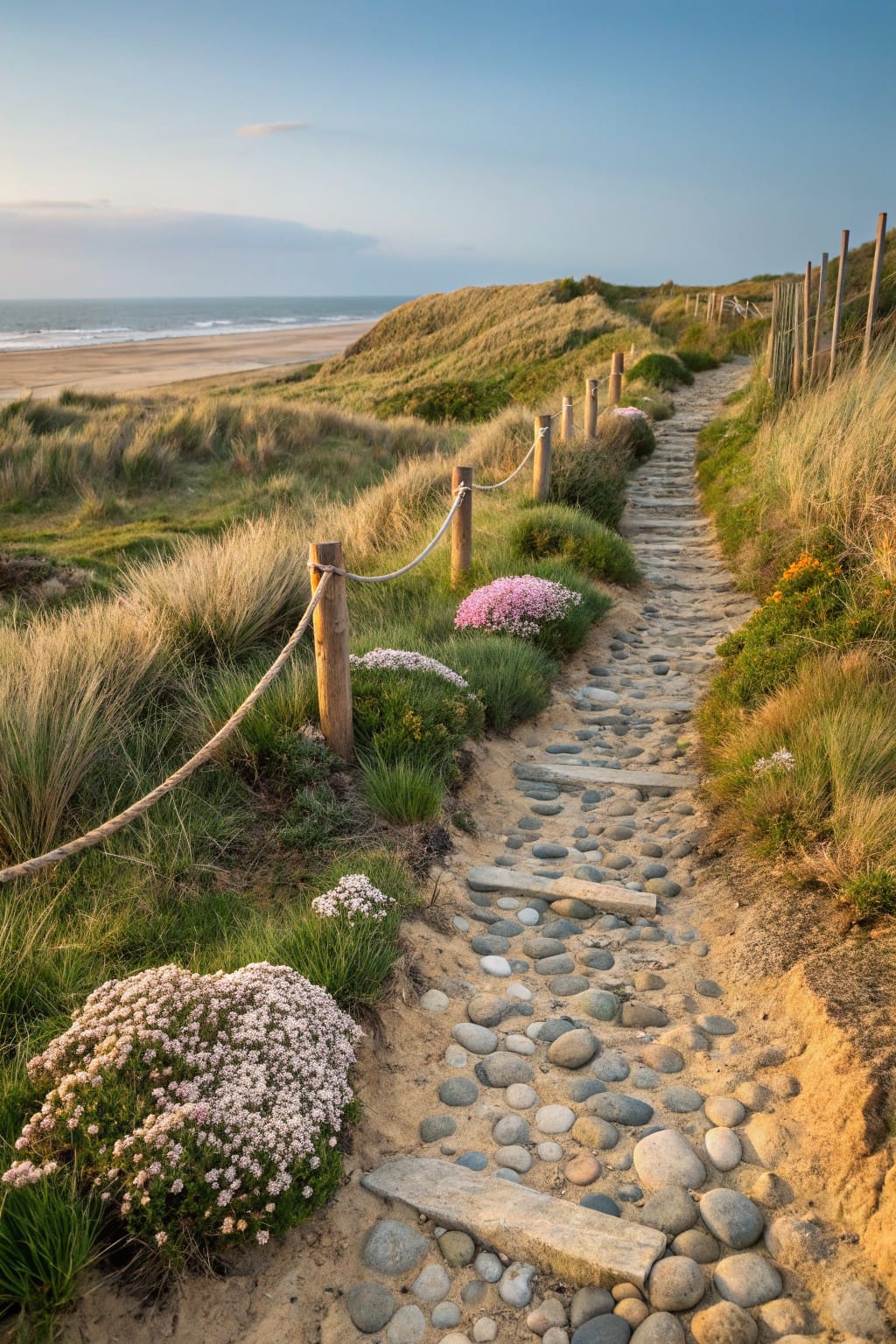
A simple pebble walkway like this one works great for guiding people through sandy dune areas without much upkeep. The mix of smooth rounded stones and flat slabs fits the natural beach ground. Rope strung between wooden posts keeps folks on track. Small clumps of pink flowers and tall grasses along the edges make it feel right at home there.
You can pull this off in any coastal yard or even a backyard with loose soil. Source pebbles from a local beach or quarry to match your spot. Plant tough dune grasses nearby for that wild look. It suits low-sloped paths best. Just watch that the stones don’t shift too much in heavy rain.
Meandering Stone Path in a Rock Garden
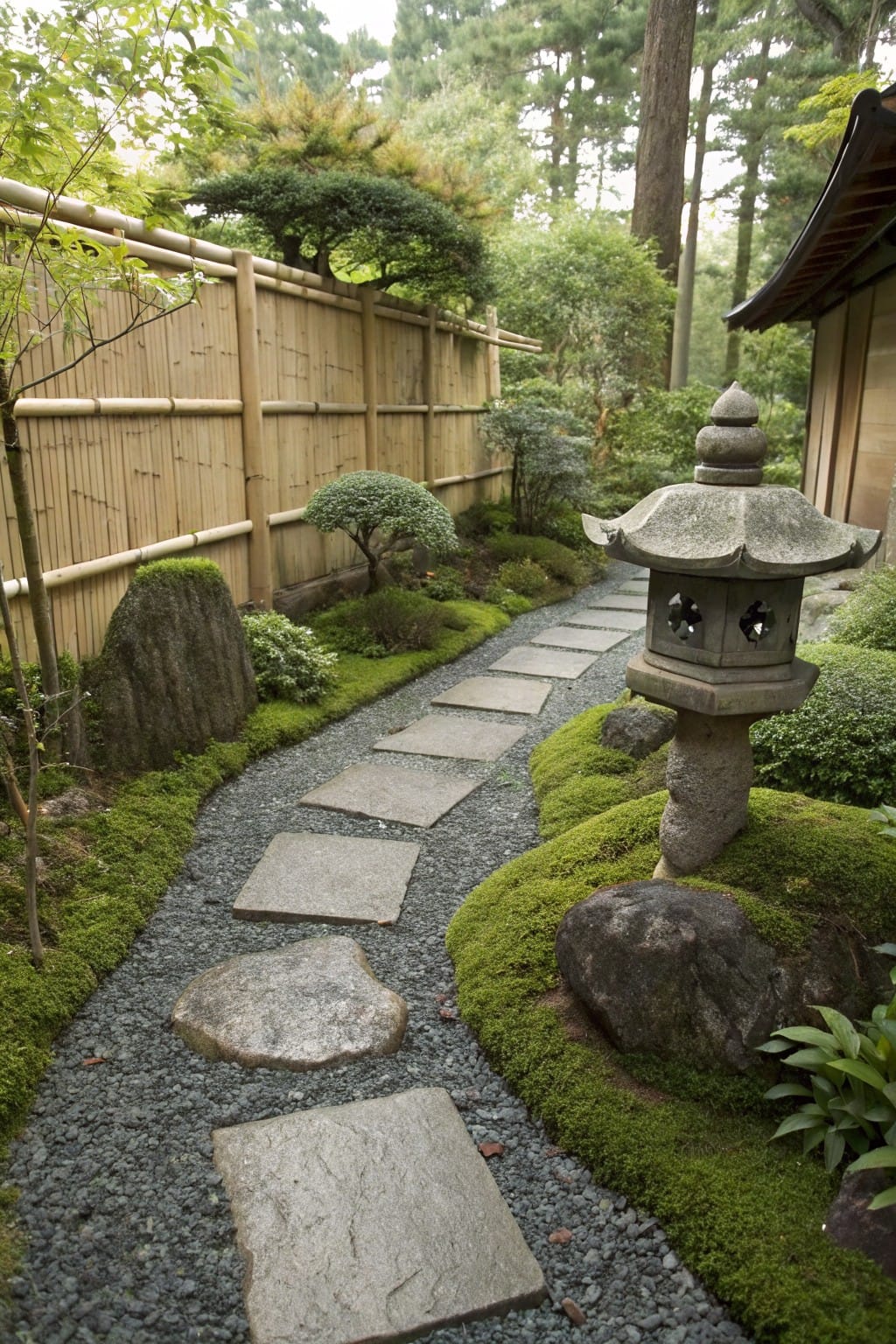
A simple path like this winds through gravel using flat, uneven stones for steps. Moss fills in around rocks and edges, keeping everything soft and low-key. That stone lantern off to one side adds just enough structure without overdoing it. It’s the kind of walkway that pulls you along slowly, making a small garden feel bigger and more thoughtful.
You can pull this off in narrow side yards or around a patio where space is tight. Lay the stones loose in gravel beds, plant moss or groundcover nearby, and skip straight lines for a natural flow. Works best with a backdrop of fences or trees… keeps it private and calm.
Boulder-Edged Desert Walkway
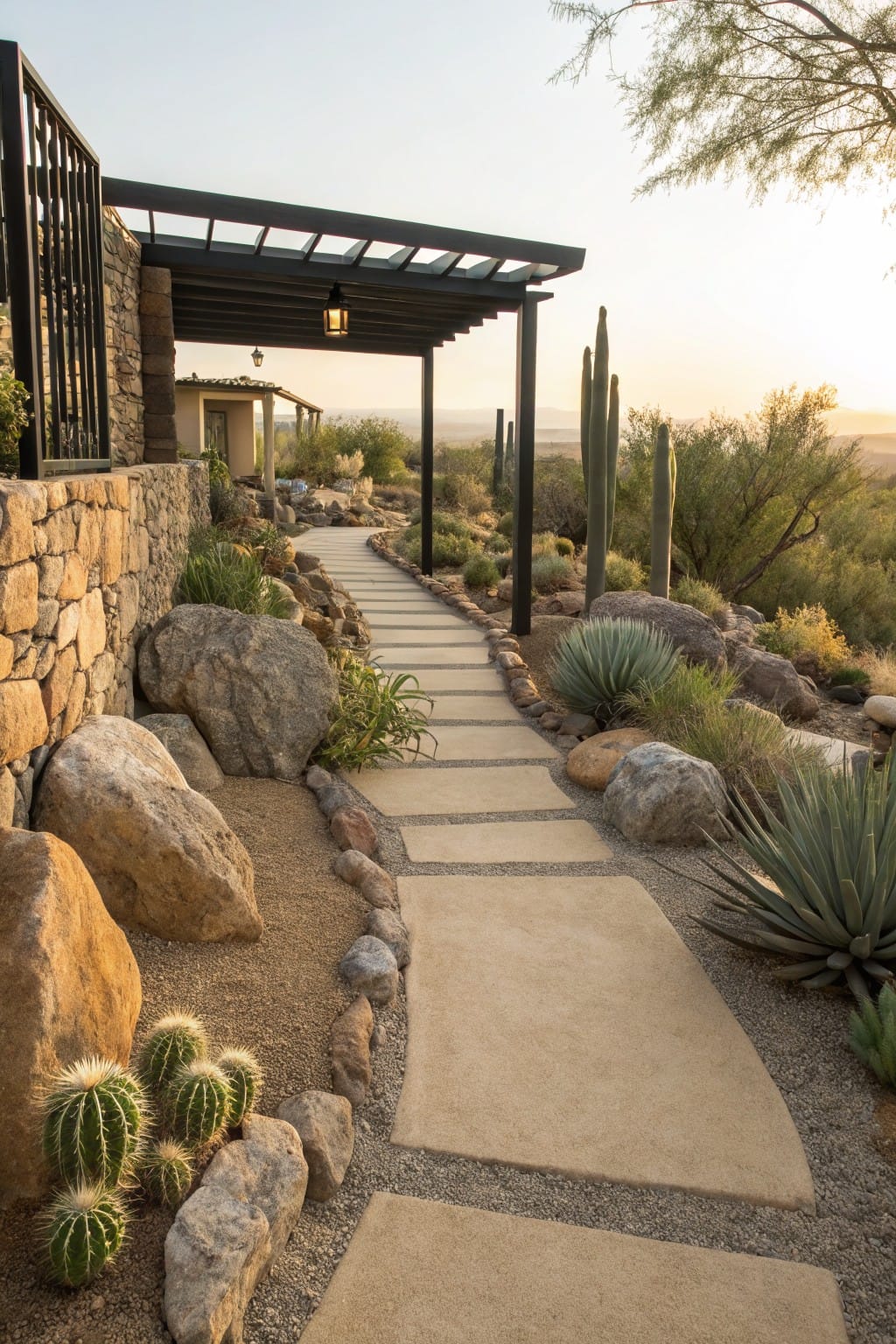
A simple pathway like this one stands out because it uses big boulders and gravel to guide you along without much fuss. The wide concrete pavers make it easy to walk, and the desert plants tucked in add some life without needing constant water. It feels natural in a rocky spot, like the path was always there.
Try this in a dry yard or slope where you want low upkeep. Stack boulders along both sides for definition, fill gaps with gravel, and set pavers just far enough apart. It suits modern homes with stone walls or anyone tired of mowing grass paths…keeps things tidy year round.
Straight Stone Pathway Lined with Boxwoods
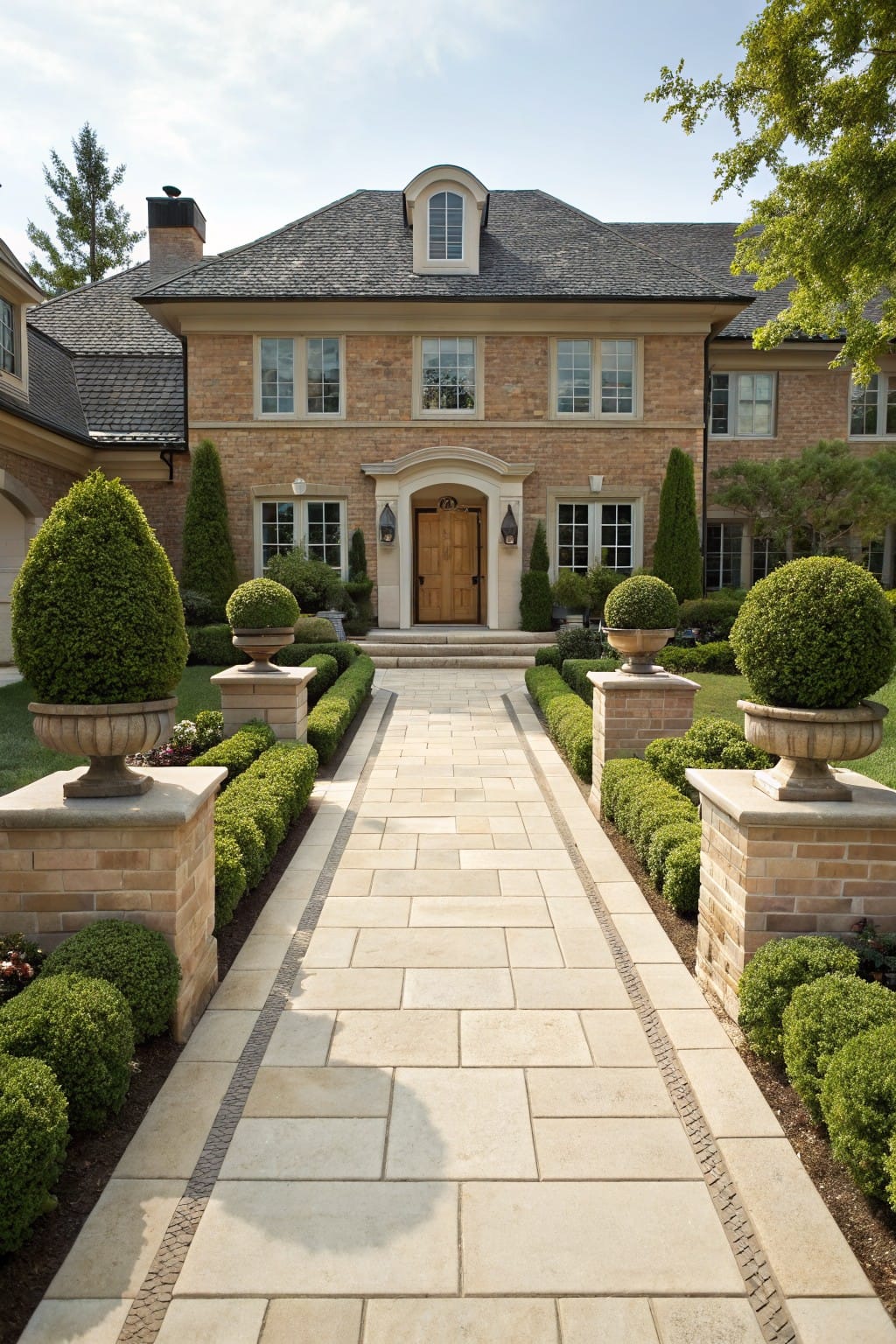
A simple straight path like this one uses wide light stone pavers with dark edging to lead right to the front door. Boxwood hedges run along both sides, clipped low and topped with round shrubs in tall urns on brick pillars. It gives the entry a tidy formal look that feels open and easy to walk.
This works well in front yards where you want to tie the house to the landscape without crowding things. Plant the boxwoods close for that solid border, and pick pavers that match your home’s brick tones. Suits classic or colonial style houses best, and it’s low fuss once established.
Flagstone Path with Boulder Retaining Walls
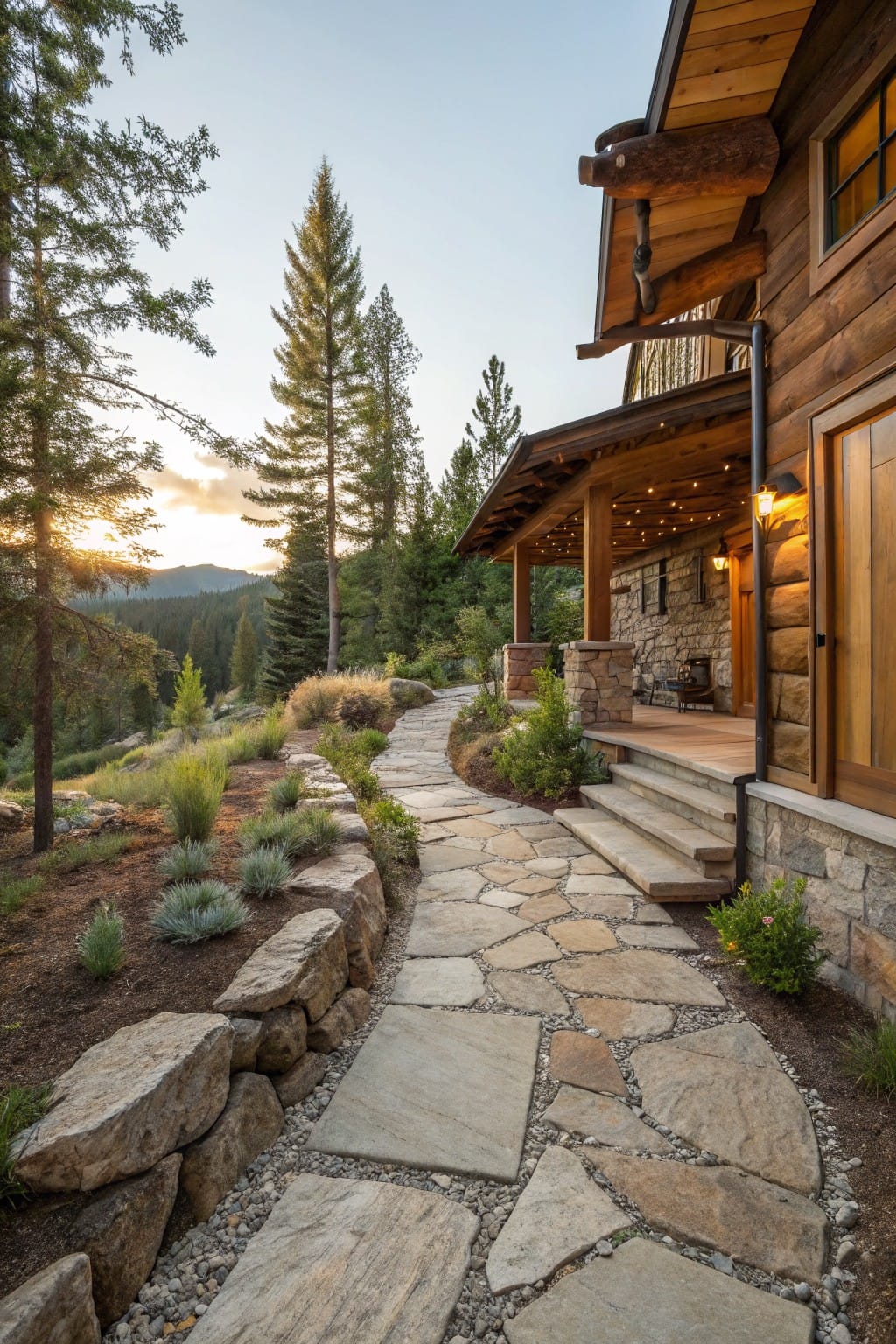
One straightforward way to handle a sloped entry is a flagstone path edged by boulder walls. The uneven stone slabs fit right into the natural ground, and those stacked rocks hold back the soil without looking forced. It gives a cabin feel that matches wooded spots, keeping the walk stable and pretty year-round.
This setup works best on hillsides where you need some grading but want low upkeep. Source local fieldstone for the boulders and slabs to blend in, then tuck in tough plants like grasses along the base. Skip mortar for a looser look, but make sure the path is wide enough to walk comfortably… two feet at least.
Winding Flagstone Path in Gravel and Grass
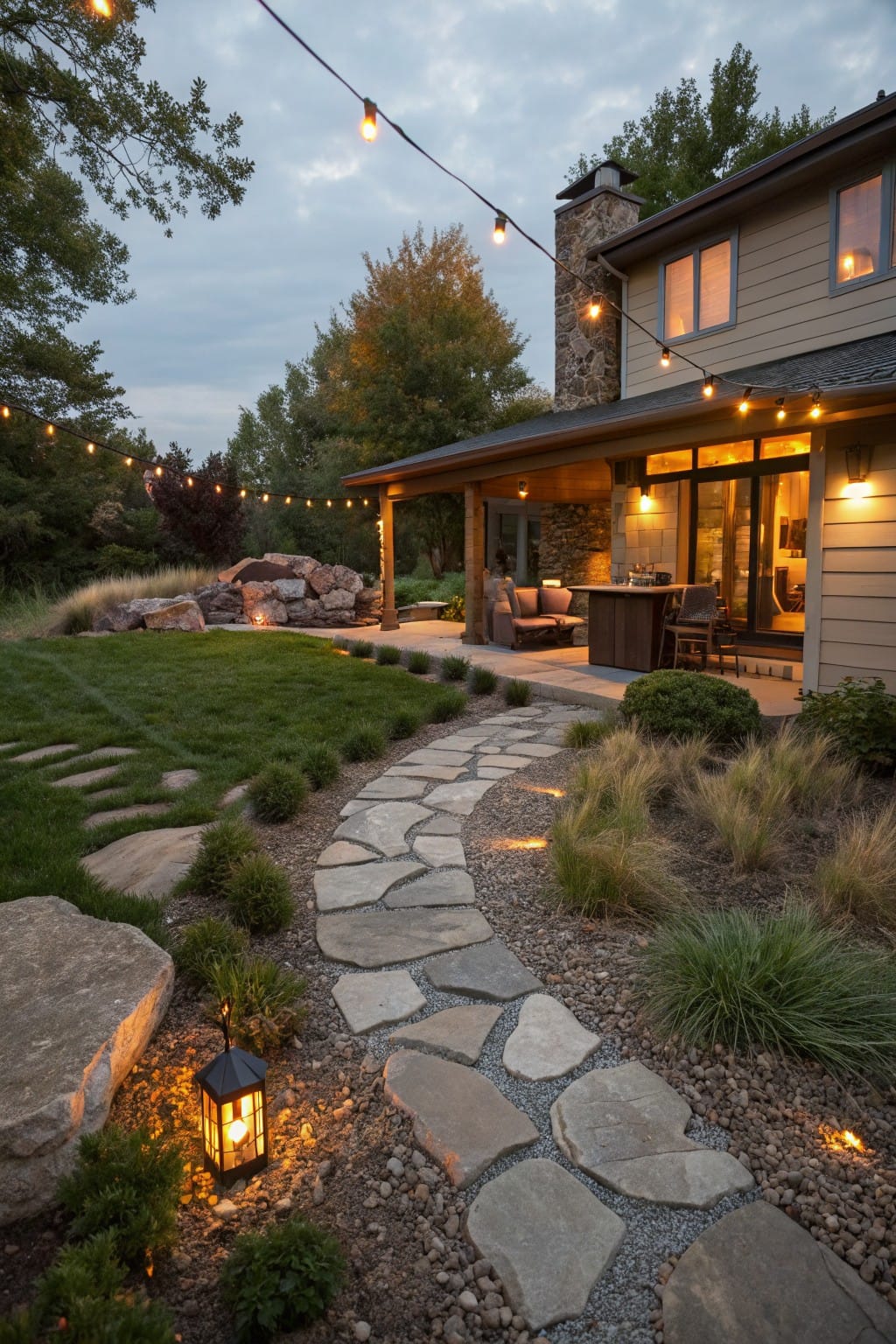
A simple winding path like this one uses irregular flagstone slabs laid loosely in gravel. It cuts through low grasses and small shrubs without feeling too planned out. That natural curve makes the yard feel bigger and more relaxed. You get a smooth walk to the patio but it blends right into the planting beds.
This setup works best in backyards with some slope or open space around the house. Pair it with tough grasses that don’t need much water. Skip straight lines if you want that easygoing look. It holds up well and keeps dirt off your shoes.
Stepping Stone Pathways in Pebble Beds
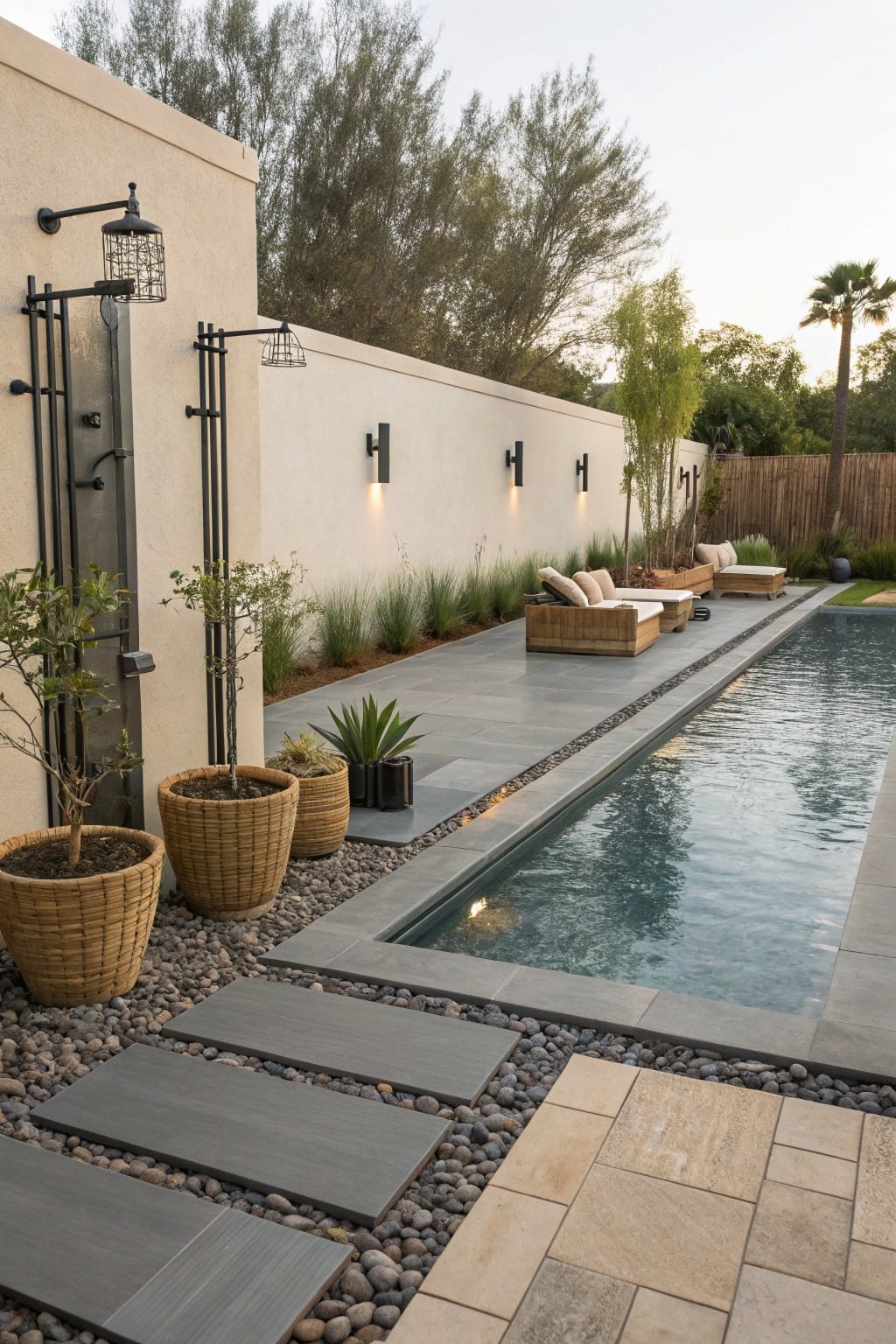
Big rectangular gray slabs set into beds of small rounded pebbles make a simple pathway that feels right at home next to a pool. The rocks let water drain fast, which helps around wet areas, and the whole thing looks natural without needing grass or edging to fuss over. Those few potted plants nearby just add to the easy flow.
You can pull this off in any backyard pool zone or garden path where mud or slick spots are a problem. It suits modern desert homes or casual setups best. Go for larger slabs if folks will walk it a lot, and pick pebbles all one size to keep it from shifting.
Winding Rock Path Through Flower Beds
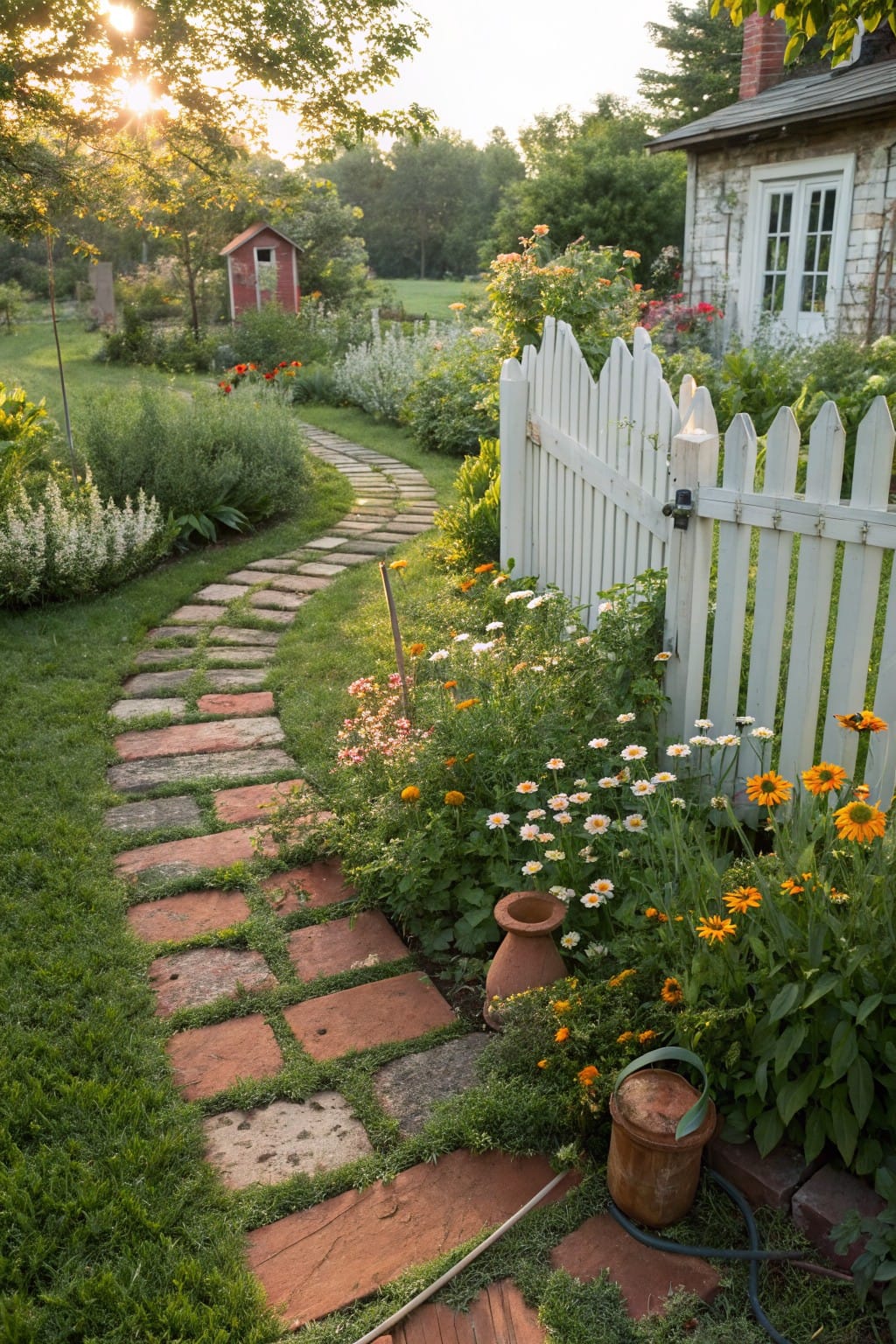
A simple winding path made from irregular rock slabs cuts through thick borders of flowers and herbs. It feels natural and easygoing, like you’re meant to wander and take your time. The curve pulls you along without rushing, and the stones fit right into the garden dirt, blending everything together nicely.
This kind of path works best in cottage gardens or any backyard that wants a relaxed feel. Lay down larger flat rocks with some gaps for grass or moss to fill in, then plant low flowers like daisies or marigolds right along the edges. Keep it away from formal lawns, though. It shines where you want to slow down and enjoy the plants up close.
Stepping Stone Walkway in Gravel Beds
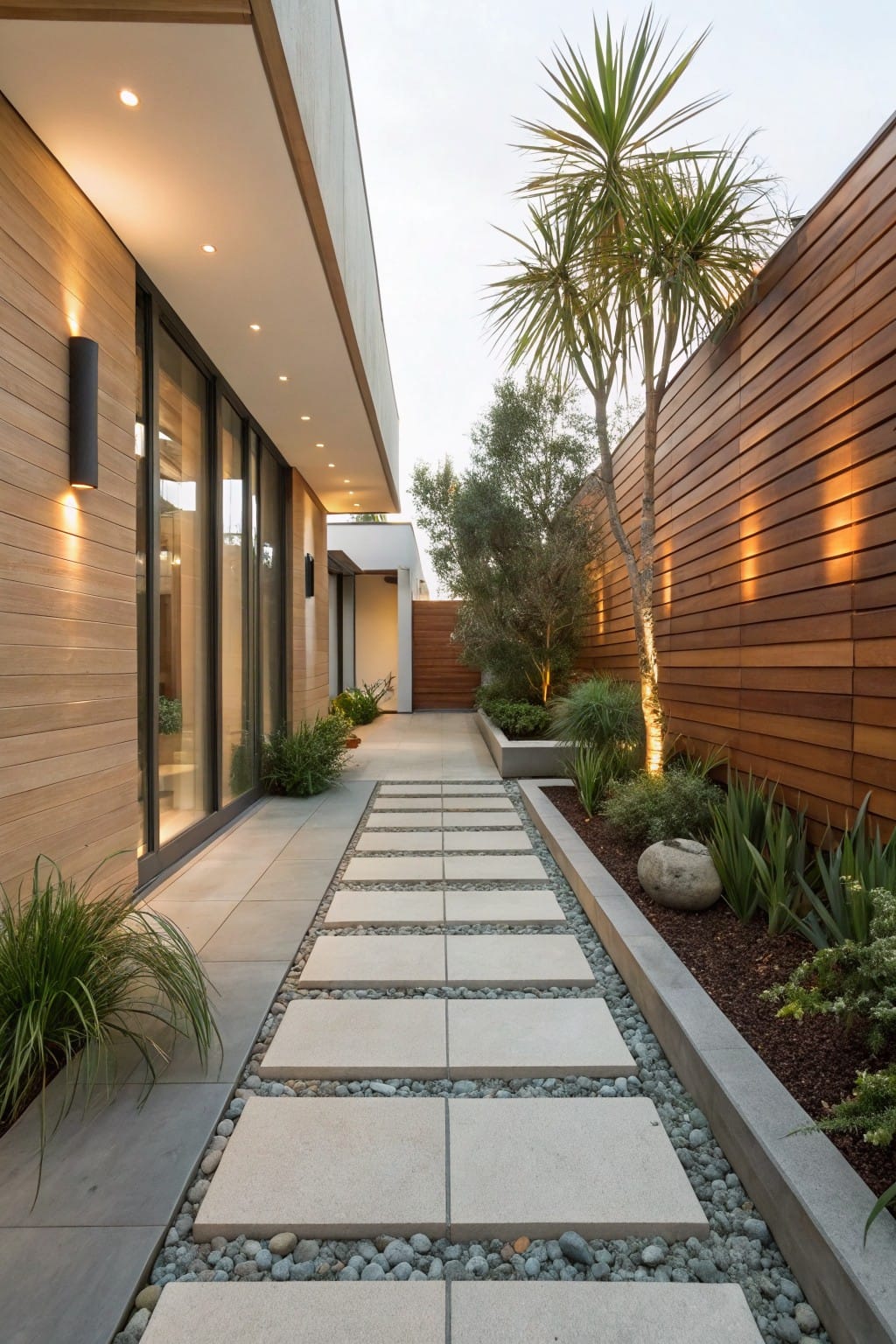
This kind of path sets large rectangular pavers into a bed of smooth gravel, leaving gaps that look natural and let rain soak right in. Low grasses and agave plants edge the sides, while simple lighting along the wood fence keeps it practical at night. It’s a clean way to guide people through a yard without a lot of hard surfaces.
You can put this in narrow side areas or entry paths where space is tight. It suits modern houses with clean lines, or even older ones wanting less upkeep. Pick pavers in a light stone color to blend with gravel, and watch that the base is firm so stones don’t shift over time.
Winding Flagstone Path with Pebble Edges
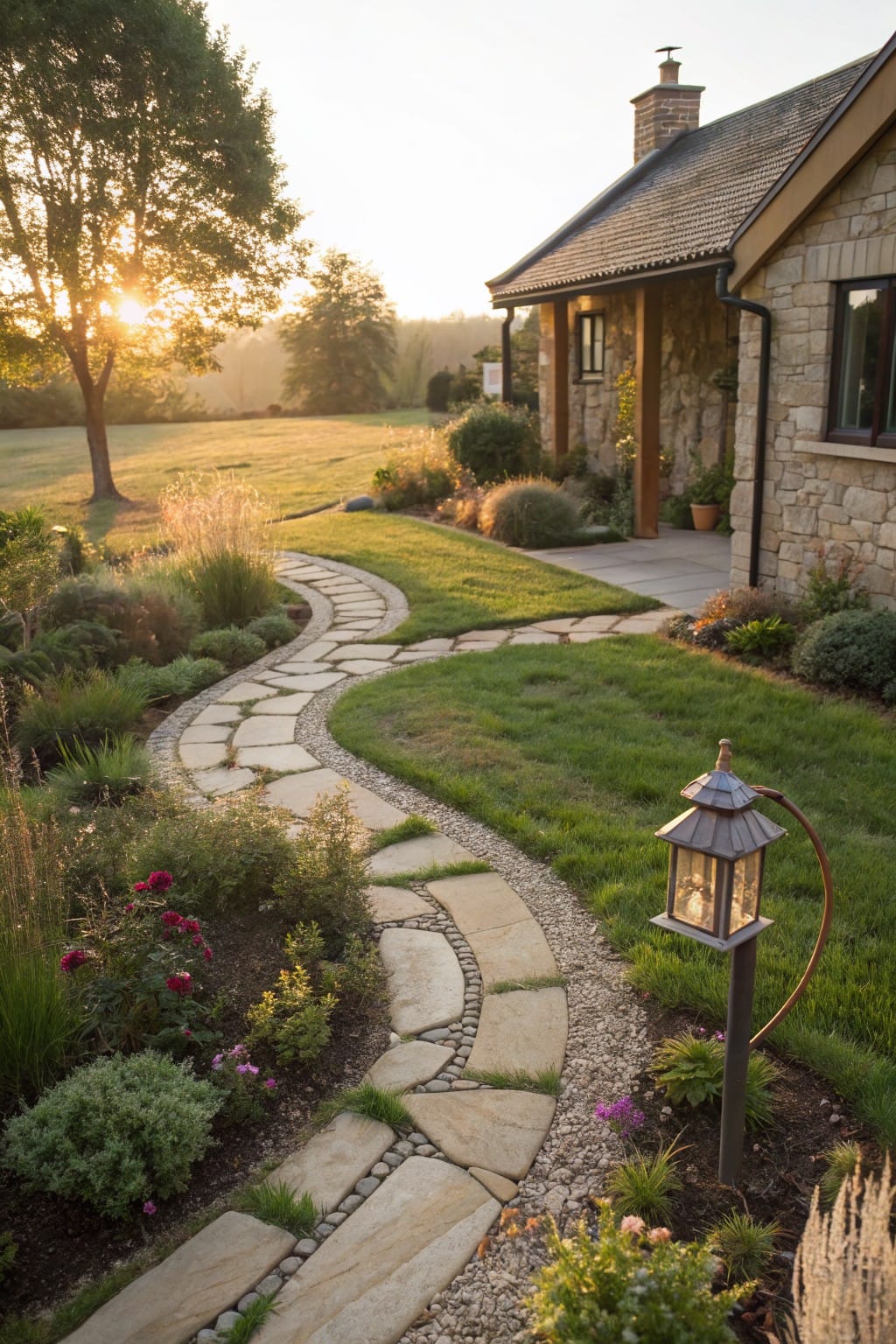
A simple winding path like this uses rough-cut flagstones laid in a loose curve, with white pebbles tucked along the borders. It keeps things natural and easy on the eyes, especially when plants fill in around the sides. No harsh lines here. Just a gentle flow that makes walking to the door feel relaxed.
You can pull this off in a front yard or backyard garden, as long as the ground is level enough for the stones to settle. It suits stone houses or cottages best, but try it anywhere with soft grass nearby. Watch the pebble depth though. Too much and it shifts underfoot.
Pebble-Edged Brick Pathway
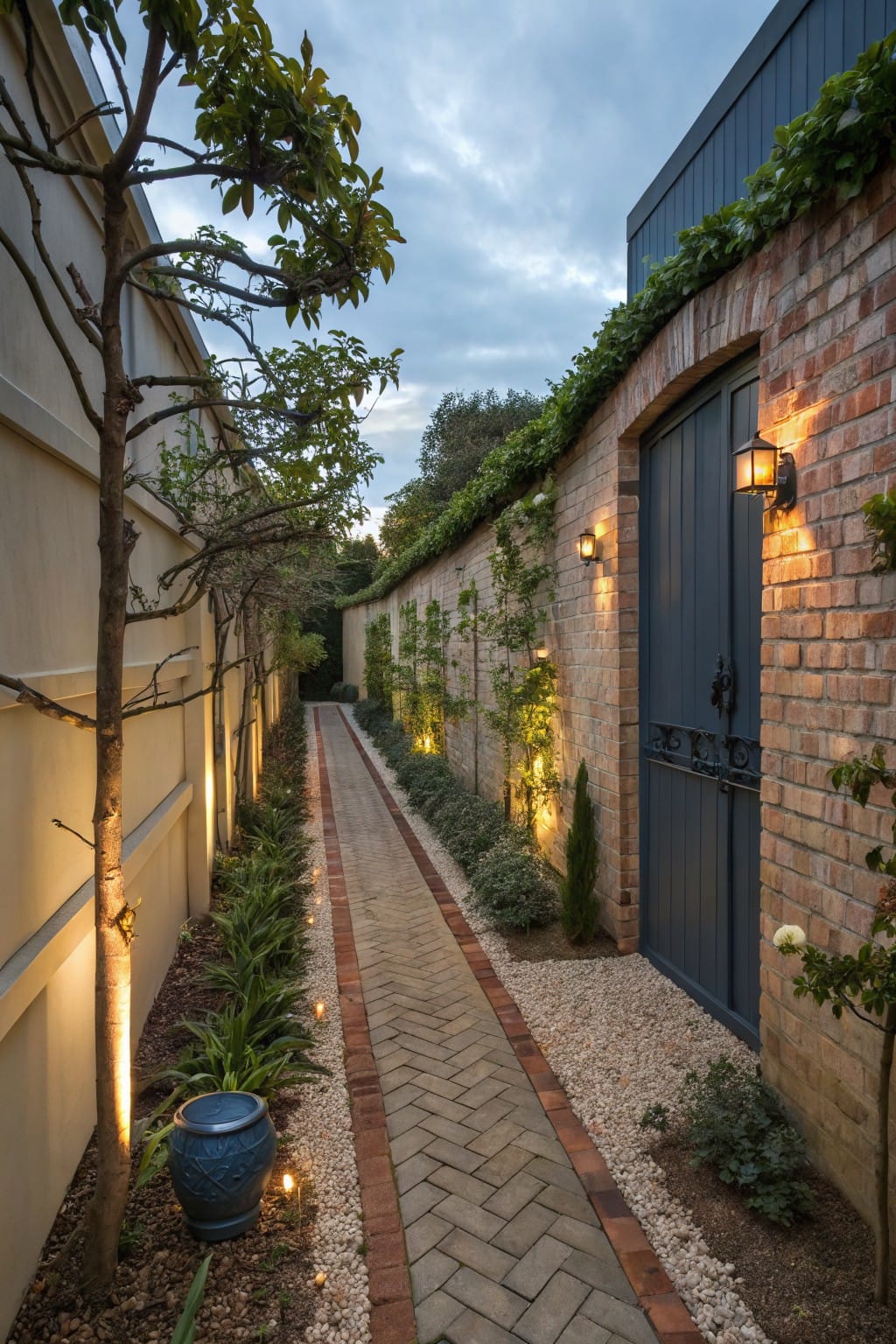
A narrow walkway like this uses brick pavers laid in a herringbone pattern, with white pebbles tucked along the edges. It runs between two walls covered in climbers, and those small uplights along the way keep things visible after dark. The look stays natural without much fuss, perfect for guiding you through a tight spot in the yard.
You can pull this off in side gardens or back entries where space is limited. Pair the bricks and pebbles with low plants that won’t crowd the path, and add lights for evening use. It suits most homes, especially if you want low upkeep… just sweep the pebbles now and then.
Paver Pathways with Pebble Gaps
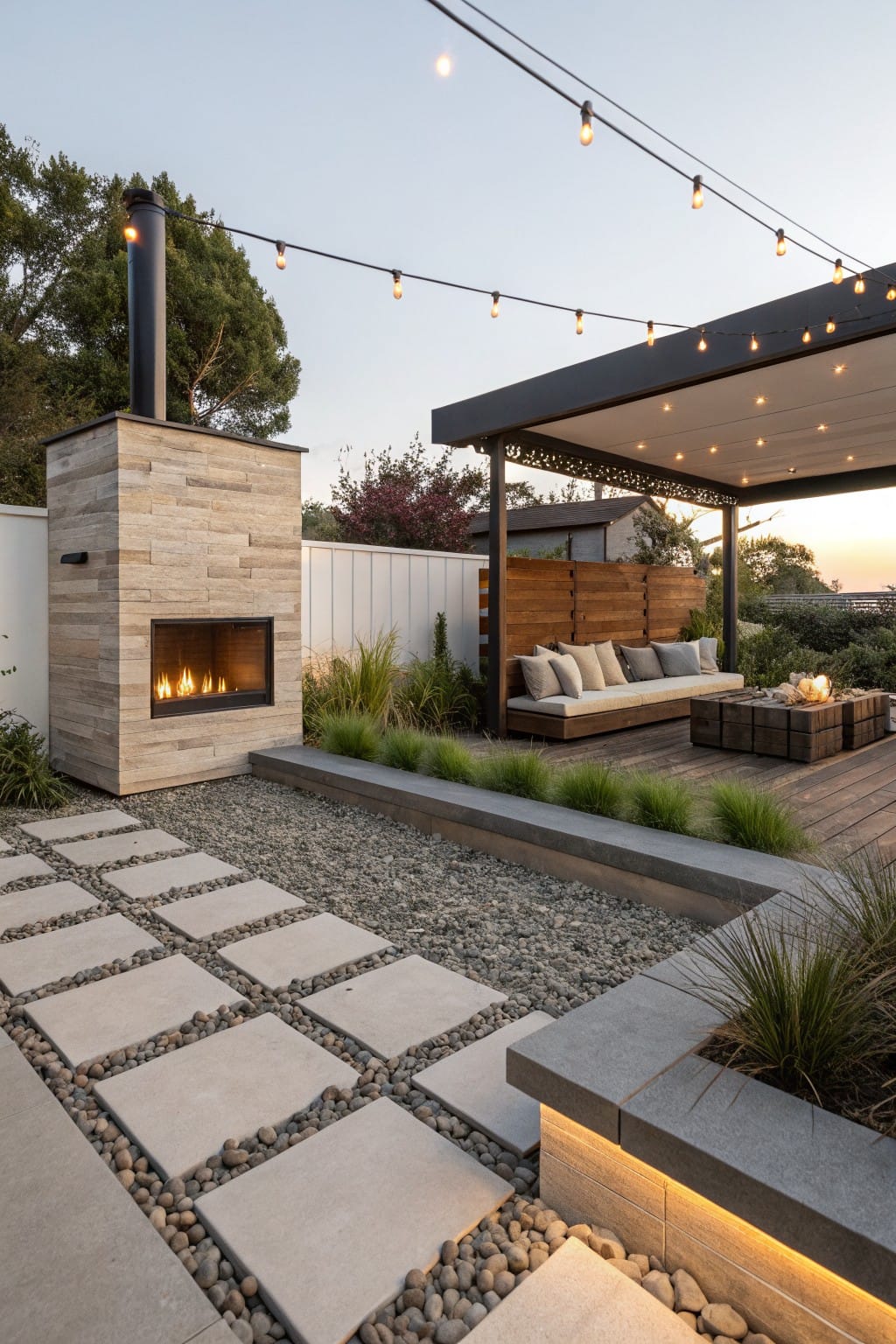
One straightforward way to build a backyard path is to space out big concrete pavers with smooth pebbles in between. It keeps things simple and natural looking. The rocks fill the joints nicely, so you get that textured feel without much upkeep. Here it runs from the yard edge straight to some low seating near a fire feature.
This setup fits most any outdoor space, especially where you want a clean line to a patio or deck. Start with a gravel base for drainage, drop in the pavers, then pour pebbles around them. Go for larger stones if the path sees a lot of foot traffic. Watch the gaps though, too wide and it might shift over time.
Curved Paver Path with Boulder Edges
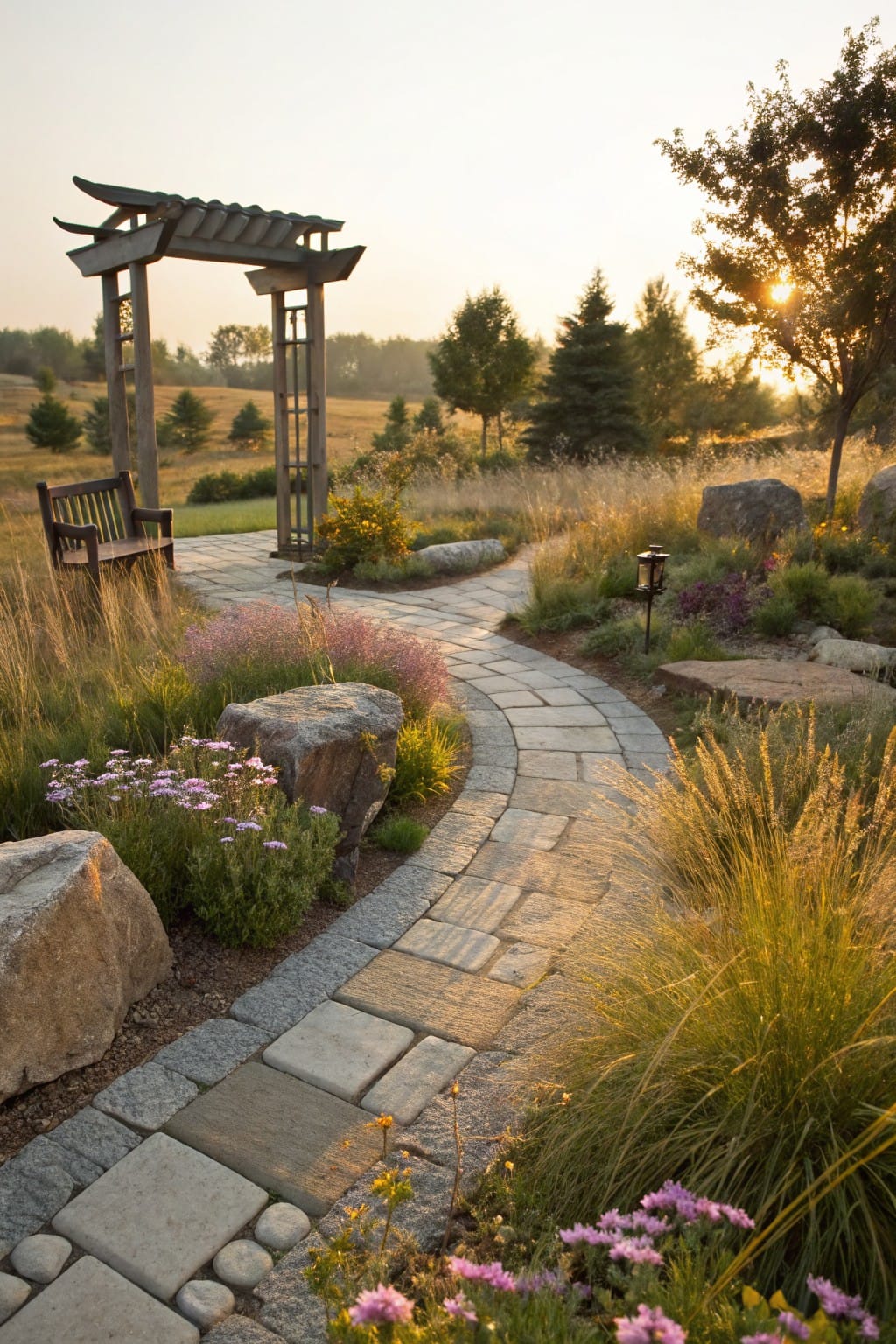
A simple curving path like this one makes a backyard feel more like a real garden stroll. The pavers form a gentle S-shape that leads your eye right through, and those big boulders tucked along the sides keep it from looking too planned out. They add weight and a rugged touch that fits right in with the grasses and low plants around them.
You can pull this off in most yards with some room to wander. Pick boulders in natural shapes from a local supplier so they match your soil and stone type. Line them loosely next to the path, not too neat, and fill in with easy-care perennials. It suits homes with open land nearby… keeps things low fuss but still pretty.
Gravel Walkway with Wooden Stepping Stones
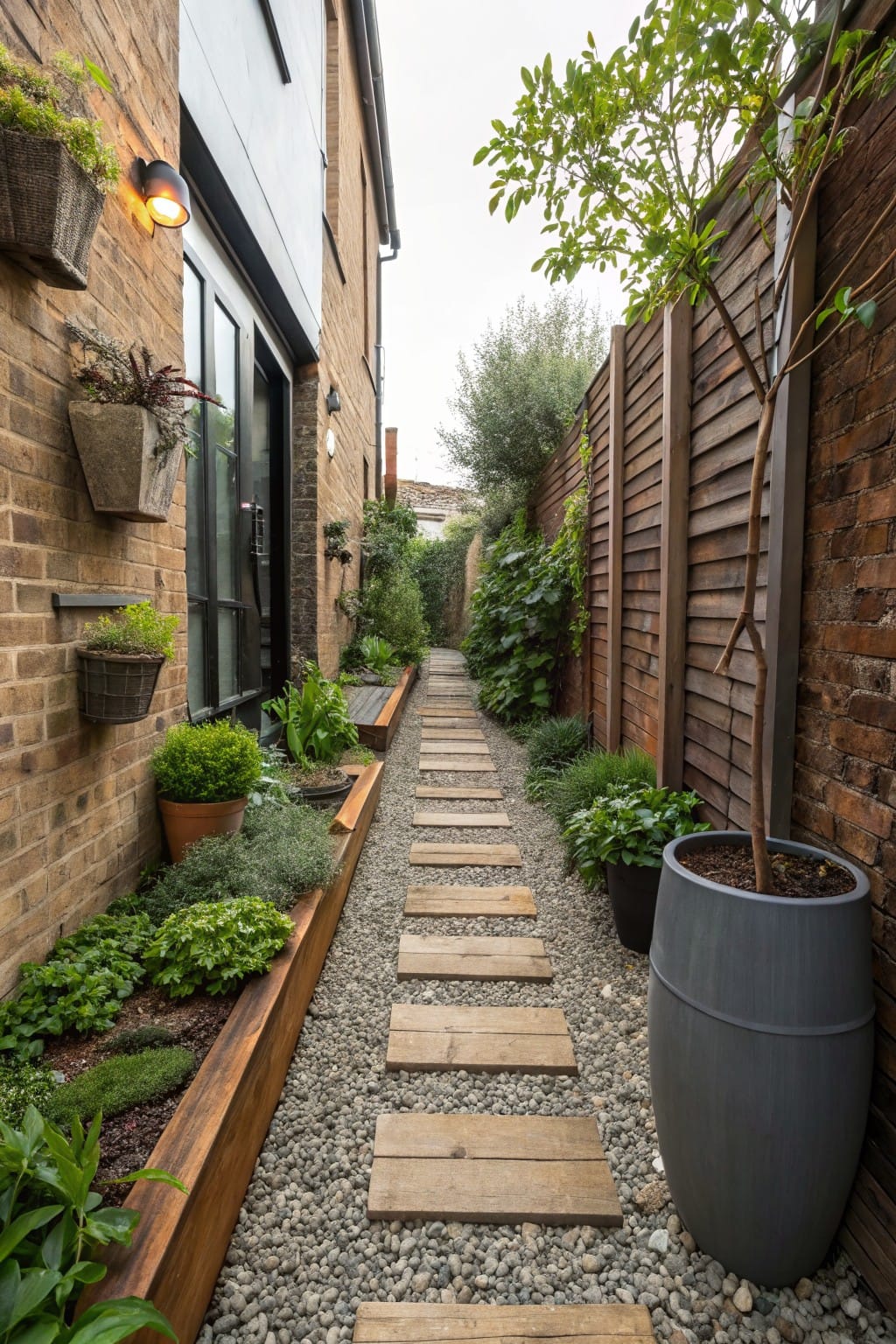
A gravel base with flat wooden slabs makes for an easy pathway that fits right into a narrow garden spot. The light gray pebbles let water drain quick, and the rough-cut wood adds that backyard feel without looking too fussy. Plants tuck in along the sides, keeping the path clear but cozy.
Set this up in tight side yards or between buildings where you want to grow herbs close by. Use reclaimed wood for the slabs to save money, and edge it with simple raised beds. It suits row houses or small urban lots best. Just make sure the gravel is packed down good so the steps stay put.
Circular Pavers in Gravel for Garden Paths
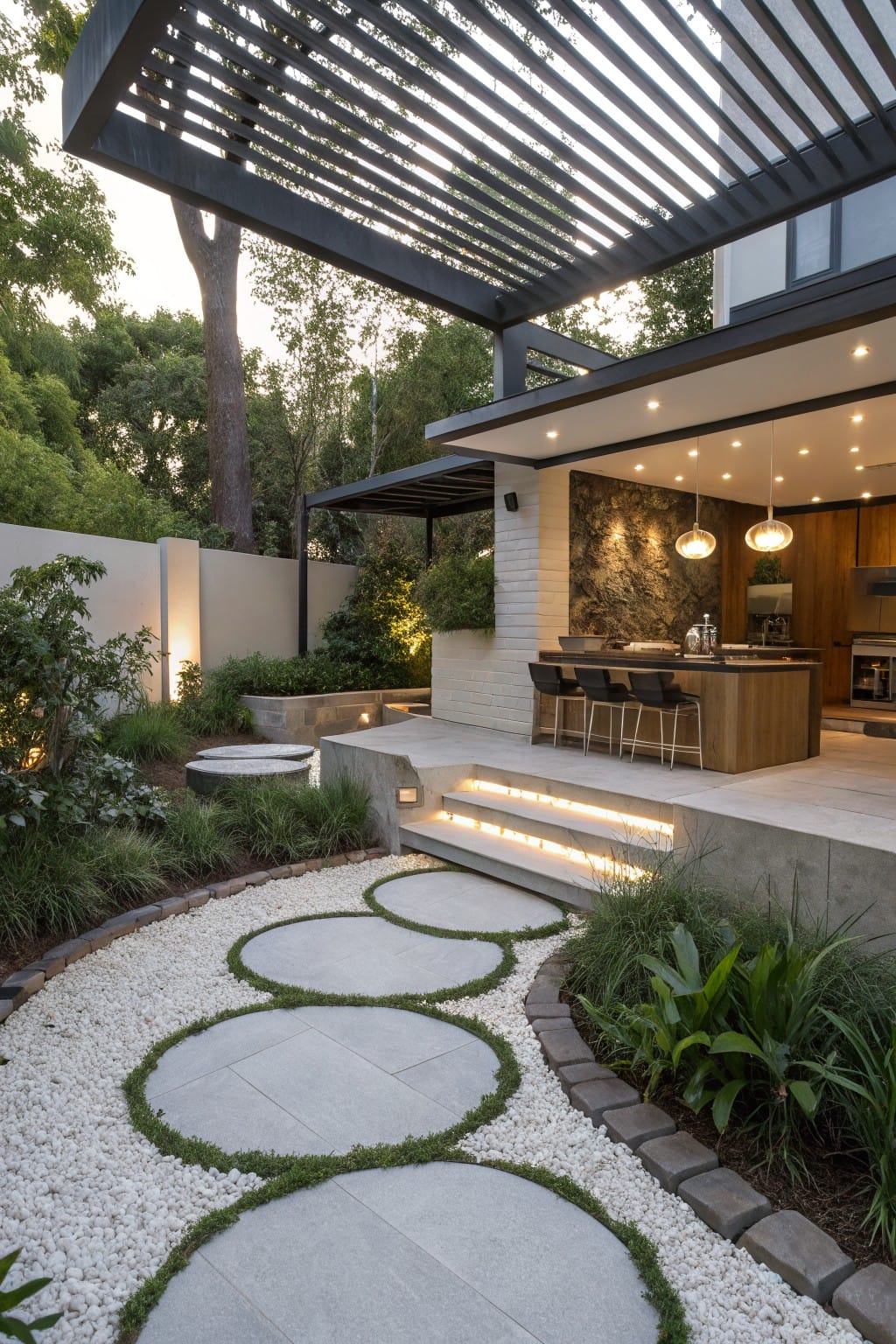
A simple gravel path like this one uses big round concrete pavers set right into white pebbles. Thin grass strips edge each circle, which keeps dirt from spilling over and gives it a clean, natural look. It pulls your eye from the yard up to the patio without feeling too rigid.
These paths work great in backyards where you want low upkeep but some structure. Lay them between plant beds or leading to an outdoor seating spot. They suit homes with modern lines, and just rake the gravel now and then to refresh it.
Cobblestone Path with Stone Wall Borders
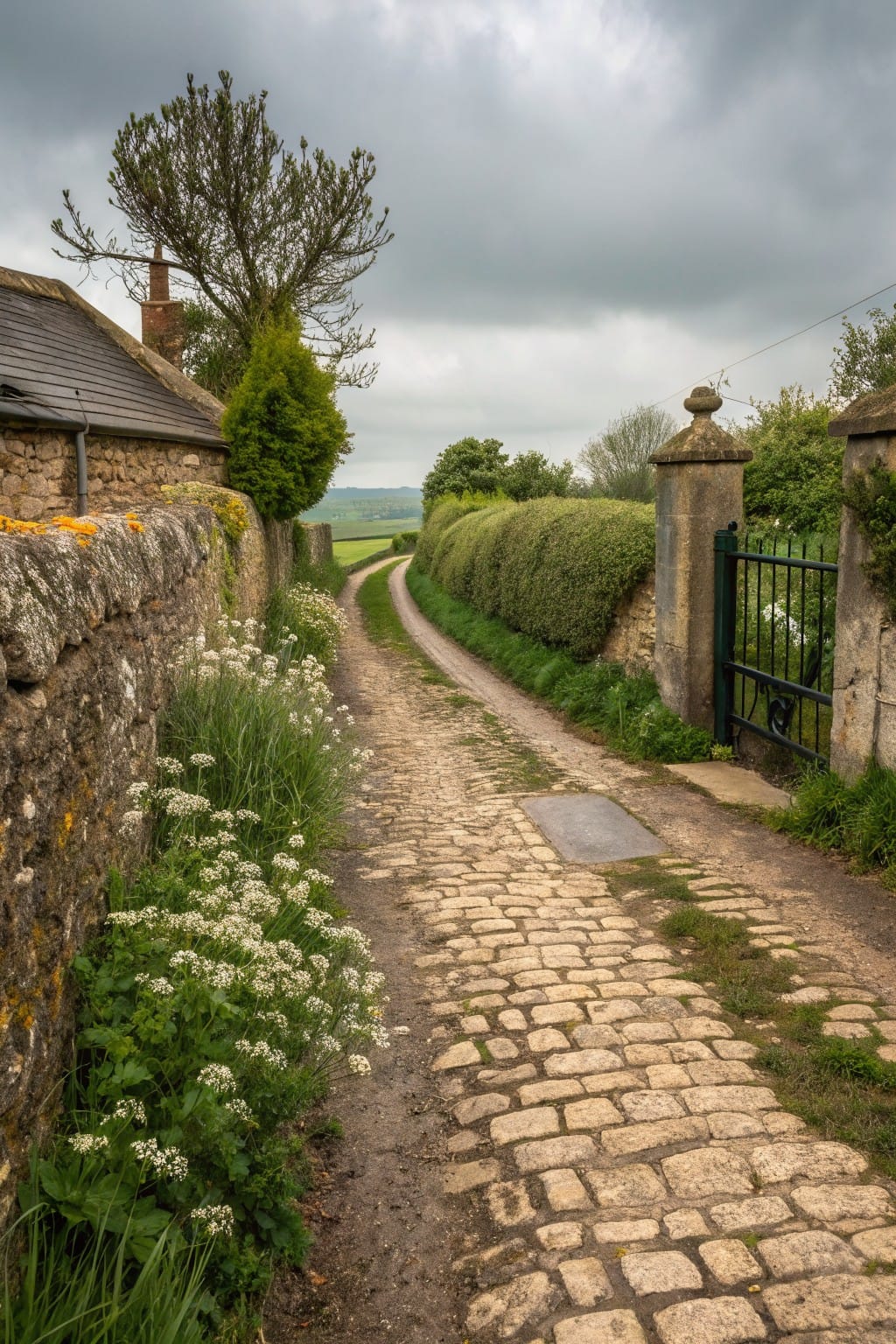
A good old cobblestone path like this one runs smooth underfoot, made from worn setts that fit right against a rough stone wall. The wall’s got lichen patches and those tall white flower clusters spilling over, keeping things natural and low fuss. It pulls the whole lane together without looking forced.
You can add this to a cottage entry or side garden path where the house has some stone already. Source setts from reclaimed yards for that aged look, and let grass grow between them. Suits rural spots or older properties best, just make sure the base drains well so it doesn’t turn muddy after rain.
Frequently Asked Questions
Q: How do I keep weeds from taking over my new rock path? A: Lay down landscape fabric before you add rocks.
It blocks most weed seeds from sprouting up.
Spot-treat any escapees with vinegar spray right away.
Q: What stops the rocks from shifting when I walk on the path? A: Start with a compacted layer of gravel or crusher fines underneath.
That gives rocks a firm spot to sit.
Edge the sides with logs or bricks to lock everything in place.
Q: Can I build one of these paths on a sloped yard? A: Stack larger flat rocks to create steps that follow the hill.
Backfill gaps with gravel so water drains well.
And test each step for wobble before calling it done.
