

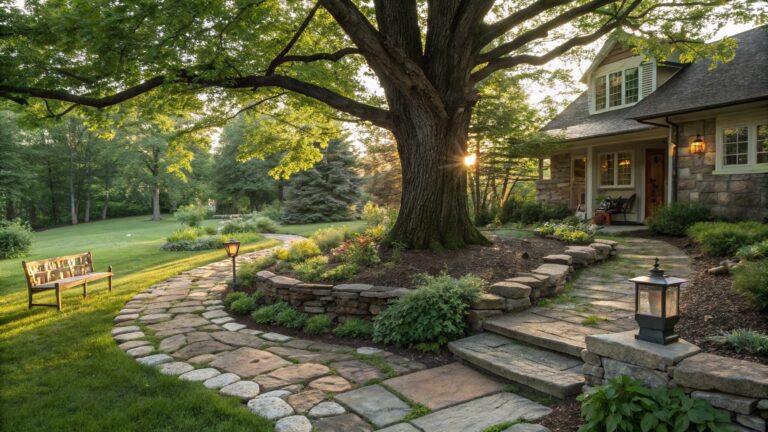
I’ve noticed that the most successful yards treat trees as the anchors they are, letting rustic rocks settle around them like fallen boulders from a nearby hillside. In my own yard, I started with just a few larger stones to define the base, and over time they blended so well that the whole area feels undisturbed by human hands. People usually spot first how these rock arrangements create subtle pathways that draw you closer without cluttering the ground. That natural flow works. A handful of these setups are practical enough to adapt to sloped lots or shady spots, making them worth noting for your next project.
Curving Stone Path Around a Tree Base
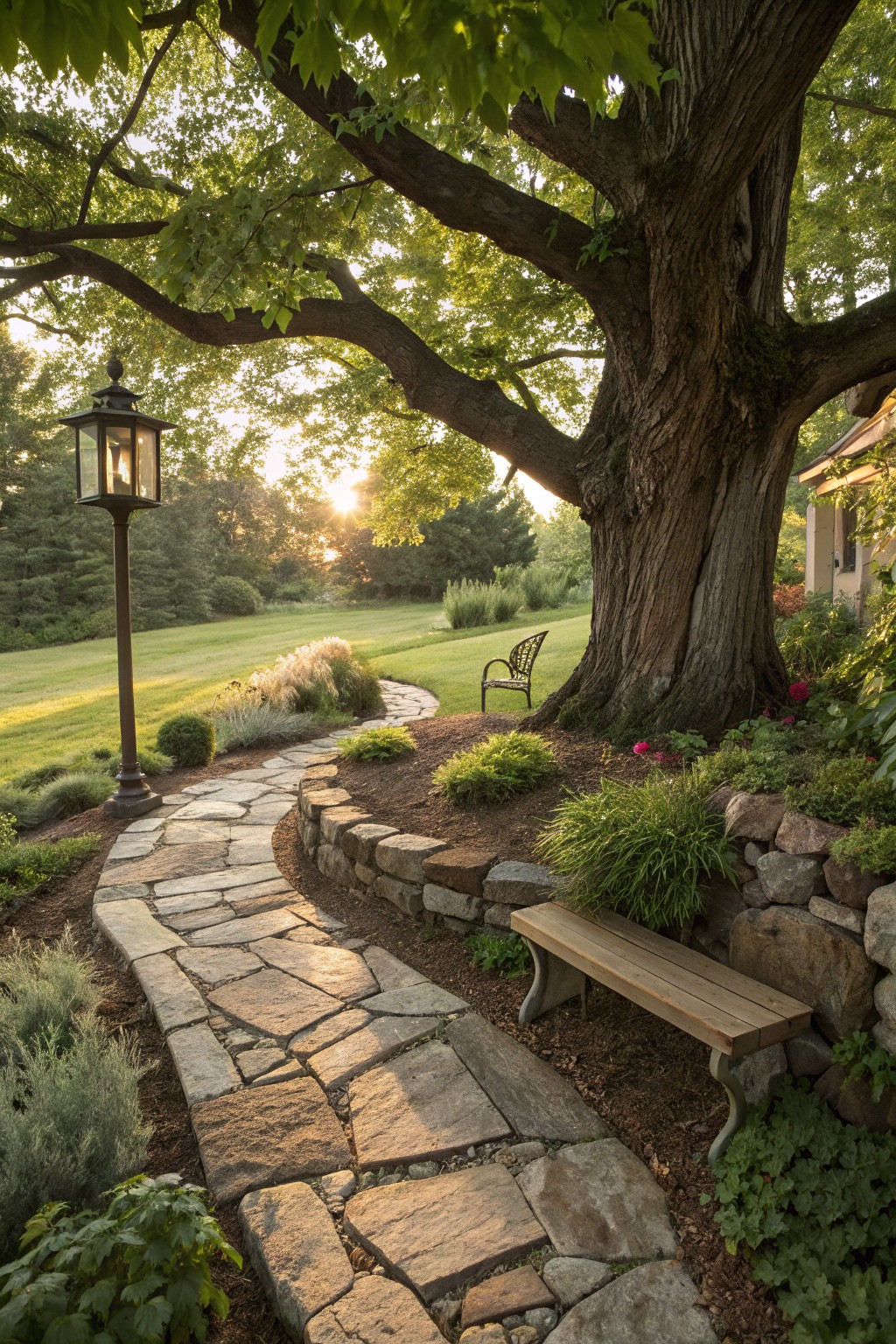
A winding flagstone path like this one hugs the curve of a large tree trunk perfectly. The rough-cut stones follow the natural contours without forcing straight lines, and a simple dry-stack rock wall holds back the soil while plants tuck in along the edges. It pulls the path into the landscape so everything blends, especially with that old tree as the center point.
You can use this in any yard with a standout tree you want to highlight, maybe leading to a bench or hidden garden spot. Pick stones from nearby quarries to keep costs down and the look local. Just make sure to work around roots carefully so the tree stays healthy… no heavy digging there.
Rustic Rock Path Around a Big Tree
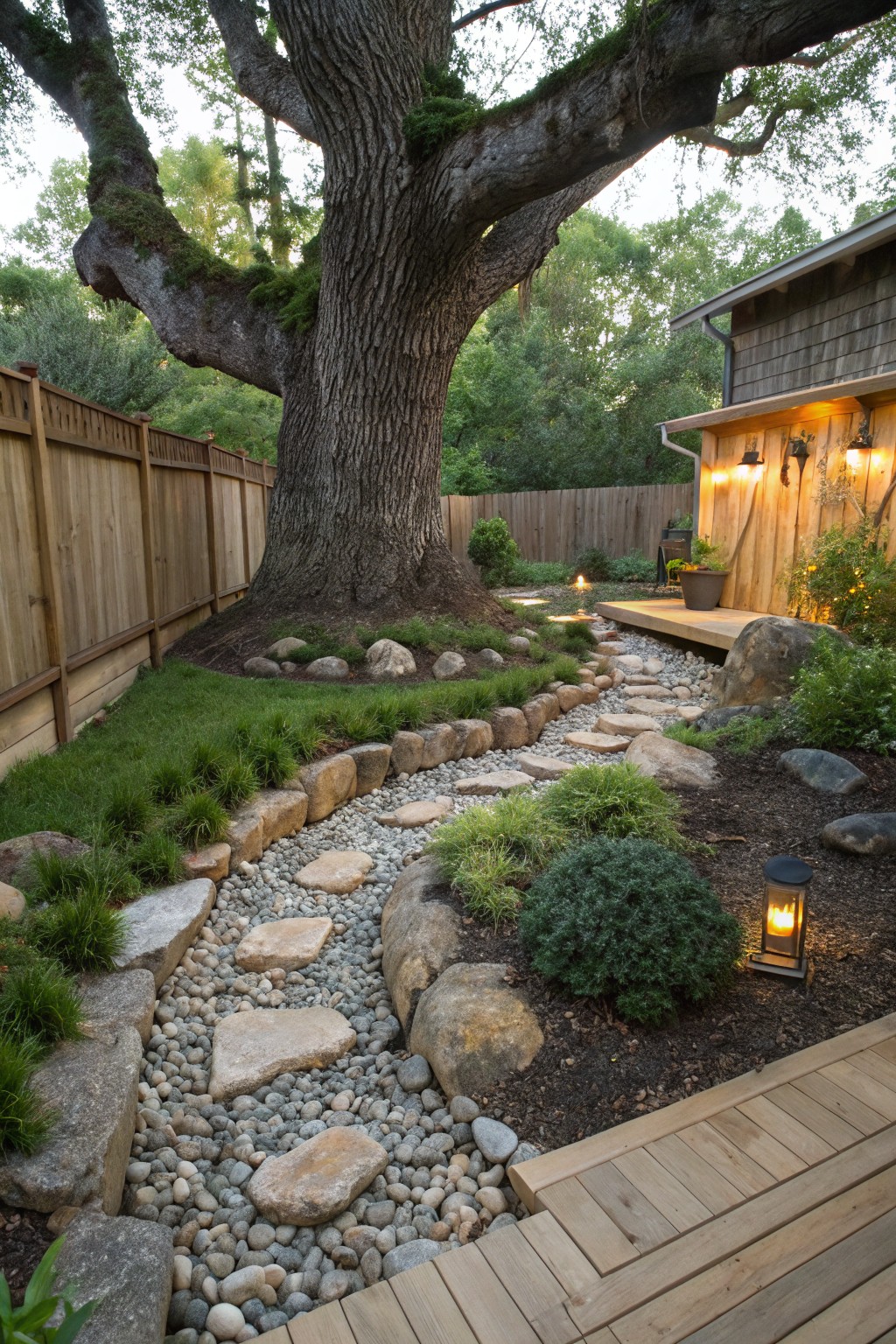
One simple way to work rocks into your yard is by building a winding path that curves right around a mature tree. Here you see flat stepping stones set into a gravel bed, edged with boulders and low grasses. It looks like a natural dry creek, pulling the eye along without overpowering the tree itself. That rustic feel comes from mixing stone sizes and letting plants tuck in around the edges.
This kind of path suits shady backyards or spots under big oaks where grass struggles. Lay gravel first for good drainage, then add stones where feet will go. Skip straight lines… keep it meandering to blend with nature. It leads nicely to a deck or seating area, and stays low upkeep once planted in.
Rustic Boulder-Edged Stone Path
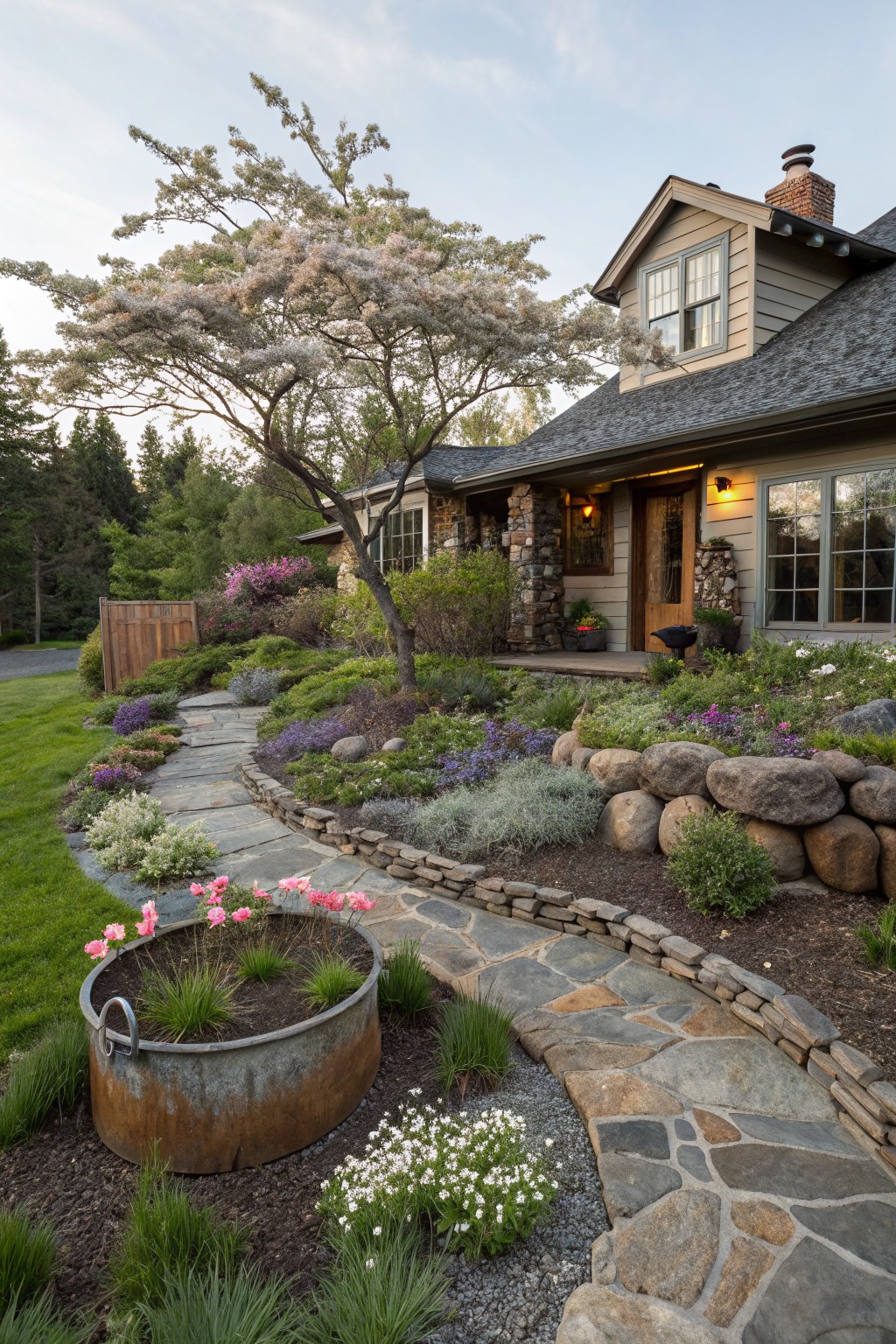
A simple winding path made from flat stones leads right up to the house, with boulders stacked into low walls along both sides. All sorts of low plants fill in the gaps, like lavender and sedum, while a big tree arches over everything. It feels natural, not forced, and keeps the focus on getting to the door in an easy way.
This works best on a gentle slope where you want to tie the yard into the house without straight lines. Pick stones from nearby if you can, for that real rustic touch. Plant tough perennials that don’t need much water… suits older homes with established trees. Just watch the path doesn’t get too narrow in spots.
Winding Stone Path Edged with Boulders
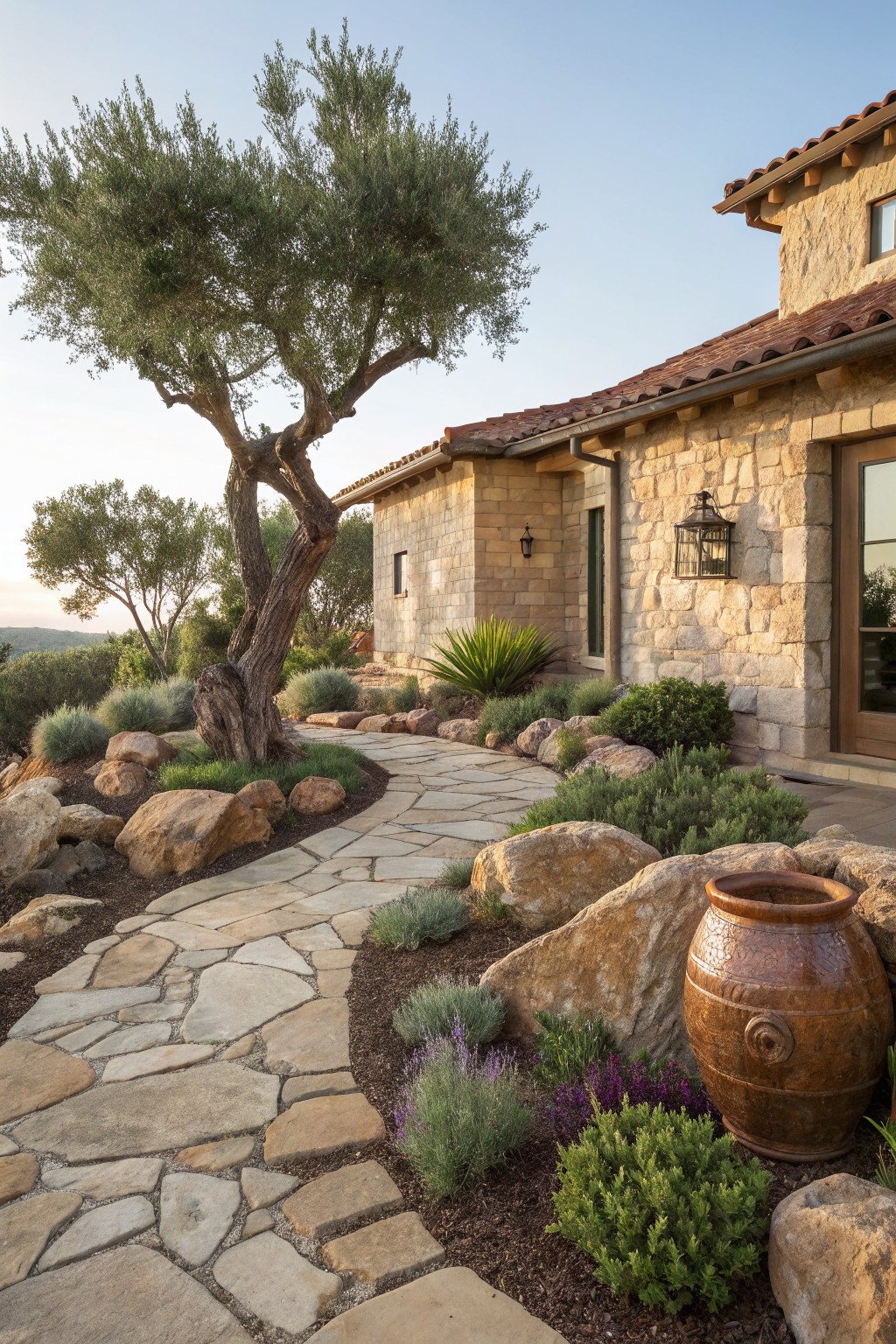
A good way to tie your yard together is with a curving path like this one, built from rough-cut stone slabs that follow the ground’s natural lines. Large boulders line both sides, mixed in with low plants and that big twisted olive tree right in the middle. It pulls the eye toward the house without looking forced, and the rocks give it a solid, earthy feel that fits rocky or hillside spots.
You can pull this off in most any backyard by sourcing boulders from nearby quarries to match your soil and stone colors. Keep plantings simple, like lavender or grasses that don’t need much water, so it stays low fuss. Works best where you want to slow people down on the walk to the door, especially around older trees you don’t want to mess with.
Rustic Rock Path Around a Birch Tree
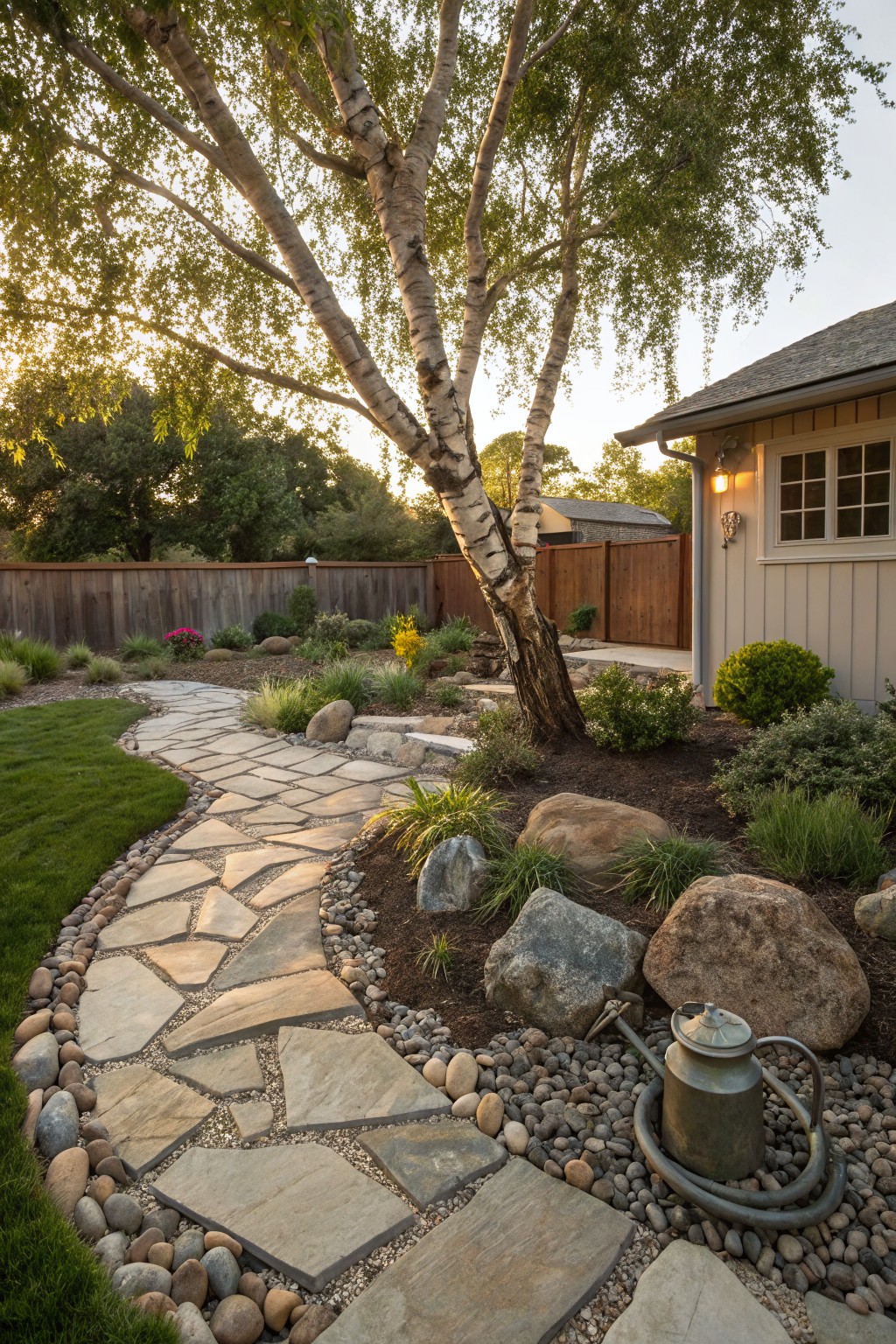
A winding flagstone path like this one curves gently around a birch tree, with its rough-edged stones set into gravel and edged by smooth pebbles. Large boulders sit right along the way, mixing hard surfaces with the tree’s roots and nearby plants. It keeps the yard feeling wild and connected, without any straight lines forcing the layout.
This works well in yards with established trees, where you want foot traffic without damaging roots. Pick flat-ish local stone for the path, then add river rocks for the border and a few big boulders for weight. Suits casual backyards… just watch the tree’s drip line so water reaches the roots easy.
Winding Stone Paths on Sloped Gardens
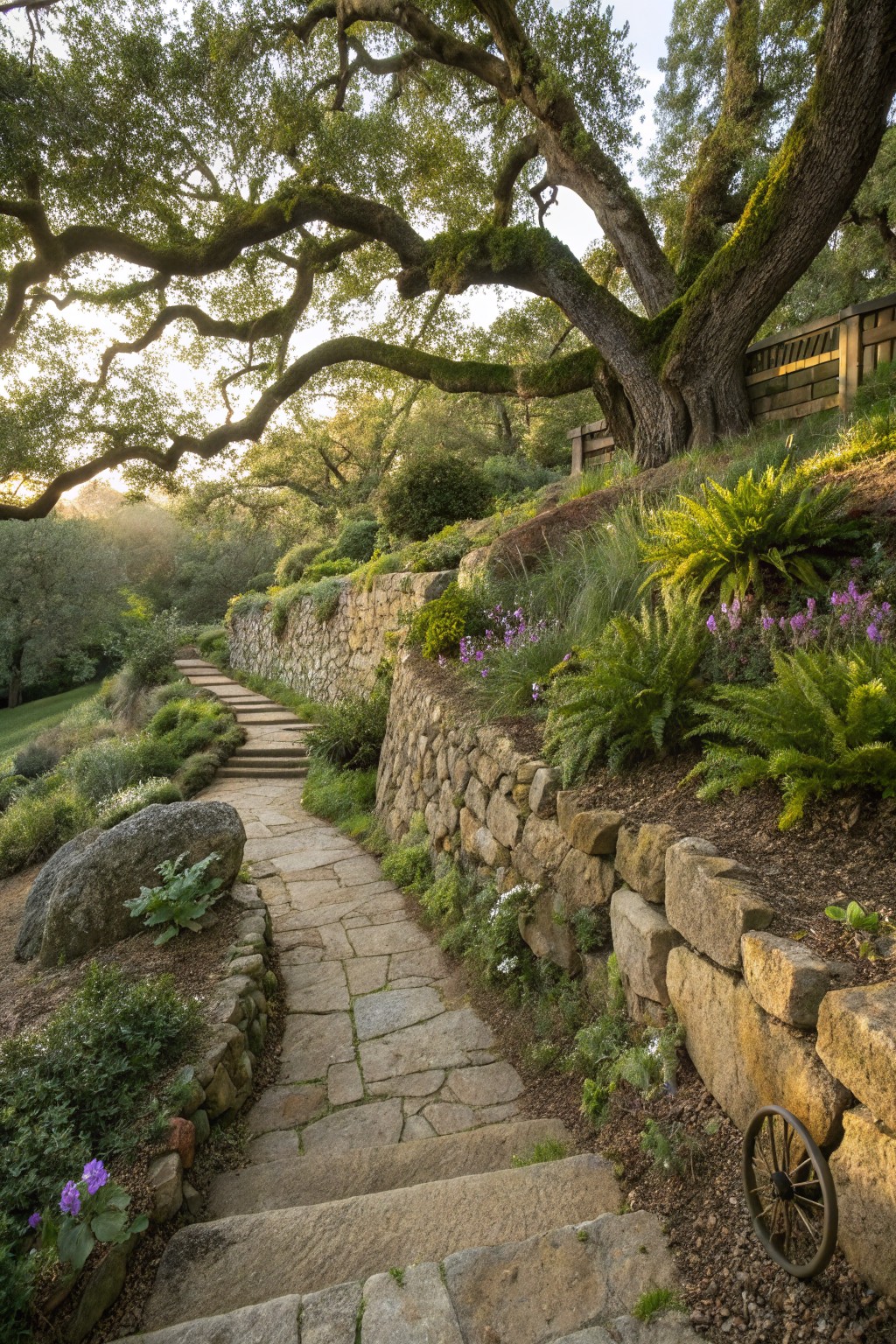
One simple way to handle a hillside yard is with irregular stone steps and paths that follow the natural contour. Here, dry-stacked walls made from local rock hold back the soil while the path meanders up past a big oak tree. It keeps everything looking like it grew there, with ferns and wildflowers tucked right into the edges. No fussy straight lines. Just practical steps that make the slope usable without fighting the land.
This works best around mature trees where you want low upkeep and a settled-in feel. Use rounded fieldstone or whatever’s native to your area, stack it loosely, and plant tough stuff like ferns in the crevices. Skip mortar to let roots breathe and water drain. Great for wooded lots, but watch for loose spots after rain, especially if your soil shifts.
Gravel Mulch with Stone Steps Around a Tree
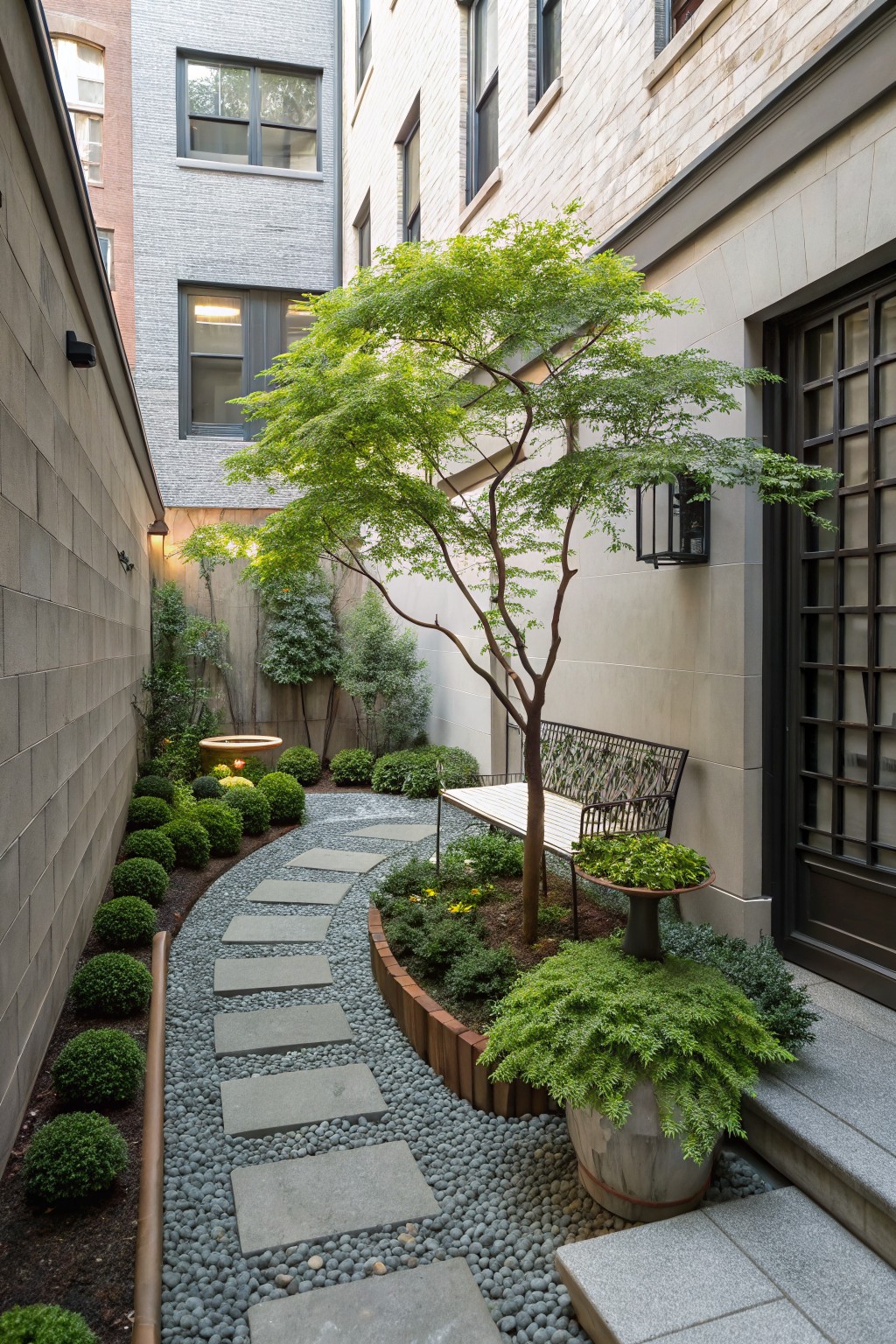
A simple way to handle tight garden space is spreading smooth gravel as groundcover, then setting in a few wide stone steps that wind right up to the tree trunk. It stays rustic and low fuss, letting roots breathe while the pale gravel picks up light between buildings. That central slender tree looks right at home, not fenced off.
Try this in side yards or alleys where grass won’t grow. Edge with squat boxwoods to hold the gravel back, add a bench nearby for sitting. Scale the stones to your stride, and pick gravel that won’t shift too much in rain.
Rustic Stone Path Around a Tree
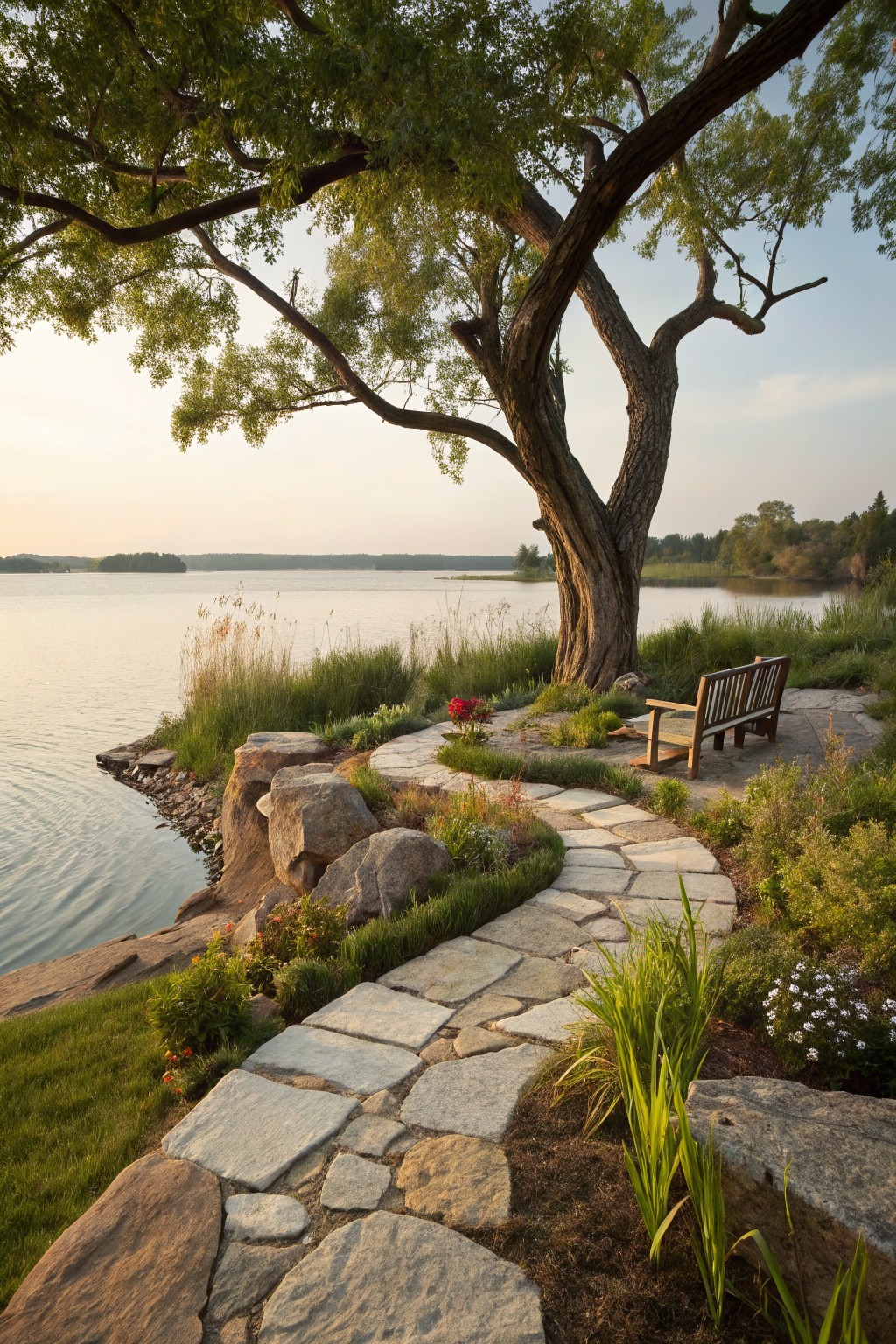
A curving path made from rough-cut flagstones winds right around the trunk of a mature tree, leading to a simple bench with the lake just beyond. What makes it work so well is how the stones mix with the natural boulders and tall grasses. It pulls you along without looking forced. Everything blends into the shore like it grew there.
You can pull this off on any yard with a big tree near a slope or water edge. Pick stones in mixed sizes from a local quarry to keep costs down and the look real. Edge it lightly with plants that won’t overpower, like ornamental grasses. Skip straight lines. Let it follow the ground’s shape for that easy path feel.
Rustic Rock Path Around a Tree
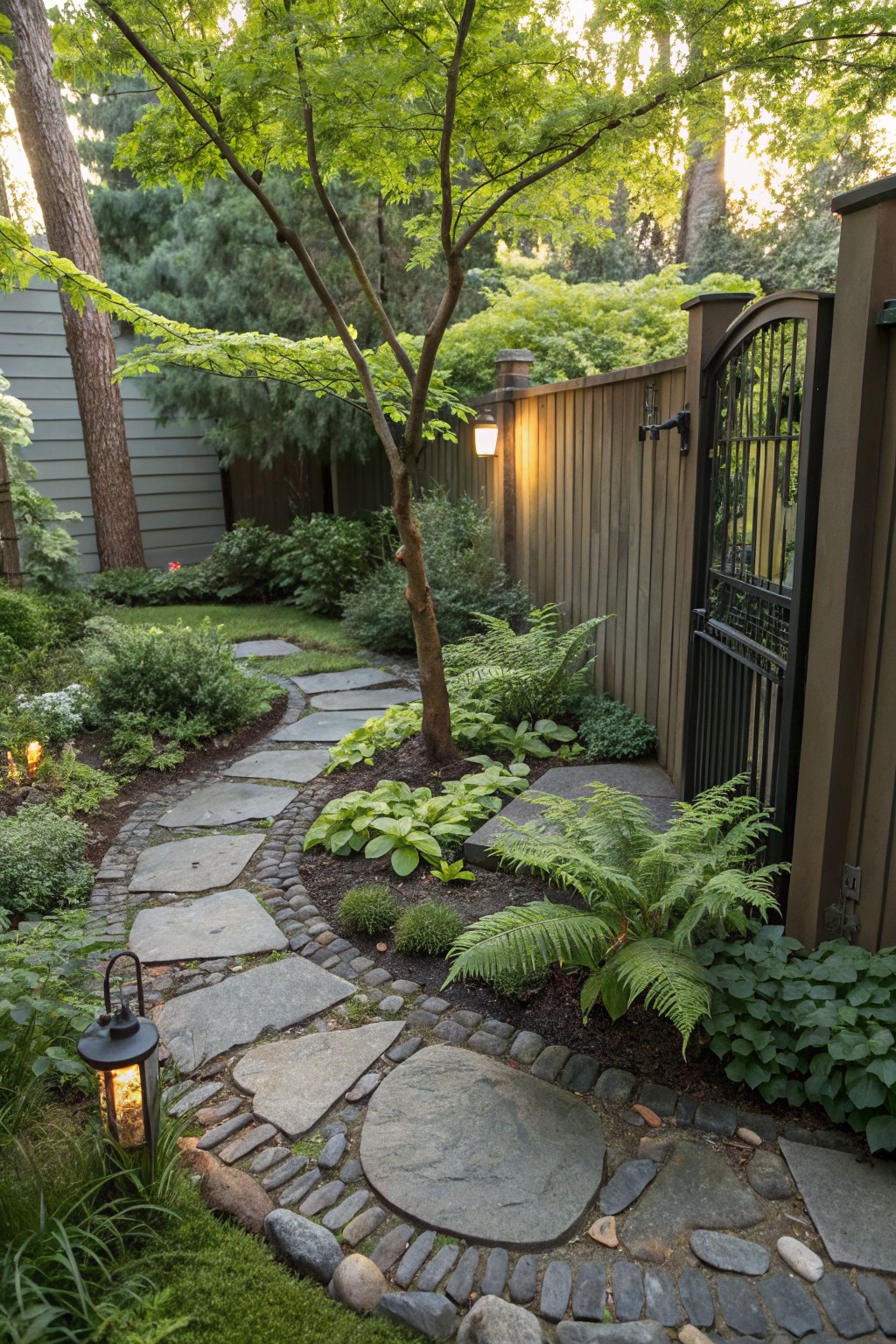
A winding path like this one uses flat stones for the main walkway and lines the edges with small round rocks. It curves gently around a young tree in a shady garden spot. Plants such as ferns and hostas tuck in close, so everything blends right into nature. The rocks keep mulch in place and give a simple, rugged look without much upkeep.
This works best in backyard corners or along fences where you want a quiet trail to a gate or seating area. Pick stones from nearby sources to match your soil and trees. It suits modest lots… just leave room for roots and watch for slippery spots after rain.
Rustic Stone Terraces on Slopes
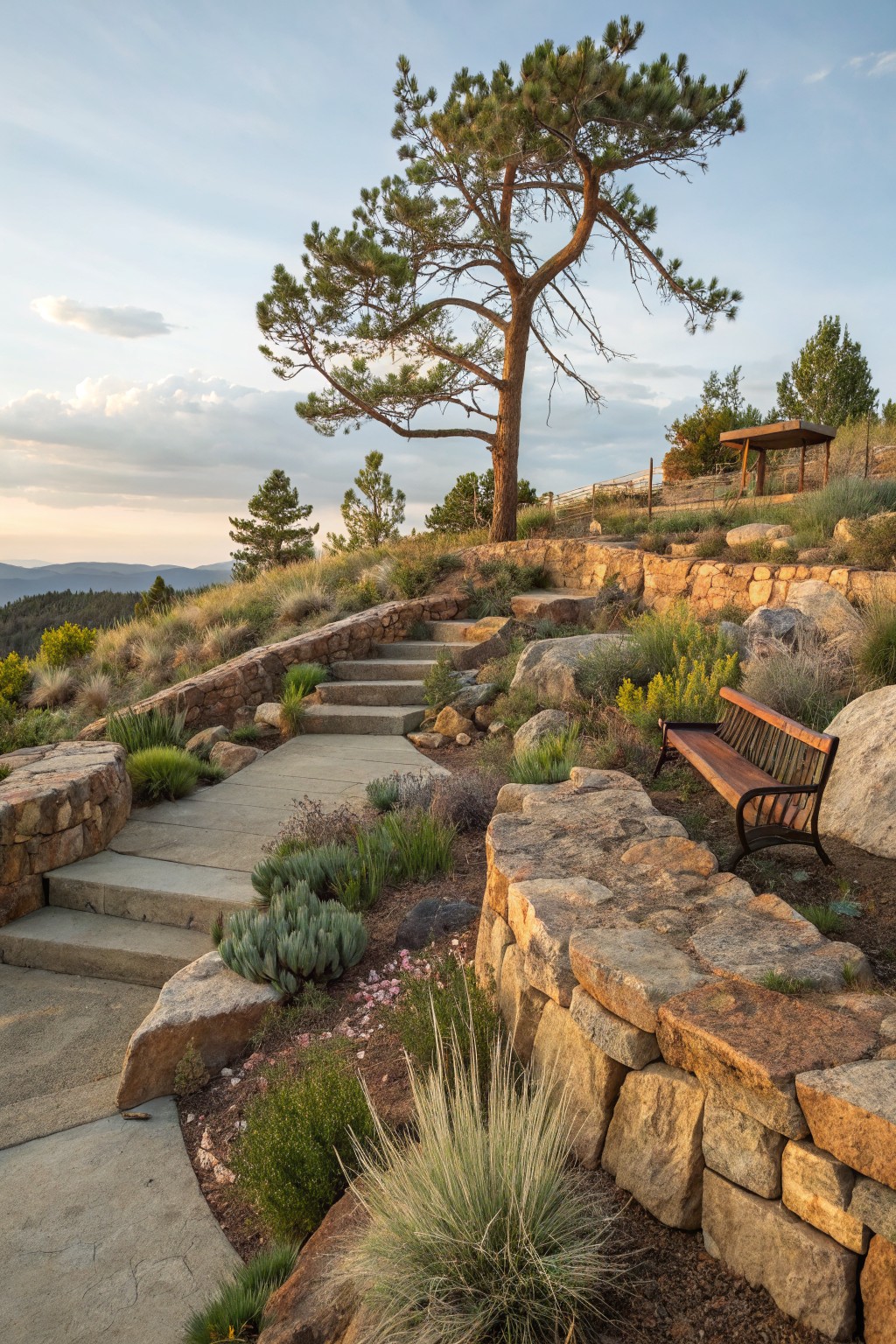
One simple way to handle a hillside is with dry-stacked stone terraces like these. The rough boulders and walls follow the natural contour, making steps that lead right up to that tall pine tree. Native grasses and low shrubs fill in the pockets, so it all looks like it grew there. No forced flat spots. Just practical paths that invite you to climb.
This works best on properties with some drop, especially in rocky or dry areas. Source stone from nearby to keep costs down and the look real. Plant tough stuff like yucca or feather grass between rocks. Add a bench halfway for resting. Steer clear of mortar if you want that rugged feel, but check local codes for stability.
Rustic Stone Paths Around Trees
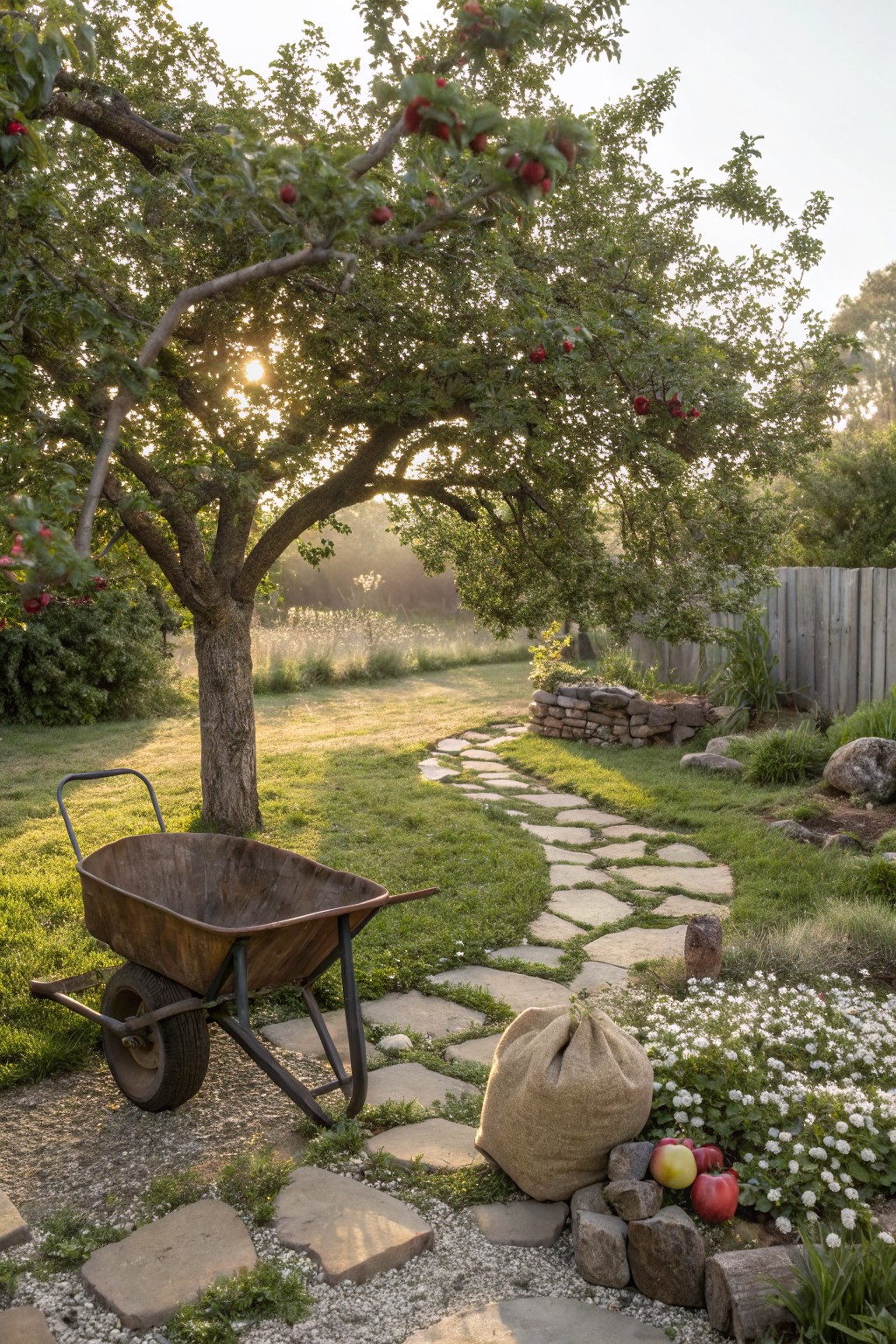
A winding path of irregular stone slabs makes its way through the grass right up to the base of a mature apple tree. It’s edged with larger rocks and boulders that look gathered from nearby, keeping everything feeling natural and tied to the landscape. That old wheelbarrow parked there adds a practical touch without cluttering things up.
This works best in cottage gardens or around fruit trees where you want easy access but nothing too manicured. Lay the stones on a gravel base for stability, and tuck in low plants along the edges to soften it. Avoid super smooth pavers… they can stand out too much. Suits most backyards, especially if you’re after low upkeep.
Rocks and Pebbles Around Mature Trees
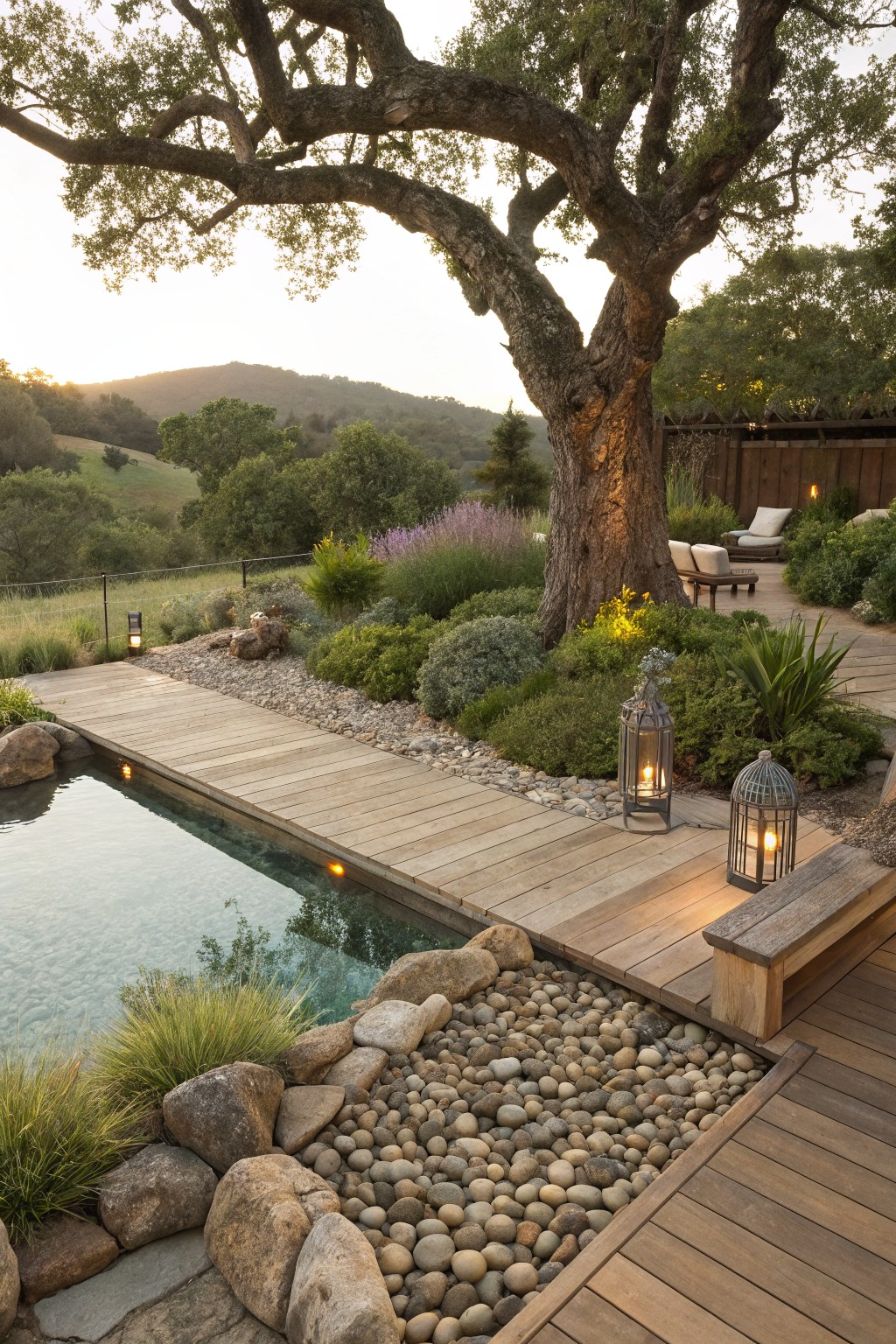
Big boulders stacked casually at the tree base, topped with smooth pebbles and clumps of grass, make this spot feel right at home on the hillside. That old oak tree sits proud in the middle, and the rocks pull the pool deck into the natural flow without any sharp lines. It’s simple upkeep too, since stones crowd out weeds.
Put this to work anywhere a big tree hangs over your patio or pool. Go for local rock sizes and colors so it doesn’t look hauled in. Suits sloped yards or drier spots best, where you want that wild edge without mowing forever. Just watch the footing near water.
Rustic Stone Walls and Wood Fences Guide Meadow Paths
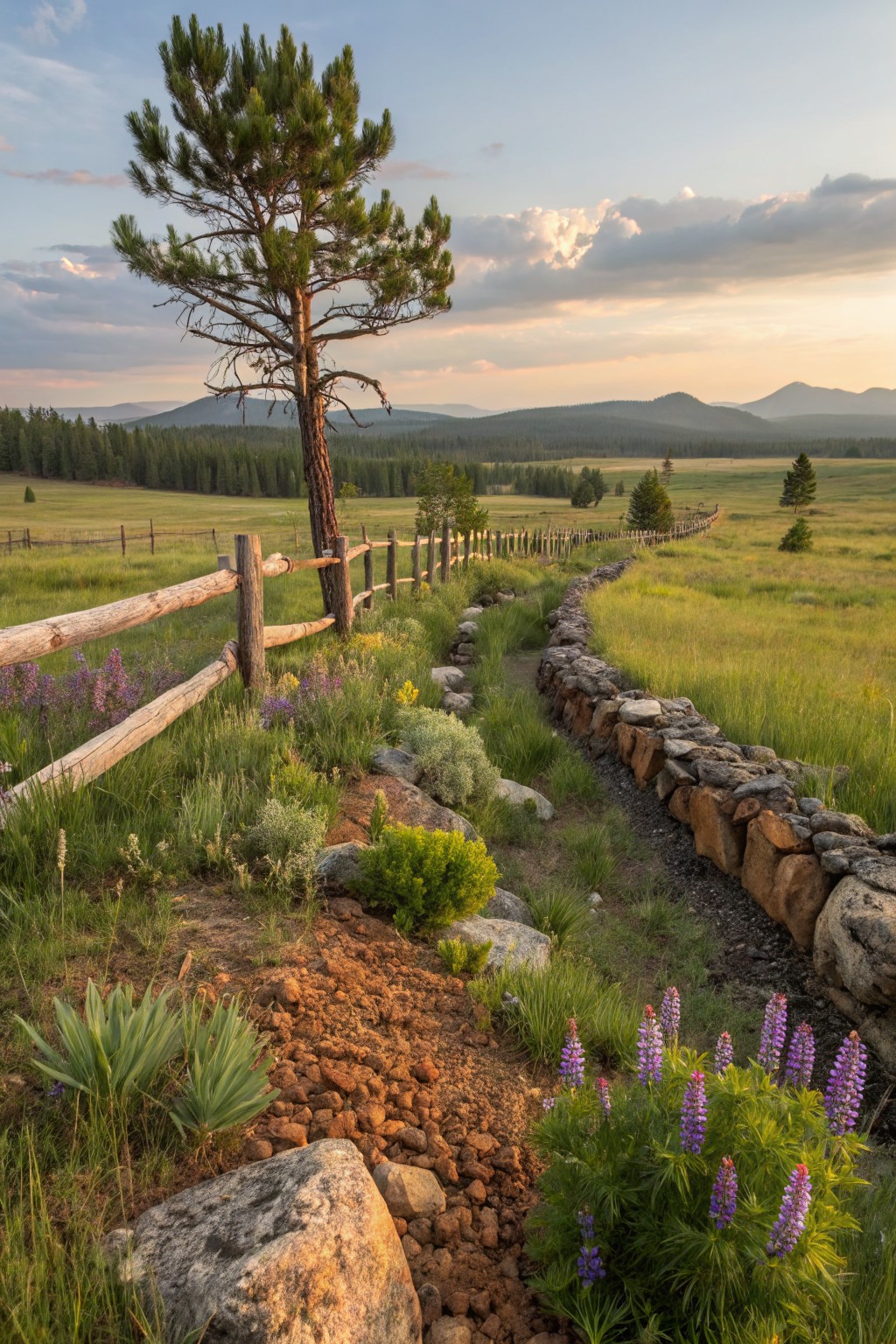
One straightforward way to define a path in open country land is with a low dry-stacked stone wall paired right up against a basic split-rail wooden fence. The stones give some structure without blocking the view, and the fence adds that old-farm feel. Wildflowers like lupines poke right through along the edges, so it all mixes with the meadow grass instead of fighting it.
This works best around scattered trees or in big yards where you want to keep the wild look. Source rocks from your own property if you can, and go for rough untreated fence rails. It holds up to weather fine and doesn’t need much upkeep. Just right for homes backed up to fields or woods.
Flagstone Path in Gravel Around a Tree
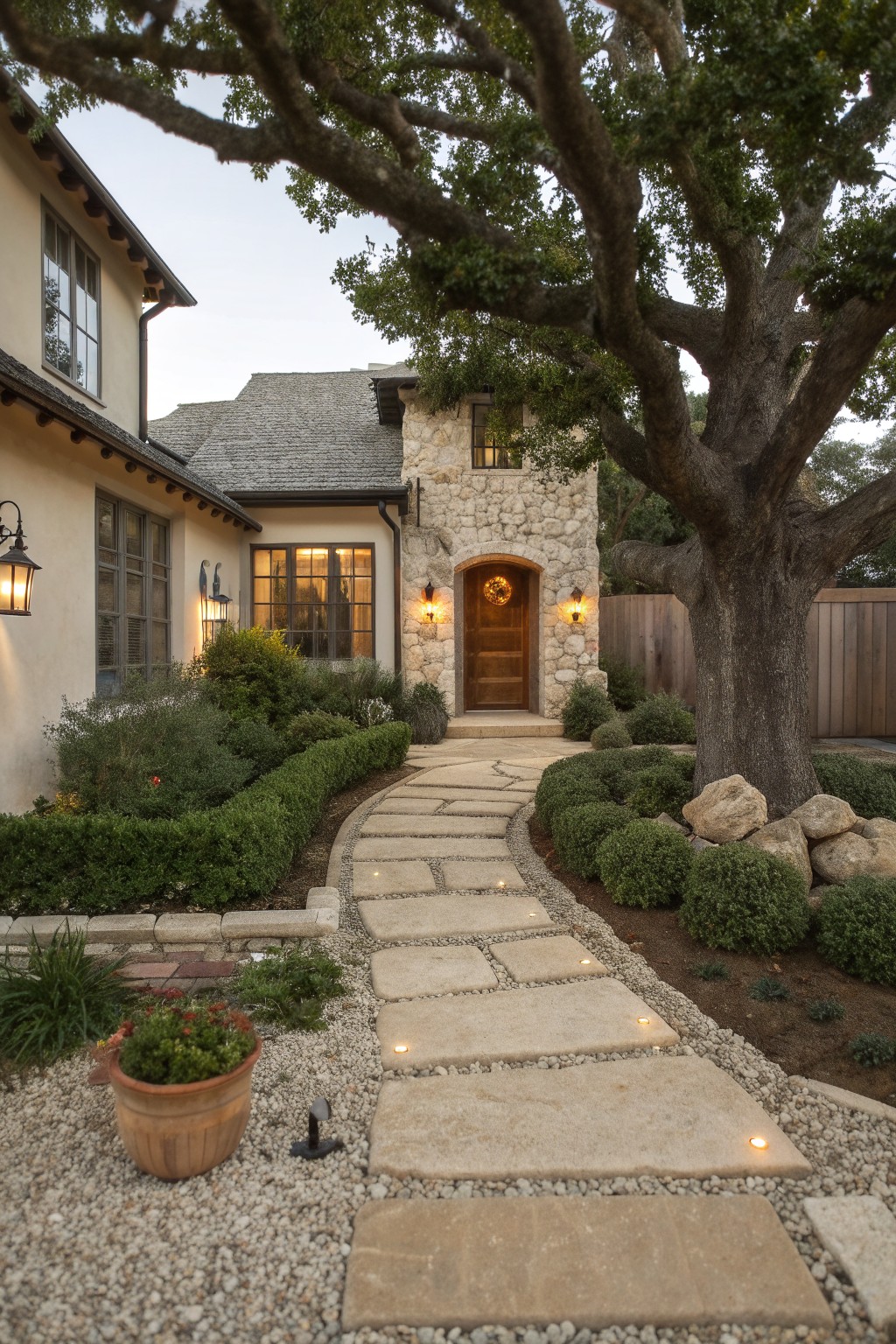
One straightforward way to work with a mature tree near your front entry is this flagstone path set into gravel. The uneven slabs step along casually, hugging the oak trunk where big rocks cluster at the base. It keeps the look rugged and settled in, letting the tree stay the focus while guiding folks to the door without any fuss.
This setup shines in yards with established trees you want to highlight. Pick thick, local stone for the path so it ages right, and use coarse gravel for easy drainage. Boxwoods along the edge add just enough tidy green. Skip it if your soil holds water; go lighter there.
Rustic Circular Cobble Path for Garden Beds
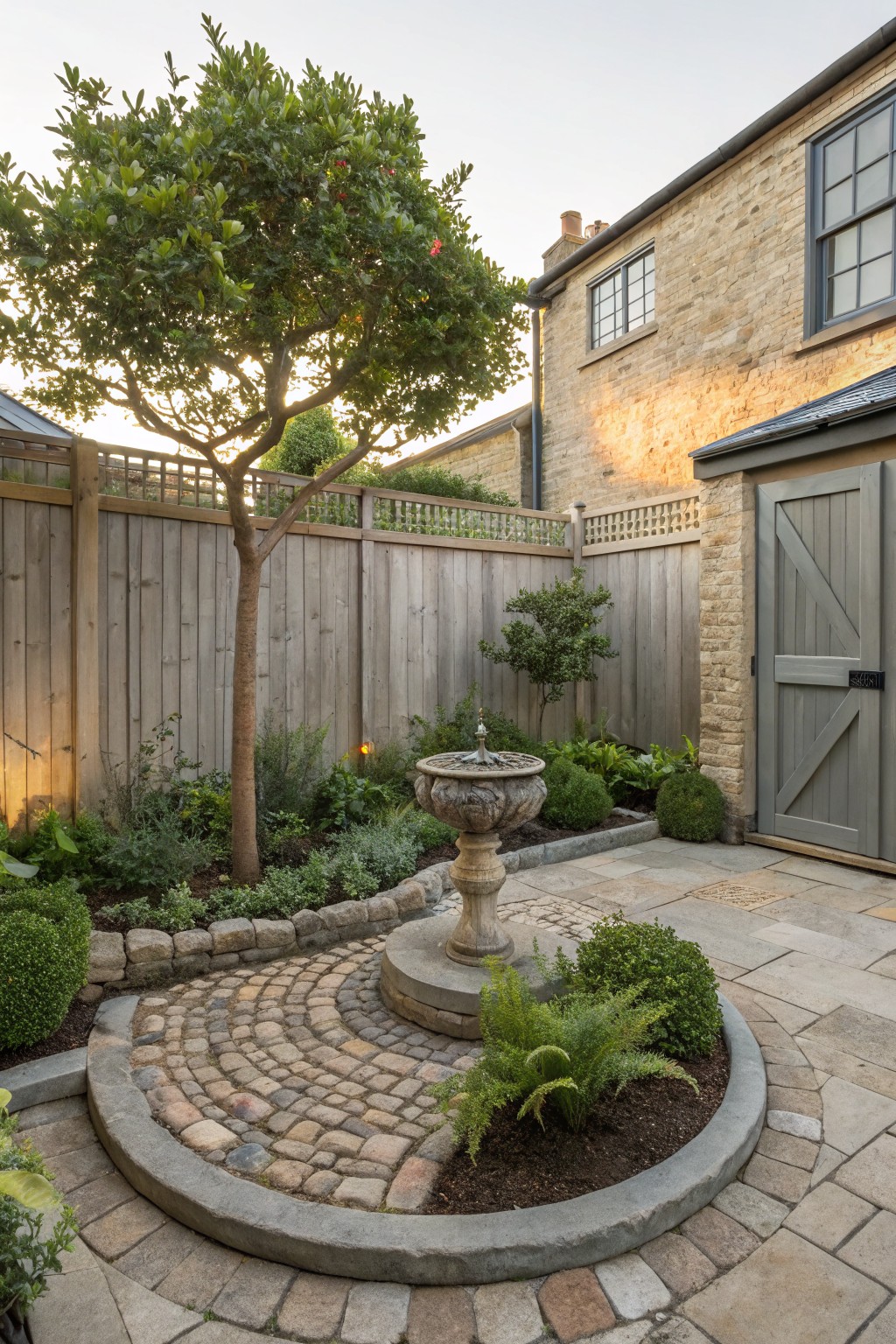
A circular path made from mixed cobblestones works nicely to outline a small planting bed. Here it’s wrapped around a stone fountain with ferns and low shrubs inside, giving the spot a clear focus. The stones vary in size and color, laid loose over a simple base, so it looks like it grew there naturally alongside the nearby tree.
This kind of path suits compact yards or corners where you want some structure without formality. Lay it around a young tree or focal plant, using whatever old bricks or cobbles you find locally. Keep the curve gentle and the edging low, maybe just a curb of fieldstone. It holds up well in moderate traffic spots, but skip it if your soil shifts a lot.
Rustic Stone Steps Around Mature Trees
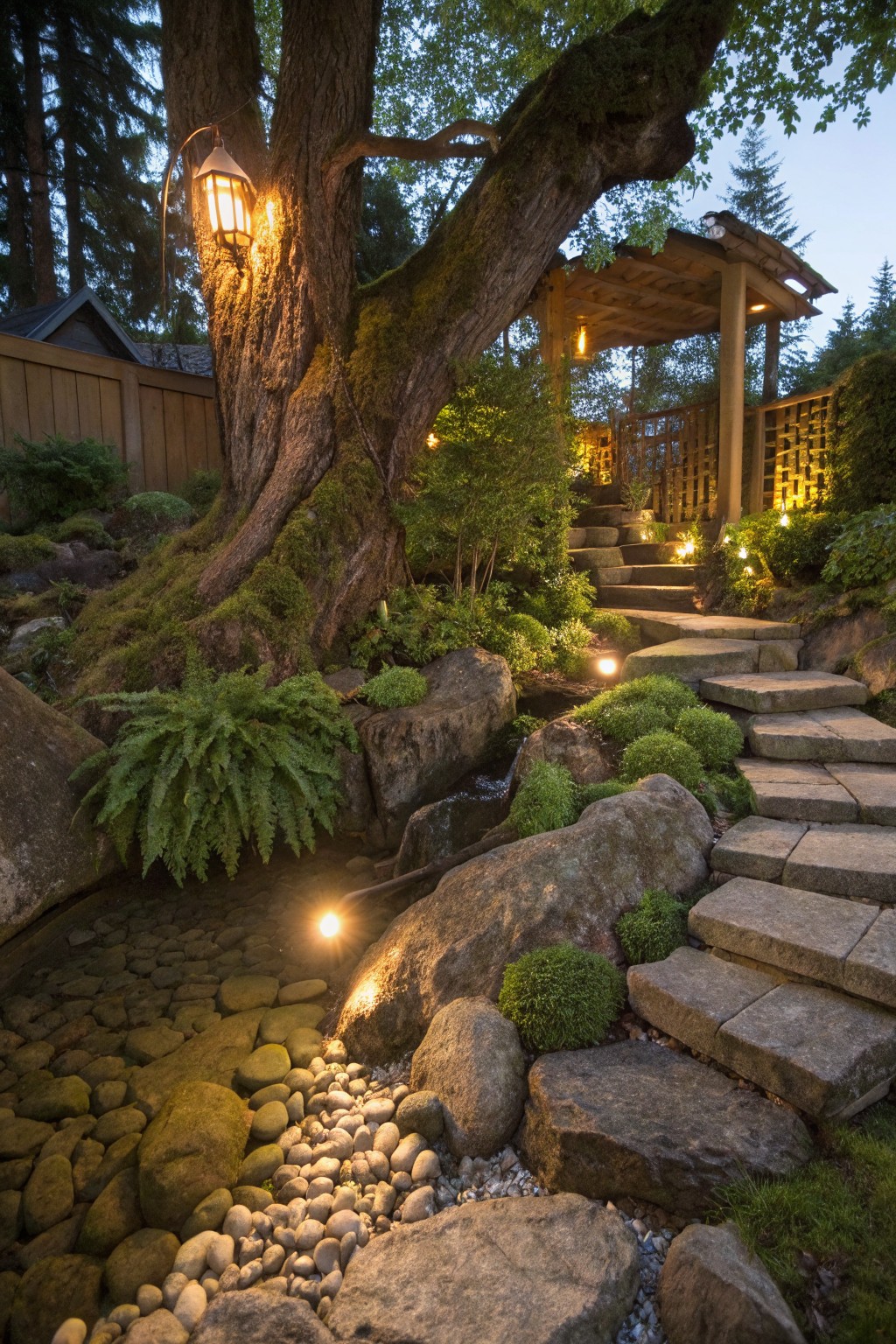
Big old trees like this moss-covered one make a natural centerpiece for a yard path. Rough-cut stone steps hug the trunk and weave between boulders, pulling the whole setup into the landscape. A few ferns and moss patches fill gaps, and that little stream adds just enough movement without overdoing it.
These steps work best on uneven ground where you want to keep trees untouched. Pick stones from nearby quarries to match your site’s rocks, then layer in low plants for hold-down. Scale it for smaller spaces by shortening the run. Avoid slick surfaces. Rainy spots love this look.
Rustic Stone Steps on a Wooded Slope
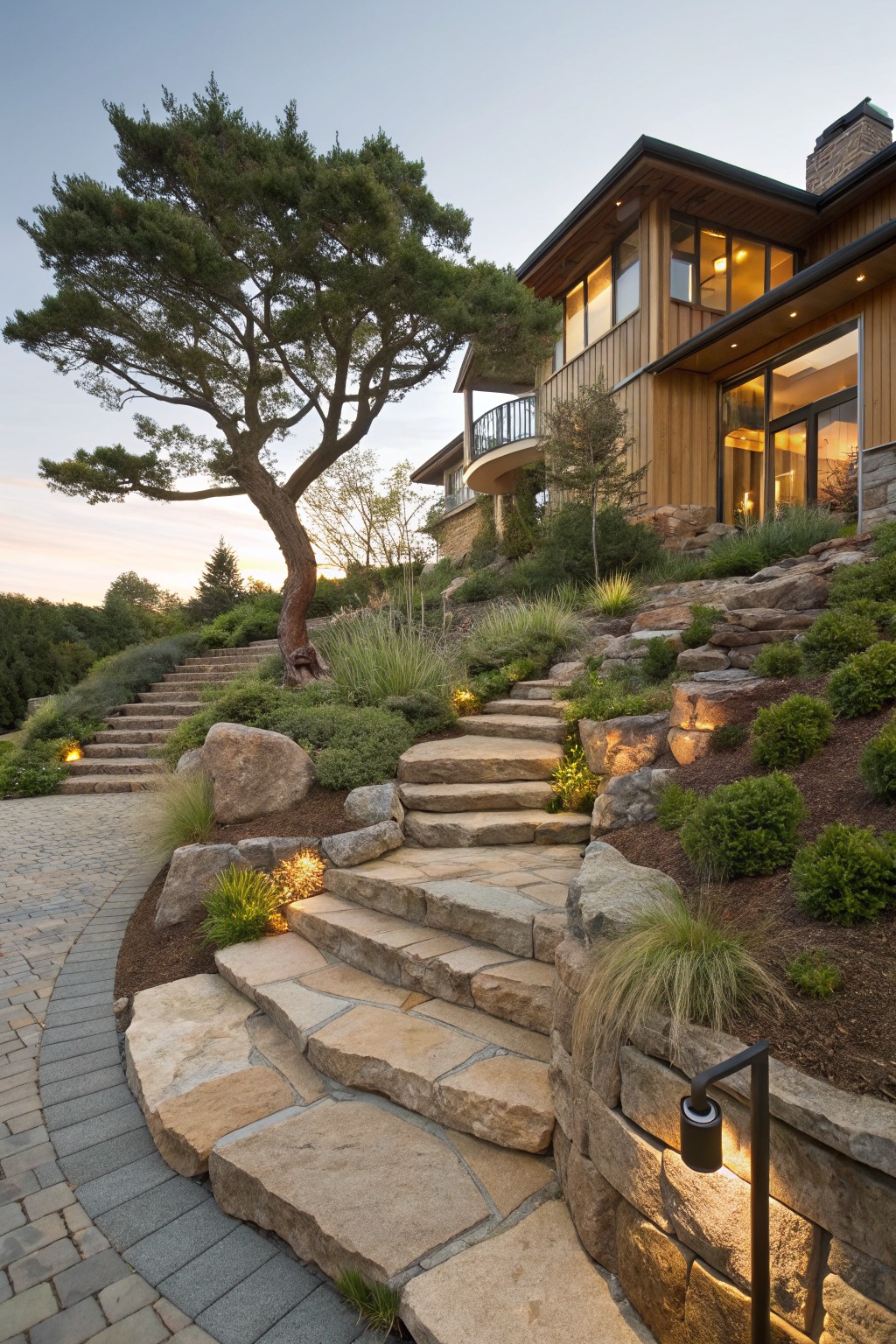
These stone steps show how to handle a steep hillside without it feeling forced. Big boulders sit right into the dirt, with rough-cut flagstone treads stepping up irregularly around that leaning pine tree. Plants like grasses and low shrubs fill in the gaps, so the path looks like part of the land instead of added on.
You can pull this off in any yard with a drop, especially where trees already grow. Source stone that matches your site’s rocks for the best blend, and tuck in tough plants that handle dry spots. Watch the scale though… steps too small get lost fast.
Rustic Rocks Around Tree Bases
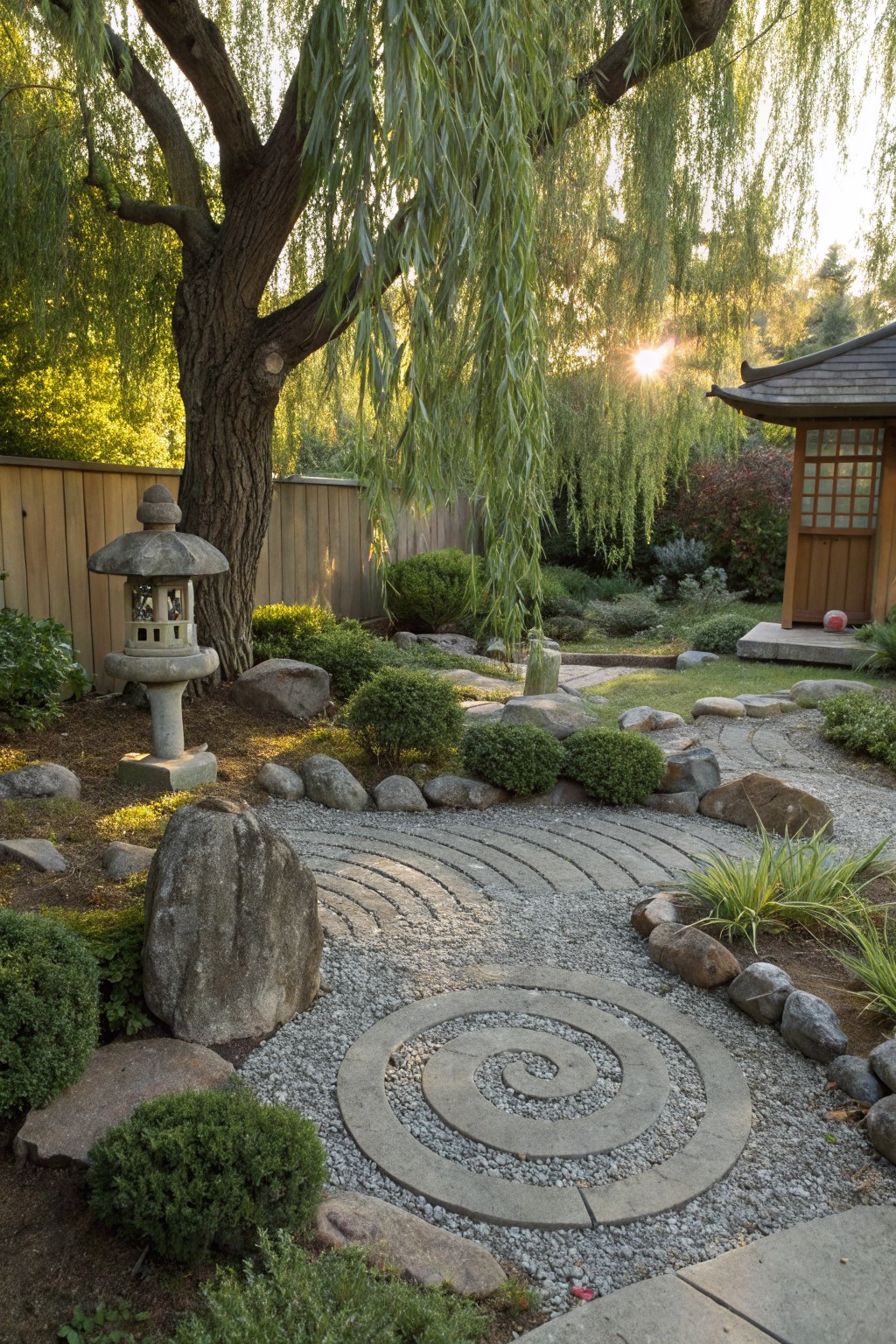
One simple way to tie rocks into your yard is placing larger boulders right around the base of a mature tree like this weeping willow. It keeps things natural looking without much fuss. The rocks hug the trunk loosely and mix with gravel paths that curve nearby. That setup blends the tree into the landscape instead of letting it stand alone.
Try this in a side yard or backyard where you want low upkeep. Pick stones in earthy tones that match your local area so it feels right at home. Just leave space around the roots for air and water… and avoid piling rocks too high or tight. Works best on sloped spots or near fences.
Rustic Stone Wall Path Around a Big Tree
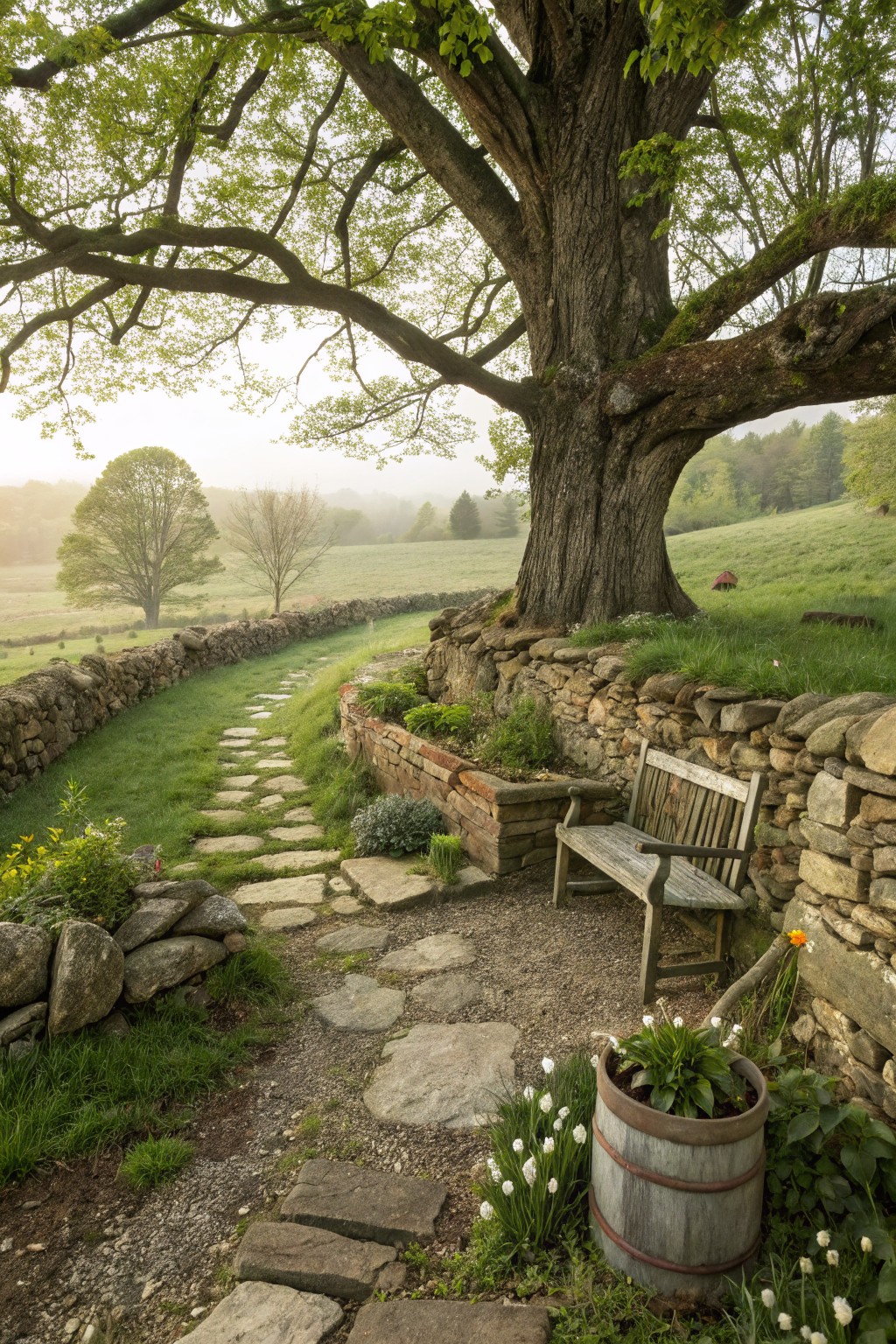
One straightforward way to work rocks into landscaping around a mature tree is a dry-stacked stone wall that curves right along the trunk base. It holds soil in place for planting pockets while a simple stepping stone path winds up to a bench nearby. That combo keeps things rugged yet tidy. Folks like it because the stones look like they grew there with the tree. Moss and plants soften the edges naturally.
Try this in a backyard meadow or along a hillside where the ground slopes a bit. Gather local rocks for the best blend. Stack them without mortar for that old-time feel, but check stability first. A weathered bench fits right in. Skip fancy gravel. Just let grass and wildflowers fill gaps for easy upkeep.
Rustic Stone Path Around a Big Tree
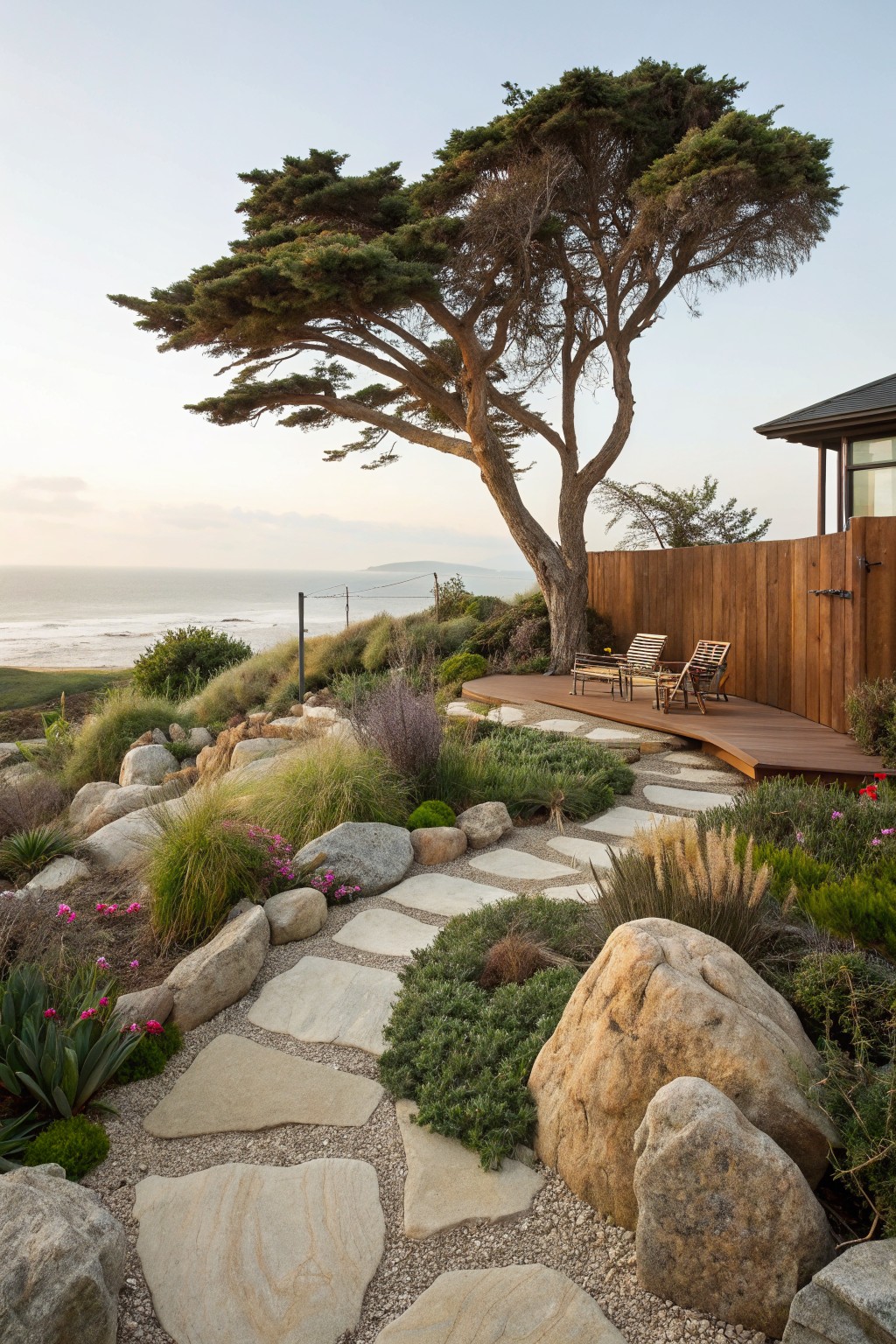
One simple way to handle a sloped yard is a winding path made from rough stone slabs set into gravel. Here it snakes right around the trunk of a mature cypress tree, with big boulders tucked in along the edges. The rocks look like they just rolled down the hill naturally, and low grasses and plants fill the gaps without much fuss. It keeps foot traffic off the slope while letting the tree stay the star.
This setup works best on coastal lots or anywhere with native trees you don’t want to mess with. Use local stone for the slabs and boulders to match the site, and keep plantings drought-tolerant so it stays low-maintenance. Avoid straight lines. Let the path curve to follow the ground and tree roots. It’s practical for getting to a deck or seating area without feeling forced.
Frequently Asked Questions
Q: Will rocks hurt my tree’s roots?
A:
Skip the fabric under the rocks if your tree needs water or mulch. Rocks alone let air and moisture through just fine. Just keep a small gap around the trunk so roots breathe easy.
Q: How do I keep weeds out without chemicals?
Layer larger rocks over smaller ones after clearing the area well. Pull any sprouts early and refresh the top layer yearly. That natural barrier works wonders.
Q: What’s the best way to handle a sloped spot around a tree?
Dig a shallow trench along the top edge to catch runoff. Stack flatter rocks there to slow water and hold everything steady. Your setup stays put through rains.
Q: Can a beginner pull this off in a weekend?
Clear debris and lay rocks in sections. Take breaks to step back and check the flow. You’ll nail that rustic vibe before lunch Sunday.
