


I’ve noticed that front yards often look more put-together when rocks define the paths and beds right from the street.
They create that solid layout structure, guiding movement toward the house while edging out weeds over the seasons.
In my yard, swapping out fussy mulch for river rocks along the walkway made the space feel wider and more intentional without much upkeep.
Rocks settle in naturally.
You can borrow from these setups to layer sizes or mix with sparse plants, testing what shapes your own front yard best.
Rock and Gravel Beds Line the Entry Path
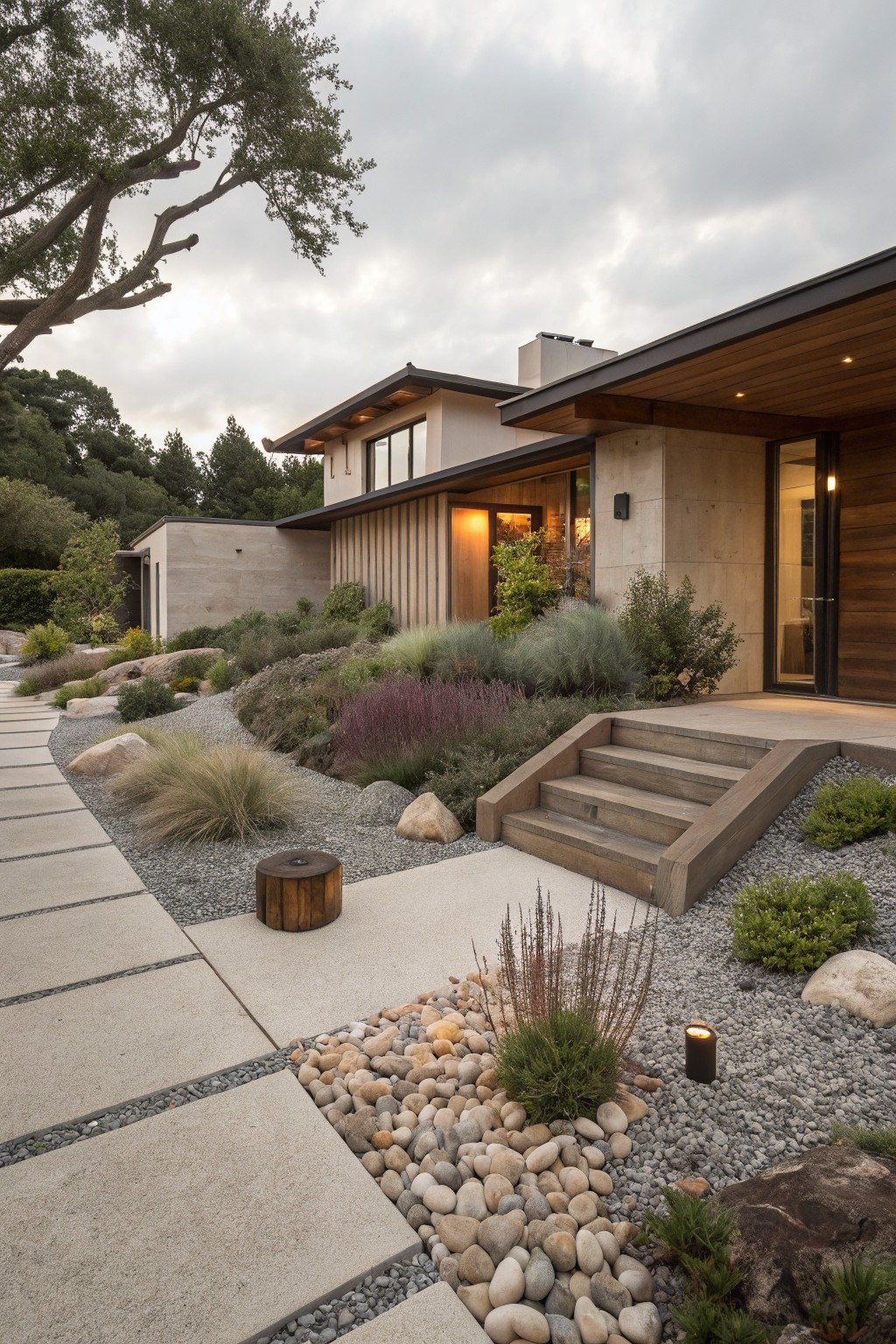
Big boulders mixed with gravel and low grasses make a simple front yard setup that pulls your eye right to the door. This look feels natural and easy on the water bill. It softens the hard lines of a modern house without looking busy.
Try it on a gentle slope or flat yard where you want low upkeep. Start with larger rocks for anchors then fill around them with gravel mulch. Add clumps of drought-tough plants like feather grass for movement. Suits any style home but shines with clean architecture.
Natural Stone Walls for Raised Flower Beds
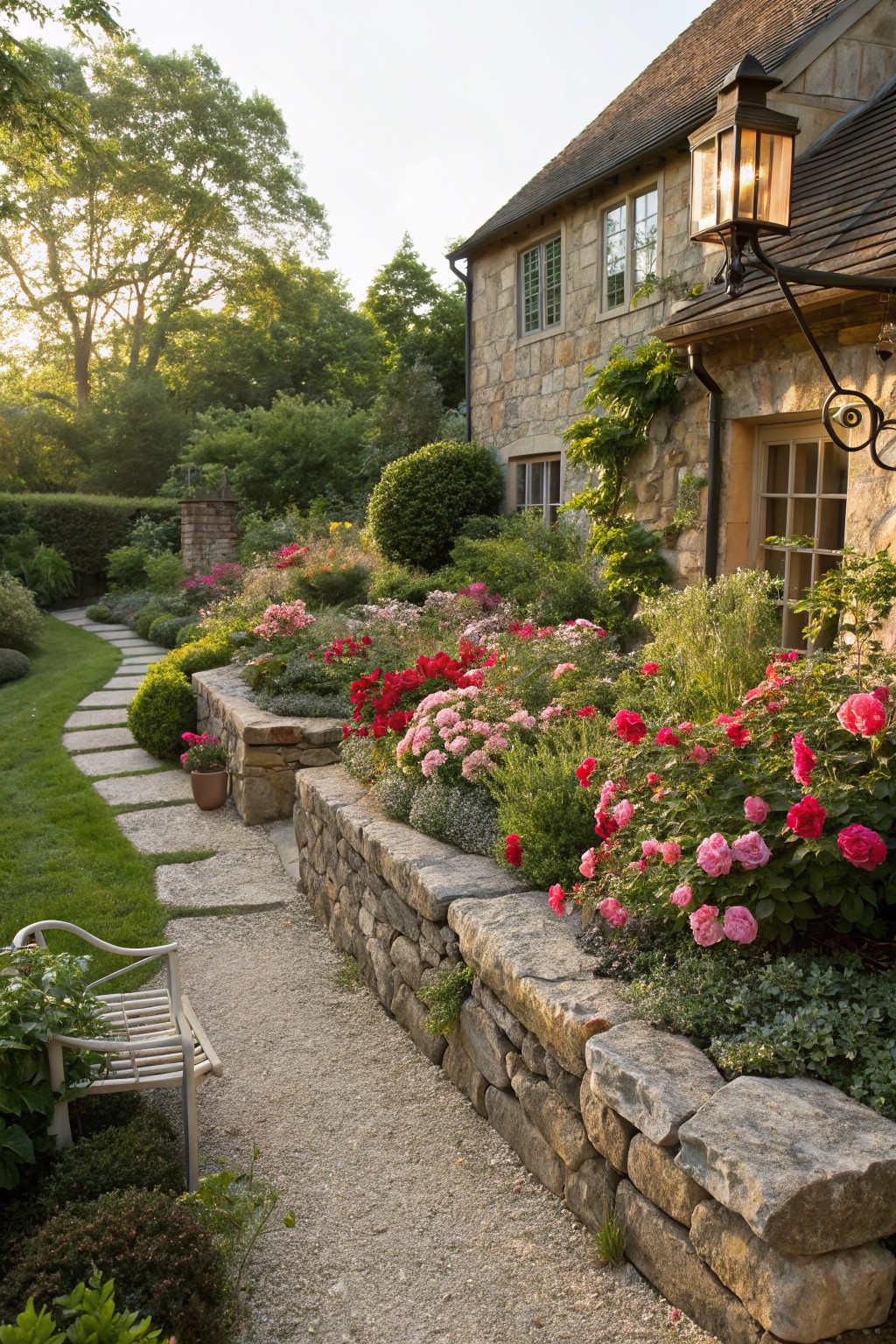
One simple way to add charm to your front yard is building low natural stone walls to create raised beds for flowers. These walls, made from rugged fieldstone, hold back the soil just right and let plants like roses tumble over the top. It looks natural, like the garden grew up around the house, and the texture of the stone pairs so well with soft blooms.
This works best on gentle slopes or along paths leading to your entry. Pick stones in earth tones to match your home, then fill the beds with tough perennials that spill out… roses are perfect since they repeat bloom and add color all season. Keep the wall under two feet high for easy reach, and add a gravel path beside it to tie everything together without much upkeep.
Stepping Stone Path in Dark Pebbles
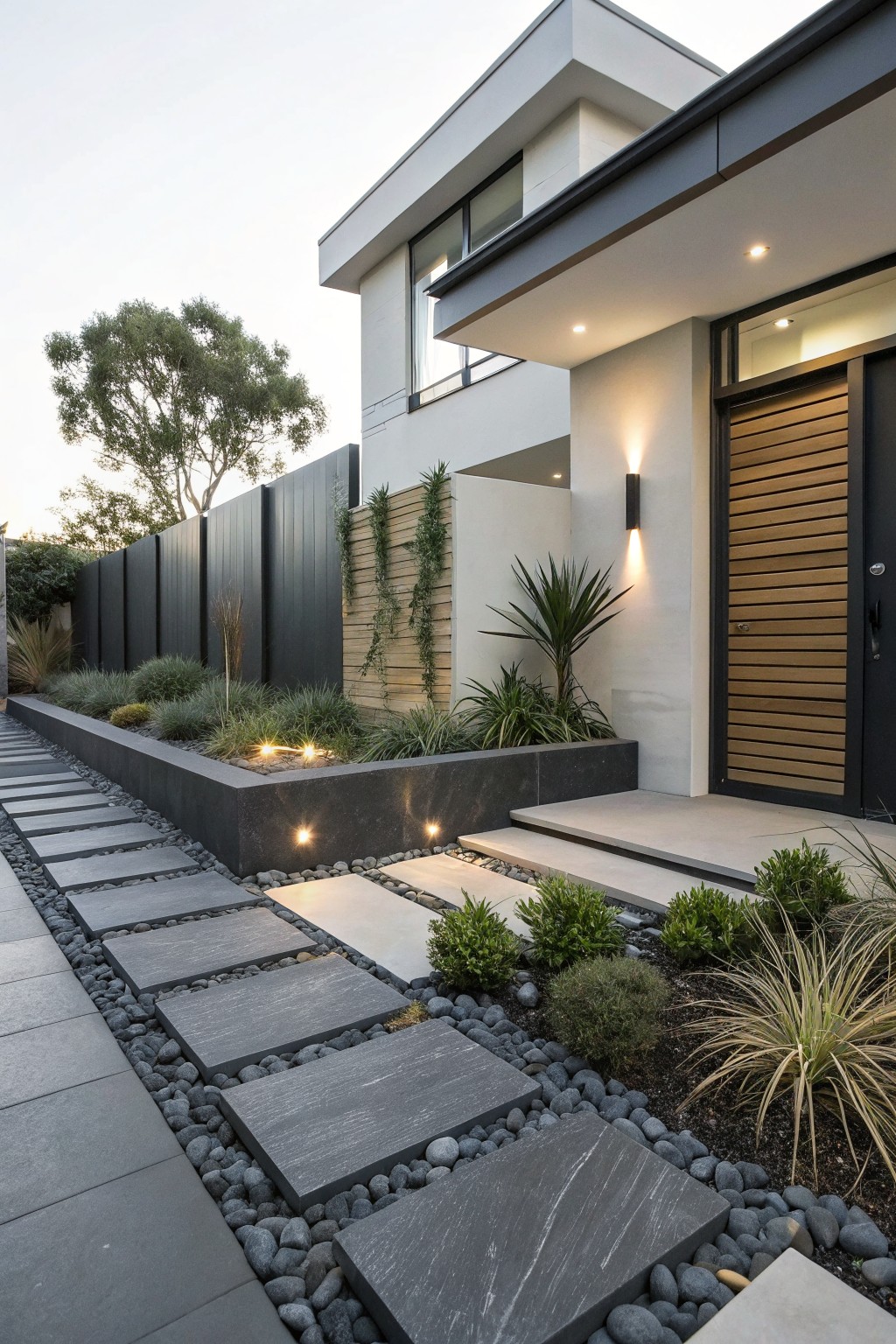
A simple pathway like this uses large, rough-cut slate slabs set right into dark pebbles. It leads straight from the street to your front door without much grass to mow. The pebbles fill the gaps and spill over the edges, giving a clean, modern look that ties into the raised beds nearby.
This works best for homes with a contemporary style or just a tidy front yard. Lay the stones about two feet apart so people step naturally from one to the next. Use pebbles that match your house color, like these dark ones against white walls. Skip it if your yard floods a lot…the rocks might shift.
Winding Stone Path with Rock Borders
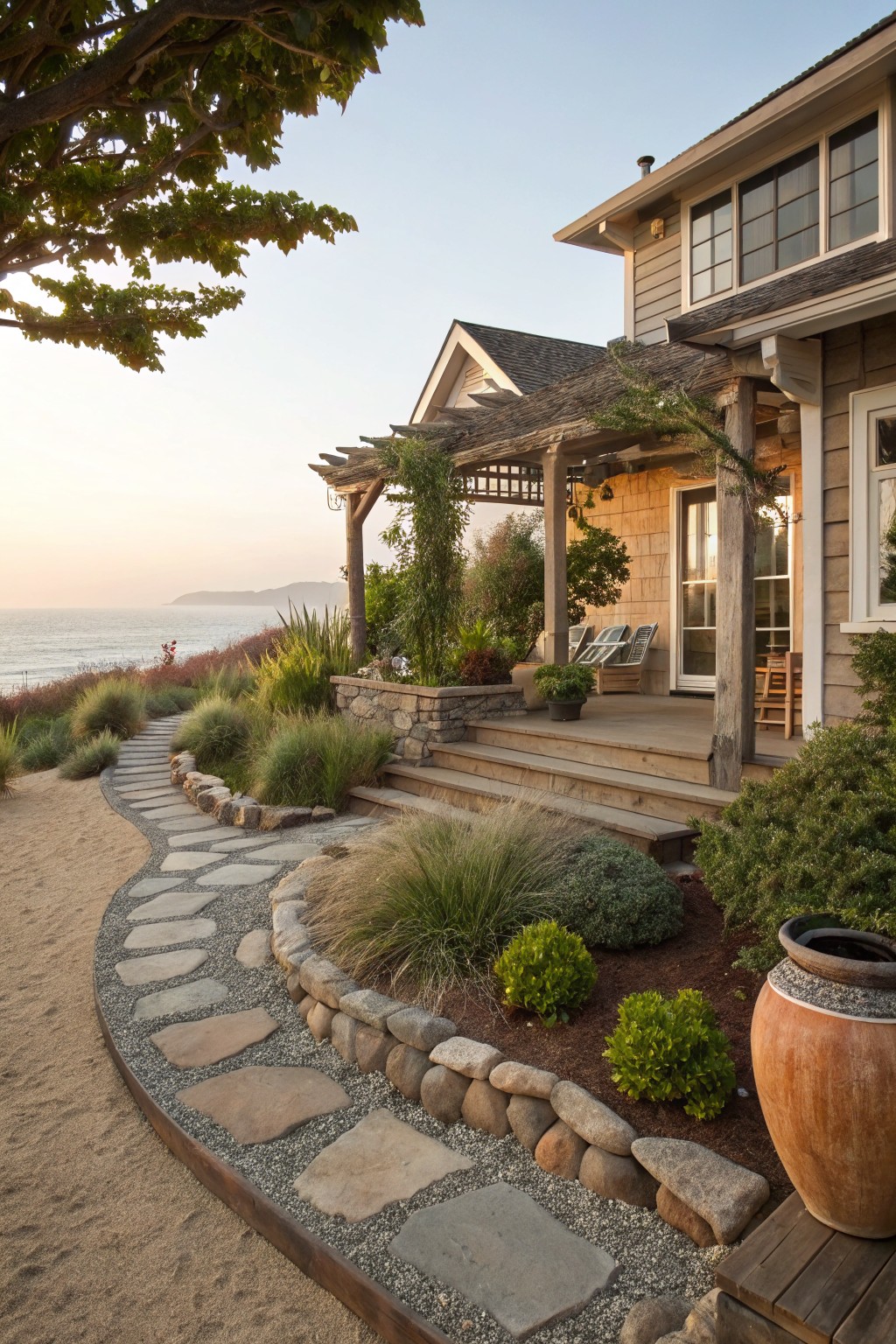
A simple winding path like this one uses flat stones set into gravel, with bigger rocks lining the edges. It pulls you right up to the house without feeling too straight or formal. The rocks keep everything in place and add that natural, beachy feel, especially with tall grasses brushing alongside.
This works great in front yards that slope a bit or have sandy soil. Pick local stones so they blend in, and pair with low-water plants that don’t need much fuss. Just watch the spacing on those steps to the porch. Keeps foot traffic clear and the look tidy year-round.
Terraced Stone Walls for Sloped Front Yards

One smart way to handle a sloped front yard is terraced stone walls. They carve out flat levels for plants right into the hill, like these dry-stacked rocks holding back soil and framing lavender beds. The result feels natural, not forced. It keeps erosion in check while giving the yard some structure.
These walls work best where the ground drops off toward the house entry. Build them with local stone for a seamless look, then add steps between levels for easy walking. They suit homes in hilly areas, especially with a stucco or Mediterranean style. Just make sure the walls are sturdy enough for your soil type.
Irregular Flagstone Path in a Gravel Garden
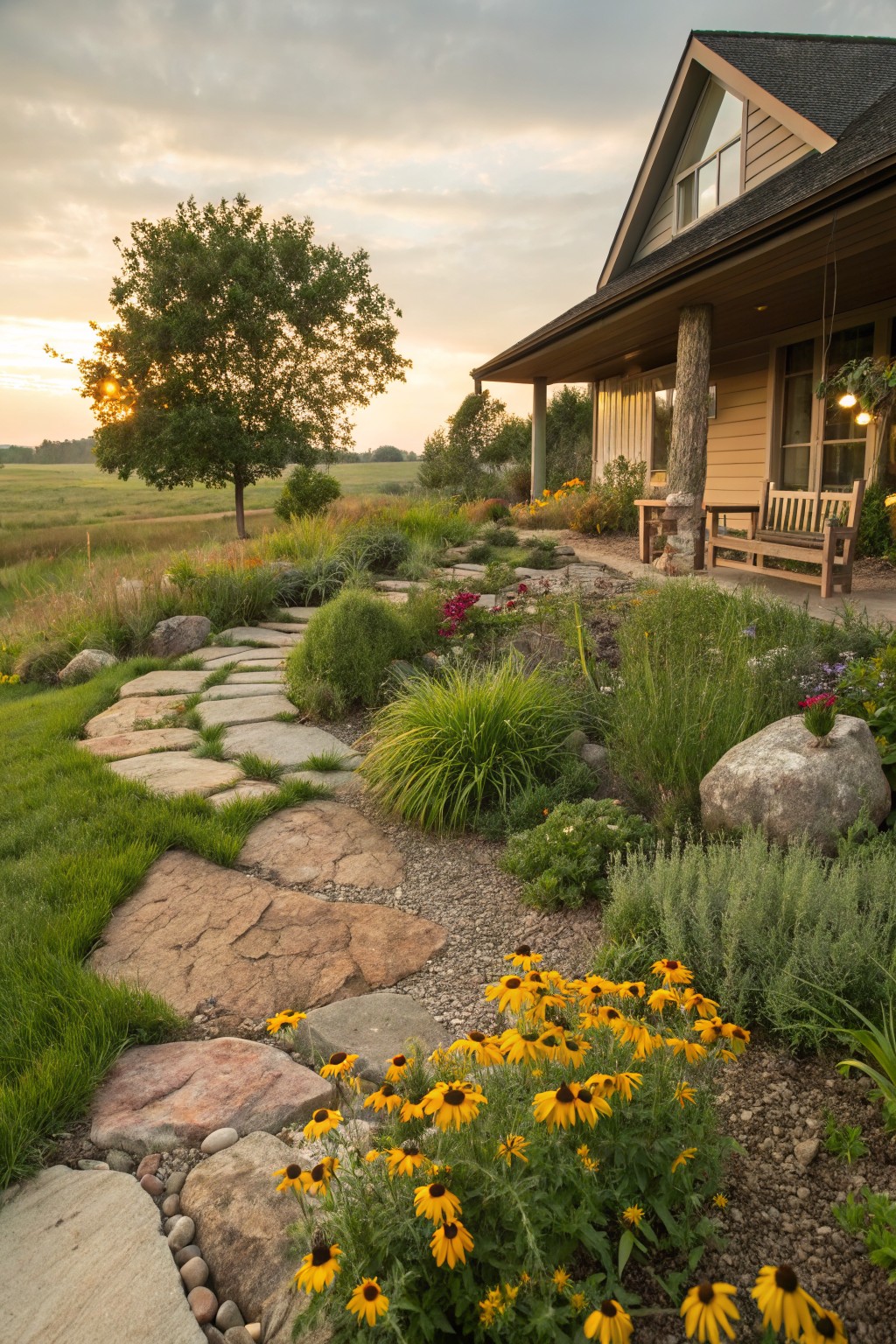
One simple way to guide folks to your front door is with a winding path of rough flagstones set into gravel and low plants. It keeps things casual and natural, like you’re strolling through a prairie edge instead of a formal walkway. Those big stones spaced just right make you slow down a bit. And with black-eyed Susans popping up nearby, it adds color without much work.
This idea shines in front yards that get full sun and aren’t super flat. Source local stone for that authentic look, then fill gaps with gravel and tough natives like switchgrass. It suits ranch or cabin-style homes… pairs well with a porch bench for sitting out. Skip tight mowing along the edges. Just let it grow a little wild.
Pebble Beds Along a Sleek Path

White pebbles fill the garden beds right next to this concrete walkway. They mix with grasses and low shrubs for a clean, no-fuss look that leads straight to the door. The rocks handle the mulch job without weeds taking over, and they echo the stone house walls.
Try this in front yards with modern lines or where water is short. Line the path with bigger stones at the base, then pebbles on top. Skip flowers that flop. It fits narrow spaces well, just keep beds under two feet wide so mowing stays easy.
Boulders and Plants Around Stone Steps
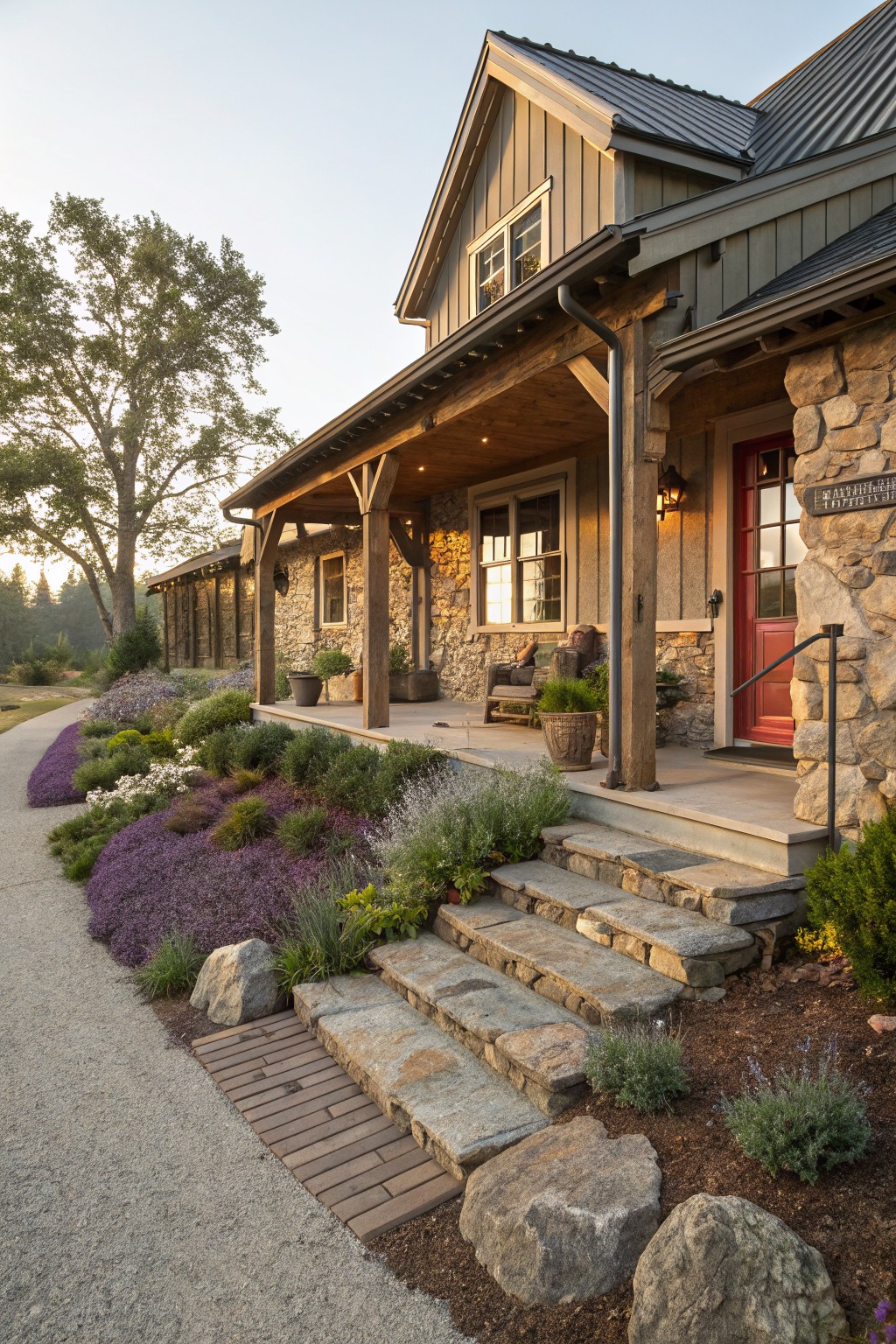
One simple way to boost front yard appeal is placing big boulders right along stone steps that lead to your porch. It gives a natural, rugged look that feels settled into the landscape. Here those rocks mix with low purple groundcovers and grasses that spill over the edges. Keeps things from looking too stiff.
This setup works best on sloped yards or spots heading up to an entry. Use rounded boulders for a softer feel, and pick tough plants that handle dry spots. It suits cabin-style homes or any place wanting low upkeep. Just make sure the steps stay clear for walking.
Curved Pebble Path to the Entry
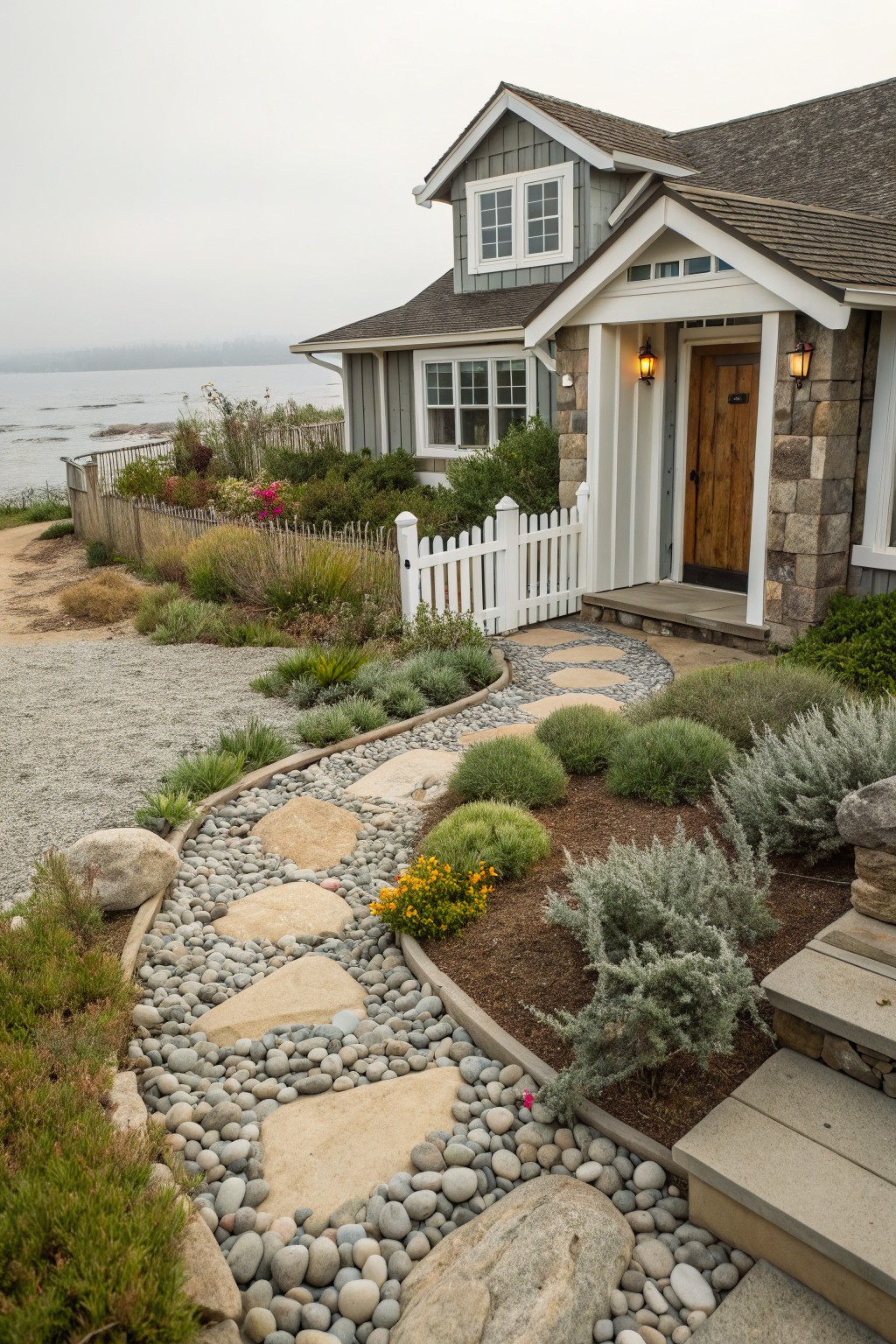
A path like this winds gently from the driveway to the front door using big flat stones set right into smooth white pebbles and gravel. It pulls your eye along without being too straight or fussy. The river rocks fill in between the steps, and low plants tuck around the edges for a natural feel that fits right with the house.
You can pull this off in any front yard that’s sloped or open, especially where you want low upkeep. Pick drought-tough stuff like lavender bushes or grasses to line it. Watch the scale. too-small rocks get lost fast. Curve it to match your lot’s flow.
Terraced Rock Walls on Slopes

Sloped front yards can be tough to work with. But terraced rock retaining walls turn that challenge into something nice to look at. These walls stack up levels with big boulders and cut stone, like the large rock anchoring the bottom here. They hold back soil while letting plants spill over the edges. Grasses and low shrubs fill in just right. It makes the yard feel organized and natural at the same time.
This setup works best on hills where you need to get from driveway to door without slipping around. Pair low-maintenance plants with the rocks to keep it simple year-round. It suits modern homes or cabins in wooded spots. Just make sure the walls are built solid, maybe by a pro, so they don’t shift over time.
Cobblestone Path with Gravel Edges
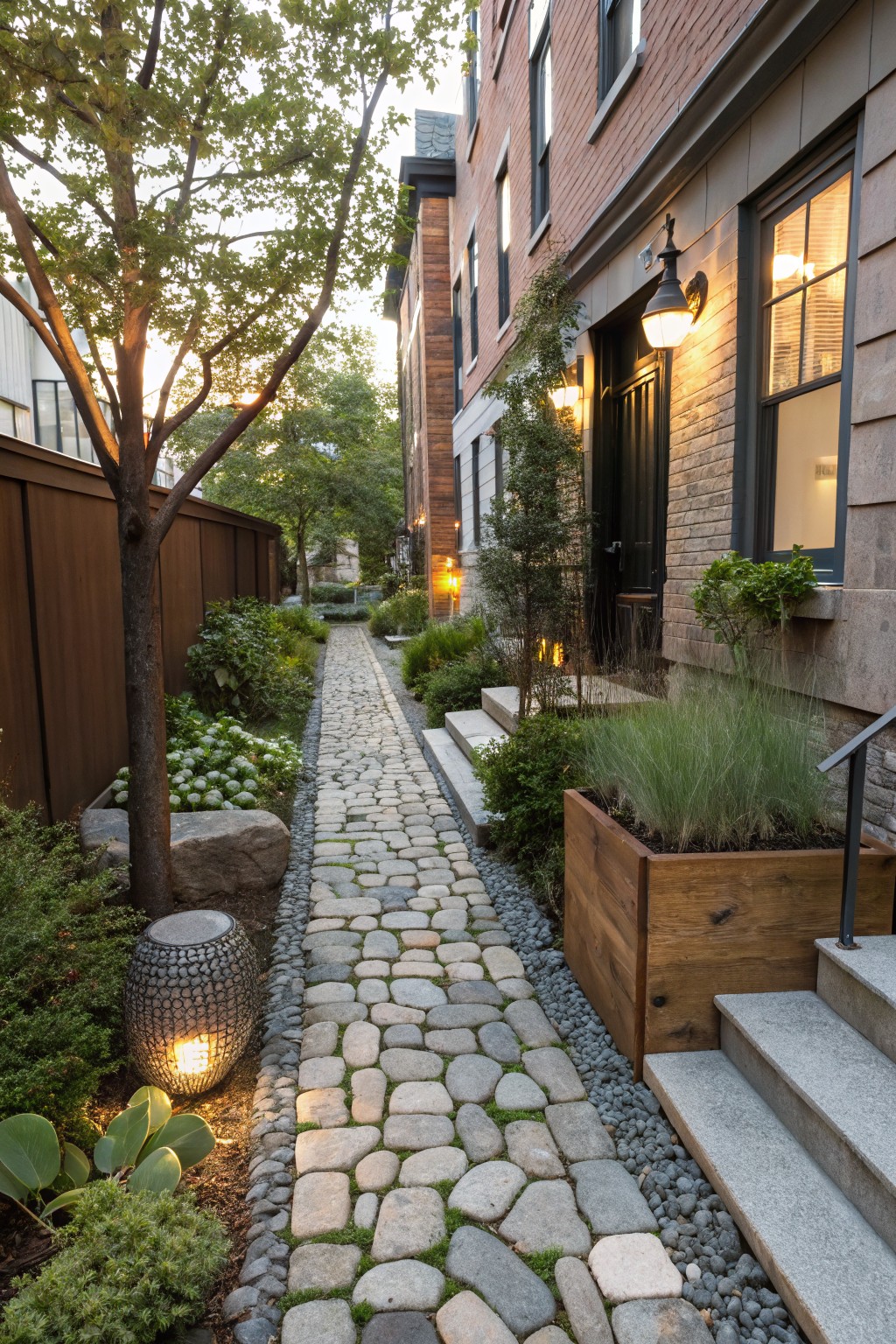
A casual cobblestone path like this winds right through a narrow garden strip next to the house. Irregular stones laid in a loose pattern give it that old-world feel without much upkeep. Gravel along the side drains water fast and keeps weeds down, while plants and a big boulder fill in the gaps nicely.
Put one in where space is tight, like a side yard leading to your door or a slim front approach. It suits brick or stone homes best and pairs with simple steps at the end. Go for rounded local stones if you can. Skip tight mortar joints unless you want formal.
Stepping Stone Path in White Gravel

One clean way to handle a front walkway is laying flat black stone slabs right into a sea of white pebbles. It pulls your eye straight to the entry without any fuss, and that high contrast between the dark steps and light gravel gives the yard a sharp, modern feel. No mowing needed here, just simple drought-tolerant grasses tucked into raised beds nearby.
This idea shines in sunny spots or drought-prone areas, pairing well with a sleek house like this one. Space the stones wide enough for easy walking, about two feet apart, and edge the gravel with black borders to keep it tidy. Rake it occasionally to refresh the look. It suits low-maintenance yards best…keeps things looking fresh year-round.
Terraced Stone Steps on Slopes

Slopes can be tricky in a front yard. But these terraced stone steps make the climb easy and good-looking. Rough-cut stone walls hold back the soil at each level, while wide flagstone treads form the path. Plants tucked into the pockets add some green without overwhelming the rocks. It’s a solid way to turn a hill into usable space.
This works best where you have a noticeable drop from street to house. Use local stone to keep costs down and fit the area. Watch the drainage so water doesn’t pool on the steps. A lantern light here and there helps at night. Suits craftsman-style homes or wooded lots.
Rock Waterfall Along a Stone Path
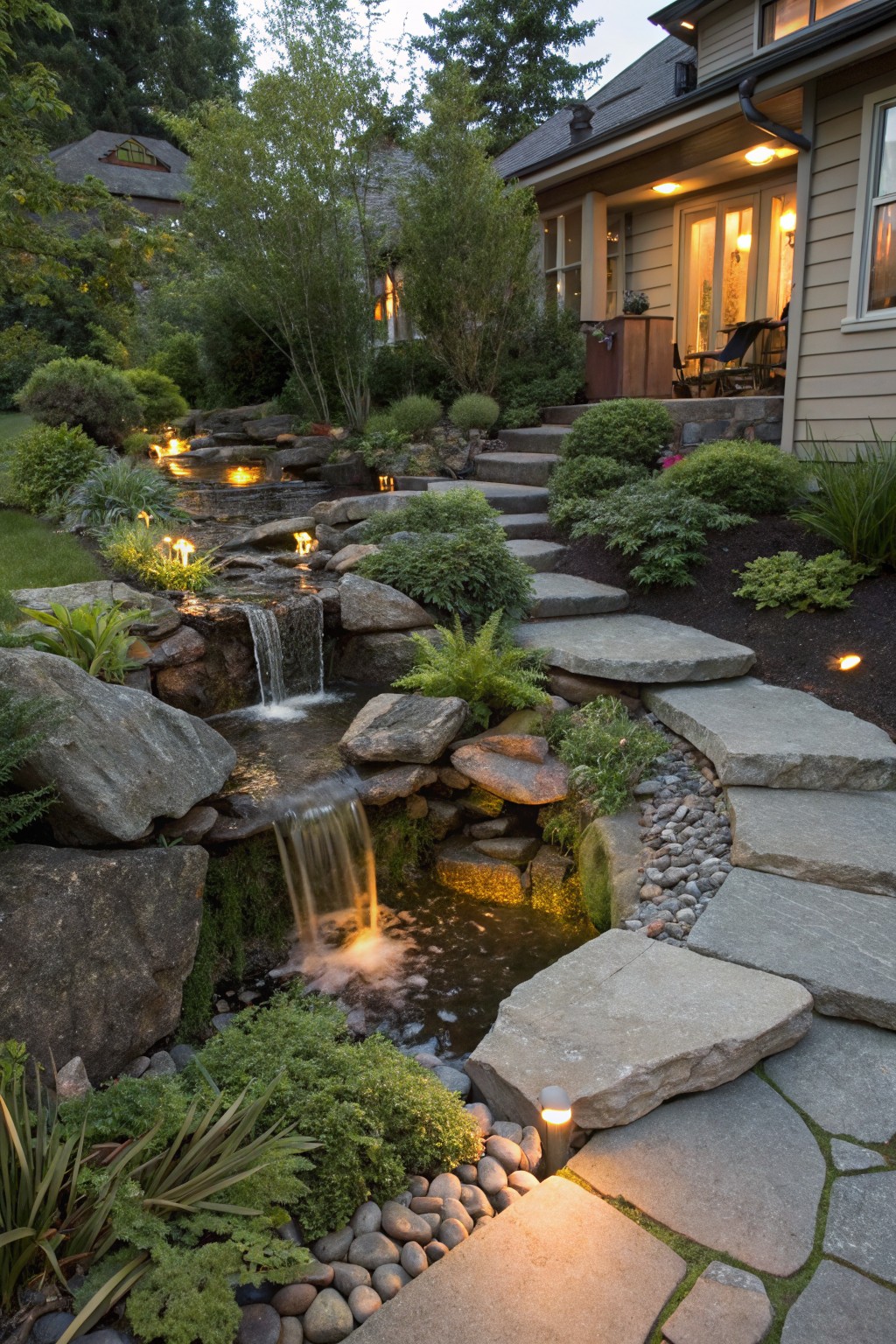
A simple way to add interest to your front yard is building a small waterfall right into the path. Here large rocks stack up to create a gentle cascade that spills into a shallow pond, then trickles along under stepping stones. The water sound covers street noise, and plants tucked around the edges keep it looking natural. Low lights pick out the flow at dusk.
This works great on any gentle slope leading to your door. Pick rugged fieldstone or river rocks that match your area, and line the stream with gravel for easy upkeep. Add ferns or mossy ground covers nearby, but skip fish unless you want the maintenance. It suits most homes without overpowering the yard.
Frequently Asked Questions
Q: How do I get weeds from popping up through my new rock bed?
A: Lay down thick landscape fabric before dumping the rocks.
That smothers weeds before they start.
Top it with a couple inches of gravel or pea stones to pin everything in place.
Q: Can I handle a rock landscaping project solo in a weekend?
A: Pick one idea like a simple river rock path.
Grab a shovel and wheelbarrow, clear the spot, and spread landscape fabric fast.
You’ll finish before dinner Sunday… and love the instant curb appeal.
Q: What if my front yard slopes—will rocks stay put?
A: Build low retaining walls from larger boulders at the base.
They hold back the smaller rocks and stop washouts.
Rake everything level after rain to keep it tidy.
Q: How do I mix rocks without it looking messy?
A: Stick to two or three sizes and colors that echo your house.
Lay bigger ones first as anchors, then fill gaps with smaller stuff.
Step back often to check the flow.
