

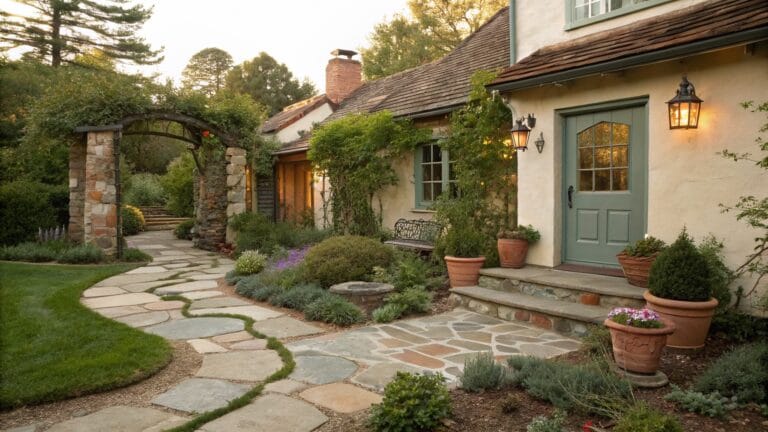
I’ve noticed how rocks can quietly shape a yard’s layout, turning vague grassy areas into defined paths and borders that actually get used.
They hold up year after year, letting plants fill in around them without the whole thing falling apart after a heavy rain.
Last spring I piled some local stones along my driveway edge, and it cut the weed creep while making walks feel more intentional.
Folks walking up always comment on those sturdy lines before anything else.
A handful of these setups are practical enough to adapt right away in real dirt.
Winding Flagstone Path with Rock Edges
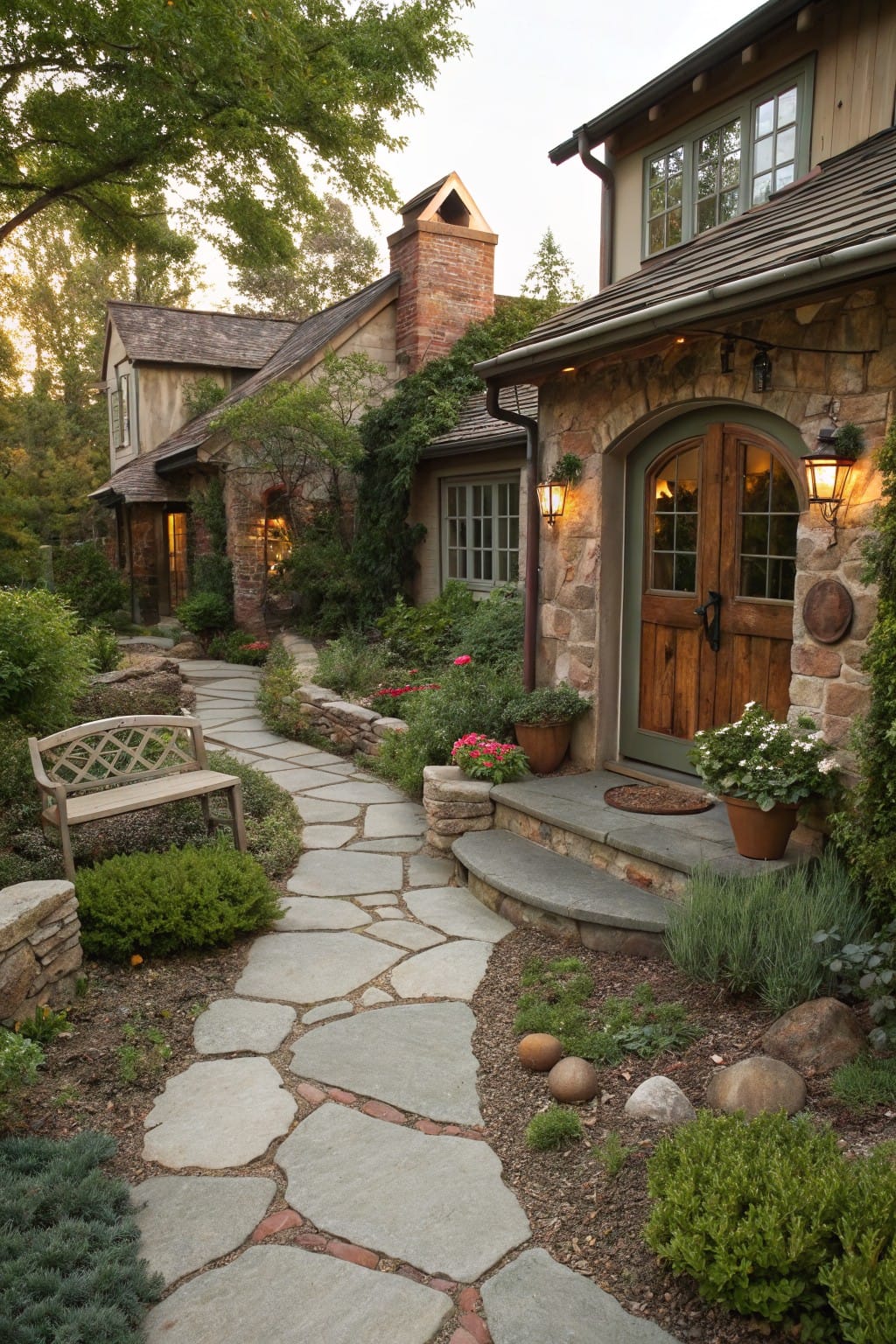
One easy way to add structure to a front yard is a winding path made from irregular flagstone pieces set into gravel. It leads right up to the door without feeling too formal. The loose stones and surrounding rocks give it a natural look that fits with the house stones and plants. Folks like how it guides you in while keeping things casual and low fuss.
You can pull this off in most yards with a gentle slope. Start by marking the route, dig a shallow trench, add gravel for drainage, then drop in the flat stones where they fit best. Tuck smaller rocks and gravel around the edges, toss in a few tough plants. It works great near older homes or cottages, just watch for uneven spots that might trip someone. Keeps mud off your shoes too.
Stone Fire Pit with Curved Bench Walls
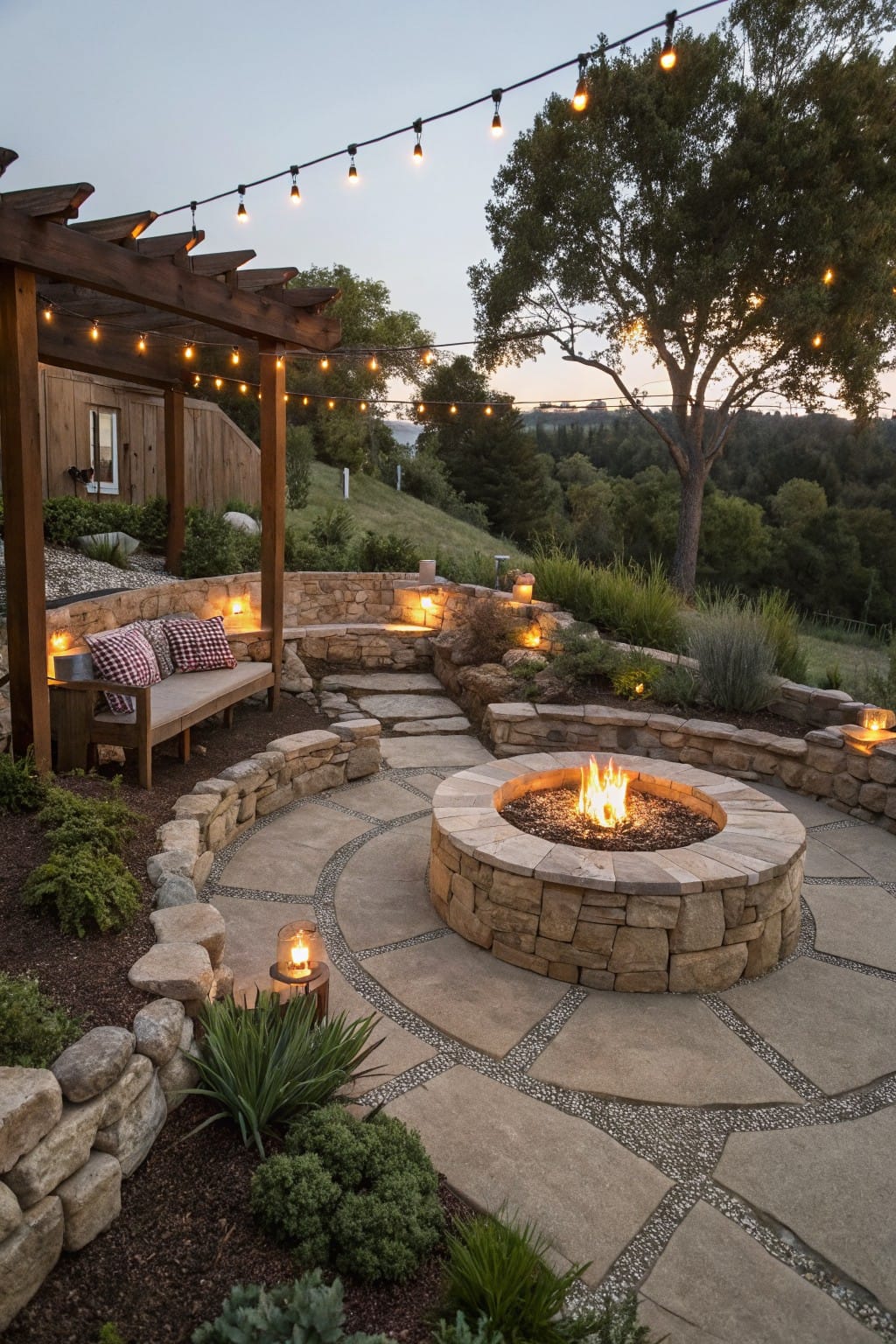
A stone fire pit like this pulls everything together in the yard. The circular design made from rugged limestone blocks holds the flames right in the center, while the low curving walls double as built-in benches. It’s simple but feels like a real gathering spot, especially with a few pillows tossed on for comfort.
You can pull this off in most backyards, even on a slope. Stack local rocks for the walls and pit rim, add a gas burner if you want easy flames, and tie it into paths with pea gravel. Works best where you already have some rock beds nearby. Just keep the benches low enough to sit on without strain.
Gravel Pathway with Lavender Planters
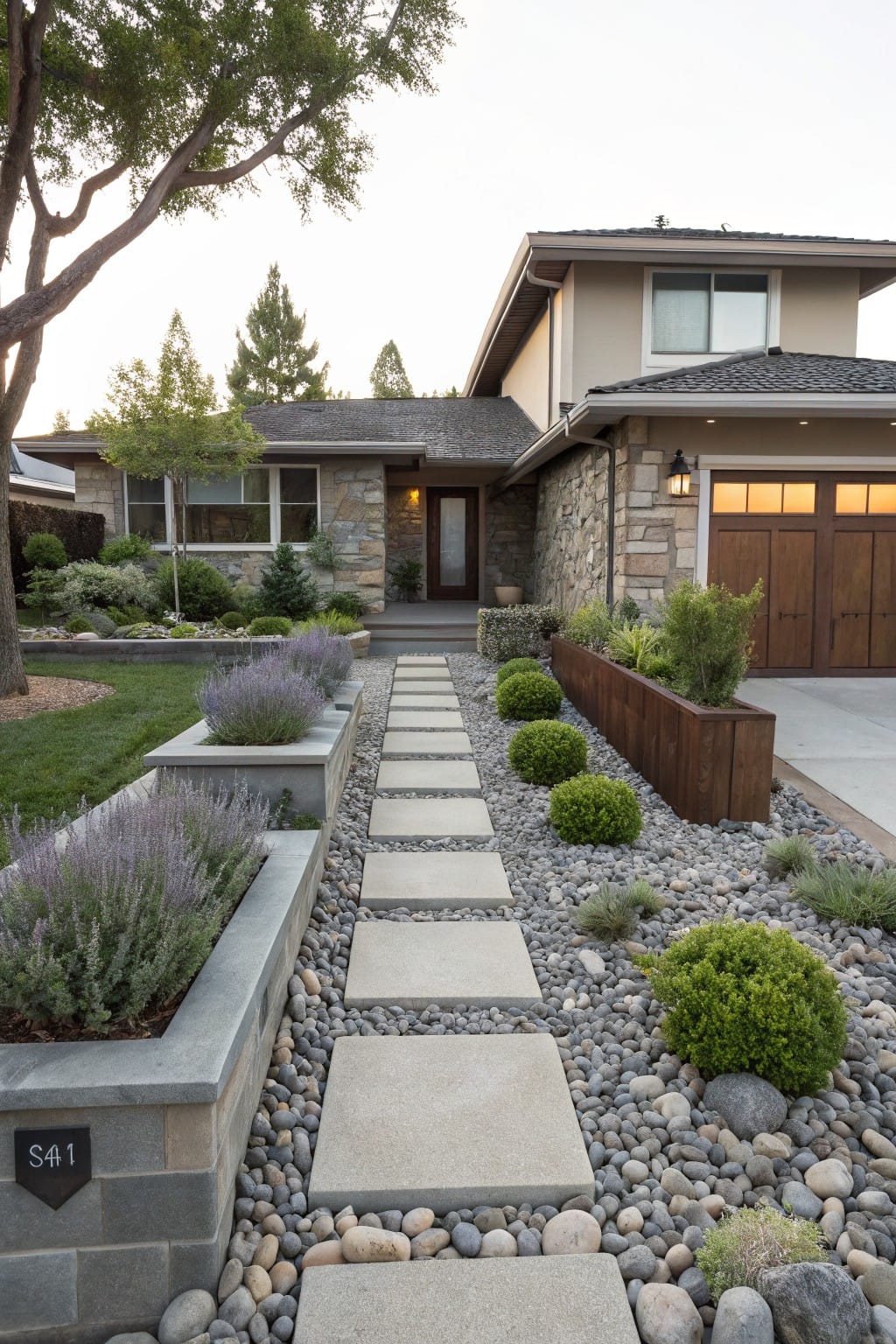
A gravel walkway like this uses simple concrete stepping stones set right into a bed of smooth river rocks. Lavender plants tucked into low concrete planters run along one edge, with a few rounded boxwood shrubs for shape. It pulls the eye straight to the front door without much upkeep, and the rocks keep things from getting muddy after rain.
You can pull this off in any front yard with decent sun. Pick drought-tough plants like lavender that won’t need constant water, and make sure the gravel drains well so you don’t end up with puddles. Works best on modern houses or drier spots… just rake the gravel now and then to keep it neat.
Build a Winding Stone and Pebble Path
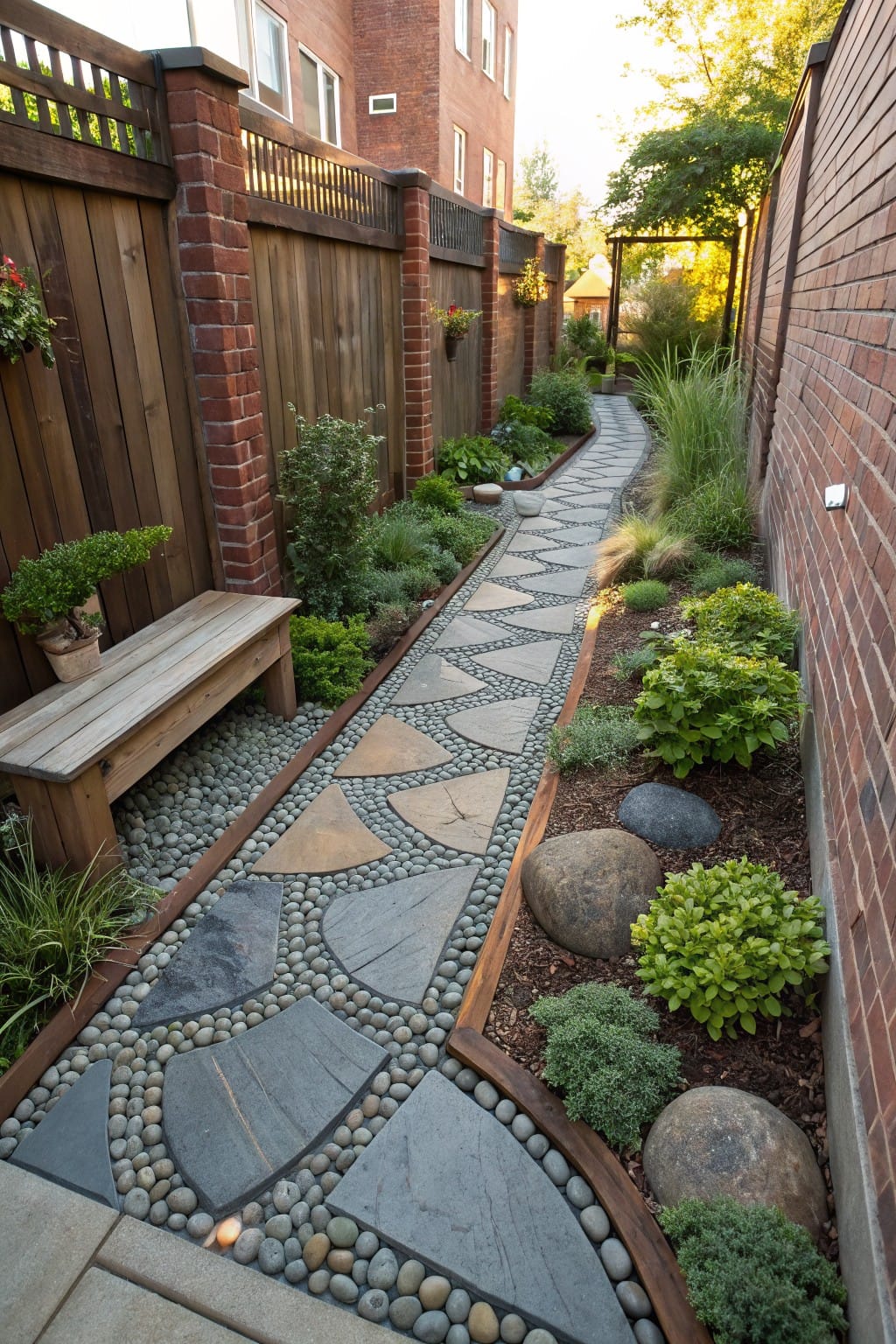
Narrow yards or side paths can feel tight and forgotten. But a simple stone walkway like this changes that. Irregular slate pieces set in a loose mosaic pattern, edged with smooth pebbles and wood borders, draws the eye right through the garden. It keeps things practical for foot traffic while letting plants spill over naturally. That bench tucked along the fence makes a nice pause spot too.
You can pull this off with basic materials from any landscape yard. Lay down gravel base first for drainage, then fit the stones and fill edges with pebbles. It works great in urban spots between fences or buildings, where you want low upkeep but some style. Just keep the path wide enough to walk comfortably, maybe three feet at least.
Irregular Flagstone Paths with Pebble Borders
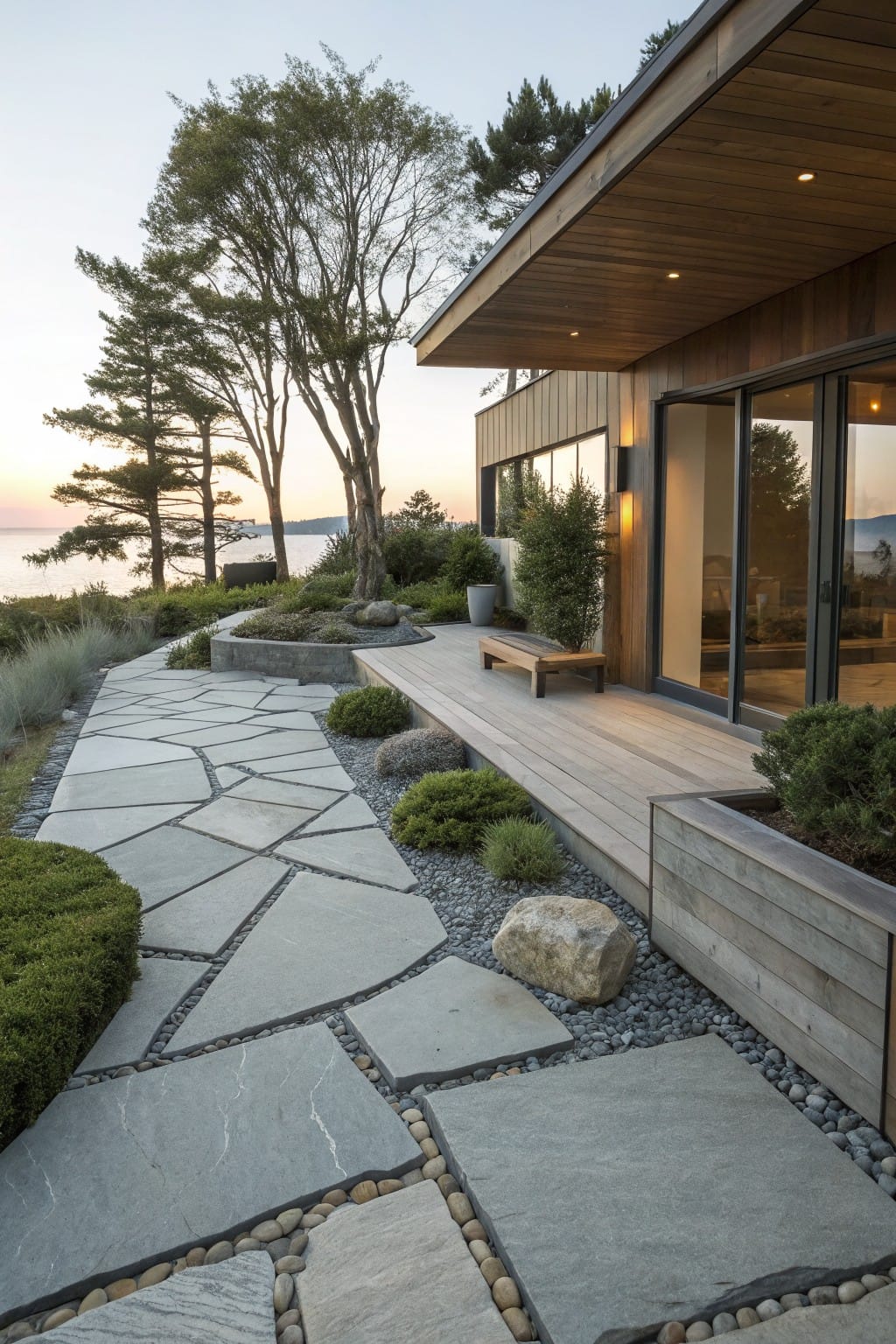
A simple flagstone path like this uses big, rough-cut slabs set into the ground with gaps filled by pebbles and gravel. It looks natural and rugged without much effort, perfect for tying your yard together. The stones guide the eye right to the house or deck, and the rocks around them keep everything low-maintenance.
Lay these paths where people naturally walk, like from the driveway to your back door. They suit sloped lots or coastal spots with poor soil… just dig shallow trenches, level the stones, and spread gravel between. Skip mortar for easy fixes later, and toss in a boulder or two for scale.
Winding Path Edged with Pebbles and Rocks
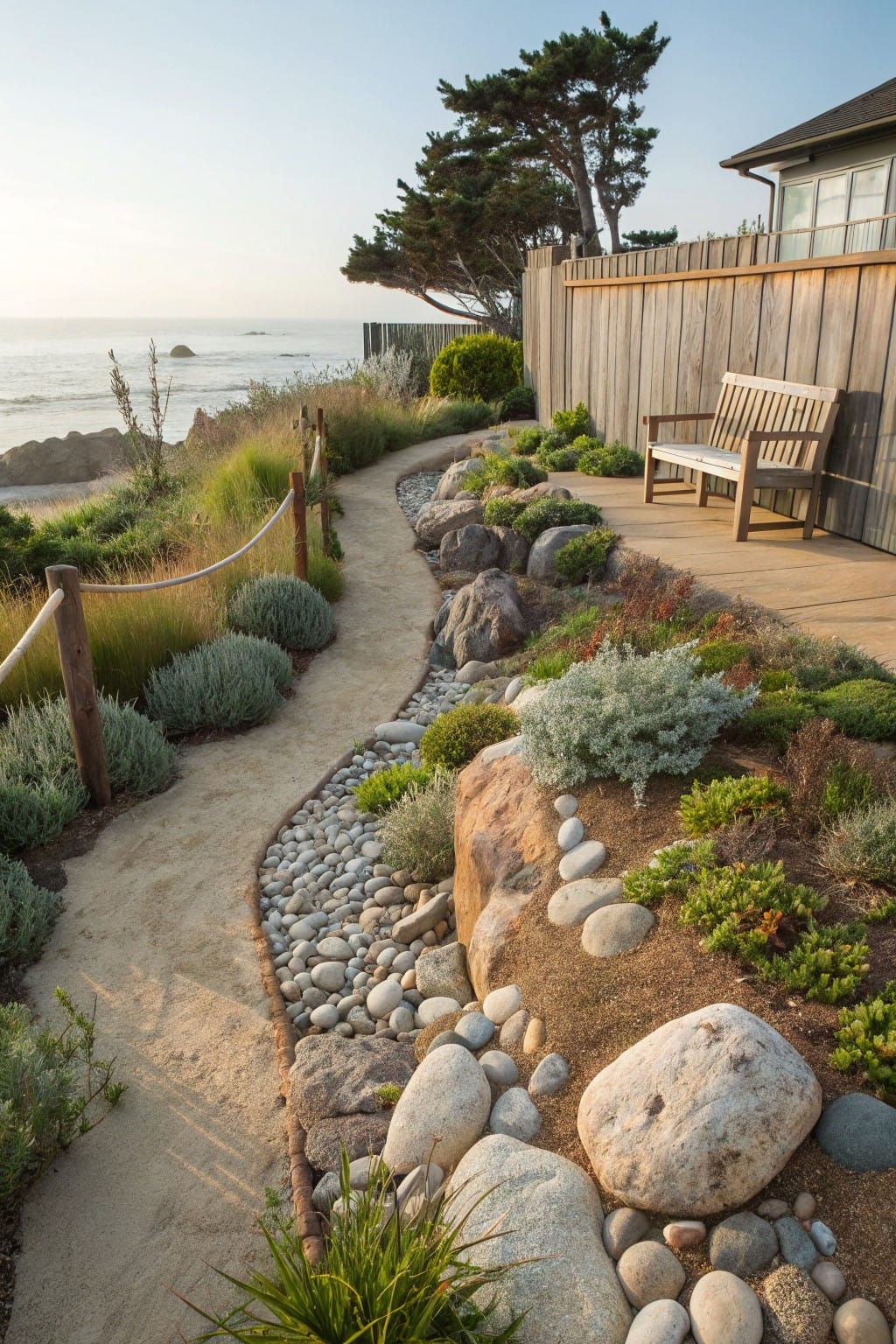
One easy way to tie a yard together is a simple winding path like this. It uses dirt or decomposed granite for the base, then edges it with smooth pebbles and bigger rocks pulled right from the ground or a local supplier. Those large boulders along the side add structure without much work. They keep the path feeling natural, especially on a slope heading to a bench or deck.
You can do this in any dry or coastal spot where you want low upkeep. Lay down the path curve first with a hose, dig a shallow trench for edging, drop in pebbles and rocks, then fill the center. It works great near houses with ocean views or just to connect seating areas. Skip fancy gravel if drainage is an issue… plain dirt holds up fine in most spots.
Built-In Stone Benches Around a Fire Pit

One nice way to use rocks in your yard is turning a curving retaining wall into built-in benches that circle a fire pit. It gives you seating for six or eight without buying chairs, and the stone keeps everything sturdy and weatherproof. Those low lights tucked into the wall add a soft glow at night too.
This works best on a slope where you need the wall anyway. Stack the stones to bench height, leave flat spots for cushions, and drop in a simple fire pit. It fits patios or garden edges, suits casual homes, and stays easy to maintain… just sweep off the seats now and then.
Boulder and Pebble Pool Borders
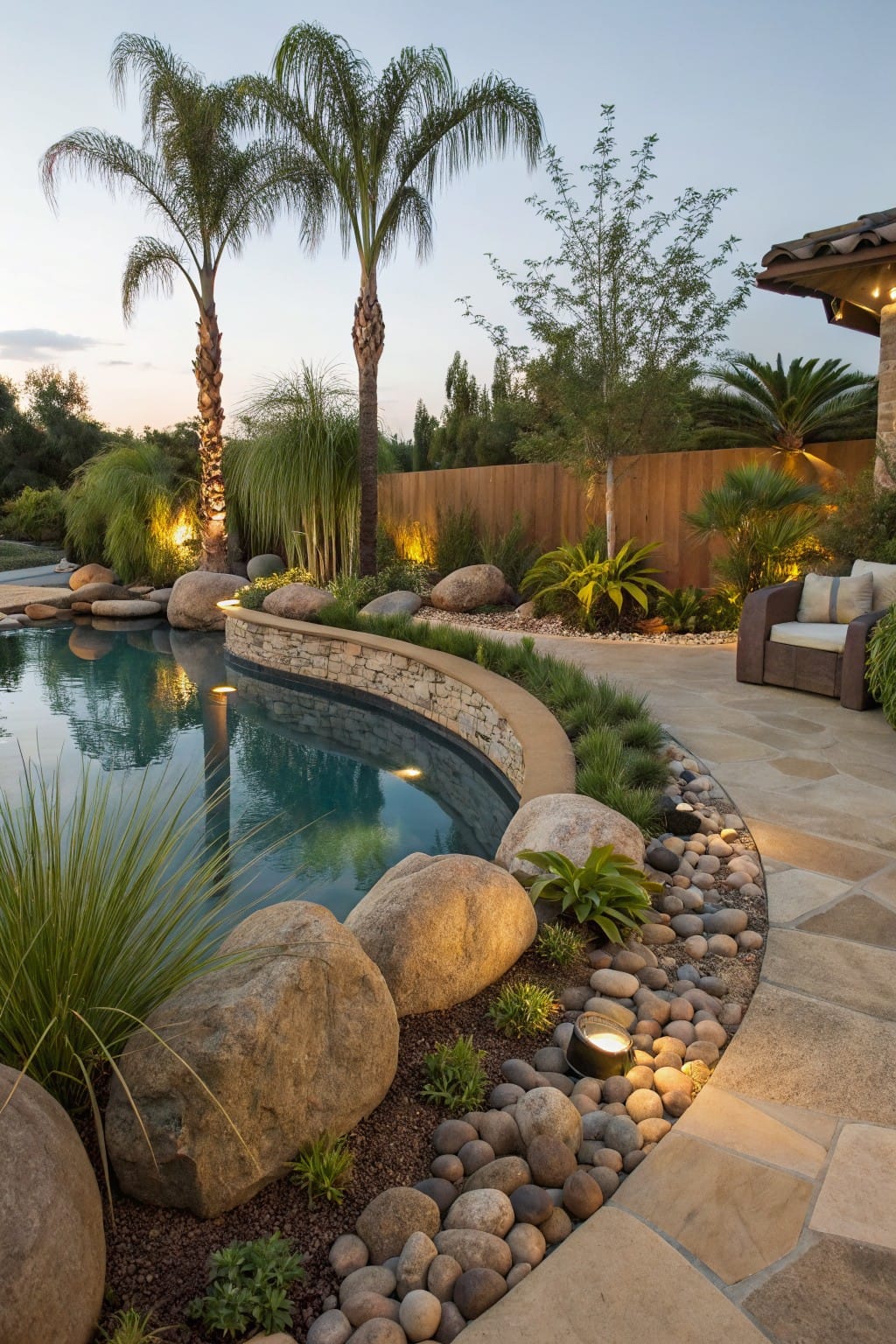
Big boulders tucked right up against the pool edge make a natural border that feels rugged yet tidy. Paired with handfuls of river pebbles and tough grasses, they cover bare soil and soften the stone wall behind. The low lights tucked in add a glow at night without much fuss. It’s a look that holds up year-round.
Grab some local boulders in a few sizes and stack them loosely where the pool meets the yard. Fill gaps with pebbles for drainage and toss in grasses that don’t need much water. Works great around modern pools or in dry spots. Just make sure the rocks sit stable so nothing shifts after rain.
Simple Stepping Stone Gravel Path
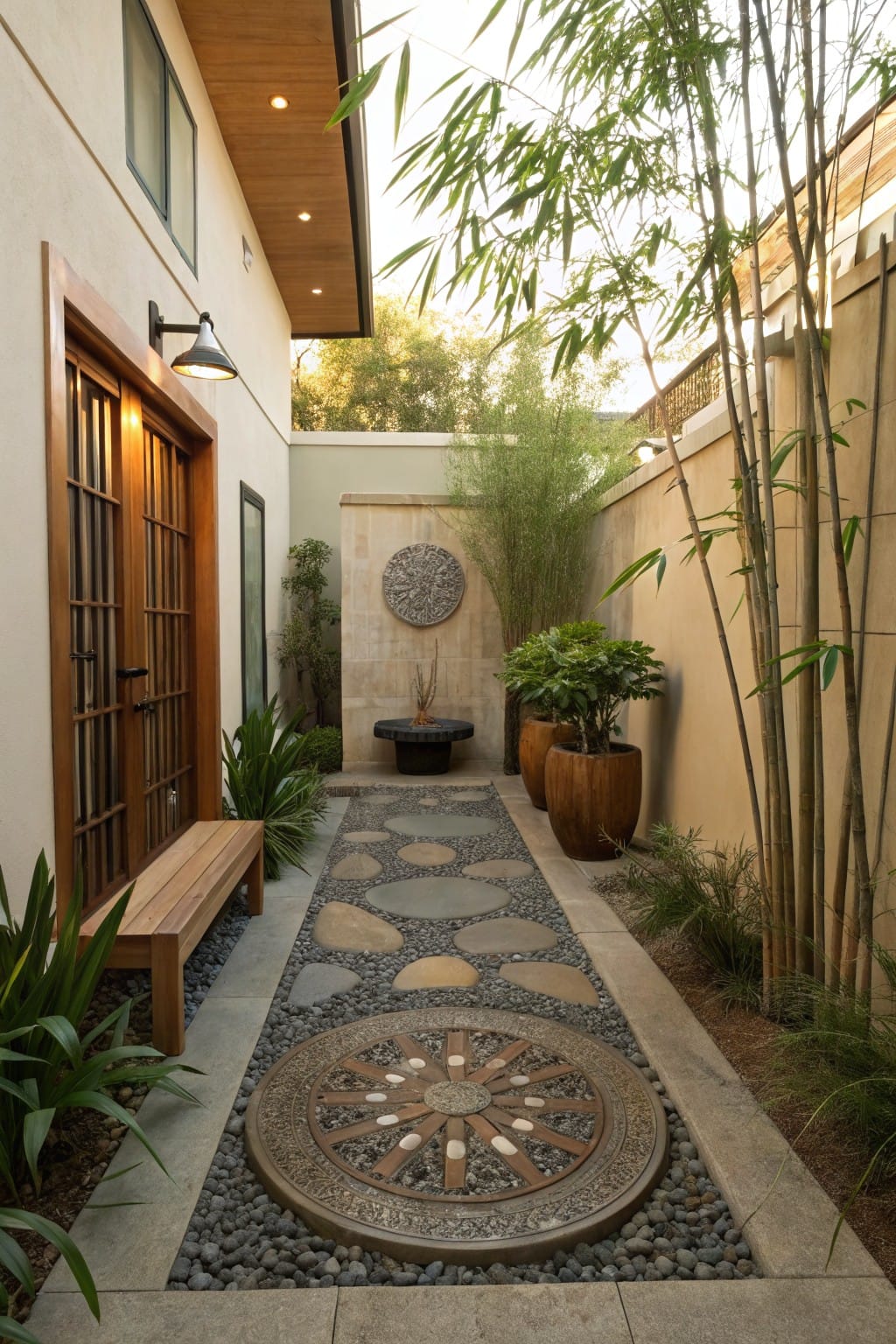
One easy way to guide people through a yard is with large flat stones set right into gravel. You see it here leading toward the entry, with bamboo and low plants on both sides keeping things tidy. It feels calm and natural, no fussy mowing needed along the edges.
Lay this out in narrow side yards or between fences. Pick stones big enough for a full step, about 18 inches across, and fill around them with pea gravel for good drainage. It works in any sunny spot, just keep weeds pulled at first till plants fill in.
Winding Stone Steps for Slopes
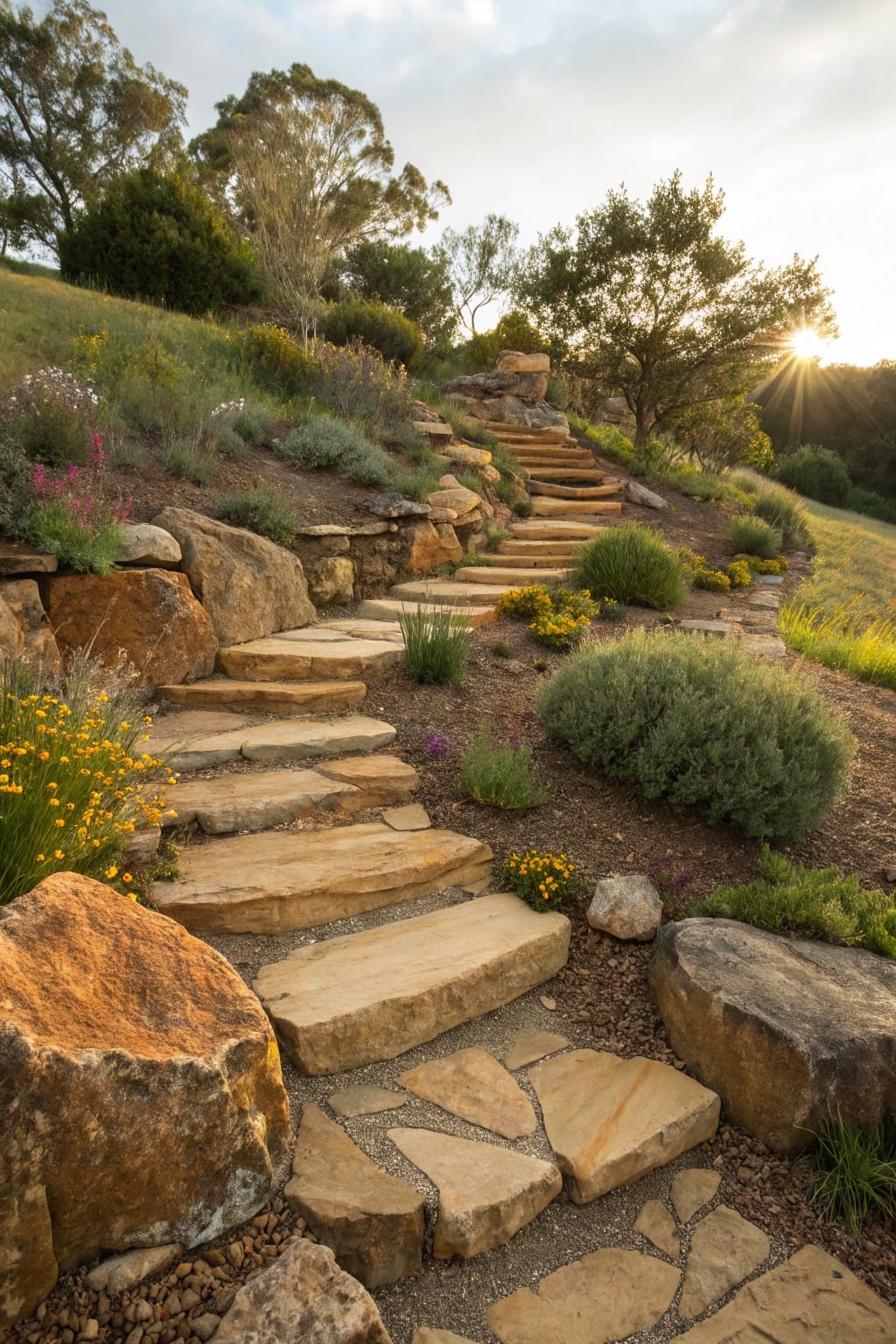
One simple way to handle a sloped yard is with wide flagstone steps set into the hill. They wind gently upward, tucked between big boulders and patches of native plants like grasses and wildflowers. This setup feels like it grew there naturally. No sharp edges or fussy retaining walls. Just rocks doing what they do best, holding soil and guiding the way.
You can pull this off in your own yard if you’ve got a rise to climb. Source local stone for steps and boulders, then stack them rough to fit the contour. Plant tough, drought-friendly stuff around the edges to soften it up. Works great on hillsides where mowing’s a pain. Keep steps wide enough for two feet, and watch the drop-offs. Easy enough for a weekend with some muscle.
Pebble-Edged Stone Pathways
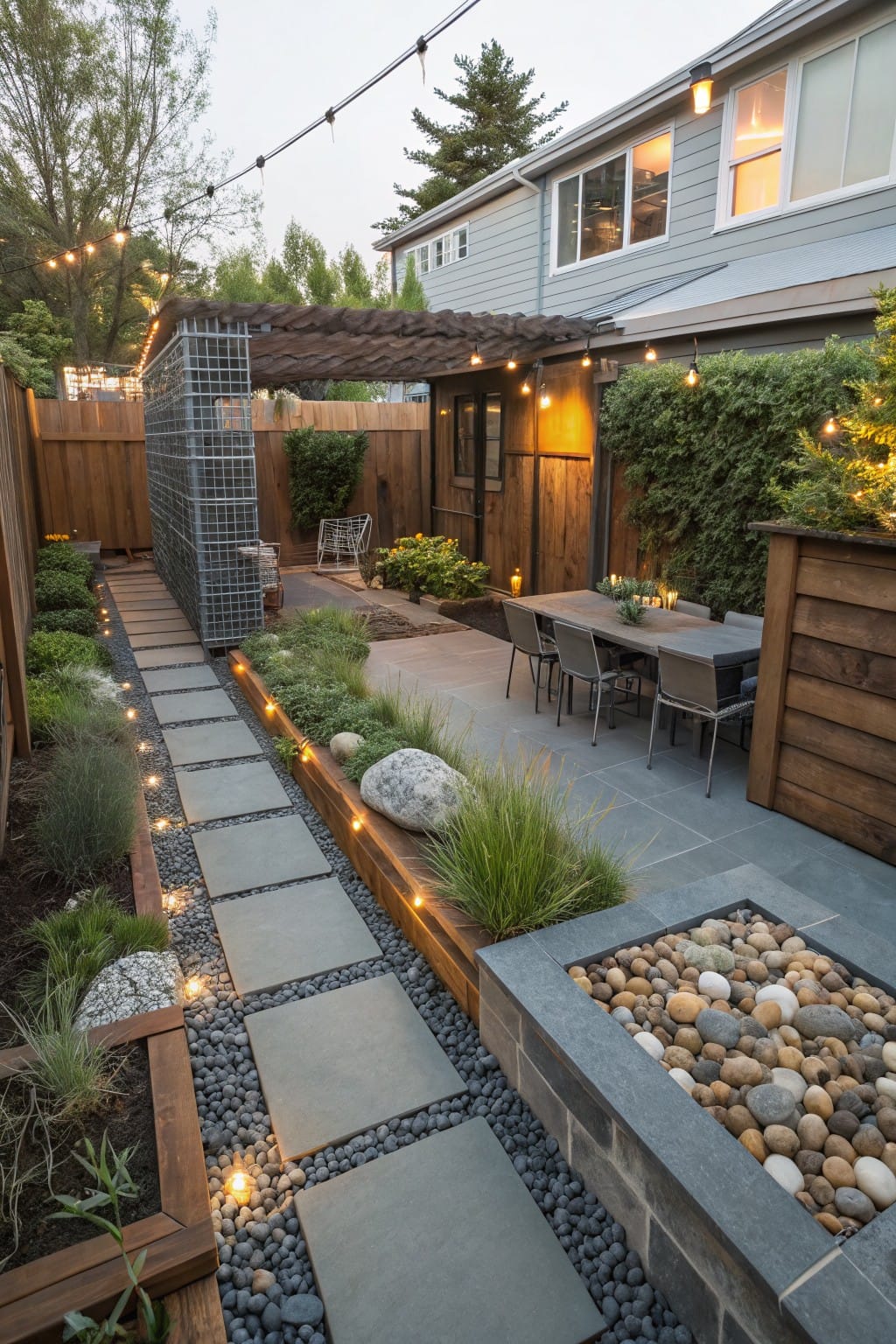
One easy way to make a backyard path feel put-together is to edge stone pavers with pebbles or small gravel. You see it here along those big slate slabs, where dark river rocks fill the borders and keep everything neat. It adds a natural texture without much work, and the low lights tucked in make it practical at night too.
This works great in side yards or leading to a patio like this one. Just dig a shallow trench beside your pavers, line it with landscape fabric, and dump in washed pebbles. It suits low-water gardens with grasses and such. Skip it if your soil washes out a lot, or add more edging to hold it in place.
Curved Stone Retaining Wall Walkway
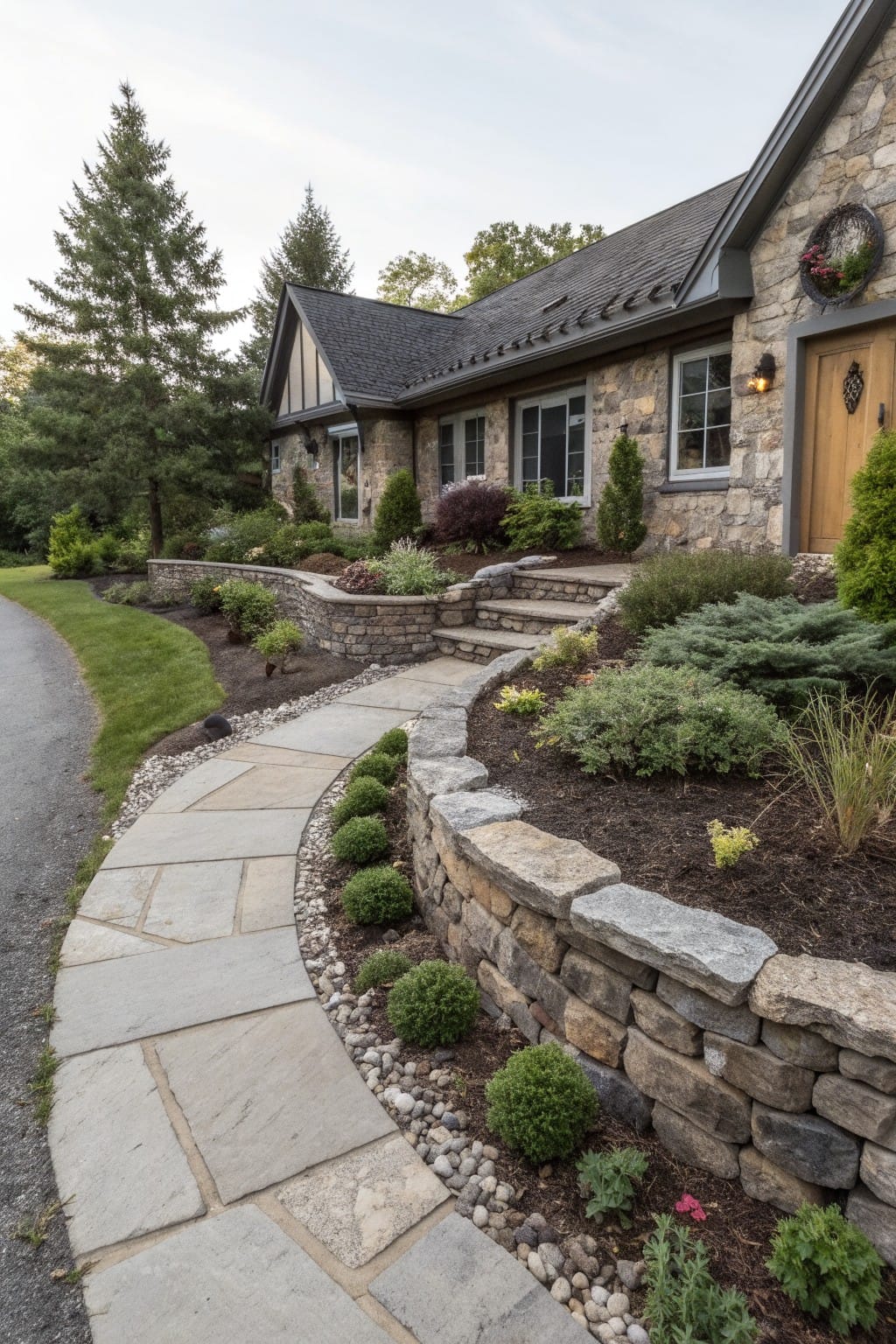
A curved retaining wall made from natural fieldstone runs alongside a flagstone path, turning a sloped entry into tidy planting beds. It keeps soil in place while giving plants a spot to grow, and the gentle curve makes the walk to the door feel easy and natural. Folks like how it blends the house right into the yard without looking forced.
This works best on front yards with a drop-off near the driveway or steps. Stack the stones dry for a simple DIY job, or add mortar if you want it sturdy. Fill the beds with tough shrubs like boxwoods, and it suits most homes, especially stone or wood-sided ones. Just check your slope isn’t too steep at first.
Spiral Stone Herb Gardens
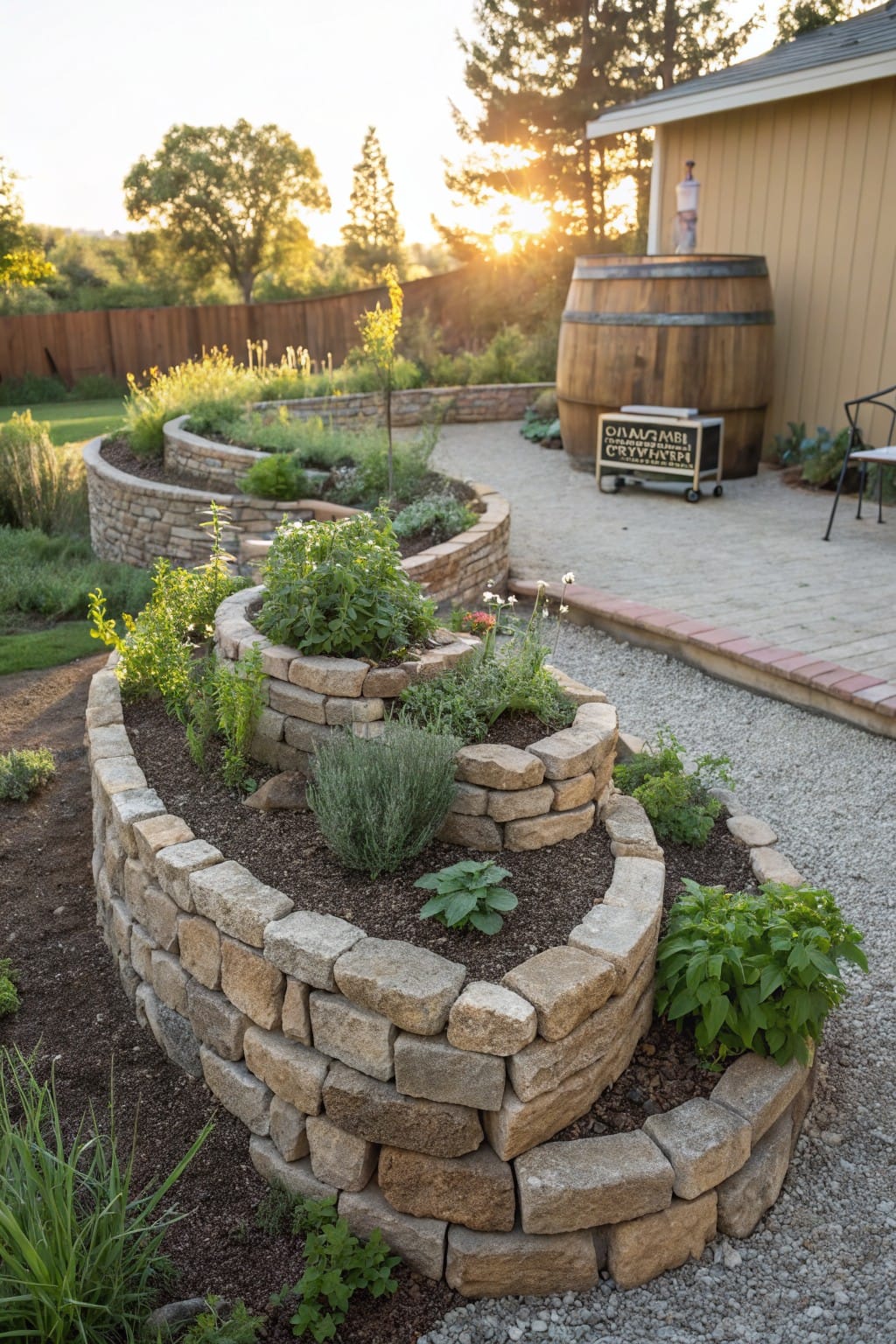
One neat way to use rocks in your yard is building these curving raised beds that spiral up like a nautilus shell. They’re stacked from natural fieldstone, no mortar needed, and packed with herbs like basil, rosemary, and mint. What makes them stand out is how the shape gives you tiers for plants at different heights. Plus it saves space and looks way more interesting than a straight bed.
Try this in a sunny backyard corner or along a path. It works best on flat ground or a gentle slope. Grab rocks from your property or a local quarry, stack them sturdy with gravel backfill, then plant low growers at the bottom and taller ones up top. Watch the soil doesn’t wash out in heavy rain… add some landscape fabric if needed.
Winding Stone Path Through Wildflowers
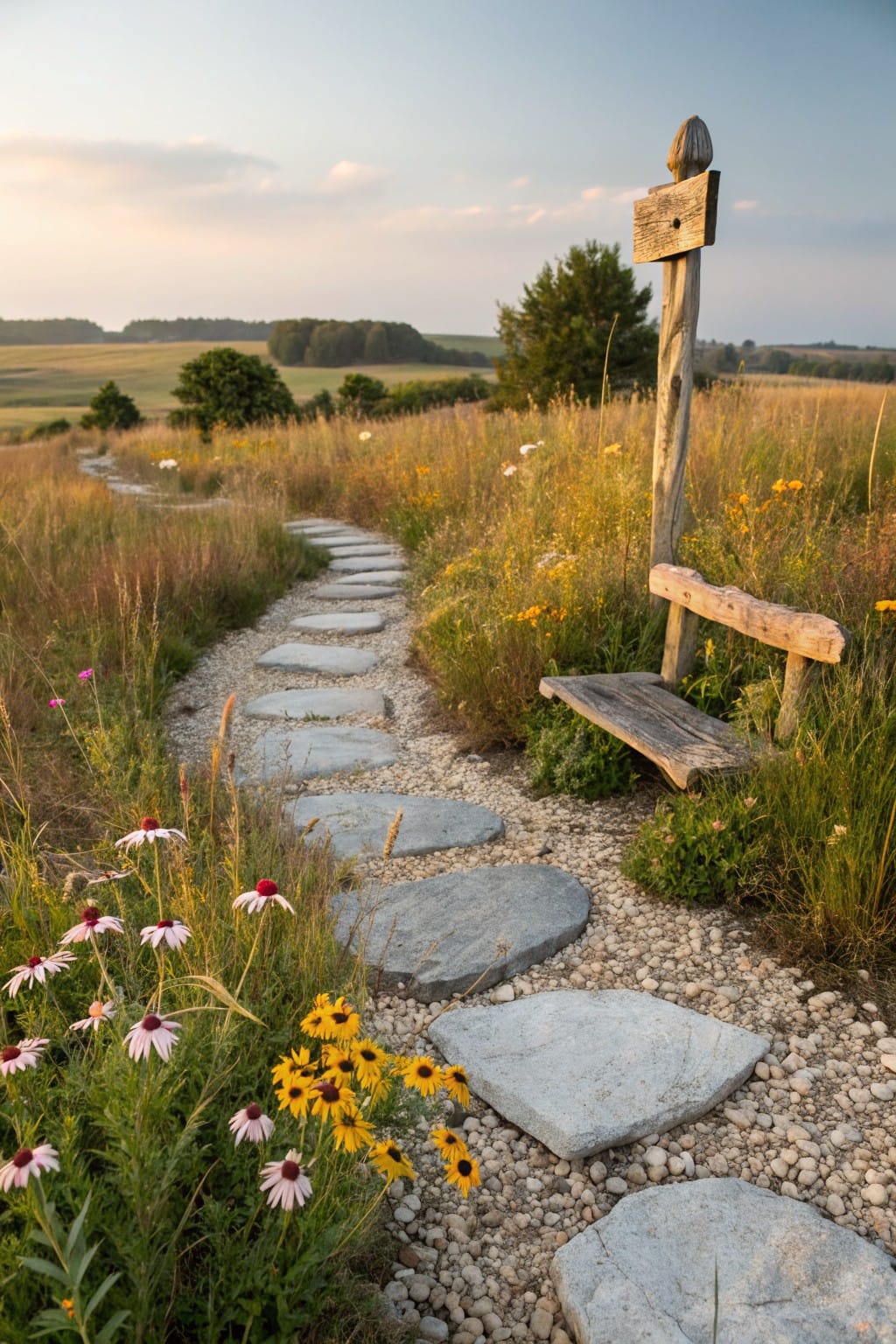
A simple path like this winds through tall grasses and colorful blooms using just flat stones set into gravel. It pulls you along without straight lines or fussy edges. The irregular stones fit right into the meadow feel, and wildflowers spill over naturally on both sides.
Lay it out where you already walk, like from the house to a garden spot. Dig spots deep enough for the stones to sit level, add gravel underneath for good drainage. Plant easy natives like coneflowers or black-eyed Susans around the edges. It suits bigger yards or rural spots best…keeps things low upkeep and practical for muddy seasons.
Large Boulders in Gravel Gardens
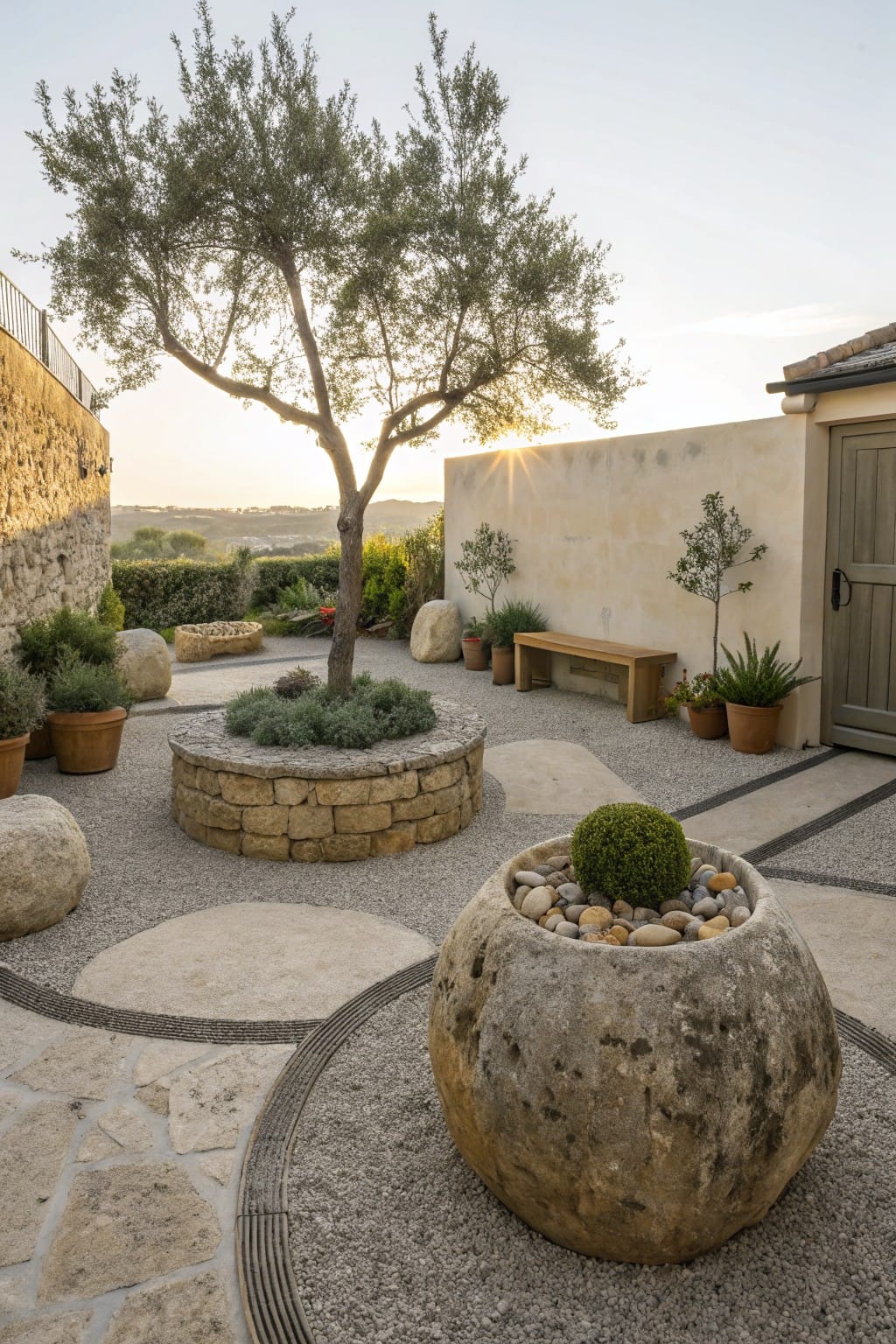
Big boulders scattered across a gravel base give any yard that easy, natural feel without much work. They look like they’ve always been there, especially when you pick ones with some moss or rough edges. In this setup, the boulders sit right in the pea gravel, mixing with stone circles and simple paths. It keeps things low-maintenance since gravel drains well and boulders don’t need tending.
Try this in a sunny courtyard or side yard where you want definition but not fussy plants everywhere. Source boulders from local quarries or landscaping yards, they’re often cheap. Place a few big ones around smaller gravel beds or paths, three to five usually does it. Works best in dry spots, avoids muddy areas. Just rake the gravel now and then.
Natural Stone Steps for Sloped Yards
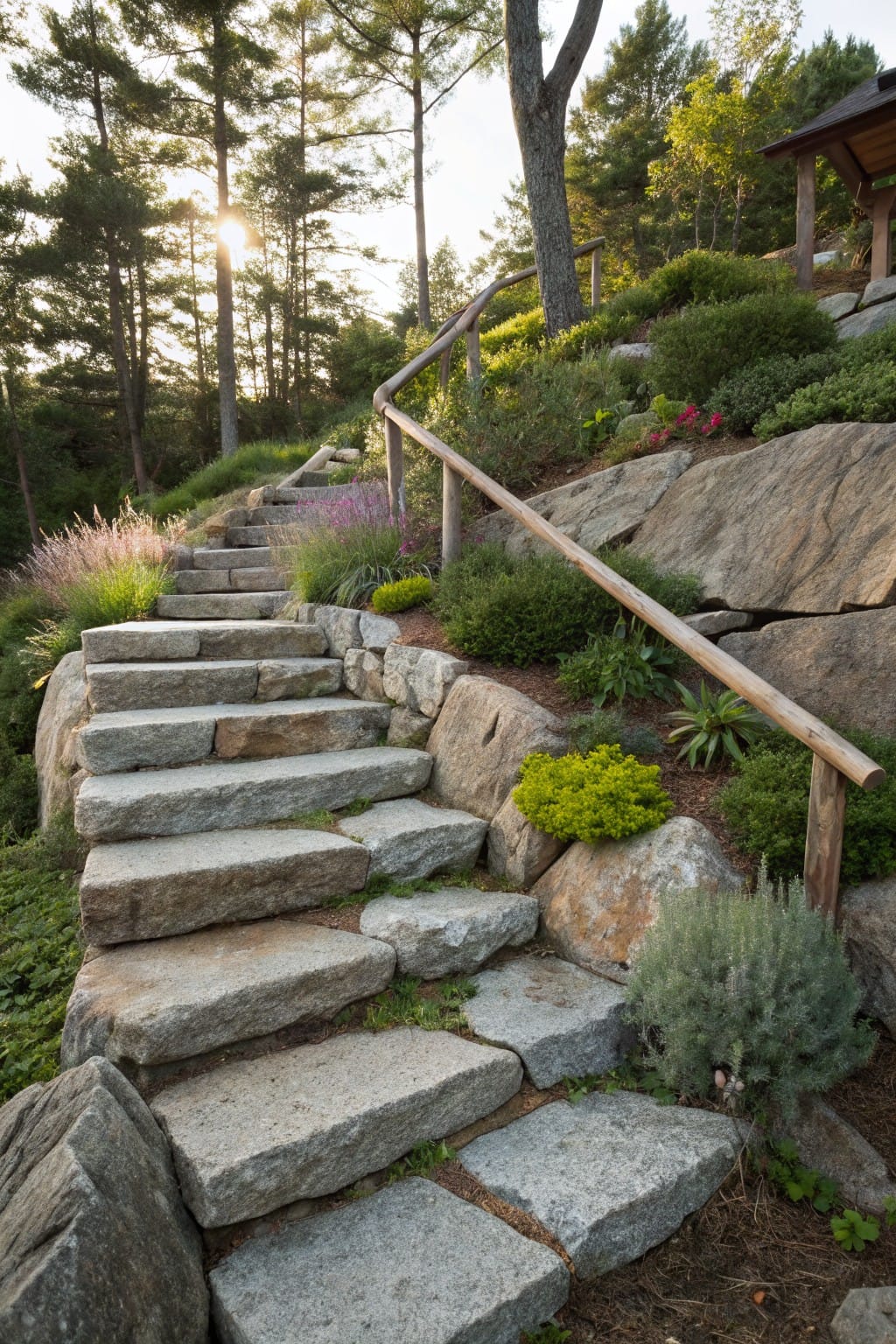
One straightforward way to get up a hillside without a lot of fuss is these natural stone steps. They use rough slabs of granite or fieldstone, just fitted into the slope where bigger rocks already sit. The wooden handrail keeps it safe, and plants tucked along the edges make the whole thing feel part of the yard. It’s low-key sturdy, and holds up to weather year after year.
To try this yourself, scout your property for rocks that match, or grab some from a local quarry. Level each step a bit, backfill with gravel for good drainage, then wedge the stones in place. Add perennials or shrubs that won’t grow too tall. It suits wooded or rocky lots best, especially if you want something that needs almost no upkeep once set. Watch the rail height though, for shorter folks.
Stepping Stones Set in River Rock
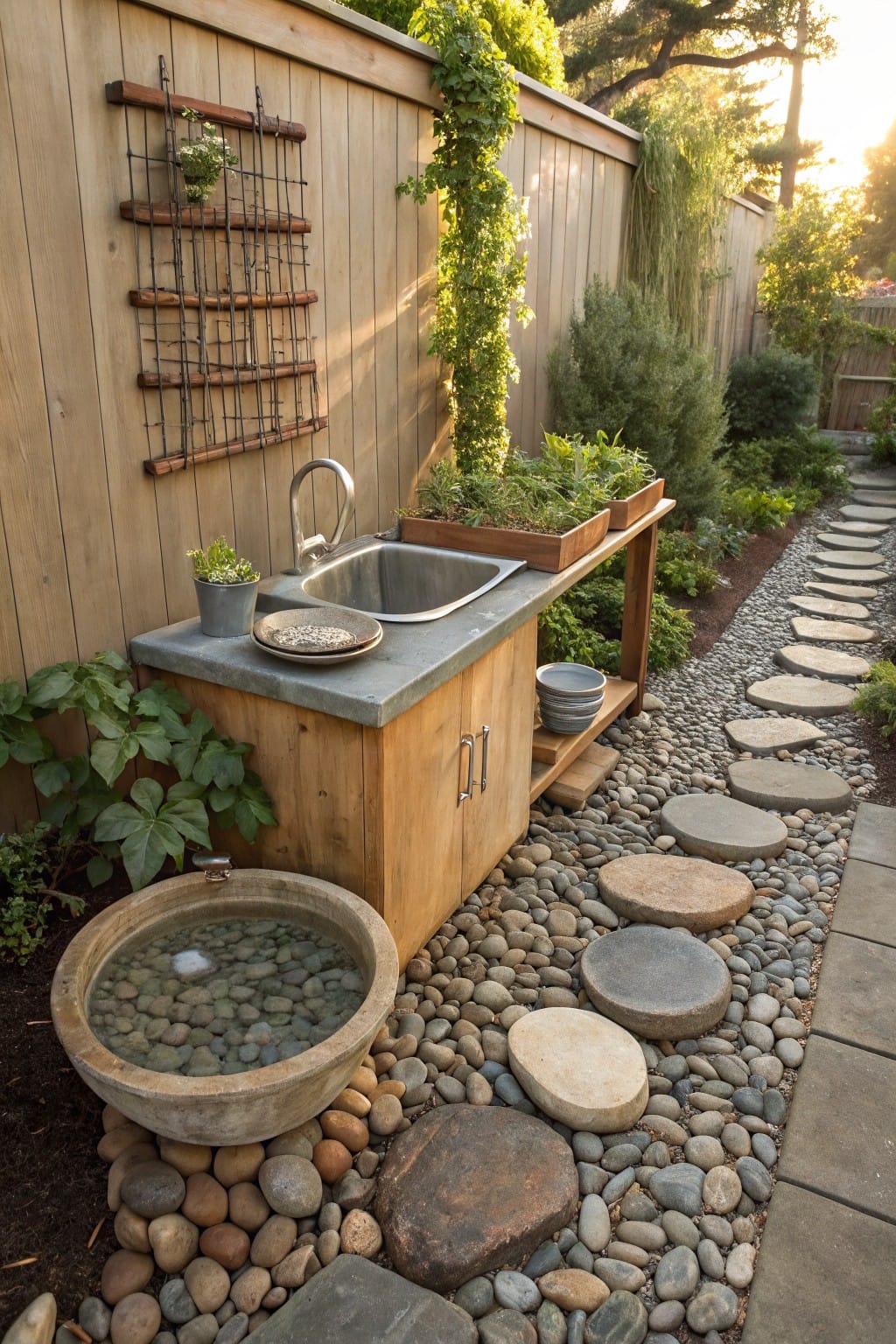
One easy way to guide foot traffic through a backyard garden is with large, irregular stepping stones placed right in beds of smooth river rocks. It keeps things looking natural and wild, like the path was always there. No need for mortar or fancy cutting. The rocks fill in around the stones, letting water drain fast and weeds stay low. Around that simple outdoor sink station, it pulls the whole spot together without much work.
Lay it out where you walk most, like from the patio to a shed or planting area. Source flat stones from a local quarry or landscape yard, then dump in a couple bags of pebbles for the base and edges. It suits small yards or sloped spots best. Watch the stone sizes so you don’t trip. Done right, it’ll last years with just a rake now and then.
Winding Stone Paths in Rock Gardens
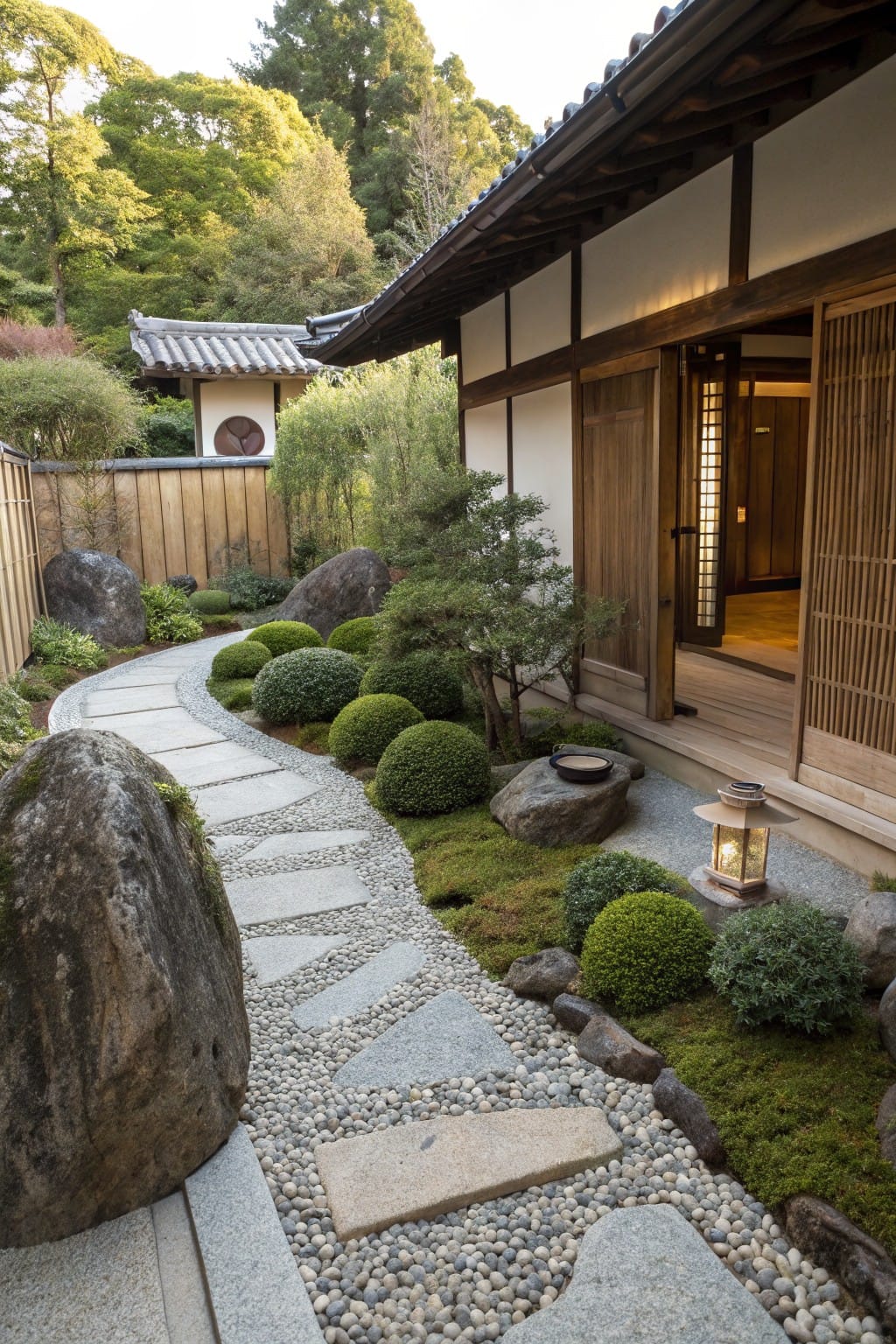
A simple winding path like this one uses flat stones laid in a curve through gravel and pebbles. It pulls your eye along without rushing you, and those big boulders on either side make the walk feel more like an adventure. Paired with low clipped bushes, it keeps things neat and low fuss.
You can pull this off in any side yard or backyard corner. Grab flat fieldstones or pavers from a local supplier, edge with river pebbles for drainage, and tuck in a few mossy rocks. Works great near a patio door… just keep the curve gentle so it doesn’t trip folks up.
Gravel Trenches for Clean Garden Edges
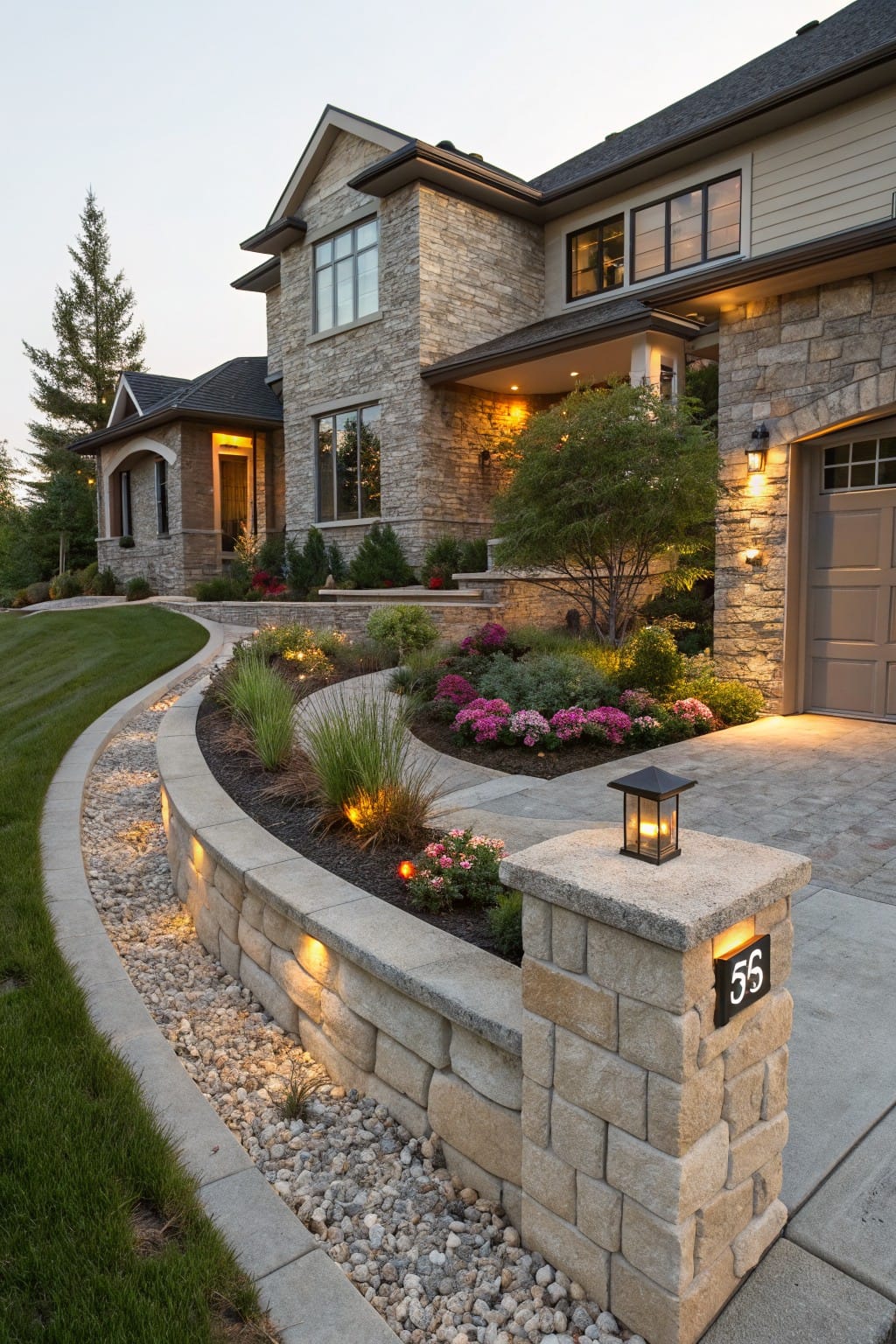
One straightforward way to tidy up garden beds is with a gravel trench running alongside a low stone wall. In this setup, the curving trench filled with small rocks keeps grass from creeping into plantings and gives a smooth line that follows the yard’s slope. The gravel lets water drain right through, so you avoid mud after rain. Plus, those little LED lights tucked into the wall make it pop at dusk without much wiring hassle.
This works great in front yards or along driveways where you want definition without constant trimming. Grab some landscape fabric, pea gravel, and basic stones for the wall, then plant grasses or perennials right up to the edge. Skip it on super flat spots, though, since curves really show off the flow here.
Create a Rock Fire Pit Circle
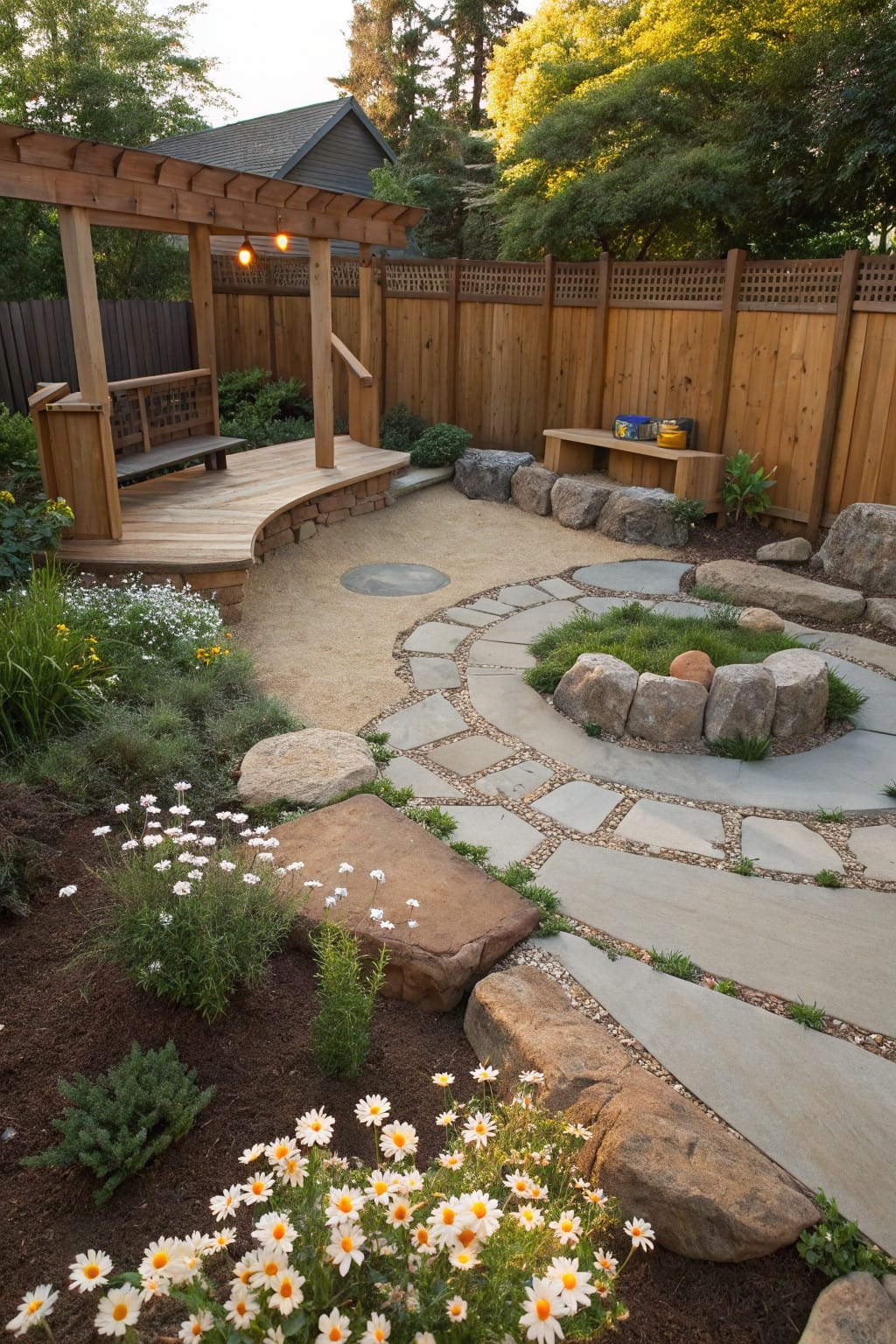
One straightforward way to add a gathering spot to your backyard is building a fire pit ringed by big natural rocks. This setup pulls everything together around the flames. The circle shape keeps it simple and draws people in naturally. Gravel fills the base with slate pavers for steps. Plants tuck in around the edges for some green without much fuss.
You can pull this off DIY with rocks from a local quarry or landscape yard. Lay them out first on level ground. It’s great for average backyards that need a low-key hangout area. Watch for drainage so water doesn’t pool. Add benches nearby if you want seating right there.
Frequently Asked Questions
Q: Do I need landscape fabric under all these rock projects?
A: You can skip it in most cases. Rocks block weeds on their own when you pile them 2 to 3 inches deep. Just clear the grass first and rake smooth.
Q: How do I keep rocks from washing away in rain?
A: Dig a shallow trench around the edges and line it with bigger stones. That catches runoff and holds everything steady. Top it off after big storms.
Q: What if my yard has steep slopes… can rocks still work?
A: Rocks grip slopes better than mulch. Mix sizes so they lock together. Start small at the top and work down.
Q: And how do I clean dirty rocks without a hassle?
A: Hose them down with a strong spray once a year. Let rain handle the rest in between. Fresh gravel on top hides any stains quick.
