

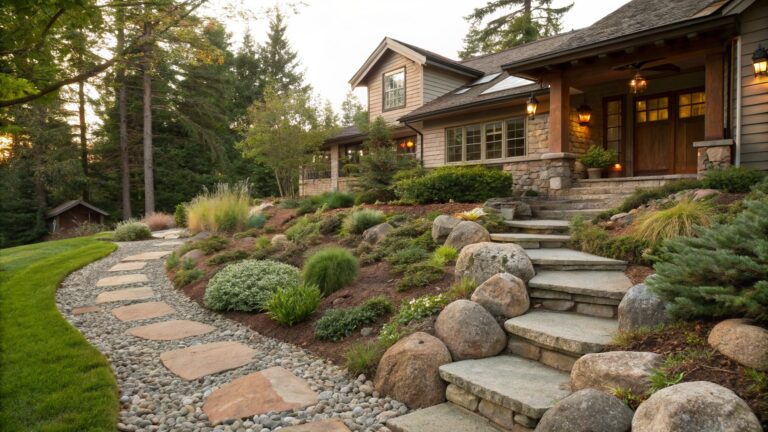
I’ve spent years tweaking yard layouts, and rocks stand out for how they anchor everything from pathways to planting beds without overwhelming the natural flow. In my last project, I learned that thoughtful edging around curves makes the whole space feel more deliberate, especially as plants fill in over seasons. Borders grab attention first. They shape how you move through the yard and let softer elements like mulch or grass shine alongside. Some approaches here could easily adapt to your setup, worth sketching out before you buy a single stone.
Meandering Flagstone Path with Boulders
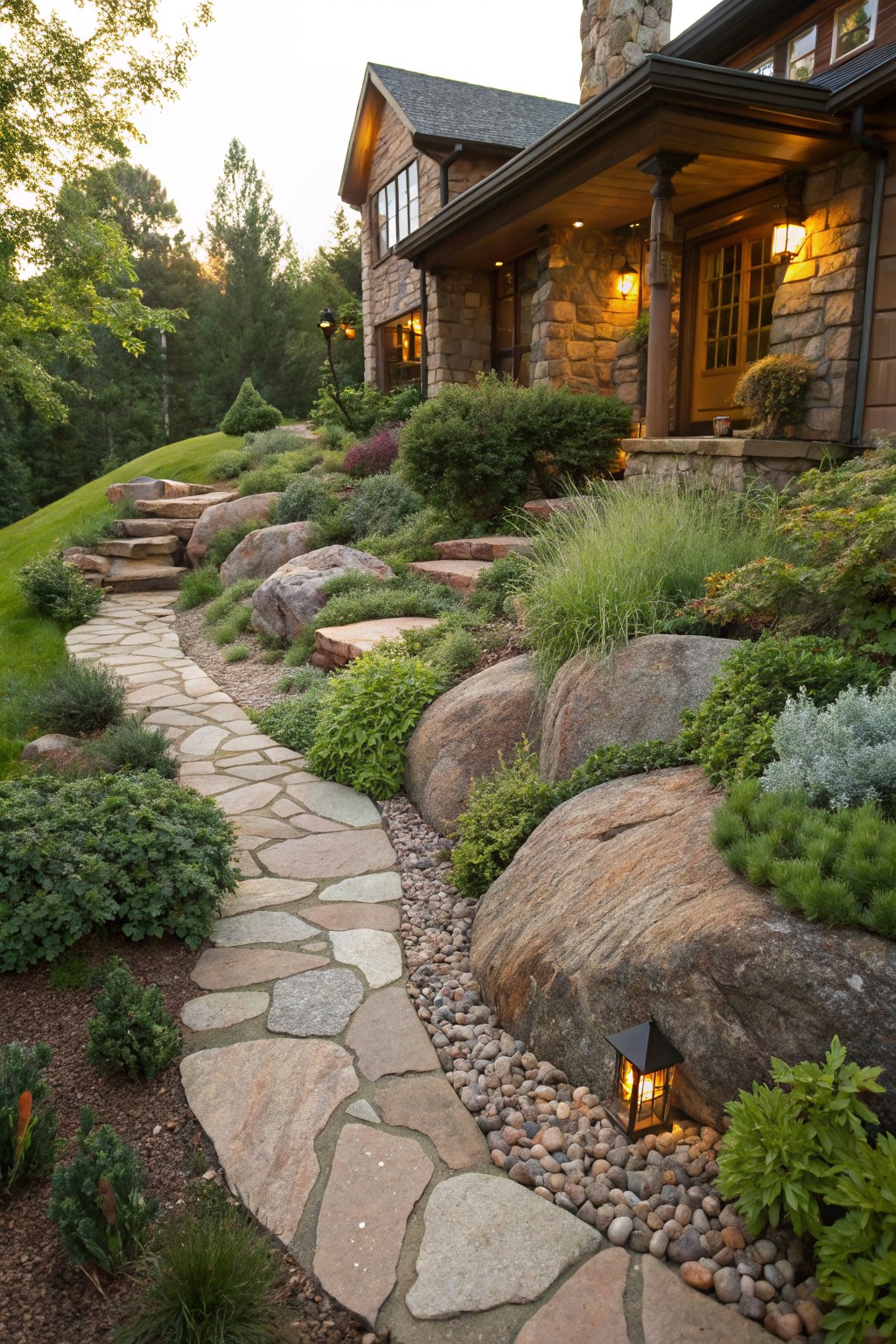
A simple way to handle a sloped yard is with a winding flagstone path edged by big boulders. The stones fit right into the ground like they grew there, and the path pulls you along without any sharp turns. Gravel fills the spaces between, keeping weeds down while plants tuck in around the rocks for that lived-in feel.
This idea suits homes on hillsides or with uneven terrain, especially if you want low upkeep. Pick flat-ish flagstone in earth tones and boulders that match your local rock type. It directs foot traffic naturally to the door, and the scale of those boulders makes even a short walk feel like an adventure. Just make sure the path is wide enough for two people.
Terraced Stone Steps for Sloped Yards

Steep slopes can be tricky in a yard. But these broad stone steps built right into retaining walls make the hillside feel welcoming and easy to climb. The walls create flat planting beds along the way. Purple lavender and tough agave fill them out nicely. It turns a tough spot into something practical and pretty.
This works best on lots with a good slope but not too extreme. Pick stone that matches your area’s rocks for a natural tie-in. Go with low-water plants to keep it simple over time. Watch the drainage so water doesn’t pool behind the walls. It’s a solid fix for hillside homes.
Large Boulders for Sculptural Rock Beds
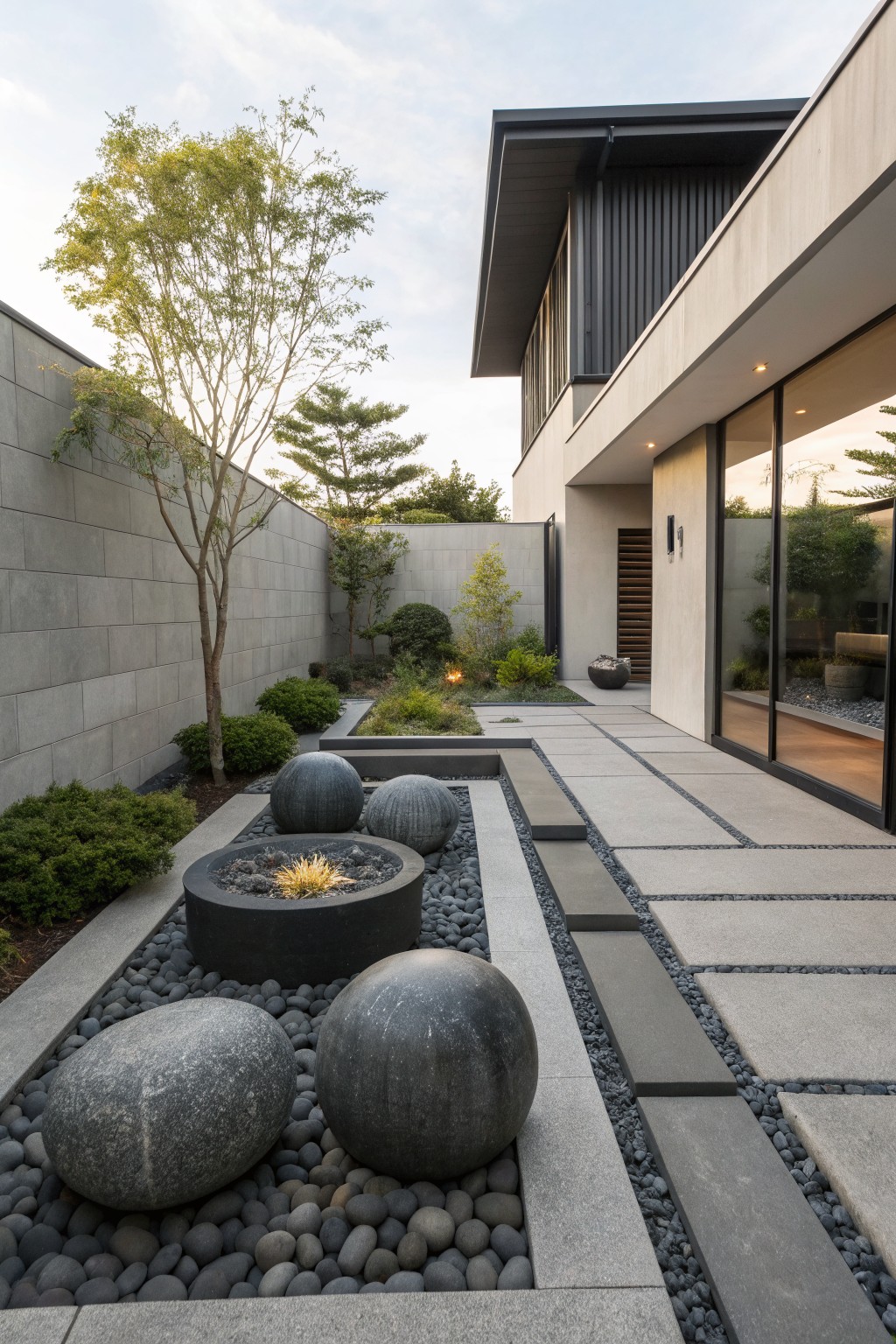
Big round boulders like these turn a simple gravel bed into something striking. They add weight and form without much planting, keeping the look clean and bold. That central fire pit tucked among them pulls it all together for evenings outside.
Try this in a courtyard or along a patio edge where space is tight. Go for odd numbers of boulders in different sizes to avoid a stiff feel. It fits modern houses best but works on any yard that needs low-maintenance punch. Pick dark stone to echo paths or walls nearby.
Rock-Lined Stream in the Backyard

A rock-lined stream like this one uses boulders and pebbles to guide a trickle of water through the yard. It feels natural and calm, especially with low plants filling the gaps between stones. The simple flow adds interest without much upkeep, and that arched bridge makes it even more inviting to cross.
This works best on a gentle slope where water can run naturally, or you can add a recirculating pump for steady movement. It suits homes with wooded backyards, tying the garden to the house nicely. Just keep larger rocks stable so they don’t shift over time.
Boulder-Edged Gravel Paths with Succulents
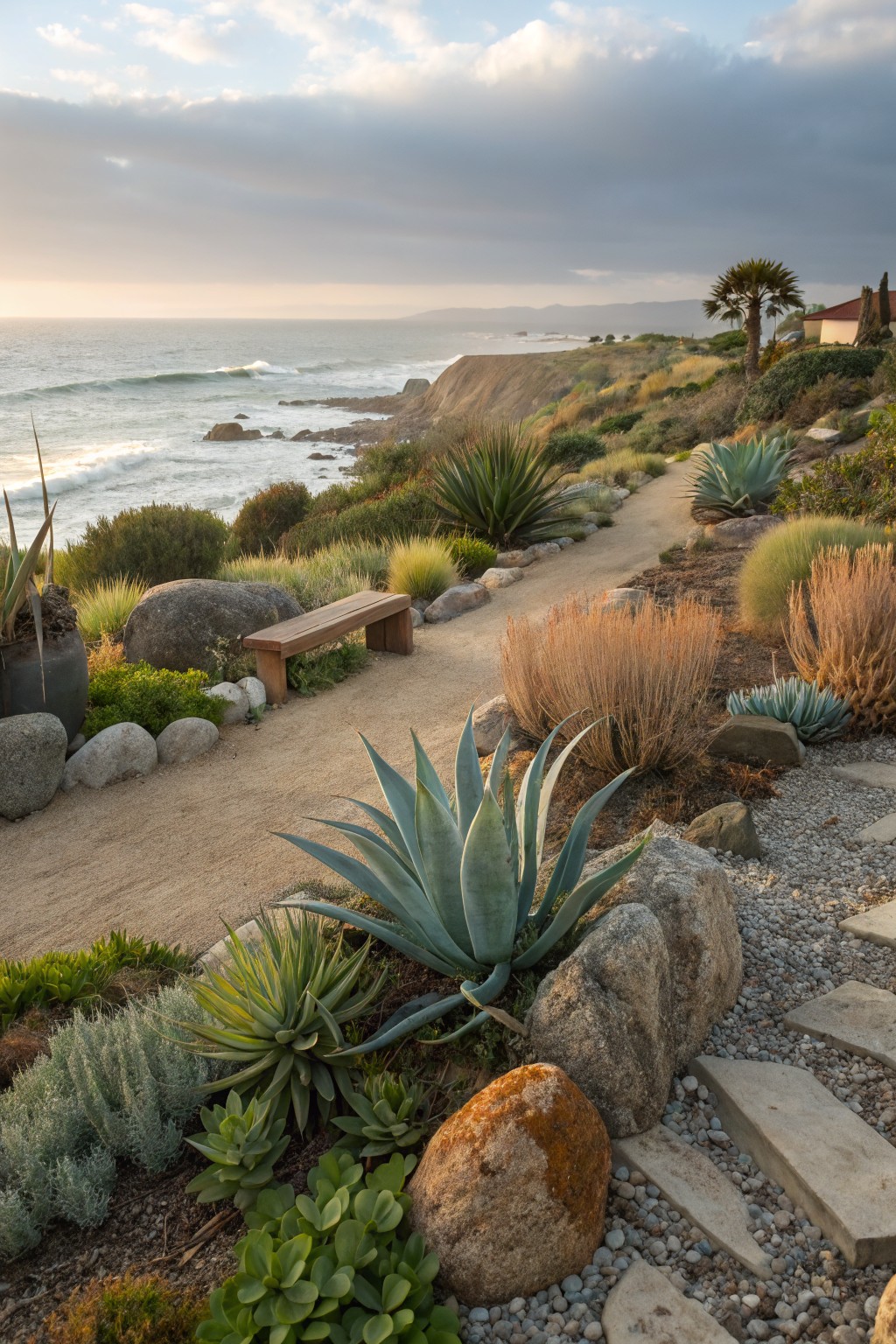
Big boulders line this gravel path, mixed right in with agaves and other tough plants. It makes a simple walkway that looks rugged and natural, perfect for spots where water is scarce. The rocks hold everything in place and give the garden some solid structure.
Try it on a slope or leading to a view, like toward the ocean here. Pick stones that match your local area, add a bench for sitting. It handles dry conditions well, cuts down on weeding. Suits smaller yards too, just scale things back.
Winding Stone Paths in Rock Gardens
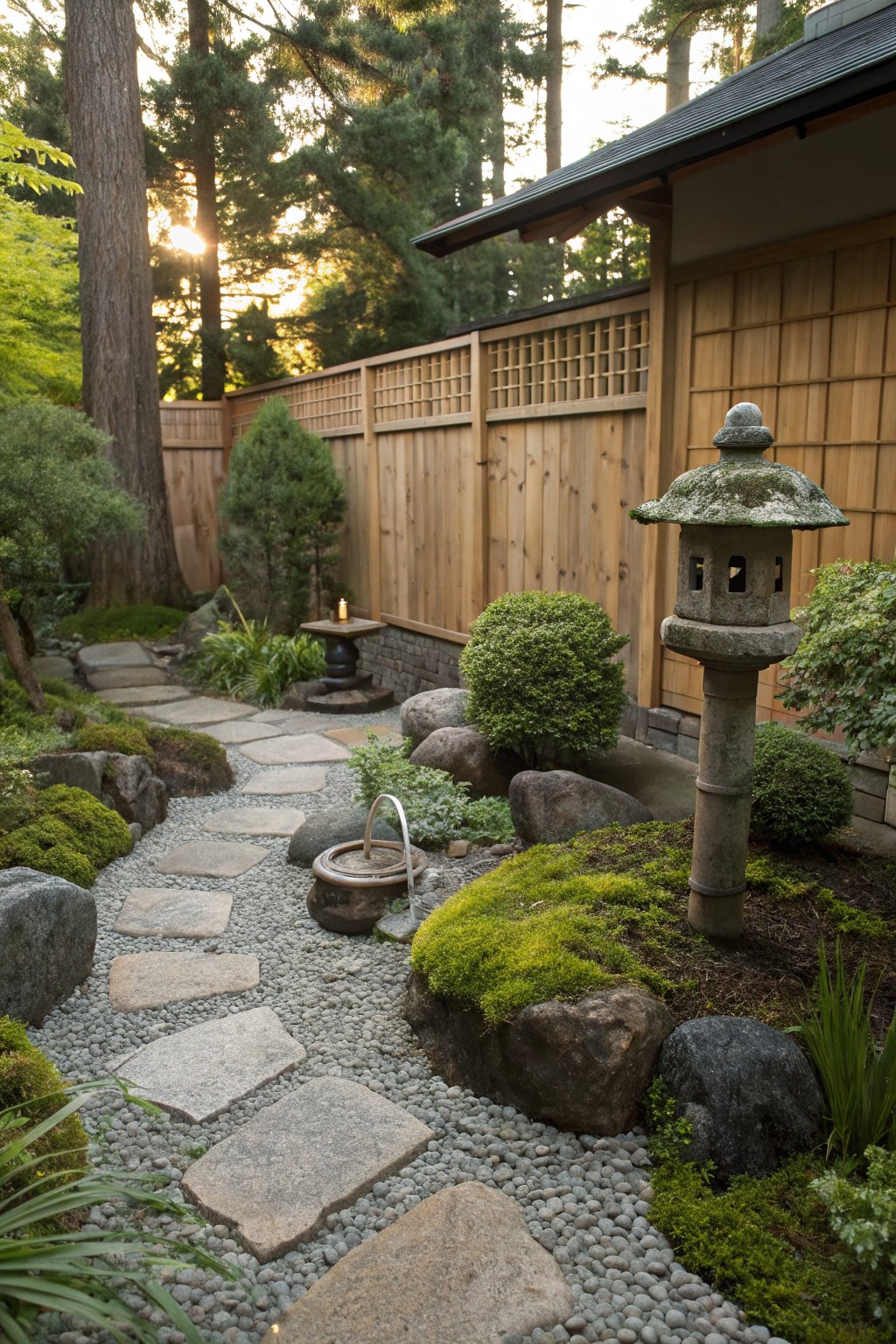
One simple way to add calm to your yard is a winding path made from flat stones set into gravel. These paths guide you through the garden without rushing you along. They work because the irregular shapes and spacing make it feel natural, like you’re strolling in a quiet forest. Rocks and moss around the edges keep everything low and tidy, no mowing needed.
Set this up along the side of your house or through a backyard corner where you want some peace. Use bigger stones for steps and smaller rocks to fill gaps, then plant moss or low shrubs nearby. It suits sloped spots or shady areas best. Just watch the gravel doesn’t shift too much in heavy rain.
Natural Rock Waterfall into the Pool
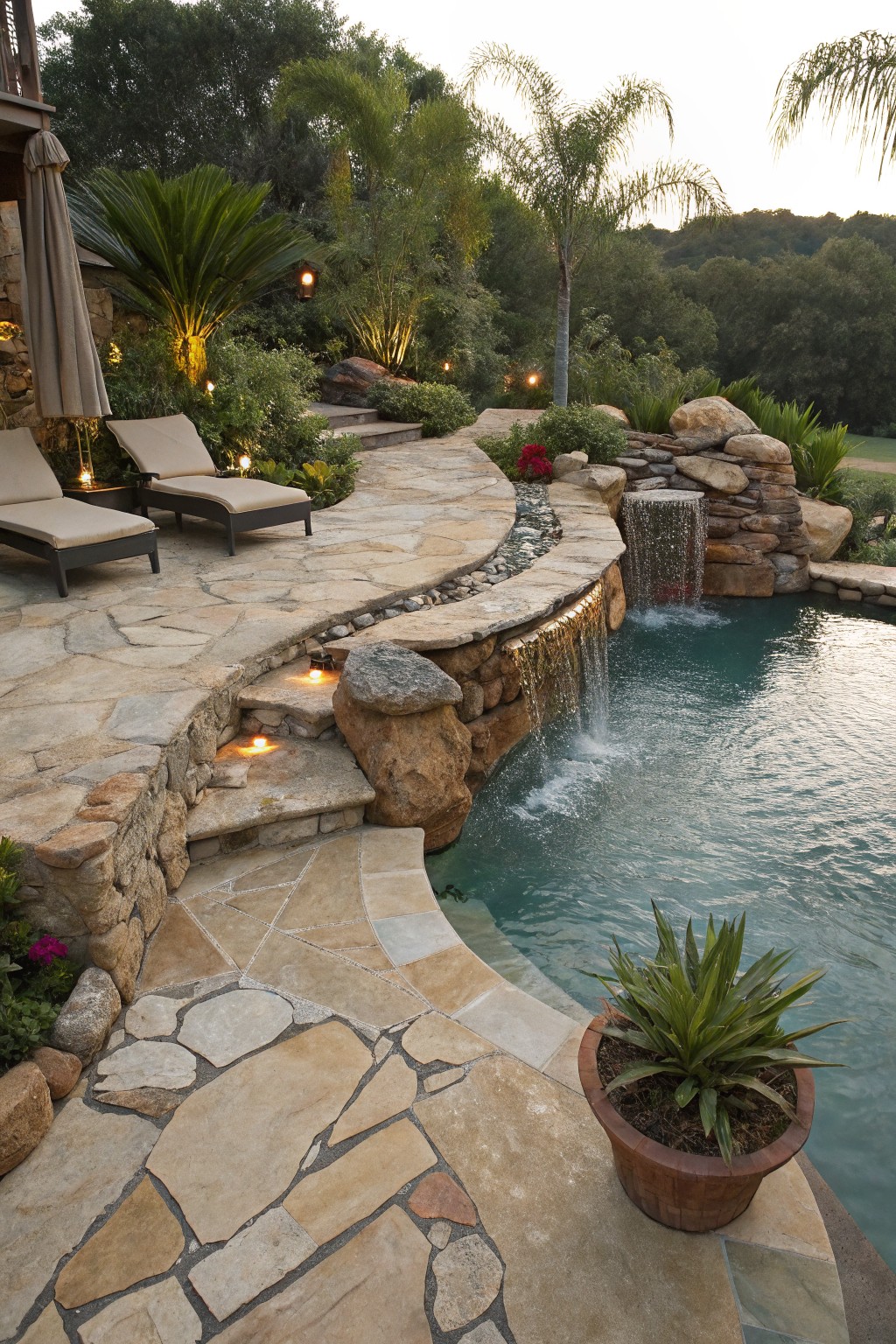
A simple way to make your pool area more interesting is building a waterfall with natural rocks that spills right into the water. Here you see boulders stacked up with water flowing over them into the turquoise pool, and it ties in nicely with the stone patio nearby. It gives that backyard a relaxed, natural feel, like you’re at a private resort.
This works best around inground pools where you have room for the rock work along one edge. Pick rocks that match your local stone so it blends with the yard. Get a pro to handle the plumbing and make sure it’s stable. It’s low upkeep once set up and suits sunny spots with some plants around.
Built-In Stone Benches Around a Fire Pit
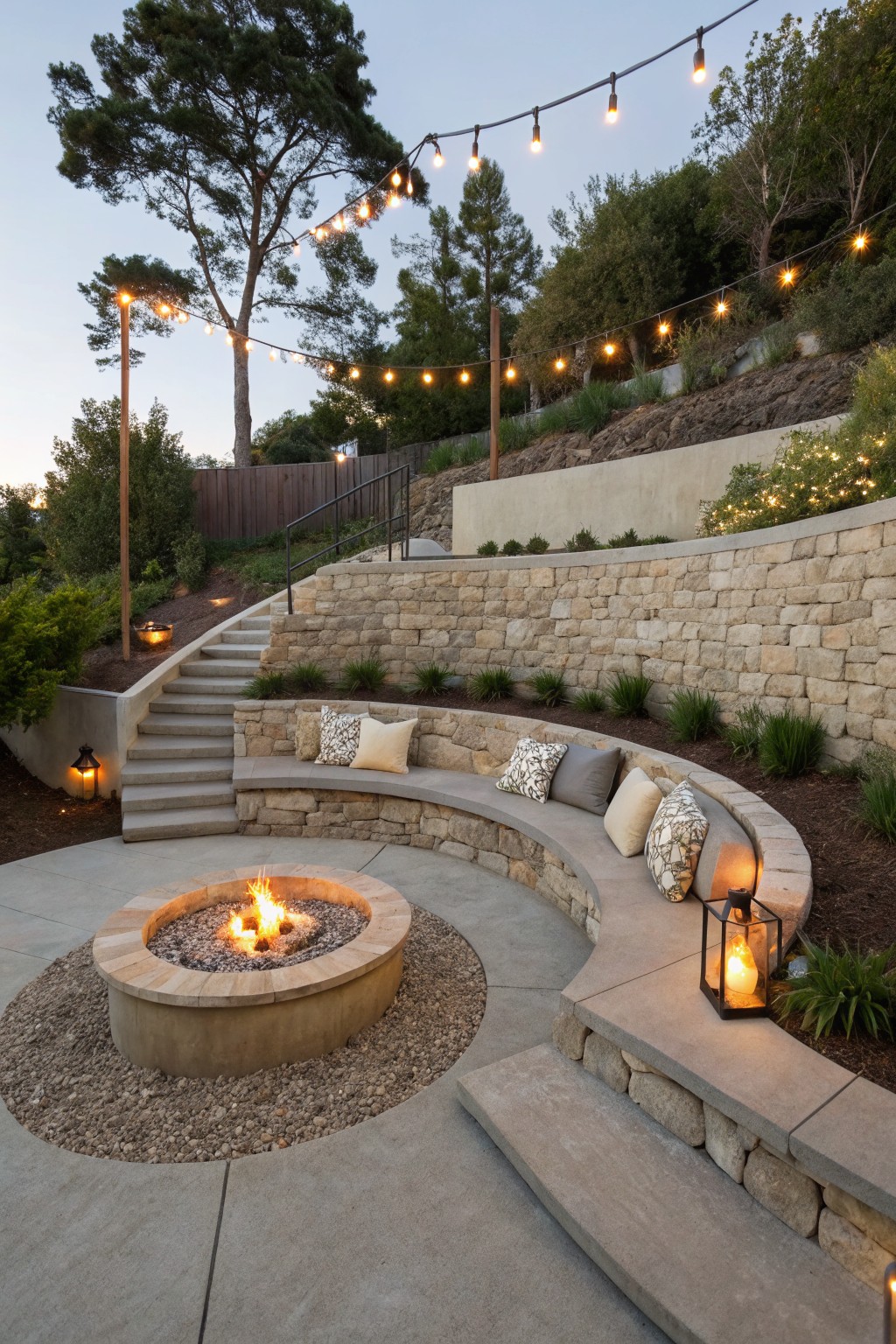
One smart way to handle a sloped yard is to build seating right into the rock retaining walls. This curved bench follows the fire pit’s shape perfectly. It turns what could be just a hillside into a natural gathering spot. Cushions on the seats make it comfortable, and the whole thing feels sturdy.
You can do this in backyards with changes in level. Keep the bench about 18 inches high, wide enough for pillows. Center the fire pit so everyone faces it. It suits casual homes… just watch the stone steps stay even for safe access.
Round Boulders Along Entry Paths

Big round boulders like these make a simple statement in any yard. They’re tucked right along the gravel path and stone steps here, sitting among low boxwoods and grasses. What stands out is how they add scale and a bit of wildness to a neat setup, without needing constant care.
Try placing a few near your front walk or patio edge, especially if you have stone or brick elements nearby. They fit homes with classic lines, like this limestone house. Pick smooth ones in a size that matches your space… source locally to blend right in.
Stepping Stone Path Over a Rock-Lined Stream
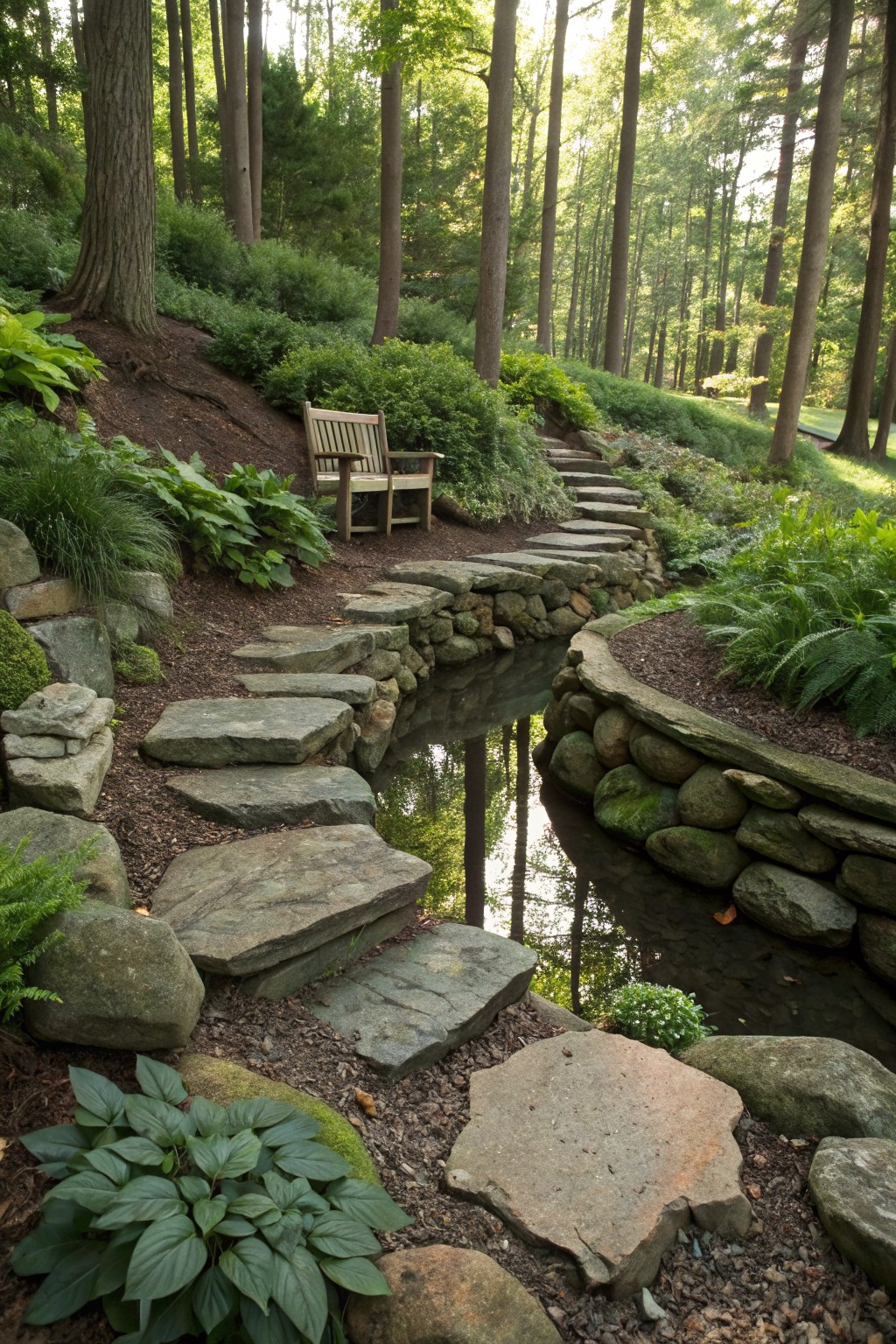
One simple way to add interest to a backyard path is laying wide flagstone steps right across a shallow stream. The stones here bridge the water neatly, with low dry-stacked rock walls on each side holding everything in place. It’s a natural look that fits right into a wooded spot, and the reflections in the water make it feel alive without much upkeep.
You can pull this off in sloped yards or along a natural ditch, using local fieldstone for the walls and bigger slabs for the steps. Keep plants like ferns and hostas close by to soften the edges. Works best where you want a quiet walking path, not heavy traffic. Just make sure the stones are steady so no one slips.
Rock-Lined Curved Entry Path
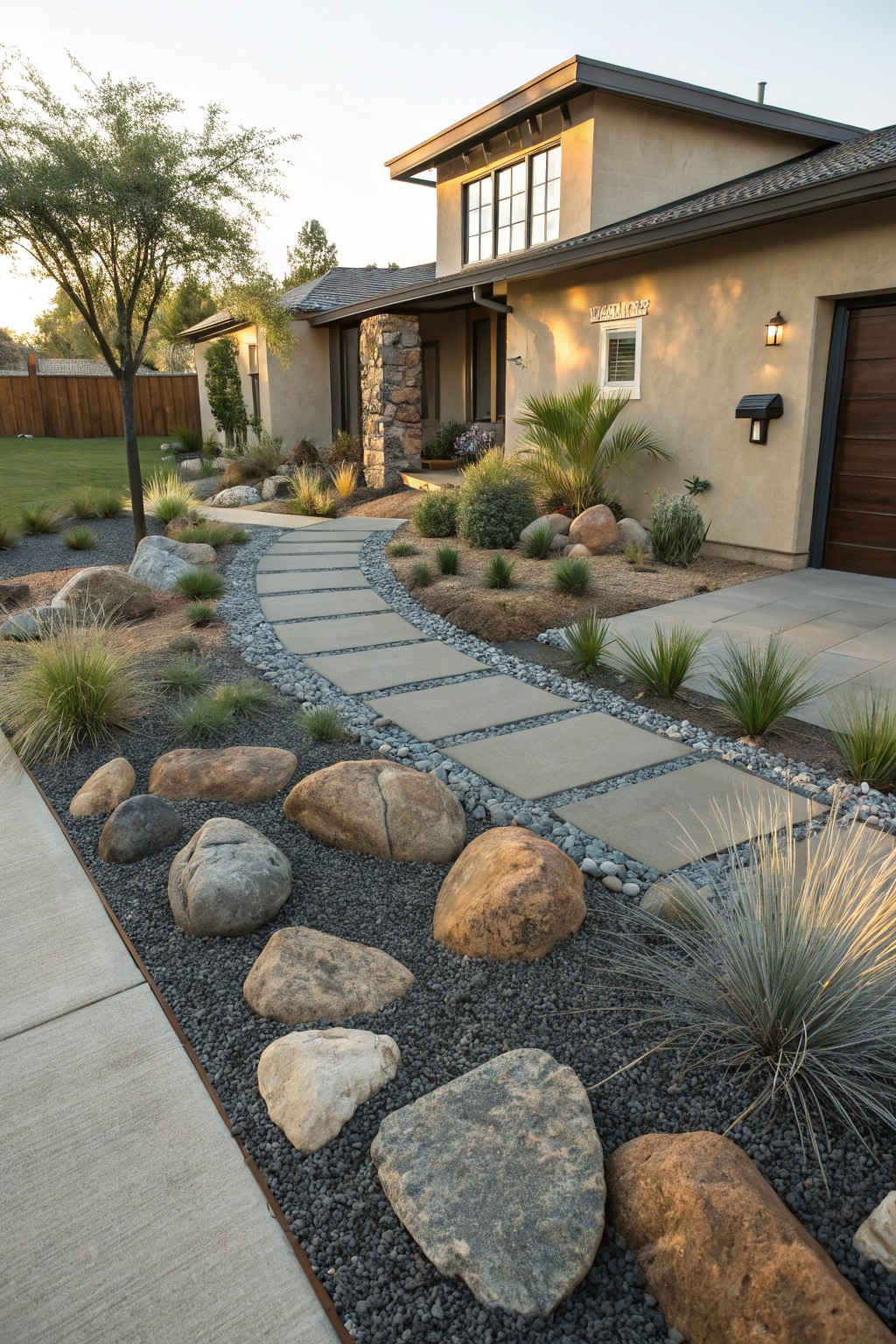
One straightforward way to boost curb appeal is a curved path like this one, made from simple concrete pavers set into gravel and edged with big boulders. It pulls the eye right to the front door without much fuss. The mix of smooth stones, dark gravel, and spiky grasses keeps things low-maintenance and fits dry climates perfectly.
You can pull this off in most front yards, especially where water use matters. Start with a gentle curve that follows the natural yard shape, drop in boulders for weight, and fill gaps with gravel plus tough plants like agave or fountain grass. Skip anything too fussy. It works on modern or ranch-style homes… just scale the rocks to your space.
Terraced Stone Walls with Large Pots
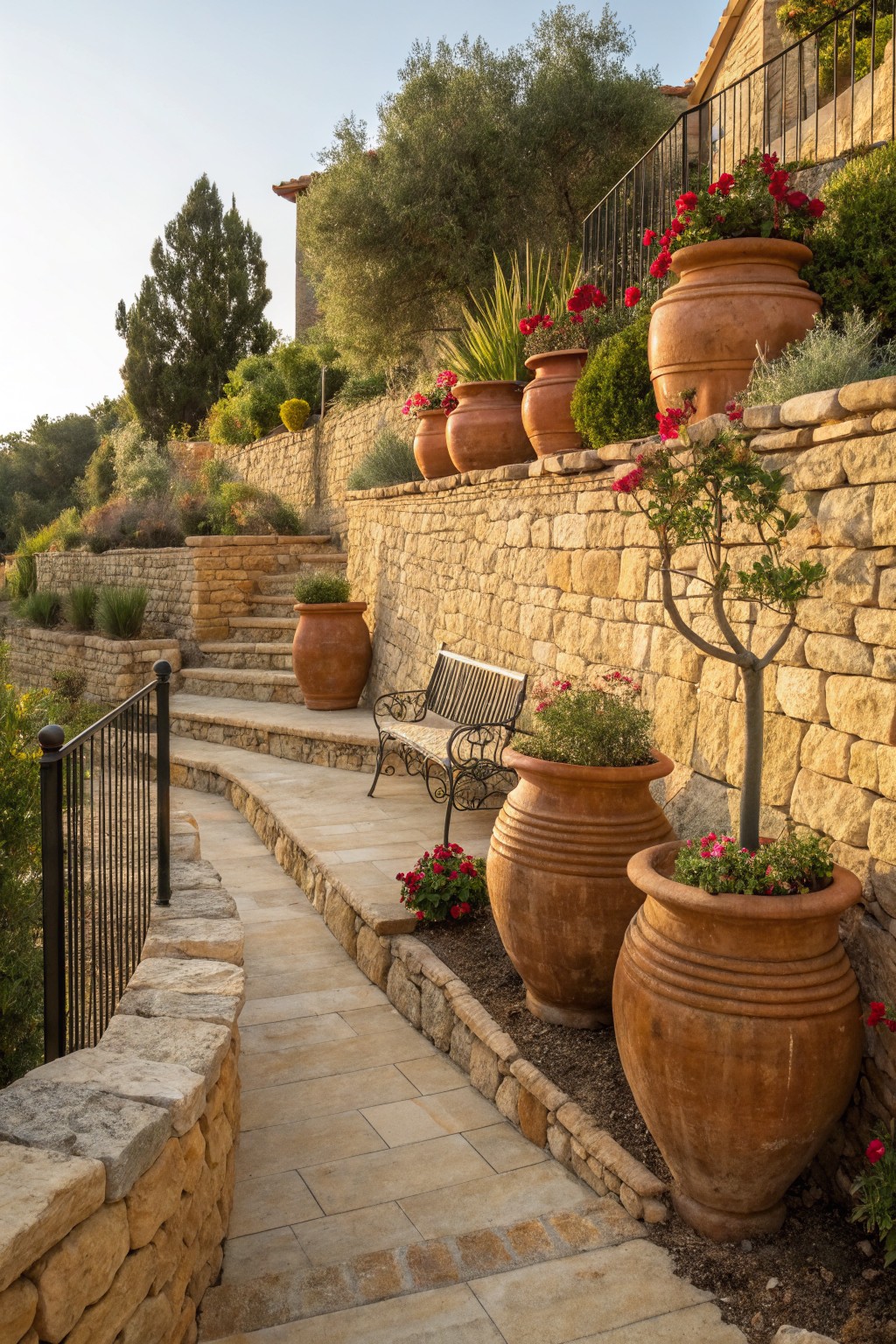
Big terracotta pots work great along stone retaining walls on slopes. They add height and color without needing much soil or flat space. The orange clay stands out against the rock and green plants, giving the garden a simple rhythm as you walk up the path.
Put these pots at wall edges, path turns, or stair landings. They suit hilly yards anywhere from small backyards to bigger properties. Go for oversized ones to match the stone scale. Watch the weight on softer slopes, though.
Pebble Path with Large Boulders
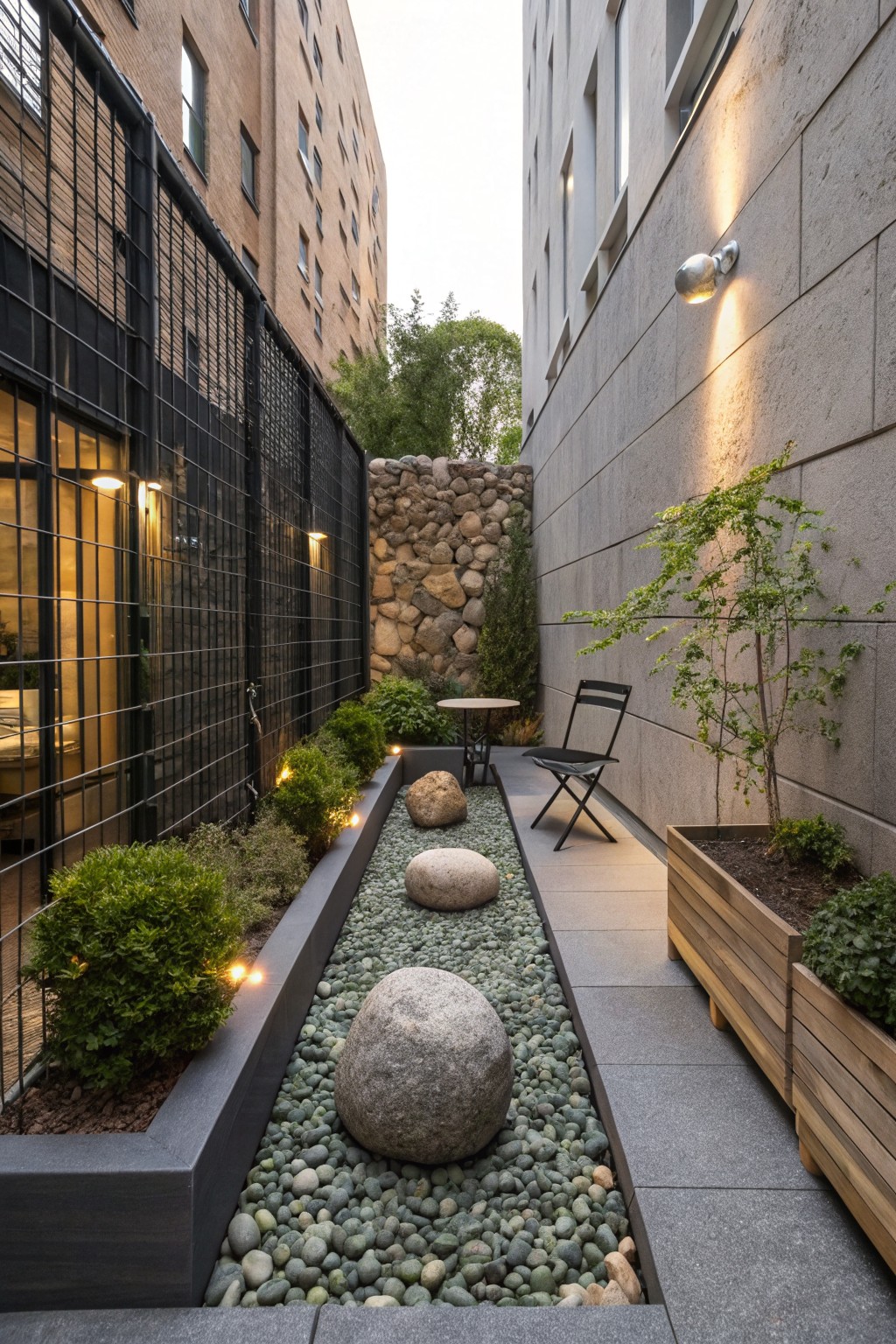
A simple pebble path edged by a long bed of smooth gray stones makes a narrow yard feel wider and more peaceful. Drop in a few big round boulders along the way, and you get instant focal points that draw the eye down the space. No grass to cut, just rocks that look good year round.
This works best in tight spots like side alleys or between buildings. Keep plants low, like boxed shrubs along the edge, so they frame without overwhelming. Watch the scale, though. Boulders need room to breathe, or it can feel busy.
Boulder-Lined Garden Path

A simple flagstone path winds through the garden, edged by big rugged boulders and clumps of native plants like coneflowers and tall grasses. What makes it work so well is how the rocks anchor everything without overpowering. They add weight and texture, guiding your eye along the way while letting the plants fill in softly around them.
You can pull this off in most yards with some open space. Pick boulders that match your local stone, lay irregular stepping stones for that natural step, and plant drought-tolerant perennials nearby. It’s low fuss once established… suits country lots or even suburban edges wanting a wilder feel. Just space the rocks to avoid crowding the path.
Raised Planters with Pebble Mulch

White pebbles tucked into simple raised concrete planters make for a sharp, easy-care base around outdoor spots. They keep things tidy without much weeding, and that light color pops against greenery like grasses or small shrubs. In this setup, the pebbles fill beds right next to a built-in bench, giving the terrace clean lines that feel put-together.
Try this on rooftops, patios, or side yards where you want low fuss. It suits modern homes best, especially with stone or concrete nearby. Just keep beds shallow if drainage is tricky, and mix in a few tough plants to soften the edges.
Natural Stone Outdoor Kitchen
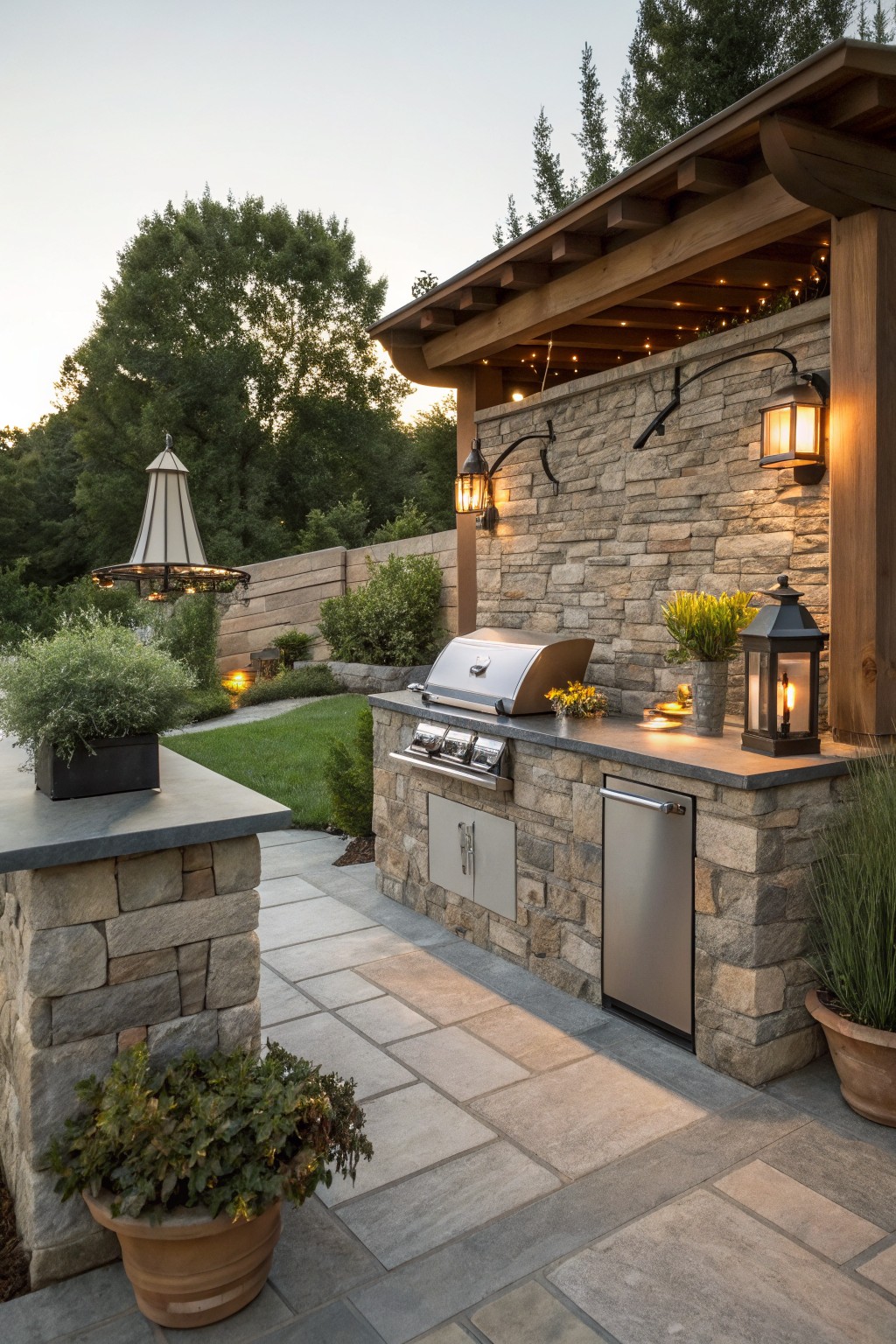
One solid way to upgrade your backyard is building the kitchen right into natural stone walls and pillars. You see the grill and fridge tucked into those rugged gray stones, with a sleek dark countertop on top. It feels sturdy and ties into the yard without looking added on. The lanterns and pergola overhead make it practical too.
This works best on a patio near the house, where you want cooking close to indoor space. Use it in sloped yards to level things out with the stone bases. Keep plants around the edges for softness, but watch the scale, nothing too big next to a smaller grill setup.
Stone Path Around a Rock-Lined Pond
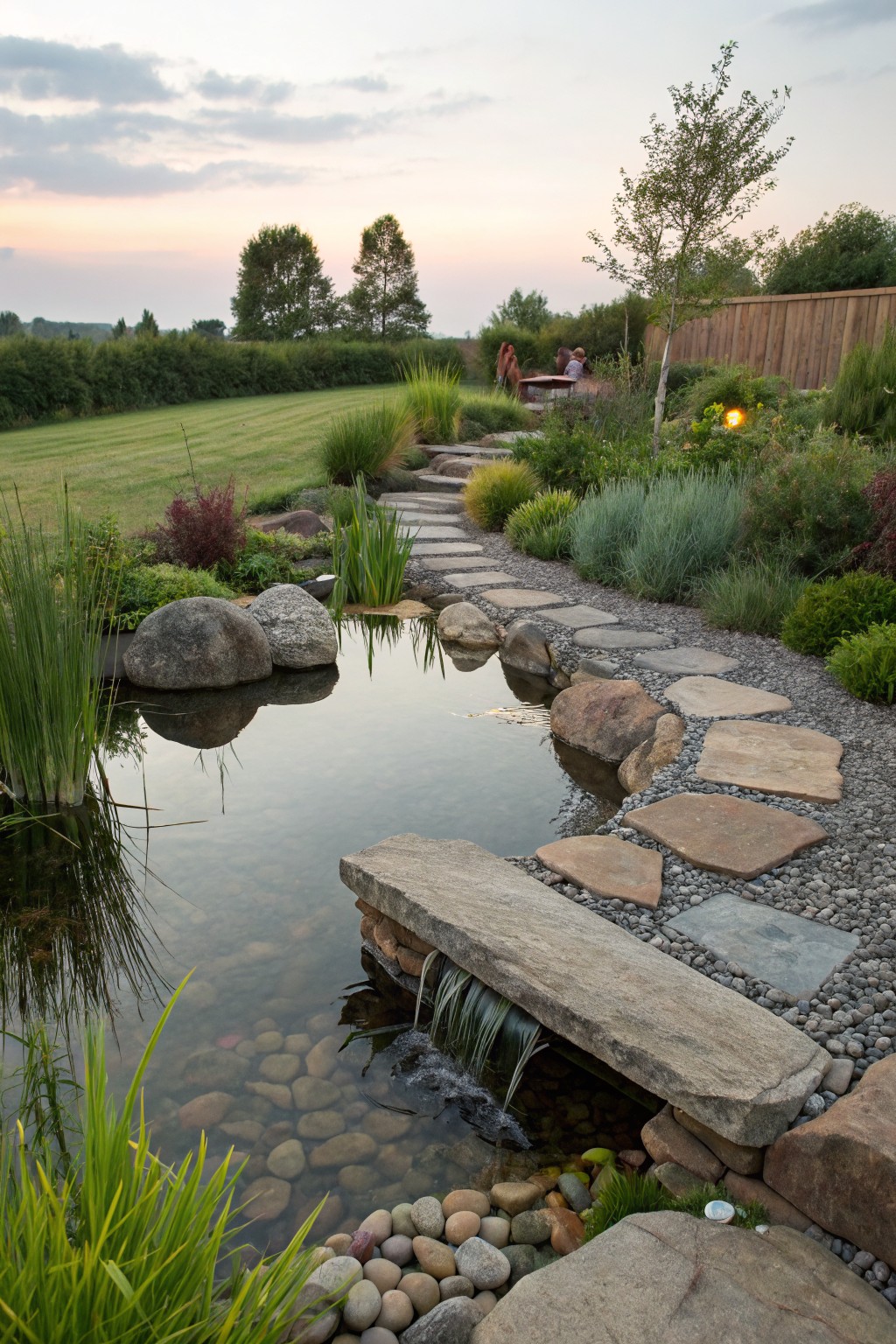
A winding path of flat stone slabs leads right up to a small pond edged with big boulders. Water trickles gently over a thick slab into the pool below, where smooth river rocks line the bottom. Plants like reeds and grasses fill in around the edges. It’s a quiet spot that pulls the garden together without much fuss.
This works well in average backyards, especially if you want low spots to feel special. Pick stones in similar shades for flow, and add gravel between steps to cut down on weeds. Suits sloped yards too. Just keep the path clear of leaves so it stays safe.
Boulders Edge a Driveway Path
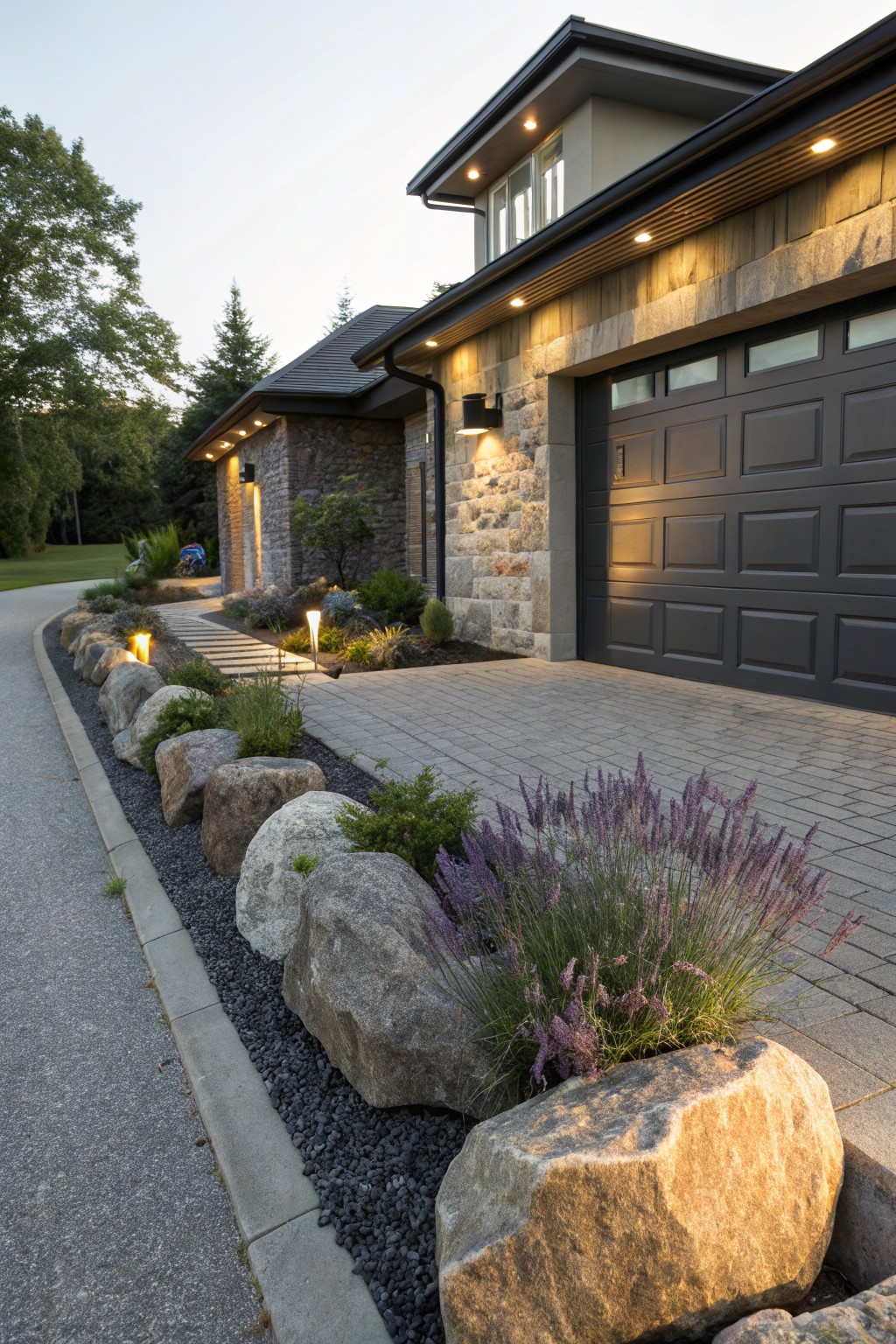
Big boulders lined up along the driveway make a strong, natural border that holds everything in place. Paired with black gravel mulch and clumps of lavender, it cuts down on weeding and mowing while looking rugged yet tidy. The paver path in between ties it right to the house garage.
This works best where you have a straight or curving driveway and want low upkeep. Stone like this suits modern homes or ones with stone accents already. Add low lights along the edge for safer walks at night. Just make sure the rocks are set deep so they don’t shift over time.
Irregular Stone Garden Path
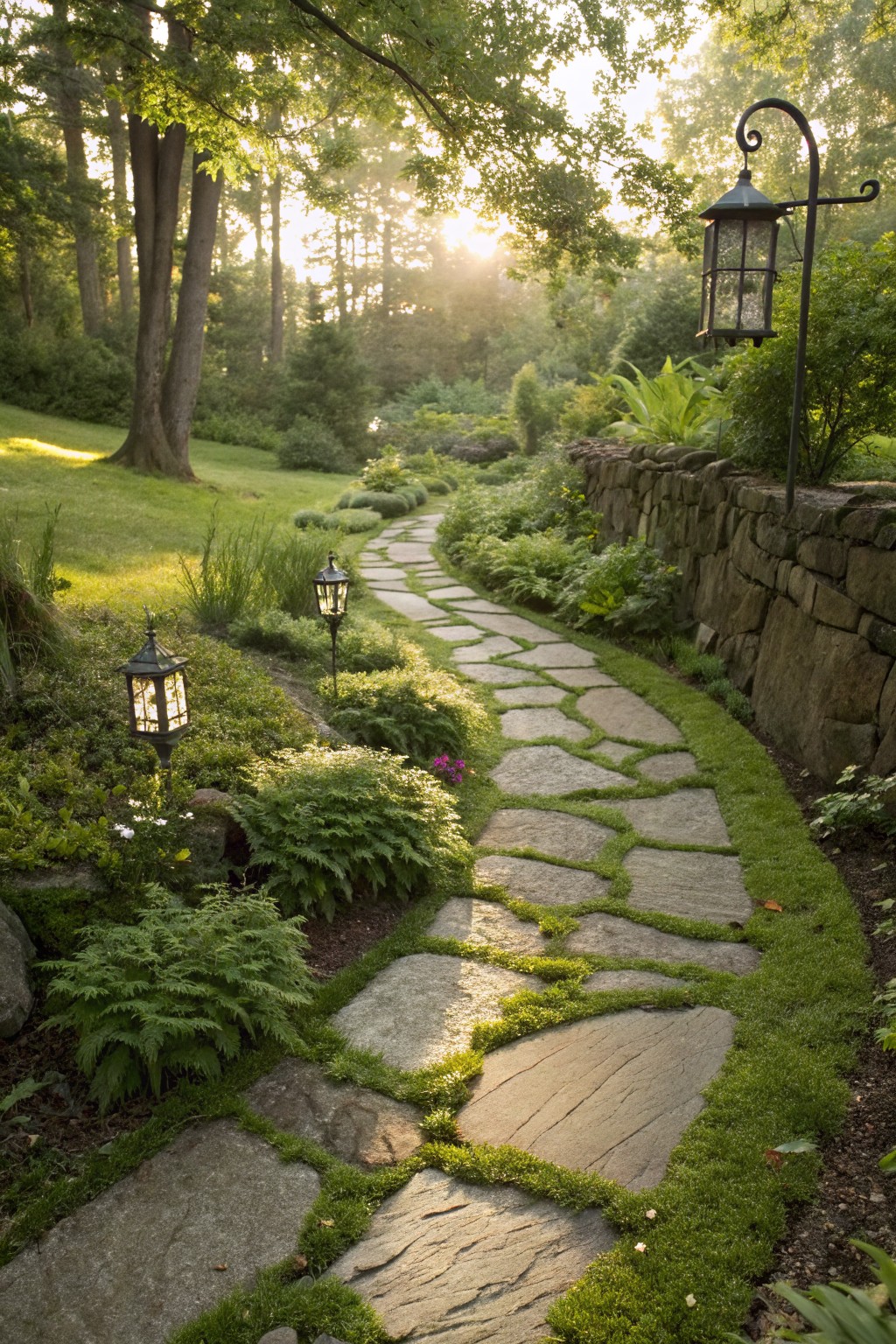
A simple path like this uses rough-cut stones laid with gaps for moss and grass to fill in. It blends right into the garden plants and ferns without looking forced. Those old-style lanterns along the edge make it practical too, lighting the way come evening.
Put one in to connect your patio to the backyard or woods edge. It suits sloped yards especially well since the stones stay put and drainage is easy. Go for local fieldstone to keep costs down, and skip mortar, it just needs time to settle.
Boulder-Centered Gravel Path
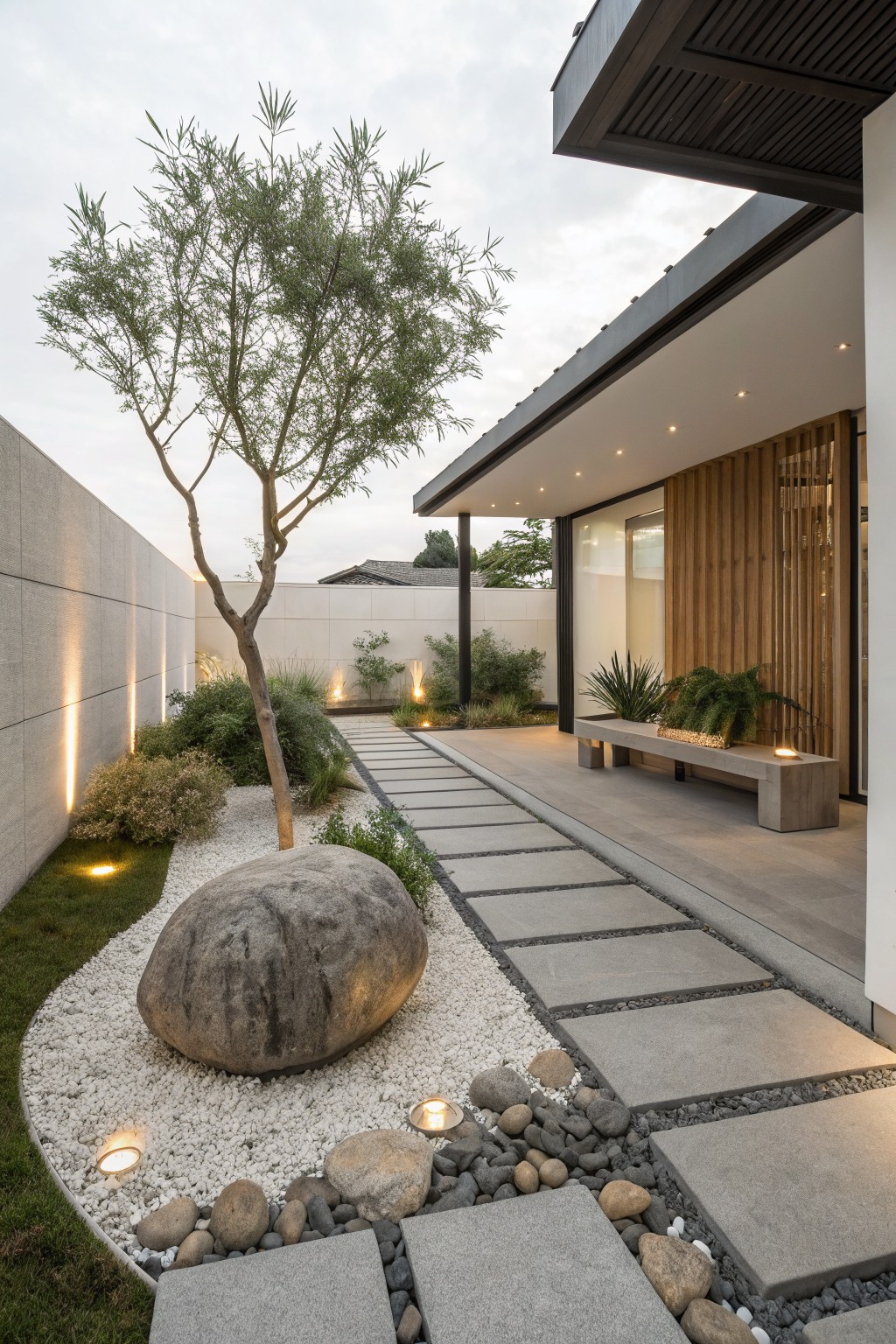
A big, rugged boulder sits smack in the middle of this entry path, surrounded by smooth white gravel and chunky pebbles. Paired with wide gray stepping stones, it pulls everything together into a clean, no-fuss walk to the door. That one rock does a lot. Makes the space feel steady and calm.
Put this to work in a side yard or front approach on a modern house. Hunt for a boulder that fits the scale, maybe two feet across, then layer in gravel for drainage. Skip heavy plants if you want easy care. Lights tucked in the pebbles keep it welcoming after dark.
Rock Steps with Recessed Lighting

One simple way to handle a steep slope is building steps from rugged fieldstone, then tucking low-voltage lights right into the risers. Those soft glows make the path easy to follow at night without overpowering the natural look. They highlight the texture of the rocks and plants around them too. It’s practical and turns a tricky hillside into something welcoming.
This setup works best on wooded lots or backyards with elevation changes. Go for LED fixtures that stay hidden during the day, and pair them with sturdy metal railings for safety. Just make sure the steps drain well to avoid slips. It fits rustic or modern homes without much upkeep.
Curved Stone Paths with Pebble Edges
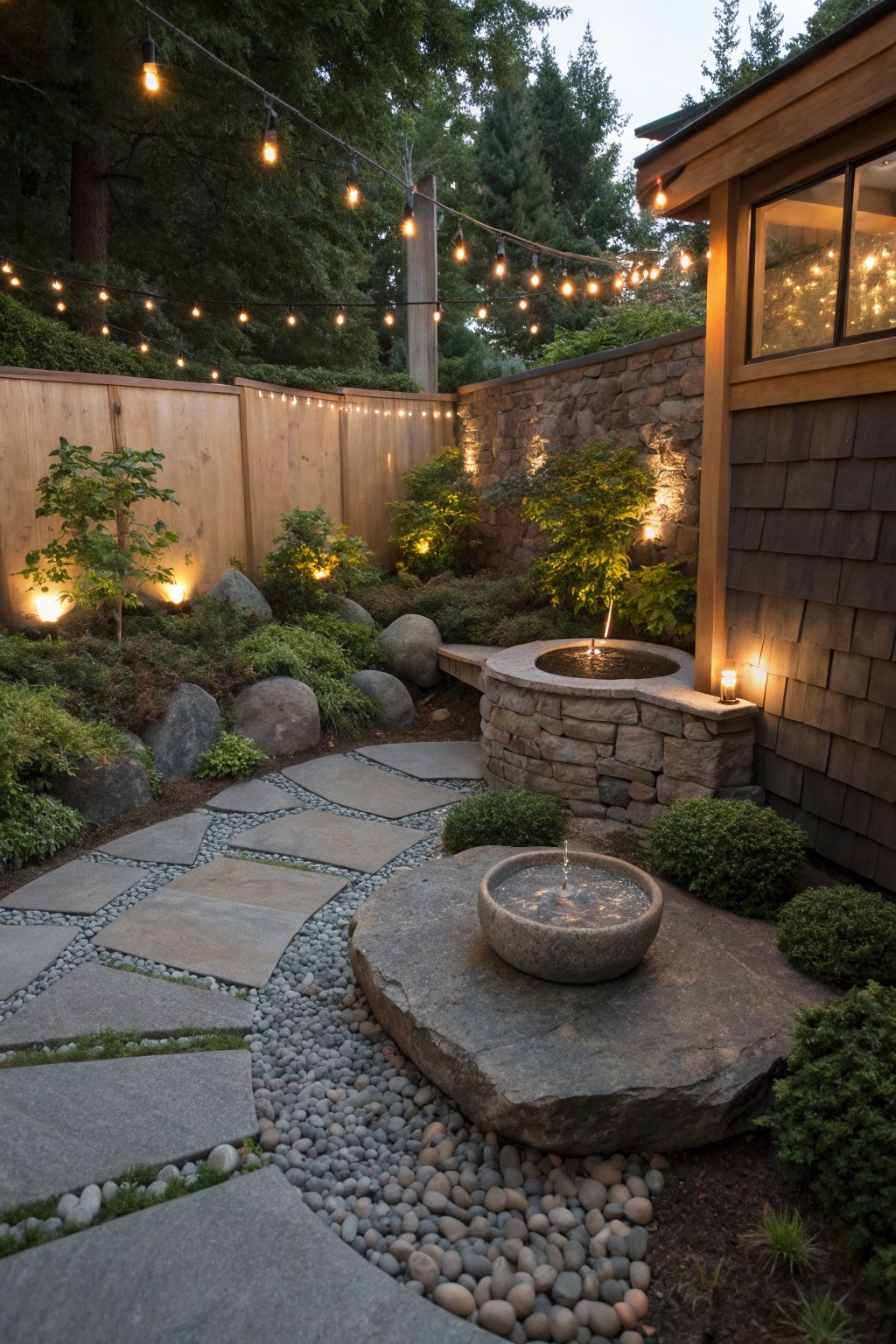
A curved path like this one uses rough-cut stone slabs set right into smooth pebbles. It winds gently through big boulders and low plants, making the garden feel bigger and more peaceful. The rocks do most of the work here. No grass to mow, just a simple route that pulls you along to spots like that stone fountain.
Try this in a shady backyard corner or along a fence line. It suits sloped yards or tight spaces where you want low upkeep. Pick stones in similar grays and browns to blend with your soil. Add river rocks for drainage, and maybe uplights at night. Just keep the curves loose… straight lines kill the calm.
Frequently Asked Questions
Q: How do I stop weeds from sneaking through my new rock garden?
A: Spread landscape fabric over the soil before adding rocks. Cut holes only for plants you want. Rocks on top keep it all locked down.
Q: Will rocks sink into soft soil over time?
A: Dig out a few inches of dirt first and fill with gravel or sand for a firm base. This levels everything and prevents settling. Pat down well after placing rocks.
Q: Can I mix different rock sizes and colors?
A: Go for it—layer bigger ones at the bottom for stability. Smaller pebbles fill gaps nicely. Play with colors to match your house.
Q: What’s a quick fix for a boring side yard?
A: Dump a pile of rounded river rocks around low plants. Rake them smooth every few weeks. Instant polish.
