

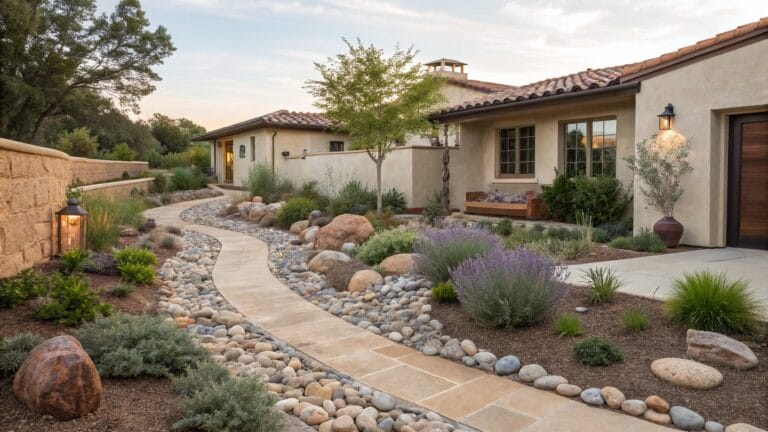
Living through a couple of harsh dry seasons in my yard showed me just how unreliable thirsty lawns can be. Rock landscaping with drought-tolerant plants builds a solid structure that holds up without daily watering. You notice the pathways and stone edging right away, as they carve out clear flow through the space. Over a few years, these yards settle into themselves, with plants weaving around rocks in low-maintenance patterns. One idea I plan to tweak for my side yard uses gravel rivers to handle runoff smartly.
Winding Path Through Boulder Garden
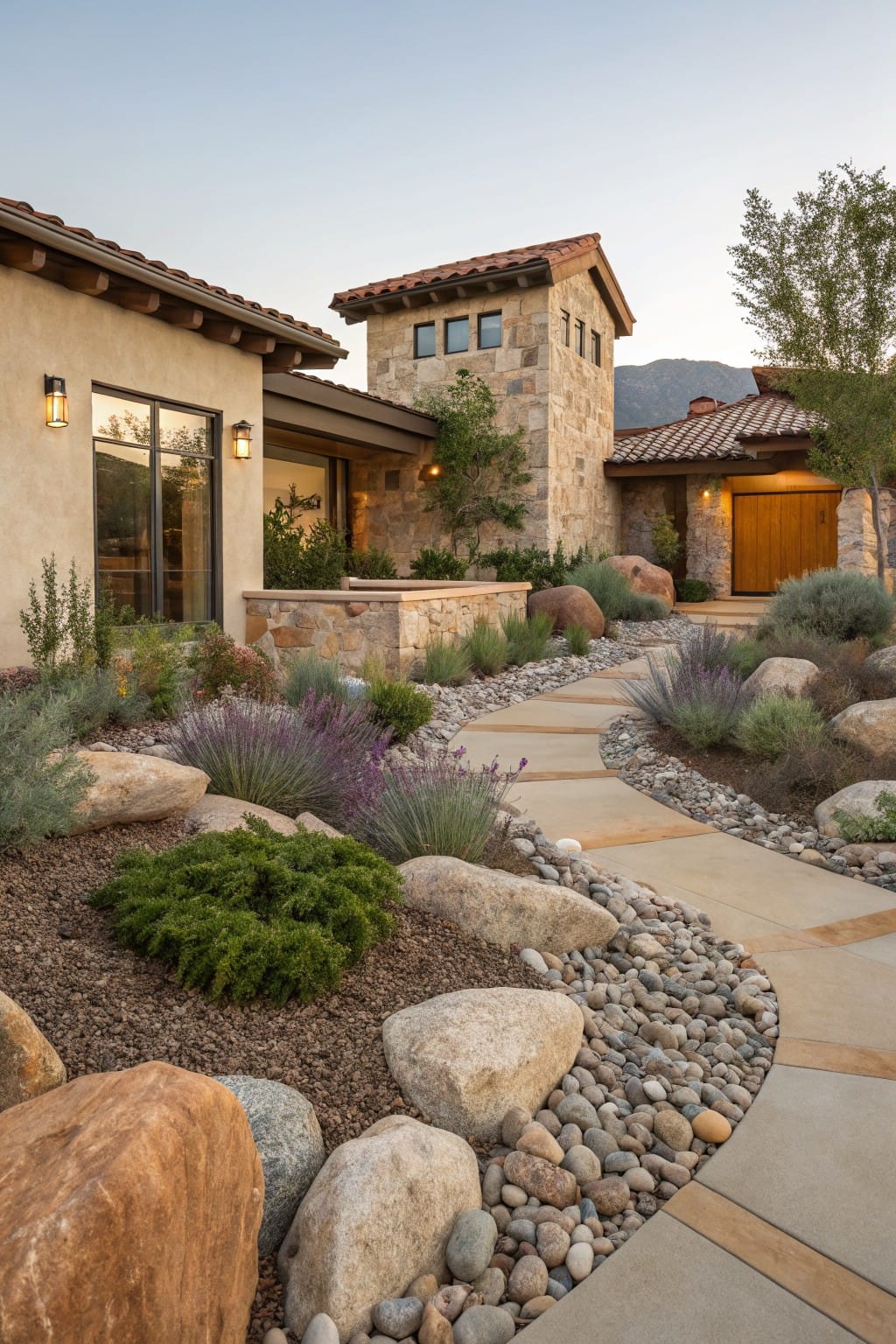
A gentle curving path like this one makes getting to the front door feel like a little journey. Concrete pavers wind through gravel mulch and big rounded boulders, with drought-tolerant plants such as lavender and grasses tucked in along the edges. It saves water and adds texture without much upkeep.
Put something similar in your front yard if you want low-maintenance curb appeal. Use local stone for the boulders and pick plants suited to your climate. This style fits homes with stucco or stone facades… ties the yard right into the house.
Winding Paver Path in Boulder Garden
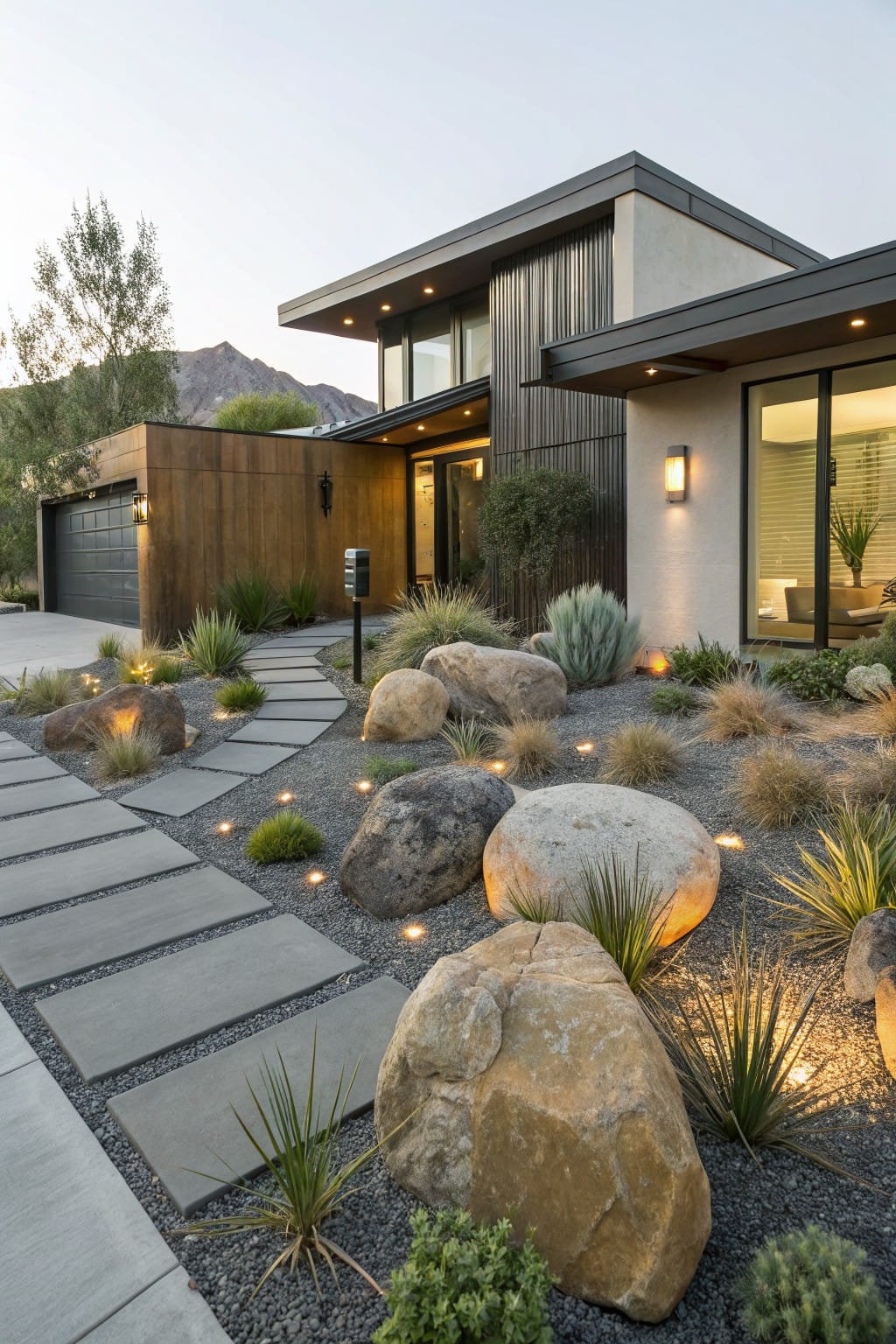
A straightforward way to handle a front yard walkway is to lay concrete pavers in a gentle curve through gravel mulch. Surround them with hefty boulders and drought-hardy plants like agave and grasses. This keeps water use low while drawing the eye to your entry door. The ground lights tucked into the gravel add a soft glow for evenings.
It fits modern homes in dry spots, tying the yard right into the architecture. Go for boulders at least three feet across so they hold their own. Skip fussy edging. Just rake the gravel now and then to keep it tidy.
Terraced Stone Steps for Sloped Yards
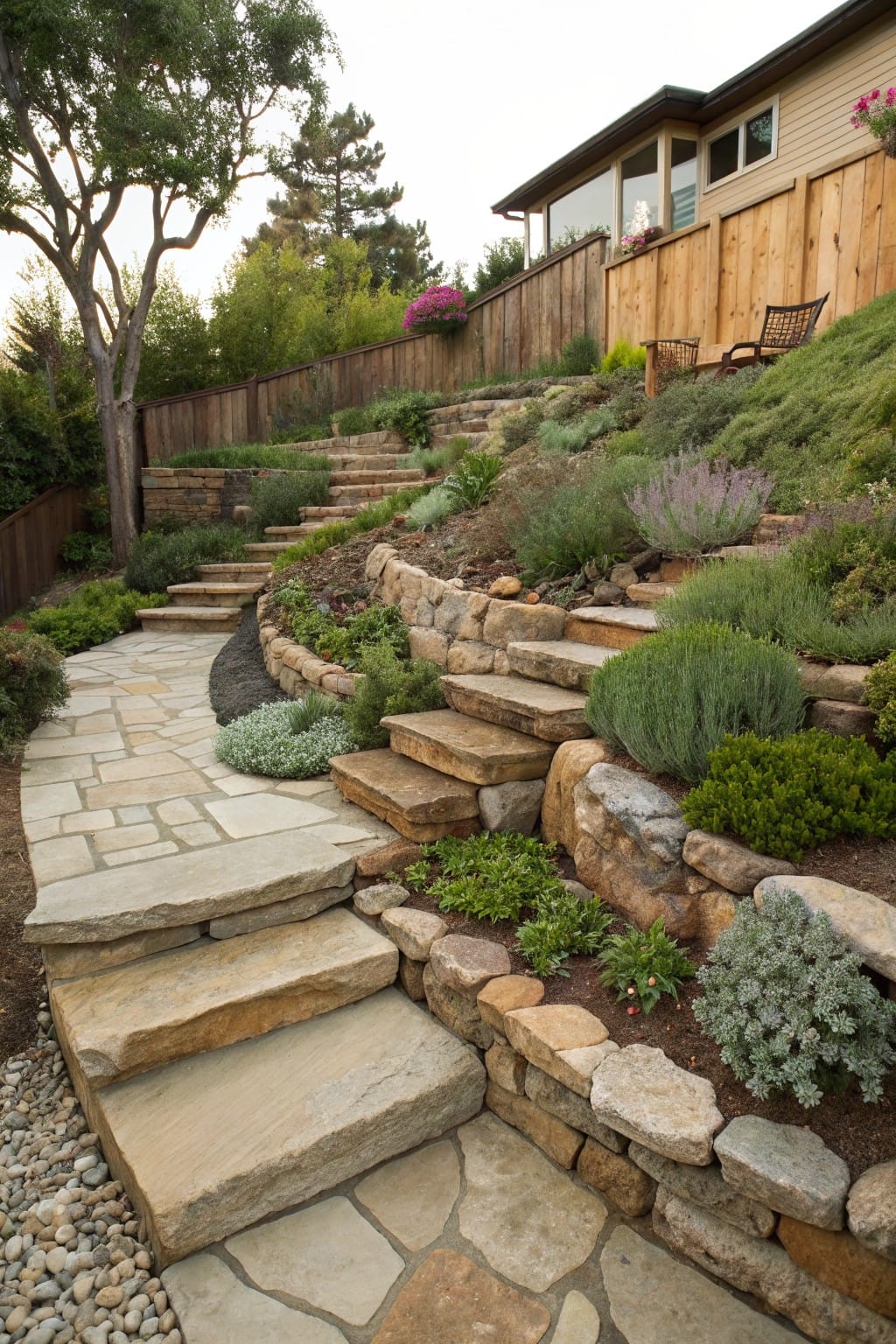
Turning a steep slope into usable space doesn’t have to mean big concrete retaining walls. Here, wide flagstone steps blend right into dry-stacked stone terraces, creating flat spots for plants along the way. Drought-tolerant picks like lavender bushes and ground covers fill in the gaps, holding soil in place without much fuss or water. It’s a practical way to make a hillside yard feel stepped and inviting.
This works best on lots with a good slope, maybe 20 feet or so of drop. Start with rough local stone for the walls and steps, then tuck in low-water plants that spread on their own. Keep an eye on erosion at first… add gravel at the base if needed. Fits most any home style, especially where you want low upkeep outdoors.
Winding Flagstone Path with Boulders
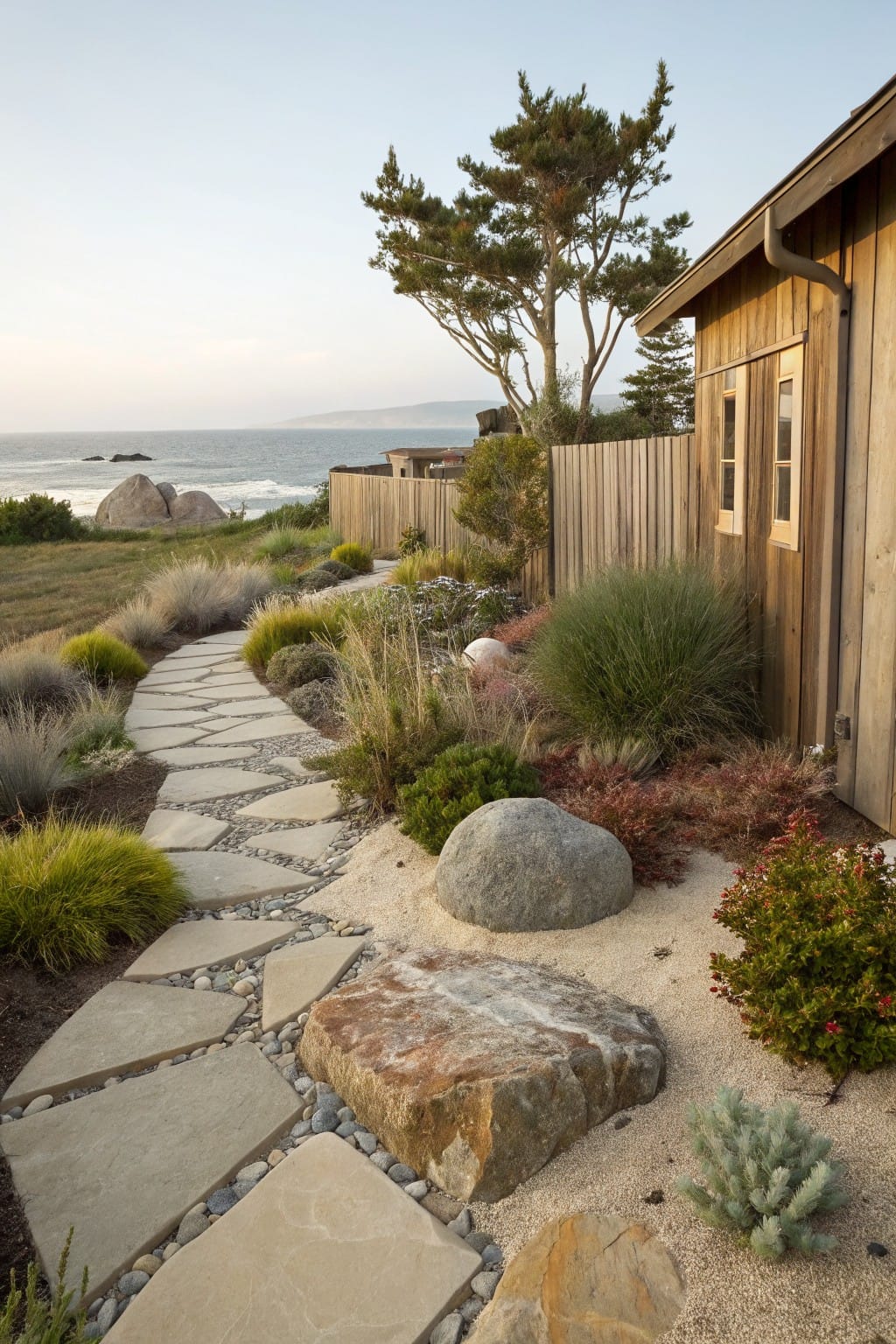
One simple way to guide people through a yard without much upkeep is a path like this. It uses uneven flagstone slabs set in gravel, with big boulders placed right alongside. Drought-tolerant grasses and low shrubs fill in the edges, keeping things natural and water-wise. The path curves gently, which makes the space feel bigger and more interesting to walk.
You can pull this off in coastal spots or sloped areas where regular lawns struggle. Lay the stones loose over gravel for good drainage, then tuck in natives like feather grass or sedum. It fits next to a shed or fence, leading to the house or gate. Just space the boulders to avoid crowding the walk.
Zen Gravel Path for Low-Water Yards
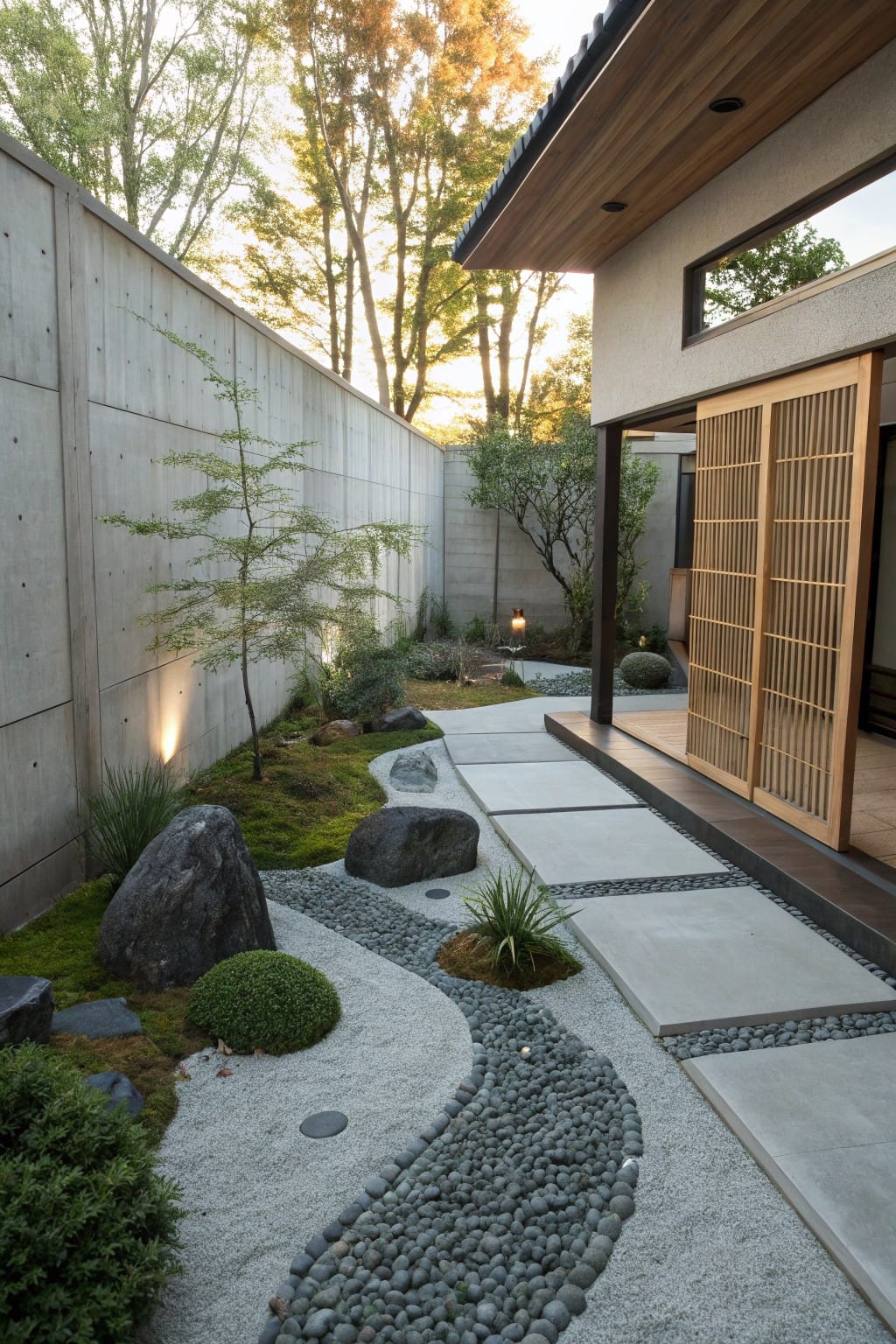
A winding path of smooth gravel stands out here, curving like a dry streambed through larger rocks and sparse plants. It pulls the whole yard together without needing much water or weeding. Moss patches and low greenery add just enough life to keep it from looking bare.
This works best in courtyards or side yards next to the house. Grab fine white gravel for the base, edge it with darker pebbles and a few big stones, then plant drought-tough stuff like sedge. Fits modern setups fine… rake it weekly for that crisp look.
Gravel and Stepping Stone Side Path
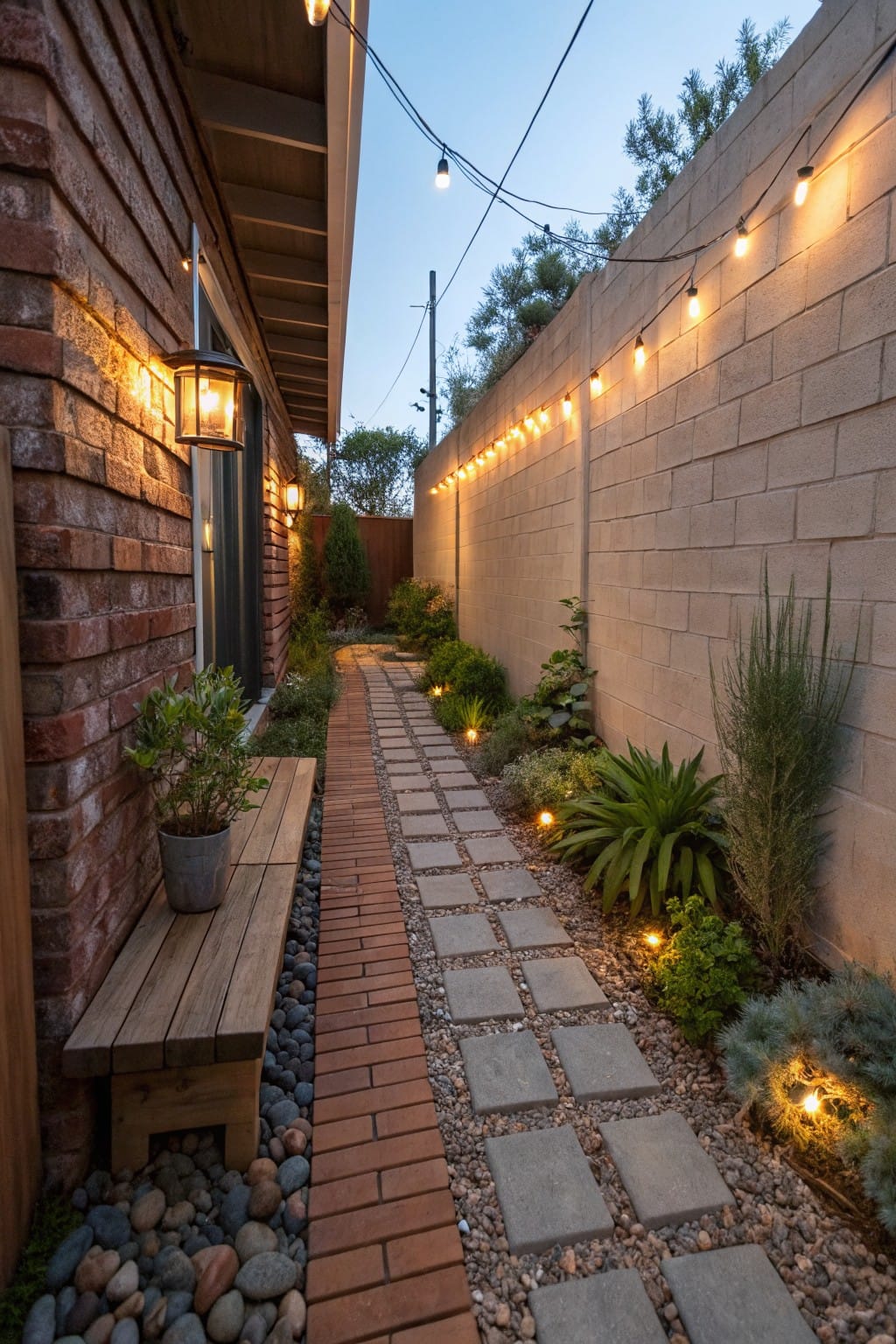
A gravel bed with wide concrete stepping stones makes an easy path through a narrow side yard. River rocks run along the base, and drought-tolerant plants like agave and grasses tuck in around the edges. It keeps things neat and dry without grass that needs constant water.
This works best in tight spaces between house and fence, giving access to the backyard. Lay gravel two inches deep for drainage, space stones for normal steps, and pick plants that take full sun. Skip it if your yard floods easy… gravel shifts then.
Dry Riverbed Paths for Water-Wise Yards
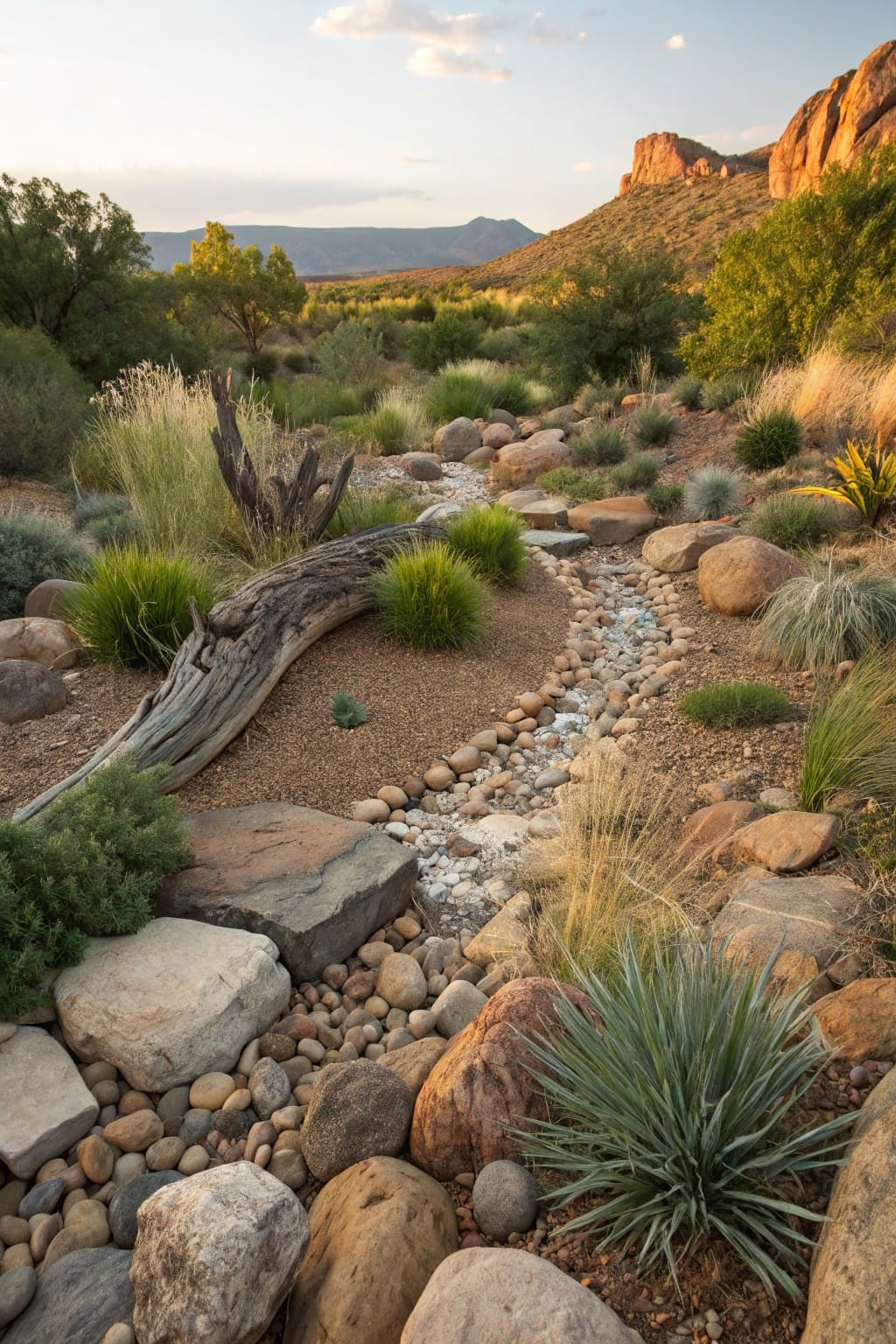
One simple way to add movement to a dry yard is a curving dry riverbed path. It uses smooth pebbles for the channel and bigger rocks along the edges, with tough grasses and shrubs tucked in. That setup looks natural, like water carved it out over time. Plus it handles runoff during rare rains without washing out plants or soil.
These paths work great in arid spots where you want low upkeep and some guiding lines through the yard. Lay them to connect seating areas or frame a view of distant hills. Stick to local drought-tough plants so it stays easy. Just keep the pebbles from shifting by firming the base.
Tiered Stone Retaining Walls for Slopes
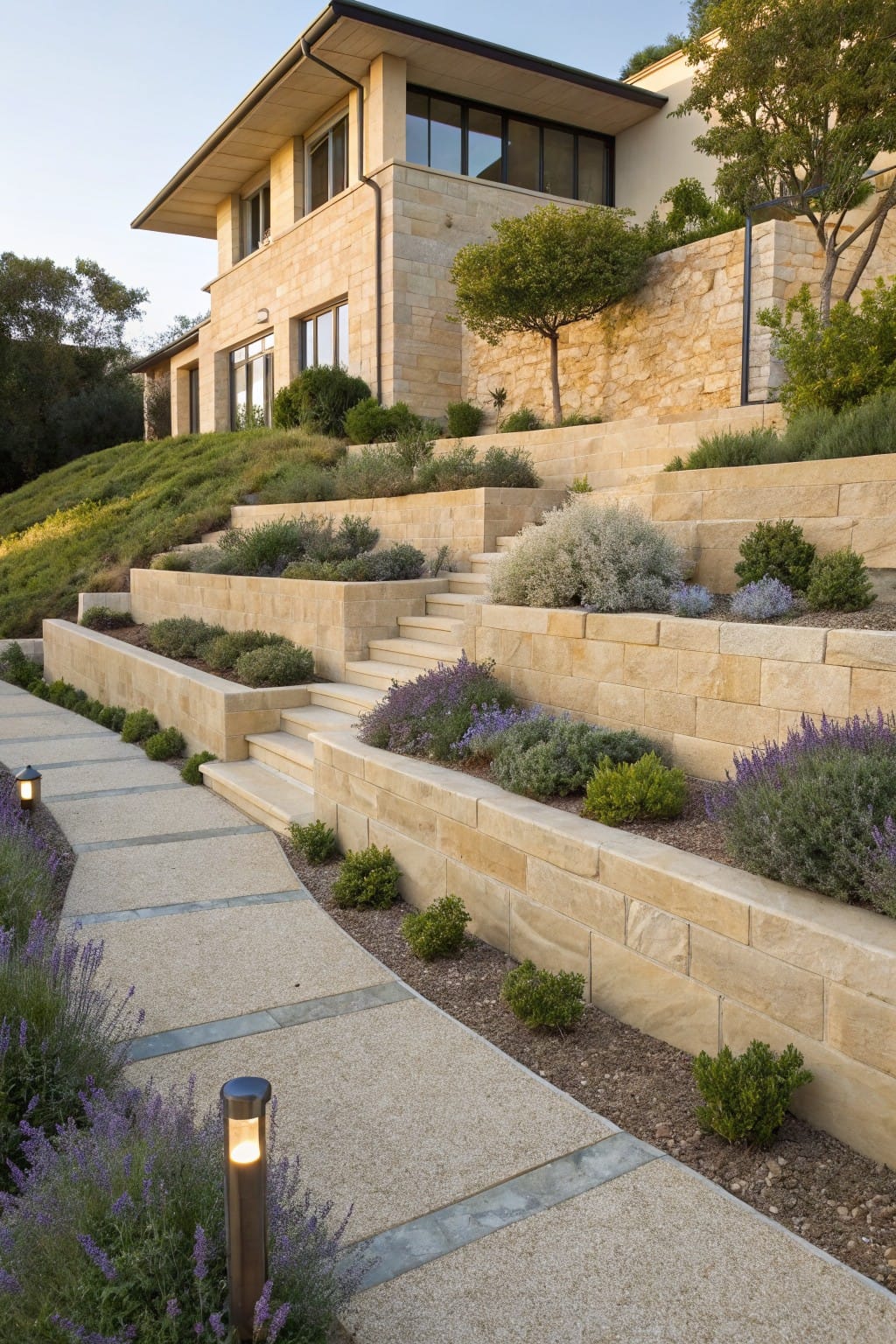
Slopes can be tough for yards, but tiered stone retaining walls fix that by carving out flat planting beds. These walls hold soil in place and create levels for plants, like the lavender and low shrubs tucked into pockets here. The warm beige stone fits right into dry landscapes, keeping everything stable without much upkeep.
You can use this on any hillside yard, especially where water is short. Stack local stone for walls about two to three feet high, leave room for drainage, and fill with drought-tough plants that spread but stay neat. It works around modern or stone houses, tying the yard to the home. Watch the steps between tiers so they feel natural to climb.
Boulders Around Pool Edges
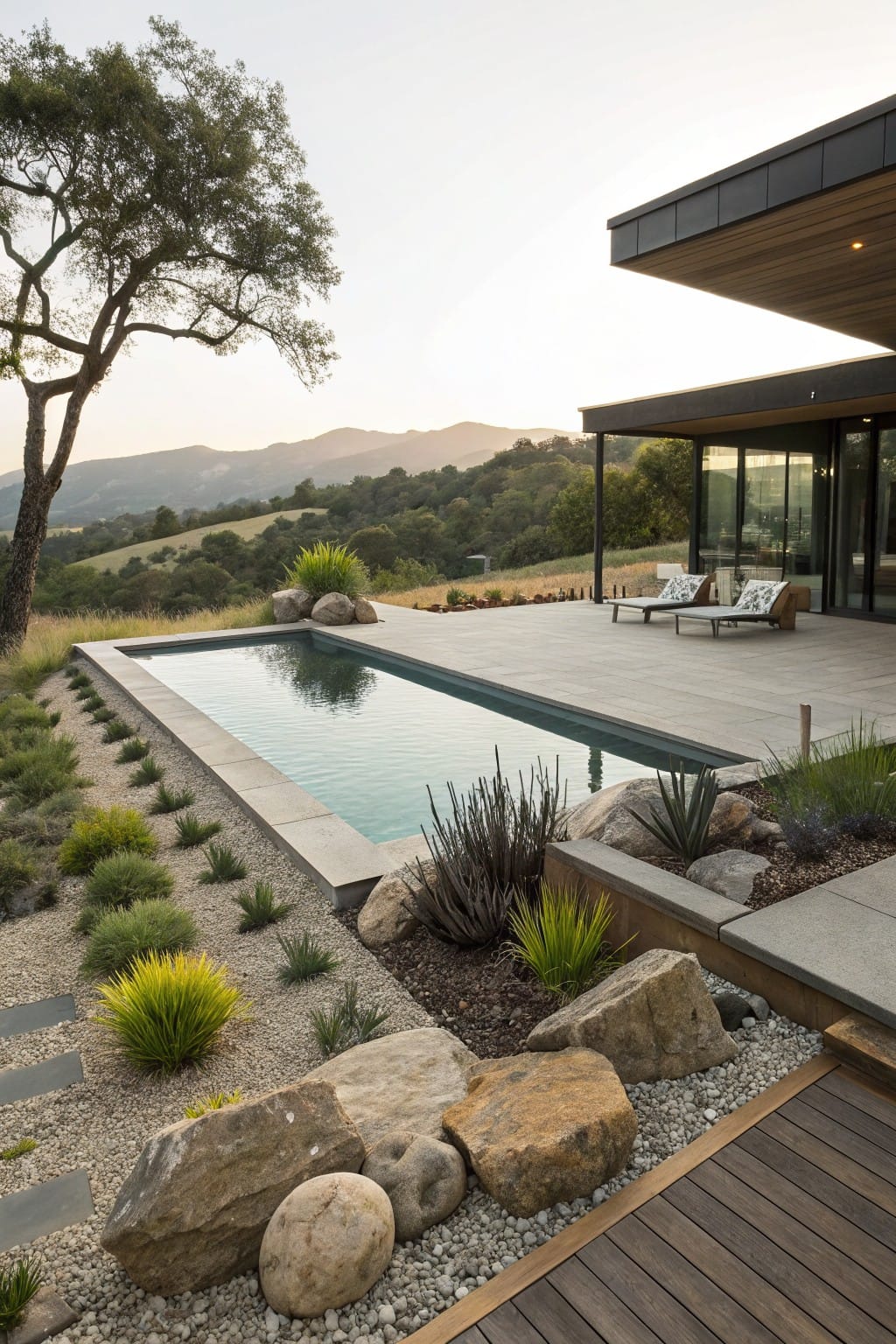
Large boulders placed right along the pool edge make a strong, natural border that fits drought-tolerant yards perfectly. They mix with gravel mulch and sparse plants like agave or grasses to hold soil and add texture without much water. This setup gives a wild, low-maintenance look that blends into the landscape.
It suits hillside homes or dry areas where you want the pool to feel part of the terrain. Source rocks from nearby quarries for a real fit, tuck in a few tough perennials, and keep plantings light. Just make sure the boulders don’t block deck access.
Curved Stone Path Through Rock Gardens
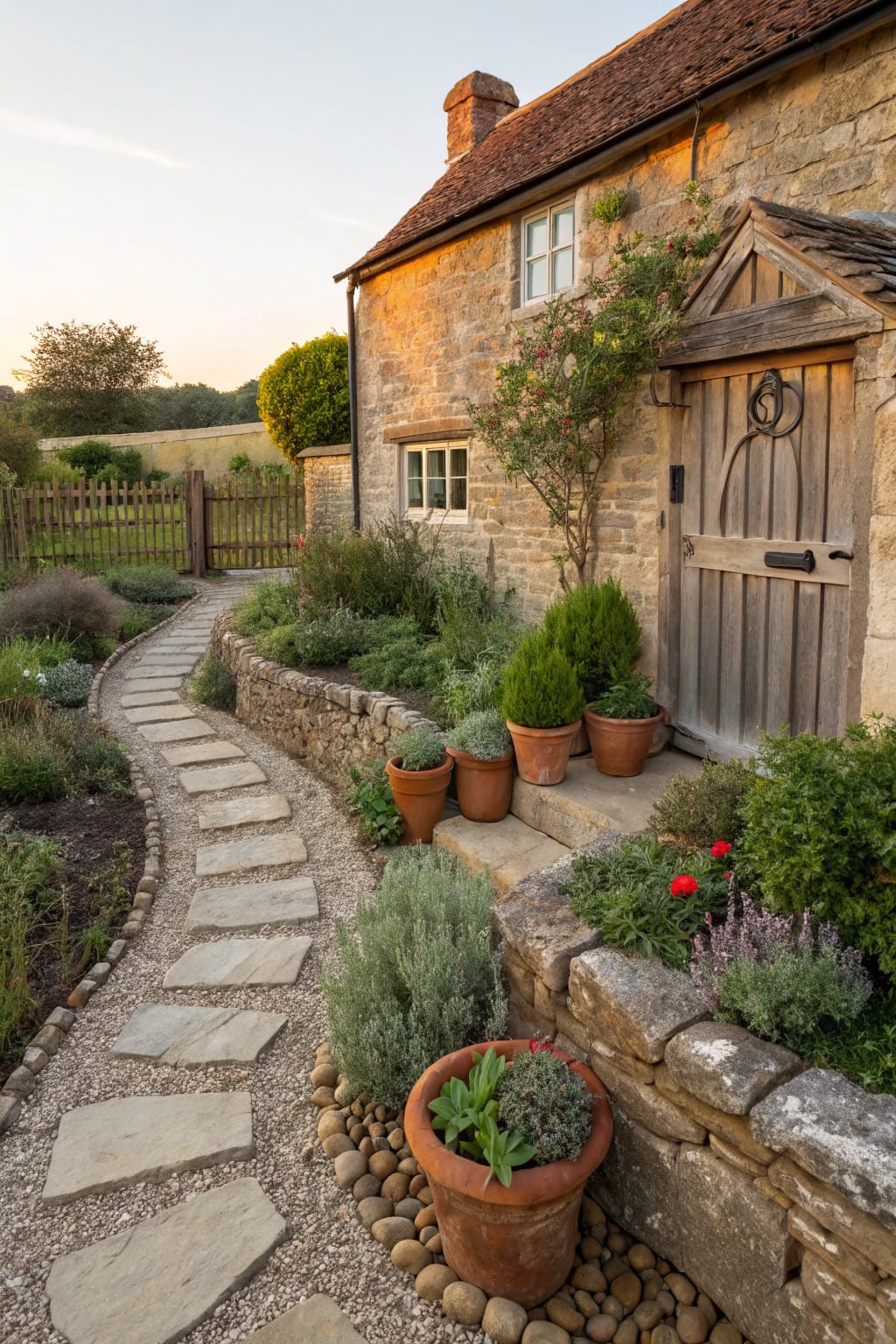
One simple way to guide visitors right to your door is with a curved stone path like this. It winds gently through gravel beds and low stone walls, edged with tough plants that don’t need much water. The mix of flagstones, rounded pebbles, and terracotta pots full of herbs keeps things looking full without constant care. It softens the approach to a stone house too.
This works best in front yards or side entries where you want low upkeep. Lay irregular stone slabs in a loose curve, fill edges with gravel for drainage, and tuck in drought-tolerant picks like lavender or rosemary. Skip straight lines. They feel stiff. A curve adds interest and fits cottage or rustic spots. Just make sure the path stays wide enough to walk comfortably.
Winding Flagstone Path with Rock Borders
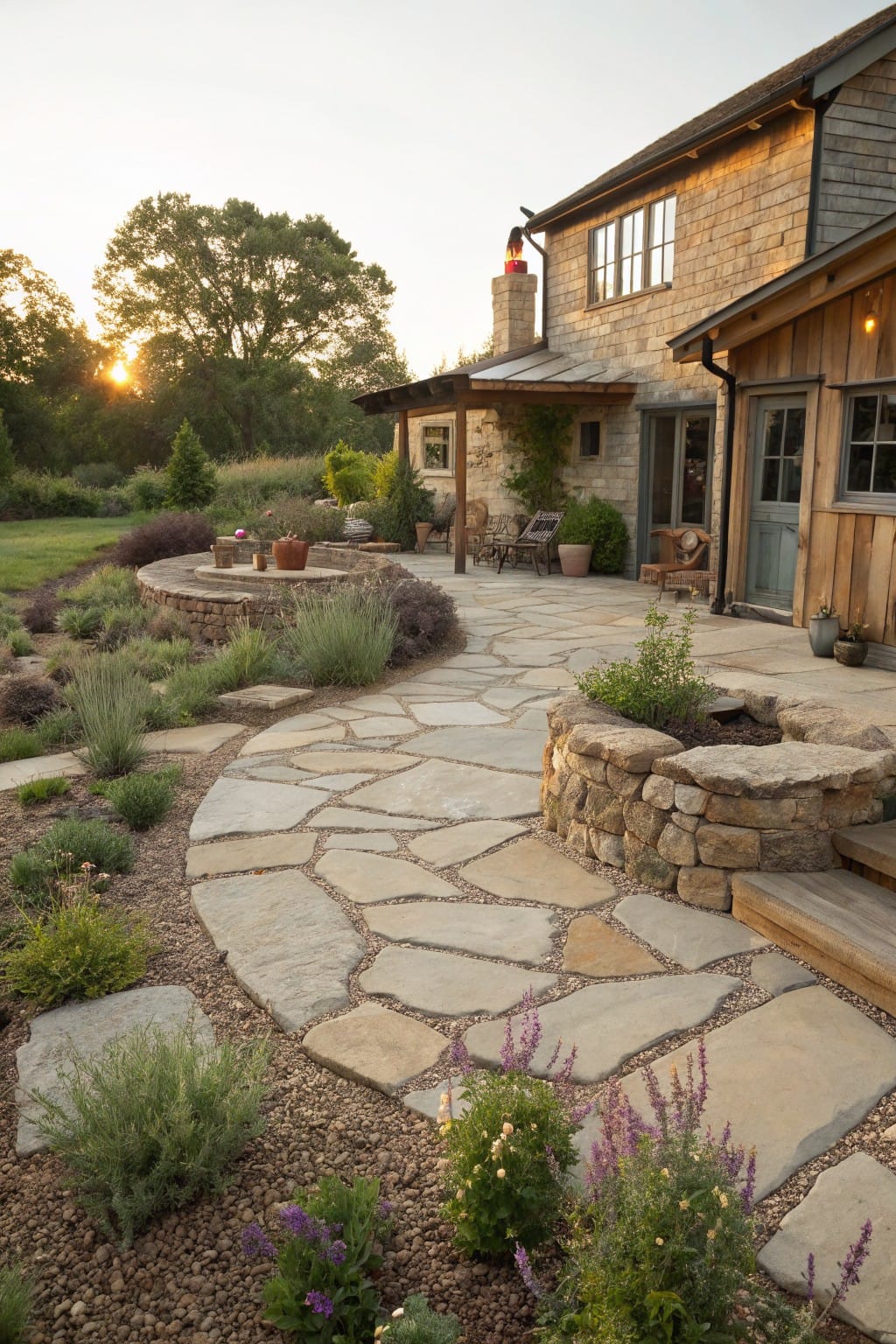
A winding flagstone path like this one makes a yard feel bigger and more natural without needing constant watering. The irregular stones laid in gravel create that easy, meandering flow, while low rock walls hold back drought-tolerant plants like lavender and grasses. It ties the patio area to the garden beds without looking forced.
You can pull this off in most backyards, especially where you want to guide foot traffic from the house to seating spots. Pick local flagstone for the look and plants that match your zone, like sedums or ornamental grasses. Just keep the gravel topped up to stop weeds, and it stays simple year-round.
Terraced Rock Walls for Sloped Yards
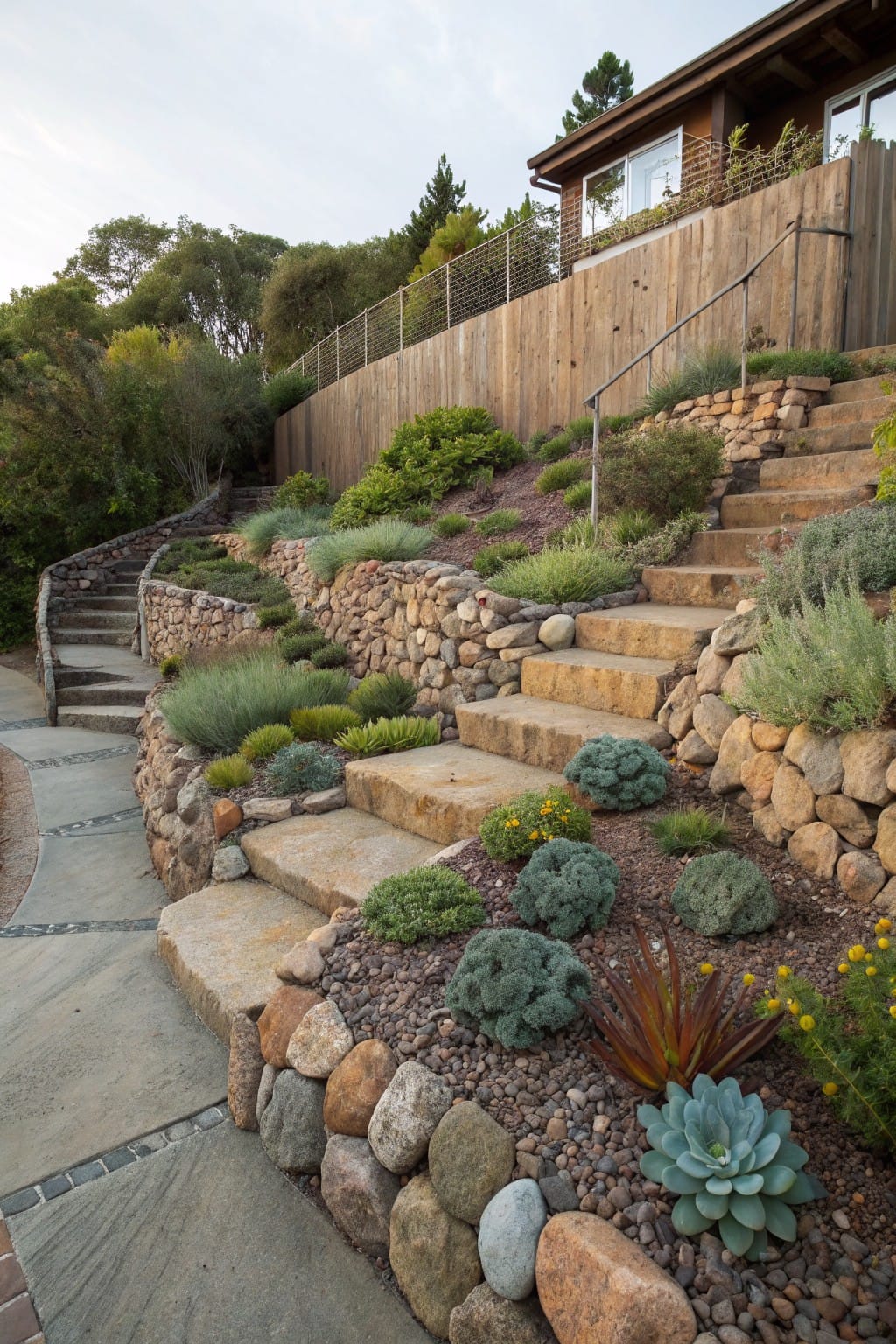
Sloped yards can be tricky. They often end up as wasted space or erosion problems. But dry-stacked stone walls like these turn that slope into usable terraced gardens. Big boulders hold back the soil while drought-tolerant plants such as succulents and grasses fill in the pockets. It looks natural. And it stays low-maintenance once established.
These setups work best on hillsides with good drainage. Pair wide stone steps with the walls to make paths easy to climb. They suit homes in dry climates or anyone wanting less watering. Just build the walls sturdy enough for your soil type… and pick plants that match your sun exposure.
Meandering Stone Paths in Boulder Gardens
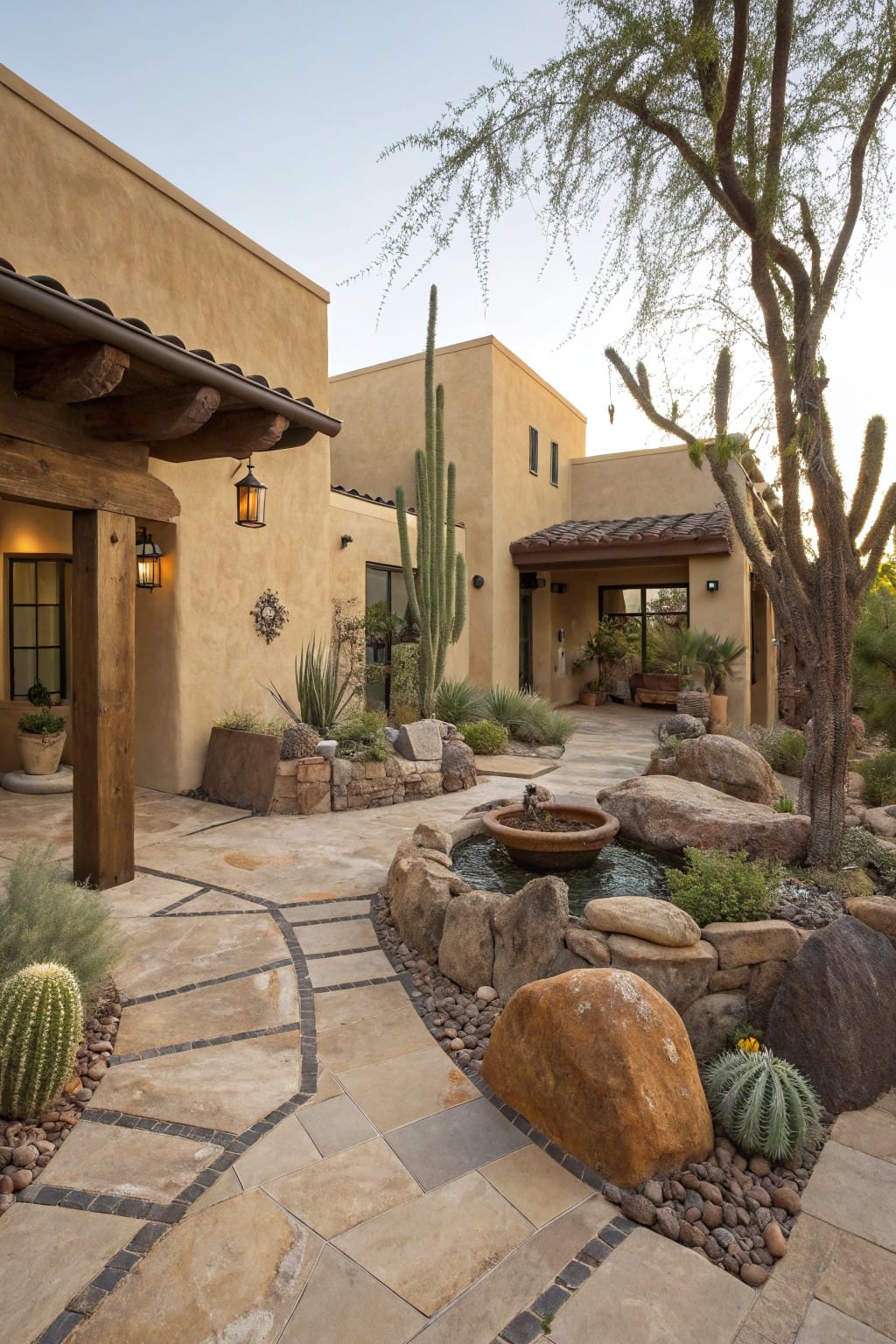
A simple winding path made from flagstone cuts through big boulders and drought-tolerant plants like cacti and agave. It pulls your eye along naturally, making the yard feel bigger and more explored. The rocks do most of the work here, staying put without much upkeep, while the path ties everything to the house entry.
This idea fits best in sunny, dry spots like courtyards or front approaches. Lay irregular stones in a gentle curve, cluster boulders for height, then tuck in low-water succulents. Skip straight lines. They can feel too rigid in a rock setup.
Winding Flagstone Path in a Gravel Garden
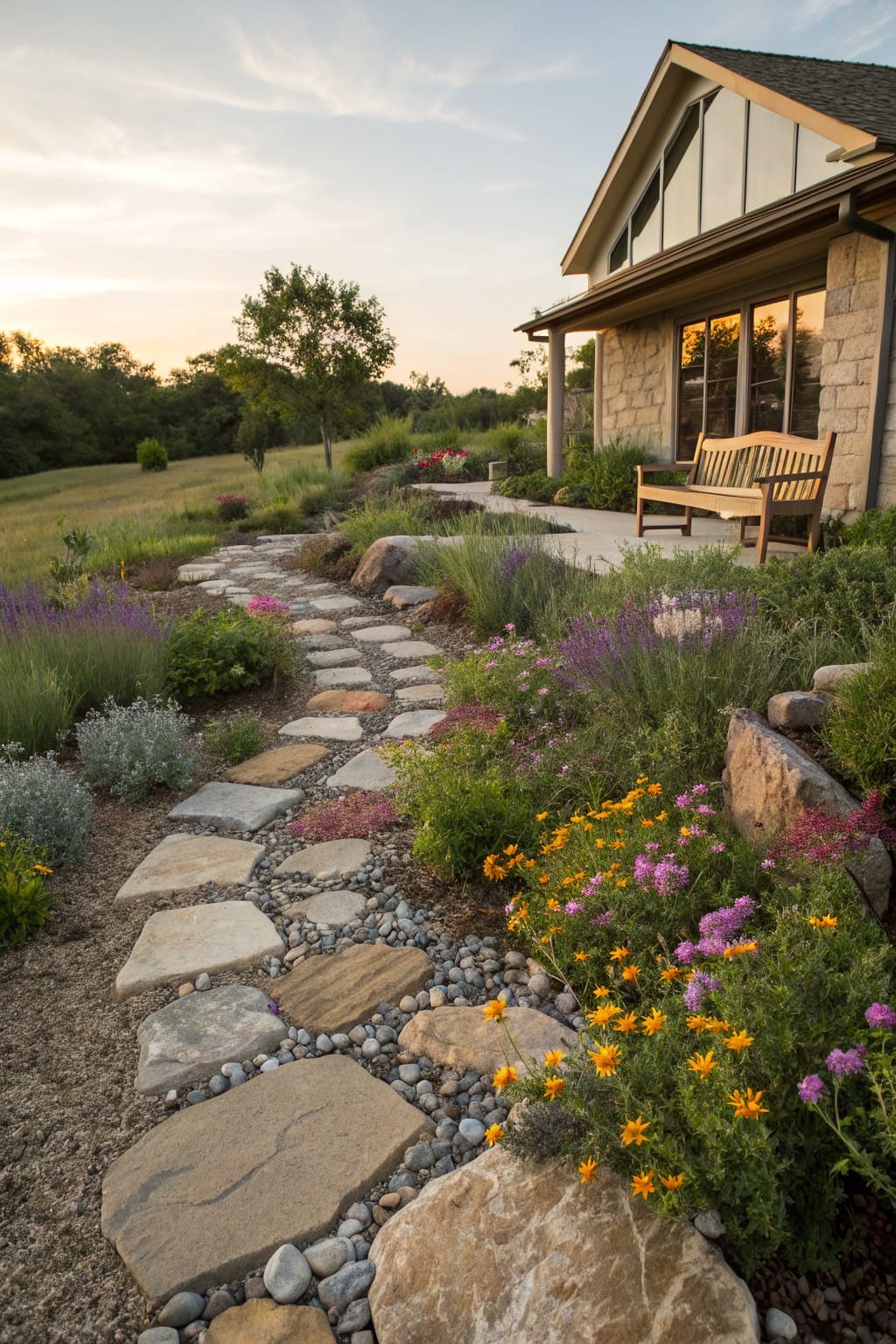
A simple way to guide people through the yard without much upkeep is this kind of meandering path. Big flat stones sit right in gravel, with drought-tolerant plants like lavender and those bright orange flowers tucked in around them. Boulders add some weight here and there. It keeps things low-water and feels like it just grew there naturally.
You can put one like this from the street to your front porch or along a side yard. Works best on a slope or flat spot with decent sun. Pick stones in a mix of sizes for that casual look, and space them so your feet land flat. Just make sure the gravel drains well… no puddles after rain.
Linear Rock Gardens Along Walkways
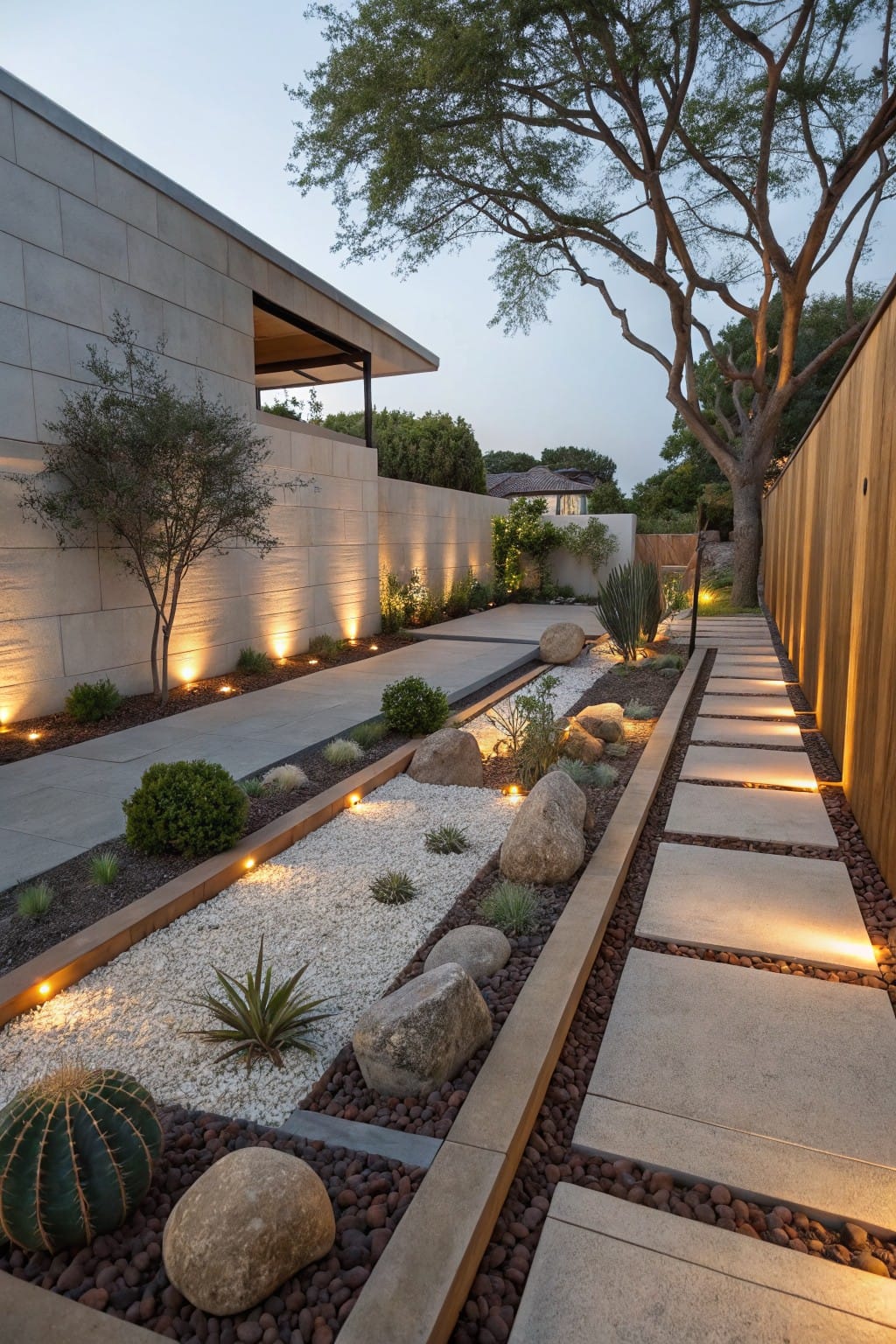
One simple way to edge a path is with a narrow bed of white gravel packed with drought-tolerant plants like agave and barrel cactus, plus a few big boulders for scale. The wood borders keep everything neat, and low lights along the stones make it usable at night. It fits right against plain walls without needing grass or thirsty shrubs.
This works great in side yards or narrow spaces leading to a gate, especially around modern homes in dry climates. Lay gravel over landscape fabric for weeds, plant sparsely so things don’t crowd, and pick spots with full sun. Skip it if your soil stays soggy.
Dry Stone Walls Edging Paths
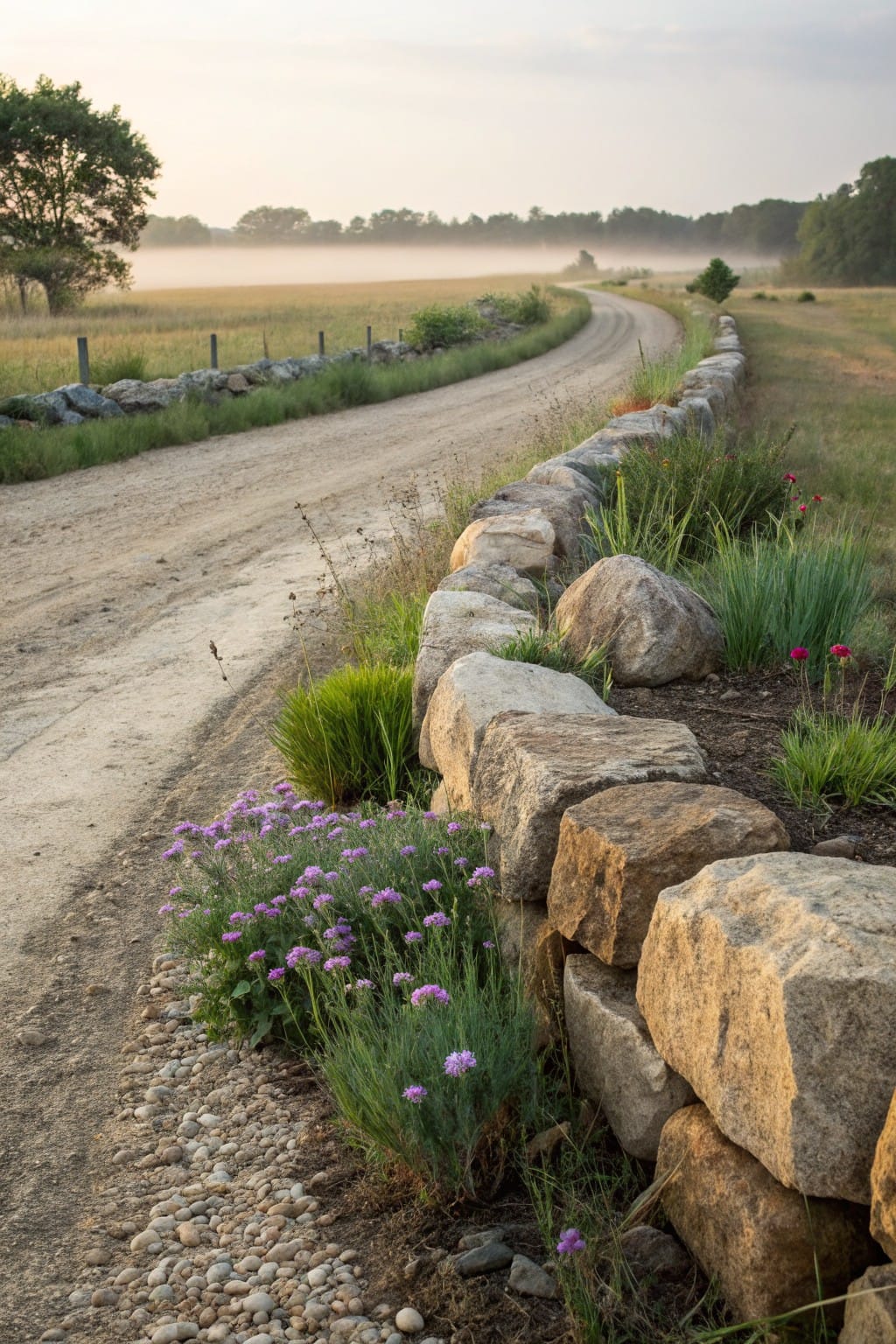
One straightforward way to guide a path through your yard is a dry-stacked stone wall running alongside it. These walls use rough fieldstones piled up without mortar, giving a rugged, natural edge that fits right into countryside settings. Planted with drought-tolerant stuff like lavender and grasses, they stay pretty without needing constant water or fuss.
Put this idea to work on gravel or dirt paths where you want definition without high maintenance. It’s perfect for bigger lots or sloped areas, using rocks you find nearby to keep costs down. Just make sure the stones are stable, and pick plants that handle dry spells well. Keeps the yard looking tidy year-round.
Raised Wooden Planters with Pebble Mulch
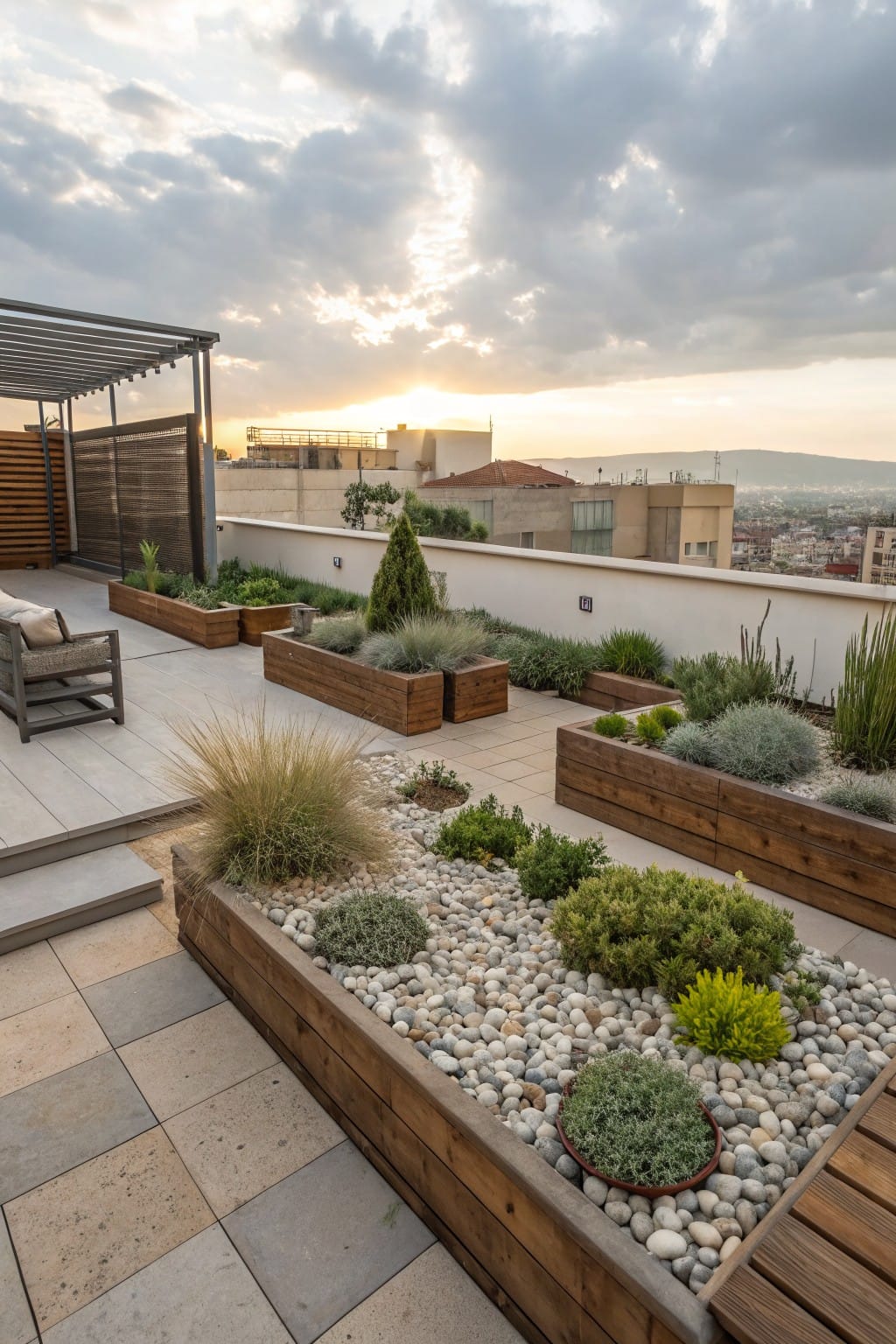
Raised wooden planters like these make it simple to build a drought-tolerant garden right on a hard terrace surface. They hold back the soil and rocks while letting water drain fast, which keeps plants healthy without much fuss. You see white pebbles covering the base, mixed with tough grasses and low shrubs that barely need watering once they’re settled.
These work best on rooftops or patios where you can’t dig into the ground. Just line the boxes with landscape fabric, add gravel for drainage, then layer in pebbles and plants. They’re handy for small urban spots… keeps everything neat and contained. Skip softwoods though; go for cedar or redwood to hold up over time.
Winding Stone Paths with Native Plant Edges
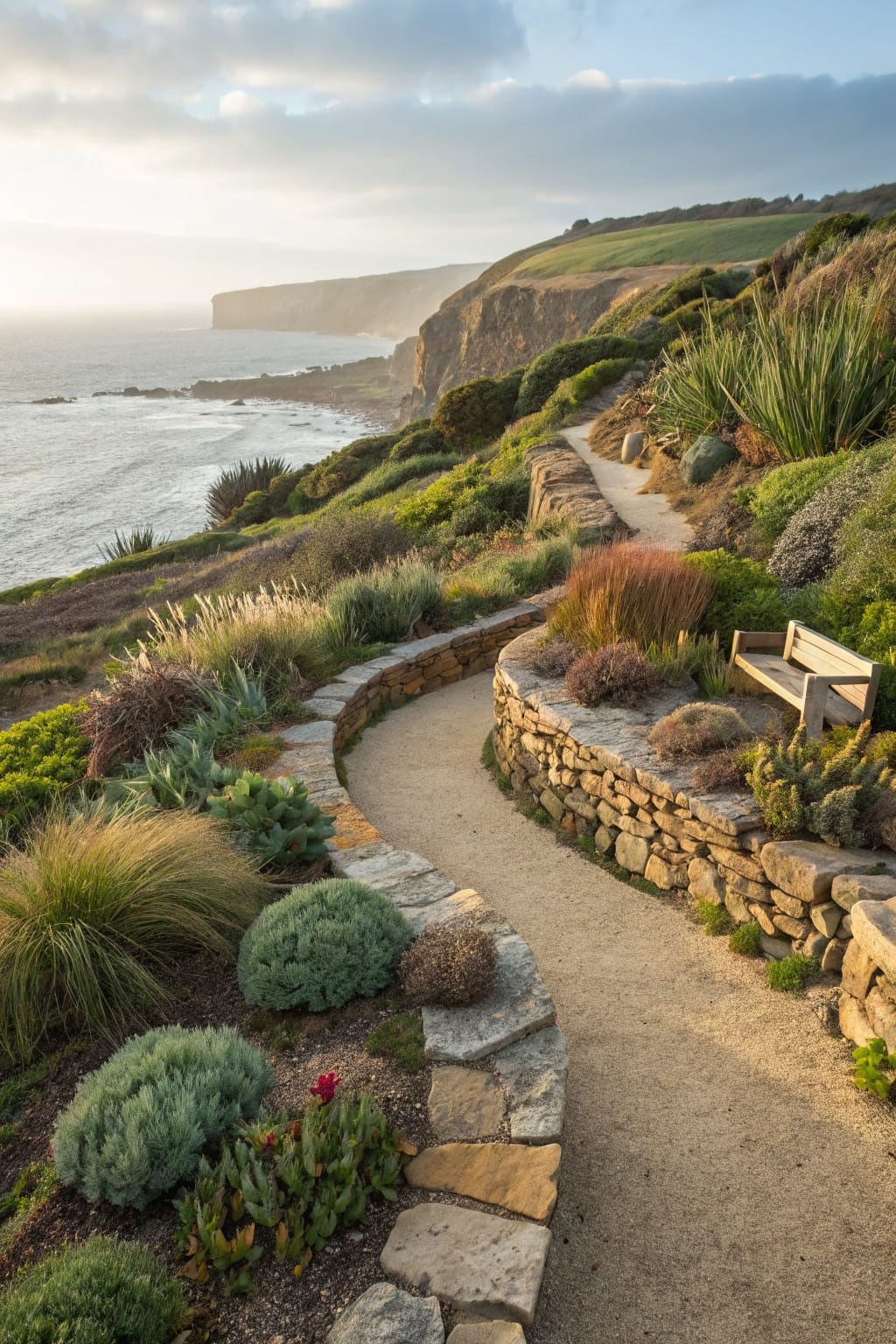
One smart way to handle a sloped yard is with a simple winding path edged by low stone walls. These dry-stacked rocks hold back soil while letting drought-tolerant grasses, succulents, and low shrubs spill over just right. That bench midway? Perfect pause spot. It all feels natural, cuts down on erosion, and stays pretty without constant watering.
This works best on coastal hills or dry lots where you want paths that lead the eye without much fuss. Source local stone to blend in, plant tough stuff like pampas grass or agave that thrives on neglect. Skip straight lines. Curves make it more walkable and less like work.
Grassy Joints Between Large Pavers
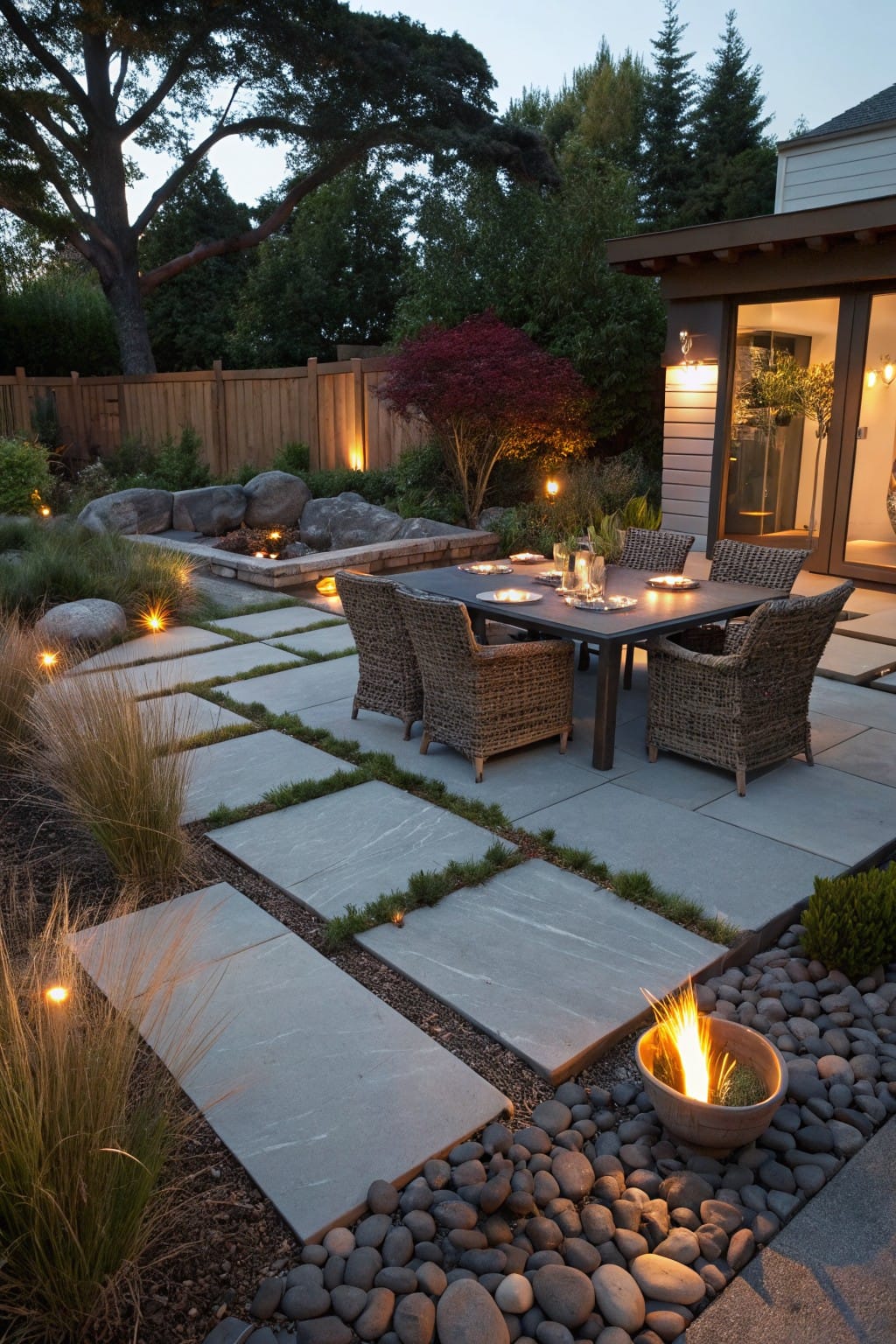
One simple way to keep a patio low on water is spacing out big pavers and letting grass fill the gaps. It gives a clean, modern look without solid grout that traps heat. In this yard, the gray slabs lead right to an outdoor dining table, and the grass stays green even in dry spells thanks to tough varieties like fescue or bluegrass mixes.
This works best around seating areas or paths where you want some give underfoot. Pair it with river rocks nearby for drainage, and it suits sloped lots or sunny backyards. Just pick grasses that handle foot traffic, and keep them trimmed so the pavers stay the focus.
Curved Stone Walls for Sloped Yards
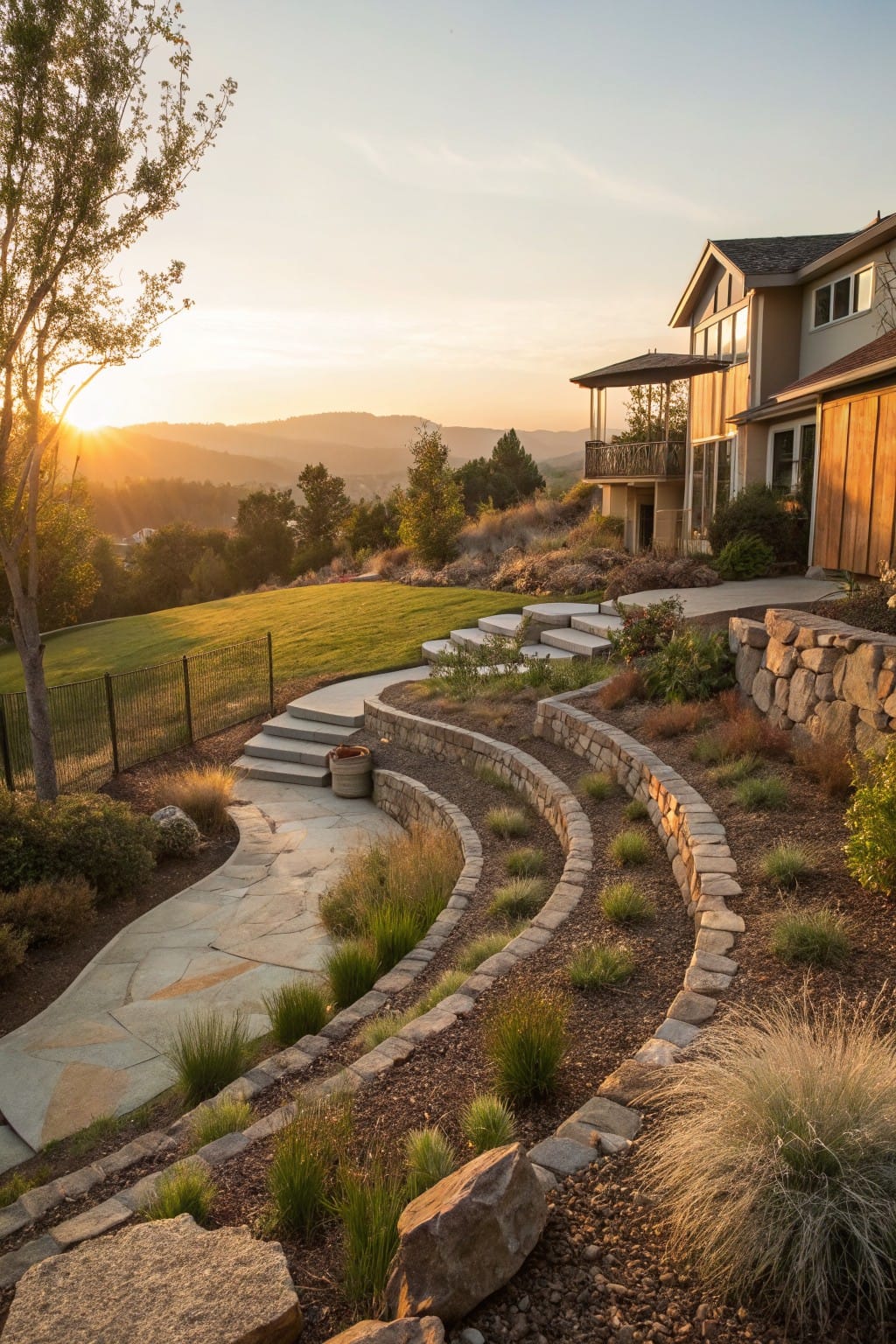
One simple way to handle a sloped yard is with curved dry-stacked stone walls that form terraced beds. These walls turn an awkward hill into usable space, and filling them with tough grasses and rocks keeps everything low-water and natural looking. The curves add a soft flow that fits right into the landscape, especially around drought-tolerant plants like feather grass.
This setup works best on moderate slopes near a house, where you want to connect the yard to the entry without a lot of flat lawn. Use local stone for a seamless look, and plant in loose clusters to avoid fussing over watering. Just make sure the walls have good drainage so water doesn’t pool behind them.
Wide Pavers Set in Gravel Beds
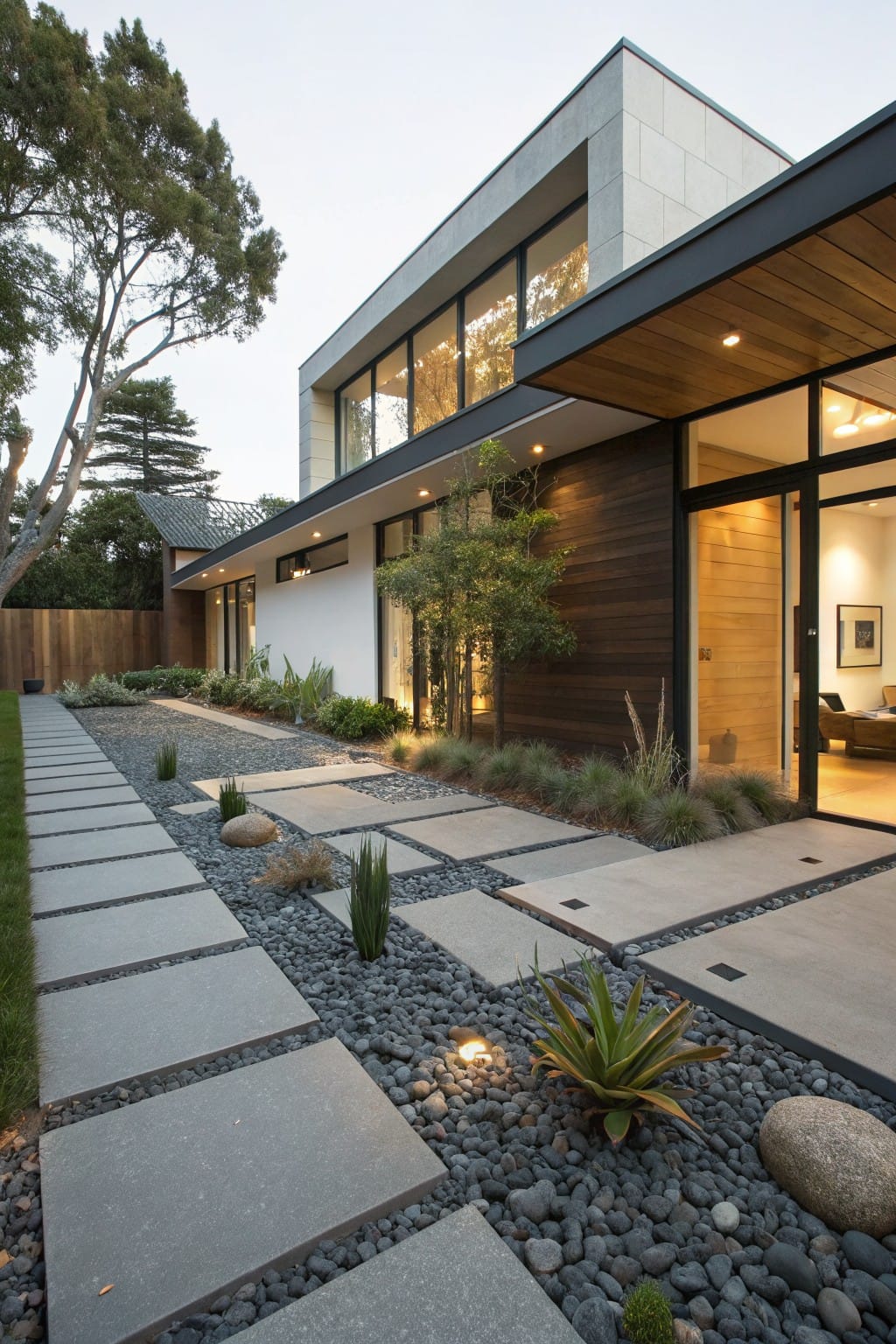
One straightforward way to handle a front path without constant watering is to lay large concrete pavers right into gravel beds. Here, dark pebbles fill the gaps, and a few tough plants like agave and grasses poke up around them. It looks sharp and modern against the house, and the rocks hold moisture just enough for those plants to hang on through dry spells.
This works best in full sun where grass would struggle anyway. Pick pavers big enough to step comfortably, maybe 2 by 3 feet, and go with angular gravel so it stays put. It’s ideal for entryways on mid-sized lots, especially if you want to skip mowing the whole yard.
Frequently Asked Questions
Q: Do I need special tools to install these rock landscapes?
A: Grab a shovel, rake, and wheelbarrow. That’s usually plenty for digging and spreading rocks evenly. Rent a tamper if you want a pro finish on larger areas.
Q: How do I stop weeds from popping up in my rock yard?
A: Lay down landscape fabric first. Cut holes only where you plant drought-tough succulents or grasses. Top it thick with rocks, at least three inches deep.
Q: Can I mix different rock sizes and colors?
A: Yes, layer bigger stones at the base and scatter smaller pebbles on top. Pick hues that echo your home’s tones. It adds depth without extra water needs.
Q: But what if my soil is super clay-heavy?
A: Break it up and mix in gravel before rocks go down. This drains fast so roots stay happy. Skip mulch, it holds moisture you don’t want.
