

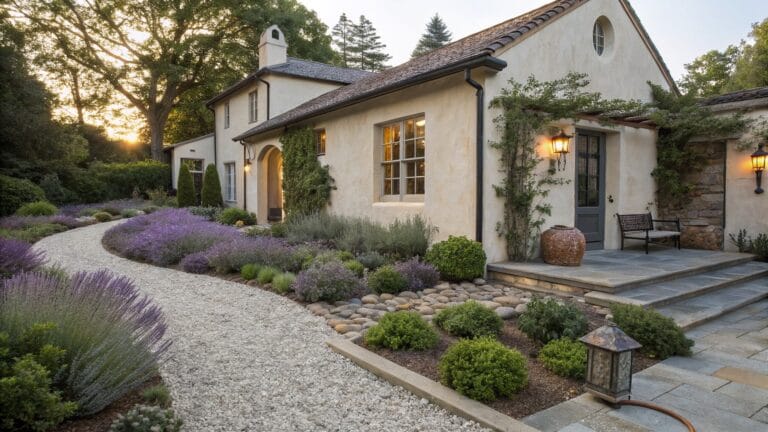
I’ve noticed that the strip of dirt around a house foundation often goes bare for years, making the whole exterior feel unfinished no matter how nice the siding looks.
When I tackled mine a couple summers back, simple rocks turned that awkward zone into something that actually anchored the place.
They create low borders that shape planting beds without much upkeep, letting low-growing stuff fill in over time and handle runoff better too.
That clean layout draws your eye right up to the front door instead of snagging on weeds or mud.
Some of these rock setups are the kind I’d tweak for a shady north side or adapt to match local stone.
Gravel Paths Edged with Boulders
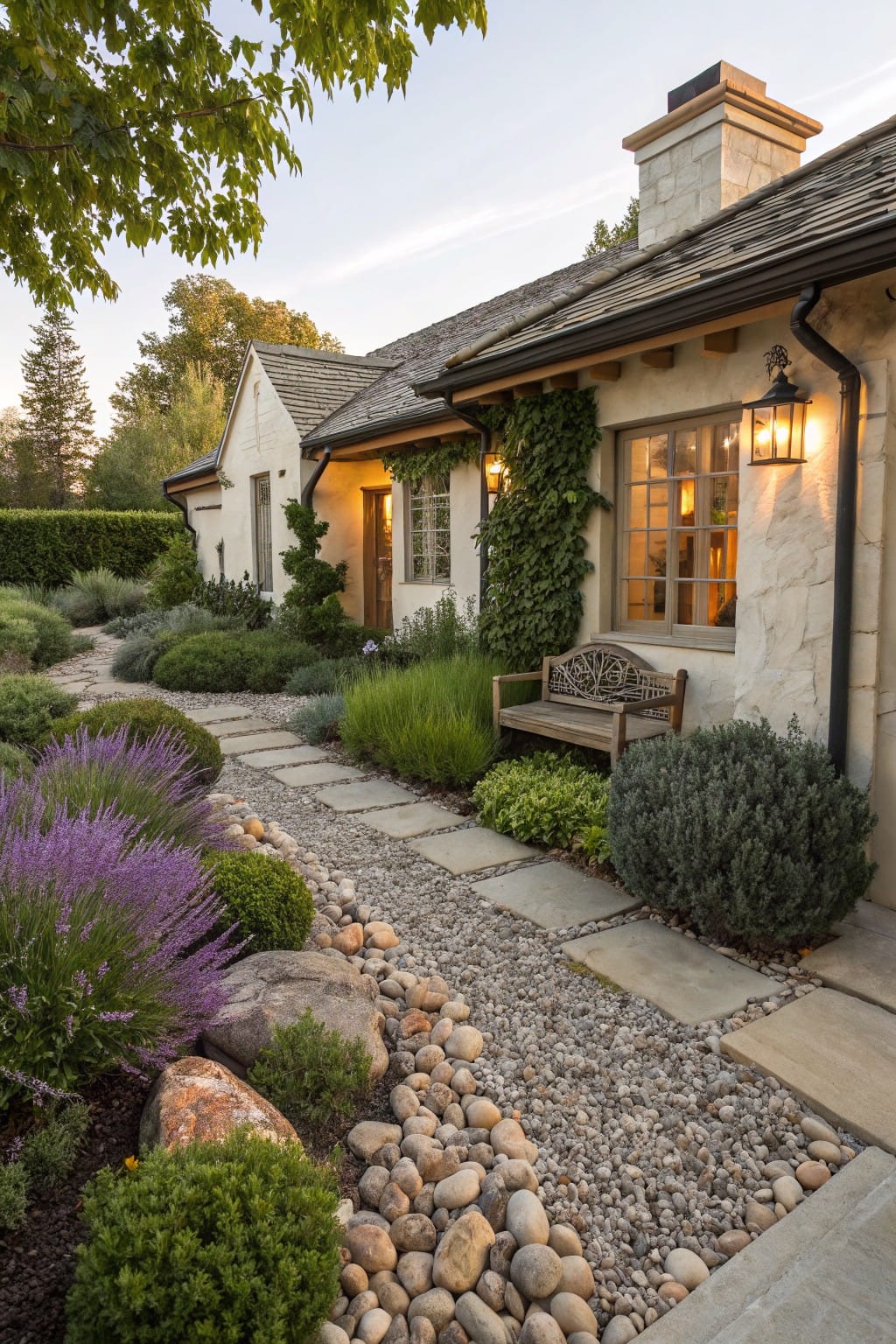
Gravel paths like this one work well right up against the house foundation. They mix small river rocks for the walkway with larger boulders nearby, plus low plants such as lavender and grasses. The whole thing feels put-together and handles dry spots without much water or weeding.
This kind of setup suits homes on slopes or in sunny yards where grass struggles. Start with stepping stones for the path, fill around them with gravel, and drop in boulders for weight. Tough shrubs hold the edges. Watch that rocks don’t shift near downspouts.
Stone Retaining Walls with Gravel Beds
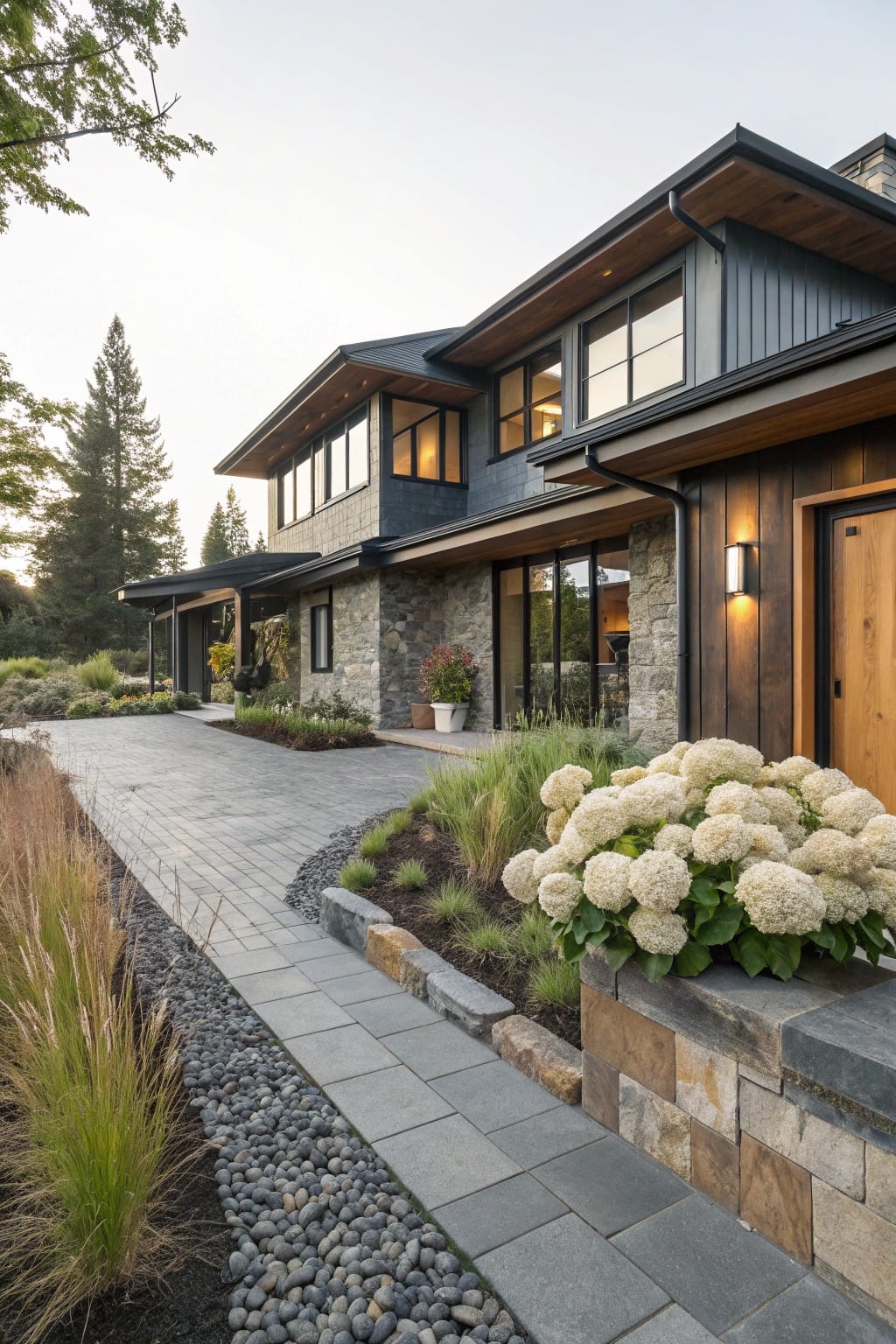
One solid way to handle landscaping right at the house foundation is stacking natural stone into low retaining walls, then filling the beds behind them with gravel mulch and a few plants. You see it here with rough fieldstone walls holding back dark river rocks, plus big white hydrangeas and tall grasses poking up. It keeps mud and weeds away from the siding, makes the base look finished, and pulls the house into the yard without much upkeep.
This works best on gently sloped spots or wooded lots where you want to ease from architecture to garden. Pick stones that echo your house materials, like these gray chunks next to the stucco and wood. Layer in drought-tough plants for color, and run a simple paver path alongside. Skip it on flat ground, though…too much structure there.
Gravel Paths Edged with Rocks
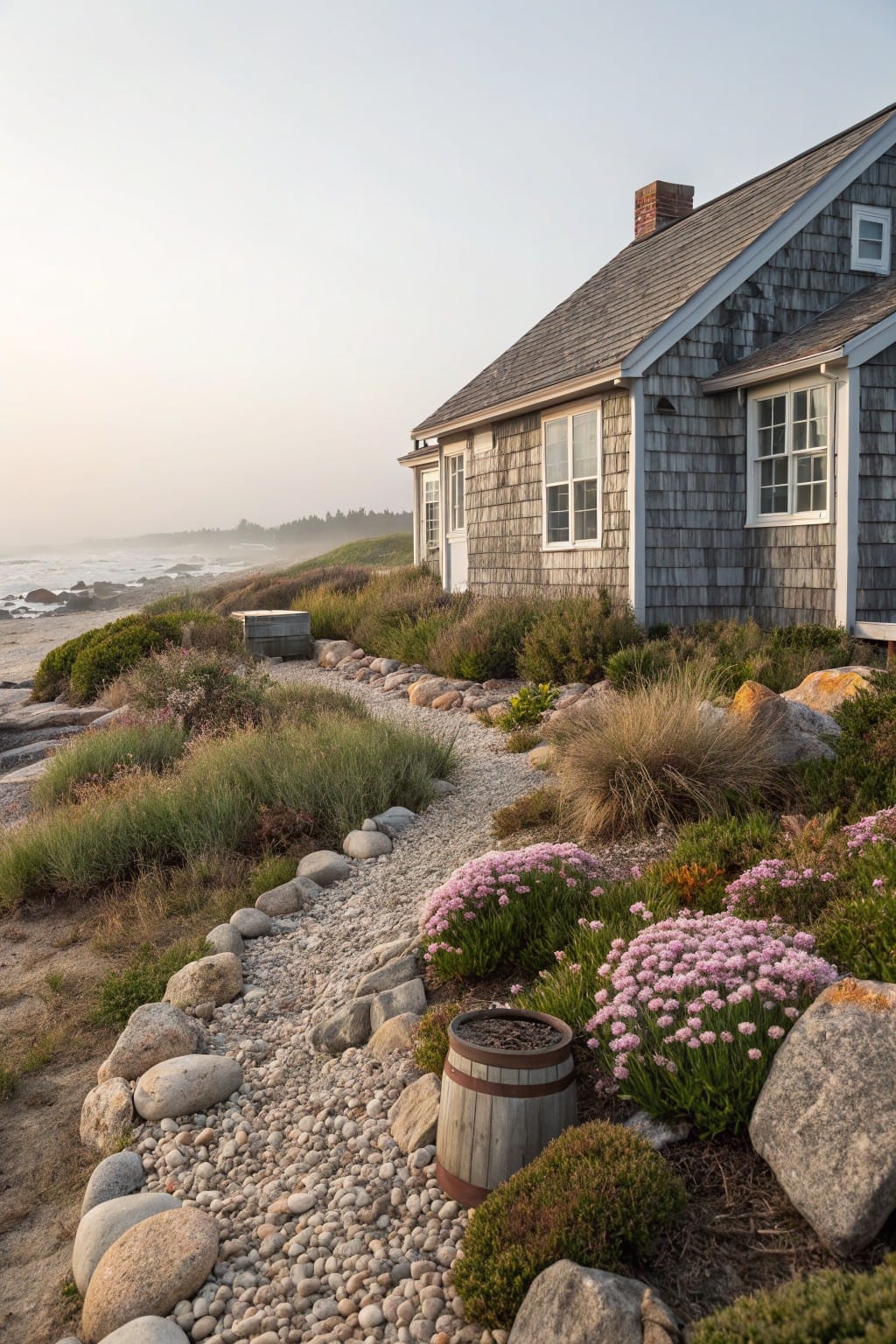
A gravel path like this one winds gently around the house foundation, edged by smooth white rocks and bigger boulders. It pulls the eye from the yard to the door without any fussy mowing. The low plants and grasses tucked in keep it all looking natural, especially in sandy coastal spots.
You can pull this off in most front yards or side areas where foot traffic matters. Start with a shallow trench, drop in landscape fabric, add gravel, then border with rocks in different sizes. Pick drought-tough plants… they handle salt air fine. Avoid straight lines if you want that relaxed feel.
Natural Rocks Along House Foundations
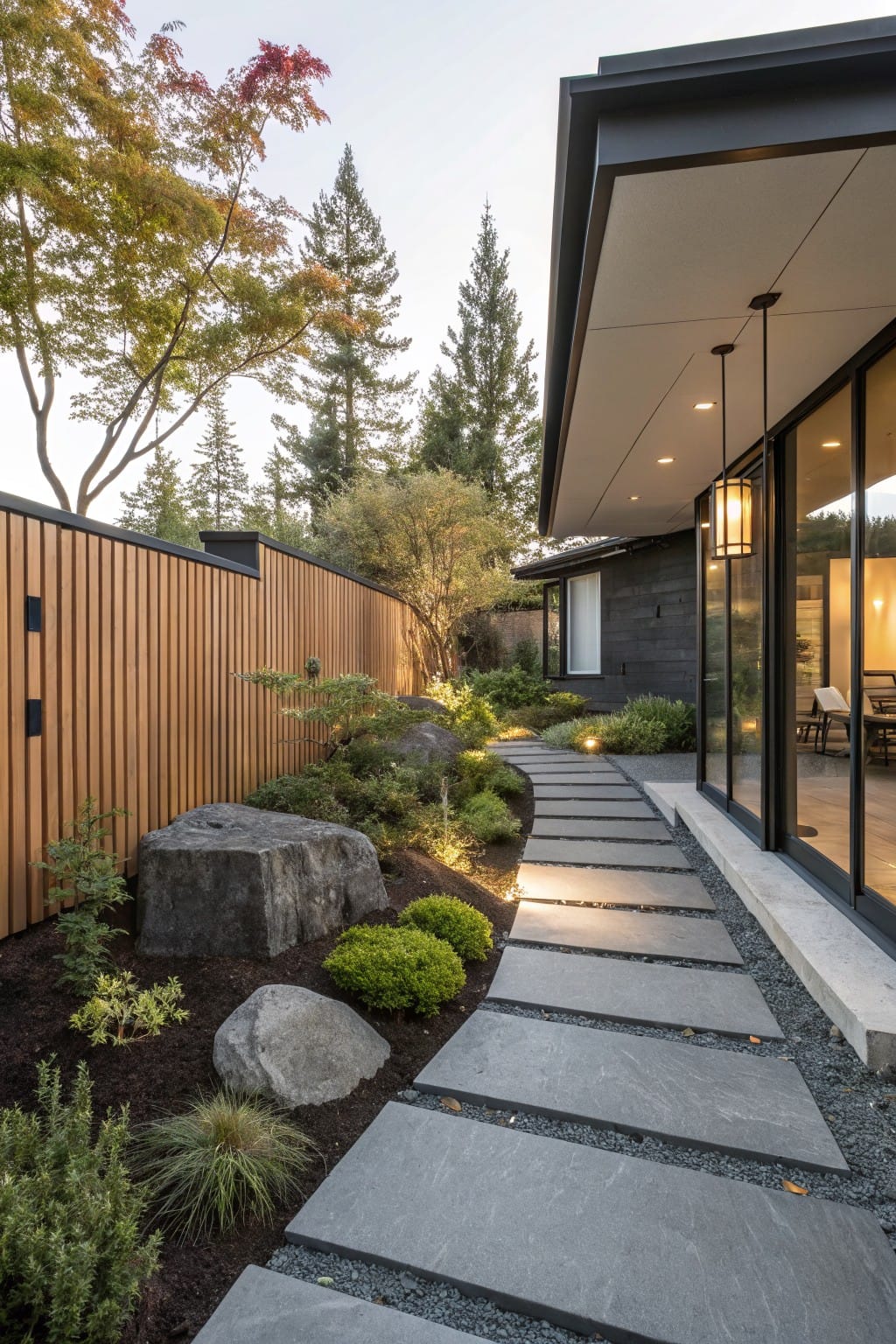
Big rocks like these make a simple way to dress up the base of your house. Placed right against the foundation with low plants tucked around them, they hide concrete edges and add some real texture. The gravel fill and stepping stones keep it all low fuss, letting the path pull you toward the door without stealing the show.
Try this where you have a narrow side yard or shady strip. Pick rocks in sizes that fit the scale, maybe two or three big ones to anchor smaller plantings like grasses or mossy groundcover. It suits modern homes especially, but watch the drainage so water doesn’t pool against the siding.
Gravel Mulch with Paver Paths Around the Foundation
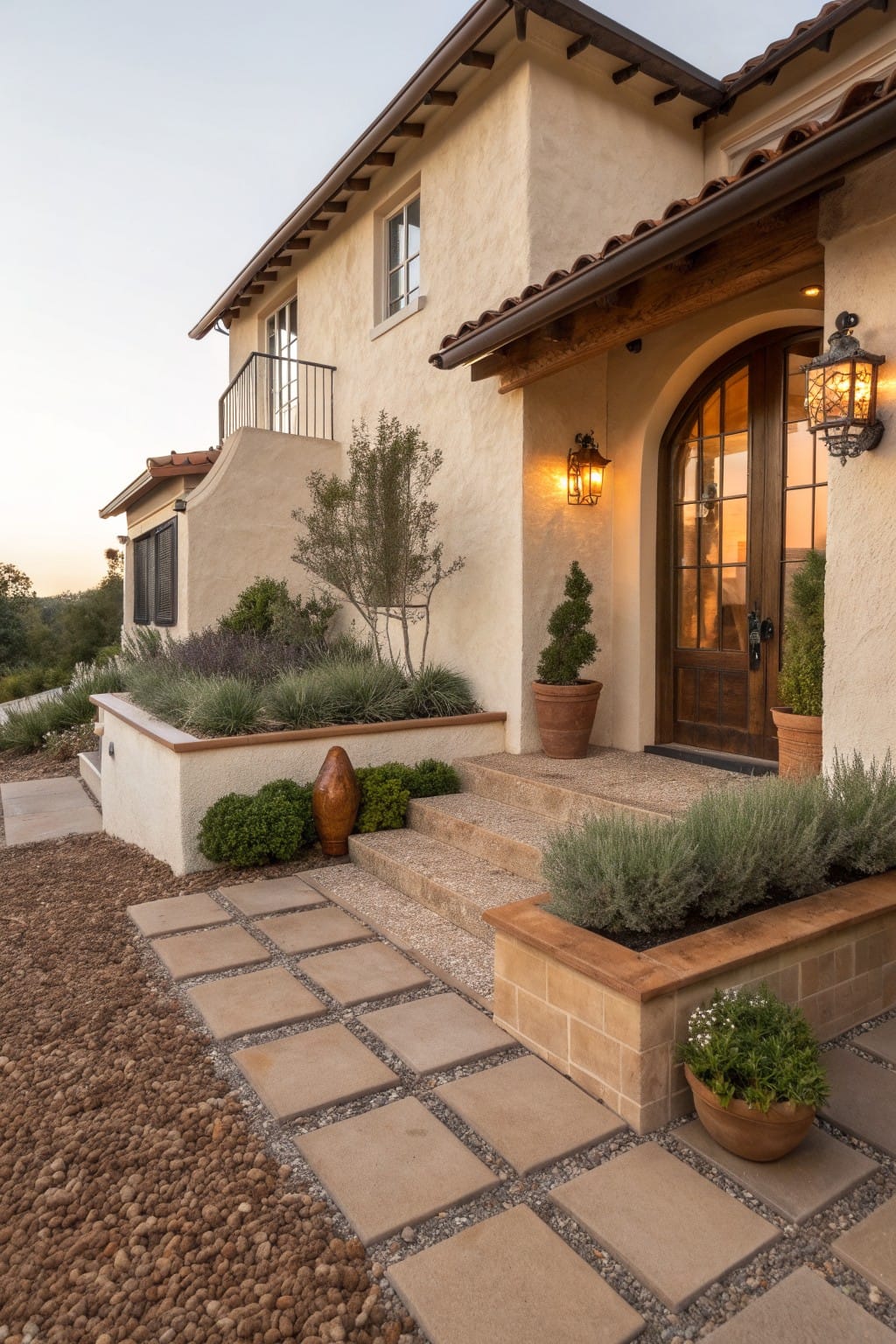
Coarse gravel spread around the base of the house makes for clean, low-maintenance ground cover that ties right into the entry steps. Here, large square pavers set into the gravel create a simple walkway that leads folks straight to the door without feeling too formal. It works well because the rocks let water drain fast and cut down on weeds, plus they let tough plants like lavender fill in the raised beds without much fuss.
This kind of setup suits sunny spots or drier yards, especially next to stucco walls like these. Start with landscape fabric under the gravel, drop in pavers where you walk most, and add a few pots for color. Skip it if your area gets heavy rain, though… gravel can shift if drainage isn’t right.
Boulder Beds Framing the House Foundation
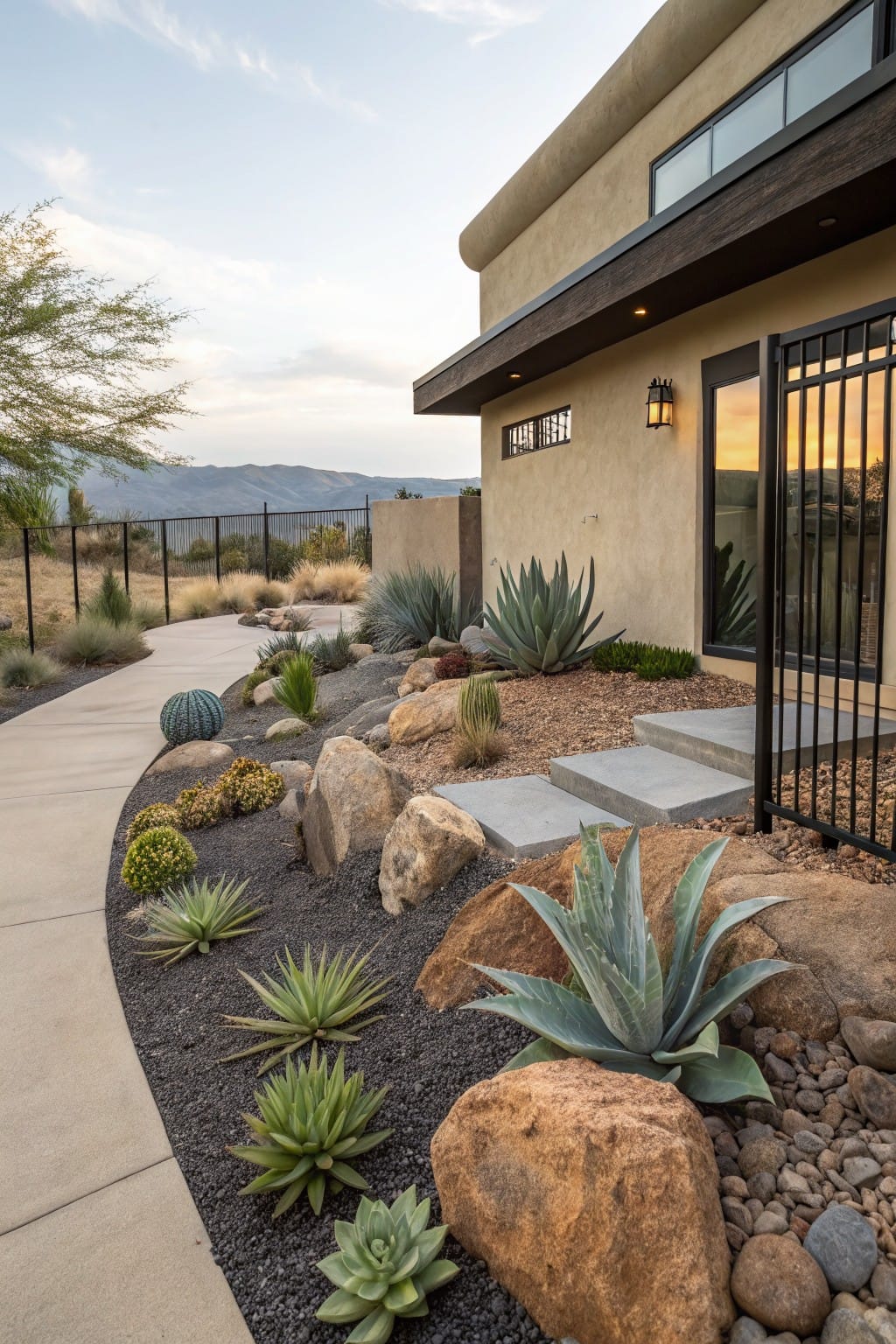
Big boulders tucked into gravel mulch with clumps of agave and succulents make a solid base around the home. They add real heft without needing constant care, and the mix keeps weeds down while letting the house walls stand out clean. That orange-toned rock pops against the tan stucco too.
This works best in hot, dry yards where you want curb appeal that lasts. Lay the biggest stones first along the foundation line, then add gravel and a few statement plants like those blue agaves. Skip it if your soil stays soggy. A path curving through ties it right to the entry steps.
Pebble Edging for Foundation Walkways
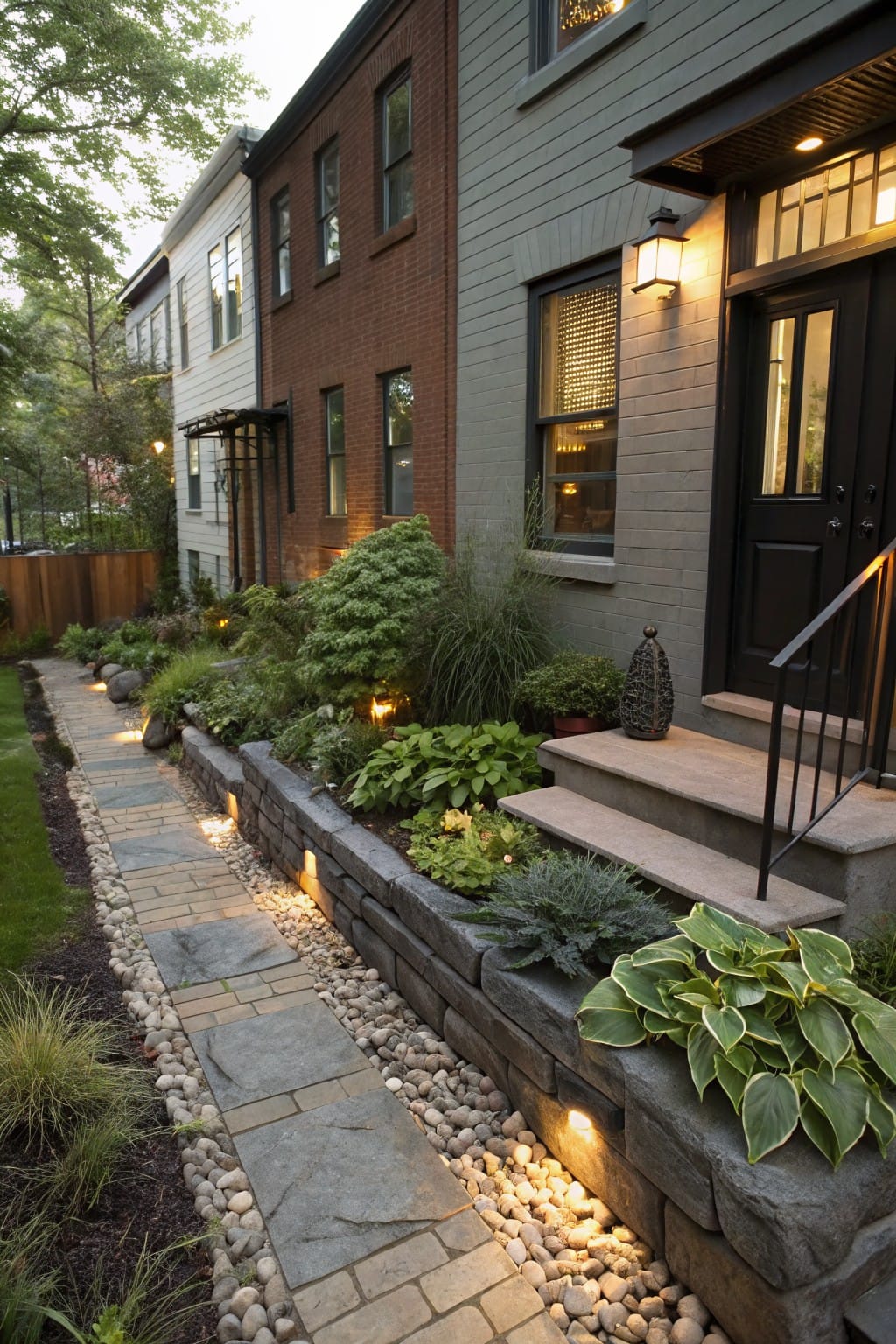
One straightforward way to handle landscaping around your house foundation is to line a walkway with smooth pebbles. This setup shows a stone path running right up to the front steps, edged tightly with river rocks and gravel mulch. The pebbles fill in neatly against low stone retaining walls that hold back the plant beds. It keeps things tidy while letting low plantings like hostas spill over a bit. That simple edging ties the path to the foundation without much upkeep.
You can pull this off on narrower side yards or along row houses where space is tight. Pick rounded pebbles in a neutral gray or tan to match local stone. Layer them two inches deep next to pavers, and add solar lights along the wall for evening walks. It works best on sloped lots to control runoff. Just rake the pebbles now and then to keep weeds down.
Terraced Stone Walls for Sloped Yards
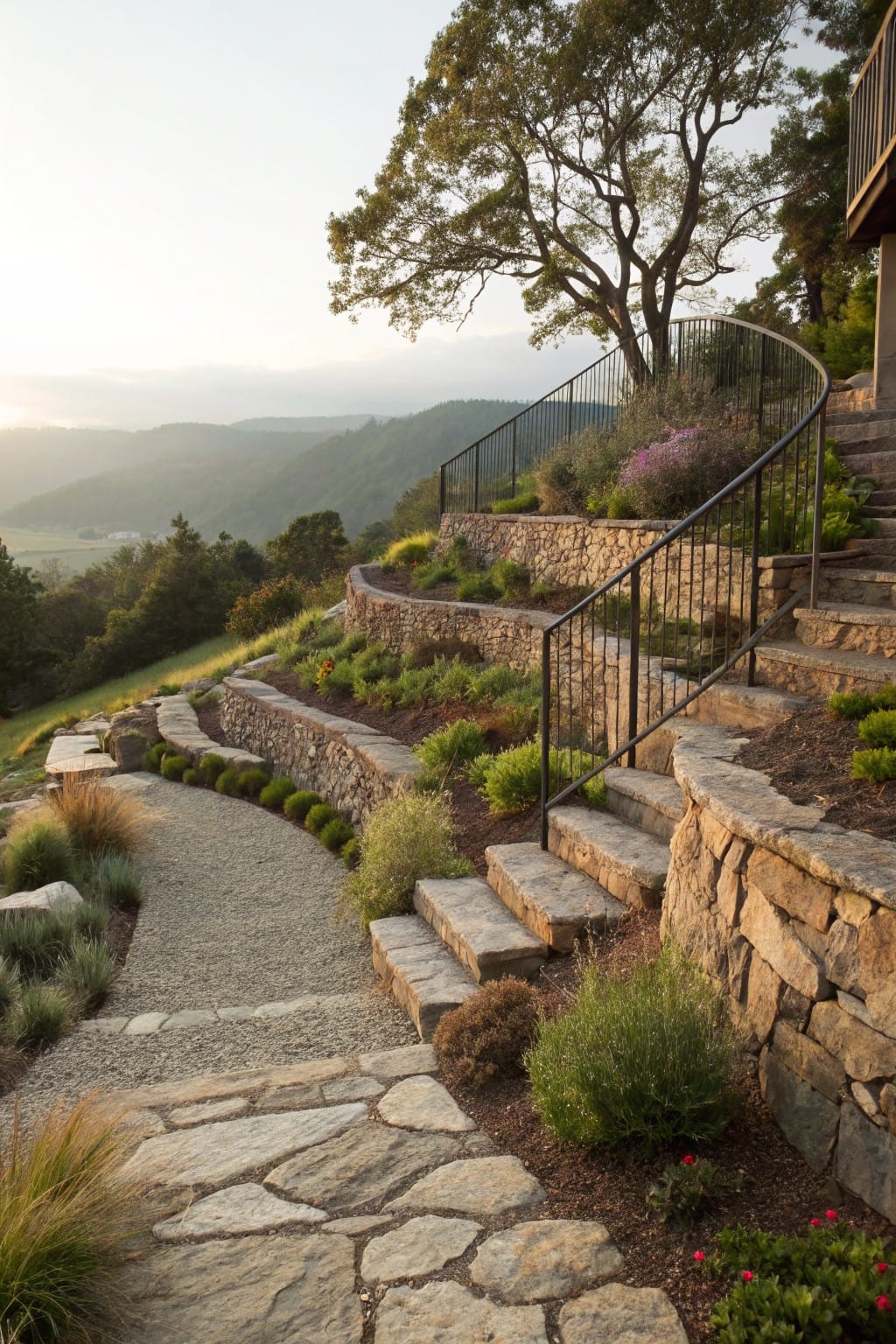
Slopes around a house foundation can be tricky. They erode easily and make it hard to get close to the home without slipping. Tiered stone retaining walls fix that. They create flat planting beds stacked up the hill, like steps for plants and people. In this setup, the rough stone ties right into the house base, and simple grasses and shrubs fill the pockets without much upkeep.
These walls work best on moderate slopes near the entry or side yard. Pick stone that matches your local area for a natural look. Add a gravel path winding through for easy access, and keep plants low-growing to avoid blocking views. It suits ranch-style homes or anything on a hill. Just make sure the walls are built solid to hold back soil over time.
Pebble Beds Edge Modern Foundations
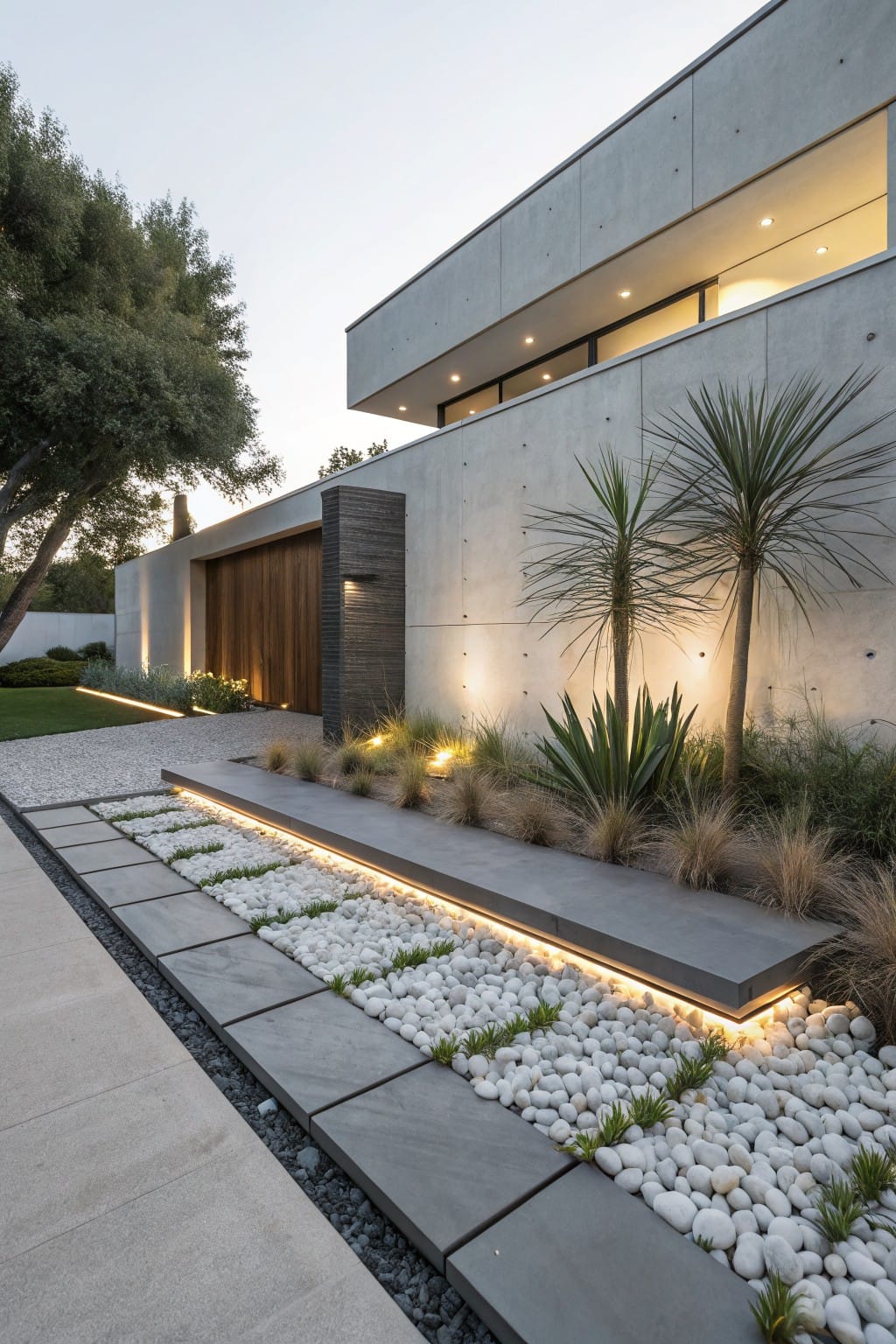
White pebbles fill raised concrete planters right along the house base here, mixed with spiky agaves and waving grasses. It pulls the eye smoothly from the path to the wall without much fuss. Those clean lines match the concrete finish perfectly and stay neat year-round.
Try this where you want low upkeep around a sleek exterior. Line up 4-inch slabs for the bed edge, drop in LED strips underneath for evening light, and pick drought-tough plants. Suits dry spots or busy yards. Just keep weeds pulled from the pebbles.
Flagstone Path Edged with River Rocks
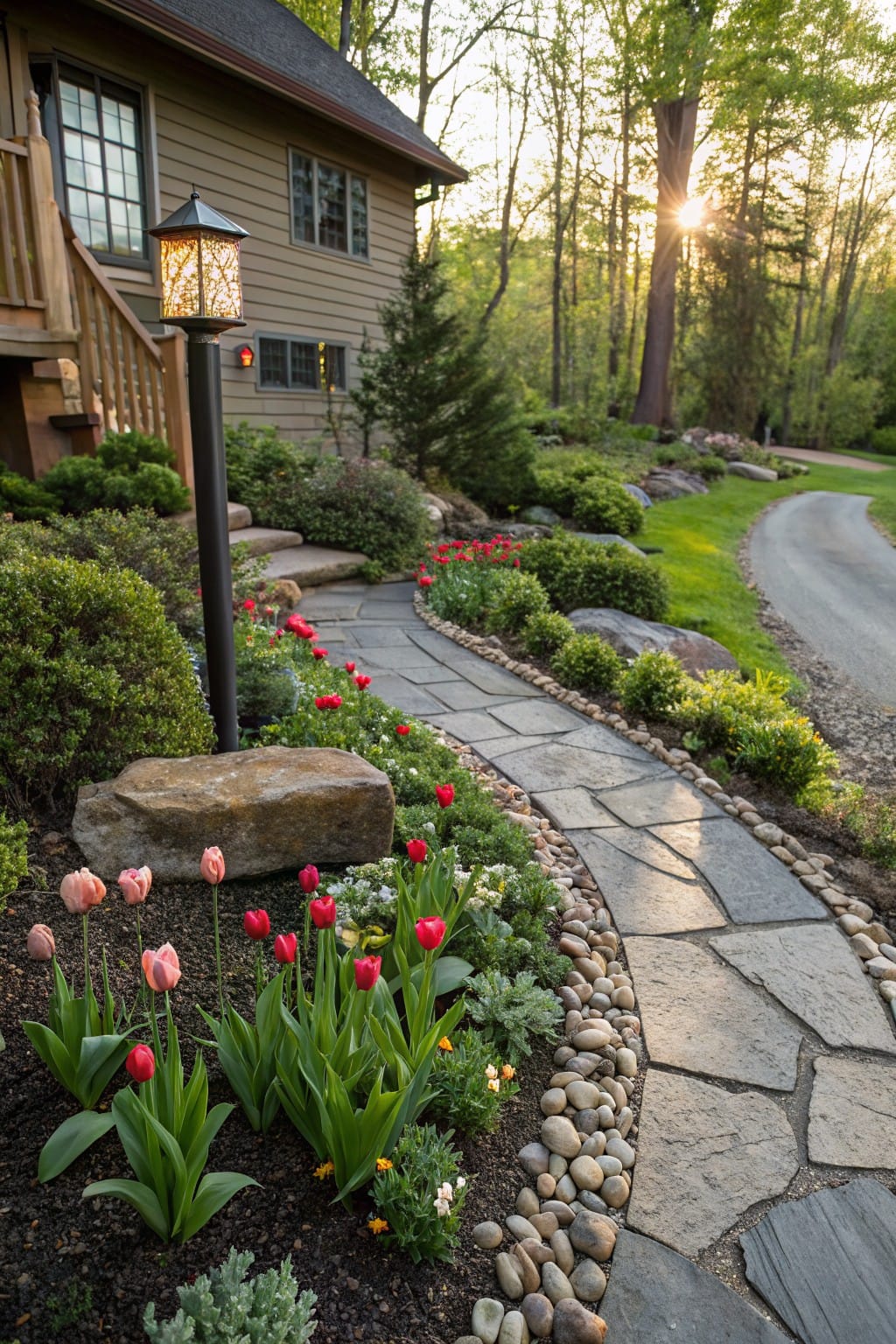
A winding flagstone path like this one makes a gentle lead-in to the house. The edges are lined with smooth river pebbles, with a few big boulders placed here and there for weight. Tulips pop up in the beds along the way. It keeps everything tidy around the foundation and feels natural, not overdone.
This works well on lots with some slope or in wooded spots. Pick flat stones for the path that match your local gravel. Layer in low shrubs and seasonal flowers. Skip it if your soil washes out a lot… add some mulch behind the rocks to hold things steady.
Stepping Stones in Gravel Along Foundations
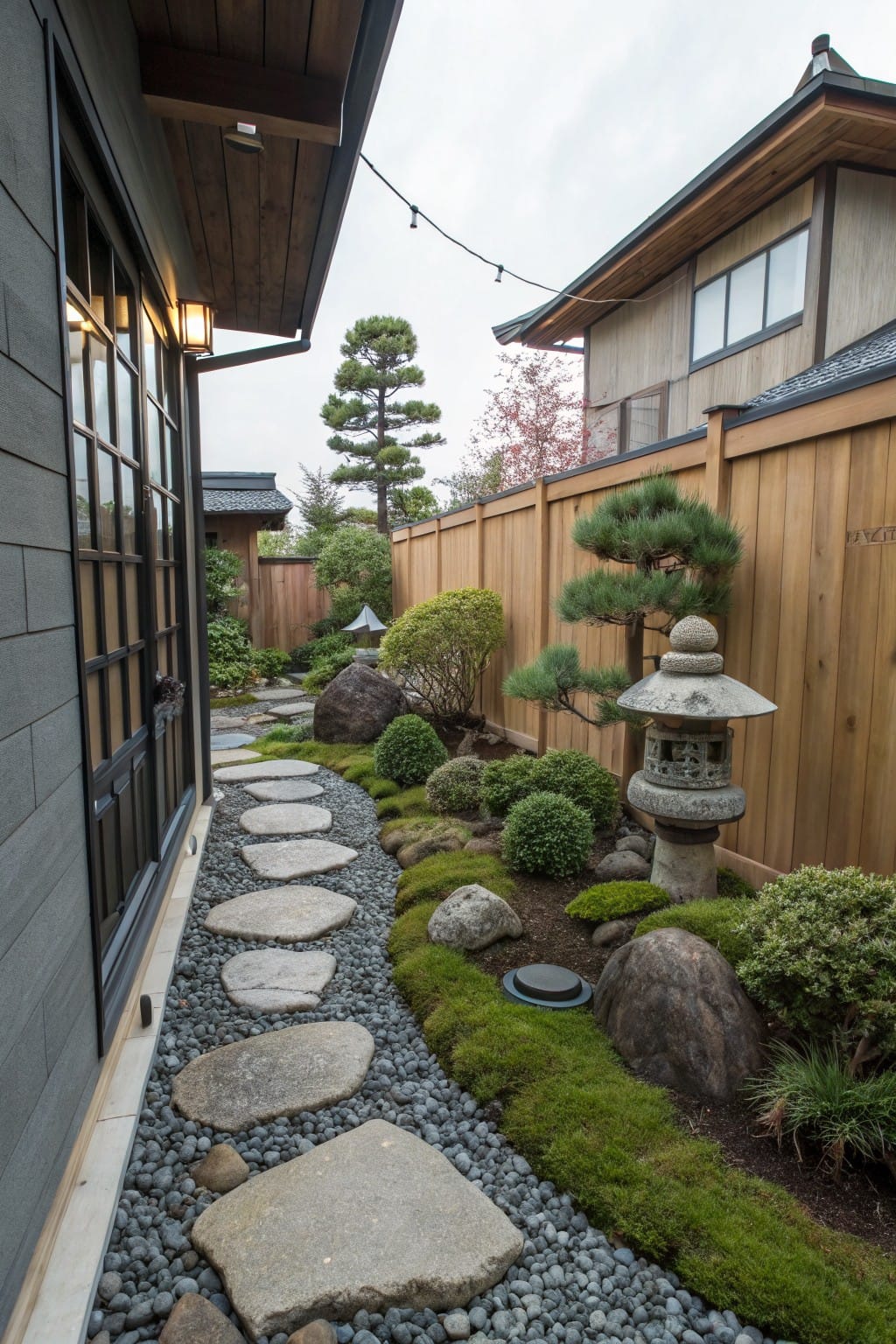
One straightforward way to landscape around your house foundation is setting large, irregular stepping stones into a bed of gravel. It keeps things simple and natural, with the stones guiding foot traffic while the gravel fills in neatly around them. Boulders tucked here and there add some weight, and low mossy plants soften the edges without much upkeep. This setup hides the base of the house nicely and gives a calm path feel.
You’ll want this in side yards or narrow spots where you don’t have room for big lawns. It suits homes with clean lines or a bit of Asian garden vibe. Just make sure the gravel drains well so water doesn’t pool against the siding, and space the stones for comfortable steps.
Terraced Stone Walls Around Sloped Foundations
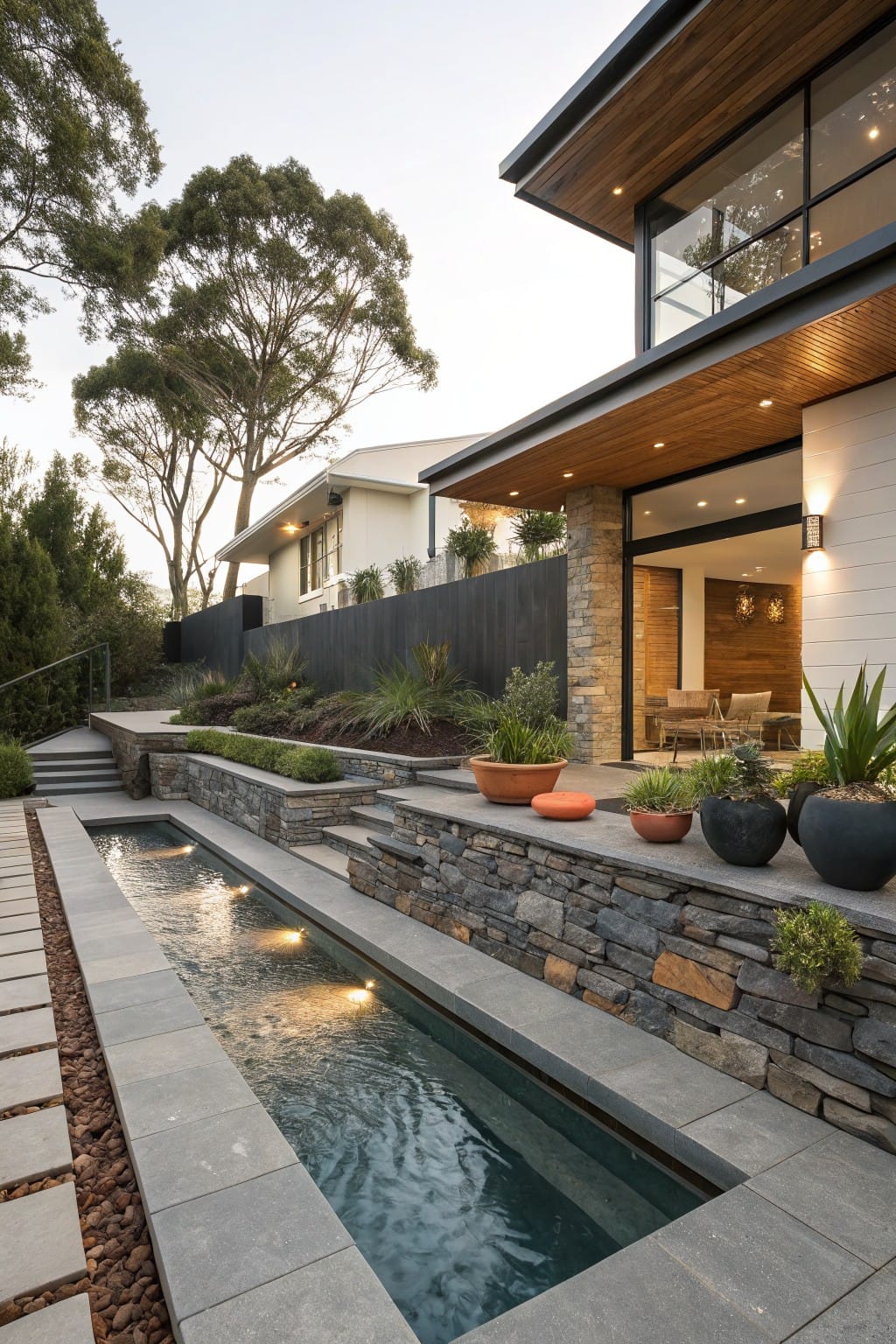
One smart way to handle a sloped yard next to the house is with terraced stone walls. These rugged stacked stones create flat levels for plants and paths right up against the foundation. In this setup, the dark rocks form clean steps and edges that keep soil in place and add some texture that ties into the house siding. It makes the base feel solid instead of sloppy.
You can pull this off on any moderate slope where erosion is an issue. Pick stones that match your local area for a natural look, and add low plants or pots on the terraces to soften things. Works great for modern or craftsman homes. Just make sure the walls are built sturdy, maybe with a pro, so they hold up over time.
Large Boulders Around Cabin Foundations
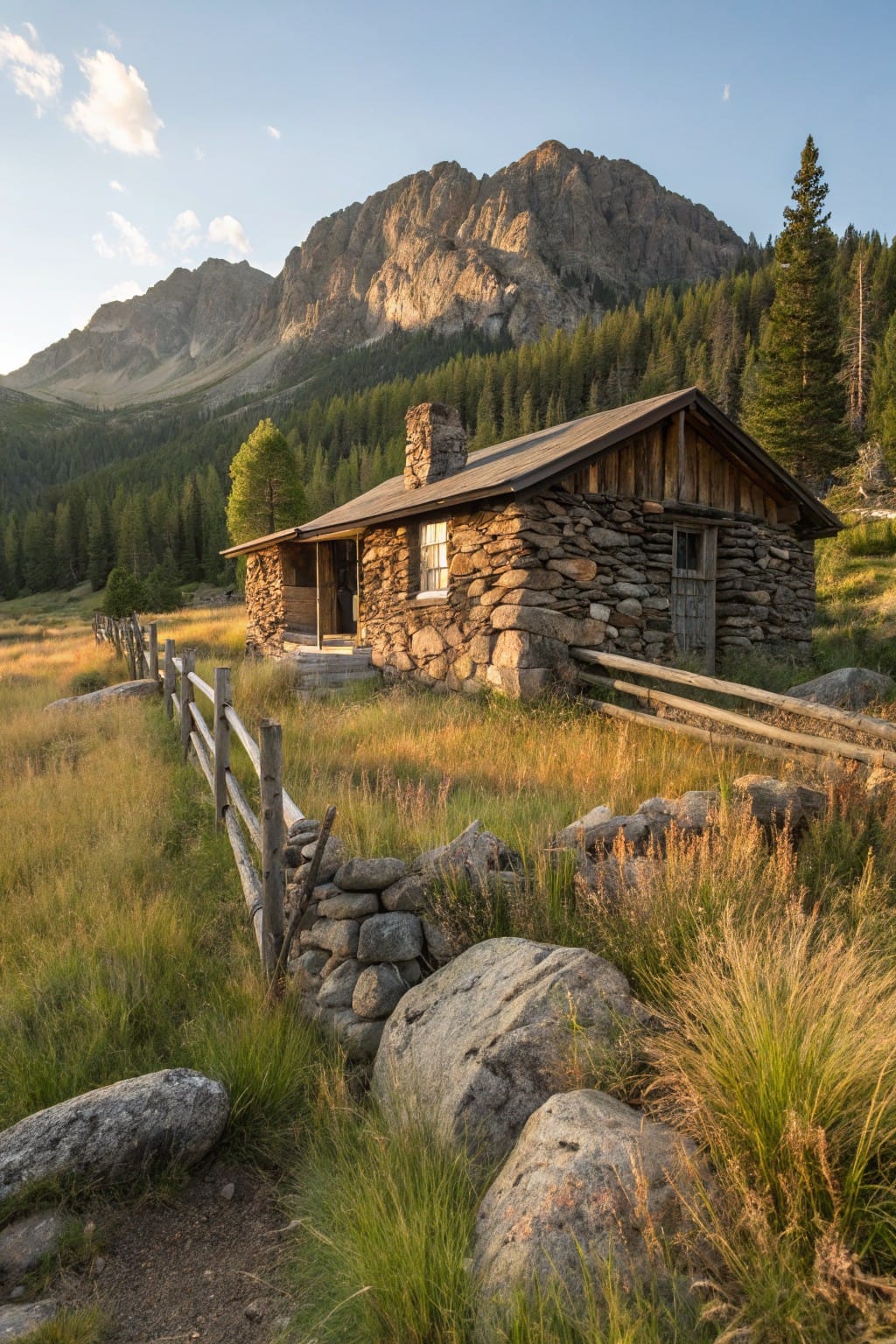
Large boulders placed right at the base of this stone cabin make the house look like it grew out of the ground. They match the cabin’s own rock walls perfectly, tying the building to the meadow and hills without any sharp lines. It’s a simple way to use what nature provides.
This works best on sloped lots or rural spots where you have rocks on hand. Stack a few big ones near the corners and along the sides, then let grass and weeds fill in. Skip formal edging. It suits older cabins or new builds wanting a rugged feel, but check for drainage so water doesn’t pool.
Gravel Mulch and Stepping Stones Around the Base
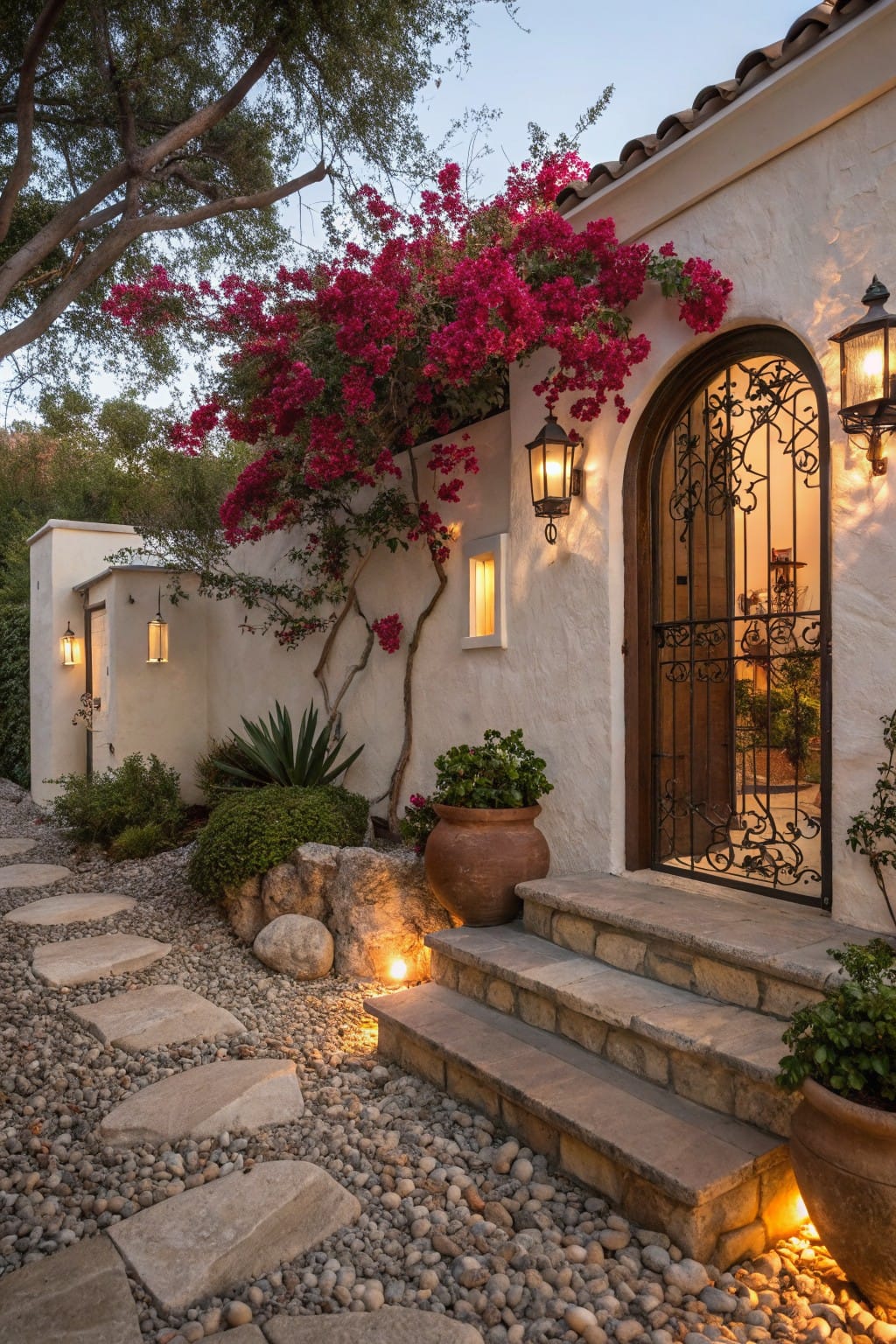
One straightforward way to handle landscaping right at the house foundation is with gravel mulch scattered thick, broken up by larger rocks and a simple path of flat stepping stones. It covers the soil neatly, cuts down on weeds, and gives a natural flow from the yard up to the entry steps. The loose gravel softens that hard edge where wall meets ground, and those bigger rocks add some weight without much upkeep.
This works best in sunny, dry spots where you want low maintenance, like around a front entry or side path. Pair it with tough plants in pots or climbers on the wall to fill it out. Size the stones to fit your steps, and keep the gravel two inches deep so it stays put. Any home can pull this off, especially if you’re aiming for that clean, desert look.
Stone Walls Edging Foundation Beds
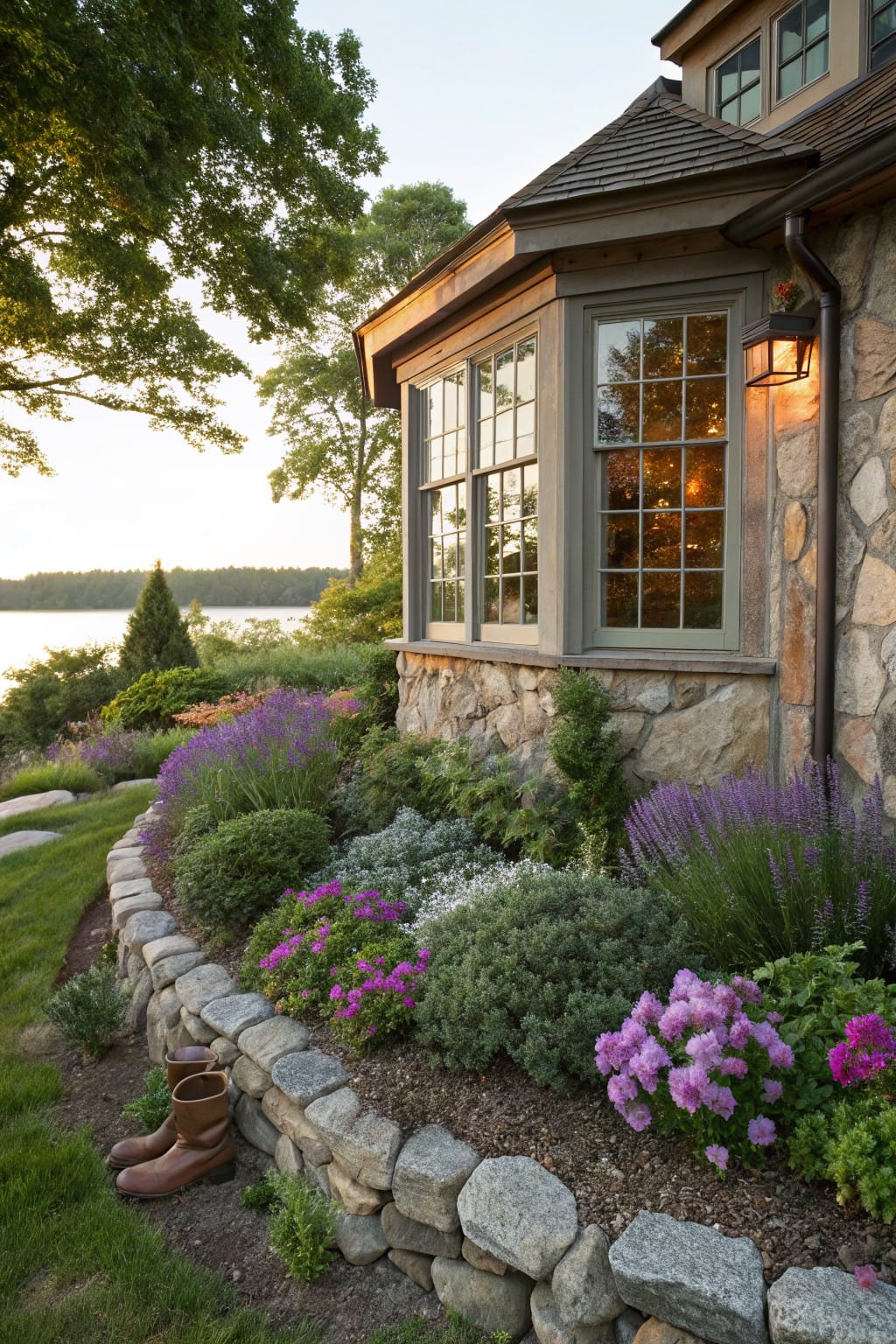
A low dry-stacked stone wall makes a solid edge for plantings right against the house foundation. It picks up on the house’s own stonework, so the yard feels like part of the home. Here the gentle curve follows the terrain, and the mix of lavender and low shrubs fills it out without crowding the base.
This setup suits homes with natural stone details or sloped spots near the foundation. Use local fieldstone for easy blending, and stick to drought-tolerant plants that layer by height. One thing to watch. Weeds can sneak in, so mulch well and trim back once a year.
Boulder Beds Along the House Base
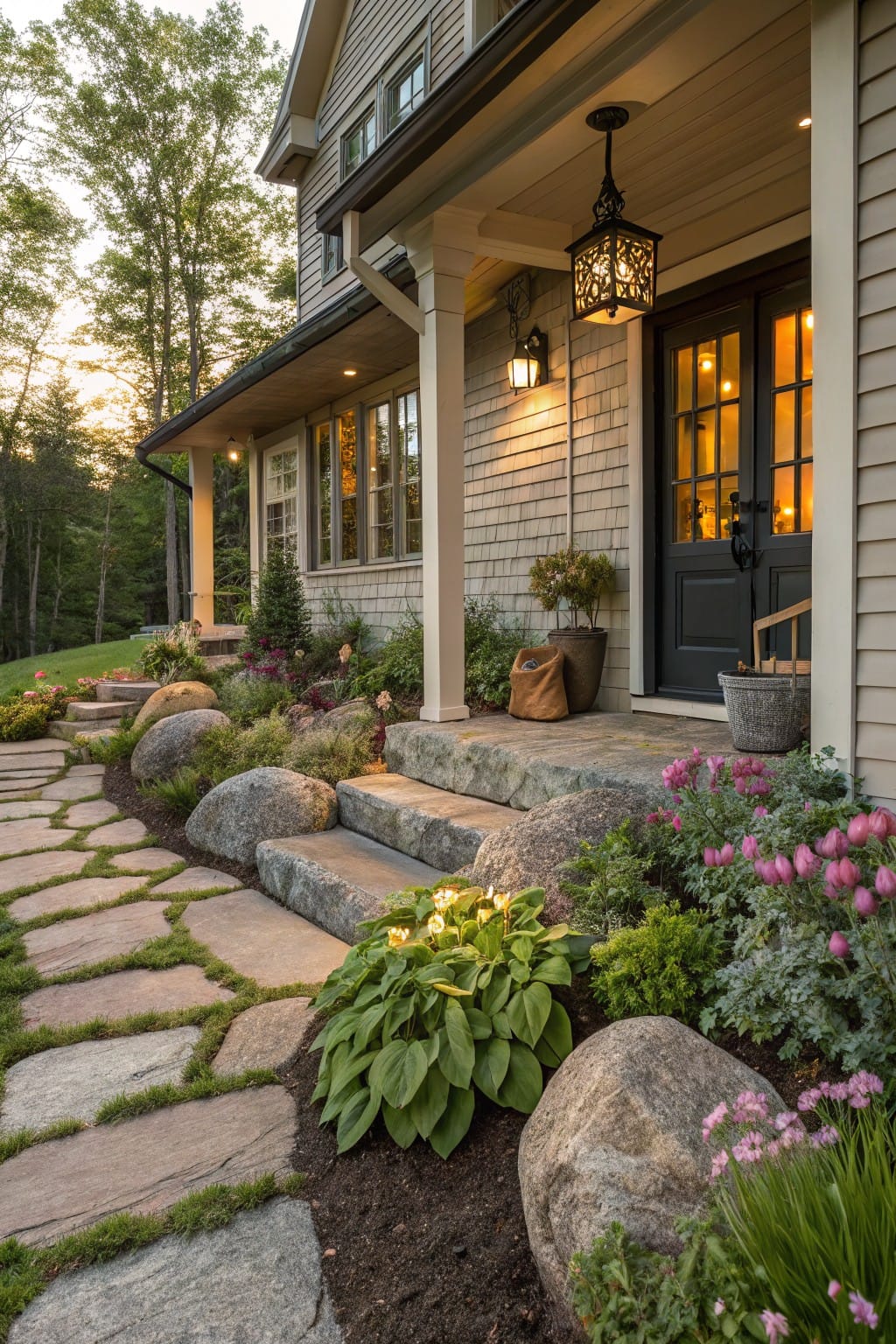
Big boulders work well in garden beds right up against the house foundation. They give a rugged, natural feel that ties the yard into the home without much upkeep. Here, oversized rocks sit among hostas and tulips, with a flagstone path winding through to the stone steps. It keeps things from looking too built-up.
Try this on homes with shingle siding or in wooded spots. Start by placing the biggest stones closest to the foundation, then layer in plants and mulch. It suits sloped lots too, since the rocks help hold soil. Just make sure drainage is good so water doesn’t pool.
White Pebbles Around the Foundation
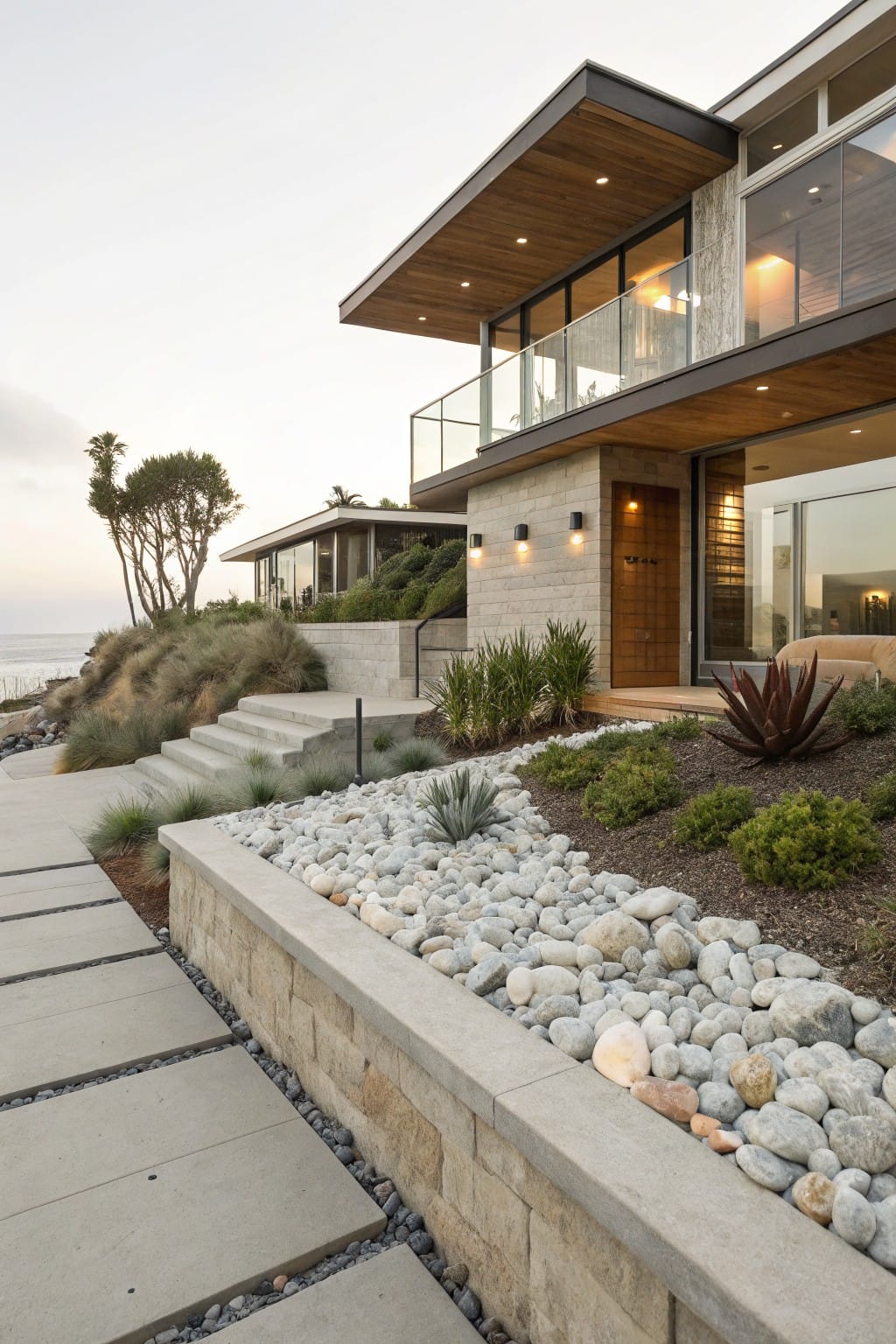
One straightforward way to handle landscaping right at the house base is filling beds with smooth white pebbles. You see it here mixed with clumps of grasses and a few tough succulents like agave. It keeps things neat without much upkeep, and the light color picks up the stucco walls nicely for a calm, pulled-together look along the bottom of the house.
This setup works great on sloped lots or coastal spots where you want drainage and low water use. Lay down landscape fabric first, then add the rocks two to three inches deep around established plants. Skip it on super shady areas though, since pebbles can look stark without some green nearby. Pairs well with concrete paths like these for a modern edge.
Raised Stone Planters Around Outdoor Structures
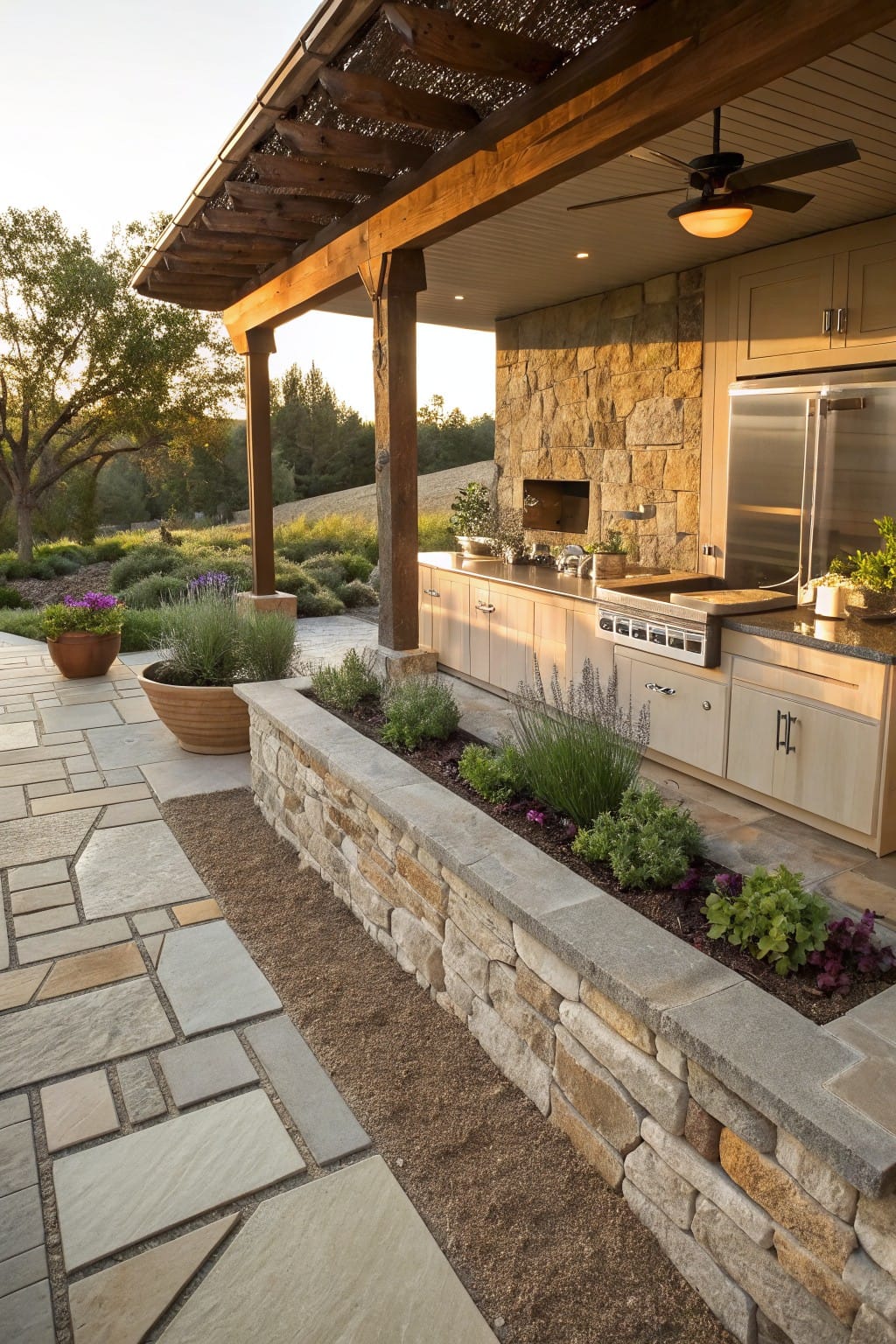
One simple way to handle foundations in a yard is with low raised planters made from natural stone. They cover the base of buildings or walls without looking forced. In this setup, the stacked stones match the outdoor kitchen’s stonework, and plants like lavender spill over the edge. It keeps things tidy while adding some green right where you need it.
These work best around patios or sheds where you want a clean line but not bare concrete. Pick stones in earth tones that blend with your house siding. Fill with low plants that won’t grow wild. Just make sure good drainage is built in so roots don’t mess with the mortar.
Frequently Asked Questions
Q: Do rocks around the foundation cause drainage problems?
A: Rocks improve drainage if you slope the soil away from your house base by an inch every foot or so. Layer in some gravel first to let water seep through fast. Your foundation stays dry that way.
Q: How do I keep weeds out of the rock bed?
A: Pull every weed and grass root before you start, then roll out landscape fabric tight against the house. Pin the edges down well and cover with rocks right away. Spot-treat any strays early with vinegar spray.
Q: What if my yard slopes toward the house?
A: Build up the soil on the downhill side with extra dirt and rocks to reverse the flow. Tamp it firm so it holds. Water runs off instead of pooling.
Q: How far should the rocks extend from the foundation?
A: Go 2 to 3 feet out—that frames the house nicely without overwhelming it. Rake smooth to the edges of your lawn or plants. Blend it into the rest of your yard.
