

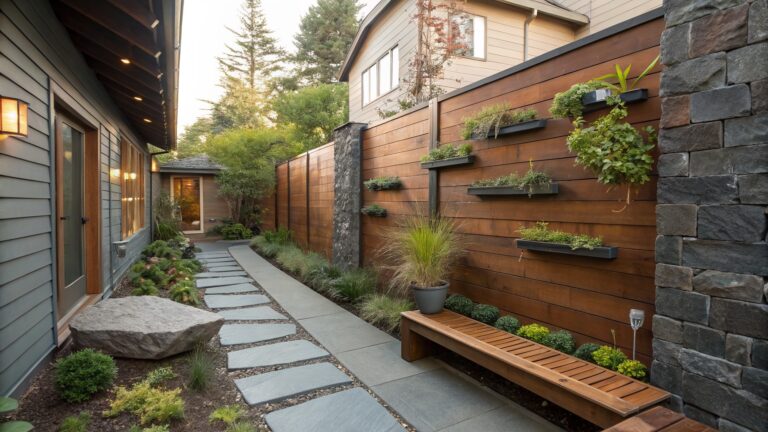
I’ve noticed that in cramped yards, rocks work best when they quietly define paths and edges without overwhelming the plants around them. They shape how the space flows over time, catching runoff in clever ways that keep soil stable through seasons. The first thing visitors spot is usually a well-layered border that looks rugged yet tidy. A couple years back, I used flat stones to carve out a forgotten strip along my fence, and it instantly made the area feel bigger and more usable. These ideas remind me which rock setups hold up in real dirt and hold promise for tweaking in tight spots like yours.
Stepping Stone Path with Gravel Borders
A simple stepping stone path like this turns a skinny side yard into a real walkway. Large dark slate slabs set into gravel create that clean line down the middle. The white gravel fills the edges nicely, and it lets water drain right through. Throw in some low grasses along the sides, and you’ve got a low fuss path that guides you back to a quiet bench spot.
This works best in tight spots between houses or fences, where you don’t have room for a full width path. Pick stones big enough to step on comfortably, maybe two feet across. Gravel keeps costs down and weeds out if you top it off now and then. Just make sure the base is level so it doesn’t shift over time.
Curved Pebble and Stone Pathways

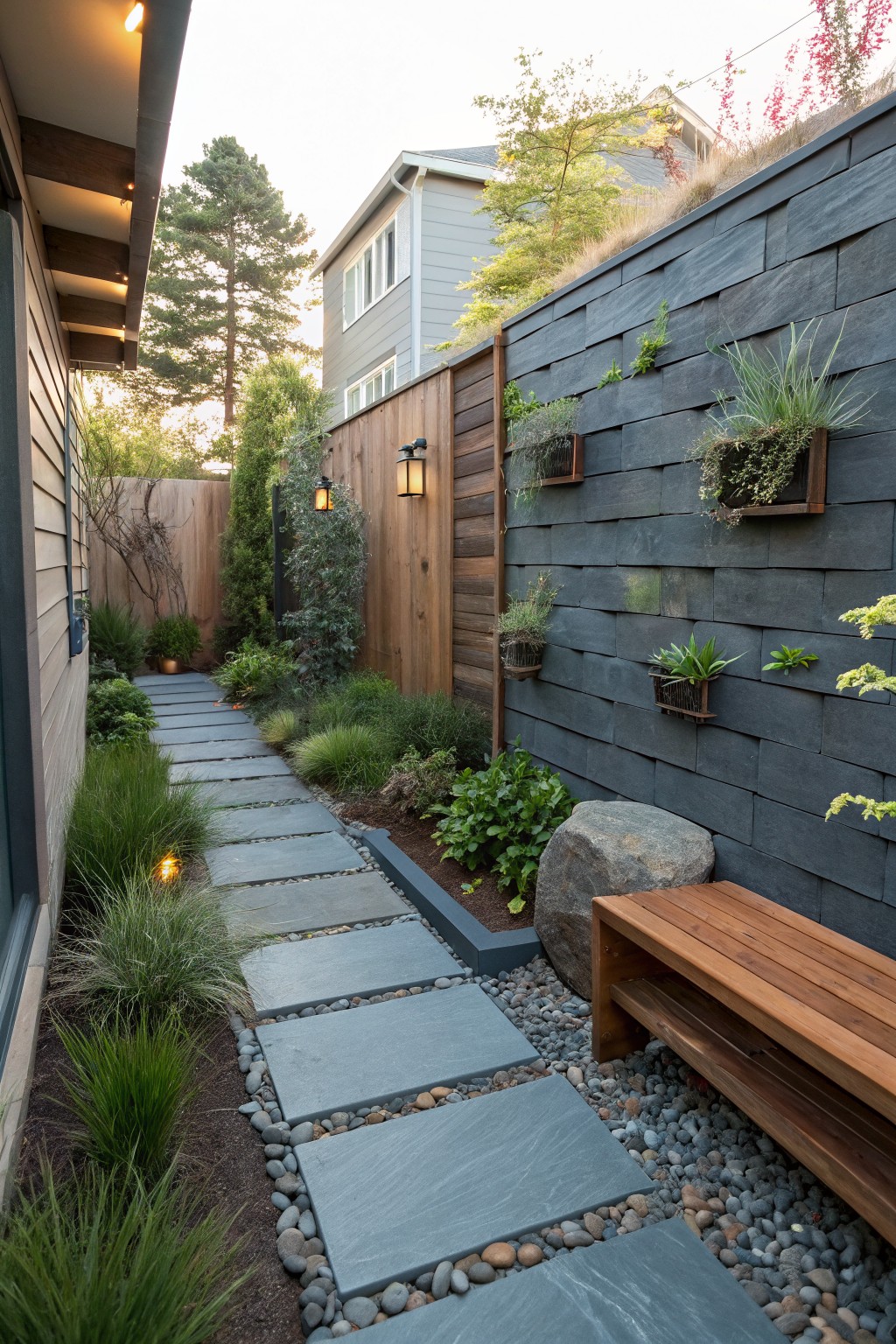
One smart way to handle a tight courtyard or entry garden is with a path made from rough stone slabs dropped into smooth pebbles. It draws the eye along a gentle curve, past low plants and a simple bench, without eating up precious ground space. The rocks define the route cleanly but leave room for gravel mulch and planting beds to breathe around it.
You can pull this off in any small outdoor spot backed by a plain wall, like a side yard or house corner. Start with a compacted gravel base, position the slabs where feet will fall naturally, then fill the rest with pebbles for easy drainage. It suits dry climates best, keeps weeds down, and pairs well with olive trees or drought plants. Just pick stones that match your house stone.
Large Boulders in Compact Rock Gardens

Big boulders like these give a small front yard real structure. Placed right along a simple path, they fill the space without crowding it. The mix of smooth gray pebbles and flat stepping stones keeps everything low fuss, while a few tough plants add just enough green. It’s a clean way to handle tight spots near the house.
This works best in sunny, dry areas where you want zero mowing. Pick boulders that match your local stone for a natural look, then tuck in drought plants around them. Keep paths wide enough to walk easily, and it ties right into modern entries without taking over.
Compact Rock Retaining Walls for Pathways
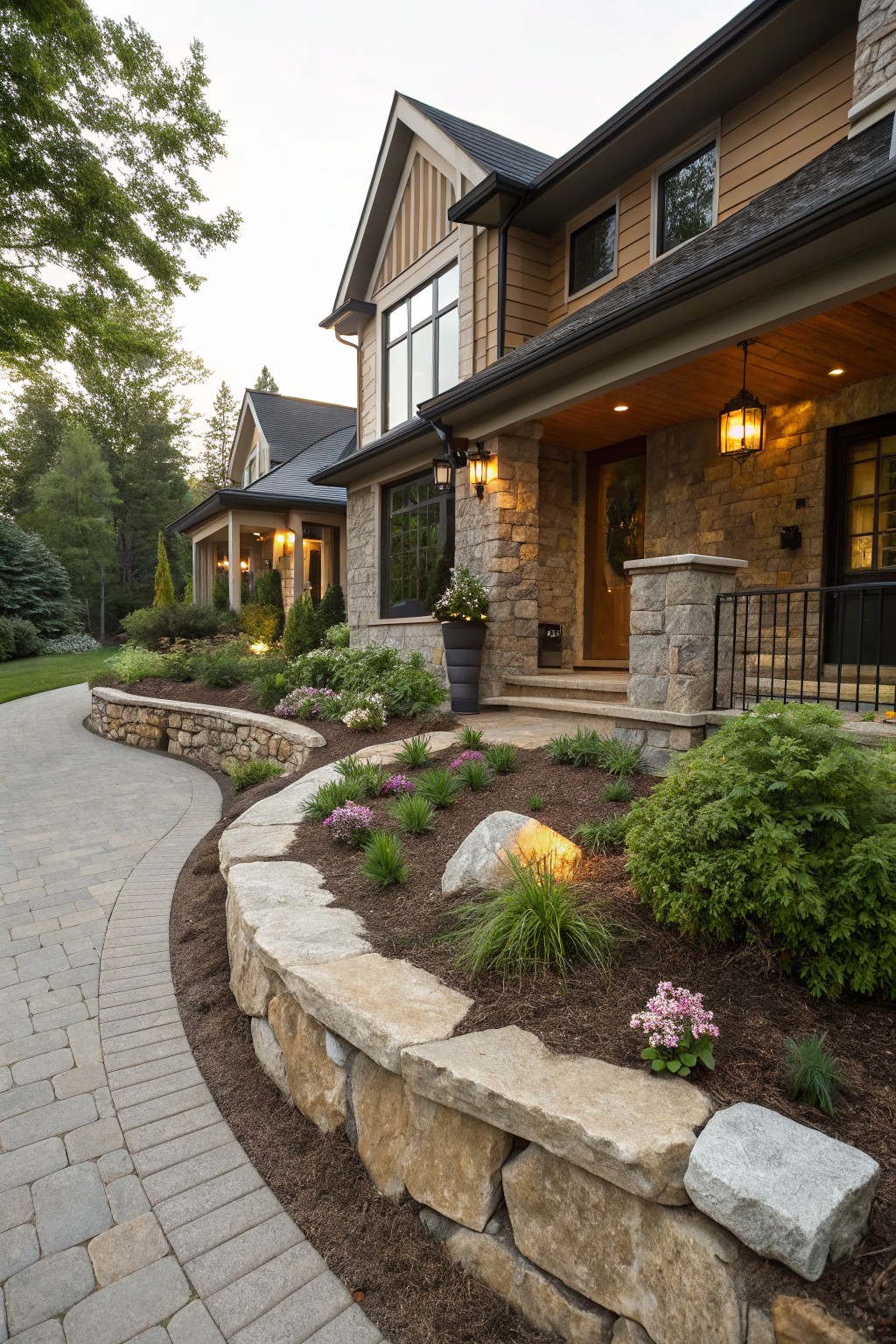
A simple dry-stack stone wall curves along this walkway, turning a narrow sloped strip into a neat rock garden. Boulders sit right in the mulch with low plants filling gaps, holding soil back without much fuss. It keeps the path clear and adds some shape to the yard edge.
This setup fits tight front yard spots near the driveway or entry. Pick rough local stones to match your house siding, and go easy on plants so they stay under waist height. It handles slopes well on smaller lots, giving structure where grass might wash out.
Pebble Path in Narrow Balcony Garden
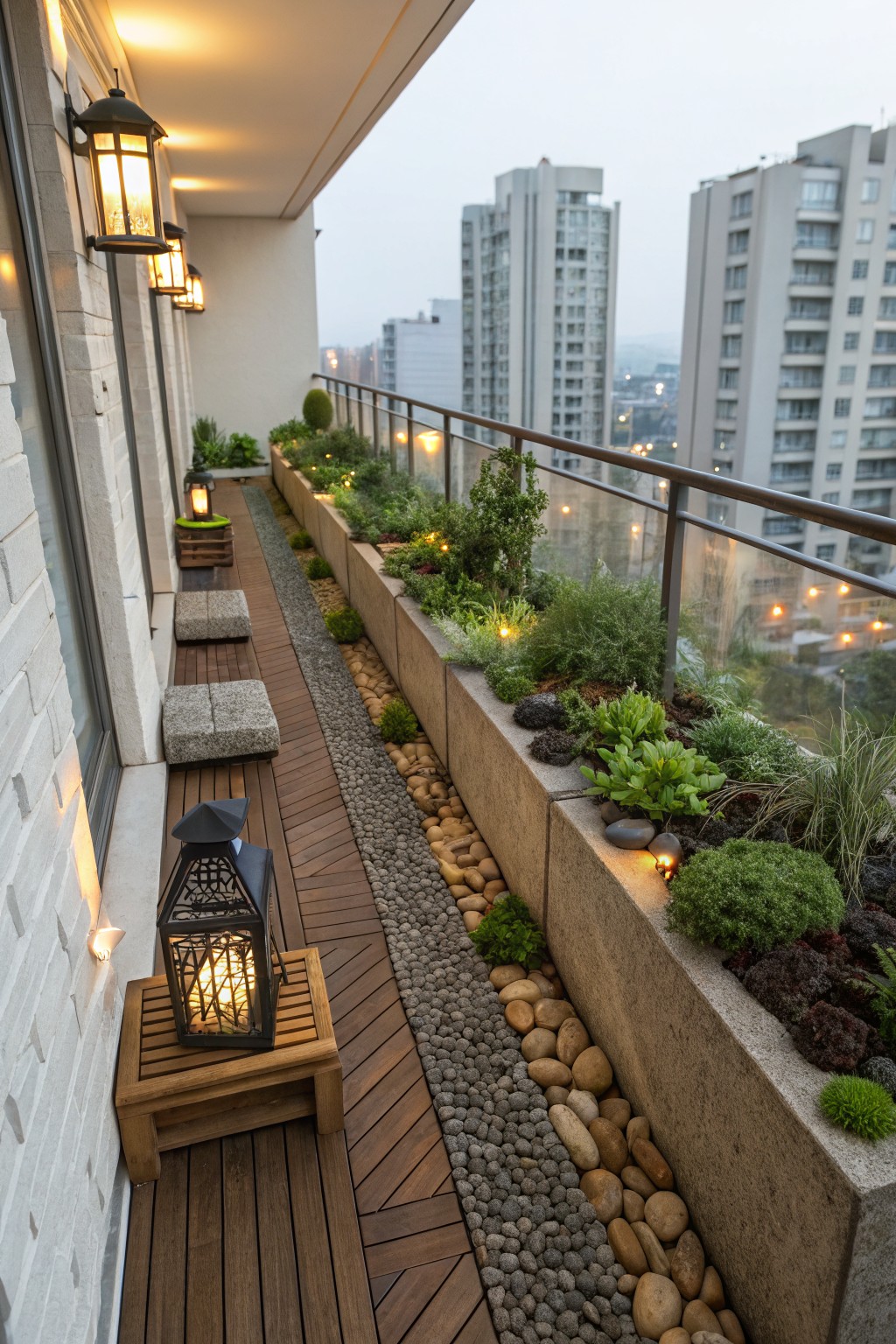
A simple pebble path runs straight down this slim balcony, tucked between tall concrete planters full of greens and herbs. The smooth river rocks make a clean walkway you can actually use, even in such a tight spot. It keeps plants off the walking area and gives the whole thing a calm garden feel without crowding.
This works best on high-rise balconies or any skinny outdoor ledge where you want low upkeep. Build planters along the rail side, fill the gap with pebbles over landscape fabric for drainage, and you’re set. Wood decking underneath adds warmth. Just make sure the rocks stay put in wind.
Winding Stone Paths for Narrow Yards
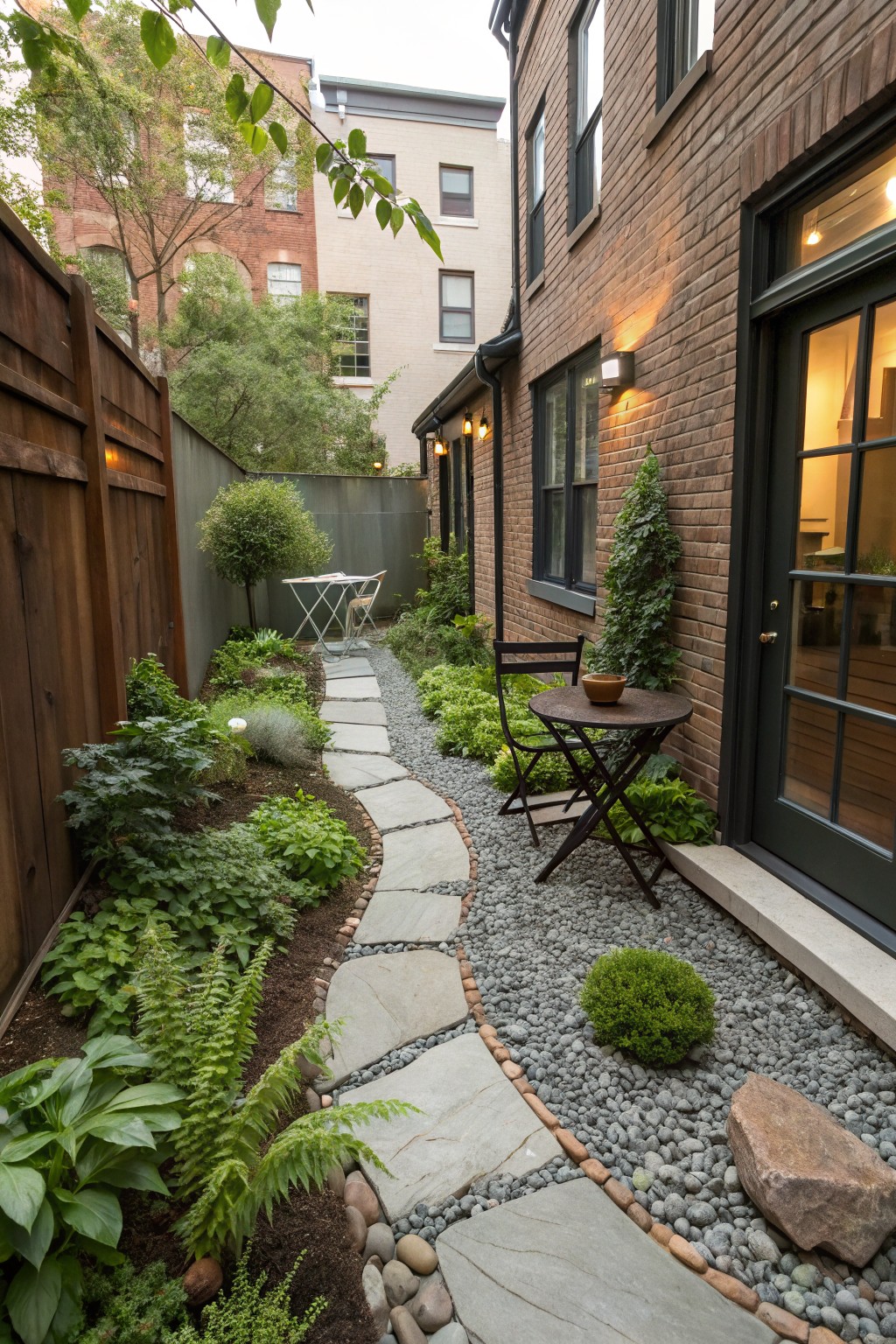
A simple winding path like this turns a skinny urban garden into something you actually want to walk through. Rough-cut stone slabs curve gently along the length of the space, edged with smooth gravel and pebbles that fill in the gaps without much upkeep. Plants tuck right up against the edges, making the path feel like part of the garden instead of just a walkway.
This idea fits best in tight side yards or alleys where straight lines would feel boxy. Lay the stones loose on soil or sand for easy changes later, and keep plantings low around the turns. Watch for spots where water pools… add a slight slope if needed. It opens up the area for a small table and chairs without crowding things.
Tiered Stone Walls Fit More in Small Yards

One smart way to make a tight backyard feel bigger is stacking low stone retaining walls to build levels right into the layout. You get flat spots for plants or a little table without eating up ground space. In this setup, gravel fills the lower tiers for easy drainage and a clean look, while pavers lead the way. It keeps everything tidy and lets you add height without crowding.
These walls work best in narrow side yards or courtyards next to the house. Use local stone for a natural tie-in, and keep tiers under two feet high so they stay walkable. Skip steep drops. Pair with tough, low plants in the gravel beds. It’s low fuss once set up, and that built-in ledge? Perfect for drinks or lanterns at dusk.
Rock-Edged Gravel Walkway
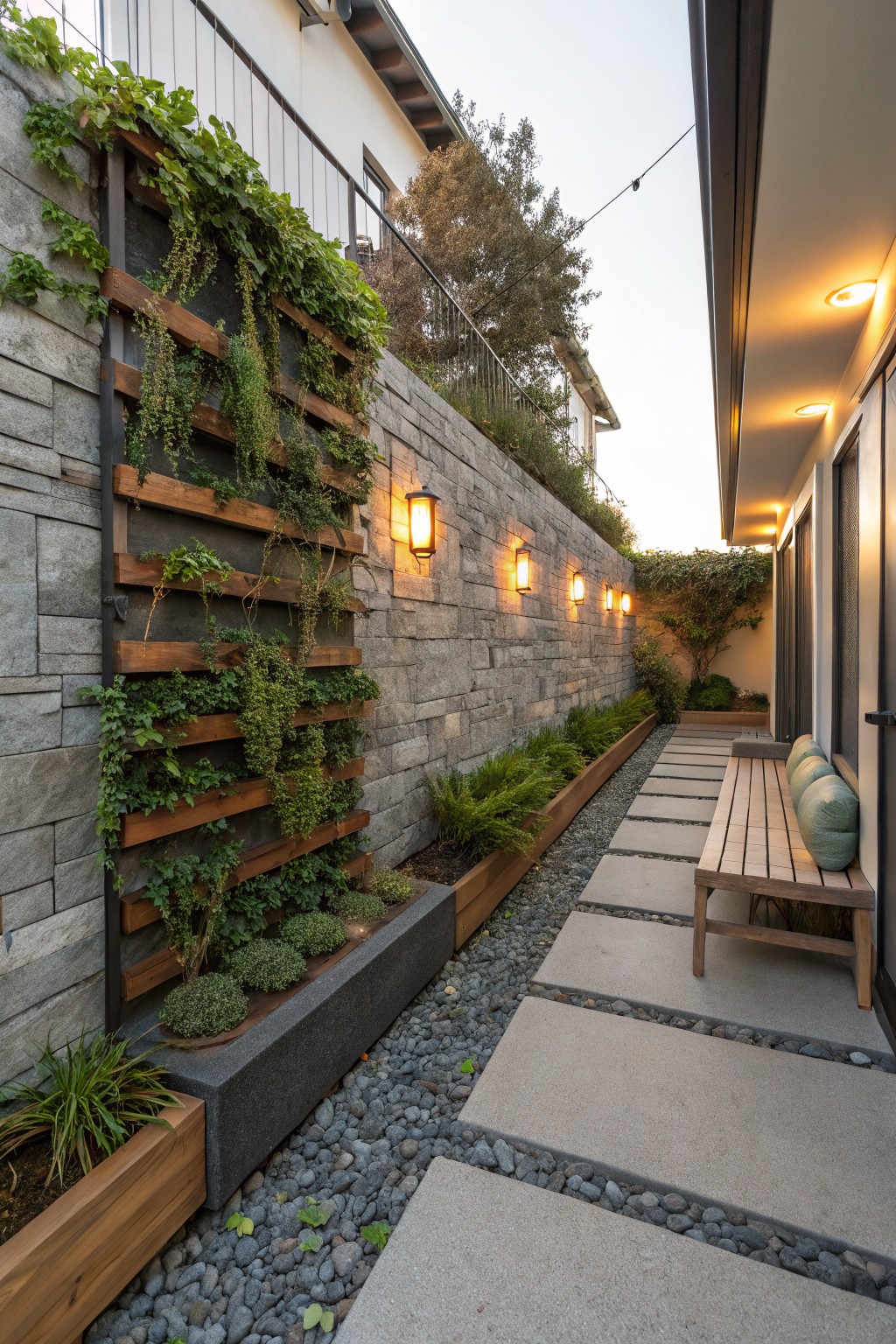
In tight spots like side yards or narrow passages, a simple gravel walkway edged with smooth river rocks does a lot without taking up room. Here, the path runs between a tall stone wall and the house, with pebbles tucked between wide concrete pavers for easy walking. Low wood planters filled with rocks and ferns line one side, keeping the ground covered but open. It feels tidy and natural, especially with vertical plants climbing the wall for some height.
This setup works best in modern homes or rentals where you want low upkeep. Lay gravel over landscape fabric for drainage, then add larger rocks at the edges to hold it in place. Skip it if your area floods a lot… go with solid pavers instead. Add a bench halfway for a quick rest spot, and it turns a forgotten path into something useful.
Rock Walls Around Curved Entry Steps
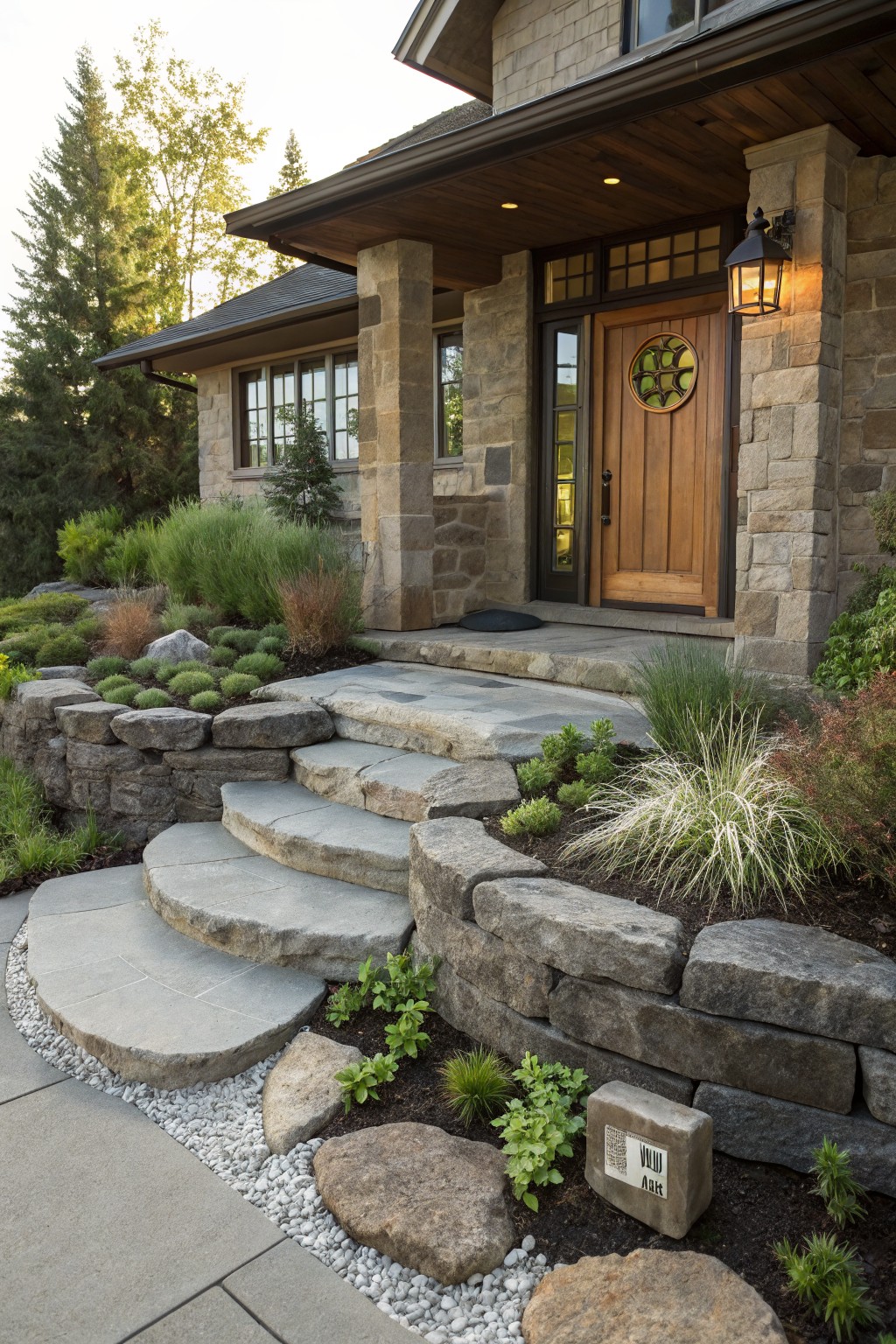
One smart way to handle a small entry area is building rock retaining walls that hug the steps up to your door. Here the walls curve gently with wide bluestone treads, and little pockets of soil hold low plants like grasses and sedum. It turns a basic walkway into something that feels established and full, even in tight space. No flat mulch beds. Just natural layers that tie right into the house stone.
This works best on a slope where you need to terrace the ground anyway. Pick rugged local stone for the walls, keep plants tough and low-growing so they don’t flop over the steps. Suits a craftsman-style home or any place with some grade. Watch the wall height though. Too tall without proper engineering and it could shift over time.
Terraced Stone Walls for Sloped Yards

Sloped backyards can feel like wasted space, but terraced stone walls fix that by carving out flat levels for plants and paths. These walls follow the hill’s curve, with steps built right in, so you get easy access without a straight climb. The natural stone look blends with the landscape, and low lights along the edges make it safe and pretty at night.
This setup works best in smaller yards where you want low-maintenance plants like succulents tucked into the beds. It suits homes on hillsides, turning a tricky spot into garden rooms. Just plan for good drainage behind the walls to keep things stable.
Curved Retaining Wall with Pebble Beds

One smart way to fit more into a tight yard is building a curving stone wall that doubles as a bench. Here, the wall wraps around the space, holding back soil while giving a spot to sit. Pebbles fill the beds right along the edge, keeping things neat without much planting work. The low fire pit at the end pulls it together for evenings outside.
This setup works best in narrow side yards or along fences where you need path and seating without eating up ground. Pick rounded river rocks for the beds so they settle well, and match the wall stone to your house. Keep the bench wide enough for two, maybe add cushions. It stays low fuss if you stick to drought plants in the gaps.
Stone Steps with Built-In Planters
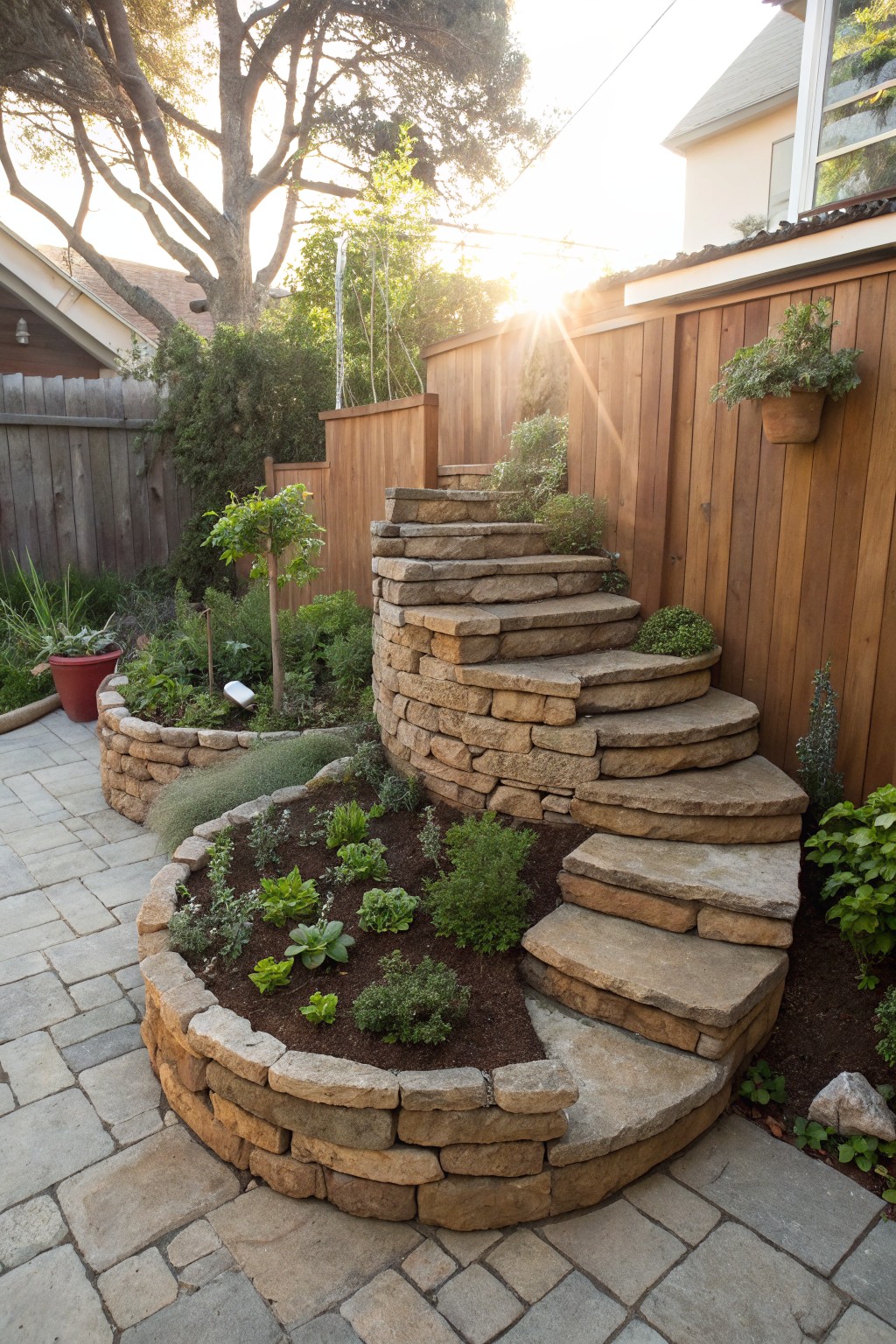
These stone steps curve up a slope, with the retaining walls stacked from the same rock and packed with soil for herbs and ground covers. It’s a smart way to handle a tricky incline in a small yard. The plants grow right out of the walls, so you get steps plus garden beds without eating up flat space. No wasted area here.
You can pull this off in any compact backyard that needs height. Pick rugged local stone that matches your fence or house, then fill the pockets with tough plants like thyme or sedum. Keep it south-facing for sun if you want edibles. Just make sure the base is solid to hold soil and foot traffic over time.
Rock Gardens for Narrow Side Yards

Big boulders and gravel make a narrow strip between the house and wall feel like a real garden. Instead of cramming in too many plants that might crowd things out, this setup uses a few oversized rocks as the main feature. They take up space without needing much care, and the shallow water channel adds a quiet flow that draws the eye along the path.
This works best along a walkway or beside a garage where you’ve got just a couple feet to play with. Go for smooth river rocks in gravel beds edged with concrete, and tuck in low grasses or ferns for some green. Skip anything fussy that needs trimming. It keeps the area clean and turns dead space into something worth walking through.
Stepping Stone Path in Rock Garden

A simple stepping stone path winding through gravel and big boulders gives direction in a tight yard. It pulls the eye to the house entry without crowding the space. Drought-tolerant plants like grasses and succulents tuck in around the rocks for color and texture that lasts.
This works best along a house side or narrow front area where grass won’t grow well. Lay flat stones in a gentle curve, pile gravel between, and drop in boulders for weight. Skip straight lines…they feel too stiff. Suits beach houses or dry spots, keeps maintenance low.
Spiral Rock Path for Tight Backyards
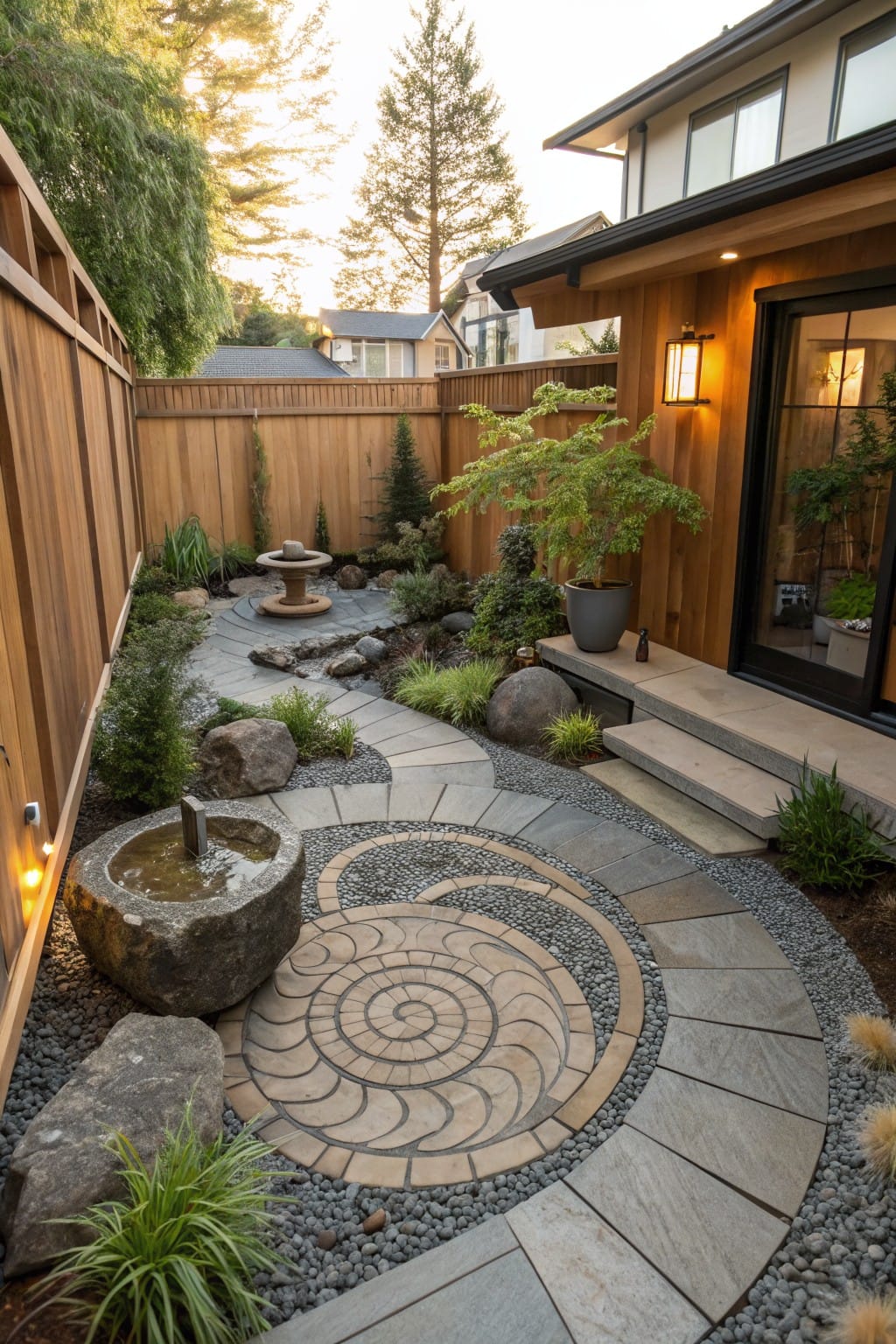
A spiral path like this one uses stone pavers set in gravel to wind through a small rock garden. It pulls your eye right to the house door without needing much room. The curve adds movement and interest. Rocks and low plants fill in around it nicely.
You can fit this in narrow side yards or small patios next to the house. Go for smooth river rocks and simple grasses to keep it low fuss. Just make sure the path is wide enough to walk. It works great where flat space feels boring.
Linear Rock Planters for Balcony Edges

These long narrow planters run right along the balcony edge, filled with smooth pebbles, a few good-sized rocks, and low-growing plants like grasses and succulents. They make use of space that might otherwise sit empty, giving you that planted look without crowding the open floor. The concrete edging keeps everything neat and built to last.
You can pull this off on any small rooftop terrace or city balcony, especially where dirt beds won’t work. Stick to drought-tough plants so it stays easy, and tuck a bench nearby for sitting. Watch the weight if you’re high up, though.
Frequently Asked Questions
Q: How do I keep weeds from ruining my new rock garden?
A: Grab some landscape fabric and spread it over the soil first. Dump rocks on top in a good thick layer. That setup starves weeds out quick.
Q: What rocks work best for super tight spaces like my front path?
A: Go for smooth river rocks or pea gravel around two inches across. They pack tight and let you curve edges smoothly. Mix a couple sizes for depth without crowding.
Q: Can I toss in plants without messing up the rock vibe?
A: Stick with tough low-growers like sedum or creeping thyme. Plant them sparse so rocks dominate. Water deep but rare, they love the setup.
Q: How do I start one of these without spending much?
A: Scout free rocks from neighbors or creek beds nearby. Sketch your spot on paper first. Build in layers, soil then fabric then rocks.
