

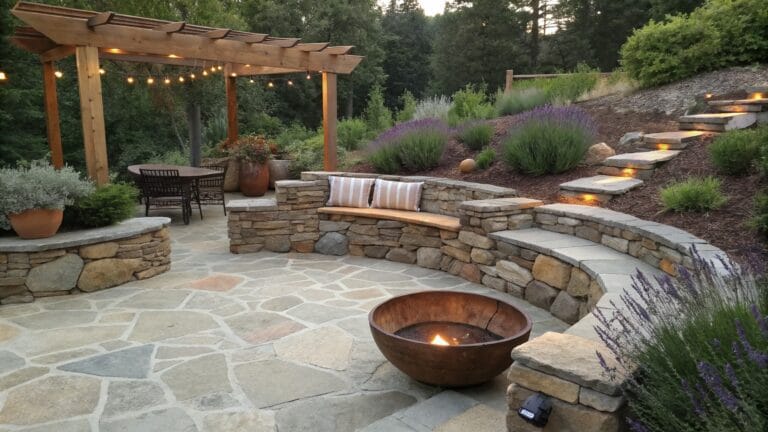
A rock landscape around the patio works best when it quietly frames the space you actually walk and sit on every day. I added some rugged boulders to mine a couple years back, and they settled in so well that now the whole yard feels pulled together around that spot. People tend to spot those sturdy edges first, the ones that guide you smoothly from grass to stone without a fuss. Cozy doesn’t mean fussy, though. These setups layer rocks with just enough low plants to soften things over time, the kind worth sketching out for your own sloped or sunny corner.
Curved Rock Benches Around a Patio Fire Pit
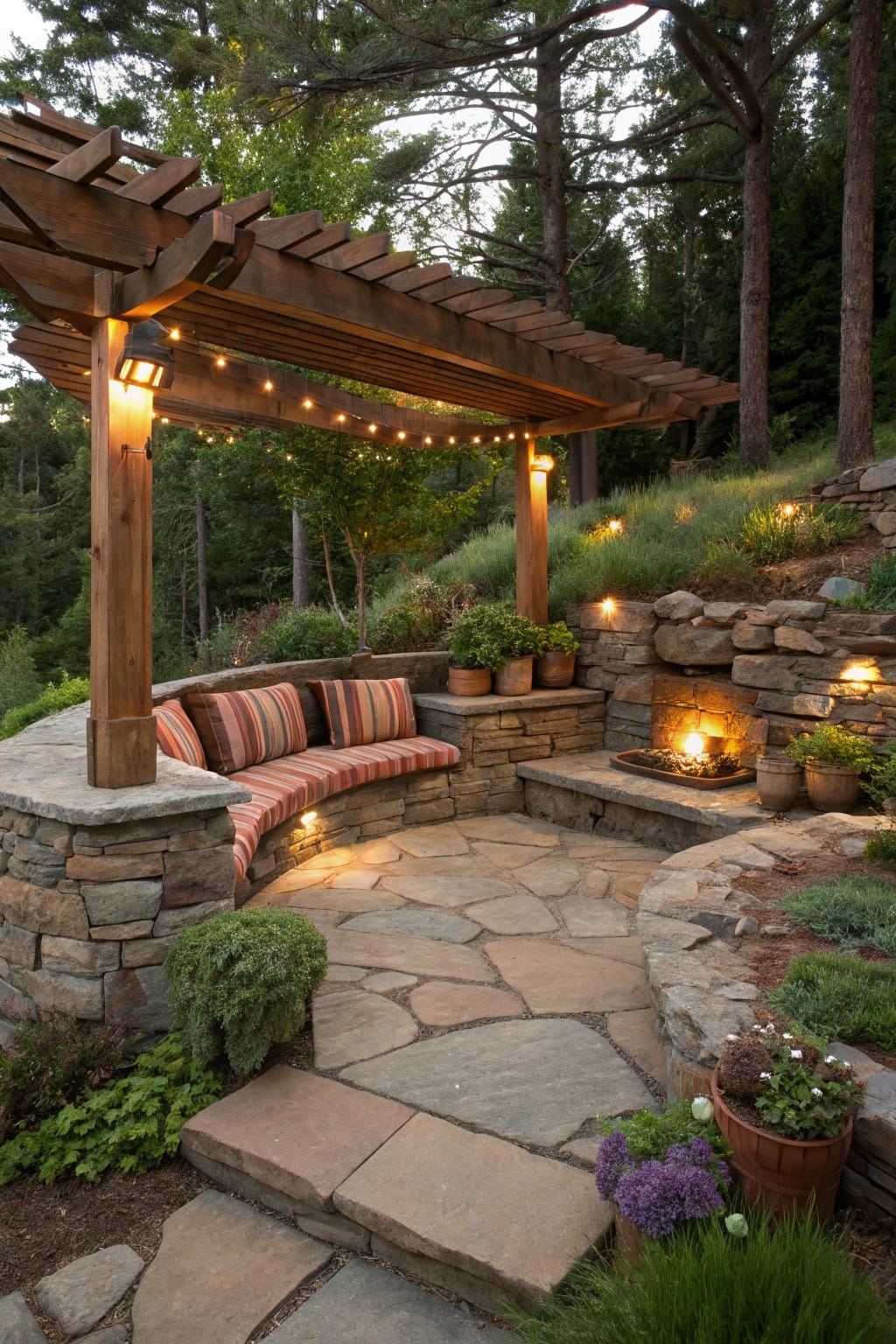
One smart way to use rock landscaping is building curved benches right into retaining walls around a patio fire pit. It turns a simple stone wall into seating that hugs the fire, keeping everyone close for talks or just warming up. The colorful cushions on the bench make it comfortable, and that wooden pergola overhead adds shade without closing things in.
This works best on sloped lots where you already need retaining walls. Stack local stone for the bench base, then cap it with a flat ledge for cushions. Add gravel or flagstone for the patio floor. Watch the height, though. Keep seats about 18 inches off the ground so it’s easy to sit. Fits most backyards with some trees nearby.
Built-In Stone Wall Bench

One smart way to make a patio feel more cozy is to turn a retaining wall into built-in seating. Here, a rugged stone wall holds back the slope while doubling as a long bench piled with gray cushions. The low LED strip along the edge gives it a soft glow come evening, and it just fits right with the patio’s stone pavers.
This works best in yards with some grade changes, where you’re already planning a wall for stability. Top it with durable outdoor pillows and maybe some throw blankets for extra comfort. It suits casual modern homes or wooded lots, keeping things low fuss as long as you pick weather-tough stone.
Pebble Edging Around Patio Tiles
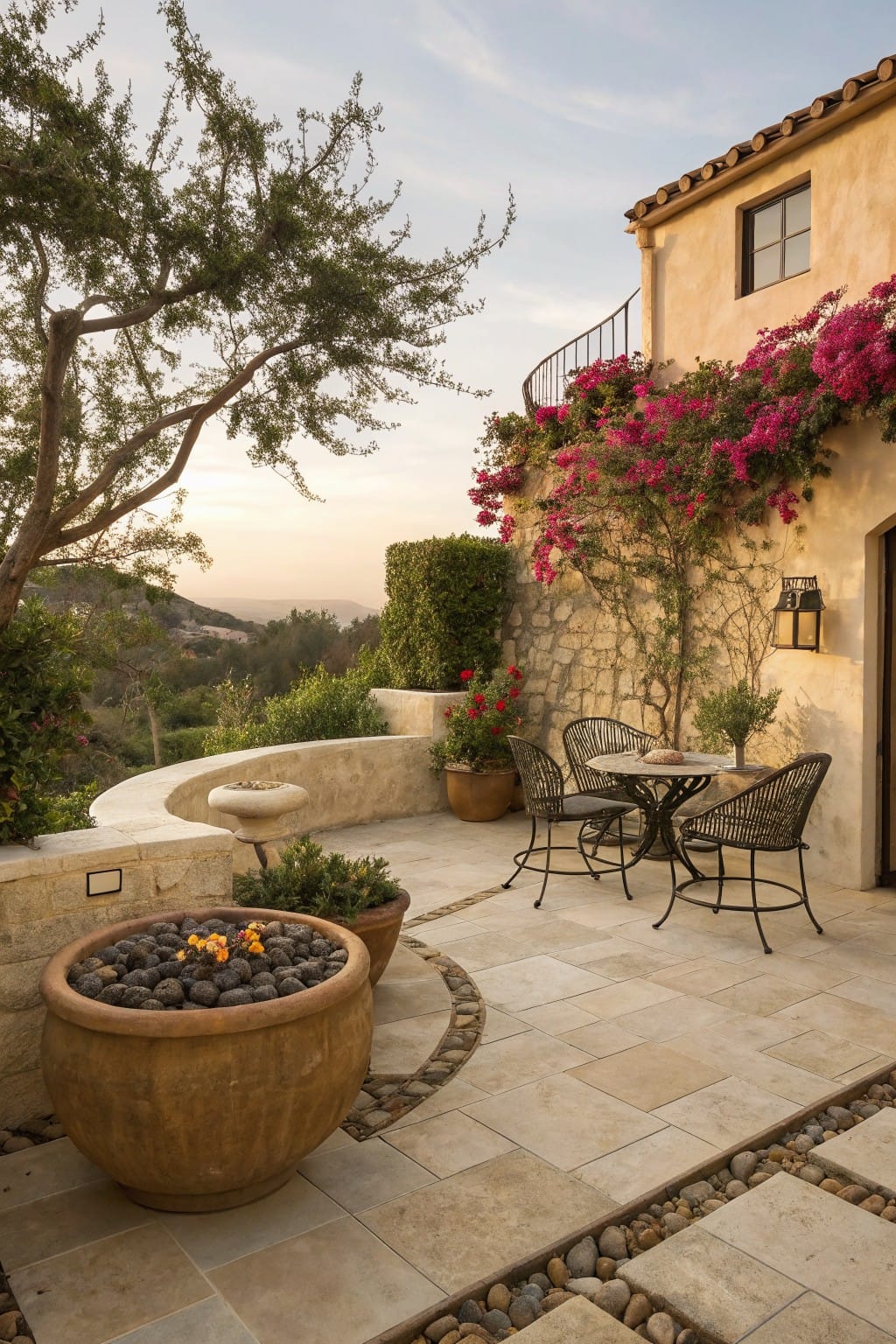
A straightforward way to cozy up a patio is to run pebbles along the edges and between the tiles. Here the broad beige pavers have fine lines of smooth stones that keep everything contained while blending into the yard. It adds a bit of texture without much work and makes the space feel more like part of the landscape.
This kind of edging suits sunny spots with a casual vibe, like in dry areas where rocks won’t wash away. Lay down landscape fabric first, then add gravel base for stability. Go with local pebbles to match your region, and keep the lines narrow so they don’t overwhelm the walking surface.
Zen Rock Garden Around the Patio
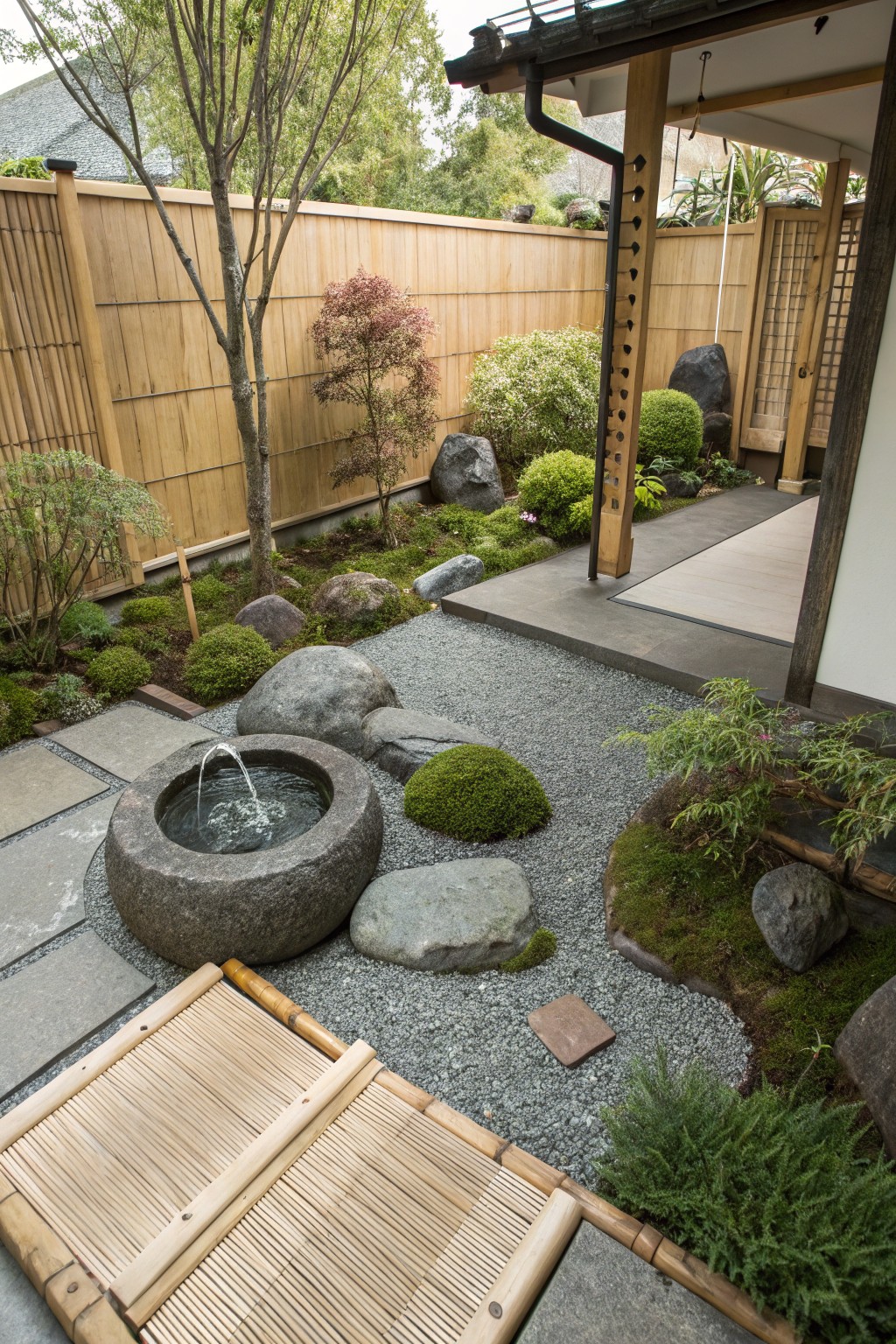
Big boulders mixed with raked gravel make a simple, peaceful spot right next to the patio. A stone fountain in the center adds gentle water sound, while patches of moss soften the rocks. It’s low fuss and feels put together without trying too hard.
This works best in small backyards or courtyards where you want calm without constant mowing. Group the boulders in odd numbers for a natural look, keep gravel smooth, and tuck in mossy plants. Suits homes with clean lines, Japanese touches or not… just scale rocks to your space.
Stone Patio with Rock and Gravel Edges
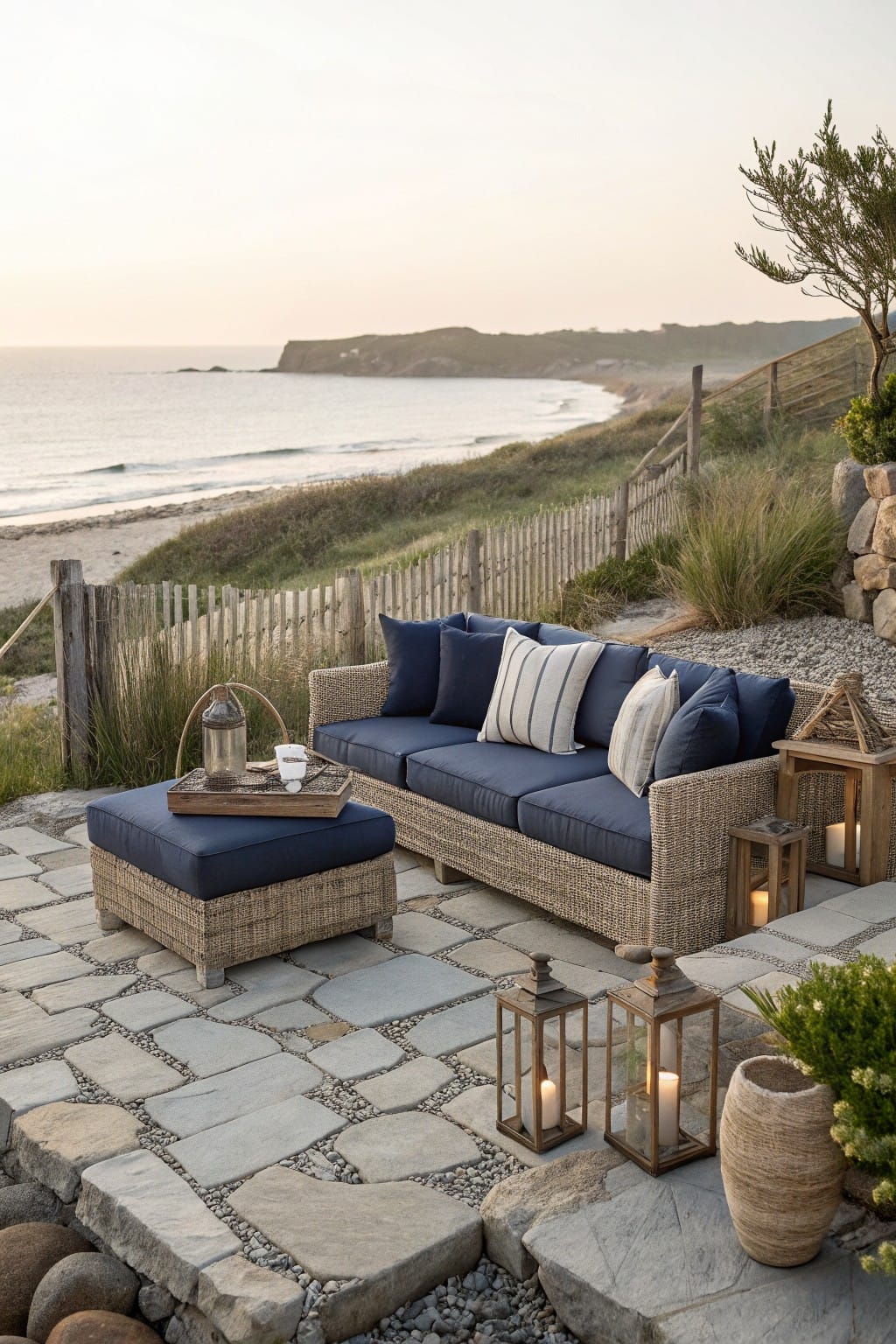
A stone patio like this one uses big irregular slabs laid in a loose pattern that fits right into a rocky yard. The gravel and scattered rocks around the edges blend the seating area into the natural ground, so it doesn’t look built or fussy. Paired with simple woven furniture and a few lanterns, it makes a spot that’s cozy for sunset drinks without much upkeep.
This works best on sloped lots or near water where you want things to feel rugged and tied to the site. Pick stones in colors that match your soil or cliffs nearby. Add gravel for easy drainage, then tuck in grasses or low plants. Skip tight borders. It suits casual homes more than formal gardens.
Curved Rock Benches Around the Fire Pit
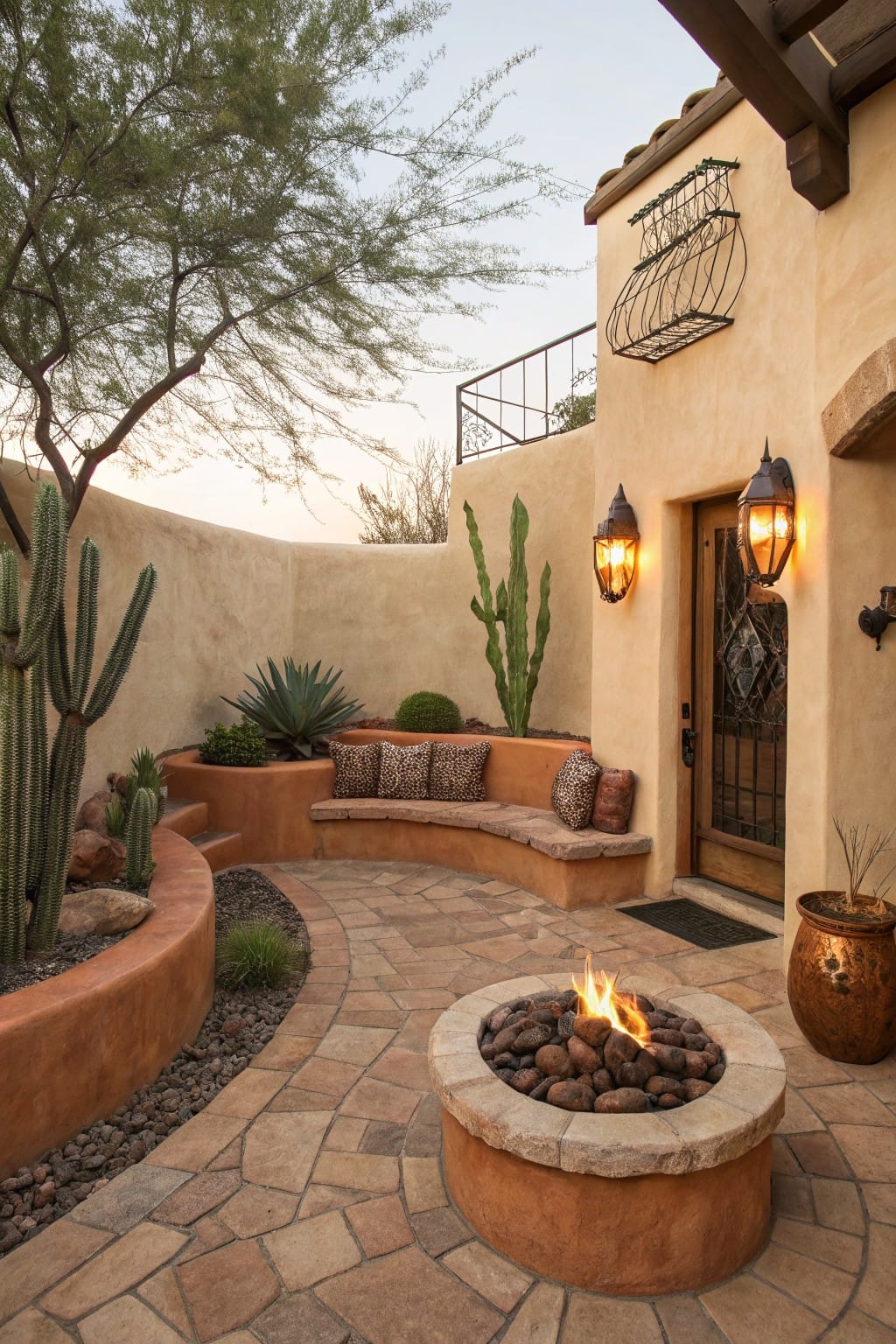
One simple way to make a patio feel more like a real hangout spot is curving rock walls into built-in benches that wrap right around a stone fire pit. You get seating for four or five without extra furniture cluttering things up. The rocks hold soil for tough plants like agave and cactus, tying the whole area together without much upkeep.
This works best tucked against a house wall in dry spots where you want low-water landscaping. Build the curves low enough to sit on comfortably, maybe two feet high, and top with cushions. Keep paths clear with gravel mulch so it stays easy to walk around even after rain.
Terraced Stone Walls for Sloped Patios
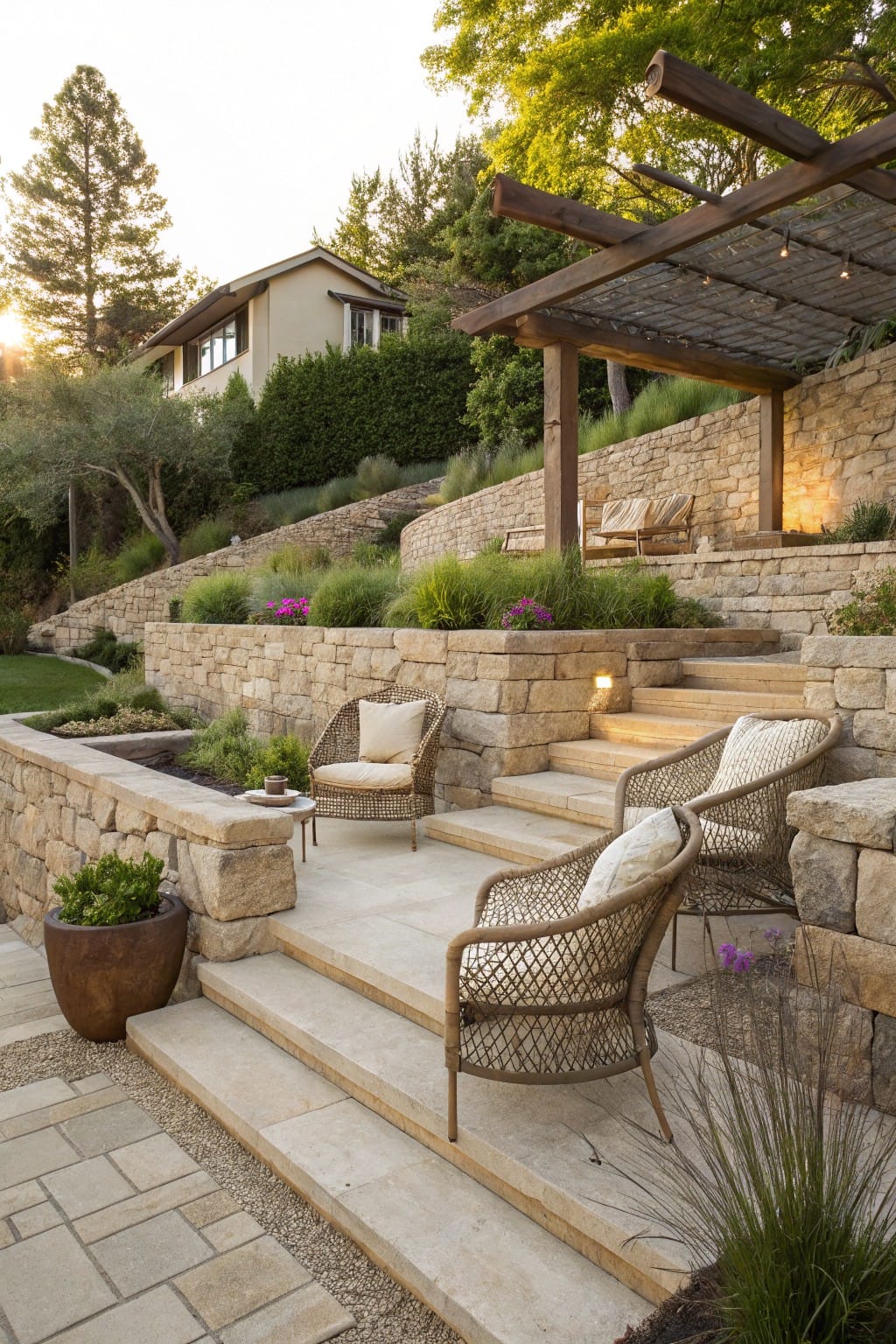
On a hillside lot, nothing beats terraced stone walls to carve out flat spots for relaxing outdoors. These natural rock walls hold back the slope while framing a simple patio below, complete with wicker chairs and a small table. The look stays cozy and grounded because the stone matches the earth tones around it, and low plants tucked into the beds soften the edges without much upkeep.
This setup works best where flat yard space is hard to come by. Stack the walls to create steps between levels, adding benches or more seating up top. It suits homes in wooded or rural spots, but get an engineer to check stability on steeper slopes. Keep plantings simple, like grasses and succulents, so the rocks stay the focus.
Linear Rock Fire Trough Edges the Patio
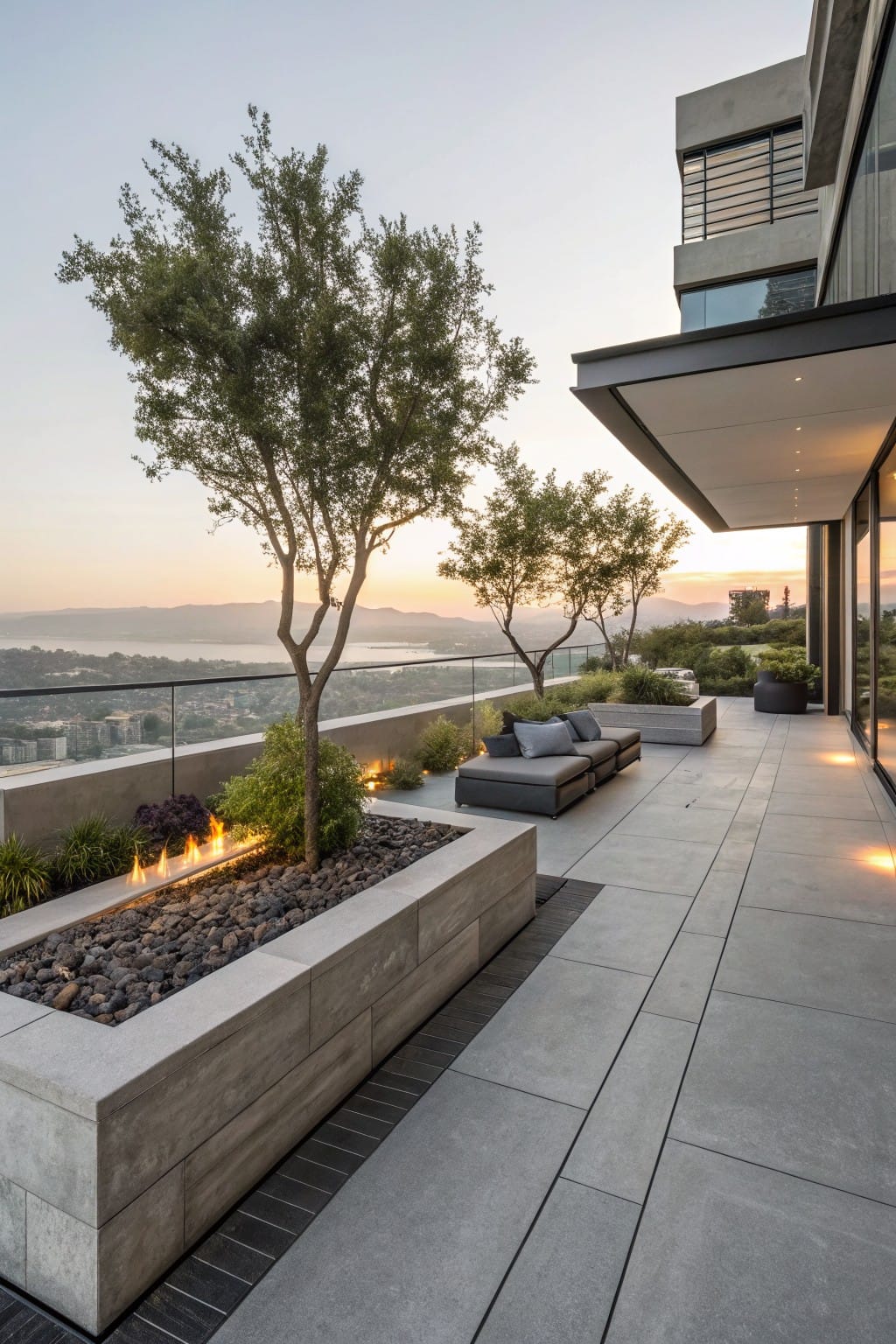
A long concrete trough filled with black lava rocks and a steady line of gas flames runs right along one side of this terrace patio. It acts as a clean divider between the seating zone and planted areas, giving off real warmth on cooler evenings. The rocks hide the burner nicely, so you get that cozy fire look without mess.
This works best on flat modern patios or rooftops where you want low upkeep. Run gas lines under the slab if you can, or try electric versions for easier setup. It suits homes with city views… keeps things simple around the furniture.
Stone Fireplace in the Patio Wall
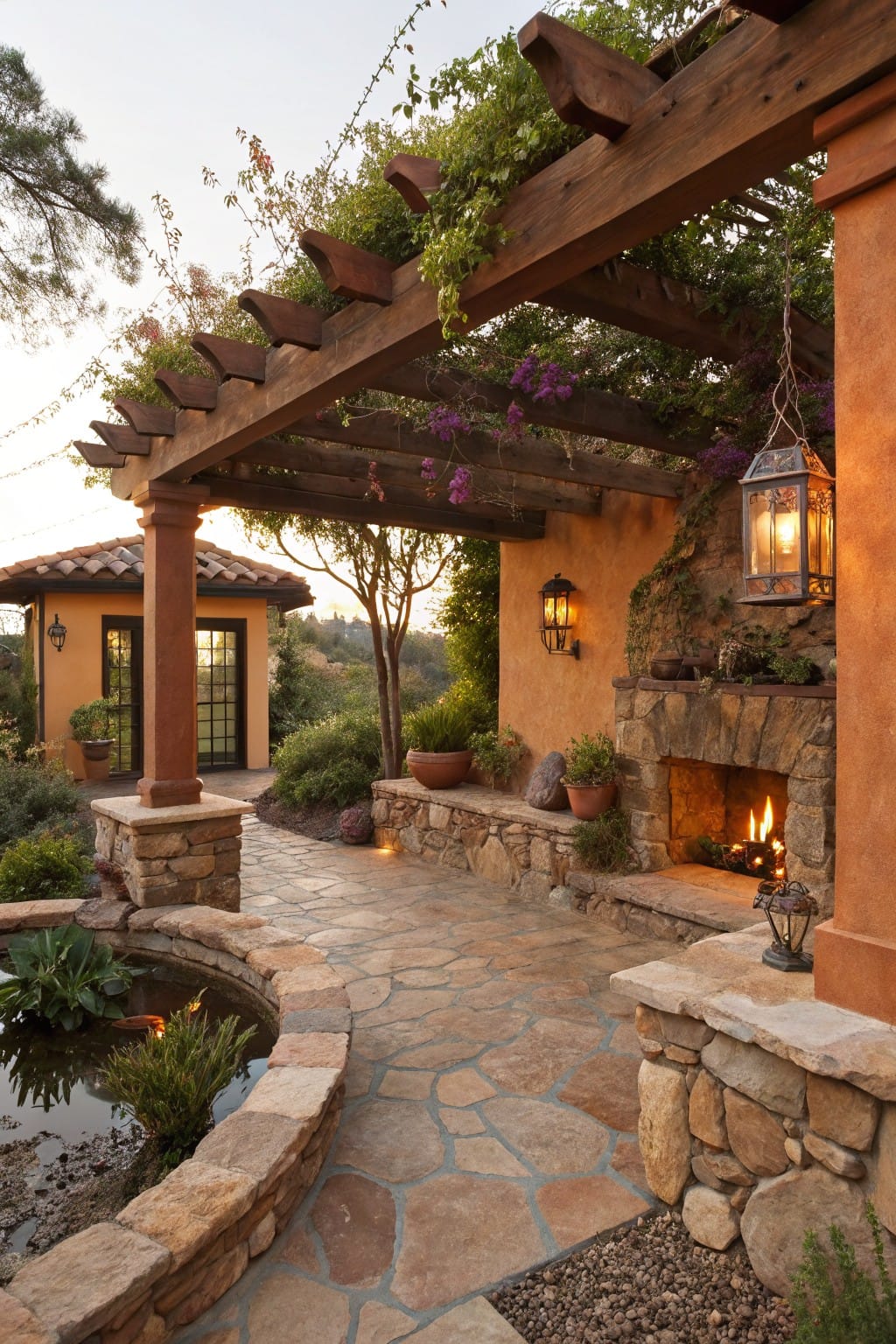
A stone fireplace tucked right into the patio wall makes any outdoor spot feel like an extension of the house. It’s cozy without trying too hard. The rough stones match the nearby pillars and path, and with a fire going, it pulls everyone together on cool evenings. Vines overhead add that sheltered backyard vibe.
This works best on a patio with some wall or rock outcropping already there. Use local stone to keep costs down and fit the landscape. It suits casual homes in mild climates where you hang out year-round. Just make sure the chimney vents properly, and keep flammables away from the base.
Stone Walls Back a Patio Fire Pit
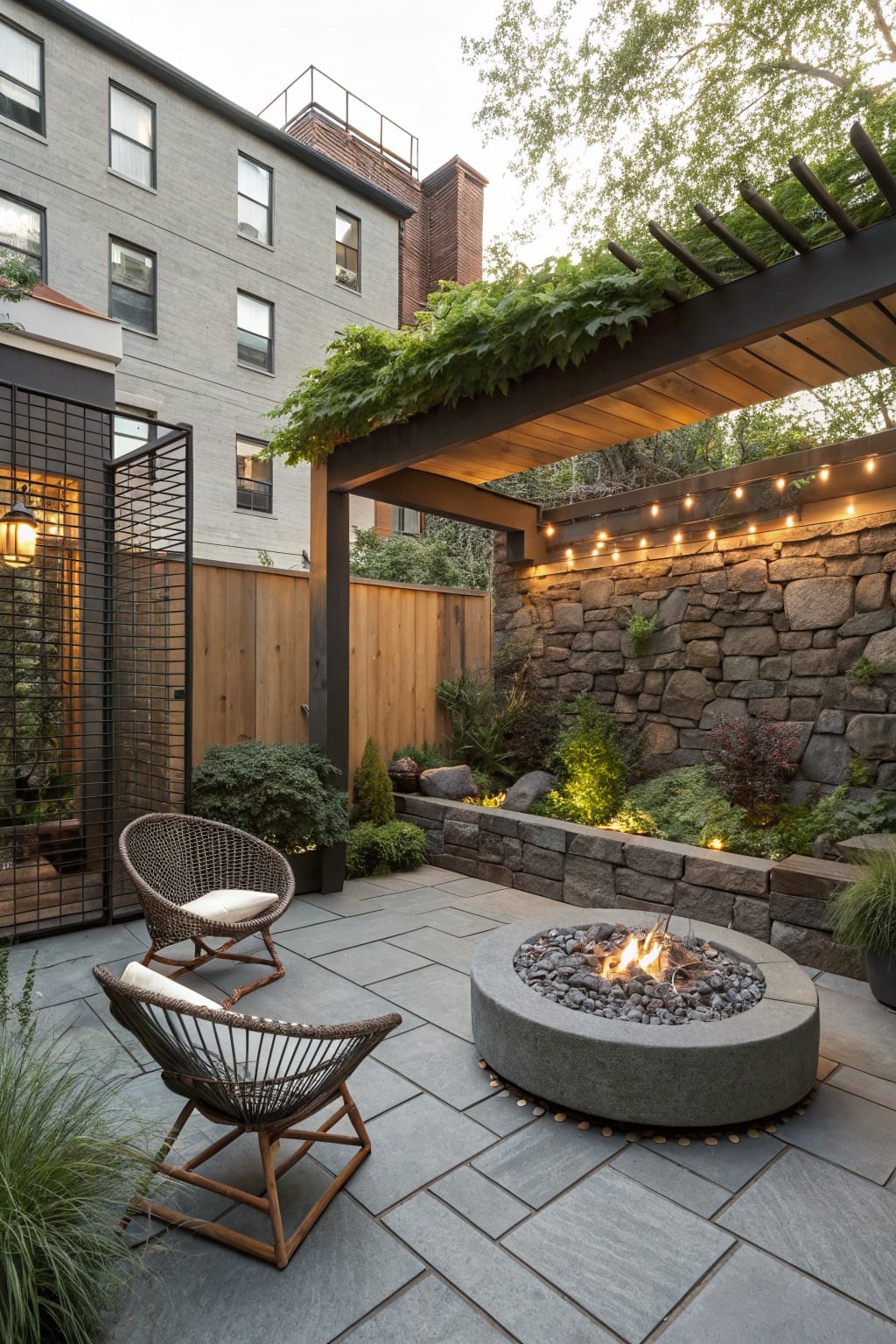
Nothing beats a solid stone wall running behind your patio fire pit. It gives the space a natural hug, turning an ordinary backyard corner into something that feels tucked away and peaceful. Here you see it done with rugged, uneven stones stacked up, dotted with plants and boulders at the base. That rough texture picks up the fire’s glow nicely on cool evenings.
This works best in tight urban yards or where you need to level a slope. Pick stones that match your region’s look to keep costs down and maintenance simple. Tuck in some low shrubs or groundcovers for green without much fuss. Just make sure the wall drains well so water doesn’t pool near the pit.
Stone Retaining Walls Around Patios
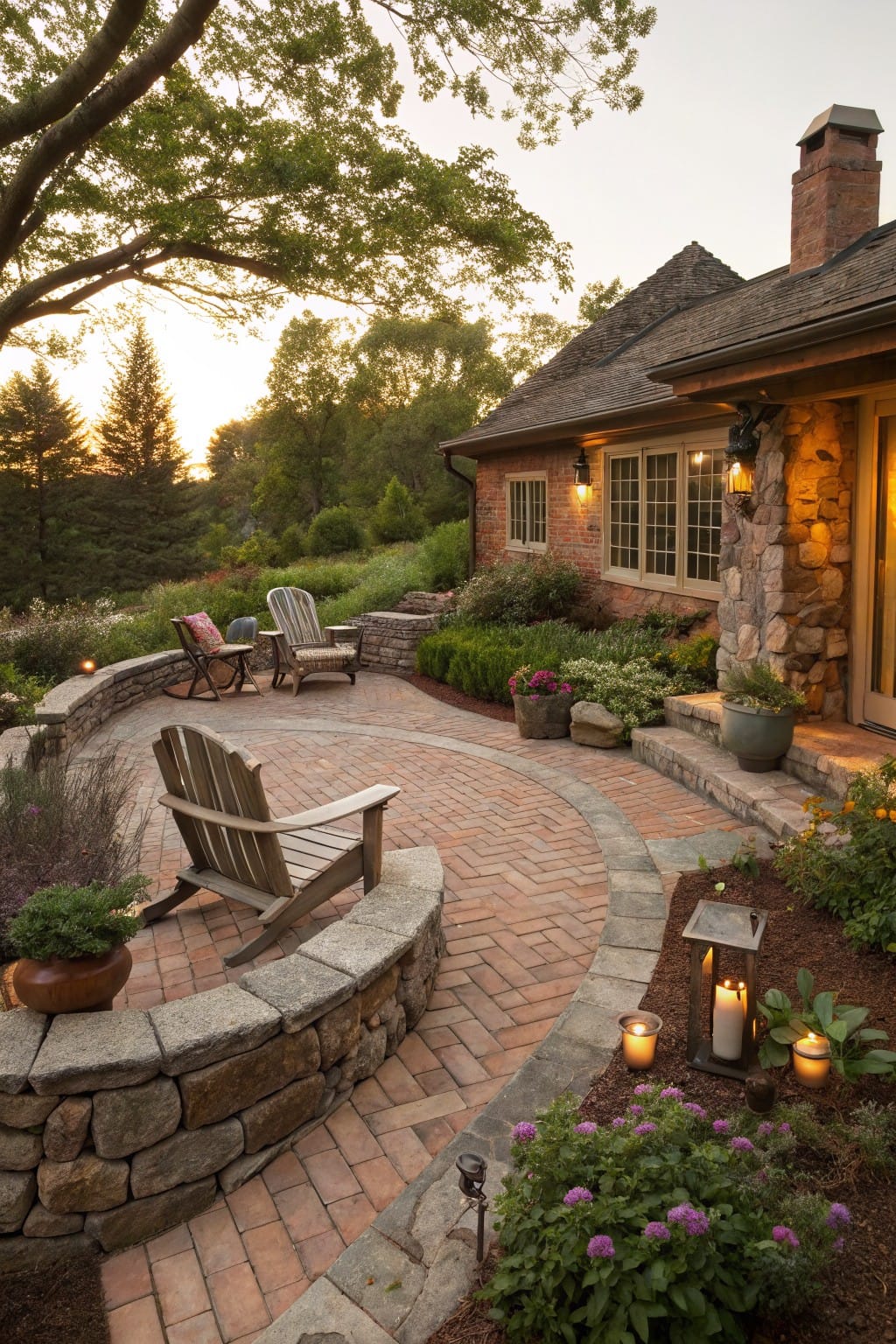
A simple way to make a patio feel more tucked in is with low stone retaining walls. They curve right along the edge here, holding back the slope while giving spots to lean chairs against. That natural rock look ties into the patio bricks without overpowering things. It keeps the space open but defined, especially nice with some plants tucked in the pockets.
These walls work best on sloped yards where you need to level out a seating area anyway. Stack local fieldstone for that cozy, not-too-fussy feel. Add a few perennials or a pot right on top, like the terracotta one sitting there. Skip mortar if you want drainage, and it suits older homes with brick or stone details already.
Boulder Fire Pit in Gravel Patio

A gravel patio with a big stone fire pit at the center pulls everything together nicely. Large boulders scattered around it add that natural, rugged feel without trying too hard. The flames flickering against the rocks make the spot cozy for evenings, and the whole thing blends right into desert surroundings. Low fuss. Just rocks, gravel, and fire.
This works great for sunny backyards or arid spots where grass won’t grow easy. Pick a wide, shallow fire pit bowl, set it low in the gravel, then drop in boulders of different sizes nearby. Skip fussy plants if you want simple upkeep. Pairs well with a plain dining table off to the side… keeps the focus on gathering by the fire.
Stone Retaining Walls Around Patios

One smart way to handle a sloped yard is with rugged stone retaining walls right at the patio edge. They hold back the hill while creating flat spots for steps and planting. In this setup, the walls tie right into the deck base, using the same rough granite that blends with nearby boulders and trees. It keeps everything low-key and sturdy.
These walls work best on wooded properties or anywhere the ground drops off quick. Pick stones from a local quarry to save money and fit the site. Plant grasses or shrubs along the base for softness, and set lanterns on the steps for night paths. Skip it if your slope is super steep, though. Might need an engineer then.
Circular Stone Patio Around a Fire Pit
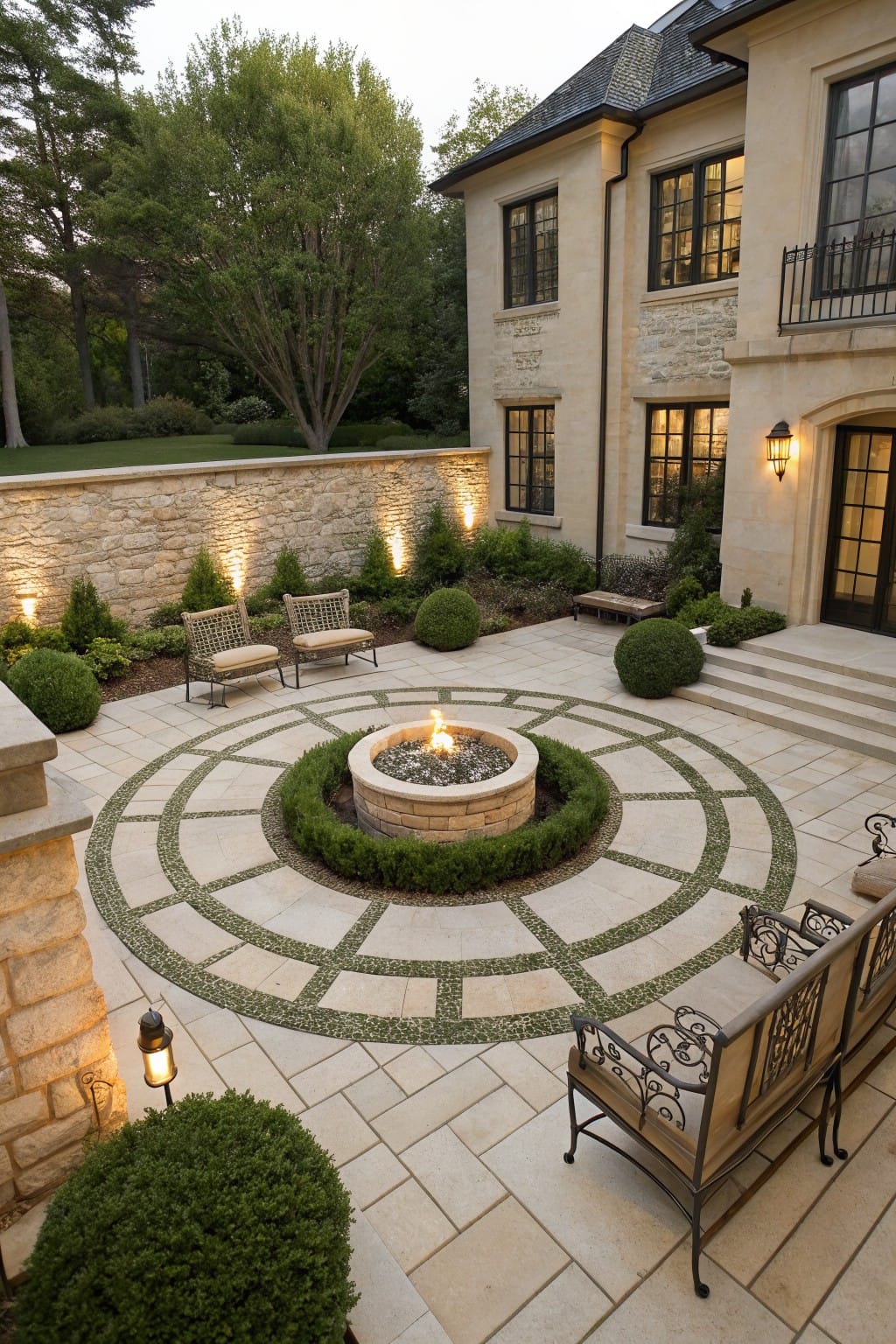
A round patio like this pulls everything together around one spot. The large beige stone pavers form a circle with simple green paths leading to the center fire pit. Low boxwood hedges line the edge, keeping it neat and contained. It makes the space feel intimate right off the house, perfect for evenings with friends.
You can pull this off in a walled courtyard or terrace under 500 square feet. Stick to light-colored limestone pavers for that clean look, and pick a gas fire pit that’s easy to light. Boxwoods stay green year-round… just trim them once a season. Works best where you want low upkeep but a real gathering place.
Rock Wall Fireplace Next to the Pool
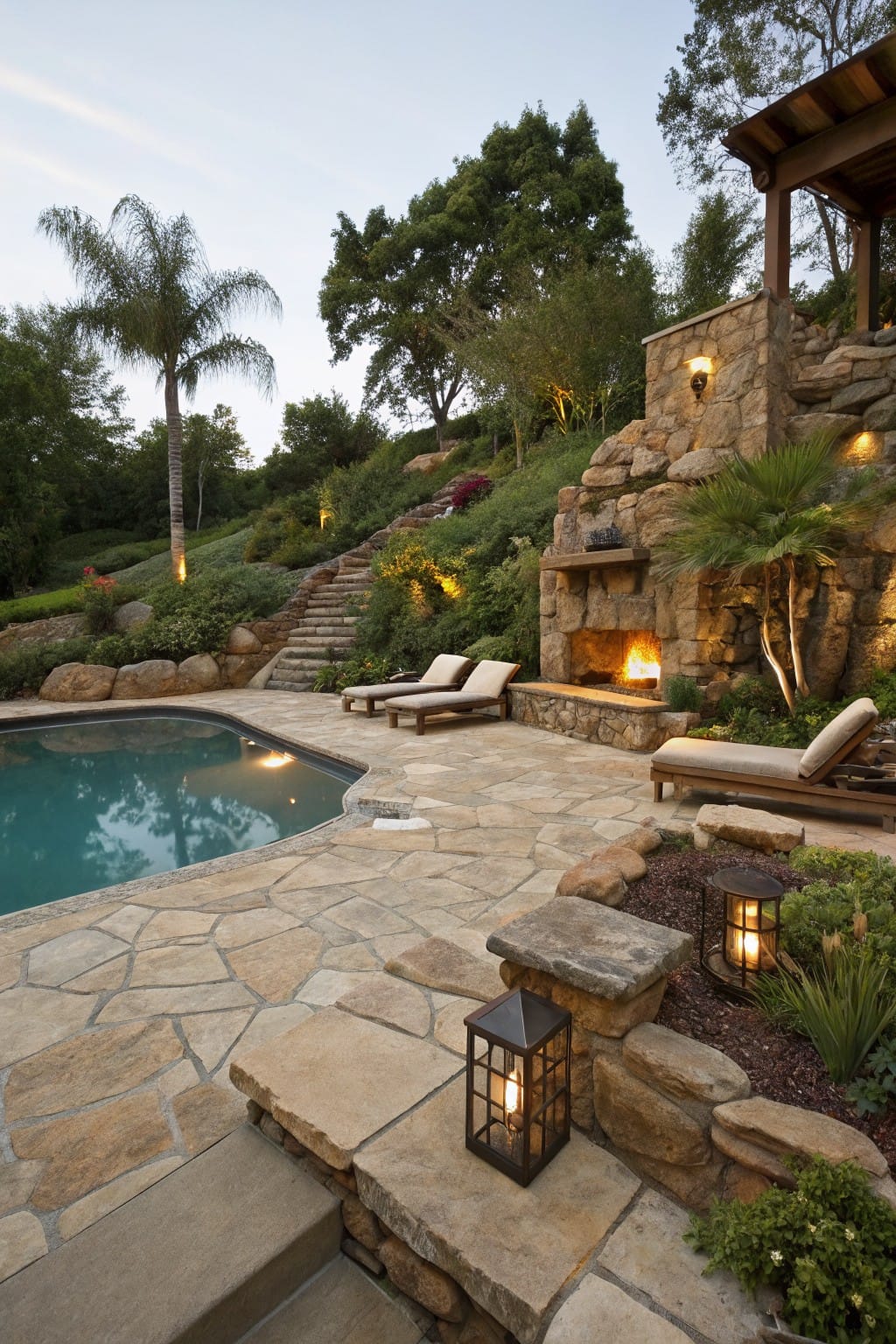
A stone fireplace tucked right into a rugged rock wall makes a natural gathering spot by the pool. It pulls the whole outdoor area together, especially with the flagstone patio and loungers nearby. The fire adds real coziness on cooler evenings, and the rocks keep it from looking too built-up.
This works great on sloped yards where you already have some rocky terrain. Build it at patio level so it’s easy to reach from seating, and add lanterns along the steps for light. It suits casual homes with a bit of wild landscaping… just make sure the stone matches your local rocks for that seamless feel.
Boulders Line the Patio Edge
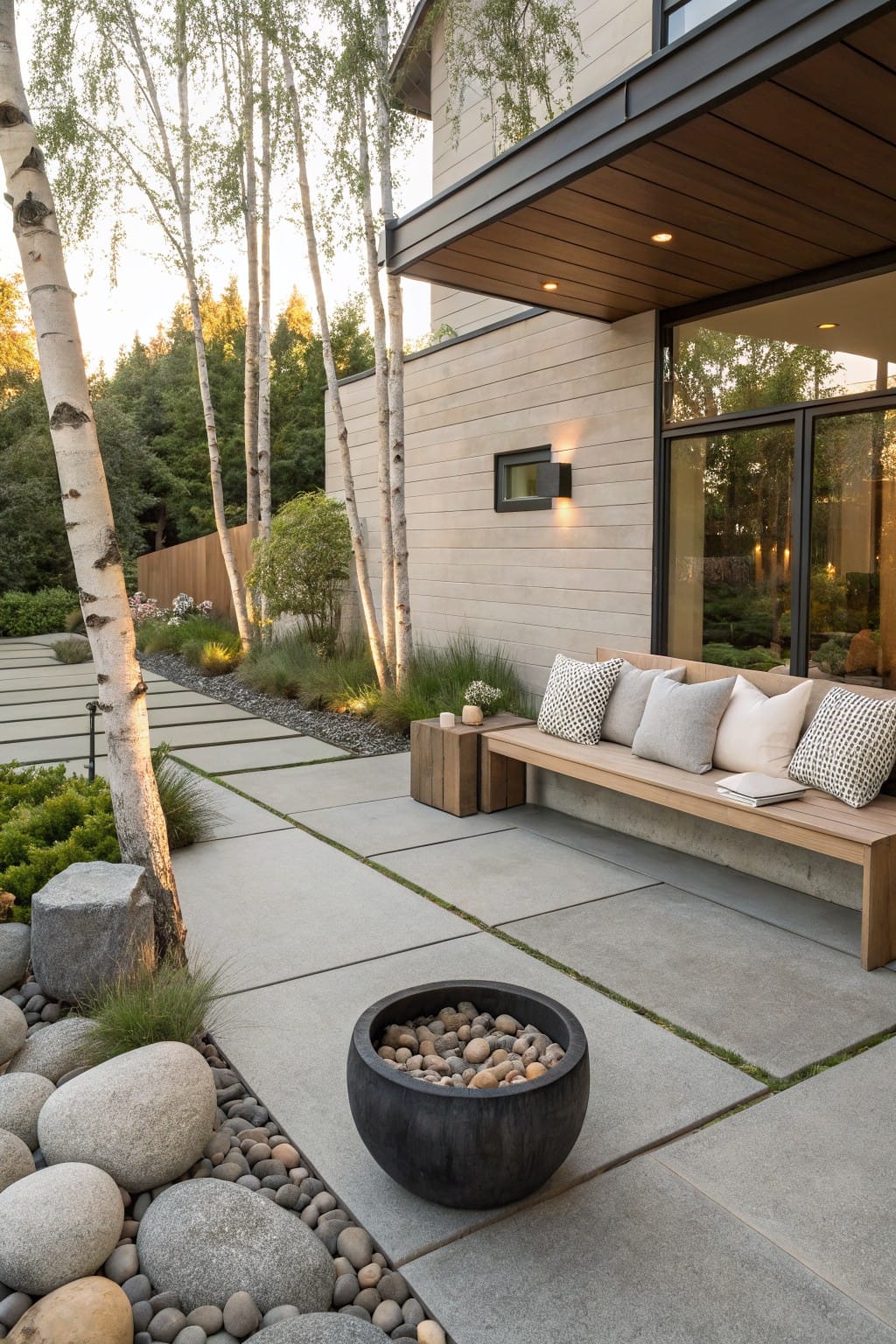
Big boulders placed right along the concrete pavers catch your eye here. They’re grouped with some grasses and a simple black bowl full of smaller pebbles. That mix keeps the patio feeling open but adds a natural, rugged touch that fits right with the house and trees. It’s low fuss and makes the whole spot look settled in.
Try this in a backyard patio where you want some wildness without planting a ton. Pick smooth river rocks or local stones in a couple sizes, tuck them near paths or benches. It works best on modern homes with clean lines, or anywhere the yard slopes a bit. Just don’t overcrowd, or it’ll feel busy.
Frequently Asked Questions
Q: What rocks should I pick for a cozy patio vibe? A: Go for smooth river rocks or rounded pebbles in earthy tones like gray, tan, or soft brown. They nestle together nicely and give that warm, inviting feel without sharp edges poking your feet. Skip super polished stones, they can look too slick next to natural patios.
Q: How do I stop weeds from popping up in the rocks? A: Lay down landscape fabric first, then top it with your rocks. Cut small slits only where plants go if you want some greenery. Water lightly at first to settle everything, and spot-treat any strays with vinegar early on.
Q: Can beginners handle installing these rock ideas themselves? A: Absolutely, start small with one section of your patio edge. Dig out a shallow trench, add a sand base for leveling, and rake the rocks even. Rent a wheelbarrow if hauling gets heavy, it saves your back.
Q: How much does a basic rock setup around my patio cost? A: Figure about $2 to $5 per square foot for bulk rocks from a local quarry. And grab extras for touch-ups. That keeps your cozy outdoor spot under a couple hundred bucks for most patios.
