

I find that clean rock landscaping works best when it uses simple layouts to guide foot traffic and frame planting beds without stealing the show. In my yard, I’ve seen how subtle rock edging keeps soil in place year after year, turning a basic slope into something that actually holds together. People tend to notice the open pathways first, the kind that let grass or gravel breathe between larger stones. These minimalist ideas build structure that matures nicely, with low-maintenance lines that sharpen over time as plants fill in sparingly. A couple rely on stacking techniques worth testing in awkward corners.
Oversized Boulders in Gravel Beds

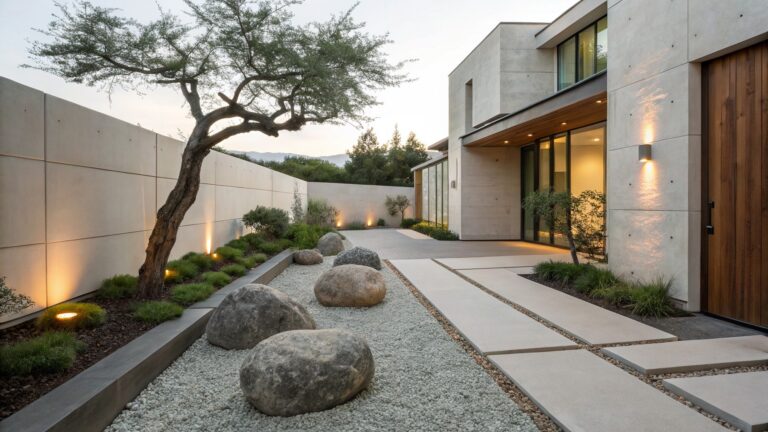
Big boulders like these make a simple statement in a rock garden. Set into gravel mulch with just a few tough plants around them, they create clean lines that feel natural but controlled. The rough texture of the rocks plays off smooth concrete edging nicely. No fussy mowing needed here.
Try this along a side path or house wall where you want low upkeep. It suits dry climates or sloped yards best. Keep plants sparse, like succulents or low shrubs, so the rocks stay the focus. Scale matters, though. Go too small and it looks busy.
Stepping Stone Path in Gravel Garden

A simple way to guide foot traffic through your yard is with large, rough-cut stone slabs set right into a bed of gravel and small pebbles. This path curves gently, edged by clumps of feathery grasses and a few big boulders. It keeps things clean and low fuss, letting the rocks and plants do the work without much lawn to mow.
You can pull this off in narrow side yards or back patios leading to the house. Pick stones in similar tones to your gravel for a calm look, and add grasses that don’t need much water. Tuck in low lights along the edges if you want it usable at night. Suits minimalist homes best… avoids busy flower beds that take time.
Rock Gardens with Large Boulders

Big boulders give a rock garden real presence right away. You see it here with that hefty gray one smack in the middle of white pebbles. It adds scale and a natural feel without needing a ton of plants or upkeep. The grasses along the edges just finish it off nice and simple.
This setup shines in small courtyards or along paths to the house door. Go for stones that match your local rocks so it blends in. Dark borders keep the pebbles from spilling out. Fits modern homes best… watch the weight if your ground is soft.
Terraced Rock Walls for Sloped Yards
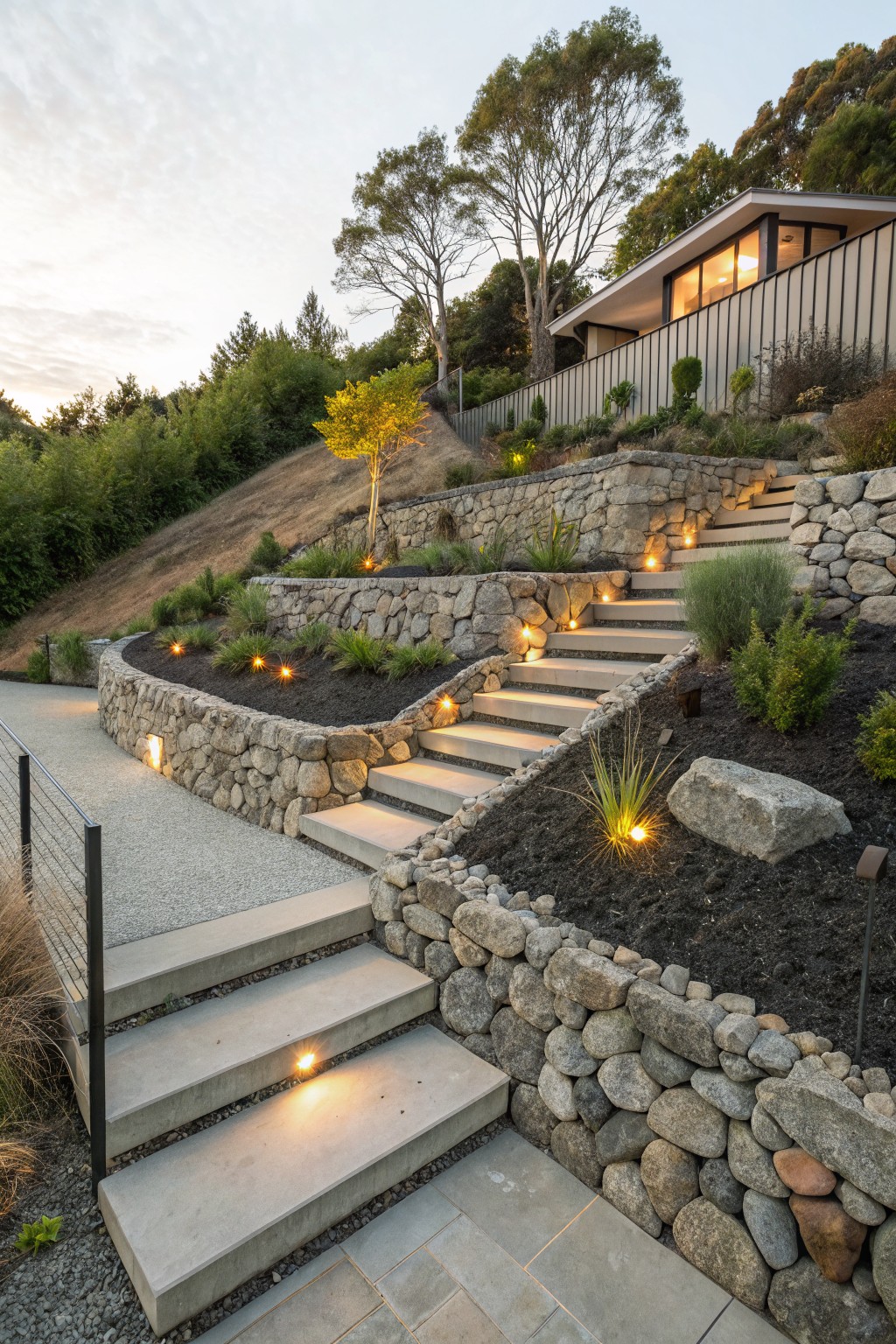
Slopes turn into real yard challenges fast. These terraced rock walls fix that by carving out flat planting beds and a steady path up the hill. Natural stone stacks up rough but clean, no mortar needed, and the concrete steps fit right in without stealing the show. Those ground lights tucked along the edges light the way at dusk. Simple stuff that makes the space feel bigger and more settled.
Put this in hilly lots where you want low upkeep. Local stone keeps it cheap and ties into the site. Stick tough grasses or shrubs in the beds, nothing fussy. It suits modern houses best, pulls the architecture down to ground level. Just make sure the walls drain well or you’ll get washouts after rain.
Poolside Pebble Edging

One clean way to handle pool borders is piling smooth dark pebbles right along the edge, mixed with a few larger rocks for texture. Tall strap-like grasses poke up through them, keeping the line simple and the maintenance low. The water stays the focus, with reflections adding calm without extra clutter.
This works best in narrow linear pools like this one, where space is tight next to the house or lawn. Pick rounded black or gray pebbles for that sleek look, and space the grasses evenly so they don’t overwhelm. It suits modern yards with ocean views or patios, but skip it if your climate means constant trimming.
Stepping Stones in Gravel

A simple way to handle a narrow side yard is setting large irregular stones right into gravel and patches of moss. It makes a path that feels natural, not forced. Those boulders nearby add some weight without crowding the space. Keeps everything low fuss.
This works best along a house wall or fence where you want to connect areas quietly. Pick stones bigger than your foot for safe steps, and go with pale gravel to stay light. Suits modern setups… or even older homes wanting a calmer yard edge. Skip tight spacing, though. Let some gravel show.
Dark Pebbles Edging a Stone Pathway
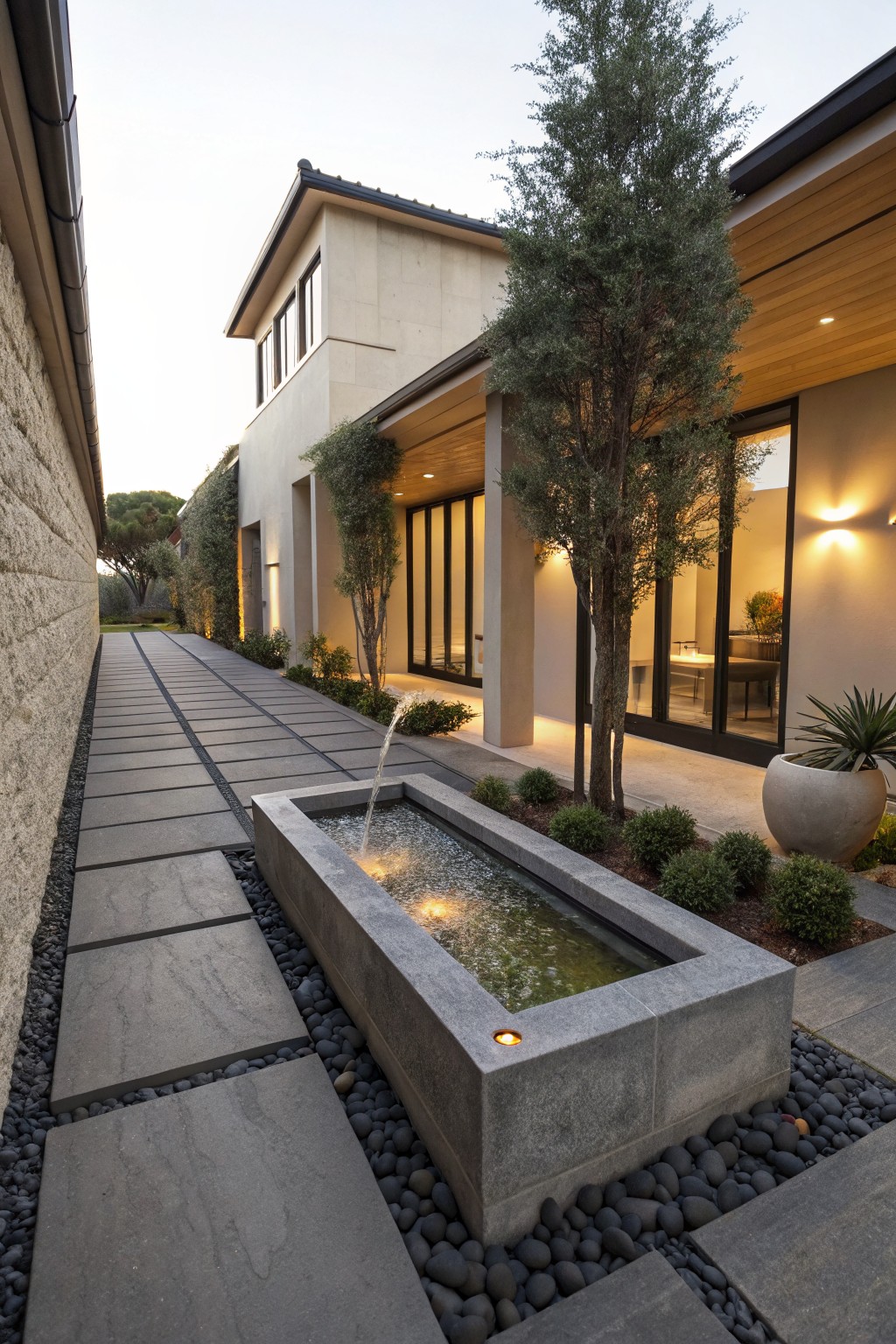
One straightforward way to add polish to a yard is dark pebbles tucked around a stone walkway. They fill in neatly beside large slate pavers and hug the base of a plain rectangular fountain, where water flows quietly. This setup stays clean and doesn’t need much upkeep, plus the black rocks pick up the modern lines of the house without stealing the show.
Try it along a side entry or courtyard path where space is tight. Pair smooth black river rocks with low shrubs for easy care, and let the fountain handle some soothing sound. It suits dry climates or homes with stucco and wood accents. Just keep the pebbles topped up now and then.
Boulder-Lined Gravel Path

One straightforward way to pull together a front yard is with a curving gravel path edged by large boulders. Here, the path winds gently from the driveway toward the entry, with smooth river rocks filling the bed and chunky boulders placed like natural stepping stones. Tough plants like agave and grasses tuck in around the edges, keeping things sparse and easy on the eyes. It feels put together but not fussy.
This works best in sunny, dry spots where you want low water use and simple upkeep. Start by outlining your path shape, add gravel for drainage, then drop in boulders for weight and height. It suits modern homes with stone facades or any place needing curb appeal without grass mowing. Skip too many plants or it loses that clean edge.
Gravel and Rock Borders Along Lawn Paths
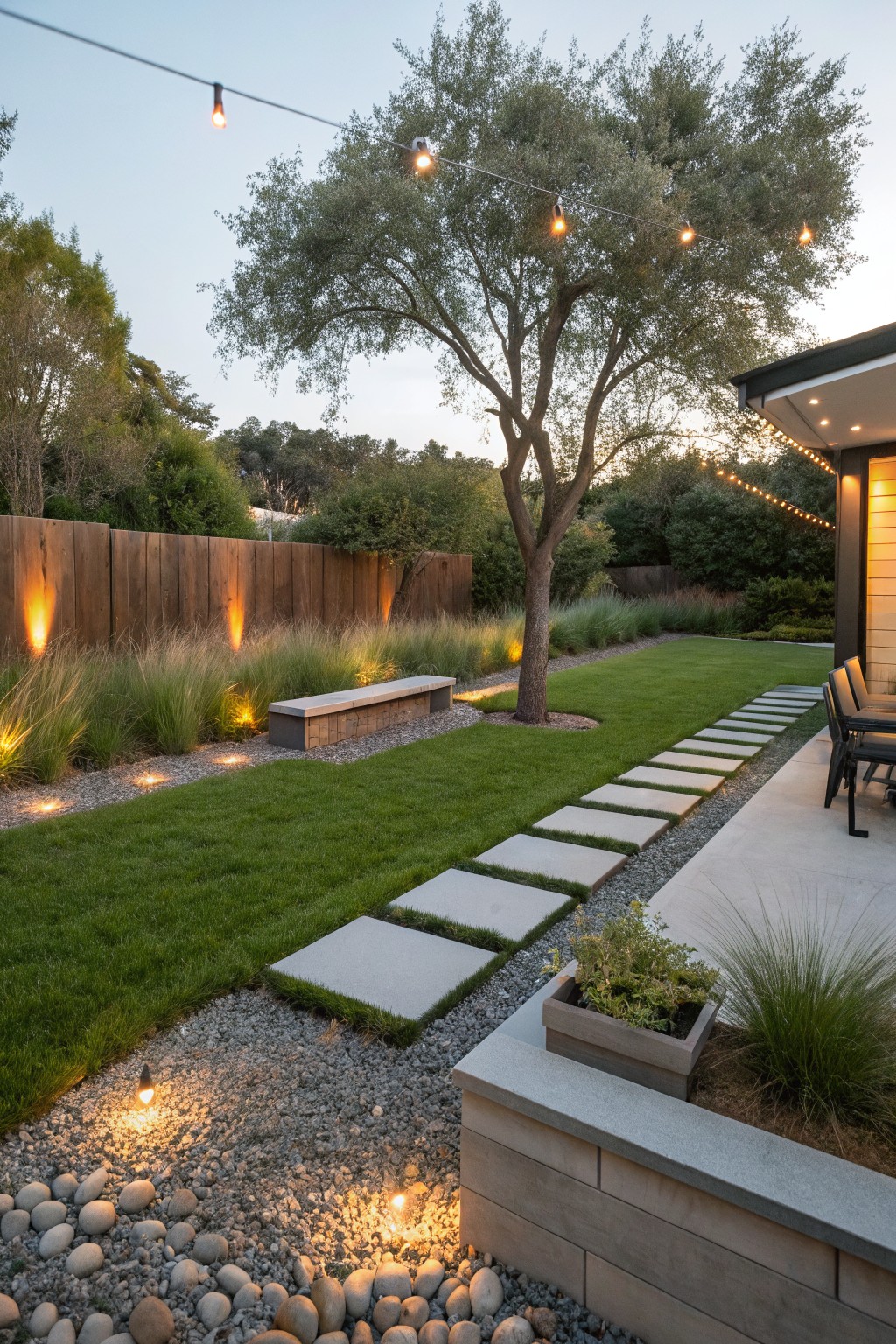
Gravel and river rocks work well as simple borders next to lawn paths. They define the edges neatly and handle foot traffic without turning into mud. Here the smooth white concrete stepping stones cut through the grass, and the light gravel with rounded rocks on the sides keeps everything looking tidy and textured.
You can use this in any backyard walkway leading to a patio or garden seat. It fits modern homes with clean lines, or even older yards wanting less mowing. Go for smaller rocks if pets or kids play there, and add low path lights for evenings.
Terraced Stone Steps for Sloped Yards

Wide stone steps like these make a sloped yard feel welcoming instead of steep. Built from the same light limestone as the retaining walls, they create a smooth rise without looking bulky. Low plants tucked into the borders add just enough green, and those small uplights along the edges make it safe and pretty at night.
This approach suits homes on hills where flat ground is hard to come by. Use it to connect your lower lawn right up to the back door. Go for broad treads so people don’t rush, and keep plantings simple to cut down on weeding. It holds up well in most spots, just make sure the gravel base drains right.
Natural Stone Fire Pit Setup
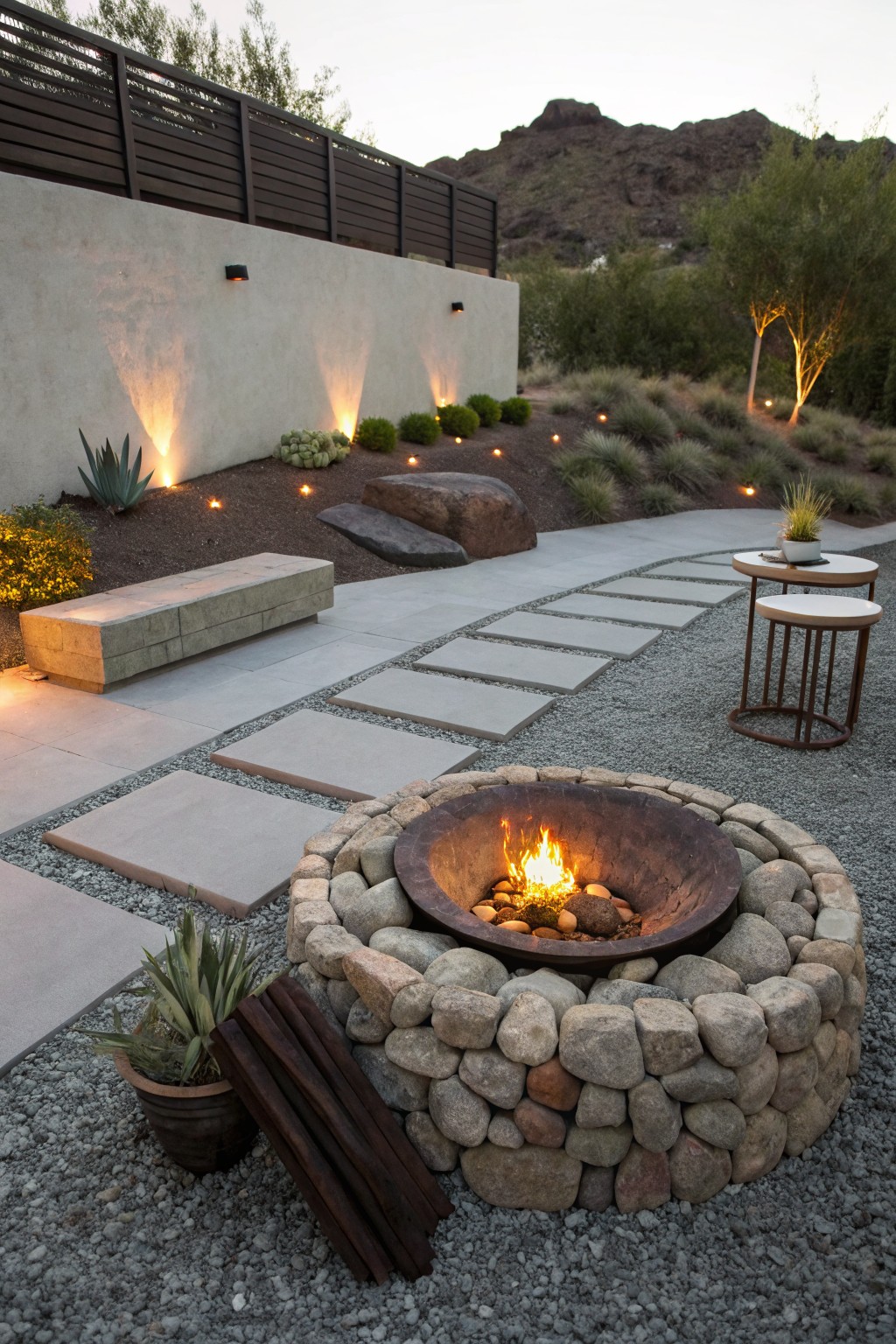
A fire pit ringed with rough stacked stones gives your yard a spot that feels built right into the ground. Here the metal bowl sits low inside the rocks, with gravel all around and a few boulders nearby. It works because it pulls in that rugged outdoor feel without looking overdone or fake.
Put one like this near a path or seating area for easy evenings outside. It fits clean modern yards or desert-style spots best, where low plants like agave keep things simple. Watch the stone stability, and add simple benches close by.
Natural Stone Garden Path

A simple path made from irregular flat stones and round pebbles winds gently through a yard full of rocks and low grasses. It feels organic, like it grew there naturally, and pulls the whole landscape together without much fuss. No straight lines or fussy edging. Just rocks doing their thing.
This works best in dry or coastal spots where you want low upkeep. Lay the stones loose over soil or gravel, tuck in tough plants like sedge or lavender along the sides. It guides folks to a seating spot without overpowering the view. Watch the scale though. Bigger stones suit wider paths.
Pebble Strips Beside Paved Patios

Smooth pebbles laid in simple strips right along concrete pavers make a clean break between hard surfaces and planting areas. Here they run parallel to the patio edge, with clumps of grass poking up for a bit of texture. It keeps the yard looking sharp without constant upkeep, and the gray tones blend right into the modern house lines.
This works well on flat yards next to patios or walkways. Start with landscape fabric under 2-inch pebbles to block weeds, then add low grasses like sedge that handle dry spots. Suits sunny contemporary homes best. Skip it in wet climates where pebbles might shift.
Paver Walkway with Gravel Channels
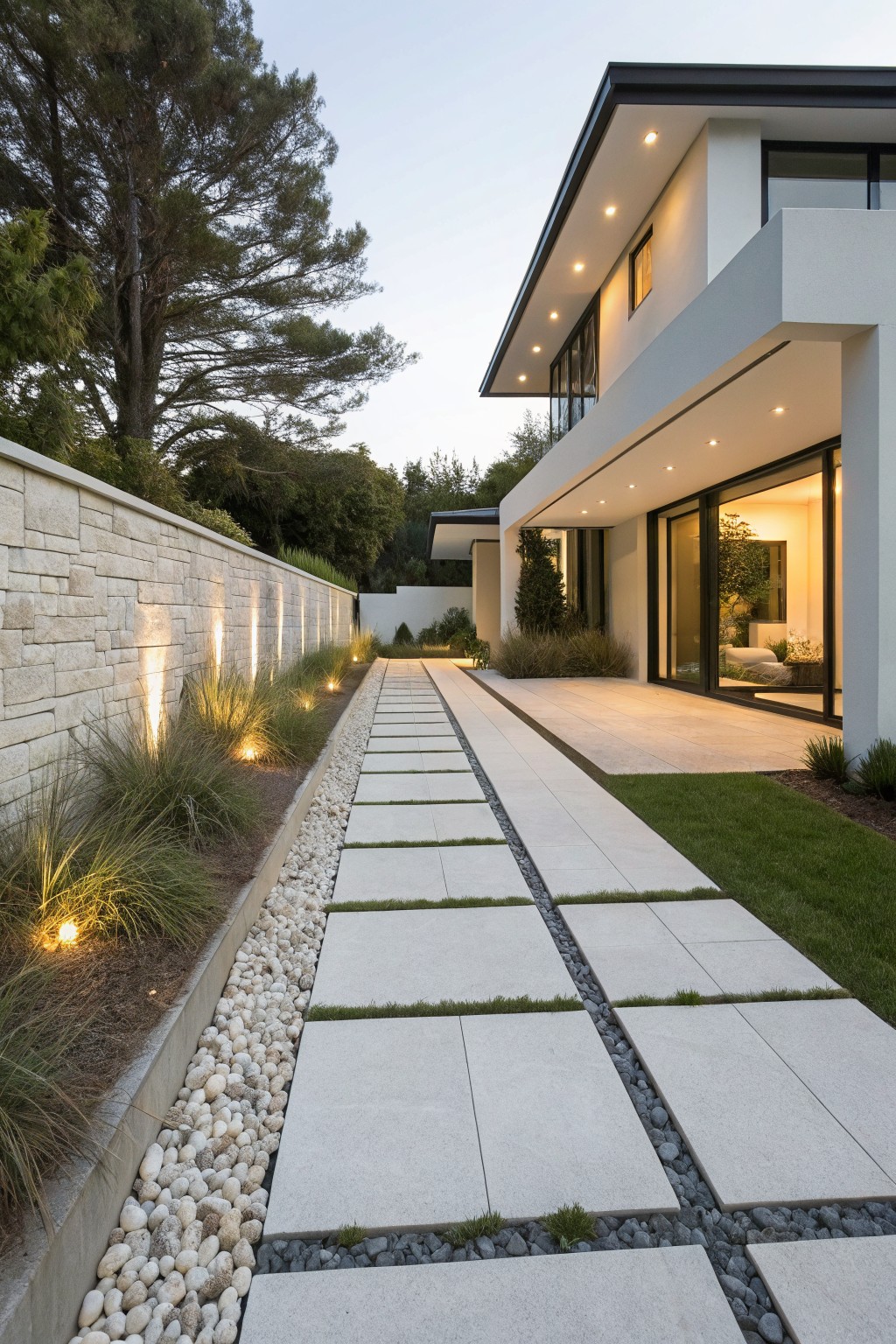
One clean way to guide people toward your house is a simple paver path broken up by thin gravel channels. Here large white stone tiles sit in a straight line, with small white pebbles and darker gravel filling the gaps between them. Grasses poke up along the edge, and low lights tucked into the border keep it visible at night. It feels modern without trying too hard, and the rocks make it almost no upkeep.
This setup works great along a side yard or entry path where you want a low fuss look that ties into the house. Use it on homes with clean lines, like stucco or white siding. Go for light pebbles to match pale pavers, or mix in some color for subtle interest. Just make sure the gravel is packed down tight so it does not shift underfoot.
Raked Gravel Paths Around Rocks

One clean way to handle a yard is with gravel paths raked into soft curves around larger rocks. You see the swirls here, winding past boulders and neat little shrubs. It keeps things simple and open. No mowing needed, just a rake now and then to refresh those patterns. Feels peaceful right away.
Try this in a side yard or courtyard spot. Pairs well with a wood fence or Asian-style house. Go for pale gravel against dark stones for that pop. Watch the scale, though. Big rocks need space so the paths don’t crowd them.
Stone Steps Among Boulders
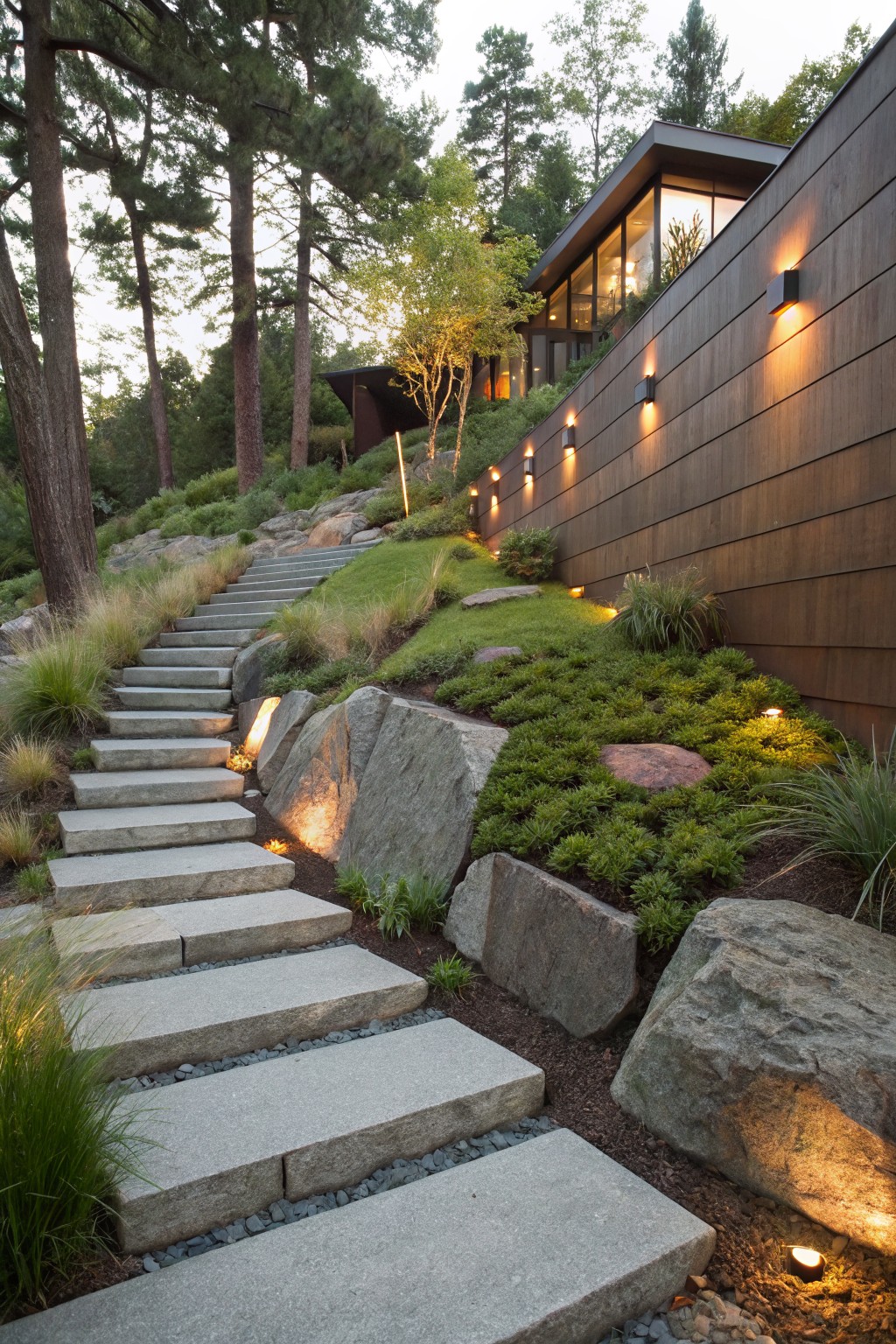
Wide stone steps like these make climbing a slope feel easy and natural. Big boulders sit right alongside, holding back the earth without any fussy walls. Low grasses fill in the gaps, and path lights keep it safe at night. It’s a simple way to tie the yard to the house.
This works well on rocky hillsides where you want low upkeep. Pick steps wide enough for two people, and source boulders from nearby to match the site. Skip busy plantings. Keep to spots with some natural stone already, so it doesn’t look added on.
Pebble Edged Fire Pit Platform

A raised concrete platform holds a simple fire pit filled with dark pebbles. That setup keeps things clean and contained. A big natural boulder sits right next to it for some organic weight. The pebbles spill out around the edges onto the pavers. It pulls together hard surfaces with loose rocks in a way that feels deliberate but not fussy.
This works best in a small courtyard or side yard where you want a spot to gather without taking over the space. Pair it with a plain bench nearby and some low grasses. It suits modern homes with clean walls. Just make sure the platform is wide enough for safety around the fire. Skip it if your yard gets too much wind.
Poolside Gravel Beds with Boulders
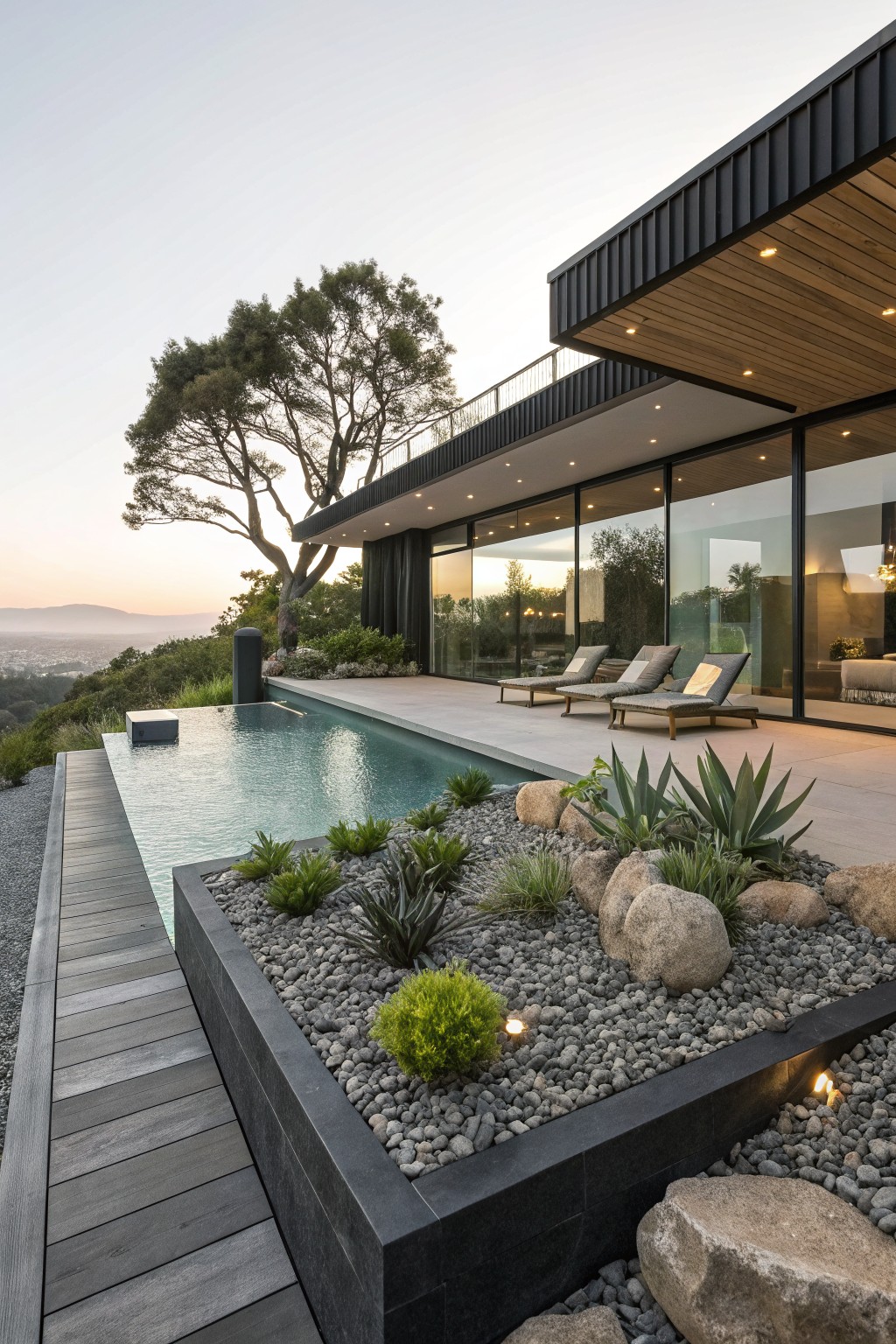
One clean way to handle landscaping around a pool is to build a raised bed right along the edge. Fill it with smooth pebbles as mulch, tuck in a few tough succulents like agaves, and drop in some good-sized boulders. The black concrete edging keeps everything sharp and contained. It stays low fuss and fits right with a modern deck setup.
This works best on sloped lots or where you want to soften hard lines without much green bulk. Use it next to wooden decks or glass walls to tie the yard to the house. Go for local rocks if you can. Skip it in super shady spots, since the plants need some sun.
Rock Mulch Edging a Winding Path
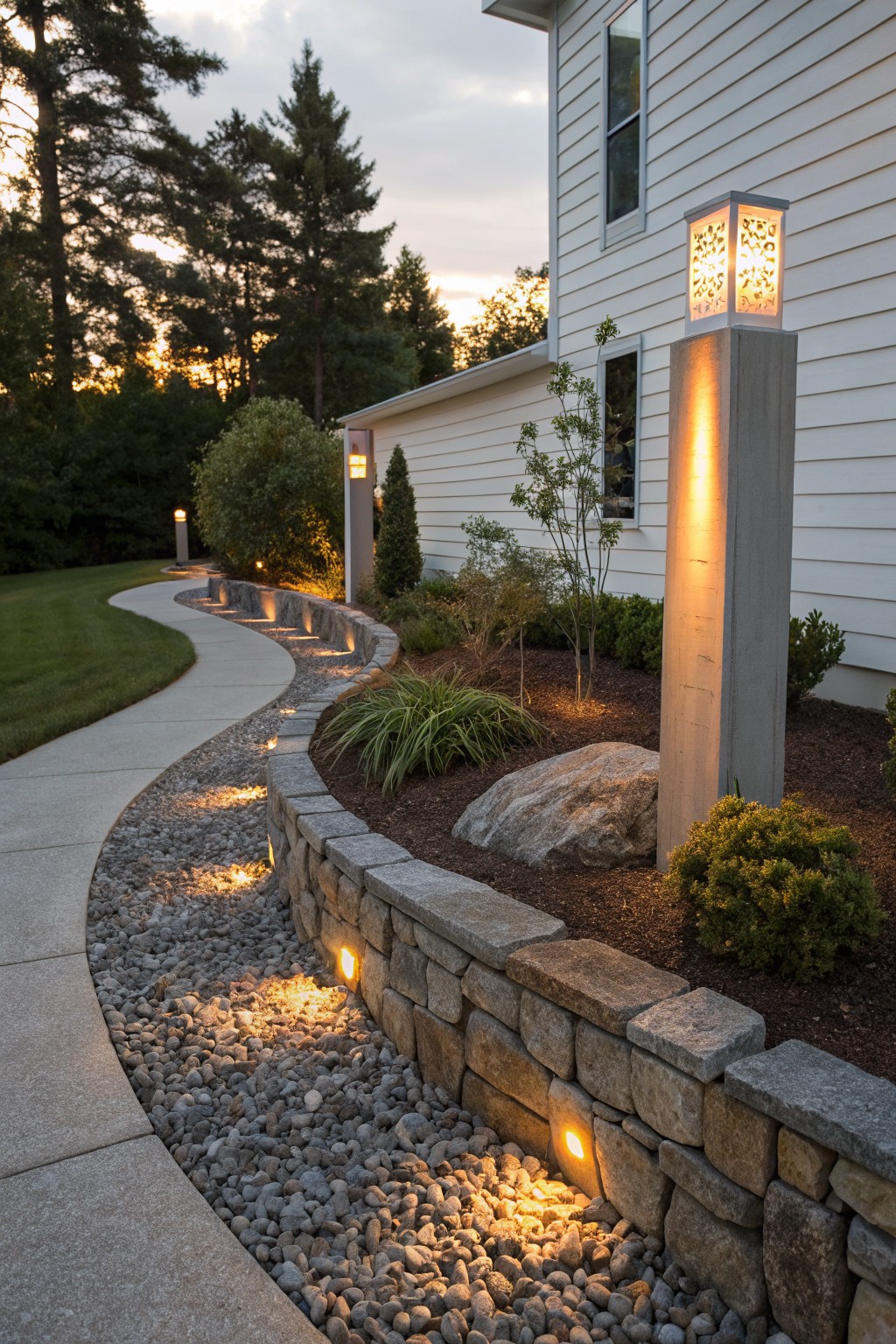
A curved concrete walkway like this gets a clean, low-key edge from a simple stone retaining wall topped with pea gravel mulch. It keeps the look minimalist without much upkeep. The gravel fills in neatly around low plants and a big boulder, and those recessed lights along the wall add just enough glow at dusk to make it practical.
This works best in front yards where you want to lead folks right to the door. Pick rounded river rocks for the mulch to avoid sharp edges, and stick with native shrubs that won’t crowd the path. Skip fussy flowers here. It’s forgiving for sloped spots too, holding soil back while looking sharp.
Raised Pebble Beds with Boulder Accents

One straightforward way to add polish to a terrace or balcony is filling raised concrete planters with smooth pebbles and a single large boulder. Here, the light gray pebbles form a neat base, with mossy patches and a round black stone adding just enough interest. It stays low fuss since rocks don’t need watering or weeding, and the clean lines fit right into modern outdoor spots.
These beds work best along deck edges or walls, especially on rooftops where deep soil beds are tough. Go for light-colored stones against wood floors to keep it from feeling cold… pair with a simple bench nearby for sitting. Skip heavy plants so the rocks stay the focus.
Pond Edged with Boulders and Pebbles
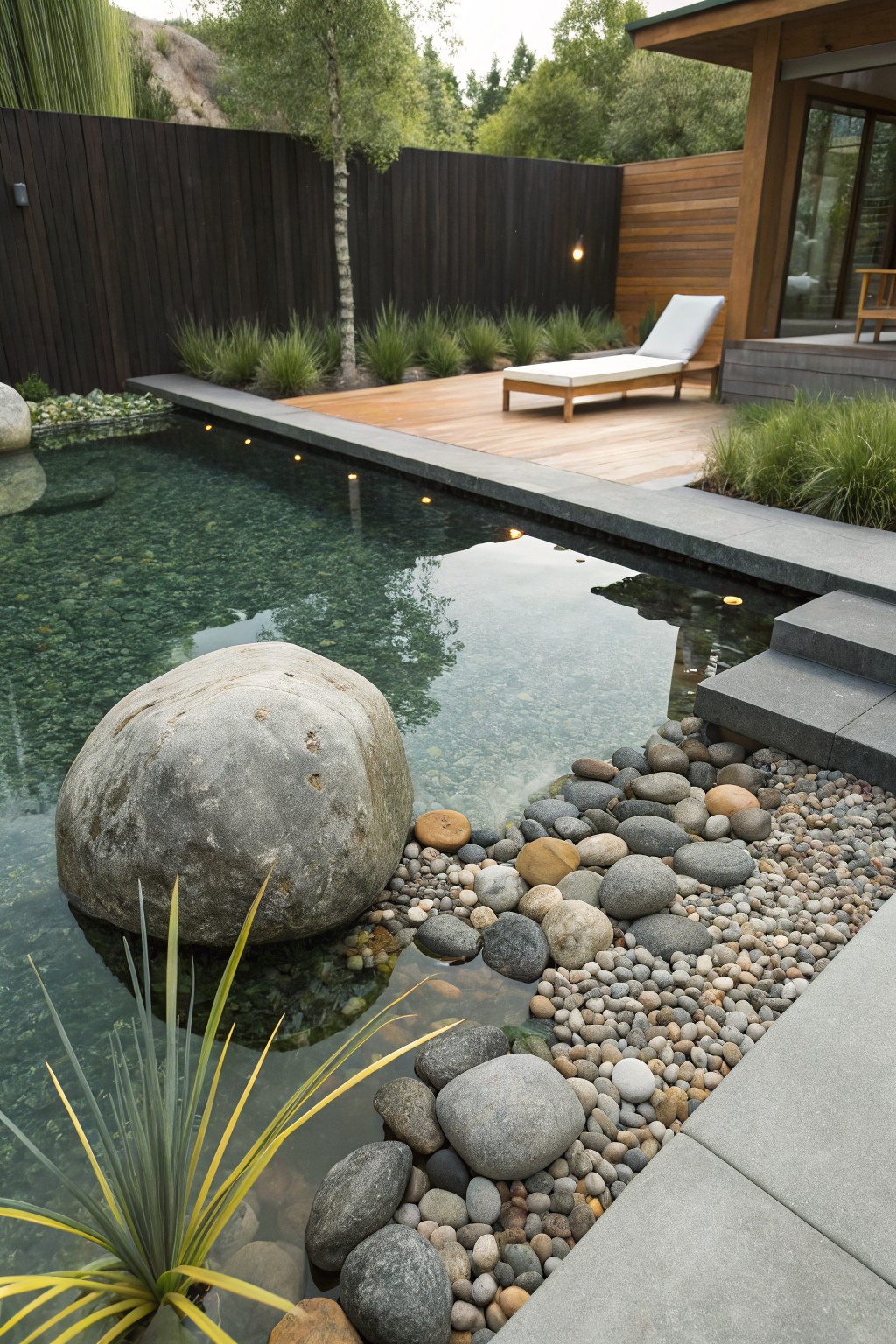
A large smooth boulder sits half in the water with smaller rocks and pebbles spilling out around it. That simple layering pulls the eye right to the pond without any fuss. Grasses poke up here and there for a bit of green, but the rocks do most of the work keeping things clean and interesting.
Try this in a corner of the yard where you want calm without constant upkeep. It fits modern homes with wood decks nearby, or even older places looking for a fresh touch. Source rocks in mixed sizes from local spots… just make sure the water stays clear so the textures really show.
Gravel Walkway with Wide Stepping Stones

A simple gravel walkway like this uses dark pebbles between wide concrete slabs. It runs straight from the yard to the house entry. Grasses and a big boulder sit right alongside. The look stays clean because the gravel fills gaps and hides weeds. No busy borders. Just enough plants to soften things.
This works best for modern homes or side entries where you want low upkeep. Pick drought-friendly grasses like lavender along the edges. Add one large rock for scale. Skip mulch. Gravel drains fast and stepping stones give sure footing. It suits sloped yards too. Keep the stones spaced evenly so it feels deliberate.
Zen Gravel Circle for Yard Calm
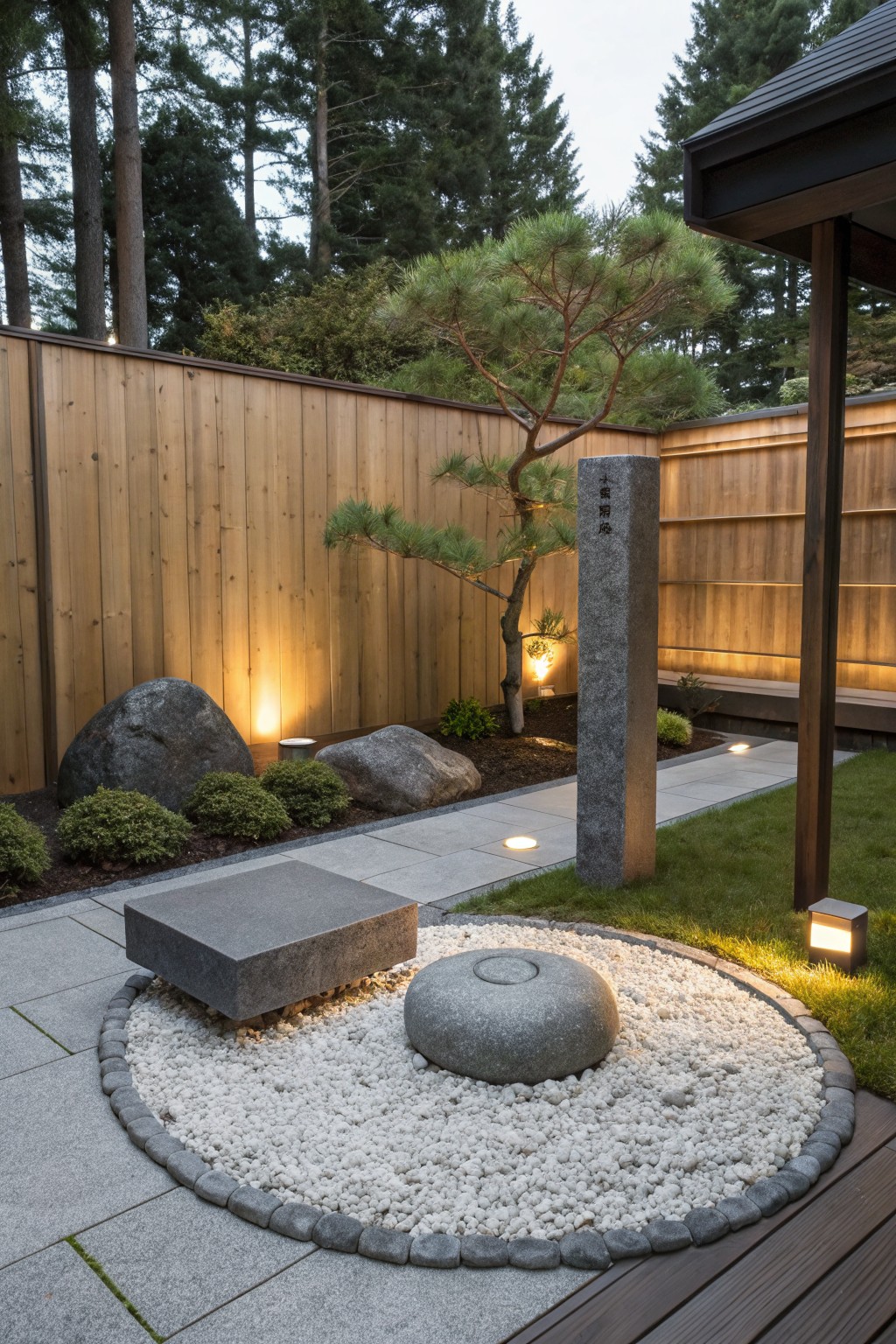
A simple circle of white gravel makes a quiet spot in this yard. Right in the middle sits a smooth round boulder, with a flat stone bench close by. Rocks edge it all, tying into the path and plants. It’s clean and low fuss, pulling your eye without trying too hard.
Put one near a patio or deck where you want to sit and unwind. White pea gravel works best, easy to rake into patterns if you like. Suits modern homes or wooded lots. Just keep weeds out and skip too many plants inside the circle.
Frequently Asked Questions
Q: How do I keep weeds from ruining my clean rock garden? A: Spread landscape fabric over the soil first. Then pile on at least three inches of rocks. Weeds hate fighting through that setup.
Q: What rocks give the best minimalist look? A: Choose smooth river rocks or pea gravel in soft grays and beiges. They reflect light nicely and stay put. Uniform sizes keep things sharp.
Q: Can I pull this off without spending a ton? A: Hunt for bulk rocks at local quarries. Skip fancy plants to cut costs right away. And reuse any old stones from your yard.
Q: Do I need plants, or can rocks stand alone? A: Pure rocks work great for zero-fuss sophistication. Toss in a few spiky succulents if you want subtle green. They pop without overwhelming the clean lines.
