


I always pay attention to how rock landscaping shapes a driveway’s path, guiding you smoothly from the street while blending into the yard’s overall layout. Those subtle curves and borders make the biggest difference in entrances that feel put-together rather than afterthoughts. I’ve tried gravel borders myself, and they hold up well against rain and shifting soil if you get the depth right. What draws me in most are the ones where rocks scale to the home’s size, creating clean lines that evolve nicely with nearby plantings. A couple of these setups seem practical enough to test in your own space, adjusting for local stone and traffic patterns.
Curved Gravel Driveway with Rock Edges

A simple gravel driveway like this curves gently toward the house, edged by big boulders and clumps of grass. It keeps things natural and low fuss, while those rocks hold everything in place and add some weight to the look. No fussy pavement, just practical path that fits right with the wood siding on the house.
This setup works great for homes in wooded spots or sloped lots, where you want drainage without much upkeep. Line your own gravel drive the same way, spacing rocks to match the curve and filling gaps with tough grasses. Skip tiny pebbles, though, they shift too easy.
Winding Flagstone Path to the Front Door

Big irregular slabs of natural flagstone make up this path. They curve through low plantings and mulch right up to the house steps. What stands out is how the stones pick up the texture from the entry arch and walls. It pulls the yard and house together without looking forced.
Try this where you have room for a gentle bend. It suits craftsman or stone homes best. Go for thicker slabs on uneven ground. Skip it if your front yard is too narrow… traffic needs a straighter shot.
Pebble Edges Along Stone Pathways

One clean way to define a driveway entrance path is with wide gray stone pavers edged in smooth white pebbles. Those pebbles fill narrow strips right next to the path, keeping weeds out and giving a subtle crunch underfoot. Paired with low boxwood shrubs, it makes the walk up to the door feel deliberate and polished, without looking fussy.
This setup suits formal stone homes or any spot where you want low-maintenance borders. Lay the pavers first on a solid base, then add landscape fabric under the pebbles to hold them in place. It works best leading to raised steps… just avoid steep slopes where rocks might shift.
Rock-Edged Gravel Path to the Front Door
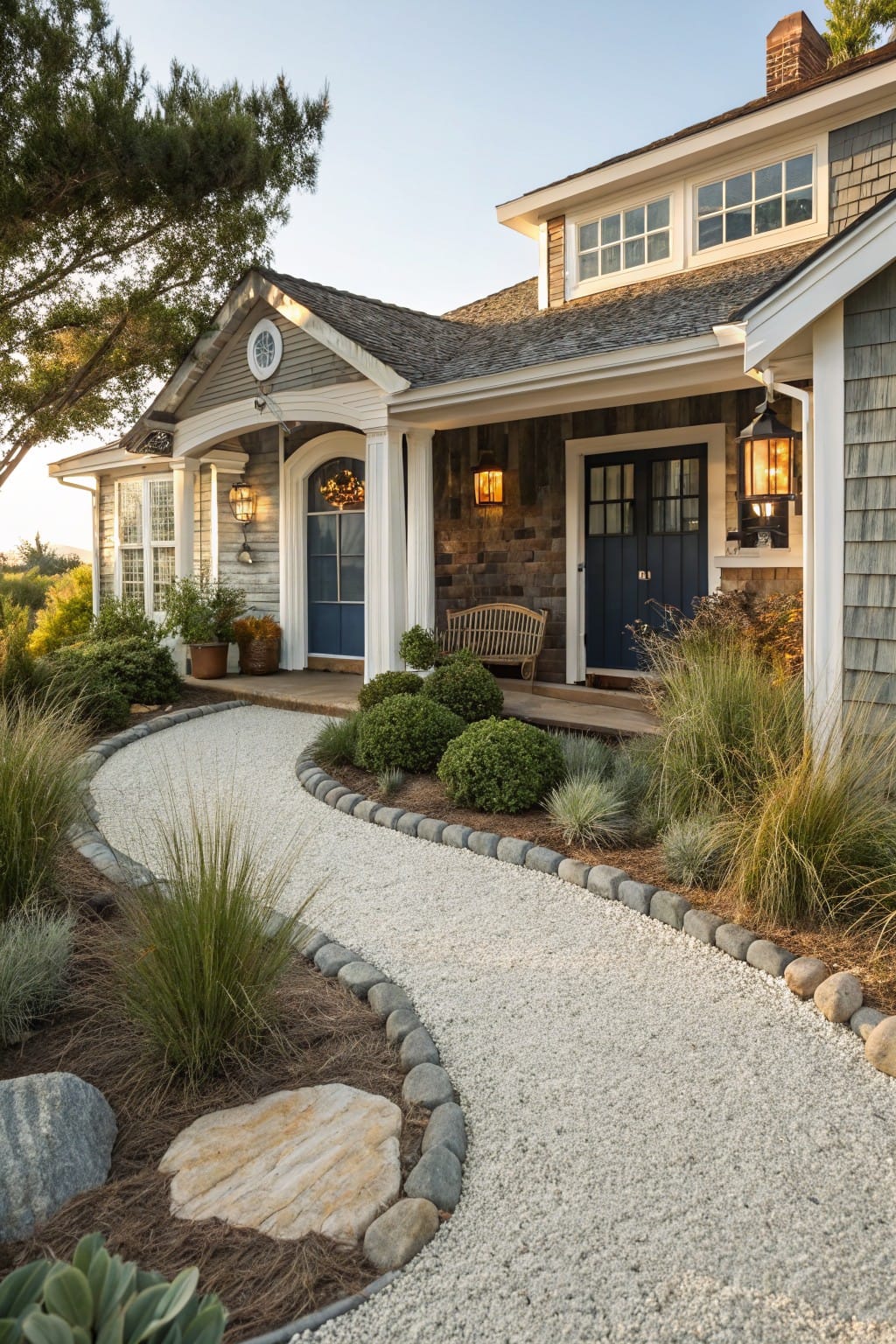
A simple gravel path like this one curves gently toward the house, edged all the way with smooth rounded rocks. It keeps things natural and low fuss, letting the plants along the sides fill in without much trimming. The white gravel shows up clean against the darker stones and greenery, and it pulls your eye right to the entry without feeling too rigid.
This setup works great for homes with a casual coastal or cottage feel, especially where you want to soften a straight walkway. Lay down landscape fabric first to cut weeds, then add two-inch gravel over it and set the rocks firm along the border. Skip it on steep slopes though, gravel can shift there. Pair with drought-tolerant grasses for easy upkeep.
Rock-Edged Curved Driveway

A simple concrete driveway gets a lot of character from large boulders placed along the curve and narrow cobblestone borders set right into the slab. It pulls the eye smoothly from the street up to the house without feeling too busy. Those rocks tie right into the stone garage walls too, so the whole entrance reads as one natural piece.
This setup works great on winding lots or sloped driveways where you want some definition but not a full paver job. It’s low upkeep once planted in, suits mountain or wooded homes best, and keeps mud off the concrete. Just space the boulders so they don’t block turning room.
Gravel Paver Path to the Entry

Big concrete pavers laid out in black gravel make a straightforward path like this one. The gravel fills the gaps nicely, and grasses along the sides add some height without fuss. It pulls focus to the front door just right, especially with those low path lights glowing in the evening.
This setup fits modern homes or clean yards best. Lay down landscape fabric first under the gravel to cut weeds, then set the pavers firm. It handles foot traffic fine and stays low-maintenance… as long as you refresh the gravel now and then.
Large Terracotta Pots Frame the Entry

Big terracotta pots like these work great right by the front steps. They add some real scale without much planting work. Here a pair of them sits on either side of the doorway, holding small twisted trees that match the rustic arched door. The rough clay texture picks up the stone path and walls nearby. It just makes the whole entrance feel settled and lived-in.
Put them where your driveway meets the house, especially on homes with stucco or stone details. They suit sloped lots or spots with a view, since the pots stay low and won’t block things. Pick ones that look aged already. Keep the plants simple, like olive branches or clipped shrubs. Skip fancy flowers that need too much care.
Stone Slab Path Through the Garden

This path takes rough irregular slabs of local stone and sets them into a gravel base, curving gently through borders packed with lavender, geraniums, and silvery herbs. The uneven spacing and natural shapes make the walk to the door feel easy and unforced, like part of the landscape itself. It stands out because it slows you down just enough to notice the plants along the way.
Set this up along a side entrance or narrow front yard where a full driveway won’t fit. Go for stones around 2 to 3 feet across, bed them shallow in gravel for drainage, and use tough perennials that lean over the edges without blocking steps. Skip it if your slope is steep… too much trip hazard.
Stone Walls Lining a Gravel Driveway

A simple dry-stacked stone wall runs right along this curved gravel driveway. It holds back the slope nicely and lets plants tuck in above it. White hydrangeas spill over the top. That rough stone texture fits right into a wooded spot like this. Keeps the entrance feeling natural instead of too fussy.
You see this work best on sloped driveways where you need some support anyway. Source local fieldstone if you can. It blends better. Pair it with gravel for easy drainage. Skip it on flat ground though. Might feel overdone. Add low shrubs on top for softness.
Circular Driveway with Rock Fountain

A circular driveway like this one pulls you right into the entry with its smooth cobblestone paving. At the center sits a simple stone fountain, edged in rocks and tucked with low green plants. The whole thing lights up nicely at dusk, making the front yard feel put together and welcoming. It’s a straightforward way to add some movement and sound without overdoing the landscaping.
This works best on bigger lots where you have room for cars to loop around easily. Pair it with a stone house facade to keep things matching. Just scale the fountain to your space, or it might overwhelm a smaller driveway. Rocks hold up well and need little upkeep.
Rock-Lined Paths Guide to the Entrance

Large boulders and gravel patches line this paver walkway right up to the front door. They add a rugged touch that fits with the house’s clean modern lines. The mix keeps things low fuss while making the path feel like a natural route through the yard.
Try this on homes with simple facades where you want some texture out front. Place bigger rocks closer to the entry for weight, then gravel to fill gaps around grasses. It holds up well in spots with tough soil. Just keep the path wide enough for easy walking.
Cobblestone Paths Define Narrow Entrances

A simple cobblestone path like this one winds through tall iron gates and draws the eye right to the front door. It stands out because the uneven stones give a natural, aged look that feels timeless against brick walls and greenery. No need for wide driveways here. This setup turns a tight urban alley into something special.
You can use it for side entrances, mews-style homes, or any narrow approach where space is limited. Lay the stones in a gentle curve, add potted boxwoods on each side, and hang lanterns for evening light. It suits older city properties best. Just make sure the base is solid so the path doesn’t shift over time.
Flagstone Path with Boxwood Edges

A simple flagstone path like this runs straight from the garden gate right up to the door. The uneven stones give it a natural feel that fits older stone houses. Boxwood balls and low hedges line one side, keeping things neat without much fuss. That setup makes the walk to the entrance feel guided and a bit formal, but still easygoing.
You can pull this off in front yards or side entries where you want low upkeep. Pick rough-cut local stone for the path to blend with the house, then plant dwarf boxwoods that stay round with just a yearly trim. It works best on smaller properties… skips the wide driveway look for something more personal. Keep the other side open or with flowers so it does not crowd the space.
Stone Steps Frame a Welcoming Garage Entry

Rugged stone steps like these rise right from the gravel path and lead straight to the garage doors. They work so well because the natural rock texture matches the wooded hillside behind, making the whole entrance feel like part of the land. A low stone wall along one side keeps everything neat without overpowering the rustic wood doors.
You can pull this off on sloped driveways or any spot needing a sturdy transition to the house. Pick fieldstone or bluestone that fits your area to avoid hauling in heavy materials. It suits cabin-style homes best, but watch the scale, smaller steps might overwhelm a tiny lot.
Wood Walkway Through Rock Garden Entry

A straight wooden boardwalk slices right through beds of smooth pebbles, chunky boulders, and wavy grasses to reach the front door. What stands out is how it pulls your eye forward without any fuss, mixing natural stone textures with the warm wood tones for that easy modern feel. The grasses soften the rocks just enough, and those low path lights add a nice glow at dusk.
This kind of path works best on sloped lots or coastal spots where you want low upkeep. Go for sturdy ipe wood that holds up to weather, and plant drought-tolerant grasses like these to frame it. Keep the rocks in neutral grays so they don’t fight the house siding… suits minimalist homes without stealing the show.
Patterned Stone Pathways for Entrances

One simple way to make a driveway or entrance stand out is with large stone slabs set with dark pebble mosaics along the edges. In this setup, the light beige tiles mix plain squares with those textured black borders, creating a path that feels custom and Mediterranean without much fuss. Olive trees nearby add height and shade, tying the walk right into the stone walls of the house.
This works best on homes with natural stone siding or in dry climates where olives and low plants thrive. Lay it as a straight run to the door, maybe 6 to 8 feet wide for cars if needed, and keep the pebbles flush for smooth walking. Skip it on super steep slopes though. The pattern hides dirt well too.
Stepping Stone Paths in Gravel Gardens
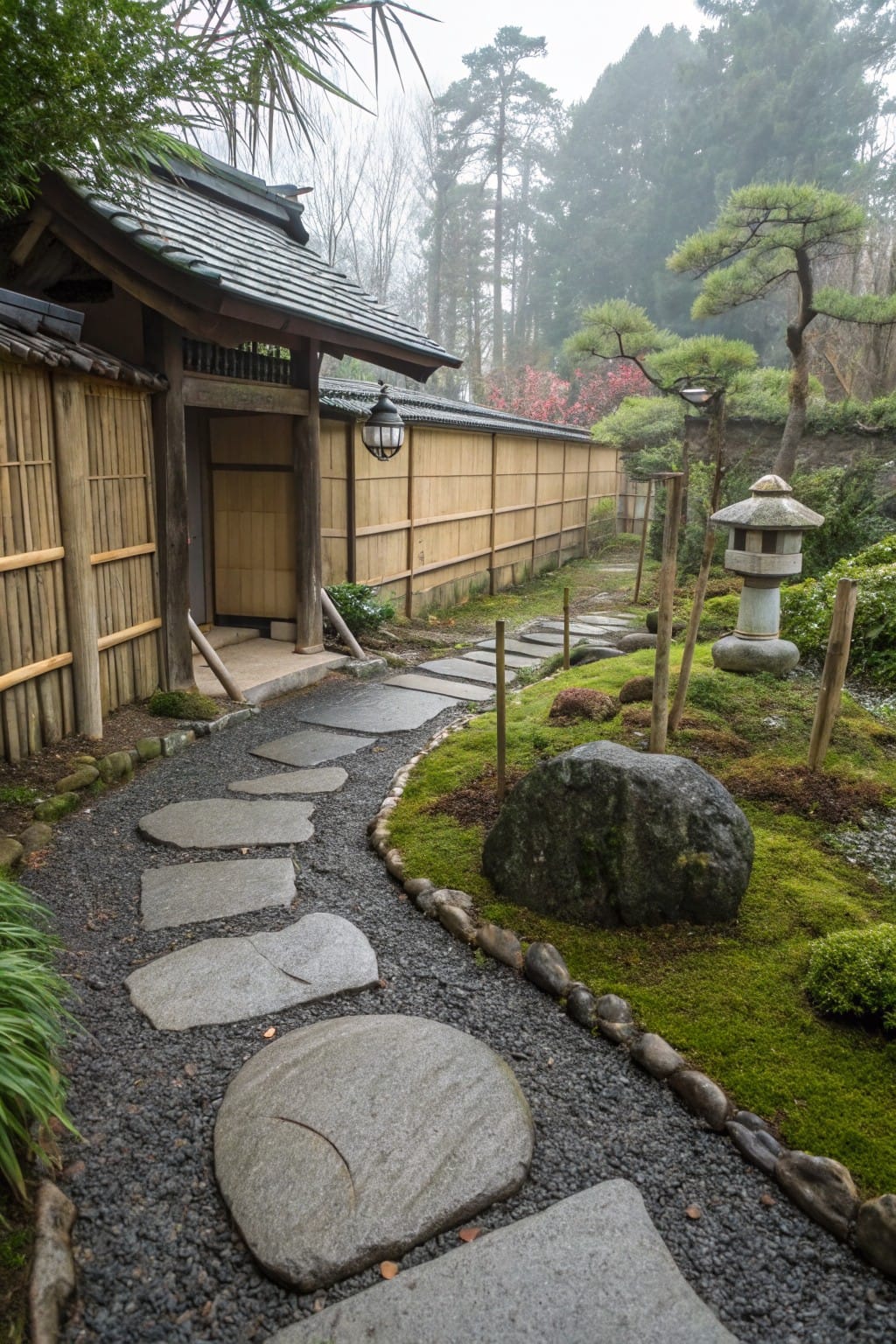
A stepping stone path like this one uses big irregular stones set into gravel, with mossy edges and a few larger rocks nearby. It guides you straight to the door without feeling too formal. The gravel fills in the gaps nicely, and everything stays low to the ground, which keeps the look simple and grounded.
This works best for side or front entrances on smaller lots, especially if you like a Japanese garden feel or just want something easy to maintain. Space the stones about two feet apart for normal steps, and add moss or low plants along the sides to soften it up. Avoid slick stones if your area gets rainy.
Gravel Borders Along Entry Paths

One straightforward way to make an entrance path feel put together is to run gravel or small pebbles right alongside the main walkway. Here you see it with simple gray brick pavers down the middle, edged by smooth river rocks that keep everything neat without much upkeep. Those tall concrete planters with spiky succulents add some height and pull your eye straight to the door. It’s clean and modern but not fussy.
This setup works great for homes with a side or gated entry, where you want to guide people in without a lot of grass to mow. Use larger gravel if foot traffic is heavy, or finer pebbles for a softer look. It suits drought-friendly yards too, since the rocks and tough plants handle dry spells fine. Just make sure the edging holds the gravel in place so it doesn’t wander.
Winding Flagstone Path to the Entry

A simple winding path like this one uses irregular flagstone slabs edged in concrete, with a thin gravel strip running right down the center. It pulls you along from the water’s edge up to the house steps without feeling forced. Those big boulders tucked alongside keep everything looking natural and sturdy.
This setup works best on sloped sites near water or woods, where you want the path to hug the terrain. Pick stones in grays and earth tones that match your local rock, and add low grasses for softness. Just make sure the gravel stays put with good edging, or it can wander over time.
Boulder at the Driveway Bend

A good-sized boulder sits right in the curve of this driveway path. Boxwoods circle its base, and path lights pick it up at night. That setup makes the entrance feel solid and tied to the land. It stands out without trying too hard.
This works best where the drive takes a turn near the gate. Think wooded lots or sloped sites. Scale the rock to your path width, and plant low around it so the boulder leads the way in.
Winding Stone Path Edged with Boulders

A simple curving path made from gray stone pavers winds gently through big, rugged boulders to reach the front door. What stands out is how the rocks look like they grew right out of the ground, tying the house into the forest around it. The low plants tucked in between add some green without crowding the way.
This works best on sloped lots or spots with natural stone nearby. Source boulders from your property or local quarry to keep costs down and the look real. Just make sure the path stays wide enough for two people and clear of tripping spots.
Dark Paver Path with Stepping Stones

Wide black pavers form the base of this driveway entrance, with big rough-cut stepping stones set right into them. Gravel fills the borders alongside low grasses, and it all leads straight to the house door. That dark surface picks up evening lights nicely, making the path easy to spot even as it gets dark outside. Simple rocks and plants keep things low fuss around it.
You can pull this off on a flat approach to any modern front entry. Go for pavers in a matte black stone to avoid glare, and pick stones at least two feet across so they feel bold. It suits homes with light walls or stone siding best, since the dark pulls your eye forward. Skip it if your spot floods easy, gravel shifts in wet spots.
Frequently Asked Questions
Q: How do I choose rocks that fit my home’s vibe without guessing wrong?
A: Walk around your neighborhood and snap photos of driveways you love. Match the rock color and size to your house siding or front door. Bigger rocks ground a modern look, while smaller pebbles soften traditional homes.
Q: Do rocks move around from car tires, and what stops that?
A: They can shift if you just dump them loose. Layer landscape fabric first, then add 4 inches of rocks over a gravel base. Tires roll right over without messing things up.
Q: What’s a simple way to keep weeds from popping up in my new rock driveway?
A: Spray a vinegar-water mix on any sprouts early on. Put down thick weed barrier fabric before rocks go in. Refresh the top layer of rocks every couple years to block light.
Q: Can I pull this off on a weekend without hiring help?
And yeah, grab a wheelbarrow and gloves. Dig out weeds and old gravel first, then spread your base and rocks evenly. Step back often to check the flow.
