

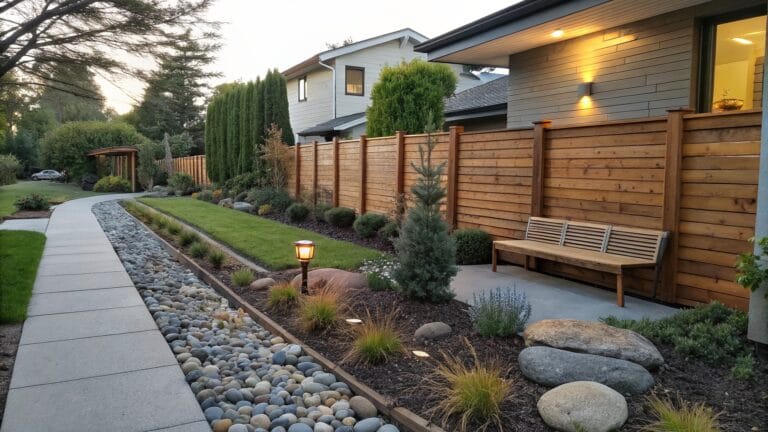
I’ve noticed how a bare fence can chop up a yard, making the whole layout feel tighter than it needs to be. Edging it with rocks draws the eye along the boundary in a way that guides paths and frames plantings without overpowering them. A few years back, I piled local fieldstones along ours, and it grounded the fence so well that the garden beds nearby finally made sense as they filled out. These setups consider real yard quirks like slopes and sun patterns, shaping spaces that settle in over time. One variation with mixed gravel particularly caught me for its low upkeep.
Rock and Gravel Border Along Fences

One easy way to tidy up a fence line is with a strip of gravel and boulders next to stepping stone pavers. Here, smooth river rocks and a couple big boulders hug the base of a cedar fence, keeping weeds down while framing the path nicely. A few low plants like lavender tuck in for some green without crowding things.
This works great in skinny side yards or back boundaries where you want definition but not a full lawn. Lay gravel two inches deep over landscape fabric, drop in boulders for weight, and space pavers for foot traffic. Suits most homes, especially if you’re after low water use. Just pick rocks that match your soil tones.
Rock-Lined Path Along the Fence
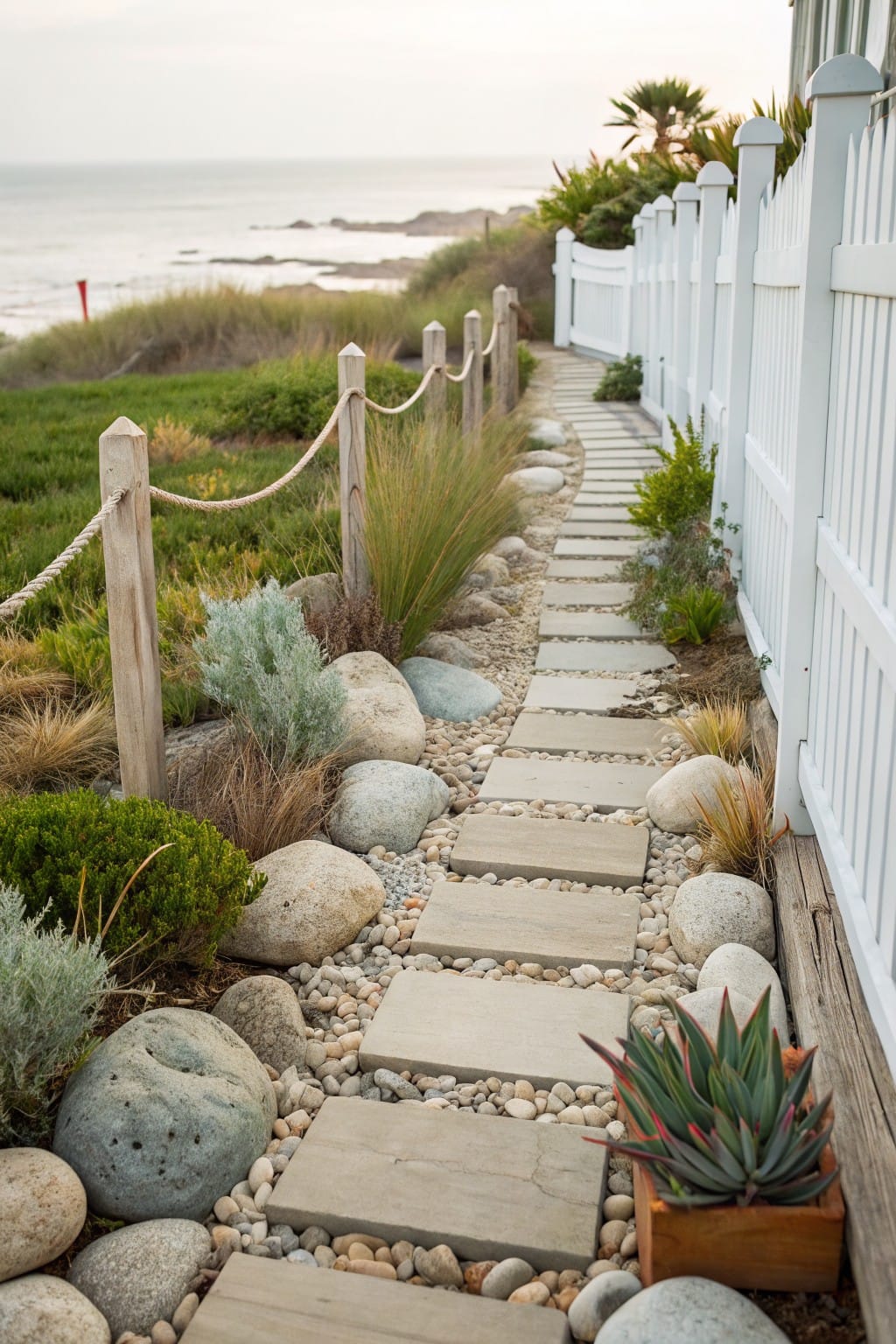
A simple path of flat stones runs right alongside the fence, edged with big boulders and patches of pebbles. This keeps the boundary clear and adds some natural texture without taking up much space. Drought-tolerant plants like grasses and succulents tuck in nicely, so it feels low-maintenance but still alive.
It works best in sloped yards or coastal spots where grass struggles. Lay the stones loose at first to test the flow, then fill gaps with pebbles for drainage. Pair it with a white fence like this for contrast… just watch the boulder sizes so they don’t overwhelm smaller lots.
Raised Planter with Rock Mulch Along a Privacy Fence
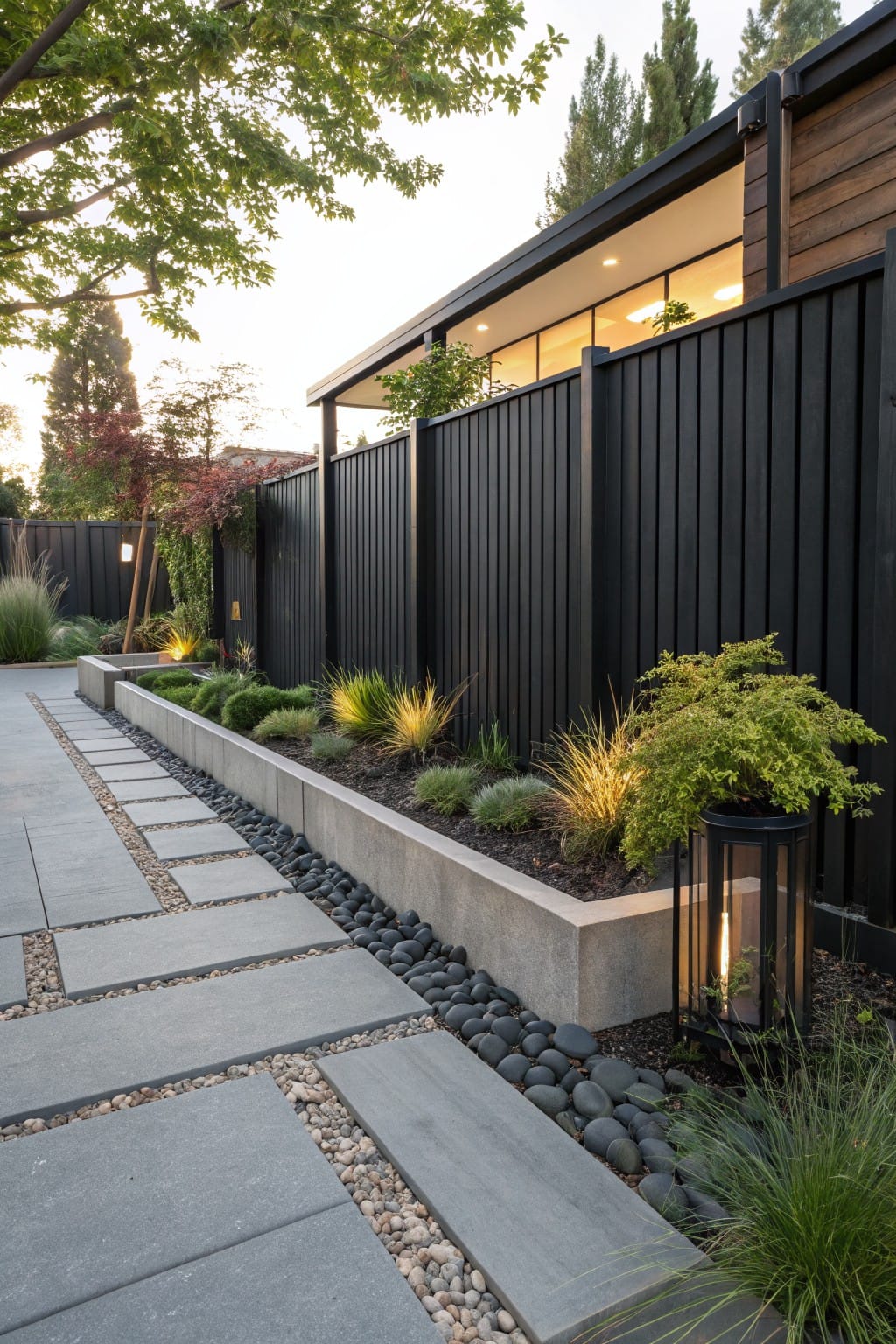
One clean way to edge a yard boundary is with a low concrete raised bed right up against the fence. Fill it with gravel mulch and tough grasses like flax and sedges. The dark rocks keep weeds down and let the plants pop without much upkeep. It makes a straight line that feels finished and holds back the path nicely.
This setup works great in narrow side yards or back boundaries where you want separation but not a busy look. Pair it with simple pavers for walking access. It suits modern homes or any spot needing low water plants. Just make sure the bed drains well so roots don’t rot.
Stone Retaining Walls with Gravel Backfill
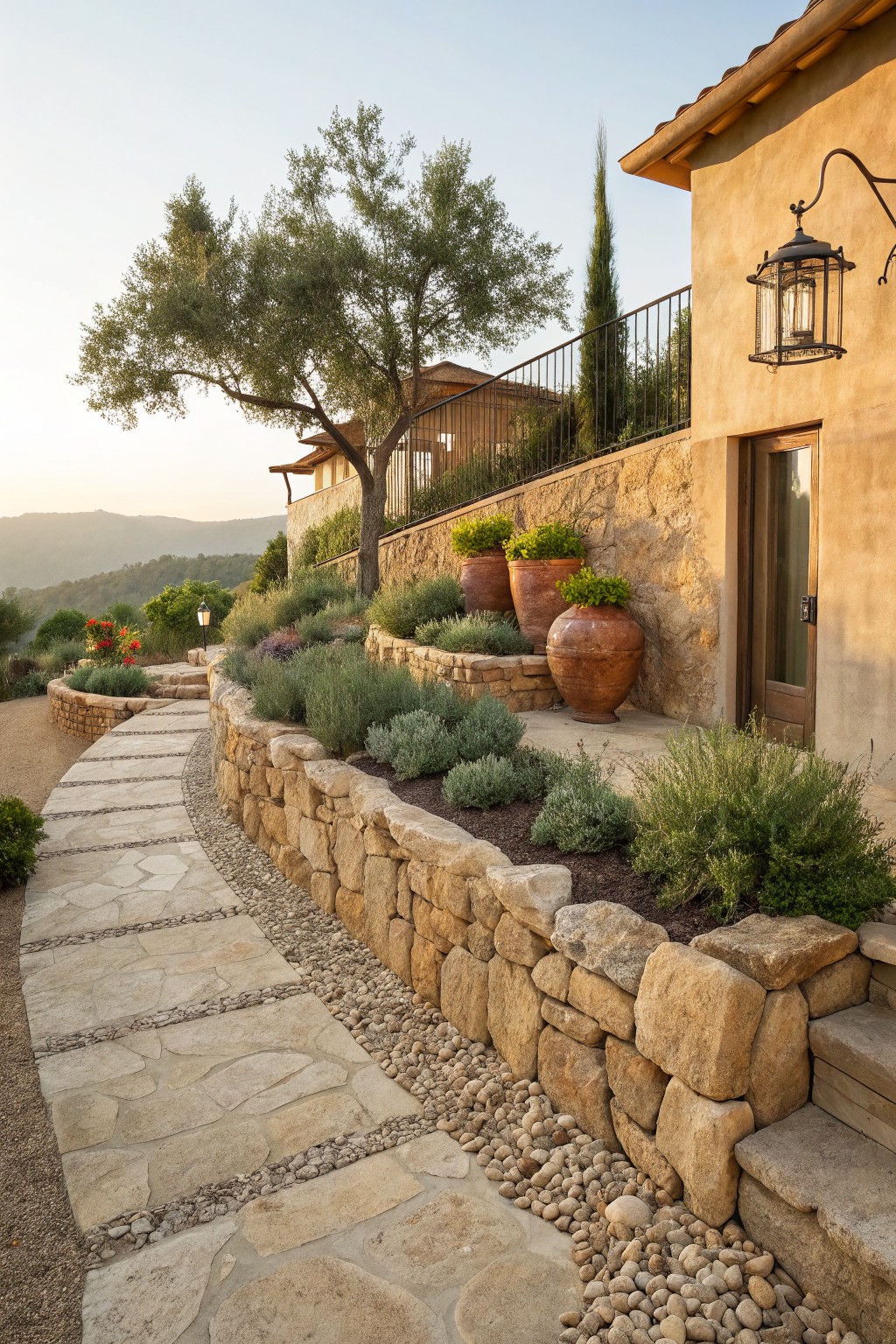
One solid way to handle a sloped yard is with dry-stacked stone retaining walls like these. They hold back the earth while letting you tuck in gravel mulch and low shrubs right against the rocks. Big terracotta pots add some height without much upkeep, and it all keeps the boundary clear but natural. Folks like how it turns a tricky hill into usable space that feels settled in.
These walls work best where you have a drop-off along a property edge or fence line. Go for local stone to blend with the area, fill behind with pebbles for drainage, and plant drought-tough stuff like lavender or rosemary. Skip it on flat ground, though. It suits hillside homes or bigger lots… just check your soil first to avoid shifts.
Dry Creek Bed Path Along the Fence
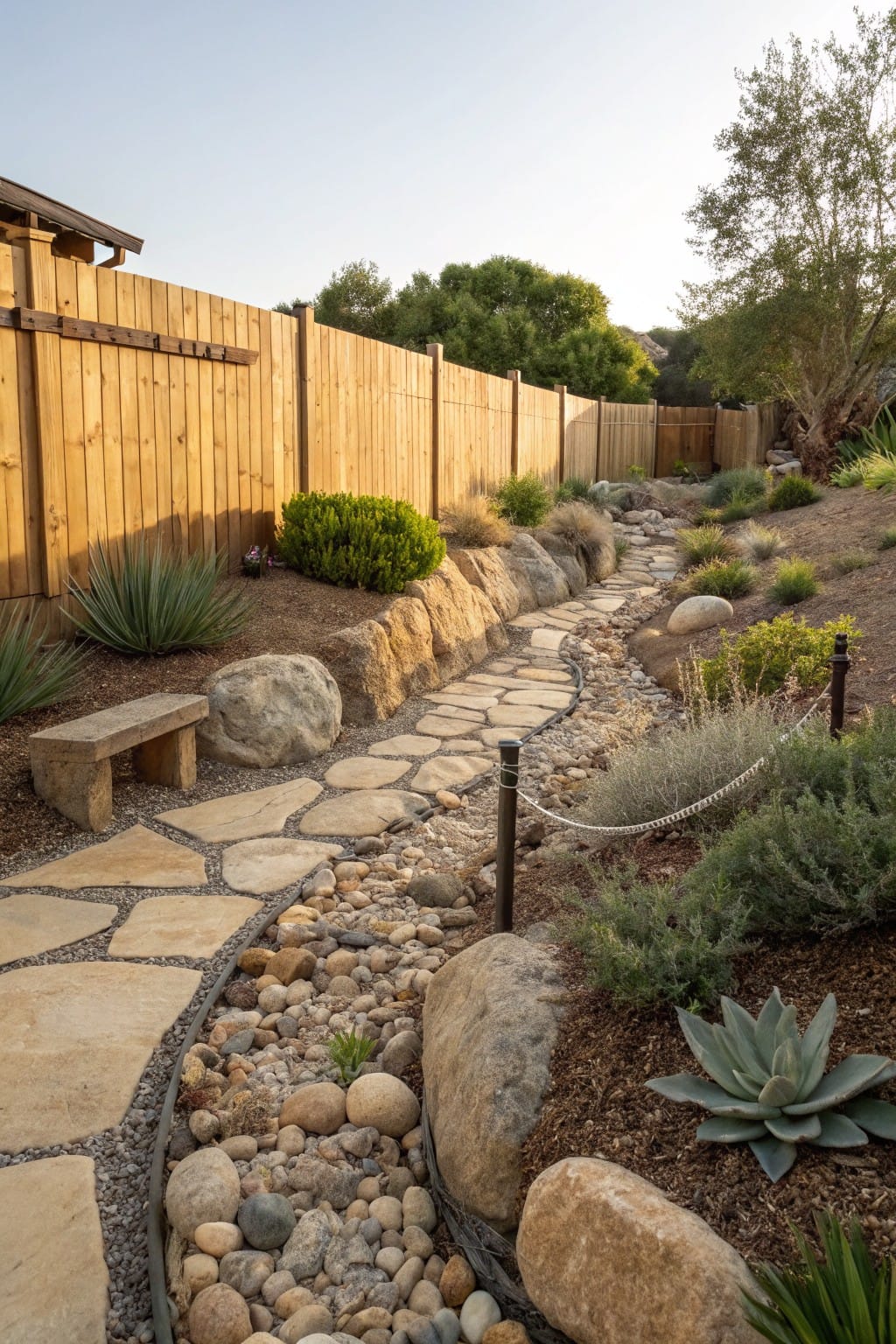
One simple way to define your fence line is with a dry creek bed that curves gently beside it. Fill the bed with mixed pebbles, smooth river rocks, and a few big boulders for that natural flow. Flagstone stepping stones set right into the path give you a place to walk without it feeling too formal. Drought plants like agave and grasses fill in the edges, keeping things low fuss.
This works best in backyards with some slope, where it handles runoff without mud. Pair it with a plain wood fence like this one. It’s easy to set up yourself if you source local rocks. Just watch the scale, bigger yards take larger boulders. Add a spot to sit now and then.
Low Stone Walls Along Picket Fences
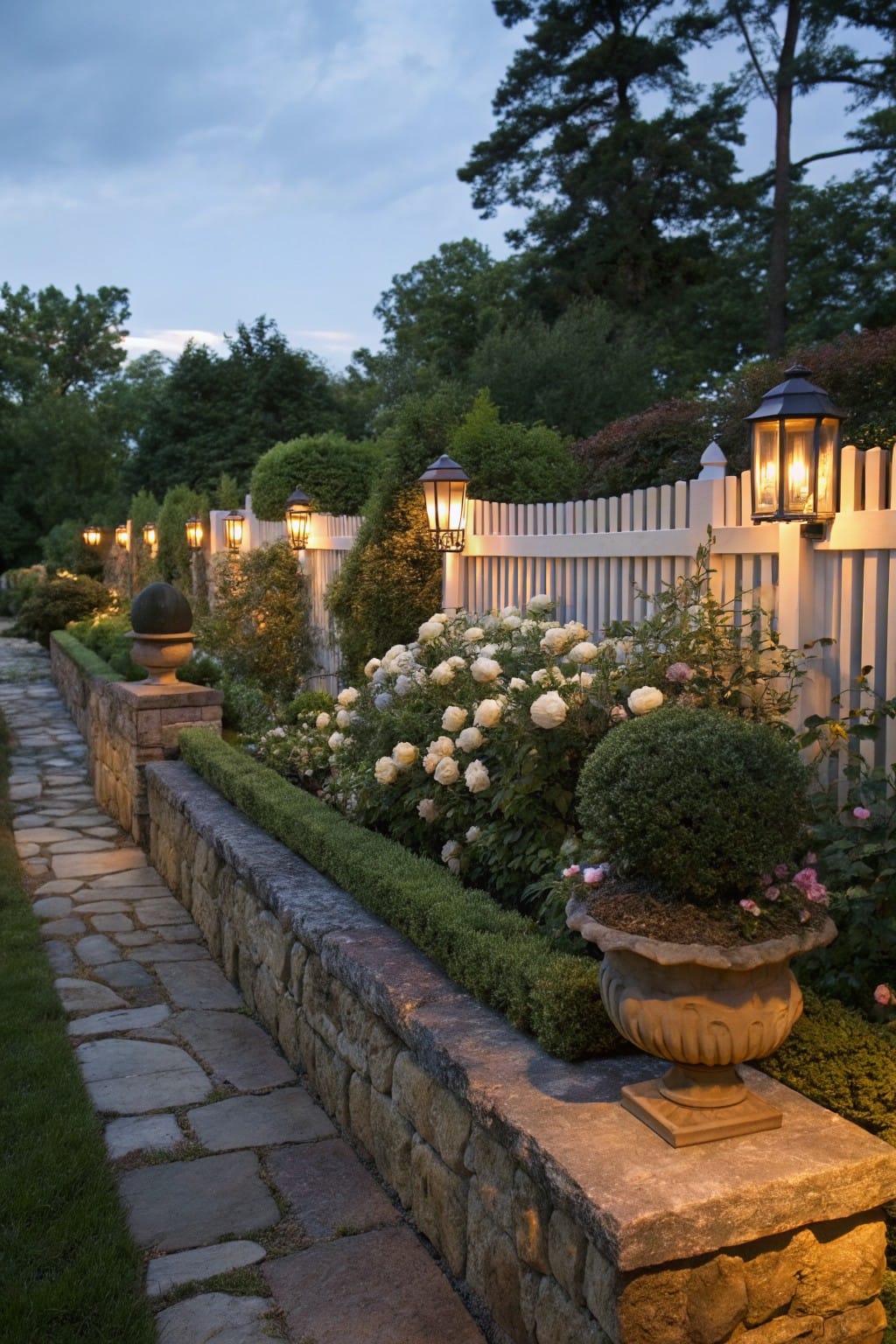
A low dry-stacked stone wall running parallel to a white picket fence makes for a solid boundary that keeps plantings in check. Here, it supports boxwood hedges and clusters of white roses, while a simple stone path invites you along the edge. That combo gives the yard a tidy, layered look without overpowering the fence’s charm.
This works best in side yards or back gardens where you want to define space on a gentle slope. Use local fieldstone for a natural fit, top with clipped evergreens for year-round structure, and add a meandering path. It suits cottage-style homes… just watch the wall height so it doesn’t block fence views.
Rock Walls Paired with Split-Rail Fences
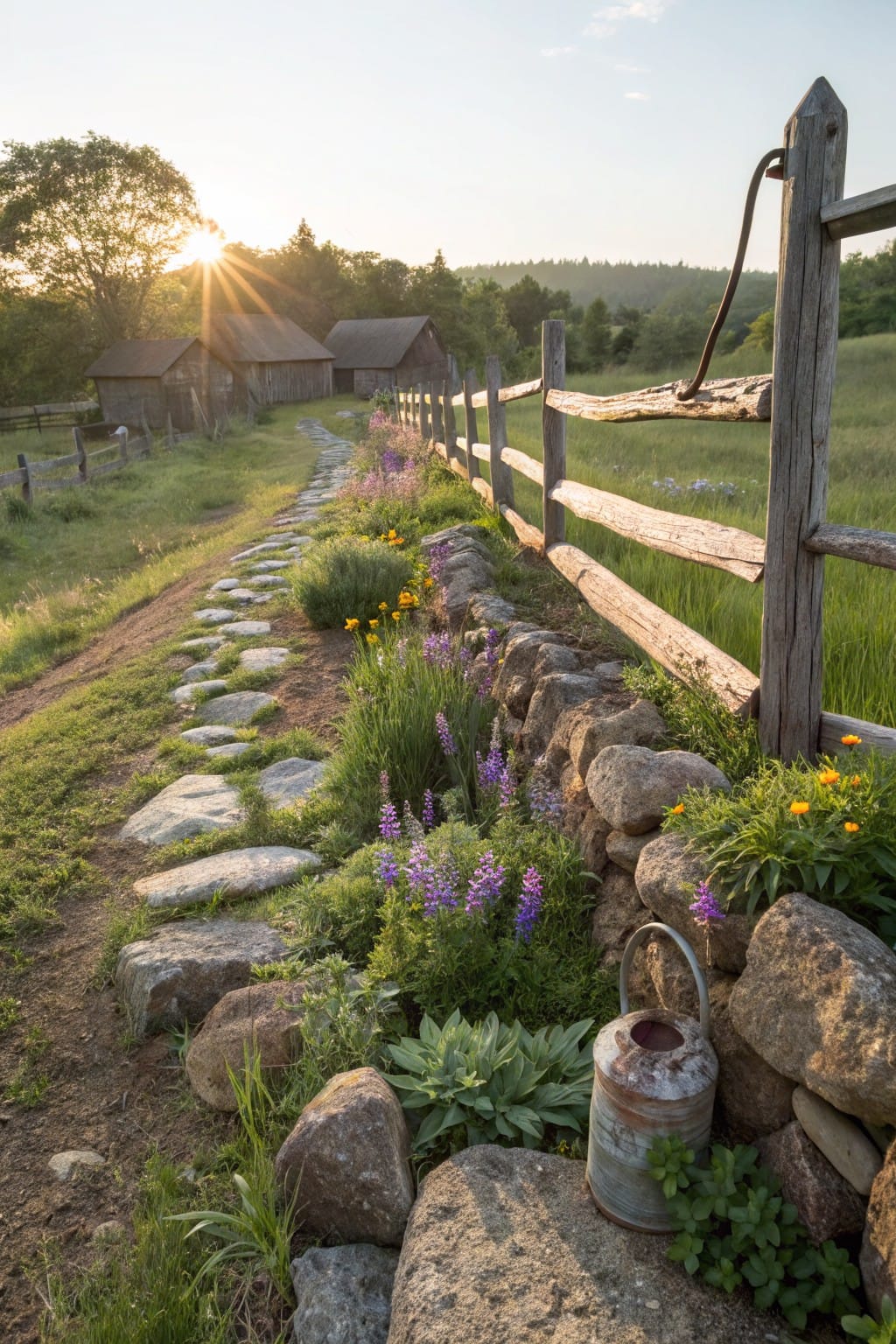
One simple way to mark a boundary without it feeling too hard or formal is to run a low dry-stacked stone wall right alongside a wooden split-rail fence. The stones give a solid base that holds back soil and plants nicely, while the fence keeps things open and rustic. In this setup, flowers like lupines and marigolds tuck into the wall’s crevices, softening the edge just enough.
It works great in country yards or along property lines where you want definition but not a full barrier. Lay flat stones for the wall base, stack them loosely, and plant perennials that spill over. Keep the path between them with stepping stones for easy walking. Suits sloped spots or meadows best, but watch for weeds in the stones if you skip mulch.
Stepping Stone Path Set in River Rock
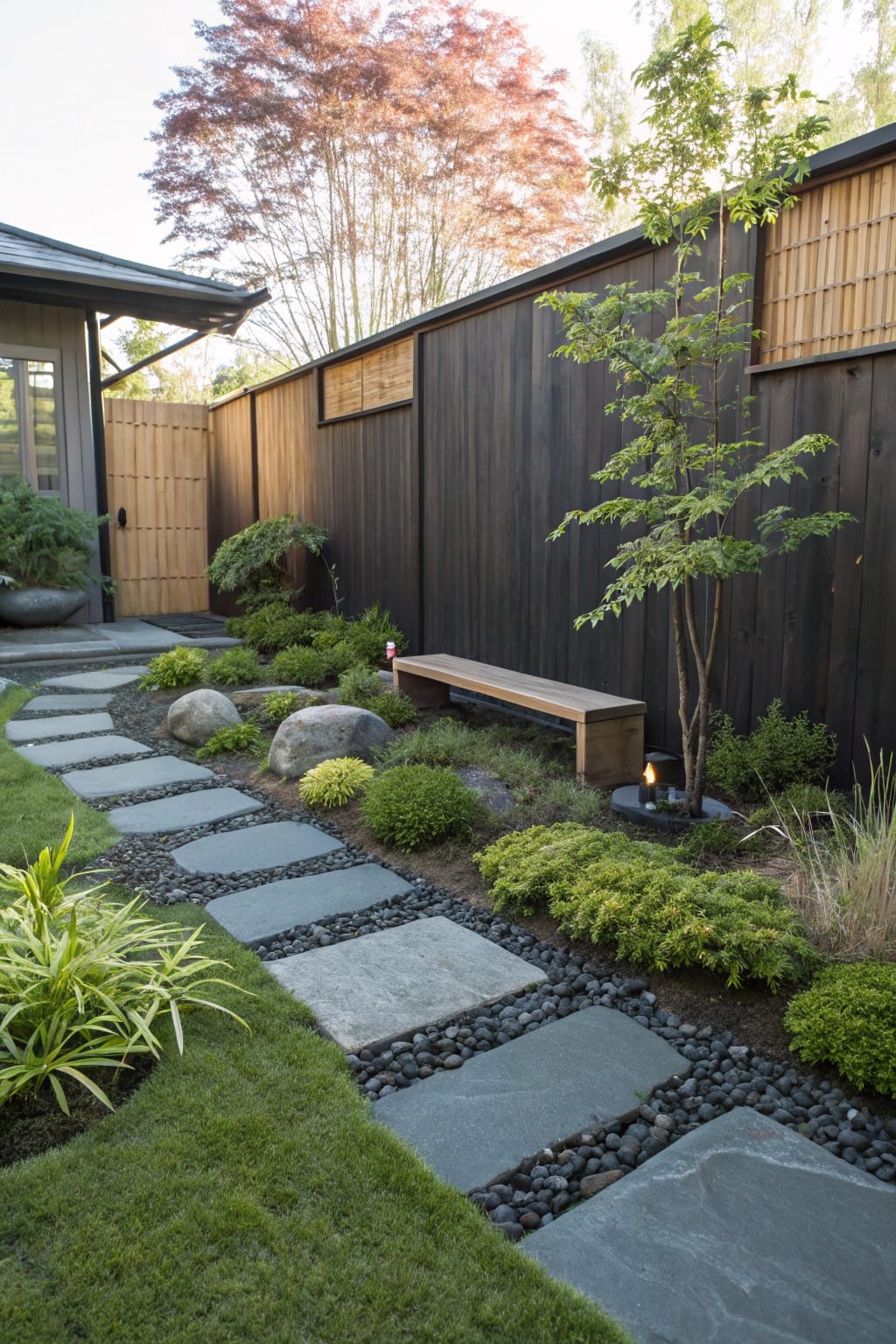
A simple path like this runs along the fence using big flat stones stepped into smooth black river rock. A few large boulders sit off to the side, and low green shrubs fill in around them. It keeps the boundary line clear but natural, easy on the eyes and feet.
This works well in narrow side yards or along property edges where you need definition without much mowing. Pair it with a fence in dark wood for contrast. Go for angular slate stones if you want more grip, and skip it in super wet spots since rocks can shift.
Terraced Stone Walls Along the Fence
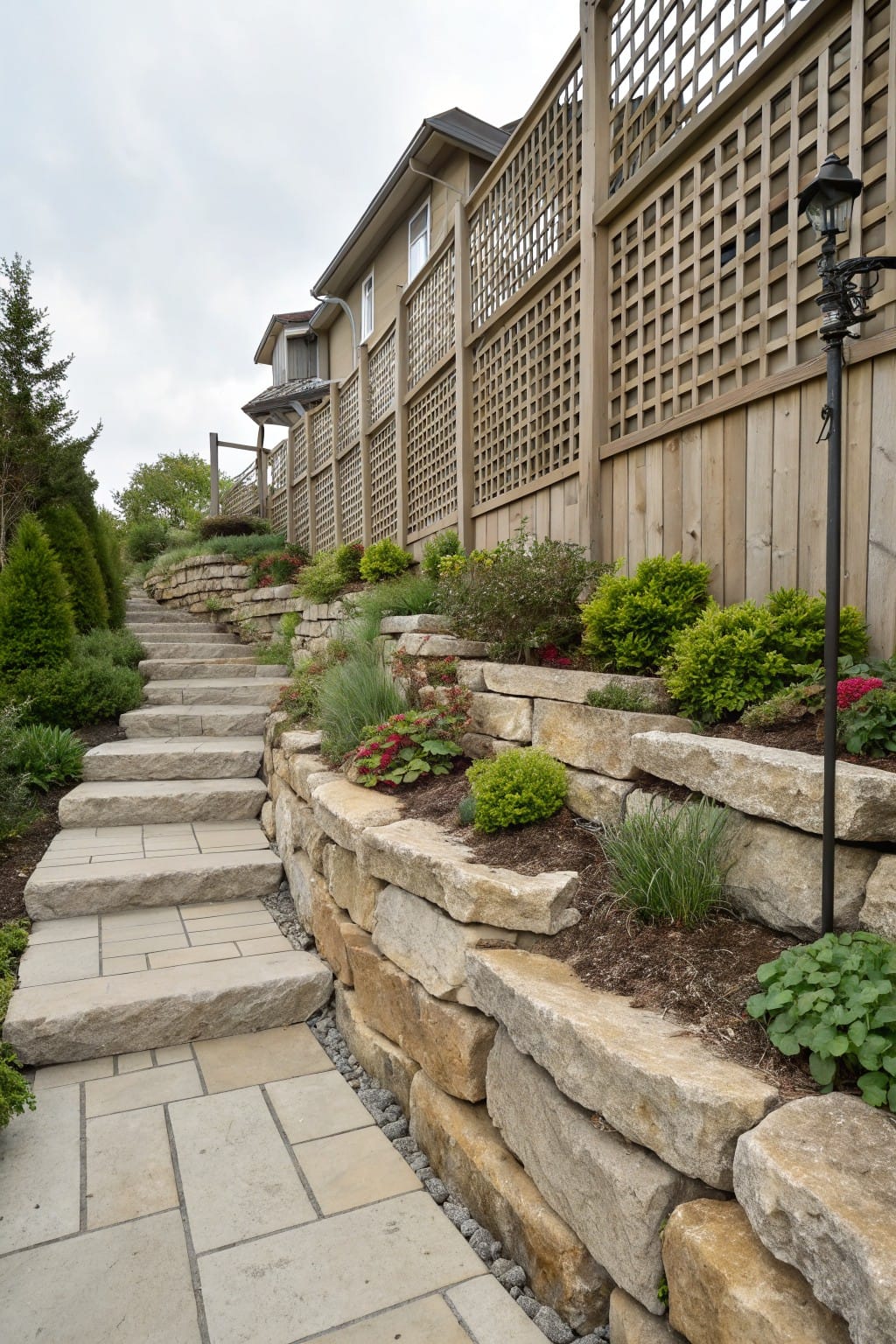
One solid way to handle a sloped yard is with these rough-cut stone retaining walls running right beside the fence. They create flat planting pockets at different levels, filled with tough little shrubs and grasses that spill over the edges. The whole setup turns a tricky hill into usable garden space without looking forced, and it sets a clear line from your neighbor’s side.
This works best in backyards with a decent slope, paired with a simple wood fence like this cedar one. Pick limestone or fieldstone that matches your area’s look, then tuck in low-maintenance plants that won’t mind dry spots. Just make sure the walls are built sturdy from the start… a pro mason helps avoid settling issues down the road.
Large Boulders Line Gravel Paths
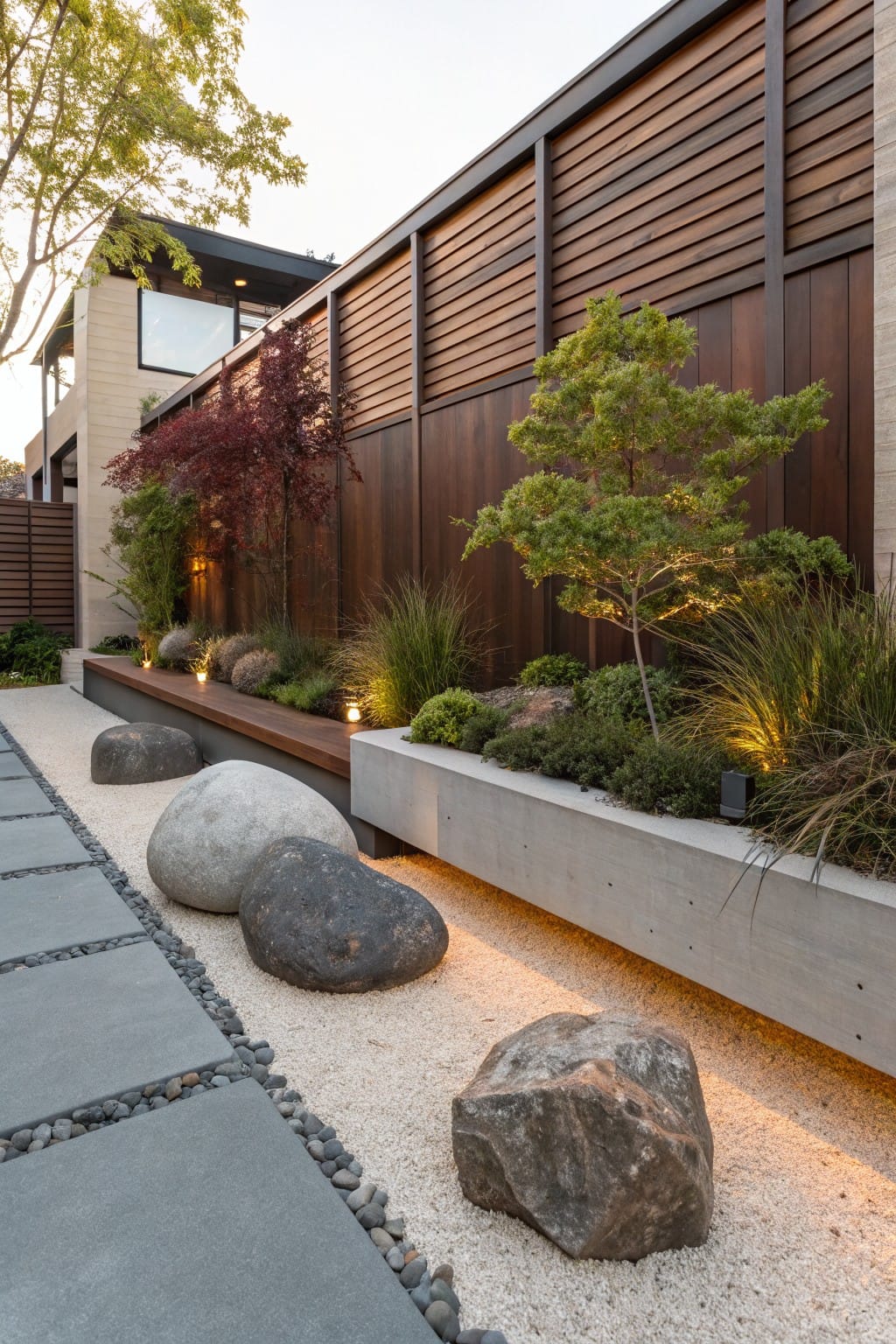
Big round boulders work great along a fence line in a simple gravel yard. They sit right on the edge of the path, making a clear boundary that feels natural instead of boxed in. Paired with the smooth gravel and a few grasses, they keep things low fuss while adding some weight to the space.
Try this in a side yard or backyard walkway where you need to mark off areas without much planting. It suits homes with wood fences and concrete accents. Just source rocks that match your gravel color, and space them unevenly for a casual look.
Rock Edging for Fence-Line Gardens
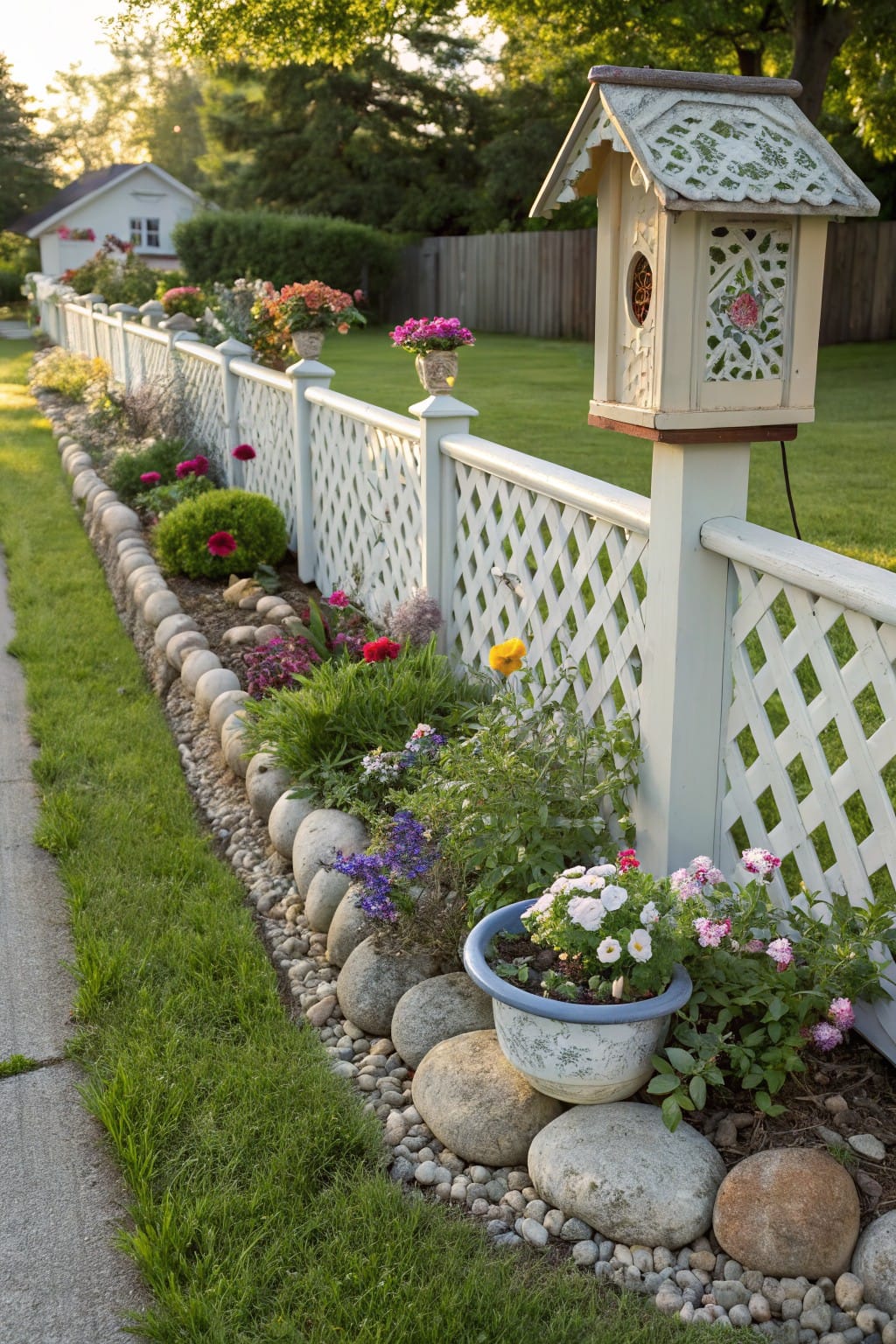
Big rounded boulders mixed with river pebbles make a solid, natural border for flower beds along a fence. It defines the space clearly without looking too rigid, and the rocks hold back soil while letting plants spill over a bit for a soft touch. That white picket fence in the background ties it all together nicely.
You can pull this off in a front yard or side strip where grass meets the sidewalk. Pick boulders about the size of softballs or larger to match your scale, then fill the bed with easy bloomers like roses and delphiniums. It suits cottage-style homes best, stays low-maintenance once planted, but watch for weeds sneaking into the rocks.
Gabion Rock Planters Along Fences

One straightforward way to define yard boundaries is with gabion-style rock planters right next to a wooden fence. These wire or concrete baskets packed with local stones create a solid, low wall that holds back soil and plants without much upkeep. In this setup, tall cacti and agave push up through the rocks, giving a rugged desert feel that matches the fence’s warm wood tones.
You can pull this off in dry climates or anywhere with sloped ground, since the rocks drain fast and keep things stable. It works best around modern homes like this stucco one, where the clean lines tie in. Just make sure the baskets are deep enough for roots, or plants might dry out too quick.
Winding Flagstone Path Along the Fence
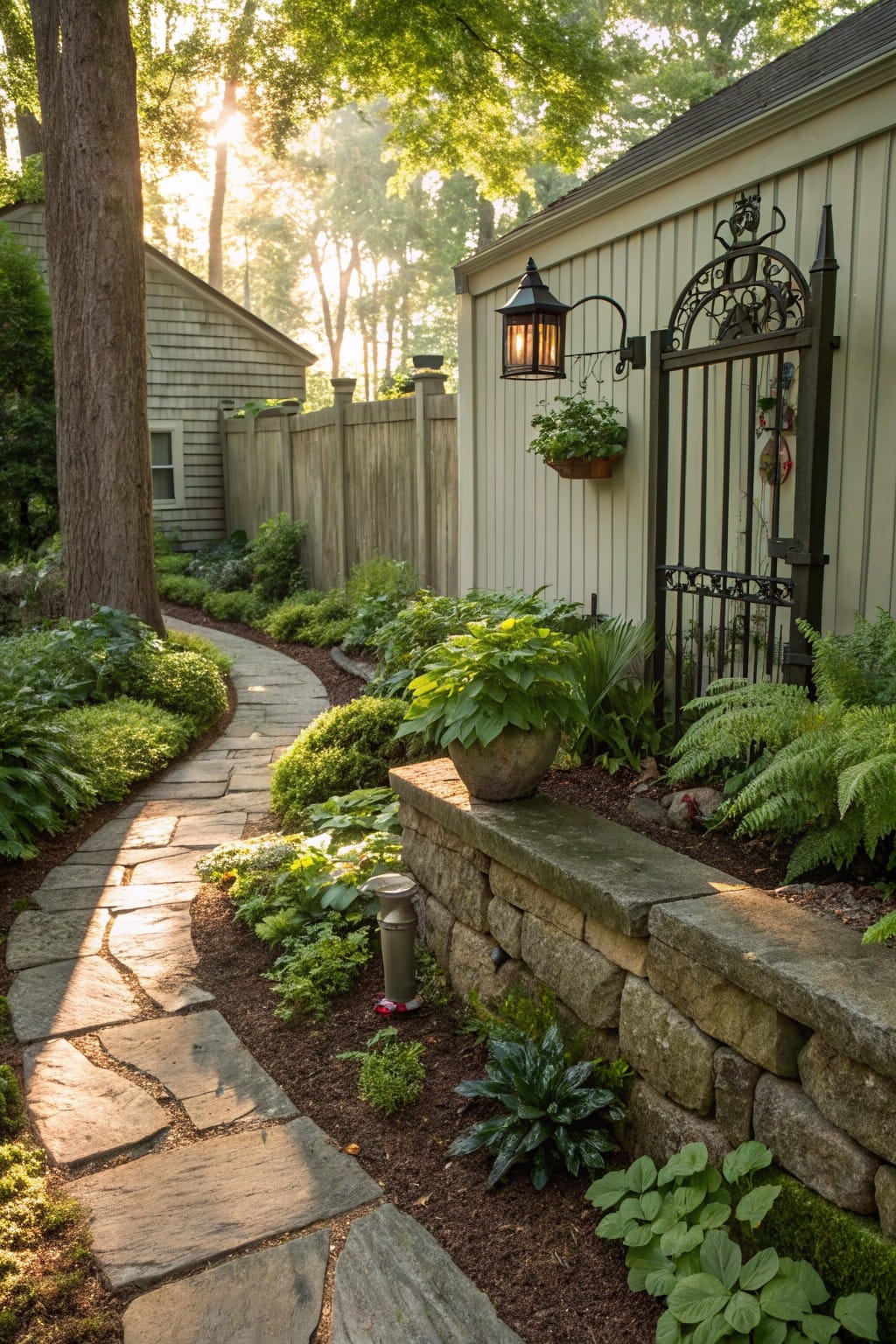
A flagstone path like this one curves gently through a shady planting bed right up against the fence. The low stone wall on one side keeps everything in place and gives the plants a nice edge to spill over. It’s a quiet way to mark the yard boundary. No sharp lines. Just natural flow with ferns and hostas softening it all.
You can pull this off in narrow side yards or along the back fence where you want access without mowing right up to the edge. Pick rough-cut local stone for the path and wall to blend in. Keep plants low and lush on the fence side for privacy. Watch the drainage though… too much water pooling could loosen those stones over time.
Gravel Planter Bed Along Chain Link Fence
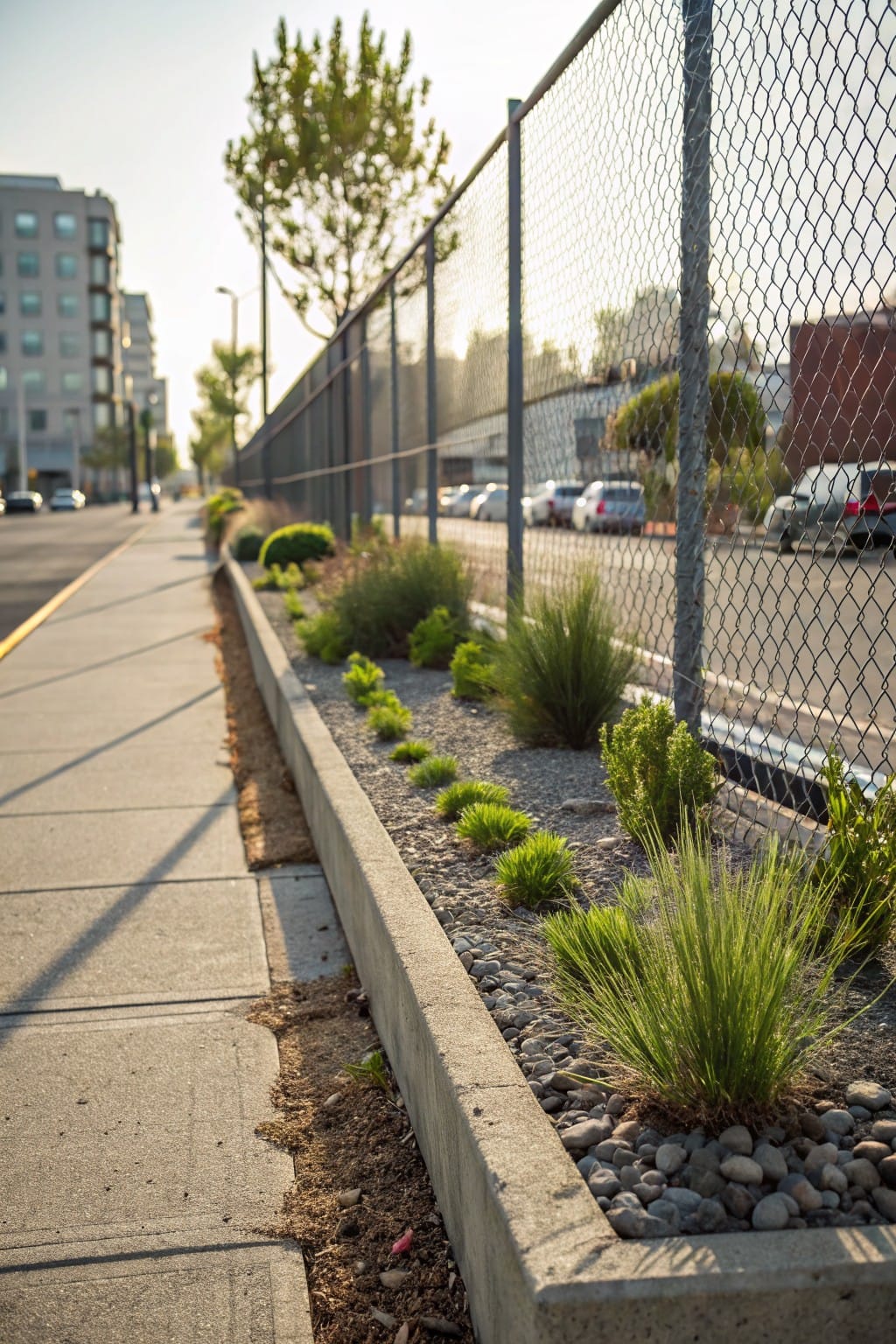
One straightforward way to handle a chain-link fence is with a simple concrete planter bed right along the base. Fill it with gravel, a few smooth pebbles, and clumps of fine grasses. This keeps the line clean and defined without needing constant trimming. The rocks let water drain fast, and the plants stay low enough not to crowd the fence.
It works best next to sidewalks or streets in town yards where space is tight. Go for tough, drought plants that match your zone. Layer the gravel over some soil for roots, and top with larger stones if you want more weight. Just make sure the bed slopes a bit for runoff.
Winding Pebble Path Along the Fence
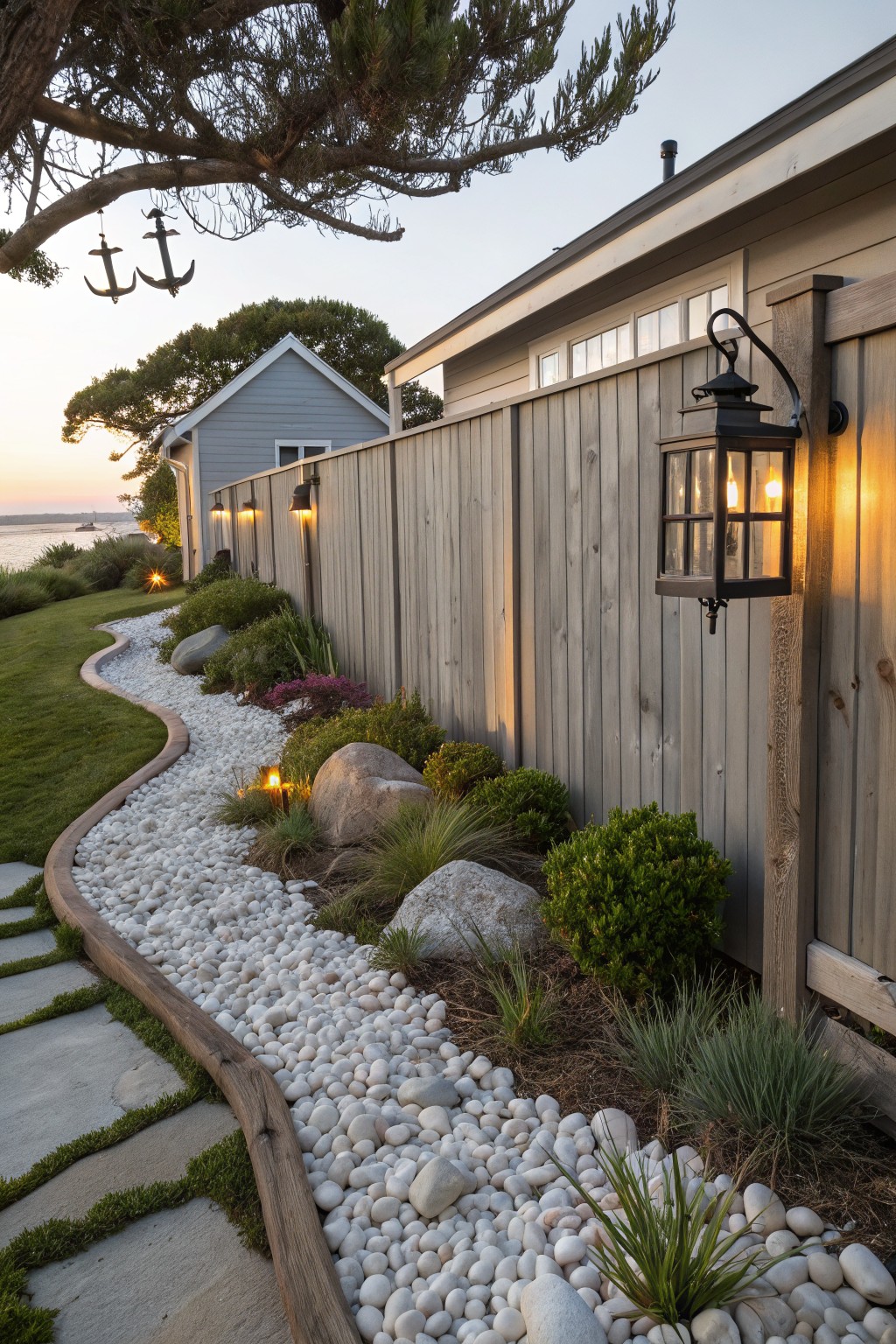
A simple curve of white pebbles runs right up against the fence here, edged in rough wood to keep everything tidy. Boulders and low plants tuck in along the sides, making a clear boundary that still feels soft and natural. It’s a quiet way to separate yard spaces without tall hedges or walls taking over.
This works best in narrow side areas or along back fences where you need definition but not a lot of upkeep. Go for smooth white pebbles if you want that bright, clean edge, and mix in a few grasses or succulents for color. Suits coastal spots or any yard with a modern casual vibe. Just watch the edging doesn’t rot too fast in wet areas.
Rock Walls Edging Fence Line Paths
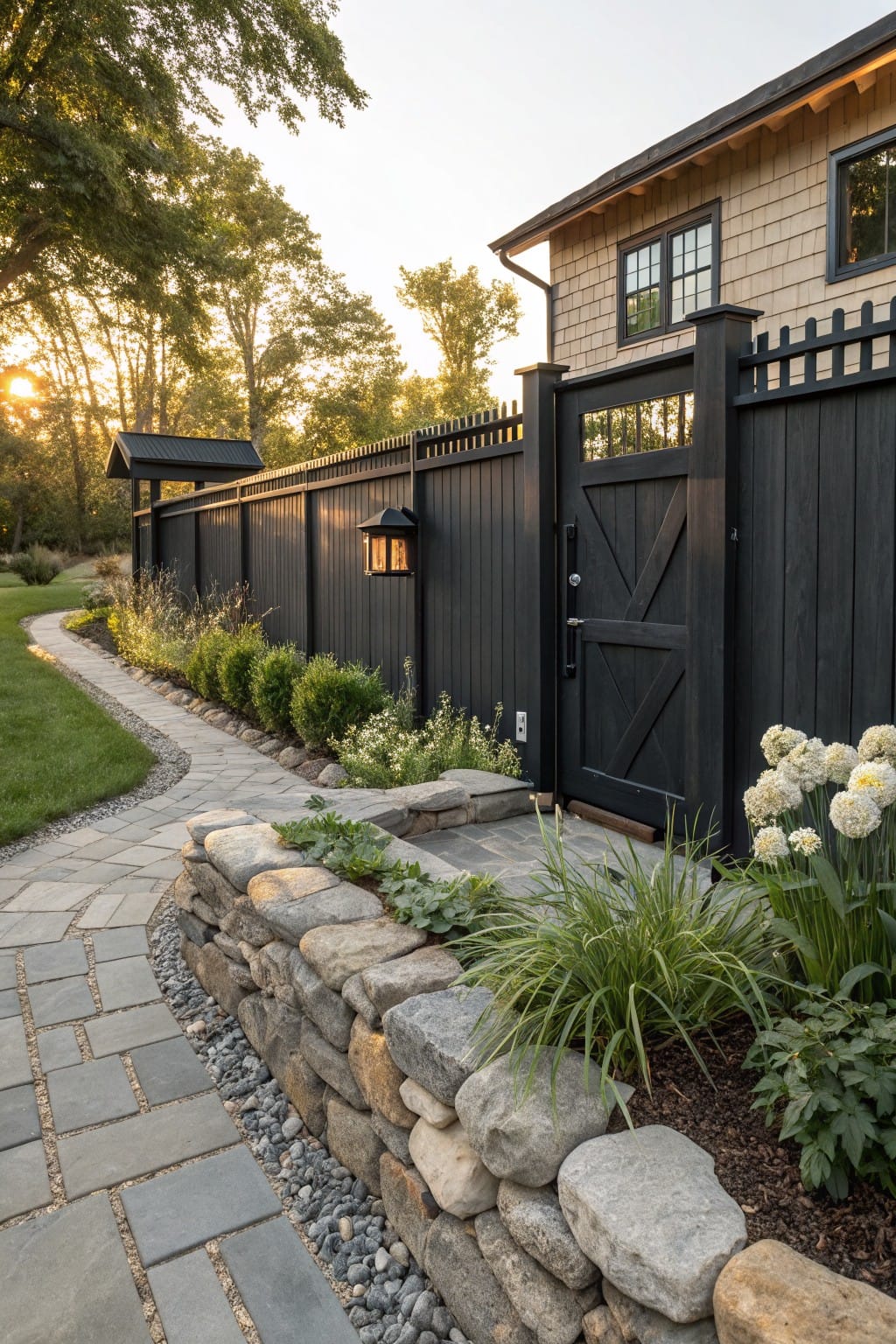
A simple dry-stacked rock wall runs right along the base of a tall black fence here. It holds back the soil and plants while guiding a paver path through the garden. That low sturdy edge gives the whole boundary a clean defined look without blocking the fence view.
This works well on gently sloped yards where you need some retention. Use local fieldstones for a natural fit, and plant grasses or perennials on top to soften it. It suits homes with modern or craftsman vibes, keeping things low fuss over time.
Pebbles and Boulders Along Fence Lines

One straightforward way to handle the ground around a fence is with pebbles and a big boulder like this. They fill in around low plants and pavers without much upkeep. The white pebbles catch the light from those low spots along the path, and the boulder sits there as a natural stopper. It keeps the fence from looking bare while tying into the pool edge.
This setup works great in narrow side yards or back boundaries where space is tight. Go for smooth river rocks or pea gravel in light colors to make it feel open. Pair it with a simple paver walkway if you have a pool or patio nearby. Just keep the plants tough and drought-friendly so it stays easy over time.
Rock Gabions Add Texture to Fence Lines
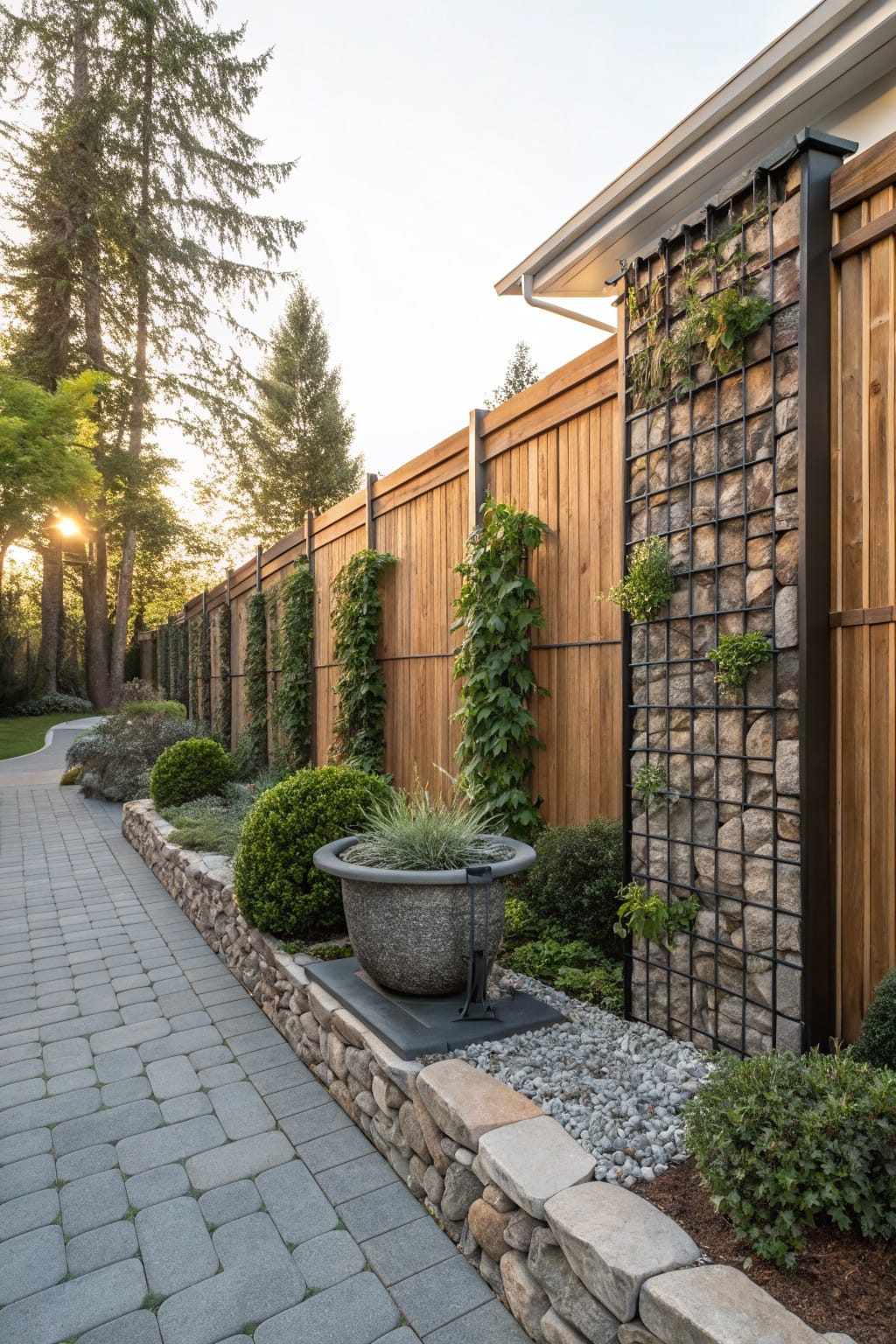
Wooden fences get a lot more interesting when you add rock gabions right along them. These wire mesh panels filled with stones create a rugged vertical wall that ties into the wood nicely. Vines climb up and small plants tuck into the gaps. It breaks up the plain fence look and makes the boundary feel more natural.
This works great in backyards with paths or garden beds nearby. Use it to edge a walkway like this one does. Go for local stones to keep costs down and match the area. It’s low maintenance once plants fill in. Suits modern or rustic homes with some slope or uneven ground.
Layered Stone Walls Beside Fences
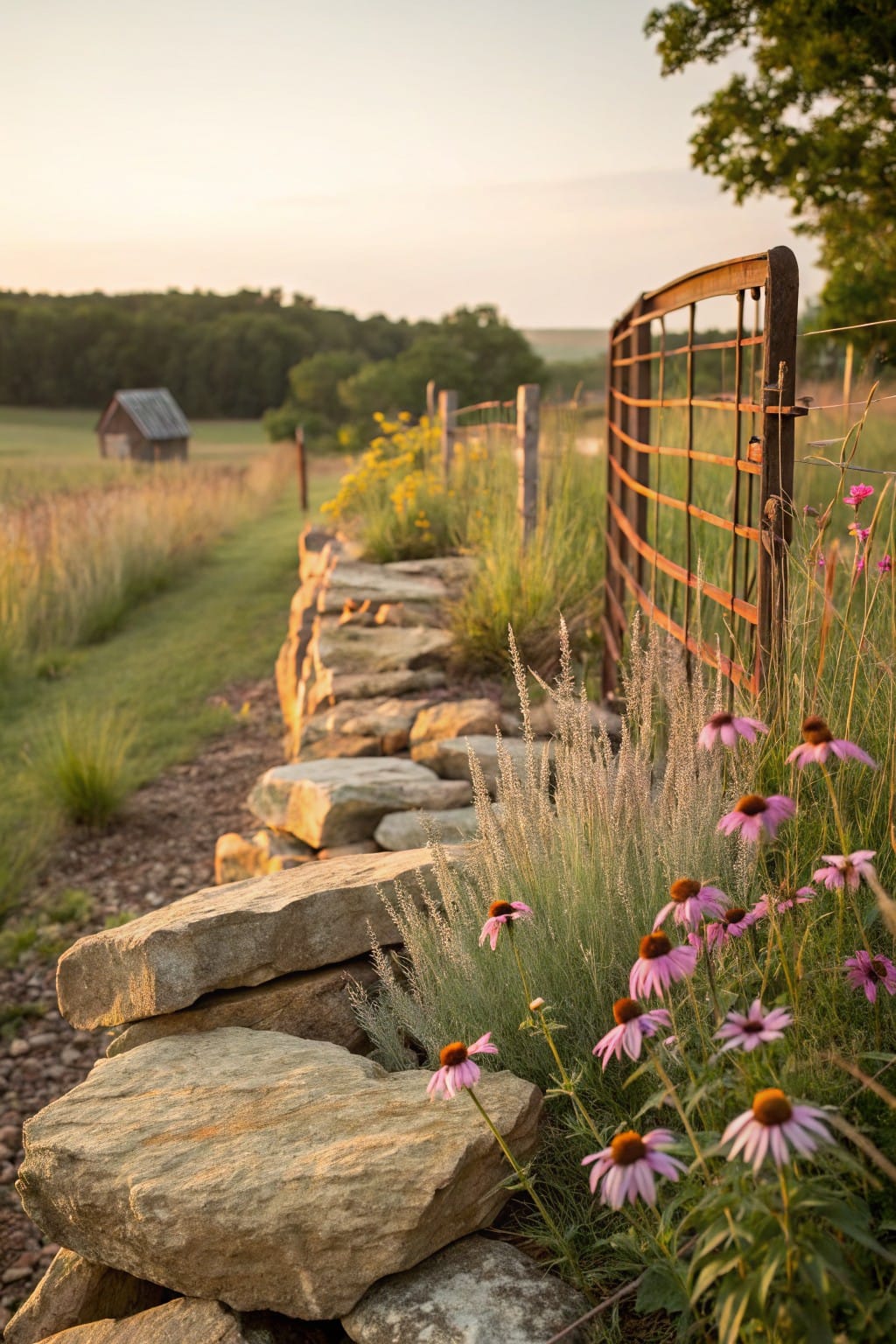
One straightforward way to mark a boundary without it feeling too hard-edged is to build a low dry-stacked stone wall right along your fence line. In this setup, the rough limestone blocks stack up naturally, following the fence’s path and creating a gentle divide between yard and field. The rusty metal gate adds that old-farm feel, and planting tough perennials like coneflowers right in the wall’s pockets ties it all to the landscape.
This works best in country spots or bigger lots where you want some separation but not a full barrier. Source local fieldstone to keep costs down and the look authentic. Mix in grasses and flowers that come back each year, so it stays pretty with little work. Skip mortar if you like the casual shift over time. Just watch for spots where soil might wash out after heavy rain.
Raised Stone Beds Along Fences
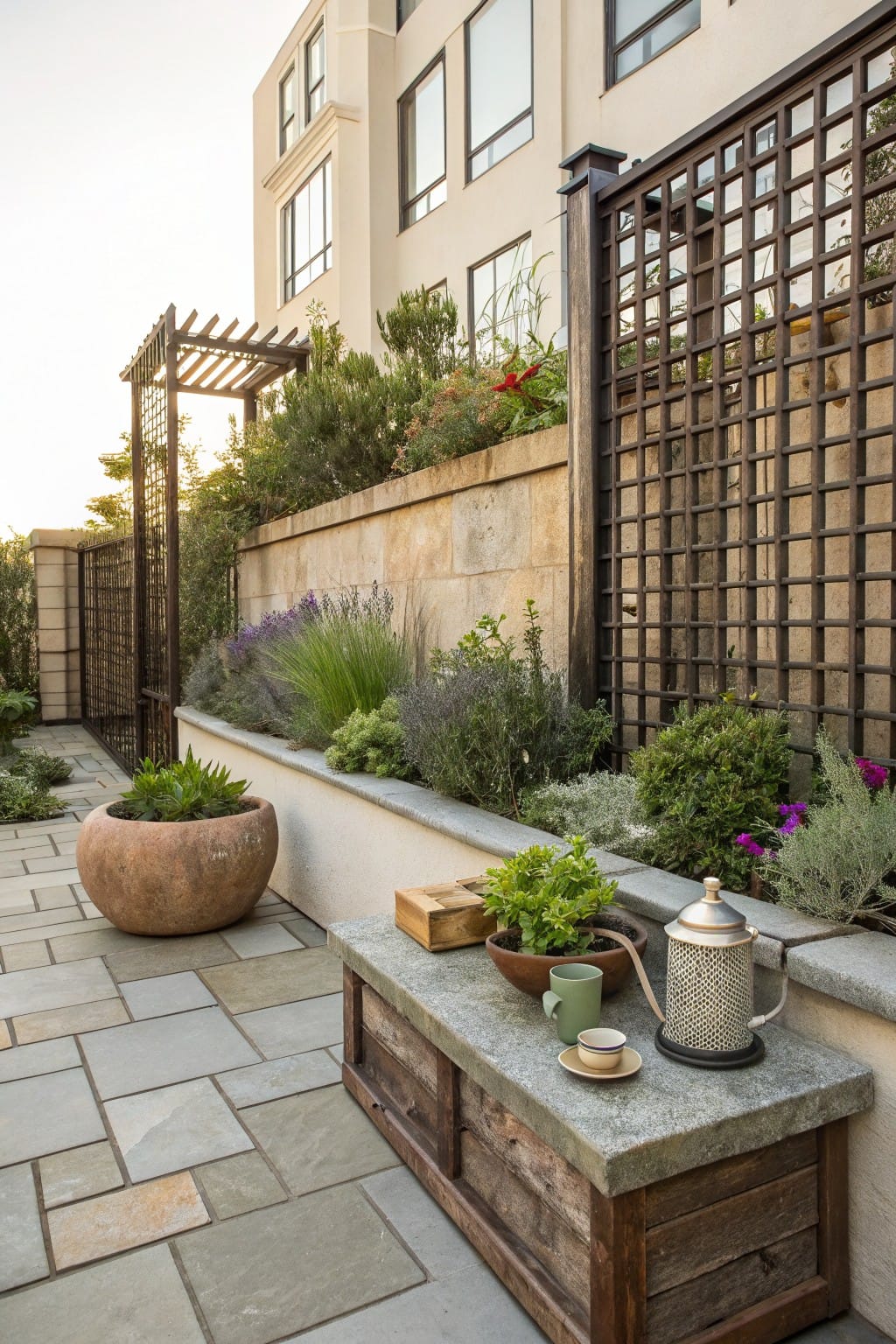
One straightforward way to mark a boundary is with a low stone retaining wall that holds back soil for plantings. Here, a pale limestone wall runs parallel to a simple black trellis fence, packed with lavender, grasses, and silvery shrubs that spill over the edge. It keeps things neat while the plants add movement and a bit of wildness.
This works well in side yards or along property lines where you want separation without it feeling stark. Pick tough, drought-tolerant stuff like sedums or rosemary so it stays low fuss. Pair it with pavers for access, and you’ve got a defined edge that looks lived-in right away.
Frequently Asked Questions
Q: How do I pick rocks that go with my existing fence?
A: Match the rocks to your fence’s color and vibe. Pair gray gravel with a sleek metal fence or earthy tones with wood. Dump a sample pile right there to see how it looks before buying a truckload.
Q: Do I really need landscape fabric under the rocks?
A: You bet, it keeps weeds from popping through. Roll it out smooth, poke holes for drainage, and pin it down. Skip it and you’ll pull weeds all summer.
Q: What’s the quickest way to lay rocks along a fence line?
A: Dig a shallow trench first, about four inches deep. Dump rocks in, rake them level, and step back to check curves. Water settles them in place overnight.
Q: Can I add plants to these rock borders?
A: Tuck in low-growing succulents or drought-tough groundcovers. They soften the edge without overwhelming the rocks. And they hide any gaps nicely.
