

I’ve noticed how a simple stepping stone path through rocks can transform a plain yard into something that feels truly restful from the moment you approach it.
In landscaping, these setups shine when the stones align with the natural contours of the ground, allowing gravel or mulch to settle around them and plants to weave in over the seasons.
What catches most people’s attention right away is the way the path directs your steps without crowding the open rock areas.
They guide movement so smoothly that the whole layout starts to breathe.
I keep coming back to a few like these for my own sloped side yard, where they’d handle runoff without looking forced.
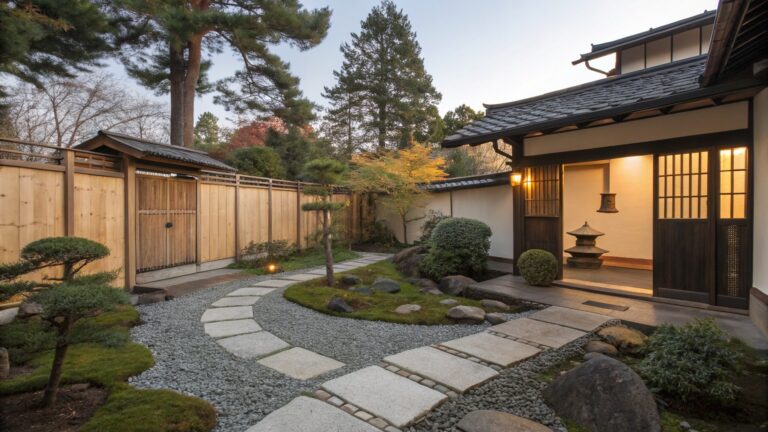
Stepping Stones Set in Gravel

One simple way to add calm to a backyard is with irregular stepping stones placed right in gravel. They make a path that winds gently, inviting you to slow down and notice the plants around. Here, the flat stones lead past a stone lantern and low moss borders, keeping the look clean and thoughtful without any hard edges.
This works best in small courtyards or side yards where you want low upkeep. Pick stones in natural shapes and sizes, space them about two feet apart for a relaxed pace. Pair with dwarf shrubs or bonsai for that zen feel… just avoid overcrowding so the gravel stays the star.
Moss-Lined Stepping Stone Path
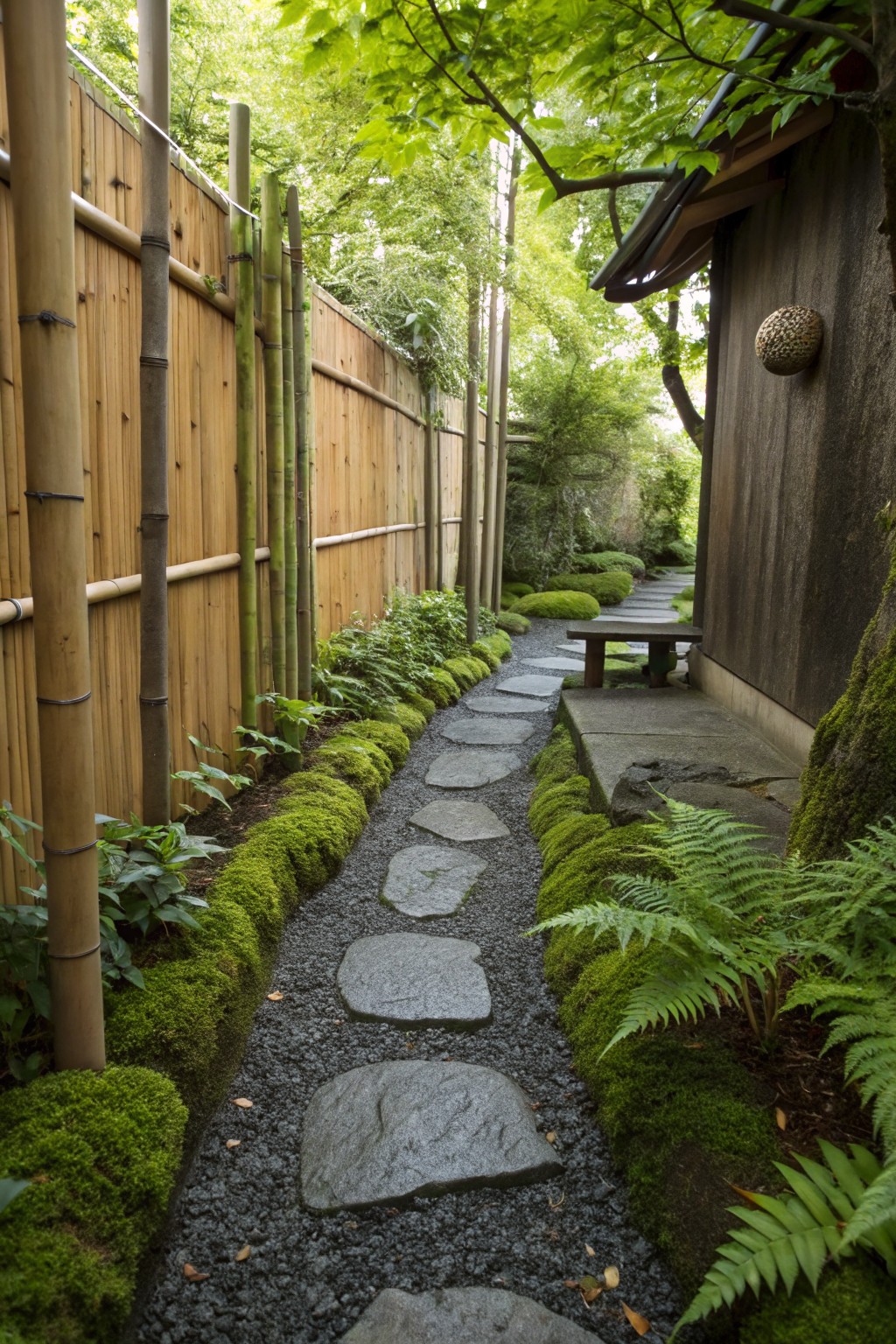
One simple way to add calm to a backyard is a stepping stone path like this. The irregular stones sit right in dark gravel, with soft moss growing along the edges. It slows you down as you walk. No rush. Just quiet steps past ferns and bamboo fences.
This works best in narrow spots, like between fences or along a house wall. Pick stones in different sizes for a natural feel. Keep the area shady so the moss stays thick. Add a bench at the end if you want a place to sit. Fits most any yard that needs a peaceful spot.
Irregular Stepping Stones in Gravel

Large irregular stones set into a smooth gravel bed make a quiet path that pulls your eye along without much fuss. Low plants and a few rocks fill in the edges, keeping things natural and easy on the feet. That wooden bench halfway along gives a spot to pause. It’s all low-key, like a little zen corner right outside your door.
This works best on a slope or in a yard with some drop, leading to a side entry or deck. Pick stones in pale tones to blend with gravel, and space them about two feet apart for normal strides. Native grasses and shrubs stay tidy with little water. Skip it on flat super-formal lots, though. It shines where you want calm over showy.
Stepping Stones in a Gravel Bed
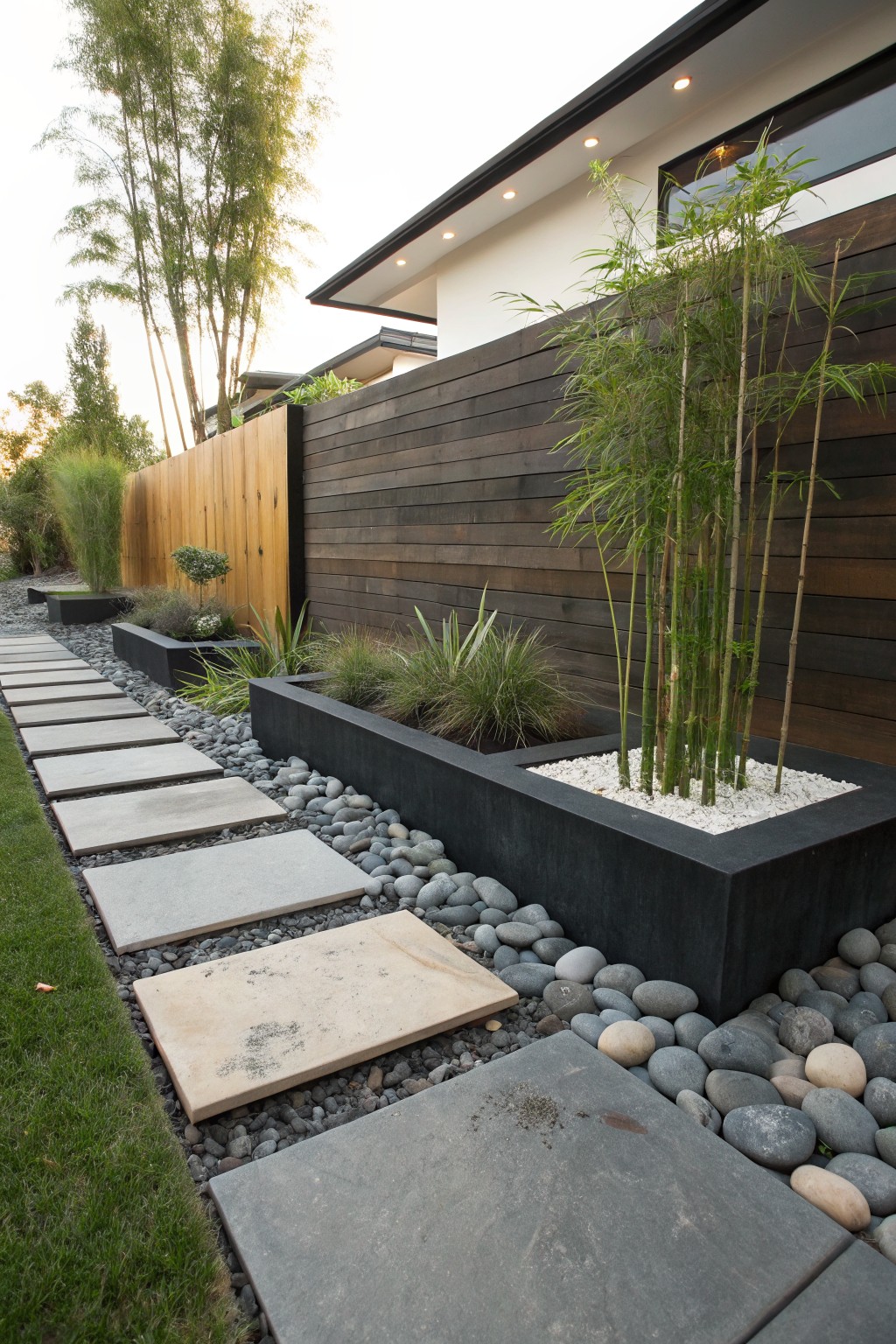
One straightforward way to make a peaceful path is setting large rectangular stones right into smooth river rocks. It gives you that Zen garden feel without much fuss. Here the stones lead along the side of the house, with black planters holding tall bamboo and low grasses on one side. The gravel fills in between, keeping things loose and easy to walk.
This works best in narrow side yards or transitions to a backyard. Pick stones that are thick enough to handle foot traffic, and go for rounded pebbles that won’t shift too much. Pair it with upright plants like bamboo for screening, but watch that the gravel stays raked. It’s low upkeep once set up.
Winding Stepping Stone Paths in Gardens
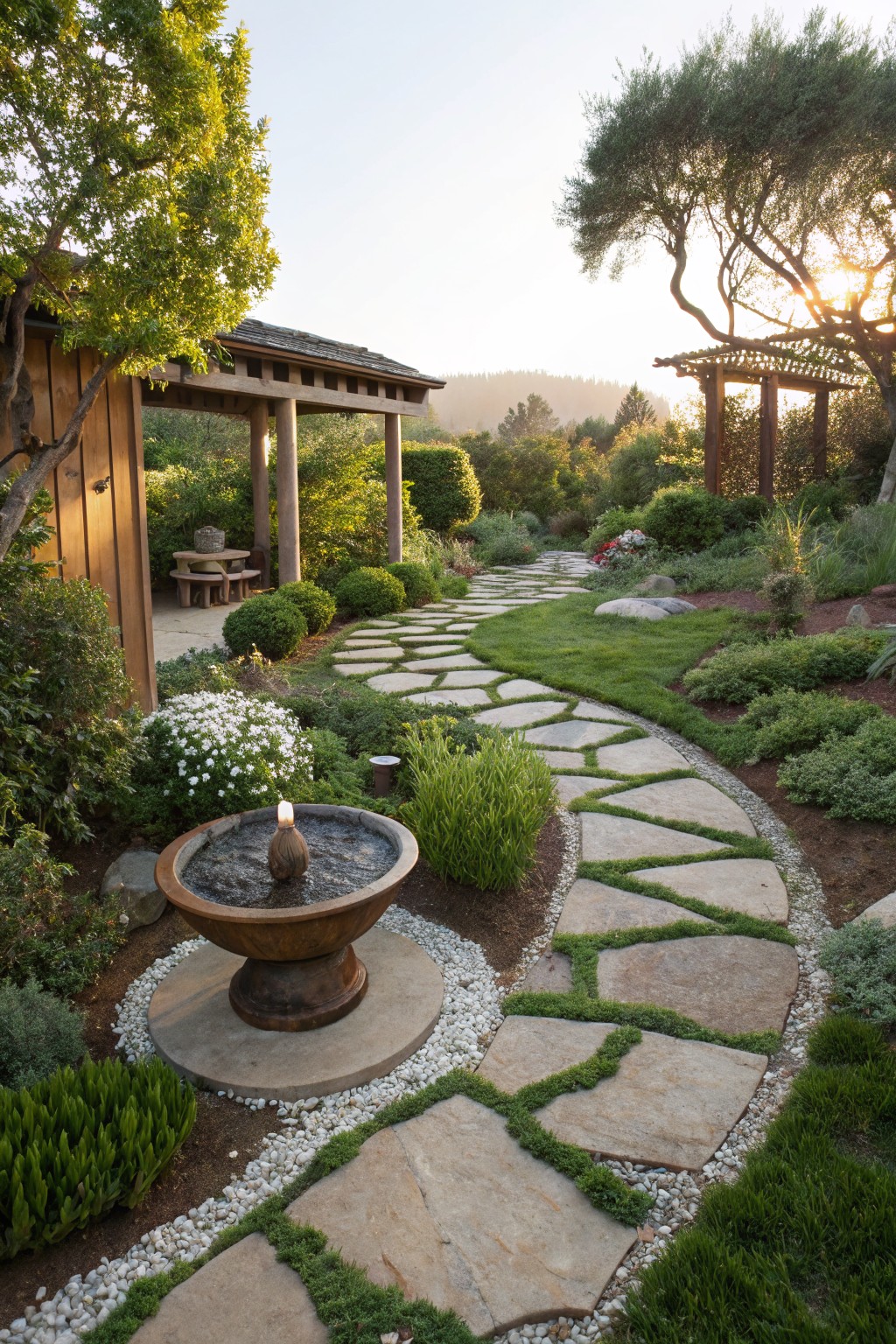
A good garden path doesn’t go straight. It winds. These large irregular stones set right into the grass and gravel make you slow down and notice the plants around them. That curve pulls you along without hurry. Add a simple fountain nearby like this one and it feels even more restful.
You can do this in most backyards. Pick stones that fit your area, maybe three to five inches thick so they stay put. Space them so your foot lands natural, about two feet apart. Low shrubs and ground covers fill in the edges. It suits sloped spots or flat ones. Just keep the plants trimmed back so the path stays clear.
Meandering Stepping Stone Path Through Boulders
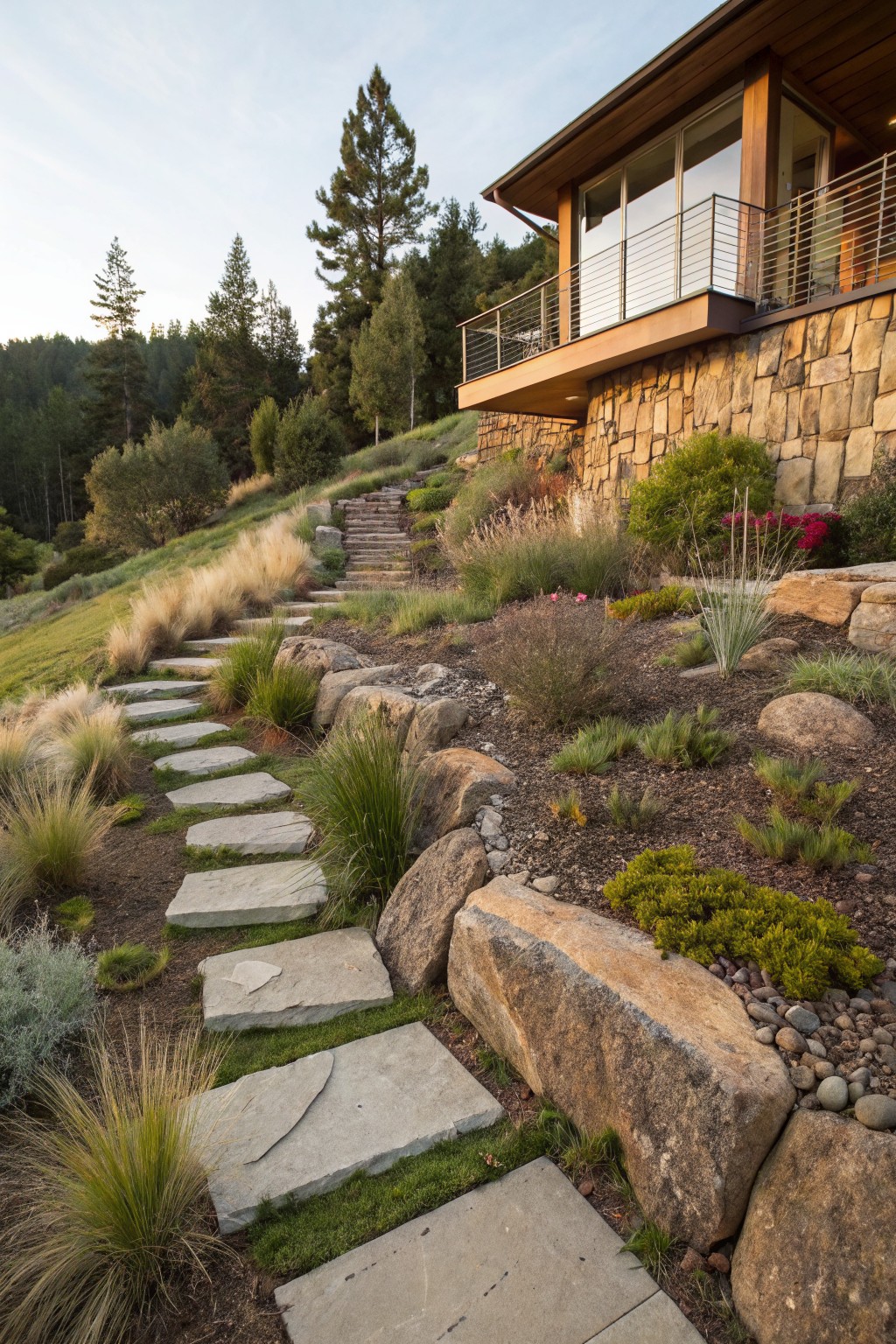
One simple way to guide people up a slope without much fuss is a path of flat stepping stones set right into gravel and grass. Here, the irregular stones wind between big boulders and clumps of tall grasses. It feels natural, like you’re strolling through the landscape instead of on a built walkway. The rocks and plants do most of the work to hold it all together.
This setup works great on hillsides where you want low upkeep. Use local stone for the steps and boulders to blend in, then add drought-tolerant grasses like feather grass around them. It suits modern homes backed into wooded lots… just make sure the stones are wide enough to step on comfortably and spaced so you don’t rush.
Stepping Stones Set in Gravel

A path like this uses big, rough dark stones dropped into smooth white gravel. It makes a narrow spot between brick walls feel open and quiet. The stones pull your eye forward without crowding the plants along the edges. Simple. Peaceful.
Try it in side yards or tucked courtyards where straight concrete would look wrong. Start with landscape fabric over dirt, dump in pea gravel, then sink the stones so they sit level. Skip tiny pebbles, they shift too much. Low shrubs and ferns fit right in… keeps upkeep easy.
Stepping Stones in a Gravel Garden Path
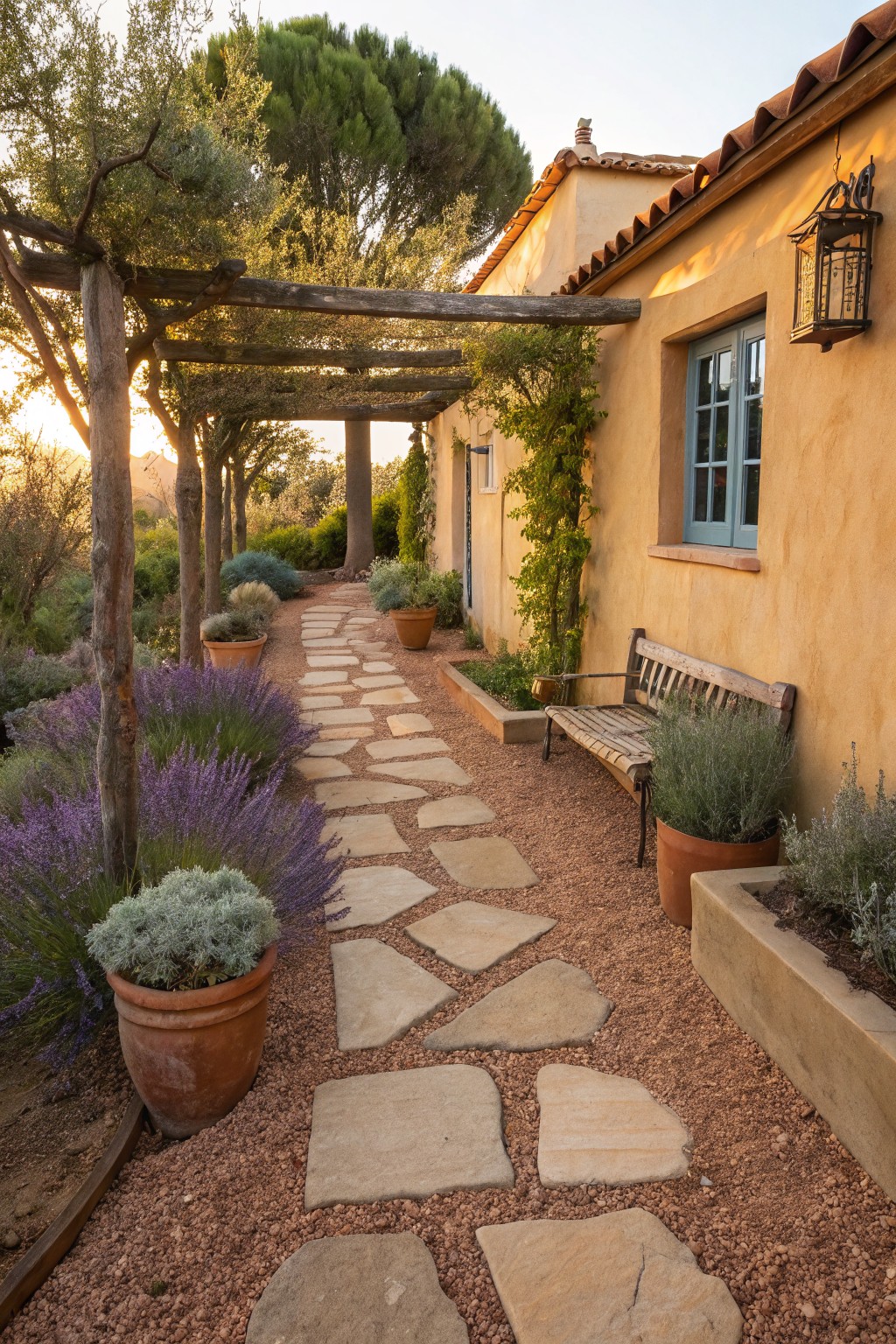
One easy way to make a garden path feel calm and natural is to set irregular stone stepping stones into a bed of gravel. Here the stones wind gently along the side of the house, with low lavender plants and a few terracotta pots tucked in close. It keeps things simple, low maintenance, and guides you right where you need to go without extra edging or borders.
This setup works great in sunny, dry spots where you want to cut down on watering. Use it to connect a side door to the backyard or along a fence line. Pick flat stones that fit your foot comfortably, and fill around them with pea gravel for that soft crunch underfoot. Just watch the gravel doesn’t wash away in heavy rain, so maybe add a slight slope.
Winding Stone Path in Gravel Garden
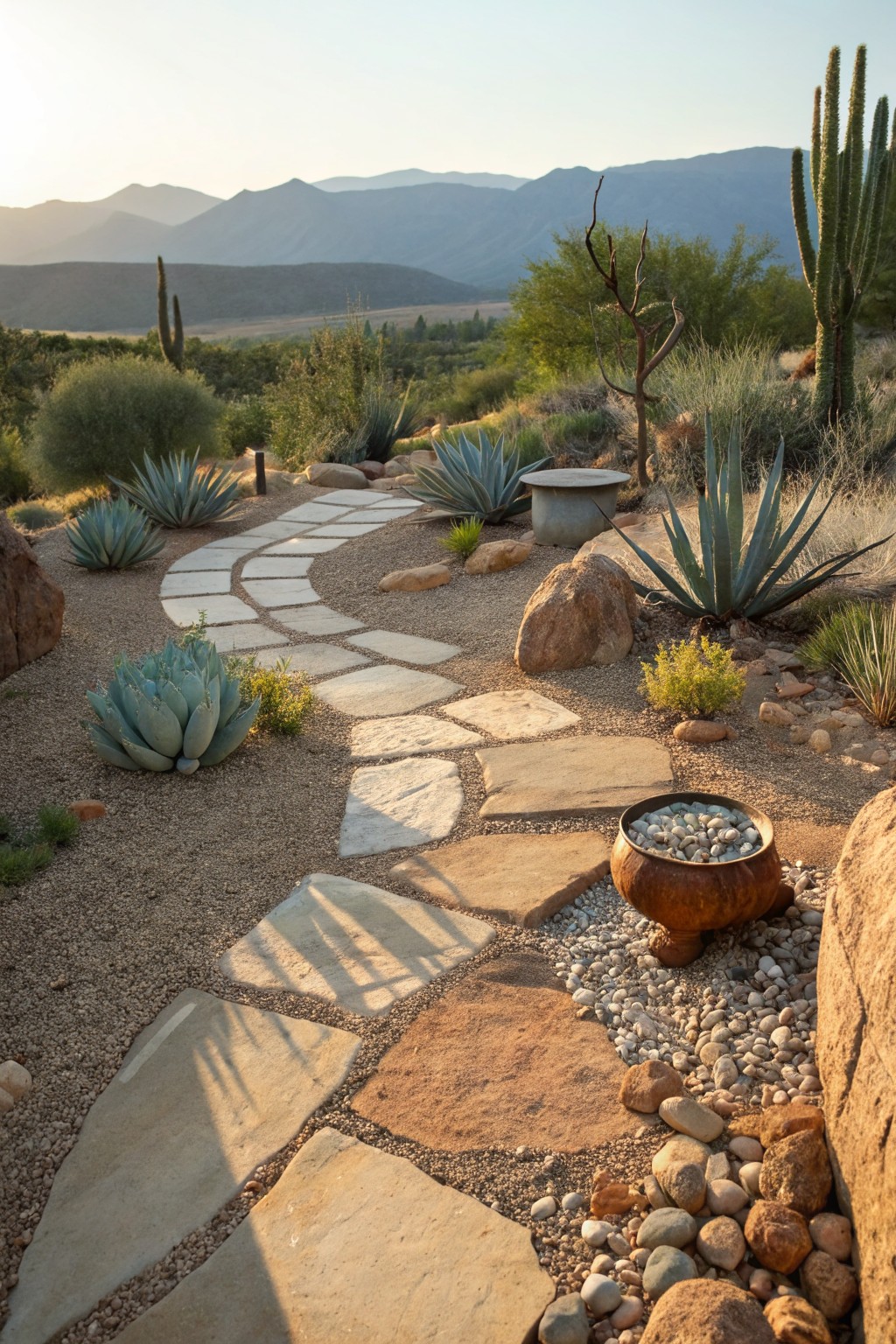
A simple winding path made from rough-cut stone slabs set right into gravel makes a yard feel calm and natural. The stones are spaced just enough to slow your steps, guiding you through clusters of agave and rocks without any rush. It fits right into dry spots where grass won’t grow, keeping things low fuss and easy on water.
Try this in a sunny backyard or along a side yard where you want a quiet walkway. Use local stone for that blended-in look, and add a few tough plants like blue agave around the edges. Keep the gravel smooth underfoot… just watch the spacing so it’s not too tricky in the dark.
Winding Stepping Stone Path in a Shady Garden
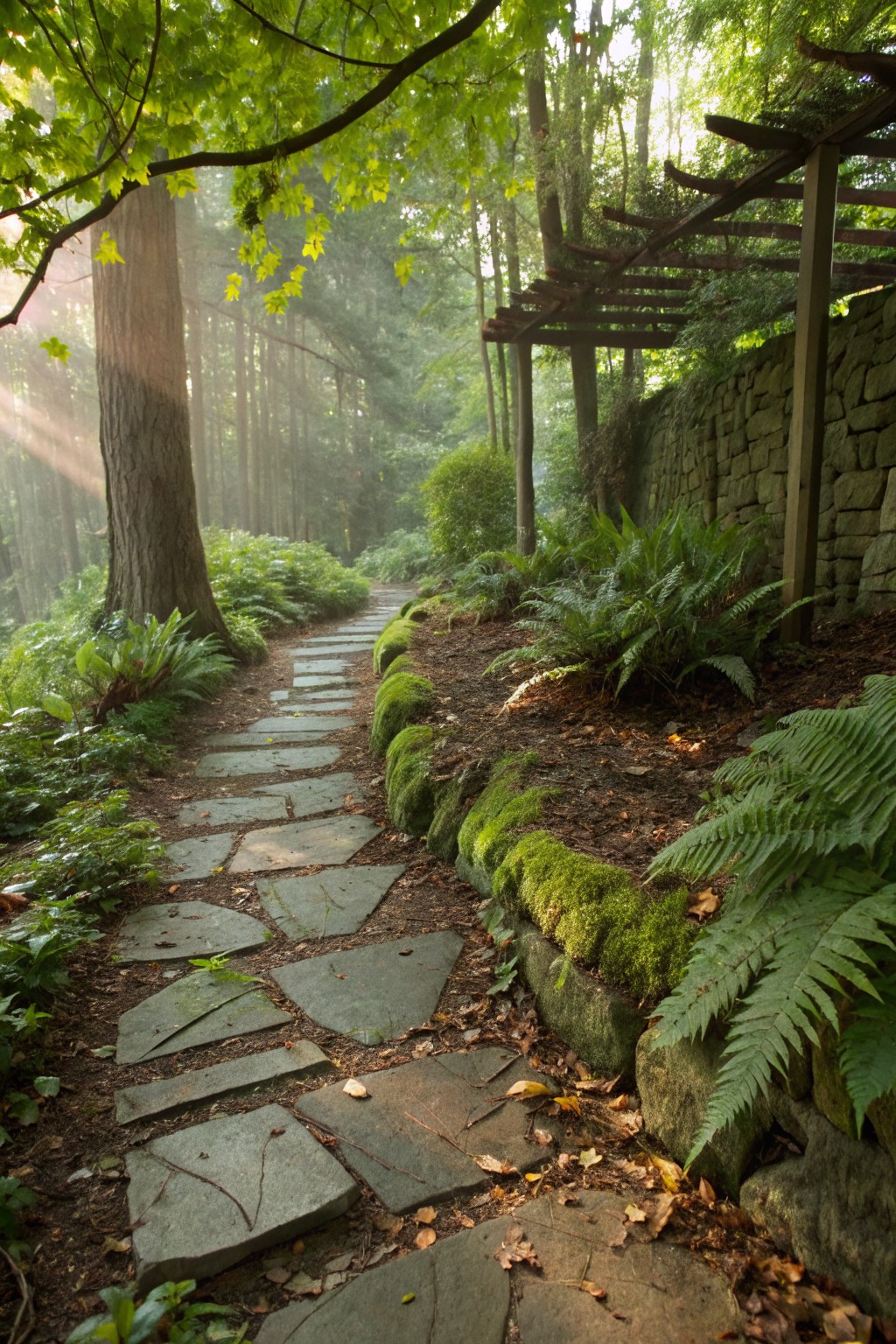
A simple path like this one uses irregular gray slate stones laid flat and spaced just right for stepping. It curves through thick ferns and hugs a low moss-covered stone wall. What stands out is how natural it looks. No straight lines. Just a quiet trail that pulls you deeper into the garden without trying too hard.
This setup works best in wooded or shady spots where moss and ferns thrive anyway. Lay the stones on soil or gravel base, then let plants fill in around them. It suits smaller yards or backyard nooks. Watch for uneven spots if you’re adding lights later… but mostly, just enjoy the walk.
Stepping Stones Over a Narrow Water Channel

One nice way to guide people through a yard is with flat stepping stones set right across a shallow water channel. The water trickles gently underfoot, and it pulls your eye along the path without needing much space. Plants like bamboo along the edges keep it feeling natural, and the wood-lined borders give it a clean look.
This works well in tight spots, say alongside a house or in a side garden leading to a seating area. Pick smooth dark stones that contrast the water, and add low-voltage lights under each one for evenings. It suits modern homes or any spot wanting a bit of calm… just make sure the flow stays slow so it’s not a slip hazard.
Stepping Stone Path Through Garden Beds

A stepping stone path like this one winds gently through the grass with big, rough-edged stones spaced just right for easy steps. Low lavender bushes and pink flowers line both sides, making the walk feel tucked away and peaceful. It’s a simple way to guide people to your door without a straight, boring sidewalk.
You can set this up in a side yard or along the house where you want a quiet entry. Pick flat fieldstones that match your area, plant soft perennials around them to fill in over time. Works best on cottage homes or farms… keeps things low fuss once established.
Circular Stepping Stones for Rooftop Paths

A path made from round gray and white stones stepping through patches of grass and gravel gives this rooftop terrace a quiet, natural flow. It pulls you along without rushing, especially nice against the city buildings in the background. The stones vary a bit in size, which keeps it from feeling too stiff.
You can lay these out on any flat outdoor space like a balcony or patio to link planters or seating. They work best in smaller yards where you want low upkeep and a bit of whimsy. Just space them about two feet apart so adults don’t have to hop.
Stepping Stones Across a Water Channel

One simple way to build a zen path is laying flat stones right across a narrow water channel. White pebbles fill the edges, with tall grasses poking up alongside. That setup keeps things calm and pulls you forward without rushing.
Put this kind of path in a backyard or side yard, maybe leading to chairs or a deck. It fits homes with a modern edge or any spot needing quiet flow. Just make sure the water stays shallow, and pick stones big enough to step on easy.
Stepping Stones Set in Gravel
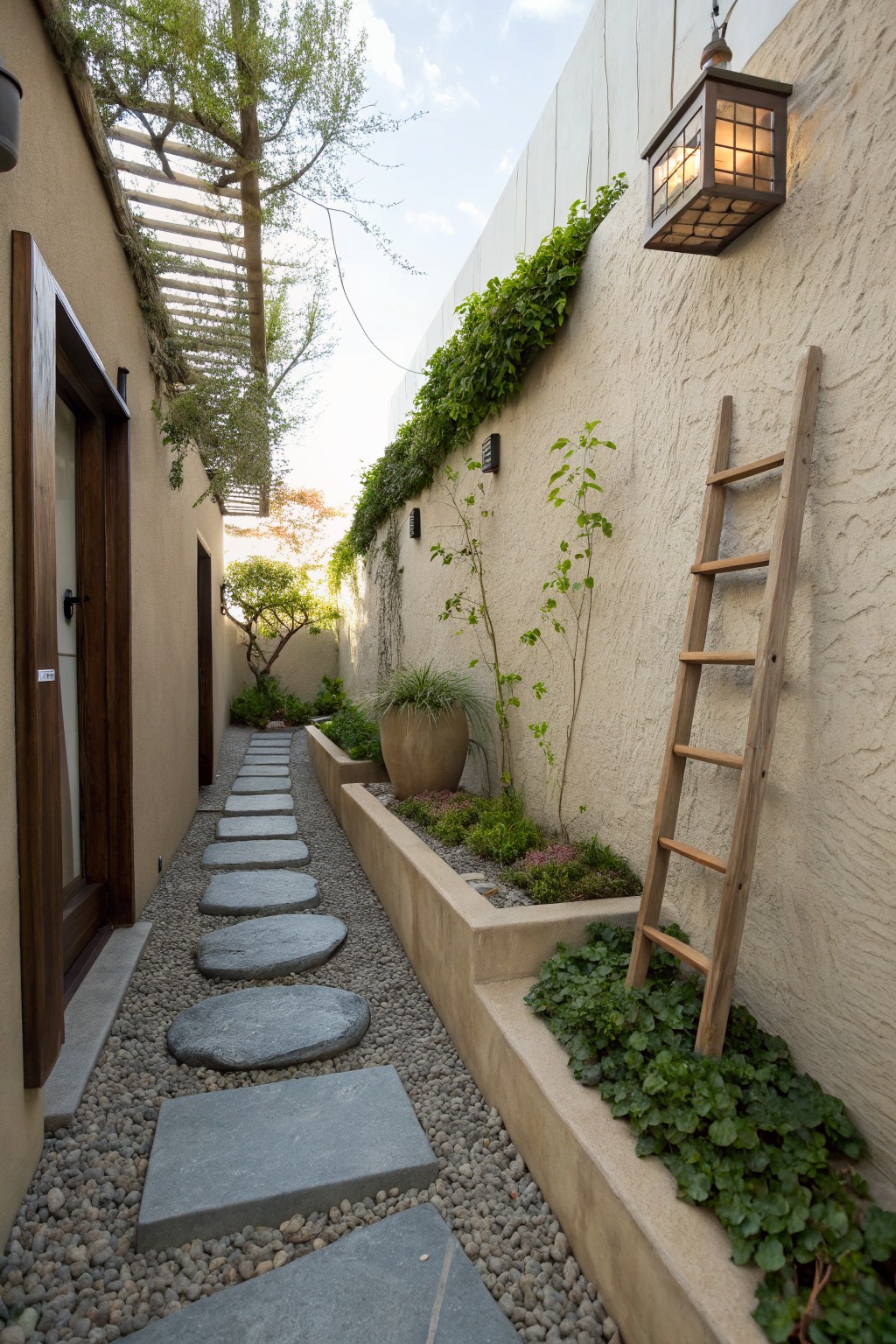
Big flat stones laid into a bed of loose gravel make a quiet path that winds through a narrow garden spot. The round shapes fit right into the pebbles, giving that slow, thoughtful walk you want in a Zen setup. Plants tucked along the walls keep it from feeling bare, but the path pulls your eye straight ahead.
This works best in tight spaces like side yards or courtyards where you don’t have room for full lawns. Pick smooth gray gravel and irregular slate or sandstone steps to match. Space them about two feet apart so it’s comfy for most folks… just watch for wet days when it might slip a bit.
Winding Stepping Stone Paths in Flower Gardens
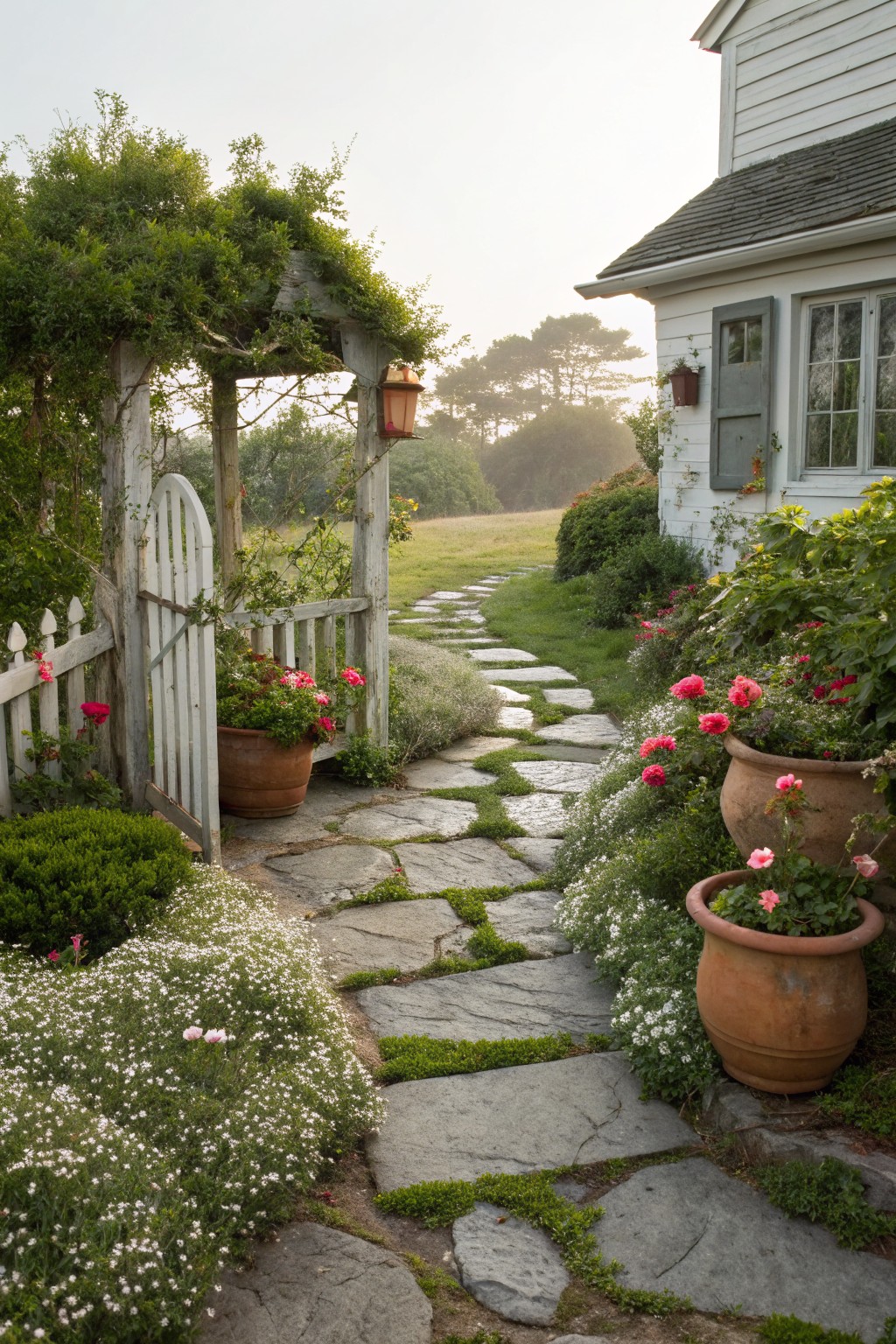
A path like this uses rough-cut stone slabs laid right into the lawn, curving between low shrubs and big terracotta pots full of roses. It feels right because the uneven steps make you slow down and take in the garden smells and colors. No straight lines here. Just a natural wander that fits old cottage yards perfectly.
You can do this in any side yard or leading to a back door. Pick stones from a local quarry so they blend with the dirt, space them about two feet apart for normal strides, and plant soft stuff like baby’s breath around the edges. Keep grass trimmed between them. Works best where you want folks lingering a bit, not rushing through.
Stepping Stones Lit from Below
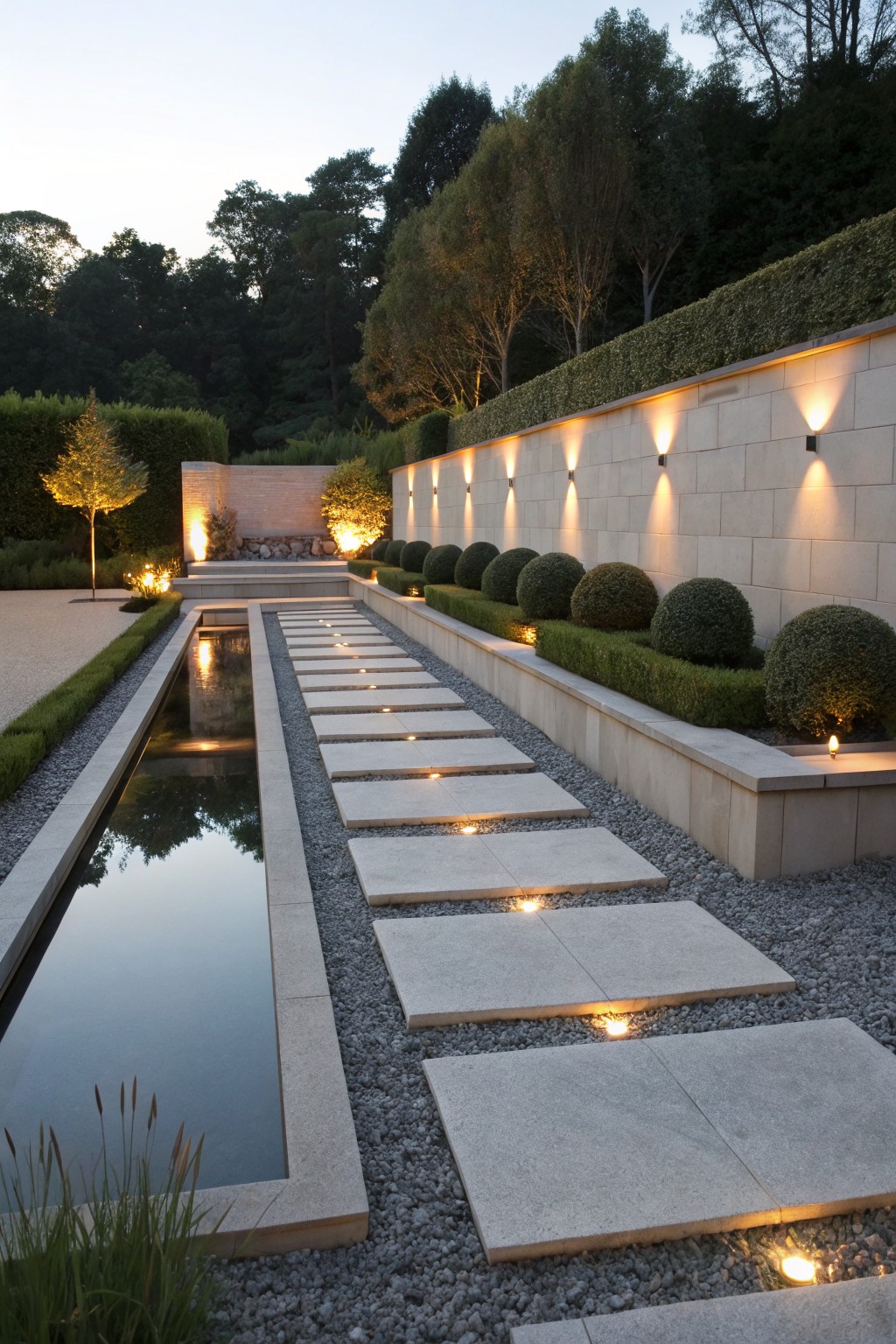
Large flat stones set into gravel make up this path, with small lights tucked right into each one. The glow leads your eye along the narrow reflecting pool next to it, keeping things safe and quiet after dark. It’s a straightforward way to add calm without much fuss.
You can pull this off in skinny side yards or along a back wall. Go with low-voltage bulbs so they’re easy to wire up, and pair with simple clipped shrubs on one side. Skip it if your space gets too wet, though. Fits right into modern yards that want a bit of Zen.
Wooden Stepping Stones Over a Water Channel

One nice way to handle a garden path is with wide wooden stepping stones laid right across a narrow water channel. You step from slab to slab, with koi swimming below and black pebbles lining the edges. It slows you down a bit. Makes the walk feel more thoughtful, almost like you’re part of the garden.
This works well in backyards that lean tropical or zen. Pick sturdy wood like teak or ipe that holds up outdoors. Keep the channel shallow so it’s easy to build and maintain. Suits smaller spaces where you want flow without taking up much ground. Just seal the wood yearly… or it gets slick after rain.
Meandering Stepping Stone Path
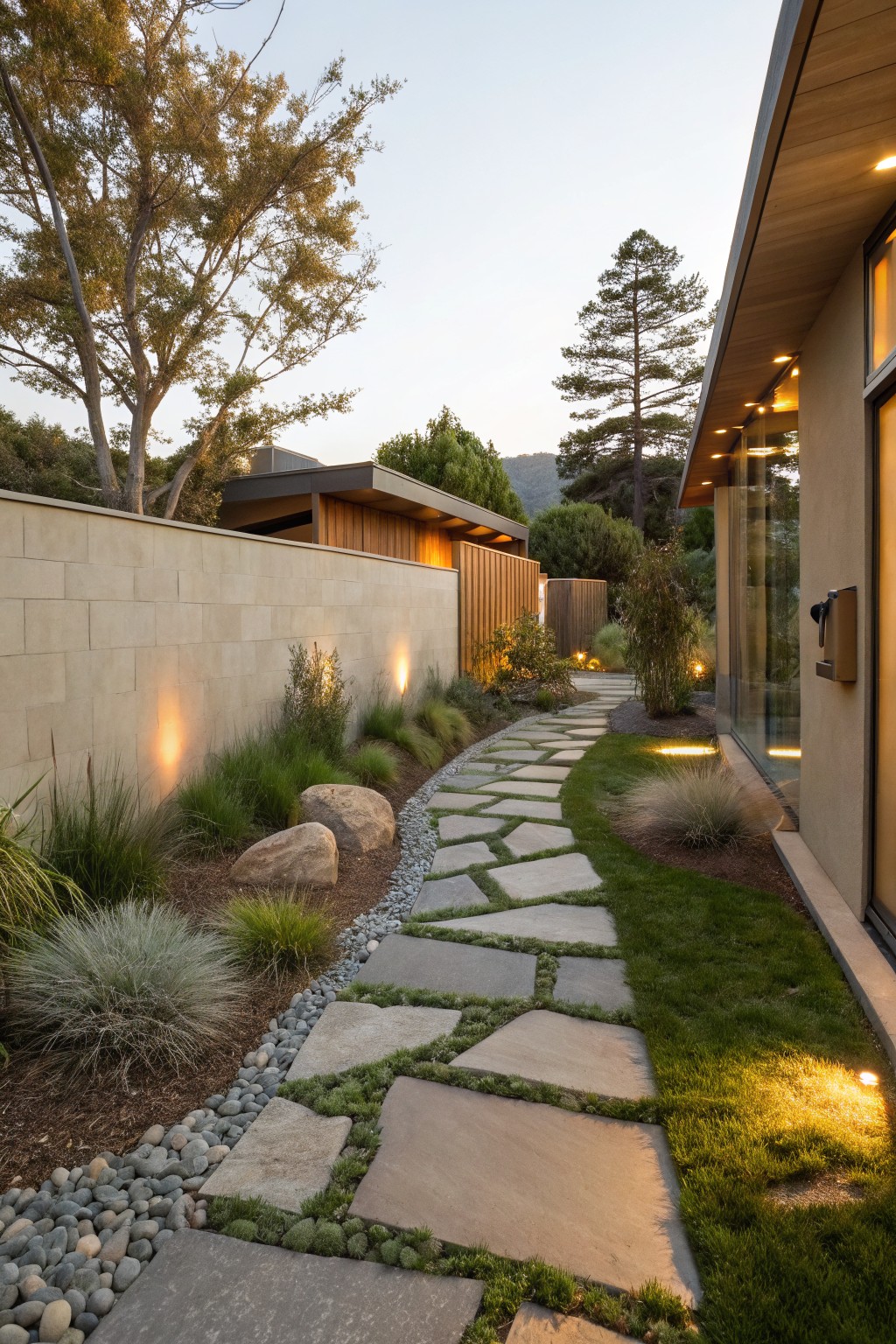
One simple way to add calm to a backyard is a path made from rough-cut stone slabs set into gravel and grass. These irregular steps wind gently, like they’re following the natural lay of the land. Paired with low grasses and a few big boulders, it pulls you along without rushing. The gravel fill keeps things loose and easy to walk, and at dusk those low lights along the edge make it feel even more peaceful.
This kind of path works best in side yards or along a fence line, where you want to connect the house to the garden without a straight shot. Use it on sloped spots or narrow areas to save space. Go for local stone if you can, to blend right in. Just keep the grasses trimmed back so feet stay dry. It suits modern homes with clean lines, tying the architecture to the yard nicely.
Zen Gravel Circles Around a Fountain

A simple circle of raked gravel makes a real focal point here. Swirling patterns around a stone fountain draw the eye and create that quiet zen feel without much effort. A few big rocks and small clipped trees keep it balanced and low fuss.
This works great in a corner of the yard or near a patio door. Pick light-colored gravel for the rake lines to show up, and place the fountain low enough to reach easily. It fits any size space, especially if you want calm near the house, but skip it if your yard gets too much foot traffic.
Peaceful Stone Path in a Meadow Garden
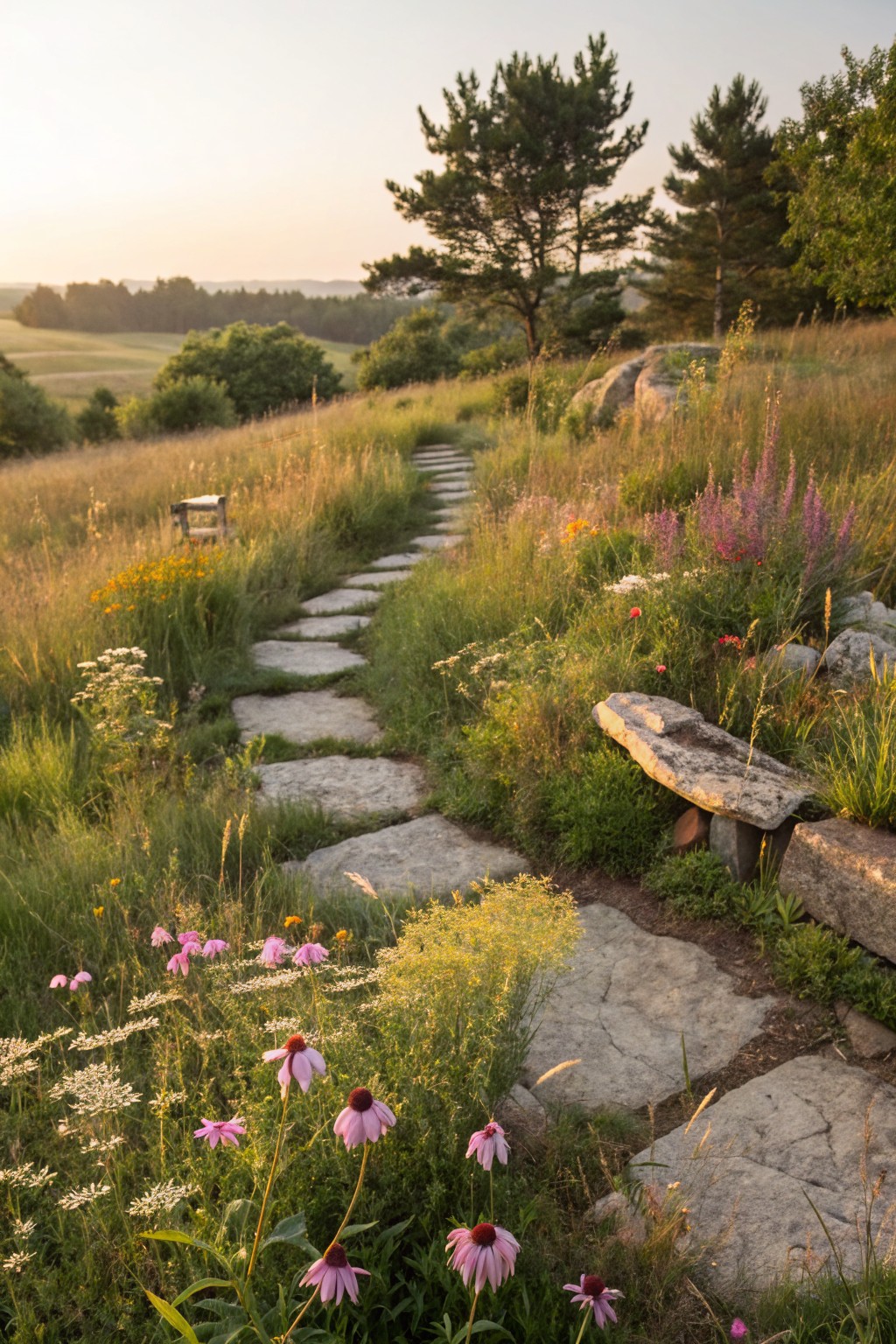
A simple winding path made from flat, irregular stones cuts through tall grasses and wildflowers like coneflowers and queen anne’s lace. It draws you along without rushing, giving that quiet zen feel right in your backyard. The stones sit low in the earth, blending with the natural growth instead of fighting it.
This works best in a sunny slope or open yard where you want low upkeep. Pick stones from a local quarry to keep costs down, space them a boot-length apart, and let native perennials fill in around. Skip straight lines… curves make it more restful. Suits cottage gardens or edges of woods. Just watch for muddy spots after rain.
Stepping Stones Set in Gravel Beds
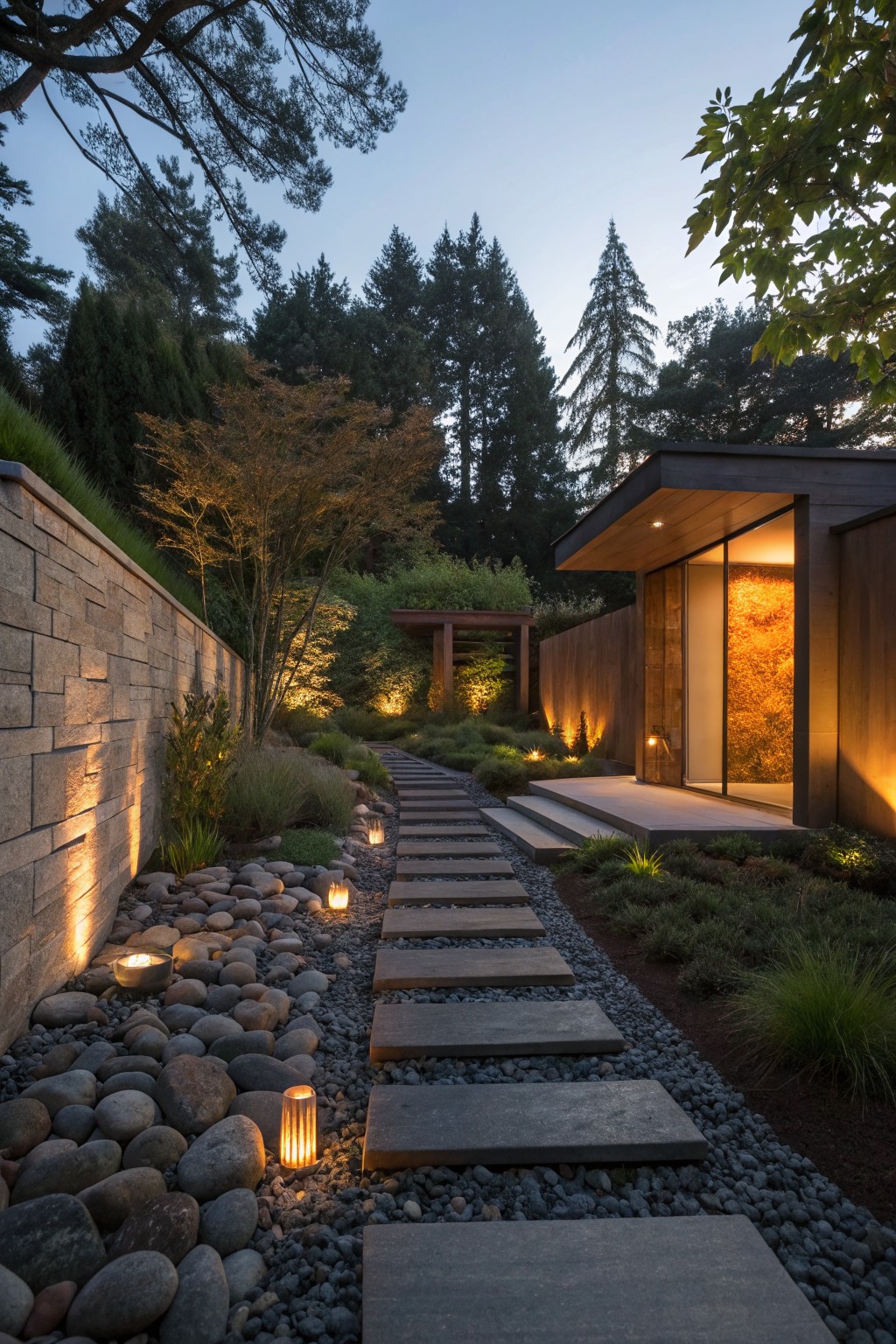
Large flat stones laid out in a loose gravel bed make for an easy, calming walkway. They sit wide enough apart that you take your time stepping from one to the next. Paired with a few simple lanterns along the edge, it turns a plain path into something peaceful at dusk. No fussy edging needed.
This works well in side yards or leading up to a back door, especially around modern homes with clean lines. Use rounded river rocks for fill to keep weeds down and drainage good. Skip it for high-traffic spots though… too easy to slip when wet.
Frequently Asked Questions
Q: How do I pick stepping stones that fit a Zen vibe without breaking the bank?
A: Grab flat, smooth stones in natural grays or earth tones from your local nursery or even a riverbed if you’re handy. They don’t need to match perfectly. Just keep them similar in size for that serene flow.
Q: What’s the easiest way to space the stones so the path feels natural?
A: Place them about 18 to 24 inches apart, matching your average stride. Step back often as you go to mimic a meandering stream. This keeps feet happy and the look peaceful.
Q: Do I have to dig deep for the base, or can I keep it simple?
A: Scoop out just 2-3 inches of soil for each stone, then tamp down a layer of sand or fine gravel underneath. Level them with a straight board so they sit firm. Skip the deep trenches unless your ground floods a lot.
Q: How do I keep weeds from popping up between the stones?
A: Lay landscape fabric under the gravel mulch right after setting the stones. Top it with 2 inches of pea gravel to block light. Pull any strays early, and refresh the mulch yearly.
