

I remember how my front yard rock beds looked dull and unfinished until low-growing plants started weaving in color around the edges.
The strongest setups use rocks to define pathways and borders, letting plants layer up naturally over time without overwhelming the structure.
What grabs attention first is that punch of reds and yellows against the stone, pulling your eye through the whole layout.
I’ve learned the hard way that poor spacing leaves gaps that weeds love, so thoughtful planting keeps everything tidy as it grows.
Some of these rock-and-plant combos make me want to reshuffle my own beds this spring.
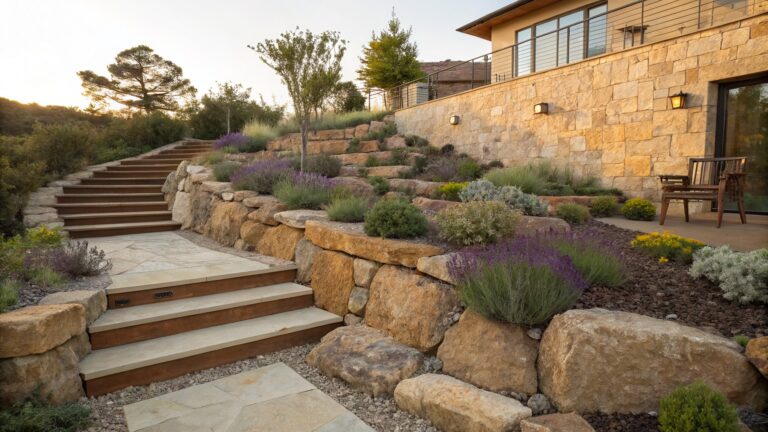
Stone Steps Lined with Lavender

One simple way to bring color to a rocky slope is planting lavender bushes right along the edges of stone steps. The purple flowers stand out sharp against the pale stone walls and big boulders. It turns a plain walkway into something lively without much fuss.
This setup fits hillsides or terraced yards where you want steps that double as a garden feature. Go for tough varieties that handle sun and dry soil. They hold back erosion too. Add a bench nearby if you like a spot to sit and enjoy it.
Winding Stone Pathways in Rock Gardens
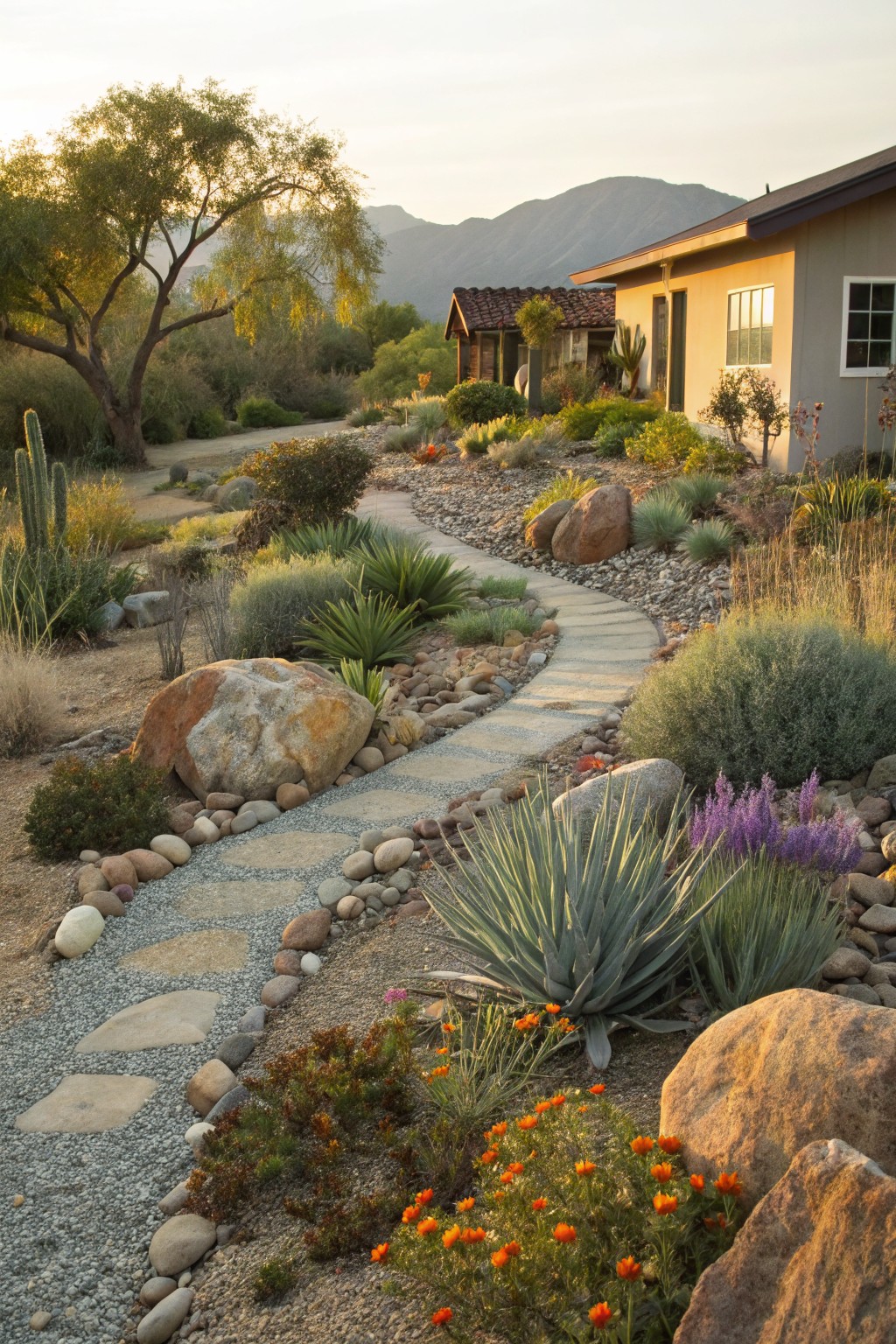
A simple winding path made from flat stepping stones works great in rock-heavy yards. It snakes through gravel and large boulders, with clumps of succulents like agave and colorful flowers adding spots of life along the edges. The curve feels natural, not forced. It pulls your eye toward the house without overpowering the plants or rocks.
This kind of path suits dry areas or low-maintenance setups. Lay stones in a gentle S-shape over decomposed granite, then tuck in tough plants that need little water. It fits beside modern homes or in desert spots… just keep the boulders in scale so they don’t crowd the walk.
Stone Path with Raised Flower Beds

One simple way to add color to a yard is building low stone retaining walls that double as edges for flower beds right along a path. The rough stone holds back soil while letting plants spill over in pinks, purples, and whites. It turns a basic walkway into something you actually want to stroll, especially with morning light hitting the blooms.
These work best on gentle slopes or flat spots where you can terrace a little garden space. Stack local fieldstone for that natural look, then fill with tough perennials like lavender or azaleas that come back strong. Keep the path wide enough to walk comfortably, and watch the colors change through the seasons.
White Gravel Zen Garden with Boulder Focal Point
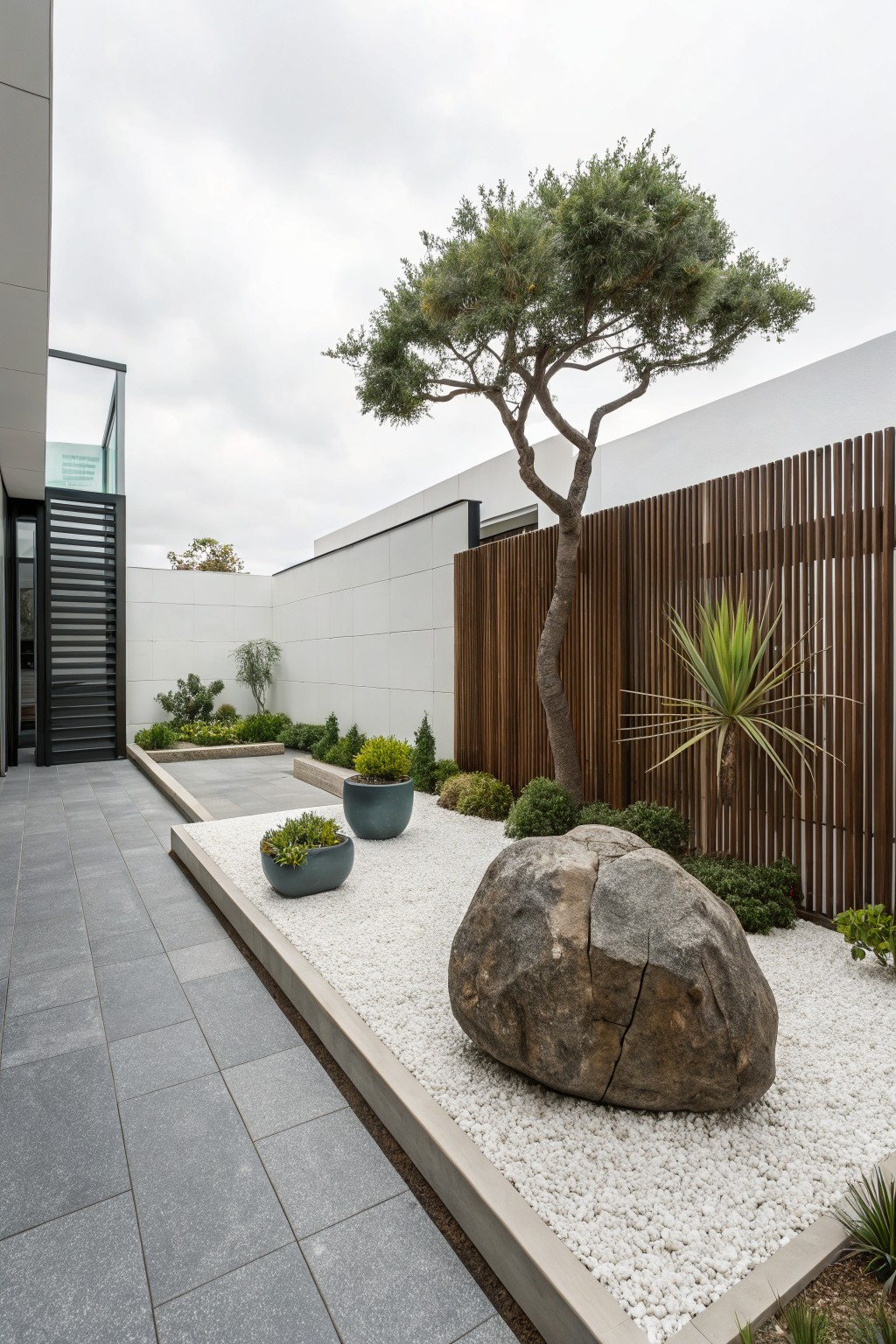
This landscaping idea takes a narrow strip along the house and turns it into a peaceful zen garden using smooth white gravel as the base. A single large, rugged boulder sits right in the middle, drawing the eye and giving the space some natural weight. Sparse green plants in pots and a sculptural pine tree nearby add just enough color and texture to keep it from feeling empty, while tying into the modern white walls.
It’s perfect for tight spots like entry paths or side yards where you want low upkeep but a bit of drama. Pick gravel that’s not too fine so it drains well, position the rock off center for interest, and choose tough plants like yuccas or pines that handle dry spots. Suits sleek modern homes best… avoids fussy mowing altogether.
Mossy Boulders in Gravel Rock Gardens

Big moss-covered boulders like the one here make a natural centerpiece for a rock garden. They pull the eye right away with their soft green moss against rough stone, and the gravel around them keeps things simple and clean. Low plants tucked in nearby add just enough green without crowding the space.
You can drop one of these boulders into a front yard path or side garden to create that calm zen feel. It works best in smaller yards where you want low upkeep, maybe leading up to a patio door. Keep the gravel raked smooth, and watch for too much shade that might kill off the moss.
Stone Path Lined with Pink Flowers

A stone path like this one really perks up a rocky area. The uneven slabs form a casual walkway, and those pink flower clusters tuck right along the edges. They add pops of color that make the whole thing feel alive, especially where the ground is tough and bare otherwise.
You can pull this off in coastal spots or any sloped yard with lots of rock. Go for hardy bloomers like sea thrift or armeria that handle wind and salt. Keep the path wide enough to walk comfortably, maybe end it with a bench. It stays low fuss once planted.
Retaining Walls Filled with Colorful Plants
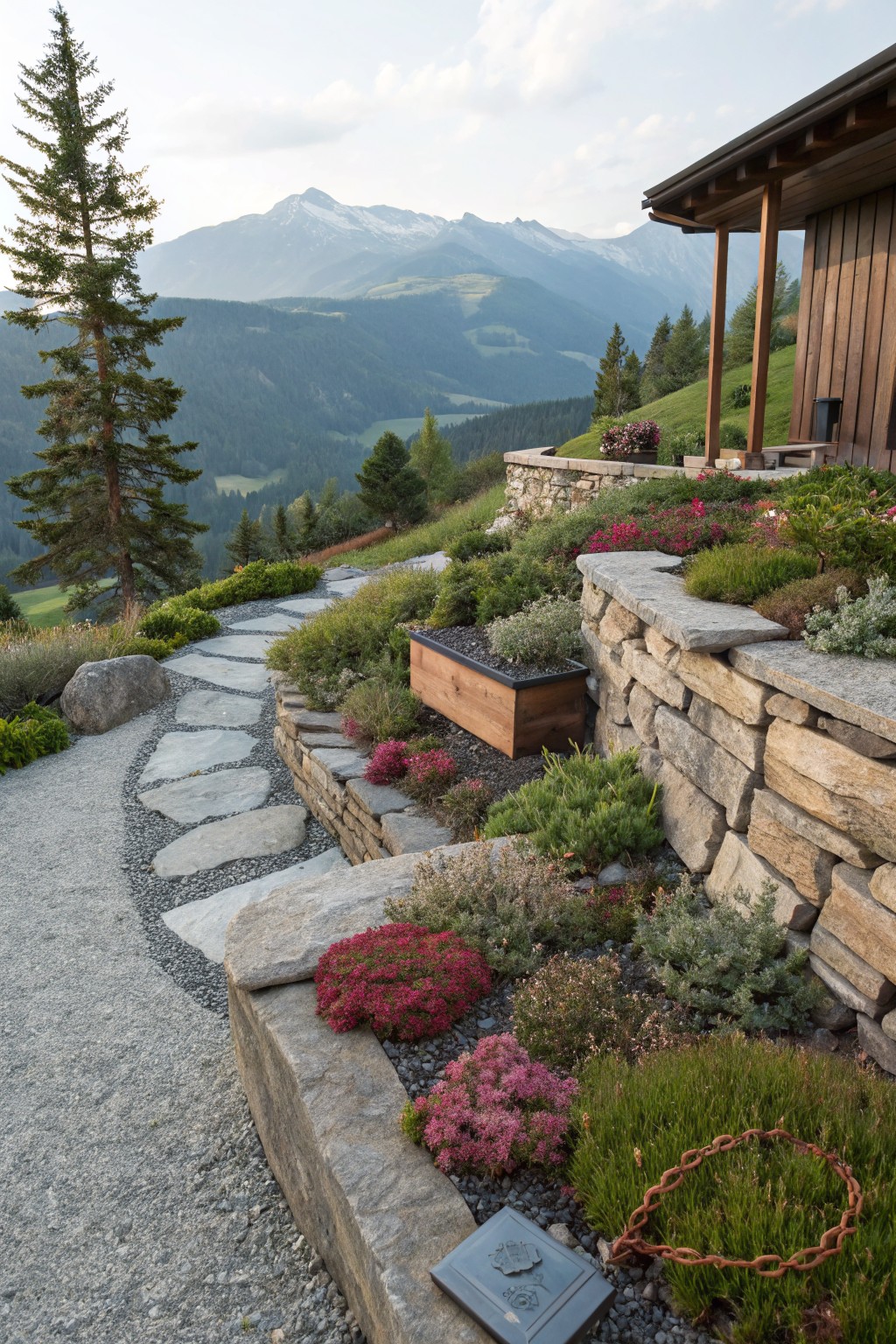
One smart way to handle a slope is to build low dry-stone walls and pack them with tough little plants. Here, rough slabs hold back the earth while sedums and heucheras tumble over the edges in reds and pinks. That burst of color makes the whole area feel alive without much upkeep, and it ties right into the rocky mountain setting.
These walls work best on hillsides or terraces where you need to level things out for paths or seating. Pick drought-resistant groundcovers that root easily in gritty soil. They suit cabin-style homes or any spot with natural stone around… just keep the plants trimmed back from walkways.
Narrow Pools with Pebble Bottoms
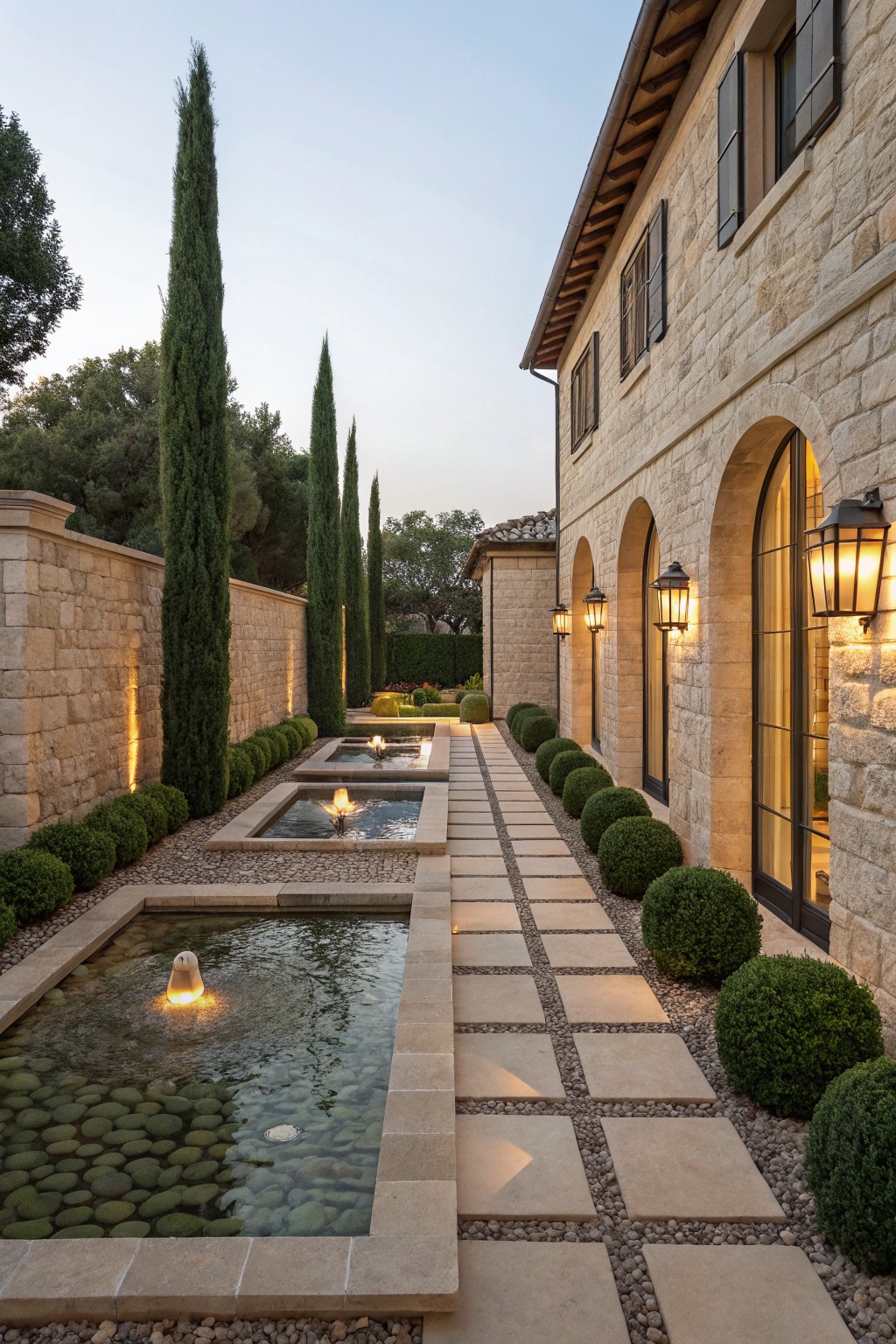
One simple way to add life to a walkway is with narrow pools running right alongside it. These shallow ones have smooth pebbles on the bottom and a small fountain bubbling up in the middle. The water moves just enough to catch the light. Paired with round boxwood shrubs, they give the path a clean rhythm without much upkeep.
This setup works great next to a house wall or in a side yard where you want some interest but not a full garden. Use it on a straight path to lead the eye forward. Go for light-colored stone or concrete around the edges to keep things bright. Skip it if your space is too shady. The pebbles hide dirt well, and the plants stay neat if trimmed a couple times a year.
Stone Retaining Walls with Pocket Plants

Slopes can be tough to work with, but stacking natural stone into retaining walls that hold back soil and create steps makes them walkable and pretty. Rough boulders form the base, with flat slabs for treads, and small pockets get stuffed with lavender, pink asters, and spilling grasses. The color pops against the gray rock, and it all feels rugged yet alive.
This setup suits hilly backyards or side paths where you need structure without a lot of flat ground. Go for tough, drought-loving plants that root in shallow soil. Source local stone to blend in, and plant densely at first so it fills out quick. Watch the drainage though, or roots rot fast.
Natural Rock Waterfall for Pool Edges
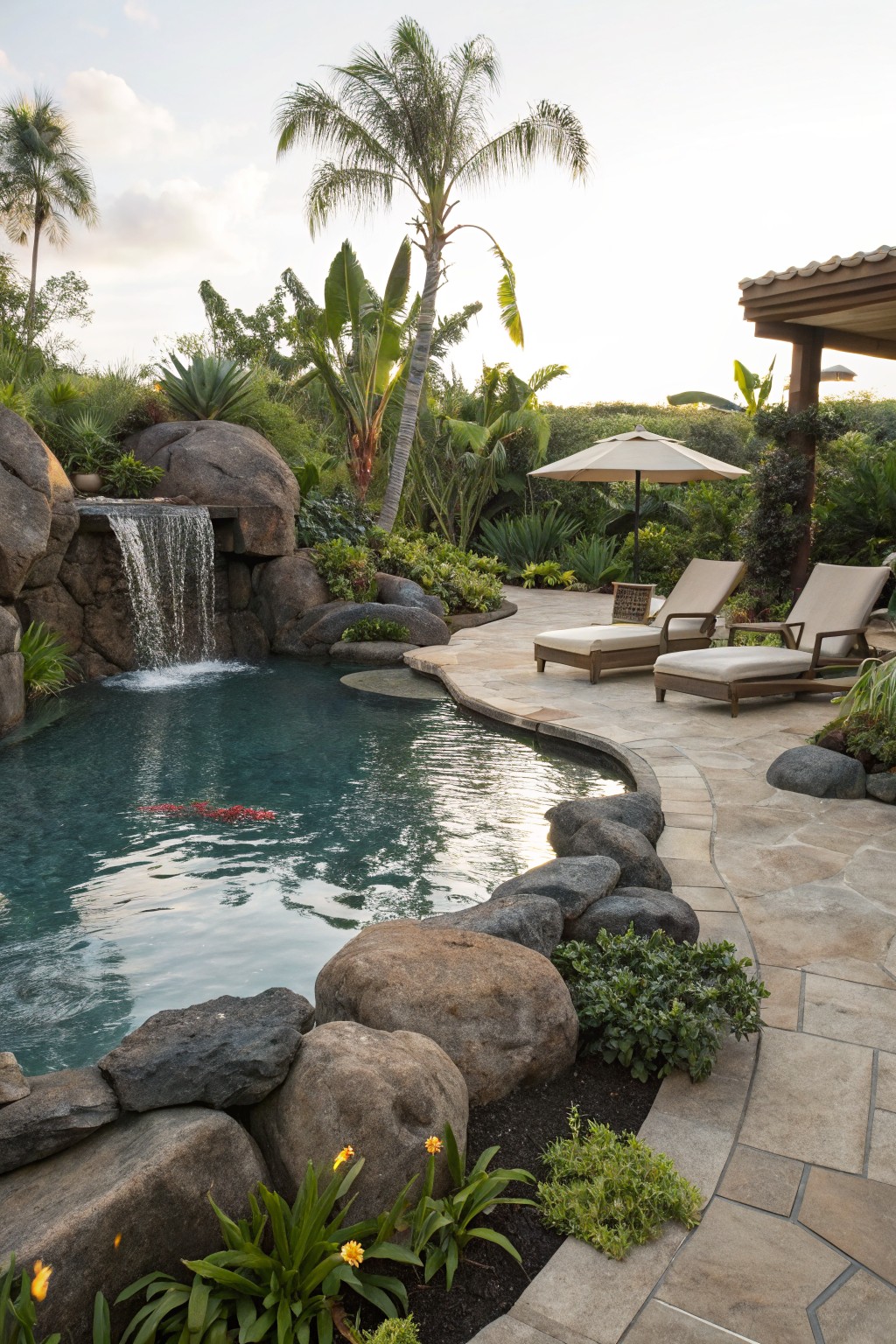
Big boulders stacked into a waterfall that spills straight into the pool water make a simple way to add movement and interest to a backyard setup. Here the turquoise pool gets that resort feel from the rough stone cascade, and the plants tucked around the rocks bring in bright greens and pops of yellow flowers. It turns a plain pool into something lively without much flat space wasted.
This works best around curved pools in warmer spots where tropical plants like palms and ferns can thrive year-round. Stack local stones for a natural look, plant low-growers at the base to soften edges, and keep seating nearby like those lounge chairs for easy relaxing. Just make sure the water flow stays steady to avoid dry spots.
Stone Fire Pit Nestled in Boulders

A straightforward stone fire pit like this one pulls the eye right away in a backyard setup. Built from rough fieldstones stacked into a wide circle, it sits on gravel with flames flickering over lava rocks. Nearby boulders and a curving stone wall make it feel like part of the hill, not added on. Low plants tuck in around the edges for some life without much upkeep.
This works best on a slope or rocky lot where you want to use what’s already there. Stack local stones dry for that natural look, keep the inside loose gravel for drainage. Add a simple bench across from it and a few lanterns. Skip fancy paving. It suits casual homes that get evening use… family hangs or quiet nights out. Just check local fire codes first.
Terraced Rock Walls for Sloped Yards
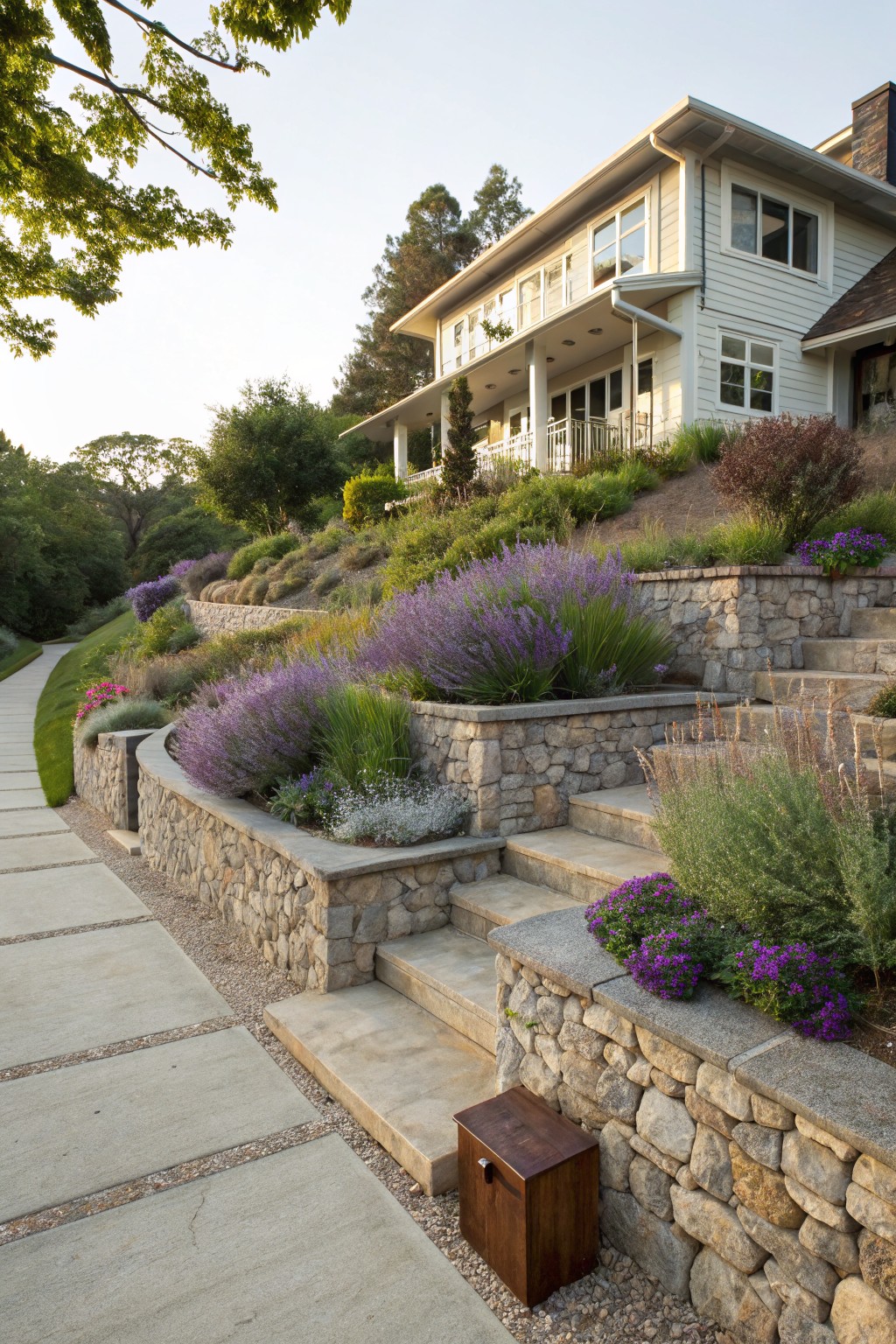
Sloped yards can be tough to work with. But terraced stone walls turn that challenge into something pretty useful. These dry-stacked rock beds hold soil in place while letting plants like lavender grow right out of them. The purple blooms stand out against the stone and hillside greens. It gives structure without feeling stiff.
Try this on lots with a noticeable drop from the house down. It suits casual homes in dry areas, since lavender and grasses handle poor soil well. Add steps and a path for getting around. Build walls sturdy enough for your slope, or erosion might creep in over time.
Raised Brick Beds Along a Gravel Path
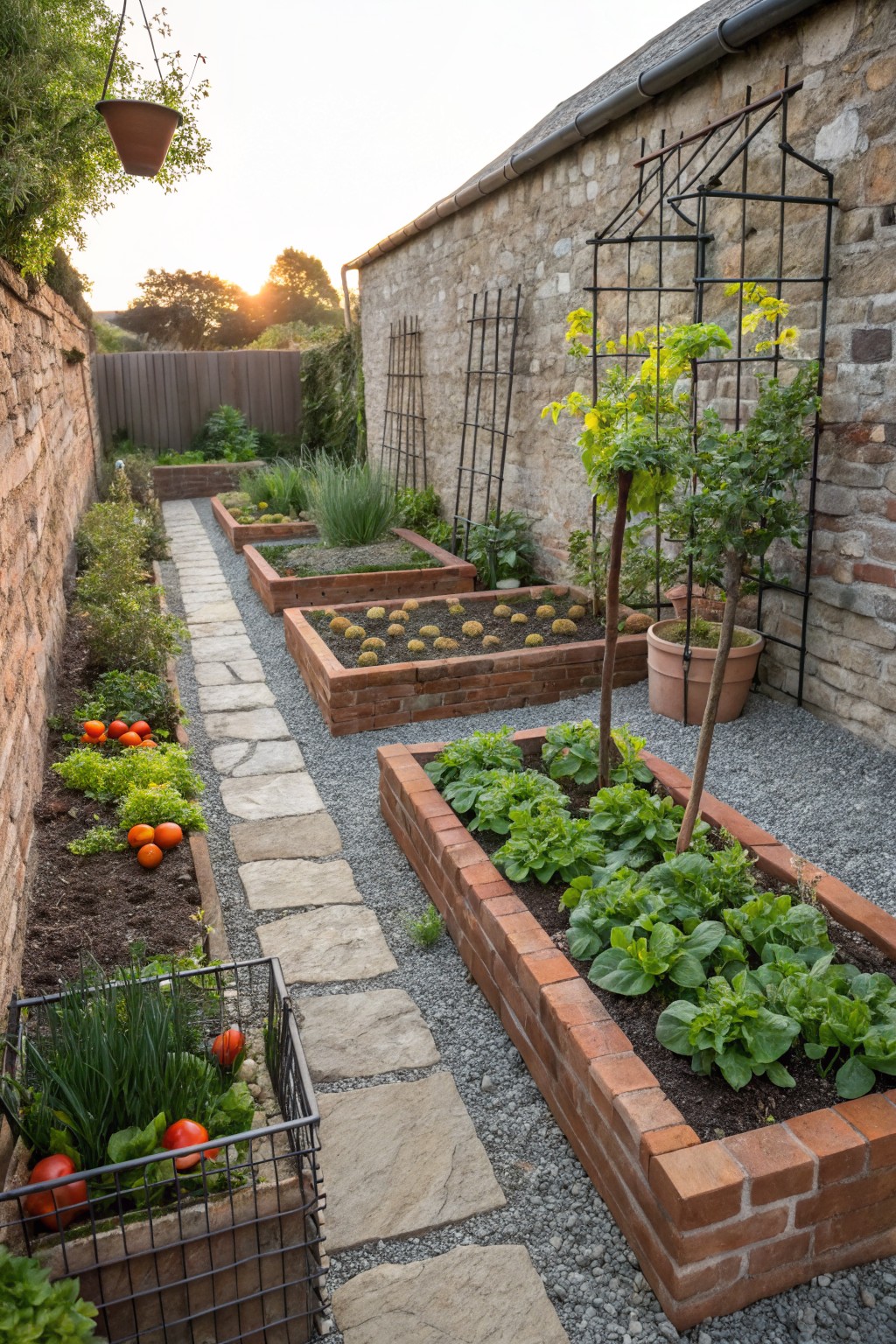
Raised brick beds work great in narrow garden spots like this passageway. They hold soil neatly for veggies and herbs, while gravel between them cuts down on mud and weeds. The beds give structure without taking up much room, and plants like tomatoes add pops of color right at eye level.
Try this in side yards or between fences where space is tight. Stack bricks two or three courses high for easy reaching, fill gaps with gravel for quick drainage. Add flat stones for the path if you want more definition. It suits older homes with stone walls best… keeps everything practical and pretty.
Natural Rock Steps in Shady Gardens

One simple way to build a garden path is with big boulders and rough stone steps that wind up a slope. Here, moss softens the edges, and plants like ferns and hostas fill in around them. It pulls the path right into the woods instead of fighting the landscape. Folks like it because it feels easygoing and fits sloped yards without much upkeep.
Try this on wooded lots or shady hillsides where grass won’t grow. Pick stones from nearby if you can, then tuck in shade-tolerant stuff like those big hosta leaves or feathery ferns. Watch the footing on wet days… but that’s part of the charm for a backyard trail.
Boulder-Lined Paths with Desert Blooms
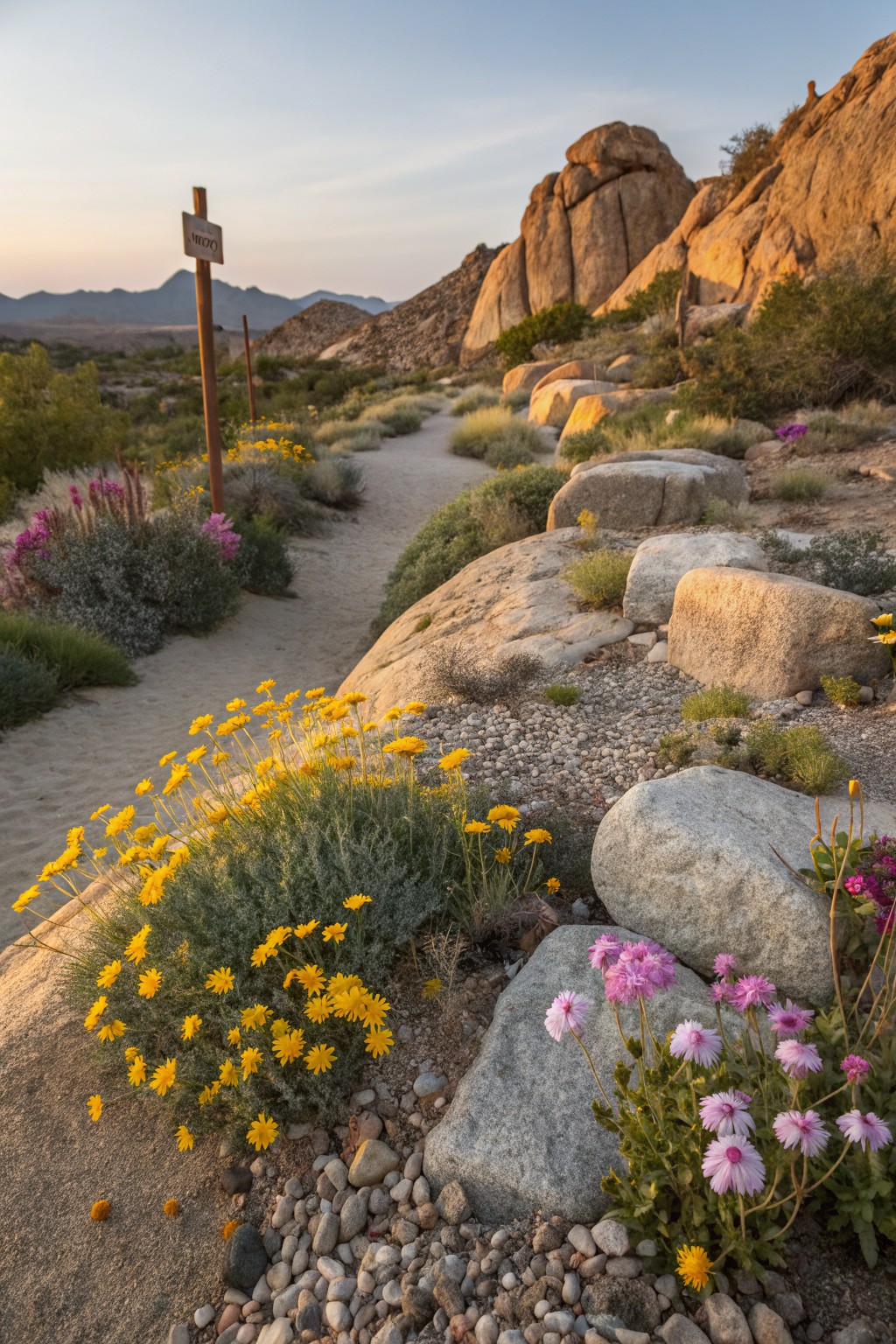
A gravel path winds easy between big rounded boulders in this setup. Clusters of yellow daisies hug the edges, with pink flowers nearby for extra color. It turns plain rocks into something lively and walkable. No fuss, just natural flow.
Try this in sunny dry spots or where lawn won’t take. Go for tough plants like desert marigolds that need little water. Line boulders along one side to guide the path toward a gate or seating area. Keeps maintenance low… and visitors following along.
Frequently Asked Questions
Q: Can I pull off a vibrant rock garden in a shady yard?
A: Go for tough shade plants like heuchera or ajuga that pop with color around rocks. They hug the ground and fill gaps without much fuss. Full sun stars won’t cut it there.
Q: How do I keep weeds from ruining the look?
A: Lay landscape fabric first, then top with rocks and cut slits for plants. Dense planting shades the soil and blocks most invaders. Pull stragglers by hand now and then.
Q: What’s the watering routine for these setups?
A: Soak new plants deeply a couple times a week until roots grab hold. Established ones need less, especially drought-tough ones like sedum. Rocks help hold moisture.
Q: How do rocks and plants stay put on a slope?
A: Bury rocks partway into the soil for stability and let plants’ roots lock everything down. Choose spreading groundcovers like creeping phlox to knit it all together over time.
