

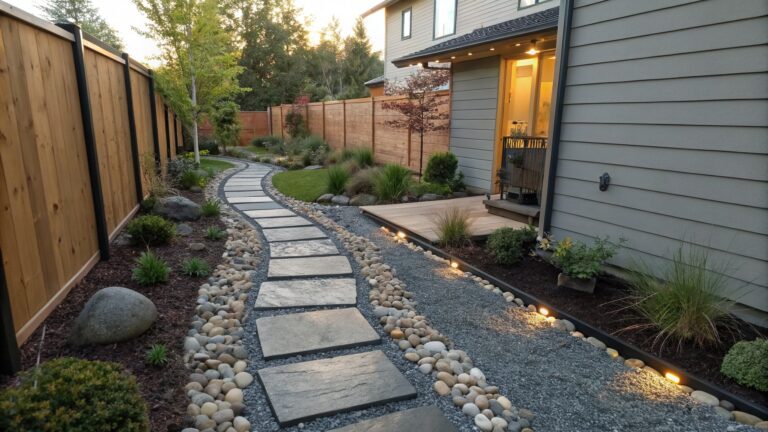
Side yards squeeze between houses like awkward afterthoughts, but rocks bring order to the chaos without stealing precious width.
I once lined my narrow strip with river stones to edge a gravel path, and it finally made the trek to the back feel deliberate instead of jammed.
They shape layouts that hold up over seasons, channeling water away from foundations while framing tough plants that thrive in shade.
Walkers notice the pathway first, whether it pulls you smoothly along or trips you up with loose dirt.
A couple of these setups, like terraced boulders hugging a fence, are the kind I’d measure twice before trying in real dirt.
Stepping Stone Path for Narrow Side Yards
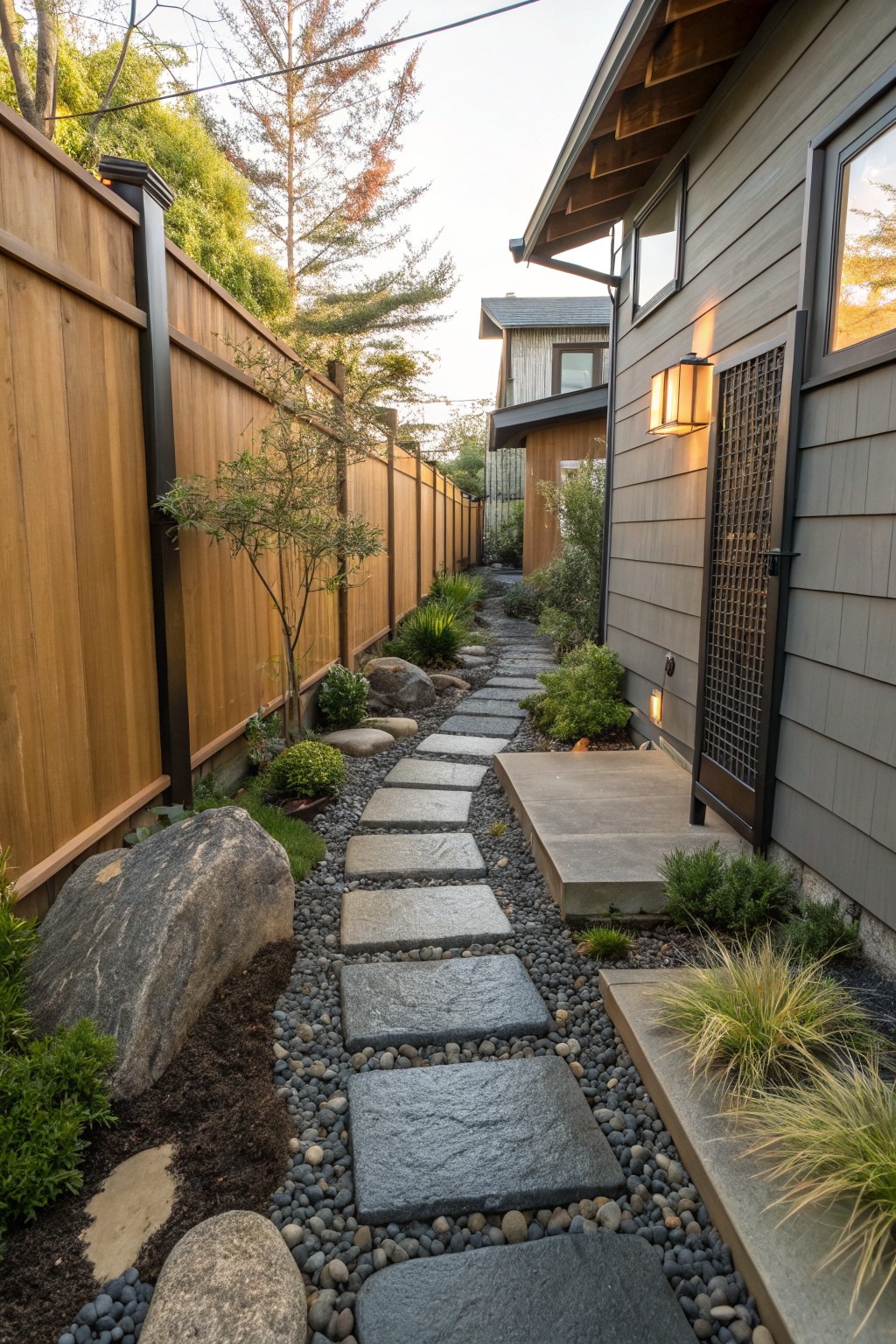
A stepping stone path fits right into skinny side yards like this one. Big flat black stones lead the way through gravel, with boulders holding the edges and a few plants tucked alongside. It turns a tight squeeze into a real walkway that doesn’t crowd the space.
Use this in any narrow strip between house and fence, heading to a back door or garage. Go for gravel that drains well, and space the stones for your stride. It’s mostly hands-off maintenance. Just keep the gravel neat.
Winding Stone Path with Gravel Edges
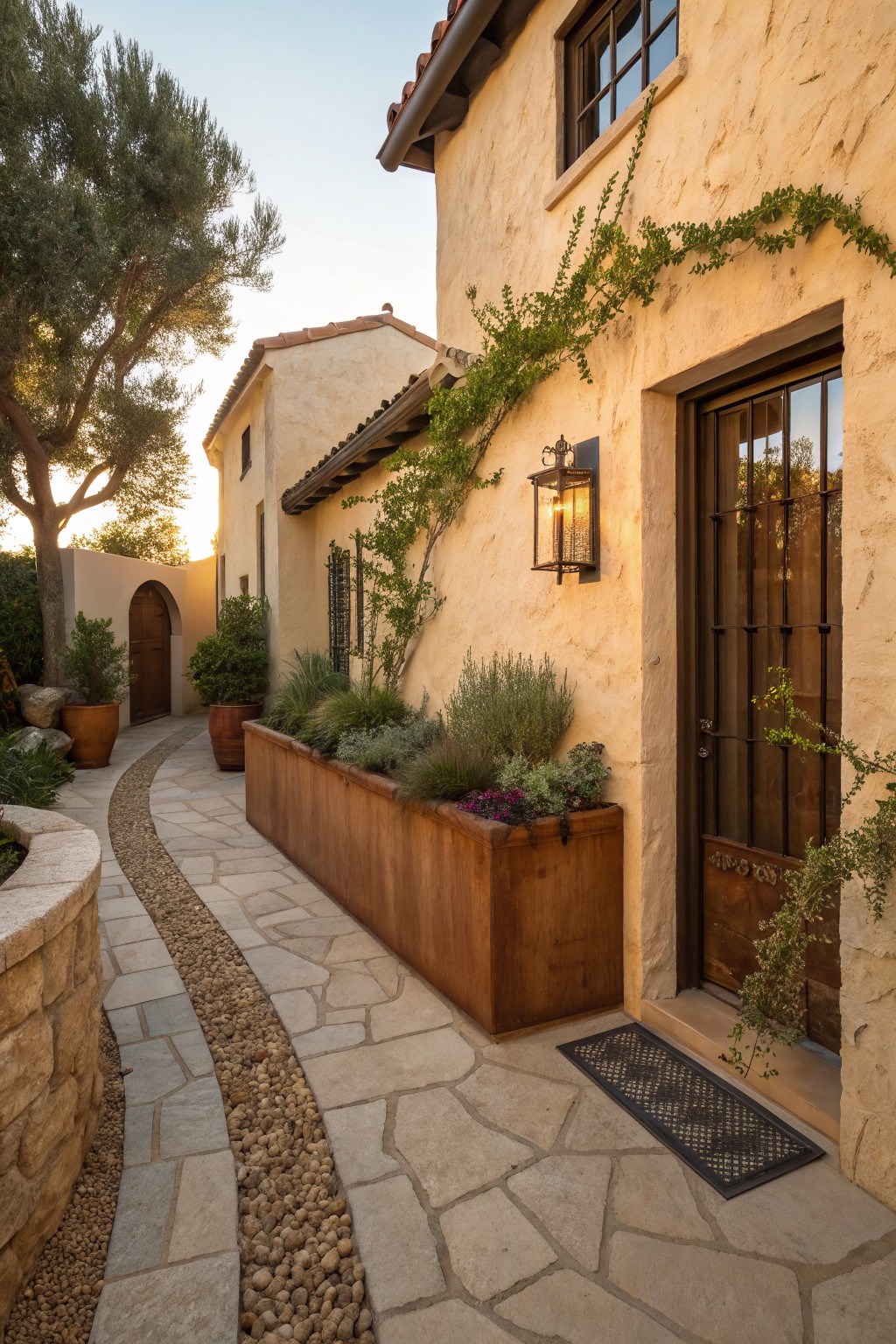
Narrow side yards can feel like a squeeze, but a simple winding stone path with gravel borders turns that tight spot into something useful and nice to walk through. The large, irregular stone slabs give a natural rhythm, while the thin strip of smooth pebbles along one edge adds texture without taking up room. Plants in a long wooden planter hug the wall, filling the space softly.
This setup works best where you just need access to the backyard or side door, like older homes with fences close to the house. Lay the path with wide stones for steady footing, keep the gravel low for wheelbarrows or mowers to pass. Skip fussy borders. Go for drought-friendly plants in the boxes to keep it easy. Fits most yards under six feet wide.
Terraced Rock Walls for Sloped Side Yards

In narrow side yards with a slope, terraced rock walls make the most of every inch. They hold back soil, create flat planting pockets, and form a natural path upward. Here, rough stone stacks up in layers, filled with tough succulents like agaves that need little water or care. A simple gravel strip at the base keeps it clean and walkable.
This setup works best on lots with good drainage, like in dry climates. Pair the walls with wide concrete steps for easy access to the house. Add a bench along one wall for a quick rest spot. It suits modern homes on hillsides, but check local codes for wall height. Keeps the yard practical without eating up space.
Flagstone Path with Pebble Borders
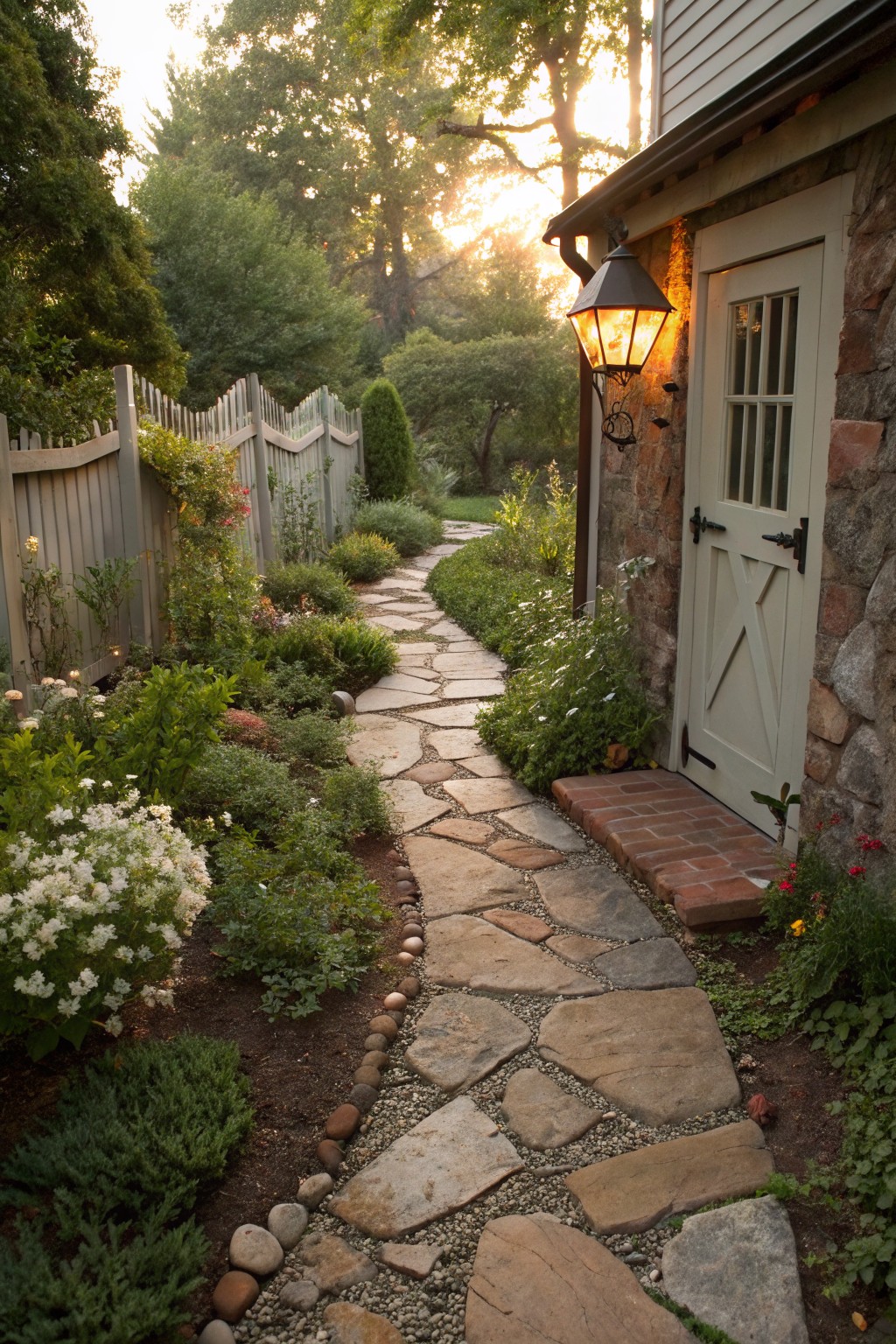
A flagstone path edged with pebbles turns a skinny side yard into a useful walkway without eating up space. The rough stones and simple border keep it low-key and practical, letting plants tuck right up against the edges for that full garden look.
Set the flat stones in a loose curve to guide you to a shed or gate, then spill small pebbles along both sides for drainage and definition. Low-growing plants fill in the rest. This setup fits any narrow strip next to the house. Skip straight lines if the space feels too boxy.
Stepping Stone Path with River Rock Edges
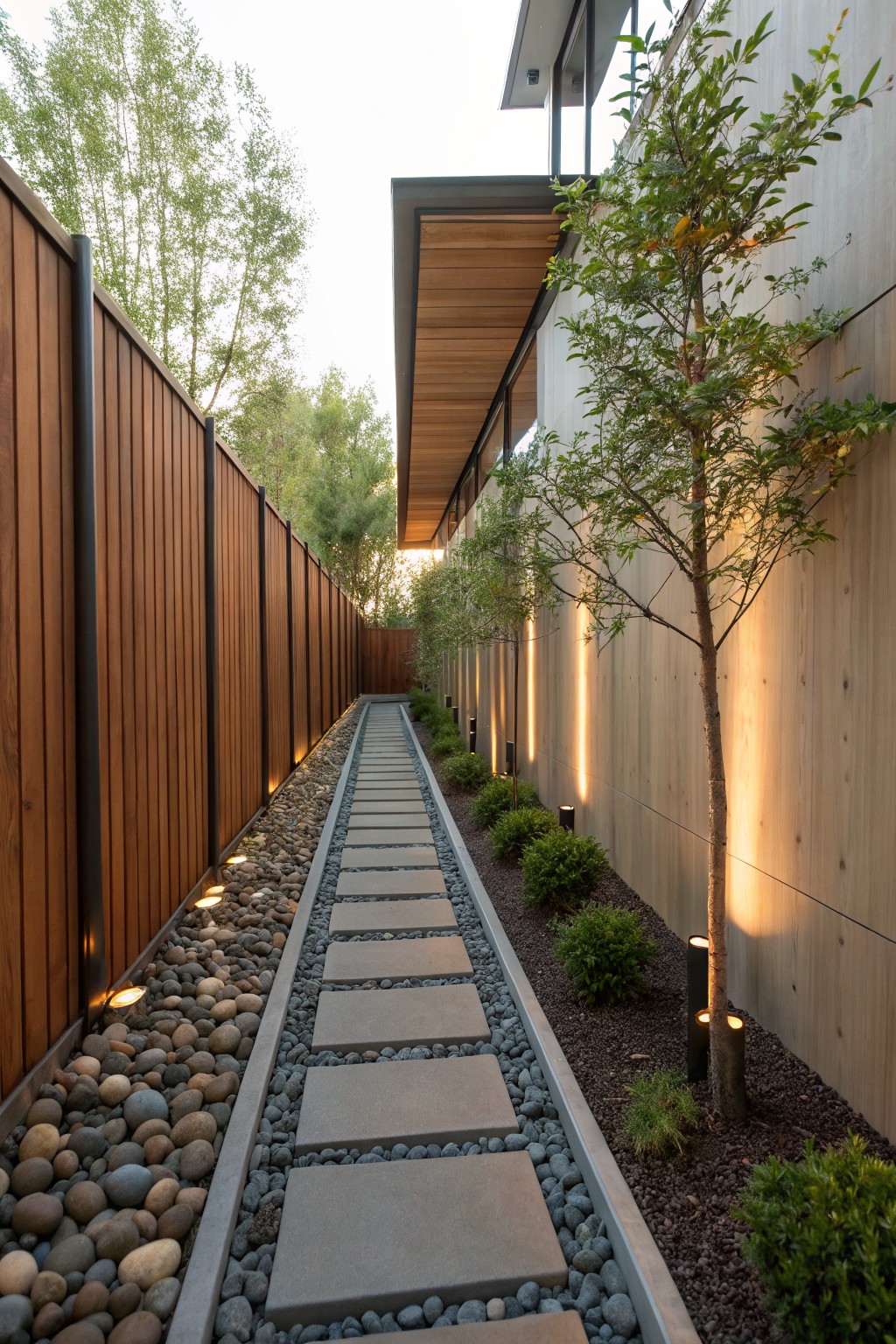
A straightforward way to handle a skinny side yard is a stepping stone walkway set right into a bed of river rocks. It saves space by not needing a full-width path, just enough room to walk single file from front to back. The rocks fill in around the pavers nicely, and low plants tuck along the edges without spilling over.
This setup fits tight spots between house and fence, especially on modern homes with clean walls. Go for smooth pebbles in mixed colors for interest, and add ground lights if you want it usable at night. Keeps maintenance low too, since rocks don’t need mowing.
Rock Retaining Walls Frame a Narrow Side Path
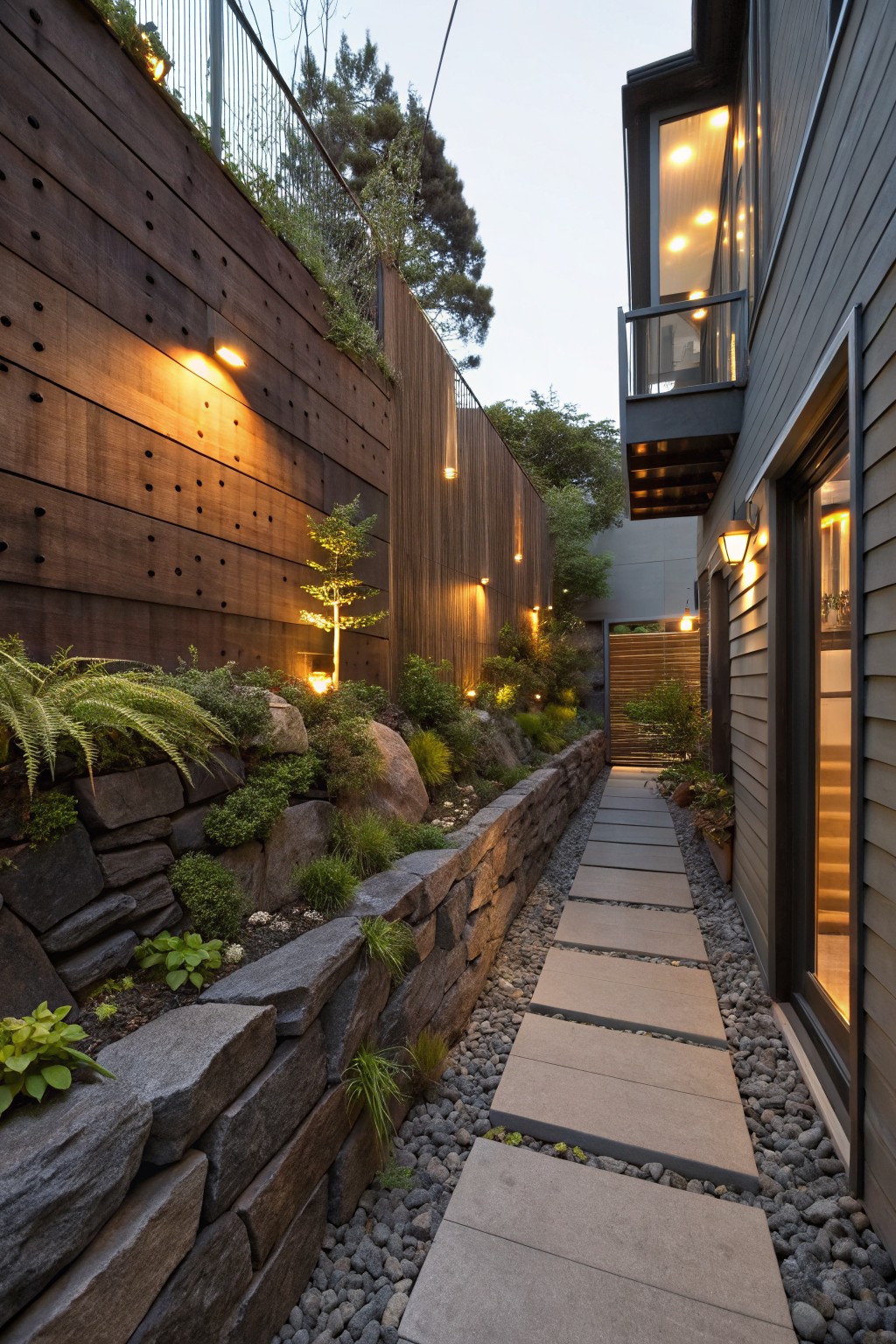
In tight side yards like this one, rock retaining walls do a lot of work. They hold back soil on slopes, create instant planting pockets, and edge the path without eating up space. Here, rugged stacked stones form low walls along both sides, filled with ferns, grasses, and small shrubs that spill over naturally. The result is a clean walkway that feels established right away, no flat lawn needed.
This setup shines in narrow passages between house and fence, especially on uneven ground. Use local fieldstone or basalt for a rugged look that blends in. Lay gravel between wide concrete pavers for easy drainage, and tuck in low-growing plants to soften the edges. It suits modern homes with clean lines, but watch the height, keep walls under three feet to avoid needing engineering.
Stepping Stone Path for Narrow Side Yards
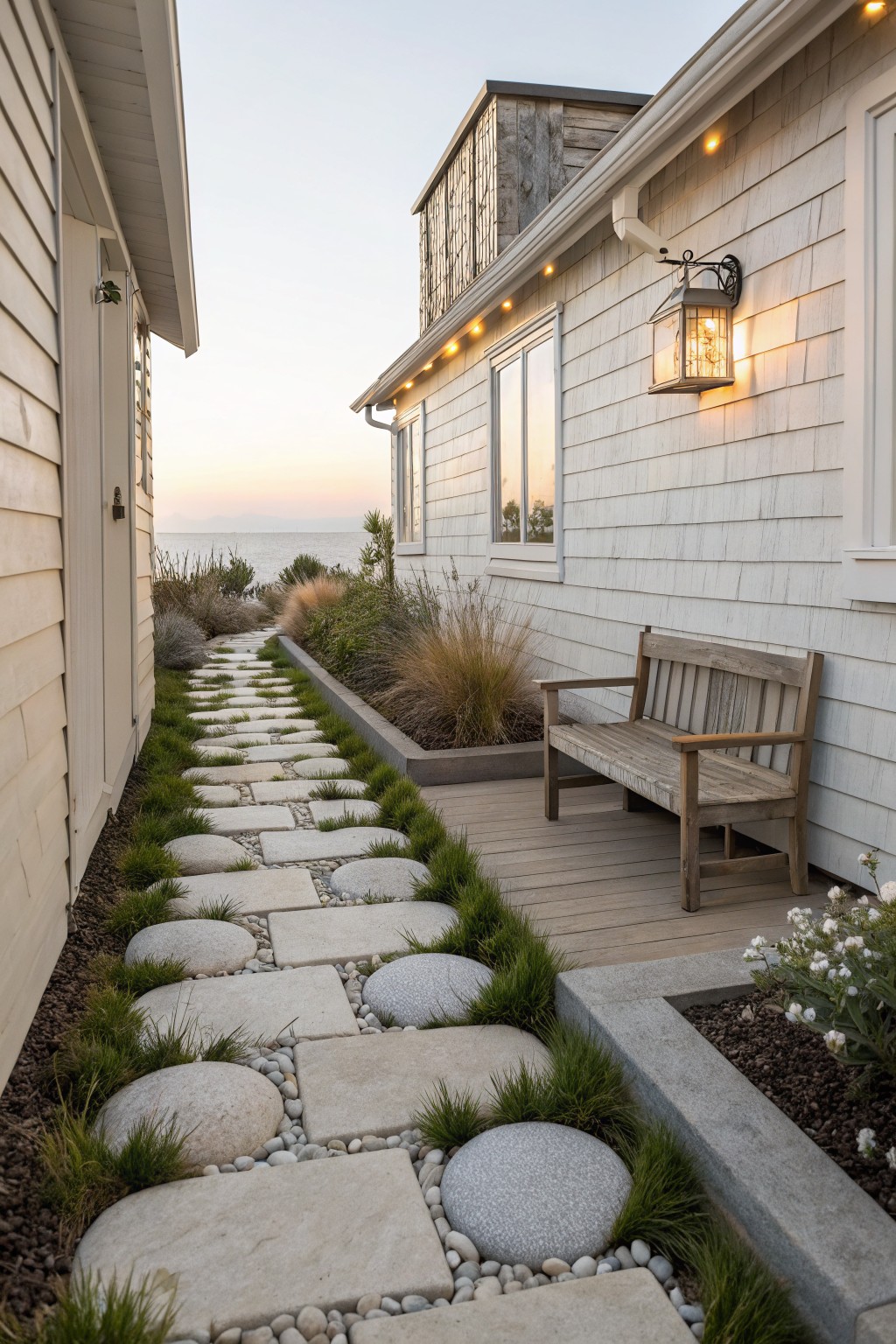
One simple way to handle a tight side yard is with a stepping stone path like this. It uses big rectangular slabs mixed with round boulders, set into grass tufts. That keeps the ground low and open, so the space doesn’t feel crowded. Plus, rocks like these are tough, low-maintenance, and they guide you right through without wasting room on full paving.
This works best in skinny spots between houses or along fences, maybe 4 to 6 feet wide. Lay the stones irregular for a natural look, space them a foot apart, and fill gaps with tough grass. It’s great for coastal yards or anywhere drainage matters, just make sure the base is stable so they don’t shift over time.
Stepping Stones Set in Gravel for Narrow Walkways
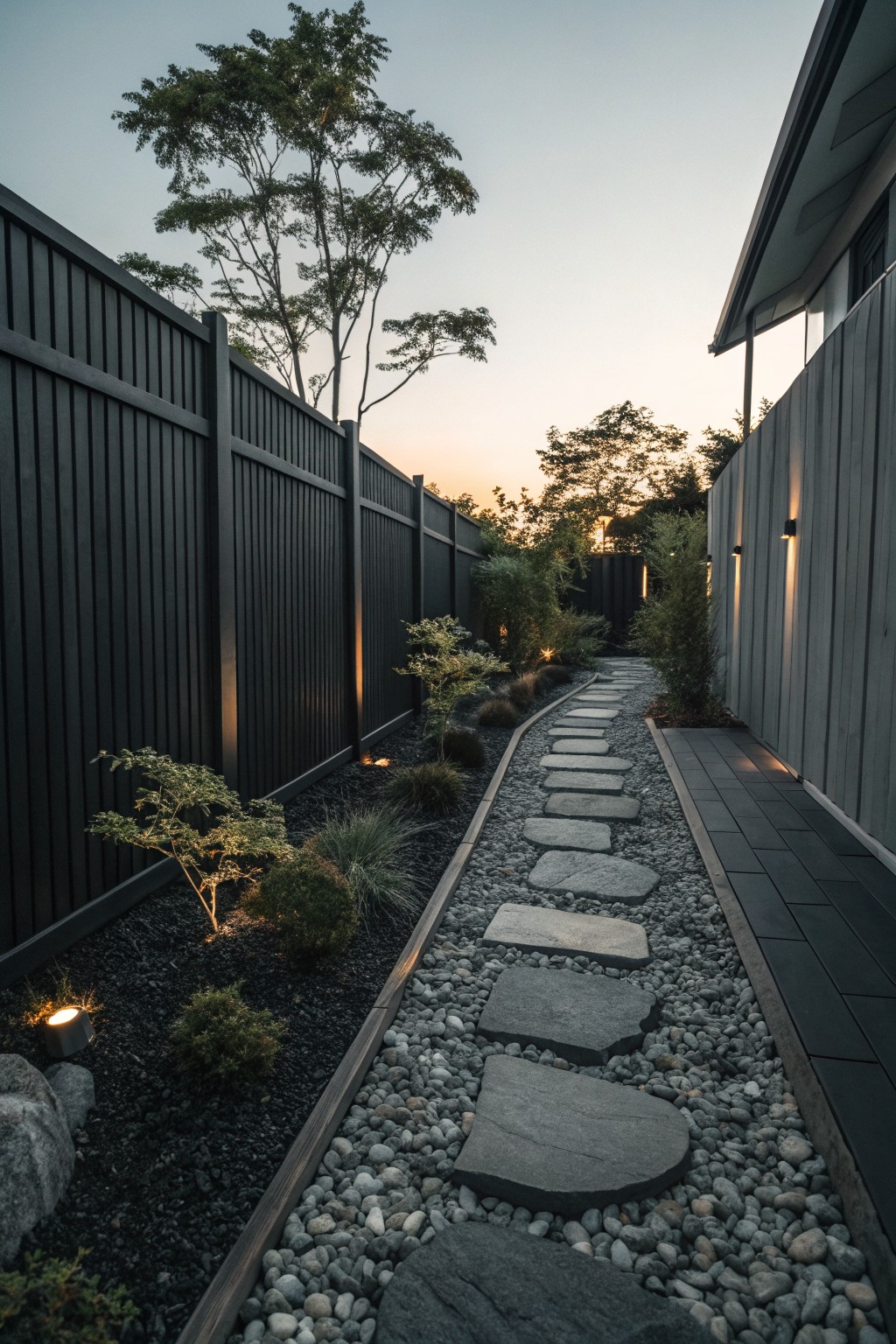
Side yards don’t need wide paths to feel right. This setup uses rough stepping stones dropped into a gravel bed. It keeps things open and simple. The gravel fills in around the stones. Low plants tuck along the edges. Black gravel darkens it all. No big concrete needed.
Try this where space is tight. Between fences or house and garage works best. It fits modern homes with clean lines. Make sure gravel drains well. Skip it if you have heavy foot traffic. Plants like grasses or small maples stay low. Easy to maintain year round.
Stone Slab Path Set in Gravel
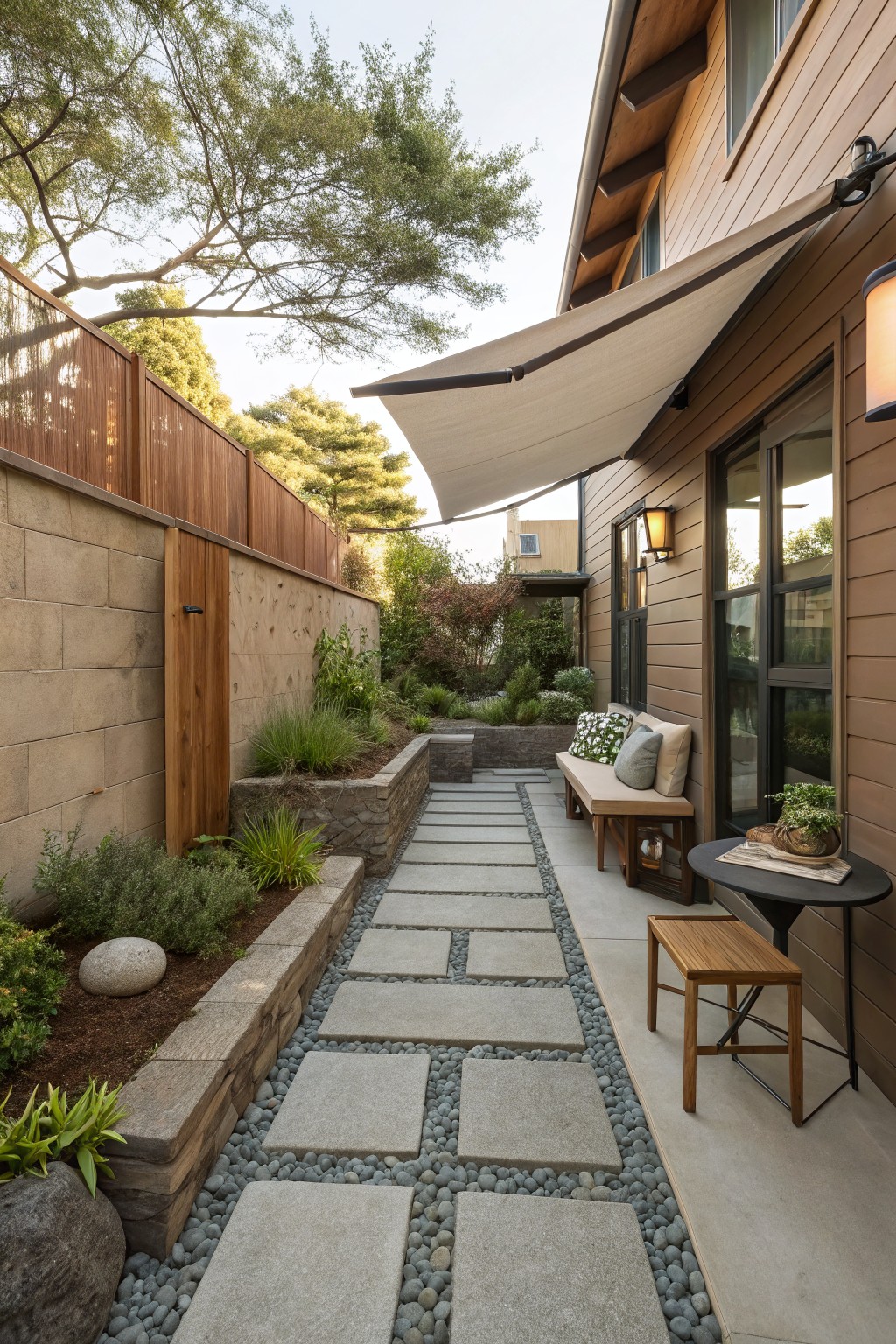
A simple pathway like this turns a skinny side yard into something useful. Large rectangular slabs laid out in gravel create a clean walking route without taking up much room. The pebbles fill the gaps nicely, letting water drain right through, and they keep weeds down if you add a liner underneath. It’s low fuss and fits right along the house wall.
This works best in tight spots where you just need access to the backyard or garage. Go for it on sloped lots too, since the gravel helps with traction. Pair it with low plants in raised beds on one side, like grasses or succulents, and maybe add a bench at the end for a quick sit-down. Skip it if your area’s super wet, though. Might need bigger stones.
Narrow Stepping Stone Path in Gravel
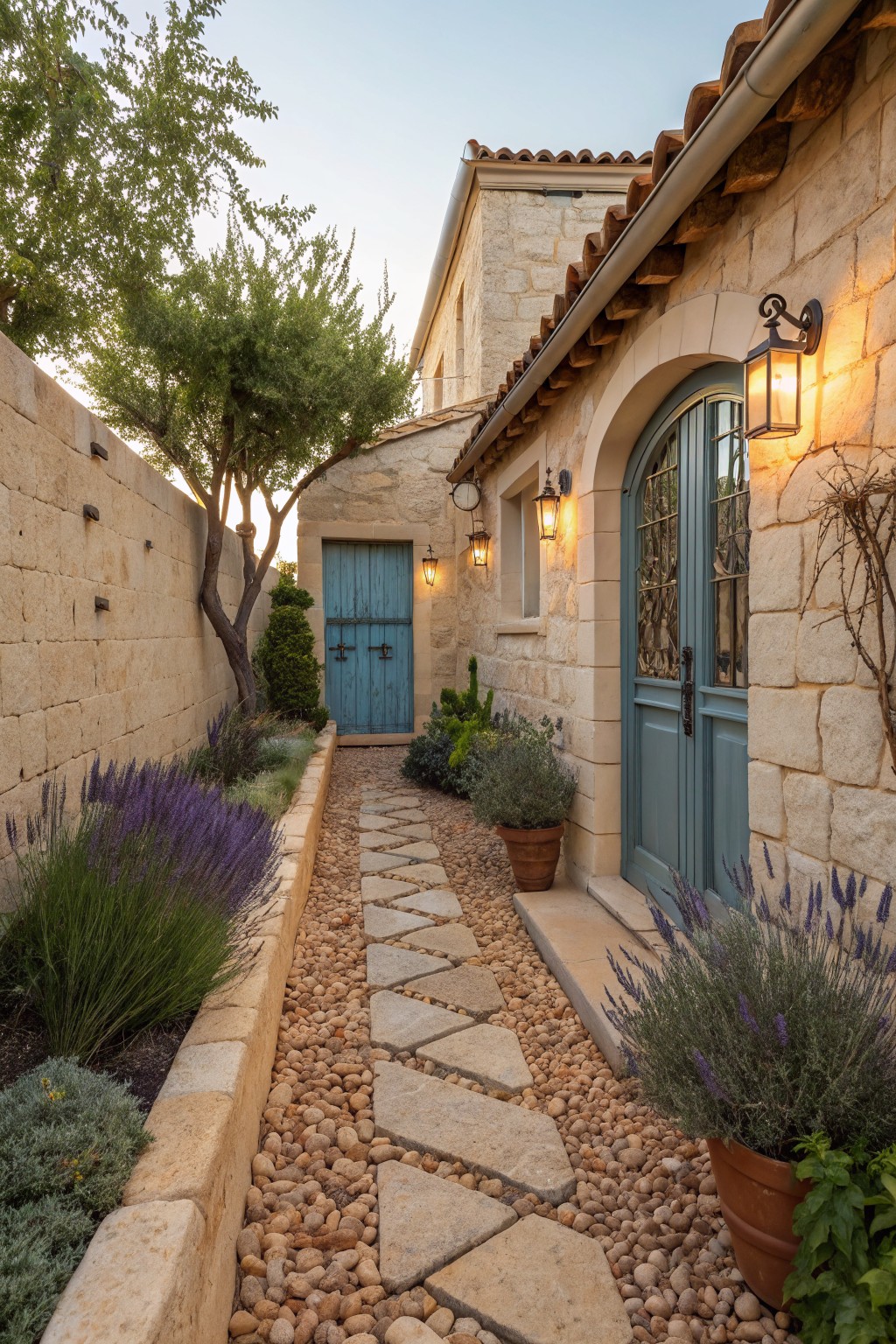
In tight side yards like this one, a simple path of large irregular stone slabs set right into gravel keeps things open and easy to walk. The gravel fills the gaps and drains fast, while low lavender plants along the edges add some green and scent without crowding the space. It turns a forgotten strip into a practical walkway that matches stone walls nicely.
This setup works best between a house and fence where you just need access, not a wide lawn. Use drought-tolerant plants like lavender to keep maintenance low, and pick stones that fit the local stone look for a natural feel. Skip anything fussy. It suits Mediterranean or dry climates especially well.
Sleek Gravel Path with Large Pavers

A narrow side yard path like this uses big square pavers laid right into a bed of gravel. It gives you a clean walkway without taking up much room. The gravel fills the spaces between stones and spreads out around them, keeping the ground simple and letting plants like birch trees stand out along the edges.
This setup fits tight spaces next to the house perfectly. Go for light pavers that blend with concrete walls, and smooth pea gravel that drains well. Raised beds keep soil in check. Watch for weeds in the gravel… a quick rake keeps it neat.
Narrow Rock Pathway for Side Yards
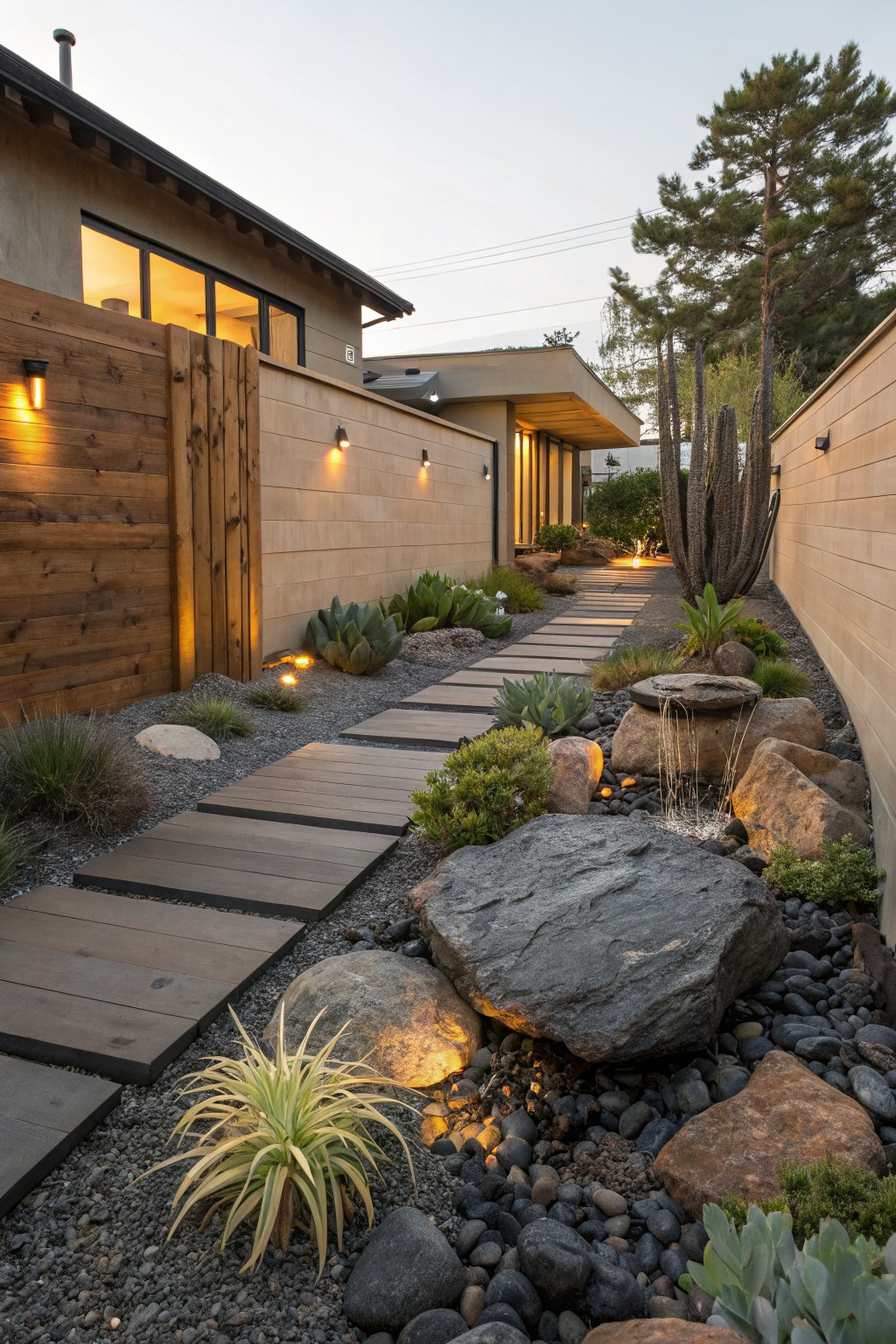
A simple pathway like this makes great use of a tight side yard. Dark stepping stones lead through gravel and big boulders, keeping the route clear while the rocks fill out the space on both sides. Low plants tuck in around them, so nothing crowds the walk. It feels open, even in a skinny spot.
Try this between your house and a fence or neighbor’s wall. Go for gravel that’s easy to rake and boulders in a few sizes for rhythm. Succulents or grasses work best along the edges since they stay low. Night lights in the rocks make it practical after dark. Suits drought areas or modern stucco homes.
Dry Creek Bed Walkway in Narrow Yards
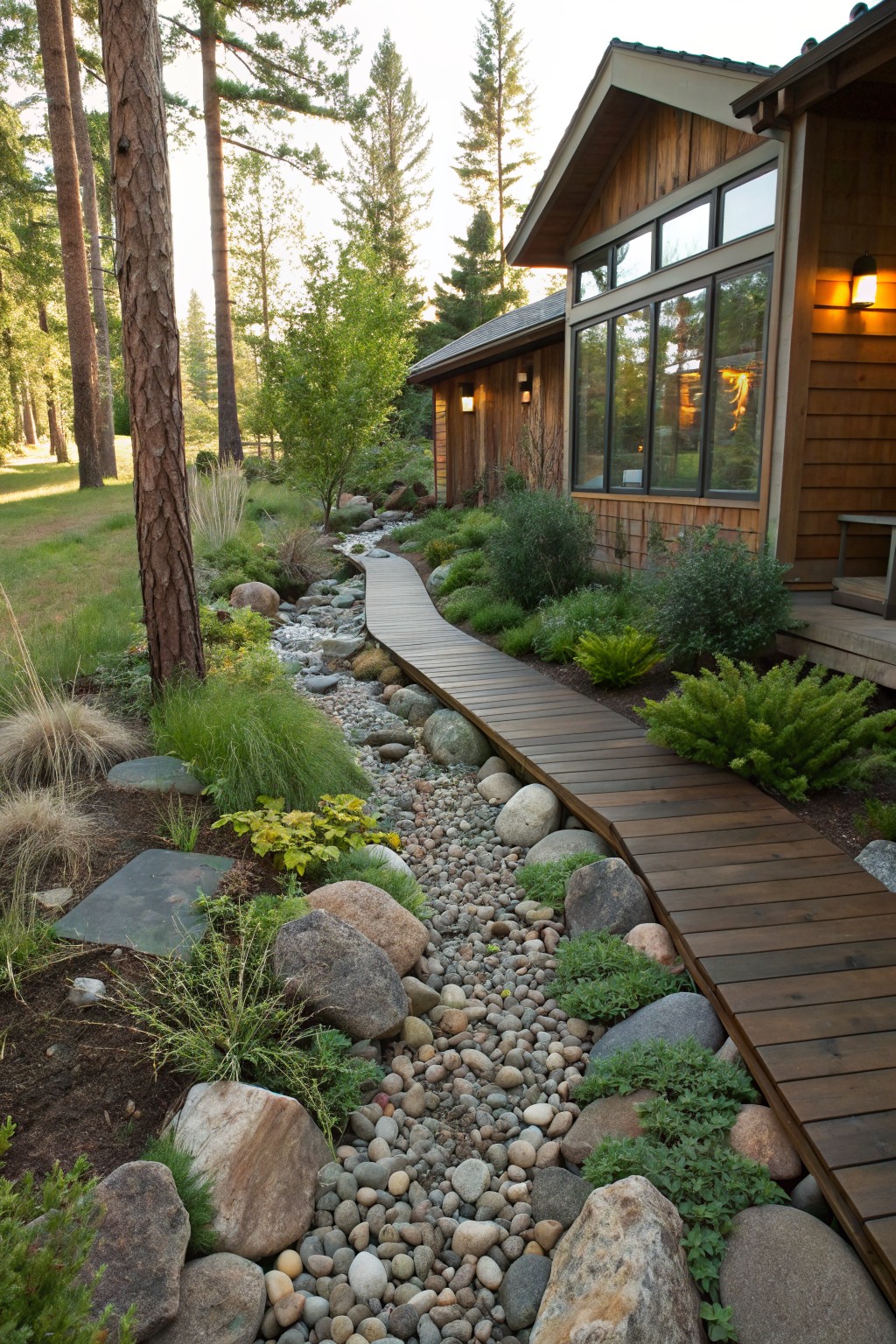
A dry creek bed lined with pebbles and boulders makes a smart path base for tight side yards. Pair it with a simple wooden boardwalk that winds right alongside, and you get easy access without eating up space. The rocks give that natural flow feel, while the wood stays practical for walking.
This works best where you need to squeeze between the house and fence or trees. Add some low shrubs along the edges for green without crowding. It’s low upkeep too, since no real water means less mud. Suits wooded spots nicely.
Irregular Tile Path for Narrow Side Yards
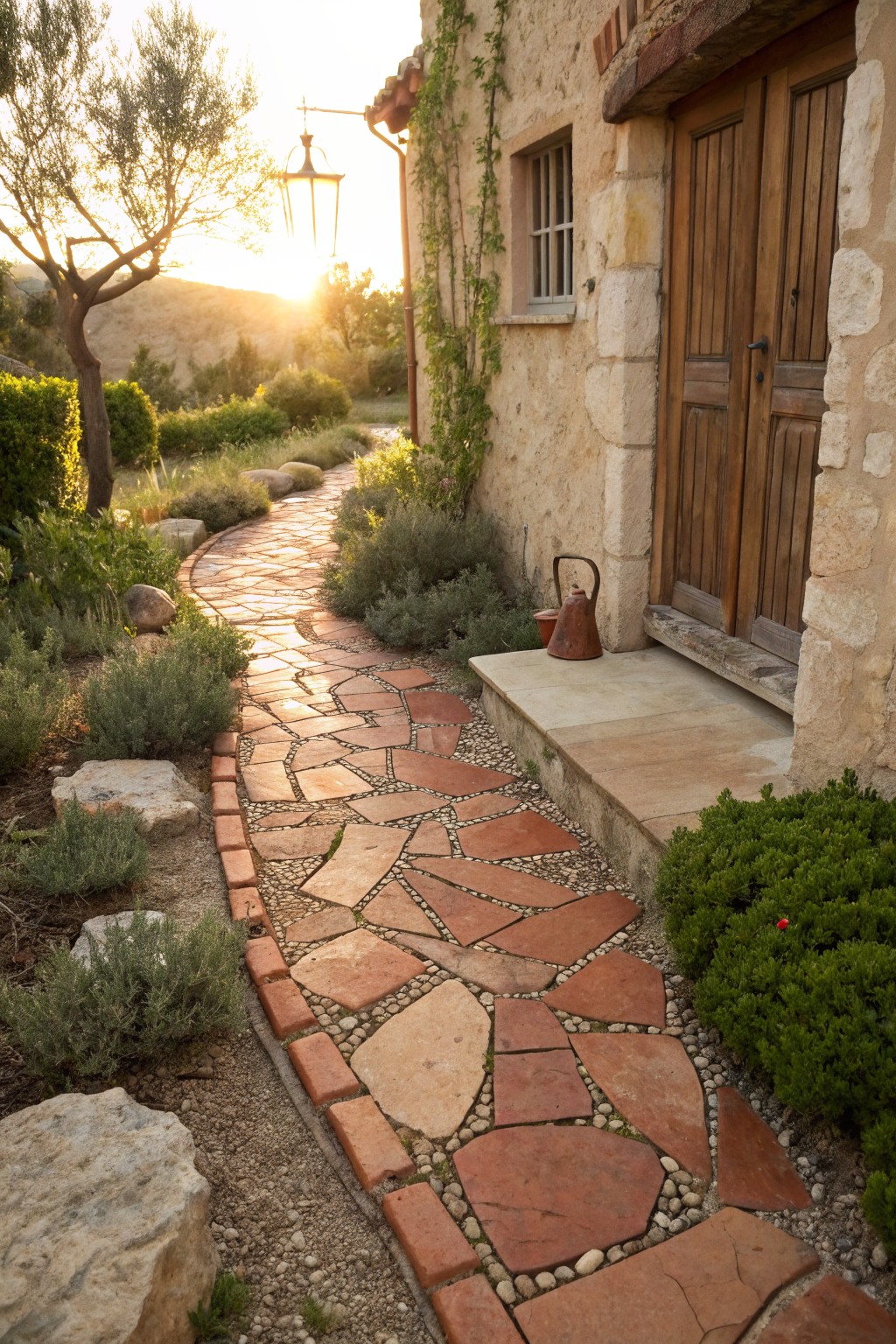
Tight side yards don’t have to stay unused or hard to reach. This kind of path uses irregular terracotta tiles set into pebbles, winding along the house without taking extra room. It feels natural, like it grew there with the lavender and rocks edging it.
You’ll want this in older homes with stone walls or any skinny strip next to a fence. Start with gravel underneath for good drainage, then drop in the tiles and fill gaps with pebbles. The slight curve makes the space seem bigger… and easier to walk.
Red Gravel Path for Narrow Side Yards

Tight side yards don’t have to be dead space. A simple path like this one uses red gravel as the base with big concrete pavers stepped in just right. It guides you through without wasting an inch, and the gravel stays put while looking neat. Low plants tuck along the edges for a bit of green that won’t overgrow.
This setup fits best between a house wall and fence in modern spots. Go for gravel that’s angular so it doesn’t shift too much, and add those wall lights if you want evening use. It keeps cleanup easy, no grass to fuss with.
Terraced Rock Steps for Sloped Side Yards
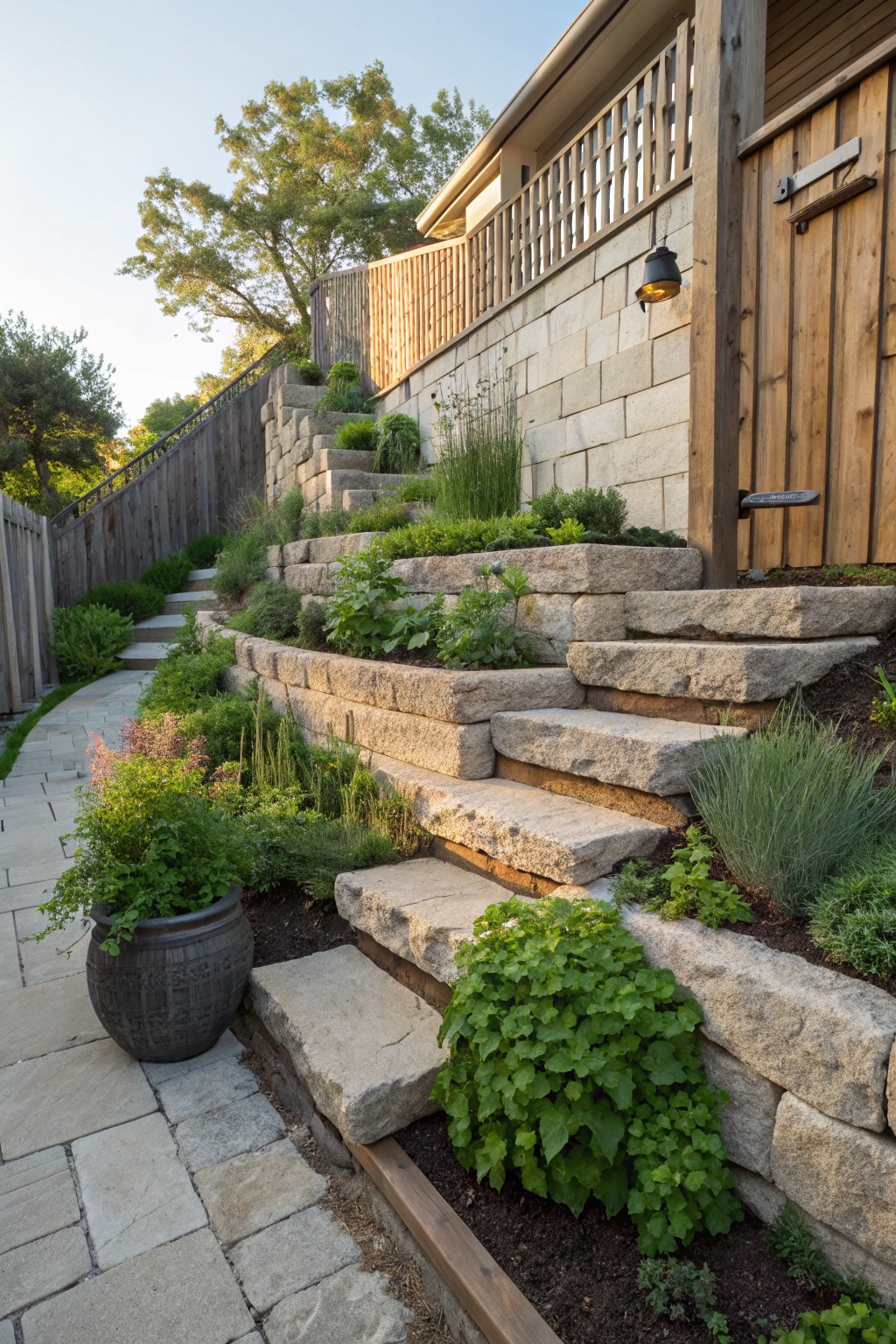
Steep side yards often go unused because they’re hard to reach. These terraced rock steps fix that by stacking wide limestone slabs into steps that hold back soil and create planting pockets at the same time. Plants like herbs and grasses tuck right into the walls, softening the stone while the setup stays compact.
This works best in narrow spaces leading from a driveway to a deck or backyard gate. Go for rugged local stone to blend with the site, and choose tough, low-water plants that won’t overrun the path. One thing to check: good drainage behind the walls keeps everything stable over time.
Irregular Stone Path for Narrow Side Yards
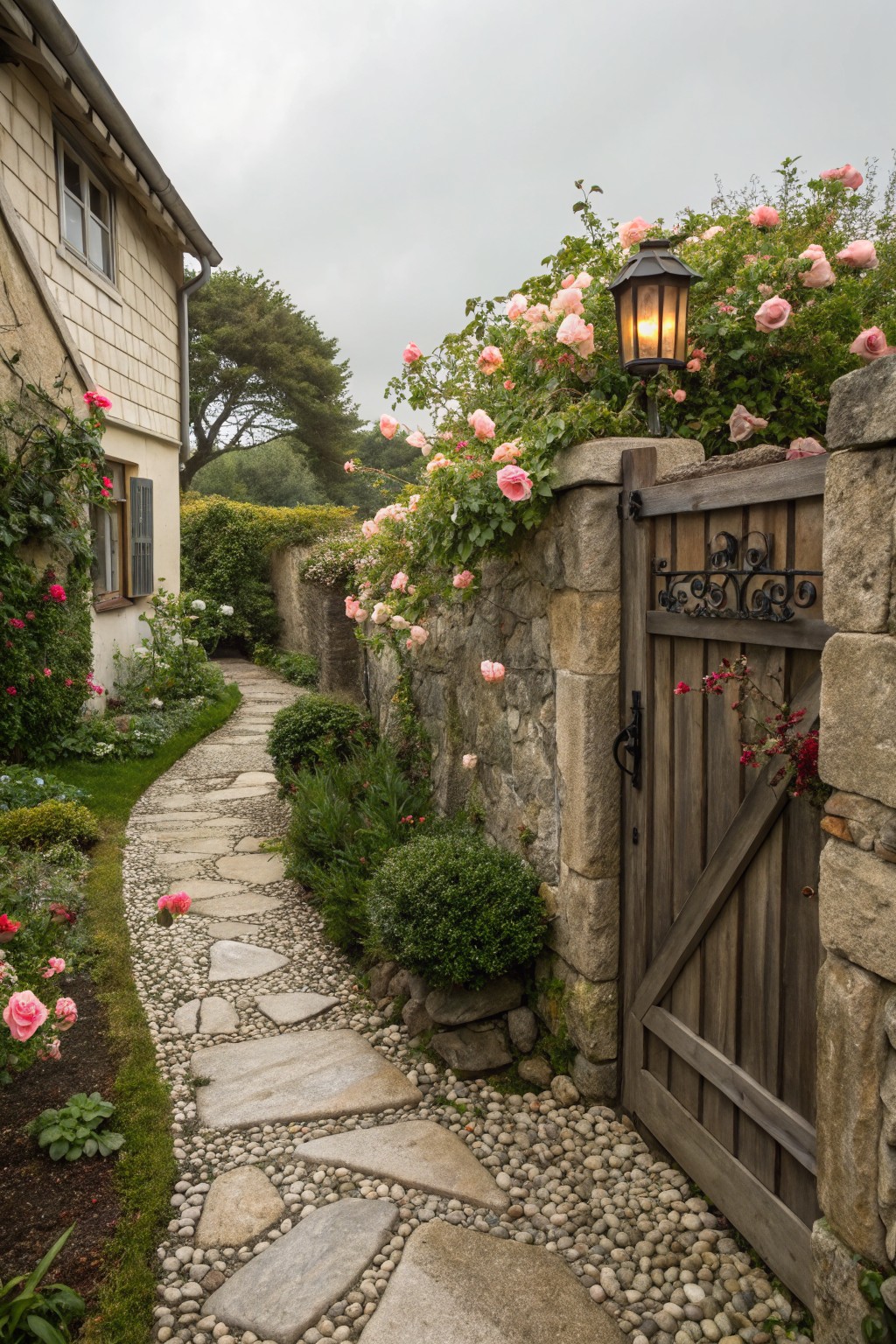
A simple path like this one uses large, rough-cut stones set right into pea gravel. It takes up almost no extra room in a skinny side yard, just enough to walk single file. The gravel fills the gaps and lets water drain fast, while those climbing roses on the walls keep things pretty without blocking the way.
Put this in any tight spot between house and fence, like to reach a back gate or patio. It works best on cottage-style homes or older places with stone details already. Skip it if your yard floods a lot… gravel shifts. Just rake it smooth now and then.
Simple Stone Path for Narrow Side Yards
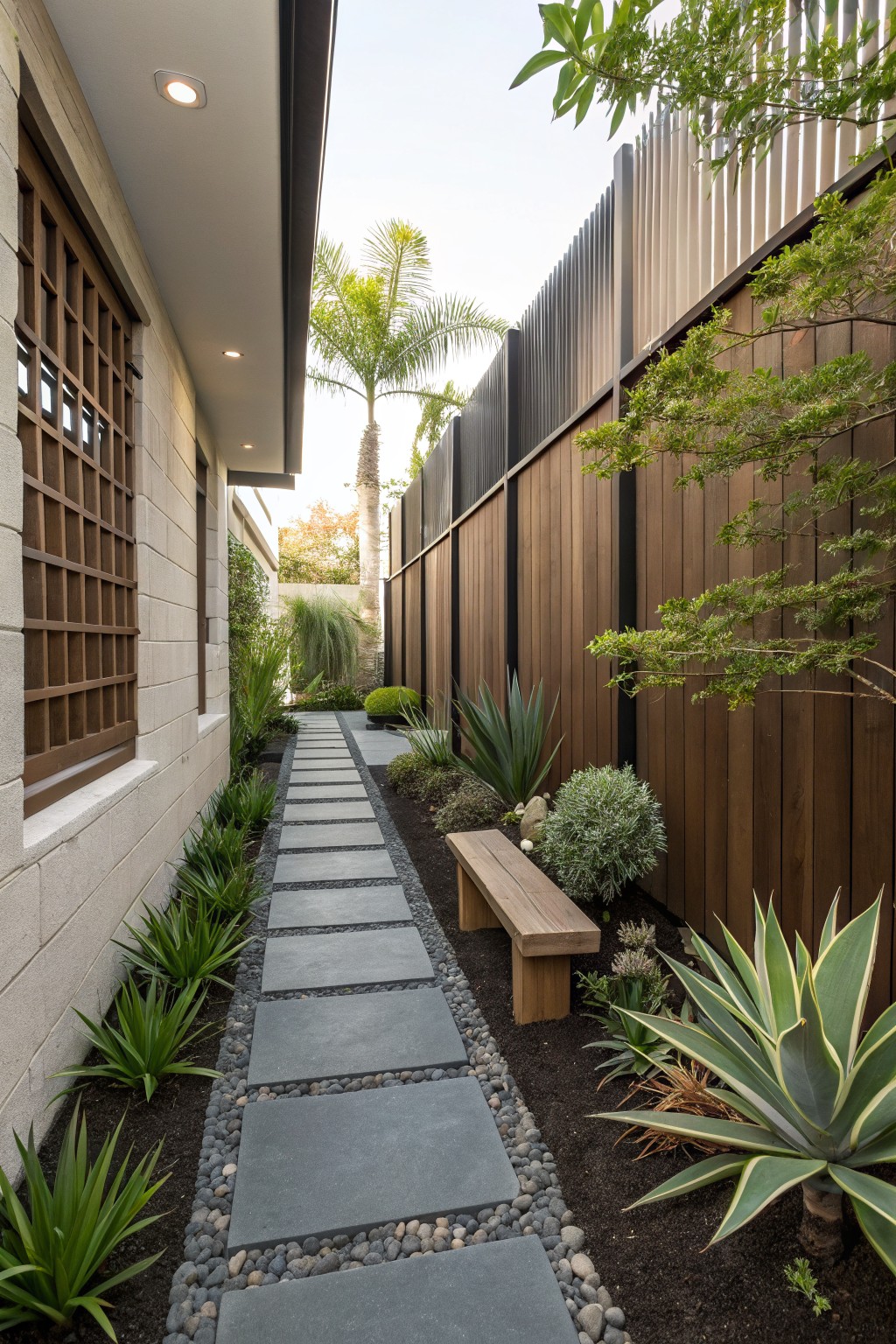
Side yards are often just narrow passages we squeeze through to get to the back. But this setup turns that tight spot into something useful and nice to look at. Dark slate stepping stones laid in a straight line, edged with smooth pebbles, keep the path clear and defined. Low plants like agaves and grasses hug the edges without crowding the way.
It works best where you need easy access but don’t have room for anything fancy. Line it along your house wall to the backyard gate, add a bench halfway for a quick rest. Drought-tolerant picks mean less watering. Skip big bushes that block light, and watch the pebbles don’t shift on slopes.
Wavy Pebble Path for Narrow Yards
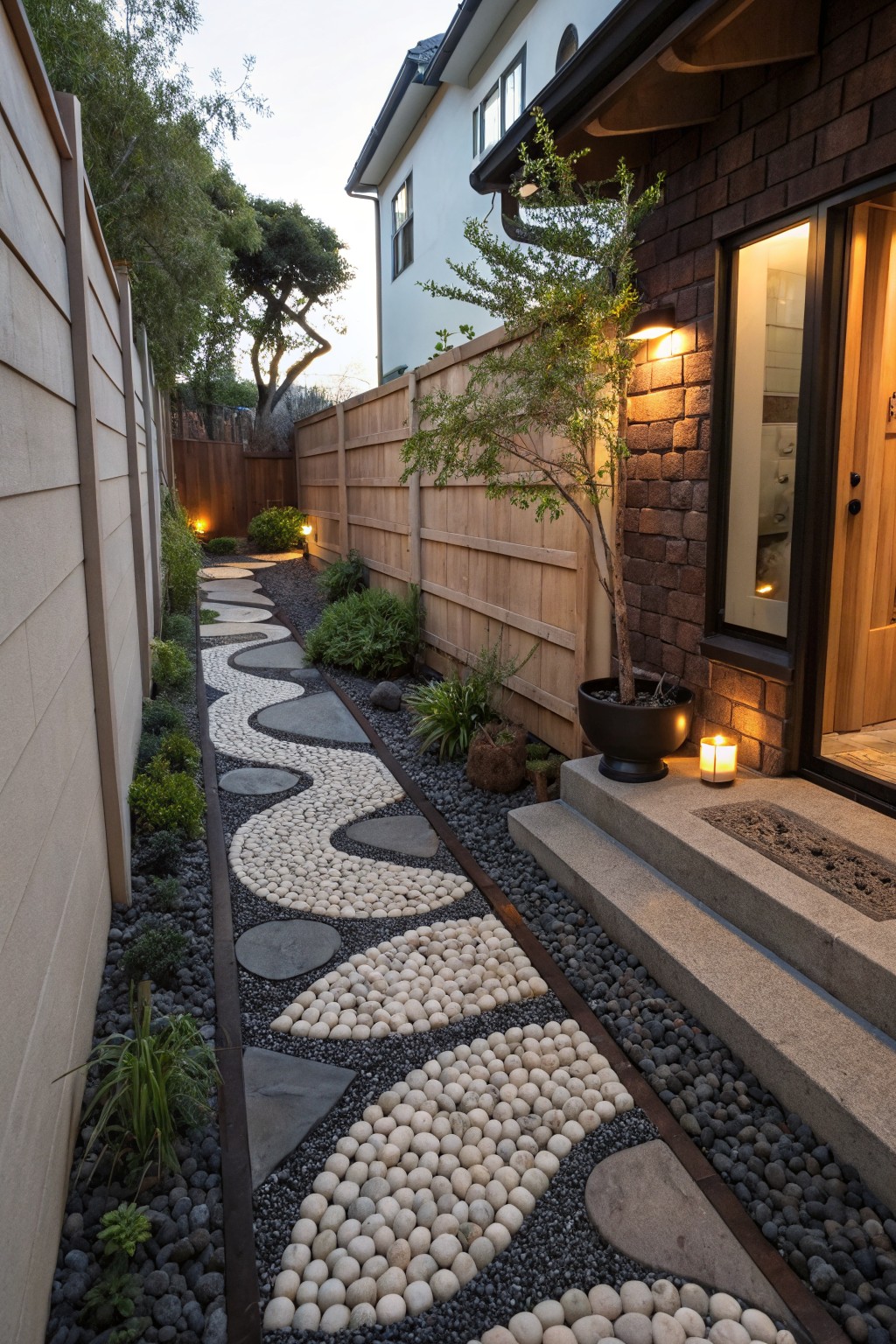
A simple wavy path made from white river rocks set into black gravel turns a skinny side yard into something worth walking through. It fits right between the fence and house wall without taking up extra room. The curves give it a natural flow that feels less like a straight slog to the door.
This works best in tight spots where you just need access but want a bit of style. Lay down gravel base first for drainage then press in the pebbles. Add low plants along the edges to soften it. Skip it if your yard floods a lot… pebbles shift easy in mud.
Stepping Stone Path for Narrow Side Yards
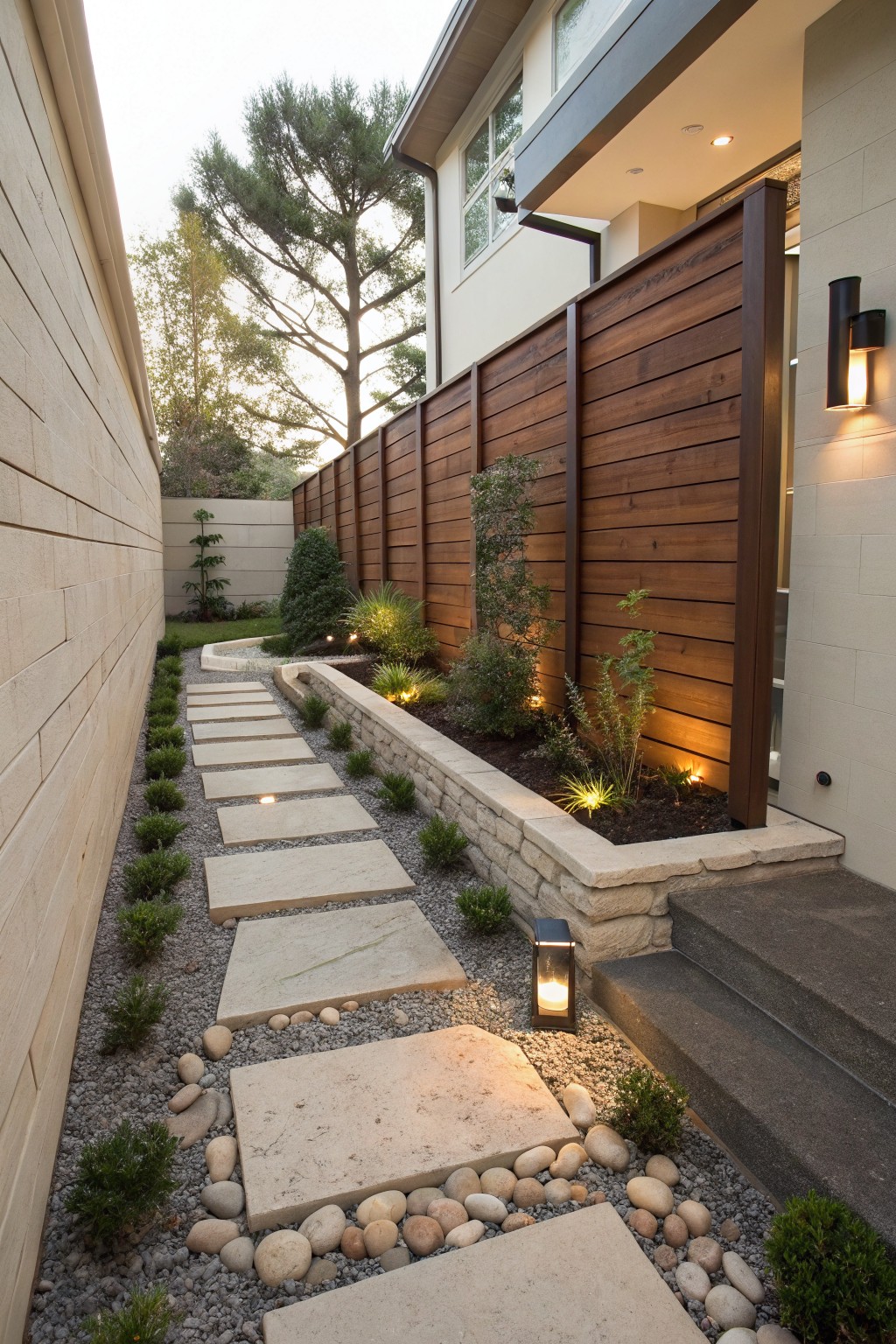
A stepping stone path fits right into skinny side yards without crowding the space. Large flat stones laid irregularly over gravel create a casual walkway that leads straight to the house steps. River rocks and low boxwoods tucked around the edges keep it simple and neat, while letting water drain easy.
This setup suits modern homes backed up to fences or walls. Go with pale stones to make the path pop against gravel. Stick to drought-tolerant plants along the sides… they stay low and need little trimming. Watch the spacing so you don’t trip in the dark.
Stone Pathway with Gravel Borders
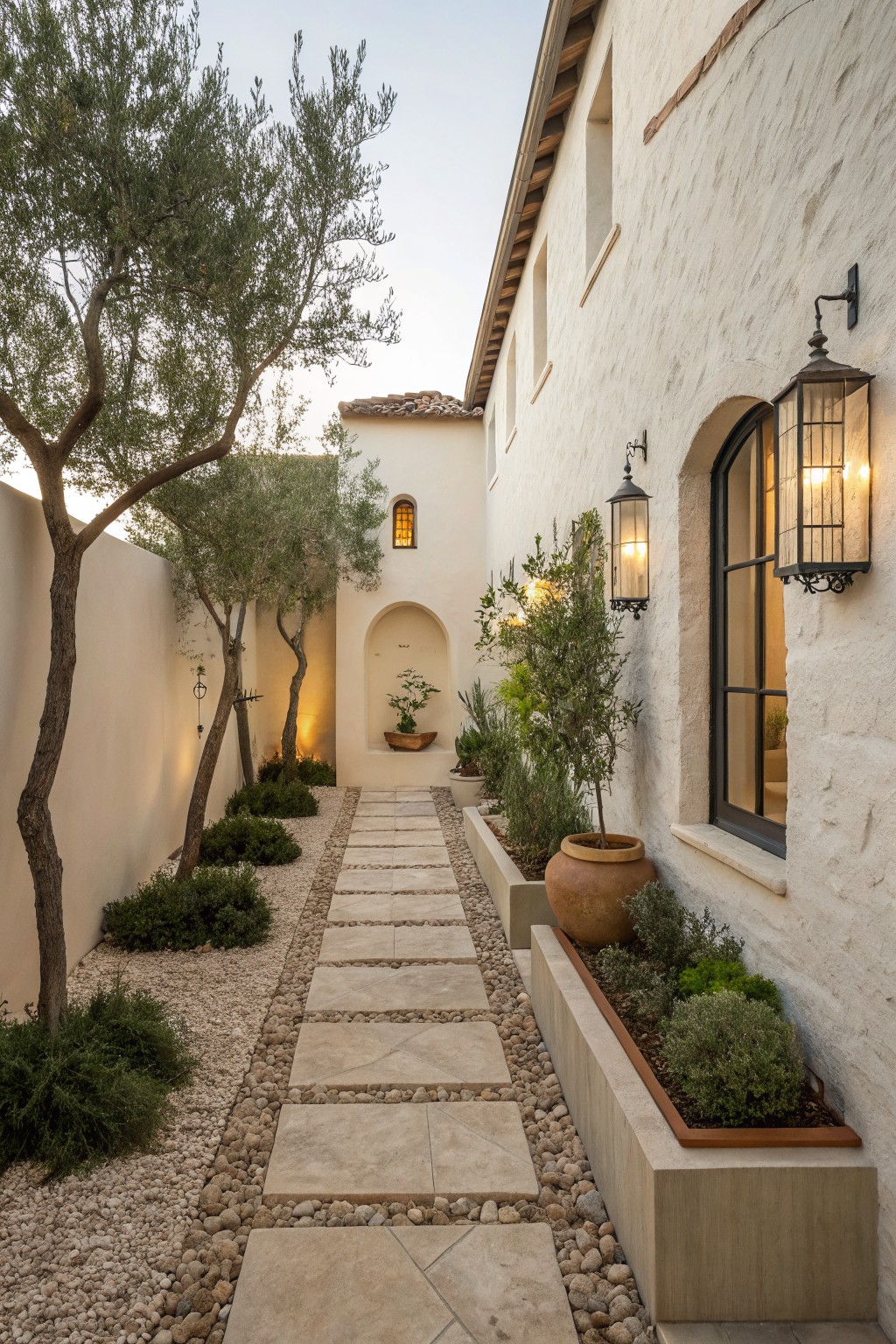
A straightforward stone pathway like this one fits right into narrow side yards where every inch counts. Big square pavers laid diagonally lead the way, with gravel filling the sides to keep it all neat and open. No grass to mow, just simple rocks and a few low plants that hug the edges.
Use this in tight spots along the house, maybe heading to a gate or back patio. Pick durable pavers in a light color to match stucco walls, and go with coarse gravel for good drainage. It suits dry climates best, stays low maintenance if you skip thirsty plants.
Winding Stone Steps for Steep Side Yards
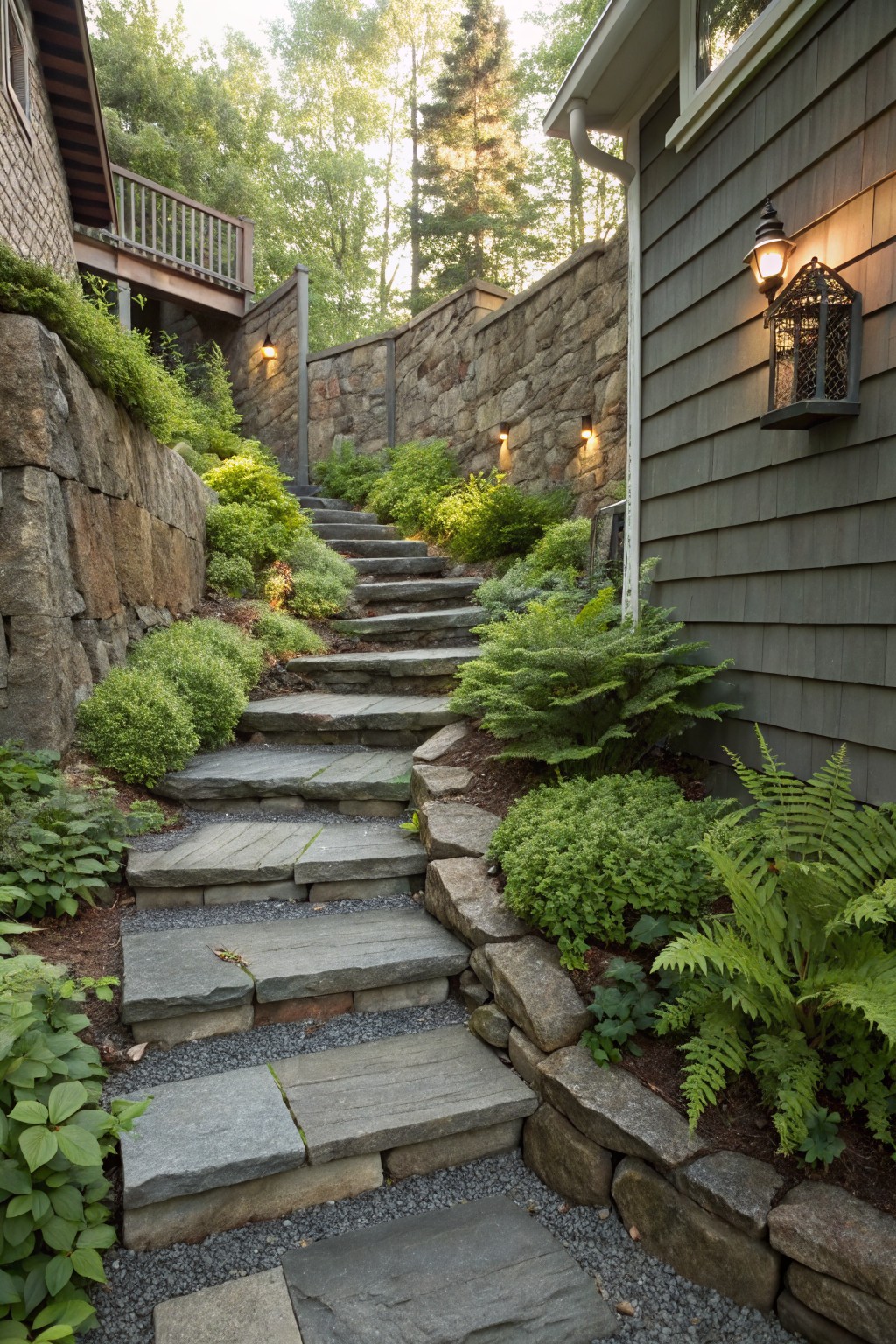
Narrow side yards on a slope can be tricky to navigate. These winding stone steps solve that by hugging the hill’s natural shape. Flat bluestone treads step down irregularly into tall rock retaining walls. Soft ferns and shrubs fill the edges. It keeps the path slim while feeling sturdy.
Try this where straight stairs won’t fit. Local fieldstone blends right into rocky sites. Plant tough greens that thrive in shade. Just make sure water runs off well. Slips are no fun on a slope.
Winding Circular Paths in Narrow Yards
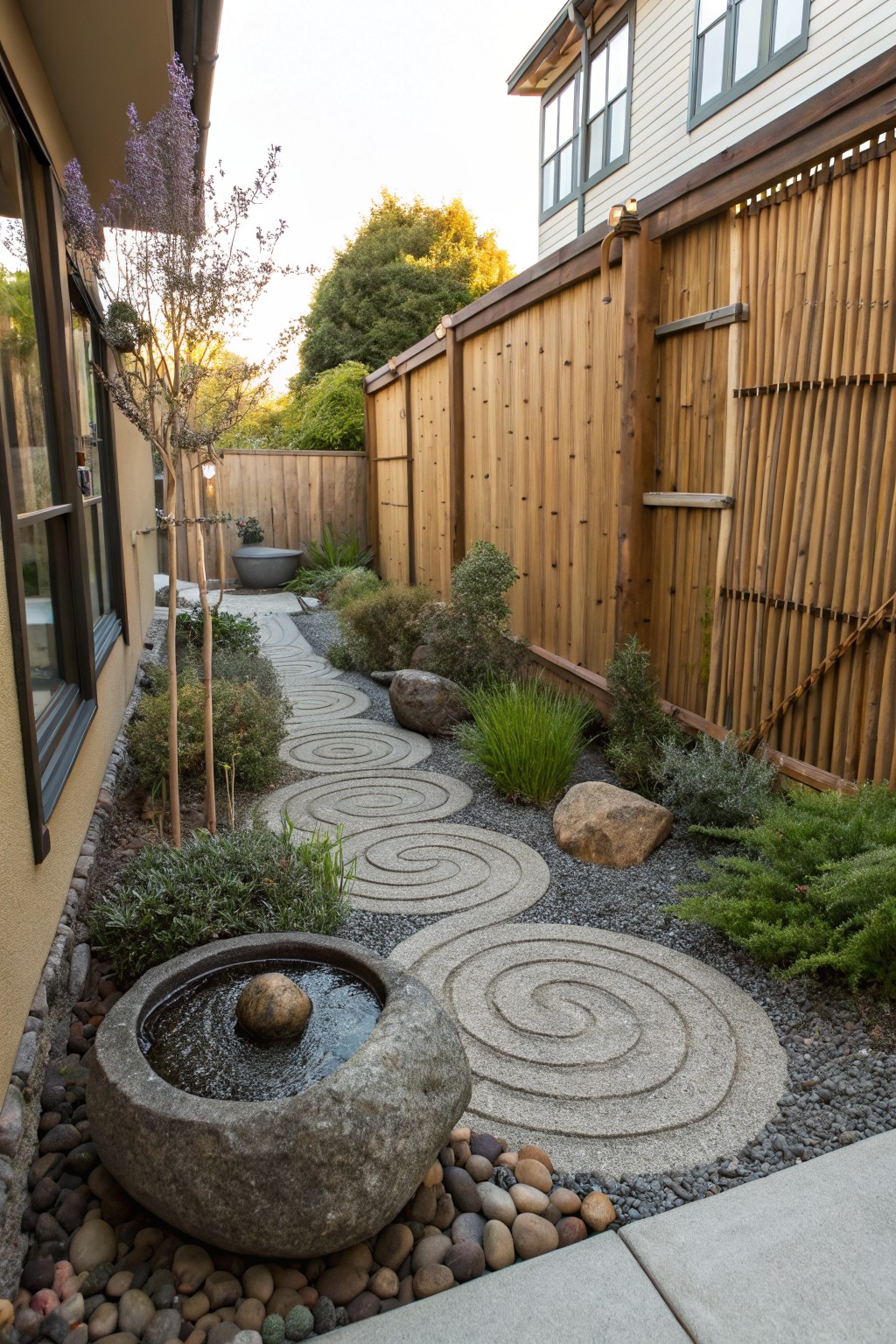
Tight side yards don’t have to feel like a squeeze. A simple winding path made from concrete circles set right into gravel creates flow without eating up precious space. The spirals here guide you along naturally, paired with a rugged stone fountain that adds a quiet water feature up front.
This setup shines in slim spaces between house and fence, especially where you want low upkeep. Stick to gravel and a few tough plants like grasses or shrubs to keep it easy. It fits modern homes or anything aiming for a calm zen feel… just watch the circles don’t get too big for really skinny spots.
Curved Stone Path for Narrow Side Yards
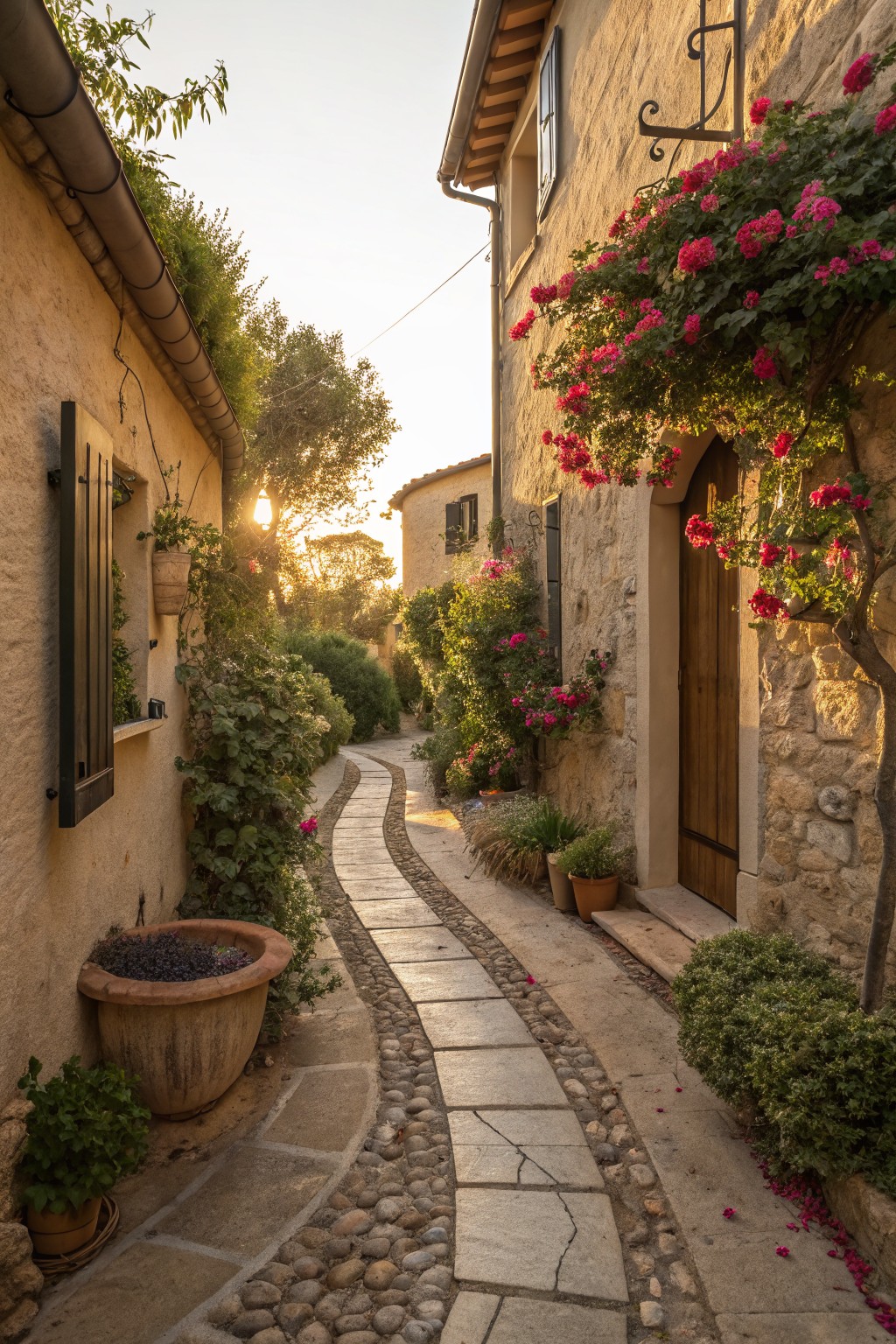
A simple curved path like this one uses broken stone slabs set in a pebble base to guide you through a tight side space. It keeps the walkway narrow, maybe just three feet across, so you don’t lose any precious yard area. The irregular stones give it a natural look that fits old stone walls without feeling forced.
Put this in side yards between houses or garages where straight paths won’t turn. Mix in potted grapes or small shrubs along the edges for some green without crowding. It handles slight slopes well and stays low maintenance if you skip grass. Just watch for loose pebbles after rain.
Grid Stone Path for Narrow Side Yards
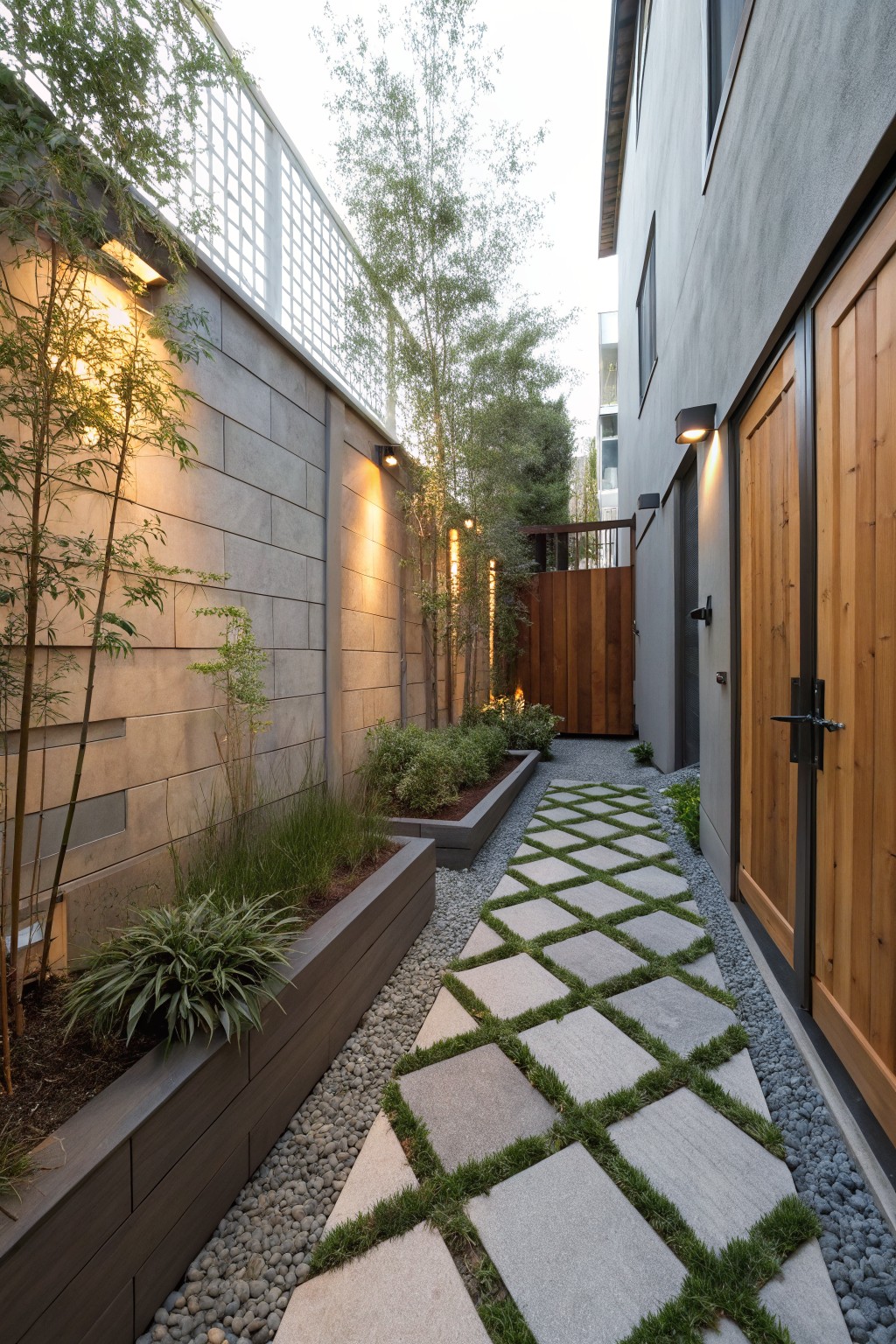
A grid-patterned stone path like this fits tight side yards perfectly. Big gray slabs laid in a crisscross with grass between them create a clear walkway that doesn’t crowd the space. Gravel mulch along the edges keeps weeds down and adds that clean, simple feel without much upkeep.
Use it to connect front yard to back in any average suburban home. Line the borders with long wood planters holding bamboo or tall grasses for some height and privacy. It stays practical year-round… just level the ground first so it drains well.
Frequently Asked Questions
Q: How do I stop weeds from growing through the rocks in my side yard?
A: Lay down landscape fabric over the soil first. Push rocks into place on top with a thick layer, at least three inches deep. Check edges yearly and pull any strays that sneak in.
Q: Can I use these rock ideas on a sloped side yard?
A: Slopes work great with rocks. Anchor bigger stones at the bottom to hold everything steady, then fill upward with gravel. Tuck in low-growing plants between them for grip.
Q: Do rocks get too hot in summer and hurt nearby plants?
A: Pick light-colored rocks. They reflect heat better than dark ones. Group heat-sensitive plants away from the center where sun hits hardest.
Q: What’s a simple way to level my side yard for rocks without big tools?
A: Rake the soil smooth and tamp it down with your feet or a board. Add sand to fill low spots, then wet it lightly to settle. And skip perfection. Rocks hide small bumps.
