

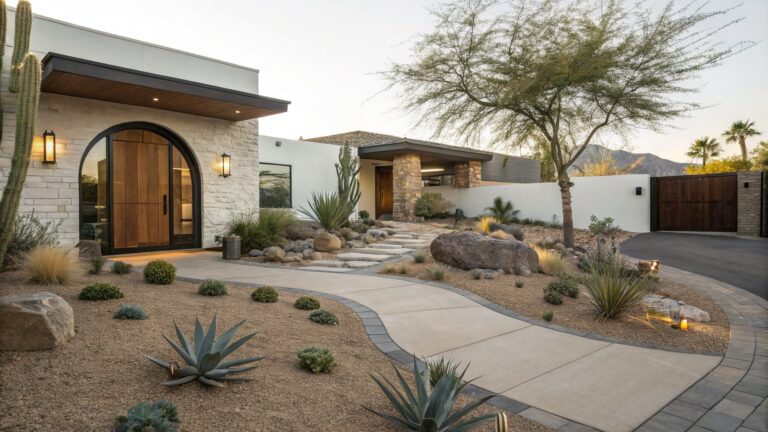
Living in the desert, I’ve learned that a front yard stands out when its layout uses tough plants and simple pathways to guide the eye without fighting the harsh light. I once edged my own gravel beds with salvia and agave spines, and that structure kept everything from looking messy as the seasons shifted. Drivers notice the bold shapes of clustered cacti or the clean lines of stone borders right away, pulling focus to your entry without overwhelming the space. These approaches layer in height and color through drought-tolerant choices that mature into something fuller over a few years. A few tweaks like that make the yard feel established fast.
Meandering Stone Pathway
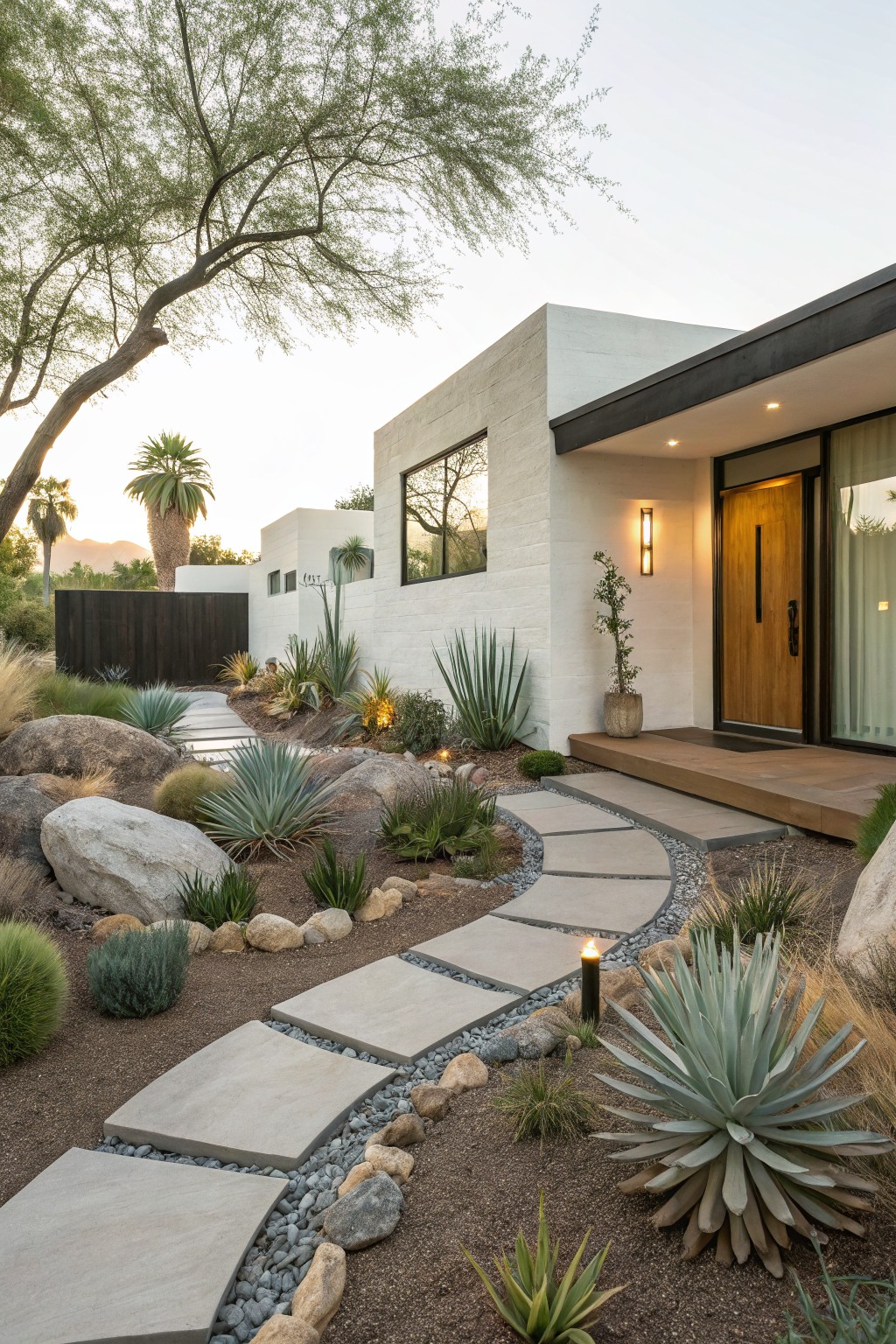
A simple winding path made from large gray concrete pavers set right into gravel makes this desert front yard easy to walk and nice to look at. Big agaves and boulders line the edges, giving it shape without much upkeep. The curve keeps it from feeling too straight or boring.
This works best on flat or gently sloped lots near modern homes. Space the stones loosely for a natural feel, fill gaps with pea gravel, and tuck in low-water plants like agave or yucca. Avoid tight curves if foot traffic is heavy. It pulls the eye to the entry while staying practical.
Natural Stone Entry Paths

A good desert front yard path doesn’t need to be straight or fussy. Here, large irregular flagstones set into a pale concrete base wind gently toward the door, edged with gravel and simple desert plants like agave. It pulls the eye forward without overpowering the house, and keeps things low maintenance since it skips grass entirely.
You can pull this off in most sunny, dry spots. Pick stones that match your local rock colors, space them for easy walking, and tuck in a few bold succulents or pots along the way. Avoid overcrowding… just enough plants to soften the edges. Fits modern or adobe-style homes perfectly.
Gravel Yard with Spaced Paver Path

A gravel yard filled in around large concrete pavers makes for an easy path that fits right into desert front yards. The loose gravel keeps water use low while the pavers give a solid walkway without needing much grass or mulch. Succulents like agave and cactus tucked along the edges add some height and interest, all without extra upkeep.
This works best leading up to a modern entryway, where the path pulls your eye straight to the door. Use it on flat lots with sunny exposure. Go for pale gravel to reflect heat and bigger slabs to cut down on joints. Skip tight edging. It suits homes that want clean lines and real drought toughness.
Winding Paths with Stone Borders

A simple winding path like this one makes a desert front yard feel alive and easy to explore. The smooth concrete surface curves gently between low stone walls and big boulders, with grasses and red flower clusters tucked along the edges. It pulls your eye through the space without any harsh straight lines, and the natural stone keeps everything looking rugged yet tidy.
This setup works great on sloped lots where you need to manage levels without stairs everywhere. Pair local rock with tough plants like agaves and feather grasses for low upkeep, and it fits modern or craftsman-style homes. Just make sure the path is wide enough for two people… about four feet does it.
Curved Paver Paths in Desert Yards

A simple curved path like this one makes walking up to your front door feel more like a stroll through nature. Made from wide concrete pavers set in gravel, it winds gently past boulders and spiky cacti. What works here is how it slows you down a bit. No harsh straight lines. Just easy flow that fits the desert vibe.
Put one in if your yard gets hot and dry. Line it with agave or barrel cactus for that bold look, and use local rocks to edge everything. It suits modern homes or ranch styles best. Keeps water use low too. One thing. Make sure the curve isn’t too tight or folks might trip.
Winding Paths Through Desert Plantings
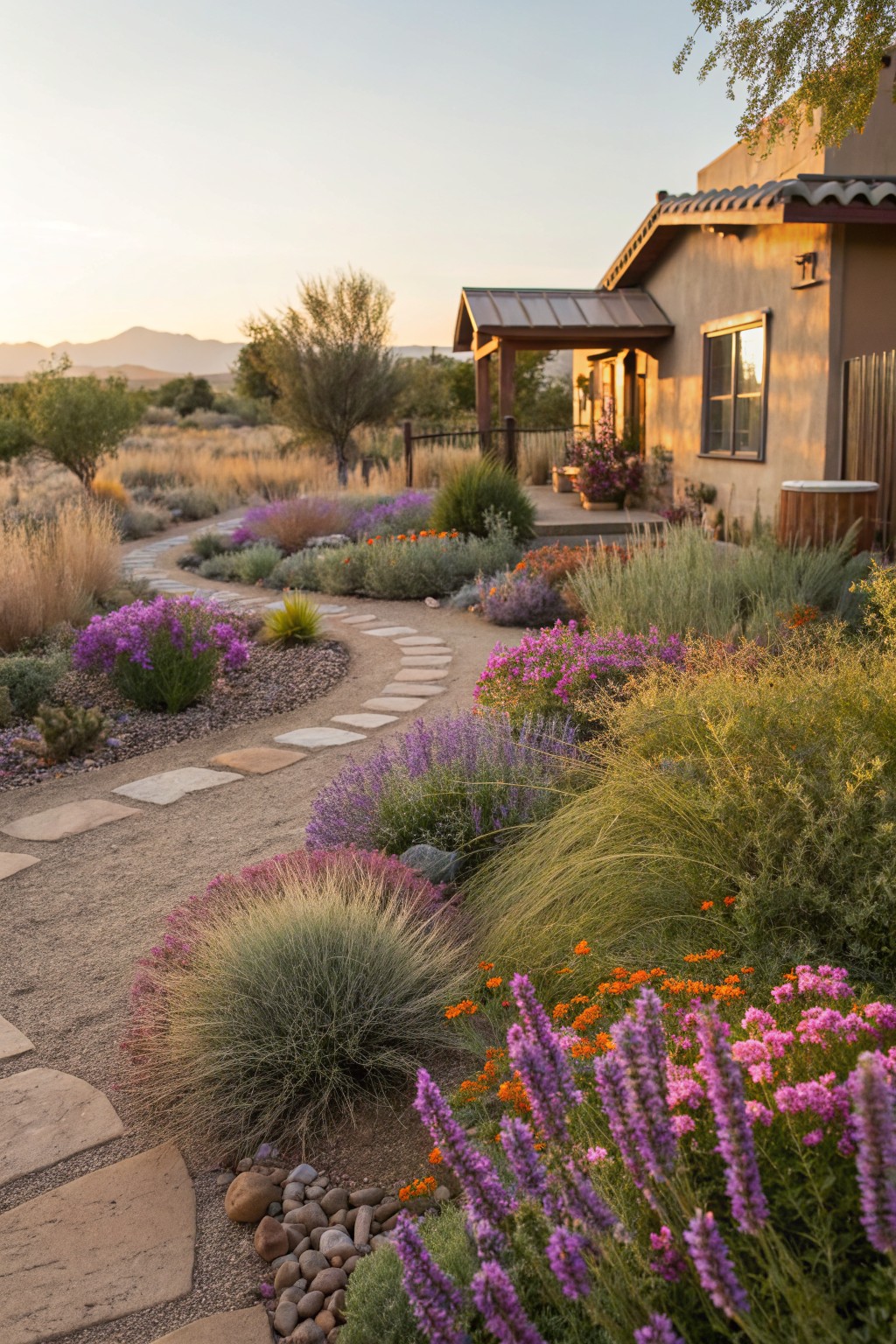
One simple way to make a desert front yard feel alive is a winding path like this one. Flat stones set right into the gravel create a natural curve that pulls you along without feeling too rigid. Around it, the mix of tall grasses, purple flower spikes, and low shrubs adds color and movement. It turns a plain walkway into something that shows off the plants and fits the dry landscape.
These paths work great in bigger yards where you want to slow people down and highlight your drought-tolerant choices. Lay them out to curve around the biggest plant masses, and keep the gravel loose for easy drainage. They’re low upkeep too. Just watch the spacing so the stones don’t shift over time.
Winding Stepping Stone Path

A path like this uses big flat stones laid in a loose curve through gravel and low-water grasses. It pulls the eye toward the house entry without straight lines that feel stiff. Those small lights tucked along the edges glow just enough at night to make the walk safe and pretty.
This setup fits dry front yards best, especially where slopes need steps anyway. Pick rough local stone and plants that don’t need much water, like deer grass or yucca nearby. Skip tight edging. It keeps things natural and easy to care for year round.
Central Fountain in Desert Yards

A simple black bowl fountain makes a perfect centerpiece for a dry front yard. Water gently spills over the edge into a shallow basin, pulling your eye right to the middle of the space. It brings a bit of calm motion and sound without needing much water or plants to steal the show. The circle keeps things balanced and easy to walk around.
Set one like this at the end of a straight path from your gate or entry. It fits small or narrow lots, especially in hot spots like the Southwest. Stick to gravel and flat stones for the surround, add a few tough grasses nearby, and skip anything fussy. Just watch that the basin drains well to avoid standing water.
Stone Pathways Winding Through Succulent Beds

A simple stone path like this winds gently from the street to your front door. It cuts through gravel mulch and low plantings, with clusters of blue agave right along the edge. Large terracotta pots add spots of color and scale. What makes it work is how natural it feels. No straight lines here. It fits the desert ground and pulls your eye right up to the house.
You can pull this off in any dry front yard. Pick flagstones in earth tones to match your soil. Plant tough succulents that don’t need much water. Keep the beds edged with metal or stone to hold back the gravel. It suits ranch or adobe homes best. Just watch the path width. Make it at least three feet so two can walk side by side.
Curved Gravel Paths with Rock Edges

A simple gravel path that curves through the yard works great in desert front yards. The smooth river rocks along the edges keep it neat without much upkeep. Gravel drains fast and pairs well with tough plants like agave and lavender bushes. That curve draws the eye right to the front door.
Use this in sunny, dry spots where you want low maintenance. Lay down landscape fabric first, then gravel over a solid base. It fits modern block houses or any simple entry. Just watch for loose rocks if you have kids running around.
Hexagonal Paver Walkways

One simple way to add structure to a desert front yard is with large hexagonal pavers. They form a clean path that winds through gravel and plants without much upkeep. The shape gives a modern edge that fits right into arid spots, and it keeps things looking sharp even as plants grow around it.
Lay these pavers in a loose curve leading to your entry, spacing them over white pebbles for drainage. They work best in sunny, dry yards with succulents nearby. Just make sure the stones are set firm so they don’t shift over time.
Meandering Gravel Paths
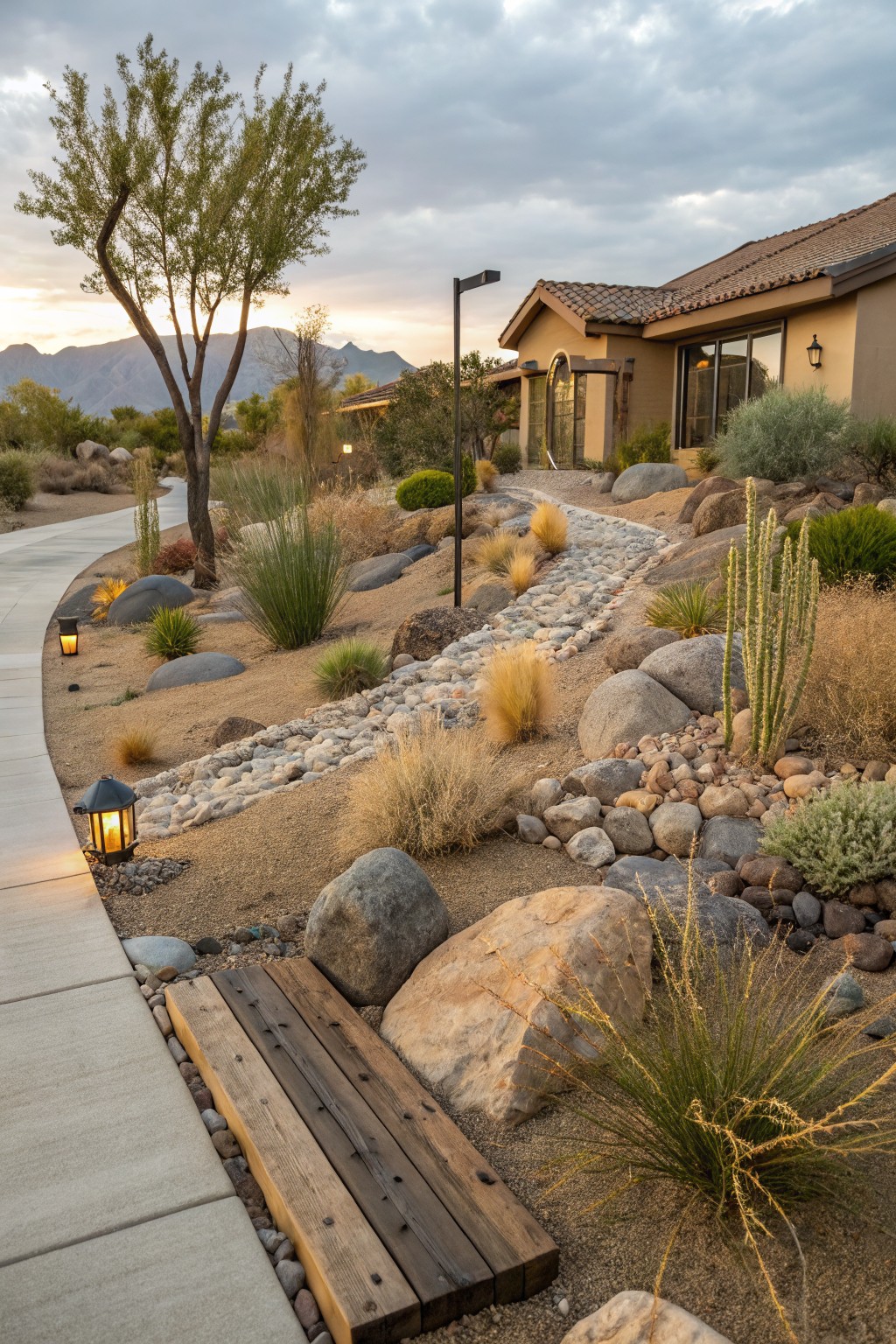
A simple gravel path like this winds gently through the yard, edged by large boulders and clumps of native grasses and cacti. It pulls the eye toward the house entry without straight lines or fussy borders. The mix of river rocks and sand keeps it low maintenance, fitting right into desert soil.
Try this in front yards where water is tight. Lay down gravel over landscape fabric, then place boulders to hold the edges. Add a few path lights for nights. It suits stucco homes with tile roofs… just keep plants spaced so they don’t crowd the walk.
Winding Stone Path Lined with Succulents

A simple winding path made from irregular stone slabs set into gravel makes a great lead-in to your front door in a dry climate. Here it’s edged with clusters of colorful succulents like echeverias and agaves that spill right over the borders. The look stays neat without constant trimming, and it pulls your eye toward the entry in a natural way.
This works best in front yards where you want low upkeep and some texture without grass. Pick tough plants suited to your zone, and keep the gravel fresh to stop weeds. It fits modern or craftsman-style homes… just scale the path width to match foot traffic.
Desert Pathway Lighting
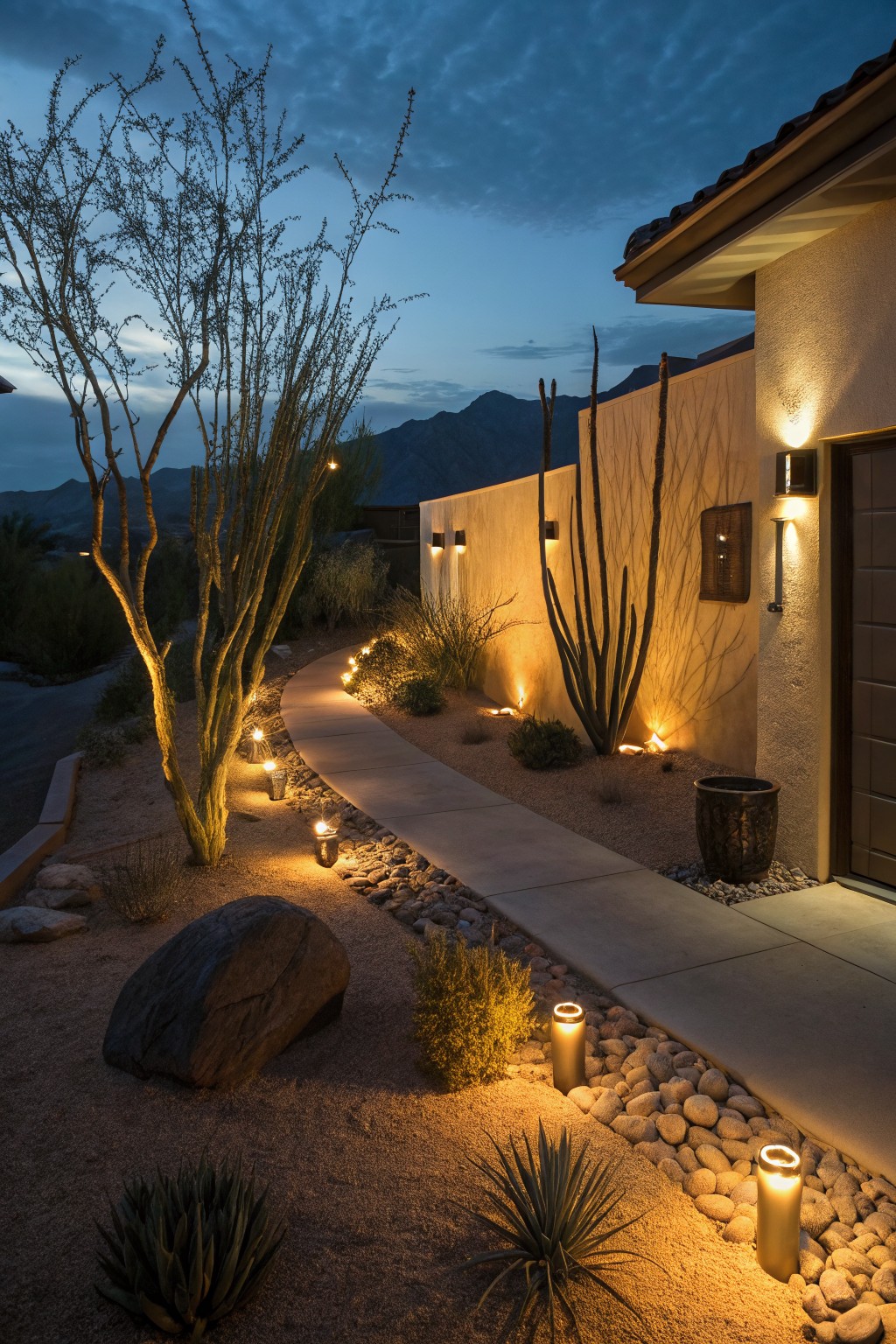
A simple pathway like this turns a basic walkway into something special after dark. Low cylinder lights line the concrete path, glowing softly amid gravel, rocks, and desert plants. They highlight the saguaro and agave without stealing the show, making the yard feel safe and welcoming right up to the garage door.
This works best in dry climates where you need low-water plants and practical evening light. Stick with LEDs along curves and up on taller cacti for even coverage. It’s easy to add to most front yards… just watch the wiring to keep it tucked away.
Desert Pathway with Built-In Bench

A straightforward brick pathway like this one turns a simple walk to the door into something special. The herringbone pattern gives it subtle interest, while gravel edges and clusters of cacti, agave, and other succulents keep things low-maintenance. That wooden bench tucked into the concrete planter offers a spot to sit… right where you need it.
It’s ideal for narrow front yards or side approaches in dry areas. Pair it with string lights overhead for evenings, and stick to native plants so you aren’t watering much. Just make sure the path is wide enough for two people, around four feet if you can.
Stepping Stone Paths in Xeriscape Yards

One straightforward way to handle a desert front yard is with a simple stepping stone path that winds through boulders and tough plants. It pulls the eye right to the front door without much grass to mow. Here, the pale concrete pavers sit loose in gravel, edged by big rocks and clumps of grass or lavender. That loose setup keeps it natural looking, like the path just grew there.
You can pull this off in sunny, dry spots where water is tight. Pick flat stones that match your local rock, space them for easy steps, and fill gaps with gravel. Tuck in low-water stuff like grasses or sedums around the boulders. It works best on sloped lots or open yards… just watch for tripping spots if the path gets too twisty.
Sloped Front Yard with Lit Retaining Walls
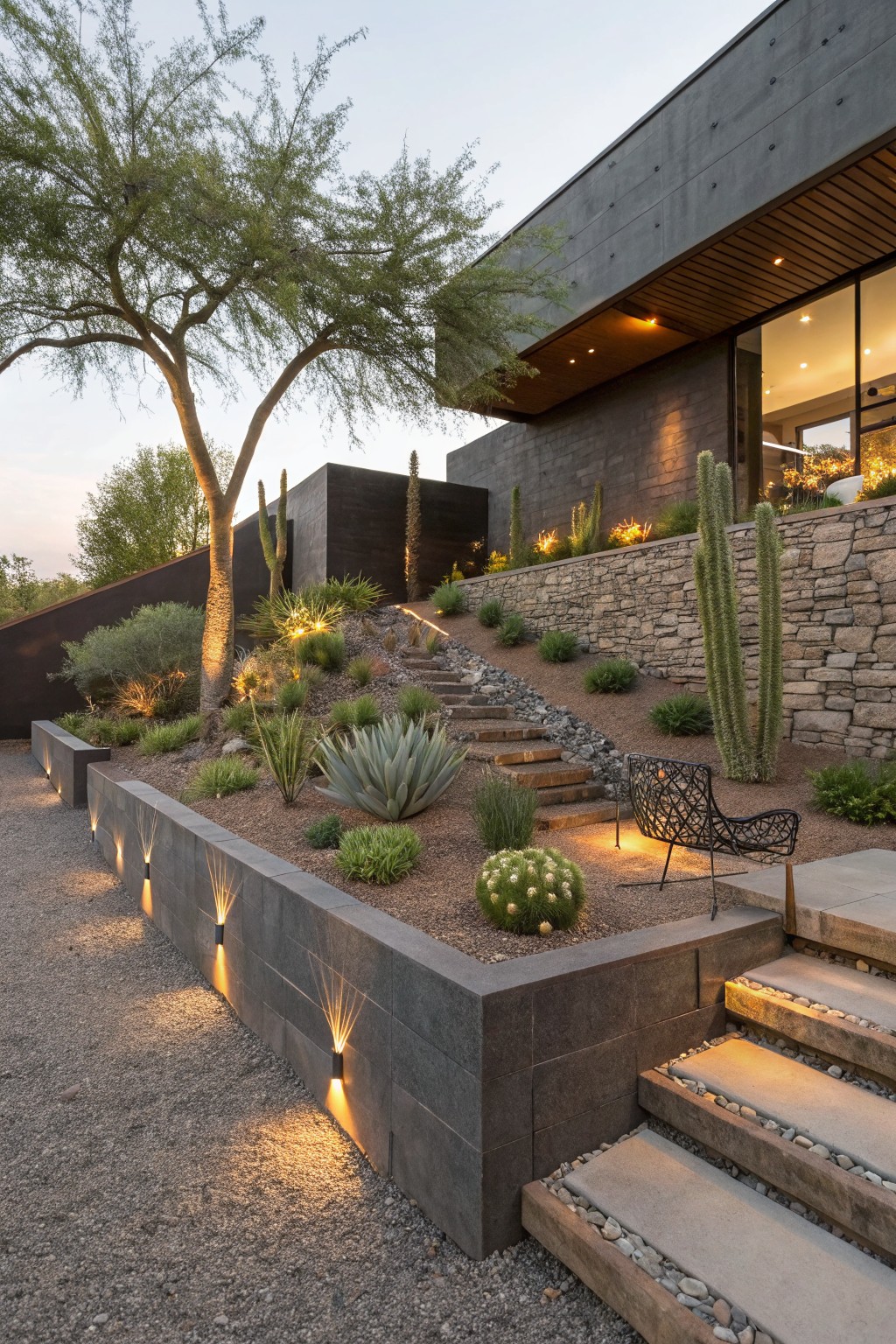
Retaining walls like these hold back a hillside while turning the climb into something worth noticing. Built from dark stone blocks, they have uplights tucked right into the edges that glow softly at dusk. Gravel fills the spaces between, keeping it simple, and a few agaves and cacti add that desert punch without much upkeep. It’s a practical way to handle a slope that still looks sharp.
This works best on modern homes in dry areas where water use matters. Use it for the main path to your door, keeping walls low enough to step over if needed. Stick to bold plants that take the heat, and space the lights evenly so the whole run lights up. Skip it on flat yards, though. It shines on hills.
Winding Stone Paths in Desert Yards
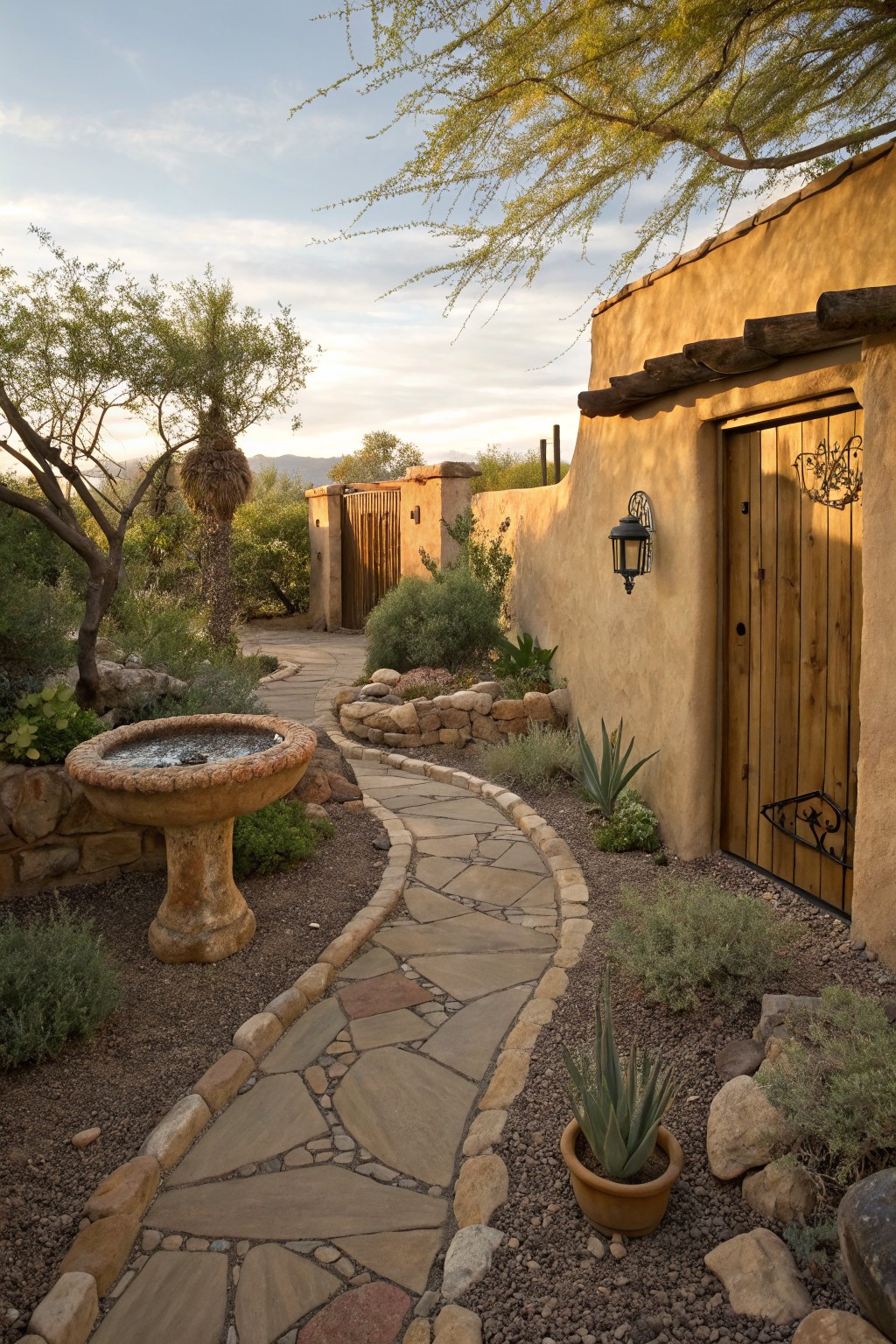
A winding stone path like this one makes a front yard feel more welcoming and natural. It curves gently through gravel beds, low shrubs, and agaves, drawing the eye right to the entry door without any harsh straight lines. In a desert setting, it fits perfectly, blending with the rocky ground and keeping things low-water.
Lay down irregular flagstone slabs on a gravel base for easy drainage. Add a few boulders and potted plants along the edges to define the route. This works great for arid homes where you want subtle direction… no mowing needed. Just watch the spacing so it stays walkable.
Frequently Asked Questions
Q: How do I keep desert plants alive through that brutal first summer?
A: Water deeply once or twice a week until roots take hold, then ease off to every two weeks. Spread gravel or rocks around them to hold moisture and block weeds. They toughen up fast after that.
Q: Can I make these bold ideas work without spending a ton?
A: Grab native succulents and cacti from local nurseries, they’re cheap and thrive here. Hunt for free or low-cost boulders on sites like Craigslist. Skip fancy installs and just group them naturally for impact.
Q: What’s the quickest way to add pops of color?
A: Plant agaves with red-tipped leaves or blue yucca for year-round drama. Tuck in some blooming desert marigolds that handle heat like champs. And mix in colorful gravel for instant zing.
Q: My soil is pure sand. Do I need to fix it first?
A: Skip big amendments, natives love that poor stuff. Just dig holes twice as wide as the root ball and toss in a handful of compost. Watch them spread on their own.
