

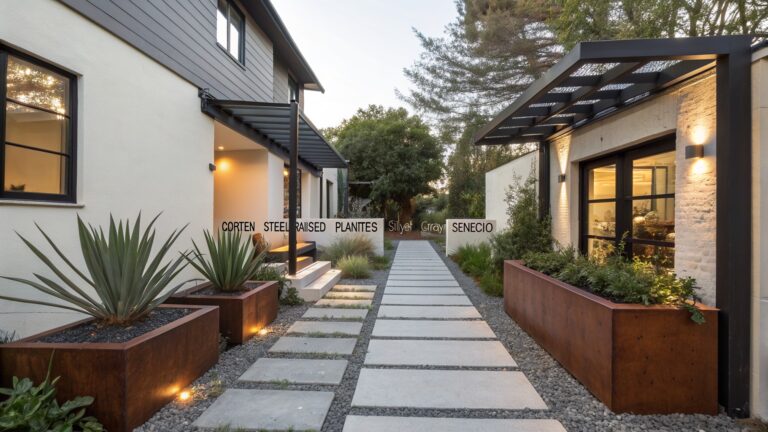
I always notice how a small front yard comes alive when pathways weave through layered plantings that borrow depth from the street view.
Neighbors spot the edging along driveways first, since it sets a tidy frame for everything else.
Over a few seasons, smart layouts with perennials and low shrubs fill out naturally, turning tight spots into welcoming approaches.
I tested gravel borders mixed with native grasses in my own yard, and they grounded the whole space without much upkeep.
A handful of these setups are practical enough to adapt right away, making every inch count for real curb appeal.
Curved Gravel Path with Brick Edging
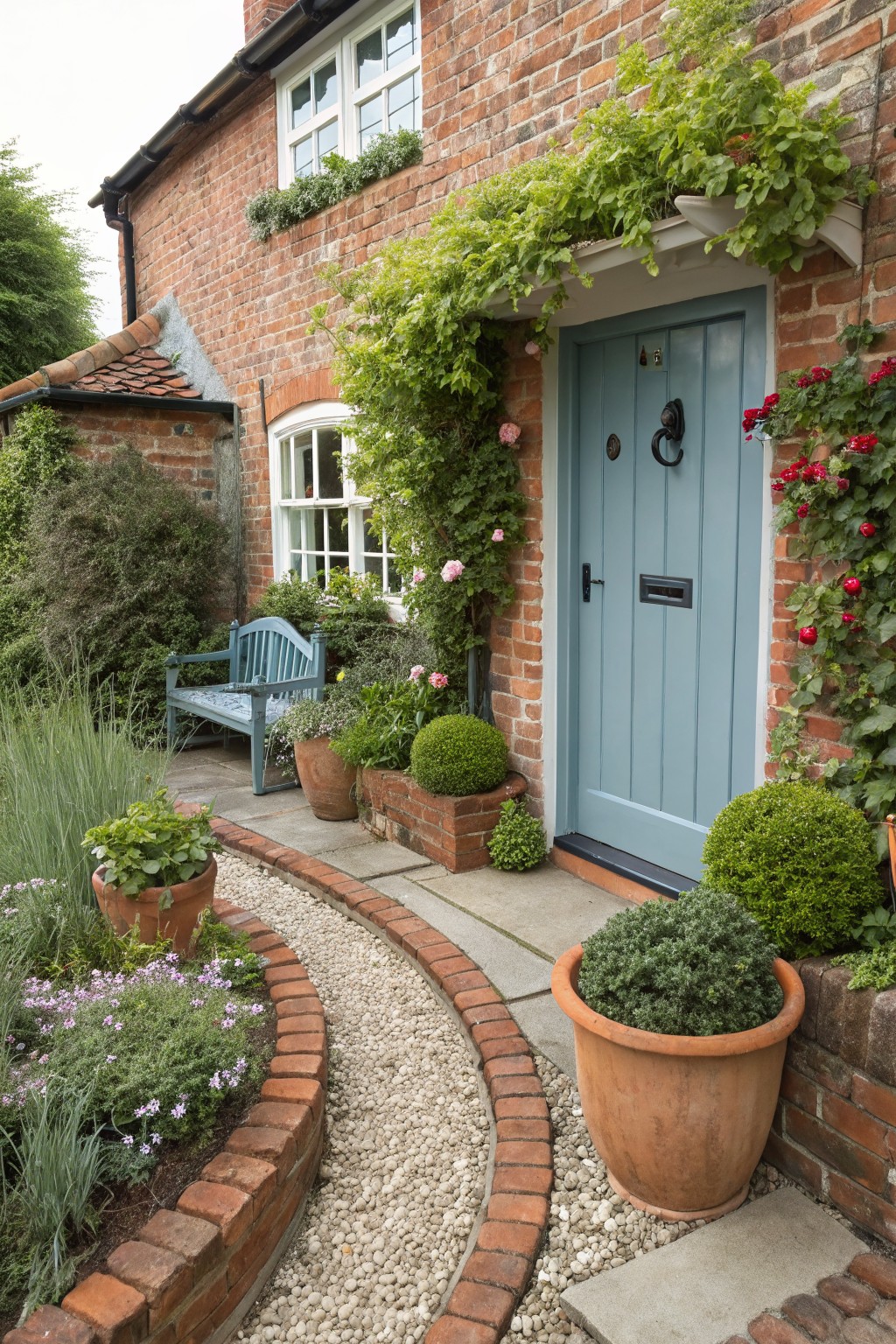
A simple curved gravel path edged in brick works wonders in tight front yards. It draws the eye to the door while weaving through plants and pots, making the space feel longer and less cramped. The gravel softens underfoot, and that low brick border keeps everything neat without much upkeep.
Try this on narrow lots next to a house like a brick cottage. Start with landscape fabric under the gravel, set the bricks along the curve, then tuck in low growers and a few big terracotta pots. It suits older homes best, stays practical for wheelbarrows or strollers, and fills out nicely as plants mature.
Stepping Stone Path Through Gravel Beds
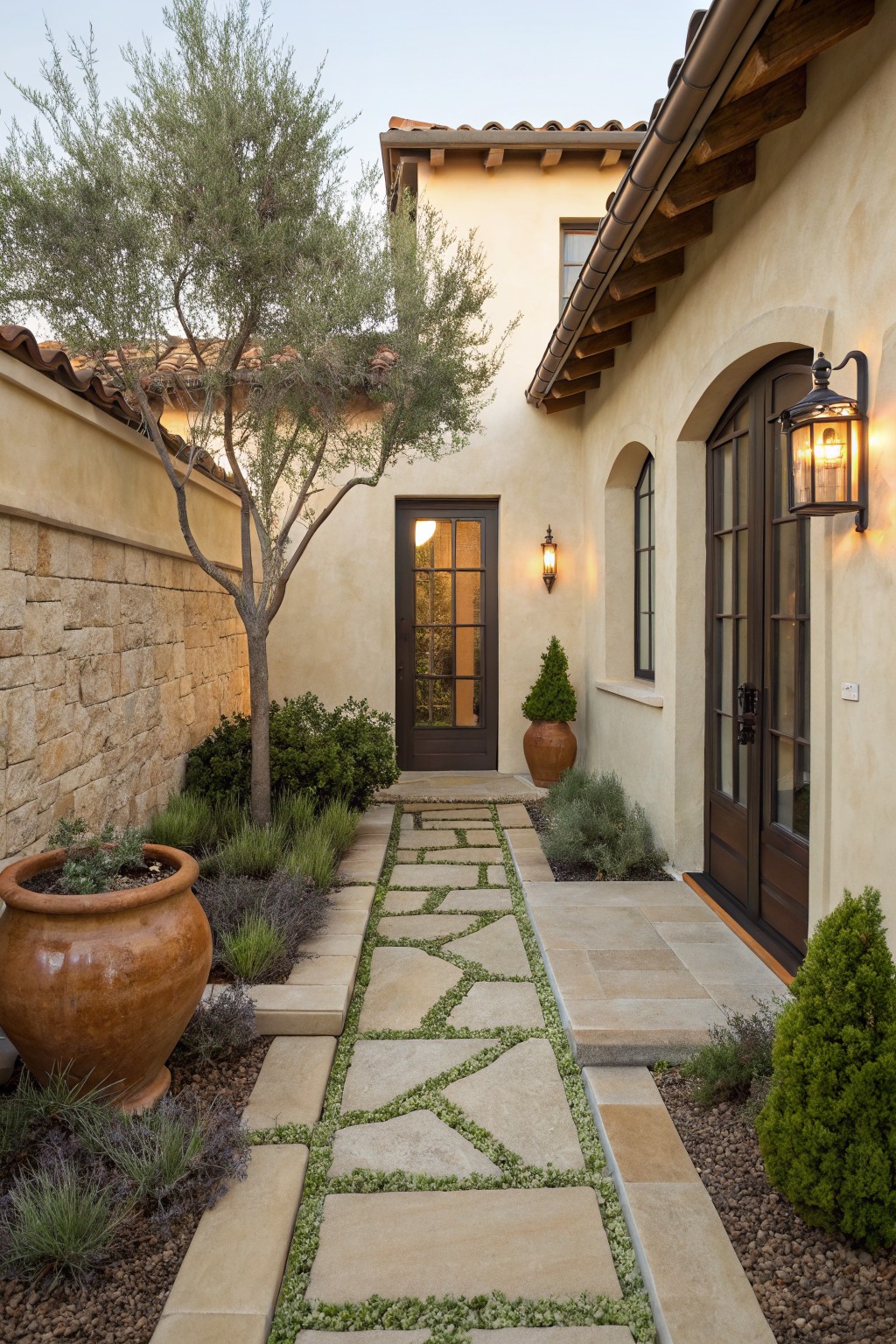
One smart way to handle a tight front yard is laying down big irregular stone slabs as a path right through gravel planted with low stuff like lavender and grasses. It pulls your eye to the entry door without wasting space on a wide walkway. Those tall terracotta pots with olive trees frame things nicely too, keeping it simple and green.
This works best in narrow spots next to the house, like a side courtyard or small entry area. Pick drought-friendly plants so you aren’t watering all day. It suits stucco homes or anything with a bit of Spanish vibe, and it’s low fuss once set up. Just make sure the stones are stable so no one trips.
Curved Walkway with Rock Borders
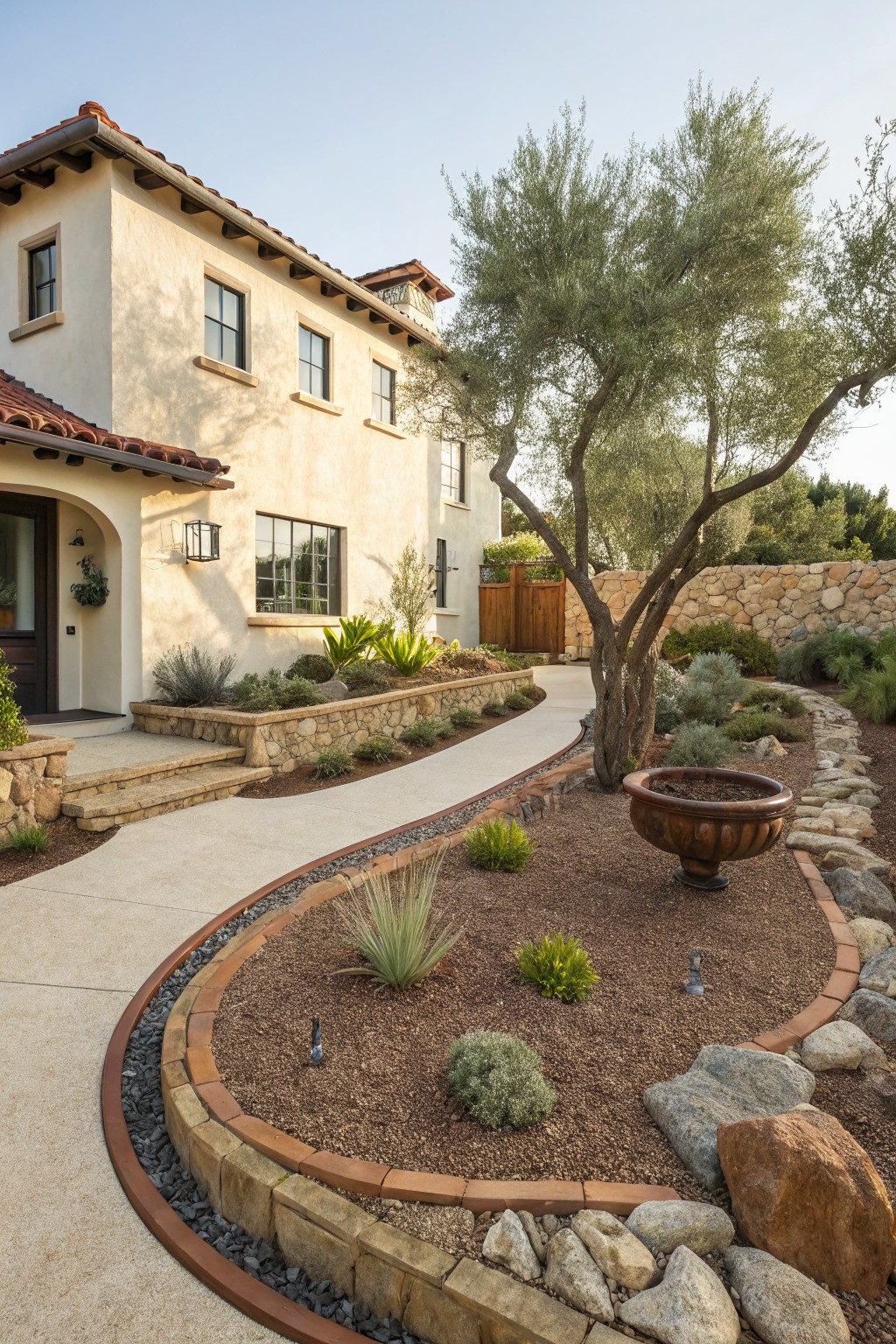
A curved walkway like this turns a tight front yard into something that feels roomier and more deliberate. The gentle bend pulls you along without rushing straight to the door, and those low rock and brick borders keep gravel beds neat while framing tough plants like grasses and succulents. An olive tree nearby gives some height. It maximizes every inch by filling space with low-maintenance layers instead of empty lawn.
You can adapt this for most small lots, especially sunny dry ones. Sketch a soft curve based on your yard’s shape, edge it with whatever stones you find locally, and fill beds with whatever grows easy there. It suits homes with stucco or tile roofs that blend right in. Watch the slope though. Poor drainage turns curves into slip spots after rain.
Vertical Planter Walls for Narrow Yards
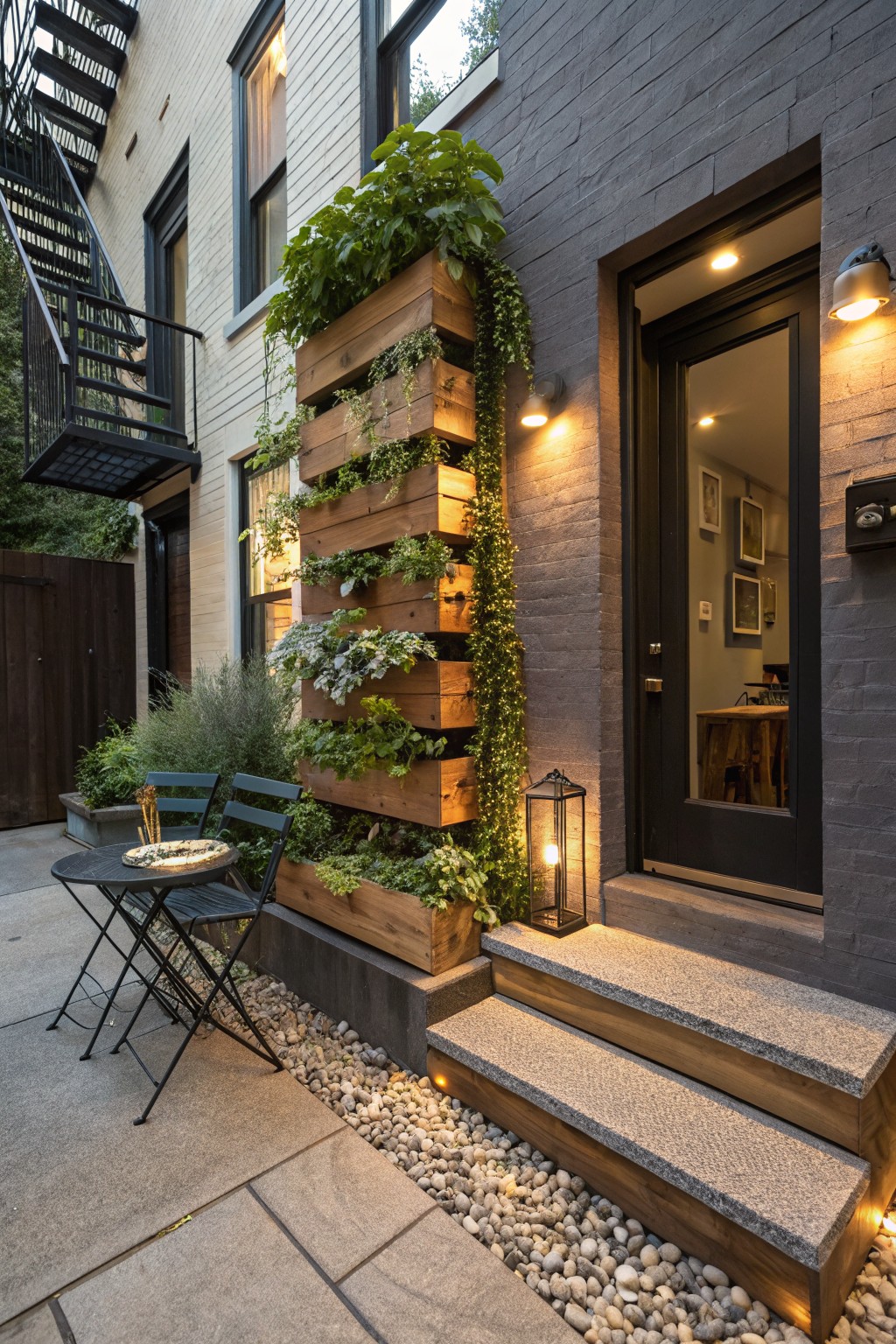
One smart way to green up a tight side yard or entry space is stacking wooden planters right against the house wall. It turns a plain brick surface into a living backdrop full of trailing plants and herbs. You get that lush feel without eating into the ground space. Folks with urban row houses love this because it fits anywhere there’s a blank wall.
To pull it off, use simple wood crates or build frames that stack easily. Fill them with tough, vining stuff like ivy or succulents that hang over the edges. It works best on side entries or fences in small front yards… just make sure good drainage so the wall stays dry. Pair it with gravel below to keep things low fuss.
Vertical Tomato Trellises in Raised Beds
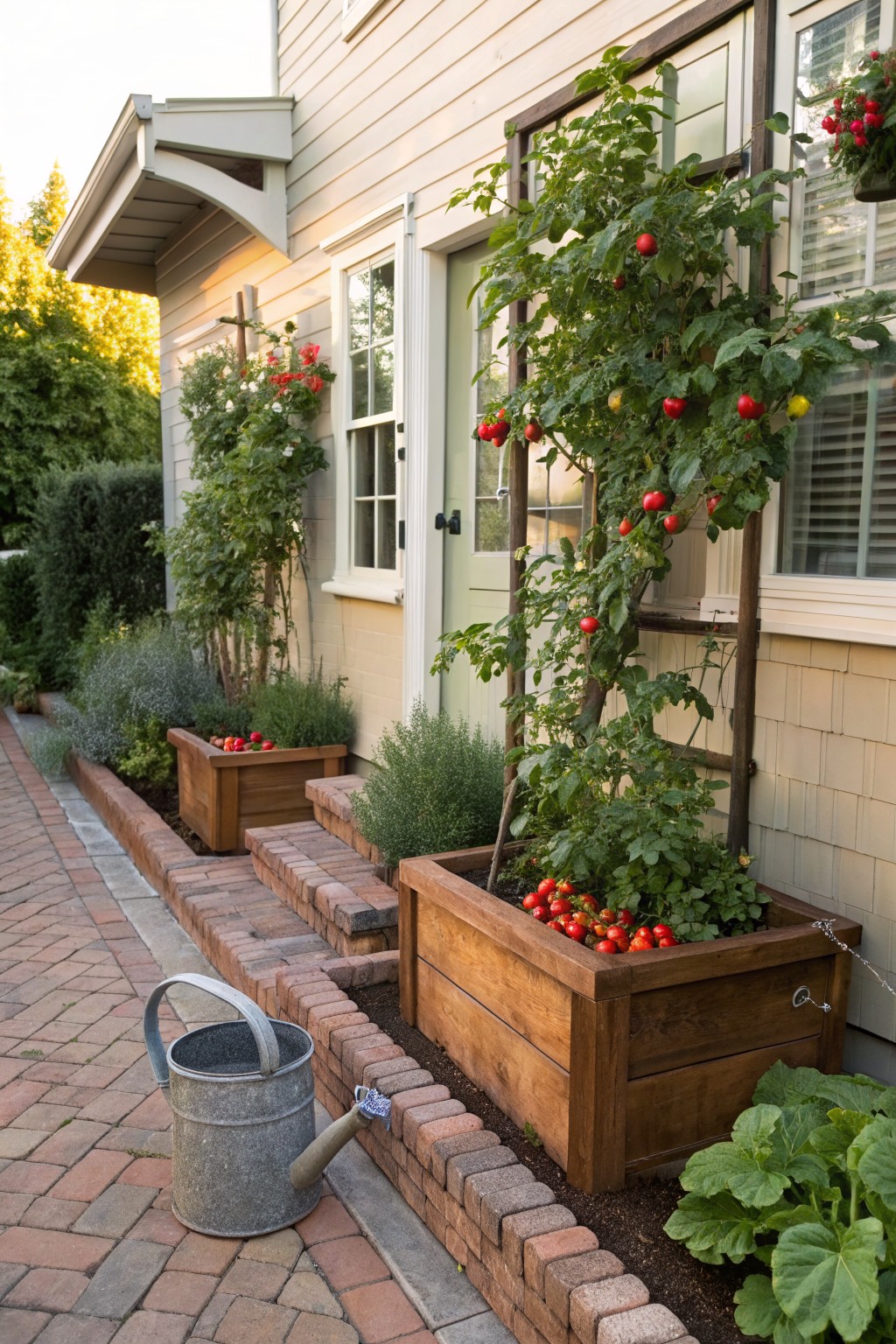
A simple setup like these wooden raised beds with tomato plants climbing up trellises takes a narrow side yard and turns it into real growing space. The vines hug the house wall nicely, saving every inch of ground while letting you harvest fresh tomatoes right outside the door. It’s practical for small lots and adds that lived-in garden feel without taking over.
Put this in tight spots along your house or fence where flat planting won’t fit. Use rot-resistant wood for the beds and sturdy poles for support, then train cherry or beefsteak varieties upward. It suits sunny exposures best… just watch for good soil drainage to keep roots happy. Works on most any home style.
Stepping Stone Path in Gravel
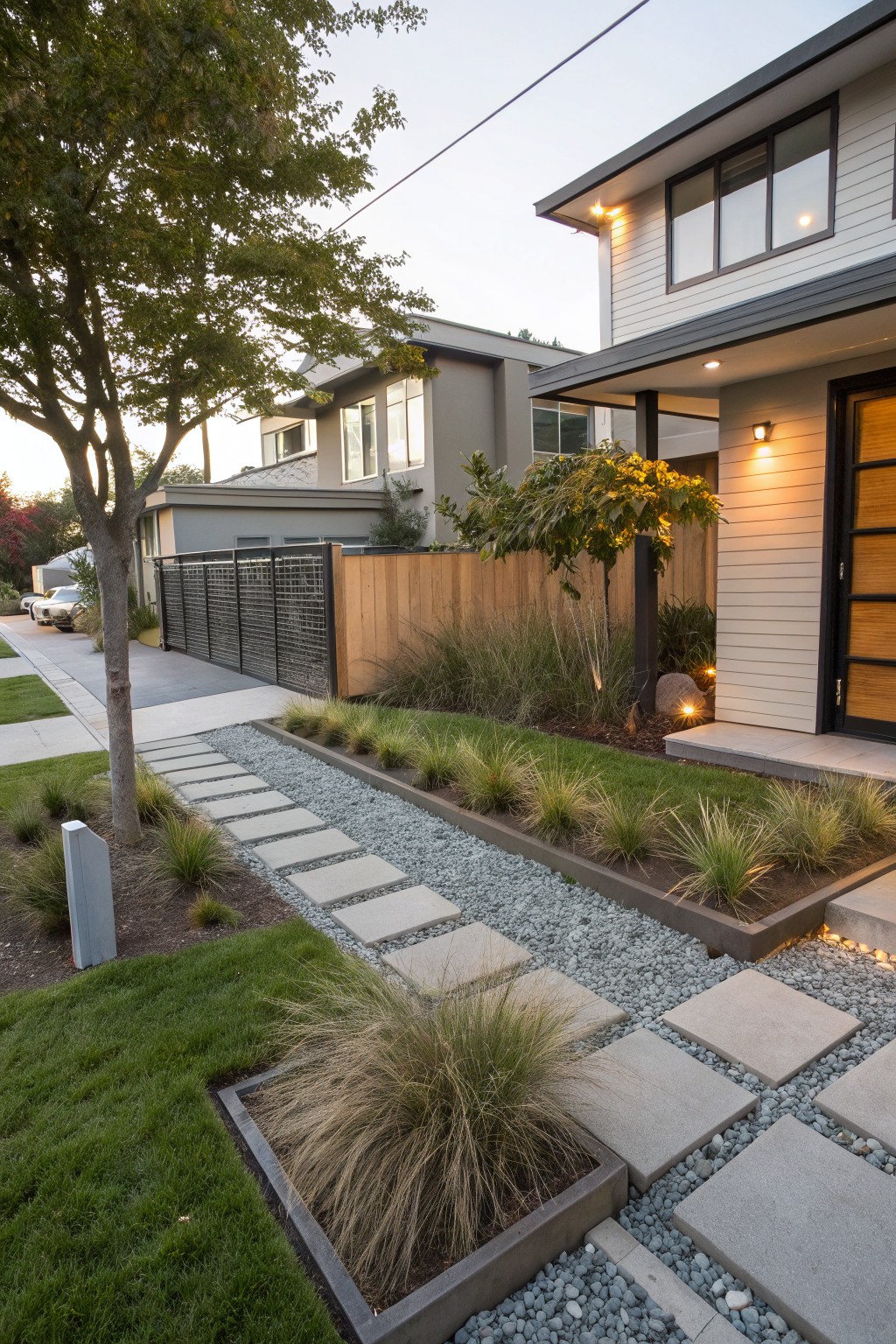
A simple gravel path lined with wide concrete stepping stones makes a clean route to the front door. Flanked by low grass lawns and clumps of feathery grasses, it feels structured but not fussy. This works great in small yards because it cuts down on mowing and watering while guiding visitors right where they need to go.
Try it along a side entry or straight up to the porch in a modern or midcentury home. Pick square pavers for a bold look and drought-friendly grasses that won’t flop over the path. One thing to check is good drainage under the gravel, or it might hold water after rain.
Narrow Paver Path for Tight Side Yards
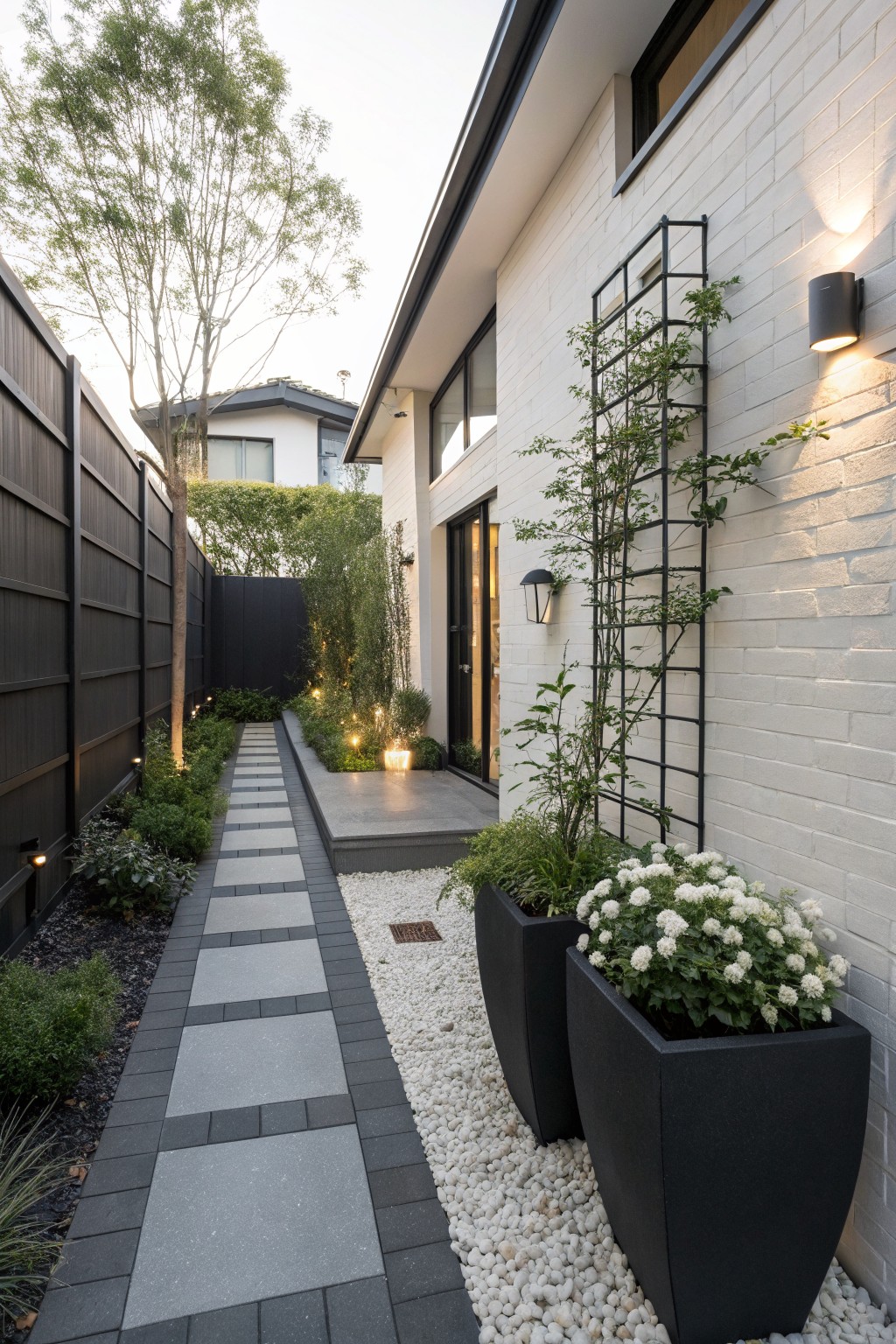
In small front yards or skinny side entries, a straightforward paver path like this one keeps things open and directs foot traffic straight to the door. The mix of dark borders and light gray centers adds just enough pattern without clutter, and those white pebble strips on the side make for easy upkeep. Low plants and a couple big black pots fill in without crowding the walk.
This setup fits modern homes with clean white brick walls or dark fences, turning a plain alley into a proper arrival zone. Lay the pavers first for good drainage, then edge with pebbles to stop weeds. It works best where space is under 6 feet wide… skip it if your yard gets heavy foot traffic that might shift the stones.
Mosaic Tiles Bring Charm to Tiny Patios
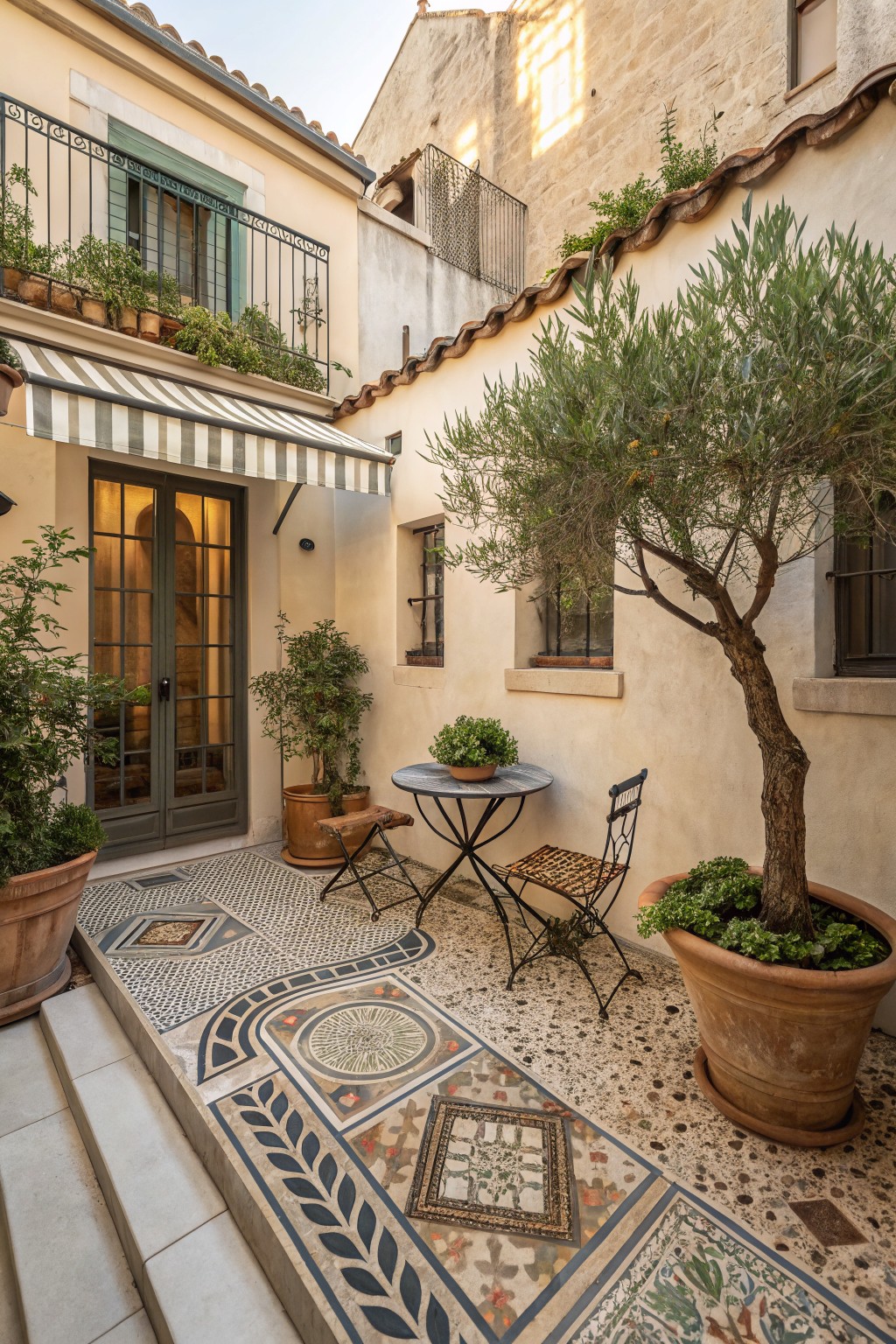
A small courtyard like this one turns heads with its floor of colorful mosaic tiles. The patterns mix pebbles, bold geometrics, and floral motifs right into the ground, making the space feel larger and more lively without taking up extra room. Paired with a simple round table and two chairs, it keeps things practical while the tiles do the visual work.
You can pull this off in a front yard nook or entry patio where every inch counts. Pick durable outdoor tiles that handle weather, lay them over a gravel base, and edge with large potted plants like olives for instant framing. It suits older homes or stucco walls best…just avoid slippery patterns if it’s a high-traffic spot.
Gravel Pathways Lined with Boulders and Succulents
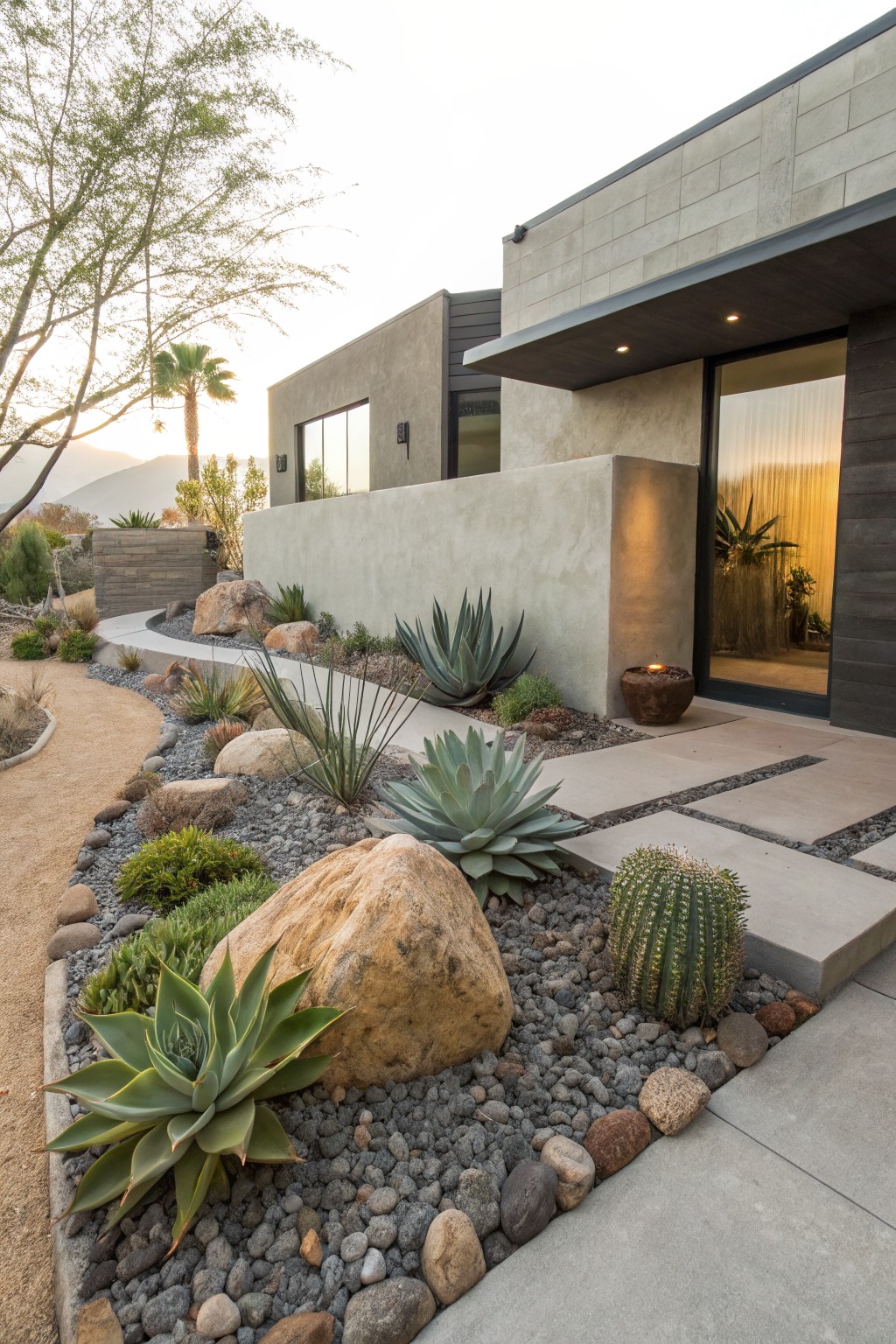
If you have a narrow front yard, a simple gravel path edged by big boulders and tough succulents can guide visitors right to your door without wasting space. This setup keeps things open and easy to walk while the plants and rocks add some natural shape. It’s low on water needs too, perfect for dry spots or busy homeowners.
Lay down gravel for the path base, then drop in oversized boulders to hold the edges and plant agaves or similar chunky succulents nearby for height. It works best on small lots next to modern homes, where you want clean lines but a bit of wild texture. Just make sure the boulders aren’t too heavy to move if you change things later.
Winding Stone Path Through Coastal Grasses
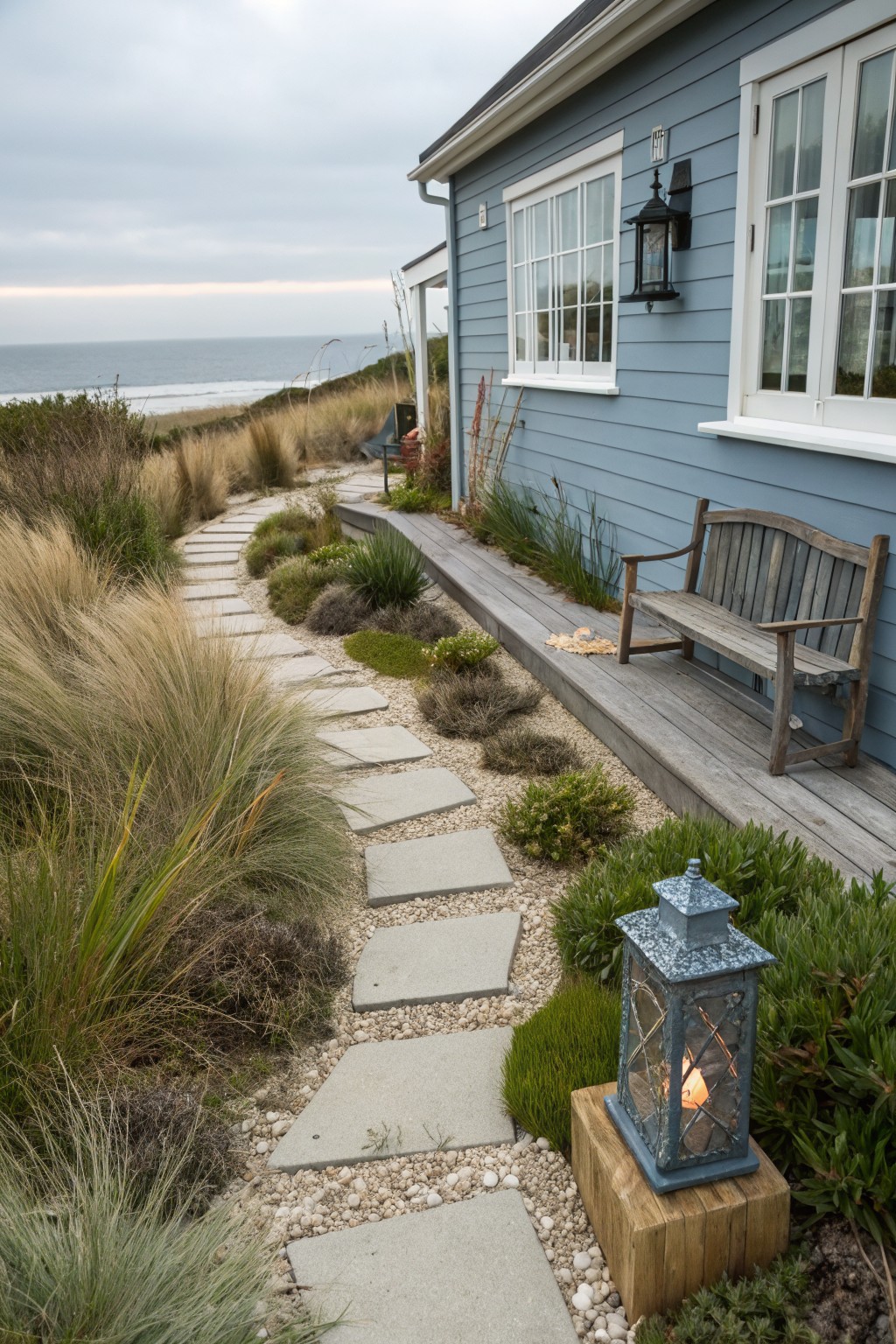
A simple winding path made from irregular stone slabs set into gravel works wonders in tight yard spaces. Here, tall grasses line both sides, swaying in the breeze and softening the hard edges. It pulls you right toward the house without feeling forced, and those native plants keep things low fuss year round.
Try this in a narrow front yard or along a side entry where straight lines would crowd things. Pick drought tough grasses that match your area, space the stones loosely for drainage, and add a bench spot halfway if you can. Suits beach houses or any spot wanting that relaxed outdoor feel, just watch for overgrowth in wet climates.
Vertical Gardens Line Narrow Entry Paths
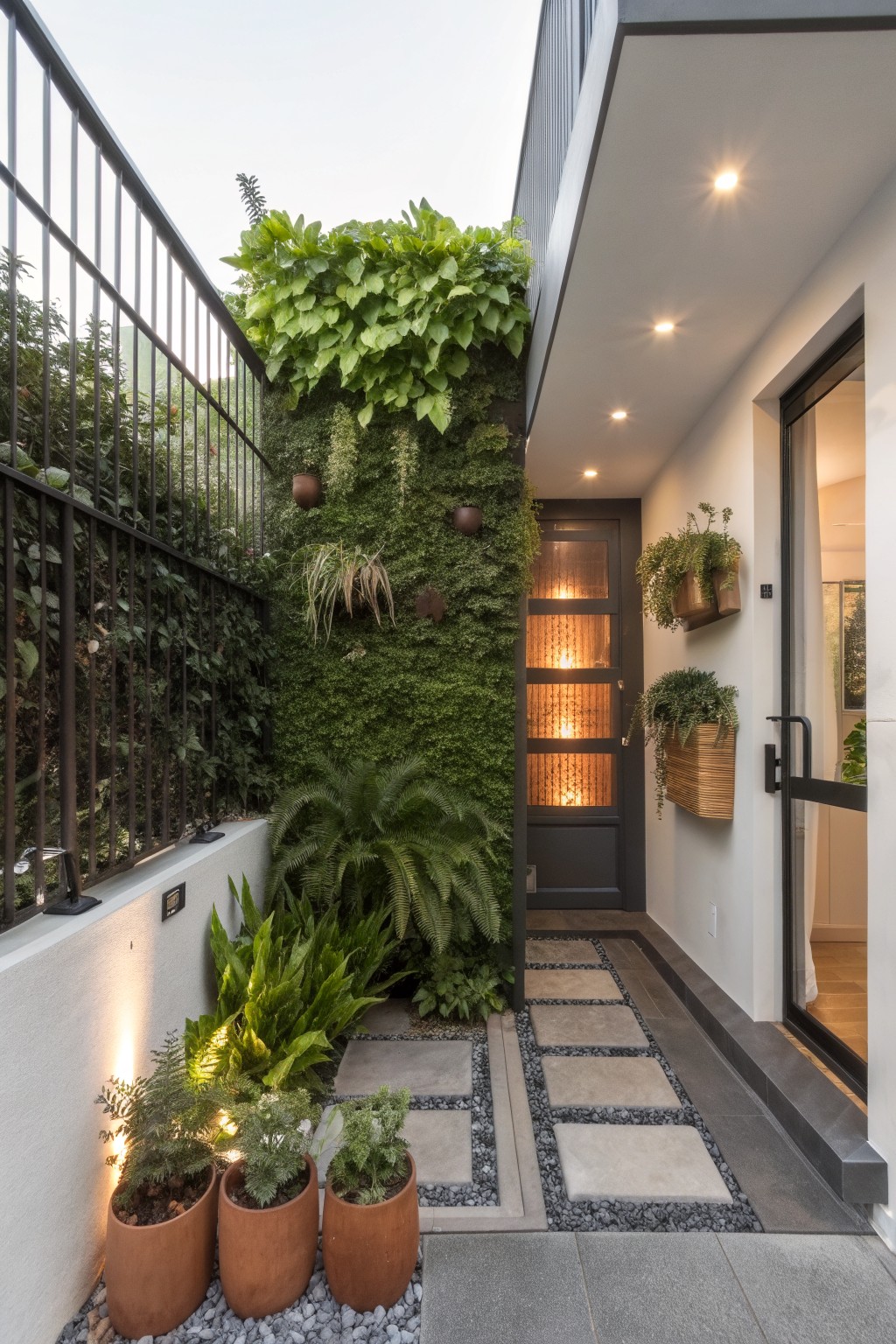
In tight front yards, vertical gardens turn blank walls into living backdrops without taking up precious ground space. Here, lush ivy and hanging plants climb one side of the path, while ferns and potted herbs fill the base on the other. It makes the walk to the door feel like a garden stroll, even in a skinny strip of yard.
This works best for urban homes or narrow lots where you want greenery but can’t spread out. Mount easy-grow vines or use pre-made panels on a fence or house wall, then add terracotta pots for low plants at the edges. Keep it simple with drip irrigation to cut down on watering time, and pick tough varieties that handle some shade.
Circular Tree Bed with Curved Path
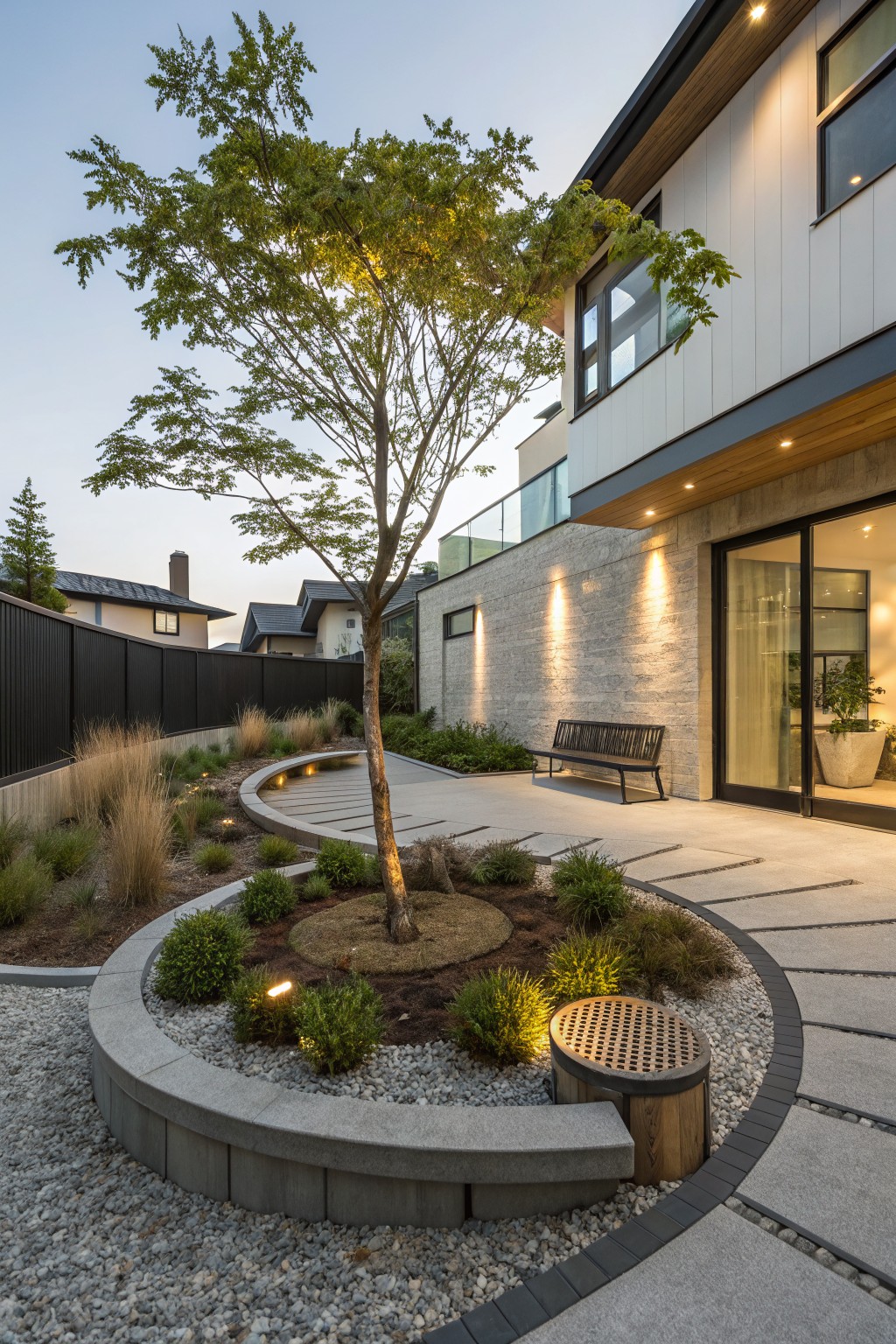
One smart way to make a small yard feel bigger is to build a circular raised bed right around your feature tree. Here the tree sits in a clean concrete circle filled with gravel and low grasses. A winding path curves alongside it, edged with more concrete, leading to a bench. It pulls your eye through the space without crowding things. The low plantings keep it open, and those little path lights add a nice touch at dusk.
This works best in narrow side yards or front strips where you have one good tree already. Pick simple edging like concrete blocks or stone. Plant tough grasses or shrubs that won’t grow too tall. Skip big flowers that need lots of care. It fits modern houses with clean lines, but you could soften it for other styles with wood accents.
Meandering Brick Paths Through Tall Grasses
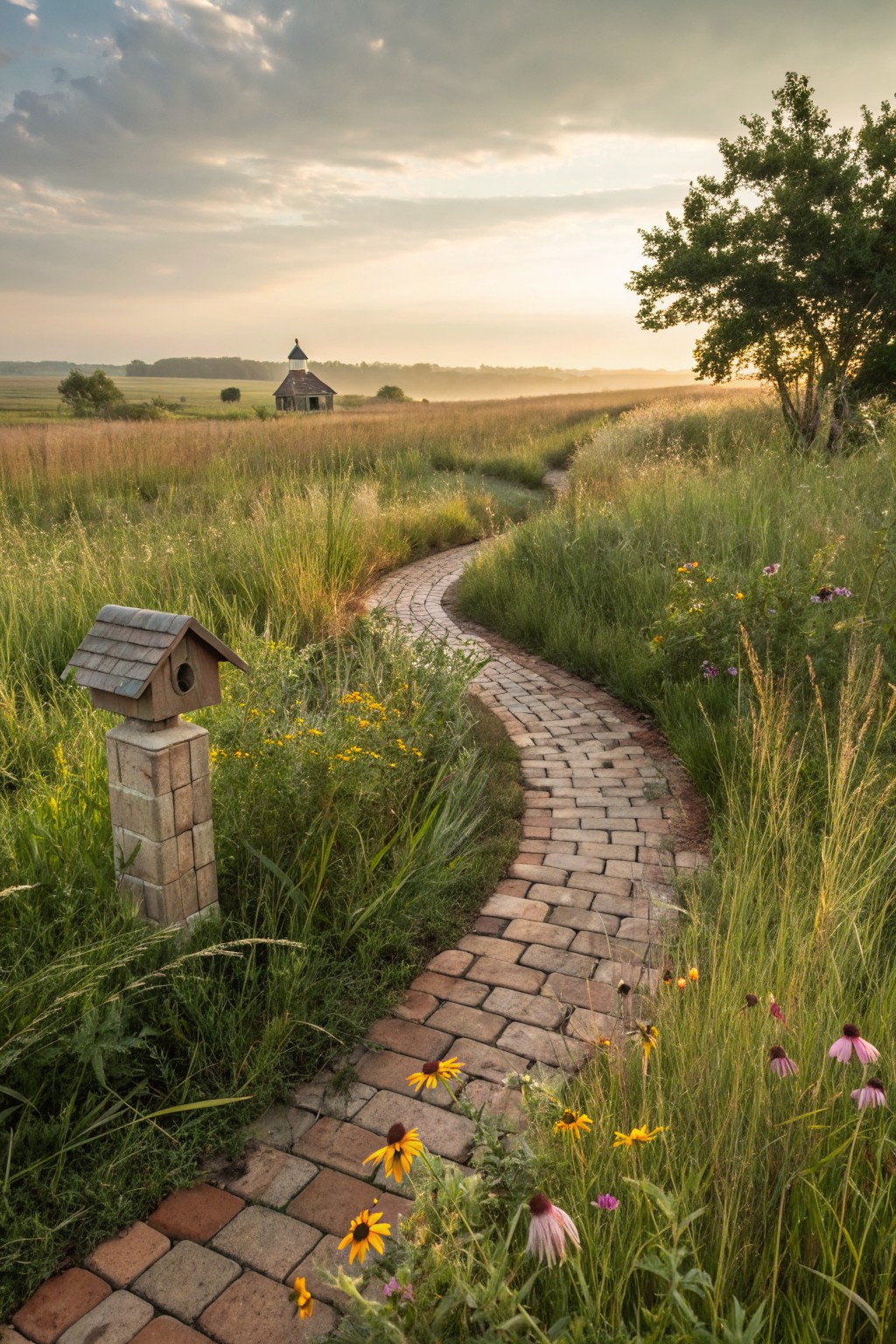
A curved brick path like this one winds gently through knee-high grasses and spots of wildflowers. It turns a plain front yard into something with real flow. You follow the path without even thinking, and suddenly the space feels longer and more interesting. That birdhouse on a simple stone pedestal adds a quiet touch too.
Try this in small yards where straight lines would feel boxy. Use affordable pavers for the path, then fill edges with easy native plants like switchgrass or black-eyed Susans. It works best on flat or gently sloped spots. Watch the width, though. Keep it narrow to save room… maybe three feet across. Low upkeep once established.
Tiered Steps with Curved Grass Beds
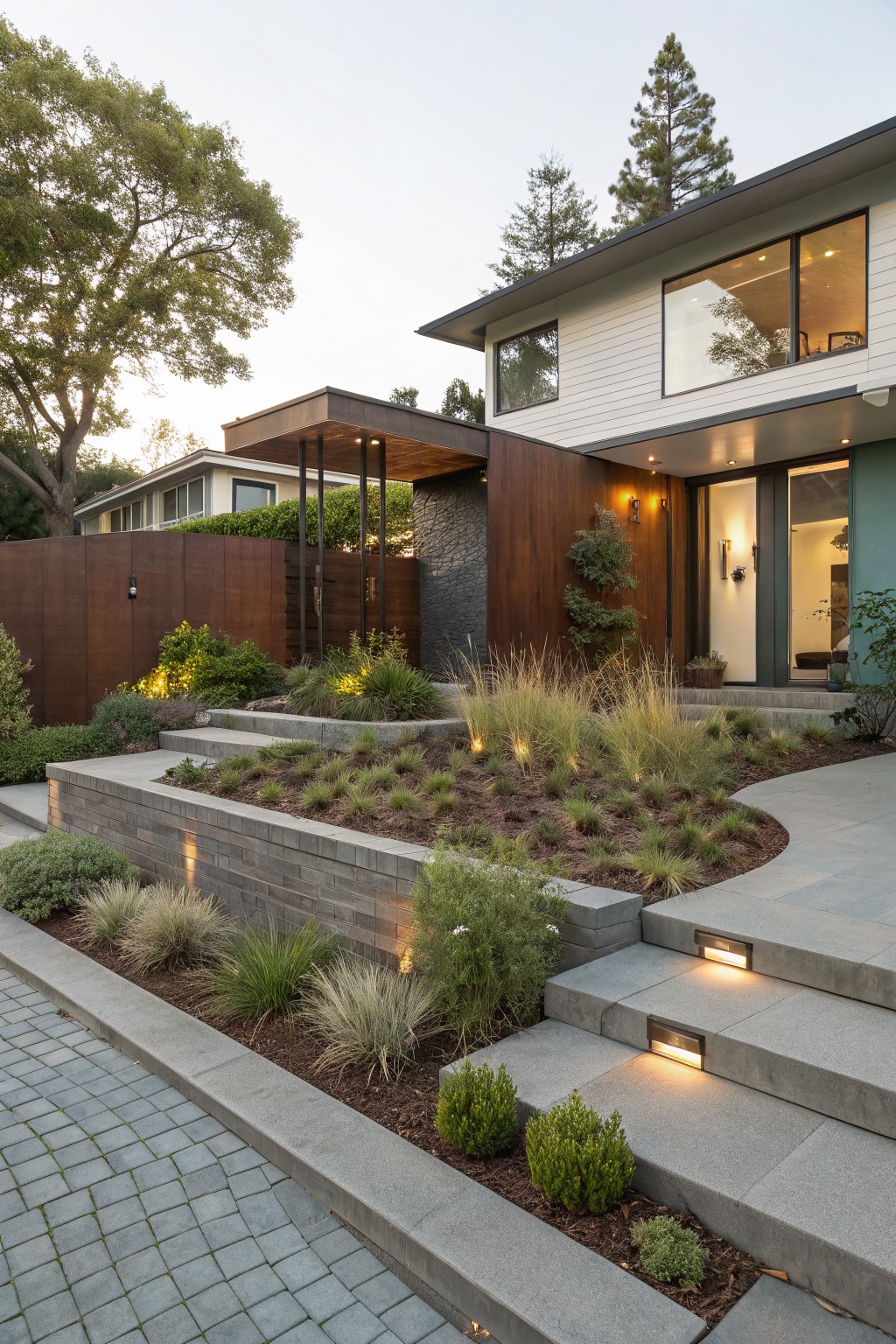
A sloped front yard can feel tricky in a small space. But look at how these tiered concrete steps work with curved planting beds packed with ornamental grasses. The beds sweep right along the steps and retaining walls. It pulls you up to the door without needing extra room. Plus grasses stay tidy and need little water once they’re going.
This fits homes on any gentle slope where flat ground is short. Line the beds with native bunchgrasses and a few low shrubs for color. Keep the curves soft to guide the path. Skip fussy plants that flop over the steps. Low step lights help at night. It’s practical for busy yards.
Winding Stone Path Through Garden Beds
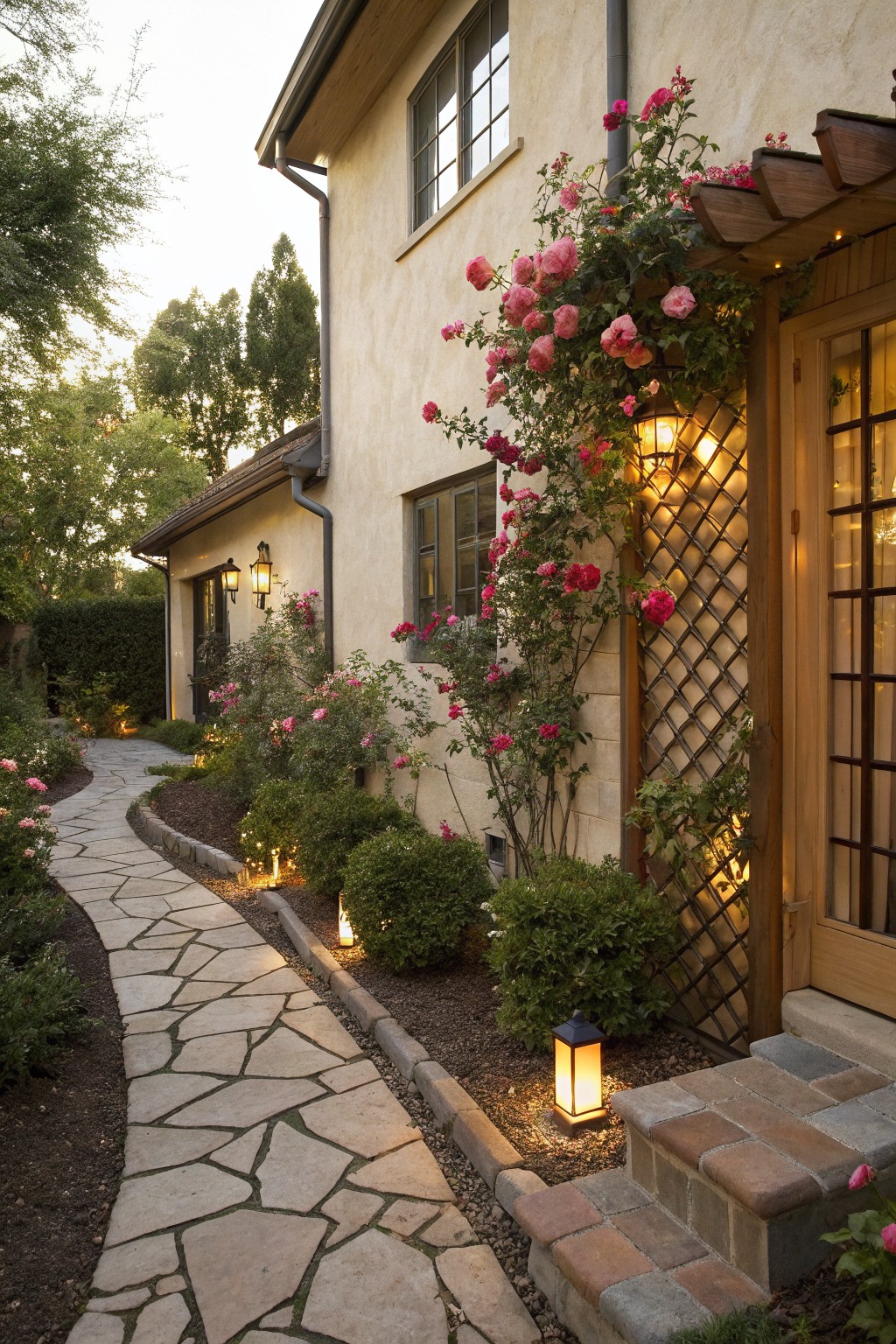
A winding stone path like this one turns a plain front yard into something you actually want to walk through. The irregular flagstones curve gently between low shrubs and rose bushes, making even a tight space feel deeper and more interesting. Those simple lanterns along the edges light it up nicely come evening, without taking up any extra room.
This setup works best in small lots where a straight sidewalk would squeeze everything else out. Start with wide joints between the stones so ground cover can fill in, then edge it with tough plants like roses on climbers up a trellis by the door. It guides folks right to your entry while showing off what you’ve planted… practical and pretty.
Narrow Reflecting Pool Path
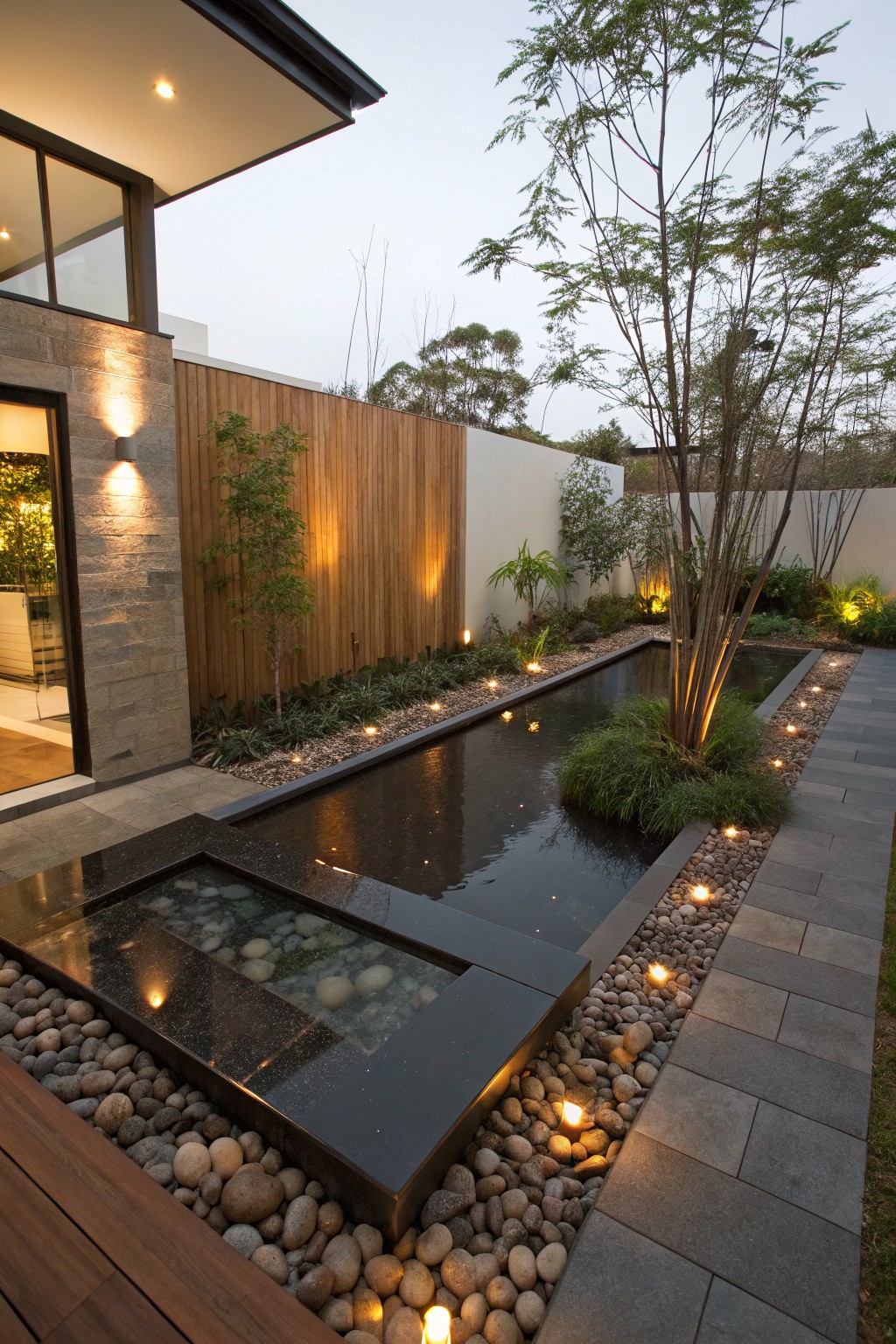
A slim black reflecting pool runs right alongside a simple stone walkway. It takes up almost no extra space but adds that calm water element people crave in tight yards. The pebbles around the edges and those little ground lights make it feel finished without much work. It’s a smart way to get a water feature in without losing room for plants or walking.
This setup works best in skinny front yards or side areas where you want flow from the house to the street. Line it with low plants so it stays easy to keep up. Just make sure the pool liner is dark for that mirror effect and go with solar lights if wiring feels like a hassle. Fits modern homes or even a plain starter place looking for polish.
Stone Steps with Low Path Lights
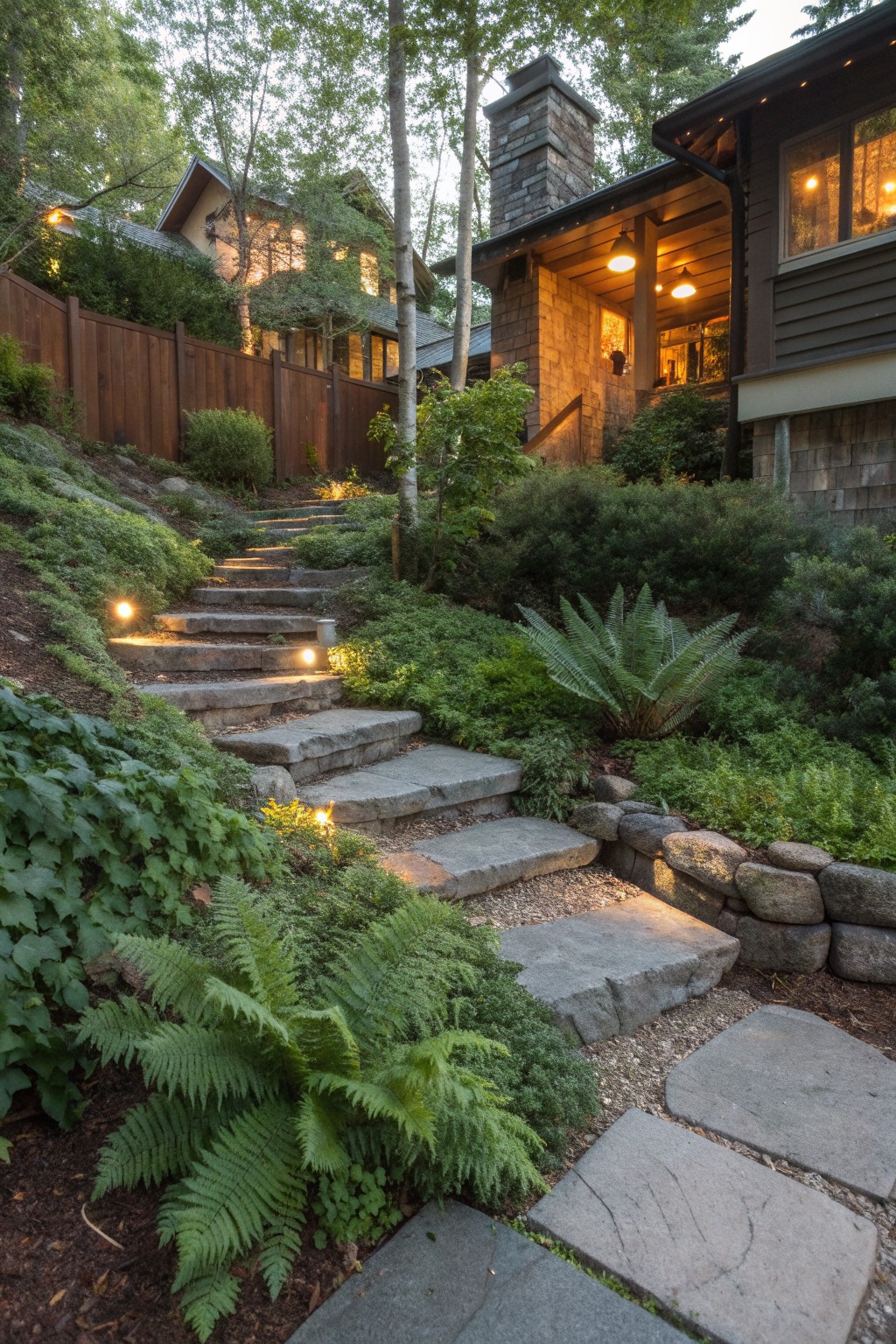
Sloped front yards can feel tricky to work with. But these rough-cut stone steps make the climb easy and pretty. Small ground lights tucked along the edges light the way at dusk. They don’t overpower the plants. Ferns and green mounds fill in around the steps. It all looks natural. Like the path was always there.
Try this in tight hillside spots where flat ground is hard to come by. Use local stone for a rugged fit. Keep lights low voltage and simple. They save energy and stay hidden. Works best with shady spots that get some sun. Skip it if your slope is super steep. Add gravel mulch between plants to cut weeding.
Grass-Inlaid Concrete Pavers for Entry Paths
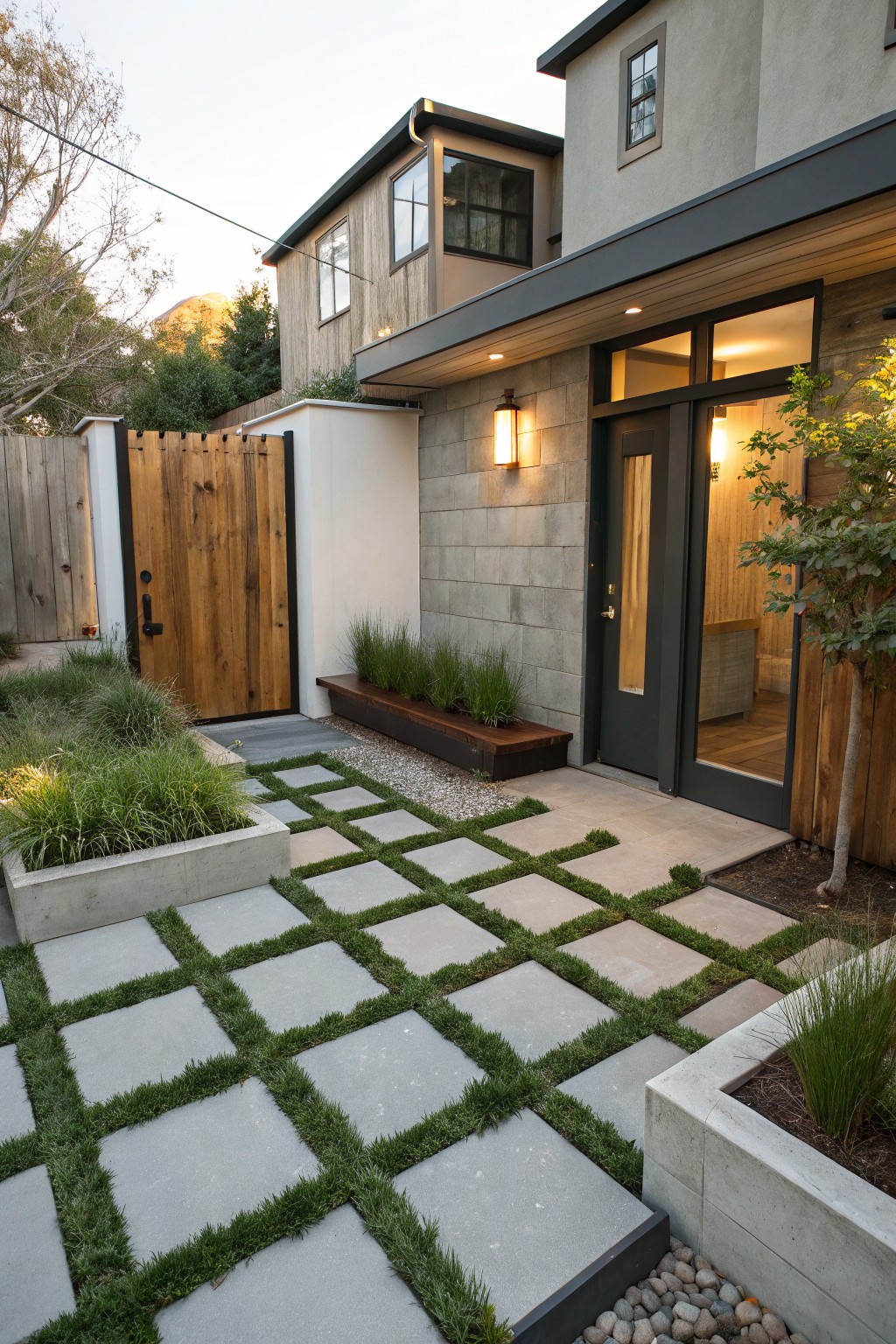
One simple way to handle a tight front yard entry is with large concrete pavers set in a grid, leaving space for grass to grow between them. It gives you a clean path without taking up much room, and the grass keeps it from looking too hard and barren. In this setup, the pavers lead right to the door, with grasses and low plants tucked along the edges in concrete planters.
This works best in modern or minimalist homes where you want low upkeep. Lay the pavers on a gravel base for good drainage, or the grass spots might turn to mud after rain. It’s great for small spaces since it defines the walkway while letting some green peek through. Just keep the grass trimmed to stay neat.
Frequently Asked Questions
Q: Can a total newbie pull off these small yard ideas?
A: Sure can. Start with potted plants along your walkway. Grab some soil, pop them in, and water – you’ll see results by evening.
Q: What plants fit a super tiny front yard without taking over?
A: Hunt for dwarf shrubs or trailing vines. They hug the edges and fill gaps neatly. Your space stays open.
Q: Does shade mess up all these ideas?
A: Nope, shade lovers like ferns and astilbe shine there. Plant them under trees for lush layers. Sun plants go elsewhere.
Q: Which idea gives quick wow without much work?
A: Build a simple stacked planter from spare bricks. Fill with bright annuals for instant pop. And move it if you change your mind.
